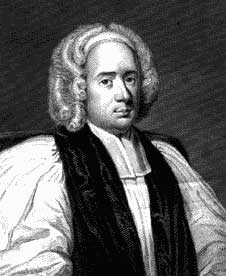
Joseph Butler
Fifteen Sermons Preached at the Rolls Chapel
Cambridge: Published by Hilliard and Brown; Boston:
Hilliard, Gray, Little, and Wilkins,
1827.
Preface.The Preface stands exactly as it did before the second edition of the Sermons.
THOUGH it is scarce possible to avoid judging, in some way or other, of almost every thing which offers itself to one’s thoughts, yet it is certain that many persons, from different causes, never exercise their judgment upon what comes before them, in the way of determining whether it be conclusive and holds. They are perhaps entertained with some things, not so with others; they like and they dislike: but whether that which is proposed to be made out, be really made out or not; whether a matter be stated according to the real truth of the case, seems to the generality of people merely a circumstance of no consideration at all. Arguments are often wanted for some accidental purpose: but proof, as such, is what they never want for themselves; for their own satisfaction of mind, or conduct in life. Not to mention the multitudes who read merely for the sake of talking, or to qualify themselves for the world, or some such kind of reasons; there are, even of the few who read for their own entertainment, and have a real curiosity to see what is said, several, which is prodigious, who have no sort of curiosity to see what is true: I say, curiosity; because it is too obvious to be mentioned, how much that religious and sacred attention, which is due to truth, and to the important question, What is the rule of life? is lost out of the world. For the sake of this whole class of readers, for they are of different capacities, different kinds, and get into this way from different occasions, I have often wished that it had been the custom to lay before people nothing in matters of argument but premises, and leave them to draw conclusions themselves; which, though it could not be done in all cases, might in many.
The great number of books and papers of amusement, which, of one kind or another, daily come in one’s way, have in part occasioned, and most perfectly fall in with and humor, this idle way of reading and considering things. By this means, time, even in solitude, is happily got rid of, without the pain of attention: neither is any part of it more put to the account of idleness, one can scarce forbear saying, is spent with less thought, than great part of that which is spent in reading.
Thus people habituate themselves to let things pass through their minds, as one may speak, rather than to think of them. Thus, by use, they become satisfied merely with seeing what is said, without going any further. Review and attention, and even forming a judgment, become fatigue; and to lay any thing before them that requires it, is putting them quite out of their way.
There are also persons, and there are at least more of them than have a right to claim such superiority, who take for granted, that they are acquainted with every thing; and that no subject, if treated in the manner it should be, can be treated in any manner but what is familiar and easy to them.
It is true, indeed, that few persons have a right to demand attention; but it is also true, that nothing can be understood without that degree of it, which the very nature of the thing requires. Now morals, considered as a science, concerning which speculative difficulties are daily raised, and treated with regard to those difficulties, plainly require a very peculiar attention. For here ideas never are in themselves determinate, but become so by the train of reasoning and the place they stand in; since it is impossible that words can always stand for the same ideas, even in the same author, much less in different ones. Hence an argument may not readily be apprehended, which is different from its being mistaken; and even caution to avoid being mistaken, may, in some cases, render it less readily apprehended. It is very unallowable for a work of imagination or entertainment not to be of easy comprehension, but may be unavoidable in a work of another kind, where a man is not to form or accommodate, but to state things as he finds them.
It must be acknowledged, that some of the following discourses are very abstruse and difficult; or, if you please, obscure. But I must take leave to add, that those alone are judges, whether or no, and how far this is a fault, who are judges whether or no and how far it might have been avoided—those only who will be at the trouble to understand what is here said, and to see how far the things here insisted upon, and not other things, might have been put in a plainer manner; which yet I am very far from asserting that they could not.
Thus much however will be allowed, that general criticisms concerning obscurity, considered as a distinct thing from confusion and perplexity of thought, as in some cases there may be ground for them, so, in others, they may be nothing more at the bottom than complaints, that every thing is not to be understood with the same ease that some things are. Confusion and perplexity in writing is indeed without excuse, because anyone may, if he pleases, know whether he understands and sees through what he is about; and it is unpardonable for a man to lay his thoughts before others, when he is conscious that he himself does not know whereabouts he is, or how the matter before him stands. It is coming abroad in a disorder which he ought to be dissatisfied to find himself in at home.
But even obscurities, arising from other causes than the abstruseness of the argument, may not be always inexcusable. Thus, a subject may be treated in a manner, which all along supposes the reader acquainted with what has been said upon it, both by ancient and modern writers; and with what is the present state of opinion in the world concerning such subject. This will create a difficulty of a very peculiar kind, and even throw an obscurity over the whole, before those who are not thus informed; but those who are, will be disposed to excuse such a manner, and other things of the like kind, as a saving of their patience.
However, upon the whole, as the title of Sermons gives some right to expect what is plain and of easy comprehension, and as the best auditories are mixed, I shall not set about to justify the propriety of preaching, or under that title publishing, discourses so abstruse as some of these are. Neither is it worth while to trouble the reader with the account of my doing either. He must not, however; impute to me, as a repetition of the impropriety, this second edition, but to the demand for it.
Whether he will think he has any amends made him, by the following illustrations of what seemed most to require them, I myself am by no means a proper judge.
There are two ways in which the subject of morals may be treated. One begins from inquiring into the abstract relations of things; the other, from a matter of fact, namely, what the particular nature of man is, its several parts, their economy or constitution; from whence it proceeds to determine what course of life it is, which is correspondent to this whole nature. In the former method the conclusion is expressed thus, that vice is contrary to the nature and reasons of things; in the latter, that it is a violation or breaking in upon our own nature. Thus they both lead us to the same thing, our obligations to the practice of virtue; and thus they exceedingly strengthen and enforce each other. The first seems the most direct formal proof, and in some respects the least liable to cavil and dispute: the latter is in a peculiar manner adapted to satisfy a fair mind, and is more easily applicable to the several particular relations and circumstances in life.
The following discourses proceed chiefly in this latter method. The three
first wholly. They were intended to explain what is meant by the nature of man,
when it is said that virtue consists in following, and vice in deviating from
it; and, by explaining, to show that the assertion is true. That the ancient
moralists had some inward feeling or other, which they chose to express in this
manner, that man is born to virtue, that it consists in following nature, and
that vice is more contrary to this nature than tortures or death, their works
in our hands are instances. Now, a person who found no mystery in this way of
speaking of the ancients: who, without being very explicit with himself, kept
to his natural feeling, went along with them, and found within himself a full
conviction that what they laid down was just and true; such a one would probably
wonder to see a point, in which he never perceived any difficulty, so labored
as this is, in the second and third sermons: insomuch, perhaps, as to be at
a loss for the occasion, scope, and drift of them. But it need not to be thought
strange, that this manner of expression, though familiar with them, and, if
not usually carried so far, yet not uncommon amongst ourselves, should want
explaining; since there are several perceptions daily felt and spoke of, which
yet it may not be very easy at first view to explicate, to distinguish from
all others, and ascertain exactly what the idea or perception is. The many treatises
upon the passions are a proof of this; since so many would never have undertaken
to unfold their several complications, and trace and resolve them into their
principles, if they had thought, what they were endeavoring to show was obvious
to everyone who felt and talked of those passions. Thus, though there seems
no ground to doubt, but that the generality of mankind have the inward
perception expressed so commonly in that manner by the ancient moralists, more
than to doubt whether they have those passions, yet I appeared of use to unfold
that inward conviction, and lay it open in a more explicit manner than I had
seen done; especially when there were not wanting persons, who manifestly mistook
the whole thing, and had so great reason to express themselves dissatisfied
with it. A late author, of great and deserved reputation, says, that to place
virtue in following nature, is, at best, a loose way of talk. And he has reason
to say this, if what I think he intends to express, though with great decency,
be true, that scarce any other sense can be put upon those words, but acting
as any of the several parts, without distinction, of a man’s nature, happened
most to incline him.
Whoever thinks it worth while to consider this matter thoroughly, should begin with stating to himself exactly the idea of a system, economy, or constitution, of any particular nature, or particular any thing: and he will, I suppose, find, that it is a one or a whole, made up of several parts; but yet that the several parts, even considered as a whole, do not complete the idea, unless, in the notion of a whole, you include the relations and respects which those parts have to each other. Every work both of nature and of art is a system: and as every particular thing, both natural and artificial, is for some use or purpose out of and beyond itself, one may add, to what has been already brought into the idea of a system, its conduciveness to this one or more ends. Let us instance in a watch: Suppose the several parts of it taken to pieces, and placed apart from each other: let a man have ever so exact a notion of these several parts, unless he considers the respects and relations which they have to each other, he will not have any thing like the idea of a watch. Suppose these several parts brought together and any how united: neither will he yet, be the union ever so close, have an idea which will bear any resemblance to that of a watch. But let him view those several parts put together, or consider them as to be put together, in the manner of a watch; let him form a notion of the relations which those several parts have to each other—all conducive, in their respective ways, to this purpose, showing the hour of the day; and then he has the idea of a watch. Thus it is with regard to the inward frame of man. Appetites, passions, affections, and the principle of reflection, considered merely as the several parts of our inward nature, do not at, all give us an idea of the system or constitution of this nature: because the constitution is formed by somewhat not yet taken into consideration, namely, by the relations which these several parts have to each other; the chief of which is the authority of reflection or conscience. It is from considering the relations which the several appetites and passions in the inward frame have to each other, and, above all, the supremacy of reflection or conscience, that we get the idea of the system or constitution of human nature. And from the idea itself it will as fully appear, that this our nature, i.e. constitution, is adapted to virtue, as from the idea of a watch it appears, that its nature, i.e. constitution or system is adapted to measure time. What in fact or event commonly happens, is nothing to this question. Every work of art is apt to be out of order: but this is so far from being according to its system, that let the disorder increase, and it will totally destroy it. This is merely by way of explanation, what an economy, system, or constitution is. And thus far the cases are perfectly parallel. If we go further, there is indeed a difference, nothing to the present purpose, but too important a one ever to be omitted. A machine is inanimate and passive: but we are agents. Our constitution is put in our power: we are charged with it: and therefore are accountable for any disorder or violation of it. Thus nothing can possibly be more contrary to nature than vice; meaning by nature not only the several parts of our internal frame, but also the constitution of it. Poverty and disgrace, tortures and death, are not so contrary to it. Misery and injustice are indeed equally contrary to some different parts of our nature taken singly: but injustice is moreover contrary to the whole constitution of the nature.
If it be asked, whether this constitution be really what those philosophers meant, and whether they would have explained themselves in this manner: the answer is the same as if it should be asked, whether a person, who had often used the word resentment, and felt the thing, would have explained this passion exactly in the same manner in which it is done in one of these discourses. As I have no doubt but that this is a true account of that passion, which he referred to and intended to express by the word resentment; so I have no doubt, but that this is the true account of the ground of that conviction which they referred to, when they said, vice was contrary to nature. And though it should be thought that they meant no more than that vice was contrary to the higher and better part of our nature; even this implies such a constitution as I have endeavored to explain. For the very terms, higher and better, imply a relation or respect of parts to each other; and these relative parts, being in one and the same nature, form a constitution, and are the very idea of it. They had a perception that injustice was contrary to their nature, and that pain was so also. They observed these two perceptions totally different, not in degree, but in kind: and the reflecting upon each of them, as they thus stood in their nature, wrought a full intuitive conviction, that more was due, and of right belonging to one of these inward perceptions, than to the other; that it demanded in all cases to govern such a creature as man. So that, upon the whole, this is a fair and true account of what was the ground of their conviction; of what they intended to refer to when they said, virtue consisted in following nature: a manner of speaking not loose and undeterminate, but clear and distinct, strictly just and true.
Though I am persuaded the force of this conviction is felt by almost everyone, yet since, considered as an argument, and put in words, it appears somewhat abstruse, and since the connexion of it is broken in the three first sermons, it may not be amiss to give the reader the whole argument here in one view.
Mankind has various instincts and principles of action, as brute creatures have; some leading most directly and immediately to the good of the community, and some most directly to private good.
Man has several which brutes have not; particularly reflection or conscience, an approbation of some principles or actions, and disapprobation of others.
Brutes obey their instincts or principles of action, according to certain rules; suppose the constitution of their body, and the objects around them.
The generality of mankind also obey their instincts and principles, all of
them; those propensions we call good, as well as the bad, according to the same
rules, namely, the constitution of their body, and the external circumstances
which they are in. Therefore it is not a true representation of mankind, to
affirm that they are wholly governed by self-love, the love of power and sensual
appetites: since, as on the one hand, they are often actuated by these, without
any regard to right or wrong; so on the other, it is manifest fact, that the
same persons, the generality, are frequently Influenced by friendship, compassion,
gratitude, and even general abhorrence of what is base, and linking of what
is fair and just, takes its turn amongst the other motives of action. This is
the partial inadequate notion of human nature treated of in the first discourse:
and it is by this nature, if one may speak so, that the world is in fact influenced,
and kept in that tolerable order in which it is.
Brutes, in acting according to the rules before mentioned, their bodily constitution and circumstances, act suitably to their whole nature. [It is however to be distinctly noted, that the reason why we affirm this, is not merely that brutes in fact act so; for this alone, however universal, does not at all determine, whether such course of action be correspondent to their whole nature: but the reason of the assertion is, that as, in acting thus, they plainly act conformably to somewhat in their nature, so, from all observations we are able to make upon them, there does not appear the least ground to imagine them to have any thing else in their nature, which requires a different rule or course of action.]
Mankind also, in acting thus, would act suitably to their whole nature, if no more were to be said of man’s nature than what has been now said; if that, as it is a true, were also a complete, adequate account of our nature.
But that is not a complete account of man’s nature. Somewhat further must be brought in to give us an adequate notion of it; namely, that one of those principles of action, conscience, or reflection, compared with the rest, as they all stand together in the nature of man, plainly bears upon it marks of authority over all the rest, and claims the absolute direction of them all, to allow or forbid their gratification: A disapprobation of reflection being in itself a principle manifestly superior to a mere propension. And the conclusion is, that to allow no more to this superior principle or part of our nature, than to other parts; to let it govern and guide only occasionally in common with the rest, as its turn happens to come, from the temper and circumstances one happens to be in; this is not to act conformably to the constitution of man. Neither can any human creature be said to act conformably to his constitution of nature, unless he allows to that superior principle the absolute authority which is due to it. And this conclusion is abundantly confirmed from hence, that one may determine what course of action the economy of man’s nature requires, without so much as knowing in what degrees of strength the several principles prevail, or which of them have actually the greatest influence.
The practical reason of insisting so much upon this natural authority of the principle of reflection or conscience is, that it seems in a great measure overlooked by many, who are by no means the worst sort of men. It is thought sufficient to abstain from gross wickedness, and to be humane and kind to such as happen to come in their way. Whereas, in reality, the very constitution of our nature requires, that we bring our whole conduct before this superior faculty; wait its determination; enforce upon ourselves its authority; and make it the business of our lives, as it is absolutely the whole business of a moral agent, to conform ourselves to it. This is the true meaning of that ancient precept, reverence thyself.
The not taking into consideration this authority, which is implied in the
idea of reflex approbation or disapprobation, seems a material deficiency or
omission in Lord Shaftesbury’s Inquiry concerning Virtue. He has shown, beyond
all contradiction, that virtue is naturally the interest of happiness, and vice
the misery of such a creature as man, placed in the circumstances which we are
in this world. But suppose there are particular exceptions; a case which this
author was unwilling to put, and yet surely it is to be put. Or suppose a case
which he has put and determined, that of a sceptic not convinced of, this happy
tendency of virtue, or being of a contrary opinion: his determination is, that
it would be without remedy.
In truth, the taking in this consideration totally changes the whole state of the case; and shows, what this author does not seem to have been aware of, that the greatest degree of scepticism which he thought possible, will still leave men under the strictest moral obligations, whatever their opinion be, concerning the happiness of virtue. For, that mankind, upon reflection, felt an approbation of what was good, and disapprobation of the contrary, he thought a plain matter of fact, as it undoubtedly is, which none could deny, but from mere affectation. Take in, then, that authority and obligation, which is a constituent part of this reflex approbation, and it will undeniably follow, though a man should doubt of every thing else, yet, that he would still remain under the nearest and most certain obligation to the practice of virtue; an obligation implied in the very idea of virtue, in the very idea of reflex approbation.
And how little influence soever this obligation alone can be expected to have, in fact, upon mankind, yet one may appeal even to interest and self-love, and ask, since from man’s nature, condition, and the shortness of life, so little, so very little, indeed, can possibly in any case be gained by vice, whether it be so prodigious a thing to sacrifice that little, to the most intimate of all obligations; and which a man cannot transgress without being self-condemned, and, unless he has corrupted his nature, without real self-dislike? This question, I say, may be asked, even upon suspicious that the prospect of a future life were ever so uncertain.
The observation that man is thus, by his very nature, a law to himself, pursued to its just consequences, is of the utmost importance; because from it will follow, that though men should, through stupidity, or speculative skepticism, be ignorant of, or disbelieve, any authority in the universe to punish the violation of this law; yet, if there should be such authority, they would be as really liable to punishment, as though they had been beforehand convinced, that such punishment would follow. For, in whatever sense we understand justice, even supposing, what I think would be very presumptuous to assert, that the end of divine punishment is no other than that of civil punishment, namely, to prevent future mischief; upon this bold supposition, ignorance, or disbelief of the sanction would by no means exempt even from this justice; because it is not foreknowledge of the punishment which renders the obnoxious to it, but merely violating a known obligation.
And here it comes in one’s way to take notice of a manifest error, or mistake,
in the author now cited, unless, perhaps he has incautiously expressed himself
so as to be misunderstood; namely, that “it is malice only, and not goodness,
which can make us afraid.”
The sermon upon the character of Balaam, and that upon self-deceit, both relate to one subject. I am persuaded, that a very great part of the wickedness of the world, is, one way or other, owing to the self-partiality, self-flattery, and self-deceit endeavored there to be laid open and explained. It is to be observed amongst persons of the lower rank, in proportion to their compass of thought, as much as amongst men of education and improvement. It seems, that people are capable of being thus artful with themselves, ill proportion as they are capable of being so with others. Those who have taken notice that there is really such a thing, namely, plain falseness and insincerity in men, with regard to themselves, will readily see the drift and design of these discourses: and nothing that I can add will explain the design of them to him, who has not beforehand remarked at least somewhat of the character. And yet the admonitions they contain, may be as much wanted by such a person as by others; for it is to be noted, that a man may be entirely possessed by this unfairness of mind, without having the least speculative notion what the thing is.
The account given of resentment, in the eighth sermon is introductory to the following one, upon forgiveness of injuries. It may possibly have appeared to some, at first sight, a strange assertion, that injury is the only natural object of settled resentment; or that men do not, in fact, resent deliberately any thing but under this appearance of injury. But I must desire the reader not to take any assertion alone by itself, but to consider the whole of what is said upon it. Because this is necessary, not only in order to judge of the truth of it, but often, such is the nature of language, to see the very meaning of the assertion. Particularly, as to this, injury and injustice is, in the sermon itself, explained to mean, not only the more gross and shocking instances of wickedness, but also contempt, scorn, neglect, any sort of disagreeable behaviour towards a person, which he thinks other than what is due to him. And the general notion of injury, or wrong, plainly comprehends this, though the words are mostly confined to the higher degrees of it.
Forgiveness of injuries is one of the very few moral obligations which has been disputed. But the proof that it is really an obligation, what our nature and condition l require, seems very obvious, were it only from the consideration, that revenge is doing harm merely for harm’s sake. And as to the love of our enemies: Resentment cannot supersede the obligations to universal benevolence, unless they are in the nature of the thing inconsistent, which they plainly are not.
This divine precept, to forgive injuries and love our enemies, though to be met with in Gentile moralists, yet, is in a peculiar sense a precept of Christianity; as our Saviour has insisted more upon it than upon any other single virtue. One reason of this doubtless is, that it so peculiarly becomes an imperfect, faulty creature. But it may be observed also, that a virtuous temper of mind, consciousness of innocence, and good meaning towards everybody, and a strong feeling of injustice and injury, may itself, such is the imperfection of our virtue, lead a person to violate this obligation, if he be not upon his guard. And it may well be supposed, that this is another reason why it is so much insisted upon by him, who knew what was in man.
The chief design of the eleventh discourse, is to state the notion of self-love
and disinterestedness, in order to show that benevolence is not more unfriendly
to self-love, than any other particular affection whatever. There is a strange
affectation in many people of explaining away all particular affections, and
representing the whole of life as nothing but one continued exercise of self-love.
Hence arises that surprising confusion and perplexity in the Epicureans One need only look into Torquatus’s account of the Epicurean
system, in Cicero’s first book, De Finibus, to see in what a surprising manner
this was done by them. Thus, the desire of praise, and of being beloved, he
explains to no other than desire of safety: Regard to our country, even in the
most virtuous character, to be nothing but regard to ourselves. The author of
Reflections, &c. Morales, says, “curiosity proceeds from interest, or pride;
which pride also would doubtless have been explained to be self-love;” (Page
85. Ed. 1725)—as if there were no passions in mankind, as desire of esteem,
or of being beloved, or of knowledge. Hobbs’ account of the affections of good-will
and pity, are instances of the same kind.
Self-love and any particular passion may be joined together; and from this complication, it becomes impossible, in numberless instances, to determine precisely how far an action, perhaps even of one’s own, has for its principle general self-love, or some particular passion. But this need create no confusion in the ideas themselves of self-love and particular passions. We distinctly discern what one is, and what the other are; though we may be uncertain how far one or the other influences us. And though, from this uncertainty, it cannot, but be, that there will be different opinions concerning mankind, as more or less governed by interest; and some will ascribe actions to self-love, which others will ascribe to particular passions; yet it is absurd to say, that mankind are wholly actuated by either; since it is manifest that both have their influence. For as, on the one hand, men form a general notion of interest, some placing it in one thing, and some in another, and have a considerable regard to it throughout the course of their life, which is owing to self-love; so, on the other hand, they are often set on work by the particular passions themselves, and a considerable part of life is spent in the actual gratification of them; i.e. is employed, not by self-love, but by the passions.
Besides, the very idea of an interested pursuit, necessarily presupposes particular passions or appetites; since the very idea of interest, or happiness, consists in this, that an appetite; or affection, enjoys its object. It is not because we love ourselves that we find delight in such and such objects, but because we have particular affections towards him. Take away these affections, and you leave self-love nothing at all to employ itself about; no end, or object, for it to purpose, excepting that of avoiding pain. Indeed, the Epicureans, who maintained that absence of pain was the highest happiness, might, consistently with themselves, deny all affection, and, if they had so pleased, every sensual appetite too. But the very idea of interest, or happiness, other than absence of pain, implies particular appetites or passions; these being necessary to constitute that interest or happiness.
The observation, that benevolence is no more disinterested than any of the common particular passions, seems of itself worth being taken notice of; but is insisted upon to obviate that scorn, which one sees rising upon the faces of people, who are said to know the world, when mention is made of a disinterested, generous, or public spirited action. The truth of that observation might be made to appear in a more formal manner of proof: for, whoever will consider all the possible respects and relations which any particular affection can have to self-love and private interest, will, I think, see demonstrably, that benevolence is not ill any respect more at variance with self-love, than any other particular affection whatever, but that it is, in every respect, at least as friendly to it.
If the observation be true, it follows, that self-love and benevolence, virtue and interest, are not to be opposed, but only to be distinguished from each other; in the same way as virtue and any other particular affection, love of arts, suppose, are to be distinguished. Every thing is what it is, and not another thing. The goodness, or badness of actions, does not arise from hence, that the epithet, interested, or disinterested, may be applied to them, any more than that any other indifferent epithet, suppose inquisitive or jealous may, or may not, be applied to them; not from their being attended with present or future pleasure or pain, but from their being what they are; namely, what becomes such creatures as we are, what the state of the case requires, or the contrary. Or, in other words, we may judge and determine that an action is morally good or evil, before we so much as consider, whether it be interested or disinterested. This consideration no more comes in to determine, whether an action be virtuous, than to determine whether it be resentful. Self-love, in its due degree, is as just and morally good as any affection whatever. Benevolence towards particular persons may be to a degree of weakness, and so be blameable. And disinterestedness is so far from being in itself commendable, that the utmost possible depravity, which we can in imagination conceive, is that of disinterested cruelty.
Neither does there appear any reason to wish self-love were weaker in the generality of the world, than it is. — The influence which it has, seems plainly owing to its being constant and habitual, which it cannot but be, and not to the degree or strength of it. Every caprice of the imagination, every curiosity of the understanding, every affection of the heart, is perpetually showing its weakness, by prevailing over it. Men daily, hourly, sacrifice the greatest known interest to fancy, inquisitiveness, love, or hatred, any vagrant inclination. The thing to be lamented is, not that men have so great regard to their own good or interest, in the present world, for they have not enough; but that they have so little to the good of others. And this seems plainly owing to their being so much engaged in it the gratification of particular passions unfriendly to benevolence, and which happen to be most prevalent in them, much more than to self-love. As a proof of this may be observed, that there is character more void of friendship, gratitude, natural affection, love to their country, common justice, or more equally and uniformly hard-hearted, than the abandoned in, what is called, the way of pleasure — hard-hearted and totally without feeling in behalf of others; except when they cannot escape the sight of distress, and so are interrupted by it in their pleasures. And yet it is ridiculous to call such an abandoned course of pleasure interested, when the person engaged in it knows beforehand, and goes on under the feeling and apprehension, that it will be as ruinous to himself, as to those who depend upon him.
Upon the whole, if the generality of mankind were to cultivate within themselves the principle of self-love; if they were to accustom themselves often to sit down and consider, what was the greatest happiness they were capable of attaining for themselves in this life; and if self-love were so strong and prevalent, as that they would uniformly pursue this their supposed chief temporal good without being diverted from it by any particular passion, it would manifestly prevent numberless follies and vices. This was in a great measure the Epicurean system of philosophy. It is indeed by no means the religious, or even moral institution of life. Yet, with all the mistakes men would fall into about interest; it would be less mischievous than the extravagancies of mere appetite, will, and pleasure. For certainly self-love, though confined to the interest of this life, is, of the two, a much better guide than passion, which has absolutely no bound nor measure, but what is set to it by this self-love, or moral considerations.
From the distinction above made, between self-love and the several particular principles or affections ill our nature, we may see how good ground there was for that assertion, maintained by the several ancient schools of philosophy against the Epicureans, namely that virtue is to be pursued as an end, eligible in and for itself. For, if there be any principles or affections in the mind of man distinct from self-love, that the things those principles tend towards, or that the objects of those affections are, each of them, in themselves eligible, to be pursued upon its own account, and to be rested in as all end, is implied in the very idea of such principle or affection. They indeed asserted much higher things of virtue, and with very good reason; but to say thus much of it, that it is to be pursued for itself, is to say no more of it than may truly: be said of the object of every natural affection whatever.
The question which was a few years ago disputed in France, concerning the love of God, which was there called enthusiasm, as it will every where by the generality of the world; this question, I say, answers, in religion, to that old one in morals now mentioned. And both of them are, I think, fully determined by the same observation, namely, that the very nature of affection, the idea, itself, necessarily implies resting in its object as an end. I shall not here add any thing further to what I have said in the two discourses upon that most important subject, but only this, that if we are constituted such sort of creatures, as, from our very nature, to feel certain affections or movements of mind, upon the sight or contemplation of the meanest inanimate part of the creation, for the flowers of the field have their beauty; certainly there must be somewhat due to him himself, who is the Author and Cause of all things; who is more intimately present to us than any thing else can be; and with whom we have a nearer and more constant intercourse, than we can have with any creature. There must be some movements of mind and heart which correspond to his perfections, or of which those perfections are the natural object. And that when we are commanded to love the Lord our God, with all our heart, and with all our mind, and with all our soul, somewhat more must be meant than merely that we live in hope of rewards, or fear of punishments, from him; somewhat more than this must be intended; though these regards themselves are most just and reasonable, and absolutely necessary to be often recollected, in such a world as this.
It may be proper just to advertise the reader, that he is not to look for any particular reason for the choice of the greatest part of these discourses; their being taken from amongst many others, preached in the same place, through a course of eight years, being in a great measure accidental. Neither is he to expect to find any other connexion between them, than that uniformity of thought and design, which will always be found in the writings of the same person, when he writes with simplicity and in earnest.
STANHOPE, Sept. 16, 1729.
Sermon I. Upon the Social Nature of Man — Rom. xii. 4, 5 .
For as we have many members in one body, and all members have not the same office; so we being many, are one body in Christ, and every one members one of another.
The epistles of the New Testament have all of them a particular reference to
the condition and usages of the Christian world at the time they were written. Therefore,
as they cannot be thoroughly understood, unless that condition and those usages
are known and attended to; so, further, though they be known, yet, if they be discontinued
or changed, exhortations, precepts, and illustrations of things, which refer to
such circumstances now ceased or altered, cannot at this time be urged in that manner,
and with that force, which they were to the primitive Christians. Thus, the text
now before us, in its first intent and design, relates to the decent management
of those extraordinary gifts which were then in the church, but which are now totally
ceased.
It cannot indeed possibly be denied, that our being God’s creatures, and virtue being the natural law we are born under, and the whole constitution of man being plainly adapted to it, are prior obligations to piety and to virtue, than the consideration that God sent his Son into the world to save it, and the motives which arise from the peculiar relation of Christians, as members one of another, under Christ our head. However, though all this be allowed, as it expressly is by the inspired writers, yet it is manifest, that Christians, at the time of the Revelation, and immediately after, could not but insist mostly upon considerations of this latter kind.
These observations show the original particular reference of the text; and the peculiar force with which the thing intended by the allusion in it, must have been felt by the primitive Christian world. They likewise afford a reason for treating it at this time in a more general way.
The relation which the several parts or members of the natural body have to each other, and to the whole body, is here compared to the relation which each particular person in society has to other particular persons, and to the whole society; and the latter is intended to be illustrated by the former. And if there be a likeness between these two relations, the consequence is obvious: that the latter shows us we were intended to do good to others, as the former shows us, that the several members of the natural body were intended to be instruments of good to each other, and to the whole body. But as there is scarce any ground for a comparison between society and the mere material body, this without the mind being a dead unactive thing; much less can the comparison be carried to any length. And since the apostle speaks of the several members as having distinct offices, which implies the mind, it cannot be thought an unallowable liberty, instead of the body and its members, to substitute the whole nature of man, and all the variety of internal principles which belong to it. And then the comparison will be between. the nature of man as respecting self, and tending to private good, his own preservation and happiness; and the nature of man as having respect to society, and tending to promote public good, the happiness of that society. These ends do indeed perfectly arise from coincide; and to aim, at public and private good are so far from being inconsistent, that they mutually promote each other; yet, in the following discourse, they must be considered as entirely distinct; otherwise the nature of man, as tending to one, or as tending to the other, cannot be compared. There can no comparison be made, without considering the things compared as distinct and different.
From this review and comparison. of the nature of man as respecting self, as respecting society, it will plainly appear, that there are as real and the same kind of indications in human nature, that we were made for society and to do good to our fellow creatures, as that we were intended to take care of our own life, and health, and private good; and that the same objections lie against one of these assertions as against the other.
For,
First, There is a natural principle of benevolence Suppose a man of learning to be writing a grave book upon
human nature and to
show in several parts of it that he had an insight into the subject he was considering;
amongst other things, the following one would require to be accounted for; the appearance
of benevolence or good will in men towards each other in the instances of natural
relation, and in other. [Hobbs of Human Nature, c. 9. § 17.] Cautious of being deceived
with outward show, he retires within himself, to see exactly what that is in the
mind of man from whence this appearance proceeds; and upon deep reflection, asserts
the principle in the mind to be only the love of power, and delight in the exercise
of it. Would not every body think here was a mistake of one word for another? That
the philosopher was contemplating and accounting for some other human actions, some
other behaviour of man to man? And could anyone be thoroughly satisfied, that what
is commonly called benevolence or good will was really the affection meant, but
only by being made to understand that this learned person had a general hypothesis,
to which the appearance of good will could no otherwise be reconciled? That what
has this appearance, is often nothing but ambition; that a delight in superiority
often (suppose always) mixes itself with benevolence, only makes it more specious
to call it ambition than hunger, of the two; but in reality that passion does no
more account for the whole appearances of good will than this appetite does. Is
there not often the appearance of one man’s wishing that good to another, which
he knows himself unable to procure him; and rejoicing in it, though bestowed by
a third person? And can love of power any way possibly come in to account for this
desire or delight? Is there not often the appearance of men’s distinguishing between
two or more persons, preferring one before another, to do good to, in cases where
love of power cannot in the least account for the distinction and preference? For
this principle can no otherwise distinguish between objects, than as it is a greater
instance and exertion of power to do good to one rather than to another. Again,
suppose good will in the mind of man to be nothing but delight in the exercise of
power: men might indeed be restrained by distant and accidental considerations;
but these restraints being removed, they would have a, a disposition to, and delight
in mischief, as an exercise and proof of a power: and this disposition and delight
would arise from, or be the same principle in the mind, as a disposition to, and
delight in charity. Thus cruelty, as distinct from envy and resentment, would be
exactly the same in the mind of man as good will: that one tends to the happiness,
the other to the misery of our fellow creatures, is, it seems, merely an accidental
circumstance, which the mind has not the least regard to. These are the absurdities
which even men of capacity run into, when they have occasion to belie their nature,
and will perversely disclaim that image of God which was originally stamped upon
it: the traces of which, however faint, are plainly discernible upon the mind of
man. If any person can in earnest doubt, whether there be such a thing as good will
in one man towards another; (for the question is not concerning either the degree
or extensiveness of it, but concerning the affection itself;) let it be observed,
that whether man be thus, or otherwise constituted, what is the inward frame in
this particular, is a mere question of fact or natural history, not proveable immediately
by reason. It is therefore to be judged of and determined in the same way other
facts or matters of natural history are: by appealing to the external senses, or
inward perceptions, respectively, as the matter under consideration is cognizable
by one or the other: by arguing from acknowledged facts and actions; for a great
les number of actions of the same kind, in different circumstances, and on respecting
different objects, will prove, to a certainty, what principles they do not, and,
to the greatest probability, what principles they do proceed from: and, lastly,
by the testimony of mankind. Now, that there is some degree of benevolence amongst
men, may be as of strongly and plainly proved in all these ways, as it could possibly
be proved, supposing there was this affection in our nature. And should any one
think fit to assert, that resentment in the mind of man was of absolutely nothing
but reasonable concern for our own safety, the falsity of this, and what is the
real nature of that passion, could be shown in no other ways than those in which
it may be shown, that there is such a thing in some degree as real good will in
man towards man. It is sufficient that the seeds of it be implanted in our it nature
by God. There is, it is owned, much left for us to do upon our own heart and temper;
to cultivate, to improve, to call it forth, to exercise it in a steady uniform manner.
This is our work: this is virtue and religion.
Secondly, This will further appear from observing, that the several
passions
and affections, which are distinct Every body makes a distinction between self-love,
and the several particular passions, appetites, and affections; and yet they are
often confounded again. That they are totally different, will be seen by anyone
who will distinguish between the passions and appetites themselves, and endeavoring
after the means of their gratification. Consider the appetite of hunger, and the
desire of esteem; these being the occasion both of pleasure and pain, the coolest
self-love, as well as the appetites and passions themselves, may put us upon making
use of the proper methods of obtaining that pleasure, and avoiding that pain; but
the feelings themselves, the pain of hunger and shame, and the delight from esteem,
are no more self-love than they are any thing in the world. Though a man hated himself,
he would as much feel the pain of hunger as he would that of the gout: and it is
plainly supposable, there may be creatures with self-love in them to the highest
degree, who may be quite insensible and indifferent (as men in some cases are) to
the contempt and esteem of those upon whom their happiness does not in some further
respects depend. And as self-love and the several particular passions and appetites
are in themselves totally different; so that some actions proceed from one, and
some from the other, will be manifest to any who will observe the two following
very supposable cases. — One man rushes upon certain ruin for the gratification of
a present desire; nobody will call the principle of this action self-love. Suppose
another man to go through some laborious work, upon promise of a great reward, without
any distinct knowledge what the reward will be; this course of action cannot be
ascribed to any particular passion. The former of these actions is plainly to be
imputed to some particular passion or affection, the latter as plainly to the general
affection or principle of self-love. That there are some particular pursuits or
actions concerning which we cannot determine how far they are owing to one, and
how far to the other, proceeds from this, that the two principles are frequently
mixed together, and run into each other. This distinction is further explained in
the eleventh sermon. If any desire to see this distinction and comparison made
in a particular instance, the appetite and passion now mentioned may reward serve
for one. Hunger is to be considered as a private appetite; because the end for which
it was given us, is the preservation of the former individual. Desire of esteem
is a public passion; because the end for which it was given us is to regulate our
behaviour towards society. The respect which this has to private good is as remote,
as the respect that has to public good; and the appetite is no more self-love, than
the passion is benevolence. The object and end of the former is merely food; the
object and end of the latter is merely esteem: but the latter can no more be gratified,
without contributing to the good of society, than the former can be gratified, without
contributing to the preservation of the individual.
Thirdly, There is a principle of reflection in men, by which they distinguish between, approve, and disapprove their own actions. We are plainly constituted such sort of creatures as to reflect upon our own nature. The mind can take a view of what passes within itself, its propensions, aversions, passions, affections, as respecting such objects, and in such degrees, and of the several actions consequent thereupon. In this survey it approves of one, glaring a disapproves of another, and towards a third is affected neither of these ways, but is quite indifferent. This principle in man, by which he approves or disapproves his heart, temper, and action, is conscience; for this is the strict sense of the word, though sometimes it is used so as to take in more. And that this faculty tends to restrain men from doing mischief to each other, and leads them to do good, is too manifest to need being insisted upon. Thus, a parent has the affection of love to his children: this leads him to take care of, to educate, to make due provision for them. The natural affection leads to this; but the reflection that it is his proper business, what belongs to him, that it is right and commendable so to do; this, added to the affection, becomes a much more settled principle, and carries him on through more labor and difficulties for the sake of his children, than he would undergo from that affection alone, if he thought it, and the course of action it led to, either indifferent or criminal. This indeed is impossible, to do that which is good, and not to approve of it; for which reason they are frequently not considered as distinct, though they really are: for men often approve of the actions of others, which they will not imitate, and likewise do that which they approve not. It cannot possibly be denied, that there is this principle of reflection or conscience in human nature. Suppose a man to relieve an innocent person in distress; suppose the same man afterwards, in the fury of anger, to do the greatest mischief to a person who had given no just cause of offence; to aggravate the injury, add the circumstances of former friendship, and obligation from the injured person; let the man who is supposed to have done these two different actions, coolly reflect upon them afterwards, without regard to their consequences to himself; — to assert that any common man would be affected in the same way towards these different actions, that he would make no distinction between them, but approve or disapprove them equally, is too glaring a falsity to need being confuted. There is therefore this principle of reflection or conscience in mankind. It is needless to compare the respect it has to private good, with the respect it has to public; since it plainly tends as much to the latter as to the former, and is commonly thought to tend chiefly to the latter. This faculty is now mentioned merely as another part in the inward frame of man, pointing out to us in some degree what we are intended for, and as what will naturally and of course have some influence. The particular place assigned to it by nature, what authority it has, and how great influence it ought to have, shall be hereafter considered.
From this comparison of benevolence and self-love, our public and private affections, of the courses of life they lead to, and of the principle of reflection or conscience as respecting each of them, it is as manifest, that we were made for society, and to promote the happiness of it; as that we were intended to take care of our own life, and health, and private good.
And from this whole review must be given a different drought of human nature from what we are often presented with. Mankind are by nature so closely united, there is such a correspondence between the inward sensations of one man and those of another, that disgrace is as much avoided as bodily pain, and to be the object of esteem and love as much desired as any external goods: and, in many particular cases, persons are carried on to do good to others, as the end their affections tend to, and rest in; and manifest that they find real satisfaction and enjoyment in this course of behaviour. There is such a natural principle of attraction in man towards man, that having trod the same track of land, having breathed in the same climate, barely having been born in the same artificial district, or division, becomes the occasion of contracting acquaintances and familiarities many years after: for any thing may serve the purpose. Thus, relations, merely nominal, are sought and invented, not by governors, but by the lowest of the people; which are found sufficient to hold mankind together in little fraternities and copartnerships: weak ties indeed, and what may afford fund enough for ridicule, if they are absurdly considered as the real principles of that union; but they are, in truth, merely the occasions, as any thing may be of any thing, upon which our nature carries us on according to its own previous bent and bias; which occasions, therefore, would be nothing at all, were there not this prior disposition and bias of nature. Men are so much one body, that in a peculiar manner they feel for each other, shame, sudden danger, resentment, honor, prosperity, distress: one or another, or all of these, from the social nature in general, from benevolence, upon the occasion of natural relation, acquaintance, protection, dependence; each of these being distinct cements of society. And, therefore, to have no restraint from, no regard to others in our behaviour, is the speculative absurdity of considering ourselves as single and independent, as having nothing in our nature which has respect to our fellow-creatures, reduced to action and practice. And this is the same absurdity, as to suppose a hand, or any part, to have no natural respect to any other, or to the whole body.
But allowing all this, it may be asked, “Has not man dispositions and principles within, which lead him to do evil to others, as well as to do good? whence come the many miseries else, which men are the authors and instruments of to each other?” These questions, as far as they relate to the foregoing discourse, may be answered by asking, “Has not man also dispositions and principles within, which lead him to do evil to himself, as well as good? whence come the many miseries else, sickness, pain, and death, which men are the instruments and authors of to themselves?”
It may be thought more easy to answer one of these questions than the other,
but the answer to both is really the same: That mankind have ungoverned passions
which they will gratify at any rate, as well to the injury of others, as in contradiction
to known private interest: But that as there is no such thing as self-hatred, so
neither is there any such thing as ill-will in one man towards another, emulation
and resentment being away; whereas there is plainly benevolence or good-will. There
is no such thing as love of injustice, oppression, treachery, ingratitude; but only
eager desires after such and such external goods; which, according to a very ancient
observation, the most abandoned would choose to obtain by innocent means, if they
were as easy, and as effectual to their end. That even emulation and resentment,
by anyone who will consider what these passions really are in nature, Emulation is merely the
desire and hope of equality with, or superiority over others, with whom we compare
ourselves, There does not appear to be any other grief in the natural passion, but
only that want which is implied in desire, However, this may be so strong as to
be the occasion of great grief. To desire the attainment of this equality, or superiority,
by the particular means of others being brought down to our own level, or below
it, is, I think, the distinct notion of envy. From whence it is easy to see, that
the real end which the natural passion, emulation, and which the unlawful one, envy,
aims at, is exactly the same; namely that equality or superiority; and, consequently,
that to do mischief is not the end of envy, but merely the means it makes use of
to attain its end. As to resentment, see the eighth sermon.
If it be said, that there are persons in the world, who are, in great measure, without the natural affections towards their fellow-creatures; there are likewise instances of persons without the common natural affections to themselves: but the nature of man is not to be judged by either of these, but by what appears in the common world, in the bulk of mankind.
I am afraid it would be thought very strange, if, to confirm the truth of this account of human nature, and make out the justness of the foregoing comparison, it should be added, that from what appears, men, in fact, as much and as often contradict that part of their nature which respects self; and which leads them to their own private good and happiness, as they contradict that part of it which respects society, and tends to public good: That there are as few persons, who attain the greatest satisfaction and enjoyment which they might attain in the present world, as who do the greatest good to others which they might do; nay, that there are as few who can be said really and in earnest to aim at one, as at the other. Take a survey of mankind: The world in general, the good and bad, almost without exception, equally are agreed, that were religion out of the case, the happiness of the present life would consist in a manner wholly in riches, honors, sensual gratifications; insomuch that one scarce hears a reflection made upon prudence, life, conduct, but upon this supposition. Yet, on the contrary, that persons in the greatest affluence of fortune are no happier than such as have only a competency; that the cares and disappointments of ambition for the most part far exceed the satisfactions of it; as also the miserable intervals of intemperance and excess, and the many untimely deaths occasioned by a dissolute course of life: these things are all seen, acknowledged, by every one acknowledged; but are thought no objections against, though they expressly contradict this universal principle, that the happiness of the present life consists in one or other of them. Whence is all this absurdity and contradiction? Is not the middle way obvious? Can any thing be more manifest, than that the happiness of life consists in these, possessed and enjoyed only to a certain degree; that to pursue them beyond this degree, is always attended with more inconvenience than advantage to a man’s-self, and often with extreme misery he greatest and unhappiness? Whence then, I say, is all this absurdity and contradiction? Is it really the result of consideration in mankind, how they may become most easy to themselves, most free from care, and enjoy the chief happiness attainable in this world? or is it not manifestly owing either to this, that they have not cool and reasonable concern enough for themselves to consider wherein their chief happiness in the present life consists; or else, if they do consider it, that they will not act conformably to what is the result of that consideration? i. e. reasonable concern for themselves, or cool self-love, is prevailed over by passion and appetite. So that, from what appears, there is no ground to assert, that those principles in the nature of man, which most directly lead to promote the good our fellow creatures, are more generally or in a greater degree violated, than those which most directly lead us to promote our own private good and happiness.
The sum of the whole is plainly this. The nature of man, considered in his single capacity, and with respect only to the present world, is adapted and leads him attain the greatest happiness he can for himself in the present world. The nature of man, considered in public or social capacity, leads him to a right behavior in society, to that course of life which we call virtue. Men follow or obey their nature in both these capacities and respects to a certain degree, but not entirely; their actions do not come up to the whole of what their nature leads them to in either of these capacities or respects; and they often violate their nature in both; i. e. as they neglect the duties they owe to their fellow-creatures, to which their nature is abhorrent: so there is a manifest negligence in men of their real happiness or interest in the present world, when that interest is inconsistent with a present gratification; for the sake of which they negligently, nay, even knowingly, are the authors and instruments of their own misery and ruin. Thus they are as often unjust to themselves as to others, and for the most part are equally so to both by the same actions.
Sermon II. Upon the Natural Supremacy of Conscience — Rom. ii. 14 .
For when the Gentiles, which have not the law, do by nature the things contained in the law, these having not the law, are a law unto themselves.
As speculative truth admits of different kinds of proof, so likewise moral obligations may be shown by different methods. If the real nature of any creature leads him, and is adapted to such and such purposes only, or more than to any other; this is a reason to believe the Author of that nature intended it for those purposes. Thus there is no doubt the eye was intended for us to see with. And the more complex any constitution is, and the greater variety of parts there are which thus tend to some one end, the stronger is the proof that such end was designed. However, when the inward frame of man is considered as any guide in morals, the utmost caution must be used that none make peculiarities in their own temper, or any thing which is the effect of particular customs, though observable in several, the standard of what is common to the species; and, above all, that the highest principle be not forgot or excluded, that to which belongs the adjustment and correction of all other inward movements and affections: which principle will of course have some influence, but which, being in nature supreme, as shall now be shown, ought to preside over and govern all the rest. The difficulty of rightly observing the two former cautions the appearance there is of some small diversity amongst mankind with respect to this faculty, with respect to their natural sense of moral good and evil; and the attention.. necessary to survey with any exactness what passes within have occasioned that it is not so much agreed what is the standard of the internal nature of man, as of his external form. Neither is this last exactly settled. Yet we understand one another when we speak of the shape of a human body; so likewise we do when we speak of the heart and inward principles, how far soever the standard is from being exact or precisely fixed. There is, therefore, ground for an attempt of showing men to themselves, of showing them what course of life and behaviour their real nature points out and would lead them to. Now, obligations of virtue shown, and motives to the practice of it enforced, from a review of the nature of man, are to be considered as an appeal to each particular person’s heart and natural conscience; as the external senses are appealed to for the proof of things cognizable by them. Since, then, our inward feelings, and the perceptions we receive, from our external senses, are equally real; to argue from the former to life and conduct, is as little liable to exception, as to argue from the latter to absolute speculative truth. A man can as little doubt whether his eyes were given him to see with, as he can doubt of the truth of the science of optics, deduced from occular experiments. And allowing the inward feeling, shame; a man can as little doubt whether it was given him to prevent his doing shameful actions, as he can doubt whether his eyes were given him to guide his steps. And as to these inward feelings themselves; that they are real; that man has in his nature passions and affections, can no more be questioned, than that he has external senses. Neither can the former be wholly mistaken, though to a certain degree liable to greater mistakes than the latter.
There can be no doubt but that several propensions or instincts, several principles in the heart of man, carry him to society, and to contribute to the happiness of it, in a sense and a manner in which no inward principle leads him to evil. These principles, propensions, or instincts, which lead him to do good, are approved of by a certain faculty within, quite distinct from these propensions themselves. All this hath been fully made out in the foregoing discourse.
But it may be said, “What is all this, though true, to the purpose of virtue and religion? these require, not only that we do good to others when we are led this way, by benevolence or reflection happening to be stronger than other principles, passions, or appetites; but likewise that the whole character be formed upon thought and reflection; that every action be directed by some determinate rule, some other rule than the strength and prevalency of any principle or passion. What sign is there in our nature (for the inquiry is only about what is collected from thence) that this was intended by its Author? or how does so various and fickle a temper as that of man appear adapted thereto? It may indeed be absurd and unnatural for men to act without any reflection; nay without regard to that particular kind of reflection which you call conscience; because this does belong to our nature. For, as there never was a man but who approved one place, prospect, building, before another; so it does not appear that there ever was a man who would not have approved an action of humanity rather than of cruelty; interest and passion being quite out of the case. But interest and passion do come in, and are often too strong for, and prevail over reflection and conscience. Now, as brutes have various instincts, by which they are carried on to the end the Author of their nature intended them for; is not man in the same condition, with this difference only, that to his instincts (i. e. appetites and passions) is added the principle of reflection or conscience? And as brutes act agreeably to their nature, in following that principle or particular instinct which for the present is strongest in them; does not man likewise act agreeably to his nature, or obey the law of his creation, by following that principle, be it passion or conscience, which for the present happens to be strongest in him? Thus, different men are by their particular nature hurried on to pursue honor, or riches, or pleasure. There are also persons whose temper leads them in an uncommon degree to kindness, compassion, doing good to their fellow creatures; as there are others who are given to suspend their judgment, to weigh and consider things, and to act upon thought and reflection. Let everyone then quietly follow his nature; as passion, reflection, appetite, the several parts of it, happen to the strongest; but let not the man of virtue take upon him to blame the ambitious, the covetous, the dissolute; since these, equally with him, obey and follow their nature. Thus, as in some cases, we follow our nature in doing the works contained in the law, so in other cases we follow nature in doing contrary.”
Now, all this licentious talk entirely goes upon a supposition, that men follow their nature in the same sense, in violating the known rules of justice and honesty for the sake of a present gratification, as they do in following those rules when they have no temptation to the contrary. And if this were true, that could not be so which St Paul asserts, that men are “by nature a law to themselves.” If by following nature were meant only acting as we please, it would indeed be ridiculous to speak of nature as any guide in morals: nay, the very mention of deviating from nature would be absurd; and the mention of following it, when spoken by way of distinction, would absolutely have no meaning. For, did ever anyone act otherwise than as he pleased? And yet the ancients speak of deviating from nature, as vice: and of following nature so much as a distinction, that, according to them, the perfection of virtue consists therein. So that language itself should teach people another sense to the words following nature, than barely acting as we please. Let it however be observed, that though the words human nature are to be explained, yet the real question of this discourse is not concerning the meaning of words, any otherwise than as the explanation of them may be needful to make out and explain the assertion, that every man if naturally a law to himself; that everyone may find within himself the role of right, and obligations to follow it. This St Paul affirms in the words of the text, and this the foregoing objection really denies, by seeming to allow it. And the objection will be fully answered, and the text before us explained, by observing, that nature is considered in different views, and the word used in different senses; and by showing in what view it is considered, and in what sense the word is used, when intended to express and signify that which is the guide of life, that by which men are a law to themselves. I say, the explanation of the term will be sufficient, because from thence it will appear, that in some senses of the word nature cannot be, but that in another sense it manifestly is, a law to us.
I. By nature is often meant no more than some principle in man, without regard either to the kind or degree of it. Thus, the passion of anger, and the affection of parents to their children, would be called equally natural. And as the same person hath often contrary principles, which at the same time draw contrary ways, he may by the same action both follow and contradict his nature in this sense of the word; he may follow one passion, and contradict another.
II. Nature is frequently spoken of as consisting in those passions which are
strongest, and most influence the actions; which being vicious ones, mankind is
in this sense naturally vicious, or vicious by nature. Thus St Paul says of the
Gentiles, who were dead in trespasses and sins, and walked according to the spirit
of disobedience, that they were by nature the children of Wrath.
They could be no otherwise children of wrath by nature, than they were vicious by nature.
Here then are two different senses of the word nature, in neither of which men can at all be said to be a law to themselves. They are mentioned only to be excluded; to prevent their being confounded, as the latter is in the objection, with another sense of it, which is now to be inquired after and explained.
III. The apostle asserts, that the Gentiles do by nature the things contained in the law. Nature is indeed here put by way of distinction from revelation, but yet it is not a mere negative. He intends to express more than that by which they did not, that by which they did the works of the law; namely, by nature. It is plain the meaning of the word is not the same in this passage as in the former, where it is spoken of as evil; for in this latter it is spoken of as good; as that by which they acted, or might have acted virtuously. What that is in man by which he is naturally a law to himself; is explained in the following words: Which shows the work of the law, written in their hearts, their consciences also bearing witness, and their thoughts the meanwhile accusing or else excusing one another. If there be a distinction to be made between the works written in their hearts, and the witness of conscience; by the former must be meant, the natural disposition to kindness and compassion, to do what is of good report, to which this apostle often refers; that part of the nature of man, treated of in the foregoing discourse, which, with very little reflection and of course, leads him to society, and by means of which he naturally acts a just and good part in it, unless other passions or interest lead him astray. Yet since other passions, and regards to private interest, which lead us (though indirectly, yet they lead us) astray, are themselves in a degree equally natural, and often most prevalent; and since we have no method or seeing the particular degrees in which one or the other is placed in us by nature, it is plain the former, considered merely as natural, good and right as they are, can no more be a law to us than the latter. But there is a superior principle of reflection or conscience in every man which distinguishes between the internal principles of his heart, as well as his external actions; which passes judgment upon himself and them; pronounces determinately some actions to be in themselves just, right, good; others to be in themselves evil, wrong, unjust: which, without being consulted, without being advised with, magisterially exerts itself, and approves or condemns him, the doer of them, accordingly; and which, if not forcibly stopped, naturally and always of course goes on to anticipate a higher and more effectual sentence, which shall hereafter second and affirm its own. But this part of the office of conscience is beyond my present design explicitly to consider. It is by this faculty, natural to man, that he is a moral agent, that he is a law to himself. By this faculty, I say, not to be considered merely as a principle in his heart, which is to have some influence as well as others; but considered as a faculty, in kind and in nature, supreme over all others, and which bears its own authority of being so.
This prerogative, this natural supremacy, of the faculty which surveys, approves, or disapproves the several affections of our mind, and actions of our lives, being that by which men are a law to themselves, their conformity or disobedience to which law of our nature renders their actions, in the highest and most proper sense, natural or unnatural; it is fit it be further explained to you: and I hope it will be so, if you will attend to the following reflections.
Man may act according to that principle or inclination which for the present happens to be strongest, and yet act in a way disproportionate to, and violate his real proper nature. Suppose a brute creature by any bait to be allured into a snare, by which he is destroyed: he plainly followed the bent of his nature, leading him to gratify his appetite. There is an entire correspondence between his whole nature and such an action: such action therefore is natural. But suppose a man, foreseeing the same danger of certain ruin, should rush into it for the sake of a present gratification; he in this instance would follow his strongest desire, as did the brute creature. But there would be as manifest a disproportion between the nature of a man and such an action, as between the meanest work of art and the skill of the greatest master in that art; which disproportion arises, not from considering the action singly in itself; or in its consequences, but from comparison of it with the nature of the agent. And since such an action is utterly disproportionate to the nature of man, it is in the strictest and most proper sense unnatural; this word expressing that disproportion. Therefore, instead of the words disproportionate to his nature, the word unnatural may now be put; this being more familiar to us: but let it be observed, that it stands for the same thing precisely.
Now, what is it which renders such a rash action unnatural? Is it that he went against the principle of reasonable and cool self-love, considered merely as a part of his nature? No: For if he had acted the contrary way, he would equally have gone against a principle, or towards, part of his nature, namely, passion or appetite. But, to deny a present appetite, from foresight that the gratification of it would end in immediate ruin or extreme misery, is by no means an unnatural action. Whereas, to contradict or go against cool self-love, for the sake of such gratification, is so in the instance before us. Such an action then being unnatural, and its being so not arising from a man’s going against a principle or desire barely, nor in going against that principle or desire which happens for the present to be strongest; it necessarily follows, that there must be some other difference, or distinction, to be made between these two principles, passion and cool self-love, than what I have yet taken notice of. And this difference, not being a difference in strength or degree, I call a difference in nature and in kind. And since, in the instance still before us, if passion prevails over self-love, the consequent action is unnatural; but if self-love prevails over passion, the action is natural; it is manifest that self-love is in human nature a superior principle to passion. This may be contradicted without violating that nature, but the former cannot. So that, if we will act conformably to the economy of man’s nature, reasonable self-love must govern. Thus, without particular consideration of conscience, we may have a clear conception of the superior nature of one inward principle to another; and see that there really is this natural superiority, quite distinct from degrees of strength and prevalency.
Let us now take a view of the nature of man, as consisting partly of various appetites, passions, affections, and partly of the principle of reflection or conscience; leaving quite out all consideration of the different degrees of strength, in which either of them prevail; and it will further appear, that there is this natural superiority of one inward principle to another, or that it is even part of the idea of reflection or conscience.
Passion or appetite implies a direct simple tendency towards such and such objects, without distinction of the means by which they are to be obtained. Consequently, it will often happen there will be a desire of particular objects, in cases where they cannot be obtained without manifest injury to others. Reflection, or conscience comes in, and disapproves the pursuit of them in these circumstances; but the desire remains. Which is to be obeyed, appetite or reflection? Cannot this question be answered from the economy and constitution of human nature merely, without saying which is strongest? or need this at all come into consideration? Would not the question be intelligibly and fully answered by saying, that the principle of reflection or conscience being compared with the various appetites, passions, and affections in men the former is manifestly superior and chief, without regard to strength? And how often soever the latter happens to prevail, it is mere usurpation. The former remains in nature and in kind its superior; and every instance of such prevalence of the latter, is an instance of breaking in upon, and violation of the constitution of man.
All this is no more than the distinction which every body is acquainted with, between mere power and authority: only, instead of being intended to express the difference between what is possible, and what is lawful in civil government, here it has been shown applicable to the several principles in the mind of man. Thus, that principle by which we survey, and either approve or disapprove our own heart, temper, and actions, is not only to be considered as what is in its turn to have some influence; which may be said of every passion, of the lowest appetites: but likewise as being superior; as from its very nature manifestly claiming superiority over all others; insomuch that you cannot form a notion of this faculty, conscience, without taking in judgment, direction, superintendency. This is a constituent part of the idea, that is, of the faculty itself: and to preside and govern, from the very economy and constitution of man, belongs to it. Had it strength, as it has right; had it power, as it has manifest authority, it would absolutely govern the world.
This gives us a further view of the nature of man; shows us what course of life we were made for; not only that our real nature leads us to be influenced in some degree by reflection and conscience, but likewise in what degree we are to be influenced by it, if we will fall in with, and act agreeably to the constitution of our nature: that this faculty was placed within to be our proper governor; to direct and regulate all under principles, passions, and motives of action. This is its right and office: thus sacred is its authority. And how often soever men violate and rebelliously refuse to submit to it, for supposed interest which they cannot otherwise obtain, or for the sake of passion which they cannot otherwise gratify; this makes no alteration as to the natural right, and office of conscience.
Let us now turn the whole matter another way, and suppose there was no such thing at all as this supremacy of conscience; that there was no distinction to be made between one inward principle and another, but only that of strength; and see what would be the consequence.
Consider then what is the latitude and compass of the actions of man with regard to himself, his fellow creatures, and the Supreme Being? What are their bounds, besides that of our natural power? With respect to the two first, they are plainly no other than these: no man seeks misery as such for himself; and no one provoked does mischief to another for its own sake. For in every degree within these bounds, mankind knowingly, from passion or wantonness, bring ruin and misery upon themselves and others: and impiety and profaneness, I mean, what every one would call so who believes the being of God, have absolutely no bounds at all. Men blaspheme the Author of nature, formally, and in words renounce their allegiance to their Creator. Put an instance then with respect to any one of these three. Though we should suppose profane swearing, and in general that kind of impiety now mentioned, to mean nothing, yet it implies wanton disregard and irreverence towards an infinite Being, our Creator; and is this as suitable to the nature of man, as reverence and dutiful submission of heart towards that Almighty Being? Or suppose a man guilty of parricide, with all the circumstances of cruelty which such an action can admit of: this action is done in consequence of its principle being for the present strongest: and if there be no difference between inward principles, but only that of strength; the strength being given, you have the whole nature of the man given, so far as it relates to this matter. The action plainly corresponds to the principle, the principle being in that degree of strength it was: it therefore corresponds to the whole nature of the man. Upon comparing the action and the whole nature, there arises no disproportion, there appears no unsuitableness between them. Thus the murder of a father and the nature of man correspond to each other, as the same nature and an act of filial duty. If there be no difference between inward principles, but only that of strength, we can make no distinction between these two actions, considered as the actions of such a creature, but in our coolest hours must approve or disapprove them equally: than which nothing can be reduced to a greater absurdity.
Sermon III. Upon the Natural Supremacy of Conscience — Rom. ii. 14 .
The natural supremacy of reflection or conscience being thus established; we may from it form a distinct notion of what is meant by human nature, when virtue is said to consist in following it, and vice in deviating from it.
As the idea of a civil constitution implies in it united strength, various
subordinations, under one direction, that of the supreme authority; the different
strength of each particular member of the society not coming into the idea;
whereas, if you leave out the subordination, the union, and the one direction,
you destroy and lose it: So reason, several appetites, passions, and affections,
prevailing in different degrees of strength; is not that idea or notion of human
nature; but that nature consists in these several principles considered as having
a natural respect to each other, in the several passions being naturally subordinate
to the one superior principle of reflection or conscience. Every bias, instinct,
propension within, is a real part of our nature, but not the whole: add to these
the superior faculty, whose office it is to adjust, manage, and preside over
them, and take in this its natural superiority, and you complete the idea of
human nature. And as in civil government the constitution is broken in upon
and violated, by power and strength prevailing over authority; so the constitution
of man is broken in upon and violated by the lower faculties or principles within
prevailing over that, which is in its nature supreme over them all. Thus, when
it is said by ancient writers, that tortures and death are not so contrary to
human nature as injustice; by this, to be sure, is not meant, that the aversion
to the former in mankind is less strong and prevalent than their aversion to
the latter: but that the former is only contrary to our nature, considered in
a partial view, and which takes in only the lowest part of it, that which we
have in common with the brutes; whereas the latter is contrary to our nature,
considered in a higher sense, as a system and constitution, contrary to the
whole economy of man. Every man, in his physical nature, is one individual
single agent. He has likewise properties and principles, each of which may be
considered separately, and without regard to the respects which they have to
each other. Neither of these are the nature we are taking a view of. But it
is the inward frame of man, considered as a system or constitution: whose several
parts are united, not by a physical principle if individuation, but by the respects
they have to each other; the chief of which is the subjection which the appetites,
passions, and particular affections, have to the one supreme principle of reflection
or conscience. The system or constitution is formed by and consists in these
respects and this subjection. Thus, the body is a system or constitution; so
is a tree; so is every machine. Consider all the several parts of a tree, without
the natural respects they have to each other, and you have not at all the idea
of a tree; but add these respects, and this gives you the idea. The body may
be impaired by sickness, a tree may decay, a machine be out of order, and yet
the system and constitution of them not totally dissolved. There is plainly
somewhat which answers to all this in the moral constitution of man. Whoever
will consider his own nature, will see, that the several appetites, passions,
and particular affections, have different respects amongst themselves, They
are restraints upon, and are in a proportion to, each other. This proportion
is just and perfect, when all those under principles are perfectly coincident
with conscience, so far as their nature permits, and, in all cases, under its
absolute and entire direction. The least excess or defect, the least alteration
of the due proportions amongst themselves, or of their coincidence with conscience,
though not proceeding into action, is some degree of disorder in the moral constitution.
But perfection, though plainly intelligible and supposable, was never attained
by any man. If the higher principle of reflection maintains its place, and,
as much as it can, corrects that disorder, and hinders it from breaking out
into action, this is all that can be expected in such a creature as man.
And though the appetites and passions have not their exact due proportion to
each other; though they often strive for mastery with judgment or reflection;
yet, since the superiority of this principle to all others is the chief respect
which forms the constitution, or so far as this superiority is maintained, the
character, the man, is good, worthy, virtuous.
And from all these things put together, nothing can be more evident, than that, exclusive of revelation, man cannot be considered as a creature left by his Maker to act at random, and live at large up to the extent of his natural power, as passion, humor, wilfulness, happen to carry him; which is the condition brute creatures are in but that, from his make, constitution, or nature, he is the strictest and most proper sense, a law to himself. He hath the rule of right within: what is wanting is only that he honestly attend to it.
The inquiries which have been made by men of leisure after some general rule, the conformity to, or disagreement from which, should denominate our actions good or evil, are in many respects of great service. Yet let any plain, honest man, before he engages in any course of action, ask himself, is this I am going about right, or is it wrong? Is it good, or is it evil? I do not in the least doubt but that this question would be answered agreeably to truth and virtue, by almost any fair man in almost any circumstance. Neither do there appear any cases which look like exceptions to this; but those of superstition, and of partiality to ourselves. Superstition may, perhaps, be somewhat of an exception: but partiality to ourselves is not; this being itself dishonesty. For a man to judge that to be the equitable, the moderate, the right part for him to act, which he would see to be hard, unjust, oppressive in another; this is plain vice, and can proceed only from great unfairness of mind.
But, allowing that mankind hath the rule of right within himself, yet it maybe asked, “What obligations are we under to attend to and follow it?”I answer: it has been proved, that man by his nature is a law to himself, without the particular distinct consideration of the positive sanctions of that law; the rewards and punishments which we feel, and those which, from the light of reason, we have ground to believe are annexed to it. The question then carries its own answer along with it. Your obligation to obey this law, is its being the law of your nature. That your conscience approves of and attests to such a course of action, is itself alone an obligation. Conscience does not only offer itself to show us the way we should walk in, but it. likewise carries its own authority with it, that it is our natural guide, the guide assigned us by the Author of our nature: it therefore belongs to our condition of being: it is our duty to walk in that path, and follow this guide, without looking about to see whether we may not possibly forsake them with impunity.
However, let us hear what is to he said against obeying this law of our nature. And the sum is no more than this: “Why should we be concerned about any thing out of, and beyond ourselves? If we do find within ourselves regards to others, and restraints of we know not how many different kinds; yet these being embarrassments, and hindering us from going the nearest way to our own good, why should we not endeavor to suppress and get over them?”
Thus, people go on with words, which, when applied to human nature, and the condition in which it is placed in. this world, have really no meaning. For does not all his kind of talk go upon supposition, that our happiness in this world consists in somewhat quite distinct from regards to others, and that it is the privilege of vice to be without restraint or confinement? Whereas, on the contrary, the enjoyments; in a manner all the common enjoyments of life, even the pleasures of vice, depend upon these regards of one kind or another to our fellow creatures. Throw off all regards to others, and we should be quite indifferent to infamy and honor: there could be no such thing at all as ambition, and scarce any such thing as covetousness; for we should likewise be equally indifferent to the disgrace of, poverty, the several neglects and kinds of contempt which accompany this state; and to the reputation of riches, the regard and respect they usually procure. Neither is restraint by any means peculiar to one course of life; but our very nature, exclusive of conscience, and our condition, lays us under an absolute necessity of it. We cannot gain any end whatever without being confined to the proper means, which is often the most painful and uneasy confinement. And, in numberless instances, a present appetite cannot be gratified without such apparent and immediate ruin and misery, that the most dissolute man in the world chooses to forego the pleasure, rather than endure the pain.
Is the meaning, then, to indulge those regards to our fellow-creatures, and submit to those restraints; which upon the whole, are attended with more satisfaction than uneasiness, and get over only those which bring more uneasiness and inconvenience than satisfaction? “Doubtless this was our meaning.” You have changed sides then. — Keep to this: Be consistent with yourselves; and you and the men of virtue are, in general, perfectly agreed. But let us take care, and avoid mistakes. Let it not be taken for granted, that the temper of envy, rage, resentment, yields greater delight than meekness, forgiveness, compassion, and good-will: especially when it is acknowledged, that rage, envy, resentment, are in themselves mere misery; and the satisfaction arising from the indulgence of them is little more than relief from that misery; whereas the temper of compassion and benevolence is itself delightful; and the indulgence of it, by doing good, affords new positive delight and enjoyment. Let it not be taken for granted, that the satisfaction arising from the reputation of riches and power, however obtained, and from the respect paid to the them is greater than the satisfaction arising from the reputation of justice, honesty, charity, and the esteem which is universally acknowledged to be their due. And if it be doubtful which of these satisfactions is the greatest, as there are persons who think neither of them very considerable, yet there can be no doubt concerning ambition and covetousness, virtue and a good mind, considered in themselves, and as leading to different courses of life; there can, I say, be no doubt, which temper and which course is attended with most peace and tranquillity of mind; which, with most perplexity, vexation, and inconvenience. And both the virtues and vices which have been now mentioned, do in a manner equally imply in them regards of one kind or another to our fellow creatures. And with respect to restraint and confinement: whoever will consider the restraints from fear and shame, the dissimulation, mean arts of concealment, servile compliances, one or other of which belong to almost every course of vice, will soon be convinced, that the man of virtue is by no means upon a disadvantage in this respect. How many instances are there, in which men feel, and own, and cry aloud under the chains of vice with which they are enthralled, and which yet they will not, shake off? How many instances, in which persons manifestly go through more pain and self-denial to gratify a vicious passion, than would have been necessary to the conquest of it? To this is to be added, that when virtue is become habitual, when the temper of it is acquired, what was before confinement ceases to be so, by becoming choice and delight. Whatever restraint and guard upon ourselves may be needful to unlearn any unnatural distortion or odd gesture; yet, in all propriety of speech, natural behaviour must be the most easy and unrestrained. It is manifest, that in the common course of life there is seldom any inconsistency between our duty and what is called interest. It is much seldomer that there is an inconsistency between duty and what is really our present interest; meaning by interest, happiness and satisfaction. Self-love, then, though confined to the interest of the present world, does in general perfectly coincide with virtue, and leads us to one and the same course of life. But, whatever exceptions there are to this, which are much fewer than they are commonly thought, all shall be set right at the final distribution of things. It is a manifest absurdity to suppose evil prevailing finally over good, under the conduct and administration of a perfect mind.
The whole argument which I have been now insisting upon, may be thus summed up and given you in one view. The nature of man is adapted to some course action or other. Upon comparing some actions with this nature, they appear suitable and correspondent to it: From comparison of other actions with the same nature there arises to our view some unsuitableness or disproportion. The correspondence of actions to the nature of the agent renders them natural; their disproportion to it, unnatural. That an action is correspondent to the nature of the agent, does not arise from its being agreeable to the principle which happens to be the strongest; for it may be so, and yet be quite disproportionate to the nature of the agent. The correspondence, therefore, disproportion, arises from somewhat else. This can be nothing but a difference in nature and kind, (altogether distinct from strength) between the inward principles. Some, then, are in nature and kind superior to others. And the correspondence arises from the action being conformable to the higher principle; and the unsuitableness from its being contrary to it. Reasonable self-love and conscience are the chief or superior principles in this nature of man: because an action may be suitable to this nature, though all other principles be violated; but becomes unsuitable, if either of those are. Conscience and self-love, if we understand our true happiness, always lead us the same way. — Duty and interest are perfectly coincident; for the most part in this world, but entirely and in every instance, if we take in the future and the whole; this being implied in the notion of a good and perfect administration of things. Thus, they who have been so wise in their generation, as to regard only their own supposed interest, at the expense and to the injury of others, shall at last find, that he who has given up all the advantages of the present world, rather than violate his conscience and the relations of life, has infinitely better provided for himself, and secured his own interest and happiness.
Sermon IV. Upon the Government of the Tongue — James i. 26 .
If any man among you seem to be religious, and bridleth not his tongue, but deceiveth his own heart, this man’s religion is vain.
The translation of this text would be more determinate by being more literal, thus: “If any man among you seemeth to be religious, not bridling his tongue, but deceiving his own heart, this man’s religion is vain.” This determines that the words, “but deceiveth his own heart,” are not put in opposition to, “seemeth to be religious,” but to, “bridleth not his tongue.” The certain determinate meaning of the text then being; that he who seemeth to be religious, and bridleth not his tongue, but, in that particular, deceiveth his own heart, this man’s religion is vain; we may observe somewhat very forcible and expressive in these words of St James. As if the apostle had said, No man surely can make any pretences to religion, who does not at least believe that be bridleth his tongue: If he puts on any appearance or face of religion, and yet does not govern his tongue, he must surely deceive himself in that particular, and think he does: And whoever is so unhappy as to deceive himself in this, to imagine he keeps that unruly faculty in due subjection, when, indeed, he does not, whatever the other part of his life be, his religion is vain; the government of the tongue being a most material restraint which virtue lays us under: without it, no man can be truly religious.
In treating upon this subject, I will consider,
First, What is the general vice, or fault, here referred to: Or, what disposition in men is supposed in moral reflections and precepts concerning “bridling the tongue,”
Secondly, When it may be said of anyone, that he has a due government over himself in this respect.
I. Now, the fault referred to, and the disposition supposed in precepts and reflections concerning the government of the tongue, is not evil speaking from malice, nor lying of bearing false witness from indirect selfish designs. The disposition to these, and the actual vices themselves all come under other subjects. The tongue may be employed about, and made to serve all the purposes of vice, in tempting and deceiving, in perjury and injustice. But the thing here supposed and referred, to is talkativeness; a disposition to be talking, abstracted from the consideration of what is to be said; with very little or no regard to, or thought of doing, either good, or harm. And let not any imagine this to be a slight matter, and that it deserves not to have so great weight laid upon it, till he has considered what evil is implied in it, and the bad effects which follow from it. It is, perhaps, true, that they who are addicted to this folly, would choose to confine themselves to trifles and indifferent subjects, and so intend only to be guilty of being-impertinent; but as they cannot go on forever talking of nothing, as common matters will not afford a sufficient fund for perpetual continued discourse, when subjects of this kind are exhausted, they will go on to defamation, scandal, divulging of secrets, their own secrets as well as those of others: any thing rather than be silent. They are plainly hurried on, in the heat of their talk, to say quite different things from what they first intended, and which they afterwards wish unsaid; or improper things, which they had no other end in saying, but only to afford employment to their tongue. And if these people expect to be heard and regarded, for there are some content merely with talking, they will invent to engage your attention; and, when they have heard the least imperfect hint of an affair, they will, out of their own head, add the circumstances of time and place, and other matters, to make out their story, and give the appearance of probability to it; not that they have any concern about being believed, otherwise than as a means of being heard. The thing is, to engage your attention; to take you up wholly for the present time: what reflections will be made afterwards, is in truth the least of their thoughts. And further, when persons, who indulge themselves in these liberties of the tongue, are in any degree offended with another, as little disgusts and misunderstandings will be, they allow themselves to defame and revile such a one without any moderation or bounds; though the offence is so very slight, that they themselves would, not do, nor perhaps wish, him an injury in any other way. And in this case the scandal and revilings are chiefly owing to talkativeness, and not bridling their tongue; and so come under our present subject. The least occasion in the world will make the humor break out in this particular way, or in another. It is like a torrent, which must and will flow; but the least thing imaginable will first of all give it either this or another direction, turn it into this or that channel: or like a fire, the nature of which, when in a heap of combustible matter, is to spread and lay waste all around; but any one of a thousand little accidents will occasion it to break out first either in this or another particular part.
The subject then before us, though it does run up into, and can scarce be treated as entirely distinct from all others; yet it needs not be so much mixed and blended with them as it often is. Every faculty and power may be used as the instrument of premeditated vice and wickedness, merely as the most proper and effectual means of executing such designs. But if a man, from deep malice and desire of revenge, should meditate a falsehood, with a settled design to ruin his neighbor’s reputation, and should, with great coolness and deliberation, spread it, nobody would choose to say of such a one, that he had no government of his tongue. A man may use the faculty of speech as an instrument of false-witness, who yet has so entire a command over that faculty, as never to speak but from forethought and cool design. Here the crime is injustice and perjury; and, strictly speaking, no more belongs to the present subject, than perjury and injustice in any other way. But there is such a thing as a disposition to be talking for its own sake; from which persons often say any thing, good or bad, of others, merely as a subject of discourse, according to the particular temper they themselves happen to be in, and to pass away the present time. There is likewise to be observed in persons, such a strong and eager desire of engaging attention to what they say, that they will speak good or evil, truth or otherwise, merely as one or the other seems to be most hearkened to: and this, though it is sometimes joined, is not the same with the desire of being thought important and men of consequence. There is in some such a disposition to be talking, that an offence of the slightest kind, and such as would not raise any other resentment, yet raises, if I may so speak, the resentment of the tongue, puts it into a flame, into the most ungovernable motions. This outrage, when the person it respects is present, we distinguish in the lower rank of people by a peculiar term: and let it be observed, that though the decencies of behaviour are a little kept, the same outrage and virulence, indulged when he is absent, is an offence of the same kind. But, not to distinguish any further in this manner; men run into faults arid follies, which cannot so properly be referred to any one general head as this, that they have not a due government over their tongue.
And this unrestrained volubility, and wantonness of speech is the occasion
of numberless evils and vexations in life. It begets resentment in him who is
the subject of it; sows the seed of strife and dissension amongst others; and
inflames little disgusts and offences, which, if let alone, would wear away
of themselves. It is often of as bad effect upon the good name of others, as
deep envy or malice: and, to say the least of it in this respect, it destroys
and perverts a certain equity, of the utmost importance to society to be observed;
namely, that praise: and dispraise, a good or bad character, should always be
bestowed according to desert. — The tongue, used in such a licentious manner,
is like a sword in the hand of a madman; it is employed at random, it can scarce
possibly do any good, and, for the most part, does a world of mischief; and
implies not only great folly, and a trifling spirit, but great viciousness of
mind, great indifference to truth and falsity, and to the reputation, welfare,
and good of others. So much reason is there for what St James says of the tongue,
“It is a fire, a world of iniquity; it defileth the whole body, setteth on fire
the course of nature, and is itself set on fire of hell.”
II. Wherein the due government of the tongue consists, or when it may be said of anyone, in a moral and religious sense, that “he bridleth his tongue,” I come now to consider.
The due and proper use of any natural faculty or power, is to be judged of by the end and design for which it was given us. The chief purpose for which the faculty of speech was given to man, is plainly that we might communicate our thoughts to each other, in order to carry on the affairs of the world; for business, and for our improvement in knowledge and learning. But the good Author of our nature designed us not only necessaries, but likewise enjoyment and satisfaction, in that being he hath graciously given, and in that condition of life he hath placed us in. There are secondary uses of our faculties: they administer to delight, as well as to necessity; and as they are equally adapted to both, there is no doubt but he intended them for our gratification, as well as for the support and continuance of our being. The secondary use of speech is to please and be entertaining to each other in conversation. This is in every respect allowable and right; it unites men closer in alliances; and friendships; gives us a fellow feeling of the prosperity and unhappiness of each other; and is, in several respects, serviceable to virtue, and to promote good behaviour in the world. And provided there be not too much time spent in it, if it were considered only in the way of gratification and delight, men must have strange notions of God and of religion to think that he can be offended with it, or that it is in any way inconsistent with the strictest virtue. But the truth is; such sort of conversation, though it has no particular good tendency, yet it has a general good one; it is social and friendly, and tends to promote humanity, good nature, and civility.
As to the end use, so likewise the abuse of speech, relates to the one or other of these; either to business or to conversation. As to the former, deceit in the management of business and affairs, does not properly belong to the subject now before us; though one may just mention that multitude, that endless number of words, with which business is perplexed, when a much fewer would, as it should seem better serve the purpose; but this must be left to those who understand the matter. The governance of the tongue, considered as a subject of itself, relates chiefly to conversation; to that kind of discourse which usually fills up time spent in friendly meetings, and visits of civility. And the danger is, lest persons entertain themselves and others at the expense of their wisdom and their virtue, and to the injury or offence of their neighbor. If they will observe and keep clear of these, they may be as free, and easy, and unreserved, as they can desire.
The cautions to be given for avoiding these dangers, and to render conversation innocent and agreeable, fall under the following particulars: silence; talking of indifferent things; and, which makes up too great a part of conversation, giving of characters, speaking evil or well of others.
The wise man observes, that “there is time to speak and a time to keep silence.”
One meets with people in the world, who seem never to have made the last of
these observations. And yet these great talkers do not at all speak from their
having any thing to say, as every sentence shows, but only from their inclination
to be talking. Their conversation is merely an exercise of the tongue; no other
human faculty has any share in it. It is strange these persons can help reflecting,
that unless they have in truth a superior capacity, and are in an extraordinary
manner furnished for conversation; if they are entertaining, it is at their
own expense. It is possible that it should never come into people’s thoughts
to suspect whether or no it be to their advantage, to show so very much of themselves?
“O that you hold your peace, and it should be you wisdom.”
I am sensible these things are apt to be passed over, as too little to come into a serious discourse; but, in reality, men are obliged, even in point of morality and virtue, to observe all the decencies of behaviour. The greatest evils in life have had their rise from somewhat, which was thought of too little importance to be attended to. And as to the matter we are now upon, it is absolutely necessary to be considered. For if people will not maintain a due government over themselves, in regarding proper times and seasons for silence, but will be talking, they certainly, whether they design it or not at first, will go on to scandal and evil speaking, and divulging secrets.
If it were needful to say any thing further to persuade men to learn this lesson of silence, one might put them in mind, how insignificant they render themselves by this excessive talkativeness: insomuch, that if they do chance to say any thing which deserves to be attended to and regarded, it is lost in the variety and abundance which they utter of another sort.
The occasions of silence then are obvious, and one would think should be
easily distinguished by every body: namely, when a man has nothing to say, or
nothing, but what is better unsaid: better, either in regard to the particular
persons he is present with; or from its being an interruption to conversation
itself; or to conversation of a more agreeable kind; or better, lastly, with
regard to himself. I will end this particular with two reflections of the wise
man; one of which, in the strongest manner, exposes the ridiculous part of this
licentiousness of the tongue; and the other, the great danger and viciousness
of it. “When he that is a fool walketh by the way side, his wisdom faileth him,
and he saith to every one that he is a fool.”
As to the government of the tongue, in respect to talking upon indifferent subjects: After what has been said concerning the due government of it in respect to the occasions and times for silence, there is little more necessary, than only to caution men to be fully satisfied, that the subjects are indeed of an indifferent nature; and not to spend too much time in conversation of this kind. But persons must be sure to take heed, that the subject of their discourse be at least of an indifferent nature: that it be no way offensive to virtue, religion, or good manners; that it be not of a licentious, dissolute sort, this leaving always ill impressions upon the mind; that it be no way injurious or vexatious to others; and that too much time be not spent this way, to the neglect of those duties and offices of life which belong to their station and condition in the world. However, though there is not any necessity, that men should aim at being important and weighty in every sentence they speak: yet, since useful subject, at least of some kinds, are as entertaining as others, a wise man even when he desires to unbend his mind from business, would choose that the conversation might turn upon somewhat instructive.
The last thing is, the government of the tongue as relating to discourse of the affairs of others, and giving of characters. These are in a manner the same. And one can scarce call it an indifferent subject, because discourse upon it almost perpetually runs into somewhat criminal.
And first of all, it were very much to be wished that this did not take up so great a part of conversation; because it is indeed a subject of a dangerous nature. Let anyone consider the various interests, competitions, and little misunderstandings which arise among men, and he will soon see; that he is not unprejudiced and impartial; that he is not, as I may speak, neutral enough, to trust himself with talking of the character and concerns of his neighbor, in a free, careless, and unreserved manner. There is perpetually, and often it is not attended to, a rivalship amongst people of one kind or another, in respect to wit, beauty, learning, fortune; and that one thing will insensibly influence them to speak to the disadvantage of others, even where there is no formed malice or design. Since therefore it is so hard to enter into this subject without offending, the first thing to be observed is, that people should learn to decline it; to get over that strong inclination most have to be talking of the concerns and behaviour of their neighbor.
But since it is impossible that this subject should be wholly excluded conversation,
and since it is necessary that the characters of men should be known; the next
thing is, that it is a matter of importance what is said; and therefore, that
we should be religiously scrupulous and exact to say nothing, either good or
bad, but what is true. I put it thus, because it is in reality of as great importance
to the good of society, that the characters of bad men should be known, as that
the characters of good men should. People who are given to scandal and detraction,
may indeed make an ill use of this observation; but truths, which are of service
towards regulating our conduct, are not to be disowned, or even concealed, because
a bad use may be made of them. This, however, would be effectually prevented,
if these two things were attended to. First, That though it is equally of bad
consequence to society, that men should have either good or ill characters which
they do not deserve; yet, when you say somewhat good of a man which he does
not deserve there is no wrong done him in particular; whereas, when you say
evil of a man which he does not deserve, here is a direct formal injury, a real
piece of injustice done him. This therefore makes a wide difference; and gives
us, in point of virtue, much greater latitude in speaking well, than ill, of
others. Secondly, A good man is friendly to his fellow creatures, and a lover
of mankind, and so will, upon every occasion; and often without any, say all
the good he can of every body: but, so far as he is a good man, will never be
disposed to speak evil of any, unless there be some other reason. for it, besides
barely that it is true. If he be charged with having given an ill character,
he will scarce think it a sufficient justification of himself to say it was
a true one, unless he can also give some farther account how he came to do so:
a just indignation against particular instances of villany, where they are great
and scandalous; or to prevent an innocent man from being deceived and betrayed,
when he has great trust and confidence in one who does not deserve it. Justice
must be done to every part of a subject, when we are considering it. If there
be a man who bears a fair character in the world, whom yet we know to be without
faith or honesty, to be really an ill man; it must be allowed in general, that
we shall do a piece of service to society, by letting such a one’s true character
be known. This is no more than what we have an instance of in our Saviour himself,
Upon the whole matter: If people would observe the obvious occasions of silence; if they would subdue the inclination to tale-bearing, and that eager desire to engage attention, which is an original disease in some minds; they would be in little danger of offending with their tongue, and would, in a moral and religious sense, have due government over it.
I will conclude with some precepts and reflections of the Son of Sirach upon this subject. “Be swift to hear; and, if thou hast understanding, answer thy neighbor; if not, lay thy hand upon thy mouth. Honor and shame is in talk. A man of an ill tongue is dangerous in his city; and he that is rash in his talk shall be hated. A wise man will hold his tongue, till he see opportunity; but a babbler and a fool will regard no time. He that useth many words shall be abhorred; and he that taketh to himself authority therein, shall be hated. A back-biting tongue hath disquieted many; strong cities hath it pulled down, and overthrown the houses of great men. The tongue of a man is his fall; but if thou love to hear, thou shalt receive understanding.”
Sermon V. Upon Compassion — Rom. xii. 15 .
Rejoice with them that do rejoice, and weep with them that weep.
Every man is to be considered in two capacities, the private and public;
as designed to pursue his own interest and likewise to contribute to the good
of others. Whoever will consider, may see, that in general there is no contrariety
between these; but that, from the original constitution of man, and the circumstances
he is placed in, they perfectly coincide, and mutually carry on each other.
But, amongst the great variety of affections or principles of action in our
nature, some in their primary intention and design seem to belong to the single
or private, others to the public or social capacity. The affections required
in the text are of the latter sort. When we rejoice in the prosperity of others,
and compassionate their distresses, we, as it were, substitute them for ourselves,
their interest for our own; and have the same kind of pleasure in their prosperity,
and sorrow in their distress, as we have from reflection upon our own. Now,
there is nothing strange, or unaccountable, in our being thus carried out, and
affected towards the interests of others. For if there be any appetite, or any
inward principle besides self-love; why may there not be an affection to the
good of our fellow creatures, and delight from that affection being gratified,
and uneasiness from things going contrary to it? There being manifestly this appearance of men’s substituting others for
themselves, and being carried out and affected towards them as towards themselves;
some persons, who have a system which excludes every affection of this sort,
have taken a pleasant method to solve it; and tell you, it is not another you
are at all concerned about, but your self only, when you feel the affection
called compassion: i. e. Here is a plain matter of fact, which men cannot reconcile
with the general account they think fit to give of things; they, therefore,
instead of that manifest fact, substitute another, which is reconcileable to
their own scheme. For, does not every body by compassion mean, an affection
the object of which is another in distress? Instead of this, but designing to
have it mistaken for this, they speak of, an affection, or passion, the object
of which is ourselves; or danger to ourselves. Hobbs defines pity, imagination,
or fiction, of future calamity to ourselves, proceeding from the sense (he means
sight, or knowledge) of another man’s calamity. Thus, fear and compassion would
be the same idea, and a fearful and a compassionate man the same character;
which every one immediately sees are totally different. Further, to those who
give any scope to their affections, there is no perception, or inward feeling,
more universal than this; that one who has been merciful and compassionate throughout
the course of his behaviour, should himself be treated with kindness, if he
happens to fall into circumstances of distress. Is fear, then, or cowardice,
so great a recommendation to the favor of the bulk of mankind? Or, is it not
plain, that mere fearlessness (and therefore, not the contrary) is one of the
most popular qualifications? This shows that mankind are not affected towards
compassion as fear, but as somewhat totally different. Nothing would more expose such accounts as these of the affections which
are favorable and friendly to our fellow-creatures, than to substitute the definitions
which this author and others who follow his steps, give of such affections,
instead of the words by which they are commonly expressed. Hobbs, after having
laid down, that pity, or compassion, is only fear for ourselves, goes on to
explain the reason why we pity our friends in distress more, than others. Now,
substitute the definition instead of the word pity in this place, and the inquiry
will be, why we fear our friends? &c. which words (since he really does not
mean why we are afraid of them) make no question, or sentence at all. So that
common language, the words to compassionate, to pity, cannot be accommodated
to his account of compassion. The very joining of the words to pity our friends,
is a direct contradiction to his definition of pity: Because, those words, so
joined, necessarily express, that our friends are the objects of the passion;
whereas his definition of it asserts, that our selves (or danger to ourselves)
are the only objects of it. He might, indeed, have avoided this absurdity, by
plainly saying what he is going to account for; namely, why the sight of the
innocent, or of our friends in distress, raises greater fear for ourselves than
the sight of other persons in distress. But had he put the thing thus plainly,
the fact itself would have been doubted; that the sight of our friends in distress,
raises in us greater fear for ourselves, than the sight of others in distress.
And, in the next place, it would immediately have occurred to every one, that
the fact now mentioned, which, at least, is doubtful, whether true or false,
was not the same with this fact, which nobody ever doubted, that the sight of
our friends in distress raises in us greater compassion than the sight of others
in distress, every one, I say, would have seen that these are not the same,
but two different inquiries; and; consequently, that fear and compassion are
not the same. Suppose a person to be in real danger, and, by some means or other,
to have forgot it, any trifling accident, any sound might alarm him, recall
the danger to his remembrance, and renew his fear. But it is almost too grossly
ridiculous (though it is to show an absurdity) to speak of that sound, or accident,
as an object of compassion; and yet, according to Mr Hobbs, our greatest friend
in distress is no more to us, no more the object of compassion, or of any affection
in our heart. Neither the one nor the other raises any emotion in our mind,
but only the thoughts of our liableness to calamity, and the fear of it; and
both equally do this. It is fit such sorts of accounts of human nature should
be shown to be what they really are, because there is raised upon them a general
scheme, which undermines the whole foundation of common justice and honesty.
See HOBBS of Hum. Nat. c. 9. sec. 10. There are often three distinct perceptions, or inward feelings, upon sight
of persons in distress: real sorrow and concern for the misery of our fellow
creatures; some degree of satisfaction, from a consciousness of our freedom
from that misery: and, as the mind passes on from one thing to another, it is
not unnatural, from such an occasion, to reflect upon our own liableness to
the same or other calamities. The two last frequently accompany the first, but
it is the first only which is properly compassion, of which the distressed are
the objects, and which directly carries us with calmness and thought to their
assistance. Anyone of these, from various and complicated reasons, may, in particular
cases, prevail over the other two; and there are, I suppose, instances where
the bare sight of distress, without our feeling any compassion for it, may be
the occasion of either or both of the two latter perceptions. One might add,
that if there be really any such thing as the fiction or imagination of danger
to ourselves, from sight of the miseries of others, which Hobbs speaks of, and
which he has absurdly mistaken for the whole of compassion; if there be any
thing of this sort common to mankind, distinct from the reflection of reason,
it would be a most remarkable instance of what was furthest from his thoughts,
namely, of a mutual sympathy between each particular of the species, a fellow-feeling
common to mankind. It would not, indeed; be an example of our substituting others
for ourselves, but it would be an example of our substituting ourselves for
others. And as it would not be an instance of benevolence, so neither would
it be any instance of self-love; for this phantom of danger to ourselves, naturally
rising to view upon sight of the distresses of others, would be no more an instance
of love to ourselves, than the pain of hunger is.
Of these two, delight in the prosperity of others and compassion for their distresses, the last is felt much more generally than the former. Though men do not universally rejoice with all whom they see rejoice, yet, accidental obstacles removed, they naturally compassionate all in some degree whom they see in distress; so far as they have any real perception or sense of that distress: Insomuch that words expressing this latter, pity, compassion, frequently occur whereas we have scarce any single one, by which the former is distinctly expressed. Congratulation, indeed, answers condolence: but both these words are intended to signify certain forms of civility, rather than any inward, sensation, or feeling. This difference, or inequality, is so remarkable, that we plainly consider compassion as itself an original, distinct, particular affection in human nature; whereas to rejoice in the good of others, is only a consequence, of the general affection of love and good will to them. The reason and account of which matter is this: When a man has obtained any particular advantage or felicity; his end is gained; and he does not in that particular want the assistance of another: There was, therefore, no need of a distinct affection towards the felicity of another already obtained; neither would such affection directly carry him on to do good to that person: Whereas, men in distress want assistance; and compassion leads us directly to assist them. The object of the former is the present felicity of another; the object of the latter is the present misery of another. It is easy to see, that the latter wants a particular affection for its relief, and that the former does not want one, because it does not want assistance. And, on supposition of a distinct affection in both cases, the one must rest in the exercise of itself, having nothing further to gain; the other does not rest in itself, but carries us on to assist the distressed.
But, supposing these affections natural to the mind, particularly the last, “Has not each man troubles enough of his own? must he indulge an affection which appropriates to himself those of others? which leads him to contract the least desirable of all friendships, friendships with the unfortunate? Must we invert the known rule of prudence, and choose to associate ourselves with the distressed? Or, allowing that we ought, so far as it is in our power, to relieve them, yet is it not better to do this from reason and duly? Does not passion and affection of every kind perpetually mislead us? Nay, is not passion and affection itself a weakness, and what a perfect being must be entirely free from? Perhaps so: but it is mankind I am speaking of; imperfect creatures, and who naturally, and from the condition we are placed in, necessarily depend upon each other. With respect to such creatures, it would be found of as bad consequence to eradicate all natural affections, as to be entirely governed by them. This would almost sink us to the condition of brutes; and that would leave us without a sufficient principle of action. Reason alone, whatever anyone may wish, is not, in reality, a sufficient motive of virtue in such a creature as man; but this reason, joined with those affections which God has impressed upon his heart. And when these are allowed scope to exercise themselves, but under strict government and direction of reason; then it is we act suitably to our nature, and to the circumstances God has placed us in. Neither is affection itself at all a weakness; nor does it argue defect, any otherwise than as our senses and appetites do; they belong to our condition of nature, and are what we cannot be without. God Almighty is, to be sure, unmoved by passion or appetite, unchanged by affection; but then it is to be added, that he neither sees, nor hears, nor perceives things by any senses like ours, but in a manner infinitely more perfect. Now, as it is an absurdity almost too gross to be mentioned, for a man to endeavor to get rid of his senses, because the Supreme Being discerns things more perfectly without them; it is as real, though not so obvious an absurdity, to endeavor to eradicate the passions he has given us, because He is without them. For, since our passions are as really a part of our constitution as our senses; since the former as really belong to our condition, of nature as the latter; to get rid of either, is equally a violation of, and breaking in upon, that nature and constitution he has given us. Both our senses and our passions are a supply to the imperfection of our nature: thus they show, that we are such sort of creatures, as to stand in need of those helps which higher orders of creatures do not. But it is not the supply, but the deficiency; as it is not a remedy, but a disease which is the imperfection. However, our appetites, passions, senses, no way imply disease; nor, indeed, do they imply deficiency or imperfection of any sort; but only this, that the constitution of nature, according to which God has made us, is such as to require them. And it is so far from being true, that a wise man must entirely suppress compassion, and all fellow-feeling for others, as a weakness, and trust to reason alone to teach and enforce upon him, the practice of the several charities we owe to our kind; that, on the contrary, even the bare exercise of such affections would itself be for the good and happiness of the world; and the imperfection of the higher principles of reason and religion . I in man, the little influence they have upon our practice, and the strength and prevalency of contrary ones, plainly require these affections to be a restraint upon these latter, and a supply to the deficiencies of the former.
First, The very exercise itself of these affections, in a just and reasonable manner and degree, would, upon the whole, increase the satisfactions, and lessen the miseries of life.
It is the tendency and business of virtue and religion to procure, as much as may be, universal good-will: trust, and friendship, amongst mankind. If this could be brought to obtain; and each man enjoyed the happiness of others, as everyone does that of a friend; and looked upon the success and prosperity of his neighbor, as every one does upon that of his children and family; it is too manifest to be insisted upon, how much the enjoyments of life would be increased. There would be so much happiness introduced into the world, without any deduction or inconvenience from it, in proportion as the precept of rejoicing with those who rejoice, was universally obeyed. Our Saviour has owned this good affection as belonging to our nature, in the parable of the lost sheep; and does not think it to the disadvantage of a perfect state, to represent its happiness as capab1e of increase, from reflection upon that of others.
But since, in such a creature as man, compassion, or sorrow, for the distress of others, seems so far necessarily connected with joy in their prosperity, as that whoever rejoices in one must unavoidably compassionate the other; there cannot be that delight or satisfaction, which appears to be so considerable, without the inconveniences, whatever they are, of compassion.
However, without considering this connexion, there is no doubt but that more good than evil, more delight than sorrow, arises from compassion itself; there being so many things which balance the sorrow of it. There is, first, the relief which the distressed feel from this affection in others towards them. There is likewise the additional misery which they would feel, from the reflection that no one commiserated their case. It is indeed true, that any disposition; prevailing beyond a certain degree, becomes somewhat wrong; and we have ways of speaking, which, though they do not directly express that excess, yet always lead our thoughts to it, and give us the notion of it. Thus, when mention is made of delight in being pitied, this always conveys to our mind the notion of somewhat which is really a weakness: the manner of speaking, I say, implies a certain weakness and feebleness of mind, which is and ought to be disapproved. But men of the greatest fortitude would in distress feel uneasiness from knowing, that no person in the world had any sort of compassion or real concern for them; and in some cases, especially when the temper is, enfeebled by sickness, or any long and great distress, doubtless would feel a kind of relief even, from the helpless good-will and ineffectual assistances of those about them. Over against the sorrow of compassion is likewise to be set a peculiar calm kind of satisfaction, which accompanies it, unless in cases where the distress of another is by some means brought home to ourselves, as to become in a manner our own; or when from weakness of mind the affection rises too high, which ought to be corrupted. This tranquillity, or, calm satisfaction, proceeds partly from consciousness of a right affection and temper of mind, and partly from a sense of our own freedom from the misery we compassionate. This last may possibly appear to some at first sight faulty; but it really is not so. It is the same with that positive enjoyment, which sudden ease from pain for the present affords, arising from a real sense of misery, joined with a sense of our freedom from it; which in all cases must afford some degree of satisfaction.
To these things must be added the observation, which respects both the affections we are considering, that they who have got over all fellow feeling for others, have withal contracted a certain callousness of heart, which renders them insensible to most other satisfactions, but those of the grossest kind.
Secondly, Without the exercise of these affections, men would certainly be much more wanting in the offices of charity they owe to each other, and likewise more cruel and injurious, than they are at present.
The private interest of the individual would not be sufficiently provided for by reasonable and cool self-love alone: therefore the appetites and passions are placed within, as a guard and further security, without which it would not be taken due care of. It is manifest our life would be neglected, were it not for the calls of hunger and thirst, and weariness; not withstanding that without them reason would assure us, that the recruits of food and sleep are the necessary means of our preservation. It is therefore absurd to imagine, that, without affection, the same reason alone would be more effectual to engage us to perform the duties we owe to our fellow-creatures. One of this make would be as defective, as much wanting, considered with respect to society, as one of the former make would be defective, or wanting, considered as an individual; or in his private capacity. Is it possible any can in earnest think, that a public spirit, i. e. a settled reasonable principle of benevolence to mankind, is so prevalent and strong in the species, as that we may venture to throw off the under affections, which are its assistants, carry it forward, and mark out particular courses for it; family, friends, neighborhood; the distressed, our country? The common joys and the common sorrows, which belong to these relations and circumstances, are as plainly useful to society, as the pain and pleasure: belonging to hunger, thirst, and weariness, are of service to the individual. In defect of that higher principle of reason, compassion is often the only way by which the indigent can have access to us: and therefore to eradicate this though it is not indeed formally to deny that assistance which is their due; yet it is to cut them off from that which is too frequently their only way of obtaining it. And as for those who have shut up this door against the complaints of the miserable, and conquered this affection in themselves; even these persons will be under great restraints from the same affection in others. Thus, a man who has himself no sense of injustice, cruelty, oppression, will be kept from running the utmost lengths of wickedness, by fear of that detestation, and even resentment of inhumanity; in many particular instances of it, which compassion for the object towards whom such inhumanity is exercised, excites in the bulk of mankind. And this is frequently the chief danger, and the chief restraint, which tyrants and the great oppressors of the world feel.
In general, experience will show, that as want of natural appetite to food, supposes and proceeds from some bodily disease; so the apathy the Stoics talk of, as much supposes, or is accompanied with somewhat amiss in the moral character, in that which is the health of the mind. Those who formerly aimed at this upon the foot of philosophy, appear to have had better success in eradicating the affections of tenderness and compassion, than they had with the passions of envy, pride, and resentment; these latter, at best, were but concealed, and that imperfectly too. How far this observation may be extended to such as endeavor to suppress the natural impulses of their affections, in order to form themselves for business and the world, I shall not determine. But, there does not appear any capacity or relation to be named in which men ought to be entirely deaf to the calls of affection, unless the judicial one is to be excepted.
And as to those who are commonly called the men of pleasure, it is manifest that the reason they set up for hardness of heart, is to avoid being interrupted in their course, by the ruin and misery they are the authors of: neither are persons of this character always the most free from the impotencies of envy and resentment. What may men at last bring themselves to, by suppressing their passions and affections of one kind, and leaving those of the other in their full strength? But surely it might be expected, that persons who make pleasure their study and their business, if they understood what they profess, would reflect, how many of the entertainments of life, how many of those kind of amusements which seem peculiarly to belong to men of leisure and education, they become insensible to by this acquired hardness of heart.
I shall close these reflections with barely mentioning the behaviour of that divine Person, who was the example of all perfection in human nature, as represented in the gospels mourning, and even, in a literal sense, weeping over the distresses of his creatures.
The observation already made, that, of the two affections mentioned in the text, the latter exerts itself much more than the former; that; from the original constitution of human nature, we much more generally and sensibly compassionate the distressed, than rejoice with the prosperous, requires to be particularly considered. This observation, therefore, with the reflections which arise out of it, and which it leads our thoughts to, shall be the subject of another discourse.
For the conclusion of this, let me just take notice of the danger of over great refinements; of going besides or beyond the plain, obvious, first appearances of things, upon the subject of morals and religion. The least observation will show, how little the generality of men are capable of speculations. Therefore morality and religion must be somewhat plain and easy to be understood: it must appeal to what we call plain common sense, as distinguished from superior capacity and improvement, because it appeals to mankind. Persons of superior capacity and improvement have; often fallen into errors, which no one of mere common understanding could. Is it possible that one of this latter character could ever of himself have thought, that here was absolutely no such thing in mankind as affection to the good of others; suppose of parents, to their children? or that what he felt upon seeing a friend in distress, was only fear for himself? or, upon supposition of the affections of kindness and compassion, that it was the business of wisdom and virtue, to set him about extirpating then as fast as he could? And yet each of these manifest contradictions to nature has been laid down by men of speculation, as a discovery in moral philosophy; which they, it seems, have found out through all the specious appearances to the contrary.
This reflection may be extended further. The extravagancies of enthusiasm
and superstition do not at all lie in the road of common sense; and, therefore,
so far as they are original mistakes, must be owing to going beside or beyond
it. Now, since inquiry and examination can relate only to things so obscure
and uncertain as to stand in need of it, and to persons who are capable of it,
the proper advice to be given to plain honest men, to secure them from the extremes
both of superstition and irreligion is that of the son of Sirach: In every good
work trust thy soul; for this is the keeping of the commandment.
Sermon VI. Upon Compassion — Rom. xii. 15 .
Rejoice with them that do rejoice, and weep with them that weep.
There is a much more exact correspondence between the natural and moral world,
than we are apt to take notice of. The inward frame of man does, in a peculiar
manner, answer to the external condition and circumstances of life in which
he is placed. This is a particular instance of that general observation of the
son of Sirach, All things are double one against another, and God hath made
nothing imperfect.
Suppose we are capable of happiness and of misery in degrees equally intense and extreme, yet we are capable of the latter for a much longer time, beyond all comparison. We see men in the tortures of pain for hours, days, and, excepting the short suspensions of sleep, for months together, without intermission; to which no enjoyments of life do, in degree, and continuance, bear any sort of proportion. And such is our make, and that of the world about us, that any thing may become the instrument of pain and sorrow to us. Thus, almost any one man is capable of doing mischief to any other, though he may not he capable of doing him good; and if he be capable of doing him some good, he is capable of doing him more evil. And it is, in numberless cases, much more in our power to lessen the miseries of others, than to promote their positive happiness, any otherwise than as the former often includes the latter; ease from misery occasioning, for some time, the greatest positive enjoyment. This constitution of nature, namely, that it is so much more in our power to occasion, and likewise to lessen misery, than to promote positive happiness, plainly required a particular affection, to hinder us from abusing, and to incline us to make a right use of the former powers, i. e. the powers both to occasion and to lessen misery; over and above what was necessary to induce us to make aright use of the latter power, that of promoting positive happiness. The power we have over the misery of our fellow creatures, to occasion or lessen it, being a more important trust than the power we have of promoting their positive happiness: the former requires, and has a further, an additional security and guard against its being violated, beyond, and over and above what the latter has. The social nature of man, and general good will to his species, equally prevent him from doing evil, incline him to relieve the distressed, and to promote the positive happiness of his fellow creatures: but compassion only restrains from the first, and carries him to the second; it hath nothing to do with the third.
The final causes then of compassion are, to prevent and to relieve misery.
As to the former: this affection may plainly be a restraint upon resentment, envy, unreasonable self-love; that is, upon all the principles from which men do evil to one another. Let us instance only in resentment. It seldom happens, in regulated societies, that men have an enemy so entirely in their, power, as to be able to satiate their resentment with safety. But if we were to put this case, it is plainly supposable, that a person might bring his enemy into such a condition, as, from being the object of anger or rage, to become an object of compassion, even to himself, though the most malicious man in the world: and in this case compassion would stop him, if he could stop with safety, from pursuing his revenge any farther. But since nature has placed within us more powerful restraints to prevent mischief; and since the final cause of compassion is much more to relieve misery, let us, go on to the consideration of it in this view.
As this world was not intended to be a state of any great satisfaction or high enjoyment; so neither was it intended to be a mere scene of unhappiness and sorrow. Mitigations and reliefs are provided by the merciful Author of nature, for most of the afflictions in human life. There is kind provision made even against our frailties; as we are constituted, that time abundantly abates our sorrows, and begets in us that resignment of temper, which ought to have been produced by a better cause; a due sense of the authority of God; and our state of dependence. This holds in respect to far the greatest part of the evils of life; I suppose, in some degree, as to pain and sickness. Now, this part of the constitution or make of man, considered as some relief to misery, and not as provision for positive happiness, is, if I may so speak; an instance of nature’s compassion for us, and every natural remedy or relief to misery, may be considered in the same view.
But, since, in many cases, it is very much in our power to alleviate the miseries of each other; and benevolence, though natural in man to man, yet is, in a very low degree, kept down by interest and competitions; and men, for the most part, are so engaged in the business and pleasures of the world, as to overlook and turn away from, objects of misery, which are plainly considered as interruptions to them in their way, as intruders upon their business, their gaiety and mirth; compassion is an advocate within us in their behalf, to gain the unhappy admittance and access, to make their case attended to. If it sometimes serves a contrary purpose and makes men industriously turn away from the miserable, these are only instances of abuse and perversion: for the end for which the affection was given us most certainly is, not to make us avoid, but to make us attend to the objects of it. And if men would only resolve to allow this much to it, let it bring before their view, the view of their mind, the miseries of their fellow creatures: let it gain for them that their case be considered; I am persuaded it would not fail of gaining more, and that very few real objects of charity would pass unrelieved. Pain, and sorrow, and misery, have a right to our assistance compassion puts us in mind of the debt, and that we owe it to ourselves, as well as to the distressed. For to endeavor to get rid of the sorrow of compassion by turning from the wretched, when yet it is in our power to relive them, is as unnatural as to endeavour to get rid of the pain of hunger by keeping out of sight of food. That we can do one with greater success than we can the other, is no proof that one is less a violation of nature than the other. Compassion is a call, a demand of nature, to relieve the unhappy; as hunger is a natural call for food. This affection plainly gives the objects of it an additional claim to relief and mercy, over and above what our fellow creatures in common have to our good will. Liberality and bounty are exceedingly commendable; and a particular distinction in such a world as this, where men set themselves to contract their heart, and close it to all, interests but their own. It is by no means to be opposed to mercy, but always accompanies it: the distinction between them is only, that the former leads our thoughts to a more promiscuous and undistinguished distribution of favors; to those who are not, as well as those who are necessitous; whereas the object of compassion is misery. But in the comparison, and where there is not a possibility of both, mercy is to have the preference: the affection of compassion manifestly leads us to this preference. Thus, to relieve the indigent and distressed, to single out the unhappy, from whom can be expected no returns, either of present entertainment or future service, for the objects of our favors; to esteem a man’s being friendless as a recommendation; dejection, and incapacity of struggling through the world, as a motive for assisting him; in a word, to consider these circumstances of disadvantage, which are usually thought a sufficient reason for neglect and overlooking a person, as a motive for helping him forward: this is the course of benevolence, which compassion marks out and directs us to: this is that humanity, which is so peculiarly becoming our nature and circumstances in this world.
To these considerations, drawn from the nature of man, must be added the reason of the thing itself we are recommending; which accords to and shows the same. For, since it is so much more in our power to lessen the misery of our fellow-creatures, than to promote their positive happiness. In cases where there is an inconsistency, we shall be likely to do much more good by setting ourselves to mitigate the former, than by endeavoring to promote the latter. Let the competition be between the poor and the rich. It is easy, you will say, to see which will have the preference. True: but the question is, which ought to have the preference? What proportion is there between the happiness produced by doing a favor to the indigent, and that produced by doing the same favor to one in easy circumstances? It is manifest that the addition of a very large estate to the who before had an affluence, will in many instances yield him less new enjoyment or satisfaction, than any ordinary charity would yield to a necessitous person. So that it is not only true that our nature, i. e. the voice of God within us. carries us to the exercise of charity and benevolence in the way of compassion or mercy, preferably to any other way; but we also manifestly discern much more good done by the former; or, if you will allow me the expressions, more misery annihilated, and happiness created. If charity, and benevolence, and endeavoring to do good to our fellow-creatures, be any thing, this observation deserves to be most seriously considered by all who have to bestow. And, it holds with great exactness, when applied to the several degrees of greater and less indigency throughout the various ranks in human life: the happiness or good produced not being in proportion to what is bestowed, but in proportion to this joined with the need there was of it.
It may perhaps be expected that upon this subject notice should be taken of occasions, circumstances, and characters, which seem at once to call forth affections of different sorts. Thus, vice may be thought the object both of pity and indignation; folly, of pity and of laughter. How far this is strictly true, I shall not inquire; but only observe upon the appearance, how much more humane it is to yield and give scope to affections, which are most directly in favor of, and friendly towards our fellow-creatures; and that there is plainly much less danger of being led wrong by these, than by the other.
But, notwithstanding all that has been said in recommendation of compassion, that it is most amiable, most becoming human nature, and most useful to the world; yet it must be owned, that every affection, as distinct from a principle of reason, may rise too high, and be beyond its just proportion. And by means of this one carried too far, a man throughout his life is subject to much more uneasiness than belongs to his share. And, in particular instances, it may be in such a degree, as to incapacitate him from assisting the very person who is the object of it. But as there are some, who upon principle set up for suppressing this affection itself as weakness, there is also I know not what of fashion on this side; and, by some means or other, the whole world almost is run into the extremes of insensibility towards the distresses of their fellow-creatures; so that general rules and exhortations must always be on the other side.
And now, to go on to the uses we should make of the foregoing reflections; the further views they lead us to, and the general temper they have a tendency to beget in us. There being that distinct, affection implanted in the nature of man, tending to lessen the miseries of life, that particular provision made for abating its sorrows, more than for increasing its positive happiness, as before explained; this may suggest to us, what should be our general aim respecting ourselves, in our passage through this world; namely, to endeavour chiefly to escape misery, keep free from uneasiness, pain, and sorrow, or to get relief and mitigation of them; to propose to ourselves peace and tranquillity of mind rather than pursue after high enjoyments. This is what the constitution of nature, before explained, marks out as the course we should follow, and the end we should aim at. To make pleasure, and mirth, and jollity, our business, and be constantly hurrying about after some gay amusement, some new gratification of sense or appetite, to those who will consider the nature of man and our condition in this world, will appear the most romantic scheme of life that ever entered into thought. And yet, how many are there who go on in this course, without learning better from the daily, the hourly disappointments, listlessness, and satiety, which accompany this fashionable method of wasting away their days?
The subject we have been insisting upon would lead us into the same kind of reflections, by a different connexion. The miseries of life brought home to ourselves by compassion, viewed through this affection, considered as the sense by which they are perceived, would beget in us that moderation, humility, and soberness of mind, which has been now recommended; and which peculiarly belongs to a season of recollection, the only purpose of which is to bring us to a just sense of things; to recover us out of that forgetfulness of ourselves, and our true state, which, it is manifest, far the greatest part of men pass their whole life in. Upon this account Solomon says, that it is better to go to the house of mourning, than to go to the house of feasting; i. e. it is more to a man’s advantage to turn his eyes towards objects of distress, to recall sometimes to his remembrance the occasions of sorrow, than to pass all his days in thoughtless mirth and gaiety. And he represents the wise as choosing to frequent the former of these places; to be sure, not for its own sake, but because by the sadness of the countenance the heart is made better. Everyone observes, how temperate and reasonable men are when humbled and brought low by afflictions, in comparison of what they are in high prosperity. By this voluntary resort to the house of mourning, which is here recommended, we might learn all those useful instructions which calamities teach, without undergoing them ourselves; and grow wiser and better at a more easy rate than men commonly do. The objects themselves, which in that place of sorrow lie before our view naturally give us a seriousness and attention, check that wantonness which is the growth of prosperity and ease, and lead us to reflect upon the deficiencies of human life itself; that every man, at his best estate, is altogether vanity. This would correct the florid and gaudy prospects and expectations which we are too apt to indulge, teach us to lower our notions of happiness and enjoyment, bring them down to the reality of things, to what is attainable, to what the frailty of our condition will admit of, which, for any continuance, is only tranquillity, ease, and moderate satisfactions. Thus we might at once become proof against the temptations, with which the whole world almost is carried away; since it is plain, that not only what is called a life of pleasure, but also vicious pursuits, in general, aim at somewhat besides, and beyond these moderate satisfactions.
And as to that obstinacy and wilfulness, which renders men so insensible to the motives of religion: this right sense of ourselves and of the world about us, would bend the stubborn mind, soften the heart, and make it more apt to receive impression: and this is the proper temper in which to call our ways to remembrance, to review and set home upon ourselves the miscarriages of our past life. In such a compliant state of mind, reason and conscience will have a fair hearing; which is the preparation for, rather the beginning of that repentance, the outward show of which we all put on at this season.
Lastly, The various miseries of life which lie before us wherever we turn our eyes, the frailty of this mortal state we are passing through, may put us in mind that the present world is not our home; that we are merely strangers and travellers in it, as all our fathers were. It is therefore to be considered as a foreign country, in which our poverty and wants, and the insufficient supplies of them, were designed to turn our views to that higher and better state we are heirs to: a state, where will be no follies to be overlooked, no miseries to be pitied, no wants to be relieved; where the affection we have been now treating of, will happily be lost, as there will I no objects to exercise it upon: For God shall wipe away all tears from their eyes; and there shall be no more death, neither sorrow, nor crying; neither shall there be any more pain; for the former things are passed away.
Sermon VII. Upon the Character of Balaam — Numb. xxiii. 10 .
Let me die the death of the righteous, and let my last end be like his.
These words, taken alone, and without respect to him who spoke them, lead our thoughts immediately to the different ends of good and bad men. For, though the comparison is not expressed, yet it is manifestly implied; as is also the preference of one of these characters to the other in that last circumstance, death. And, since dying the death of the righteous, or of the wicked necessarily implies men’s being righteous or wicked, i. e. having lived righteously or wickedly; a comparison of them in their lives also might come into consideration from such a single view of the words themselves. But my present design is, to consider them with a particular reference or respect to him who spoke them; which reference, if you please to attend, you will see. And if what shall be offered to your consideration at this time, be is thought a discourse upon. the whole history of this man, rather than upon the particular words I have read, this is of no consequence; it is sufficient if it afford reflections of use and service to ourselves.
But, in order to avoid cavils respecting this remarkable relation in Scripture, either that part of it which you have heard in the first lesson for the day, or any other, let me just observe, that as this is not the place for answering them, so they no way affect the following discourse; since the character there given is plainly a real one in life, and such as there are parallels to.
The occasion of Balaam’s coming out of his own country into the land of Moab, where he pronounced this solemn prayer or wish, he himself relates in the first parable or prophetic speech, of which it is the conclusion: In which is a custom referred to, proper to be taken notice of, that of devoting enemies to destruction, before the entrance upon a war with them. This custom appears to have prevailed over a great part of the world, for we find it amongst the most distant nations. The Romans had public officers, to whom it belonged as a stated part of their office. But there was somewhat more particular in the case now before us; Balaam being looked upon as an extraordinary person, whose blessing or curse was thought to be always effectual.
In order to engage the reader’s attention to this passage, the sacred historian
has enumerated the preparatory circumstances, which are these. Balaam requires
the king of Moab to build him seven altars, and to prepare him the same number
of oxen and of rams. The sacrifice being over, he retires alone to a solitude
sacred to these occasions, there to await the divine inspiration or answer,
for which the foregoing rites were the preparation. “And God met Balaam, and
put a word in his mouth;”
It is necessary, as you will see in the progress of this discourse, particularly
to observe what he understood by righteous. And he himself is introduced in
the book of Micah
Whether it was his own character shall now be inquired: and in order to determine
it, we must take a view of his whole behaviour upon this occasion. When the
elders of Moab came to him, though he appears to have been much allured with
the rewards offered, yet he had such regard to the authority of God, as to keep
the messengers in suspense until he had consulted his will. “And God said to
him, Thou shalt not go with them, thou shalt not curse the people, for they
are blessed.”
But there is a more surprising piece of iniquity yet behind. Not daring in
his religious character, as a prophet, to assist the king of Moab, he considers,
whether there might not be found some other means of assisting him against that
very people, whom he himself, by the fear of God, was restrained from cursing
in words. One would not think it possible, that the weakness, even of religious
self-deceit in its utmost excess, could have so poor a distinction, so fond
an evasion, to serve itself of. But so it was: and he could think of no other
method, than to betray the children of Israel to provoke His wrath, who was
their only strength and defence. The temptation which he pitched upon, was that
concerning which Solomon afterwards observed, that it had “cast down many wounded;
yea, many strong men had been slain by it:” And of which he himself was a sad
example, when his wives turned away his heart after other gods.” This succeeded:
the people sin against God; and thus the prophet’s counsel brought on that destruction,
which he could by no means be prevailed upon to assist with the religious ceremony
of execration, which the king of Moab thought would itself have effected it.
Their crime and punishment are related in Deuteronomy
This was the man, this Balaam I say, was the man, who desired to “die the death of the righteous,” and that his “last end might be like his:” And this was the state of his mind when he pronounced these words.
So that the object we have now before us is the most astonishing in the world: A very wicked man, under a deep sense of God and religion, persisting still in his wickedness, and preferring the wages of unrighteousness, even when he had before him a lively view of death and that approaching period of his days, which should deprive him of all those advantages for which he was prostituting himself; and likewise a prospect, whether certain or uncertain, of a future state of retribution: All this joined with an explicit ardent wish, that, when he was to leave this world, he might be in the condition of a righteous man. Good God! what inconsistency, what perplexity is here! With what different views of things, with what contradictory principles of action, must such a mind be torn and distracted! It was not unthinking carelessness, by which he run on headlong in vice and folly, without ever making a stand to ask himself what he was doing. No; he acted upon the cool motives of interest and advantage. Neither was he totally hard and callous to impressions, of religion, what we call abandoned; for he absolutely denied to curse Israel. When reason assumes her place, when convinced of his duty, when he owns and feels, and is actually under the influence of the divine authority; whilst he is carrying on his views to the grave, the end of all temporal greatness; under this sense of things, with the better character and more desirable state present — full before him — in his thoughts, in his wishes, voluntarily to choose the worse — What fatality is here! Or how otherwise can such a character be explained? And yet, strange as it may appear, it is not altogether an uncommon one. Nay, with some small alterations, and put a little lower, it is applicable to a very considerable part of the world. For, if the reasonable choice be seen and acknowledged, and yet men make the unreasonable one, is not this the same contradiction; that very inconsistency, which appeared so unaccountable!
To give some little opening to such characters and behaviour, it is to be observed in general, that there is no account to be given, in the way of reason, of men’s so strong attachments to the present world: Our hopes, and fears, and pursuits, are in degrees beyond all proportion to the known value of the things they respect. This may be said without taking into consideration religion and a future state; and when these are considered, the disproportion is infinitely heightened. Now, when men go against their reason, and contradict a more important interest at a distance, for one nearer, though of less consideration; if this be the whole of the case, all that can be said is, that strong passions, some kind of brute force within, prevails over the principle of rationality. However, if this be with a clear, full, and distinct view of the truth of things, then it is doing the utmost violence to themselves, acting in the. most palpable contradiction to their very nature. But if there be any such thing in mankind, as putting half-deceits upon themselves; which there plainly is, either by avoiding reflection, or (if they do reflect) by religious equivocation, subterfuges, and palliating matters to themselves; by these means conscience may be laid asleep, and they may go on in a course of wickedness with less disturbance. All the various turns, doubles, and intricacies in a dishonest heart, cannot be unfolded or laid open; but that there is somewhat of that kind is manifest, be it to be called self-deceit, or by any other name. Balaam had before his eyes the authority of God, absolutely forbidding him what he, for the sake of a reward, had the strongest inclination to. He was likewise in a state of mind sober enough to consider death and his last end. By these, considerations he was restrained, first from going to the king of Moab, and, after he did go, from cursing Israel. But notwithstanding this, there was great wickedness in his heart. He could not forego the rewards of unrighteousness: he therefore, first, seeks for indulgences; and, when these could not be obtained, he sins against the whole meaning, end, and design of the prohibition, which no consideration in the world could prevail with him to go against the letter of. And surely that impious counsel he gave to Balak against the children of Israel, was, considered in itself, a greater piece of wickedness, than if he had cursed them in words.
If it be inquired, what his situation, his hopes, and fears were, in respect to this his wish, the answer must be, That consciousness of the wickedness of his heart must necessarily have destroyed all settled hopes of dying the death of the righteous: he could have no calm satisfaction in this view of his last end. Yet, on the other hand; it is possible that those partial regards to his duty, now mentioned, might keep him from perfect despair.
Upon the whole; it is manifest that Balaam had the most just and true notions of God and religion; as appears, partly from the original story itself, and more plainly from the passage in Micah; where he explains religion to consist in real virtue and real piety, expressly distinguished from superstition, and in terms which most strongly exclude dishonesty and falseness of heart. Yet you see his behaviour. He seeks indulgences for plain wickedness; which not being able to obtain, he glosses over that same wickedness, dresses it up in a new form, in order to make it pass off more easily with himself: that is, be deliberately contrives to deceive and impose upon himself, in a matter which he knew to be of the utmost importance.
To bring these observations home to ourselves. It is too evident that many persons allow themselves in very unjustifiable courses, who yet make great pretences to religion; not to deceive the world, none can be so weak as to think this will pass in our age; but from principles, hopes, and fears, respecting God and a future state; and go on thus with a sort of tranquillity and quiet of mind. This cannot be upon a thorough consideration, and full resolution, that the pleasures and advantages they propose are to be pursued at all hazards, against reason, against the law of God, and though everlasting destruction is to be the consequence. This would be doing too great violence upon themselves. No; they are for making a composition with the Almighty. These of his commands they will obey: But as to others — why, they will make all the atonements in their power; the ambitious, the covetous, the dissolute man, each in a way which shall not contradict his respective pursuit. Indulgences before, which was Balaam’s first attempt, though he was not so successful in it as to deceive himself, or atonements afterwards, are all the same. And here perhaps come in faint hopes that they may, and half resolves that they will, one time or other, make a change.
Besides these, there are also persons, who, from a more just way of considering things, see the infinite absurdity of this, of substituting sacrifice instead of obedience; there are persons far enough from superstition, and not without some real sense of God and religion upon their minds, who yet are guilty of most unjustifiable practices, and go on with great coolness and command over themselves. The same dishonesty and unsoundness of heart discovers itself in these another way. In all common ordinary cases, we see intuitively at first view what is our duty, what is the honest part. This is the ground of the observation, that the first thought is often the best. In these cases, doubt and deliberation is itself dishonesty; as it was in Balaam upon the second message. That which is called considering what is our duty in a particular case, is very often nothing but endeavoring to explain it away. Thus those courses, which, if men would fairly attend to the dictates of their own consciences, they would see to be corruption, excess, oppression, uncharitableness; these are refined upon — Things were so and so circumstantiated — Great difficulties are raised about fixing bounds and degrees: and thus every moral obligation whatever may be evaded. Here is scope, I say, for an unfair mind to explain away every moral obligation to itself. Whether man reflect again upon this internal management and artifice, and how explicit they are with themselves, is another question. There are many operations of the mind, many things pass within, which we never reflect upon again, which a by-stander, from having frequent opportunities of observing us and our conduct, may make shrewd guesses at.
That great numbers are in this way of deceiving themselves is certain; There is scarce a man in the world, who has entirely got over all regards, hopes, and fears, concerning God and a future state; and these apprehensions in the generality, bad as we are, prevail in considerable degrees: yet men will and can be wicked, with calmness and thought; we see they are. There must, therefore, be some method of making it sit a little easy upon their minds, which, in the superstitious, is those indulgences and atonements before mentioned, and this self-deceit of another kind in persons of another character. And both these proceed from a certain unfairness of mind, a peculiar inward dishonesty; the direct contrary to that simplicity which our Saviour recommends, under the notion of becoming little children, as a necessary qualification for our entering into the kingdom of heaven.
But to conclude: How much soever men differ in the course of life they prefer, and in their ways of palliating and excusing their vices to themselves; yet all agree in the one thing, desiring “to die the death of the righteous.” This is surely remarkable. The observation may be extended further, and put thus: even without determining what that is, which we call guilt or innocence, there is no man but would choose, after having had the pleasure or advantage of a vicious action, to be free of the guilt of it, to be in the state of an innocent man. This shows at least a disturbance, and implicit dissatisfaction in vice. If we inquire into the grounds of it, we shall find it proceeds partly from an immediate sense of having done evil; and partly from an apprehension, that this inward sense shall, one time or other, be seconded by a higher judgment, upon which our whole being depends. Now, to suspend and drown this sense, and these apprehensions, be it by the hurry, of business or of pleasure, or by superstition, or moral equivocation, this is in a manner one and the same, and makes no alteration at all in the nature of our case. Things and actions are what they are, and the consequences of them will be what they will be: why then should we desire to be deceived? As we are reasonable creatures, and have any regard to ourselves, we ought to lay these things plainly and honestly before our mind, and upon this, ct as you please, as you think most fit; make that choice, and prefer that course of life, which you can justify to yourselves, and which sits most easy upon your own mind. It will immediately appear, that vice cannot be the happiness, but must upon the whole, be the misery, of such a creature as man; a moral, an accountable agent. Superstitious observances, self-deceit, though of a more refined sort, will not, in reality, at all amend matters with us. And the result of the whole can be nothing else, but that with simplicity and fairness we “keep innocency, and take heed unto the thing that is right; for this alone shall bring a man peace at the last.”
Sermon VIII. Upon Resentment — Matt. v. 43, 44 .
Ye have heard that it hath been said, Thou shalt love thy neighbor, and hate thine enemy: But I say unto you, love your enemies, bless them that curse you, do good to them that hate you, and pray for them which despitefully use you and persecute you.
Since perfect goodness in the Deity is the principle, from whence the universe was brought into being, and by which it is preserved; and since general benevolence is the great law of the whole moral creation; it is a question which immediately occurs, “Why had man implanted in him a principle, which appears the direct contrary to benevolence?”Now, the foot upon which inquiries of this kind should be treated is this: To take human nature as it is, and the circumstances in which it is placed as they are; and then consider the correspondence between that nature and those circumstances, or what course of action and behaviour, respecting those circumstances, any particular affection or passion leads us to. This I mention, to distinguish the matter now before us from disquisitions of quite another kind; namely, “Why we are not made more perfect creatures, or placed in better circumstances?”These being questions which we have not that r know of, any thing at all to do with. God Almighty undoubtedly foresaw the disorders, both natural and moral, which would happen in this state of things. If upon this we set ourselves to search and examine why he did not prevent them; we shall, I am afraid, be in danger of running into somewhat worse than impertinent curiosity.
But upon this to example, how far the nature which he hath given us hath a respect to those circumstances, such as they are; how far it leads us to act a proper part in them; plainly belongs to us: and such inquiries are in many ways of excellent use. Thus, the thing to be considered is not; “Why we were not made of such nature, and placed in such circumstances, as to have no need of so harsh and turbulent a passion as resentment;” but, taking our nature and condition as being what they are, “Why, or for what end, such a passion was given us:” And this chiefly in order to show, what are the abuses of it.
The persons who laid down for a rule, “Thou shalt love thy neighbor, and hate thine enemy,” made short work with this matter. They did not, it seems, perceive any thing to be disapproved in hatred more than in good will: and, according to their system of morals, our enemy was the proper natural object of one of those passion, as our neighbor was of the other of them.
This was all they had to say, and all they though needful to be said, upon the subject. But this cannot be satisfactory; because hatred, malice, and revenge, are directly contrary to the religion we profess, and to the nature and reason of the thing itself. Therefore, since no passion God hath endued us with can be in itself evil; and yet since men frequently indulge a passion in such ways and degrees, that at length it becomes quite another thing from what it was originally in our nature; and those vices of malice and revenge, in particular, take their occasion from the natural passion of resentment; it will be needful to trace this up to its original, that we may see, “What it is in itself, as placed in our nature by its Author;” from which it will plainly appear, “For what ends it was placed there.” And when we know what the passion is in itself, and the ends of it, we shall easily see, “What are the abuses of it, in which malice and revenge consist;” and which are so strongly forbidden in the text, by the direct contrary being commanded.
Resentment is of two kinds: Hasty and sudden, or settled and deliberate.
The former is called anger, and often passion; which, though a general word,
is frequently appropriated and confined to the particular feeling, sudden anger,
as distinct from deliberate resentment, malice, and revenge. In all these words
is usually implied somewhat vicious: somewhat unreasonable as to the occasion
of the passion, or immoderate as to the degree or duration of it. But that the
natural passion itself is indifferent, St Paul has asserted in that precept,
“Be ye angry and sin not;”
Sudden anger, upon certain occasions, is mere instinct; as merely so as the disposition to close our eyes upon the apprehension of somewhat falling into them; and no more necessarily implies any degree of reason. I say, necessarily: for, to be sure, hasty, as well as deliberate anger, may be occasioned by injury or contempt; in which cases, reason suggests to our thoughts that injury and contempt, which is the occasion of the passion: But I am speaking of the former only so far as it is to be distinguished from the latter. The only way in which our reason and understanding can raise anger, is by representing to our mind injustice or injury of some kind or other. Now, momentary anger is frequently raised, not only without any real, but without any apparent reason; that is, without any appearance of injury, as distinct from hurt or pain. It cannot, I suppose, be thought that this passion, in infants, in the lower species of animals, and, which is often seen, in men towards them; it cannot, I say, be imagined, that these instances of this passion are the effect of reason: no, they are occasioned by mere sensation and feeling. It is opposition, sudden hurt, violence, which naturally excites the passion; and the real demerit or fault of him who offers that violence, or is the cause of that opposition or hurt, does not, in many cases, so much as come into thought.
The reason and end for which man was made thus liable to this passion, is, that he might be better qualified to prevent, and likewise (or perhaps chiefly) to resist and defeat sudden force, violence, and opposition, considered merely as such, and without regard to the fault or demerit of him who is the author of them. Yet, since violence may be considered in this other and further view, as implying fault; and since injury, as distinct from harm, may raise sudden anger, sudden anger may likewise accidentally serve to prevent, or remedy, such fault and injury. But, considered as distinct from settled anger, it stands in our nature for self-defence, and not for the administration of justice. There are plainly cases, and in the uncultivated parts of the world, and where regular governments are not formed, they frequently happen, in which there is no time for consideration, and yet to be passive is certain destruction; in which sudden resistance is the only security.
But from this, deliberate anger or resentment is essentially distinguished, as the latter is not naturally excited by, or intended to prevent mere harm without appearance of wrong or injustice. Now, in order to see, as exactly as we can, what is the natural object and occasion of such resentment, let us reflect upon the manner in which we are touched with reading, suppose, a feigned story of baseness and villany, properly worked up to move our passions. This immediately raises indignation, somewhat of a desire that it should be punished. And though the designed injury be prevented, yet that it was designed is sufficient to raise this inward feeling. Suppose the story true, this inward feeling would be as natural and as just: and one may venture to affirm, that there is scarce a man in the world, but would have it upon some occasions. It seems in us plainly connected with a sense of virtue and vice, of moral good and evil. Suppose further, we knew both the persons who did, and who suffered the injury: neither would this make any alteration, only that it would probably affect us more. The indignation raised by cruelty and injustice, and the desire of having it punished, which persons unconcerned would feel, is by no means malice. No; it is resentment against vice and wickedness: it is one of the common bonds, by which society is held together; a fellow feeling which each individual has in behalf of the whole species, as well as of himself. And it does not appear that this, generally speaking, is at, all too high amongst mankind. Suppose now the injury I have been speaking of, to be done against ourselves, or those whom we consider as ourselves: it is plain, the way in which we should be affected, would be exactly the same in kind; but it would certainly be in a higher degree, and less transient: because a sense of our own happiness and misery is most intimately and always present to us; and, from the very constitution of our nature, we cannot but have a greater sensibility to, and be more deeply interested in what concerns ourselves. And this seems to be the whole of this passion which is, properly speaking, natural to mankind; namely, a resentment against injury and wickedness in general; and in a higher degree when towards ourselves, in proportion to the greater regard which men naturally have for themselves, than for others. From hence it appears, that it is not natural, but moral evil; it is not suffering, but injury, which raises that anger or resentment, which is of any continuance. The natural object of it is not one, who appears to the suffering person to have been only the innocent occasion of his pain or loss but one, who has been in a moral sense injurious either to ourselves or others. This is abundantly confirmed by observing, what it is which heightens or lessens resentment; namely, the same which aggravates or lessens the fault; friendship and former obligations, on one hand; or inadvertency, strong temptations, and mistake, on the other. All this is so much understood by mankind, how little soever it be reflected upon, that a person would be reckoned quite distracted, who should coolly resent a harm, which had not to himself the appearance of injury or wrong. Men do indeed resent what is occasioned through carelessness; but then they expect observance as their due, and so that carelessness is considered as faulty. It is likewise true, that they resent more strongly an injury done, than one which, though designed, was prevented, in cases where the guilt is perhaps the same. The reason however is, not that bare pain or loss raises resentment, but, that it gives a new, and, as I may speak, additional sense of the injury or injustice. According to the natural course of the passions, the degrees of resentment are in proportion, only to the degree of design and celebration in the injurious person, but in proportion to this, joined with the degree of the evil designed or premeditated; since this likewise comes in to make the injustice greater or less. And the evil or harm will appear greater when they feel it, than when they only reflect upon it: so, therefore, will the injury: and consequently the resentment will be greater.
The natural object or occasion of settled resentment, then, being injury, as distinct from pain or loss, it is easy to see, that to prevent and to remedy such injury, and the miseries arising from it, is the end for which this passion was implanted in man. It is to be considered as a weapon put into our hands by nature, against injury, injustice and cruelty. How it may be innocently employed and made use of, shall presently be mentioned.
The account which has been now given of this passion is in brief, that sudden anger is raised by, and was chiefly intended to prevent or remedy, mere harm, distinct from injury: but that it may be raised by injury, and may serve to prevent or to remedy it; and then the occasions and effects of it are the same with the occasions and effects of deliberate anger. But they are essentially distinguished in this, that the latter is never occasioned by harm, distinct from injury; and its natural proper end is to remedy or prevent only that harm, which implies, or is supposed to imply, injury or moral wrong. Every one sees, that these observations do not relate to those who have habitually suppressed the course of their passions and affections, out of regard either to interest or virtue; or who, from habits of vice and folly, have changed their nature. But, I suppose, there can be no doubt but this, now described, is the general course of resentment, considered as a natural passion, neither increased by indulgence, nor corrected by virtue, nor prevailed over by other passions, or particular habits of life.
As to the abuses of anger, which it is to be observed may be in all different degrees, the first which occurs is what is commonly called passion; to which some men are liable, in the same way as others are to the epilepsy, or any sudden particular disorder. This distemper of the mind seizes them upon the least occasion in the world, and perpetually without any real reason at all; and by means of it they are plainly, every day, every waking hour of their lives, liable and in danger of running into the most extravagant outrages. Of a less boisterous, but not of a more innocent kind, is peevishness; which I mention with pity, with real pity to the unhappy creatures, who from their inferior station, or other circumstances and relations, are obliged to be in the way of, and to serve for a supply to it. Both these, for aught that I can see, are one and the same principle: but, as it takes root in minds of different makes, it appears differently, and so is come to be distinguished by different names. That which in a more feeble temper is peevishness, and languidly discharges itself upon every thing which comes in its way; the same principle in a temper of greater force and stronger passions, becomes rage and fury. In one, the humor discharges itself at once; in the other it is continually discharging. This is the account of passion and peevishness, as distinct from each other, and appearing in different persons. It is no objections against the truth of it that they are both to be seen sometimes in one and the same person.
With respect to deliberate resentment, the chief instances of abuse are: when, from partiality to ourselves, we imagine an injury done us, when there is none: when this partiality represents it to us greater than it really is: when we fall into that extravagant and monstrous kind of resentment, towards one who has innocently been the occasion of evil to us, that is, resentment upon account of pain or inconvenience, without injury; which is the same absurdity, as settled anger at a thing that is inanimate: when the indignation against injury and injustice rises too high, and is beyond proportion to the particular ill actions it is exercised upon: or lastly, when pain or harm of any kind is inflicted merely in consequence of, and to gratify that resentment, though naturally raised.
It would be endless to descend into and explain all the peculiarities of perverseness, and wayward humor, which might be traced up to this passion. But there is one thing, which so generally belongs to and accompanies all excess and abuse of it, as to require being mentioned: a certain determination, and resolute bent of mind, not to be convinced or set right; though it be ever so plain, that there is no reason for the displeasure, that it was raised merely by error or misunderstanding. In this there is doubtless a great mixture of pride; but there is somewhat more, which I cannot otherwise express than that resentment has taken possession of the temper and of the mind, and will not quit its hold. It would be too minute to inquire, whether this be any thing more than bare obstinacy: it is sufficient to observe, that it, in a very particular manner and degree, belongs to the abuses of this passion.
But, notwithstanding all these abuses, “Is not just indignation against cruelty and wrong, one of the instruments of death which the Author of our nature hath provided? Are not cruelty, injustice, and wrong, the natural objects of that indignation? Surely then it may, one way or other, be innocently employed against them.” True. Since therefore it is necessary for the very subsistence of the world, that injury, injustice, and cruelty, should be punished; and since compassion, which is so natural to mankind, would render that execution of justice exceedingly difficult and uneasy; indignation against vice and wickedness is, and may be allowed to be, a balance to that weakness of pity, and also to anything else which would prevent the necessary methods of severity. Those who have never thought upon these subjects, may perhaps not see the weight of this. But let us suppose a person guilty of murder, or any other action of cruelty, and that mankind had naturally no indignation against such wickedness and the authors of it; but that every body was affected towards such a criminal in the same way as towards an innocent man: Compassion amongst other things, would render the execution of justice exceedingly painful and difficult, and would often quite prevent it. And notwithstanding that the principle of benevolence is denied by some, and is really in a very low degree, that men are in great measure insensible to the happiness of their fellow-creatures; yet they are not insensible to their misery, but are very strongly moved with it: insomuch that there plainly is occasion for that feeling which is raised by guilt and demerit, as a balance to that of compassion. Thus much may, I think, justly be allowed to resentment, in the strictest way of moral consideration.
The good influence which this passion, has, in fact, upon the affairs of the world, is obvious to every one’s notice. Men are plainly restrained from injuring their fellow-creatures by fear of their resentment; and it is very happy that they are so, when they would not be restrained by a principle of virtue. And after an injury is done and there is a necessity that the offender should be brought to justice; the cool consideration of reason, that the security and peace of society requires examples of justice should be made, might indeed be sufficient to procure laws to be enacted, and sentence passed: but is it that cool reflection in the injured person, which, for the most part, brings the offender to justice? Or is it not resentment and indignation against the injury and the author of it? I am afraid there is no doubt which is commonly the case. This, however, is to be considered as a good effect, notwithstanding it were much to be wished, that men would act from a better principle, reason and cool reflection.
The account now given of the passion of resentment, as distinct from all the abuses of it, may suggest to our thoughts the following reflections.
First, That vice is indeed of ill desert, and must finally be punished. Why should men dispute concerning the reality of virtue, and whether it be founded in the nature of things, which yet surely is not matter of question; but why should this, I say, be disputed, when every man carries about him this passion, which affords him demonstration, that the rules of justice and equity are to be the guide of his actions? For every man naturally feels an indignation upon seeing instances of villany and baseness, and therefore cannot commit the same, without being self-condemned.
Secondly, That we should learn to be cautious lest we charge God foolishly, by ascribing that to him, or the nature he has given us, which is owing wholly to our own abuse of it. Men may speak of the degeneracy and corruption of the world, according to the experience they have had of it; but human nature, considered as the divine workmanship, should, methinks, be treated as sacred: for in the image of God made he man. That passion, from whence men take occasion to run into the dreadful vices of malice and revenge; even that passion, implanted in our nature by God, is not only innocent, but a generous movement of mind. It is in itself, and its original, no more than indignation against injury and wickedness: that which is the only deformity in creation, and the only reasonable object of abhorrence and dislike. How manifold evidence have we of the divine wisdom and goodness, when even pain in the natural world, and the passion we have been now considering in the moral, come out instances of it!
Sermon IX. Upon Forgiveness of Injuries — Matt. v. 43, 44 .
Ye have heard that it hath been said, Thou shalt love thy neighbor, and hate thine enemy: But I say unto you, Love your enemies, bless them that curse you, do good to them that hate you, and pray for them which despitefully use you and persecute you.
As God Almighty foresaw the irregularities and disorders, both natural and moral, which would happen in this state of things, he hath graciously made some provision against them, by giving us several passions and affections, which arise from, or whose objects are, those disorders. Of this sort are fear, resentment, compassion, and others; of which there could be no occasion or use in a perfect state: but in the present we should be exposed to greater inconveniences without them; though there are very considerable ones, which they themselves are the occasions of. They are incumbrances indeed, but such as we are obliged to carry about with us, through this various journey of life: some of them as a guard against the violent assaults of others; and in our own defence; some, in behalf of others; and all of them to put us upon, and help to carry us through a course of behaviour suitable to our condition, in default of that perfection of wisdom and virtue, which would be in all respects our better security.
The passion of anger or resentment hath already been largely treated of. It hath been shown, that mankind naturally feel some emotion of mind against injury and injustice, whoever are the sufferers by it, and even though the injurious design be prevented from taking effect. Let this be called anger, indignation, resentment, or by whatever name anyone shall choose, the thing itself is understood, and is plainly natural. It has likewise been observed, that this natural indignation is generally moderate and low enough in mankind, in each particular man, when the injury which excites it doth not affect himself, or one whom he considers as himself. Therefore the precepts to forgive, and to love our enemies, do not relate to that general indignation against injury and the authors of it, but to this feeling, or resentment, when raised by private or personal injury. But no man could be thought in earnest who should assert, that though indignation against injury, when others are the sufferers, is innocent and just, yet the same indignation against it, when we ourselves are the sufferers, becomes faulty and blameable. These precepts therefore cannot be understood to forbid this in the latter case, more than in the former. Nay, they cannot be understood to forbid this feeling in the latter case, though raised to a higher degree than in the former; because, as was also observed further, from the very constitution of our nature, we cannot but have a greater sensibility to what concerns ourselves. Therefore the precepts in the text, and others of the like import with them, must be understood to forbid only the excess and abuse of this natural feeling, in cases of personal and private injury: the chief instances of which excess and abuse have likewise been already remarked, and all of them, excepting that of retaliation, do so plainly in the very terms express somewhat unreasonable, disproportionate, and absurd, as to admit of no pretence or shadow of justification.
But, since custom and false honor are on the side of retaliation and revenge, when the resentment is natural and just; and reasons are sometimes offered in justification of revenge in these cases; and since love of our enemies is thought too hard a saying to be obeyed; I will show the absolute unlawfulness of the former; the obligations we are under to the latter; and then proceed to some reflections, which may have a more direct and immediate tendency to beget in us a right temper of mind towards those who have offended us.
In showing the unlawfulness of revenge, it is not my present design to examine what is alleged in favor of it, from the tyranny of custom and false honor, but only to consider the nature and reason of the thing itself; which ought to have prevented, and ought now to extirpate every thing of that kind.
First, Let us begin with the supposition of that being innocent which is pleaded for, and which shall be shown to be altogether vicious, the supposition that we were allowed to render evil for evil, and see what would be the consequence. Malice or resentment towards any man hath plainly a tendency to beget the same passion in him who is the object of it, and this again increases it in the other. It is of the very nature of this vice to propagate itself, not only by way of example, which it does in common with other vices, but in peculiar way of its own; for resentment itself, as well as what is done in consequence of it, is the object of resentment. Hence it comes to pass, that the first offence, even when so slight as presently to be dropt and forgotten, becomes the occasion of entering into a long intercourse of ill offices. Neither is at all uncommon to see persons, in this progress of strife and variance, change parts; and him, who was at first the injured person, become more injurious and blameable than the aggressor. Put the case, then, that the law of retaliation was universally received and allowed, as an innocent rule of life, by all; and the observance of it thought by many, (and then it would soon come to be thought by all) a point of honor: this supposes every man in private cases to pass sentence in his own cause; and likewise, that anger or resentment is to be the judge. Thus, from the numberless partialities which we all have for ourselves, every one would often think himself injured when he was not, and in most cases would represent an injury as much greater than it really is; the imagined dignity of the person offended would scarce ever fail to magnify the offence. And, if bare retaliation, or returning just the mischief received, always begets resentment in the person upon whom we retaliate, what would that excess do? Add to this, that he likewise has his partialities. There is no going on to represent this scene of rage and madness: it is manifest there would be no bounds, nor any end. “If the beginning of strife is as when one letteth out water,” what would it come to when allowed this free and unrestrained course? “As coals are to burning coals, or wood to fire,” so would these “contentious men be to kindle strife.” And, since the indulgence of revenge hath manifestly this tendency, and does actually produce these effects in proportion as it is allowed; a passion of so dangerous a nature ought not to be indulged, were there no other reason against it.
Secondly, It hath been shown that the passion of resentment was placed in man, upon supposition of, and as a prevention or remedy to, irregularity and disorder. Now, whether it be allowed or not, that the passion itself, and the gratification of it, joined together, are painful to the malicious person; it must however be so with respect to the person towards whom it is exercised, and upon whom the revenge is taken. Now, if we consider mankind, according to that fine allusion of St Paul, “as one body, and everyone members one of another,” it must be allowed that resentment is, with respect to society, a painful remedy. Thus, then, the very notion or idea of this passion, as a remedy or prevention of evil, and as in itself a painful means, plainly shows that it ought never to be made use of, but only in order to produce some greater good.
It is to be observed, that this argument is not founded upon an illusion or simile, but that it is drawn from the very nature of the passion itself, and the end for which it was given us. We are obliged to make use of words taken from sensible things, to explain what is the most remote from them: and everyone sees from whence the words, prevention and remedy, are taken. But, if you please, let these words be dropped: the thing itself, I suppose, may be expressed without them.
That mankind is a community, that we all stand in a relation to each other, that there is a public end and interest of society which each particular is obliged to promote, is the sum of morals. Consider then the passion of resentment, as given to this one body, as given to society. Nothing can be more manifest, than that resentment is to be considered as a secondary passion, placed in us upon supposition, upon account of, and with regard to injury; not, to be sure, to promote and further it, but to render it, and the inconveniences and miseries arising from it, less and fewer than they would be without this passion. It is as manifest, that the indulgence of it is, with regard to society, a painful means of obtaining these ends. Considered in itself, it is very undesirable, and what society must very much wish to be without. It is in every instance absolutely an evil in itself; because it implies producing misery; and, consequently, must never be indulged or gratified for itself, by any one who considers mankind as a community or family, and himself as a member of it.
Let us now take this in another view. Every natural appetite, passion, and affection, may be gratified in particular instances, without being subservient to the particular chief end, for which these several principles were respectively implanted in our nature. And if neither this end, nor any other moral obligation, be contradicted, such gratification is innocent. Thus, I suppose, there are cases in which each of these principles, this one of resentment excepted, may innocently be gratified, without being subservient to what is the main end of it: that is, though it does not conduce to, yet it may be gratified without contradicting that end, or any other obligation. But the gratification of resentment, if it be not conducive to the end for which it was given us, must necessarily contradict, not only the general obligation to benevolence, but likewise that particular end itself. The end for which it was given is, to prevent or remedy injury; i. e. the misery occasioned by injury; i. e. misery itself: and the gratification of it consists in producing misery; i. e. in contradicting the end for which it was implanted in our nature.
This whole reasoning is built upon the difference there is between this passion and all others. No other principle, or passion, hath for its end the misery of our fellow creatures. But malice and revenge meditates evil itself; and to do mischief, to be the author of misery, is the very thing which gratifies the passion: this is what it directly tends towards, as its proper design. Other vices eventually do mischief; this alone aims at it as an end.
Nothing can with reason be urged in justification of revenge, from the good
effects which the indulgence of it were before mentioned Sermon. viii. p. 119. Sermon viii. p. 119.
As to that love of our enemies which is commanded; this supposes the general obligation to benevolence or good will towards mankind: and this being supposed, that precept is no more than to forgive injuries; that is, to keep clear of those abuses before mentioned; because, that we have the habitual temper of benevolence, is taken for granted.
Resentment is not inconsistent with good will; for we often see both together in very high degrees, not only in parents towards their children, but in cases of friendship and dependence, where there is no natural relation. These contrary passions, though they may lessen, do not necessarily destroy each other. We may therefore love our enemy, and yet have resentment against him for his injurious behaviour towards us. But when this resentment entirely destroys our natural benevolence towards him, it is excessive, and becomes malice or revenge. The command to prevent its having this effect, i. e. to forgive injuries, is the same as to love our enemies; because that love is always supposed, unless destroyed by resentment.
“But though mankind is the natural object of benevolence, yet may it not be lessened upon vice, i. e. injury?”Allowed: but if every degree of vice or injury must destroy that benevolence, then no man is the object of our love; for no man is without faults.
“But if lower instances of injury may lessen our benevolence, why may not higher, or the highest, destroy it?”The answer is obvious. It is not man’s being a social creature, much less his being a moral agent, from whence alone our obligations to good will towards him arise. There is an obligation to it prior to either of these, arising from his being a sensible creature; that is, capable of happiness or misery. Now this obligation cannot be superseded by his moral character. What justifies public execution is, not that the guilt or demerit of the criminal dispenses with the obligation of good will; neither would this justify any severity; but, that his life is inconsistent with the quiet and happiness of the world: that is, a general and more enlarged obligation necessarily destroys a particular and more confined one of the same kind, inconsistent with it. Guilt or injury then does not dispense with or supersede the duty of love and good will; neither would this justify any severity; but that his life is inconsistent with the quiet and happiness of the world: that is, a general and more enlarged obligation necessarily destroys a particular and more confined one of the same kind, inconsistent with it. Guilt or injury then does not dispense with or supersede the duty of love and good will.
Neither does that peculiar regard to ourselves, which was before allowed
to be natural Sermon viii. p. 139.
If all this be true, what can a man say, who will dispute the reasonableness, or the possibility, of obeying the divine precept we are now considering? Let him speak out, and it must be thus he will speak. “Mankind, i. e. a creature defective and faulty, is the proper object of good will, whatever his faults are, when they respect others; but not when they respect me myself.” That men should be affected in this manner, and act accordingly, is to be accounted for like other vices; but to assert, that it ought, and must be thus, is self-partiality possessed of the very understanding.
Thus, love to our enemies, and those who have been injurious to us, is so far from being a rant, as it has been profanely called, that it is in truth the law of our nature, and what everyone must see and own, who is not quite blinded with self-love.
From hence it is easy to see, what is the degree in which we are commanded to love our enemies, or those who have been injurious to us. It were well if it could as easily be reduced to practice. It cannot be imagined, that we are required to love them with any peculiar kind of affection. But suppose the person injured to have a due natural sense of the injury, and no more; he ought to be affected towards the injurious person in the same way any good men, uninterested in the case, would be; if they had the same just sense, which we have supposed the injured person to have, of the fault: after which there will yet remain real good will towards the offender.
Now, what is there in all this, which should be thought impracticable? I am sure there is nothing in it unreasonable. It is indeed no more than that we should not indulge a passion, which, if generally indulged, would propagate itself so as almost to lay waste the world: that we should suppress that partial, that false self-love, which is the weakness of our nature: that uneasiness and misery should not be produced, without any good purpose to be served by it: and that we should not be affected towards persons differently from what their nature and character require.
But since to be convinced, that any temper of mind, and course of behaviour, is our duty, and the contrary vicious, hath but a distant influence upon our temper and actions; let me add some few reflections, which may have a more direct tendency to subdue those vices in the heart, to beget in us this right temper, and lead us to a right behaviour towards those who have offended us: which reflections, however, shall be such as will further show the obligations we are under to it.
No one, I suppose, would choose to have an indignity put upon him, or be injuriously treated. If, then, there be any probability of a misunderstanding in the case, either from our imagining we are injured when we are not, or representing the injury to ourselves as greater than it really is; one would hope an intimation of this sort might be kindly received, and that people would be glad to find the injury not so great as they imagined. Therefore, without knowing particulars, I take upon me to assure all persons who think they have received indignities or injurious treatment, that they may depend upon it, as in a manner certain, that the offence is not so great as they themselves imagine. We are in such a peculiar situation, with respect to injuries done to ourselves, that we can scarce any more see them as they really are, than our eye can see itself. If we could place ourselves at a due distance, i. e. be really unprejudiced, we should frequently discern that to be in reality inadvertence and mistake in our enemy, which we now fancy we see to be malice or scorn. From this proper point of view we should likewise, in all probability, see something of these latter in ourselves, and most certainly a great deal of the former. Thus, the indignity or injury would almost infinitely lessen, and perhaps at last come out to be nothing at all. Self-love is a medium of a peculiar kind: in these cases it magnifies every thing which is amiss in others, at the same time that it lessens every thing amiss in ourselves.
Anger also, or hatred, may be considered as another false medium of viewing things, which always represents characters and actions much worse than they really are. Ill-will not only never speaks, but never thinks well, of the person towards whom it is exercised. Thus, in cases of offence and enmity, the whole character and behaviour is considered with an eye to that particular part which has offended us, and the whole man appears monstrous, without any thing right or human in him: whereas the resentment should surely, at least, be confined to that particular part of the behaviour which gave offence, since the other parts of a man’s life and character stand just the same as they did before.
In general, there are very few instances of enmity carried to any length, but inadvertency, misunderstanding, some real mistake of the case, on one side however, if not on both, has a great share in it.
If these things were attended to, these ill humors could not be carried to any length amongst good men, and they would be exceedingly abated amongst all. And only would hope they might be attended to: for all that, these cautions come to is really no more than desiring, that things may be considered and judged of as they are in themselves, that we should have an eye to, and beware of, what would otherwise lead us into mistakes. So that to make allowances for inadvertence, misunderstanding, for the partialities of self-love, and the false light which danger sets things in; I say, to make allowances for these, is not to be spoken of as an instance of humbleness of mind, or meekness and moderation of temper, but as what common sense should suggest, to avoid judging wrong of a matter before us, though virtue and morals were out of the case. And therefore it as much belongs to ill men, who will indulge the vice I have been arguing against, as to good men, who endeavor to subdue it in themselves. In a word, all these cautions concerning anger and self-love, are no more than desiring a man, who was looking through a glass which either magnified or lessened, to take notice, that the objects are not in themselves what they appear through that medium.
To all these things one might add, that resentment being out of the case, there is not, properly speaking, any such thing as direct ill-will in one man towards another. Therefore the first indignity or injury, if it be not owing to inadvertence or misunderstanding, may however be resolved into other particular passions, or self-love: principles quite distinct from ill-will, and which we ought all to be disposed to excuse in others, from experiencing so much of them in ourselves. A great man of antiquity is reported to have said, that as he never was indulgent to anyone fault in himself, he could not excuse those of others. This sentence could scarce with decency come out of the mouth of any human creature. But if we invert the former part, and put it thus: that he was indulgent to many faults in himself, as it is to be feared the best of us are, and yet was implacable; how monstrous would such an assertion appear? And this is the case in respect to every human creature, in proportion as he is without the forgiving spirit I have been recommending.
Further, Though injury, injustice and oppression, the baseness of ingratitude, are the natural objects of indignation, or, if you please, of resentment, as before explained; yet they are likewise the objects of compassion, as they are their own punishment, and without repentance will for ever be so. No one ever did a designed injury to another, but at the same time he did a much greater to himself. If therefore we would consider things justly, such a one is, according to the natural course of affections, an object of compassion, as well as of displeasure: and to be affected really in this manner, I say really, in opposition to show and pretence, argues the true greatness of mind. We have an example of forgiveness in this way in its utmost perfection, and which indeed includes in it all that is good, in that prayer of our blessed Saviour on the cross: “Father, forgive them; for they know not what they do!”
But, lastly, The offences which we are all guilty of against God, and the
injuries which men do to each other, are often mentioned together: and, making
allowances; for the infinite distance between the Majesty of heaven and a frail
mortal, and likewise for this, that he cannot possibly be affected or moved
as we are; offences committed by others against ourselves, and the manner in
which we are apt to be affected with them, give a real occasion for calling
to mind our own sins against God. Now, there is an apprehension and presentiment
natural to mankind, that we ourselves shall one time or other be dealt with,
as we deal with others; and a peculiar acquiescence in, and feeling of the equity
and justice of this equal distribution. This natural notion of equity the son
of Sirach has put in the strongest way; “He that revengeth shall find vengeance
from the Lord, and he will surely keep his sins in remembrance. Forgive thy
neighbor the hurt he hath done unto thee, so shall thy sins also be forgiven
when thou prayest. One man beareth hatred against another; and doth he seek
pardon from the Lord? He showeth no mercy to a man which is like himself; and
doth he ask forgiveness of his own sins?
Sermon X. Upon Self-Deceit — 2 Sam. xii. 7 .
And Nathan said to David, Thou art the man.
These words are the application of Nathan’s parable to David, upon occasion
of his adultery with Bathsheba, and the murder of Uriah her husband. The parable,
which is related in the most beautiful simplicity, is this:
There is not any thing, relating to men and characters, more surprising and unaccountable than this partiality to themselves, which is observable in many; as there is nothing of more melancholy reflection, respecting morality, virtue, and religion. Hence it is that many men seem perfect strangers to their own characters. They think, and reason, and judge quite differently upon any matter relating to themselves, from what they do in cases of others where they are not interested. Hence it is one hears people exposing follies, which they themselves are eminent for; and talking with great severity against particular vices, which, if all the world be not mistaken, they themselves are notoriously guilty of. This self-ignorance and self-partiality may be in all different degrees. It is a lower degree of it, which David himself refers to in these words, “Who can tell how oft he offendeth: O cleanse thou me from my secret faults.” This is the ground of that advice of Elihu to Job: “Surely it is meet to be said unto God, — That which I see not, teach thou me; if I have done iniquity, I will do no more.” And Solomon saw this thing in a very strong light when he said, “He that trusteth his own heart is a fool.” This likewise was the reason why that precept, “ Know thyself,” was so frequently inculcated by the philosophers of old. For if it was not for that partial and fond regard to ourselves, it would certainly be no great difficulty to know our own character, what passes within the bent and bias of our mind; much less would there be any difficulty in judging rightly of our own actions. But from this partiality it frequently comes to pass, that the observation of many men’s being themselves last of all acquainted with what falls out in their own families, may be applied to a nearer home, to what passes within their own breasts.
There is plainly, in the generality of mankind, an absence of doubt or distrust, in a very great measure, as to their moral character and behaviour; and likewise a disposition to take for granted, that all is right and well with them in these respects. The former is owing to their not reflecting, not exercising their judgment upon themselves; the latter, to self-love. I am not speaking of that extravagance, which is sometimes to be met with; instances of persons declaring in words at length, that they never were in the wrong, nor had ever any diffidence of the justness of their conduct, in their whole lives: no, these people are too far gone to have any thing said to them. The thing before us is indeed of this kind, but in a lower degree, and confined to the moral character; somewhat of which we almost all of us have, without reflecting upon it. Now, consider how long, and how grossly, a person of the best understanding might be imposed upon by one of whom he had not any suspicion, and in whom he placed an entire confidence; especially if there were friendship and real kindness in the case: surely this holds even stronger with respect to that self we are all so fond of. Hence arises in men a disregard of reproof and instruction, rules of conduct and moral discipline, which occasionally come in their way: a disregard, I say, of these, not in every respect, but in this single one, namely, as what may be of service to them in particular towards mending their own hearts and tempers, and making them better men. It never in earnest comes into their thoughts, whether such admonitions may not relate, and be of service to themselves; and this quite distinct from a positive persuasion to the contrary, a persuasion from reflection that they are innocent and blameless in those respects. Thus we may invert the observation which is somewhere made upon Brutus, that he never read but in order to make himself a better man. It scarce comes into the thoughts of the generality of mankind that this use is to be made of moral reflections which they meet with; that this use, I say, is to be made of them by themselves, for every body observes and wonders that it is not done by others.
Further, there are instances of persons having so fixed and steady an eye upon their own interest, whatever they place it in, and the interest of those whom they consider as themselves, as in a manner to regard nothing else; their views are almost confined to this alone. Now, we cannot be acquainted with, or in any propriety of speech be said to know any thing but what we attend to. If, therefore, they attend only to one side, they really will not, cannot see or know what is to be alleged on the other. Though a man hath the best eyes in the world, he cannot see any way but that which he turns them. Thus these persons, without passing over the least, the most minute thing which can possibly be urged in favor of themselves, shall overlook entirely the plainest and most obvious things on the other side. And whilst they are under the power of this temper, thought, and consideration upon the matter before them, has scarce any tendency to set them right; because they are engaged; and their deliberation concerning an action to be done, or reflection upon it afterwards, is not to see whether it be right, but to find out reasons to justify or palliate it; palliate it, not to others, but to themselves.
In some there is to be observed a general ignorance of themselves, and wrong way of thinking and judging in every thing relating to themselves; their fortune, reputation, every thing in which self can come in; and this perhaps attended with the rightest judgment in all other matters. In others, this partiality is not so general, has not taken hold of the whole man, but confined to some particular favorite passion, interest, pursuit: suppose ambition, covetousness, or any other. And these persons may probably judge and determine what is perfectly just and proper, even in things in which they themselves are concerned, if these things have no relation to their particular favorite passion or pursuit. Hence arises that amazing incongruity; and seeming inconsistency of character, from whence slight observers take it for granted, that the whole is hypocritical and false; not being able otherwise to reconcile the several parts: whereas, in truth, there is real honesty, so far as it goes. There is such a thing as men’s being honest to such a degree, and in such respects, but no further. And this, as it is true, so it is absolutely necessary to be taken notice of, and allowed them; such general and undistinguishing censure of their whole character, as designing and false, being one main thing which confirms them in their self-deceit. They know that the whole censure is not true, and so take it for granted that no part of it is.
But to go on with the explanation of the thing itself: Vice in general consists
in having an unreasonable and too great regard to ourselves, in comparison of
others. Robbery and murder is never from the love of injustice or cruelty, but
to gratify some other passion, to gain some supposed advantage: and it is false
selfishness alone, whether cool or passionate, which makes a man resolutely
pursue that end, be it ever so much to the injury of another. But whereas, in
common and ordinary wickedness, this unreasonableness, this partiality and selfishness,
relates only, or chiefly, to the temper and passions; in the characters we are
now considering, it reaches to the understanding, and influences the very judgment. That peculiar regard for ourselves which frequently produces this partiality
of judgment in our own favor, may have a quite contrary effect, and occasion
the utmost diffidence and distrust of ourselves; were it only, as it may set
us upon a more frequent and strict survey and review of our own character and
behaviour. This search or recollection itself implies somewhat of diffidence;
and the discoveries we make, what is brought to our view, may possibly increase
it. Good will to another may either blind our judgment, so as to make us overlook
his faults; or it may put us upon exercising that judgment with greater strictness,
to see whether he is so faultless and perfect as we wish him. If that peculiar
regard to ourselves leads us to examine our own character with this greater
severity, in order really to improve and grow better, it is the most commendable
turn of mind possible, and can scarce be to excess. But if, as every thing hath
its counterfeit, we are so much employed about ourselves, in order to disguise
what is amiss, and to make a better appearance; or if our attention to ourselves
has chiefly this effect, it is liable to run up into the greatest weakness and
excess, and is, like all other excesses, its own disappointment; for scarce
any show themselves to advantage, who are over solicitous of doing so.
This seems to be in a good measure the account of self-partiality and self-deceit, when traced up to its original. Whether it be, or be not, thought satisfactory, that there is such a thing is manifest; and that it is the occasion of great part of the unreasonable behaviour of men towards each other: that by means of it they palliate their vices and follies to themselves: and that it prevents their applying to themselves those reproofs and instructions, which they meet with either in Scripture or in moral and religious discourses, though exactly suitable to the state of their own mind, and the course of their behaviour. There is one thing further to be added here, that the temper we distinguish by hardness of heart with respect to others, joined with this self-partiality, will carry a man almost any lengths of wickedness, in the way of oppression, hard usage of others; and even to plain injustice, without his having, from what appears, any real sense at all of it. This indeed was not the general character of David; for he plainly gave scope to the affections of compassion and good will, as well as to his passions of another kind.
But as some occasions and circumstances lie more open to this self-deceit, and give it greater scope and opportunities than others, these require to be particularly mentioned.
It is to be observed then, that as there are express determinate acts of wickedness, such as murder, adultery, theft; so, on the other hand, there are numberless cases in which the vice and wickedness cannot be exactly defined, but consists ill a certain general temper and course of action, or in the neglect of some duty, suppose charity or any other, whose bounds and degrees are not fixed. This is the very province of self-deceit and self-partiality: Here it governs without check or control. “For what commandment is there broken? Is there a transgression where there is no law? A vice which cannot be defined?”
Whoever will consider the whole commerce of human life will see, that a great part, perhaps the greatest part, of the intercourse amongst mankind, cannot be reduced to fixed determinate rules. Yet in these cases, there is a right and a wrong: a merciful, a liberal, a kind and compassionate behaviour, which surely is our duty; and an unmerciful contracted spirit, a hard and oppressive course of behaviour, which is most certainly immoral and vicious. But who can define precisely wherein that contracted spirit and hard usage of others consist, as murder and theft may be defined? There is not a word in our language which expresses more detestable wickedness than oppression: yet the nature of this vice cannot be so exactly stated, nor the bounds of it so, determinately marked, as that we shall be able to say, in all instances, where rigid right and justice ends, and oppression begins. In these cases, there is great latitude left for everyone to determine for, and consequently to deceive himself. It is chiefly in these cases, that self-deceit comes in; as everyone must see, that there is much larger scope for it here, than in express, single, determinate acts of wickedness. However it comes in with respect to the circumstances attending the most gross and determinate acts of wickedness. Of this, the story of David, now before us, affords the most astonishing instance. It is really prodigious, to see a man, before so remarkable for virtue and piety, going on deliberately from adultery to murder, with the same cool contrivance, and, from what appears, with as little disturbance, as a man would endeavor to prevent the ill consequences of a mistake he had made in any common matter. That total insensibility of mind, with respect to those horrid crimes, after the commission of them, manifestly shows that he did some way or other delude himself: and this could not be with respect to the crimes themselves, they were so manifestly of the grossest kind. What the particular circumstances were, with which he extenuated them, and quieted and deceived himself, is not related.
Having thus explained the nature of internal hypocrisy and self-deceit, and
remarked the occasions upon which it exerts itself, there are several things
further to be observed concerning it: that all of the sources to which it was
traced up, are sometimes observable together in one and the same person; but
that one of them is more remarkable, and to a higher degree, in some, and others
of them are so in others: that, in general, it is a complicated thing, and may
be in all different degrees and kinds: that the temper itself is essentially
in its own nature vicious and immoral. It is unfairness, it is dishonesty, it
is falseness of heart; arid is, therefore, so far from extenuating guilt, that
it is itself the greatest of all guilt in proportion to the degree it prevails;
for it is a corruption of the whole moral character in its principle. Our understanding,
and sense of good and evil, is the light and guide of life: “If, therefore,
this light that is in thee be darkness, how great is that darkness?”
If this sincere self-enjoyment and home-satisfaction be thought desirable, and worth some pains and diligence, the following reflections will, I suppose, deserve your attention; as what may be of service and assistance to all who are in any measure honestly disposed, for avoiding that fatal self-deceit, and towards getting acquainted with themselves.
The first is, that those who have never had any suspicion of, who have never made allowances for this weakness in themselves, who have never (if I may be allowed such a manner of speaking) caught themselves in it, may almost take it for granted that they have been very much misled by it. For consider: nothing is more manifest, than that affection and passion of all kinds influence the judgment. Now. as we have naturally a greater regard to ourselves than to others, as the private affection is more prevalent than the public, the former will have proportionally a greater influence upon the judgment, upon our way of considering things. People are not backward in owning this partiality of judgment, in cases of friendship and natural relation. The reason is obvious why it is not so readily acknowledged, when the interest that misleads us is more confined, confined to ourselves: but we all take notice of it in each other in these cases. There is not any observation more common, than that there is no judging of a matter from hearing only one side. This is not founded upon supposition, at least it is not always, of a formed design in the realter to deceive: for it holds in cases where he expects that the whole will be told over again by the other side. But the supposition, which this observation is founded upon, is the very thing now before us; namely, that men are exceedingly prone to deceive themselves, and judge too favorably in every respect, where themselves, and their own interest, are concerned. Thus, though we have not the least reason to suspect that such an interested person hath any intention to deceive us, yet we of course make great allowances for his having deceived himself. If this be general, almost universal, it is prodigious that every man can think himself an exception, and that he is free from this self-partiality. The direct contrary is the truth. Every man may take for granted that he has a great deal of it, till, from the strictest observation upon himself, he finds particular reason to think otherwise.
Secondly, there is one easy and almost sure way to avoid being misled by this self-partiality, and to get acquainted with our real. character: to have regard to the suspicious part of it, and keep a steady eye over ourselves in that respect. Suppose then a man fully satisfied with himself, and his own behaviour. such a one, if you please, as the Pharisee in the gospel, or a better man — Well, but allowing this good opinion you have of yourself to be true, yet everyone is liable to be misrepresented. Suppose then an enemy were to set about defaming you, what part of your character would he single out? What particular scandal, think you, would he be most likely to fix upon you? And what would the world be most ready to believe? There is scarce a man living but could, from the most transient superficial view of himself, answer this question. What is that ill thing, that faulty behaviour, which I am apprehensive an enemy, who was thoroughly acquainted with me, would be most likely to lay to my charge, and which the world would be most apt to believe? It is indeed possible that a man may not be guilty in that respect. All that I say is, let him in plainness and honesty fix upon that part of his character for a particular survey and reflection; and by this he will come to be acquainted, whether he be guilty or innocent in that respect, and how far he is one or the other.
Thirdly, It would very much prevent our being misled by this self-partiality, to reduce, that practical rule of our Saviour, “Whatsoever ye would that men should do to you, even so do unto them,” to our judgment and way of thinking. This rule, you see, consists of two parts. One is, to substitute another for yourself, when you take a survey of any part of your behaviour, or consider what is proper and fit and reasonable for you to do upon any occasion: the other part is, that you substitute yourself in the room of another; consider yourself as the person affected by such a behaviour, or towards whom such an action is done; and then you would not only see, but likewise feel, the reasonableness, or unreasonableness of such an action or behaviour. But, alas! the rule itself may be dishonestly applied: there are persons who have not impartiality enough with respect to themselves, nor regard enough for others, to be able to make a just application of it. This just application, if men would honestly make it, is, in effect, all that I have been recommending: it is the whole thing, the direct contrary to that inward dishonesty as respecting our intercourse with our fellow-creatures. And even the bearing this rule in their thoughts may be of some service: the attempt thus to apply it, is an attempt towards being fair and impartial, and may chance unawares to show them to themselves, to show them the truth of the case they are considering.
Upon the whole it is manifest, that there is such a thing as this self-partiality and self-deceit: that in some persons it is to a degree which would be thought incredible, were not the instances before our eyes; of which the behaviour of David is perhaps the highest possible one, in a single particular case; for there is not the least appearance, that it reached his general character: that we are almost all of us influenced by it in some degree, and in some respects: that, therefore, everyone ought to have an eye to, and beware of it. And all that I have further to add upon this subject is, that either there is a difference between right and wrong, or there is not: religion is true, or it is not. If it be not, there is no reason for any concern about it: but if it be true, it requires real fairness of mind and honesty of heart. And if people will be wicked, they had better of the two be so from the common vicious passions without such refinements, than from this deep and calm source of delusion; which undermines the whole principle of good; darkens that light, that “candle of the Lord within,” which is to direct our steps; and corrupts conscience, which is the guide of life.
Sermon XI. Upon the Love of Our Neighbor — Rom. xiii. 9 .
And if there be any other commandment, it is briefly comprehended in this saying, namely, Thou shalt love thy neighbor as thyself.
It is commonly observed, that there is a disposition in men to complain of the viciousness and corruption of the age in which they live, as greater than that of former ones; which is usually followed with this further observation, that mankind has been in that respect much the same in all times. Now, to determine whether this last be not contradicted by the accounts of history; thus much can scarce be doubted, that vice and folly takes different turns, and some particular kinds of it are more open and avowed in some ages than in others: and, I suppose, it may be spoken of as very much the distinction of the present, to profess a contracted spirit, and greater regards to self-interest, than appears to have been done formerly. Upon this account it seems worth while to inquire, whether private interest is likely to be promoted in proportion to the degree in which self-love engrosses us, and prevails over all other principles; “or whether the contracted affection may not possibly be so prevalent as to disappoint itself, and even contradict its own end, private good?”
And since, further, there is generally thought to be some peculiar kind of contrariety, between self-love and the love of our neighbor, between the pursuit of public good and of private good; insomuch, that when you are recommending one of these, you are supposed to be speaking against the other; and from hence arises a secret prejudice against, and frequently open scorn of all talk of public spirit, and real good will to our fellow creatures; it will be necessary to “inquire, what respect benevolence hath to self-love, and the pursuit of private interest to the pursuit of public?”Or whether there be any thing of that peculiar inconsistence and contrariety between them, over and above what there is between self-love and other passions and particular affections, and their respective pursuits?
These inquiries, it is hoped, may be favorably attended to; for there shall be all possible concessions made to the favorite passion, which hath so much allowed to it, and whose cause is so universally pleaded: it shall be treated with the utmost tenderness, and concern for its interests.
In order to this, as well as to determine the forementioned questions, it will be necessary to consider the nature, the object, and end of that self-love, as distinguished from other principles or affections in the mind and their respective objects.
Every man hath a general desire of his own happiness; and likewise a variety of particular affections, passions, and appetites, to particular external objects. The former proceeds from, or is, self-love; and seems inseparable from all sensible creatures, who can reflect upon themselves and their own interest or happiness, so as to have that interest and object to their minds: what is to be said of the latter is, that they proceed from, or together make up, that particular nature, according to which man is made. The object the former pursues is somewhat internal, our own happiness, enjoyment, satisfaction; whether we have, or have not, a distinct particular perception what it is, or wherein it consists: the objects of the latter are this or that particular external thing, which the affections tend towards, and of which it hath always a particular idea or perception. The principle we call self-love never seeks any thing external for the sake of the thing, but only as a means of to happiness or good: particular affections rest in the external things themselves. One belongs to man as a reasonable creature reflecting upon his own interest or happiness; the other, though quite distinct from reason, are as much a part of human nature.
That all particular appetites and passions are towards external things themselves, distinct from the pleasure arising from them, is manifested from hence, that there could not be this pleasure, were it not for that prior suitableness between the object and the passion: There could be no enjoyment or delight for one thing more than another, from eating food more than from swallowing a stone, if there were not an affection or appetite to one thing more than another.
Every particular affection, even the love of our neighbor, is as really our own affection, as self-love; and the pleasure arising from its gratification is as much my own pleasure, as the pleasure self-love would have from knowing I myself should be happy some time hence, would be my own pleasure. And if, because every particular affection is a man’s own, and the pleasure arising from its gratification his own pleasure, or pleasure to himself, such particular affection must be called self-love; according to this way of speaking, no creature whatever can possibly act but merely from self-love; and every action and every affection whatever is to be resolved up into this one principle. But then this is not the language of mankind: or, if it were, we should want words to express the difference between the principle of an action, proceeding from cool consideration that it will be to my own advantage; and an action, suppose of revenge, or of friendship, by which a man runs upon certain ruin, to do evil or good to another. It is manifest the principles of these actions are totally different, and so want different words to be distinguished by. All that they agree in is, that they both proceed from, and are done to gratify an inclination in a man’s self. But the principle or inclination in one case is self-love; in the other, hatred, or love of another. There is then a distinction between the cool principle of self-love, or general desire of our own happiness, as one part of our nature, and one principle of action; and the particular affections towards particular external objects, as another part of our nature, and another principle of action. How much soever, therefore, is to be allowed to self-love, yet it cannot be allowed to be the whole of our inward constitution; because, you see, there are other parts or principles which come into it.
Further, private happiness or good is all which self-love can make us desire, or be concerned about. In having this consists its gratification: it is an affection to ourselves; a regard to our own interest, happiness, and private good: and in the proportion a man hath this, he is interested, or a lover of himself. Let this be kept in mind; because there is commonly, I shall presently have occasion to observe, another sense put upon these words. On the other hand, particular affections tend towards particular external things: these are their objects; having these is their end; in this consists their gratification; no matter whether it be, or be not, upon the whole, our interest or happiness. An action, done from the former of these principles, is called an interested action. An action proceeding from any of the latter, has its denomination of passionate, ambitious, friendly, revengeful, or any other, from the particular appetite or affection from which it proceeds. Thus self-love as one part of human nature, and the several particular principles as the other part, are themselves their objects and ends, stated and shown.
From hence it will be easy to see, how far, and in what ways, each of these can contribute and be subservient to the private good of the individual. Happiness does not consist in self-love. The desire of happiness is no more the thing itself, than the desire of riches is the possession or enjoyment of them. People may love themselves with the most entire and unbounded affection, and yet be extremely miserable. Neither can self-love any way help them out, but by setting them on work to get rid of the causes of their misery, to gain or make use of those objects which are by nature adapted to afford satisfaction. Happiness or satisfaction consists only in the enjoyment of those objects, which are by nature suited to our several particular appetites, passions, and affections. So that if self-love wholly engrosses us, and leaves no room for any other principle, there can be absolutely no such thing at all as happiness or enjoyment of any kind whatever; since happiness consists in the gratification of particular passions, which supposes the having of them. Self-love then does not constitute this or that to be our interest or good; but, our interest or good being constituted by nature and supposed, self-love only puts us upon obtaining and securing it. Therefore, if it be possible that self-love may prevail and exert itself in a degree or manner which is not subservient to this end; then it will not follow, that our interest will be promoted in proportion to the degree in which that principle engrosses us, and prevails over others. Nay further, the private and contracted affection, when it is not subservient to this end, private good, may, for any thing that appears, have a direct contrary tendency and effect. And if we will consider the matter, we shall see that it often really has. Disengagement is absolutely necessary to enjoyment: and a person may have so steady and fixed an eye upon his own interest, whatever he places it in, as may hinder him from attending to many gratifications within his reach, which others have their minds free and open to. Over-fondness for a child is not generally thought to be for its advantage: and, if there be any guess to be made from appearances, surely that character we call selfish is not the most promising for happiness. Such a temper may plainly be, and exert itself in a degree and manner which may give unnecessary and useless solicitude and anxiety, in a degree and manner which may prevent obtaining the means and materials of enjoyment, as well as the making use of them. Immoderate self-love does very. ill consult its own interest: and, how much soever a paradox it may appear, it is certainly true, that, even from self-love, we should endeavor to get over all inordinate regard to, and consideration of ourselves. Everyone of our passions and affections hath its natural stint and bound, which may easily be exceeded; whereas our enjoyments can possibly be but in a determinate measure and degree. Therefore such excess of the affection, since it cannot procure any enjoyment, must in all cases be useless; but is generally attended with inconveniences, and often is downright pain and misery. This holds as much with regard to self-love as to all other affections. The natural degree of it, so far as it sets us on work to gain and make use of the materials of satisfaction, may be to our real advantage; but beyond or besides this, it is in several respects an inconvenience and disadvantage. Thus it appears, that private interest is so far from being likely to be promoted in proportion to the degree in which self-love engrosses us, and prevails over all other principles, that the contracted affection may be so prevalent, as to disappoint itself; and even contradict its own end, private good.
“But who, except the most sordidly covetous, ever thought there was any rivalship between the love of greatness, honor, power, or between sensual appetites, and self-love? No, there is a perfect harmony between them. It is by means of these particular appetites and affections that self-love is gratified in enjoyment, happiness, and satisfaction. The competition and rivalship is between self-love and the love of our neighbor. That affection which leads us out of ourselves, makes us regardless of our own interest, and substitute that of another in its stead.” Whether then there be any peculiar competition and contrariety in this case, shall now be considered.
Self-love and interestedness was stated to consist in or be an affection
to ourselves, a regard to our own private good: it is, therefore, distinct from
benevolence, which is an affection to the good of our fellow creatures. But
that benevolence is distinct from, that is, not the same thing with self-love,
is no reason for its being looked upon with any peculiar suspicion, because
every principle whatever, by means of which self-love is gratified, is distinct
from it: and all things, which are distinct from each other, are equally so.
A man has an affection or aversion to another: that one of these tends to, and
is ratified by doing good, that the other tends to, and is gratified by doing
harm, does not in the least alter the respect which either one or the other
of these inward feelings has to self-love. We use the word property so as to
exclude any other person’s having an interest in that, of which we say a particular
man has the property: and we often use the word selfish so as to exclude in
the same manner all regards to the good of others. But the cases are not parallel:
for though that exclusion is really part of the idea of property; yet such positive
exclusion, or bringing this peculiar disregard to the good of others into the
idea of self-love, is in reality adding to the idea, or changing it from what
it was before stated to consist in, namely, in an affection to ourselves.
Thus it appears, that there is no peculiar contrariety between self-love and benevolence; no greater competition between these, than between any other particular affections and self-love. This relates to the affections themselves. Let us now see whether there be any peculiar contrariety between the respective courses of life which these affections lead to; whether there be any greater competition between the pursuit of private and of public good, than between any other particular pursuits and that of private good.
There seems no other reason to suspect that there is any such peculiar contrariety, but only that the course of action which benevolence leads to, has a more direct tendency to promote the good of others, than that course of action which love of reputation, suppose, or any other particular affection, leads to. But that any affection tends to the happiness of another, does not hinder its tending to one’s own happiness, too. That others enjoy the benefit of the air and the light of the sun, does not hinder but that these are as much one’s own private advantage now, as they would be if we had the property of them exclusive of all others. So a pursuit which tends to promote the good of another, yet may have as great tendency to promote private interest, as a pursuit which does not tend to the good of another at all, or which is mischievous to him. All particular affections whatever, resentment, benevolence, love of arts, equally lead to a course of action for their own gratification, i. e. the gratification of ourselves; and the gratification of each gives delight: so far, then, it is manifest, they have all the same respect to private interest. Now, take into consideration further, concerning these three pursuits, that the end of the first is the harm, of the second, the good of another, of the last, somewhat indifferent; and is there any necessity, that these additional considerations should alter the respect, which we before saw these three pursuits had to private interest; or render anyone of them less conducive to it than any other? Thus, one man’s affection is to honor, as his end; in order to obtain which, he thinks no pains too great. Suppose another, with such a singularity of mind, as to have the same affection to public good, as his end, which he endeavors with the same labor to obtain. In case of success, surely the man of benevolence hath as great enjoyment as the man of ambition; they both equally having the end their affections, in the same degree, tended to: but in case of disappointment, the benevolent man has clearly the advantage; since endeavoring to do good, considered as a virtuous pursuit, is gratified by its own consciousness, i. e. is in a degree its own reward.
And as to these two, or benevolence and any other particular passions whatever, considered in a further view, as forming a general temper, which more or less disposes us for enjoyment of all the common blessings of life, distinct from their own gratification: is benevolence less the temper of tranquillity and freedom, than ambition or covetousness? Does the benevolent man appear less easy with himself, from his love to his neighbor? Does he less relish his being? Is there any peculiar gloom seated on his face? Is his mind less open to entertainment, to any particular gratification? Nothing is more manifest, than that being in good humor, which is benevolence whilst it lasts, is itself the temper of satisfaction and enjoyment.
Suppose then a man sitting down to consider, how he might become most easy to himself, and attain the greatest pleasure he could; all that which is his real natural happiness: this can only consist in the enjoyment of those objects, which are by nature adapted to our several faculties. These particular enjoyments make up the sum total of our happiness; and they are supposed to arise from riches, honors, and the gratification of sensual appetites. Be it so: yet none profess themselves so completely happy in these enjoyments, but that there is room left in the mind for others, if they were presented to them: nay, these, as much as they engage us, are not thought so high, but that human nature is capable even of greater. Now there have been persons in all ages, who have professed that they found satisfaction in the exercise of charity, in the love of their neighbor, in endeavoring to promote the happiness of all they had to do with, and in the pursuit of what is just, and right, and good, as the general bent of their mind, and end of their life; and that doing an action of baseness or cruelty, would be as great violence to their self, as much breaking in upon their nature, as any external force. Persons of this character would add, if they might be heard, that they consider themselves as acting in the view of an infinite Being, who is in a much higher sense the object of reverence and of love, than all the world besides; and, therefore, they could have no more enjoyment from a wicked action done under his eye, than the persons to whom they are making their apology could, if all mankind were the spectators of it; and that the satisfaction of approving themselves to his unerring judgment, to whom they thus refer all their actions, is a more continued, settled satisfaction than any this world can afford; as also that they have, no less than others, a mind free and open to all the common innocent gratifications of it, such as they are. And, if we go no further, does there appear any absurdity in this? Will anyone take upon him to say, that a man cannot find his account in this general course of life, as much as in the most unbounded ambition, and the excesses of pleasure? Or that such a person has not consulted so well for himself, for the satisfaction and peace of his own mind, as the ambitious or dissolute man? And though the consideration, that God himself will in the end justify their taste, and support their cause, is not formally to be insisted upon here; yet thus much comes in, that all enjoyments whatever are much more clear and unmixed, from the assurance that they will end well. Is it certain, then, that there is nothing in these pretensions to happiness? especially when there are not wanting persons, who have supported themselves with satisfactions of this kind in sickness, poverty, disgrace, and in the very pangs of death; whereas it is manifest all other enjoyments fail in these circumstances. This surely looks suspicious of having somewhat in it. Self-love, methinks, should be alarmed. May she not possibly pass over greater pleasures, than those she is so wholly taken up with?
The short of the matter is no more than this. Happiness consists in the gratification of certain affections, appetites, passions, with objects which are by nature adapted to them. Self-love may indeed set us on work to gratify these. But happiness or enjoyment has no immediate connexion with self-love, but arises from such gratifications alone. Love of our neighbor is one of those affections. This, considered as a virtuous principle, is gratified by a consciousness of endeavoring to promote the good of others; but, considered as a natural affection, its gratification consists in the actual accomplishment of this endeavor. Now, indulgence or gratification of this affection, whether in that consciousness, or this accomplishment, has the same respect to interest, as indulgence of any other affection; they equally proceed from, or do not proceed from self-love; they equally include, or equally exclude, this principle. Thus it appears, that “benevolence and the pursuit of public good hath at least as great respect to self-love and the pursuit of private good, as any other particular passions, and their respective pursuits.”
Neither is covetousness, whether as a temper or a pursuit, any exception to this. For if by covetousness is meant the desire and pursuit of riches for their own sake, without any regard to, or consideration of the uses of them; this hath as little to do with self-love, as benevolence hath. But by this word is usually meant, not such madness and total distraction of mind, but immoderate affection to and pursuit of riches, as possessions, in order to some further end: namely, satisfaction, interest, or good. This, therefore, is not a particular affection, or particular pursuit, but it is the general principle of self-love, and the general pursuit of our own interest; for which reason, the word selfish is by everyone appropriated to this temper and pursuit. Now, as it is ridiculous, to assert, that self-love and the love of our neighbor are the same; so neither is it asserted, that following these different affections hath the same tendency and respect to our own interest. The comparison is not between self-love and the love of our neighbor; between pursuit of our own interest, and the interest of others; but between the several particular affections in human nature towards external objects, as one part of the comparison: and the one particular affection to the good of our neighbor, as the one part of it: and it has been shown, that all these have the same respect to self-love and private interest.
There is indeed frequently an inconsistence, or interfering, between self-love or private interest, and the several particular appetites, passions, affections, or the pursuits they lead to. But this competition or interfering is merely accidental; and happens much oftener between pride, revenge, sensual gratifications, and private interest, than between private interest and benevolence. For nothing is more common, than to see men give themselves up to a passion or an affection to their own prejudice and ruin, and in direct contradiction to manifest and real interest, and the loudest calls of self-love: whereas the seeming competitions and interfering between benevolence and private interest, relate much more to the materials or means of enjoyment, than to enjoyment itself. There is often an interfering in the former, when there is none in the latter. Thus, as to riches: so much money as a man gives away, so much less will remain in his possession. Here is a real interfering. But though a man cannot possibly give without less lessening his fortune, yet there are multitudes might give without lessening their own enjoyment; because they say have more than they can turn to any real use or advantage to themselves. Thus, the more thought and time any one employs about the interests and good of others, he must necessarily have less to attend his own; but he may have so ready and large a supply of his own wants, that such thought might be really useless to himself, though of great service and assistance to others.
The general mistake, that there is some greater inconsistence between endeavoring to promote the good of another and self-interest, than between self-interest and pursuing any thing else, seems, as hath already been hinted, to arise from our notions of property; and to be carried on by this property’s being supposed to be itself our happiness or good. People are so very much taken up with this one subject, that they seem from it to have formed a general way of thinking, which they apply to other things that they have nothing to do with. Hence, in a confused and slight way, it might well be taken for granted, that another’s having no interest in an affection, (i. e. his good not being the object of it) renders, as one may speak, the proprietor’s interest in it greater; and that if another had an interest in it, this would render his less, or occasion that such affection could not be so friendly to self-love, or conducive to private good, as an affection or pursuit which has not a regard to the good of another. This, I say, might be taken for granted, whilst it was not attended to, that the object of every particular affection is equally somewhat external to ourselves: and whether it be the good of another person, or whether it be any other external thing, makes no alteration with regard to its being one’s own affection, and the gratification of it one’s own private enjoyment. And so far as it is taken for granted, that barely having the means and materials of enjoyment is what constitutes interest and happiness; that our interest or good consists in possessions themselves, in having the property of riches, houses lands, gardens, not in the enjoyment of them; so far it will even more strongly be taken for granted, in the way already explained, that an affection’s conducing to the good of another, must even necessarily occasion it to conduce less to private good, if not to be positively detrimental to it. For, if property and happiness are one and the same thing, as by increasing the property of another, you lessen your own property, so by promoting the happiness of another, you must lessen your own happiness. But whatever occasioned the mistake, I hope it has been fully proved to be one; as it has been proved, that there is no peculiar rivalship or competition between self-love and benevolence; that as there may be a competition between these two, so there may also between any particular affection whatever and self-love; that every particular affection, benevolence among the rest, is subservient to self-love, by being the instrument of private enjoyment; and that in one respect benevolence contributes more to private interest, i. e. enjoyment or satisfaction, than any other of the particular common affections, as it is in a degree its own gratification.
And to all these things may be added, that religion, from whence arises our strongest obligation to benevolence, is so far from disowning the principle of self-love, that it often addresses itself to that very principle, and always to the mind in that state when reason presides; and there call no access be had to the understanding, but by convincing men, that the course of life we would persuade them to is not contrary to their interest. It may be allowed, without any prejudice to the cause of virtue and religion, that our ideas of happiness and misery are, of all our ideas, the nearest and most important to us; that they will, nay, if you please, that they ought to prevail over those of order, and beauty, and harmony, and proportion, if there should ever be, as it is impossible there ever should be, any inconsistency between them; though these last, too, as expressing the fitness of actions, are real as truth itself. Let it be allowed, though virtue or moral rectitude does indeed consist in affection to and pursuit of what is right and good, as such: yet that, when we sit down in a cool hour, we can neither justify to ourselves this or any other pursuit, till we are convinced that it will be for our happiness, or, at least, not contrary to it.
Common reason and humanity will have some influence upon mankind, whatever becomes of speculations: but, so far as the interests of virtue depend upon the theory of it being secured from open scorn, so far its very being in the world depends upon its appearing to have no contrariety to private interest and self-love. The foregoing observations, therefore, it is hoped, may have gained a little ground in favor of the precept before us, the particular explanation of which shall be the subject of the next discourse.
I will conclude, at present, with observing the peculiar obligation which we are under to virtue and religion, as enforced in the verses following the text, in the epistle for the day, from our Saviour’s coming into the world. “The night is far spent, the day is at hand; let us, therefore, cast off the works of darkness, and let us put on the armor of light,” &c. The meaning and force of which exhortation is, that Christianity lays us under new obligations to a good life, as by it the will of God is more clearly revealed, and as it affords additional motives to the practice of it, over and above those which arise out of the nature of virtue and vice; I might add, as our Saviour has set us a perfect example of goodness in our own nature. Now, love and charity is plainly the thing in which he hath placed his religion; in which, therefore, as we have any pretence to the name of Christians, we must place ours. He hath at once enjoined it upon us by the way of command, with peculiar force; and by his example, as having undertaken the work of our salvation, out of pure love and good will to mankind. The endeavor to set home this example upon our minds, is a very proper employment of this season, which is bringing on the festival of his birth; which, as it may teach us many excellent lessons of humility, resignation, and obedience to the will of God; so there is none it recommends with greater authority, force, and advantage, than this of love and charity; since it was “for us men, and for our salvation, that he came down from heaven, and was incarnate, and was made man;” that he might teach us our duty, and more especially that he might enforce the practice of it, reform mankind, and finally bring us to that “eternal salvation, of which he is the Author to all those that obey him.”
Sermon XII. Upon the Love of Our Neighbor — Rom. xiii. 9 .
And if there be any other commandment, it is briefly comprehended in this saying, namely, Thou shalt love thy neighbor as thyself.
Having already removed the prejudices against public spirit, or the love of our neighbor, on the side of private interest and self-lore; I proceed to the particular explanation of the precept before us, by showing, “who is our neighbor: In what sense we are required to love him as ourselves: The influence such love would have upon our behaviour in life:” And, lastly, “How this commandment comprehends in it all others.”
I. The objects and due extent of this affection will be understood by attending to the nature of it, and to the nature and circumstances of mankind in this world. The love of our neighbor is the same with charity, benevolence, or good will. It is an affection to the good and happiness of our fellow creatures. This implies in it a disposition to produce happiness: and this is the simple notion of goodness, which appears so amiable wherever we meet with it. From hence it is easy to see, that the perfection of goodness consists in love to the whole universe. This is the perfection of Almighty God.
But as man is so much limited in his capacity, as so small a part of the creation
comes under his notice and influence, and as we are not used to consider things
in so general a way; it is not to be thought of, that the universe should be the
object of benevolence to such creatures as we are. Thus, in that precept of our
Saviour, “Be ye perfect, even as your Father, which is in heaven, is perfect,”
This is plainly the true account, or reason, why our Saviour places the principle of virtue in the love of our neighbor: and the account itself shows who are comprehended under that relation.
II. Let us now consider in what sense we are commanded to love our neighbor as ourself.
This precept, in its first delivery by our Saviour, is thus introduced: “Thou shalt love the Lord thy God with all thine heart with all thy soul, and with all thy strength; and thy neighbor as thyself.” These very different manners of expression do not lead our thoughts to the same measure or degree of love, common to both objects; but to one, peculiar to each. Supposing, then, which is to be supposed, a distinct meaning and propriety in the words, “as thyself;” the precept we are considering will admit of any of these senses: That we bear the same kind of affection to our neighbor, as we do to ourselves: or, that the love we bear to our neighbor should, have some certain proportion or other to self-love: or, lastly, that it should bear the particular proportion of equality, that it be in the same degree.
First, the precept may be understood as requiring only, that we have the same kind of affection to our fellow creatures, as to ourselves. That, as every man has the principle of self-love, which disposes him to avoid misery, and consult his own happiness; so we should cultivate the affection of good will to our neighbor, and that it should influence us to have the same kind of regard to him. This, at least, must be commanded: and this will not only prevent our being injurious to him, but will also put us upon promoting his good. There are blessings in life, which we share in common with others; peace, plenty, freedom, healthful seasons. But real benevolence to our fellow creatures would give us the notion of a common interest in a stricter sense: for in the degree we love another, his interest, his joys and sorrows, are our own. It is from self-love that we form the notion of private good, and consider it as our own. Love of our neighbor would teach us thus to appropriate to ourselves his good and welfare; to consider ourselves as having a real share in his happiness. Thus the principle of benevolence would be an advocate within our own breasts, to take care of the interests of our fellow creatures in all the interfering and competitions which cannot but be, from the imperfection of our nature, and the state we are in. It would likewise, in some measure, lessen that interfering; and hinder men from forming so strong a notion of private good, exclusive of the good of others, as we commonly do. Thus, as the private affection makes us in a peculiar manner sensible of humanity, justice, or injustice, when exercised towards ourselves; love of our neighbor would give us the same kind of sensibility in his behalf. This would be the greatest security of our uniform obedience to that most equitable rule: “Whatsoever ye would that men should do unto you, do ye even so unto them.”
All this is indeed no more than that we should have a real love to our neighbor: but then, which is to he observed, the words, as thyself, express this in the most distinct manner, and determine the precept to relate to the affection itself. The advantage which this principle of benevolence has over other remote considerations is, that it is itself the temper of virtue; and likewise, that it is the chief, nay, the only effectual security of our performing the several offices of kindness we owe to our fellow creatures. When, from distant considerations, men resolve upon any thing to which they have no liking, or, perhaps, an averseness, they are perpetually finding out evasions and excuses; which need never be wanting, if people look for them: and they equivocate with themselves in the plainest cases in the world. This may be in respect to single determinate acts of virtue: but it comes in much more, where the obligation is to a general course of behaviour; and most of all, if it be such as cannot be reduced to fixed determinate rules. This observation may account for the diversity of the expression, in that known passage of the prophet Micah, “To do justly, and to love mercy.” A man’s heart must be formed to humanity and benevolence, he must love mercy, otherwise he will not act mercifully in any settled course of behaviour. As consideration of the future sanctions of religion is our only security of persevering in our duty, in cases of great temptations; so, to get our heart and temper formed to a love and liking of what is good, is absolutely necessary in order to our behaving rightly in the familiar and daily intercourses amongst mankind.
Secondly, The precept before us may be understood to require, that we love our neighbor in some certain proportion or other, according as we love ourselves. And indeed a man’s character cannot be determined by the love he bears to his neighbor, considered absolutely: but the proportion which this bears to self-love, whether it be attended to or not, is the chief thing which forms the character, and influences the actions. For, as the form of the body is a composition of various parts; so likewise our inward structure is not simple or uniform, but a composition of various passions, appetites, affections, together with rationality; including in this last both the discernment of what is right, and a disposition to regulate ourselves by it. There is greater variety of parts in what we call a character, than there are features m a face: and the morality of that is no more determined by one part, than the beauty or deformity of this is by one single feature. Each is to be judged of by all the parts of features, not taken singly, but together. In the inward frame the various passions, appetites, affections, stand in different respects to each other. The principles in our mind may be contradictory, or checks and allays only, or incentives and assistants to each other. And principles, which in their nature have no kind of contrariety or affinity, may yet accidentally be each other’s allays or incentives.
From hence it comes to pass, that though we were able to look into the inward contexture of the heart, and see with the greatest exactness in what degree anyone principle is in a particular man; we could not from thence determine, how far that principle would go towards forming the character, or what influence it would have upon the actions, unless we could likewise discern what other principles prevailed in him, and see the proportion which that one bears to the other’s. Thus, though two men should have the affection of compassion in the same degree exactly, yet one may have the principle of resentment, or of ambition, so strong in him, is to prevail over that of compassion, and prevent its having any influence upon his actions; so that he may deserve the character of a hard or cruel man. Whereas the other, having compassion in just the same degree only, yet having resentment or ambition in a lower degree; his compassion may prevail over them, so as to influence his actions, and to denominate his temper compassionate. So that, how strange soever it may appear to people who do not attend to the thing, yet it is quite manifest, that when we say one man is more resenting or compassionate than another, this does not necessarily imply that one has the principle of resentment or of compassion stronger than the other. For if the proportion, which resentment or compassion bears to other inward principles, is greater in one than in the other; this is itself sufficient to denominate one more resenting or compassionate than the other.
Further, the whole system, as I may speak, of affections (including rationality) which constitute the heart, as this word is used in Scripture and on moral subjects, are each and all of them stronger in some than in others. Now the proportion which the two general affections, benevolence and self-love, bear to each other, according to this interpretation of the text, denominates men’s character as to virtue. Suppose then one man to have the principle of benevolence in a higher degree than another: it will not follow from hence, that his general temper, or character, or actions, will be more benevolent than the others. For he may have self-love in such a degree as quite to prevail over benevolence; so that it may have no influence at all upon his actions: whereas benevolence in the other person, though in a lower degree, may yet be the strongest principle in his heart; and strong enough to be the guide of his actions, so as to denominate him a good and virtuous man. The case is here as in scales: it is not one weight considered in itself, which determines whether the scale shall ascend or descend; but this depends upon the proportion which that one weight hath to the other.
It being thus manifest, that the influence which benevolence has upon our actions, and how far it goes towards forming our character, is not determined by the degree itself of this principle in our mind, but by the proportion it has to self-love and other principles; a comparison also being made in the text between self-love and the love of our neighbor; these joint considerations afforded sufficient occasion for treating here of that proportion: it plainly is implied in the precept, though it should be questioned whether it be the exact meaning of the words, “as thyself.”
Love of our neighbor, then, must bear some proportion to self-love, and virtue, to be sure, consists in the due proportion. What this due proportion is, whether as a principle in the mind, or as exerted in actions, can be judged of only from our nature and condition in this world. Of the degree in which affections and the principles of action, considered in themselves, prevail, we have no measure: let us then proceed to the course of behaviour, the actions they produce.
Both our nature and condition require, that each particular man should make particular provision for himself; and the inquiry, what proportion benevolence should have to self-love, when brought down to practice, will be, what is a competent care and provision for ourselves? And how certain soever it be, that each man must determine this for himself; and how ridiculous soever it would be, for any to attempt to determine it for another: yet it is to be observed, that the proportion is real; and that a competent provision has a bound; and that it cannot be all which we can possibly get and keep within our grasp, without legal injustice. Mankind almost universally bring in vanity, supplies for what is called a life of pleasure, covetousness, or imaginary notions of superiority over others, to determine this question: but every one who desires to act a proper part in society, would do well to consider, how far any of them come in to determine it, in the way of moral consideration. All that can be said is, supposing, what, as the world goes, is so much to be supposed that it is scarce to be mentioned, that persons do not neglect what they really owe to themselves; the more of their care and thought, and of their fortune, they employ in doing good to their fellow creatures, the nearer they come up to the law of perfection, “Thou shalt love thy neighbor as thyself.”
Thirdly, If the words, “as thyself,” were to be understood of an equality of affection, it would not be attended with those consequences, which perhaps may be thought to follow from it. Suppose a person to nave the same settled regard to others, as to himself; that in every deliberate scheme or pursuit he took their interest into the account in the same degree as his own, so far as an equality of affection would produce this; yet he would, in fact, and ought to be, much more taken up and employed about himself, and his own concerns, than about others and their interests. For, besides the one common affection towards himself and his neighbor, he would have several other particular affections, passions, appetites, which he could not possibly feel in common both for himself and others: now, these sensations themselves very much employ us, and have perhaps as great influence as self-love. So far indeed as self-love, and cool reflection upon what is for our interest, would set us on work to gain a supply of our own several wants; so far the love of our neighbor would make us do the same for him: but the degree in which we are put upon seeking and making use of the means of gratification, by the feeling of those affections, appetites, and passions, must necessarily be peculiar to ourselves.
That there are particular passions, (suppose shame, resentment,) which men seem to have, and feel in common both for themselves and others, makes no alteration in respect to those passions and appetites which cannot possibly be thus felt in common. From hence (and perhaps more things of the like kind might be mentioned) it follows, that though there were an equality of affection to both, yet regards to ourselves would be more prevalent than attention to the concerns of others.
And from moral considerations it ought to be so, supposing still the equality of affection commanded: because we are in peculiar manner, as I may speak, intrusted with ourselves; and, therefore, care of our own interests, as well as of our conduct, particularly belongs to us.
To these things must be added, that moral obligations can extend no further than to natural possibilities. Now, we have a perception of our own interests, like consciousness of our own existence, which we always carry about with us; and which, in its continuation, kind, and degree, seems impossible to be felt in respect to the interests of others.
From all these things it fully appears, that though we were to love our neighbor in the same degree as we love ourselves, so far as this is possible; yet the care of ourselves, of the individual, would not be neglected; the apprehended danger of which seems to be the only objection against understanding the precept in this strict sense.
III. The general temper of mind which the due love of our neighbor would form
us to, and the influence it would have upon our behaviour in life, is now to be
considered. The temper and behaviour of charity is explained at large, in that known
passage of St Paul: “Charity suffereth long, and is kind; charity envieth not, doth
not behave itself unseemly, seeketh not her own, thinketh no evil, beareth all things,
believeth all things, hopeth all things.”
The happy influence of this temper extends to every different relation and circumstance in human life. It plainly renders a man better, more to be desired, as to all the respects and relations, we can stand in to each other. The benevolent man is disposed to make use of all external advantages in such a manner as shall contribute to the good of others, as well as to his own satisfaction. His own satisfaction consists in this. He will be easy and kind to his dependants, compassionate to the poor and distressed, friendly to all with whom he has to do. This includes the good neighbor, parent, master, magistrate: and such a behaviour would plainly make dependance (sic), inferiority, and even servitude, easy. So that a good or charitable man, of superior rank in wisdom fortune, authority, is a common blessing to the place he lives in: happiness grows under his influence. This good principle in inferiors would discover itself in paying respect, gratitude, obedience, as due. It were therefore, methinks, one just way of trying one’s own character, to ask ourselves, Am I in reality a better master or servant, a better friend, a better neighbor, than such and such persons; whom, perhaps, I may think not to deserve the character of virtue and religion so much as I myself?
And as to the spirit of party, which unhappily prevails amongst mankind, whatever are the distinctions which serve for a supply to it, some or other of which have obtained in all ages and countries; one who is thus friendly to his kind, will immediately make due allowances for it, as what cannot but be amongst such creatures as men, in such a world as this. And as wrath and fury and overbearing upon these occasions proceed, as I may speak, from men’s feeling only on their own side; so a common feeling, for others as well as for ourselves, would render us sensible to this truth, which it is strange can have so little influence; that we ourselves differ from others, just as much as they do from us. I put the matter in this way, because it can scarce be expected that the generality of men should see, that those things which are made the occasions of dissension and fomenting the party spirit, are really nothing at all: but it may be expected from all people, how much soever they are in earnest about their respective peculiarities, that humanity, and common good will to their fellow creatures, should moderate and restrain that wretched spirit.
This good temper of charity likewise would prevent strife and enmity arising from other occasions: it would prevent our giving just cause of offence, and our taking it without cause. And in cases of real injury, a good man will make all the allowances which are to be made; and, without any attempts of retaliation, he will only consult his own and other men’s security for the future against injustice and wrong.
IV. I proceed to consider lastly, what is affirmed of the precept now explained, that it comprehends in it all others; i. e. that to love our neighbor as ourselves includes in it all virtues.
Now, the way in which every maxim of conduct, or general speculative assertion, when it is to be explained at large, should be treated, is, to show what are the particular truths which were designed to be comprehended under such a general observation, how far it is strictly true; and then the limitations, restrictions and exceptions. If there be exceptions, with which it is to be understood. But it is only the former of these, namely, how far the assertion in the text holds, and the ground of the pre-eminence assigned to the precept of it, which in strictness comes into our present consideration.
However, in almost every thing that is said, there is somewhat to be understood beyond what is explicitly laid down, and which we of course supply; somewhat, I mean, which would not be commonly called a restriction or limitation. Thus, when benevolence is said to be the sum of virtue, it is not spoken of as a blind propension, but as a principle in reasonable creatures, and so to be directed by their reason: for reason and reflection come into our notion of a moral agent. And that will lead us to consider distant consequences; as well as the immediate tendency of an action: it will teach us, that the care of some persons, suppose children and families, is particularly committed to our charge by nature and Providence; as also, that there are other circumstances, suppose friendship or former obligations, which require that we do good to some, preferably to others. Reason, considered merely as subservient to benevolence, as assisting to produce the greatest good, will teach us to have particular regard to these relations and circumstances; because it is plainly for the good of the world that they should be regarded. And as there are numberless cases, in which, notwithstanding appearances, we are not competent judges, whether a particular action will upon the whole do good or harm; reason in the same way will teach us to be cautious how we act in these cases of uncertainty. It will suggest to our consideration, which is the safer side; how liable we are to be led wrong by passion and private interest; and what regard is due to laws, and .the judgment of mankind. All these things must come into consideration, were it only in order to determine which way of acting is likely to produce the greatest good. Thus, upon supposition that it were, in the strictest sense true, without limitation, that benevolence includes in it all virtues; yet reason must come in as its guide and director, in order to attain its own end, the end of benevolence, the greatest public good. Reason then being thus included, let us now consider the truth of the assertion itself.
First, It is manifest that nothing can be of consequence to mankind or any creature, but happiness. This then is all which any person can, in strictness of speaking, be said to have a right to. We can, therefore, owe no man any thing, but only to further and promote his happiness, according to our abilities. And, therefore, a disposition and endeavor to do good to all with whom we have to do, in the degree and manner which the different relations we stand in to them require, is a discharge of all the obligations we are under to them.
As human nature is not one simple uniform thing, but a composition of various parts, body, spirit, appetites, particular passions, and affections; for each of which reasonable self-love would lead men to have due regard, and make suitable provision: so society consists of various parts, to which we stand in different respects and relations; and just benevolence would as surely lead us to have due regard to each of these, and behave as the respective relations require. Reasonable good will, and right behaviour towards our fellow creatures, are in a manner the same: only that the former expresseth the principle as it is in the mind; the latter, the principle as it were, become external, i. e. exerted in actions.
And so far as temperance, sobriety, and moderation in sensual pleasures, and the contrary vices, have any respect to our fellow creatures, any influences upon their quiet, welfare, and happiness; as they always have a real, and often a near, influence upon it; so far it is manifest those virtues may be produced by the love of our neighbor, and that the contrary vices would be prevented by it. Indeed, if men’s regard to themselves will not restrain them from excess, it may be thought little probable, that their love to others will he sufficient: but the reason is, that their love to other’s is not, any more than their regard to themselves, just, and in its due degree. There are, however, manifest instances of persons kept sober and temperate from regard to their affairs, and the welfare of those who depend upon them. And it is obvious to every one, that habitual excess, a dissolute course of life, implies a general neglect of the duties we owe towards our friends, our families, and our country.
From hence it is manifest, that the common virtues; and the common vices of mankind,
may be traced up to benevolence, or the want of it. And this entitles the precept,
“Thou shalt love thy neighbor as thyself,” to the pre-eminence given to it; and
is a justification of the apostle’s assertion, that all other commandments are comprehended
in it: whatever cautions and restrictions For instance: as we are not
competent judges what is, upon the whole, for the good of the world, there may
be other immediate ends appointed us to pursue, besides that one of doing good,
or producing happiness. Though the good of the creation be the only end of the
Author of it, yet he may have laid us under particular obligations, which we may
discern and feel ourselves under, quite distinct from a perception, that the
observance or violation of them is for the happiness or misery of our fellow
creatures. And this is, in fact, the case. For there are certain dispositions of
mind and certain actions, which are in themselves approved or disapproved by
mankind, abstracted from the consideration of their tendency to the happiness or
misery of the world; approved or disapproved by reflection, by that principle
within, which is the guide of life, the judge of right and wrong. Numberless
instances of this kind might be mentioned. There are pieces of treachery, which
in themselves appear base and detestable to every one. There are actions, which
perhaps can scarce have any other general name given them than indecencies,
which yet are odious and shocking to human nature. There is such a thing as
meanness, a little mind, which, as it is quite distinct from incapacity, so it
raises a dislike and disapprobation quite different from that contempt, which
men are too apt to have of mere folly. On the other hand, what we call greatness
of mind, is the object of another sort of approbation, than superior
understanding. Fidelity, honor, strict justice, are themselves approved in the
highest degree, abstracted from the consideration of their tendency. Now,
whether it be thought that each of these are connected with benevolence in our
nature, and so may be considered as the same thing with it; or whether some of
them be thought an inferior kind of virtues and vices, somewhat like natural
beauties and deformities; or, lastly, plain exceptions to the general rule; thus
much, however, is certain, that the things now instanced in, and numberless
others, are approved or disapproved by mankind in general, in quite another view
than as conducive to the happiness or misery of the world.
Secondly, It might be added, that, in a higher and more general way of consideration, leaving out the particular nature of creatures, and the particular circumstances in which they are placed, benevolence seems in the strictest sense to include in it all that is good and worthy; all that is good, which we have any distinct particular notion of. We have no clear conception of any positive moral attribute in the supreme Being, but what may be resolved up into goodness. And, if we consider a reasonable creature or moral agent, without regard to the particular relations and circumstances in which he is placed, we cannot conceive any thing else to come in towards determining whether he is to be ranked in a higher or lower class of virtuous beings, but the higher or lower degree in which that principle, and what is manifestly connected with it, prevail in him.
That which we more strictly call piety, or the love of God, and which is an essential part of a right temper, some may perhaps imagine no way connected with benevolence: yet, surely, they must be connected, if there be indeed in being an object infinitely good. Human nature is so constituted, that every good affection implies the love of itself; i. e. becomes the object of a new affection in the same person. Thus, to be righteous, implies in it the love of righteousness; to be benevolent, the love of benevolence; to be good, the love of goodness; whether this righteousness, benevolence, or goodness, be viewed as in our own mind, or in another’s: and the love of God as a Being perfectly good, is the love of perfect goodness contemplated in a being or person. Thus morality and religion, virtue and piety, will at last necessarily coincide, run up into one and the same point, and love will be in all senses the end of the commandment.
O Almighty God, inspire us with this divine principle: kill in us all the seeds of envy and ill-will; and help us, by cultivating within ourselves the love of our. neighbor, to improve in the love of thee. Thou hast placed us in various kindreds, friendships, and relations, as the school of discipline for our affections: help us, by the due exercise of them, to improve to perfection; till all partial affection be lost in that entire universal one, and thou, O God, shalt be all in all!
Sermon XIII. Upon the Love of God — Matt. xxii. 37 .
Thou shalt love the Lord thy God with all thy heart, and with all thy soul, and with all thy mind.
Every body knows, you therefore need only just be put in mind, that there is such a thing, as having so great horror of one extreme, as to run insensibly and of course into the contrary; and that a doctrine’s having been a shelter for enthusiasm, or made to serve the purposes of superstition, is no proof of the falsity of it: truth or right being somewhat real in itself, and so not to be judged of by its liableness to abuse, or by its supposed distance from, or nearness to error. It may be sufficient to have mentioned this in general, without taking notice of the particular extravagancies, which have been vented under the pretence or endeavor of explaining the love of God; or how manifestly we are got into the contrary extreme, under the notion of a reasonable religion; so very reasonable as to have nothing to do with the heart and affections, if these words signify any thing but the faculty by which we discern speculative truth.
By the love of God, I would understand all those regards, all those affections of mind, which are due immediately to him from such a creature as man, and which rest in him as their end. As this does not include servile fear, so neither will any other regards, how reasonable soever, which respect any thing out of or besides the perfection of the divine nature, come into consideration here. But all fear is not excluded, because his displeasure is itself the natural proper object of fear. Reverence, ambition of his love and approbation, delight in the hope or consciousness of it, come likewise into this definition of the love of God; because he is the natural object of all those affections or movements of mind, as really as he is the object of the affection, which is in the strictest sense called love; and all of them equally rest in him, as their end. And they may all be understood to be implied in these words of our Saviour, without putting any force upon them; for he is speaking of the love of God, and our neighbor, as containing the whole of piety and virtue.
It is plain, that the nature of man is so constituted, as to feel certain affections upon the sight or contemplation of certain objects. Now the very notion of affection implies resting in its objects as an end: And the particular affection to good characters, reverence, and moral love of them, is natural to all those who have any degree of real goodness in themselves. This will be illustrated by the description of a perfect character in a creature; and by considering the manner in which a good man, in, his presence, would be affected towards such a character. He would or course feel the affections of love, reverence, desire of his approbation, delight in the hope or consciousness of it. And surely all this is applicable, and may be brought up to that Being, who is infinitely more than an adequate object of all those affections; whom we are commanded to “love with all our heart, with all our soul, and with all our mind.” And of these regards towards Almighty God, some are more particularly suitable to and becoming so imperfect a creature as man, in this mortal state we are passing through: and some of them, and perhaps other exercises of the mind, will be the employment and happiness of good men in a state of perfection.
This is a general view of what the following discourse will contain. And it is manifest the subject is a real one: there is nothing in it enthusiastical or unreasonable. And if it be indeed at all a subject, it is one of the utmost importance.
As mankind have a faculty by which they discern speculative truth, so we have various affections towards external objects. Understanding and temper, reason and affection, are as distinct ideas as reason and hunger; and one would think, could no more be confounded. It is by reason that we get the ideas of several objects of our affections: but in these cases reason and affection are no more the same, than sight of a particular object, and the pleasure or uneasiness consequent thereupon, are the same. Now, as reason tends to and rests in the discernment of truth, the object of it; so the very nature of affection consists in tending towards, and resting in, its objects as an end. We do indeed often, in common language, say, that things are loved, desired, esteemed, not for themselves, but for somewhat further, somewhat out of and beyond them: yet, in these cases, whoever will attend, will see; that these things are not in reality the objects of the affections, i. e. are not loved, desired, esteemed, but the somewhat further and beyond them. If we have no affections which rest in what are called their objects, then what is called affection, love, desire, hope, in human nature, is only an uneasiness in being at rest; an unquiet disposition to action, progress, pursuit, without end or meaning. But if there be any such thing as delight in the company of one person, rather than of another; whether in the way of friendship, or mirth and entertainment, it is all one, if it be without respect to fortune, honor, or increasing our stores of knowledge, or any thing beyond the present time; here is an instance of an affection absolutely resting in its object as its end, and being gratified, in the same way as the appetite of hunger is satisfied with food. Yet nothing is more common than to hear it asked, What advantage a man hath in such a course, suppose of study, particular friendships, or in any other? nothing, I say, is more common than to hear such a question put in a way which supposes no gain, advantage, or interest, but as a means to somewhat further: and if so, then there is no such thing at all as real interest, gain, or advantage. This is the same absurdity with respect to life, as an infinite series of effects without a cause is in speculation. The gain, advantage, or interest, consists in the delight itself, arising from such a faculty’s having its object: neither is there any such thing as happiness or enjoyment, but what arises from hence. The pleasures of hope and of reflection are not exceptions: the former being only this happiness anticipated; the latter, the same happiness enjoyed over again after its time. And even the general expectation of future happiness can afford satisfaction, only as it is a present object to the principle of self-love.
It was doubtless intended, that life should be very much a pursuit to the gross of mankind. But this is carried so much farther than is reasonable, that what gives immediate satisfaction, i. e. our present interest, is scarce considered as our interest at all. It is inventions which have only a remote tendency towards enjoyment, perhaps but a remote tendency towards gaining the means only of enjoyment, which are chiefly spoken of as useful to the world. And though this way of thinking were just, with respect to the imperfect state we are now in, where we know so little of satisfaction without satiety; yet it must be guarded against, when we are considering the happiness of a state of perfection; which happiness being enjoyment and not hope, must necessarily consist in this, that our affections have their objects, and rest in those objects as an end, i. e. be satisfied with them. This will further appear in the sequel of this discourse.
Of the several affections, or inward sensations, which particular objects
excite in man, there are some, the having of which implies the love of them,
when they are reflected upon. St Austin observes, Amor ipse ordinate amandus
est, quo bene amatur quod amandum est, ut sit in nobis virtus qua vivitur bene. i. e. The affection which we rightly have for what is lovely, must ordinate
justly, in due manner, and proportion, become the object of a new affection,
or be itself beloved, in order to our being endued with that virtue which is
the principle of a good life. Civ. Dei. I. 15. c. 22.
From observation of what passes within ourselves, our, own actions, and the behaviour of others, the mind may carry on its reflections as far as it pleases; much beyond what we experience in ourselves, or discern in our fellow creatures. It may go on, and consider goodness as become an uniform continued principle of action, as conducted by reason, and forming a temper and character absolutely good and perfect, which is in a higher sense excellent, and proportionably the object of love and approbation.
Let us then suppose a creature perfect according to his created nature: let his form be human, and his capacities no more than equal to those of the chief of men: goodness shall be his proper character; with wisdom to direct it, and power, within some certain determined sphere of action, to exert it: but goodness must be the simple actuating principle within him; this being the moral quality which is amiable, or the immediate object of love, as distinct from other affections of approbation. Here then is a finite object for our mind to tend towards, it to exercise itself upon: a creature perfect according to his capacity, fixed, steady, equally unmoved by weak pity, or more weak fury and resentment; forming the justest scheme of conduct; going on undisturbed in the execution of it, through the several methods of severity and reward, towards his end, namely, the general happiness of all with whom be hath to do, as in itself right and valuable. This character, though uniform in itself, in its principle, yet exerting itself in different ways, or considered in different views, may by its appearing variety move different affections. Thus, the severity of justice would not affect us in the same way, as an act of mercy: the adventitious qualities of wisdom and power may be considered in themselves; and even the strength of mind, which this immoveable goodness supposes, may likewise be viewed as an object of contemplation, distinct from the goodness itself. Superior excellence of any kind, as well as superior wisdom and power, is the object of awe and reverence to all creatures, whatever their moral character be: but so far as creatures of the lowest rank were good, so far the view of this character, as simply good, most appear amiable to them, be the object of, or beget love. Further, suppose we were conscious, that this superior person so far approved of us, that we had nothing servilely to fear from him; that he was really our friend, and kind and good to us in particular, as he had occasionally intercourse with us: we must be other creatures than we are, or we could not but feel the same kind of satisfaction and enjoyment (whatever would be the degree of it,) from this higher acquaintance and friendship, as we feel from common ones; the intercourse being real, and the persons equally present, in both cases. We should have a more ardent desire to be approved by his better judgment, and a satisfaction, in that approbation, of the same sort with what would be felt in respect to common persons, or be wrought in us by their presence.
Let us now raise the character, and suppose this creature, for we are still going on with the supposition of a creature, our proper guardian and governor; that we were in a progress of being towards somewhat further; and that his scheme of government was too vast for our capacities to comprehend; remembering still that he is perfectly good, and our friend as well as our governor. Wisdom, power, goodness, accidentally viewed any where, would inspire reverence, awe, love: and as these affections would be raised in higher or lower degrees, in proportion as we had occasionally more or less intercourse with the creature endued with those qualities, so this further consideration and knowledge that he was our proper guardian and governor, would much more bring these objects and qualities home to ourselves; teach us they had a greater respect to us in particular, that we had a higher interest in that wisdom and power and goodness. We should, with joy, gratitude, reverence, love, trust, and dependance, appropriate the character, as what we had a right in, and make our boast in such our relation to it. And the conclusion of the whole would be, that we should refer ourselves implicitly to him, and cast ourselves entirely upon him. As the whole attention of life should be to obey his commands, so the highest enjoyment of it must arise from the contemplation of his character, and our relation to it, from a consciousness of his favor and approbation, and from the exercise of those affections towards him, which could not but be raised from his presence. A being who hath these attributes, who stands in this relation, and is thus sensibly present to the mind, must necessarily be the object of these affections: there is as real a correspondence between them; as between the lowest appetite of sense and its object.
That this Being is not a creature, but the Almighty God; that he is of infinite
power and wisdom and goodness, does not render him less the object of reverence
and love, than he would be if he had those attributes only in a limited degree.
The Being who made us, and upon whom we entirely depend, is the object of some
regards. He hath given us certain affections of mind, which correspond to wisdom,
power, goodness; i. e. which are raised upon view of those qualities. If then
he be really wise, powerful, good, he is the natural object of those affections,
which he hath endued us with, and which correspond to those attributes. That
he is infinite in power, perfect in wisdom and goodness, makes no alteration,
but only that he is the object of those affections raised to the highest pitch.
He is not indeed to be discerned by any of our senses: “I go forward, but he
is not there; and backward, but I cannot perceive him: on the left hand where
he doth work, but I cannot behold him: he hideth himself on the right hand that
I cannot see him. Oh that I knew where I might find him! that I might come even
to his seat!”
As we cannot remove from this earth, or change our general business on it, so neither can we alter our real nature. Therefore no exercise of the mind can be recommended, but only the exercise of those faculties you are conscious of. Religion does not demand new affections, but only claims the direction of those you already have, those affections you daily feel; though unhappily confined to objects, not altogether unsuitable, but altogether unequal to them. We only represent to you the higher, the adequate objects of those very faculties and affections. Let the man of ambition go on still to consider disgrace as the greatest evil; honor as his chief good. But disgrace, in whose estimation? Honor, in whose judgment? This is the only question. If shame, and delight in esteem, be spoken of as real, as any settled ground of pain or pleasure, both these must be in proportion to the supposed wisdom and worth of him by whom we are contemned or esteemed. Must it then be thought enthusiastical to speak of a sensibility of this sort, which shall have respect to an unerring judgment, to infinite wisdom; when we are assured this unerring judgment, this infinite wisdom, does observe upon our actions?
It is the same with respect to the love of God in the strictest and most confined sense. We only offer and represent the highest object of an affection supposed already in your mind. Some degree of goodness must be previously supposed: this always implies the love of itself, an affection to goodness: the highest, the adequate object of this affection, is perfect goodness? which, therefore, we are to “love with all our heart, with all our soul, and with all our strength.” “Must we then, forgetting our own interest, as it were go out of ourselves, and love God for his own sake?”No more forget your own interest, no more go out of yourselves, than when you prefer one place, one prospect, the conversation of one man to that of another. Does not every affection necessarily imply, that the object of it be itself loved? If it be not, it is not the object of the affection. You may and ought, if you can, but it is a great mistake to think you can, love, or fear, or hate any thing, from consideration that such love, or fear, or hatred, may be a means of obtaining good or avoiding evil. But the question, whether we ought to love God for his sake or for our own, being a mere mistake in language; the real question, which this is mistaken for, will, I suppose, be answered by observing, that the goodness of God already exercised towards us, our present dependance upon him, and our expectation of future benefits, ought, and have a natural tendency, to beget in us the affection of gratitude, and greater love towards him, than the same goodness exercised towards others: were it only for this reason, that every affection is moved in proportion to the sense we have of the object of it; and we cannot but have a more lively sense of goodness, when exercised towards ourselves, than when exercised towards others. I added expectation of future benefits, because the ground of that expectation is present goodness.
Thus, Almighty God is the natural object of the several affections, love, reverence, fear, desire of approbation. For though he is simply One, yet we cannot but consider him in partial and different views. He is in himself one uniform Being, and for ever the same, without “variableness or shadow of turning:” but his infinite greatness, his goodness, his wisdom, are different objects to our mind. To which is to be added, that from the changes in our own characters, together with his unchangeableness, we cannot but consider ourselves as more or less the objects of his approbation, and really be so. For if he approves what is good, he cannot, merely from the unchangeableness of his nature, approve what is evil. Hence must arise more various movements of mind, more different kinds of affections. And this greater variety also is just and reasonable in such creatures as we are, though it respects a Being, simply one, good, and perfect. As some of these affections are most particularly suitable to so imperfect a creature as man, in this mortal state we are passing through; so there may be other exercises of mind, or some of these in higher degrees, our employment and happiness in a state of perfection.
Sermon XIV. (Upon the Love of God)
Consider then our ignorance, the imperfection of our nature, our virtue, and our condition in this world, with respect to an infinitely good and just Being, our Creator and Governor, and you will see what religious affections of mind are most particularly suitable to this mortal state we are passing through.
Though we are not affected with any thing so strongly as what we discern with our senses; and though our nature and condition require, that we be much taken up about sensible things; yet our reason convinces us that God is present with us, and we see and feel the effects of his goodness; he is, therefore, the object of some regards. The imperfection of our virtue, joined with the consideration of his absolute rectitude or holiness, will scarce permit that perfection of love, which entirely casts out all fear: yet goodness is the object of love to all creatures who have any degree of it themselves; and consciousness of a real endeavor to approve ourselves to him, joined with the consideration of his goodness, as it quite excludes servile dread and horror, so it is plainly a reasonable ground for hope of his favor. Neither fear, nor hope, nor love then are excluded; and one or another of these will prevail, according to the different views we have of God; and ought to prevail, according to the changes we find in our own character. There is a temper of mind made up of, or which follows from all three, fear, hope, love; namely, resignation to the divine will, which is the general temper belonging to this state, which ought to be the habitual frame of our mind and heart, and to be exercised at proper seasons more distinctly, in acts of devotion.
Resignation to the will of God is the whole of piety: it includes in it all that is good; and is a source of the most settled quiet and composure of mind. There is the general principle of submission in our nature. Man is not so constituted as to desire things, and be uneasy in the want of them, in proportion to their known value: many other considerations come in to determine the degrees of desire; particularly, whether the advantage we take a view of, be within the sphere of our rank. Who ever felt uneasiness upon observing any of the advantages brute creatures have over us? And yet it is plain they have several. It is the same with respect to advantages belonging to creatures of a superior order. Thus, though we see a thing to be highly valuable; yet, that it does not belong to our condition of being, is sufficient to suspend our desires after it, to make us rest satisfied without such advantage. Now, there is just the same reason for quiet resignation in the want of every thing equally unattainable, and out of our reach in particular, though others of our species be possessed of it. All this may be applied to the whole of life; to positive inconveniences as well as wants; not indeed to the sensations of pain and sorrow, but to all the uneasinesses of reflection, murmuring, and discontent. Thus is human nature formed to compliance, yielding; submission of temper. We find the principles of it within us, and everyone exercises it towards some objects or other: i. e. feels it with regard to some persons, and some circumstances. Now, this is an excellent foundation of a reasonable and religious resignation. Nature teaches and inclines us to take up with our lot: the consideration, that the course of things is unalterable, hath a tendency to quiet the mind under it, to beget a submission of temper to it. But when we can add, that this unalterable course is appointed and continued by infinite wisdom and goodness; how absolute should be our submission, how entire our trust and dependance!
This would reconcile us to our condition; prevent all the supernumerary troubles arising from imagination, distant fears, impatience; all uneasiness, except that which necessarily arises from the calamities themselves we may be under. How many of our cares should we by this means be disburdened of! Cares not properly our own, how apt soever they may be to intrude upon us, and we to admit them; the anxieties of expectation, solicitude about success and disappointment, which in truth are none of our concern. How open to every gratification would that mind be, which was clear of these encumbrances!
Our resignation to the will of God may be said to be perfect, when our will is lost and resolved up into his; when we rest in his will as our end, as being itself most just, and right, and good. And where is the impossibility of such an affection to what is just, and right, and good, such a loyalty of heart to the Governor of the universe, as shall prevail over all sinister indirect desires of our own? Neither is this at bottom any thing mare than faith and honesty, and fairness of mind: in a more enlarged sense, indeed, than those words are commonly used. And as, in common cases, fear and hope and other passions are raised in us by their respective objects; so this submission of heart, and soul, and mind, this religious resignation, would be as naturally produced by our having just conceptions of Almighty God, and a real sense of his presence with us. In how low a degree soever this temper usually prevails amongst men, yet it is a temper right in itself: it is what we owe to our Creator: it is particularly suitable to our mortal condition, and what we should endeavor after for our own sakes in our passage through such a world as this; where is nothing upon which we can rest or depend; nothing but what we are liable to be deceived and disappointed in. Thus we might “acquaint ourselves with God, and be at peace.” This is piety and religion in the strictest sense, considered as a habit of mind: an habitual sense of God’s presence with us; being affected towards him, as present, in the manner his superior nature requires from such a creature as man: this is to walk with God.
Little more need be said of devotion or religious worship, than that it is this
temper exerted into act. The nature of it consists in the actual exercise of those
affections towards God, which are supposed habitual in good men. He is always equally
present with us: but we are so much taken up with sensible things, that “lo, he
goeth by us, and we see him not: he passeth on also, but we perceive him not.”
Thus you see the temper of mind respecting God, which is particularly suitable to a state of imperfection; to creatures in a progress of being towards somewhat further.
Suppose, now, this something further attained; that we were arrived at it: what a perception will it be, to see, and know, and feel, that our trust was not vain, our dependance not groundless? that the issue, event, and consummation, came out such as fully to justify and answer that resignation? if the obscure view of the divine perfection, which we have in this world, ought in just consequence to beget an entire resignation; what will this resignation be exalted into, when “we shall see face to face, and know as we are known?”If we cannot form any distinct notion of that perfection of the love of God, which casts out all fear; of that enjoyment of him, which will be the happiness of good men hereafter; the consideration of our wants and capacities of happiness, and that he will be an adequate supply to them, must serve us instead of such distinct conception of the particular happiness itself.
Let us then suppose a man, entirely disengaged from business and pleasure, sitting down alone and at leisure, to reflect upon himself and his own condition of being. He would immediately feel that he was by no means complete of himself, but totally insufficient for his own happiness. One may venture to affirm, that every man hath felt this, whether he hath again reflected upon it or not. It is feeling this deficiency, that they are unsatisfied with themselves, which makes men look out for assistance from abroad; and which has given rise to various kinds of amusements, altogether needless any otherwise than as they serve to fill up the blank spaces of time, and so hinder their feeling this deficiency, and being uneasy with themselves. Now, if these external things we take up with were really an adequate supply to this deficiency of human nature, if by their means our capacities and desires were all satisfied and filled up; then it might be truly said, that we had found out the proper happiness of man; and so might sit down satisfied, and be at rest in the enjoyment of it. But if it appears that the amusements, which men usually pass their time in, are so far from coming up to, or answering our notions and desires of happiness, or good, that they are really no more than what they are commonly called, somewhat to pass away the time; i. e. somewhat which serves to turn us aside from, and prevent our attending to this our internal poverty and want; if they serve only, or chiefly, to suspend, instead of satisfying our conceptions and desires of happiness; if the want remains, and we have found out little more than barely the means of making it less sensible; then are we still to seek for somewhat to be an adequate supply to it. It is plain that there is a capacity in the nature of man, which neither riches, nor honors, nor sensual gratifications, nor any thing in this world, can perfectly till up, or satisfy: there is a deeper and more essential want than any of these things can be the supply of. Yet surely this is a possibility pf somewhat, which may fill up all our capacities of happiness; somewhat, in which our souls may find rest; somewhat, which may be to us that satisfactory good we are inquiring after. But it cannot be any thing which is valuable only as it tends to some further end. Those, therefore, who have got this world so much into their hearts, as not to be able to consider happiness as consisting in any thing but property and possessions, which are only valuable as the means to somewhat else; cannot have the least glimpse of the subject before us; which is the end, not the means; the thing itself, not somewhat in order to it. But if you can lay aside that general, confused, undeterminate notion of happiness, as consisting in such possessions; and fix in your thoughts, that it really can consist in nothing but in a faculty’s having its proper object; you will clearly see, that in the coolest way of consideration, without either the heat of fanciful enthusiasm, or the warmth of real devotion, nothing is more certain, than that an infinite Being may himself be, if he pleases, the supply to all the capacities of our nature. All the common enjoyments of life are from the faculties he hath endued us with, and the objects he hath made suitable to them. He may himself be to us infinitely more than all these; he maybe to us all that we want. As our understanding can contemplate itself, and our affections be exercised upon themselves by reflection, so may each be employed in the same manner upon any other mind: and since the supreme Mind, the Author and Cause of all things, is the highest possible object to himself, he may be an adequate supply to all the faculties of our souls; a subject to our understanding; and an object to our affections.
Consider then: When we shall have put off this mortal body, when we shall be divested of sensual appetites, and those possessions which are now the means of gratification, shall be of no avail; when this restless scene of business and vain pleasures, which now diverts us from ourselves shall be all over: we, our proper self, shall still remain: we shall still continue the same creatures we are, with wants to be supplied, and capacities of happiness. We must have faculties of perception, though not sensitive ones; and pleasure or uneasiness from our perceptions, as now we have.
There are certain ideas, which we express by the words, order, harmony, proportion, beauty, the furtherest removed from any thing sensual. Now, what is there in those intellectual images, forms, or ideas, which begets that approbation, love, delight, and even rapture; which is seen in some person’s faces upon having those objects present to their minds? “Mere enthusiasm!” — Be it what it will: there are objects, works of nature and of art, which all mankind have delight from, quite distinct from their affording gratification to sensual appetites; and from quite another view of them, than as being for their interest and further advantage. The faculties from which we are capable of these pleasures, and the pleasures themselves, are as natural, and as much to be accounted for, as any sensual appetite whatever, and the pleasure from its gratification. Words, to be sure, are wanting upon this subject. To say, that every thing of grace and beauty throughout the whole of nature, every thing excellent and amiable shared in differently lower degrees by the whole creation, meet in the Author and cause of all things; this is an inadequate, and perhaps improper way of speaking of the divine nature. But it is manifest, that absolute rectitude, the perfection of being, must be in all senses, and in every respect, the highest object to the mind.
In this world it is only the effects of wisdom, and power, and greatness, which we discern: it is not impossible, that hereafter the qualities themselves in the Supreme Being may be the immediate object of contemplation. What amazing wonders are opened to view by late improvements? What an object is the universe to a creature, if there be a creature who can comprehend its system? But it must be an infinitely higher exercise of the understanding, to view the scheme of it in that Mind which projected it, before its foundations were laid. And surely we have meaning to the words, when we speak of going further, and viewing, not only this system in his mind, but the wisdom and intelligence itself from whence it proceeded. The same may be said of power. But since wisdom and power are not God, (he is a wise, a powerful Being) the divine nature may therefore be a further object to the understanding. It is nothing to observe that our senses give us but an imperfect knowledge of things: effects themselves, if we knew them thoroughly, would give us but imperfect notions of wisdom and power; much less of his being, in whom they reside. I am not speaking of any fanciful notion of seeing all things in God, but only representing to you, how much a higher object to the understanding an infinite Being himself is, than the things which he has made; and this is no more than saying, that the Creator is superior to the works of his hands.
This may be illustrated by a low example. Suppose a machine, the sight of which would raise, and discoveries in its contrivance gratify, our curiosity; the real delight, in this case, would arise from its being the effect of skill and contrivance. The skill in the mind of the artificer would be a higher object, if we had any senses or ways to discern it. For, observe, the contemplation of that principle; faculty, or power, which produced any effect, must be a higher exercise of the understanding than the contemplation of the effect itself. The cause must be a higher object to the mind than the effect.
But whoever considers distinctly what the delight of knowledge is, will see reason to be satisfied that it cannot be the chief good of man. All this, as it is applicable, so it was mentioned with regard to the attribute of goodness. I say, goodness. Our being and all our enjoyments are the effects of it: just men bear resemblance: but how little do we know of the original, of what it is itself? Recall what was before observed concerning the affection to moral character; which, in how low a degree soever, yet is plainly natural to man, and the most excellent part of his nature: suppose this improved, as it may be improved, to any degree whatever, “in the spirits of just men made perfect:” and then suppose that they had a real view of that “righteousness, which is an everlasting righteousness;” of the conformity of the divine will to the law of truth, in which the moral attributes of God consist; of that goodness in the sovereign mind, which gave birth to the universe; add, what will be true of all good men hereafter, a consciousness of having an interesting what they are contemplating; suppose them able to say, “This God is our God forever and ever:” Would they be any longer to seek for what was their chief happiness, their final good? Could the utmost stretch of their capacities look further ? Would not infinite perfect goodness be their very end, the last end and object of their affections; beyond which they could neither have, nor desire; beyond which they could not form a wish or thought?
Consider wherein that presence of a friend consists, which has often so strong an effect, as wholly to assess the mind, and entirely suspend all other affections and regards; and which itself affords the highest satisfaction and enjoyment. He is within reach of the senses. Now, as our capacities of perception improve, we shall have, perhaps by some faculty entirely new, a perception of God’s presence with us, in a nearer and stricter way; since it is certain he is more intimately present with us than any thing else can be. Proof of the existence and presence of any being, is quite different from the immediate perception, the consciousness of it. What then will be the joy of heart, which his presence, and the “light of his countenance,” who is the life of the universe, will inspire good men with, when they shall have a sensation, that he is the sustainer of their being, that they exist in him; when they shall feel his influence to cheer, and enliven, and support their frame, in a manner of which we have now no conception? He will be, in a literal sense, “their strength and their portion for ever.”
When we speak of things so much above our comprehension, as the employment and happiness of a future state, doubtless it behooves us to speak with all modesty and distrust of ourselves. But the Scripture represents the happiness of that state, under the notions of “seeing God, seeing him as he is, knowing as we are known, and seeing face to face.” These words are not general or undetermined, but express a particular determinate happiness. And I will be bold to say, that nothing can account for, or come up to these expressions, but only this, that God himself will be an object to our faculties; that he himself will be our happiness, as distinguished from the enjoyments of the present state which seem to arise, not immediately from him, but from the objects he has adapted to give us delight.
To conclude: Let us suppose a person tired with care and sorrow, and the repetition of vain delights which fill up the round of life; sensible that every thing here below, in its best estate, is altogether vanity. Suppose him to feel that deficiency of human nature, before taken notice of; and to be convinced that God alone was the adequate supply to it. What could be more applicable to a good man, in this state of mind, or better express his present wants and distant hopes, his passage through this world as progress towards a state of perfection, than the following passages in the devotions of the royal prophet? They are plainly in a higher and more proper sense, applicable to this, than they could be to any thing else. “I have seen an end of all perfection. Whom have I in heaven but thee? and there is none upon earth that I desire in comparison of thee. My flesh and my heart faileth: but God is all the strength of my heart, and my portion for ever. Like as the hart desireth the water brooks, so longeth my soul after thee, O God. My soul is athirst for God; yea, even for the living God: when shall I come to appear before him? How excellent is thy loving kindness, O God! and the children of men shall put their trust under the shadow of thy wings. They shall be satisfied with the plenteousness of thy house: and thou shall give them drink of thy pleasures, as out of the river. For with thee is the well of life: and in thy light shall we see light. Blessed is the man whom thou choosest, and receivest unto thee: he shall dwell in thy court, and shall be satisfied with the pleasures of thy house, even of thy holy temple. Blessed is the people, O Lord, that can rejoice in thee: they shall walk in the light of thy countenance. Their delight shall be dally in thy name; and In thy righteousness shall they make their boast. For thou art the glory of their strength; and in thy loving kindness they shall be exalted. As for me, I will behold thy presence in righteousness: and when I awake up after thy likeness, I shall be satisfied with it. Thou shalt show me the path of life; in thy presence is the fullness of joy, and at thy right hand there is pleasure for evermore.”
Sermon XV. Upon the Ignorance of Man — Eccles. viii. 16, 17 .
When I applied mine heart to know wisdom, and to see the business that is done upon the earth; then I beheld all the work of God, that a man cannot find out the work that is done under the sun; because though a man labor to seek it out, yet he shall not find it; yea, further, though a wise man think to know it, yet shall he not be able to find it.
The writings of Solomon are very much taken up with reflections upon human nature, and human life; to which he hath added, in this book, reflections upon the constitution of things. And it is not improbable, that the little satisfaction, and the great difficulties he met in his researches into the general constitution of nature, might be the occasion of his confining himself, so much as he hath done, to life and conduct. However, upon that joint review he expresses great ignorance of the works of God, and the method of his providence in the government of the world; great labor and weariness in the search and observation he had employed himself about; and great disappointment, pain, and even vexation of mind, upon that which he had remarked of the appearances of things, and of what was going forward upon this earth. This whole review and inspection, and the result of it, sorrow, perplexity, a sense of his necessary ignorance, suggests various reflections to his mind. But, notwithstanding all this ignorance and dissatisfaction, there is somewhat, upon which he assuredly rests and depends; somewhat, which is the conclusion of the whole matter, and the only concern of man. Following this his method and train of reflection, let us consider,
I. The assertion of the text, the ignorance of man; that the wisest and most knowing cannot comprehend the ways and works of God: and then,
II. What are the just consequences of this observation and knowledge of our own ignorance, and the reflections which it leads us to.
I. The wisest and most knowing cannot comprehend the works of God, the methods and designs of his providence in the creation and government of the world.
Creation is absolutely and entirely out of our depth, and beyond the extent of our utmost reach. And yet it is as certain that God made the world, as it is certain that effects must have a cause. It is indeed in general no more than effects, that the most knowing are acquainted with: for as to causes, they are as entirely in the dark as the most ignorant. What are the laws by which matter acts upon matter, but certain effects; which some, having observed to be frequently repeated, have reduced to general rules? The real nature and essence of beings likewise is what we are altogether ignorant of. All these things are so entirely out of our reach, that we have not the least glimpse of them. And we know little more of ourselves, than we do of the world about us: how we were made, how our being is continued and preserved, what the faculties of our minds are, and upon what the power of exercising them depends. “I am fearfully and wonderfully made: marvellous are thy works, and that my soul knoweth right well.” Our own nature, and the objects we are surrounded with, serve to raise our curiosity; but we are quite out of a condition of satisfying it. Every secret which is disclosed, every discovery which is made, every new effect which is brought to view, serves to convince us of numberless more which remain concealed, and which we had before no suspicion of. And what if we were acquainted with the whole creation, in the same way and as thoroughly as we are with any single object in it? What would all this natural knowledge amount to? It must be a low curiosity indeed which such superficial knowledge could satisfy. On the contrary, would it not serve to convince us of our ignorance still, and to raise our desire of knowing the nature of things themselves; the author, the cause and the end of them?
As to the government of the world: though from consideration of the: final causes which come within our knowledge; of characters, personal merit and demerit; of the favor and disapprobation, which respectively are due and belong to the righteous and the wicked, and which, therefore, must necessarily be in a mind which sees things as they really are; though, I say, from hence we may know somewhat concerning the designs of Providence in the government of the world, enough to enforce upon us religion and the practice of virtue; yet, since the monarchy of the universe is a dominion unlimited in extent, and everlasting in duration, the general system of it must necessarily be quite beyond our comprehension. And since there appears such a subordination and reference of the several parts to each other, as to constitute it properly one administration or government, we cannot have a thorough knowledge of any part without knowing the whole. This surely should convince us, that we are much less competent judges of the very small part which comes under our notice in the world, than we are apt to imagine. “No heart can think upon these things worthily: and who is able to conceive his way? It is a tempest which no man can see: for the most part of his works are hid. Who can declare the works of his justice? For his covenant is afar off, and the trial of: all things is in the end;” i. e. the dealings of God with the children of men are not yet completed, and cannot be judged of by that part which is before us. “So that a man cannot say, This is worse than that: for in time they shall be well approved. Thy faithfulness, O Lord, reacheth unto the clouds; thy righteousness standeth like the strong mountains; thy judgments are like the great deep. He hath made every thing beautiful in his time: also he hath set the world in their heart; so that no man can find out the work that God maketh from the beginning to the end.” And thus St Paul concludes a long argument upon the various dispensations of Providence: “O the depth of the riches, both of the wisdom and knowledge of God! How unsearchable are his judgments, and his ways past finding out! For who hath known the mind of the Lord? “
Thus, the scheme of Providence, the ways and works of God, are too vast, of too large extent for our capacities. There is, as I may speak, such an expanse of power, and wisdom, and goodness, in the formation and government of the world, as is too much for us to take in or comprehend. Power, and wisdom, and goodness, are manifest to us in all those works of God which come within our view: but there are likewise infinite stores of each poured forth throughout the immensity of the creation; no part of which call be thoroughly understood, without taking in its reference and respect to the whole: and this is what we have not faculties for. And as the works of God, and his scheme of government are above our capacities thoroughly to comprehend; so there possibly may be reasons which originally made it fit that many things should be concealed from us, which we have perhaps natural capacities of understanding; many things concerning the designs, methods, and ends of divine Providence in the government of the world. There is no manner of absurdity in supposing a veil on purpose drawn over some scenes of infinite power, wisdom, and goodness, the sight of which might some way or other strike us too strongly; or that better ends are designed and served by their being concealed, than could be by their being exposed to our knowledge. The Almighty may cast clouds and darkness round about him, for reasons and purposes of which we have not the least glimpse or conception.
However, it is surely reasonable, and what might have been expected, that
creatures in some stage of their being, suppose in the infancy of it, should
be placed in a state of discipline and improvement, where their patience and
submission it to be tried by afflictions, where temptations are to be resisted,
and difficulties gone through in the discharge of their duty. Now, if the greatest
pleasures and pains of the present life may be overcome and suspended, as they
manifestly may, by hope and fear, and other passions and affections; then the
evidence of religion, and the sense of the consequences of virtue and vice,
might have been such, as entirely in all cases to prevail over those afflictions,
difficulties, and temptations; prevail over them so, as to render them absolutely
none at all. But the very notion itself now mentioned, of a state of discipline
and improvement, necessarily excludes such sensible evidence and conviction
of religion, and of the consequences of virtue and vice. Religion consists in
submission and resignation to the divine will. Our condition in this world is
a school of exercise for this temper: and our ignorance, the shallowness of
our reason, the temptations, difficulties, afflictions, which we are exposed
to; all equally contribute to make it so. The general observation may be carried
on; and whoever will attend to the thing will plainly see, that less sensible
evidence, with less difficulty in practice, is the same, as more sensible evidence,
with greater difficulty in practice. Therefore difficulties in speculation as
much come into the notion of a state of discipline, as difficulties in practice:
and so the same reason or account is to be given of both. Thus, though it is
indeed absurd to talk of the greater merit of assent, upon little or no evidence,
than upon demonstration; yet the strict discharge of our duty, with less sensible
evidence does imply in it a better character, than the same diligence in the
discharge of it upon more sensible evidence. This fully accounts for and explains
that assertion of our Saviour, “Blessed are they that have not seen, and yet
have believed;”
But after all, the same account is to be given, why we were placed in these circumstances of ignorance, as why nature has not furnished us with wings; namely, that we were designed to be inhabitants of this earth. I am afraid we think too highly of ourselves: of our rank in the creation, and of what is due to us. What sphere of action, what business is assigned to man, that he has not capacities and knowledge fully equal to? It is manifest he has reason, and knowledge, and faculties, superior to the business of the present world: faculties which appear superfluous, if we do not take in the respect which they have to somewhat further, and beyond it. If to acquire knowledge were our proper end, we should indeed be but poorly provided: but if somewhat else be our business and duty; we may, notwithstanding our ignorance, be well enough furnished for it; and the observation of our ignorance may be of assistance to us in the discharge of it.
II. Let us then consider, what are the consequences of this knowledge and observation of our own ignorance, and the reflection it leads us to.
First, We may learn from it, with what temper of mind a man ought to inquire into the subject of religion; namely, with expectation of finding difficulties, and with a disposition to take up and rest satisfied with any evidence whatever which is real.
He should beforehand expect things mysterious, and such as he will not be able thoroughly to comprehend, or go to the bottom of. To expect a distinct comprehensive view of the whole subject, clear of difficulties and objections, is to forget our nature and condition; neither of which admit of such knowledge, with respect to any science whatever. And to inquire with this expectation, is not to inquire as a man, but as one of another order of creatures.
Due sense of the general ignorance of man would also beget in us a disposition to take up and rest satisfied with any evidence whatever, which is real. I mention this as contrary to a disposition, of which there are not wanting instances, to find fault with and reject evidence, because it is not such as was desired. If a man were to walk by twilight, must he not follow his eyes as much as if it were broad day and clear sunshine? or, if he were obliged to take a journey by night, would he not “give heed to any light shining in the darkness, till the day should break and the day-star arise?”It would not be altogether unnatural for him to reflect, how much better it were to have day-light: he might perhaps have great curiosity to see the country round about him: he might lament that the darkness concealed many extended prospects from his eyes, and wish for the sun to draw away the veil: but how ridiculous would it be to reject with scorn and disdain the guidance and direction which that lesser light might afford him, because it was not the sun itself! If the make and constitution of man, the circumstances he is placed in, or the reason of things, affords the least hint or intimation that virtue is the law he is born under, scepticism itself should lead him to the most strict and inviolable practice of it; that he may not make the dreadful experiment, of leaving the course of life marked out for him by nature, whatever that nature be, and entering paths of his own, of which he can know neither the dangers nor the end. For, though no danger be seen, yet darkness, ignorance, and blindness, are no manner of security.
Secondly, Our ignorance is the proper answer to many things which are called
objections against religion; particularly, to those which arise from the appearances
of evil and irregularity in the constitution of nature, and the government of
the world. In all other cases it is thought necessary to be thoroughly acquainted
with the whole of a scheme, even one of so narrow a compass as those which are
formed by men, in order to judge of the goodness or badness of it: and the most
slight, and superficial view of any human contrivance comes abundantly nearer
to a thorough knowledge of it, than that part which we know of the government
of the world, does to the general scheme and system of it; to the whole set
of laws by which it is governed. From our ignorance of the constitution of things,
and the scheme of Providence in the government of the world; from the reference
the several parts have to each other, and to the whole; and from our not being
able to see the end and the whole; it follows, that however perfect things are,
they must even necessarily appear to us otherwise, less perfect than they are. Suppose some very complicated piece of work, some system or constitution, formed
for some general end, to which each of the parts had a reference. The perfection
or justness of this work or constitution would consist, in the reference and
respect which the several parts have to the general design. This reference of
parts to the general design may be infinitely various, both in degree and kind.
Thus, one part may only contribute and be subservient to another; this to a
third; and so on through a long series, the last part which alone may contribute
immediately and directly to the general design. Or a part may have this distant
reference to the general design, and may also contribute immediately to it.
For instance: If the general design or end, for which the complicated frame
of nature was brought into being, is happiness; whatever affords present satisfaction,
and likewise tends to carryon the course of things, hath this double respect
to the general design. Now, suppose a spectator of that work or constitution
was in a great measure ignorant of such various reference to the general end,
whatever that end be; and that, upon a very slight and partial view which he
had of the work, several things appeared to his eye as disproportionate and
wrong; others, just and beautiful: what would he gather from these appearances?
He would immediately conclude there was a probability, if he could see the whole
reference of the parts appearing wrong to the general design, that this would
destroy the appearance of wrongness and disproportion: but there is no probability,
that the reference would destroy the particular right appearances, though that
reference might show the things already appearing just, to be so likewise in
a higher degree or another manner. There is a probability, that the right appearances
were intended: there is no probability, that the wrong appearances were. We
cannot suspect irregularity and disorder to be designed. The pillars of a building
appear beautiful; but their being likewise its support does not destroy that
beauty: there still remains a reason to believe that the architect intended
the beautiful appearance, after we have found out the reference, support. It
would be reasonable for a man of himself to think thus, upon the first piece
of architecture he ever saw.
Thirdly, Since the constitution of nature, and the methods and designs of Providence, in the government of the world, are above our comprehension, we should acquiesce in, and rest satisfied with our ignorance, turn our thoughts from that which is above and beyond us, and apply ourselves to that which is level to our capacities, and which is our real business and concern. Knowledge is not our proper happiness. Whoever will in the least attend to the thing will see that it is the gaining, not the having of it, which is the entertainment of the mind. Indeed, if the proper happiness of man consisted in knowledge, considered as a possession or treasure, men who are possessed of the largest share would have a very ill time of it, as they would be infinitely more sensible than others, of their poverty in this respect. Thus, “He who increases knowledge would” eminently “increase sorrow.” Men of deep research and curious inquiry should just be put in mind, not to mistake what they are doing. If their discoveries serve the cause of virtue and religion, in the way of proof, motive to practice, or assistance in it; or if they tend to render life less unhappy, and promote its satisfaction; then they are most usefully employed. But bringing things to light, alone and of itself, is of no manner of use, any otherwise than as an entertainment or diversion. Neither is this at all amiss, if it does not take up the time which should be employed in better works. But it is evident that there is another mark set up for us to aim at; another end appointed us to direct Our lives to: an end, which the most knowing may fail of, and the most ignorant arrive at. “The secret things belong unto the Lord our God: but those things which are revealed belong unto us, and to our children for ever, that we may do all the words of this law.” Which reflection of Moses, put in general terms, is, that the only knowledge which is of any avail to us, is that which teaches us our duty, or assists us in the discharge of it. The economy of the universe, the course of nature, almighty power exerted in the creation and government of the world, is out of our reach. What would be the consequence, if we could really get an insight into these things, is very uncertain; whether it would assist us in, or divert us from, what we have to do in this present state. If then there be a sphere of knowledge, of contemplation and employment, level to our capacities, and of the utmost importance to us; we ought surely to apply ourselves with all diligence to this our, proper business, and esteem every thing else nothing, nothing as to us, in comparison of it. Thus Job, discoursing of natural knowledge, how much it is above us, and of wisdom in general, says, “God understandeth the way thereof, and he knoweth the place thereof. And unto man he said, Behold, the fear of the Lord, that is wisdom, and to depart from evil is understanding.” Other orders of creatures may perhaps be let into the secret counsels of heaven, and have the designs and methods of Providence, in the creation and government of the world, communicated to them: but this does not belong to our rank or condition. “The fear of the Lord, and to depart from evil,” is the only wisdom which man should aspire after, as his work and business. The same is said, and with the same connexion and context, in the conclusion of the book of Ecclesiastes. Our ignorance, and the little we can know of other things, affords a reason why we should not perplex ourselves about them; but no way invalidates that which is the “conclusion of the whole matter, Fear God, and keep his commandments; for this is the whole concern of man.” So that Socrates was not the first who endeavored to draw men off from laboring after, and laying stress upon other knowledge, in comparison of that which related to morals. Our province is virtue and religion, life and manners; the science of improving the temper, and making the heart better. This is the field assigned us to cultivate: how much it has lain neglected is indeed astonishing. Virtue is demonstrably the happiness of man; it consists in good actions, proceeding from a good principle, temper, or heart. Overt acts are entirely in our power. What remains is, that we learn to keep our heart; to govern and regulate our passions, mind, affections: that so we may be free from the impotencies of fear, envy, malice, covetousness, ambition; that we may be clear of these, considered as vices seated in the heart, considered as constituting a general wrong temper: from which general wrong frame of mind, all the mistaken pursuits, and far the greatest part of the unhappiness of life, proceed. He who should find out one rule to assist us in this work, would deserve infinitely better of mankind, than all the improvers of other knowledge put together.
Lastly, Let us adore that infinite wisdom, and power, and goodness, which is above our comprehension. “To whom hath the root of wisdom been revealed? or who hath known her wise counsels? there is one wise and greatly to be feared; the Lord sitting upon his throne. He created her, and saw her, and numbered her, and poured her out upon all his works.” If It be thought a considerable thing, to be acquainted with a few, a very few, of the effects of infinite power and wisdom: the situation, bigness, and revolution of some of the heavenly bodies; what sentiments should our minds be filled with concerning him, who appointed to each its place, and measure, and sphere of motion, all which are kept with the most uniform constancy? “Who stretched out the heavens, and telleth the number of the stars, and calleth them all by their names. Who laid the foundations of the earth, who comprehendeth the dust of it in a measure and weigheth the mountains in scales, and the hills in a balance.” And, when we have recounted all the appearances which come within our view, we must add, “Lo, these are part of his ways; but how little a portion is heard of him? Canst thou by searching find out God? Canst thou find out the Almighty unto perfection? It is as high as heaven; what canst thou do? Deeper than hell; what canst thou know?”
The conclusion is, that in all lowliness of mind we set lightly by ourselves: that we form our temper to an implicit submission to the Divine Majesty; beget within ourselves an absolute resignation to all the methods of his providence, in his dealings with the children of men: that, in the deepest humility of our souls, we prostrate ourselves before, him and join in that celestial song, “Great and marvellous are thy works, Lord God Almighty! Just and true are thy ways, thou King of saints! Who shall not fear thee, O Lord, and glorify thy name?”