<?xml version="1.0" encoding="UTF-8"?>
<?xml-stylesheet type="text/xml"
    href="http://www.ccel.org/ss/thml.html.xsl" ?>
<?xml-stylesheet type="text/xsl"
    href="http://www.ccel.org/ss/thml.html.xsl" ?>
<!-- Copyright Christian Classics Ethereal Library -->
<ThML>
<ThML.head>

<generalInfo>
  <description>Readers interested in basic Christian 
mysticism need look no further than Saint Teresa of Avila.  Theresa 
expresses in beautiful language her deep relationship with God, and her 
words of wisdom and ever-hopeful outlook have inspired Christians 
everywhere for centuries.  The Spanish Carmelite nun's autobiography 
provides a perfect entrance point to the world of mental prayer.  She 
begins her story with tales of her childhood in the early 1500s--the 
death of her mother, how she became a nun, and the hardships of her life 
including illness and a period of "lukewarmness" during which she ceased 
to pray.  St. Teresa also relates the visiosn and instructions she 
recieved form God later in her life.  This book also contains St. 
Teresa's writings on the four states of mental prayer.  In the first 
stage, believers learn to pray.  In the second, they experience the 
supernatural aspect of prayer.  In the third, the soul is bathed inthe 
pleasure of God's presence, and in the fourth, senses are abandonded in 
a sort of out-of-body experience where the sould feels only divine 
union.  This book also contains a series of "relations," letters she 
send to colleagues giving further thoughts of her beliefs.  St. Teresa's 
warm and personal descriptions of union with God provide a wonderful and 
accessible starting point for engagement in her life and theology of 
mysticism.<br /><br />Abby Zwart<br />CCEL Staff Writer </description>
  <firstPublished>1588</firstPublished>
  <pubHistory>The book was written for Teresa's confessors and spiritual
    directors.  Copies circulated in her own lifetime.  Augustinian 
    scholar Luis de Leo edited the first printed edition.  The first
    English translation appeared in 1611.  
  </pubHistory>
  <comments />
</generalInfo>

<printSourceInfo>
  <published>London: Thomas Baker; New York: Benziger Bros., 1904</published>
  <copyLocation>Alcuin Library</copyLocation>
</printSourceInfo>

<electronicEdInfo>
  <publisherID>ccel</publisherID>
  <authorID>teresa</authorID>
  <bookID>life</bookID>
  <workID>life</workID>
  <bkgID>life_of_st_teresa_of_jesus_of_the_order_of_our_lady_of_carmel_(teresa)</bkgID>
  <version>1.0</version>
  <editorialComments>Unambiguous end-of-line hyphens removed, and 
    trailing part of word joined to the preceding line.  When a note was 
    printed on two or more pages, entire note has been transcribed on page
    where note begins.  Corrections suggested in Corrigenda, p. [viii] 
    have been made.  Spelling has been checked.  Original punctuation and 
    spelling preserved, with two exceptions: typographical errors have 
    been corrected in L 21 note 10 (p. 176) and in L 29 note 12 (p. 255).  
    All double quotation marks transcribed as " .  All single 
    quotation marks transcribed as ' .
    Indentation not preserved.  Running titles not preserved.  All caps or 
    small caps have been changed to normal capitalization.  Columns in 
    index not preserved.  Printer's signature marks not preserved.  
    Section number added for L 3.9, since both the translator and the 
    index refer to it.</editorialComments>
  <revisionHistory>Rev. by SLK, 31.12.03.  Em dashes restored, en dashes added.  In-text footnotes 75—83 (Annals) moved to end of section.</revisionHistory>
  <status />

  <DC>
    <DC.Title>The Life of St. Teresa of Jesus, of The Order of Our Lady of Carmel</DC.Title>
    <DC.Title sub="Alternative">Alternative Libro de la vida. English.</DC.Title>
    <DC.Title sub="short">Life of St. Teresa</DC.Title>
    <DC.Creator scheme="short-form" sub="Author">Saint Teresa of Avila</DC.Creator>
    <DC.Creator scheme="file-as" sub="Author">Teresa, of Avila, Saint (1515-1582)</DC.Creator>
     
    <DC.Publisher>Grand Rapids, MI: Christian Classics Ethereal Library</DC.Publisher>
    <DC.Subject scheme="LCCN">BX4700.T4 A2 1904</DC.Subject>
    <DC.Subject scheme="lcsh1">Christian Denominations</DC.Subject>
    <DC.Subject scheme="lcsh2">Roman Catholic Church</DC.Subject>
    <DC.Subject scheme="lcsh3">Biography and portraits</DC.Subject>
    <DC.Subject scheme="lcsh4">Individual</DC.Subject>
    <DC.Subject scheme="lcsh5">Saints, A-Z</DC.Subject>
    <DC.Subject scheme="ccel">All; Mysticism; Biography; Classic; Proofed;</DC.Subject>
    <DC.Contributor sub="Digitizer">Elizabeth Knuth</DC.Contributor>
    <DC.Date sub="Created">2003-05-12</DC.Date>
    <DC.Type>Text.Monograph</DC.Type>
    <DC.Format scheme="IMT">text/html</DC.Format>
    <DC.Identifier scheme="URL">/ccel/teresa/life.html</DC.Identifier>
    <DC.Source />
    <DC.Source scheme="URL" />
    <DC.Language scheme="ISO639-3">eng</DC.Language>
    <DC.Rights>Public Domain</DC.Rights>
  </DC>

</electronicEdInfo>


<style type="text/css">
.smaller	{ font-size:smaller }
</style>

<style type="text/xcss">
<selector class="smaller">
  <property name="font-size" value="smaller" />
</selector>
</style>


</ThML.head>

<ThML.body xml:space="preserve">

    <div1 id="i" next="ii" prev="toc" progress="0.19%" title="Frontispiece">
<div class="Center" id="i-p0.1">
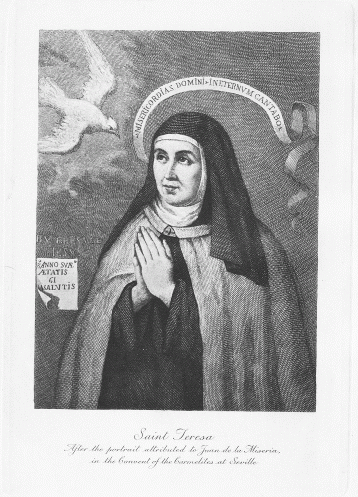
<img alt="Saint Teresa" id="i-p0.2" src="/ccel/teresa/life/files/port2.gif" />

<pb id="i-Page_i" n="i" />
<h1 id="i-p0.3">The Life</h1>
<h1 id="i-p0.4">of</h1>
<h1 id="i-p0.5">St. Teresa of Jesus</h1>
<pb id="i-Page_ii" n="ii" />
<h4 id="i-p0.6">Re-imprimatur.</h4>
<h4 id="i-p0.7">+ Franciscus</h4>
<h4 id="i-p0.8">Archiepiscopus Westmonast.</h4>
<h4 id="i-p0.9">Die 27 Sept., 1904.</h4>
</div>
</div1>

    <div1 id="ii" next="iii" prev="i" progress="0.20%" title="Title Page" type="TitlePage">
<pb id="ii-Page_iii" n="iii" />
<div class="Center" id="ii-p0.1">
<h1 id="ii-p0.2"><a id="ii-p0.3" shape="rect" xml:link="simple">The Life</a><br />
<span class="smaller" id="ii-p0.5">of</span><br />
St. Teresa of Jesus,<br />
of the Order of Our Lady of Carmel.</h1>
<p id="ii-p1" shownumber="no">Written by Herself.</p>
<p id="ii-p2" shownumber="no">Translated from the Spanish by<br />
<big id="ii-p2.2">David Lewis</big></p>
<p id="ii-p3" shownumber="no"><strong id="ii-p3.1">Third Edition Enlarged</strong></p>
<p id="ii-p4" shownumber="no">With Additional Notes and an Introduction by<br />
Rev. Fr. Benedict Zimmerman, O.C.D.</p>
<table cellpadding="10" id="ii-p4.2">
<tr id="ii-p4.3"><td colspan="1" id="ii-p4.4" rowspan="1"><p id="ii-p5" shownumber="no"> <br />
 London: <br />
 Thomas Baker</p></td>
<td colspan="1" id="ii-p5.3" rowspan="1"><p id="ii-p6" shownumber="no"> <br />
 New York: <br />
 Benziger Bros.</p></td></tr>
</table>

<p id="ii-p7" shownumber="no">MCMIV.</p>
</div>
</div1>

    <div1 id="iii" next="iv" prev="ii" progress="0.23%" title="Contents" type="Contents">
<pb id="iii-Page_v" n="v" />
<h2 id="iii-p0.1"><a id="iii-p0.2" shape="rect" xml:link="simple">Contents.</a></h2>
<p id="iii-p1" shownumber="no">Chap.</p>
<p id="iii-p2" shownumber="no"><a href="#iv-p0.2" id="iii-p2.1" shape="rect" xml:link="simple">Introduction to the Third Edition</a>, by 
<abbr title="Reverend" />Rev. <abbr title="Benedict" />B. Zimmerman</p>
<p id="iii-p3" shownumber="no"><a href="#v-p0.2" id="iii-p3.1" shape="rect" xml:link="simple"><abbr title="Saint" />St. Teresa's 
Arguments of the Chapters</a></p>
<p id="iii-p4" shownumber="no"><a href="#vi-p0.2" id="iii-p4.1" shape="rect" xml:link="simple">Preface</a> by David Lewis</p>
<p id="iii-p5" shownumber="no"><a href="#vii-p0.2" id="iii-p5.1" shape="rect" xml:link="simple">Annals of the Saint's Life</a></p>
<p id="iii-p6" shownumber="no"><a href="#viii.i-p0.2" id="iii-p6.1" shape="rect" xml:link="simple">Prologue</a></p>
<p id="iii-p7" shownumber="no"><a href="#viii.ii-p0.2" id="iii-p7.1" shape="rect" xml:link="simple">I</a>. Childhood and early Impressions—The 
Blessing of pious Parents—Desire of Martyrdom—Death of the Saint's 
Mother</p>
<p id="iii-p8" shownumber="no"><a href="#viii.iii-p0.2" id="iii-p8.1" shape="rect" xml:link="simple">II</a>. Early Impressions—Dangerous Books and 
Companions—The Saint is placed in a Monastery</p>
<p id="iii-p9" shownumber="no"><a href="#viii.iv-p0.2" id="iii-p9.1" shape="rect" xml:link="simple">III</a>. The Blessing of being with good 
people—How certain Illusions were removed</p>
<p id="iii-p10" shownumber="no"><a href="#viii.v-p0.2" id="iii-p10.1" shape="rect" xml:link="simple">IV</a>. Our Lord helps her to become a 
Nun—Her many Infirmities</p>
<p id="iii-p11" shownumber="no"><a href="#viii.vi-p0.2" id="iii-p11.1" shape="rect" xml:link="simple">V</a>. Illness and Patience of the Saint—The 
Story of a Priest whom she rescued from a Life of Sin</p>
<p id="iii-p12" shownumber="no"><a href="#viii.vii-p0.2" id="iii-p12.1" shape="rect" xml:link="simple">VI</a>. The great Debt she owed to our Lord 
for His Mercy to her—She takes <abbr title="Saint" />St. Joseph 
for her Patron</p>
<p id="iii-p13" shownumber="no"><a href="#viii.viii-p0.2" id="iii-p13.1" shape="rect" xml:link="simple">VII</a>. Lukewarmness—The Loss of 
Grace—Inconvenience of Laxity in Religious Houses</p>
<p id="iii-p14" shownumber="no"><a href="#viii.ix-p0.2" id="iii-p14.1" shape="rect" xml:link="simple">VIII</a>. The Saint ceases not to pray—Prayer 
the way to recover what is lost—All exhorted to pray—The great 
Advantage of Prayer, even to those who may have ceased from it</p>
<p id="iii-p15" shownumber="no"><a href="#viii.x-p0.2" id="iii-p15.1" shape="rect" xml:link="simple">IX</a>. The means whereby our Lord quickened 
her Soul, gave her Light in her Darkness, and made her strong 
in Goodness</p>
<p id="iii-p16" shownumber="no"><a href="#viii.xi-p0.2" id="iii-p16.1" shape="rect" xml:link="simple">X</a>. The Graces she received in 
Prayer—What we can do ourselves—The great Importance of 
understanding what our Lord is doing for us—She desires her 
Confessors to keep her Writings secret, because of the special Graces 
of our Lord to her, which they had commanded her to describe</p>
<p id="iii-p17" shownumber="no"><a href="#viii.xii-p0.2" id="iii-p17.1" shape="rect" xml:link="simple">XI</a>. Why men do not attain quickly to the 
perfect Love of God—Of Four Degrees of Prayer—Of the First 
Degree—The Doctrine profitable for Beginners, and for those who have 
no sensible Sweetness</p>
<p id="iii-p18" shownumber="no"><a href="#viii.xiii-p0.2" id="iii-p18.1" shape="rect" xml:link="simple">XII</a>. What we can ourselves do—The Evil 
of desiring to attain to supernatural States before our Lord 
calls us</p>
<p id="iii-p19" shownumber="no"><a href="#viii.xiv-p0.2" id="iii-p19.1" shape="rect" xml:link="simple">XIII</a>. Of certain Temptations of 
Satan—Instructions relating thereto</p>
<p id="iii-p20" shownumber="no"><a href="#viii.xv-p0.2" id="iii-p20.1" shape="rect" xml:link="simple">XIV</a>. The Second State of Prayer—Its 
supernatural Character</p>
<p id="iii-p21" shownumber="no"><a href="#viii.xvi-p0.2" id="iii-p21.1" shape="rect" xml:link="simple">XV</a>. Instructions for those who have 
attained to the Prayer of Quiet—Many advance so far, but few 
go farther</p>
<p id="iii-p22" shownumber="no"><a href="#viii.xvii-p0.2" id="iii-p22.1" shape="rect" xml:link="simple">XVI</a>. The Third State of Prayer—Deep 
Matters—What the Soul can do that has reached it—Effects of the 
great Graces of our Lord</p>
<p id="iii-p23" shownumber="no"><a href="#viii.xviii-p0.2" id="iii-p23.1" shape="rect" xml:link="simple">XVII</a>. The Third State of Prayer—The 
Effects thereof—The Hindrance caused by the Imagination and 
the Memory
<pb id="iii-Page_vi" n="vi" /></p>
<p id="iii-p24" shownumber="no"><a href="#viii.xix-p0.2" id="iii-p24.1" shape="rect" xml:link="simple">XVIII</a>. The Fourth State of Prayer—The 
great Dignity of the Soul raised to it by our Lord—Attainable on 
Earth, not by our Merit, but by the Goodness of our Lord</p>
<p id="iii-p25" shownumber="no"><a href="#viii.xx-p0.2" id="iii-p25.1" shape="rect" xml:link="simple">XIX</a>. The Effects of this Fourth State of 
Prayer—Earnest Exhortations to those who have attained to it not to 
go back nor to cease from Prayer, even if they fall—The great 
Calamity of going back</p>
<p id="iii-p26" shownumber="no"><a href="#viii.xxi-p0.2" id="iii-p26.1" shape="rect" xml:link="simple">XX</a>. The Difference between Union and 
Rapture—What Rapture is—The Blessing it is to the Soul—The Effects 
of it</p>
<p id="iii-p27" shownumber="no"><a href="#viii.xxii-p0.2" id="iii-p27.1" shape="rect" xml:link="simple">XXI</a>. Conclusion of the Subject—Pain of 
the Awakening—Light against Delusions</p>
<p id="iii-p28" shownumber="no"><a href="#viii.xxiii-p0.2" id="iii-p28.1" shape="rect" xml:link="simple">XXII</a>. The Security of Contemplatives lies 
in their not ascending to high Things if our Lord does not raise 
them—The Sacred Humanity must be the Road to the highest 
Contemplation—A Delusion in which the Saint was once entangled</p>
<p id="iii-p29" shownumber="no"><a href="#viii.xxiv-p0.2" id="iii-p29.1" shape="rect" xml:link="simple">XXIII</a>. The Saint resumes the History of 
her Life—Aiming at Perfection—Means whereby it may be 
gained—Instructions for Confessors</p>
<p id="iii-p30" shownumber="no"><a href="#viii.xxv-p0.2" id="iii-p30.1" shape="rect" xml:link="simple">XXIV</a>. Progress under Obedience—Her 
Inability to resist the Graces of God—God multiplies His Graces</p>
<p id="iii-p31" shownumber="no"><a href="#viii.xxvi-p0.2" id="iii-p31.1" shape="rect" xml:link="simple">XXV</a>. Divine Locutions—Delusions on 
that Subject</p>
<p id="iii-p32" shownumber="no"><a href="#viii.xxvii-p0.2" id="iii-p32.1" shape="rect" xml:link="simple">XXVI</a>. How the Fears of the Saint 
vanished—How she was assured that her Prayer was the Work of the 
Holy Spirit</p>
<p id="iii-p33" shownumber="no"><a href="#viii.xxviii-p0.2" id="iii-p33.1" shape="rect" xml:link="simple">XXVII</a>. The Saint prays to be directed in 
a different way—Intellectual Visions</p>
<p id="iii-p34" shownumber="no"><a href="#viii.xxix-p0.2" id="iii-p34.1" shape="rect" xml:link="simple">XXVIII</a>. Visions of the Sacred Humanity 
and of the glorified Bodies—Imaginary Visions—Great Fruits thereof 
when they come from God</p>
<p id="iii-p35" shownumber="no"><a href="#viii.xxx-p0.2" id="iii-p35.1" shape="rect" xml:link="simple">XXIX</a>. Of Visions—The Graces our Lord 
bestowed on the Saint—The Answers our Lord gave her for those who 
tried her</p>
<p id="iii-p36" shownumber="no"><a href="#viii.xxxi-p0.2" id="iii-p36.1" shape="rect" xml:link="simple">XXX</a>. <abbr title="Saint" />St. Peter 
of Alcantara comforts the Saint—Great Temptations and 
Interior Trials</p>
<p id="iii-p37" shownumber="no"><a href="#viii.xxxii-p0.2" id="iii-p37.1" shape="rect" xml:link="simple">XXXI</a>. Of certain outward Temptations and 
Appearances of Satan—Of the Sufferings thereby occasioned—Counsels 
for those who go on unto Perfection</p>
<p id="iii-p38" shownumber="no"><a href="#viii.xxxiii-p0.2" id="iii-p38.1" shape="rect" xml:link="simple">XXXII</a>. Our Lord shows <abbr title="Saint" />St. Teresa the Place which she had by her Sins 
deserved in Hell—The Torments there—How the Monastery of <abbr title="Saint" />St. Joseph was founded</p>
<p id="iii-p39" shownumber="no"><a href="#viii.xxxiv-p0.2" id="iii-p39.1" shape="rect" xml:link="simple">XXXIII</a>. The Foundation of the Monastery 
hindered—Our Lord consoles the Saint</p>
<p id="iii-p40" shownumber="no"><a href="#viii.xxxv-p0.2" id="iii-p40.1" shape="rect" xml:link="simple">XXXIV</a>. The Saint leaves her Monastery of 
the Incarnation for a time, at the command of her superior—Consoles 
an afflicted Widow</p>
<p id="iii-p41" shownumber="no"><a href="#viii.xxxvi-p0.2" id="iii-p41.1" shape="rect" xml:link="simple">XXXV</a>. The Foundation of the House of 
<abbr title="Saint" />St. Joseph—Observance of holy Poverty 
therein—How the Saint left Toledo</p>
<p id="iii-p42" shownumber="no"><a href="#viii.xxxvii-p0.2" id="iii-p42.1" shape="rect" xml:link="simple">XXXVI</a>. The Foundation of the Monastery of 
<abbr title="Saint" />St. Joseph—Persecution and 
Temptations—Great interior Trial of the Saint, and 
her Deliverance</p>
<p id="iii-p43" shownumber="no"><a href="#viii.xxxviii-p0.2" id="iii-p43.1" shape="rect" xml:link="simple">XXXVII</a>. The Effects of the divine Graces 
in the Soul—The inestimable Greatness of one Degree of Glory</p>
<p id="iii-p44" shownumber="no"><a href="#viii.xxxix-p0.2" id="iii-p44.1" shape="rect" xml:link="simple">XXXVIII</a>. Certain heavenly Secrets, 
Visions, and Revelations—The Effects of them in her Soul</p>
<p id="iii-p45" shownumber="no"><a href="#viii.xl-p0.2" id="iii-p45.1" shape="rect" xml:link="simple">XXXIX</a>. Other Graces bestowed on the Saint—The 
Promises of our Lord to her—Divine Locutions and Visions</p>
<p id="iii-p46" shownumber="no"><a href="#viii.xli-p0.2" id="iii-p46.1" shape="rect" xml:link="simple">XL</a>. Visions, Revelations, and Locutions</p>
<pb id="iii-Page_vii" n="vii" />
<h3 id="iii-p46.2">The Relations.</h3>
<p id="iii-p47" shownumber="no">Relation.</p>
<p id="iii-p48" shownumber="no"><a href="#ix.i-p0.2" id="iii-p48.1" shape="rect" xml:link="simple">I</a>. Sent to <abbr title="Saint" />St. Peter of Alcantara in 1560 from the Monastery 
of the Incarnation, Avila</p>
<p id="iii-p49" shownumber="no"><a href="#ix.ii-p0.2" id="iii-p49.1" shape="rect" xml:link="simple">II</a>. To one of her Confessors, from the 
House of Doña Luisa de la Cerda, in 1562</p>
<p id="iii-p50" shownumber="no"><a href="#ix.iii-p0.2" id="iii-p50.1" shape="rect" xml:link="simple">III</a>. Of various Graces granted to the 
Saint from the year 1568 to 1571, inclusive</p>
<p id="iii-p51" shownumber="no"><a href="#ix.iv-p0.2" id="iii-p51.1" shape="rect" xml:link="simple">IV</a>. Of the Graces the Saint received in 
Salamanca at the end of Lent, 1571</p>
<p id="iii-p52" shownumber="no"><a href="#ix.v-p0.2" id="iii-p52.1" shape="rect" xml:link="simple">V</a>. Observations on certain Points 
of Spirituality</p>
<p id="iii-p53" shownumber="no"><a href="#ix.vi-p0.2" id="iii-p53.1" shape="rect" xml:link="simple">VI</a>. The Vow of Obedience to Father Gratian 
which the Saint made in 1575</p>
<p id="iii-p54" shownumber="no"><a href="#ix.vii-p0.2" id="iii-p54.1" shape="rect" xml:link="simple">VII</a>. Made for Rodrigo Alvarez, S.J., in 
the year 1575, according to Don Vicente de la Fuente; but in 1576, 
according to the Bollandists and <abbr title="Father" />F. Bouix</p>
<p id="iii-p55" shownumber="no"><a href="#ix.viii-p0.2" id="iii-p55.1" shape="rect" xml:link="simple">VIII</a>. Addressed to <abbr title="Father" />F. Rodrigo Alvarez</p>
<p id="iii-p56" shownumber="no"><a href="#ix.ix-p0.2" id="iii-p56.1" shape="rect" xml:link="simple">IX</a>. Of certain spiritual Graces she 
received in Toledo and Avila in the years 1576 and 1577</p>
<p id="iii-p57" shownumber="no"><a href="#ix.x-p0.2" id="iii-p57.1" shape="rect" xml:link="simple">X</a>. Of a Revelation to the Saint at Avila, 
1579, and of Directions concerning the Government of the Order</p>
<p id="iii-p58" shownumber="no"><a href="#ix.xi-p0.2" id="iii-p58.1" shape="rect" xml:link="simple">XI</a>. Written from Palencia in May, 1581, 
and addressed to Don Alonzo Velasquez, Bishop of Osma, who had been 
when Canon of Toledo, one of the Saint's Confessors</p>
</div1>

    <div1 id="iv" next="v" prev="iii" progress="0.77%" title="Introduction" type="Introduction">
<pb id="iv-Page_ix" n="ix" />
<h2 id="iv-p0.1"><a id="iv-p0.2" shape="rect" xml:link="simple">Introduction to the Present Edition.</a></h2>
<p id="iv-p1" shownumber="no">When the publisher entrusted me with the task of editing this 
volume, one sheet was already printed and a considerable portion of 
the book was in type.  Under his agreement with the owners of the 
copyright, he was bound to reproduce the text and notes, etc., 
originally prepared by Mr. David Lewis without any change, so that my 
duty was confined to reading the proofs and verifying the quotations.  
This translation of the <cite id="iv-p1.1">Life</cite> of <abbr title="Saint" />St. Teresa is so excellent, that it could hardly 
be improved.  While faithfully adhering to her wording, the translator 
has been successful in rendering the lofty teaching in simple and 
clear language, an achievement all the more remarkable as in addition 
to the difficulty arising from the transcendental nature of the 
subject matter, the involved style, and the total absence of 
punctuation tend to perplex the reader.  Now and then there might be 
some difference of opinion as to how <abbr title="Saint" />St. Teresa's phrases should be construed, but it 
is not too much to say that on the whole Mr. Lewis has been more 
successful than any other translator, whether English or foreign. Only 
in one case have I found it necessary to make some slight alteration 
in the text, and I trust the owners of the copyright will forgive me 
for doing so.  In <a href="#viii.xxvi-p7.1" id="iv-p1.4" shape="rect" xml:link="simple">Chapter XXV., § 4</a>, <abbr title="Saint" />St. Teresa, speaking of the difference between 
the Divine and the imaginary locutions, says that a person commending 
a matter to God with great earnestness, may think that he hears 
whether his prayer will be granted or not: <i>y es muy 
posible</i>, "and this is quite possible," but he who has ever 
heard a Divine locution will see at once that this assurance is 
something quite different.  Mr. Lewis, following the old Spanish 
editions, translated "And it is most <em id="iv-p1.6">impossible</em>," 
whereas both the autograph and the context demand the wording I have 
ventured to substitute.</p>
<p id="iv-p2" shownumber="no">When Mr. Lewis undertook the translation of <abbr title="Saint" />St. Teresa's works, he had before him Don Vicente 
de la Fuente's edition (Madrid, 1861–1862), supposed to be a faithful 
transcript of the original. In 1873 the <span id="iv-p2.2" lang="es">Sociedad 
Foto-Tipografica-Catolica</span> of Madrid published a photographic 
reproduction of the Saint's autograph in 412 pages in folio, which 
establishes the true text once for all. Don Vicente prepared a 
transcript of this, in which he wisely adopted the modern way of 
spelling but otherwise preserved the original text, or at least 
pretended to do so, for a minute comparison between autograph and
<pb id="iv-Page_x" n="x" />
transcript reveals the startling fact that nearly a thousand 
inaccuracies have been allowed to creep in.  Most of these variants 
are immaterial, but there are some which ought not to have been 
overlooked. Thus, in <a href="#viii.xix-p31.1" id="iv-p2.3" shape="rect" xml:link="simple">Chapter XVIII. § 
20</a>, <abbr title="Saint" />St. Teresa's words are: <i lang="es">Un gran letrado de la orden del glorioso santo Domingo</i>, 
while Don Vicente retains the old reading <i>De la orden del 
glorioso patriarca santo Domingo</i>.  Mr. Lewis possessed a copy of 
this photographic reproduction, but utilised it only in one instance 
in his second edition.<note anchored="yes" id="iv-p2.5" n="1" place="foot"><p id="iv-p3" shownumber="no"><a id="iv-p3.1" shape="rect" xml:link="simple">1</a>.
<a href="#viii.xxxv-p17.1" id="iv-p3.2" shape="rect" xml:link="simple">Chap. xxxiv., 
note 5</a>.</p></note></p>
<p id="iv-p4" shownumber="no">The publication of the autograph has settled a point of some 
importance.  The Bollandists (n. 1520), discussing the question 
whether the <a href="#v-p0.2" id="iv-p4.1" shape="rect" xml:link="simple">headings of the chapters (appended 
to this Introduction)</a> are by <abbr title="Saint" />St. Teresa 
or a later addition, come to the conclusion (against the authors of 
the <cite id="iv-p4.3" lang="es">Reforma de los Descalços</cite>) that they are 
clearly an interpolation (<i>clarissime patet</i>) on 
account of the praise of the doctrine contained in these arguments.  
Notwithstanding their high authority the Bollandists are in this 
respect perfectly wrong, the arguments are entirely in <abbr title="Saint" />St. Teresa's own hand and are exclusively her own 
work.  The Book of Foundations and the Way of Perfection contain 
similar arguments in the Saint's handwriting.  Nor need any surprise 
be felt at the alleged praise of her doctrine for by saying: this 
chapter is most noteworthy (Chap. XIV.), 
or: this is good doctrine (Chap. XXI.), 
etc., she takes no credit for herself because she never grows tired of 
repeating that she only delivers the message she has received from our 
Lord.<note anchored="yes" id="iv-p4.5" n="2" place="foot"><p id="iv-p5" shownumber="no"><a id="iv-p5.1" shape="rect" xml:link="simple" /><a href="#viii.xix-p17.1" id="iv-p5.2" shape="rect" xml:link="simple"><abbr title="chapter" />Chap. xviii. § 11</a>.</p></note>  The Bollandists, not having seen the 
original, may be excused, but P. Bouix (whom Mr. Lewis follows in this 
matter) had no right to suppress these arguments.  It is to be hoped 
that future editions of the works of <abbr title="Saint" />S. 
Teresa will not again deprive the reader of this remarkable feature of 
her writings. What she herself thought of her books is best told by 
Yepes in a letter to Father Luis de Leon, the first editor of her 
works: "She was pleased when her writings were being praised and 
her Order and the convents were held in esteem.  Speaking one day of 
the <cite id="iv-p5.5">Way of Perfection</cite>, she rejoiced to hear it praised, 
and said to me with great content: Some grave men tell me that it is 
like Holy Scripture.  For being revealed doctrine it seemed to her 
that praising her book was like 
praising God."<note anchored="yes" id="iv-p5.6" n="3" place="foot"><p id="iv-p6" shownumber="no"><a id="iv-p6.1" shape="rect" xml:link="simple" />Fuente, <cite id="iv-p6.2" lang="es">Obras</cite> (1881), vol. vi. p. 133.</p></note></p>
<p id="iv-p7" shownumber="no">A notable feature in Mr. Lewis's translation is his division of the 
chapters into short paragraphs. But it appears that he rearranged the 
division during the process of printing, with the result that a large 
number of references were wrong.  No labour has been spared in the 
correction of these, and I trust that the present edition will be the 
more useful for it.  In quoting the <cite id="iv-p7.1">Way of Perfection</cite> and 
the <cite id="iv-p7.2">Interior Castle</cite> (which he calls <cite id="iv-p7.3">Inner 
Fortress</cite>!) Mr. Lewis refers to similar paragraphs which, 
however, are to be
<pb id="iv-Page_xi" n="xi" />
found in no English edition.  A new translation of these two works 
is greatly needed, and, in the case of the <cite id="iv-p7.4">Way of 
Perfection</cite>, the manuscript of the Escurial should be consulted 
as well as that of Valladolid.  Where the writings of <abbr title="Saint" />S. John of the Cross are quoted by volume and 
page, the edition referred to is the one of 1864, another of Mr. 
Lewis's masterpieces.  The chapters in Ribera's Life of <abbr title="Saint" />St. Teresa refer to the edition in the Acts of 
the Saint by the Bollandists.  These and all other quotations have 
been carefully verified, with the exception of those taken from the 
works on Mystical theology by Antonius a Spiritu Sancto and Franciscus 
a S. Thoma, which I was unable to consult.  I should have wished to 
replace the quotations from antiquated editions of the Letters of our 
Saint by references to the new French edition by P. Grégoire de <abbr title="Saint" />S. Joseph (Paris, Poussielgue, 1900), which may 
be considered as the standard edition.</p>
<p id="iv-p8" shownumber="no">In <a href="#viii.xii-p11.1" id="iv-p8.1" shape="rect" xml:link="simple">note 2 to <abbr title="chapter" />Chap. XI.</a> Mr. Lewis draws attention to a 
passage in a sermon by <abbr title="Saint" />S. Bernard 
containing an allusion to different ways of watering a garden similar 
to <abbr title="Saint" />St. Teresa's well-known comparison.  Mr. 
Lewis's quotation is incorrect, and I am not certain what sermon he 
may have had in view. Something to the point may be found in sermon 22 
on the Canticle (Migne, <abbr lang="la" title="Patrologia Latina" />P. 
L. Vol. CLXXXIII, p. 879), and in the first sermon on the 
Nativity of our Lord (ibid., p. 115), and also in a sermon on the 
Canticle by one of <abbr title="Saint" />St. Bernard's disciples 
(Vol. CLXXXIV., p. 195). I am indebted to the Very <abbr title="Reverend" />Rev. Prior Vincent McNabb, O.P., for the 
verification of a <a href="#viii.xxi-p59.1" id="iv-p8.8" shape="rect" xml:link="simple">quotation from <abbr title="Saint" />St. Vincent Ferrer</a> 
(<a href="#viii.xxi-p58.1" id="iv-p8.10" shape="rect" xml:link="simple">Chap. XX. § 31</a>).</p>
<p id="iv-p9" shownumber="no">Since the publication of Mr. Lewis's translation the uncertainty 
about the date of <abbr title="Saint" />St. Teresa's profession 
has been cleared up. Yepes, the Bollandists, P. Bouix, Don Vicente de 
la Fuente, Mr. Lewis, and numerous other writers assume that she 
entered the convent of the Incarnation<note anchored="yes" id="iv-p9.2" n="4" place="foot"><p id="iv-p10" shownumber="no"><a id="iv-p10.1" shape="rect" xml:link="simple" />See the licence granted by Leo X. 
to the prioress and convent of the Incarnation to build another house 
for the use of the said convent, and to migrate thither (Vatican 
Archives, Dataria, Leo X., anno i., vol. viii., fol. 82).  Also a 
licence to sell or exchange certain property belonging to it (ibid., 
anno iv., vol. vii., f. 274; and a charge to the Bishop of Avila 
concerning a recourse of the said convent (ibid., anno vii., vol. iv., 
f. 24).</p></note> on 
November 2nd, 1533, and made her profession on November 3rd, 1534. The 
remaining dates of events previous to her conversion are based upon 
this, as will he seen from the chronology printed by Mr. Lewis at the 
end of his Preface and frequently referred to in the footnotes.  It 
rests, however, on inadequate evidence, namely on a single passage in 
the Life<note anchored="yes" id="iv-p10.2" n="5" place="foot"><p id="iv-p11" shownumber="no"><a id="iv-p11.1" shape="rect" xml:link="simple" /><a href="#viii.v-p20.1" id="iv-p11.2" shape="rect" xml:link="simple">Chap. iv 
§ 9</a>.</p></note> where the Saint says that she was 
not yet twenty years old when she made her first supernatural 
experience in prayer.  She was twenty in March, 1535, and as this 
event took place after her profession, the latter was supposed by 
Yepes and his followers to have taken place in the previous November.  
Even if we had no further evidence,
<pb id="iv-Page_xii" n="xii" />
the fact that <abbr title="Saint" />St. Teresa is not always 
reliable in her calculation should have warned us not to rely too much 
upon a somewhat casual statement.  In the <a href="#viii.ii-p13.1" id="iv-p11.4" shape="rect" xml:link="simple">first chapter, § 7</a>, she positively asserts 
that she was rather less than twelve years old at the death of her 
mother, whereas we know that she was at least thirteen years and eight 
months old.  As to the profession we have overwhelming evidence that 
it took place on the 3rd of November, 1536, and her entrance in the 
convent a year and a day earlier.  To begin with, we have the positive 
statement of her most intimate friends, Julian d'Avila, Father Ribera, 
S.J., and Father Jerome Gratian. Likewise doña Maria Pinel, nun of the 
Incarnation, says in her deposition: "She (Teresa of Jesus) took 
the habit on 2 November, 1535."<note anchored="yes" id="iv-p11.5" n="6" place="foot"><p id="iv-p12" shownumber="no"><a id="iv-p12.1" shape="rect" xml:link="simple" /><cite id="iv-p12.2" lang="fr">Lettres de <abbr title="Sainte" />Ste. Thérèse</cite>, edit. P. Grégoire de <abbr title="Saint" />S. Joseph, vol. iii, p. 419, note 2.</p></note>  This 
is corroborated by various passages in the Saint's writings. Thus, in 
<a href="#ix.vii-p1.1" id="iv-p12.5" shape="rect" xml:link="simple">Relation VII.</a>, written in 1575, she 
says, speaking of herself: "This nun took the habit forty years 
ago."  Again in a passage of the <cite id="iv-p12.6">Life</cite> written about 
the end of 1564 or the beginning of the following 
year,<note anchored="yes" id="iv-p12.7" n="7" place="foot"><p id="iv-p13" shownumber="no"><a id="iv-p13.1" shape="rect" xml:link="simple" /><a href="#viii.xxxvii-p30.1" id="iv-p13.2" shape="rect" xml:link="simple">Chap. xxxvi. § 
10.</a>  The date of this part of the <cite id="iv-p13.3">Life</cite> can be easily 
ascertained from the two following chapters.  In <a href="#viii.xxxviii-p26.1" id="iv-p13.4" shape="rect" xml:link="simple">xxxvii. § 18</a>, <abbr title="Saint" />St. Teresa says that she is not yet fifty years 
old, consequently the chapter must have been written before the end of 
March, 1565; and in the next chapter, <a href="#viii.xxxix-p20.1" id="iv-p13.6" shape="rect" xml:link="simple">xxxviii. § 15</a>, she speaks of the death 
of Father Pedro Ibañez, which appears to have taken place on 2nd 
February.  This, at least, is the date under which his name appears in 
the <cite id="iv-p13.7" lang="fr">Année Dominicaine</cite>, and the Very <abbr title="Reverend" />Rev. Prior Vincent McNabb tells me that there 
is every reason to think that it is the date of 
his death.</p></note> she mentions that she has been a nun 
for over twenty-eight years, which points to her profession in 1536.  
But there are two documents which place the date of profession beyond 
dispute, namely the act of renunciation of her right to the paternal 
inheritance and the deed of dowry drawn up before a public notary.  
Both bear the date 31 October, 1536.  The authors of the <cite id="iv-p13.9" lang="es">Reforma de los Descalços</cite> thought that they must have 
been drawn up before <abbr title="Saint" />St. Teresa took the 
habit, and therefore placed this event in 1536 and the profession in 
1537, but neither of these documents is necessarily connected with the 
clothing, yet both must have been completed before profession.  The 
Constitutions of Blessed John Soreth, drawn up in 1462, which were 
observed at the convent of the Incarnation, contain the following rule 
with regard to the reception and training of 
novices:<note anchored="yes" id="iv-p13.11" n="8" place="foot"><p id="iv-p14" shownumber="no"><a id="iv-p14.1" shape="rect" xml:link="simple" />When about A.D. 1452 certain 
communities of Beguines demanded affiliation to the Carmelite Order, 
they were given the Constitutions of the friars without any 
alterations.  These Constitutions were revised in 1462, but neither 
there nor in the Acts of the General Chapters, so far as these are 
preserved, is there the slightest reference to convents of nuns.  The 
colophon of the printed edition (Venice, 1499) shows that they held 
good for friars and nuns: <i>Expliciunt sacrae 
constitutiones novae fratrum et sororum beatae Mariae de Monte 
Carmelo</i>.  They contain the customary laws forbidding the friars 
[note continues, p. xiii.] under pain of excommunication, to leave the 
precincts of their convents without due licence, but do not enjoin 
strict enclosure, which would have been incompatible with their manner 
of life and their various duties. <abbr title="Saint" />St. 
Teresa nowhere insinuates that the Constitutions, such as they were, 
were not kept at the Incarnation; her remarks in <a href="#viii.viii-p7.1" id="iv-p14.3" shape="rect" xml:link="simple"><abbr title="chapter" />chap. vii.</a> are 
aimed at the Constitutions themselves, which were never made for nuns, 
and therefore did not provide for the needs of 
their convents.</p></note> <i>Consulimus quod 
recipiendus ante susceptionem habitus expediat se de omnibus quae 
habet</i>
<pb id="iv-Page_xiii" n="xiii" />
<i>in saeculo nisi ex causa rationabili per priorem 
generalem vel provincialem fuerit aliter ordinatum</i>.  There was, 
indeed, good reason in the case of <abbr title="Saint" />St. 
Teresa to postpone these legal matters. Her father was much opposed to 
her becoming a nun, but considering his piety it might have been 
expected that before the end of the year of probation he would grant 
his consent (which in the event he did the very day she took the 
habit), and make arrangements for the dowry.  One little detail 
concerning her haste in entering the convent has been preserved by the 
<cite id="iv-p14.6" lang="es">Reforma</cite> and the 
Bollandists,<note anchored="yes" id="iv-p14.7" n="9" place="foot"><p id="iv-p15" shownumber="no"><a id="iv-p15.1" shape="rect" xml:link="simple" /><cite id="iv-p15.2" lang="es">Reforma</cite> lib. i., cap. 
47.  Bollandists. no. 366.</p></note> though neither 
seem to have understood its meaning.  On leaving the convent of the 
Incarnation for <abbr title="Saint" />St. Joseph's in 1563, <abbr title="Saint" />St. Teresa handed the prioress of the former 
convent a receipt for her bedding, habit and discipline. This almost 
ludicrous scrupulosity was in conformity with a decision of the 
general chapter of 1342 which said: <i>Ingrediens ordinem ad 
sui ipsius instantiam habeat lectisternia pro se ipso, sin autem 
recipiens solvat lectum illum</i>.  As <abbr title="Saint" />St. 
Teresa entered the convent without the knowledge of her father she did 
not bring this insignificant trousseau with her; accordingly the 
prioress became responsible for it and obtained a receipt when <abbr title="Saint" />St. Teresa went to the new convent.  The dowry 
granted by Alphonso Sanchez de Cepeda to his daughter consisted of 
twenty-five measures, partly wheat, partly barley, or, in lieu 
thereof, two hundred ducats per annum. Few among the numerous nuns of 
the Incarnation could have brought a better or even an 
equal dowry.</p>
<p id="iv-p16" shownumber="no">The date of <abbr title="Saint" />St. Teresa's profession 
being thus fixed on the 3rd of November, 1536, some other dates of the 
chronology must be revised.  Her visit to Castellanos de la Cañada 
must have taken place in the early part of 1537.  But already before 
this time the Saint had an experience which should have proved a 
warning to her, and the neglect of which she never ceased to deplore, 
namely the vision of our 
Lord;<note anchored="yes" id="iv-p16.2" n="10" place="foot"><p id="iv-p17" shownumber="no"><a id="iv-p17.1" shape="rect" xml:link="simple" /><a href="#viii.viii-p13.1" id="iv-p17.2" shape="rect" xml:link="simple">Chap. vii. 
§ 11</a>.</p></note> her own 
words are that this event took place "at the very beginning of her 
acquaintance with the person" who exercised so dangerous an 
influence upon her.  Mr. Lewis assigns to it the date 1542, which is 
impossible seeing that instead of twenty-six it was only twenty-two 
years before she wrote that passage of her life.  Moreover, it would 
have fallen into the midst of her lukewarmness (according to Mr. 
Lewis's chronology) instead of the very beginning.  P. Bouix rightly 
assigns it to the year 1537, but as he is two years in advance of our 
chronology it does not agree with the
<pb id="iv-Page_xiv" n="xiv" />
surrounding circumstances as described by him.  Bearing in mind the 
hint <abbr title="Saint" />St. Teresa 
gives<note anchored="yes" id="iv-p17.4" n="11" place="foot"><p id="iv-p18" shownumber="no"><a id="iv-p18.1" shape="rect" xml:link="simple" /><a href="#viii.vi-p2.1" id="iv-p18.2" shape="rect" xml:link="simple">Chap. v. 
§ 2</a>.</p></note> as to her disposition immediately 
after her profession, we need not be surprised if the first roots of 
her lukewarmness show themselves so soon.</p>
<p id="iv-p19" shownumber="no">From Castellanos she proceeded to Hortigosa on a visit to her 
uncle. While there she became acquainted with the book called <cite id="iv-p19.1" lang="es">Tercer Abecedario</cite>.  Don Vicente remarks that the 
earliest edition known to him was printed in 1537, which tells 
strongly against the chronology of the Bollandists, P. Bouix, and 
others.  Again, speaking of her cure at Bezadas she gives a valuable 
hint by saying that she remained blind to certain dangers for more 
than seventeen years until the Jesuit fathers finally undeceived her.  
As these came to Avila in 1555 the seventeen years lead us back to 
1538, which precisely coincides with her sojourn at Bezadas.  She 
remained there until <i>Pascua florida</i> of the following 
year.  P. Bouix and others understand by this term Palm Sunday, but 
Don Vicente shows good reason that Easter Sunday is meant, which in 
1539 was April the 6th.  She then returned to Avila, more dead than 
alive, and remained seriously ill for nearly three years, until she 
was cured through the miraculous intervention of <abbr title="Saint" />St. Joseph about the beginning of 1542.  Now 
began the period of lukewarmness which was temporally interrupted by 
the illness and death of her father, in 1544 or 1545, and came to an 
end about 1555.  Don Vicente, <a href="#viii.viii-p45.1" id="iv-p19.3" shape="rect" xml:link="simple">followed 
by Mr. Lewis</a>, draws attention to what he believes to be a 
"proof of great laxity of the convent," that <abbr title="Saint" />St. Teresa should have been urged by one of her 
confessors to communicate as often as once a fortnight.  It should be 
understood that frequent communion such as we now see it practised was 
wholly unknown in her time.  The Constitutions of the Order specified 
twelve days on which all those that were not priests should 
communicate, adding: <i>Verumtamen fratres professi prout 
Deus eis devotionem contulerit diebus dominicis et festis 
duplicibus</i> (<i>i.e.</i>, on feasts of our Lady, the Apostles, 
etc.), <i>communicare poterunt si qui velint</i>.  Thus, 
communicating about once a month <abbr title="Saint" />St. Teresa 
acted as ordinary good Religious were wont to do, and by approaching 
the sacrament more frequently she placed herself among the more 
fervent nuns.<note anchored="yes" id="iv-p19.6" n="12" place="foot"><p id="iv-p20" shownumber="no"><a id="iv-p20.1" shape="rect" xml:link="simple" />Constitutions of 1462. Part i., 
cap. x.</p></note></p>
<p id="iv-p21" shownumber="no"><abbr title="Saint" />St. Teresa wrote quite a number of 
different accounts of her life.  The first, addressed to Father Juan 
de Padranos, S.J.<note anchored="yes" id="iv-p21.2" n="13" place="foot"><p id="iv-p22" shownumber="no"><a id="iv-p22.1" shape="rect" xml:link="simple" /><a href="#viii.xxiv-p33.1" id="iv-p22.2" shape="rect" xml:link="simple">Chap. xxiii. 
§ 17</a>.</p></note> and dated 1557, is now 
lost.  The second, written for <abbr title="Saint" />St. Peter of 
Alcantara, is Relation I. at the end of this volume; a copy of it, 
together with a continuation (Relation II.) was sent to Father Pedro 
Ibañez in 1562. It is somewhat difficult to admit that in the very 
same year she wrote another, more extensive, account to the same 
priest, which is generally called the "first" Life.  At the 
end of the <cite id="iv-p22.4">Life</cite> such as we have it now, <abbr title="Saint" />St. Teresa wrote: "This book was finished
<pb id="iv-Page_xv" n="xv" />
in June, 1562," and Father Bañez wrote underneath: "This 
date refers to the first account which the Holy Mother Teresa of Jesus 
wrote of her life; it was not then divided into chapters.  Afterwards 
she made this copy and inserted in it many things which had taken 
place subsequent to this date, such as the foundation of the monastery 
of <abbr title="Saint" />St. Joseph of Avila."  Elsewhere 
Father Bañez says:<note anchored="yes" id="iv-p22.7" n="14" place="foot"><p id="iv-p23" shownumber="no"><a id="iv-p23.1" shape="rect" xml:link="simple" />Deposition for the process of 
canonisation, written in 1591.  Fuente, <cite id="iv-p23.2" lang="es">Obras</cite>, 
vol. vi., p. 174.</p></note> "Of one of her 
books, namely, the one in which she recorded her life and the manner 
of prayer whereby God had led her, I can say that she composed it to 
the end that her confessors might know her the better and instruct 
her, and also that it might encourage and animate those who learn from 
it the great mercy God had shown her, a great sinner as she humbly 
acknowledged herself to be.  This book was already written when I made 
her acquaintance, her previous confessors having given her permission 
to that effect.  Among these was a licentiate of the Dominican Order, 
the Reverend Father Pedro Ibañez, reader of Divinity at Avila.  She 
afterwards completed and recast this book."  These two passages of 
Bañez have led the biographers of the Saint to think that she wrote 
her <cite id="iv-p23.3">Life</cite> twice, first in 1561 and the following year, 
completing it in the house of Doña Luisa de la Cerda at Toledo, in the 
month of June; and secondly between 1563 and 1565 at <abbr title="Saint" />St. Joseph's Convent of Avila. They have been at 
pains to point out a number of places which could not have been in the 
"first" Life, but must have been added in the second<note anchored="yes" id="iv-p23.5" n="15" place="foot"><p id="iv-p24" shownumber="no"><a id="iv-p24.1" shape="rect" xml:link="simple" />See the <a href="#viii.viii-p14.1" id="iv-p24.2" shape="rect" xml:link="simple">notes to chapters vii. § 11</a>; <a href="#viii.xvii-p16.1" id="iv-p24.3" shape="rect" xml:link="simple">xvi. § 10</a>; <a href="#viii.xxi-p12.1" id="iv-p24.4" shape="rect" xml:link="simple">xx. § 6</a>; <a href="#viii.xxv-p6.1" id="iv-p24.5" shape="rect" xml:link="simple">xxiv. § 4</a>; <a href="#viii.xxviii-p33.1" id="iv-p24.6" shape="rect" xml:link="simple">xxvii. § 17</a>.  At the <a href="#viii.xxxii-p40.1" id="iv-p24.7" shape="rect" xml:link="simple">end of chapter xxxi.</a> we are told on 
the authority of Don Vicente that the "first" Life must have 
ended at this point.</p></note>; and they took it for granted that the 
letter with which the book as we now have it concludes, was addressed 
to Father Ibañez in 1562, when the Saint sent him the "first" 
Life. It bears neither address nor date, but from its contents I am 
bound to conclude that it was written in 1565, that it refers to the 
"second" Life, and that whomsoever it was addressed to, it 
cannot have been to Father Ibañez, who was already dead at the 
time.<note anchored="yes" id="iv-p24.8" n="16" place="foot"><p id="iv-p25" shownumber="no"><a id="iv-p25.1" shape="rect" xml:link="simple" />Bollandists, 
no. 1518.</p></note>  Saint Teresa asks the writer to 
send a copy of the book to Father Juan de Avila. Now we know from her 
letters that as late as 1568 this request had not been complied with, 
and that <abbr title="Saint" />St. Teresa had to write twice to 
Doña Luisa for this 
purpose;<note anchored="yes" id="iv-p25.3" n="17" place="foot"><p id="iv-p26" shownumber="no"><a id="iv-p26.1" shape="rect" xml:link="simple" /><cite id="iv-p26.2" lang="fr">Lettres</cite>, 
edit. Grégoire. I., pp. 13 (18 May, 1568); 21 (27 May); 35 
(2 November).</p></note> but if she 
had already given these instructions in 1562, it is altogether 
incomprehensible that she did not see to it earlier, especially when 
the "first" Life was returned to her for the purpose of 
copying and completing it.  The second reason which prevents me from 
considering this letter as connected with the "first" Life 
will be examined when I come to speak of the different ends the 
Saint had
<pb id="iv-Page_xvi" n="xvi" />
in view when writing her Life.  It is more difficult to say to whom 
the letter was really addressed. The <cite id="iv-p26.3" lang="es">Reforma</cite> 
suggests Father Garcia de Toledo, Dominican, who bade the Saint write 
the history of the foundation of <abbr title="Saint" />St. Joseph's at 
Avila<note anchored="yes" id="iv-p26.5" n="18" place="foot"><p id="iv-p27" shownumber="no"><a id="iv-p27.1" shape="rect" xml:link="simple" /><cite id="iv-p27.2" lang="es">Reforma</cite>, 
vol. i., lib. v., cap. xxxv., no. 9.  Bollandists, 
no. 1518.</p></note> and who was her confessor at that 
convent. It moreover believes that he it is to whom <a href="#viii.xxxv-p9.1" id="iv-p27.3" shape="rect" xml:link="simple">Chapter XXXIV. §§ 8–20</a> refers, and this 
opinion appears to me plausible.  As to the latter point, Yepes thinks 
the Dominican at Toledo was Father Vicente Barron, the Bollandists 
offer no opinion, and Mr. Lewis, in his first edition gives first the 
one and then the other.  If, as I think, Father Garcia was meant, the 
passage in <a href="#viii.xvii-p15.1" id="iv-p27.4" shape="rect" xml:link="simple">Chapter XVI. § 10</a>, 
beginning "O, my son," would concern him also, as well as 
several passages where <i>Vuestra Merced</i>—you, my 
Father—is addressed.  For although the book came finally into the 
hands of Father Bañez, it was first delivered into those of the 
addressee of the letter.</p>
<p id="iv-p28" shownumber="no">Whether the previous paper was a mere "Relation," or really 
a first attempt at a 
"Life,"<note anchored="yes" id="iv-p28.1" n="19" place="foot"><p id="iv-p29" shownumber="no"><a id="iv-p29.1" shape="rect" xml:link="simple" />If the latter, it must have been 
very much shorter than the second edition, and can scarcely have 
contained more than the first nine chapters (perhaps verbatim) and an 
account of the visions, locutions, etc., contained in chapters 
xxiii.–xxxi., without comment.</p></note> 
there can be no dispute about its purpose: <abbr title="Saint" />St. Teresa speaks of it in the following terms: 
"I had recourse to my Dominican father (Ibañez); I told him all 
about my visions, my way of prayer, the great graces our Lord had 
given me, as clearly as I could, and begged him to consider the matter 
well, and tell me if there was anything therein at variance with the 
Holy Writings, and give me his opinion on the whole 
matter."<note anchored="yes" id="iv-p29.3" n="20" place="foot"><p id="iv-p30" shownumber="no"><a id="iv-p30.1" shape="rect" xml:link="simple" /><a href="#viii.xxxiv-p9.1" id="iv-p30.2" shape="rect" xml:link="simple">Chap. xxxiii. 
§ 7</a>.</p></note>  The account thus rendered 
had the object of enabling Father Ibañez to give her light upon the 
state of her soul. But while she was drawing it up, a great change 
came over her.  During <abbr title="Saint" />St. Teresa's sojourn 
at Toledo she became from a pupil an experienced master in Mystical 
knowledge.  "When I was there a religious" (probably Father 
Garcia de Toledo) "with whom I had conversed occasionally some 
years ago, happened to arrive. When I was at Mass in a monastery of 
his Order, I felt a longing to know the state of his 
soul."<note anchored="yes" id="iv-p30.4" n="21" place="foot"><p id="iv-p31" shownumber="no"><a id="iv-p31.1" shape="rect" xml:link="simple" /><a href="#viii.xxxv-p9.1" id="iv-p31.2" shape="rect" xml:link="simple">Chap. xxxiv. 
§ 8</a>.</p></note>  Three times the Saint rose 
from her seat, three times she sat down again, but at last she went to 
see him in a confessional, not to ask for any light for herself, but 
to give him what light she could, for she wished to induce him to 
surrender himself more perfectly to God, and this she accomplished by 
telling him how she had fared since their last meeting.  No one who 
reads this remarkable chapter can help being struck by the change that 
has come over Teresa: the period of her schooling is at an end, and 
she is now the great teacher of Mystical theology.  Her humility does 
not allow her to speak with the same degree of openness upon her 
achievements as she did when
<pb id="iv-Page_xvii" n="xvii" />
making known her failings, yet she cannot conceal the Gift of 
Wisdom she had received and the use she made of it.</p>
<p id="iv-p32" shownumber="no"><abbr title="Saint" />St. Teresa's development, if 
extraordinary considering the degree of spirituality she reached, was 
nevertheless gradual and regular.  With her wonderful power of 
analysis, she has given us not only a clear insight into her interior 
progress, but also a sketch of the development of her understanding of 
supernatural things.  "It is now (<i>i.e.</i>, about the end of 
1563) some five or six years, I believe, since our Lord raised me to 
this state of prayer, in its fulness, and that more than once,—and I 
never understood it, and never could explain it; and so I was 
resolved, when I should come thus far in my story, to say very little 
or nothing at 
all."<note anchored="yes" id="iv-p32.2" n="22" place="foot"><p id="iv-p33" shownumber="no"><a id="iv-p33.1" shape="rect" xml:link="simple" /><a href="#viii.xvii-p4.1" id="iv-p33.2" shape="rect" xml:link="simple">Chap. xvi. 
§ 2</a>.</p></note>  In the following 
chapter she adds: "You, my father, will be delighted greatly to 
find an account of the matter in writing, and to understand it; for it 
is one grace that our Lord gives grace; and it is another grace to 
understand what grace and what gift it is; and it is another and 
further grace to have the power to describe and explain it to others. 
Though it does not seem that more than the first of these—the giving 
of grace—is necessary, it is a great advantage and a great grace to 
understand it."<note anchored="yes" id="iv-p33.3" n="23" place="foot"><p id="iv-p34" shownumber="no"><a id="iv-p34.1" shape="rect" xml:link="simple" /><a href="#viii.xviii-p10.1" id="iv-p34.2" shape="rect" xml:link="simple">Chap. xvii. 
§ 7</a>.</p></note> These words contain 
the clue to much that otherwise would be obscure in the life of our 
Saint: great graces were bestowed upon her, but at first she neither 
understood them herself nor was she able to describe them.  Hence the 
inability of her confessors and spiritual advisers to guide her.  Her 
natural gifts, great though they were, did not help her much. 
"Though you, my father, may think that I have a quick 
understanding, it is not so; for I have found out in many ways that my 
understanding can take in only, as they say, what is given it to eat. 
Sometimes my confessor used to be amazed at my ignorance: and he never 
explained to me—nor, indeed, did I desire to understand—how God did 
this, nor how it could be. Nor did I ever 
ask."<note anchored="yes" id="iv-p34.3" n="24" place="foot"><p id="iv-p35" shownumber="no"><a id="iv-p35.1" shape="rect" xml:link="simple" /><a href="#viii.xxix-p16.1" id="iv-p35.2" shape="rect" xml:link="simple">Chap. xxviii. 
§ 10</a>.</p></note>  At first she was simply 
bewildered by the favours shown her, afterwards she could not help 
knowing, despite the fears of over anxious friends, that they did come 
from God, and that so far from imperilling her soul made a different 
woman of her, but even then she was not able to explain to others what 
she experienced in herself.  But shortly before the foundation of 
<abbr title="Saint" />St. Joseph's convent she received the last 
of the three graces mentioned above, the Gift of Wisdom, and the scene 
at Toledo is the first manifestation of it.</p>
<p id="iv-p36" shownumber="no">This explains the difference of the "Life" such as we know 
it from the first version or the "Relations" preceding it. 
Whatever this writing was, it still belonged to the period of her 
spiritual education, whereas the volume before us is the first-fruit 
of her spiritual Mastership.  The new light that had come to her 
induced her confessors<note anchored="yes" id="iv-p36.1" n="25" place="foot"><p id="iv-p37" shownumber="no"><a id="iv-p37.1" shape="rect" xml:link="simple" />In the Prologue to the 
<cite id="iv-p37.2">Book of Foundations</cite>, Father Garcia de Toledo, [note 
continues, p. xviii.] her confessor at <abbr title="Saint" />St. Joseph's Convent, is said to be responsible 
for the order to rewrite the "Life"; but in the <a href="#viii.i-p0.2" id="iv-p37.4" shape="rect" xml:link="simple">Preface to the "Life"</a> <abbr title="Saint" />St. Teresa speaks of her "confessors" in 
the plural.  Fathers Ibañez and Bañez may be included in the number.  
See also <a href="#viii.xxxi-p47.1" id="iv-p37.6" shape="rect" xml:link="simple">ch. xxx. § 27</a>.</p></note> to demand a 
detailed work embodying everything
<pb id="iv-Page_xviii" n="xviii" />
she had learned from her heavenly 
Teacher.<note anchored="yes" id="iv-p37.7" n="26" place="foot"><p id="iv-p38" shownumber="no"><a id="iv-p38.1" shape="rect" xml:link="simple" /><a href="#viii.xix-p17.1" id="iv-p38.2" shape="rect" xml:link="simple">Chap. xviii. 
§ 11</a>.</p></note>  The treatise on Mystical 
theology contained in Chapters X. to XXI., the investigation of Divine 
locutions, Visions and Revelations in the concluding portion of the 
work could have had no place in any previous writing.  While her 
experiences before she obtained the Gift of Wisdom influenced but 
three persons (one of them being her father), a great many profited by 
her increased 
knowledge.<note anchored="yes" id="iv-p38.3" n="27" place="foot"><p id="iv-p39" shownumber="no"><a id="iv-p39.1" shape="rect" xml:link="simple" /><a href="#viii.xiv-p31.1" id="iv-p39.2" shape="rect" xml:link="simple">Chap. xiii. § 
22</a>.  In <a href="#viii.xvii-p20.1" id="iv-p39.3" shape="rect" xml:link="simple"><abbr title="chapter" />chap. xvi. § 12</a>, the Saint says: "I 
wish we five who now love one another in our Lord, had made some such 
arrangement, etc."  Fuente is of opinion that these five were, 
besides the Saint, Father Julian de Avila, Don Francisco de Salcedo, 
<abbr title="Saint" />St. John of the Cross, and Don Lorenzo de 
Cepeda, <abbr title="Saint" />St. Teresa's brother: but this is 
impossible at the date of this part of the "Life."  It is more 
probable that she meant Francisco de Salcedo, Gaspar Daza, Julian de 
Avila, and Father Ibañez, the latter being still alive in the 
beginning of 1564, when this chapter was written.  It is more 
difficult to say who the three confessors were whom <abbr title="Saint" />St. Teresa desired to see the "Life" 
(<a href="#viii.xli-p47.1" id="iv-p39.8" shape="rect" xml:link="simple">ch. xl. § 32</a>).  If, as I think, the 
book was first handed to Father Garcia de Toledo, the others may have 
been Francisco de Salcedo, Baltasar Alvarez, and Gaspar 
de Salazar.</p></note>  The earlier 
writings were but confidential communications to her confessors, and 
if they became known to larger circles this was due to indiscretion. 
But her "Life" was written from the beginning with a view to 
publication.  Allusions to this object may be found in various 
places<note anchored="yes" id="iv-p39.9" n="28" place="foot"><p id="iv-p40" shownumber="no"><a id="iv-p40.1" shape="rect" xml:link="simple" /><a href="#viii.xi-p18.1" id="iv-p40.2" shape="rect" xml:link="simple">Chap. x. §§ 11 
and 12</a>.</p></note> as well as in the letter appended 
to the book,<note anchored="yes" id="iv-p40.3" n="29" place="foot"><p id="iv-p41" shownumber="no"><a id="iv-p41.1" shape="rect" xml:link="simple" />This is the second reason why 
the letter could not have been addressed to Father Ibañez 
in 1562.</p></note> but the decisive utterances 
must be sought for elsewhere, namely in the "Way of 
Perfection." This work was written immediately after the 
"Life," while the Saint was as yet at the convent of <abbr title="Saint" />St. Joseph's.  It was re-written later on and is 
now only known in its final shape, but the first version, the original 
of which is preserved at the Escurial and has been reproduced 
photographically, leaves no doubt as to the intentions of <abbr title="Saint" />St. Teresa in writing her "Life." "I 
have written a few days ago a certain Relation of my Life. But since 
it might happen that my confessor may not permit you (the Sisters of 
<abbr title="Saint" />St. Joseph's) to read it, I will put here 
some things concerning prayer which are conformable to what I have 
said there, as well as some other things which appear to me to be 
necessary."<note anchored="yes" id="iv-p41.5" n="30" place="foot"><p id="iv-p42" shownumber="no"><a id="iv-p42.1" shape="rect" xml:link="simple" />Edited by Don Francisco Herrero 
Bayona, 1883 p. 4.</p></note>  Again: "As all this 
is better explained in the book which I say I have written, there is 
no need for me to speak of it with so much detail.  I have said there 
all I know. Those of you who have been led by God to this degree of 
contemplation (and I say that some have been led so far), should 
procure the book because it is important for you, after
<pb id="iv-Page_xix" n="xix" />
I am dead."<note anchored="yes" id="iv-p42.2" n="31" place="foot"><p id="iv-p43" shownumber="no"><a id="iv-p43.1" shape="rect" xml:link="simple" />Ibid., <abbr title="chapter" />chap. xli. (see Dalton's translation, <abbr title="chapter" />chap. xxv.).</p></note>  At the end she 
writes: "Since the Lord has taught you the way and has inspired me 
as to what I should put in the book which I say has been written, how 
they should behave who have arrived at this fountain of living water 
and what the soul feels there, and how God satiates her and makes her 
lose the thirst for things of this world and causes her to grow in 
things pertaining to the service of God; that book, therefore, will be 
of great help for those who have arrived at this state, and will give 
them much light. Procure it.  For Father Domingo Bañez, <span id="iv-p43.4" lang="es">presentado</span> of the Order of <abbr title="Saint" />St. Dominic who, as I say, is my confessor, and 
to whom I shall give this, has it: if he judges that you should see 
this, and gives it to you, he will also give you the 
other."<note anchored="yes" id="iv-p43.6" n="32" place="foot"><p id="iv-p44" shownumber="no"><a id="iv-p44.1" shape="rect" xml:link="simple" />Ibid., <abbr title="chapter" />chap. lxxiii.  See the difference in Dalton's 
translation, <abbr title="chapter" />chap. xlii.</p></note> While the first and second of 
these quotations may be found, somewhat weakened, in the final version 
of the "Way of Perfection," the last one is entirely omitted. 
Nor need this surprise us, for Father Bañez had his own ideas about 
the advisability of the publication of the "Life." In his 
deposition, already referred to, he says: "It was not convenient 
that this book should become public during her lifetime, but rather 
that it should be kept at the Holy Office (the Inquisition) until we 
knew the end of this person; it was therefore quite against my will 
that some copies were taken while it was in the hands of the bishop 
Don Alvaro Mendoza, who, being a powerful prelate and having received 
it from the said Teresa of Jesus, allowed it to be copied and showed 
it to his sister, doña Maria de Mendoza; thus certain persons taking 
an interest in spiritual matters and knowing already some portions of 
this treatise (evidently the contents of the divulged Relations) made 
further copies, one of which became the property of the Duchess of 
Alba, doña Maria Enriquez, and is now, I think, in the hands of her 
daughter-in-law, doña Maria de Toledo.  All this was against my wish, 
and I was much annoyed with the said Teresa of Jesus, though I knew 
well it was not her fault but the fault of those to whom she had 
confided the book, and I told her she ought to burn the original 
because it would never do that the writings of women should become 
public property; to which she answered she was quite aware of it and 
would certainly burn it if I told her to do so; but knowing her great 
humility and obedience I did not dare to have it destroyed but handed 
it to the Holy Office for safe-keeping, whence it has been withdrawn 
since her death and published in 
print."<note anchored="yes" id="iv-p44.4" n="33" place="foot"><p id="iv-p45" shownumber="no"><a id="iv-p45.1" shape="rect" xml:link="simple" />Fuente, <cite id="iv-p45.2" lang="es">Obras</cite>, vol. vi., p. 275.</p></note> From this it will he seen 
that Bañez, who had given a most favourable opinion when the 
"Life" was denounced to the Inquisition (1574), resulting in 
the approbation by Cardinal de Quiroga to the great joy of <abbr title="Saint" />St. Teresa,<note anchored="yes" id="iv-p45.4" n="34" place="foot"><p id="iv-p46" shownumber="no"><a id="iv-p46.1" shape="rect" xml:link="simple" />See the following Preface, p. 
xxxvii.  <cite id="iv-p46.2" lang="fr">Lettres</cite>, ed. Grégoire, ii., p. 65.  P. 
Bertholde-Ignace, <cite id="iv-p46.3" lang="fr">Vie de la Mère Anne de Jésus</cite>, 
i., p. 472.</p></note> returned 
it to
<pb id="iv-Page_xx" n="xx" />
the Holy Office for safety's sake.  It was withdrawn by the <abbr title="Venerable" />Ven. Mother Anne of Jesus when the Order had 
decided upon the publication of the works of the Saint, but too late 
to be utilised then.  Father Luis de Leon, the editor, had to content 
himself with the copy already alluded to.</p>
<p id="iv-p47" shownumber="no"><abbr title="Saint" />St. Teresa wrote her "Life" 
slowly. It was begun in spring, 
1563,<note anchored="yes" id="iv-p47.2" n="35" place="foot"><p id="iv-p48" shownumber="no"><a id="iv-p48.1" shape="rect" xml:link="simple" />In the Prologue to the 
<cite id="iv-p48.2">Book of Foundations</cite>, <abbr title="Saint" />St. 
Teresa says that Father Garcia de Toledo ordered her to rewrite the 
book the same year in which <abbr title="Saint" />St. Joseph's 
Convent was founded, <i>i.e.</i> 1562, but seeing that she only spent 
a few hours there and that the principal difficulties only arose after 
her return to the Incarnation, it appears more probable that Father 
Garcia's command was not made until the spring of the following year, 
when she went to live at <abbr title="Saint" />St. Joseph's.</p></note> and 
completed in May or June, 1565. She complains that she can only work 
at it by stealth on account of her duties at the 
distaff;<note anchored="yes" id="iv-p48.6" n="36" place="foot"><p id="iv-p49" shownumber="no"><a id="iv-p49.1" shape="rect" xml:link="simple" /><a href="#viii.xi-p18.1" id="iv-p49.2" shape="rect" xml:link="simple">Chap. x. 
§ 11</a>.</p></note> but the book is written with so 
much order and method, the manuscript is so free from mistakes, 
corrections and erasures, that we may conclude that while spinning she 
worked it out in her mind, so that the apparent delay proved most 
advantageous. In this respect the "Life" is superior to the 
first version of the "Way of Perfection."  This latter work 
was printed during her lifetime, though it appeared only after her 
death.  In 1586 the Definitory of the province of Discalced Carmelites 
decided upon the publication of the complete works of the Saint, but 
for obvious reasons deemed not only the members of her own Order but 
also Dominicans and Jesuits ineligible for the post of editor.  Such 
of the manuscripts as could be found were therefore confided to the 
Augustinian Father, Luis de Leon, professor at Salamanca, who prepared 
the edition but did not live to carry it through the press.  The fact 
that he did not know the autograph of the "Life" accounts for 
the numerous inaccuracies to be found in nearly all editions, but the 
publication of the original should ensure a great improvement for 
the future.</p>
<p id="iv-p50" shownumber="no"><abbr title="Saint" />St. Teresa's canonisation took place 
before the stringent laws of Urban VIII. came into force. 
Consequently, the writings of the Saint were not then enquired into, 
the Holy See contenting itself with the approbations granted by the 
Spanish Inquisition, and by the congregation of the Rota in Rome.  A 
certain number of passages selected from various works having been 
denounced by some Roman theologians as being contrary to the teaching 
of <abbr title="Saint" />St. Thomas Aquinas and other 
authorities, Diego Alvarez, a Dominican, and John Rada, a Franciscan, 
were commissioned to examine the matter and report on it.  The twelve 
censures with the answers of the two theologians and the final 
judgment of the Rota seem to have remained unknown to the 
Bollandists.<note anchored="yes" id="iv-p50.3" n="37" place="foot"><p id="iv-p51" shownumber="no"><a id="iv-p51.1" shape="rect" xml:link="simple" />See <cite id="iv-p51.2" lang="la">Historia 
Generalis Fratrum Discalceatorum Ordinis B. Virginis Mariae de Monte 
Carmelo Congregationis Eliae</cite>.  <span id="iv-p51.3" lang="la">Romae</span>, 
1668, vol. i., pp. 340–358 ad ann. 1604.</p></note>  The "heavenly 
doctrine" of <abbr title="Saint" />St. Teresa is alluded to 
not only in the Bull of canonisation but even in the Collect of the 
Mass of the Saint.</p>
<pb id="iv-Page_xxi" n="xxi" />
<p id="iv-p52" shownumber="no">Concerning the English translations of the "Life" noticed 
by Mr. Lewis it should be mentioned that the one ascribed to Abraham 
Woodhead is only partly his work.  Father Bede of <abbr title="Saint" />St. Simon Stock (Walter Joseph Travers), a 
Discalced Carmelite, labouring on the English Mission from 1660 till 
1692, was anxious to complete the translation of <abbr title="Saint" />St. Teresa's works into English.  He had not 
proceeded very far when he learnt that "others were engaged in the 
same task.  On enquiry he found that a new translation was 
contemplated by two graduates of the University of Cambridge, converts 
to the Faith, most learned and pious men, who were leading a solitary 
life, spending their time and talents in the composition of 
controversial and devotional works for the good of their neighbour and 
the glory of God."  One of these two men was Woodhead, who, 
however, was an Oxford man, but the name of the other, who must have 
been a Cambridge man, is not known.  They undertook the translation 
while Father Bede provided the funds and bore the risks of what was 
then a dangerous work.  As there existed already two English 
translations of the "Life," the first volume to appear (1669) 
contained the Book of Foundations, to which was prefixed the history 
of the foundation of <abbr title="Saint" />St. Joseph's from the 
"Life."  When, therefore, the new translation of the latter 
appeared, in 1671, this portion of the book was 
omitted.<note anchored="yes" id="iv-p52.4" n="38" place="foot"><p id="iv-p53" shownumber="no"><a id="iv-p53.1" shape="rect" xml:link="simple" />See <cite id="iv-p53.2">Carmel in 
England</cite>, by <abbr title="Reverend" />Rev. Father B. 
Zimmerman, p. 240 sqq.</p></note>  The translation was made direct 
from the Spanish but "uniformly with the Italian edition."</p>
<p id="iv-p54" shownumber="no">Mr. Lewis, whose translation is the fifth, was born on the 12th of 
November, 1814, and died on January the 23rd, 1895.  The first edition 
was printed in 1870, the second in 1888.  It is regrettable that the 
latter edition, of which the present is a reprint, omitted the 
marginal notes which would have been so helpful to the reader.</p>
<p id="iv-p55" shownumber="no"><abbr title="Saint" />St. Teresa's life and character having 
always been a favourite study of men and women of various schools of 
thought, it may be useful to notice here a few recent English and 
foreign works on the subject:—</p>
<p id="iv-p56" shownumber="no"><cite id="iv-p56.1">The Life of Saint Teresa</cite>, by the author of 
"Devotions before and after Holy Communion" (i.e., Miss Maria 
Trench), London, 1875.</p>
<p id="iv-p57" shownumber="no"><cite id="iv-p57.1">The Life of Saint Teresa of the Order of Our Lady of Mount 
Carmel</cite>.  Edited with a preface by the Archbishop of Westminster 
(Cardinal Manning), London, 1865.  (By Miss Elizabeth Lockhart, 
afterwards first abbess of the Franciscan convent, Notting Hill.)  
Frequently reprinted.</p>
<p id="iv-p58" shownumber="no"><cite id="iv-p58.1">The Life and Letters of <abbr title="Saint" />St. 
Teresa</cite>, by Henry James Coleridge, S.J.  Quarterly Series.  3 
<abbr title="volumes" />vols (1881, 1887, 1888).</p>
<p id="iv-p59" shownumber="no">And, from another point of view:</p>
<p id="iv-p60" shownumber="no"><cite id="iv-p60.1">The Life of <abbr title="Saint" />St. Teresa</cite>, by 
Gabriela Cunninghame-Graham, 2 <abbr title="volumes" />vols, 
London, 1894.</p>
<pb id="iv-Page_xxii" n="xxii" />
<p id="iv-p61" shownumber="no"><cite id="iv-p61.1" lang="fr">Histoire de Sainte Thérèse d'après les 
Bollandistes</cite>.  2 vols, Nantes, 1882.  Frequently reprinted. 
The author is <abbr lang="fr" title="Mademoiselle" />Mlle. 
Adelaide Lecornu (born 5 July, 1852, died at the Carmelite convent at 
Caen, 14 December, 1901.  Her name in religion was 
Adelaide-Jéronyme-Zoe-Marie du Sacré-Coeur).</p>
<p id="iv-p62" shownumber="no">An excellent character sketch of the Saint has appeared in 
the <span id="iv-p62.1" lang="fr">"Les Saints"</span> series (Paris, 
Lecoffre, 1901):</p>
<p id="iv-p63" lang="fr" shownumber="no"><cite id="iv-p63.1">Sainte Thérèse</cite>, par Henri Joly.</p>
<p id="iv-p64" shownumber="no">Although the attempt at explaining the extraordinary phenomena in 
the life of <abbr title="Saint" />St. Teresa by animal Magnetism 
and similar obscure theories had already been exploded by the 
Bollandists, it has lately been revived by Professor Don Arturo 
Perales Gutierrez of Granada, and Professor Don Fernando Segundo 
Brieva Salvatierra of Madrid, who considered her a subject of 
hysterical derangements.  The discussion carried on for some time, not 
only in Spain but also in France, Germany, and other countries, has 
been ably summed up and disposed of by P. Grégoire de <abbr title="Saint" />S. Joseph: <cite id="iv-p64.3" lang="fr">La 
prétendue Hystérie de Sainte Thérèse</cite>. Lyons.</p>
<p id="iv-p65" shownumber="no">The <cite id="iv-p65.1" lang="fr">Bibliographie Thérèsienne</cite>, by Henry de 
Curzon (Paris, 1902) is, unfortunately, too incomplete, not to say 
slovenly, to be of much use.</p>
<p id="iv-p66" shownumber="no">Finally, it is necessary to say a word about the spelling of the 
name Teresa.  In Spanish and Italian it should be written without an 
<i>h</i> as these languages do not admit the use of <i>Th</i>; in 
English, likewise, where this combination of letters represents a 
special sound, the name should be spelt with T only.  But the present 
fashion of thus writing it in Latin, German, French, and other 
languages, which generally maintain the etymological spelling, is 
intolerable: The name is Greek, and was placed on the calendar in 
honour of a noble Spanish lady, <abbr title="Saint" />St. 
Therasia, who became the wife of a Saint, Paulinus of Nola, and a 
Saint herself. See <cite id="iv-p66.2" lang="fr">Sainte Thérèse, Lettres au R. P. 
Bouix</cite>, by the Abbé Postel, Paris, 1864.  The derivation of the 
name from the Hebrew Thersa can no longer be defended (Father 
Jerome-Gratian, in Fuente, <cite id="iv-p66.3" lang="es">Obras</cite>, Vol. VI., p. 
369 sqq.).</p>
<p id="iv-p67" shownumber="no">Benedict Zimmerman,<br />
Prior O.C.D.</p>
<p id="iv-p68" shownumber="no"><abbr title="Saint" />St. Luke's Priory,<br />
Wincanton, Somerset.<br />
16th July, 1904.</p>
</div1>

    <div1 id="v" next="vi" prev="iv" progress="4.64%" title="St. Teresa's Arguments of the Chapters" type="Arguments">
<pb id="v-Page_xxiii" n="xxiii" />
<h2 id="v-p0.1"><a id="v-p0.2" shape="rect" xml:link="simple"><abbr title="Saint" />St. Teresa's 
Arguments of the Chapters.</a></h2>
<p id="v-p1" shownumber="no">J.H.S.</p>
<p id="v-p2" shownumber="no">J.H.S. Chapter I.<note anchored="yes" id="v-p2.1" n="39" place="foot"><p id="v-p3" shownumber="no"><a id="v-p3.1" shape="rect" xml:link="simple" /><abbr title="Saint" />St. 
Teresa wrote no title, either of the whole book or of the Preface, but 
only the monogram J.H.S., which is repeated at the beginning of the 
first chapter and at the end of the last, previous to the letter with 
which the volume concludes.</p></note>—In which she tells 
how God<note anchored="yes" id="v-p3.3" n="40" place="foot"><p id="v-p4" shownumber="no"><a id="v-p4.1" shape="rect" xml:link="simple" /><span id="v-p4.2" lang="es">"El 
Señor"</span> is everywhere translated by "God" in 
distinction to <span id="v-p4.3" lang="es">"Nuestro Señor,"</span> 
"Our Lord."</p></note> began to dispose this soul from 
childhood for virtue, and how she was helped by having 
virtuous parents.</p>
<p id="v-p5" shownumber="no">Chapter II.—How she lost these virtues and how important it is to 
deal from childhood with virtuous persons.</p>
<p id="v-p6" shownumber="no">Chapter III.—In which she sets forth how good company was the 
means of her resuming good intentions, and in what manner God began to 
give her some light on the deception to which she was subjected.</p>
<p id="v-p7" shownumber="no">Chapter IV.—She explains how, with the assistance of God, she 
compelled herself to take the (Religious) habit, and how His Majesty 
began to send her many infirmities.</p>
<p id="v-p8" shownumber="no">Chapter V.—She continues to speak of the great infirmities she 
suffered and the patience God gave her to bear them, and how He turned 
evil into good, as is seen from something that happened at the place 
where she went for a cure.</p>
<p id="v-p9" shownumber="no">Chapter VI.—Of the great debt she owes God for giving her 
conformity of her will (with His) in her trials, and how she turned 
towards the glorious <abbr title="Saint" />St. Joseph as her 
helper and advocate, and how much she profited thereby.</p>
<p id="v-p10" shownumber="no">Chapter VII.—Of the way whereby she lost the graces God had 
granted her, and the wretched life she began to lead; she also speaks 
of the danger arising from the want of a strict enclosure in convents 
of nuns.</p>
<p id="v-p11" shownumber="no">Chapter VIII.—Of the great advantage she derived from not entirely 
abandoning prayer so as not to lose her soul; and what an excellent 
remedy this is in order to win back what one has lost.  She exhorts 
everybody to practise prayer, and shows what a gain
<pb id="v-Page_xxiv" n="xxiv" />
it is, even if one should have given it up for a time, to make use 
of so great a good.</p>
<p id="v-p12" shownumber="no">Chapter IX.—By what means God began to rouse her soul and give 
light in the midst of darkness, and to strengthen her virtues so that 
she should not offend Him.</p>
<p id="v-p13" shownumber="no">Chapter X.—She begins to explain the graces God gave her in 
prayer, and how much we can do for ourselves, and of the importance of 
understanding God's mercies towards us.  She requests those to whom 
this is to be sent to keep the remainder (of this book) secret, since 
they have commanded her to go into so many details about the graces 
God has shown her.</p>
<p id="v-p14" shownumber="no">Chapter XI.—In which she sets forth how it is that we do not love 
God perfectly in a short time.  She begins to expound by means of a 
comparison four degrees of prayer, of the first of which she treats 
here; this is most profitable for beginners and for those who find no 
taste in prayer.</p>
<p id="v-p15" shownumber="no">Chapter XII.—Continuation of the first state.  She declares how 
far, with the grace of God, we can proceed by ourselves, and speaks of 
the danger of seeking supernatural and extraordinary experiences 
before God lifts up the soul.</p>
<p id="v-p16" shownumber="no">Chapter XIII.—She continues to treat of the first degree, and 
gives advice with respect to certain temptations sometimes sent by 
Satan.  This is most profitable.</p>
<p id="v-p17" shownumber="no">Chapter XIV.—She begins to explain the second degree of prayer in 
which God already gives the soul special consolations, which she shows 
here to be supernatural.  This is most noteworthy.</p>
<p id="v-p18" shownumber="no">Chapter XV.—Continuing the same subject, she gives certain advice 
how one should behave in the prayer of quiet.  She shows that many 
souls advance so far, but that few go beyond.  The matters treated of 
in this chapter are very necessary and profitable.</p>
<p id="v-p19" shownumber="no">Chapter XVI.—On the third degree of prayer; she declares things of 
an elevated nature; what the soul that has come so far can do, and the 
effect of such great graces of God.  This is calculated to greatly 
animate the spirit to the praise of God, and contains advice for those 
who have reached this point.</p>
<p id="v-p20" shownumber="no">Chapter XVII.—Continues to declare matters concerning the third 
degree of prayer and completes the explanation of its effects.  She 
also treats of the impediment caused by the imagination and 
the memory.</p>
<p id="v-p21" shownumber="no">Chapter XVIII.—She treats of the fourth degree of prayer, and 
begins to explain<note anchored="yes" id="v-p21.1" n="41" place="foot"><p id="v-p22" shownumber="no"><a id="v-p22.1" shape="rect" xml:link="simple" />"In an excellent manner," 
scored through by the Saint herself.</p></note> in what high dignity God 
holds a soul that has attained this state; this should animate those 
who are given to
<pb id="v-Page_xxv" n="xxv" />
prayer, to make an effort to reach so high a state since it can be 
obtained in this world, though not by merit but only through the 
goodness of God<note anchored="yes" id="v-p22.2" n="42" place="foot"><p id="v-p23" shownumber="no"><a id="v-p23.1" shape="rect" xml:link="simple" />"To be read with great care, 
as it is explained in a most delicate way, and contains many 
noteworthy points," also scored through by <abbr title="Saint" />St. Teresa herself.</p></note>.</p>
<p id="v-p24" shownumber="no">Chapter XIX.—She continues the same subject, and begins to explain 
the effects on the soul of this degree of prayer.  She earnestly 
exhorts not to turn back nor to give up prayer even if, after having 
received this favour, one should fall.  She shows the damage that 
would result (from the neglect of this advice).  This is most 
noteworthy and consoling for the weak and for sinners.</p>
<p id="v-p25" shownumber="no">Chapter XX.—She speaks of the difference between Union and Trance, 
and explains what a Trance is; she also says something about the good 
a soul derives from being, through God's goodness, led so far.  She 
speaks of the effects 
of Union.<note anchored="yes" id="v-p25.1" n="43" place="foot"><p id="v-p26" shownumber="no"><a id="v-p26.1" shape="rect" xml:link="simple" />"This is most admirable," 
scored through by the Saint.</p></note></p>
<p id="v-p27" shownumber="no">Chapter XXI.—She continues and concludes this last degree of 
prayer, and says what a soul having reached it feels when obliged to 
turn back and live in the world, and speaks of the light God gives 
concerning the deceits (of the world).  This is good doctrine.</p>
<p id="v-p28" shownumber="no">Chapter XXII.—In which she shows that the safest way for 
contemplatives is not to lift up the spirit to high things but to wait 
for God to lift it up.  How the Sacred Humanity of Christ is the 
medium for the most exalted contemplation.  She mentions an error 
under which she laboured for some time.  This chapter is 
most profitable.</p>
<p id="v-p29" shownumber="no">Chapter XXIII.—She returns to the history of her life, how she 
began to practise greater perfection.  This is profitable for those 
who have to direct souls practising prayer that they may know how to 
deal with beginners, and she speaks of the profit she derived from 
such knowledge.</p>
<p id="v-p30" shownumber="no">Chapter XXIV.—She continues the same subject and tells how her 
soul improved since she began to practise obedience, and how little 
she was able to resist God's graces, and how His Majesty continued to 
give them more and more abundantly.</p>
<p id="v-p31" shownumber="no">Chapter XXV.—Of the manner in which Locutions of God are perceived 
by the soul without being actually heard; and of some deceits that 
might take place in this matter, and how one is to know which is 
which.  This is most profitable for those who are in this degree of 
prayer, because it is very well explained, and contains 
excellent doctrine.</p>
<p id="v-p32" shownumber="no">Chapter XXVI.—She continues the same subject; explains and tells 
things that have happened to her which caused her to lose fear and 
convinced her that the spirit which spoke to her was a good one.</p>
<pb id="v-Page_xxvi" n="xxvi" />
<p id="v-p33" shownumber="no">Chapter XXVII.—Of another way in which God teaches a soul, and, 
without speaking, makes His Will known in an admirable manner.  She 
goes on to explain a vision, though not an imaginary one, and a great 
grace with which God favoured her.  This chapter is noteworthy.</p>
<p id="v-p34" shownumber="no">Chapter XXVIII.—She treats of the great favours God showed her, 
and how He appeared to her for the first time; she explains what an 
imaginary vision is, and speaks of the powerful effects it leaves and 
the signs whether it is from God.  This chapter is most profitable 
and noteworthy.</p>
<p id="v-p35" shownumber="no">Chapter XXIX.—She continues and tells of some great mercies God 
showed her, and what His Majesty said to her in order to assure her 
(of the truth of these visions), and taught her how to 
answer contradictors.</p>
<p id="v-p36" shownumber="no">Chapter XXX.—She continues the history of her life, and how God 
sent her a remedy for all her anxieties by calling the holy Friar 
<span id="v-p36.1" lang="es">Fray</span> Pedro de Alcantara of the Order of the 
glorious <abbr title="Saint" />St. Francis to the place where she 
lived.  She mentions some great temptations and interior trials 
through which she sometimes had to pass.</p>
<p id="v-p37" shownumber="no">Chapter XXXI.—She speaks of some exterior temptations and 
apparitions of Satan, and how he ill-treated her.  She mentions, 
moreover, some very good things by way of advice to persons who are 
walking on the way of perfection.</p>
<p id="v-p38" shownumber="no">Chapter XXXII.—She narrates how it pleased God to put her in 
spirit in that place of Hell she had deserved by her sins.  She tells 
a little<note anchored="yes" id="v-p38.1" n="44" place="foot"><p id="v-p39" shownumber="no"><a id="v-p39.1" shape="rect" xml:link="simple" /><span id="v-p39.2" lang="es">"Una 
cifra,"</span> a mere nothing.</p></note> of what she saw there compared 
with what there was besides.  She begins to speak of the manner and 
way of founding the convent of <abbr title="Saint" />St. Joseph 
where she now lives.</p>
<p id="v-p40" shownumber="no">Chapter XXXIII.—She continues the subject of the foundation of the 
glorious <abbr title="Saint" />St. Joseph.  How she was commanded 
to have nothing (further) to do with it, how she abandoned it, also 
the troubles it brought her and how God consoled her in all this.</p>
<p id="v-p41" shownumber="no">Chapter XXXIV.—She shows how at that time it happened that she 
absented herself from this place and how her Superior commanded her to 
go away at the request of a very noble lady who was in great 
affliction.  She begins to tell what happened to her there, and the 
great grace God bestowed upon her in determining through her 
instrumentality a person of distinction to serve Him truly; and how 
that person found favour and help in her (Teresa).  This 
is noteworthy.</p>
<p id="v-p42" shownumber="no">Chapter XXXV.—Continuation of the foundation of this house of our 
glorious Father <abbr title="Saint" />St. Joseph; in what manner 
our Lord ordained that holy poverty should be observed there; the 
reason
<pb id="v-Page_xxvii" n="xxvii" />
why she left the lady with whom she had been staying, and some 
other things that happened.</p>
<p id="v-p43" shownumber="no">Chapter XXXVI.—She continues the same subject, and shows how the 
foundation of this convent of the glorious <abbr title="Saint" />St. Joseph was finally accomplished, and the 
great contradictions and persecutions she had to endure after the 
Religious had taken the habit, and the great trials and temptations 
through which she passed, and how God led her forth victorious to His 
own glory and praise.</p>
<p id="v-p44" shownumber="no">Chapter XXXVII.—Of the effects which remained when God granted her 
some favour; together with other very good doctrine.  She shows how 
one ought to strive after and prize every increase in heavenly glory, 
and that for no trouble whatever one should neglect a good that is to 
be perpetual.</p>
<p id="v-p45" shownumber="no">Chapter XXXVIII.—She treats of some great mercies God showed her, 
even making known to her heavenly secrets by means of visions and 
revelations His Majesty vouchsafed to grant her; she speaks of the 
effects they caused and the great improvement resulting in 
her soul.</p>
<p id="v-p46" shownumber="no">Chapter XXXIX.—She continues the same subject, mentioning great 
graces granted her by God; how He promised to hear her requests on 
behalf of persons for whom she should pray.  Some remarkable instances 
in which His Majesty thus favoured her.</p>
<p id="v-p47" shownumber="no">Chapter XL.—Continuation of the same subject of great mercies God 
has shown her.  From some of these very good doctrine may be gathered, 
and this, as she declares, was, besides compliance with obedience, her 
principal motive (in writing this book), namely to enumerate such of 
these mercies as would be instructive to souls.  This chapter brings 
the history of her Life, written by herself, to an end.  May it be for 
the glory of God.  Amen.</p>
</div1>

    <div1 id="vi" next="vii" prev="v" progress="5.70%" title="Preface" type="Preface">
<pb id="vi-Page_xxix" n="xxix" />
<h2 id="vi-p0.1"><a id="vi-p0.2" shape="rect" xml:link="simple">Preface by David Lewis.</a></h2>
<p id="vi-p1" shownumber="no"><abbr title="Saint" />St. Teresa was born in Avila on 
Wednesday, March 28, 1515.  Her father was Don Alfonso Sanchez de 
Cepeda, and her mother Doña Beatriz Davila y Ahumada.  The name she 
received in her baptism was common to both families, for her 
great-grandmother on the father's side was Teresa Sanchez, and her 
grandmother on her mother's side was Teresa de las Cuevas.  While she 
remained in the world, and even after she had become a nun in the 
monastery of the Incarnation, which was under the mitigated rule, she 
was known as Doña Teresa Sanchez Cepeda Davila y Ahumada; for in those 
days children took the name either of the father or of the mother, as 
it pleased them.  The two families were noble, but that of Ahumada was 
no longer in possession of its former wealth and 
power.<note anchored="yes" id="vi-p1.2" n="45" place="foot"><p id="vi-p2" shownumber="no"><a id="vi-p2.1" shape="rect" xml:link="simple" />Fr. Anton. a St. Joseph, in his 
note on letter 16, but letter 41, vol. iv. ed. Doblado.</p></note>  Doña Beatriz was the second wife of 
Don Alfonso, and was related in the fourth degree to the first wife, 
as appears from the dispensation granted to make the marriage valid on 
the 16th of October, 1509.  Of this marriage Teresa was the 
third child.</p>
<p id="vi-p3" shownumber="no">Doña Beatriz died young, and the eldest daughter, Maria de Cepeda, 
took charge of her younger sisters—they were two—and was as a second 
mother to them till her marriage, which took place in 1531, when the 
Saint was in her sixteenth year.  But as she was too young to be left 
in charge of her father's house, and as her education was not 
finished, she was sent to the Augustinian monastery, the nuns of which 
received young girls, and brought them up in the fear of 
God.<note anchored="yes" id="vi-p3.1" n="46" place="foot"><p id="vi-p4" shownumber="no"><a id="vi-p4.1" shape="rect" xml:link="simple" /><cite id="vi-p4.2" lang="es">Reforma de los 
Descalços</cite>. lib. i. ch. vii. § 3.</p></note>  The Saint's own account is that she 
was too giddy and careless to be trusted at home, and that it was 
necessary to put her under the care of those who would watch over her 
and correct her ways.  She remained a year and a half with the 
Augustinian nuns, and all the while God was calling her to Himself. 
She was not willing to listen to His voice; she would ask the nuns to 
pray for her that she might have light to see her way; "but for 
all this," she writes, "I wished not to be a 
nun."<note anchored="yes" id="vi-p4.3" n="47" place="foot"><p id="vi-p5" shownumber="no"><a id="vi-p5.1" shape="rect" xml:link="simple" /><a href="#viii.iv-p3.1" id="vi-p5.2" shape="rect" xml:link="simple">Ch. iii. 
§ 2</a>.</p></note>  By degrees her will
<pb id="vi-Page_xxx" n="xxx" />
yielded, and she had some inclination to become a religious at the 
end of the eighteen months of her stay, but that was all.  She became 
ill; her father removed her, and the struggle within herself 
continued,—on the one hand, the voice of God calling her; on the 
other, herself labouring to escape from her vocation.</p>
<p id="vi-p6" shownumber="no">At last, after a struggle which lasted three months, she made up 
her mind, and against her inclination, to give up the world.  She 
asked her father's leave, and was refused.  She besieged him through 
her friends, but to no purpose.  "The utmost I could get from 
him," she says, "was that I might do as I pleased after his 
death."<note anchored="yes" id="vi-p6.1" n="48" place="foot"><p id="vi-p7" shownumber="no"><a id="vi-p7.1" shape="rect" xml:link="simple" /><a href="#viii.iv-p13.1" id="vi-p7.2" shape="rect" xml:link="simple">Ch. iii. 
§ 9</a>.</p></note>  How long this contest with her 
father lasted is not known, but it is probable that it lasted many 
months, for the Saint was always most careful of the feelings of 
others, and would certainly have endured much rather than displease a 
father whom she loved so much, and who also loved her more than his 
other children.<note anchored="yes" id="vi-p7.3" n="49" place="foot"><p id="vi-p8" shownumber="no"><a id="vi-p8.1" shape="rect" xml:link="simple" /><a href="#viii.ii-p4.1" id="vi-p8.2" shape="rect" xml:link="simple">Ch. i. 
§ 3</a>.</p></note></p>
<p id="vi-p9" shownumber="no">But she had to forsake her father, and so she left her father's 
house by stealth, taking with her one of her brothers, whom she had 
persuaded to give himself to God in religion.  The brother and sister 
set out early in the morning, the former for the monastery of the 
Dominicans, and the latter for the Carmelite monastery of the 
Incarnation, in Avila.  The nuns received her into the house, but sent 
word to her father of his child's escape.  Don Alfonso, however, 
yielded at once, and consented to the sacrifice which he was compelled 
to make.</p>
<p id="vi-p10" shownumber="no">In the monastery of the Incarnation the Saint was led on, without 
her own knowledge, to states of prayer so high, that she became 
alarmed about herself.  In the purity and simplicity of her soul, she 
feared that the supernatural visitations of God might after all be 
nothing else but delusions 
of Satan.<note anchored="yes" id="vi-p10.1" n="50" place="foot"><p id="vi-p11" shownumber="no"><a id="vi-p11.1" shape="rect" xml:link="simple" /><a href="#viii.xxiv-p3.1" id="vi-p11.2" shape="rect" xml:link="simple">Ch. 
xxiii. § 2</a>.</p></note>  She 
was so humble, that she could not believe graces so great could be 
given to a sinner like herself.  The first person she consulted in her 
trouble seems to have been a layman, related to her family, Don 
Francisco de Salcedo.  He was a married man, given to prayer, and a 
diligent frequenter of the theological lectures in the monastery of 
the Dominicans.  Through him she obtained the help of a holy priest, 
Gaspar Daza, to whom she made known the state of her soul.  The 
priest, hindered by his other labours, declined to be her director, 
and the Saint admits that she could have made no progress under his 
guidance.<note anchored="yes" id="vi-p11.3" n="51" place="foot"><p id="vi-p12" shownumber="no"><a id="vi-p12.1" shape="rect" xml:link="simple" /><a href="#viii.xxiv-p16.1" id="vi-p12.2" shape="rect" xml:link="simple">Ch. 
xxiii. § 8</a>.</p></note>  She now placed herself in the 
hands of Don Francis, who encouraged her in every way, and, for the 
purpose of helping her onwards in the way of perfection, told her of 
the difficulties he himself had met with, and how by the grace of God 
he had overcome them.</p>
<p id="vi-p13" shownumber="no">But when the Saint told him of the great graces which God 
bestowed upon her, Don Francis became alarmed; he could not
<pb id="vi-Page_xxi" n="xxi" />
reconcile them with the life the Saint was living, according to her 
own account. He never thought of doubting the Saint's account, and did 
not suspect her of exaggerating her imperfections in the depths of her 
humility: "he thought the evil spirit might have something to 
do" with her,<note anchored="yes" id="vi-p13.1" n="52" place="foot"><p id="vi-p14" shownumber="no"><a id="vi-p14.1" shape="rect" xml:link="simple" /><a href="#viii.xxiv-p21.1" id="vi-p14.2" shape="rect" xml:link="simple"><i><abbr lang="la" title="Idem" />Id.</i> 
§ 12</a>.</p></note> and advised her to 
consider carefully her way of prayer.</p>
<p id="vi-p15" shownumber="no">Don Francis now applied again to Gaspar Daza, and the two friends 
consulted together; but, after much prayer on their part and on that 
of the Saint, they came to the conclusion that she "was deluded by 
an evil spirit," and recommended her to have recourse to the 
fathers of the Society of Jesus, lately settled in Avila.</p>
<p id="vi-p16" shownumber="no">The Saint, now in great fear, but still hoping and trusting that 
God would not suffer her to be deceived, made preparations for a 
general confession; and committed to writing the whole story of her 
life, and made known the state of her soul to <abbr title="Father" />F. Juan de Padranos, one of the fathers of the 
Society.  <abbr title="Father" />F. Juan understood it all, and 
comforted her by telling her that her way of prayer was sound and the 
work of God.  Under his direction she made great progress, and for the 
further satisfaction of her confessor, and of Don Francis, who seems 
to have still retained some of his doubts, she told everything to 
<abbr title="Saint" />St. Francis de Borja, who on one point 
changed the method of direction observed by <abbr title="Father" />F. Juan.  That father recommended her to resist 
the supernatural visitations of the spirit as much as she could, but 
she was not able, and the resistance pained 
her;<note anchored="yes" id="vi-p16.5" n="53" place="foot"><p id="vi-p17" shownumber="no"><a id="vi-p17.1" shape="rect" xml:link="simple" /><a href="#viii.xxv-p1.1" id="vi-p17.2" shape="rect" xml:link="simple">Ch. 
xxiv. § 1</a>.</p></note> <abbr title="Saint" />St. Francis 
told her she had done enough, and that it was not right to prolong 
that resistance.<note anchored="yes" id="vi-p17.4" n="54" place="foot"><p id="vi-p18" shownumber="no"><a id="vi-p18.1" shape="rect" xml:link="simple" /><a href="#viii.xxv-p5.1" id="vi-p18.2" shape="rect" xml:link="simple"><i><abbr lang="la" title="Idem" />Id.</i> 
§ 4</a>.</p></note></p>
<p id="vi-p19" shownumber="no">The account of her life which she wrote before she applied to the 
Jesuits for direction has not been preserved; but it is possible that 
it was made more for her own security than for the purpose of being 
shown to her confessor.</p>
<p id="vi-p20" shownumber="no">The next account is Relation I., made for <abbr title="Saint" />St. Peter of Alcantara, and was probably seen by 
many; for that Saint had to defend her, and maintain that the state of 
her soul was the work of God, against those who thought that she was 
deluded by Satan.  Her own confessor was occasionally alarmed, and had 
to consult others, and thus, by degrees, her state became known to 
many; and there were some who, were so persuaded of her delusions, 
that they wished her to be exorcised as one possessed of an evil 
spirit,<note anchored="yes" id="vi-p20.2" n="55" place="foot"><p id="vi-p21" shownumber="no"><a id="vi-p21.1" shape="rect" xml:link="simple" /><a href="#viii.xxx-p5.1" id="vi-p21.2" shape="rect" xml:link="simple">Ch. 
xxix. § 4</a>.</p></note> and at a later time her friends 
were afraid that she might be denounced to 
the Inquisitors.<note anchored="yes" id="vi-p21.3" n="56" place="foot"><p id="vi-p22" shownumber="no"><a id="vi-p22.1" shape="rect" xml:link="simple" /><a href="#viii.xxxiv-p8.1" id="vi-p22.2" shape="rect" xml:link="simple">Ch. 
xxxiii. § 6</a>.</p></note></p>
<p id="vi-p23" shownumber="no">During the troubles that arose when it became known that the Saint 
was about to found the monastery of <abbr title="Saint" />St. Joseph, and therein establish the original 
rule of her Order in its primitive simplicity
<pb id="vi-Page_xxxii" n="xxxii" />
and austerity, she went for counsel to the Father Fra Pedro 
Ibañez,<note anchored="yes" id="vi-p23.2" n="57" place="foot"><p id="vi-p24" shownumber="no"><a id="vi-p24.1" shape="rect" xml:link="simple" />The Saint held him in great 
reverence, and in one of her letters—lett. 355, but lett. 100, vol. 
ii. ed. Doblado—calls him a founder of her Order, because of the 
great services he had rendered her, and told her nuns of Seville that 
they need not be veiled in his presence, though they must be so in the 
presence of everybody else, and even the friars of 
the Reform.</p></note> the Dominican, a most holy and 
learned priest.  That father not only encouraged her, and commended 
her work, but also ordered her to give him in writing the story of her 
spiritual life.  The Saint readily obeyed, and began it in the 
monastery of the Incarnation, and finished it in the house of Doña 
Luisa de la Cerda, in Toledo, in the month of June, 1562. On the 24th 
of August, the feast of <abbr title="Saint" />St. Bartholomew, in 
the same year, the Reform of the Carmelites began in the new monastery 
of <abbr title="Saint" />St. Joseph in Avila.</p>
<p id="vi-p25" shownumber="no">What the Saint wrote for Fra Ibañez has not been found.  It is, no 
doubt, substantially preserved in her <cite id="vi-p25.1">Life</cite>, as we have it 
now, and is supposed to have reached no further than the end of ch. 
xxxi.  What follows was added by direction of another Dominican 
father, confessor of the Saint in the new monastery of <abbr title="Saint" />St. Joseph, Fra Garcia of Toledo, who, in 1562, 
bade her "write the history of that foundation, and 
other matters."</p>
<p id="vi-p26" shownumber="no">But as the Saint carried a heavy burden laid on her by God, a 
constant fear of delusion, she had recourse about the same time to the 
Inquisitor Soto, who advised her to write a history of her life, send 
it to Juan of Avila, the "Apostle of Andalucia," and abide by 
his counsel.  As the direction of Fra Garcia of Toledo and the advice 
of the Inquisitor must have been given, according to her account, 
about the same time, the <cite id="vi-p26.1">Life</cite>, as we have it now, must 
have occupied her nearly six years in the writing of it, which may 
well be owing to her unceasing care in firmly establishing the new 
monastery of <abbr title="Saint" />St. Joseph.  The book at last 
was sent to Blessed Juan of Avila by her friend Doña Luisa de la 
Cerda, and that great master of the spiritual life wrote the following 
censure of it:</p>
<blockquote id="vi-p26.3"><p id="vi-p27" shownumber="no">"The grace and peace of Jesus Christ be with 
you always.</p>
<p id="vi-p28" shownumber="no">"1. When I undertook to read the book sent me, it was not so 
much because I thought myself able to judge of it, as because I 
thought I might, by the grace of our Lord, learn something from the 
teachings it contains: and praised be Christ; for, though I have not 
been able to read it with the leisure it requires, I have been 
comforted by it, and might have been edified by it, if the fault had 
not been mine.  And although, indeed, I may have been comforted by it, 
without saying more, yet the respect due to the subject and to the 
person who has sent it will not allow me, I think, to let it go back 
without giving my opinion on it, at least in general.</p>
<p id="vi-p29" shownumber="no">"2. The book is not fit to be in the hands of everybody, for it 
is necessary to correct the language in some places, and explain it in 
others; and there are some things in it useful for 
your spiritual</p></blockquote>
<pb id="vi-Page_xxxiii" n="xxxiii" />
<blockquote id="vi-p29.1"><p id="vi-p30" shownumber="no">life and not so for others who might adopt them, for 
the special ways by which God leads some souls are not meant for 
others. These points, or the greater number of them, I have marked for 
the purpose of arranging them when I shall be able to do so, and I 
shall not fail to send them to you; for if you were aware of my 
infirmities and necessary occupations, I believe they would make you 
pity me rather than blame me for the omission.</p>
<p id="vi-p31" shownumber="no">"3. The doctrine of prayer is for the most part sound, and you 
may rely on it, and observe it; and the raptures I find to possess the 
tests of those which are true.  What you say of God's way of teaching 
the soul, without respect to the imagination and without interior 
locutions, is safe, and I find nothing to object to it.  <abbr title="Saint" />St. Augustine speaks well of it.</p>
<p id="vi-p32" shownumber="no">"4. Interior locutions in these days have been a delusion of 
many, and exterior locutions are the least safe.  It is easy enough to 
see when they proceed from ourselves, but to distinguish between those 
of a good and those of an evil spirit is more difficult.  There are 
many rules given for finding out whether they come from our Lord or 
not, and one of them is, that they should be sent us in a time of 
need, or for some good end, as for the comforting a man under 
temptation or in doubt, or as a warning of coming danger.  As a good 
man will not speak unadvisedly, neither will God; so, considering 
this, and that the locutions are agreeable to the holy writings and 
the teaching of the Church, my opinion is that the locutions mentioned 
in the book came from God.</p>
<p id="vi-p33" shownumber="no">"5. Imaginary or bodily visions are those which are most 
doubtful, and should in no wise be desired, and if they come undesired 
still they should be shunned as much as possible, yet not by treating 
them with contempt, unless it be certain that they come from an evil 
spirit; indeed, I was filled with horror, and greatly distressed, when 
I read of the gestures of contempt that were 
made.<note anchored="yes" id="vi-p33.1" n="58" place="foot"><p id="vi-p34" shownumber="no"><a id="vi-p34.1" shape="rect" xml:link="simple" />See <a href="#viii.xxx-p7.1" id="vi-p34.2" shape="rect" xml:link="simple"><cite id="vi-p34.3">Life</cite>, ch. xxix. 
§ 6</a>.</p></note>  People ought to entreat our Lord 
not to lead them by the way of visions, but to reserve for them in 
Heaven the blessed vision of Himself and the saints, and to guide them 
here along the beaten path as He guides His faithful servants, and 
they must take other good measures for avoiding these visions.</p>
<p id="vi-p35" shownumber="no">"6. But if the visions continue after all this is done, and if 
the soul derives good from them, and if they do not lead to vanity, 
but deeper humility, and if the locutions be at one with the teaching 
the Church, and if they continue for any time, and that with inward 
satisfaction—better felt than described—there is no reason for 
avoiding them.  But no one ought to rely on his own judgment herein; 
he should make everything known to him who can give him light.  That 
is the universal remedy to be had recourse to in such matters, 
together with hope in God, Who will not
<pb id="vi-Page_xxxiv" n="xxxiv" />
let a soul that wishes to be safe lie under a delusion, if it be 
humble enough to yield obedience to the opinion of others.</p>
<p id="vi-p36" shownumber="no">"7. Nor should any one cause alarm by condemning them 
forthwith, because he sees that the person to whom they are granted is 
not perfect, for it is nothing new that our Lord in His goodness makes 
wicked people just, yea, even grievous sinners; by giving them to 
taste most deeply of His sweetness.  I have seen it so myself.  Who 
will set bounds to the goodness of our Lord?—especially when these 
graces are given, not for merit, nor because one is stronger; on the 
contrary, they are given to one because he is weaker; and as they do 
not make one more holy, they are not always given to the 
most holy.</p>
<p id="vi-p37" shownumber="no">"8. They are unreasonable who disbelieve these things merely 
because they are most high things, and because it seems to them 
incredible that infinite Majesty humbles Himself to these loving 
relations with one of His creatures. It is written, God is love, and 
if He is love, then infinite love and infinite goodness, and we must 
not be surprised if such a love and such a goodness breaks out into 
such excesses of love as disturb those who know nothing of it.  And 
though many know of it by faith, still, as to that special experience 
of the loving, and more than loving, converse of God with whom He 
will, if not had, how deep it reaches can never be known; and so I 
have seen many persons scandalized at hearing of what God in His love 
does for His creatures.  As they are themselves very far away from it, 
they cannot think that God will do for others what He is not doing for 
them.  As this is an effect of love, and that a love which causes 
wonder, reason requires we should look upon it as a sign of its being 
from God, seeing that He is wonderful in His works, and most 
especially in those of his compassion; but they take occasion from 
this to be distrustful, which should have been a ground of confidence, 
when other circumstances combine as evidences of these visitations 
being good.</p>
<p id="vi-p38" shownumber="no">"9. It seems from the book, I think, that you have resisted, 
and even longer than was right.  I think, too, that these locutions 
have done your soul good, and in particular that they have made you 
see your own wretchedness and your faults more clearly, and amend 
them.  They have lasted long, and always with spiritual profit.  They 
move you to love God, and to despise yourself, and to do penance.  I 
see no reasons for condemning them, I incline rather to regard them as 
good, provided you are careful not to rely altogether on them, 
especially if they are unusual, or bid you do something out of the 
way, or are not very plain.  In all these and the like cases you must 
withhold your belief in them, and at once seek for direction.</p>
<p id="vi-p39" shownumber="no">"10. Also it should be considered that, even if they do come 
from God, Satan may mix with them suggestions of his own; you 
should therefore be always suspicious of them.  Also, 
when they
<pb id="vi-Page_xxxv" n="xxxv" />
are known to be from God, men must not rest much on 
them, seeing that holiness does not lie in them, but in a humble love 
of God and our neighbour; everything else, however good, must be 
feared, and our efforts directed to the gaining of humility, goodness, 
and the love of our Lord.  It is seemly, also, not to worship what is 
seen in these visions, but only Jesus Christ, either as in Heaven or 
in the Sacrament, or, if it be a vision of the Saints, then to lift up 
the heart to the Holy One in Heaven, and not to that which is 
presented to the imagination: let it suffice that the imagination may 
be made use of for the purpose of raising me up to that which it makes 
me see.</p>
<p id="vi-p40" shownumber="no">"11. I say, too, that the things mentioned in this book befall 
other persons even in this our day, and that there is great certainty 
that they come from God, Whose arm is not shortened that He cannot do 
now what He did in times past, and that in weak vessels, for His 
own glory.</p>
<p id="vi-p41" shownumber="no">"12. Go on your road, but always suspecting robbers, and asking 
for the right way; give thanks to our Lord, Who has given you His 
love, the knowledge of yourself, and a love of penance and the cross, 
making no account of these other things.  However, do not despise them 
either, for there are signs that most of them come from our Lord, and 
those that do not come from Him will not hurt you if you ask 
for direction.</p>
<p id="vi-p42" shownumber="no">"13. I cannot believe that I have written this in my own 
strength, for I have none, but it is the effect of your prayers.  I 
beg of you, for the love of Jesus Christ our Lord, to burden yourself 
with a prayer for me; He knows that I am asking this in great need, 
and I think that is enough to make you grant my request.  I ask your 
permission to stop now, for I am bound to write another letter.  May 
Jesus be glorified in all and by all!  Amen.</p>
<p id="vi-p43" shownumber="no">"Your servant, for Christ's sake.</p>
<p id="vi-p44" shownumber="no">"Juan de Avila</p>
<p id="vi-p45" shownumber="no">"Montilla, 12th Sept., 1568."</p></blockquote>
<p id="vi-p46" shownumber="no">Her confessors, having seen the book, "commanded her to make 
copies of it,"<note anchored="yes" id="vi-p46.1" n="59" place="foot"><p id="vi-p47" shownumber="no"><a id="vi-p47.1" shape="rect" xml:link="simple" /><a href="#ix.vii-p15.1" id="vi-p47.2" shape="rect" xml:link="simple"><abbr title="Relations" />Rel. vii. 
§ 9</a>.</p></note> one of which has been 
traced into the possession of the Duke and Duchess of Alva.</p>
<p id="vi-p48" shownumber="no">The Princess of Eboli, in 1569, obtained a copy from the Saint 
herself, after much importunity; but it was more out of vanity or 
curiosity, it is to be feared, than from any real desire to learn the 
story of the Saint's spiritual life, that the Princess desired the 
boon.  She and her husband promised to keep it from the knowledge of 
others, but the promise given was not kept.  The Saint heard within a 
few days later that the book was in the hands of the servants of the 
Princess, who was angry with the Saint because she had refused to 
admit, at the request of the Princess, an Augustinian
<pb id="vi-Page_xxxvi" n="xxxvi" />
nun into the Order of Carmel in the new foundation of Pastrana. The 
contents of the book were bruited abroad, and the visions and 
revelations of the Saint were said to be of a like nature with those 
of Magdalene of the Cross, a deluded and deluding nun.  The gossip in 
the house of the Princess was carried to Madrid, and the result was 
that the Inquisition began to make a search for the 
book.<note anchored="yes" id="vi-p48.1" n="60" place="foot"><p id="vi-p49" shownumber="no"><a id="vi-p49.1" shape="rect" xml:link="simple" /><cite id="vi-p49.2" lang="es">Reforma de los 
Descalços</cite>, lib. ii. c. xxviii. § 6.</p></note>  It is not quite clear, however, 
that it was seized at this time.</p>
<p id="vi-p50" shownumber="no">The Princess became a widow in July, 1573, and insisted on becoming 
a Carmelite nun in the house she and her husband, Ruy Gomez, had 
founded in Pastrana.  When the news of her resolve reached the 
monastery, the mother-prioress, Isabel of <abbr title="Saint" />St. Dominic, exclaimed, "The Princess a nun! 
I look on the house as ruined."  The Princess came, and insisted 
on her right as foundress; she had compelled a friar to give her the 
habit before her husband was buried, and when she came to Pastrana she 
began her religious life by the most complete disobedience and 
disregard of common propriety.  Don Vicente's description of her is 
almost literally correct, though intended only for a general 
summary of her most childish conduct:</p>
<p id="vi-p51" shownumber="no">"On the death of the Prince of Eboli, the Princess would become 
a nun in her monastery of Pastrana.  The first day she had a fit of 
violent fervour; on the next she relaxed the rule; on the third she 
broke it, and conversed with secular people within the cloisters.  She 
was also so humble that she required the nuns to speak to her on their 
knees, and insisted upon their receiving into the house as religious 
whomsoever she pleased.  Hereupon complaints were made to <abbr title="Saint" />St. Teresa, who remonstrated with the Princess, 
and showed her how much she was in the wrong, whereupon she replied 
that the monastery was hers; but the Saint proved to her that the nuns 
were not, and had them removed 
to Segovia."<note anchored="yes" id="vi-p51.2" n="61" place="foot"><p id="vi-p52" shownumber="no"><a id="vi-p52.1" shape="rect" xml:link="simple" />Introduccion al libro de la 
Vida, vol. i. p. 3.</p></note></p>
<p id="vi-p53" shownumber="no">The nuns were withdrawn from Pastrana in April, 1574, and then the 
anger of the Princess prevailed; she sent the Life of the Saint, which 
she had still in her possession, to the Inquisition, and denounced it 
as a book containing visions, revelations, and dangerous doctrines, 
which the Inquisitors should look into and examine: The book was 
forthwith given to theologians for examination, and two Dominican 
friars, of whom Bañes was one, were delegated censors of it by 
the Inquisition.<note anchored="yes" id="vi-p53.1" n="62" place="foot"><p id="vi-p54" shownumber="no"><a id="vi-p54.1" shape="rect" xml:link="simple" />Jerome Gratian, 
<cite id="vi-p54.2">Lucidario</cite>, c. iv.</p></note></p>
<p id="vi-p55" shownumber="no">Fra Bañes did not know the Saint when he undertook her defence in 
Avila against the authorities of the city, eager to destroy the 
monastery of <abbr title="Saint" />St. Joseph;<note anchored="yes" id="vi-p55.2" n="63" place="foot"><p id="vi-p56" shownumber="no"><a id="vi-p56.1" shape="rect" xml:link="simple" /><a href="#viii.xxxvii-p39.1" id="vi-p56.2" shape="rect" xml:link="simple"><cite id="vi-p56.3">Life</cite>, ch. xxxvi. 
§ 15</a>.</p></note> but from 
that time forth he was one of her most faithful friends, strict and 
even severe, as became
<pb id="vi-Page_xxxvii" n="xxxvii" />
a wise director who had a great Saint for his penitent.  He 
testifies in the process of her beatification that he was firm and 
sharp with her; while she herself was the more desirous of his 
counsel, the more he humbled her, and the less he appeared to esteem 
her.<note anchored="yes" id="vi-p56.4" n="64" place="foot"><p id="vi-p57" shownumber="no"><a id="vi-p57.1" shape="rect" xml:link="simple" />The Saint says of herself, <a href="#ix.vii-p30.1" id="vi-p57.2" shape="rect" xml:link="simple"><abbr title="Relations" />Rel. vii. § 
18</a>, that "she took the greatest pains not to submit the state 
of her soul to any one who she thought would believe that these things 
came from God, for she was instantly afraid that the devil would 
deceive them both."</p></note>  When he found that copies of her 
life were in the hands of secular people,—he had probably also heard 
of the misconduct of the Princess of Eboli,—he showed his displeasure 
to the Saint, and told her he would burn the book, it being unseemly 
that the writings of women should be made public.  The Saint left it 
in his hands, but Fra Bañes, struck with her humility, had not the 
courage to burn it; he sent it to the Holy Office in 
Madrid.<note anchored="yes" id="vi-p57.4" n="65" place="foot"><p id="vi-p58" shownumber="no"><a id="vi-p58.1" shape="rect" xml:link="simple" /><a href="#ix.vii-p26.1" id="vi-p58.2" shape="rect" xml:link="simple"><abbr title="Relations" />Rel. vii. 
§ 16</a>.</p></note>  Thus the book was in a sense 
denounced twice,—once by an enemy, the second time by a friend, to 
save it. Both the Saint and her confessor, Fra Bañes, state that the 
copy given up by the latter was sent to the Inquisition in Madrid, and 
Fra Bañes says so twice in his deposition.  The Inquisitor Soto 
returned the copy to Fra Bañes, desiring him to read it, and give his 
opinion thereon.  Fra Bañes did so, and wrote his "censure" of 
the book on the blank leaves at the end. That censure still remains, 
and is one of the most important, because given during the lifetime of 
the Saint, and while many persons were crying out against her.  Bañes 
wished it had been published when the Saint's Life was given to the 
world by Fra Luis de Leon; but notwithstanding its value, and its 
being preserved in the book which is in the handwriting of the Saint, 
no one before Don Vicente made it known.  It was easy enough to praise 
the writings of <abbr title="Saint" />St. Teresa, and to admit 
her sanctity, after her death.  Fra Bañes had no external help in the 
applause of the many, and he had to judge the book as a theologian, 
and the Saint as one of his ordinary penitents.  When he wrote, he 
wrote like a man whose whole life was spent, as he tells us himself, 
"in lecturing 
and disputing."<note anchored="yes" id="vi-p58.5" n="66" place="foot"><p id="vi-p59" shownumber="no"><a id="vi-p59.1" shape="rect" xml:link="simple" /><span id="vi-p59.2" lang="es">"Como hombre 
criado toda mi vida en leer y disputar"</span> (<cite id="vi-p59.3">De la 
Fuente</cite>, ii. p. 376).</p></note></p>
<p id="vi-p60" shownumber="no">That censure is as follows:</p>
<blockquote id="vi-p60.1"><p id="vi-p61" shownumber="no">"1. This book, wherein Teresa of Jesus, Carmelite 
nun, and foundress of the Barefooted Carmelites, gives a plain account 
of the state of her soul, in order to be taught and directed by her 
confessors, has been examined by me, and with much attention, and I 
have not found anywhere in it anything which, in my opinion, is 
erroneous in doctrine.  On the contrary, there are many things in it 
highly edifying and instructive for those who give themselves to 
prayer.  The great experience of this religious, her discretion also 
and her humility, which made her always seek for light and learning in 
her confessors, enabled her to speak with an accuracy
<pb id="vi-Page_xxxviii" n="xxxviii" />
on the subject of prayer that the most learned men, 
through their want of experience, have not always attained to.  One 
thing only there is about the book that may reasonably cause any 
hesitation till it shall be very carefully examined; it contains many 
visions and revelations, matters always to be afraid of, especially in 
women, who are very ready to believe of them that they come from God, 
and to look on them as proofs of sanctity, though sanctity does not 
lie in them. On the contrary, they should be regarded as dangerous 
trials for those who are aiming at perfection, because Satan is wont 
to transform himself into an angel of 
light,<note anchored="yes" id="vi-p61.1" n="67" place="foot"><p id="vi-p62" shownumber="no"><a id="vi-p62.1" shape="rect" xml:link="simple" /><scripRef id="vi-p62.2" osisRef="Bible:2Cor.11.14" parsed="|2Cor|11|14|0|0" passage="2 Cor. xi. 14">2 Cor. xi. 14</scripRef>: <span id="vi-p62.3" lang="la">"Ipse enim Satanas transfigurat se in 
angelum lucis."</span></p></note> and to deceive souls which are 
curious and of scant humility, as we have seen in our day: 
nevertheless, we must not therefore lay down a general rule that all 
revelations and visions come from the devil.  If it were so, <abbr title="Saint" />St. Paul could not have said that Satan 
transforms himself into an angel of light, if the angel of light did 
not sometimes enlighten us.</p>
<p id="vi-p63" shownumber="no">"2. Saints, both men and women, have had revelations, not only 
in ancient, but also in modern times; such were <abbr title="Saint" />St. Dominic, <abbr title="Saint" />St. Francis, <abbr title="Saint" />St. Vincent Ferrer, <abbr title="Saint" />St. Catherine of Siena, <abbr title="Saint" />St. Gertrude, and many others that might be 
named; and as the Church of God is, and is to be, always holy to the 
end, not only because her profession is holiness, but because there 
are in her just persons and perfect in holiness, it is unreasonable to 
despise visions and revelations, and condemn them in one sweep, seeing 
they are ordinarily accompanied with much goodness and a Christian 
life.  On the contrary, we should follow the saying of the Apostle in 
<scripRef id="vi-p63.6" osisRef="Bible:1Thess.5.19-1Thess.5.22" parsed="|1Thess|5|19|5|22" passage="1 Thess. v. 19-22">1 Thess. v. 19–22</scripRef>: <span id="vi-p63.7" lang="la">'Spiritum nolite extinguere.  
Prophetias nolite spernere.  Omnia [autem] probate: quod bonum est 
tenete.  Ab omni specie mala abstinete vos.'</span>  He who will read 
<abbr title="Saint" />St. Thomas on that passage will see how 
carefully they are to be examined who, in the Church of God, manifest 
any particular gift that may be profitable or hurtful to our 
neighbour, and how watchful the examiners ought to be lest the fire of 
the Spirit of God should be quenched in the good, and others cowed in 
the practices of the perfect Christian life.</p>
<p id="vi-p64" shownumber="no">"3. Judging by the revelations made to her, this woman, even 
though she may be deceived in something, is at least not herself a 
deceiver, because she tells all the good and the bad so simply, and 
with so great a wish to be correct, that no doubt can be made as to 
her good intention; and the greater the reason for trying spirits of 
this kind, because there are persons in our day who are deceivers with 
the appearance of piety, the more necessary it is to defend those who, 
with the appearance, have also the reality, of piety.  For it is a 
strange thing to see how lax and worldly people delight in seeing 
those discredited who have an appearance of goodness.  God complained 
of old, by the Prophet Ezekiel, ch. xiii., of those false prophets who 
made the just to mourn and who flattered sinners, saying: 
<span id="vi-p64.1" lang="la">'Maerere fecistis cor justi mendaciter, 
quem Ego
<pb id="vi-Page_xxxix" n="xxxix" />
non contristavi: et comfortastis manus 
impii.'</span>  In a certain sense this may be said of those who 
frighten souls who are going on by the way of prayer and perfection, 
telling them that this way is singular and full of danger, that many 
who went by it have fallen into delusions, and that the safest way is 
that which is plain and common, travelled by all.</p>
<p id="vi-p65" shownumber="no">"4. Words of this kind, clearly, sadden the hearts of those who 
would observe the counsels of perfection in continual prayer, so far 
as it is possible for them, and in much fasting, watching, and 
disciplines; and, on the other hand, the lax and the wicked take 
courage and lose the fear of God, because they consider the way on 
which they are travelling as the safer: and this is their 
delusion,—they call that a plain and safe road which is the absence 
of the knowledge and consideration of the dangers and precipices 
amidst which we are all of us journeying in this world.  Nevertheless, 
there is no other security than that which lies in our knowing our 
daily enemies, and in humbly imploring the compassion of God, if we 
would not be their prisoners.  Besides, there are souls whom God, in a 
way, constrains to enter on the way of perfection, and who, if they 
relaxed in their fervour, could not keep a middle course, but would 
immediately fall into the other extreme of sins, and for souls of this 
kind it is of the utmost necessity that they should watch and pray 
without ceasing; and, in short, there is nobody whom lukewarmness does 
not injure.  Let every man examine his own conscience, and he will 
find this to be the truth.</p>
<p id="vi-p66" shownumber="no">"5. I firmly believe that if God for a time bears with the 
lukewarm, it is owing to the prayers of the fervent, who are 
continually crying, <span id="vi-p66.1" lang="la">'et ne nos inducas in 
tentationem.'</span>  I have said this, not for the purpose of 
honouring those whom we see walking in the way of contemplation; for 
it is another extreme into which the world falls, and a covert 
persecution of goodness, to pronounce those holy forthwith who have 
the appearance of it.  For that would be to furnish them with motives 
for vain-glory, and would do little honour to goodness; on the 
contrary, it would expose it to great risks, because, when they fall 
who have been objects of praise, the honour of goodness suffers more 
than if those people had not been so esteemed. And so I look upon this 
exaggeration of their holiness who are still living in the world to be 
a temptation of Satan.  That we should have a good opinion of the 
servants of God is most just, but let us consider them always as 
people in danger, however good they may be, and that their goodness is 
not so evident that we can be sure of it even now.</p>
<p id="vi-p67" shownumber="no">"6. Considering myself that what I have said is true, I have 
always proceeded cautiously in the examination of this account of the 
prayer and life of this nun, and no one has been more incredulous than 
myself as to her visions and revelations,—not so, however as to her 
goodness and her good desires, for herein I have had
<pb id="vi-Page_xl" n="xl" />
great experience of her truthfulness, her obedience, 
mortification, patience, and charity towards her persecutors, and of 
her other virtues, which any one who will converse with her will 
discern; and this is what may be regarded as a more certain proof of 
her real love of God than these visions and revelations.  I do not, 
however, undervalue her visions, revelations, and ecstasies; on the 
contrary, I suspect them to be the work of God, as they have been in 
others who were Saints.  But in this case it is always safer to be 
afraid and wary; for if she is confident about them, Satan will take 
occasion to interfere, and that which was once, perhaps, the work of 
God, may be changed into something else, and that will be 
the devil's.</p>
<p id="vi-p68" shownumber="no">"7. I am of opinion that this book is not to be shown to every 
one, but only to men of learning, experience, and Christian 
discretion.  It perfectly answers the purpose for which it was 
written, namely, that the nun should give an account of the state of 
her soul to those who had the charge of it, in order that she might 
not fall into delusions.  Of one thing I am very sure, so far as it is 
possible for a man to be,—she is not a deceiver; she deserves, 
therefore, for her sincerity, that all should be favourable to her in 
her good purposes and good works.  For within the last thirteen years 
she has, I believe, founded a dozen monasteries of Barefooted 
Carmelite nuns, the austerity and perfection of which are exceeded by 
none other; of which they who have been visitors of them, as the 
Dominican Provincial, master 
in theology,<note anchored="yes" id="vi-p68.1" n="68" place="foot"><p id="vi-p69" shownumber="no"><a id="vi-p69.1" shape="rect" xml:link="simple" />The other theologian appointed 
by the Inquisition, with Fra Bañes, to examine 
the "Life."</p></note> 
Fra Pedro Fernandez, the master Fra Hernando del Castillo, and many 
others, speak highly.  This is what I think, at present, concerning 
the censure of this book, submitting my judgment herein to that of 
Holy Church our mother, and her ministers.</p>
<p id="vi-p70" shownumber="no">"Given in the College of <abbr title="Saint" />St. Gregory, Valladolid, on the sixth day of 
July, 1575.</p>
<p id="vi-p71" shownumber="no">"Fra Domingo Bañes."</p></blockquote>
<p id="vi-p72" shownumber="no">The book remained in the keeping of the Inquisition, and the Saint 
never saw it again.  But she heard of it from the Archbishop of 
Toledo, Cardinal Quiroga, President of the Supreme Court of the 
Inquisition, when she applied to him for license to found a monastery 
in Madrid.  Jerome of the Mother of God was with her; and heard the 
Cardinal's reply.  His Eminence said he was glad to see her; that a 
book of hers had been in the Holy Office for some years, and had been 
rigorously examined; that he had read it himself, and regarded it as 
containing sound and wholesome doctrine.  He would grant the license, 
and do whatever he could for the Saint.  When she heard this, she 
wished to present a petition to the Inquisition for the restitution of 
her book; but Gratian
<pb id="vi-Page_xli" n="xli" />
thought it better to apply to the Duke of Alba for the copy which 
he had, and which the Inquisitors had allowed him to retain and read. 
The Duke gave his book to Fra Jerome, who had copies of it made for 
the use of the monasteries both of men 
and women.<note anchored="yes" id="vi-p72.1" n="69" place="foot"><p id="vi-p73" shownumber="no"><a id="vi-p73.1" shape="rect" xml:link="simple" />This took place in the year 
1580, according to the Chronicler of the Order 
(<cite id="vi-p73.2" lang="es">Reforma de los Descalços</cite>, lib. v. c. xxxv. § 
4); and the Bollandists (n. 1536) accept his statement.  Fra Jerome 
says he was Provincial of his Order at the time; and as he was elected 
only on the 4th of March, 1581, according to the Chronicler and the 
Bollandists, it is more likely that the audience granted to them by 
the Cardinal took place in 1581.</p></note></p>
<p id="vi-p74" shownumber="no">Anne of Jesus, in 1586, founding a monastery of her Order in 
Madrid,—the Saint had died in 1582,—made inquiries about the book, 
and applied to the Inquisition for it, for she was resolved to publish 
the writings of her spiritual mother.  The Inquisitors made no 
difficulty, and consented to the publication.  In this she was 
seconded by the Empress Maria, daughter of Charles V., and widow of 
Maximilian II., who had obtained one of the copies which Fra Jerome of 
the Mother of God had ordered to be made.  Fra Nicholas Doria, then 
Provincial, asked Fra Luis de Leon, the Augustinian, to edit the book, 
who consented.  He was allowed to compare the copy furnished him with 
the original in the keeping of the Inquisition; but his edition has 
not been considered accurate, notwithstanding the facilities given 
him, and his great reverence for the Saint.  It was published in 
Salamanca, A.D. 1588.</p>
<p id="vi-p75" shownumber="no">With the Life of the Saint, Fra Luis de Leon received certain 
papers in the handwriting of the Saint, which he published as an 
additional chapter.  Whether he printed all he received, or merely 
made extracts, may be doubtful, but anyhow that chapter is singularly 
incomplete.  Don Vicente de la Fuente, from whose edition (Madrid, 
1861, 1862) this translation has been made, omitted the additional 
chapter of Fra Luis de Leon, contrary to the practice of his 
predecessors.  But he has done more, for he has traced the paragraphs 
of that chapter to their sources, and has given us now a collection of 
papers which form almost another Life of the Saint, to which he has 
given their old name 
of Relations,<note anchored="yes" id="vi-p75.1" n="70" place="foot"><p id="vi-p76" shownumber="no"><a id="vi-p76.1" shape="rect" xml:link="simple" /><cite id="vi-p76.2" lang="es">Reforma de los 
Descalços</cite>, lib. v. c. xxxiv. § 4: <span id="vi-p76.3" lang="es">"Relaciones de su espiritu."</span></p></note> the 
name which the Saint herself had given 
them.<note anchored="yes" id="vi-p76.4" n="71" place="foot"><p id="vi-p77" shownumber="no"><a id="vi-p77.1" shape="rect" xml:link="simple" /><a href="#ix.ii-p25.1" id="vi-p77.2" shape="rect" xml:link="simple"><abbr title="Relations" />Rel. ii. 
§ 18</a>.</p></note>  Some of them are usually printed 
among the Saint's letters, and portions of some of the others are 
found in the Lives of the Saint written by Ribera and Yepes, and in 
the Chronicle of the Order; the rest was published for the first time 
by Don Vicente: the arrangement of the whole is due to him.</p>
<p id="vi-p78" shownumber="no">The Relations are ten in the Spanish edition, and eleven in the 
translation.  The last, the eleventh, has hitherto been left among the 
letters, and Don Vicente, seemingly not without some hesitation, so 
left it; but as it is of the like nature with the Relations, it has 
now been added to them.</p>
<pb id="vi-Page_xlii" n="xlii" />
<p id="vi-p79" shownumber="no">The original text, in the handwriting of the Saint, is preserved in 
the Escurial, not in the library, but among the relics of the Church. 
Don Vicente examined it at his leisure, and afterwards found in the 
National Library in Madrid an authentic and exact transcript of it, 
made by order of Ferdinand VI.  His edition is, therefore, far better 
than any of its predecessors; but it is possible that even now there 
may still remain some verbal errors for future editors to correct. 
The most conscientious diligence is not a safeguard against mistakes. 
<abbr title="Father" />F. Bouix says that in ch. xxxiv. § 12, the 
reading of the original differs from that of the printed editions; yet 
Don Vicente takes no notice of it, and retains the common reading. It 
is impossible to believe that <abbr title="Father" />F. Bouix has 
stated as a fact that which is not.  Again, in <a href="#viii.xl-p39.1" id="vi-p79.3" shape="rect" xml:link="simple">ch. xxxix. § 29</a>, the printed editions 
have after the words, "Thou art Mine, and I am thine," "I 
am in the habit . . . . sincerity;" but Don Vicente omits them. 
This may have been an oversight, for in general he points out in his 
notes all the discrepancies between the printed editions and the 
original text.</p>
<p id="vi-p80" shownumber="no">A new translation of the <cite id="vi-p80.1">Life</cite> of <abbr title="Saint" />St. Teresa seems called for now, because the 
original text has been collated since the previous translations were 
made, and also because those translations are exceedingly scarce.  The 
first is believed to be this—it is a small quarto:</p>
<p id="vi-p81" shownumber="no">"The Lyf of the Mother Teresa of Jesus, Foundresse of the 
Monasteries of the Discalced or Bare-footed Carmelite Nunnes and 
Fryers of the First Rule.</p>
<p id="vi-p82" shownumber="no">"Written by herself at the commaundement of her ghostly 
father, and now translated into English out of Spanish.  By W. M., of 
the Society of Jesus.</p>
<p id="vi-p83" shownumber="no">"Imprinted in Antwerp by Henry Jaye.  Anno MDCXI."</p>
<p id="vi-p84" shownumber="no">Some thirty years afterwards, Sir Tobias Matthew, S.J., 
dissatisfied, as he says, with the former translation, published 
another, with the following title; the volume is a small octavo 
in form:</p>
<p id="vi-p85" shownumber="no">"The Flaming Hart, or the Life of the glorious <abbr title="Saint" />St. Teresa, Foundresse of the Reformation of the 
Order of the All-Immaculate Virgin Mother, our B. Lady of 
Mount Carmel.</p>
<p id="vi-p86" shownumber="no">"This History of her Life was written by the Saint in 
Spanish, and is newly translated into English in the year of our 
Lord God 1642.</p>
<p id="vi-p87" shownumber="no">'Aut mori aut pati:</p>
<p id="vi-p88" shownumber="no">Either to dye or else to 
suffer.'—<cite id="vi-p88.1">Chap. xl.</cite></p>
<p id="vi-p89" shownumber="no">"Antwerpe, printed by Joannes Meursius.  Anno MDCXLII."</p>
<p id="vi-p90" shownumber="no">The next translation was made by Abraham Woodhead, and published in 
1671, without the name of the translator, or of the printer, or of the 
place of publication.  It is in quarto, and bears the 
following title:</p>
<p id="vi-p91" shownumber="no">"The Life of the Holy Mother <abbr title="Saint" />St. 
Teresa, Foundress of the Reformation of the Discalced Carmelites 
according to the Primitive Rule.  Printed in the 
year MDCLXXI."</p>
<pb id="vi-Page_xliii" n="xliii" />
<p id="vi-p92" shownumber="no">It is not said that the translation was made from the Spanish, and 
there are grounds for thinking it to have been made from the Italian. 
Ch. xxxii. is broken off at the end of § 10; and ch. xxxiii., 
therefore, is ch. xxxvii.  That which is there omitted has been thrown 
into the <cite id="vi-p92.1">Book of the Foundations</cite>, which, in the 
translation of Mr. Woodhead, begins with § 11 of ch. xxxii. of the 
<cite id="vi-p92.2">Life</cite>, as it also does in the Italian translation.  It is 
due, however, to Mr. Woodhead to say that he has printed five of the 
Relations separately, not as letters, but as what they really are, and 
with that designation.</p>
<p id="vi-p93" shownumber="no">The last translation is that of the Very Reverend John Dalton, 
Canon of Northampton, which is now, though twice published, almost as 
scarce as its predecessors.  The title is:</p>
<p id="vi-p94" shownumber="no">"The Life of <abbr title="Saint" />St. Teresa, written by 
herself, and translated from the Spanish by the <abbr title="Reverend" />Rev. John Dalton.  London, MDCCCLI."</p>
<p id="vi-p95" shownumber="no">Septuagesima, 1870.</p>
</div1>

    <div1 id="vii" next="viii" prev="vi" progress="9.51%" title="Annals of the Saint's Life" type="Chronology">
<pb id="vii-Page_xlv" n="xlv" />
<h2 id="vii-p0.1"><a id="vii-p0.2" shape="rect" xml:link="simple">Annals of the Saint's Life.</a></h2>
<p id="vii-p1" shownumber="no">By Don Vicente de la Fuente.</p>
<p id="vii-p2" shownumber="no">These are substantially the same with those drawn up by the 
Bollandists, but they are fuller and more minute, and furnish a more 
detailed history of the Saint.</p>
<dl id="vii-p2.1">
<dt id="vii-p2.2">1515.</dt>
<dd id="vii-p2.3"><p id="vii-p3" shownumber="no"><abbr title="Saint" />St. Teresa is born in Avila, 
March 28th.<note anchored="yes" id="vii-p3.2" n="72" place="foot"><p id="vii-p4" shownumber="no"><a id="vii-p4.1" shape="rect" xml:link="simple" />In the same year <abbr title="Saint" />St. Philip was born in Florence.  <abbr title="Saint" />St. Teresa died in 1582, and <abbr title="Saint" />St. Philip in 1595; but they were canonised on 
the same day, with <abbr title="Saint" />St. Isidore, <abbr title="Saint" />St. Ignatius, and <abbr title="Saint" />St. 
Francis Xavier.  The three latter were joined together in the three 
final consistories held before the solemn proclamation of their 
sanctity, and <abbr title="Saint" />St. Teresa and <abbr title="Saint" />St. Philip were joined together in the same way 
in the final consistories held 
specially, as usual, for them.</p></note></p></dd>
<dt id="vii-p4.10">1522.</dt>
<dd id="vii-p4.11"><p id="vii-p5" shownumber="no">She desires martyrdom, and leaves her father's house with one of 
her brothers.</p></dd>
<dt id="vii-p5.1">1527.<note anchored="yes" id="vii-p5.2" n="73" place="foot"><p id="vii-p6" shownumber="no"><a id="vii-p6.1" shape="rect" xml:link="simple" />This must be an error.  See <a href="#viii.ii-p14.1" id="vii-p6.2" shape="rect" xml:link="simple">ch. i. § 7, note 7</a>.</p></note></dt>
<dd id="vii-p6.3"><p id="vii-p7" shownumber="no">Death of her mother.</p></dd>
<dt id="vii-p7.1">1529.</dt>
<dd id="vii-p7.2"><p id="vii-p8" shownumber="no">Writes romances of chivalry, and is misled by a 
thoughtless cousin.</p></dd>
<dt id="vii-p8.1">1531.</dt>
<dd id="vii-p8.2"><p id="vii-p9" shownumber="no">Her sister Maria's marriage, and her removal from home to the 
Augustinian monastery, where she remains till the autumn of 
next year.</p></dd>
<dt id="vii-p9.1">1533.<note anchored="yes" id="vii-p9.2" n="74" place="foot"><p id="vii-p10" shownumber="no"><a id="vii-p10.1" shape="rect" xml:link="simple" />There is a difficulty about this. 
The Bollandists maintain that she went to the monastery of the 
Incarnation in the year 1533.  On the other hand Ribera, her most 
accurate biographer—with whom Fra Jerome agrees,—says that she left 
her father's house in 1535, when she was more than twenty years of 
age; Yepes, that she was not yet twenty; and the Second Relation of 
the Rota, that she was in her twentieth year.  The Bull of 
Canonisation and the Office in the Breviary also say that she was in 
her twentieth year, that is, A.D. 1534.  The Chronicler of the Order 
differs from all and assigns the year 1536 as the year in which she 
entered the monastery.</p></note></dt>
<dd id="vii-p10.2"><p id="vii-p11" shownumber="no">Nov. 2, enters the monastery of the Incarnation.</p></dd>
<dt id="vii-p11.1">1534.</dt>
<dd id="vii-p11.2"><p id="vii-p12" shownumber="no">Nov. 3, makes her profession.</p></dd>
</dl>
<pb id="vii-Page_xlvi" n="xlvi" />
<dl id="vii-p12.1">
<dt id="vii-p12.2">1535.</dt>
<dd id="vii-p12.3"><p id="vii-p13" shownumber="no">Goes to Castellanos de la Cañada, to her sister's house, where she 
remains till the spring of 1536, when she goes to Bezadas.</p></dd>
<dt id="vii-p13.1">1537.</dt>
<dd id="vii-p13.2"><p id="vii-p14" shownumber="no">Returns to Avila on Palm Sunday.  In July seriously ill, and in a 
trance for four days, when in her father's house.  Paralysed for more 
than two years.</p></dd>
<dt id="vii-p14.1">1539.</dt>
<dd id="vii-p14.2"><p id="vii-p15" shownumber="no">Is cured of her paralysis by <abbr title="Saint" />St. Joseph.</p></dd>
<dt id="vii-p15.2">1541.</dt>
<dd id="vii-p15.3"><p id="vii-p16" shownumber="no">Begins to grow lukewarm, and gives up mental prayer.</p></dd>
<dt id="vii-p16.1">1542.</dt>
<dd id="vii-p16.2"><p id="vii-p17" shownumber="no">Our Lord appears to her in the parlour of the monastery, "stern and grave " <note anchored="yes" id="vii-p17.1" n="75" place="foot"><a href="#viii.viii-p13.1" id="vii-p17.2" shape="rect" xml:link="simple">Ch. vii. § 11</a>, see <a href="#viii.viii-p14.1" id="vii-p17.3" shape="rect" xml:link="simple">note there</a>.</note>.</p></dd>
<dt id="vii-p17.4">1555.</dt>
<dd id="vii-p17.5"><p id="vii-p18" shownumber="no">Ceases to converse with secular people, moved thereto by the sight of a picture of our Lord on the cross<note anchored="yes" id="vii-p18.1" n="76" place="foot"> <a href="#viii.x-p1.1" id="vii-p18.2" shape="rect" xml:link="simple">Ch. ix. § 1</a>.</note>.  The Jesuits come to Avila and the Saint confesses to <abbr title="Father" />F. Juan de Padranos.</p></dd>
<dt id="vii-p18.4">1556.</dt>
<dd id="vii-p18.5"><p id="vii-p19" shownumber="no">Beginning of the supernatural visitations.</p></dd>
<dt id="vii-p19.1">1557.</dt>
<dd id="vii-p19.2"><p id="vii-p20" shownumber="no"><abbr title="Saint" />St. Francis de Borja comes to Avila, and approves of the spirit of the Saint.</p></dd>
<dt id="vii-p20.2">1558.</dt>
<dd id="vii-p20.3"><p id="vii-p21" shownumber="no">First rapture of the Saint <note anchored="yes" id="vii-p21.1" n="77" place="foot"><a href="#viii.xxv-p14.1" id="vii-p21.2" shape="rect" xml:link="simple">Ch. xxiv. § 7</a>.</note>.  The vision of Hell<note anchored="yes" id="vii-p21.3" n="78" place="foot"><a href="#viii.xxxiii-p1.1" id="vii-p21.4" shape="rect" xml:link="simple">Ch. xxxii. § 1</a>.</note>.  Father Alvarez 
ordained priest.</p></dd>
<dt id="vii-p21.5">1559.</dt>
<dd id="vii-p21.6"><p id="vii-p22" shownumber="no">She takes <abbr title="Father" />F. Alvarez for her confessor.  The transpiercing of her heart<note anchored="yes" id="vii-p22.2" n="79" place="foot"><a href="#viii.xxx-p31.1" id="vii-p22.3" shape="rect" xml:link="simple">Ch. xxix. § 17</a>.</note>.  Vision of our Lord risen from the dead<note anchored="yes" id="vii-p22.4" n="80" place="foot"><a href="#viii.xxviii-p4.1" id="vii-p22.5" shape="rect" xml:link="simple">Ch. xxvii. § 3</a>, <a href="#viii.xxix-p3.1" id="vii-p22.6" shape="rect" xml:link="simple">ch. xxviii. § 2</a>.</note>.</p></dd>
<dt id="vii-p22.7">1560.</dt>
<dd id="vii-p22.8"><p id="vii-p23" shownumber="no">The vow of greater perfection.  <abbr title="Saint" />St. Peter of Alcantara approves of her spirit, 
and <abbr title="Saint" />St. Luis Beltran encourages her to 
proceed with her plan of founding a new monastery.</p></dd>
<dt id="vii-p23.3">1561.</dt>
<dd id="vii-p23.4"><p id="vii-p24" shownumber="no">F. Gaspar de Salazar, S.J., comes to Avila; her sister Doña Juana 
comes to Avila from Alba de Tormes to help the Saint in the new 
foundation <note anchored="yes" id="vii-p24.1" n="81" place="foot"><a href="#viii.xxxiv-p18.1" id="vii-p24.2" shape="rect" xml:link="simple">Ch. xxxiii. § 13</a>.</note>.  Restores her nephew to Life<note anchored="yes" id="vii-p24.3" n="82" place="foot"><a href="#viii.xxxvi-p31.1" id="vii-p24.4" shape="rect" xml:link="simple">Ch. xxxv. § 14, note</a>.</note>.  Fra Ibañez bids her write her Life.  Receives a sum of money from her brother in Peru, which enables her to go on with the 
building of the new house.</p></dd>
<dt id="vii-p24.5">1562.</dt>
<dd id="vii-p24.6"><p id="vii-p25" shownumber="no">Goes to Toledo, to the house of Doña Luisa de la Cerda, and 
finishes the account of her Life.  Makes the acquaintance of Fra 
Bañes, afterwards her principal director, and Fra Garcia of Toledo, 
both Dominicans.  Receives a visit from</p></dd>
</dl>
<pb id="vii-Page_xlvii" n="xlvii" />
<dl id="vii-p25.1">
<dd id="vii-p25.2"><p id="vii-p26" shownumber="no">Maria of Jesus.  Has a revelation that her sister, Doña Maria, will die suddenly<note anchored="yes" id="vii-p26.1" n="83" place="foot"><a href="#viii.xxxv-p36.1" id="vii-p26.2" shape="rect" xml:link="simple">Ch. xxxiv. § 24</a>.</note>.  
Returns to Avila and takes possession of the new monastery, August 24.  
Troubles in Avila.  The Saint ordered back to the monastery of the 
Incarnation.  Is commanded by Fra Garcia of Toledo to write the 
history of the foundation of <abbr title="Saint" />St. Joseph.</p></dd>
</dl>
</div1>

    <div1 id="viii" next="viii.i" prev="vii" progress="9.89%" title="The Life" type="Work">
<pb id="viii-Page_1" n="1" />
<h2 id="viii-p0.1">The Life<br />
of the<br />
Holy Mother Teresa of Jesus.</h2>
<p id="viii-p1" shownumber="no">Written by Herself.</p>

      <div2 id="viii.i" next="viii.ii" prev="viii" progress="9.90%" title="Prologue" type="Prologue">
<h3 id="viii.i-p0.1"><a id="viii.i-p0.2" shape="rect" xml:link="simple">Prologue.</a></h3>
<p id="viii.i-p1" shownumber="no">As I have been commanded and left at liberty to describe at length 
my way of prayer, and the workings of the grace of our Lord within me, 
I could wish that I had been allowed at the same time to speak 
distinctly and in detail of my grievous sins and wicked life.  But it 
has not been so willed; on the contrary, I am laid herein under great 
restraint; and therefore, for the love of our Lord, I beg of every one 
who shall read this story of 
my life<note anchored="yes" id="viii.i-p1.1" n="84" place="foot"><p id="viii.i-p2" shownumber="no"><a id="viii.i-p2.1" shape="rect" xml:link="simple" />The Saint, in a letter written 
November 19, 1581, to Don Pedro de Castro, then canon of Avila, 
speaking of this book, calls it the book "Of the compassions of 
God"—<i>Y ansi intitule ese libro De las Misericordias 
de Dios.</i> That letter is the 358th in the edition of Don Vicente de 
la Fuente, and the 8th of the fourth volume of the Doblado edition of 
Madrid. <span id="viii.i-p2.2" lang="la">"Vitam igitur suam internam et 
supernaturalem magis pandit quam narrat actiones suas mere 
humanas"</span> (<cite id="viii.i-p2.3">Bollandists</cite>, n. 2).</p></note> to 
keep in mind how wicked it has been; and how, among the Saints who 
were converted to God, I have never found one in whom I can have any 
comfort.  For I see that they, after our Lord had called them, never 
fell into sin again; I not only became worse, but, as it seems to me, 
deliberately withstood the graces of His Majesty, because I saw that I 
was thereby bound to serve Him more earnestly, knowing, at the same 
time, that of myself I could not pay the least portion of my debt.</p>
<pb id="viii.i-Page_2" n="2" />
<p id="viii.i-p3" shownumber="no">May He be blessed for ever Who waited for me so long!  I implore 
Him with my whole heart to send me His grace, so that in all clearness 
and truth I may give this account of myself which my confessors 
command me to give; and even our Lord Himself, I know it, has also 
willed it should be given for some time past, but I had not the 
courage to attempt it.  And I pray it may be to His praise and glory, 
and a help to my confessors; who, knowing me better, may succour my 
weakness, so that I may render to our Lord some portion of the service 
I owe Him.  May all creatures praise Him for ever!  Amen.</p>
</div2>

      <div2 id="viii.ii" n="I" next="viii.iii" prev="viii.i" progress="10.09%" shorttitle="Chapter I" title="Chapter I" type="Chapter">
<h3 id="viii.ii-p0.1"><a id="viii.ii-p0.2" shape="rect" xml:link="simple">Chapter I.</a></h3>
<argument id="viii.ii-p0.3">Childhood and Early Impressions.  The Blessing of Pious 
Parents.  Desire of Martyrdom.  Death of the Saint's Mother.</argument>
<p id="viii.ii-p1" shownumber="no"><a id="viii.ii-p1.1" shape="rect" xml:link="simple">1</a>. I had a father and mother, who were devout and feared God. Our 
Lord also helped me with His grace.  All this would have been enough 
to make me good, if I had not been so wicked.  My father was very much 
given to the reading of good books; and so he had them in Spanish, 
that his children might read them.  These books, with my mother's 
carefulness to make us say our prayers, and to bring us up devout to 
our Lady and to certain Saints, began to make me think seriously when 
I was, I believe, six or seven years old.  It helped me, too, that I 
never saw my father and mother respect anything but goodness.  They 
were very good themselves.  My father was a man of great charity 
towards the poor, and compassion for the sick, and also for servants; 
so much so, that he never could be persuaded to keep slaves, for he 
pitied them so much: and a slave belonging to one of his brothers 
being once in his house, was treated by him with as
<pb id="viii.ii-Page_3" n="3" />
much tenderness as his own children.  He used to say that he could 
not endure the pain of seeing that she was not free.  He was a man of 
great truthfulness; nobody ever heard him swear or speak ill of any 
one; his life was most pure.</p>
<p id="viii.ii-p2" shownumber="no"><a id="viii.ii-p2.1" shape="rect" xml:link="simple">2</a>. My mother also was a woman of great goodness, and her life was 
spent in great infirmities.  She was singularly pure in all her ways. 
Though possessing great beauty, yet was it never known that she gave 
reason to suspect that she made any account whatever of it; for, 
though she was only three-and-thirty years of age when she died, her 
apparel was already that of a woman advanced in years.  She was very 
calm, and had great sense.  The sufferings she went through during her 
life were grievous, her death 
most Christian.<note anchored="yes" id="viii.ii-p2.2" n="85" place="foot"><p id="viii.ii-p3" shownumber="no"><a id="viii.ii-p3.1" shape="rect" xml:link="simple" />See <a href="#viii.xxxviii-p1.1" id="viii.ii-p3.2" shape="rect" xml:link="simple">ch. 
xxxvii. § 1</a>; where the Saint says that she saw them in a vision 
both in Heaven.</p></note></p>
<p id="viii.ii-p4" shownumber="no"><a id="viii.ii-p4.1" shape="rect" xml:link="simple">3</a>. We were three sisters and nine 
brothers.<note anchored="yes" id="viii.ii-p4.2" n="86" place="foot"><p id="viii.ii-p5" shownumber="no"><a id="viii.ii-p5.1" shape="rect" xml:link="simple" />Alfonso Sanchez de Cepeda, father 
of the Saint, married first Catalina del Peso y Henao, and had three 
children—one daughter, Maria de Cepeda, and two sons.  After the 
death of Catalina, he married Beatriz Davila y Ahumada, by whom he had 
nine children—seven boys and two girls.  The third of these, and the 
eldest of the daughters, was the Saint, Doña Teresa Sanchez Cepeda 
Davila y Ahumada.  In the Monastery of the Incarnation, where she was 
a professed nun for twenty-eight years, she was known as Doña Teresa; 
but in the year 1563, when she left her monastery for the new 
foundation of <abbr title="Saint" />St. Joseph, of the Reform of 
the Carmelites, she took for the first time the name of Teresa of 
Jesus (<cite id="viii.ii-p5.3">De la Fuente</cite>).  The Saint was born March 28, 1515, and baptized 
on the 4th of April, in the church of <abbr title="Saint" />St. John; on which day Mass was said for the 
first time in the Monastery of the Incarnation, where the Saint made 
her profession.  Her godfather was Vela Nuñez, and her godmother Doña 
Maria del Aguila. The Bollandists and Father Bouix say that she was 
baptized on the very day of her birth.  But the testimony of Doña 
Maria de Pinel, a nun in the Monastery of the Incarnation, is clear: 
and Don Vicente de La Fuente, quoting it, vol. i. p. 549, says that 
this delay of baptism was nothing singular in those days, provided 
there was no danger of death.</p></note>  All, by the mercy of God, 
resembled their parents in goodness except myself, though I was the 
most cherished of my father.  And, before I began to offend God, I 
think he had some reason,—for I am filled with sorrow whenever I 
think of the good desires with which our Lord inspired me, and what a 
wretched use I made of
<pb id="viii.ii-Page_4" n="4" />
them.  Besides, my brothers never in any way hindered me in the 
service of God.</p>
<p id="viii.ii-p6" shownumber="no"><a id="viii.ii-p6.1" shape="rect" xml:link="simple">4</a>. One of my brothers was nearly of my own 
age;<note anchored="yes" id="viii.ii-p6.2" n="87" place="foot"><p id="viii.ii-p7" shownumber="no"><a id="viii.ii-p7.1" shape="rect" xml:link="simple" />Rodrigo de Cepeda, four years older 
than the Saint, entered the army, and, serving in South America, was 
drowned in the river Plate, Rio de la Plata.  <abbr title="Saint" />St. Teresa always considered him a martyr, 
because he died in defence of the Catholic faith (<cite id="viii.ii-p7.3">Ribera</cite>, 
lib. i. ch. iii.).  Before he sailed for the Indies, he made his will, 
and left all his property to the Saint, his sister 
(<cite id="viii.ii-p7.4" lang="es">Reforma de los Descalços</cite>, vol. i. lib. i. ch. 
iii. § 4).</p></note> and he it was whom I most loved, though 
I was very fond of them all, and they of me.  He and I used to read 
Lives of Saints together.  When I read of martyrdom undergone by the 
Saints for the love of God, it struck me that the vision of God was 
very cheaply purchased; and I had a great desire to die a martyr's 
death,—not out of any love of Him of which I was conscious, but that 
I might most quickly attain to the fruition of those great joys of 
which I read that they were reserved in Heaven; and I used to discuss 
with my brother how we could become martyrs.  We settled to go 
together to the country of 
the Moors,<note anchored="yes" id="viii.ii-p7.5" n="88" place="foot"><p id="viii.ii-p8" shownumber="no"><a id="viii.ii-p8.1" shape="rect" xml:link="simple" />The Bollandists incline to believe 
that <abbr title="Saint" />St. Teresa may not have intended to 
quit Spain, because all the Moors were not at that time driven out of 
the country.  The Bull of the Saint's canonization, and the Lections 
of the Breviary, say that she left her father's house, <i>ut in 
Africam trajiceret.</i></p></note> 
begging our way for the love of God, that we might be there 
beheaded;<note anchored="yes" id="viii.ii-p8.3" n="89" place="foot"><p id="viii.ii-p9" shownumber="no"><a id="viii.ii-p9.1" shape="rect" xml:link="simple" />The two children set out on their 
strange journey—one of them seven, the other eleven, years 
old—through the Adaja Gate; but when they had crossed the bridge, 
they were met by one of their uncles, who brought them back to their 
mother, who had already sent through Avila in quest of them.  Rodrigo, 
like Adam, excused himself, and laid the blame on the woman 
(<cite id="viii.ii-p9.2">Ribera</cite>, lib. i. ch. iii.).  Francisco de Santa Maria, 
chronicler of the Order, says that the uncle was Francisco Alvarez de 
Cepeda (<cite id="viii.ii-p9.3" lang="es">Reforma de los Descalços</cite>, lib. i. ch. 
v. § 4).</p></note> and our Lord, I believe, had given 
us courage enough, even at so tender an age, if we could have found 
the means to proceed; but our greatest difficulty seemed to be our 
father and mother.</p>
<p id="viii.ii-p10" shownumber="no"><a id="viii.ii-p10.1" shape="rect" xml:link="simple">5</a>. It astonished us greatly to find it said in 
what we were reading that pain and bliss were everlasting.  We 
happened very often to talk about this; and we had a pleasure in 
repeating frequently, "For ever, ever, ever."  Through the 
constant uttering of these
<pb id="viii.ii-Page_5" n="5" />
words, our Lord was pleased that I should receive an abiding 
impression of the way of truth when I was yet a child.</p>
<p id="viii.ii-p11" shownumber="no"><a id="viii.ii-p11.1" shape="rect" xml:link="simple">6</a>. As soon as I saw it was impossible to go to 
any place where people would put me to death for the sake of God, my 
brother and I set about becoming hermits; and in an orchard belonging 
to the house we contrived, as well as we could, to build hermitages, 
by piling up small stones one on the other, which fell down 
immediately; and so it came to pass that we found no means of 
accomplishing our wish.  Even now, I have a feeling of devotion when I 
consider how God gave me in my early youth what I lost by my own 
fault.  I gave alms as I could—and I could but little.  I contrived 
to be alone, for the sake of saying my 
prayers<note anchored="yes" id="viii.ii-p11.2" n="90" place="foot"><p id="viii.ii-p12" shownumber="no"><a id="viii.ii-p12.1" shape="rect" xml:link="simple" />She was also marvellously touched 
by the story of the Samaritan woman at the well, of whom there was a 
picture in her room (<cite id="viii.ii-p12.2">Ribera</cite>, lib. i. ch. iv.).  She 
speaks of this later on.  (See <a href="#viii.xxxi-p42.1" id="viii.ii-p12.3" shape="rect" xml:link="simple">ch. xxx. 
§ 24</a>.)</p></note>—and they were many—especially the 
Rosary, to which my mother had a great devotion, and had made us also 
in this like herself.  I used to delight exceedingly, when playing 
with other children, in the building of monasteries, as if we were 
nuns; and I think I wished to be a nun, though not so much as I did to 
be a martyr or a hermit.</p>
<p id="viii.ii-p13" shownumber="no"><a id="viii.ii-p13.1" shape="rect" xml:link="simple">7</a>. I remember that, when my mother 
died,<note anchored="yes" id="viii.ii-p13.2" n="91" place="foot"><p id="viii.ii-p14" shownumber="no"><a id="viii.ii-p14.1" shape="rect" xml:link="simple" />The last will and testament of Doña 
Beatriz de Ahumada was made November 24, 1528 and she may have died 
soon after.  If there be no mistake in the copy of that instrument, 
the Saint must have been more than twelve years old at that time.  Don 
Vicente, in a note, says, with the Bollandists, that Doña Beatriz died 
at the end of the year 1526, or in the beginning of 1527; but it is 
probable that, when he wrote that note, he had not read the copy of 
the will, which he has printed in the first volume of the Saint's 
writings, p. 550.</p></note> I was about twelve years old—a little 
less. When I began to understand my loss, I went in my affliction to 
an image of our Lady,<note anchored="yes" id="viii.ii-p14.2" n="92" place="foot"><p id="viii.ii-p15" shownumber="no"><a id="viii.ii-p15.1" shape="rect" xml:link="simple" />Our Lady of Charity, in the church 
of the hospital where the poor and pilgrims were received in 
Avila (<cite id="viii.ii-p15.2">Bouix</cite>).</p></note> and with many tears 
implored her to be my mother.  I did this in my simplicity, and I 
believe that it was of service to me; for I have by
<pb id="viii.ii-Page_6" n="6" />
experience found the royal Virgin help me whenever I recommended 
myself to her; and at last she has brought me back to herself. It 
distresses me now, when I think of, and reflect on, that which kept me 
from being earnest in the good desires with which I began.</p>
<p id="viii.ii-p16" shownumber="no"><a id="viii.ii-p16.1" shape="rect" xml:link="simple">8</a>. O my Lord, since Thou art determined to save me—may it be the 
pleasure of Thy Majesty to effect it!—and to bestow upon me so many 
graces, why has it not been Thy pleasure also—not for my advantage, 
but for Thy greater honour—that this habitation, wherein Thou hast 
continually to dwell, should not have contracted so much defilement? 
It distresses me even to say this, O my Lord, because I know the fault 
is all my own, seeing that Thou hast left nothing undone to make me, 
even from my youth, wholly Thine.  When I would complain of my 
parents, I cannot do it; for I saw nothing in them but all good, and 
carefulness for my welfare.  Then, growing up, I began to discover the 
natural gifts which our Lord had given me—they were said to be many; 
and, when I should have given Him thanks for them, I made use of every 
one of them, as I shall now explain, to offend Him.</p>
</div2>

      <div2 id="viii.iii" n="II" next="viii.iv" prev="viii.ii" progress="10.98%" shorttitle="Chapter II" title="Chapter II" type="Chapter">
<h3 id="viii.iii-p0.1"><a id="viii.iii-p0.2" shape="rect" xml:link="simple">Chapter II.</a></h3>
<argument id="viii.iii-p0.3">Early Impressions.  Dangerous Books and Companions.  The Saint 
Is Placed in a Monastery.</argument>
<p id="viii.iii-p1" shownumber="no"><a id="viii.iii-p1.1" shape="rect" xml:link="simple">1</a>. What I shall now speak of was, I believe, the 
beginning of great harm to me.  I often think how wrong it is of 
parents not to be very careful that their children should always, and 
in every way, see only that which is good; for though my mother was, 
as I have just said, so good herself, nevertheless I, when I came to 
the use of reason, did not derive so much good
<pb id="viii.iii-Page_7" n="7" />
from her as I ought to have done—almost none at all; and the evil 
I learned did me much harm.  She was very fond of books of chivalry; 
but this pastime did not hurt her so much as it hurt me, because she 
never wasted her time on them; only we, her children, were left at 
liberty to read them; and perhaps she did this to distract her 
thoughts from her great sufferings, and occupy her children, that they 
might not go astray in other ways. It annoyed my father so much, that 
we had to be careful he never saw us.  I contracted a habit of reading 
these books; and this little fault which I observed in my mother was 
the beginning of lukewarmness in my good desires, and the occasion of 
my falling away in other respects.  I thought there was no harm in it 
when I wasted many hours night and day in so vain an occupation, even 
when I kept it a secret from my father.  So completely was I mastered 
by this passion, that I thought I could never be happy without a 
new book.</p>
<p id="viii.iii-p2" shownumber="no"><a id="viii.iii-p2.1" shape="rect" xml:link="simple">2</a>. I began to make much of dress, to wish to 
please others by my appearance.  I took pains with my hands and my 
hair, used perfumes, and all vanities within my reach—and they were 
many, for I was very much given to them.  I had no evil intention, 
because I never wished any one to offend God for me.  This 
fastidiousness of 
excessive neatness<note anchored="yes" id="viii.iii-p2.2" n="93" place="foot"><p id="viii.iii-p3" shownumber="no"><a id="viii.iii-p3.1" shape="rect" xml:link="simple" />The Saint throughout her life was 
extremely careful of cleanliness.  In one of her letters to Father 
Jerome Gratian of the Mother of God (No. 323, Letter 28, vol. iii. ed. 
Doblado), she begs him, for the love of God, to see that the Fathers 
had clean cells and table; and the <abbr title="Venerable" />Ven. Mother Anne of <abbr title="Saint" />St. Bartholomew, in her life (Bruxelles, 1708, p. 
40), says that she changed the Saint's linen on the day of her death, 
and was thanked by her for her carefulness.  "Her soul was so 
pure," says the <abbr title="Venerable" />Ven. Mother, 
"that she could not bear anything that was 
not clean."</p></note> lasted 
some years; and so also did other practices, which I thought then were 
not at all sinful; now, I see how wrong all this must have been.</p>
<p id="viii.iii-p4" shownumber="no"><a id="viii.iii-p4.1" shape="rect" xml:link="simple">3</a>. I had some cousins; for into my father's 
house no others were allowed an entrance.  In this he was very 
cautious; and would to God he had been cautious
<pb id="viii.iii-Page_8" n="8" />
about them!—for I see now the danger of conversing, at an age when 
virtue should begin to grow, with persons who, knowing nothing 
themselves of the vanity of the world, provoke others to throw 
themselves into the midst of it.  These cousins were nearly of mine 
own age—a little older, perhaps.  We were always together; and they 
had a great affection for me.  In everything that gave them pleasure, 
I kept the conversation alive,—listened to the stories of their 
affections and childish follies, good for nothing; and, what was still 
worse, my soul began to give itself up to that which was the cause of 
all its disorders.  If I were to give advice, I would say to parents 
that they ought to be very careful whom they allow to mix with their 
children when young; for much mischief thence ensues, and our natural 
inclinations are unto evil rather than unto good.</p>
<p id="viii.iii-p5" shownumber="no"><a id="viii.iii-p5.1" shape="rect" xml:link="simple">4</a>. So it was with me; for I had a sister much 
older than myself,<note anchored="yes" id="viii.iii-p5.2" n="94" place="foot"><p id="viii.iii-p6" shownumber="no"><a id="viii.iii-p6.1" shape="rect" xml:link="simple" />Maria de Cepeda, half-sister of the 
Saint.  She was married to Don Martin de Guzman y Barrientos; and the 
contract for the dowry was signed January 11, 1531 
(<cite id="viii.iii-p6.2" lang="es">Reforma de los Descalços</cite> lib. i. ch. vii. 
§ 4).</p></note> from whose modesty and 
goodness, which were great, I learned nothing; and learned every evil 
from a relative who was often in the house.  She was so light and 
frivolous, that my mother took great pains to keep her out of the 
house, as if she foresaw the evil I should learn from her; but she 
could not succeed, there being so many reasons for her coming.  I was 
very fond of this person's company, gossiped and talked with her; for 
she helped me in all the amusements I liked, and, what is more, found 
some for me, and communicated to me her own conversations and her 
vanities.  Until I knew her, I mean, until she became friendly with 
me, and communicated to me her own affairs—I was then about fourteen 
years old, a little more, I think—I do not believe that I turned away 
from God in mortal sin, or lost the fear of Him, though I had a 
greater fear of disgrace.  This
<pb id="viii.iii-Page_9" n="9" />
latter fear had such sway over me, that I never wholly forfeited my 
good name—and, as to that, there was nothing in the world for which I 
would have bartered it, and nobody in the world I liked well enough 
who could have persuaded me to do it.  Thus I might have had the 
strength never to do anything against the honour of God, as I had it 
by nature not to fail in that wherein I thought the honour of the 
world consisted; and I never observed that I was failing in many other 
ways.  In vainly seeking after it I was extremely careful; but in the 
use of the means necessary for preserving it I was utterly careless. 
I was anxious only not to be lost altogether.</p>
<p id="viii.iii-p7" shownumber="no"><a id="viii.iii-p7.1" shape="rect" xml:link="simple">5</a>. This friendship distressed my father and 
sister exceedingly.  They often blamed me for it; but, as they could 
not hinder that person from coming into the house, all their efforts 
were in vain; for I was very adroit in doing anything that was wrong. 
Now and then, I am amazed at the evil one bad companion can do,—nor 
could I believe it if I did not know it by experience,—especially 
when we are young: then is it that the evil must be greatest.  Oh, 
that parents would take warning by me, and look carefully to this! So 
it was; the conversation of this person so changed me, that no trace 
was left of my soul's natural disposition to virtue, and I became a 
reflection of her and of another who was given to the same kind 
of amusements.</p>
<p id="viii.iii-p8" shownumber="no"><a id="viii.iii-p8.1" shape="rect" xml:link="simple">6</a>. I know from this the great advantage of good 
companions; and I am certain that if at that tender age I had been 
thrown among good people, I should have persevered in virtue; for if 
at that time I had found any one to teach me the fear of God, my soul 
would have grown strong enough not to fall away.  Afterwards, when the 
fear of God had utterly departed from me, the fear of dishonour alone 
remained, and was a torment to me in all I did.  When I thought that 
nobody would ever know, I ventured upon many
<pb id="viii.iii-Page_10" n="10" />
things that were neither honourable nor pleasing unto God.</p>
<p id="viii.iii-p9" shownumber="no"><a id="viii.iii-p9.1" shape="rect" xml:link="simple">7</a>. In the beginning, these conversations did me 
harm—I believe so.  The fault was perhaps not hers, but mine; for 
afterwards my own wickedness was enough to lead me astray, together 
with the servants about me, whom I found ready enough for all evil. 
If any one of these had given me good advice, I might perhaps have 
profited by it; but they were blinded by interest, as I was by 
passion.  Still, I was never inclined to much evil,—for I hated 
naturally anything dishonourable,—but only to the amusement of a 
pleasant conversation.  The occasion of sin, however, being present, 
danger was at hand, and I exposed to it my father and brothers.  God 
delivered me out of it all, so that I should not be lost, in a manner 
visibly against my will, yet not so secretly as to allow me to escape 
without the loss of my good name and the suspicions of my father.</p>
<p id="viii.iii-p10" shownumber="no"><a id="viii.iii-p10.1" shape="rect" xml:link="simple">8</a>. I had not spent, I think, three months in 
these vanities, when they took me to a 
monastery<note anchored="yes" id="viii.iii-p10.2" n="95" place="foot"><p id="viii.iii-p11" shownumber="no"><a id="viii.iii-p11.1" shape="rect" xml:link="simple" />The Augustinian Monastery of Our 
Lady of Grace.  It was founded in 1509 by the venerable Fra Juan of 
Seville, Vicar-General of the Order (<cite id="viii.iii-p11.2" lang="es">Reforma de los 
Descalços</cite> lib. i. ch. vii. n. 2).  There were forty nuns in the 
house at this time (<cite id="viii.iii-p11.3">De la Fuente</cite>).</p></note> in the city where I lived, in 
which children like myself were brought up, though their way of life 
was not so wicked as mine.  This was done with the utmost concealment 
of the true reason, which was known only to myself and one of my 
kindred.  They waited for an opportunity which would make the change 
seem nothing out of the way; for, as my sister was married, it was not 
fitting I should remain alone, without a mother, in the house.</p>
<p id="viii.iii-p12" shownumber="no"><a id="viii.iii-p12.1" shape="rect" xml:link="simple">9</a>. So excessive was my father's love for me, and 
so deep my dissembling, that he never would believe me to be so wicked 
as I was; and hence I was never in disgrace with him.  Though some 
remarks were made, yet, as the time had been short, nothing could 
be
<pb id="viii.iii-Page_11" n="11" />
positively asserted; and, as I was so much afraid about my good 
name, I had taken every care to be secret; and yet I never considered 
that I could conceal nothing from Him Who seeth all things.  O my God, 
what evil is done in the world by disregarding this, and thinking that 
anything can be kept secret that is done against Thee!  I am quite 
certain that great evils would be avoided if we clearly understood 
that what we have to do is, not to be on our guard against men, but on 
our guard against displeasing Thee.</p>
<p id="viii.iii-p13" shownumber="no"><a id="viii.iii-p13.1" shape="rect" xml:link="simple">10</a>. For the first eight days, I suffered much; 
but more from the suspicion that my vanity was known, than from being 
in the monastery; for I was already weary of myself—and, though I 
offended God, I never ceased to have a great fear of Him, and 
contrived to go to confession as quickly as I could.  I was very 
uncomfortable; but within eight days, I think sooner, I was much more 
contented than I had been in my father's house.  All the nuns were 
pleased with me; for our Lord had given me the grace to please every 
one, wherever I might be.  I was therefore made much of in the 
monastery.  Though at this time I hated to be a nun, yet I was 
delighted at the sight of nuns so good; for they were very good in 
that house—very prudent, observant of the rule, and recollected.</p>
<p id="viii.iii-p14" shownumber="no"><a id="viii.iii-p14.1" shape="rect" xml:link="simple">11</a>. Yet, for all this, the devil did not cease 
to tempt me; and people in the world sought means to trouble my rest 
with messages and presents.  As this could not be allowed, it was soon 
over, and my soul began to return to the good habits of my earlier 
years; and I recognized the great mercy of God to those whom He places 
among good people.  It seems as if His Majesty had sought and sought 
again how to convert me to Himself.  Blessed be Thou, O Lord, for 
having borne with me so long!  Amen.</p>
<p id="viii.iii-p15" shownumber="no"><a id="viii.iii-p15.1" shape="rect" xml:link="simple">12</a>. Were it not for my many faults, there was 
some excuse for me, I think, in this: that the conversation I shared 
in was with one who, I thought, would do well in
<pb id="viii.iii-Page_12" n="12" />
the estate 
of matrimony;<note anchored="yes" id="viii.iii-p15.2" n="96" place="foot"><p id="viii.iii-p16" shownumber="no"><a id="viii.iii-p16.1" shape="rect" xml:link="simple" />Some have said that the Saint at 
this time intended, or wished, to be married; and Father Bouix 
translates the passage thus: <span id="viii.iii-p16.2" lang="fr">"une alliance 
honorable pour moi."</span>  But it is more probable that the 
Saint had listened only to the story of her cousin's intended 
marriage; for in <a href="#viii.vi-p17.1" id="viii.iii-p16.3" shape="rect" xml:link="simple">ch. v. § 11</a>, she says 
that our Lord had always kept her from seeking to be loved 
of men.</p></note> and I was told 
by my confessors, and others also, whom in many points I consulted, 
used to say, that I was not offending God.  One of the 
nuns<note anchored="yes" id="viii.iii-p16.4" n="97" place="foot"><p id="viii.iii-p17" shownumber="no"><a id="viii.iii-p17.1" shape="rect" xml:link="simple" />Doña Maria Brizeño, mistress of the 
secular children who were educated in the monastery 
(<cite id="viii.iii-p17.2" lang="es">Reforma</cite>, lib. i. ch. vii. § 3).</p></note> slept with us who were seculars, and 
through her it pleased our Lord to give me light, as I shall 
now explain.</p>
</div2>

      <div2 id="viii.iv" n="III" next="viii.v" prev="viii.iii" progress="12.03%" shorttitle="Chapter III" title="Chapter III" type="Chapter">
<h3 id="viii.iv-p0.1"><a id="viii.iv-p0.2" shape="rect" xml:link="simple">Chapter III.</a></h3>
<argument id="viii.iv-p0.3">The Blessing of Being with Good People.  How Certain Illusions 
Were Removed.</argument>
<p id="viii.iv-p1" shownumber="no"><a id="viii.iv-p1.1" shape="rect" xml:link="simple">1</a>. I began gradually to like the good and holy 
conversation of this nun.  How well she used to speak of God! for she 
was a person of great discretion and sanctity.  I listened to her with 
delight.  I think there never was a time when I was not glad to listen 
to her.  She began by telling me how she came to be a nun through the 
mere reading of the words of the Gospel "Many are called, and few 
are chosen."<note anchored="yes" id="viii.iv-p1.2" n="98" place="foot"><p id="viii.iv-p2" shownumber="no"><a id="viii.iv-p2.1" shape="rect" xml:link="simple" /><abbr title="Saint" />St. <scripRef id="viii.iv-p2.3" osisRef="Bible:Matt.20.16" parsed="|Matt|20|16|0|0" passage="Matt. xx. 16">Matt. xx. 16</scripRef>: <span id="viii.iv-p2.4" lang="la">"Multi enim 
sunt vocati, pauci vero electi."</span></p></note>  She would speak of the 
reward which our Lord gives to those who forsake all things for His 
sake.  This good companionship began to root out the habits which bad 
companionship had formed, and to bring my thoughts back to the desire 
of eternal things, as well as to banish in some measure the great 
dislike I had to be a nun, which had been very great; and if I saw any 
one weep in prayer, or devout in any other way, I envied her very 
much; for my heart was now so hard, that I could not shed a tear, even 
if I read the Passion through.  This was a grief to me.</p>
<pb id="viii.iv-Page_13" n="13" />
<p id="viii.iv-p3" shownumber="no"><a id="viii.iv-p3.1" shape="rect" xml:link="simple">2</a>. I remained in the monastery a year and a 
half, and was very much the better for it.  I began to say many vocal 
prayers, and to ask all the nuns to pray for me, that God would place 
me in that state wherein I was to serve Him; but, for all this, I 
wished not to be a nun, and that God would not be pleased I should be 
one, though at the same time I was afraid of marriage.  At the end of 
my stay there, I had a greater inclination to be a nun, yet not in 
that house, on account of certain devotional practices which I 
understood prevailed there, and which I thought overstrained.  Some of 
the younger ones encouraged me in this my wish; and if all had been of 
one mind, I might have profited by it.  I had also a great 
friend<note anchored="yes" id="viii.iv-p3.2" n="99" place="foot"><p id="viii.iv-p4" shownumber="no"><a id="viii.iv-p4.1" shape="rect" xml:link="simple" />Juana Suarez, in the Monastery of 
the incarnation, Avila (<cite id="viii.iv-p4.2" lang="es">Reforma</cite>, lib. i. ch. 
vii. § 7).</p></note> in another monastery; and this made 
me resolve, if I was to be a nun, not to be one in any other house 
than where she was.  I looked more to the pleasure of sense and vanity 
than to the good of my soul.  These good thoughts of being a nun came 
to me from time to time.  They left me very soon; and I could not 
persuade myself to become one.</p>
<p id="viii.iv-p5" shownumber="no"><a id="viii.iv-p5.1" shape="rect" xml:link="simple">3</a>. At this time, though I was not careless about 
my own good, our Lord was much more careful to dispose me for that 
state of life which was best for me.  He sent me a serious illness, so 
that I was obliged to return to my father's house.</p>
<p id="viii.iv-p6" shownumber="no"><a id="viii.iv-p6.1" shape="rect" xml:link="simple">4</a>. When I became well again, they took me to see 
my sister<note anchored="yes" id="viii.iv-p6.2" n="100" place="foot"><p id="viii.iv-p7" shownumber="no"><a id="viii.iv-p7.1" shape="rect" xml:link="simple" />Maria de Cepeda, married to Don 
Martin Guzman y Barrientos.  They lived in Castellanos de la Cañada, 
where they had considerable property; but in the later years of their 
lives they were in straitened circumstances (<cite id="viii.iv-p7.2">De la 
Fuente</cite>).  See below, <a href="#viii.xxxv-p36.1" id="viii.iv-p7.3" shape="rect" xml:link="simple">ch. xxxiv. 
§ 24</a>.</p></note> in her house in the country 
village where she dwelt.  Her love for me was so great, that, if she 
had had her will, I should never have left her.  Her husband also had 
a great affection for me—at least, he showed me all kindness.  This 
too I owe rather to our Lord, for I have received kindness everywhere; 
and all my service in return is, that I am what I am.</p>
<pb id="viii.iv-Page_14" n="14" />
<p id="viii.iv-p8" shownumber="no"><a id="viii.iv-p8.1" shape="rect" xml:link="simple">5</a>. On the road lived a brother of my 
father<note anchored="yes" id="viii.iv-p8.2" n="101" place="foot"><p id="viii.iv-p9" shownumber="no"><a id="viii.iv-p9.1" shape="rect" xml:link="simple" />Don Pedro Sanchez de Cepeda.  He 
lived in Hortigosa, four leagues from Avila (<cite id="viii.iv-p9.2">De 
la Fuente</cite>).</p></note>—a prudent and most excellent man, 
then a widower.  Him too our Lord was preparing for Himself.  In his 
old age, he left all his possessions and became a religious.  He so 
finished his course, that I believe him to have the vision of God.  He 
would have me stay with him some days.  His practice was to read good 
books in Spanish; and his ordinary conversation was about God and the 
vanity of the world. These books he made me read to him; and, though I 
did not much like them, I appeared as if I did; for in giving pleasure 
to others I have been most particular, though it might be painful to 
myself—so much so, that what in others might have been a virtue was 
in me a great fault, because I was often extremely indiscreet.  O my 
God, in how many ways did His Majesty prepare me for the state wherein 
it was His will I should serve Him!—how, against my own will, He 
constrained me to do violence to myself!  May He be blessed for 
ever! Amen.</p>
<p id="viii.iv-p10" shownumber="no"><a id="viii.iv-p10.1" shape="rect" xml:link="simple">6</a>. Though I remained here but a few days, yet, 
through the impression made on my heart by the words of God both heard 
and read, and by the good conversation of my uncle, I came to 
understand the truth I had heard in my childhood, that all things are 
as nothing, the world vanity, and passing rapidly away.  I also began 
to be afraid that, if I were then to die, I should go down to hell. 
Though I could not bend my will to be a nun, I saw that the religious 
state was the best and the safest.  And thus, by little and little, I 
resolved to force myself into it.</p>
<p id="viii.iv-p11" shownumber="no"><a id="viii.iv-p11.1" shape="rect" xml:link="simple">7</a>. The struggle lasted three months.  I used to 
press this reason against myself: The trials and sufferings of living 
as a nun cannot be greater than those of purgatory, and I have well 
deserved to be in hell.  It is not much to spend the rest of my life 
as if I were in purgatory, and then go straight to Heaven—<pb id="viii.iv-Page_15" n="15" />which was what I desired.  I was more influenced by servile fear, I 
think, than by love, to enter religion.</p>
<p id="viii.iv-p12" shownumber="no"><a id="viii.iv-p12.1" shape="rect" xml:link="simple">8</a>. The devil put before me that I could not 
endure the trials of the religious life, because of my delicate 
nature.  I defended myself against him by alleging the trials which 
Christ endured, and that it was not much for me to suffer something 
for His sake; besides, He would help me to bear it.  I must have 
thought so, but I do not remember this consideration.  I endured many 
temptations during these days.  I was subject to fainting-fits, 
attended with fever,—for my health was always weak.  I had become by 
this time fond of good books, and that gave me life.  I read the 
Epistles of <abbr title="Saint" />St. Jerome, which filled me 
with so much courage, that I resolved to tell my father of my 
purpose,—which was almost like taking the habit; for I was so jealous 
of my word, that I would never, for any consideration, recede from a 
promise when once my word had been given.</p>
<p id="viii.iv-p13" shownumber="no"><a id="viii.iv-p13.1" shape="rect" xml:link="simple">9</a>. My father's love for me was so great, that I 
could never obtain his consent; nor could the prayers of others, whom 
I persuaded to speak to him, be of any avail.  The utmost I could get 
from him was that I might do as I pleased after his death.  I now 
began to be afraid of myself, and of my own weakness—for I might go 
back.  So, considering that such waiting was not safe for me, I 
obtained my end in another way, as I shall now relate.</p>
</div2>

      <div2 id="viii.v" n="IV" next="viii.vi" prev="viii.iv" progress="12.65%" shorttitle="Chapter IV" title="Chapter IV" type="Chapter">
<pb id="viii.v-Page_16" n="16" />
<h3 id="viii.v-p0.1"><a id="viii.v-p0.2" shape="rect" xml:link="simple">Chapter IV.</a></h3>
<argument id="viii.v-p0.3">Our Lord Helps Her to Become a Nun.  Her Many 
Infirmities.</argument>
<p id="viii.v-p1" shownumber="no"><a id="viii.v-p1.1" shape="rect" xml:link="simple">1</a>. In those days, when I was thus resolved, I 
had persuaded one of
 my brothers,<note anchored="yes" id="viii.v-p1.2" n="102" place="foot"><p id="viii.v-p2" shownumber="no"><a id="viii.v-p2.1" shape="rect" xml:link="simple" />Antonio de Ahumada; who, according 
to the most probable opinion, entered the Dominican monastery of <abbr title="Saint" />St. Thomas, Avila.  It is said that he died 
before he was professed.  Some said he joined the Hieronymites; but 
this is not so probable (<cite id="viii.v-p2.3">De la Fuente</cite>). Ribera, however, 
says that he did enter the novitiate of the Hieronymites. but died 
before he was out of it (lib. i. ch. vi.).</p></note> by 
speaking to him of the vanity of the world, to become a friar; and we 
agreed together to set out one day very early in the morning for the 
monastery where that friend of mine lived for whom I had so great an 
affection:<note anchored="yes" id="viii.v-p2.4" n="103" place="foot"><p id="viii.v-p3" shownumber="no"><a id="viii.v-p3.1" shape="rect" xml:link="simple" />Juana Suarez, in the Monastery of 
the Incarnation, Avila.</p></note> though I would have gone to any 
other monastery, if I thought I should serve God better in it, or to 
any one my father liked, so strong was my resolution now to become a 
nun—for I thought more of the salvation of my soul now, and made no 
account whatever of mine own ease.  I remember perfectly well, and it 
is quite true, that the pain I felt when I left my father's house was 
so great, that I do not believe the pain of dying will be greater—for 
it seemed to me as if every bone in my body were wrenched 
asunder;<note anchored="yes" id="viii.v-p3.2" n="104" place="foot"><p id="viii.v-p4" shownumber="no"><a id="viii.v-p4.1" shape="rect" xml:link="simple" />See <a href="#ix.vi-p5.1" id="viii.v-p4.2" shape="rect" xml:link="simple"><cite id="viii.v-p4.3">Relation</cite>, vi. § 3</a>.</p></note> for, as I had no love of God to 
destroy my love of father and of kindred, this latter love came upon 
me with a violence so great that, if our Lord had not been my keeper, 
my own resolution to go on would have failed me.  But He gave me 
courage to fight against myself, so that I executed 
my purpose.<note anchored="yes" id="viii.v-p4.4" n="105" place="foot"><p id="viii.v-p5" shownumber="no"><a id="viii.v-p5.1" shape="rect" xml:link="simple" />The nuns sent word to the father of 
his child's escape, and of her desire to become a nun, but without any 
expectation of obtaining his consent.  He came to the monastery 
forthwith, and "offered up his Isaac on Mount Carmel" 
(<cite id="viii.v-p5.2" lang="es">Reforma</cite>, lib. i. ch. viii. § 5).</p></note></p>
<pb id="viii.v-Page_17" n="17" />
<p id="viii.v-p6" shownumber="no"><a id="viii.v-p6.1" shape="rect" xml:link="simple">2</a>. When I took the 
habit,<note anchored="yes" id="viii.v-p6.2" n="106" place="foot"><p id="viii.v-p7" shownumber="no"><a id="viii.v-p7.1" shape="rect" xml:link="simple" />The Saint entered the Monastery of 
the Incarnation Nov. 2, 1533, and made her profession Nov. 3, 1534 
(<cite id="viii.v-p7.2">Bollandists</cite> and <cite id="viii.v-p7.3">Bouix</cite>).  Ribera says she 
entered November 2, 1535; and the chronicler of the Order, relying on 
the contract by which her father bound himself to the monastery, says 
that she took the habit Nov. 2, 1536, and that Ribera had made 
a mistake.</p></note> our Lord at once made me understand 
how He helps those who do violence to themselves in order to serve 
Him.  No one observed this violence in me; they saw nothing but the 
greatest good will.  At that moment, because I was entering on that 
state, I was filled with a joy so great, that it has never failed me 
to this day; and God converted the aridity of my soul into the 
greatest tenderness.  Everything in religion was a delight unto me; 
and it is true that now and then I used to sweep the house during 
those hours of the day which I had formerly spent on my amusements and 
my dress; and, calling to mind that I was delivered from such follies, 
I was filled with a new joy that surprised me, nor could I understand 
whence it came.</p>
<p id="viii.v-p8" shownumber="no"><a id="viii.v-p8.1" shape="rect" xml:link="simple">3</a>. Whenever I remember this, there is nothing in 
the world, however hard it may be, that, if it were proposed to me, I 
would not undertake without any hesitation whatever; for I know now, 
by experience in many things, that if from the first I resolutely 
persevere in my purpose, even in this life His Majesty rewards it in a 
way which he only understands who has tried it.  When the act is done 
for God only, it is His will before we begin it that the soul, in 
order to the increase of its merits, should be afraid; and the greater 
the fear, if we do but succeed, the greater the reward, and the 
sweetness thence afterwards resulting.  I know this by experience, as 
I have just said, in many serious affairs; and so, if I were a person 
who had to advise anybody, I would never counsel any one, to whom good 
inspirations from time to time may come, to resist them through fear 
of the difficulty of carrying them into effect; for if a person lives 
detached for the love of God only, that is no reason for being afraid 
of failure,
<pb id="viii.v-Page_18" n="18" />
for He is omnipotent.  May He be blessed for ever! Amen.</p>
<p id="viii.v-p9" shownumber="no"><a id="viii.v-p9.1" shape="rect" xml:link="simple">4</a>. O supreme Good, and my Rest, those graces 
ought to have been enough which Thou hadst given me hitherto, seeing 
that Thy compassion and greatness had drawn me through so many 
windings to a state so secure, to a house where there are so many 
servants of God, from whom I might learn how I may advance in Thy 
service.  I know not how to go on, when I call to mind the 
circumstances of my profession, the great resolution and joy with 
which I made it, and my betrothal unto Thee. I cannot speak of it 
without tears; and my tears ought to be tears of blood, my heart ought 
to break, and that would not be much to suffer because of the many 
offences against Thee which I have committed since that day.  It seems 
to me now that I had good reasons for not wishing for this dignity, 
seeing that I have made so sad a use of it.  But Thou, O my Lord, hast 
been willing to bear with me for almost twenty years of my evil using 
of Thy graces, till I might become better.  It seems to me, O my God, 
that I did nothing but promise never to keep any of the promises then 
made to Thee.  Yet such was not my intention: but I see that what I 
have done since is of such a nature, that I know not what my intention 
was.  So it was and so it happened, that it may be the better known, O 
my Bridegroom, Who Thou art and what I am.</p>
<p id="viii.v-p10" shownumber="no"><a id="viii.v-p10.1" shape="rect" xml:link="simple">5</a>. It is certainly true that very frequently the 
joy I have in that the multitude of Thy mercies is made known in me, 
softens the bitter sense of my great faults.  In whom, O Lord, can 
they shine forth as they do in me, who by my evil deeds have shrouded 
in darkness Thy great graces, which Thou hadst begun to work in me? 
Woe is me, O my Maker!  If I would make an excuse, I have none to 
offer; and I only am to blame.  For if I could return to Thee any 
portion of that love which Thou hadst begun to show unto me, I would 
give it only unto Thee, and then everything would have been
<pb id="viii.v-Page_19" n="19" />
safe.  But, as I have not deserved this, nor been so happy as to 
have done it, let Thy mercy, O Lord, rest upon me.</p>
<p id="viii.v-p11" shownumber="no"><a id="viii.v-p11.1" shape="rect" xml:link="simple">6</a>. The change in the habits of my life, and in 
my food, proved hurtful to my health; and though my happiness was 
great, that was not enough.  The fainting-fits began to be more 
frequent; and my heart was so seriously affected, that every one who 
saw it was alarmed; and I had also many other ailments.  And thus it 
was I spent the first year, having very bad health, though I do not 
think I offended God in it much.  And as my illness was so serious—I 
was almost insensible at all times, and frequently wholly so—my 
father took great pains to find some relief; and as the physicians who 
attended me had none to give, he had me taken to a place which had a 
great reputation for the cure of other infirmities.  They said I 
should find relief there.<note anchored="yes" id="viii.v-p11.2" n="107" place="foot"><p id="viii.v-p12" shownumber="no"><a id="viii.v-p12.1" shape="rect" xml:link="simple" />Her father took her from the 
monastery in the autumn of 1535, according to the Bollandists, but of 
1538, according to the chronicler, who adds, that she was taken to her 
uncle's house—Pedro Sanchez de Cepeda—in Hortigosa, and then to 
Castellanos de la Cañada, to the house of her sister, Doña Maria, 
where she remained till the spring, when she went to Bezadas for 
her cure (<cite id="viii.v-p12.2" lang="es">Reforma</cite>, lib. i. ch. xi. 
§ 2).</p></note>  That friend of 
whom I have spoken as being in the house went with me.  She was one of 
the elder nuns.  In the house where I was a nun, there was no vow 
of enclosure.<note anchored="yes" id="viii.v-p12.3" n="108" place="foot"><p id="viii.v-p13" shownumber="no"><a id="viii.v-p13.1" shape="rect" xml:link="simple" />It was in 1563 that all nuns were 
compelled to observe enclosure (<cite id="viii.v-p13.2">De 
la Fuente</cite>).</p></note></p>
<p id="viii.v-p14" shownumber="no"><a id="viii.v-p14.1" shape="rect" xml:link="simple">7</a>. I remained there nearly a year, for three 
months of it suffering most cruel tortures—effects of the violent 
remedies which they applied.  I know not how I endured them; and 
indeed, though I submitted myself to them, they were, as I shall 
relate,<note anchored="yes" id="viii.v-p14.2" n="109" place="foot"><p id="viii.v-p15" shownumber="no"><a id="viii.v-p15.1" shape="rect" xml:link="simple" /><a href="#viii.vi-p23.1" id="viii.v-p15.2" shape="rect" xml:link="simple">Ch. v. 
§ 15</a>.</p></note> more than my constitution 
could bear.</p>
<p id="viii.v-p16" shownumber="no"><a id="viii.v-p16.1" shape="rect" xml:link="simple">8</a>. I was to begin the treatment in the spring, 
and went thither when winter commenced.  The intervening time I spent 
with my sister, of whom I 
spoke before,<note anchored="yes" id="viii.v-p16.2" n="110" place="foot"><p id="viii.v-p17" shownumber="no"><a id="viii.v-p17.1" shape="rect" xml:link="simple" /><a href="#viii.iv-p6.1" id="viii.v-p17.2" shape="rect" xml:link="simple">Ch. iii. 
§ 4</a>.</p></note> in 
her house in the country, waiting for the
<pb id="viii.v-Page_20" n="20" />
month of April, which was drawing near, that I might not have to go 
and return.  The uncle of whom I have made mention 
before,<note anchored="yes" id="viii.v-p17.3" n="111" place="foot"><p id="viii.v-p18" shownumber="no"><a id="viii.v-p18.1" shape="rect" xml:link="simple" /><a href="#viii.iv-p8.1" id="viii.v-p18.2" shape="rect" xml:link="simple">Ch. 
iii. § 5</a>.</p></note> and whose house was on our road, 
gave me a book called <cite id="viii.v-p18.3" lang="es">Tercer 
Abecedario</cite>,<note anchored="yes" id="viii.v-p18.4" n="112" place="foot"><p id="viii.v-p19" shownumber="no"><a id="viii.v-p19.1" shape="rect" xml:link="simple" />By <span id="viii.v-p19.2" lang="es">Fray</span> 
Francisco de Osuna, of the Order of <abbr title="Saint" />St. Francis (<cite id="viii.v-p19.4" lang="es">Reforma</cite>, 
lib. i. ch. xi. § 2).</p></note> which treats of the 
prayer of recollection. Though in the first year I had read good 
books—for I would read no others, because I understood now the harm 
they had done me—I did not know how to make my prayer, nor how to 
recollect myself. I was therefore much pleased with the book, and 
resolved to follow the way of prayer it described with all my might. 
And as our Lord had already bestowed upon me the gift of tears, and I 
found pleasure in reading, I began to spend a certain time in 
solitude, to go frequently to confession, and make a beginning of that 
way of prayer, with this book for my guide; for I had no master—I 
mean, no confessor—who understood me, though I sought for such a one 
for twenty years afterwards: which did me much harm, in that I 
frequently went backwards, and might have been even utterly lost; for, 
anyhow, a director would have helped me to escape the risks I ran of 
sinning against God.</p>
<p id="viii.v-p20" shownumber="no"><a id="viii.v-p20.1" shape="rect" xml:link="simple">9</a>. From the very beginning, God was most 
gracious unto me.  Though I was not so free from sin as the book 
required, I passed that by; such watchfulness seemed to me almost 
impossible.  I was on my guard against mortal sin—and would to God I 
had always been so!—but I was careless about venial sins, and that 
was my ruin.  Yet, for all this, at the end of my stay there—I spent 
nearly nine months in the practice of solitude—our Lord began to 
comfort me so much in this way of prayer, as in His mercy to raise me 
to the prayer of quiet, and now and then to that of union, though I 
understood not what either the one or the other was, nor the great 
esteem I ought to have had of
<pb id="viii.v-Page_21" n="21" />
them.  I believe it would have been a great blessing to me if I had 
understood the matter.  It is true that the prayer of union lasted but 
a short time: I know not if it continued for the space of an <i>Ave Maria</i>; but the fruits of it remained; and they were 
such that, though I was then not twenty years of age, I seemed to 
despise the world utterly; and so I remember how sorry I was for those 
who followed its ways, though only in things lawful.</p>
<p id="viii.v-p21" shownumber="no"><a id="viii.v-p21.1" shape="rect" xml:link="simple">10</a>. I used to labour with all my might to 
imagine Jesus Christ, our Good and our Lord, present within me.  And 
this was the way I prayed.  If I meditated on any mystery of His life, 
I represented it to myself as within me, though the greater part of my 
time I spent in reading good books, which was all my comfort; for God 
never endowed me with the gift of making reflections with the 
understanding, or with that of using the imagination to any good 
purpose: my imagination is 
so sluggish,<note anchored="yes" id="viii.v-p21.2" n="113" place="foot"><p id="viii.v-p22" shownumber="no"><a id="viii.v-p22.1" shape="rect" xml:link="simple" />See <a href="#viii.x-p5.1" id="viii.v-p22.2" shape="rect" xml:link="simple">ch. 
ix. §§ 4</a>, <a href="#viii.x-p11.1" id="viii.v-p22.3" shape="rect" xml:link="simple">7</a>.</p></note> 
that even if I would think of, or picture to myself, as I used to 
labour to picture, our Lord's Humanity, I never could do it.</p>
<p id="viii.v-p23" shownumber="no"><a id="viii.v-p23.1" shape="rect" xml:link="simple">11</a>. And though men may attain more quickly to 
the state of contemplation, if they persevere, by this way of 
inability to exert the intellect, yet is the process more laborious 
and painful; for if the will have nothing to occupy it, and if love 
have no present object to rest on, the soul is without support and 
without employment—its isolation and dryness occasion great pain, and 
the thoughts assail it most grievously.  Persons in this condition 
must have greater purity of conscience than those who can make use of 
their understanding; for he who can use his intellect in the way of 
meditation on what the world is, on what he owes to God, on the great 
sufferings of God for him, his own scanty service in return, and on 
the reward God reserves for those who love Him, learns how to defend 
himself against his own
<pb id="viii.v-Page_22" n="22" />
thoughts, and against the occasions and perils of sin.  On the 
other hand, he who has not that power is in greater danger, and ought 
to occupy himself much in reading, seeing that he is not in the 
slightest degree able to help himself.</p>
<p id="viii.v-p24" shownumber="no"><a id="viii.v-p24.1" shape="rect" xml:link="simple">12</a>. This way of proceeding is so exceedingly 
painful, that if the master who teaches it insists on cutting off the 
succours which reading gives, and requires the spending of much time 
in prayer, then, I say, it will be impossible to persevere long in it: 
and if he persists in his plan, health will be ruined, because it is a 
most painful process.  Reading is of great service towards procuring 
recollection in any one who proceeds in this way; and it is even 
necessary for him, however little it may be that he reads, if only as 
a substitute for the mental prayer 
which is beyond his reach.</p>
<p id="viii.v-p25" shownumber="no"><a id="viii.v-p25.1" shape="rect" xml:link="simple">13</a>. Now I seem to understand that it was the 
good providence of our Lord over me that found no one to teach me.  If 
I had, it would have been impossible for me to persevere during the 
eighteen years of my trial and of those great aridities because of my 
inability to meditate.  During all this time, it was only after 
Communion that I ever ventured to begin my prayer without a book—my 
soul was as much afraid to pray without one, as if it had to fight 
against a host.  With a book to help me—it was like a companion, and 
a shield whereon to receive the blows of many thoughts—I found 
comfort; for it was not usual with me to be in aridity: but I always 
was so when I had no book; for my soul was disturbed, and my thoughts 
wandered at once.  With one, I began to collect my thoughts, and, 
using it as a decoy, kept my soul in peace, very frequently by merely 
opening a book—there was no necessity for more.  Sometimes, I read 
but little; at other times, much—according as our Lord had pity 
on me.</p>
<p id="viii.v-p26" shownumber="no"><a id="viii.v-p26.1" shape="rect" xml:link="simple">14</a>. It seemed to me, in these beginnings of 
which I am speaking, that there could be no danger capable of
<pb id="viii.v-Page_23" n="23" />
withdrawing me from so great a blessing, if I had but books, and 
could have remained alone; and I believe that, by the grace of God, it 
would have been so, if I had had a master or any one to warn me 
against those occasions of sin in the beginning, and, if I fell, to 
bring me quickly out of them.  If the devil had assailed me openly 
then, I believe I should never have fallen into any grievous sin; but 
he was so subtle, and I so weak, that all my good resolutions were of 
little service—though, in those days in which I served God, they were 
very profitable in enabling me, with that patience which His Majesty 
gave me, to endure the alarming illnesses which I had to bear.  I have 
often thought with wonder of the great goodness of God; and my soul 
has rejoiced in the contemplation of His great magnificence and mercy. 
May He be blessed for ever!—for I see clearly that He has not omitted 
to reward me, even in this life, for every one of my good desires.  My 
good works, however wretched and imperfect, have been made better and 
perfected by Him Who is my Lord: He has rendered them meritorious.  As 
to my evil deeds and my sins, He hid them at once.  The eyes of those 
who saw them, He made even blind; and He has blotted them out of their 
memory.  He gilds my faults, makes virtue to shine forth, giving it to 
me Himself, and compelling me to possess it, as it were, by force.</p>
<p id="viii.v-p27" shownumber="no"><a id="viii.v-p27.1" shape="rect" xml:link="simple">15</a>. I must now return to that which has been 
enjoined me.  I say, that if I had to describe minutely how our Lord 
dealt with me in the beginning, it would be necessary for me to have 
another understanding than that I have: so that I might be able to 
appreciate what I owe to Him, together with my own ingratitude and 
wickedness; for I have forgotten it all.</p>
<p id="viii.v-p28" shownumber="no">May He be blessed for ever Who has borne with me so 
long! Amen.</p>
</div2>

      <div2 id="viii.vi" n="V" next="viii.vii" prev="viii.v" progress="14.11%" shorttitle="Chapter V" title="Chapter V" type="Chapter">
<pb id="viii.vi-Page_24" n="24" />
<h3 id="viii.vi-p0.1"><a id="viii.vi-p0.2" shape="rect" xml:link="simple">Chapter V.</a></h3>
<argument id="viii.vi-p0.3">Illness and Patience of the Saint.  The Story of a Priest Whom 
She Rescued from a Life of Sin.</argument>
<p id="viii.vi-p1" shownumber="no"><a id="viii.vi-p1.1" shape="rect" xml:link="simple">1</a>. I forgot to say how, in the year of my 
novitiate, I suffered much uneasiness about things in themselves of no 
importance; but I was found fault with very often when I was 
blameless.  I bore it painfully and with imperfection; however, I went 
through it all, because of the joy I had in being a nun.  When they 
saw me seeking to be alone, and even weeping over my sins at times, 
they thought I was discontented, and said so.</p>
<p id="viii.vi-p2" shownumber="no"><a id="viii.vi-p2.1" shape="rect" xml:link="simple">2</a>. All religious observances had an attraction 
for me, but I could not endure any which seemed to make me 
contemptible.  I delighted in being thought well of by others, and was 
very exact in everything I had to do.  All this I thought was a 
virtue, though it will not serve as any excuse for me, because I knew 
what it was to procure my own satisfaction in everything, and so 
ignorance does not blot out the blame.  There may be some excuse in 
the fact that the monastery was not founded in great perfection.  I, 
wicked as I was, followed after that which I saw was wrong, and 
neglected that which was good.</p>
<p id="viii.vi-p3" shownumber="no"><a id="viii.vi-p3.1" shape="rect" xml:link="simple">3</a>. There was then in the house a nun labouring 
under a most grievous and painful disorder, for there were open ulcers 
in her body, caused by certain obstructions, through which her food 
was rejected.  Of this sickness she soon died.  All the sisters, I 
saw, were afraid of her malady.  I envied her patience very much; I 
prayed to God that He would give me a like patience; and then, 
whatever sickness it might be His pleasure to send, I do not think I 
was afraid of any, for I was resolved on gaining eternal good, and 
determined to gain it by any and by every means.</p>
<p id="viii.vi-p4" shownumber="no"><a id="viii.vi-p4.1" shape="rect" xml:link="simple">4</a>. I am surprised at myself, because then I had 
not, as I believe, that love of God which I think I had after
<pb id="viii.vi-Page_25" n="25" />
I began to pray.  Then, I had only light to see that all things 
that pass away are to be lightly esteemed, and that the good things to 
be gained by despising them are of great price, because they are for 
ever.  His Majesty heard me also in this, for in less than two years I 
was so afflicted myself that the illness which I had, though of a 
different kind from that of the sister, was, I really believe, not 
less painful and trying for the three years it lasted, as I shall now 
relate.</p>
<p id="viii.vi-p5" shownumber="no"><a id="viii.vi-p5.1" shape="rect" xml:link="simple">5</a>. When the time had come for which I was 
waiting in the place I spoke 
of before<note anchored="yes" id="viii.vi-p5.2" n="114" place="foot"><p id="viii.vi-p6" shownumber="no"><a id="viii.vi-p6.1" shape="rect" xml:link="simple" /><a href="#viii.v-p11.1" id="viii.vi-p6.2" shape="rect" xml:link="simple">Ch. iv. § 
6</a>.  The person to whom she was taken was a woman famous for 
certain cures she had wrought, but whose skill proved worse than 
useless to the Saint (<cite id="viii.vi-p6.3" lang="es">Reforma</cite>, lib. i. ch. xi. 
§ 2).</p></note>—I 
was in my sister's house, for the purpose of undergoing the medical 
treatment—they took me away with the utmost care of my comfort; that 
is, my father, my sister, and the nun, my friend, who had come from 
the monastery with me,—for her love for me was very great.  At that 
moment, Satan began to trouble my soul; God, however, brought forth a 
great blessing out of that trouble.</p>
<p id="viii.vi-p7" shownumber="no"><a id="viii.vi-p7.1" shape="rect" xml:link="simple">6</a>. In the place to which I had gone for my cure 
lived a priest of good birth and understanding, with some learning, 
but not much.  I went to confession to him, for I was always fond of 
learned men, although confessors indifferently learned did my soul 
much harm; for I did not always find confessors whose learning was as 
good as I could wish it was.  I know by experience that it is better, 
if the confessors are good men and of holy lives, that they should 
have no learning at all, than a little; for such confessors never 
trust themselves without consulting those who are learned—nor would I 
trust them myself: and a really learned confessor never deceived 
me.<note anchored="yes" id="viii.vi-p7.2" n="115" place="foot"><p id="viii.vi-p8" shownumber="no"><a id="viii.vi-p8.1" shape="rect" xml:link="simple" />Schram, <cite id="viii.vi-p8.2" lang="la"><abbr title="Institutiones theologiæ mysticæ ad usum  directorum animarum, curatorum, omniumque perfectioni christianæ  studentium" />Theolog. Mystic.</cite>, § 483. <span id="viii.vi-p8.4" lang="la">"Magni doctores scholastici, si non sint spirituales, 
vel omni rerum spiritualium experientia careant, non solent esse 
magistri spirituales idonei—nam theologia scholastica est perfectio 
intellectus; mystica, perfectio intellectus et voluntatis: unde bonus 
theologus scholasticus potest esse malus theologus mysticus.  In rebus 
tamen difficilibus, dubiis, spiritualibus, præstat mediocriter 
spiritualem theologum consulere quam 
spiritualem idiotam."</span></p></note>  Neither did the others
<pb id="viii.vi-Page_26" n="26" />
willingly deceive me, only they knew no better; I thought they were 
learned, and that I was not under any other obligation than that of 
believing them, as their instructions to me were lax, and left me more 
at liberty—for if they had been strict with me, I am so wicked, I 
should have sought for others. That which was a venial sin, they told 
me was no sin at all; of that which was most grievously mortal, they 
said it was venial.<note anchored="yes" id="viii.vi-p8.5" n="116" place="foot"><p id="viii.vi-p9" shownumber="no"><a id="viii.vi-p9.1" shape="rect" xml:link="simple" />See <cite id="viii.vi-p9.2">Way of Perfection</cite>, 
ch. viii. § 2; but ch. v. Dalton's edition.</p></note></p>
<p id="viii.vi-p10" shownumber="no"><a id="viii.vi-p10.1" shape="rect" xml:link="simple">7</a>. This did me so much harm, that it is no 
wonder I should speak of it here as a warning to others, that they may 
avoid an evil so great; for I see clearly that in the eyes of God I 
was without excuse, that the things I did being in themselves not 
good, this should have been enough to keep me from them.  I believe 
that God, by reason of my sins, allowed those confessors to deceive 
themselves and to deceive me.  I myself deceived many others by saying 
to them what had been said to me.</p>
<p id="viii.vi-p11" shownumber="no"><a id="viii.vi-p11.1" shape="rect" xml:link="simple">8</a>. I continued in this blindness, I believe, 
more than seventeen years, till a most learned Dominican 
Father<note anchored="yes" id="viii.vi-p11.2" n="117" place="foot"><p id="viii.vi-p12" shownumber="no"><a id="viii.vi-p12.1" shape="rect" xml:link="simple" />F. Vicente 
Barron (<cite id="viii.vi-p12.2">Bouix</cite>).</p></note> undeceived me in part, and those of 
the Company of Jesus made me altogether so afraid, by insisting on the 
erroneousness of these principles, as I shall 
hereafter show.<note anchored="yes" id="viii.vi-p12.3" n="118" place="foot"><p id="viii.vi-p13" shownumber="no"><a id="viii.vi-p13.1" shape="rect" xml:link="simple" />See <a href="#viii.xxiv-p0.2" id="viii.vi-p13.2" shape="rect" xml:link="simple">ch. 
xxiii</a>.</p></note></p>
<p id="viii.vi-p14" shownumber="no"><a id="viii.vi-p14.1" shape="rect" xml:link="simple">9</a>. I began, then, by going to confession to that 
priest of whom I 
spoke before.<note anchored="yes" id="viii.vi-p14.2" n="119" place="foot"><p id="viii.vi-p15" shownumber="no"><a id="viii.vi-p15.1" shape="rect" xml:link="simple" /><a href="#viii.vi-p7.1" id="viii.vi-p15.2" shape="rect" xml:link="simple">§ 
6</a>.</p></note>  He took an 
extreme liking to me, because I had then but little to confess in 
comparison with what I had afterwards; and I had never much to say 
since I became a nun.  There was no harm in the liking he had for me, 
but it ceased to be good, because it was in excess.  He clearly 
understood that I was determined on no account whatever to do anything 
whereby God might be seriously offended.  He, too, gave me a like 
assurance about himself, and accordingly our conferences were many. 
But at that time, through the knowledge and fear of God which
<pb id="viii.vi-Page_27" n="27" />
filled my soul, what gave me most pleasure in all my conversations 
with others was to speak of God; and, as I was so young, this made him 
ashamed; and then, out of that great goodwill he bore me, he began to 
tell me of his wretched state. It was very sad, for he had been nearly 
seven years in a most perilous condition, because of his affection 
for, and conversation with, a woman of that place; and yet he used to 
say Mass.  The matter was so public, that his honour and good name 
were lost, and no one ventured to speak to him about it.  I was 
extremely sorry for him, because I liked him much.  I was then so 
imprudent and so blind as to think it a virtue to be grateful and 
loyal to one who liked me.  Cursed be that loyalty which reaches so 
far as to go against the law of God.  It is a madness common in the 
world, and it makes me mad to see it.  We are indebted to God for all 
the good that men do to us, and yet we hold it to be an act of virtue 
not to break a friendship of this kind, though it lead us to go 
against Him.  Oh, blindness of the world!  Let me, O Lord, be most 
ungrateful to the world; never at all unto Thee.  But I have been 
altogether otherwise through my sins.</p>
<p id="viii.vi-p16" shownumber="no"><a id="viii.vi-p16.1" shape="rect" xml:link="simple">10</a>. I procured further information about the 
matter from members of his household; I learned more of his ruinous 
state, and saw that the poor man's fault was not so grave, because the 
miserable woman had had recourse to enchantments, by giving him a 
little image made of copper, which she had begged him to wear for love 
of her around his neck; and this no one had influence enough to 
persuade him to throw away.  As to this matter of enchantments, I do 
not believe it to be altogether true; but I will relate what I saw, by 
way of warning to men to be on their guard against women who will do 
things of this kind.  And let them be assured of this, that women—for 
they are more bound to purity than men—if once they have lost all 
shame before God, are in nothing whatever to be trusted; and
<pb id="viii.vi-Page_28" n="28" />
that in exchange for the gratification of their will, and of that 
affection which the devil suggests, they will hesitate at nothing.</p>
<p id="viii.vi-p17" shownumber="no"><a id="viii.vi-p17.1" shape="rect" xml:link="simple">11</a>. Though I have been so wicked myself, I 
never fell into anything of this kind, nor did I ever attempt to do 
evil; nor, if I had the power, would I have ever constrained any one 
to like me, for our Lord kept me from this.  But if He had abandoned 
me, I should have done wrong in this, as I did in other things—for 
there is nothing in me whereon anyone may rely.</p>
<p id="viii.vi-p18" shownumber="no"><a id="viii.vi-p18.1" shape="rect" xml:link="simple">12</a>. When I knew this, I began to show him 
greater affection: my intention was good, but the act was wrong, for I 
ought not to do the least wrong for the sake of any good, how great 
soever it may be.  I spoke to him most frequently of God; and this 
must have done him good—though I believe that what touched him most 
was his great affection for me, because, to do me a pleasure, he gave 
me that little image of copper, and I had it at once thrown into a 
river.  When he had given it up, like a man roused from deep sleep, he 
began to consider all that he had done in those years; and then, 
amazed at himself, lamenting his ruinous state, that woman came to be 
hateful in his eyes.  Our Lady must have helped him greatly, for he 
had a very great devotion to her Conception, and used to keep the 
feast thereof with great solemnity.  In short, he broke off all 
relations with that woman utterly, and was never weary of giving God 
thanks for the light He had given him; and at the end of the year from 
the day I first saw him, he died.</p>
<p id="viii.vi-p19" shownumber="no"><a id="viii.vi-p19.1" shape="rect" xml:link="simple">13</a>. He had been most diligent in the service of 
God; and as for that great affection he had for me, I never observed 
anything wrong in it, though it might have been of greater purity. 
There were also occasions wherein he might have most grievously 
offended, if he had not kept himself in the near presence of God.  
As I said before,<note anchored="yes" id="viii.vi-p19.2" n="120" place="foot"><p id="viii.vi-p20" shownumber="no"><a id="viii.vi-p20.1" shape="rect" xml:link="simple" /><a href="#viii.vi-p14.1" id="viii.vi-p20.2" shape="rect" xml:link="simple">§ 
9</a>.</p></note> I would not then have done 
anything I
<pb id="viii.vi-Page_29" n="29" />
knew was a mortal sin.  And I think that observing this resolution 
in me helped him to have that affection for me; for I believe that all 
men must have a greater affection for those women whom they see 
disposed to be good; and even for the attainment of earthly ends, 
women must have more power over men because they are good, as I shall 
show hereafter.  I am convinced that the priest is in the way of 
salvation.  He died most piously, and completely withdrawn from that 
occasion of sin.  It seems that it was the will of our Lord he should 
be saved by these means.</p>
<p id="viii.vi-p21" shownumber="no"><a id="viii.vi-p21.1" shape="rect" xml:link="simple">14</a>. I remained three months in that place, in 
the most grievous sufferings; for the treatment was too severe for my 
constitution.  In two months—so strong were the medicines—my life 
was nearly worn out; and the severity of the pain in the 
heart,<note anchored="yes" id="viii.vi-p21.2" n="121" place="foot"><p id="viii.vi-p22" shownumber="no"><a id="viii.vi-p22.1" shape="rect" xml:link="simple" /><a href="#viii.v-p11.1" id="viii.vi-p22.2" shape="rect" xml:link="simple">Ch. iv. 
§ 6</a>.</p></note> for the cure of which I was there was 
much more keen: it seemed to me, now and then, as if it had been 
seized by sharp teeth.  So great was the torment, that it was feared 
it might end in madness.  There was a great loss of strength, for I 
could eat nothing whatever, only drink.  I had a great loathing for 
food, and a fever that never left me.  I was so reduced, for they had 
given me purgatives daily for nearly a month, and so parched up, that 
my sinews began to shrink.  The pains I had were unendurable, and I 
was overwhelmed in a most deep sadness, so that I had no rest either 
night or day.</p>
<p id="viii.vi-p23" shownumber="no"><a id="viii.vi-p23.1" shape="rect" xml:link="simple">15</a>. This was the result; and thereupon my 
father took me back.  Then the physicians visited me again.  All gave 
me up; they said I was also consumptive.  This gave me little or no 
concern; what distressed me were the pains I had—for I was in pain 
from my head down to my feet.  Now, nervous pains, according to the 
physicians, are intolerable; and all my nerves were shrunk. 
Certainly, if I had not brought this upon myself by my sins, the 
torture would have been unendurable.</p>
<pb id="viii.vi-Page_30" n="30" />
<p id="viii.vi-p24" shownumber="no"><a id="viii.vi-p24.1" shape="rect" xml:link="simple">16</a>. I was not more than three months in this 
cruel distress, for it seemed impossible that so many ills could be 
borne together.  I now am astonished at myself, and the patience His 
Majesty gave me—for it clearly came from Him—I look upon as a great 
mercy of our Lord.  It was a great help to me to be patient, that I 
had read the story of Job, in the <cite id="viii.vi-p24.2">Morals</cite> of <abbr title="Saint" />St. Gregory (our Lord seems to have prepared me 
thereby); and that I had begun the practice of prayer, so that I might 
bear it all, conforming my will to the will of God.  All my 
conversation was with God.  I had continually these words of Job in my 
thoughts and in my mouth: "If we have received good things of the 
hand of our Lord, why should we not receive evil 
things?"<note anchored="yes" id="viii.vi-p24.4" n="122" place="foot"><p id="viii.vi-p25" shownumber="no"><a id="viii.vi-p25.1" shape="rect" xml:link="simple" /><scripRef id="viii.vi-p25.2" osisRef="Bible:Job.2.10" parsed="|Job|2|10|0|0" passage="Job ii. 10">Job ii. 10</scripRef>: <span id="viii.vi-p25.3" lang="la">"Si 
bona suscepimus de manu Dei, mala quare 
non suscipiamus?"</span></p></note>  This seemed to give 
me courage.</p>
<p id="viii.vi-p26" shownumber="no"><a id="viii.vi-p26.1" shape="rect" xml:link="simple">17</a>. The feast of our Lady, in August, came 
round; from April until then I had been in great pain, but more 
especially during the last three months.  I made haste to go to 
confession, for I had always been very fond of frequent confession. 
They thought I was driven by the fear of death; and so my father, in 
order to quiet me, would not suffer me to go.  Oh, the unreasonable 
love of flesh and blood!  Though it was that of a father so Catholic 
and so wise—he was very much so, and this act of his could not be the 
effect of any ignorance on his part—what evil it might have 
done me!</p>
<p id="viii.vi-p27" shownumber="no"><a id="viii.vi-p27.1" shape="rect" xml:link="simple">18</a>. That very night my sickness became so 
acute, that for about four days I remained insensible.  They 
administered the Sacrament of the last Anointing, and every hour, or 
rather every moment, thought I was dying; they did nothing but repeat 
the <i>Credo</i>, as if I could have understood anything 
they said.  They must have regarded me as dead more than once, for I 
found afterwards drops of wax on my eyelids.  My father, because he 
had not allowed me to go to confession, was grievously distressed. 
Loud cries and many
<pb id="viii.vi-Page_31" n="31" />
prayers were made to God: blessed be He Who heard them.</p>
<p id="viii.vi-p28" shownumber="no"><a id="viii.vi-p28.1" shape="rect" xml:link="simple">19</a>. For a day-and-a-half the grave was open in 
my monastery, waiting for 
my body;<note anchored="yes" id="viii.vi-p28.2" n="123" place="foot"><p id="viii.vi-p29" shownumber="no"><a id="viii.vi-p29.1" shape="rect" xml:link="simple" />Some of the nuns of the 
Incarnation were in the house, sent thither from the monastery; and, 
but for the father's disbelief in her death, would have taken her home 
for burial (<cite id="viii.vi-p29.2">Ribera</cite>, lib. i. ch. iv.).</p></note> and the 
Friars of our Order, in a house at some distance from this place, 
performed funeral solemnities.  But it pleased our Lord I should come 
to myself.  I wished to go to confession at once.  I communicated with 
many tears; but I do not think those tears had their source in that 
pain and sorrow only for having offended God, which might have 
sufficed for my salvation—unless, indeed, the delusion which I 
laboured under were some excuse for me, and into which I had been led 
by those who had told me that some things were not mortal sins which 
afterwards I found were so certainly.</p>
<p id="viii.vi-p30" shownumber="no"><a id="viii.vi-p30.1" shape="rect" xml:link="simple">20</a>. Though my sufferings were unendurable, and 
my perceptions dull, yet my confession, I believe, was complete as to 
all matters wherein I understood myself to have offended God.  This 
grace, among others, did His Majesty bestow on me, that ever since my 
first Communion never in confession have I failed to confess anything 
I thought to be a sin, though it might be only a venial sin.  But I 
think that undoubtedly my salvation was in great peril, if I had died 
at that time—partly because my confessors were so unlearned, and 
partly because I was so very wicked.  It is certainly true that when I 
think of it, and consider how our Lord seems to have raised me up from 
the dead, I am so filled with wonder, that I almost tremble 
with fear.<note anchored="yes" id="viii.vi-p30.2" n="124" place="foot"><p id="viii.vi-p31" shownumber="no"><a id="viii.vi-p31.1" shape="rect" xml:link="simple" /><cite id="viii.vi-p31.2">Ribera</cite>, lib. i. ch. 
iv., says he heard Fra Bañes, in a sermon, say that the Saint told him 
she had, during these four days, seen hell in a vision.  And the 
chronicler says that though there was bodily illness, yet it was a 
trance of the soul at the same time (vol. i. lib. i. ch. xii. 
§ 3).</p></note></p>
<p id="viii.vi-p32" shownumber="no"><a id="viii.vi-p32.1" shape="rect" xml:link="simple">21</a>. And now, O my soul, it were well for thee 
to look that danger in the face from which our Lord delivered thee; 
and if thou dost not cease to offend Him
<pb id="viii.vi-Page_32" n="32" />
out of love thou shouldst do so out of fear.  He might have slain 
thee a thousand times, and in a far more perilous state.  I believe I 
exaggerate nothing if I say a thousand times again, though he may 
rebuke me who has commanded me to restrain myself in recounting my 
sins; and they are glossed over enough. I pray him, for the love of 
God, not to suppress one of my faults, because herein shines forth the 
magnificence of God, as well as His long-suffering towards souls.  May 
He be blessed for evermore, and destroy me utterly, rather than let me 
cease to love Him any more!</p>
</div2>

      <div2 id="viii.vii" n="VI" next="viii.viii" prev="viii.vi" progress="15.65%" shorttitle="Chapter VI" title="Chapter VI" type="Chapter">
<h3 id="viii.vii-p0.1"><a id="viii.vii-p0.2" shape="rect" xml:link="simple">Chapter VI.</a></h3>
<argument id="viii.vii-p0.3">The Great Debt She Owed to Our Lord for His Mercy to Her.  She 
Takes <abbr title="Saint" />St. Joseph for Her Patron.</argument>
<p id="viii.vii-p1" shownumber="no"><a id="viii.vii-p1.1" shape="rect" xml:link="simple">1</a>. After those four days, during which I was 
insensible, so great was my distress, that our Lord alone knoweth the 
intolerable sufferings I endured.  My tongue was bitten to pieces; 
there was a choking in my throat because I had taken nothing, and 
because of my weakness, so that I could not swallow even a drop of 
water; all my bones seemed to be out of joint, and the disorder of my 
head was extreme.  I was bent together like a coil of ropes—for to 
this was I brought by the torture of those days—unable to move either 
arm, or foot, or hand, or head, any more than if I had been dead, 
unless others moved me; I could move, however, I think, one finger of 
my right hand.  Then, as to touching me, that was impossible, for I 
was so bruised that I could not endure it.  They used to move me in a 
sheet, one holding one end, and another the other.  This lasted till 
Palm Sunday.<note anchored="yes" id="viii.vii-p1.2" n="125" place="foot"><p id="viii.vii-p2" shownumber="no"><a id="viii.vii-p2.1" shape="rect" xml:link="simple" />March 25, 1537.</p></note></p>
<pb id="viii.vii-Page_33" n="33" />
<p id="viii.vii-p3" shownumber="no"><a id="viii.vii-p3.1" shape="rect" xml:link="simple">2</a>. The only comfort I had was this—if no one 
came near me, my pains frequently ceased; and then, because I had a 
little rest, I considered myself well, for I was afraid my patience 
would fail: and thus I was exceedingly happy when I saw myself free 
from those pains which were so sharp and constant, though in the cold 
fits of an intermittent fever, which were most violent, they were 
still unendurable.  My dislike of food was very great.</p>
<p id="viii.vii-p4" shownumber="no"><a id="viii.vii-p4.1" shape="rect" xml:link="simple">3</a>. I was now so anxious to return to my 
monastery, that I had myself conveyed thither in the state I was in. 
There they received alive one whom they had waited for as dead; but 
her body was worse than dead: the sight of it could only give pain. 
It is impossible to describe my extreme weakness, for I was nothing 
but bones.  I remained in this state, as I have already 
said,<note anchored="yes" id="viii.vii-p4.2" n="126" place="foot"><p id="viii.vii-p5" shownumber="no"><a id="viii.vii-p5.1" shape="rect" xml:link="simple" /><a href="#viii.vi-p26.1" id="viii.vii-p5.2" shape="rect" xml:link="simple">Ch. v. § 
17</a>.  The Saint left her monastery in 1535; and in the spring of 
1536 went from her sister's house to Bezadas; and in July of that year 
was brought back to her father's house in Avila, wherein she remained 
till Palm Sunday, 1537, when she returned to the Monastery of the 
Incarnation.  She had been seized with paralysis there, and laboured 
under it nearly three years, from 1536 to 1539, when she was 
miraculously healed through the intercession of <abbr title="Saint" />St. Joseph (<cite id="viii.vii-p5.4">Bolland</cite>, n. 100, 101).  
The dates of the Chronicler are different from these.</p></note> more than eight months; and was 
paralytic, though getting better, for about three years.  I praised 
God when I began to crawl on my hands and knees.  I bore all this with 
great resignation, and, if I except the beginning of my illness, with 
great joy; for all this was as nothing in comparison with the pains 
and tortures I had to bear at first.  I was resigned to the will of 
God, even if He left me in this state for ever.  My anxiety about the 
recovery of my health seemed to be grounded on my desire to pray in 
solitude, as I had been taught; for there were no means of doing so in 
the infirmary.  I went to confession most frequently, spoke much about 
God, and in such a way as to edify everyone; and they all marvelled at 
the patience which our Lord gave me—for if it had not come from the 
hand of His Majesty, it seemed
<pb id="viii.vii-Page_34" n="34" />
impossible to endure so great an affliction with so great 
a joy.</p>
<p id="viii.vii-p6" shownumber="no"><a id="viii.vii-p6.1" shape="rect" xml:link="simple">4</a>. It was a great thing for me to have had the 
grace of prayer which God had wrought in me; it made me understand 
what it is to love Him.  In a little while, I saw these virtues 
renewed within me; still they were not strong, for they were not 
sufficient to sustain me in justice.  I never spoke ill in the 
slightest degree whatever of any one, and my ordinary practice was to 
avoid all detraction; for I used to keep most carefully in mind that I 
ought not to assent to, nor say of another, anything I should not like 
to have said of myself.  I was extremely careful to keep this 
resolution on all occasions though not so perfectly, upon some great 
occasions that presented themselves, as not to break it sometimes. 
But my ordinary practice was this: and thus those who were about me, 
and those with whom I conversed, became so convinced that it was 
right, that they adopted it as a habit.  It came to be understood that 
where I was, absent persons were safe; so they were also with my 
friends and kindred, and with those whom I instructed.  Still, for all 
this, I have a strict account to give unto God for the bad example I 
gave in other respects.  May it please His Majesty to forgive me, for 
I have been the cause of much evil; though not with intentions as 
perverse as were the acts that followed.</p>
<p id="viii.vii-p7" shownumber="no"><a id="viii.vii-p7.1" shape="rect" xml:link="simple">5</a>. The longing for solitude remained, and I 
loved to discourse and speak of God; for if I found any one with whom 
I could do so, it was a greater joy and satisfaction to me than all 
the refinements—or rather to speak more correctly, the real 
rudeness—of the world's conversation.  I communicated and confessed 
more frequently still, and desired to do so; I was extremely fond of 
reading good books; I was most deeply penitent for having offended 
God; and I remember that very often I did not dare to pray, because I 
was afraid of that most bitter anguish which
<pb id="viii.vii-Page_35" n="35" />
I felt for having offended God, dreading it as a great 
chastisement.  This grew upon me afterwards to so great a degree, that 
I know of no torment wherewith to compare it; and yet it was neither 
more nor less because of any fear I had at any time, for it came upon 
me only when I remembered the consolations of our Lord which He gave 
me in prayer, the great debt I owed Him, the evil return I made: I 
could not bear it.  I was also extremely angry with myself on account 
of the many tears I shed for my faults, when I saw how little I 
improved, seeing that neither my good resolutions, nor the pains I 
took, were sufficient to keep me from falling whenever I had the 
opportunity.  I looked on my tears as a delusion; and my faults, 
therefore, I regarded as the more grievous, because I saw the great 
goodness of our Lord to me in the shedding of those tears, and 
together with them such deep compunction.</p>
<p id="viii.vii-p8" shownumber="no"><a id="viii.vii-p8.1" shape="rect" xml:link="simple">6</a>. I took care to go to confession as soon as I 
could; and, as I think, did all that was possible on my part to return 
to a state of grace.  But the whole evil lay in my not thoroughly 
avoiding the occasions of sin, and in my confessors, who helped me so 
little.  If they had told me that I was travelling on a dangerous 
road, and that I was bound to abstain from those conversations, I 
believe, without any doubt, that the matter would have been remedied, 
because I could not bear to remain even for one day in mortal sin, if 
I knew it.</p>
<p id="viii.vii-p9" shownumber="no"><a id="viii.vii-p9.1" shape="rect" xml:link="simple">7</a>. All these tokens of the fear of God came to 
me through prayer; and the greatest of them was this, that fear was 
swallowed up of love—for I never thought of chastisement.  All the 
time I was so ill, my strict watch over my conscience reached to all 
that is mortal sin.</p>
<p id="viii.vii-p10" shownumber="no"><a id="viii.vii-p10.1" shape="rect" xml:link="simple">8</a>. O my God! I wished for health, that I might 
serve Thee better; that was the cause of all my ruin.  For when I saw 
how helpless I was through paralysis, being still so young, and how 
the physicians of this
<pb id="viii.vii-Page_36" n="36" />
world had dealt with me, I determined to ask those of heaven to 
heal me—for I wished, nevertheless, to be well, though I bore my 
illness with great joy.  Sometimes, too, I used to think that if I 
recovered my health, and yet were lost for ever, I was better as I 
was.  But, for all that, I thought I might serve God much better if I 
were well.  This is our delusion; we do not resign ourselves 
absolutely to the disposition of our Lord, Who knows best what is for 
our good.</p>
<p id="viii.vii-p11" shownumber="no"><a id="viii.vii-p11.1" shape="rect" xml:link="simple">9</a>. I began by having Masses and prayers said for 
my intention—prayers that were highly sanctioned; for I never liked 
those other devotions which some people, especially women, make use of 
with a ceremoniousness to me intolerable, but which move them to be 
devout.  I have been given to understand since that they were unseemly 
and superstitious; and I took for my patron and lord the glorious 
<abbr title="Saint" />St. Joseph, and recommended myself 
earnestly to him.  I saw clearly that both out of this my present 
trouble, and out of others of greater importance, relating to my 
honour and the loss of my soul, this my father and lord delivered me, 
and rendered me greater services than I knew how to ask for.  I cannot 
call to mind that I have ever asked him at any time for anything which 
he has not granted; and I am filled with amazement when I consider the 
great favours which God hath given me through this blessed Saint; the 
dangers from which he hath delivered me, both of body and of soul.  To 
other Saints, our Lord seems to have given grace to succour men in 
some special necessity; but to this glorious Saint, I know by 
experience, to help us in all: and our Lord would have us understand 
that as He was Himself subject to him upon earth—for <abbr title="Saint" />St. Joseph having the title of father, and being 
His guardian, could command Him—so now in heaven He performs all his 
petitions.  I have asked others to recommend themselves to <abbr title="Saint" />St. Joseph, and they too know this by experience; 
and
<pb id="viii.vii-Page_37" n="37" />
there are many who are now of late devout to 
him,<note anchored="yes" id="viii.vii-p11.5" n="127" place="foot"><p id="viii.vii-p12" shownumber="no"><a id="viii.vii-p12.1" shape="rect" xml:link="simple" />Of the devotion to <abbr title="Saint" />St. Joseph, F. Faber (<cite id="viii.vii-p12.3">The Blessed 
Sacrament</cite>, bk. ii. p. 199, 3rd ed.) says that it took its rise 
in the West, in a confraternity in Avignon.  "Then it spread over 
the church. Gerson was raised up to be its doctor and theologian, and 
<abbr title="Saint" />St. Teresa to be its Saint, and <abbr title="Saint" />St. Francis of Sales to be its popular teacher 
and missionary.  The houses of Carmel were like the holy house of 
Nazareth to it; and the colleges of the Jesuits, its peaceful sojourns 
in dark Egypt."</p></note> having had experience of 
this truth.</p>
<p id="viii.vii-p13" shownumber="no"><a id="viii.vii-p13.1" shape="rect" xml:link="simple">10</a>. I used to keep his feast with all the 
solemnity I could, but with more vanity than spirituality, seeking 
rather too much splendour and effect, and yet with good intentions.  I 
had this evil in me, that if our Lord gave me grace to do any good, 
that good became full of imperfections and of many faults; but as for 
doing wrong, the indulgence of curiosity and vanity, I was very 
skilful and active therein.  Our Lord forgive me!</p>
<p id="viii.vii-p14" shownumber="no"><a id="viii.vii-p14.1" shape="rect" xml:link="simple">11</a>. Would that I could persuade all men to be 
devout to this glorious Saint; for I know by long experience what 
blessings he can obtain for us from God.  I have never known any one 
who was really devout to him, and who honoured him by particular 
services, who did not visibly grow more and more in virtue; for he 
helps in a special way those souls who commend themselves to him.  It 
is now some years since I have always on his feast asked him for 
something, and I always have it.  If the petition be in any way amiss, 
he directs it aright for my greater good.</p>
<p id="viii.vii-p15" shownumber="no"><a id="viii.vii-p15.1" shape="rect" xml:link="simple">12</a>. If I were a person who had authority to 
write, it would be a pleasure to me to be diffusive in speaking most 
minutely of the graces which this glorious Saint has obtained for me 
and for others.  But that I may not go beyond the commandment that is 
laid upon me, I must in many things be more brief than I could wish, 
and more diffusive than is necessary in others; for, in short, I am a 
person who, in all that is good, has but little discretion.  But I 
ask, for the love of God, that he who does not believe me will make 
the trial for himself—when he will see by experience the great 
good
<pb id="viii.vii-Page_38" n="38" />
that results from commending oneself to this glorious patriarch, 
and being devout to him.  Those who give themselves to prayer should 
in a special manner have always a devotion to <abbr title="Saint" />St. Joseph; for I know not how any man can think 
of the Queen of the angels, during the time that she suffered so much 
with the Infant Jesus, without giving thanks to <abbr title="Saint" />St. Joseph for the services he rendered them 
then.  He who cannot find any one to teach him how to pray, let him 
take this glorious Saint for his master, and he will not wander out of 
the way.</p>
<p id="viii.vii-p16" shownumber="no"><a id="viii.vii-p16.1" shape="rect" xml:link="simple">13</a>. May it please our Lord that I have not done 
amiss in venturing to speak about <abbr title="Saint" />St. 
Joseph; for, though I publicly profess my devotion to him, I have 
always failed in my service to him and imitation of him.  He was like 
himself when he made me able to rise and walk, no longer a paralytic; 
and I, too, am like myself when I make so bad a use of this grace.</p>
<p id="viii.vii-p17" shownumber="no"><a id="viii.vii-p17.1" shape="rect" xml:link="simple">14</a>. Who could have said that I was so soon to 
fall, after such great consolations from God—after His Majesty had 
implanted virtues in me which of themselves made me serve Him—after I 
had been, as it were, dead, and in such extreme peril of eternal 
damnation—after He had raised me up, soul and body, so that all who 
saw me marvelled to see me alive?  What can it mean, O my Lord?  The 
life we live is so full of danger!  While I am writing this—and it 
seems to me, too, by Thy grace and mercy—I may say with <abbr title="Saint" />St. Paul, though not so truly as he did: "It 
is not I who live now, but Thou, my Creator, livest in 
me."<note anchored="yes" id="viii.vii-p17.3" n="128" place="foot"><p id="viii.vii-p18" shownumber="no"><a id="viii.vii-p18.1" shape="rect" xml:link="simple" /><scripRef id="viii.vii-p18.2" osisRef="Bible:Gal.2.20" parsed="|Gal|2|20|0|0" passage="Galat. ii. 20">Galat. ii. 20</scripRef>: <span id="viii.vii-p18.3" lang="la">"Vivo autem, jam non ego; vivit vero in 
me Christus."</span></p></note>  For some years past, so it seems 
to me, Thou hast held me by the hand; and I see in myself desires and 
resolutions—in some measure tested by experience, in many ways, 
during that time—never to do anything, however slight it may be, 
contrary to Thy will, though I must have frequently offended Thy 
Divine Majesty without being
<pb id="viii.vii-Page_39" n="39" />
aware of it; and I also think that nothing can be proposed to me 
that I should not with great resolution undertake for Thy love. In 
some things Thou hast Thyself helped me to succeed therein.  I love 
neither the world, nor the things of the world; nor do I believe that 
anything that does not come from Thee can give me pleasure; everything 
else seems to me a heavy cross.</p>
<p id="viii.vii-p19" shownumber="no"><a id="viii.vii-p19.1" shape="rect" xml:link="simple">15</a>. Still, I may easily deceive myself, and it 
may be that I am not what I say I am; but Thou knowest, O my Lord, 
that, to the best of my knowledge, I lie not.  I am afraid, and with 
good reason, lest Thou shouldst abandon me; for I know now how far my 
strength and little virtue can reach, if Thou be not ever at hand to 
supply them, and to help me never to forsake Thee.  May His Majesty 
grant that I be not forsaken of Thee even now, when I am thinking all 
this of myself!</p>
<p id="viii.vii-p20" shownumber="no"><a id="viii.vii-p20.1" shape="rect" xml:link="simple">16</a>. I know not how we can wish to live, seeing 
that everything is so uncertain.  Once, O Lord, I thought it 
impossible to forsake Thee so utterly; and now that I have forsaken 
Thee so often, I cannot help being afraid; for when Thou didst 
withdraw but a little from me, I fell down to the ground at once. 
Blessed for ever be Thou!  Though I have forsaken Thee, Thou hast not 
forsaken me so utterly but that Thou hast come again and raised me up, 
giving me Thy hand always.  Very often, O Lord, I would not take it: 
very often I would not listen when Thou wert calling me again, as I am 
going to show.</p>
</div2>

      <div2 id="viii.viii" n="VII" next="viii.ix" prev="viii.vii" progress="17.01%" shorttitle="Chapter VII" title="Chapter VII" type="Chapter">
<h3 id="viii.viii-p0.1"><a id="viii.viii-p0.2" shape="rect" xml:link="simple">Chapter VII.</a></h3>
<argument id="viii.viii-p0.3">Lukewarmness.  The Loss of Grace.  Inconvenience of Laxity in 
Religious Houses.</argument>
<p id="viii.viii-p1" shownumber="no"><a id="viii.viii-p1.1" shape="rect" xml:link="simple">1</a>. So, then, going on from pastime to pastime, 
from vanity to vanity, from one occasion of sin to another, I began to 
expose myself exceedingly to the very greatest
<pb id="viii.viii-Page_40" n="40" />
dangers: my soul was so distracted by many vanities, that I was 
ashamed to draw near unto God in an act of such special friendship as 
that of prayer.<note anchored="yes" id="viii.viii-p1.2" n="129" place="foot"><p id="viii.viii-p2" shownumber="no"><a id="viii.viii-p2.1" shape="rect" xml:link="simple" />See <cite id="viii.viii-p2.2">Way of Perfection</cite>, 
ch. xl.; but <a href="http://www.ccel.org/ccel/teresa/way.xxxii.html" id="viii.viii-p2.3" shape="rect" xml:link="simple">ch. xxvii. of 
the former editions</a>.</p></note>  As my sins multiplied, I 
began to lose the pleasure and comfort I had in virtuous things: and 
that loss contributed to the abandonment of prayer.  I see now most 
clearly, O my Lord, that this comfort departed from me because I had 
departed from Thee.</p>
<p id="viii.viii-p3" shownumber="no"><a id="viii.viii-p3.1" shape="rect" xml:link="simple">2</a>. It was the most fearful delusion into which 
Satan could plunge me—to give up prayer under the pretence of 
humility.  I began to be afraid of giving myself to prayer, because I 
saw myself so lost.  I thought it would be better for me, seeing that 
in my wickedness I was one of the most wicked, to live like the 
multitude—to say the prayers which I was bound to say, and that 
vocally: not to practise mental prayer nor commune with God so much; 
for I deserved to be with the devils, and was deceiving those who were 
about me, because I made an outward show of goodness; and therefore 
the community in which I dwelt is not to be blamed; for with my 
cunning I so managed matters, that all had a good opinion of me; and 
yet I did not seek this deliberately by simulating devotion; for in 
all that relates to hypocrisy and ostentation—glory be to God!—I do 
not remember that I ever 
offended Him,<note anchored="yes" id="viii.viii-p3.2" n="130" place="foot"><p id="viii.viii-p4" shownumber="no"><a id="viii.viii-p4.1" shape="rect" xml:link="simple" />See <a href="#ix.i-p60.1" id="viii.viii-p4.2" shape="rect" xml:link="simple"><cite id="viii.viii-p4.3">Relation</cite>, i. 
§ 18</a>.</p></note> so 
far as I know.  The very first movements herein gave me such pain, 
that the devil would depart from me with loss, and the gain remained 
with me; and thus, accordingly, he never tempted me much in this way. 
Perhaps, however, if God had permitted Satan to tempt me as sharply 
herein as he tempted me in other things, I should have fallen also 
into this; but His Majesty has preserved me until now.  May He be 
blessed for evermore!  It was rather a heavy affliction to me that I 
should be thought so well of; for I knew my own secret.</p>
<pb id="viii.viii-Page_41" n="41" />
<p id="viii.viii-p5" shownumber="no"><a id="viii.viii-p5.1" shape="rect" xml:link="simple">3</a>. The reason why they thought I was not so 
wicked was this: they saw that I, who was so young, and exposed to so 
many occasions of sin, withdrew myself so often into solitude for 
prayer, read much, spoke of God, that I liked to have His image 
painted in many places, to have an oratory of my own, and furnish it 
with objects of devotion, that I spoke ill of no one, and other things 
of the same kind in me which have the appearance of virtue.  Yet all 
the while—I was so vain—I knew how to procure respect for myself by 
doing those things which in the world are usually regarded 
with respect.</p>
<p id="viii.viii-p6" shownumber="no"><a id="viii.viii-p6.1" shape="rect" xml:link="simple">4</a>. In consequence of this, they gave me as much 
liberty as they did to the oldest nuns, and even more, and had great 
confidence in me; for as to taking any liberty for myself, or doing 
anything without leave—such as conversing through the door, or in 
secret, or by night—I do not think I could have brought myself to 
speak with anybody in the monastery in that way, and I never did it; 
for our Lord held me back.  It seemed to me—for I considered many 
things carefully and of set purpose—that it would be a very evil deed 
on my part, wicked as I was, to risk the credit of so many nuns, who 
were all good—as if everything else I did was well done!  In truth, 
the evil I did was not the result of deliberation, as this would have 
been, if I had done it, although it was too much so.</p>
<p id="viii.viii-p7" shownumber="no"><a id="viii.viii-p7.1" shape="rect" xml:link="simple">5</a>. Therefore, I think that it did me much harm 
to be in a monastery not enclosed.  The liberty which those who were 
good might have with advantage—they not being obliged to do more than 
they do, because they had not bound themselves to enclosure—would 
certainly have led me, who am wicked, straight to hell, if our Lord, 
by so many remedies and means of His most singular mercy, had not 
delivered me out of that danger—and it is, I believe, the very 
greatest danger—namely, a monastery of women unenclosed—yea, more, I 
think it is, for those who will be wicked, a road to
<pb id="viii.viii-Page_42" n="42" />
hell, rather than a help to their weakness.  This is not to be 
understood of my monastery; for there are so many there who in the 
utmost sincerity, and in great perfection, serve our Lord, so that His 
Majesty, according to His goodness, cannot but be gracious unto them; 
neither is it one of those which are most open for all religious 
observances are kept in it; and I am speaking only of others which I 
have seen and known.</p>
<p id="viii.viii-p8" shownumber="no"><a id="viii.viii-p8.1" shape="rect" xml:link="simple">6</a>. I am exceedingly sorry for these houses, 
because our Lord must of necessity send His special inspirations not 
merely once, but many times, if the nuns therein are to be saved, 
seeing that the honours and amusements of the world are allowed among 
them, and the obligations of their state are so ill-understood.  God 
grant they may not count that to be virtue which is sin, as I did so 
often!  It is very difficult to make people understand this; it is 
necessary our Lord Himself should take the matter seriously into His 
own hands.</p>
<p id="viii.viii-p9" shownumber="no"><a id="viii.viii-p9.1" shape="rect" xml:link="simple">7</a>. If parents would take my advice, now that 
they are at no pains to place their daughters where they may walk in 
the way of salvation without incurring a greater risk than they would 
do if they were left in the world, let them look at least at that 
which concerns their good name.  Let them marry them to persons of a 
much lower degree, rather than place them in monasteries of this kind, 
unless they be of extremely good inclinations, and God grant that 
these inclinations may come to good! or let them keep them at home. 
If they will be wicked at home, their evil life can be hidden only for 
a short time; but in monasteries it can be hidden long, and, in the 
end, it is our Lord that discovers it.  They injure not only 
themselves, but all the nuns also.  And all the while the poor things 
are not in fault; for they walk in the way that is shown them.  Many 
of them are to be pitied; for they wished to withdraw from the world, 
and, thinking to escape from the dangers of it,
<pb id="viii.viii-Page_43" n="43" />
and that they were going to serve our Lord, have found themselves 
in ten worlds at once, without knowing what to do, or how to help 
themselves.  Youth and sensuality and the devil invite them and 
incline them to follow certain ways which are of the essence of 
worldliness.  They see these ways, so to speak, considered as 
safe there.</p>
<p id="viii.viii-p10" shownumber="no"><a id="viii.viii-p10.1" shape="rect" xml:link="simple">8</a>. Now, these seem to me to be in some degree 
like those wretched heretics who will make themselves blind, and who 
will consider that which they do to be good, and so believe, but 
without really believing; for they have within themselves something 
that tells them it is wrong.</p>
<p id="viii.viii-p11" shownumber="no"><a id="viii.viii-p11.1" shape="rect" xml:link="simple">9</a>. Oh, what utter ruin! utter ruin of religious 
persons—I am not speaking now more of women than of men—where the 
rules of the Order are not kept; where the same monastery offers two 
roads: one of virtue and observance, the other of inobservance, and 
both equally frequented!  I have spoken incorrectly: they are not 
equally frequented; for, on account of our sins, the way of the 
greatest imperfection is the most frequented; and because it is the 
broadest, it is also the most in favour.  The way of religious 
observance is so little used, that the friar and the nun who would 
really begin to follow their vocation thoroughly have reason to fear 
the members of their communities more than all the devils together. 
They must be more cautious, and dissemble more, when they would speak 
of that friendship with God which they desire to have, than when they 
would speak of those friendships and affections which the devil 
arranges in monasteries.  I know not why we are astonished that the 
Church is in so much trouble, when we see those, who ought to be an 
example of every virtue to others, so disfigure the work which the 
spirit of the Saints departed wrought in their Orders.  May it please 
His Divine Majesty to apply a remedy to this, as He sees it to be 
needful! Amen.</p>
<pb id="viii.viii-Page_44" n="44" />
<p id="viii.viii-p12" shownumber="no"><a id="viii.viii-p12.1" shape="rect" xml:link="simple">10</a>. So, then, when I began to indulge in these 
conversations, I did not think, seeing they were customary, that my 
soul must be injured and dissipated, as I afterwards found it must be, 
by such conversations.  I thought that, as receiving visits was so 
common in many monasteries, no more harm would befall me thereby than 
befell others, whom I knew to be good.  I did not observe that they 
were much better than I was, and that an act which was perilous for me 
was not so perilous for them; and yet I have no doubt there was some 
danger in it, were it nothing else but a waste of time.</p>
<p id="viii.viii-p13" shownumber="no"><a id="viii.viii-p13.1" shape="rect" xml:link="simple">11</a>. I was once with a person—it was at the 
very beginning of my acquaintance with her when our Lord was pleased 
to show me that these friendships were not good for me: to warn me 
also, and in my blindness, which was so great, to give me light. 
Christ stood before me, stern and grave, giving me to understand what 
in my conduct was offensive to Him.  I saw Him with the eyes of the 
soul more distinctly than I could have seen Him with the eyes of the 
body.  The vision made so deep an impression upon me, that, though it 
is more than twenty-six 
years ago,<note anchored="yes" id="viii.viii-p13.2" n="131" place="foot"><p id="viii.viii-p14" shownumber="no"><a id="viii.viii-p14.1" shape="rect" xml:link="simple" />A.D. 1537, when the Saint was 
twenty-two years old (<cite id="viii.viii-p14.2">Bouix</cite>).  This passage, therefore, 
must he one of the additions to the second Life; for the first was 
written in 1562, twenty-five years only after the vision.</p></note> I seem to 
see Him present even now.  I was greatly astonished and disturbed, and 
I resolved not to see that person again.</p>
<p id="viii.viii-p15" shownumber="no"><a id="viii.viii-p15.1" shape="rect" xml:link="simple">12</a>. It did me much harm that I did not then 
know it was possible to see anything otherwise than with the eyes of 
the body;<note anchored="yes" id="viii.viii-p15.2" n="132" place="foot"><p id="viii.viii-p16" shownumber="no"><a id="viii.viii-p16.1" shape="rect" xml:link="simple" />See <a href="#viii.xxviii-p4.1" id="viii.viii-p16.2" shape="rect" xml:link="simple">ch. 
xxvii. § 3</a>.</p></note> so did Satan too, in that he 
helped me to think so: he made me understand it to be impossible, and 
suggested that I had imagined the vision—that it might be Satan 
himself—and other suppositions of that kind.  For all this, the 
impression remained with me that the vision was from God, and
<pb id="viii.viii-Page_45" n="45" />
not an imagination; but, as it was not to my liking, I forced 
myself to lie to myself; and as I did not dare to discuss the matter 
with any one, and as great importunity was used, I went back to my 
former conversation with the same person, and with others also, at 
different times; for I was assured that there was no harm in seeing 
such a person, and that I gained, instead of losing, reputation by 
doing so.  I spent many years in this pestilent amusement; for it 
never appeared to me, when I was engaged in it, to be so bad as it 
really was, though at times I saw clearly it was not good.  But no one 
caused me the same distraction which that person did of whom I am 
speaking; and that was because I had a great affection for her.</p>
<p id="viii.viii-p17" shownumber="no"><a id="viii.viii-p17.1" shape="rect" xml:link="simple">13</a>. At another time, when I was with that 
person, we saw, both of us, and others who were present also saw, 
something like a great toad crawling towards us, more rapidly than 
such a creature is in the habit of crawling.  I cannot understand how 
a reptile of that kind could, in the middle of the day, have come 
forth from that place; it never had done so 
before,<note anchored="yes" id="viii.viii-p17.2" n="133" place="foot"><p id="viii.viii-p18" shownumber="no"><a id="viii.viii-p18.1" shape="rect" xml:link="simple" />In the parlour of the monastery of 
the Incarnation, Avila, a painting of this is preserved to this day 
(<cite id="viii.viii-p18.2">De la Fuente</cite>).</p></note> but the impression it made on me was 
such, that I think it must have had a meaning; neither have I ever 
forgotten it. Oh, the greatness of God! with what care and tenderness 
didst Thou warn me in every way! and how little I profited by 
those warnings!</p>
<p id="viii.viii-p19" shownumber="no"><a id="viii.viii-p19.1" shape="rect" xml:link="simple">14</a>. There was in that house a nun, who was 
related to me, now grown old, a great servant of God, and a strict 
observer of the rule.  She too warned me from time to time; but I not 
only did not listen to her, but was even offended, thinking she was 
scandalized without cause.  I have mentioned this in order that my 
wickedness and the great goodness of God might be understood, and to 
show how much I deserved hell for ingratitude so great, and, moreover, 
if it should be our Lord's will and pleasure that any nun at 
any time
<pb id="viii.viii-Page_46" n="46" />
should read this, that she might take warning by me.  I beseech 
them all, for the love of our Lord, to flee from such recreations 
as these.</p>
<p id="viii.viii-p20" shownumber="no"><a id="viii.viii-p20.1" shape="rect" xml:link="simple">15</a>. May His Majesty grant I may undeceive some 
one of the many I led astray when I told them there was no harm in 
these things, and assured them there was no such great danger therein. 
I did so because I was blind myself; for I would not deliberately lead 
them astray.  By the bad example I set before them—I spoke of this 
before<note anchored="yes" id="viii.viii-p20.2" n="134" place="foot"><p id="viii.viii-p21" shownumber="no"><a id="viii.viii-p21.1" shape="rect" xml:link="simple" /><a href="#viii.vii-p6.1" id="viii.viii-p21.2" shape="rect" xml:link="simple">Ch. vi. § 
4</a>.</p></note>—I was the occasion of much evil, not 
thinking I was doing so much harm.</p>
<p id="viii.viii-p22" shownumber="no"><a id="viii.viii-p22.1" shape="rect" xml:link="simple">16</a>. In those early days, when I was ill, and 
before I knew how to be of use to myself, I had a very strong desire 
to further the progress 
of others:<note anchored="yes" id="viii.viii-p22.2" n="135" place="foot"><p id="viii.viii-p23" shownumber="no"><a id="viii.viii-p23.1" shape="rect" xml:link="simple" />See <cite id="viii.viii-p23.2">Inner Fortress</cite>, v. 
iii. § 1.</p></note> a most 
common temptation of beginners.  With me, however, it had good 
results.  Loving my father so much, I longed to see him in the 
possession of that good which I seemed to derive myself from prayer. 
I thought that in this life there could not be a greater good than 
prayer; and by roundabout ways, as well as I could, I contrived make 
him enter upon it; I gave him books for that end.  As he was so 
good—I said so before<note anchored="yes" id="viii.viii-p23.3" n="136" place="foot"><p id="viii.viii-p24" shownumber="no"><a id="viii.viii-p24.1" shape="rect" xml:link="simple" /><a href="#viii.ii-p1.1" id="viii.viii-p24.2" shape="rect" xml:link="simple">Ch. i. § 
i</a>.</p></note>—this exercise took 
such a hold upon him, that in five or six years, I think it was, he 
made so great a progress that I used to praise our Lord for it.  It 
was a very great consolation to me. He had most grievous trials of 
diverse kinds; and he bore them all with the greatest resignation.  He 
came often to see me; for it was a comfort to him to speak of the 
things of God.</p>
<p id="viii.viii-p25" shownumber="no"><a id="viii.viii-p25.1" shape="rect" xml:link="simple">17</a>. And now that I had become so dissipated, 
and had ceased to pray, and yet saw that he still thought I was what I 
used to be, I could not endure it, and so undeceived him.  I had been 
a year and more without praying, thinking it an act of greater 
humility to abstain.  This—I shall speak of it 
again<note anchored="yes" id="viii.viii-p25.2" n="137" place="foot"><p id="viii.viii-p26" shownumber="no"><a id="viii.viii-p26.1" shape="rect" xml:link="simple" /><a href="#viii.xx-p12.1" id="viii.viii-p26.2" shape="rect" xml:link="simple">Ch. 
xix. §§ 9</a>, <a href="#viii.xx-p24.1" id="viii.viii-p26.3" shape="rect" xml:link="simple">17</a>.</p></note>—was the greatest temptation I ever 
had, because it very nearly
<pb id="viii.viii-Page_47" n="47" />
wrought my 
utter ruin;<note anchored="yes" id="viii.viii-p26.4" n="138" place="foot"><p id="viii.viii-p27" shownumber="no"><a id="viii.viii-p27.1" shape="rect" xml:link="simple" />See <a href="#viii.viii-p3.1" id="viii.viii-p27.2" shape="rect" xml:link="simple">§ 2</a>, 
above.</p></note> for, when I used 
to pray, if I offended God one day, on the following days I would 
recollect myself, and withdraw farther from the occasions of sin.</p>
<p id="viii.viii-p28" shownumber="no"><a id="viii.viii-p28.1" shape="rect" xml:link="simple">18</a>. When that blessed man, having that good 
opinion of me, came to visit me, it pained me to see him so deceived 
as to think that I used to pray to God as before.  So I told him that 
I did not pray; but I did not tell him why.  I put my infirmities 
forward as an excuse; for though I had recovered from that which was 
so troublesome, I have always been weak, even very much so; and though 
my infirmities are somewhat less troublesome now than they were, they 
still afflict me in many ways; specially, I have been suffering for 
twenty years from sickness 
every morning,<note anchored="yes" id="viii.viii-p28.2" n="139" place="foot"><p id="viii.viii-p29" shownumber="no"><a id="viii.viii-p29.1" shape="rect" xml:link="simple" />See <a href="#viii.xii-p29.1" id="viii.viii-p29.2" shape="rect" xml:link="simple">ch. xi. § 23</a>: <cite id="viii.viii-p29.3">Inner 
Fortress</cite>, vi. i. § 8.</p></note> 
so that I could not take any food till past mid-day, and even 
occasionally not till later; and now, since my Communions have become 
more frequent, it is at night, before I lie down to rest, that the 
sickness occurs, and with greater pain; for I have to bring it on with 
a feather, or other means.  If I do not bring it on, I suffer more; 
and thus I am never, I believe, free from great pain, which is 
sometimes very acute, especially about the heart; though the 
fainting-fits are now but of rare occurrence.  I am also, these eight 
years past, free from the paralysis, and from other infirmities of 
fever, which I had so often.  These afflictions I now regard so 
lightly, that I am even glad of them, believing that our Lord in some 
degree takes His pleasure in them.</p>
<p id="viii.viii-p30" shownumber="no"><a id="viii.viii-p30.1" shape="rect" xml:link="simple">19</a>. My father believed me when I gave him that 
for a reason, as he never told a lie himself; neither should I have 
done so, considering the relation we were in.  I told him, in order to 
be the more easily believed, that it was much for me to be able to 
attend in choir, though I saw clearly that this was no excuse 
whatever; neither, however, was it a sufficient reason for giving 
up a
<pb id="viii.viii-Page_48" n="48" />
practice which does not require, of necessity, bodily strength, but 
only love and a habit thereof; yet our Lord always furnishes an 
opportunity for it, if we but seek it.  I say always; for though there 
may be times, as in illness, and from other causes, when we cannot be 
much alone, yet it never can be but there must be opportunities when 
our strength is sufficient for the purpose; and in sickness itself, 
and amidst other hindrances, true prayer consists, when the soul 
loves, in offering up its burden, and in thinking of Him for Whom it 
suffers, and in the resignation of the will, and in a thousand ways 
which then present themselves. It is under these circumstances that 
love exerts itself for it is not necessarily prayer when we are alone; 
and neither is it not prayer when we are not.</p>
<p id="viii.viii-p31" shownumber="no"><a id="viii.viii-p31.1" shape="rect" xml:link="simple">20</a>. With a little care, we may find great 
blessings on those occasions when our Lord, by means of afflictions, 
deprives us of time for prayer; and so I found it when I had a good 
conscience. But my father, having that opinion of me which he had, and 
because of the love he bore me, believed all I told him; moreover, he 
was sorry for me; and as he had now risen to great heights of prayer 
himself, he never remained with me long; for when he had seen me, he 
went his way, saying that he was wasting his time.  As I was wasting 
it in other vanities, I cared little about this.</p>
<p id="viii.viii-p32" shownumber="no"><a id="viii.viii-p32.1" shape="rect" xml:link="simple">21</a>. My father was not the only person whom I 
prevailed upon to practise prayer, though I was walking in vanity 
myself.  When I saw persons fond of reciting their prayers, I showed 
them how to make a meditation, and helped them and gave them books; 
for from the time I began myself to pray, as I said 
before,<note anchored="yes" id="viii.viii-p32.2" n="140" place="foot"><p id="viii.viii-p33" shownumber="no"><a id="viii.viii-p33.1" shape="rect" xml:link="simple" /><a href="#viii.viii-p22.1" id="viii.viii-p33.2" shape="rect" xml:link="simple">§ 16</a>.</p></note> I always had a desire that others 
should serve God.  I thought, now that I did not myself serve our Lord 
according to the light I had, that the knowledge His Majesty had given 
me ought not to be lost, and that others should
<pb id="viii.viii-Page_49" n="49" />
serve Him for me.<note anchored="yes" id="viii.viii-p33.3" n="141" place="foot"><p id="viii.viii-p34" shownumber="no"><a id="viii.viii-p34.1" shape="rect" xml:link="simple" />See <cite id="viii.viii-p34.2">Inner Fortress</cite>, 
v. iii. § 1.</p></note>  I say this in order 
to explain the great blindness I was in: going to ruin myself, and 
labouring to save others.</p>
<p id="viii.viii-p35" shownumber="no"><a id="viii.viii-p35.1" shape="rect" xml:link="simple">22</a>. At this time, that illness befell my father 
of which he died;<note anchored="yes" id="viii.viii-p35.2" n="142" place="foot"><p id="viii.viii-p36" shownumber="no"><a id="viii.viii-p36.1" shape="rect" xml:link="simple" />In 1541, when the Saint was 
twenty-five years of age (<cite id="viii.viii-p36.2">Bouix</cite>).</p></note> it lasted some days.  I 
went to nurse him, being more sick in spirit than he was in body, 
owing to my many vanities—though not, so far as I know, to the extent 
of being in mortal sin—through the whole of that wretched time of 
which I am speaking; for, if I knew myself to be in mortal sin, I 
would not have continued in it on any account.  I suffered much myself 
during his illness.  I believe I rendered him some service in return 
for what he had suffered in mine.  Though I was very ill, I did 
violence to myself; and though in losing him I was to lose all the 
comfort and good of my life—he was all this to me—I was so 
courageous, that I never betrayed my sorrows, concealing them till he 
was dead, as if I felt none at all.  It seemed as if my very soul were 
wrenched when I saw him at the point of death—my love for him was 
so deep.</p>
<p id="viii.viii-p37" shownumber="no"><a id="viii.viii-p37.1" shape="rect" xml:link="simple">23</a>. It was a matter for which we ought to 
praise our Lord—the death that he died, and the desire he had to die; 
so also was the advice he gave us after the last anointing, how he 
charged us to recommend him to God, and to pray for mercy for him, how 
he bade us serve God always, and consider how all things come to an 
end.  He told us with tears how sorry he was that he had not served 
Him himself; for he wished he was a friar—I mean, that he had been 
one in the Strictest Order that is.  I have a most assured conviction 
that our Lord, some fifteen days before, had revealed to him he was 
not to live; for up to that time, though very ill, he did not think 
so; but now, though he was somewhat better, and the physicians said 
so, he gave no heed to them, but employed himself in the ordering of 
his soul.</p>
<pb id="viii.viii-Page_50" n="50" />
<p id="viii.viii-p38" shownumber="no"><a id="viii.viii-p38.1" shape="rect" xml:link="simple">24</a>. His chief suffering consisted in a most 
acute pain of the shoulders, which never left him: it was so sharp at 
times, that it put him into great torture.  I said to him, that as he 
had so great a devotion to our Lord carrying His cross on His 
shoulders, he should now think that His Majesty wished him to feel 
somewhat of that pain which He then suffered Himself.  This so 
comforted him, that I do not think I heard him 
complain afterwards.</p>
<p id="viii.viii-p39" shownumber="no"><a id="viii.viii-p39.1" shape="rect" xml:link="simple">25</a>. He remained three days without 
consciousness; but on the day he died, our Lord restored him so 
completely, that we were astonished: he preserved his understanding to 
the last; for in the middle of the creed, which he repeated himself, 
he died.  He lay there like an angel—such he seemed to me, if I may 
sayso, both in soul and disposition: he was very good.</p>
<p id="viii.viii-p40" shownumber="no"><a id="viii.viii-p40.1" shape="rect" xml:link="simple">26</a>. I know not why I have said this, unless it 
be for the purpose of showing how much the more I am to be blamed for 
my wickedness; for after seeing such a death, and knowing what his 
life had been, I, in order to be in any wise like unto such a father, 
ought to have grown better.  His confessor, a most learned 
Dominican,<note anchored="yes" id="viii.viii-p40.2" n="143" place="foot"><p id="viii.viii-p41" shownumber="no"><a id="viii.viii-p41.1" shape="rect" xml:link="simple" />F. Vicente Barron 
(<cite id="viii.viii-p41.2" lang="es">Reforma</cite>, lib. i. ch. xv.).</p></note> used to say that he had no 
doubt he went straight 
to heaven.<note anchored="yes" id="viii.viii-p41.3" n="144" place="foot"><p id="viii.viii-p42" shownumber="no"><a id="viii.viii-p42.1" shape="rect" xml:link="simple" />See <a href="#viii.xxxix-p1.1" id="viii.viii-p42.2" shape="rect" xml:link="simple">ch. xxxviii. § 1</a>.</p></note>  He had 
heard his confession for some years, and spoke with praise of the 
purity of his conscience.</p>
<p id="viii.viii-p43" shownumber="no"><a id="viii.viii-p43.1" shape="rect" xml:link="simple">27</a>. This Dominican father, who was a very good 
man, fearing God, did me a very great service; for I confessed to him. 
He took upon himself the task of helping my soul in earnest, and of 
making me see the perilous state I 
was in.<note anchored="yes" id="viii.viii-p43.2" n="145" place="foot"><p id="viii.viii-p44" shownumber="no"><a id="viii.viii-p44.1" shape="rect" xml:link="simple" />See <a href="#viii.xx-p26.1" id="viii.viii-p44.2" shape="rect" xml:link="simple">ch. xix. § 19</a>.</p></note> 
He sent me to Communion once 
a fortnight;<note anchored="yes" id="viii.viii-p44.3" n="146" place="foot"><p id="viii.viii-p45" shownumber="no"><a id="viii.viii-p45.1" shape="rect" xml:link="simple" />The Spanish editor calls 
attention to this as a proof of great laxity in those days—that a nun 
like <abbr title="Saint" />St. Teresa should be urged to 
communicate as often as once in a fortnight.</p></note> 
and I, by degrees beginning to speak to him, told him about my prayer.  
He charged
<pb id="viii.viii-Page_51" n="51" />
me never to omit it: that, anyhow, it could not do me anything but 
good.  I began to return to it—though I did not cut off the occasions 
of sin—and never afterwards gave it up.  My life became most 
wretched, because I learned in prayer more and more of my faults.  On 
one side, God was calling me; on the other, I was following the world. 
All the things of God gave me great pleasure; and I was a prisoner to 
the things of the world.  It seemed as if I wished to reconcile two 
contradictions, so much at variance one with another as are the life 
of the spirit and the joys and pleasures and amusements 
of sense.<note anchored="yes" id="viii.viii-p45.3" n="147" place="foot"><p id="viii.viii-p46" shownumber="no"><a id="viii.viii-p46.1" shape="rect" xml:link="simple" />See <a href="#viii.xiv-p11.1" id="viii.viii-p46.2" shape="rect" xml:link="simple">ch. xiii. §§ 7, 8</a>.</p></note></p>
<p id="viii.viii-p47" shownumber="no"><a id="viii.viii-p47.1" shape="rect" xml:link="simple">28</a>. I suffered much in prayer; for the spirit 
was slave, and not master; and so I was not able to shut myself up 
within myself—that was my whole method of prayer—without shutting up 
with me a thousand vanities at the same time.  I spent many years in 
this way; and I am now astonished that any one could have borne it 
without abandoning either the one or the other.  I know well that it 
was not in my power then to give up prayer, because He held me in His 
hand Who sought me that He might show me greater mercies.</p>
<p id="viii.viii-p48" shownumber="no"><a id="viii.viii-p48.1" shape="rect" xml:link="simple">29</a>. O my God! if I might, I would speak of the 
occasions from which God delivered me, and how I threw myself into 
them again; and of the risks I ran of losing utterly my good name, 
from which He delivered me.  I did things to show what I was; and our 
Lord hid the evil, and revealed some little virtue—if so be I had 
any—and made it great in the eyes of all, so that they always held me 
in much honour.  For although my follies came occasionally into light, 
people would not believe it when they saw other things, which they 
thought good.  The reason is, that He Who knoweth all things saw it 
was necessary it should be so, in order that I might have some credit 
given me by those to whom in after years I was to speak of His
<pb id="viii.viii-Page_52" n="52" />
service.  His supreme munificence regarded not my great sins, but 
rather the desires I frequently had to please Him, and the pain I felt 
because I had not the strength to bring those desires to 
good effect.</p>
<p id="viii.viii-p49" shownumber="no"><a id="viii.viii-p49.1" shape="rect" xml:link="simple">30</a>. O Lord of my soul! how shall I be able to 
magnify the graces which Thou, in those years, didst bestow upon me? 
Oh, how, at the very time that I offended Thee most, Thou didst 
prepare me in a moment, by a most profound compunction, to taste of 
the sweetness of Thy consolations and mercies!  In truth, O my King, 
Thou didst administer to me the most delicate and painful chastisement 
it was possible for me to bear; for Thou knewest well what would have 
given me the most pain.  Thou didst chastise my sins with great 
consolations.  I do not believe I am saying foolish things, though it 
may well be that I am beside myself whenever I call to mind my 
ingratitude and my wickedness.</p>
<p id="viii.viii-p50" shownumber="no"><a id="viii.viii-p50.1" shape="rect" xml:link="simple">31</a>. It was more painful for me, in the state I 
was in, to receive graces, when I had fallen into grievous faults, 
than it would have been to receive chastisement; for one of those 
faults, I am sure, used to bring me low, shame and distress me, more 
than many diseases, together with many heavy trials, could have done. 
For, as to the latter, I saw that I deserved them; and it seemed to me 
that by them I was making some reparation for my sins, though it was 
but slight, for my sins are so many.  But when I see myself receive 
graces anew, after being so ungrateful for those already received, 
that is to me—and, I believe, to all who have any knowledge or love 
of God—a fearful kind of torment.  We may see how true this is by 
considering what a virtuous mind must be.  Hence my tears and vexation 
when I reflected on what I felt, seeing myself in a condition to fall 
at every moment, though my resolutions and desires then—I am speaking 
of that time—were strong.</p>
<p id="viii.viii-p51" shownumber="no"><a id="viii.viii-p51.1" shape="rect" xml:link="simple">32</a>. It is a great evil for a soul to be alone 
in the
<pb id="viii.viii-Page_53" n="53" />
midst of such great dangers; it seems to me that if I had had any 
one with whom I could have spoken of all this, it might have helped me 
not to fall.  I might, at least, have been ashamed before him—and yet 
I was not ashamed before God.</p>
<p id="viii.viii-p52" shownumber="no"><a id="viii.viii-p52.1" shape="rect" xml:link="simple">33</a>. For this reason, I would advise those who 
give themselves to prayer, particularly at first, to form friendships; 
and converse familiarly, with others who are doing the same thing.  It 
is a matter of the last importance, even if it lead only to helping 
one another by prayer: how much more, seeing that it has led to much 
greater gain!  Now, if in their intercourse one with another, and in 
the indulgence of human affections even not of the best kind, men seek 
friends with whom they may refresh themselves, and for the purpose of 
having greater satisfaction in speaking of their empty joys, I know no 
reason why it should not be lawful for him who is beginning to love 
and serve God in earnest to confide to another his joys and sorrows; 
for they who are given to prayer are thoroughly accustomed 
to both.</p>
<p id="viii.viii-p53" shownumber="no"><a id="viii.viii-p53.1" shape="rect" xml:link="simple">34</a>. For if that friendship with God which he 
desires be real, let him not be afraid of vain-glory; and if the first 
movements thereof assail him, he will escape from it with merit; and I 
believe that he who will discuss the matter with this intention will 
profit both himself and those who hear him, and thus will derive more 
light for his own understanding, as well as for the instruction of his 
friends.  He who in discussing his method of prayer falls into vain-
glory will do so also when he hears Mass devoutly, if he is seen of 
men, and in doing other good works, which must be done under pain of 
being no Christian; and yet these things must not be omitted through 
fear of vain-glory.</p>
<p id="viii.viii-p54" shownumber="no"><a id="viii.viii-p54.1" shape="rect" xml:link="simple">35</a>. Moreover, it is a most important matter for 
those souls who are not strong in virtue; for they have so many 
people, enemies as well as friends, to urge them the wrong way, that I 
do not see how this point
<pb id="viii.viii-Page_54" n="54" />
is capable of exaggeration.  It seems to me that Satan has employed 
this artifice—and it is of the greatest service to him—namely, that 
men who really wish to love and please God should hide the fact, while 
others, at his suggestion, make open show of their malicious 
dispositions; and this is so common, that it seems a matter of 
boasting now, and the offences committed against God are thus 
published abroad.</p>
<p id="viii.viii-p55" shownumber="no"><a id="viii.viii-p55.1" shape="rect" xml:link="simple">36</a>. I do not know whether the things I am 
saying are foolish or not.  If they be so, your reverence will strike 
them out.  I entreat you to help my simplicity by adding a good deal 
to this, because the things that relate to the service of God are so 
feebly managed, that it is necessary for those who would serve Him to 
join shoulder to shoulder, if they are to advance at all; for it is 
considered safe to live amidst the vanities and pleasures of the 
world, and few there be who regard them with unfavourable eyes.  But 
if any one begins to give himself up to the service of God, there are 
so many to find fault with him, that it becomes necessary for him to 
seek companions, in order that he may find protection among them till 
he grows strong enough not to feel what he may be made to suffer.  If 
he does not, he will find himself in great straits.</p>
<p id="viii.viii-p56" shownumber="no"><a id="viii.viii-p56.1" shape="rect" xml:link="simple">37</a>. This, I believe, must have been the reason 
why some of the Saints withdrew into the desert.  And it is a kind of 
humility in man not to trust to himself, but to believe that God will 
help him in his relations with those with whom he converses; and 
charity grows by being diffused; and there are a thousand blessings 
herein which I would not dare to speak of, if I had not known by 
experience the great importance of it.  It is very true that I am the 
most wicked and the basest of all who are born of women; but I believe 
that he who, humbling himself, though strong, yet trusteth not in 
himself, and believeth another who in this matter has had experience, 
will lose nothing.  Of myself I may say that, if our Lord had not 
revealed to me this truth,
<pb id="viii.viii-Page_55" n="55" />
and given me the opportunity of speaking very frequently to persons 
given to prayer, I should have gone on falling and rising till I 
tumbled into hell.  I had many friends to help me to fall; but as to 
rising again, I was so much left to myself, that I wonder now I was 
not always on the ground.  I praise God for His mercy; for it was He 
only Who stretched out His hand to me.  
May He be blessed for ever! Amen.</p>
</div2>

      <div2 id="viii.ix" n="VIII" next="viii.x" prev="viii.viii" progress="19.80%" shorttitle="Chapter VIII" title="Chapter VIII" type="Chapter">
<h3 id="viii.ix-p0.1"><a id="viii.ix-p0.2" shape="rect" xml:link="simple">Chapter VIII.</a></h3>
<argument id="viii.ix-p0.3">The Saint Ceases Not to Pray.  Prayer the Way to Recover What 
Is Lost.  All Exhorted to Pray.  The Great Advantage of Prayer, Even 
to Those Who May Have Ceased from It.</argument>
<p id="viii.ix-p1" shownumber="no"><a id="viii.ix-p1.1" shape="rect" xml:link="simple">1</a>. It is not without reason that I have dwelt so 
long on this portion of my life.  I see clearly that it will give no 
one pleasure to see anything so base; and certainly I wish those who 
may read this to have me in abhorrence, as a soul so obstinate and so 
ungrateful to Him Who did so much for me.  I could wish, too, I had 
permission to say how often at this time I failed in my duty to God, 
because I was not leaning on the strong pillar of prayer.  I passed 
nearly twenty years on this stormy sea, falling and rising, but rising 
to no good purpose, seeing that I went and fell again.  My life was 
one of perfection; but it was so mean, that I scarcely made any 
account whatever of venial sins; and though of mortal sins I was 
afraid, I was not so afraid of them as I ought to have been, because I 
did not avoid the perilous occasions of them.  I may say that it was 
the most painful life that can be imagined, because I had no sweetness 
in God, and no pleasure in the world.</p>
<p id="viii.ix-p2" shownumber="no"><a id="viii.ix-p2.1" shape="rect" xml:link="simple">2</a>. When I was in the midst of the pleasures of 
the world, the remembrance of what I owed to God made
<pb id="viii.ix-Page_56" n="56" />
me sad; and when I was praying to God, my worldly affections 
disturbed me.  This is so painful a struggle, that I know not how I 
could have borne it for a month, let alone for so many years. 
Nevertheless, I can trace distinctly the great mercy of our Lord to 
me, while thus immersed in the world, in that I had still the courage 
to pray.  I say courage, because I know of nothing in the whole world 
which requires greater courage than plotting treason against the King, 
knowing that He knows it, and yet never withdrawing from His presence; 
for, granting that we are always in the presence of God, yet it seems 
to me that those who pray arc in His presence in a very different 
sense; for they, as it were, see that He is looking upon them; while 
others may be for days together without even once recollecting that 
God sees them.</p>
<p id="viii.ix-p3" shownumber="no"><a id="viii.ix-p3.1" shape="rect" xml:link="simple">3</a>. It is true, indeed, that during these years 
there were many months, and, I believe, occasionally a whole year, in 
which I so kept guard over myself that I did not offend our Lord, gave 
myself much to prayer, and took some pains, and that successfully, not 
to offend Him.  I speak of this now, because all I am saying is 
strictly true; but I remember very little of those good days, and so 
they must have been few, while my evil days were many.  Still, the 
days that passed over without my spending a great part of them in 
prayer were few, unless I was very ill, or very much occupied.</p>
<p id="viii.ix-p4" shownumber="no"><a id="viii.ix-p4.1" shape="rect" xml:link="simple">4</a>. When I was ill, I was well with God.  I 
contrived that those about me should be so, too, and I made 
supplications to our Lord for this grace, and spoke frequently of Him. 
Thus, with the exception of that year of which I have been speaking, 
during eight-and-twenty years of prayer, I spent more than eighteen in 
that strife and contention which arose out of my attempts to reconcile 
God and the world.  As to the other years, of which I have now to 
speak, in them the grounds of the warfare, though it was not slight, 
were changed; but inasmuch as I was—at least, I think so—<pb id="viii.ix-Page_57" n="57" />serving God, and aware of the vanity of the world, all has been 
pleasant, as I shall 
show hereafter.<note anchored="yes" id="viii.ix-p4.2" n="148" place="foot"><p id="viii.ix-p5" shownumber="no"><a id="viii.ix-p5.1" shape="rect" xml:link="simple" /><a href="#viii.x-p16.1" id="viii.ix-p5.2" shape="rect" xml:link="simple">Ch. ix.
 § 10</a>.</p></note></p>
<p id="viii.ix-p6" shownumber="no"><a id="viii.ix-p6.1" shape="rect" xml:link="simple">5</a>. The reason, then, of my telling this at so 
great a length is that, as I have 
just said,<note anchored="yes" id="viii.ix-p6.2" n="149" place="foot"><p id="viii.ix-p7" shownumber="no"><a id="viii.ix-p7.1" shape="rect" xml:link="simple" /><a href="#viii.ix-p1.1" id="viii.ix-p7.2" shape="rect" xml:link="simple">§ 1</a>, 
above.</p></note> 
the mercy of God and my ingratitude, on the one hand, may become 
known; and, on the other, that men may understand how great is the 
good which God works in a soul when He gives it a disposition to pray 
in earnest, though it may not be so well prepared as it ought to be. 
If that soul perseveres in spite of sins, temptations, and relapses, 
brought about in a thousand ways by Satan, our Lord will bring it at 
last—I am certain of it—to the harbour of salvation, as He has 
brought me myself; for so it seems to me now.  May His Majesty grant I 
may never go back and be lost!  He who gives himself to prayer is in 
possession of a great blessing, of which many saintly and good men 
have written—I am speaking of mental prayer—glory be to God for it; 
and, if they had not done so, I am not proud enough, though I have but 
little humility, to presume to discuss it.</p>
<p id="viii.ix-p8" shownumber="no"><a id="viii.ix-p8.1" shape="rect" xml:link="simple">6</a>. I may speak of that which I know by 
experience; and so I say, let him never cease from prayer who has once 
begun it, be his life ever so wicked; for prayer is the way to amend 
it, and without prayer such amendment will be much more difficult. 
Let him not be tempted by Satan, as I was, to give it up, on the 
pretence of humility;<note anchored="yes" id="viii.ix-p8.2" n="150" place="foot"><p id="viii.ix-p9" shownumber="no"><a id="viii.ix-p9.1" shape="rect" xml:link="simple" /><a href="#viii.viii-p25.1" id="viii.ix-p9.2" shape="rect" xml:link="simple">Ch. 
vii. § 17</a>; <a href="#viii.xx-p10.1" id="viii.ix-p9.3" shape="rect" xml:link="simple">ch. xix. 
§ 8</a>.</p></note> let him rather believe 
that His words are true Who says that, if we truly repent, and resolve 
never to offend Him, He will take us into His favour 
again,<note anchored="yes" id="viii.ix-p9.4" n="151" place="foot"><p id="viii.ix-p10" shownumber="no"><a id="viii.ix-p10.1" shape="rect" xml:link="simple" />Ezech. xviii. 21: <span id="viii.ix-p10.2" lang="la">"Si autem impius egerit poenitentiam, . . . vita vivet, 
et non morietur.  Omnium iniquitatum ejus . . . non 
recordabor."</span></p></note> give us the graces He gave us before, 
and occasionally even greater, if our repentance deserve it.  And as 
to him who has not begun to pray, I implore him by the love of our 
Lord not to deprive himself of so great a good.</p>
<p id="viii.ix-p11" shownumber="no"><a id="viii.ix-p11.1" shape="rect" xml:link="simple">7</a>. Herein there is nothing to be afraid 
of, but
<pb id="viii.ix-Page_58" n="58" />
everything to hope for.  Granting that such a one does not advance, 
nor make an effort to become perfect, so as to merit the joys and 
consolations which the perfect receive from God, yet he will by little 
and little attain to a knowledge of the road which leads to heaven. 
And if he perseveres, I hope in the mercy of God for him, seeing that 
no one ever took Him for his friend that was not amply rewarded; for 
mental prayer is nothing else, in my opinion, but being on terms of 
friendship with God, frequently conversing in secret with Him Who, we 
know, loves us.  Now, true love and lasting friendship require certain 
dispositions: those of our Lord, we know, are absolutely perfect; 
ours, vicious, sensual, and thankless; and you cannot therefore, bring 
yourselves to love Him as He loves you, because you have not the 
disposition to do so; and if you do not love Him, yet, seeing how much 
it concerns you to have His friendship, and how great is His love for 
you, rise above that pain you feel at being much with Him Who is so 
different from you.</p>
<p id="viii.ix-p12" shownumber="no"><a id="viii.ix-p12.1" shape="rect" xml:link="simple">8</a>. O infinite goodness of my God!  I seem to see 
Thee and myself in this relation to one another.  O Joy of the angels! 
when I consider it, I wish I could wholly die of love!  How true it is 
that Thou endurest those who will not endure Thee!  Oh, how good a 
friend art Thou, O my Lord! how Thou comfortest and endurest, and also 
waitest for them to make themselves like unto Thee, and yet, in the 
meanwhile, art Thyself so patient of the state they are in!  Thou 
takest into account the occasions during which they seek Thee, and for 
a moment of penitence forgettesttheir offences against Thyself.</p>
<p id="viii.ix-p13" shownumber="no"><a id="viii.ix-p13.1" shape="rect" xml:link="simple">9</a>. I have seen this distinctly in my own case, 
and I cannot tell why the whole world does not labour to draw near to 
Thee in this particular friendship.  The wicked, who do not resemble 
Thee, ought to do so, in order that Thou mayest make them good, 
and for that purpose should permit Thee to remain with them at
<pb id="viii.ix-Page_59" n="59" />
least for two hours daily, even though they may not remain with 
Thee but, as I used to do, with a thousand distractions, and with 
worldly thoughts.  In return for this violence which they offer to 
themselves for the purpose of remaining in a company so good as 
Thine—for at first they can do no more, and even afterwards at 
times—Thou, O Lord, defendest them against the assaults of evil 
spirits, whose power Thou restrainest, and even lessenest daily, 
giving to them the victory over these their enemies.  So it is, O Life 
of all lives, Thou slayest none that put their trust in Thee, and seek 
Thy friendship; yea, rather, Thou sustainest their bodily life in 
greater vigour, and makest their soul to live.</p>
<p id="viii.ix-p14" shownumber="no"><a id="viii.ix-p14.1" shape="rect" xml:link="simple">10</a>. I do not understand what there can be to 
make them afraid who are afraid to begin mental prayer, nor do I know 
what it is they dread.  The devil does well to bring this fear upon 
us, that he may really hurt us by putting me in fear, he can make me 
cease from thinking of my offences against God, of the great debt I 
owe Him, of the existence of heaven and hell, and of the great sorrows 
and trials He underwent for me.  That was all my prayer, and had been, 
when I was in this dangerous state, and it was on those subjects I 
dwelt whenever I could; and very often, for some years, I was more 
occupied with the wish to see the end of the time I had appointed for 
myself to spend in prayer, and in watching the hour-glass, than with 
other thoughts that were good.  If a sharp penance had been laid upon 
me, I know of none that I would not very often have willingly 
undertaken, rather than prepare myself for prayer by 
self-recollection.  And certainly the violence with which Satan 
assailed me was so irresistible, or my evil habits were so strong, 
that I did not betake myself to prayer; and the sadness I felt on 
entering the oratory was so great, that it required all the courage I 
had to force myself in.  They say of me that my courage is not slight, 
and it is known that God has given me a courage beyond that of a
<pb id="viii.ix-Page_60" n="60" />
woman; but I have made a bad use of it.  In the end, our Lord came 
to my help; and then, when I had done this violence to myself, I found 
greater peace and joy than I sometimes had when I had a desire 
to pray.</p>
<p id="viii.ix-p15" shownumber="no"><a id="viii.ix-p15.1" shape="rect" xml:link="simple">11</a>. If, then, our Lord bore so long with me, 
who was so wicked—and it is plain that it was by prayer all my evil 
was corrected—why should any one, how wicked soever he may be, have 
any fear?  Let him be ever so wicked, he will not remain in his 
wickedness so many years as I did, after receiving so many graces from 
our Lord.  Is there any one who can despair, when He bore so long with 
me, only because I desired and contrived to find some place and some 
opportunities for Him to be alone with me—and that very often against 
my will? for I did violence to myself, or rather our Lord Himself did 
violence to me.</p>
<p id="viii.ix-p16" shownumber="no"><a id="viii.ix-p16.1" shape="rect" xml:link="simple">12</a>. If, then, to those who do not serve God, 
but rather offend Him, prayer be all this, and so necessary, and if no 
one can really find out any harm it can do him, and if the omission of 
it be not a still greater harm, why, then, should they abstain from it 
who serve and desire to serve God?  Certainly I cannot comprehend it, 
unless it be that men have a mind to go through the troubles of this 
life in greater misery, and to shut the door in the face of God, so 
that He shall give them no comfort in it.  I am most truly sorry for 
them, because they serve God at their own cost; for of those who pray, 
God Himself defrays the charges, seeing that for a little trouble He 
gives sweetness, in order that, by the help it supplies, they may bear 
their trials.</p>
<p id="viii.ix-p17" shownumber="no"><a id="viii.ix-p17.1" shape="rect" xml:link="simple">13</a>. But because I have much to say hereafter of 
this sweetness, which our Lord gives to those who persevere in 
prayer,<note anchored="yes" id="viii.ix-p17.2" n="152" place="foot"><p id="viii.ix-p18" shownumber="no"><a id="viii.ix-p18.1" shape="rect" xml:link="simple" />See <a href="#viii.xi-p5.1" id="viii.ix-p18.2" shape="rect" xml:link="simple">ch. 
x. § 2</a>, and <a href="#viii.xii-p28.1" id="viii.ix-p18.3" shape="rect" xml:link="simple">ch. xi. 
§ 22</a>.</p></note> I do not speak of it here; only this 
will I say: prayer is the door to those great graces which our Lord 
bestowed upon me.  If this door be shut, I do not see how He can 
bestow them; for even
<pb id="viii.ix-Page_61" n="61" />
if He entered into a soul to take His delight therein, and to make 
that soul also delight in Him, there is no way by which He can do so; 
for His will is, that such a soul should be lonely and pure, with a 
great desire to receive His graces.  If we put many hindrances in the 
way, and take no pains whatever to remove them, how can He come to us, 
and how can we have any desire that He should show us His 
great mercies?</p>
<p id="viii.ix-p19" shownumber="no"><a id="viii.ix-p19.1" shape="rect" xml:link="simple">14</a>. I will speak now—for it is very important 
to understand it—of the assaults which Satan directs against a soul 
for the purpose of taking it, and of the contrivances and compassion 
wherewith our Lord labours to convert it to Himself, in order that men 
may behold His mercy, and the great good it was for me that I did not 
give up prayer and spiritual reading, and that they may be on their 
guard against the dangers against which I was not on my guard myself. 
And, above all, I implore them for the love of our Lord, and for the 
great love with which He goeth about seeking our conversion to 
Himself, to beware of the occasions of sin; for once placed therein, 
we have no ground to rest on—so many enemies then assail us, and our 
own weakness is such, that we cannot defend ourselves.</p>
<p id="viii.ix-p20" shownumber="no"><a id="viii.ix-p20.1" shape="rect" xml:link="simple">15</a>. Oh, that I knew how to describe the 
captivity of my soul in those days!  I understood perfectly that I was 
in captivity, but I could not understand the nature of it; neither 
could I entirely believe that those things which my confessors did not 
make so much of were so wrong as I in my soul felt them to be.  One of 
them—I had gone to him with a scruple—told me that, even if I were 
raised to high contemplation, those occasions and conversations were 
not unfitting for me.  This was towards the end, when, by the grace of 
God, I was withdrawing more and more from those great dangers, but not 
wholly from the occasions of them.</p>
<p id="viii.ix-p21" shownumber="no"><a id="viii.ix-p21.1" shape="rect" xml:link="simple">16</a>. When they saw my good desires, and how I 
occupied myself in prayer, I seemed to them to have
<pb id="viii.ix-Page_62" n="62" />
done much; but my soul knew that this was not doing what I was 
bound to do for Him to Whom I owed so much.  I am sorry for my poor 
soul even now, because of its great sufferings, and the little help it 
had from any one except God, and for the wide door that man opened for 
it, that it might go forth to its pastimes and pleasures, when they 
said that these things were lawful.</p>
<p id="viii.ix-p22" shownumber="no"><a id="viii.ix-p22.1" shape="rect" xml:link="simple">17</a>. Then there was the torture of sermons, and 
that not a slight one; for I was very fond of them.  If I heard any 
one preach well and with unction, I felt, without my seeking it, a 
particular affection for him, neither do I know whence it came.  Thus, 
no sermon ever seemed to me so bad, but that I listened to it with 
pleasure; though, according to others who heard it, the preaching was 
not good.  If it was a good sermon, it was to me a most special 
refreshment.  To speak of God, or to hear Him spoken of, never wearied 
me.  I am speaking of the time after I gave myself to prayer.  At one 
time I had great comfort in sermons, at another they distressed me, 
because they made me feel that I was very far from being what I ought 
to have been.</p>
<p id="viii.ix-p23" shownumber="no"><a id="viii.ix-p23.1" shape="rect" xml:link="simple">18</a>. I used to pray to our Lord for help; but, 
as it now seems to me, I must have committed the fault of not putting 
my whole trust in His Majesty, and of not thoroughly distrusting 
myself.  I sought for help, took great pains; but it must be that I 
did not understand how all is of little profit if we do not root out 
all confidence in ourselves, and place it wholly in God.  I wished to 
live, but I saw clearly that I was not living, but rather wrestling 
with the shadow of death; there was no one to give me life, and I was 
not able to take it.  He Who could have given it me had good reasons 
for not coming to my aid, seeing that He had brought me back to 
Himself so many times, and I as often had left Him.</p>
</div2>

      <div2 id="viii.x" n="IX" next="viii.xi" prev="viii.ix" progress="21.20%" shorttitle="Chapter IX" title="Chapter IX" type="Chapter">
<pb id="viii.x-Page_63" n="63" />
<h3 id="viii.x-p0.1"><a id="viii.x-p0.2" shape="rect" xml:link="simple">Chapter IX.</a></h3>
<argument id="viii.x-p0.3">The Means Whereby Our Lord Quickened Her Soul, Gave Her Light 
in Her Darkness, and Made Her Strong in Goodness.</argument>
<p id="viii.x-p1" shownumber="no"><a id="viii.x-p1.1" shape="rect" xml:link="simple">1</a>. My soul was now grown weary; and the 
miserable habits it had contracted would not suffer it to rest, though 
it was desirous of doing so.  It came to pass one day, when I went 
into the oratory, that I saw a picture which they had put by there, 
and which had been procured for a certain feast observed in the house. 
It was a representation of Christ most grievously wounded; and so 
devotional, that the very sight of it, when I saw it, moved me—so 
well did it show forth that which He suffered for us.  So keenly did I 
feel the evil return I had made for those wounds, that I thought my 
heart was breaking.  I threw myself on the ground beside it, my tears 
flowing plenteously, and implored Him to strengthen me once for all, 
so that I might never offend Him any more.</p>
<p id="viii.x-p2" shownumber="no"><a id="viii.x-p2.1" shape="rect" xml:link="simple">2</a>. I had a very great devotion to the glorious 
Magdalene, and very frequently used to think of her 
conversion—especially when I went to Communion.  As I knew for 
certain that our Lord was then within me, I used to place myself at 
His feet, thinking that my tears would not be despised.  I did not 
know what I was saying; only He did great things for me, in that He 
was pleased I should shed those tears, seeing that I so soon forgot 
that impression. I used to recommend myself to that glorious Saint, 
that she might obtain my pardon.</p>
<p id="viii.x-p3" shownumber="no"><a id="viii.x-p3.1" shape="rect" xml:link="simple">3</a>. But this last time, before that picture of 
which I am speaking, I seem to have made greater progress; for I was 
now very distrustful of myself, placing all my confidence in God.  It 
seems to me that I said to Him then that I would not rise up till He 
granted my
<pb id="viii.x-Page_64" n="64" />
petition.  I do certainly believe that this was of great service 
to me, because I have grown better 
ever since.<note anchored="yes" id="viii.x-p3.2" n="153" place="foot"><p id="viii.x-p4" shownumber="no"><a id="viii.x-p4.1" shape="rect" xml:link="simple" />In the year 1555 
(<cite id="viii.x-p4.2">Bouix</cite>).</p></note></p>
<p id="viii.x-p5" shownumber="no"><a id="viii.x-p5.1" shape="rect" xml:link="simple">4</a>. This was my method of prayer: as I could not 
make reflections with my understanding, I contrived to picture Christ 
as within me;<note anchored="yes" id="viii.x-p5.2" n="154" place="foot"><p id="viii.x-p6" shownumber="no"><a id="viii.x-p6.1" shape="rect" xml:link="simple" />See <a href="#viii.v-p21.1" id="viii.x-p6.2" shape="rect" xml:link="simple">ch. 
iv. § 10</a>; <a href="#viii.xi-p1.1" id="viii.x-p6.3" shape="rect" xml:link="simple">ch. x. § 1</a>.</p></note> and I used to find myself the 
better for thinking of those mysteries of His life during which He was 
most lonely.  It seemed to me that the being alone and afflicted, like 
a person in trouble, must needs permit me to come near unto Him.</p>
<p id="viii.x-p7" shownumber="no"><a id="viii.x-p7.1" shape="rect" xml:link="simple">5</a>. I did many simple things of this kind; and in 
particular I used to find myself most at home in the prayer in the 
Garden, whither I went in His company.  I thought of the bloody sweat, 
and of the affliction He endured there; I wished, if it had been 
possible, to wipe away that painful sweat from His face; but I 
remember that I never dared to form such a resolution—my sins stood 
before me so grievously.  I used to remain with Him there as long as 
my thoughts allowed me, and I had many thoughts to torment me.  For 
many years, nearly every night before I fell asleep, when I 
recommended myself to God, that I might sleep in peace, I used always 
to think a little of this mystery of the prayer in the Garden—yea, 
even before I was a nun, because I had been told that many indulgences 
were to be gained thereby.  For my part, I believe that my soul gained 
very much in this way, because I began to practise prayer without 
knowing what it was; and now that it had become my constant habit, I 
was saved from omitting it, as I was from omitting to bless myself 
with the sign of the cross before I slept.</p>
<p id="viii.x-p8" shownumber="no"><a id="viii.x-p8.1" shape="rect" xml:link="simple">6</a>. And now to go back to what I was saying of 
the torture which my thoughts inflicted upon me.  This method of 
praying, in which the understanding makes no reflections, hath this 
property: the soul must gain much, or lose.  I mean, that those who 
advance without
<pb id="viii.x-Page_65" n="65" />
meditation, make great progress, because it is done by love.  But 
to attain to this involves great labour, except to those persons whom 
it is our Lord's good pleasure to lead quickly to the prayer of quiet. 
I know of some.  For those who walk in this way, a book is profitable, 
that by the help thereof they may the more quickly recollect 
themselves.  It was a help to me also to look on fields, water, and 
flowers.<note anchored="yes" id="viii.x-p8.2" n="155" place="foot"><p id="viii.x-p9" shownumber="no"><a id="viii.x-p9.1" shape="rect" xml:link="simple" />See <a href="#ix.i-p51.1" id="viii.x-p9.2" shape="rect" xml:link="simple"><cite id="viii.x-p9.3">Relation</cite>, i. 
§ 12</a>.</p></note> In them I saw traces of the 
Creator—I mean, that the sight of these things was as a book unto me; 
it roused me, made me recollected, and reminded me of my ingratitude 
and of my sins.  My understanding was so dull, that I could never 
represent in the imagination either heavenly or high things in any 
form whatever until our Lord placed them before me in 
another way.<note anchored="yes" id="viii.x-p9.4" n="156" place="foot"><p id="viii.x-p10" shownumber="no"><a id="viii.x-p10.1" shape="rect" xml:link="simple" />See <a href="#viii.v-p23.1" id="viii.x-p10.2" shape="rect" xml:link="simple">ch. 
iv. § 11</a>.</p></note></p>
<p id="viii.x-p11" shownumber="no"><a id="viii.x-p11.1" shape="rect" xml:link="simple">7</a>. I was so little able to put things before me 
by the help of my understanding, that, unless I saw a thing with my 
eyes, my imagination was of no use whatever.  I could not do as others 
do, who can put matters before themselves so as to become thereby 
recollected.  I was able to think of Christ only as man.  But so it 
was; and I never could form any image of Him to myself, though I read 
much of His beauty, and looked at pictures of Him.  I was like one who 
is blind, or in the dark, who, though speaking to a person present, 
and feeling his presence, because he knows for certain that he is 
present—I mean, that he understands him to be present, and believes 
it—yet does not see him.  It was thus with me when I used to think of 
our Lord.  This is why I was so fond of images.  Wretched are they 
who, through their own fault, have lost this blessing; it is clear 
enough that they do not love our Lord—for if they loved Him, they 
would rejoice at the sight of His picture, just as men find pleasure 
when they see the portrait of one they love.</p>
<p id="viii.x-p12" shownumber="no"><a id="viii.x-p12.1" shape="rect" xml:link="simple">8</a>. At this time, the <cite id="viii.x-p12.2">Confessions</cite> of 
<abbr title="Saint" />St. Augustine
<pb id="viii.x-Page_66" n="66" />
were given me.  Our Lord seems to have so ordained it, for I did 
not seek them myself, neither had I ever seen them before.  I had a 
very great devotion to <abbr title="Saint" />St. Augustine, 
because the monastery in which I lived when I was yet in the world was 
of his Order;<note anchored="yes" id="viii.x-p12.5" n="157" place="foot"><p id="viii.x-p13" shownumber="no"><a id="viii.x-p13.1" shape="rect" xml:link="simple" /><a href="#viii.iii-p10.1" id="viii.x-p13.2" shape="rect" xml:link="simple">Ch. ii. 
§ 8</a>.</p></note> and also because he had been a 
sinner—for I used to find great comfort in those Saints whom, after 
they had sinned, our Lord converted to Himself.  I thought they would 
help me, and that, as our Lord had forgiven them, so also He would 
forgive me.  One thing, however, there was that troubled me—I have 
spoken of it before<note anchored="yes" id="viii.x-p13.3" n="158" place="foot"><p id="viii.x-p14" shownumber="no"><a id="viii.x-p14.1" shape="rect" xml:link="simple" />In the <a href="#viii.i-p0.2" id="viii.x-p14.2" shape="rect" xml:link="simple">Prologue</a>.</p></note>—our Lord had called 
them but once, and they never relapsed; while my relapses were now so 
many.  This it was that vexed me.  But calling to mind the love that 
He bore me, I took courage again.  Of His mercy I never doubted once, 
but I did very often of myself.</p>
<p id="viii.x-p15" shownumber="no"><a id="viii.x-p15.1" shape="rect" xml:link="simple">9</a>. O my God, I amazed at the hardness of my 
heart amidst so many succours from Thee.  I am filled with dread when 
I see how little I could do with myself, and how I was clogged, so 
that I could not resolve to give myself entirely to God.  When I began 
to read the <cite id="viii.x-p15.2">Confessions</cite>, I thought I saw myself there 
described, and began to recommend myself greatly to this glorious 
Saint.  When I came to his conversion, and read how he heard that 
voice in the garden, it seemed to me nothing less than that our Lord 
had uttered it for me: I felt so in my heart.  I remained for some 
time lost in tears, in great inward affliction and distress.  O my 
God, what a soul has to suffer because it has lost the liberty it had 
of being mistress over itself! and what torments it has to endure!  I 
wonder now how I could live in torments so great: God be praised Who 
gave me life, so that I might escape from so fatal a death!  I believe 
that my soul obtained great strength from His Divine Majesty, and that 
He must have heard my cry, and had compassion upon so many tears.</p>
<pb id="viii.x-Page_67" n="67" />
<p id="viii.x-p16" shownumber="no"><a id="viii.x-p16.1" shape="rect" xml:link="simple">10</a>. A desire to spend more time with Him began 
to grow within me, and also to withdraw from the occasions of sin: for 
as soon as I had done so, I turned lovingly to His Majesty at once.  I 
understood clearly, as I thought, that I loved Him; but I did not 
understand, as I ought to have understood it, wherein the true love of 
God consists.  I do not think I had yet perfectly disposed myself to 
seek His service when His Majesty turned towards me with His 
consolations.  What others strive after with great labour, our Lord 
seems to have looked out for a way to make me willing to accept—that 
is, in these later years to give me joy and comfort.  But as for 
asking our Lord to give me either these things or sweetness in 
devotion, I never dared to do it; the only thing I prayed Him to give 
me was the grace never to offend Him, together with the forgiveness of 
my great sins.  When I saw that my sins were so great, I never 
ventured deliberately to ask for consolation or for sweetness.  He had 
compassion enough upon me, I think—and, in truth, He dealt with me 
according to His great mercy—when He allowed me to stand before Him, 
and when He drew me into His presence; for I saw that, if He had not 
drawn me, I should not have come at all.</p>
<p id="viii.x-p17" shownumber="no"><a id="viii.x-p17.1" shape="rect" xml:link="simple">11</a>. Once only in my life do I remember asking 
for consolation, being at the time in great aridities.  When I 
considered what I had done, I was so confounded, that the very 
distress I suffered from seeing how little humility I had, brought me 
that which I had been so bold as to ask for.  I knew well that it was 
lawful to pray for it; but it seemed to me that it is lawful only for 
those who are in good dispositions, who have sought with all their 
might to attain to true devotion—that is, not to offend God, and to 
be disposed and resolved for all goodness.  I looked upon those tears 
of mine as womanish and weak, seeing that I did not obtain my desires 
by them; nevertheless, I believe that they did me some service; for, 
specially after those two occasions
<pb id="viii.x-Page_68" n="68" />
of great compunction and sorrow 
of heart,<note anchored="yes" id="viii.x-p17.2" n="159" place="foot"><p id="viii.x-p18" shownumber="no"><a id="viii.x-p18.1" shape="rect" xml:link="simple" /><a href="#viii.x-p1.1" id="viii.x-p18.2" shape="rect" xml:link="simple">§ 
1</a>.</p></note> 
accompanied by tears, of which I am speaking, I began in an especial 
way to give myself more to prayer, and to occupy myself less with 
those things which did me harm—though I did not give them up 
altogether.  But God Himself, as I have just said, came to my aid, and 
helped me to turn away from them.  As His Majesty was only waiting for 
some preparation on my part, the spiritual graces grew in me as I 
shall now explain.  It is not the custom of our Lord to give these 
graces to any but to those who keep their consciences in 
greater pureness.<note anchored="yes" id="viii.x-p18.3" n="160" place="foot"><p id="viii.x-p19" shownumber="no"><a id="viii.x-p19.1" shape="rect" xml:link="simple" /><a href="#viii.v-p23.1" id="viii.x-p19.2" shape="rect" xml:link="simple">Ch. iv. 
§ 11</a>.</p></note></p>
</div2>

      <div2 id="viii.xi" n="X" next="viii.xii" prev="viii.x" progress="22.14%" shorttitle="Chapter X" title="Chapter X" type="Chapter">
<h3 id="viii.xi-p0.1"><a id="viii.xi-p0.2" shape="rect" xml:link="simple">Chapter X.</a></h3>
<argument id="viii.xi-p0.3">The Graces She Received in Prayer.  What We Can Do Ourselves.  
The Great Importance of Understanding What Our Lord Is Doing for Us.  
She Desires Her Confessors to Keep Her Writings Secret, Because of the 
Special Graces of Our Lord to Her, Which They Had Commanded Her 
to Describe.</argument>
<p id="viii.xi-p1" shownumber="no"><a id="viii.xi-p1.1" shape="rect" xml:link="simple">1</a>. I used to have at times, as I have 
said,<note anchored="yes" id="viii.xi-p1.2" n="161" place="foot"><p id="viii.xi-p2" shownumber="no"><a id="viii.xi-p2.1" shape="rect" xml:link="simple" />The Saint interrupts her history 
here to enter on the difficult questions of mystical theology, and 
resumes it in <a href="#viii.xxiv-p1.1" id="viii.xi-p2.2" shape="rect" xml:link="simple">ch. xxiii</a>.</p></note> though it used to pass quickly 
away—certain commencements of that which I am going now to describe. 
When I formed those pictures within myself of throwing myself at the 
feet of Christ, as I 
said before,<note anchored="yes" id="viii.xi-p2.3" n="162" place="foot"><p id="viii.xi-p3" shownumber="no"><a id="viii.xi-p3.1" shape="rect" xml:link="simple" /><a href="#viii.x-p5.1" id="viii.xi-p3.2" shape="rect" xml:link="simple">Ch. ix. 
§ 4</a>.</p></note> and 
sometimes even when I was reading, a feeling of the presence of God 
would come over me unexpectedly, so that I could in no wise doubt 
either that He was within me, or that I was wholly absorbed in Him. 
It was not by way of vision; I believe it was what is called 
mystical theology.</p>
<pb id="viii.xi-Page_69" n="69" />
<p id="viii.xi-p4" shownumber="no">The soul is suspended in such a way that it seems to be utterly 
beside itself.  The will loves; the memory, so it seems to me, is as 
it were lost; and the understanding, so I think, makes no 
reflections—yet is not lost: as I have just said, it is not at work, 
but it stands as if amazed at the greatness of the things it 
understands; for God wills it to understand that it understands 
nothing whatever of that which His Majesty places before it.</p>
<p id="viii.xi-p5" shownumber="no"><a id="viii.xi-p5.1" shape="rect" xml:link="simple">2</a>. Before this, I had a certain tenderness of 
soul which was very abiding, partially attainable, I believe, in some 
measure, by our own efforts: a consolation which is not wholly in the 
senses, nor yet altogether in the spirit, but is all of it the gift of 
God.  However, I think we can contribute much towards the attaining of 
it by considering our vileness and our ingratitude towards God—the 
great things He has done for us—His Passion, with its grievous 
pains—and His life, so full of sorrows; also, by rejoicing in the 
contemplation of His works, of His greatness, and of the love that He 
bears us.  Many other considerations there are which he who really 
desires to make progress will often stumble on, though he may not be 
very much on the watch for them.  If with this there be a little love, 
the soul is comforted, the heart is softened, and tears flow. 
Sometimes it seems that we do violence to ourselves and weep; at other 
times, our Lord seems to do so, so that we have no power to resist 
Him.  His Majesty seems to reward this slight carefulness of ours with 
so grand a gift as is this consolation which He ministers to the soul 
of seeing itself weeping for so great a Lord.  I am not surprised; for 
the soul has reason enough, and more than enough, for its joy.  Here 
it comforts itself—here it rejoices.</p>
<p id="viii.xi-p6" shownumber="no"><a id="viii.xi-p6.1" shape="rect" xml:link="simple">3</a>. The comparison which now presents itself 
seems to me to be good.  These joys in prayer are like what those of 
heaven must be.  As the vision of the saints, which is measured by 
their merits there, reaches no
<pb id="viii.xi-Page_70" n="70" />
further than our Lord wills, and as the blessed see how little 
merit they had, every one of them is satisfied with the place assigned 
him: there being the very greatest difference between one joy and 
another in heaven, and much greater than between one spiritual joy and 
another on earth—which is, however, very great.  And in truth, in the 
beginning, a soul in which God works this grace thinks that now it has 
scarcely anything more to desire, and counts itself abundantly 
rewarded for all the service it has rendered Him.  And there is reason 
for this: for one of those tears—which, as I have just said, are 
almost in our own power, though without God nothing can be 
done—cannot, in my opinion, be purchased with all the labours of the 
world, because of the great gain it brings us.  And what greater gain 
can we have than some testimony of our having pleased God?  Let him, 
then, who shall have attained to this, give praise unto 
God—acknowledge himself to be one of His greatest debtors; because it 
seems to be His will to take him into His house, having chosen him for 
His kingdom, if he does not turn back.</p>
<p id="viii.xi-p7" shownumber="no"><a id="viii.xi-p7.1" shape="rect" xml:link="simple">4</a>. Let him not regard certain kinds of humility 
which exist, and of which I mean 
to speak.<note anchored="yes" id="viii.xi-p7.2" n="163" place="foot"><p id="viii.xi-p8" shownumber="no"><a id="viii.xi-p8.1" shape="rect" xml:link="simple" /><a href="#viii.xxxi-p19.1" id="viii.xi-p8.2" shape="rect" xml:link="simple">Ch. 
xxx. §§ 10 and 11</a>.</p></note> 
Some think it humility not to believe that God is bestowing His gifts 
upon them.  Let us clearly understand this, and that it is perfectly 
clear God bestows His gifts without any merit whatever on our part; 
and let us be grateful to His Majesty for them; for if we do not 
recognize the gifts received at His hands, we shall never be moved to 
love Him.  It is a most certain truth, that the richer we see 
ourselves to be, confessing at the same time our poverty, the greater 
will be our progress, and the more real our humility.</p>
<p id="viii.xi-p9" shownumber="no"><a id="viii.xi-p9.1" shape="rect" xml:link="simple">5</a>. An opposite course tends to take away all 
courage; for we shall think ourselves incapable of great blessings, if 
we begin to frighten ourselves with the dread of vain-glory when our 
Lord begins to show His
<pb id="viii.xi-Page_71" n="71" />
mercy upon us.<note anchored="yes" id="viii.xi-p9.2" n="164" place="foot"><p id="viii.xi-p10" shownumber="no"><a id="viii.xi-p10.1" shape="rect" xml:link="simple" />See <a href="#viii.xiv-p9.1" id="viii.xi-p10.2" shape="rect" xml:link="simple">ch. xiii. § 5</a>.</p></note>  Let us believe that He 
Who gives these gifts will also, when the devil begins to tempt us 
herein, give us the grace to detect him, and the strength to resist 
him—that is, He will do so if we walk in simplicity before God, 
aiming at pleasing Him only, and not men.  It is a most evident truth, 
that our love for a person is greater, the more distinctly we remember 
the good he has done us.</p>
<p id="viii.xi-p11" shownumber="no"><a id="viii.xi-p11.1" shape="rect" xml:link="simple">6</a>. If, then, it is lawful, and so meritorious, 
always to remember that we have our being from God, that He has 
created us out of nothing, that He preserves us, and also to remember 
all the benefits of His death and Passion, which He suffered long 
before He made us for every one of us now alive—why should it not be 
lawful for me to discern, confess, and consider often that I was once 
accustomed to speak of vanities, and that now our Lord has given me 
the grace to speak only of Himself?</p>
<p id="viii.xi-p12" shownumber="no"><a id="viii.xi-p12.1" shape="rect" xml:link="simple">7</a>. Here, then, is a precious pearl, which, when 
we remember that it is given us, and that we have it in possession, 
powerfully invites us to love.  All this is the fruit of prayer 
founded on humility.  What, then, will it be when we shall find 
ourselves in possession of other pearls of greater price, such as 
contempt of the world and of self, which some servants of God have 
already received?  It is clear that such souls must consider 
themselves greater debtors—under greater obligations to serve Him: we 
must acknowledge that we have nothing of ourselves, and confess the 
munificence of our Lord, Who, on a soul so wretched and poor, and so 
utterly undeserving, as mine is,—for whom the first of these pearls 
was enough, and more than enough,—would bestow greater riches than I 
could desire.</p>
<p id="viii.xi-p13" shownumber="no"><a id="viii.xi-p13.1" shape="rect" xml:link="simple">8</a>. We must renew our strength to serve Him, and 
strive not to be ungrateful, because it is on this condition that our 
Lord dispenses His treasures; for if we do not make a good use of 
them, and of the high estate to which He raises us, He will return and 
take them
<pb id="viii.xi-Page_72" n="72" />
from us, and we shall be poorer than ever.  His Majesty will give 
the pearls to him who shall bring them forth and employ them usefully 
for himself and others.  For how shall he be useful, and how shall he 
spend liberally, who does not know that he is rich? It is not 
possible, I think, our nature being what it is, that he can have the 
courage necessary for great things who does not know that God is on 
his side; for so miserable are we, so inclined to the things of this 
world, that he can hardly have any real abhorrence of, with great 
detachment from, all earthly things who does not see that he holds 
some pledges for those things that are above.  It is by these gifts 
that our Lord gives us that strength which we through our sins 
have lost.</p>
<p id="viii.xi-p14" shownumber="no"><a id="viii.xi-p14.1" shape="rect" xml:link="simple">9</a>. A man will hardly wish to be held in 
contempt and abhorrence, nor will he seek after the other great 
virtues to which the perfect attain, if he has not some pledges of the 
love which God bears him, together with a living faith.  Our nature is 
so dead, that we go after that which we see immediately before us; and 
it is these graces, therefore, that quicken and strengthen our faith. 
It may well be that I, who am so wicked, measure others by myself, and 
that others require nothing more than the verities of the faith, in 
order to render their works most perfect; while I, wretched that I am! 
have need of everything.</p>
<p id="viii.xi-p15" shownumber="no"><a id="viii.xi-p15.1" shape="rect" xml:link="simple">10</a>. Others will explain this.  I speak from my 
own experience, as I have been commanded; and if what I say be not 
correct, let him<note anchored="yes" id="viii.xi-p15.2" n="165" place="foot"><p id="viii.xi-p16" shownumber="no"><a id="viii.xi-p16.1" shape="rect" xml:link="simple" />F. Pedro Ybañez, of the Order of <abbr title="Saint" />St. Dominic.</p></note> to whom I send it destroy 
it; for he knows better than I do what is wrong in it.  I entreat him, 
for the love of our Lord, to publish abroad what I have thus far said 
of my wretched life, and of my sins.  I give him leave to do so; and 
to all my confessors, also,—of whom he is one—to whom this is to be 
sent, if it be their pleasure, even during my life, so that I may no 
longer deceive people who think there
<pb id="viii.xi-Page_73" n="73" />
must be some good 
in me.<note anchored="yes" id="viii.xi-p16.3" n="166" place="foot"><p id="viii.xi-p17" shownumber="no"><a id="viii.xi-p17.1" shape="rect" xml:link="simple" />See <a href="#viii.xxxii-p21.1" id="viii.xi-p17.2" shape="rect" xml:link="simple">ch. xxxi. § 17</a>.</p></note>  Certainly, I 
speak in all sincerity, so far as I understand myself.  Such 
publication will give me great comfort.</p>
<p id="viii.xi-p18" shownumber="no"><a id="viii.xi-p18.1" shape="rect" xml:link="simple">11</a>. But as to that which I am now going to 
say, I give no such leave; nor, if it be shown to any one, do I 
consent to its being said who the person is whose experience it 
describes, nor who wrote it.  This is why I mention neither my own 
name, nor that of any other person whatever.  I have written it in the 
best way I could, in order not to be known; and this I beg of them for 
the love of God.  Persons so learned and grave as they 
are<note anchored="yes" id="viii.xi-p18.2" n="167" place="foot"><p id="viii.xi-p19" shownumber="no"><a id="viii.xi-p19.1" shape="rect" xml:link="simple" />See <a href="#viii.xvi-p21.1" id="viii.xi-p19.2" shape="rect" xml:link="simple">ch. xv. § 12</a>.</p></note> have authority enough to approve of 
whatever right things I may say, should our Lord give me the grace to 
do so; and if I should say anything of the kind, it will be His, and 
not mine—because I am neither learned nor of good life, and I have no 
person of learning or any other to teach me; for they only who ordered 
me to write know that I am writing, and at this moment they are not 
here.  I have, as it were, to steal the time, and that with 
difficulty, because my writing hinders me from spinning.  I am living 
in a house that is poor, and have many things to 
do.<note anchored="yes" id="viii.xi-p19.3" n="168" place="foot"><p id="viii.xi-p20" shownumber="no"><a id="viii.xi-p20.1" shape="rect" xml:link="simple" />See <a href="#viii.xv-p16.1" id="viii.xi-p20.2" shape="rect" xml:link="simple">ch. xiv. § 12</a>.</p></note>  If, indeed, our Lord had given me 
greater abilities and a better memory, I might then profit by what I 
have seen and read; but my abilities are very slight.  If, then, I 
should say anything that is right, our Lord will have it said for some 
good purpose; that which may be wrong will be mine, and your reverence 
will strike it out.</p>
<p id="viii.xi-p21" shownumber="no"><a id="viii.xi-p21.1" shape="rect" xml:link="simple">12</a>. In neither case will it be of any use to 
publish my name: during my life, it is clear that no good I may have 
done ought to be told; after death, there is no reason against it, 
except that it will lose all authority and credit, because related of 
a person so vile and so wicked as I am.  And because I think your 
reverence and the others who may see this writing will do this that I 
ask of you, for the love of our Lord, I write with
<pb id="viii.xi-Page_74" n="74" />
freedom.  If it were not so, I should have great scruples, except 
in declaring my sins: and in that matter I should have none at all. 
For the rest, it is enough that I am a woman to make my sails droop: 
how much more, then, when I am a woman, and a wicked one?</p>
<p id="viii.xi-p22" shownumber="no"><a id="viii.xi-p22.1" shape="rect" xml:link="simple">13</a>. So, then, everything here beyond the 
simple story of my life your reverence must take upon yourself—since 
you have so pressed me to give some account of the graces which our 
Lord bestowed upon me in prayer—if it he consistent with the truths 
of our holy Catholic faith; if it be not, your reverence must burn it 
at once—for I give my consent.  I will recount my experience, in 
order that, if it be consistent with those truths, your reverence may 
make some use of it; if not, you will deliver my soul from delusion, 
so that Satan may gain nothing there where I seemed to be gaining 
myself.  Our Lord knows well that I, as I shall show 
hereafter,<note anchored="yes" id="viii.xi-p22.2" n="169" place="foot"><p id="viii.xi-p23" shownumber="no"><a id="viii.xi-p23.1" shape="rect" xml:link="simple" />See <a href="#viii.xxv-p9.1" id="viii.xi-p23.2" shape="rect" xml:link="simple">ch. xxiv. § 5</a>.</p></note> have always laboured to find out 
those who could give me light.</p>
<p id="viii.xi-p24" shownumber="no"><a id="viii.xi-p24.1" shape="rect" xml:link="simple">14</a>. How clear soever I may wish to make my 
account of that which relates to prayer, it will be obscure enough for 
those who are without experience.  I shall speak of certain 
hindrances, which, as I understand it, keep men from advancing on this 
road—and of other things which are dangerous, as our Lord has taught 
me by experience.  I have also discussed the matter with men of great 
learning, with persons who for many years had lived spiritual lives, 
who admit that, in the twenty-seven years only during which I have 
given myself to prayer—though I walked so ill, and stumbled so often 
on the road—His Majesty granted me that experience which others 
attain to in seven-and-thirty, or seven-and-forty, years; and they, 
too, being persons who ever advanced in the way of penance and 
of virtue.</p>
<pb id="viii.xi-Page_75" n="75" />
<p id="viii.xi-p25" shownumber="no"><a id="viii.xi-p25.1" shape="rect" xml:link="simple">15</a>. Blessed be God for all, and may His 
infinite Majesty make use of me!  Our Lord knoweth well that I have no 
other end in this than that He may be praised and magnified a little, 
when men shall see that on a dunghill so foul and rank He has made a 
garden of flowers so sweet.  May it please His Majesty that I may not 
by my own fault root them out, and become again what I was before. 
And I entreat your reverence, for the love of our Lord, to beg this of 
Him for me, seeing that you have a clearer knowledge of what I am than 
you have allowed me to give of myself here.</p>
</div2>

      <div2 id="viii.xii" n="XI" next="viii.xiii" prev="viii.xi" progress="23.38%" shorttitle="Chapter XI" title="Chapter XI" type="Chapter">
<h3 id="viii.xii-p0.1"><a id="viii.xii-p0.2" shape="rect" xml:link="simple">Chapter XI.</a></h3>
<argument id="viii.xii-p0.3">Why Men Do Not Attain Quickly to the Perfect Love of God.  Of 
Four Degrees of Prayer.  Of the First Degree.  The Doctrine Profitable 
for Beginners, and for Those Who Have No Sensible Sweetness.</argument>
<p id="viii.xii-p1" shownumber="no"><a id="viii.xii-p1.1" shape="rect" xml:link="simple">1</a>. I speak now of those who begin to be the 
servants of love; that seems to me to be nothing else but to resolve 
to follow Him in the way of prayer, who has loved us so much.  It is a 
dignity so great, that I have a strange joy in thinking of it; for 
servile fear vanishes at once, if we are, as we ought to be, in the 
first degree.  O Lord of my soul, and my good, how is it that, when a 
soul is determined to love Thee—doing all it can, by forsaking all 
things, in order that it may the better occupy itself with the love of 
God—it is not Thy will it should have the joy of ascending at once to 
the possession of perfect love?  I have spoken amiss; I ought to have 
said, and my complaint should have been, why is it we do not? for the 
fault is wholly our own that we do not rejoice at once in a dignity so 
great, seeing that the attaining to the perfect possession of this 
true love brings all blessings with it.</p>
<pb id="viii.xii-Page_76" n="76" />
<p id="viii.xii-p2" shownumber="no"><a id="viii.xii-p2.1" shape="rect" xml:link="simple">2</a>. We think so much of ourselves, and are so 
dilatory in giving ourselves wholly to God, that, as His Majesty will 
not let us have the fruition of that which is so precious but at a 
great cost, so neither do we perfectly prepare ourselves for it.  I 
see plainly that there is nothing by which so great a good can be 
procured in this world.  If, however, we did what we could, not 
clinging to anything upon earth, but having all our thoughts and 
conversation in Heaven, I believe that this blessing would quickly be 
given us, provided we perfectly prepared ourselves for it at once, as 
some of the saints have done.  We think we are giving all to God; but, 
in fact, we are offering only the revenue or the produce, while we 
retain the fee-simple of the land in our own possession.</p>
<p id="viii.xii-p3" shownumber="no"><a id="viii.xii-p3.1" shape="rect" xml:link="simple">3</a>. We resolve to become poor, and it is a 
resolution of great merit; but we very often take great care not to be 
in want, not simply of what is necessary, but of what is superfluous: 
yea, and to make for ourselves friends who may supply us; and in this 
way we take more pains, and perhaps expose ourselves to greater 
danger, in order that we may want nothing, than we did formerly, when 
we had our own possessions in our own power.</p>
<p id="viii.xii-p4" shownumber="no"><a id="viii.xii-p4.1" shape="rect" xml:link="simple">4</a>. We thought, also, that we gave up all desire 
of honour when we became religious, or when we began the spiritual 
life, and followed after perfection; and yet, when we are touched on 
the point of honour, we do not then remember that we had given it up 
to God.  We would seize it again, and take it, as they say, out of His 
Hands, even after we had made Him, to all appearance, the Lord of our 
own will.  So is it in every thing else.</p>
<p id="viii.xii-p5" shownumber="no"><a id="viii.xii-p5.1" shape="rect" xml:link="simple">5</a>. A pleasant way this of seeking the love of 
God! we retain our own affections, and yet will have that love, as 
they say, by handfuls.  We make no efforts to bring our desires to 
good effect, or to raise them resolutely above the earth; and yet, 
with all this, we
<pb id="viii.xii-Page_77" n="77" />
must have many spiritual consolations.  This is not well, and we 
are seeking things that are incompatible one with the other.  So, 
because we do not give ourselves up wholly and at once, this treasure 
is not given wholly and at once to us.  May it be the good pleasure of 
our Lord to give it us drop by drop, though it may cost us all the 
trials in the world.</p>
<p id="viii.xii-p6" shownumber="no"><a id="viii.xii-p6.1" shape="rect" xml:link="simple">6</a>. He showeth great mercy unto him to whom He 
gives the grace and resolution to strive for this blessing with all 
his might; for God withholds Himself from no one who perseveres.  He 
will by little and little strengthen that soul, so that it may come 
forth victorious.  I say resolution, because of the multitude of those 
things which Satan puts before it at first, to keep it back from 
beginning to travel on this road; for he knoweth what harm will befall 
him thereby—he will lose not only that soul, but many others also. 
If he who enters on this road does violence to himself, with the help 
of God, so as to reach the summit of perfection, such a one, I 
believe, will never go alone to Heaven; he will always take many with 
him: God gives to him, as to a good captain, those who shall be of 
his company.</p>
<p id="viii.xii-p7" shownumber="no"><a id="viii.xii-p7.1" shape="rect" xml:link="simple">7</a>. Thus, then, the dangers and difficulties 
which Satan puts before them are so many, that they have need, not of 
a little, but of a very great, resolution, and great grace from God, 
to save them from falling away.</p>
<p id="viii.xii-p8" shownumber="no"><a id="viii.xii-p8.1" shape="rect" xml:link="simple">8</a>. Speaking, then, of their beginnings who are 
determined to follow after this good, and to succeed in their 
enterprise—what I began 
to say<note anchored="yes" id="viii.xii-p8.2" n="170" place="foot"><p id="viii.xii-p9" shownumber="no"><a id="viii.xii-p9.1" shape="rect" xml:link="simple" /><a href="#viii.xi-p1.1" id="viii.xii-p9.2" shape="rect" xml:link="simple">Ch. x. 
§ 1</a>.</p></note> of mystical 
theology—I believe they call it by that name—I shall proceed with 
hereafter—I have to say that the labour is greatest at first; for it 
is they who toil, our Lord, indeed, giving them strength.  In the 
other degrees of prayer, there is more of fruition; although they who 
are in the beginning, the middle, and the end, have their crosses to 
carry: the crosses, however, are different.  They who would follow 
Christ, if they do not wish to be
<pb id="viii.xii-Page_78" n="78" />
lost, must walk in the way He walked Himself.  Blessed labours! 
even here, in this life, so superabundantly rewarded!</p>
<p id="viii.xii-p10" shownumber="no"><a id="viii.xii-p10.1" shape="rect" xml:link="simple">9</a>. I shall have to make use of a comparison; I 
should like to avoid it, because I am a woman, and write simply what I 
have been commanded.  But this language of spirituality is so 
difficult of utterance for those who are not learned, and such am I. 
I have therefore to seek for some means to make the matter plain.  It 
may be that the comparison will very rarely be to the purpose—your 
reverence will be amused when you see my stupidity.  I think, now, I 
have either read or heard of this comparison; but as my memory is bad, 
I know not where, nor on what occasion; however, I am satisfied with 
it for my 
present purpose.<note anchored="yes" id="viii.xii-p10.2" n="171" place="foot"><p id="viii.xii-p11" shownumber="no"><a id="viii.xii-p11.1" shape="rect" xml:link="simple">2</a>.
<i>Vide</i> <abbr title="Saint" />St. Bernard, <cite id="viii.xii-p11.3" lang="la"><abbr title="in Cantica" />in Cantic.</cite> <abbr lang="la" title="Sermo" />Serm. 30. n. 7, ed. <abbr lang="la" title="monachorum Sancti Benedicti" />Ben.</p></note></p>
<p id="viii.xii-p12" shownumber="no"><a id="viii.xii-p12.1" shape="rect" xml:link="simple">10</a>. A beginner must look upon himself as 
making a garden, wherein our Lord may take His delight, but in a soil 
unfruitful, and abounding in weeds.  His Majesty roots up the weeds, 
and has to plant good herbs.  Let us, then, take for granted that this 
is already done when a soul is determined to give itself to prayer, 
and has begun the practice of it.  We have, then, as good gardeners, 
by the help of God, to see that the plants grow, to water them 
carefully, that they may not die, but produce blossoms, which shall 
send forth much fragrance, refreshing to our Lord, so that He may come 
often for His pleasure into this garden, and delight Himself in the 
midst of these virtues.</p>
<p id="viii.xii-p13" shownumber="no"><a id="viii.xii-p13.1" shape="rect" xml:link="simple">11</a>. Let us now see how this garden is to be 
watered, that we may understand what we have to do: how much trouble 
it will cost us, whether the gain be greater than the trouble, or how 
long a time it will take us.  It seems to me that the garden may be 
watered in four ways: by water taken out of a well, which is very 
laborious; or with water raised by means of an engine and buckets, 
drawn by a windlass—I have drawn it this
<pb id="viii.xii-Page_79" n="79" />
way sometimes—it is a less troublesome way than the first, and 
gives more water; or by a stream or brook, whereby the garden is 
watered in a much better way—for the soil is more thoroughly 
saturated, and there is no necessity to water it so often, and the 
labour of the gardener is much less; or by showers of rain, when our 
Lord Himself waters it, without labour on our part—and this way is 
incomparably better than all the others of which I have spoken.</p>
<p id="viii.xii-p14" shownumber="no"><a id="viii.xii-p14.1" shape="rect" xml:link="simple">12</a>. Now, then, for the application of these 
four ways of irrigation by which the garden is to be maintained; for 
without water it must fail.  The comparison is to my purpose, and it 
seems to me that by the help of it I shall be able to explain, in some 
measure, the four degrees of prayer to which our Lord, of His 
goodness, has occasionally raised my soul.  May He graciously grant 
that I may so speak as to be of some service to one of those who has 
commanded me to write, whom our Lord has raised in four months to a 
greater height than I have reached in seventeen years!  He prepared 
himself better than I did, and therefore is his garden without labour 
on his part, irrigated by these four waters—though the last of them 
is only drop by drop; but it is growing in such a way, that soon, by 
the help of our Lord, he will be swallowed up therein, and it will be 
a pleasure to me, if he finds my explanation absurd, that he should 
laugh at it.</p>
<p id="viii.xii-p15" shownumber="no"><a id="viii.xii-p15.1" shape="rect" xml:link="simple">13</a>. Of those who are beginners in prayer, we 
may say, that they are those who draw the water up out of the well—a 
process which, as I have said, is very laborious; for they must be 
wearied in keeping the senses recollected, and this is a great labour, 
because the senses have been hitherto accustomed to distractions.  It 
is necessary for beginners to accustom themselves to disregard what 
they hear or see, and to put it away from them during the time of 
prayer; they must be alone, and in retirement think over their past 
life.  Though all must do this many times, beginners
<pb id="viii.xii-Page_80" n="80" />
as well as those more advanced; all, however, must not do so 
equally, as I shall 
show hereafter.<note anchored="yes" id="viii.xii-p15.2" n="172" place="foot"><p id="viii.xii-p16" shownumber="no"><a id="viii.xii-p16.1" shape="rect" xml:link="simple" /><a href="#viii.xiv-p32.1" id="viii.xii-p16.2" shape="rect" xml:link="simple">Ch. 
xiii. § 23</a>.</p></note> 
Beginners at first suffer much, because they are not convinced that 
they are penitent for their sins; and yet they are, because they are 
so sincerely resolved on serving God.  They must strive to meditate on 
the life of Christ, and the understanding is wearied thereby.  Thus 
far we can advance of ourselves—that is, by the grace of God—for 
without that, as every one knows, we never can have one 
good thought.</p>
<p id="viii.xii-p17" shownumber="no"><a id="viii.xii-p17.1" shape="rect" xml:link="simple">14</a>. This is beginning to draw water up out of 
the well.  God grant there may be water in it!  That, however, does 
not depend on us; we are drawing it, and doing what we can towards 
watering the flowers.  So good is God, that when, for reasons known to 
His Majesty—perhaps for our greater good—it is His will the well 
should be dry, He Himself preserves the flowers without water—we, 
like good gardeners, doing what lies in our power—and makes our 
virtues grow.  By water here I mean tears, and if there be none, then 
tenderness and an inward feeling of devotion.</p>
<p id="viii.xii-p18" shownumber="no"><a id="viii.xii-p18.1" shape="rect" xml:link="simple">15</a>. What, then, will he do here who sees that, 
for many days, he is conscious only of aridity, disgust, dislike, and 
so great an unwillingness to go to the well for water, that he would 
give it up altogether, if he did not remember that he has to please 
and serve the Lord of the garden; if he did not trust that his service 
was not in vain, and did not hope for some gain by a labour so great 
as that of lowering the bucket into the well so often, and drawing it 
up without water in it?  It will happen that he is often unable to 
move his arms for that purpose, or to have one good thought: working 
with the understanding is drawing water out of the well.</p>
<p id="viii.xii-p19" shownumber="no"><a id="viii.xii-p19.1" shape="rect" xml:link="simple">16</a>. What, then, once more, will the gardener 
do now?  He must rejoice and take comfort, and consider it as the 
greatest favour to labour in the garden of so
<pb id="viii.xii-Page_81" n="81" />
great an Emperor; and as he knows that he is pleasing Him in the 
matter—and his purpose must not be to please himself, but Him—let 
him praise Him greatly for the trust He has in him—for He sees that, 
without any recompense, he is taking so much care of that which has 
been confided to him; let him help Him to carry the Cross, and let him 
think how He carried it all His life long; let him not seek his 
kingdom here, nor ever intermit his prayer; and so let him resolve, if 
this aridity should last even his whole life long, never to let Christ 
fall down beneath 
the Cross.<note anchored="yes" id="viii.xii-p19.2" n="173" place="foot"><p id="viii.xii-p20" shownumber="no"><a id="viii.xii-p20.1" shape="rect" xml:link="simple" />See <a href="#viii.xvi-p30.1" id="viii.xii-p20.2" shape="rect" xml:link="simple">ch. xv. § 17</a>.</p></note></p>
<p id="viii.xii-p21" shownumber="no"><a id="viii.xii-p21.1" shape="rect" xml:link="simple">17</a>. The time will come when he shall be paid 
once for all.  Let him have no fear that his labour is in vain: he 
serves a good Master, Whose eyes are upon him.  Let him make no 
account of evil thoughts, but remember that Satan suggested them to 
<abbr title="Saint" />St. Jerome also in the 
desert.<note anchored="yes" id="viii.xii-p21.3" n="174" place="foot"><p id="viii.xii-p22" shownumber="no"><a id="viii.xii-p22.1" shape="rect" xml:link="simple" />Epist. 22, <cite id="viii.xii-p22.2" lang="la">ad 
Eustochium</cite>: <span id="viii.xii-p22.3" lang="la">"O quoties ego ipse in eremo 
constitutus, et in illa vasta solitudine quæ exusta solis ardoribus 
horridum monachis præstat habitaculum putabam me Romanis interesse 
deliciis.  Sedebam solus. . . Horrebant sacco membra deformia. . . . 
Ille igitur ego, qui ob Gehennæ metum tali me carcere damnaveram, 
scorpionum tantum socius et ferarum, sæpe choris intereram puellarum, 
pallebant ora jejuniis, et mens desideriis æstuabat in frigido 
corpore, et ante hominem sua jam carne præmortuum sola libidinum 
incendia bulliebant."</span></p></note>  These labours have their reward, I 
know it; for I am one who underwent them for many years.  When I drew 
but one drop of water out of this blessed well, I considered it was a 
mercy of God.  I know these labours are very great, and require, I 
think, greater courage than many others in this world; but I have seen 
clearly that God does not leave them without a great recompense, even 
in this life; for it is very certain that in one hour, during which 
our Lord  gave me to taste His sweetness, all the anxieties which I 
had to bear when persevering in prayer seem to me ever afterwards 
perfectly rewarded.</p>
<p id="viii.xii-p23" shownumber="no"><a id="viii.xii-p23.1" shape="rect" xml:link="simple">18</a>. I believe that it is our Lord's good 
pleasure frequently in the beginning, and at times in the end, to send 
these torments, and many other incidental temptations,
<pb id="viii.xii-Page_82" n="82" />
to try those who love Him, and to ascertain if they will drink the 
chalice,<note anchored="yes" id="viii.xii-p23.2" n="175" place="foot"><p id="viii.xii-p24" shownumber="no"><a id="viii.xii-p24.1" shape="rect" xml:link="simple" /><abbr title="Saint" />St. <scripRef id="viii.xii-p24.3" osisRef="Bible:Matt.20.22" parsed="|Matt|20|22|0|0" passage="Matt. xx. 22">Matt. xx. 22</scripRef>: <span id="viii.xii-p24.4" lang="la">"Potestis 
bibere calicem?"</span></p></note> and help Him to carry the Cross, 
before He intrusts them with His great treasures.  I believe it to be 
for our good that His Majesty should lead us by this way, so that we 
may perfectly understand how worthless we are; for the graces which He 
gives afterwards are of a dignity so great, that He will have us by 
experience know our wretchedness before He grants them, that it may 
not be with us as it was with Lucifer.</p>
<p id="viii.xii-p25" shownumber="no"><a id="viii.xii-p25.1" shape="rect" xml:link="simple">19</a>. What canst Thou do, O my Lord, that is not 
for the greater good of that soul which Thou knowest to be already 
Thine, and which gives itself up to Thee to follow Thee whithersoever 
Thou goest, even to the death of the Cross; and which is determined to 
help Thee to carry that Cross, and not to leave Thee alone with it? 
He who shall discern this resolution in himself has nothing to fear: 
no, no; spiritual people have nothing to fear.  There is no reason why 
he should be distressed who is already raised to so high a degree as 
this is of wishing to converse in solitude with God, and to abandon 
the amusements of the world.  The greater part of the work is done; 
give praise to His Majesty for it, and trust in His goodness who has 
never failed those who love Him.  Close the eyes of your imagination, 
and do not ask why He gives devotion to this person in so short a 
time, and none to me after so many years.  Let us believe that all is 
for our greater good; let His Majesty guide us whithersoever He will: 
we are not our own, but His.  He shows us mercy enough when it is His 
pleasure we should be willing to dig in His garden, and to be so near 
the Lord of it: He certainly is near to us.  If it be His will that 
these plants and flowers should grow—some of them when He gives water 
we may draw from the well, others when He gives none—what is that to 
me?  Do Thou, O Lord,
<pb id="viii.xii-Page_83" n="83" />
accomplish Thy will; let me never offend Thee, nor let my virtues 
perish; if Thou hast given me any, it is out of Thy mere goodness.  I 
wish to suffer, because Thou, O Lord, hast suffered; do Thou in every 
way fulfil Thy will in me, and may it never be the pleasure of Thy 
Majesty that a gift of so high a price as that of Thy love, be given 
to people who serve Thee only because of the sweetness they 
find thereby.</p>
<p id="viii.xii-p26" shownumber="no"><a id="viii.xii-p26.1" shape="rect" xml:link="simple">20</a>. It is much to be observed, and I say so 
because I know by experience, that the soul which, begins to walk in 
the way of mental prayer with resolution, and is determined not to 
care much, neither to rejoice nor to be greatly afflicted, whether 
sweetness and tenderness fail it, or our Lord grants them, has already 
travelled a great part of the road.  Let that soul, then, have no fear 
that it is going back, though it may frequently stumble; for the 
building is begun on a firm foundation.  It is certain that the love 
of God does not consist in tears, nor in this sweetness and tenderness 
which we for the most part desire, and with which we console 
ourselves; but rather in serving Him in justice, fortitude, and 
humility.  That seems to me to be a receiving rather than a giving of 
anything on our part.</p>
<p id="viii.xii-p27" shownumber="no"><a id="viii.xii-p27.1" shape="rect" xml:link="simple">21</a>. As for poor women, such as I am, weak and 
infirm of purpose, it seems to me to be necessary that I should be led 
on through consolations, as God is doing now, so that I might be able 
to endure certain afflictions which it has pleased His Majesty I 
should have.  But when the servants of God, who are men of weight, 
learning, and sense, make so much account, as I see they do, whether 
God gives them sweetness in devotion or not, I am disgusted when I 
listen to them.  I do not say that they ought not to accept it, and 
make much of it, when God gives it—because, when He gives it, His 
Majesty sees it to be necessary for them—but I do say that they ought 
not to grow weary when they have it not.  They should then understand 
that they have no need of it, and be masters of themselves, when His
<pb id="viii.xii-Page_84" n="84" />
Majesty does not give it.  Let them be convinced of this, there is 
a fault here; I have had experience of it, and know it to be so.  Let 
them believe it as an imperfection: they are not advancing in liberty 
of spirit, but shrinking like cowards from the assault.</p>
<p id="viii.xii-p28" shownumber="no"><a id="viii.xii-p28.1" shape="rect" xml:link="simple">22</a>. It is not so much to beginners that I say 
this—though I do insist upon it, because it is of great importance to 
them that they should begin with this liberty and resolution—as to 
others, of whom there are many, who make a beginning, but never come 
to the end; and that is owing, I believe, in great measure, to their 
not having embraced the Cross from the first.  They are distressed, 
thinking they are doing nothing; the understanding ceases from its 
acts, and they cannot bear it.  Yet, perhaps, at that very time, the 
will is feeding and gathering strength, and they know it not.</p>
<p id="viii.xii-p29" shownumber="no"><a id="viii.xii-p29.1" shape="rect" xml:link="simple">23</a>. We must suppose that our Lord does not 
regard these things; for though they seem to us to be faults, yet they 
are not.  His Majesty knoweth our misery and natural vileness better 
than we do ourselves.  He knoweth that these souls long to be always 
thinking of Him and loving Him.  It is this resolution that He seeks 
in us; the other anxieties which we inflict upon ourselves serve to no 
other end but to disquiet the soul—which, if it be unable to derive 
any profit in one hour, will by them be disabled for four.  This comes 
most frequently from bodily indisposition—I have had very great 
experience in the matter, and I know it is true; for I have carefully 
observed it and discussed it afterwards with spiritual persons—for we 
are so wretched, that this poor prisoner of a soul shares in the 
miseries of the body.  The changes of the seasons, and the alterations 
of the humours, very often compel it, without fault of its own, not to 
do what it would, but rather to suffer in every way.  Meanwhile, the 
more we force the soul on these occasions, the greater the mischief, 
and the longer it lasts.  Some discretion must
<pb id="viii.xii-Page_85" n="85" />
be used, in order to ascertain whether ill-health be the occasion 
or not.  The poor soul must not be stifled.  Let those who thus suffer 
understand that they are ill; a change should be made in the hour of 
prayer, and oftentimes that change should be continued for some days. 
Let souls pass out of this desert as they can, for it is very often 
the misery of one that loves God to see itself living in such 
wretchedness, unable to do what it would, because it has to keep so 
evil a guest as the body.</p>
<p id="viii.xii-p30" shownumber="no"><a id="viii.xii-p30.1" shape="rect" xml:link="simple">24</a>. I spoke of discretion, because sometimes 
the devil will do the same work; and so it is not always right to omit 
prayer when the understanding is greatly distracted and disturbed, nor 
to torment the soul to the doing of that which is out of its power. 
There are other things then to be done—exterior works, as of charity 
and spiritual reading—though at times the soul will not be able to do 
them.  Take care, then, of the body, for the love of God, because at 
many other times the body must serve the soul; and let recourse be had 
to some recreations—holy ones—such as conversation, or going out 
into the fields, as the confessor shall advise.  Altogether, 
experience is a great matter, and it makes us understand what is 
convenient for us.  Let God be served in all things—His yoke is 
sweet;<note anchored="yes" id="viii.xii-p30.2" n="176" place="foot"><p id="viii.xii-p31" shownumber="no"><a id="viii.xii-p31.1" shape="rect" xml:link="simple" /><abbr title="Saint" />St. <scripRef id="viii.xii-p31.3" osisRef="Bible:Matt.11.30" parsed="|Matt|11|30|0|0" passage="Matt. xi. 30">Matt. xi. 30</scripRef>: <span id="viii.xii-p31.4" lang="la">"Jugum enim 
meum suave est."</span></p></note> and it is of great importance that 
the soul should not be dragged, as they say, but carried gently, that 
it may make greater progress.</p>
<p id="viii.xii-p32" shownumber="no"><a id="viii.xii-p32.1" shape="rect" xml:link="simple">25</a>. So, then, I come back to what I advised 
before<note anchored="yes" id="viii.xii-p32.2" n="177" place="foot"><p id="viii.xii-p33" shownumber="no"><a id="viii.xii-p33.1" shape="rect" xml:link="simple" /><a href="#viii.xii-p23.1" id="viii.xii-p33.2" shape="rect" xml:link="simple">§ 
18</a>.</p></note>—and though I repeat it often, it 
matters not; it is of great importance that no one should distress 
himself on account of aridities, or because his thoughts are restless 
and distracted; neither should he be afflicted thereat, if he would 
attain to liberty of spirit, and not be always in trouble.  Let him 
begin by not being afraid of the Cross, and he will see how our Lord 
will help him to carry it, how joyfully he will advance, and
<pb id="viii.xii-Page_86" n="86" />
what profit he will derive from it all.  It is now clear, if there 
is no water in the well, that we at least can put none into it.  It is 
true we must not be careless about drawing it when there is any in it, 
because at that time it is the will of God to 
multiply our virtues by means thereof.</p>
</div2>

      <div2 id="viii.xiii" n="XII" next="viii.xiv" prev="viii.xii" progress="25.37%" shorttitle="Chapter XII" title="Chapter XII" type="Chapter">
<h3 id="viii.xiii-p0.1"><a id="viii.xiii-p0.2" shape="rect" xml:link="simple">Chapter XII.</a></h3>
<argument id="viii.xiii-p0.3">What We Can Ourselves Do.  The Evil of Desiring to Attain to 
Supernatural States Before Our Lord Calls Us.</argument>
<p id="viii.xiii-p1" shownumber="no"><a id="viii.xiii-p1.1" shape="rect" xml:link="simple">1</a>. My aim in the foregoing chapter—though I 
digressed to many other matters, because they seemed to me very 
necessary—was to explain how much we may attain to of ourselves; and 
how, in these beginnings of devotion, we are able in some degree to 
help ourselves: because thinking of, and pondering on, the sufferings 
of our Lord for our sakes moves us to compassion, and the sorrow and 
tears which result therefrom are sweet.  The thought of the 
blessedness we hope for, of the love our Lord bore us, and of His 
resurrection, kindle within us a joy which is neither wholly spiritual 
nor wholly sensual; but the joy is virtuous, and the sorrow is 
most meritorious.</p>
<p id="viii.xiii-p2" shownumber="no"><a id="viii.xiii-p2.1" shape="rect" xml:link="simple">2</a>. Of this kind are all those things which 
produce a devotion acquired in part by means of the understanding, 
though it can neither be merited nor had, if God grants it not.  It is 
best for a soul which God has not raised to a higher state than this 
not to try to rise of itself.  Let this be well considered, because 
all the soul will gain in that way will be a loss.  In this state it 
can make many acts of good resolutions to do much for God, and 
enkindle its love; other acts also, which may help the growth of 
virtues, according to that which is written in a book called <cite id="viii.xiii-p2.2">The 
Art of Serving
<pb id="viii.xiii-Page_87" n="87" />
God</cite>,<note anchored="yes" id="viii.xiii-p2.3" n="178" place="foot"><p id="viii.xiii-p3" shownumber="no"><a id="viii.xiii-p3.1" shape="rect" xml:link="simple" /><cite id="viii.xiii-p3.2" lang="es">Arte de servir a 
Dios</cite>, by Rodrigue de Solis, friar of the Augustinian Order 
(<cite id="viii.xiii-p3.3">Bouix</cite>).  <cite id="viii.xiii-p3.4" lang="es">Arte para servir a Dios</cite>, 
by Fra. Alonso de Madrid (<cite id="viii.xiii-p3.5">De la Fuente</cite>).</p></note> a most excellent work, 
and profitable for those who are in this state, because the 
understanding is active now.</p>
<p id="viii.xiii-p4" shownumber="no"><a id="viii.xiii-p4.1" shape="rect" xml:link="simple">3</a>. The soul may also place itself in the 
presence of Christ, and accustom itself to many acts of love directed 
to His sacred Humanity, and remain in His presence continually, and 
speak to Him, pray to Him in its necessities, and complain to Him of 
its troubles; be merry with Him in its joys, and yet not forget Him 
because of its joys.  All this it may do without set prayers, but 
rather with words befitting its desires and its needs.</p>
<p id="viii.xiii-p5" shownumber="no"><a id="viii.xiii-p5.1" shape="rect" xml:link="simple">4</a>. This is an excellent way whereby to advance, 
and that very quickly.  He that will strive to have this precious 
companionship, and will make much of it, and will sincerely love our 
Lord, to whom we owe so much, is one, in my opinion, who has made some 
progress.  There is therefore no reason why we should trouble 
ourselves because we have no sensible devotion, as I said 
before.<note anchored="yes" id="viii.xiii-p5.2" n="179" place="foot"><p id="viii.xiii-p6" shownumber="no"><a id="viii.xiii-p6.1" shape="rect" xml:link="simple" /><a href="#viii.xii-p26.1" id="viii.xiii-p6.2" shape="rect" xml:link="simple">Ch. 
xi. §§ 20</a>, <a href="#viii.xii-p32.1" id="viii.xiii-p6.3" shape="rect" xml:link="simple">25</a>.</p></note>  But let us rather give thanks to 
our Lord, who allows us to have a desire to please Him, though our 
works be poor.  This practice of the presence of Christ is profitable 
in all states of prayer, and is a most safe way of advancing in the 
first state, and of attaining quickly to the second; and as for the 
last states, it secures us against those risks which the devil 
may occasion.</p>
<p id="viii.xiii-p7" shownumber="no"><a id="viii.xiii-p7.1" shape="rect" xml:link="simple">5</a>. This, then, is what we can do.  He who would 
pass out of this state, and upraise his spirit, in order to taste 
consolations denied him, will, in my opinion, lose both the one and 
the other.<note anchored="yes" id="viii.xiii-p7.2" n="180" place="foot"><p id="viii.xiii-p8" shownumber="no"><a id="viii.xiii-p8.1" shape="rect" xml:link="simple" />That is, he will lose the prayer 
of acquired quiet, because he voluntarily abandons it before the time; 
and will not attain to the prayer of infused quiet, because he 
attempts to rise into it before he is called (Francis. de Sancto
Thoma, <cite id="viii.xiii-p8.2" lang="la">Medulla Mystica</cite>, tr. iv. ch. xi. 
n. 69).</p></note>  These consolations being 
supernatural, and the understanding inactive, the soul
<pb id="viii.xiii-Page_88" n="88" />
is then left desolate and in great aridity.  As the foundation of 
the whole building is humility, the nearer we draw unto God the more 
this virtue should grow; if it does not, everything is lost. It seems 
to be a kind of pride when we seek to ascend higher, seeing that God 
descends so low, when He allows us, being what we are, to draw near 
unto Him.</p>
<p id="viii.xiii-p9" shownumber="no"><a id="viii.xiii-p9.1" shape="rect" xml:link="simple">6</a>. It must not be supposed that I am now 
speaking of raising our thoughts to the consideration of the high 
things of heaven and of its glory, or unto God and His great wisdom. 
I never did this myself, because I had not the capacity for it—as I 
said before;<note anchored="yes" id="viii.xiii-p9.2" n="181" place="foot"><p id="viii.xiii-p10" shownumber="no"><a id="viii.xiii-p10.1" shape="rect" xml:link="simple" /><a href="#viii.v-p21.1" id="viii.xiii-p10.2" shape="rect" xml:link="simple">Ch. iv. 
§ 10</a>.</p></note> and I was so worthless, that, 
as to thinking even of the things of earth, God gave me grace to 
understand this truth: that in me it was no slight boldness to do so. 
How much more, then, the thinking of heavenly things?  Others, 
however, will profit in that way, particularly those who are learned; 
for learning, in my opinion, is a great treasury in the matter of this 
exercise, if it be accompanied with humility.  I observed this a few 
days ago in some learned men who had shortly before made a beginning, 
and had made great progress.  This is the reason why I am so very 
anxious that many learned men may become spiritual.  I shall speak of 
this by and by.<note anchored="yes" id="viii.xiii-p10.3" n="182" place="foot"><p id="viii.xiii-p11" shownumber="no"><a id="viii.xiii-p11.1" shape="rect" xml:link="simple" /><a href="#viii.xxxv-p12.1" id="viii.xiii-p11.2" shape="rect" xml:link="simple">Ch. 
xxxiv. § 9</a>.</p></note></p>
<p id="viii.xiii-p12" shownumber="no"><a id="viii.xiii-p12.1" shape="rect" xml:link="simple">7</a>. What I am saying—namely, let them not rise 
if God does not raise them—is the language of spirituality.  He will 
understand me who has had any experience; and I know not how to 
explain it, if what I have said does not make it plain.</p>
<p id="viii.xiii-p13" shownumber="no"><a id="viii.xiii-p13.1" shape="rect" xml:link="simple">8</a>. In mystical theology—of which I spoke 
before<note anchored="yes" id="viii.xiii-p13.2" n="183" place="foot"><p id="viii.xiii-p14" shownumber="no"><a id="viii.xiii-p14.1" shape="rect" xml:link="simple" /><a href="#viii.xi-p1.1" id="viii.xiii-p14.2" shape="rect" xml:link="simple">Ch. x. 
§ 1</a>.</p></note>—the understanding ceases from its 
acts, because God suspends it—as I shall explain by and by, if I 
can;<note anchored="yes" id="viii.xiii-p14.3" n="184" place="foot"><p id="viii.xiii-p15" shownumber="no"><a id="viii.xiii-p15.1" shape="rect" xml:link="simple" /><a href="#viii.xvii-p6.1" id="viii.xiii-p15.2" shape="rect" xml:link="simple">Ch. 
xvi. § 4</a>.</p></note> and God give me the grace to do so. 
We must neither imagine nor think that we can of ourselves bring about 
this suspension.  That is what I say must not be
<pb id="viii.xiii-Page_89" n="89" />
done; nor must we allow the understanding to cease from its acts; 
for in that case we shall be stupid and cold, and the result will be 
neither the one nor the other.  For when our Lord suspends the 
understanding, and makes it cease from its acts, He puts before it 
that which astonishes and occupies it: so that without making any 
reflections, it shall comprehend in a 
moment<note anchored="yes" id="viii.xiii-p15.3" n="185" place="foot"><p id="viii.xiii-p16" shownumber="no"><a id="viii.xiii-p16.1" shape="rect" xml:link="simple" /><span id="viii.xiii-p16.2" lang="es">"En un 
credo."</span></p></note> more than we 
could comprehend in many years with all the efforts in the world.</p>
<p id="viii.xiii-p17" shownumber="no"><a id="viii.xiii-p17.1" shape="rect" xml:link="simple">9</a>. To have the powers of the mind occupied, and 
to think that you can keep them at the same time quiet, is folly.  I 
repeat it, though it be not so understood, there is no great humility 
in this; and, if it be blameless, it is not left unpunished—it is 
labour thrown away, and the soul is a little disgusted: it feels like 
a man about to take a leap, and is held back.  Such a one seems to 
have used up his strength already, and finds himself unable to do that 
which he wished to have done: so here, in the scanty gain that 
remains, he who will consider the matter will trace that slight want 
of humility of which I 
have spoken;<note anchored="yes" id="viii.xiii-p17.2" n="186" place="foot"><p id="viii.xiii-p18" shownumber="no"><a id="viii.xiii-p18.1" shape="rect" xml:link="simple" /><a href="#viii.xiii-p7.1" id="viii.xiii-p18.2" shape="rect" xml:link="simple">§ 5</a>.</p></note> for 
that virtue has this excellence: there is no good work attended by 
humility that leaves the soul disgusted.  It seems to me that I have 
made this clear enough; yet, after all, perhaps only for myself.  May 
our Lord open their eyes who read this, by giving them experience; and 
then however slight that experience may be, they will immediately 
understand it.</p>
<p id="viii.xiii-p19" shownumber="no"><a id="viii.xiii-p19.1" shape="rect" xml:link="simple">10</a>. For many years I read much, and understood 
nothing; and for a long time, too, though God gave me understanding 
herein, I never could utter a word by which I might explain it to 
others.  This was no little trouble to me.  When His Majesty pleases, 
He teaches everything in a moment, so that I am lost in wonder.  One 
thing I can truly say: though I conversed with many spiritual persons, 
who sought to make me understand
<pb id="viii.xiii-Page_90" n="90" />
what our Lord was giving me, in order that I might be able to speak 
of it, the fact is, that my dulness was so great, that I derived no 
advantage whatever, much or little, from their teaching.</p>
<p id="viii.xiii-p20" shownumber="no"><a id="viii.xiii-p20.1" shape="rect" xml:link="simple">11</a>. Or it may be, as His Majesty has always 
been my Master—may He be blessed for ever! for I am ashamed of myself 
that I can say so with truth—that it was His good pleasure I should 
meet with no one to whom I should be indebted in this matter.  So, 
without my wishing or asking it—I never was careful about this, for 
that would have been a virtue in me, but only about vanity—God gave 
me to understand with all distinctness in a moment, and also enabled 
me to express myself, so that my confessors were astonished but I more 
than they, because I knew my own dulness better.  It is not long since 
this happened.  And so that which our Lord has not taught me, I seek 
not to know it, unless it be a matter that touches my conscience.</p>
<p id="viii.xiii-p21" shownumber="no"><a id="viii.xiii-p21.1" shape="rect" xml:link="simple">12</a>. Again I repeat my advice: it is of great 
moment not to raise our spirit ourselves, if our Lord does not raise 
it for us; and if He does, there can be no mistaking it.  For women, 
it is specially wrong, because the devil can delude them—though I am 
certain our Lord will never allow him to hurt any one who labours to 
draw near unto God in humility.  On the contrary, such a one will 
derive more profit and advantage out of that attack by which Satan 
intended to hurt him.</p>
<p id="viii.xiii-p22" shownumber="no"><a id="viii.xiii-p22.1" shape="rect" xml:link="simple">13</a>. I have dwelt so long upon this matter 
because this way of prayer is the most common with beginners, and 
because the advice I have given is very important.  It will be found 
much better given elsewhere: that I admit; and I admit, also, that in 
writing it I am ashamed of myself, and covered with confusion—though 
not so much so as I ought to be.  Blessed for ever be our Lord, of 
whose will and pleasure it is that I am allowed, being what I am, to 
speak of things which are His, of such a nature, and so deep.</p>
</div2>

      <div2 id="viii.xiv" n="XIII" next="viii.xv" prev="viii.xiii" progress="26.22%" shorttitle="Chapter XIII" title="Chapter XIII" type="Chapter">
<pb id="viii.xiv-Page_91" n="91" />
<h3 id="viii.xiv-p0.1"><a id="viii.xiv-p0.2" shape="rect" xml:link="simple">Chapter XIII.</a></h3>
<argument id="viii.xiv-p0.3">Of Certain Temptations of Satan. Instructions 
Relating Thereto.</argument>
<p id="viii.xiv-p1" shownumber="no"><a id="viii.xiv-p1.1" shape="rect" xml:link="simple">1</a>. I have thought it right to speak of certain 
temptations I have observed to which beginners are liable—some of 
them I have had myself—and to give some advice about certain things 
which to me seem necessary.  In the beginning, then, we should strive 
to be cheerful and unconstrained; for there are people who think it is 
all over with devotion if they relax themselves ever so little.  It is 
right to be afraid of self; so that, having no confidence in 
ourselves, much or little, we may not place ourselves in those 
circumstances wherein men usually sin against God; for it is a most 
necessary fear, till we become very perfect in virtue.  And there are 
not many who are so perfect as to be able to relax themselves on those 
occasions which offer temptations to their natural temper; for always 
while we live, were it only to preserve humility, it is well we should 
know our own miserable nature; but there are many occasions on which 
it is permitted us—as I said 
just now<note anchored="yes" id="viii.xiv-p1.2" n="187" place="foot"><p id="viii.xiv-p2" shownumber="no"><a id="viii.xiv-p2.1" shape="rect" xml:link="simple" /><a href="#viii.xii-p30.1" id="viii.xiv-p2.2" shape="rect" xml:link="simple">Ch. 
xi. § 24</a>.</p></note>—to 
take some recreation, in order that we may with more vigour resume 
our prayer.</p>
<p id="viii.xiv-p3" shownumber="no"><a id="viii.xiv-p3.1" shape="rect" xml:link="simple">2</a>. Discretion is necessary throughout.  We must 
have great confidence; because it is very necessary for us not to 
contract our desires, but put our trust in God; for, if we do violence 
to ourselves by little and little, we shall, though not at once, reach 
that height which many Saints by His grace have reached.  If they had 
never resolved to desire, and had never by little and little acted 
upon that resolve, they never could have ascended to so high 
a state.</p>
<p id="viii.xiv-p4" shownumber="no"><a id="viii.xiv-p4.1" shape="rect" xml:link="simple">3</a>. His Majesty seeks and loves courageous 
souls; but they must be humble in their ways, and have no
<pb id="viii.xiv-Page_92" n="92" />
confidence in themselves.  I never saw one of those lag behind on 
the road; and never a cowardly soul, though aided by humility, make 
that progress in many years which the former makes in a few. I am 
astonished at the great things done on this road by encouraging 
oneself to undertake great things, though we may not have the strength 
for them at once; the soul takes a flight upwards and ascends high, 
though, like a little bird whose wings are weak, it grows weary 
and rests.</p>
<p id="viii.xiv-p5" shownumber="no"><a id="viii.xiv-p5.1" shape="rect" xml:link="simple">4</a>. At one time I used often to think of those 
words of <abbr title="Saint" />St. Paul: "That all things are 
possible in God."<note anchored="yes" id="viii.xiv-p5.3" n="188" place="foot"><p id="viii.xiv-p6" shownumber="no"><a id="viii.xiv-p6.1" shape="rect" xml:link="simple" /><scripRef id="viii.xiv-p6.2" osisRef="Bible:Phil.4.13" parsed="|Phil|4|13|0|0" passage="Philipp. iv. 13">Philipp. iv. 13</scripRef>; <span id="viii.xiv-p6.3" lang="la">"Omnia possum in Eo."</span></p></note>  I saw clearly that 
of myself I could do nothing.  This was of great service to me.  So 
also was the saying of <abbr title="Saint" />St. Augustine: 
"Give me, O Lord, what Thou commandest, and command what Thou 
wilt."<note anchored="yes" id="viii.xiv-p6.5" n="189" place="foot"><p id="viii.xiv-p7" shownumber="no"><a id="viii.xiv-p7.1" shape="rect" xml:link="simple" /><cite id="viii.xiv-p7.2" lang="la"><abbr title="Confessiones" />Confess.</cite> x. ch. 29: 
<span id="viii.xiv-p7.4" lang="la">"Da quod jubes, et jube 
quod vis."</span></p></note>  I was often thinking how <abbr title="Saint" />St. Peter lost nothing by throwing himself into 
the sea, though he was 
afterwards afraid.<note anchored="yes" id="viii.xiv-p7.6" n="190" place="foot"><p id="viii.xiv-p8" shownumber="no"><a id="viii.xiv-p8.1" shape="rect" xml:link="simple" /><abbr title="Saint" />St. 
<scripRef id="viii.xiv-p8.3" osisRef="Bible:Matt.14.30" parsed="|Matt|14|30|0|0" passage="Matt. xiv. 30">Matt. xiv. 30</scripRef>: <span id="viii.xiv-p8.4" lang="la">"Videns vero ventum 
validum, timuit."</span></p></note> 
These first resolutions are a great matter—although it is necessary 
in the beginning that we should be very reserved, controlled by the 
discretion and authority of a director; but we must take care that he 
be one who does not teach us to crawl like toads, nor one who may be 
satisfied when the soul shows itself fit only to catch lizards. 
Humility must always go before: so that we may know that this strength 
can come out of no strength of our own.</p>
<p id="viii.xiv-p9" shownumber="no"><a id="viii.xiv-p9.1" shape="rect" xml:link="simple">5</a>. But it is necessary we should understand 
what manner of humility this should be, because Satan, I believe, does 
great harm; for he hinders those who begin to pray from going onwards, 
by suggesting to them false notions of humility.  He makes them think 
it is pride to have large desires, to wish to imitate the Saints, and 
to long for martyrdom.  He tells us forthwith, or he makes us think, 
that the actions of the
<pb id="viii.xiv-Page_93" n="93" />
Saints are to be admired, not to be imitated, by us who are 
sinners.  I, too, say the same thing; but we must see what those 
actions are which we are to admire, and what those are which we are to 
imitate; for it would be wrong in a person who is weak and sickly to 
undertake much fasting and sharp penances to retire into the desert, 
where he could not sleep, nor find anything to eat; or, indeed, to 
undertake any austerities of this kind.</p>
<p id="viii.xiv-p10" shownumber="no"><a id="viii.xiv-p10.1" shape="rect" xml:link="simple">6</a>. But we ought to think that we can force 
ourselves, by the grace of God, to hold the world in profound 
contempt—to make light of honour, and be detached from our 
possessions.  Our hearts, however, are so mean that we think the earth 
would fail us under our feet, if we were to cease to care even for a 
moment for the body, and give ourselves up to spirituality.  Then we 
think that to have all we require contributes to recollection, because 
anxieties disturb prayer.  It is painful to me that our confidence in 
God is so scanty, and our self-love so strong, as that any anxiety 
about our own necessities should disturb us. But so it is; for when 
our spiritual progress is so slight, a mere nothing will give us as 
much trouble as great and important matters will give to others.  And 
we think ourselves spiritual!</p>
<p id="viii.xiv-p11" shownumber="no"><a id="viii.xiv-p11.1" shape="rect" xml:link="simple">7</a>. Now, to me, this way of going on seems to 
betray a disposition to reconcile soul and body together, in order 
that we may not miss our ease in this world, and yet have the fruition 
of God in the next; and so it will be if we walk according to justice, 
clinging to virtue; but it is the pace of a hen—it will never bring 
us to liberty of spirit.  It is a course of proceeding, as it seems to 
me, most excellent for those who are in the married state, and who 
must live according to their vocation; but for the other state, I by 
no means wish for such a method of progress, neither can I be made to 
believe it to be sound; for I have tried it, and I should have 
remained in that way, if our Lord in His goodness had not taught me 
another and a shorter road.</p>
<pb id="viii.xiv-Page_94" n="94" />
<p id="viii.xiv-p12" shownumber="no"><a id="viii.xiv-p12.1" shape="rect" xml:link="simple">8</a>. Though, in the matter of desires, I always 
had generous ones; but I laboured, as I said 
before,<note anchored="yes" id="viii.xiv-p12.2" n="191" place="foot"><p id="viii.xiv-p13" shownumber="no"><a id="viii.xiv-p13.1" shape="rect" xml:link="simple" /><a href="#viii.viii-p43.1" id="viii.xiv-p13.2" shape="rect" xml:link="simple">Ch. 
vii. §§ 27</a>, <a href="#viii.viii-p50.1" id="viii.xiv-p13.3" shape="rect" xml:link="simple">31</a>.</p></note> to make my prayer, and, at the same 
time, to live at my ease.  If there had been any one to rouse me to a 
higher flight, he might have brought me, so I think, to a state in 
which these desires might have had their effects; but, for our sins, 
so few and so rare are they whose discretion in that matter is not 
excessive. That, I believe, is reason enough why those who begin do 
not attain more quickly to great perfection; for our Lord never fails 
us, and it is not His fault; the fault and the wretchedness of this 
being all our own.</p>
<p id="viii.xiv-p14" shownumber="no"><a id="viii.xiv-p14.1" shape="rect" xml:link="simple">9</a>. We may also imitate the Saints by striving 
after solitude and silence, and many other virtues that will not kill 
these wretched bodies of ours, which insist on being treated so 
orderly, that they may disorder the soul; and Satan, too, helps much 
to make them unmanageable.  When he sees us a little anxious about 
them, he wants nothing more to convince us that our way of life must 
kill us, and destroy our health; even if we weep, he makes us afraid 
of blindness.  I have passed through this, and therefore I know it; 
but I know of no better sight or better health that we can desire, 
than the loss of both in such a cause.  Being myself so sickly, I was 
always under constraint, and good for nothing, till I resolved to make 
no account of my body nor of my health; even now I am 
worthless enough.</p>
<p id="viii.xiv-p15" shownumber="no"><a id="viii.xiv-p15.1" shape="rect" xml:link="simple">10</a>. But when it pleased God to let me find out 
this device of Satan, I used to say to the latter, when he suggested 
to me that I was ruining my health, that my death was of no 
consequence; when he suggested rest, I replied that I did not want 
rest, but the Cross.  His other suggestions I treated in the same way. 
I saw clearly that in most things, though I was really very sickly, it 
was either a temptation of Satan, or a weakness on my part.  My health 
has been much better
<pb id="viii.xiv-Page_95" n="95" />
since I have ceased to look after my ease and comforts.  It is of 
great importance not to let our own thoughts frighten us in the 
beginning, when we set ourselves to pray.  Believe me in this, for I 
know it by experience.  As a warning to others, it may be that this 
story of my failures may be useful.</p>
<p id="viii.xiv-p16" shownumber="no"><a id="viii.xiv-p16.1" shape="rect" xml:link="simple">11</a>. There is another temptation, which is very 
common: when people begin to have pleasure in the rest and the fruit 
of prayer, they will have everybody else be very spiritual also.  Now, 
to desire this is not wrong, but to try to bring it about may not be 
right, except with great discretion and with much reserve, without any 
appearance of teaching.  He who would do any good in this matter ought 
to be endowed with solid virtues, that he may not put temptation in 
the way of others.  It happened to me—that is how I know it—when, as 
I said before,<note anchored="yes" id="viii.xiv-p16.2" n="192" place="foot"><p id="viii.xiv-p17" shownumber="no"><a id="viii.xiv-p17.1" shape="rect" xml:link="simple" /><a href="#viii.viii-p22.1" id="viii.xiv-p17.2" shape="rect" xml:link="simple">Ch. 
vii. § 16</a>.</p></note> I made others apply 
themselves to prayer, to be a source of temptation and disorder; for, 
on the one hand, they heard me say great things of the blessedness of 
prayer, and, on the other, saw how poor I was in virtue, 
notwithstanding my prayer.  They had good reasons on their side, and 
afterwards they told me of it; for they knew not how these things 
could be compatible one with the other.  This it was that made them 
not to regard that as evil which was really so in itself, namely, that 
they saw me do it myself, now and then, during the time that they 
thought well of me in some measure.</p>
<p id="viii.xiv-p18" shownumber="no"><a id="viii.xiv-p18.1" shape="rect" xml:link="simple">12</a>. This is Satan's work: he seems to take 
advantage of the virtues we may have, for the purpose of giving a 
sanction, so far as he can, to the evil he aims at; how slight soever 
that evil may be, his gain must be great, if it prevail in a religious 
house.  How much, then, must his gain have been, when the evil I did 
was so very great!  And thus, during many years, only three persons 
were the better for what I said to them; but now that our Lord has 
made me stronger in virtue,
<pb id="viii.xiv-Page_96" n="96" />
in the course of two or three years many persons have profited, as 
I shall 
show hereafter.<note anchored="yes" id="viii.xiv-p18.2" n="193" place="foot"><p id="viii.xiv-p19" shownumber="no"><a id="viii.xiv-p19.1" shape="rect" xml:link="simple" />See <a href="#viii.xxxii-p8.1" id="viii.xiv-p19.2" shape="rect" xml:link="simple">ch. xxxi. § 7</a>, and <a href="#viii.xl-p19.1" id="viii.xiv-p19.3" shape="rect" xml:link="simple">ch. xxxix. § 14</a>.</p></note></p>
<p id="viii.xiv-p20" shownumber="no"><a id="viii.xiv-p20.1" shape="rect" xml:link="simple">13</a>. There is another great inconvenience in 
addition to this: the loss to our own soul; for the utmost we have to 
do in the beginning is to take care of our own soul only, and consider 
that in the whole world there is only God and our soul.  This is a 
point of great importance.</p>
<p id="viii.xiv-p21" shownumber="no"><a id="viii.xiv-p21.1" shape="rect" xml:link="simple">14</a>. There is another temptation—we ought to 
be aware of it, and be cautious in our conduct: persons are carried 
away by a zeal for virtue, through the pain which the sight of the 
sins and failings of others occasions them.  Satan tells them that 
this pain arises only out of their desire that God may not be 
offended, and out of their anxiety about His honour; so they 
immediately seek to remedy the evil.  This so disturbs them, that they 
cannot pray.  The greatest evil of all is their thinking this an act 
of virtue, of perfection, and of a great zeal for God.  I am not 
speaking of the pain which public sins occasion, if they be habitual 
in any community, nor of wrongs done to the Church, nor of heresies by 
which so many souls are visibly lost; for this pain is most wholesome, 
and being wholesome is no source of disquiet.  The security, 
therefore, of that soul which would apply itself to prayer lies in 
casting away from itself all anxiety about persons and things, in 
taking care of itself, and in pleasing God.  This is the most 
profitable course.</p>
<p id="viii.xiv-p22" shownumber="no"><a id="viii.xiv-p22.1" shape="rect" xml:link="simple">15</a>. If I were to speak of the mistakes which I 
have seen people make, in reliance on their own good intentions, I 
should never come to an end.  Let us labour, therefore, always to 
consider the virtues and the good qualities which we discern in 
others, and with our own great sins cover our eyes, so that we may see 
none of their failings.  This is one way of doing our work; and though 
we may not be perfect in it at once, we shall acquire one great 
virtue—we shall look upon all
<pb id="viii.xiv-Page_97" n="97" />
men as better than ourselves; and we begin to acquire that virtue 
in this way, by the grace of God, which is necessary in all 
things—for when we have it not, all our endeavours are in vain—and 
by imploring Him to give us this virtue; for He never fails us, if we 
do what we can.</p>
<p id="viii.xiv-p23" shownumber="no"><a id="viii.xiv-p23.1" shape="rect" xml:link="simple">16</a>. This advice, also, they must take into 
their consideration who make much use of their understanding, 
eliciting from one subject many thoughts and conceptions.  As to those 
who, like myself, cannot do it, I have no advice to give, except that 
they are to have patience, until our Lord shall send them both matter 
and light; for they can do so little of themselves, that their 
understanding is a hindrance to them rather than a help.</p>
<p id="viii.xiv-p24" shownumber="no"><a id="viii.xiv-p24.1" shape="rect" xml:link="simple">17</a>. To those, then, who can make use of their 
understanding, I say that they are not to spend the whole time in that 
way; for though it be most meritorious, yet they must not, when prayer 
is sweet, suppose that there never will be a Sunday or a time when no 
work ought to be done.  They think it lost time to do otherwise; but I 
think that loss their greatest gain.  Let them rather, as I have 
said,<note anchored="yes" id="viii.xiv-p24.2" n="194" place="foot"><p id="viii.xiv-p25" shownumber="no"><a id="viii.xiv-p25.1" shape="rect" xml:link="simple" /><a href="#viii.xiii-p4.1" id="viii.xiv-p25.2" shape="rect" xml:link="simple">Ch. 
xii. § 3</a>.</p></note> place themselves in the presence of 
Christ, and, without fatiguing the understanding, converse with Him, 
and in Him rejoice, without wearying themselves in searching out 
reasons; but let them rather lay their necessities before Him, and the 
just reasons there are why He should not suffer us in His presence: at 
one time this, at another time that, lest the soul should be wearied 
by always eating of the same food.  These meats are most savoury and 
wholesome, if the palate be accustomed to them; they will furnish a 
great support for the life of the soul, and they have many other 
advantages also.</p>
<p id="viii.xiv-p26" shownumber="no"><a id="viii.xiv-p26.1" shape="rect" xml:link="simple">18</a>. I will explain myself further; for the 
doctrine of prayer is difficult, and, without a director, very hard to 
understand.  Though I would willingly be concise, and
<pb id="viii.xiv-Page_98" n="98" />
though a mere hint is enough for his clear intellect who has 
commanded me to write on the subject of prayer, yet so it is, my 
dulness does not allow me to say or explain in a few words that which 
it is so important to explain well.  I, who have gone through so much, 
am sorry for those who begin only with books; for there is a strange 
difference between that which we learn by reading, and that which we 
learn by experience.</p>
<p id="viii.xiv-p27" shownumber="no"><a id="viii.xiv-p27.1" shape="rect" xml:link="simple">19</a>. Going back, then, to what I was saying. 
We set ourselves to meditate upon some mystery of the Passion: let us 
say, our Lord at the pillar.  The understanding goeth about seeking 
for the sources out of which came the great dolours and the bitter 
anguish which His Majesty endured in that desolation.  It considers 
that mystery in many lights, which the intellect, if it be skilled in 
its work, or furnished with learning, may there obtain.  This is a 
method of prayer which should be to everyone the beginning, the 
middle, and the end: a most excellent and safe way, until our Lord 
shall guide them to other supernatural ways.</p>
<p id="viii.xiv-p28" shownumber="no"><a id="viii.xiv-p28.1" shape="rect" xml:link="simple">20</a>. I say to all, because there are many souls 
who make greater progress by meditation on other subjects than on the 
Sacred Passion; for as there are many mansions in heaven, so there are 
also many roads leading thither.  Some persons advance by considering 
themselves in hell, others in heaven—and these are distressed by 
meditations on hell.  Others meditate on death; some persons, if 
tender-hearted, are greatly fatigued by continual meditations on the 
Passion; but are consoled and make progress when they meditate on the 
power and greatness of God in His creatures, and on His love visible 
in all things.  This is an admirable method—not omitting, however, 
from time to time, the Passion and Life of Christ, the Source of all 
good that ever came, and that ever shall come.</p>
<p id="viii.xiv-p29" shownumber="no"><a id="viii.xiv-p29.1" shape="rect" xml:link="simple">21</a>. He who begins is in need of instruction, 
whereby he may ascertain what profits him most.  For this end
<pb id="viii.xiv-Page_99" n="99" />
it is very necessary he should have a director, who ought to be a 
person of experience; for if he be not, he will make many mistakes, 
and direct a soul without understanding its ways, or suffering it to 
understand them itself; for such a soul, knowing that obedience to a 
director is highly meritorious, dares not transgress the commandments 
it receives.  I have met with souls cramped and tormented, because he 
who directed them had no experience: that made me sorry for them. 
Some of them knew not what to do with themselves; for directors who do 
not understand the spirit of their penitents afflict them soul and 
body, and hinder 
their progress.<note anchored="yes" id="viii.xiv-p29.2" n="195" place="foot"><p id="viii.xiv-p30" shownumber="no"><a id="viii.xiv-p30.1" shape="rect" xml:link="simple" />See <abbr title="Saint" />St. John of the Cross, <cite id="viii.xiv-p30.3">Living Flame</cite>, 
pp. 267, 278–284, Engl. trans.</p></note></p>
<p id="viii.xiv-p31" shownumber="no"><a id="viii.xiv-p31.1" shape="rect" xml:link="simple">22</a>. One person I had to do with had been kept 
by her director for eight years, as it were, in prison; he would not 
allow her to quit the subject of self-knowledge; and yet our Lord had 
already raised her to the prayer of quiet; so she had much 
to suffer.</p>
<p id="viii.xiv-p32" shownumber="no"><a id="viii.xiv-p32.1" shape="rect" xml:link="simple">23</a>. Although this matter of self-knowledge 
must never be put aside—for there is no soul so great a giant on this 
road but has frequent need to turn back, and be again an infant at the 
breast; and this must never be forgotten.  I shall repeat 
it,<note anchored="yes" id="viii.xiv-p32.2" n="196" place="foot"><p id="viii.xiv-p33" shownumber="no"><a id="viii.xiv-p33.1" shape="rect" xml:link="simple" />See <a href="#viii.xvi-p34.1" id="viii.xiv-p33.2" shape="rect" xml:link="simple">ch. xv. § 20</a>.</p></note> perhaps, many times, because of its 
great importance—for among all the states of prayer, however high 
they may be, there is not one in which it is not often necessary to go 
back to the beginning.  The knowledge of our sins, and of our own 
selves, is the bread which we have to eat with all the meats, however 
delicate they may be, in the way of prayer; without this bread, life 
cannot be sustained, though it must be taken by measure.  When a soul 
beholds itself resigned, and clearly understands that there is no 
goodness in it—when it feels itself abashed in the presence of so 
great a King, and sees how little it pays of the great debt it owes 
Him—why should it be necessary for it to waste its time on 
this subject?
<pb id="viii.xiv-Page_100" n="100" />
Why should it not rather proceed to other matters which our Lord 
places before it, and for neglecting which there is no reason? His 
Majesty surely knows better than we do what kind of food is proper 
for us.</p>
<p id="viii.xiv-p34" shownumber="no"><a id="viii.xiv-p34.1" shape="rect" xml:link="simple">24</a>. So, then, it is of great consequence that 
the director should be prudent—I mean, of sound understanding—and a 
man of experience.  If, in addition to this, he is a learned man, it 
is a very great matter.  But if these three qualities cannot be had 
together, the first two are the most important, because learned men 
may be found with whom we can communicate when it is necessary.  I 
mean, that for beginners learned men are of little use, if they are 
not men of prayer.  I do not say that they are to have nothing to do 
with learned men, because a spirituality, the foundations of which are 
not resting on the truth, I would rather were not accompanied with 
prayer.  Learning is a great thing, for it teaches us who know so 
little, and enlightens us; so when we have come to the knowledge of 
the truths contained in the holy writings, we do what we ought to do. 
From silly devotions, God deliver us!</p>
<p id="viii.xiv-p35" shownumber="no"><a id="viii.xiv-p35.1" shape="rect" xml:link="simple">25</a>. I will explain myself further, for I am 
meddling, I believe, with too many matters.  It has always been my 
failing that I could never make myself understood—as I said 
before<note anchored="yes" id="viii.xiv-p35.2" n="197" place="foot"><p id="viii.xiv-p36" shownumber="no"><a id="viii.xiv-p36.1" shape="rect" xml:link="simple" /><a href="#viii.xiv-p26.1" id="viii.xiv-p36.2" shape="rect" xml:link="simple">§ 18</a>.</p></note>—but at the cost of many words.  A 
nun begins to practise prayer; if her director be silly, and if he 
should take it into his head, he will make her feel that it is better 
for her to obey him than her own superior.  He will do all this 
without any evil purpose, thinking that he is doing right.  For if he 
be not a religious himself, he will think this right enough.  If his 
penitent be a married woman, he will tell her that it is better for 
her to give herself unto prayer, when she ought to attend to her 
house, although she may thereby displease her husband.  And so it is, 
he knows not how to make arrangements for time and business, 
so that
<pb id="viii.xiv-Page_101" n="101" />
everything may be done as it ought to be done; he has no light 
himself, and can therefore give none to others, however much he may 
wish to do so.</p>
<p id="viii.xiv-p37" shownumber="no"><a id="viii.xiv-p37.1" shape="rect" xml:link="simple">26</a>. Though learning does not seem necessary 
for discretion, my opinion has always been, and will be, that every 
Christian should continue to be guided by a learned director if he 
can, and the more learned the better.  They who walk in the way of 
prayer have the greater need of learning; and the more spiritual they 
are the greater is that need.  Let them not say that learned men not 
given to prayer are not fit counsellors for those who pray: that is a 
delusion.  I have conversed with many; and now for some years I have 
sought them the more, because of my greater need of them.  I have 
always been fond of them; for though some of them have no experience, 
they do not dislike spirituality, neither are they ignorant of what it 
is, because in the sacred writings with which they are familiar they 
always find the truth about spirituality.  I am certain myself that a 
person given to prayer, who treats of these matters with learned men, 
unless he is deceived with his own consent, will never be carried away 
by any illusions of the devil.  I believe that the evil spirits are 
exceedingly afraid of learned men who are humble and virtuous, knowing 
that they will be found out and defeated by them.</p>
<p id="viii.xiv-p38" shownumber="no"><a id="viii.xiv-p38.1" shape="rect" xml:link="simple">27</a>. I have said this because there are 
opinions held to the effect that learned men, if they are not 
spiritual, are not suited for persons given to prayer.  I have just 
said that a spiritual director is necessary; but if he be not a 
learned man, he is a great hindrance.  It will help us much if we 
consult those who are learned, provided they be virtuous; even if they 
be not spiritual, they will be of service to me, and God will enable 
them to understand what they should teach; He will even make them 
spiritual, in order that they may help us on.  I do not say this 
without having had experience of it; and I have met with more 
than two.</p>
<pb id="viii.xiv-Page_102" n="102" />
<p id="viii.xiv-p39" shownumber="no"><a id="viii.xiv-p39.1" shape="rect" xml:link="simple">28</a>. I say, then, that a person who shall 
resign his soul to be wholly subject to one director will make a great 
mistake, if he is in religion, unless he finds a director of this 
kind, because of the obedience due to his own superior.  His director 
may be deficient in the three requisites I speak 
of,<note anchored="yes" id="viii.xiv-p39.2" n="198" place="foot"><p id="viii.xiv-p40" shownumber="no"><a id="viii.xiv-p40.1" shape="rect" xml:link="simple" />Prudence, experience, and 
learning; see <a href="#viii.xiv-p34.1" id="viii.xiv-p40.2" shape="rect" xml:link="simple">§ 24</a>.</p></note> and that will be no slight cross, 
without voluntarily subjecting the understanding to one whose 
understanding is none of the best.  At least, I have never been able 
to bring myself to do it, neither does it seem to me to be right.</p>
<p id="viii.xiv-p41" shownumber="no"><a id="viii.xiv-p41.1" shape="rect" xml:link="simple">29</a>. But if he be a person living in the world, 
let him praise God for the power he has of choosing whom he will obey, 
and let him not lose so excellent a liberty; yea, rather let him be 
without a director till he finds him—for our Lord will give him one, 
if he is really humble, and has a desire to meet with the right 
person.  I praise God greatly—we women, and those who are unlearned, 
ought always to render Him unceasing thanks—because there are persons 
who, by labours so great, have attained to the truth, of which we 
unlearned people are ignorant.  I often wonder at learned 
men—particularly those who are in religion—when I think of the 
trouble they have had in acquiring that which they communicate to me 
for my good, and that without any more trouble to me than the asking 
for it. And yet there are people who will not take advantage of their 
learning: God grant it may not be so!</p>
<p id="viii.xiv-p42" shownumber="no"><a id="viii.xiv-p42.1" shape="rect" xml:link="simple">30</a>. I see them undergo the poverty of the 
religious life, which is great, together with its penances, its meagre 
food, the yoke of obedience, which makes me ashamed of myself at 
times; and with all this, interrupted sleep, trials everywhere, 
everywhere the Cross.  I think it would be a great evil for any one to 
lose so great a good by his own fault.  It may be some of us, who are 
exempted from these burdens—who have our food put into our mouths, as 
they say, and live at our ease—may think, because we give
<pb id="viii.xiv-Page_103" n="103" />
ourselves a little more to prayer, that we are raised above the 
necessity of such great hardships.  Blessed be Thou, O Lord, who hast 
made me so incapable and so useless; but I bless Thee still more for 
this—that Thou quickenest so many to quicken us.  Our prayer must 
therefore be very earnest for those who give us light.  What should we 
be without them in the midst of these violent storms which now disturb 
the Church?  If some have fallen, the good will shine more and 
more.<note anchored="yes" id="viii.xiv-p42.2" n="199" place="foot"><p id="viii.xiv-p43" shownumber="no"><a id="viii.xiv-p43.1" shape="rect" xml:link="simple" /><scripRef id="viii.xiv-p43.2" osisRef="Bible:Dan.12.3" parsed="|Dan|12|3|0|0" passage="Dan. xii. 3">Dan. xii. 3</scripRef>: <span id="viii.xiv-p43.3" lang="la">"Qui autem docti fuerint, fulgebunt quasi 
splendor firmamenti."</span></p></note>  May it please our Lord to hold 
them in His hand, and help them, that they may help us.</p>
<p id="viii.xiv-p44" shownumber="no"><a id="viii.xiv-p44.1" shape="rect" xml:link="simple">31</a>. I have gone far away from the subject I 
began to speak of; but all is to the purpose for those who are 
beginners, that they may begin a journey which is so high in such a 
way as that they shall go on by the right road.  Coming back, then, to 
what I spoke 
of before,<note anchored="yes" id="viii.xiv-p44.2" n="200" place="foot"><p id="viii.xiv-p45" shownumber="no"><a id="viii.xiv-p45.1" shape="rect" xml:link="simple" /><a href="#viii.xiv-p27.1" id="viii.xiv-p45.2" shape="rect" xml:link="simple">§ 19</a>.</p></note> the meditation on 
Christ bound to the pillar, it is well we should make reflections for 
a time, and consider the sufferings He there endured, for whom He 
endured them, who He is who endured them, and the love with which He 
bore them.  But a person should not always fatigue himself in making 
these reflections, but rather let him remain there with Christ, in the 
silence of the understanding.</p>
<p id="viii.xiv-p46" shownumber="no"><a id="viii.xiv-p46.1" shape="rect" xml:link="simple">32</a>. If he is able, let him employ himself in 
looking upon Christ, who is looking upon him; let him accompany Him, 
and make his petitions to Him; let him humble himself, and delight 
himself in Christ, and keep in mind that he never deserved to be 
there.  When he shall be able to do this, though it may be in the 
beginning of his prayer, he will find great advantage; and this way of 
prayer brings great advantages with it—at least, so my soul has found 
it.  I do not know whether I am describing it aright; you, my father, 
will see to it.  May our Lord grant me to please Him rightly for 
ever! Amen.</p>
</div2>

      <div2 id="viii.xv" n="XIV" next="viii.xvi" prev="viii.xiv" progress="28.57%" shorttitle="Chapter XIV" title="Chapter XIV" type="Chapter">
<pb id="viii.xv-Page_104" n="104" />
<h3 id="viii.xv-p0.1"><a id="viii.xv-p0.2" shape="rect" xml:link="simple">Chapter XIV.</a></h3>
<argument id="viii.xv-p0.3">The Second State of Prayer.  Its Supernatural 
Character.</argument>
<p id="viii.xv-p1" shownumber="no"><a id="viii.xv-p1.1" shape="rect" xml:link="simple">1</a>. Having spoken of the toilsome efforts and of 
the strength required for watering the garden when we have to draw the 
water out of the well, let us now speak of the second manner of 
drawing the water, which the Lord of the vineyard has ordained; of the 
machine of wheel and buckets whereby the gardener may draw more water 
with less labour, and be able to take some rest without being 
continually at work.  This, then, is what I am now going to describe; 
and I apply it to the prayer called the prayer of quiet.</p>
<p id="viii.xv-p2" shownumber="no"><a id="viii.xv-p2.1" shape="rect" xml:link="simple">2</a>. Herein the soul begins to be recollected; it 
is now touching on the supernatural—for it never could by any efforts 
of its own attain to this.  True, it seems at times to have been 
wearied at the wheel, labouring with the understanding, and filling 
the buckets; but in this second degree the water is higher, and 
accordingly the labour is much less than it was when the water had to 
be drawn up out of the well; I mean, that the water is nearer to it, 
for grace reveals itself more distinctly to the soul.</p>
<p id="viii.xv-p3" shownumber="no"><a id="viii.xv-p3.1" shape="rect" xml:link="simple">3</a>. This is a gathering together of the 
faculties of the soul within itself, in order that it may have the 
fruition of that contentment in greater sweetness; but the faculties 
are not lost, neither are they asleep: the will alone is occupied in 
such a way that, without knowing how it has become a captive, it gives 
a simple consent to become the prisoner of God; for it knows well what 
is to be the captive of Him it loves.  O my Jesus and my Lord, how 
pressing now is 
Thy love!<note anchored="yes" id="viii.xv-p3.2" n="201" place="foot"><p id="viii.xv-p4" shownumber="no"><a id="viii.xv-p4.1" shape="rect" xml:link="simple" /><scripRef id="viii.xv-p4.2" osisRef="Bible:2Cor.5.14" parsed="|2Cor|5|14|0|0" passage="2 Cor. v. 14">2 Cor. v. 14</scripRef>: <span id="viii.xv-p4.3" lang="la">"Charitas enim Christi 
urget nos."</span></p></note>  It binds our 
love in bonds so straitly, that it is not in its power at this moment 
to love anything else but Thee.</p>
<pb id="viii.xv-Page_105" n="105" />
<p id="viii.xv-p5" shownumber="no"><a id="viii.xv-p5.1" shape="rect" xml:link="simple">4</a>. The other two faculties help the will, that 
it may render itself capable of the fruition of so great a good; 
nevertheless, it occasionally happens, even when the will is in union, 
that they hinder it very much: but then it should never heed them at 
all, simply abiding in its fruition and 
quiet.<note anchored="yes" id="viii.xv-p5.2" n="202" place="foot"><p id="viii.xv-p6" shownumber="no"><a id="viii.xv-p6.1" shape="rect" xml:link="simple" />See <a href="#viii.xviii-p16.1" id="viii.xv-p6.2" shape="rect" xml:link="simple">ch. xvii. § 12</a>; <cite id="viii.xv-p6.3">Way of 
Perfection</cite>, ch. liii., but <a href="http://www.ccel.org/ccel/teresa/way.xxxvi.html" id="viii.xv-p6.4" shape="rect" xml:link="simple">xxxi. of the 
old editions</a>.</p></note>  For if it tried to make them 
recollected, it would miss its way together with them, because they 
are at this time like doves which are not satisfied with the food the 
master of the dovecot gives them without any labouring for it on their 
part, and which go forth in quest of it elsewhere, and so hardly find 
it that they come back.  And so the memory and the understanding come 
and go, seeking whether the will is going to give them that into the 
fruition ofwhich it has entered itself.</p>
<p id="viii.xv-p7" shownumber="no"><a id="viii.xv-p7.1" shape="rect" xml:link="simple">5</a>. If it be our Lord's pleasure to throw them 
any food, they stop; if not, they go again to seek it.  They must be 
thinking that they are of some service to the will; and now and then 
the memory or the imagination, seeking to represent to it that of 
which it has the fruition, does it harm.  The will, therefore, should 
be careful to deal with them as I shall explain. Everything that takes 
place now in this state brings the very greatest consolation; and the 
labour is so slight, that prayer, even if persevered in for some time, 
is never wearisome.  The reason is, that the understanding is now 
working very gently, and is drawing very much more water than it drew 
out of the well.  The tears, which God now sends, flow with joy; 
though we feel them, they are not the result of any efforts of 
our own.</p>
<p id="viii.xv-p8" shownumber="no"><a id="viii.xv-p8.1" shape="rect" xml:link="simple">6</a>. This water of grand blessings and graces, 
which our Lord now supplies, makes the virtues thrive much more, 
beyond all comparison, than they did in the previous state of prayer; 
for the soul is already ascending out of its wretched state, and some 
little knowledge of the blissfulness of glory is communicated
<pb id="viii.xv-Page_106" n="106" />
to it.  This, I believe, is it that makes the virtues grow the 
more, and also to draw nearer to essential virtue, God Himself, from 
Whom all virtues proceed; for His Majesty has begun to communicate 
Himself to this soul, and will have it feel how He is 
communicating Himself.</p>
<p id="viii.xv-p9" shownumber="no"><a id="viii.xv-p9.1" shape="rect" xml:link="simple">7</a>. As soon as the soul has arrived thus far, it 
begins to lose the desire of earthly 
things,<note anchored="yes" id="viii.xv-p9.2" n="203" place="foot"><p id="viii.xv-p10" shownumber="no"><a id="viii.xv-p10.1" shape="rect" xml:link="simple" />See <a href="#ix.i-p51.1" id="viii.xv-p10.2" shape="rect" xml:link="simple"><cite id="viii.xv-p10.3">Relation</cite>, i. 
§ 12</a>.</p></note> and no wonder; for it sees clearly 
that, even for a moment, this joy is not to be had on earth; that 
there are no riches, no dominion, no honours, no delights, that can 
for one instant, even for the twinkling of an eye, minister such a 
joy; for it is a true satisfaction, and the soul sees that it really 
does satisfy. Now, we who are on earth, as it seems to me, scarcely 
ever understand wherein our satisfaction lies, for it is always liable 
to disappointment; but in this, at that time, there is none: the 
disappointment cometh afterwards, when the soul sees that all is over, 
and that it has no power to recover it, neither does it know how; for 
if it cut itself in pieces by penance and prayer, and every other kind 
of austerities, all would be of little use, if our Lord did not grant 
it.  God, in His great mercy, will have the soul comprehend that His 
Majesty is so near to it, that it need not send messengers to Him, but 
may speak to Him itself, and not with a loud crying, because so near 
is He already, that He understands even the movements of its lips.</p>
<p id="viii.xv-p11" shownumber="no"><a id="viii.xv-p11.1" shape="rect" xml:link="simple">8</a>. It seems absurd to say this, seeing that we 
know that God understands us always, and is present with us.  It is 
so, and there can be no doubt of it; but our Emperor and Lord will 
have us now understand that He understands us; and also have us 
understand what His presence bringeth about, and that He means in a 
special way to begin a work in the soul, which is manifested in the 
great joy, inward and outward, which He communicates, and in the 
difference there is, as I said just now, between this joy and delight 
and all the joys
<pb id="viii.xv-Page_107" n="107" />
of earth; for He seems to be filling up the void in our souls 
occasioned by our sins.</p>
<p id="viii.xv-p12" shownumber="no"><a id="viii.xv-p12.1" shape="rect" xml:link="simple">9</a>. This satisfaction lies in the innermost part 
of the soul, and the soul knows not whence, nor how, it came, very 
often it knows not what to do, or wish, or pray for.  It seems to find 
all this at once, and knoweth not what it hath found; nor do I know 
how to explain it, because learning is necessary for many things. 
Here, indeed, learning would be very much to the purpose, in order to 
explain the general and particular helps of grace; for there are many 
who know nothing about them.  Learning would serve to show how our 
Lord now will have the soul to see, as it were, with the naked eye, as 
men speak, this particular help of grace, and be also useful in many 
other ways wherein I am likely to go astray.  But as what I write is 
to be seen by those who have the learning to discover whether I make 
mistakes or not, I go on without anxiety; for I know I need have none 
whatever about either the letter or the spirit, because it is in their 
power to whom it is to be sent to do with it as they will: they will 
understand it, and blot out whatever may be amiss.</p>
<p id="viii.xv-p13" shownumber="no"><a id="viii.xv-p13.1" shape="rect" xml:link="simple">10</a>. I should like them to explain this, 
because it is a principal point, and because a soul, when our Lord 
begins to bestow these graces upon it, does not understand them, and 
does not know what to do with itself; for if God leads it by the way 
of fear, as He led me, its trial will be heavy, if there be no one who 
understands the state it is in; and to see itself as in a picture is a 
great comfort; and then it sees clearly that it is travelling on that 
road.  The knowledge of what it has to do is a great blessing for it, 
so that it may advance forwards in every one of these degrees of 
prayer; for I have suffered greatly, and lost much time, because I did 
not know what to do; and I am very sorry for those souls who find 
themselves alone when they come to this state; for though I read many 
spiritual books, wherein this very matter is discussed, they threw 
very little
<pb id="viii.xv-Page_108" n="108" />
light upon it.  And if it be not a soul much exercised in prayer, 
it will find it enough to understand its state, be the books ever 
so clear.</p>
<p id="viii.xv-p14" shownumber="no"><a id="viii.xv-p14.1" shape="rect" xml:link="simple">11</a>. I wish much that our Lord would help me to 
describe the effects on the soul of these things, now that they begin 
to be supernatural, so that men might know by these effects whether 
they come from the Spirit of God.  I mean, known as things are known 
here below—though it is always well to live in fear, and on our 
guard; for even if they do come from God, now and then the devil will 
be able to transform himself into an angel of 
light;<note anchored="yes" id="viii.xv-p14.2" n="204" place="foot"><p id="viii.xv-p15" shownumber="no"><a id="viii.xv-p15.1" shape="rect" xml:link="simple" /><scripRef id="viii.xv-p15.2" osisRef="Bible:2Cor.11.14" parsed="|2Cor|11|14|0|0" passage="2 Cor. xi. 14">2 Cor. xi. 14</scripRef>: <span id="viii.xv-p15.3" lang="la">"Ipse enim Satanas transfigurat se in 
angelum lucis."</span></p></note> and the soul, if not experienced 
herein, will not understand the matter; and it must have so much 
experience for the understanding thereof, that it is necessary it 
should have attained to the highest perfection of prayer.</p>
<p id="viii.xv-p16" shownumber="no"><a id="viii.xv-p16.1" shape="rect" xml:link="simple">12</a>. The little time I have helps me but 
little, and it is therefore necessary His Majesty should undertake it 
Himself; for I have to live in community, and have very many things to 
employ me, as I am in a house which is newly founded—as will appear 
hereafter;<note anchored="yes" id="viii.xv-p16.2" n="205" place="foot"><p id="viii.xv-p17" shownumber="no"><a id="viii.xv-p17.1" shape="rect" xml:link="simple" />See <a href="#viii.xi-p18.1" id="viii.xv-p17.2" shape="rect" xml:link="simple">ch. x. § 11</a>.  As that passage refers 
probably to the monastery of the Incarnation, this must refer to that 
of <abbr title="Saint" />St. Joseph, newly founded in Avila; for 
that of the Incarnation was founded a short time before the Saint was 
born; and she could hardly say of it, now that she was at least in her 
forty-seventh year, that it was newly founded.  The house, however, 
was poor; for she says, <a href="#viii.xxxiv-p16.1" id="viii.xv-p17.4" shape="rect" xml:link="simple">ch. xxxii. § 
12</a>, that the nuns occasionally quitted the monastery for a time, 
because of its poverty.</p></note> and so I am writing, with very 
many interruptions, by little and little at a time.  I wish I had 
leisure; for when our Lord gives the spirit, it is more easily and 
better done; it is then as with a person working embroidery with the 
pattern before her; but if the spirit be wanting, there is no more 
meaning in the words than in gibberish, so to speak, though many years 
may have been spent in prayer.  And thus I think it a very great 
advantage to be in this state of prayer when I am writing this; for I 
see clearly that it is not I who speak, nor is it I who with her 
understanding has arranged it; and afterwards
<pb id="viii.xv-Page_109" n="109" />
I do not know how I came to speak so 
accurately.<note anchored="yes" id="viii.xv-p17.5" n="206" place="foot"><p id="viii.xv-p18" shownumber="no"><a id="viii.xv-p18.1" shape="rect" xml:link="simple" />See <a href="#viii.xix-p15.1" id="viii.xv-p18.2" shape="rect" xml:link="simple">ch. xviii. § 10</a>.  In the second Report 
of the Rota, p. 477—quoted by Benedict XIV., <cite id="viii.xv-p18.3" lang="la">De 
Canoniz.</cite> iii. 26, n. 12, and by the Bollandists in the <cite id="viii.xv-p18.4" lang="la">Acta</cite>, 1315—we have these words, and they throw great 
light on the text: <span id="viii.xv-p18.5" lang="la">"Sunt et alli testes de visu 
affirmantes quod quando beata Teresa scribebat libros, facies ejus 
resplendebat."</span>  In the information taken in Granada, the 
Mother Anne of the Incarnation says she saw the Saint one night, while 
writing the <cite id="viii.xv-p18.6">Fortress of the Soul</cite>, with her face shining; 
and Mary of <abbr title="Saint" />St. Francis deposes to the same 
effect in the informations taken in Medina (<cite id="viii.xv-p18.8">De la Fuente</cite>, 
vol. ii. pp. 389, 392).</p></note>  It has often happened to 
me thus.</p>
<p id="viii.xv-p19" shownumber="no"><a id="viii.xv-p19.1" shape="rect" xml:link="simple">13</a>. Let us now return to our orchard, or 
flower-garden, and behold now how the trees begin to fill with sap for 
the bringing forth of the blossoms, and then of the fruit—the flowers 
and the plants, also, their fragrance.  This illustration pleases me; 
for very often, when I was beginning—and our Lord grant that I have 
really begun to serve His Majesty—I mean, begun in relation to what I 
have to say of my life,—it was to me a great joy to consider my soul 
as a garden, and our Lord as walking in it.  I used to beseech Him to 
increase the fragrance of the little flowers of virtues—which were 
beginning, as it seemed to bud—and preserve them, that they might be 
to His glory; for I desired nothing for myself.  I prayed Him to cut 
those He liked, because I already knew that they would grow 
the better.</p>
<p id="viii.xv-p20" shownumber="no"><a id="viii.xv-p20.1" shape="rect" xml:link="simple">14</a>. I say cut; for there are times in which 
the soul has no recollection of this garden—everything seems parched, 
and there is no water to be had for preserving it—and in which it 
seems as if the soul had never possessed any virtue at all.  This is 
the season of heavy trials; for our Lord will have the poor gardener 
suppose all the trouble he took in maintaining and watering the garden 
to have been taken to no purpose.  Then is the time really for weeding 
and rooting out every plant, however small it may be, that is 
worthless, in the knowledge that no efforts of ours are sufficient, if 
God withholds from us the waters of His grace; and in despising 
ourselves as being nothing, and even less than nothing.</p>
<pb id="viii.xv-Page_110" n="110" />
<p id="viii.xv-p21" shownumber="no">In this way we gain great humility—the flowers grow afresh.</p>
<p id="viii.xv-p22" shownumber="no"><a id="viii.xv-p22.1" shape="rect" xml:link="simple">15</a>. O my Lord and my God!  I cannot utter 
these words without tears, and rejoicing in my soul; for Thou wilt be 
thus with us, and art with us, in the Sacrament.  We may believe so 
most truly; for so it is, and the comparison I make is a great truth; 
and, if our sins stand not in the way, we may rejoice in Thee, because 
Thou rejoicest in us; for Thou hast told us that Thy delight is to be 
with the children 
of men.<note anchored="yes" id="viii.xv-p22.2" n="207" place="foot"><p id="viii.xv-p23" shownumber="no"><a id="viii.xv-p23.1" shape="rect" xml:link="simple" /><scripRef id="viii.xv-p23.2" osisRef="Bible:Prov.8.31" parsed="|Prov|8|31|0|0" passage="Prov. viii. 31">Prov. viii. 31</scripRef>: <span id="viii.xv-p23.3" lang="la">"Deliciæ meæ esse cum 
filiis hominum."</span></p></note>  O my Lord, what 
does it mean?  Whenever I hear these words, they always give me great 
consolation, and did so even when I was most wicked.</p>
<p id="viii.xv-p24" shownumber="no"><a id="viii.xv-p24.1" shape="rect" xml:link="simple">16</a>. Is it possible,  Lord, that there can be 
a soul which, after attaining to this state wherein Thou bestowest 
upon it the like graces and consolations, and wherein it understands 
that Thou delightest to be with it, can yet fall back and offend Thee 
after so many favours, and such great demonstrations of the love Thou 
bearest it, and of which there cannot be any doubt, because the effect 
of it is so visible?  Such a soul there certainly is; for I have done 
so, not once, but often.  May it please Thy goodness, O Lord, that I 
may be alone in my ingratitude—the only one who has committed so 
great an iniquity, and whose ingratitude has been so immeasurable! 
But even out of my ingratitude Thine infinite goodness has brought 
forth some good; and the greater my wickedness, the greater the 
splendour of the great mercy of Thy compassions.  Oh, what reasons 
have I to magnify them for ever!</p>
<p id="viii.xv-p25" shownumber="no"><a id="viii.xv-p25.1" shape="rect" xml:link="simple">17</a>. May it be so, I beseech Thee, O my God, 
and may I sing of them for ever, now that Thou hast been pleased to 
show mercies so great unto me that they who see them are astonished, 
mercies which draw me out of myself continually, that I may praise 
Thee more and more! for, remaining in myself, without Thee, I could
do nothing, O my Lord, but be as the withered flowers
<pb id="viii.xv-Page_111" n="111" />
of the garden; so that this miserable earth of mine becomes a heap 
of refuse, as it was before.  Let it not be so, O Lord!—let not a 
soul which Thou hast purchased with so many labours be lost, one which 
Thou hast so often ransomed anew, and delivered from between the teeth 
of the hideous dragon!</p>
<p id="viii.xv-p26" shownumber="no"><a id="viii.xv-p26.1" shape="rect" xml:link="simple">18</a>. You, my father, must forgive me for 
wandering from the subject; and, as I am speaking to the purpose I 
have in view, you must not be surprised.  What I write is what my soul 
has understood; and it is very often hard enough to abstain from the 
praises of God when, in the course of writing, the great debt I owe 
Him presents itself before me.  Nor do I think that it can be 
disagreeable to you; because both of us, I believe, may sing the same 
song, though in a different way; for my debt is much the greater, 
seeing that God has forgiven me more, as you, my father, know.</p>
</div2>

      <div2 id="viii.xvi" n="XV" next="viii.xvii" prev="viii.xv" progress="29.98%" shorttitle="Chapter XV" title="Chapter XV" type="Chapter">
<h3 id="viii.xvi-p0.1"><a id="viii.xvi-p0.2" shape="rect" xml:link="simple">Chapter XV.</a></h3>
<argument id="viii.xvi-p0.3">Instructions for Those Who Have Attained to the Prayer of 
Quiet.  Many Advance So Far, But Few Go Farther.</argument>
<p id="viii.xvi-p1" shownumber="no"><a id="viii.xvi-p1.1" shape="rect" xml:link="simple">1</a>. Let us now go back to the subject.  This 
quiet and recollection of the soul makes itself in great measure felt 
in the satisfaction and peace, attended with very great joy and repose 
of the faculties, and most sweet delight, wherein the soul is 
established.<note anchored="yes" id="viii.xvi-p1.2" n="208" place="foot"><p id="viii.xvi-p2" shownumber="no"><a id="viii.xvi-p2.1" shape="rect" xml:link="simple" />See <cite id="viii.xvi-p2.2">Way of 
Perfection</cite>, ch. liii., but <a href="http://www.ccel.org/ccel/teresa/way.xxxvii.html" id="viii.xvi-p2.3" shape="rect" xml:link="simple">ch. xxxii of 
the old edition</a>.</p></note>  It thinks, because it has not 
gone beyond it, that there is nothing further to wish for, but that 
its abode might be there, and it would willingly say so with <abbr title="Saint" />St. Peter.<note anchored="yes" id="viii.xvi-p2.5" n="209" place="foot"><p id="viii.xvi-p3" shownumber="no"><a id="viii.xvi-p3.1" shape="rect" xml:link="simple" /><abbr title="Saint" />St. 
<scripRef id="viii.xvi-p3.3" osisRef="Bible:Matt.17.4" parsed="|Matt|17|4|0|0" passage="Matt. xvii. 4">Matt. xvii. 4</scripRef>: <span id="viii.xvi-p3.4" lang="la">"Bonum est nos 
hic esse."</span></p></note>  It dares 
not move nor stir, because it thinks that this blessing it has 
received must then escape out of its hands; now and then, it could 
wish it did not 
even breathe.<note anchored="yes" id="viii.xvi-p3.5" n="210" place="foot"><p id="viii.xvi-p4" shownumber="no"><a id="viii.xvi-p4.1" shape="rect" xml:link="simple" />See <a href="#viii.xviii-p7.1" id="viii.xvi-p4.2" shape="rect" xml:link="simple">ch. xvii. § 6</a>.</p></note>  The
<pb id="viii.xvi-Page_112" n="112" />
poor little soul is not aware that, as of itself it could do 
nothing to draw down this blessing on itself, it is still less able to 
retain it a moment longer than our Lord wills it should remain.</p>
<p id="viii.xvi-p5" shownumber="no"><a id="viii.xvi-p5.1" shape="rect" xml:link="simple">2</a>. I have already said that, in the prior 
recollection 
and quiet,<note anchored="yes" id="viii.xvi-p5.2" n="211" place="foot"><p id="viii.xvi-p6" shownumber="no"><a id="viii.xvi-p6.1" shape="rect" xml:link="simple" /><a href="#viii.xi-p1.1" id="viii.xvi-p6.2" shape="rect" xml:link="simple">Ch. x. 
§ 1</a>.</p></note> there is no failure 
of the powers of the soul; but the soul is so satisfied in God that, 
although two of its powers be distracted, yet, while the recollection 
lasts, as the will abides in union with God, so its peace and quiet 
are not disturbed; on the contrary, the will by degrees brings the 
understanding and the memory back again; for though the will is not 
yet altogether absorbed, it continues still occupied without knowing 
how, so that, notwithstanding all the efforts of the memory and the 
understanding, they cannot rob it of its delight and 
joy<note anchored="yes" id="viii.xvi-p6.3" n="212" place="foot"><p id="viii.xvi-p7" shownumber="no"><a id="viii.xvi-p7.1" shape="rect" xml:link="simple" /><a href="#viii.xv-p3.1" id="viii.xvi-p7.2" shape="rect" xml:link="simple">Ch. 
xiv. §§ 3, 4</a>.</p></note>—yea, rather, it helps without any 
labour at all to keep this little spark of the love of God from 
being quenched.</p>
<p id="viii.xvi-p8" shownumber="no"><a id="viii.xvi-p8.1" shape="rect" xml:link="simple">3</a>. Oh, that His Majesty would be gracious unto 
me, and enable me to give a clear account of the matter; for many are 
the souls who attain to this state, and few are they who go farther: 
and I know not who is in fault; most certainly it is not God; for when 
His Majesty shows mercy unto a soul, so that it advances so far, I 
believe that He will not fail to be more merciful still, if there be 
no shortcomings on our part.</p>
<p id="viii.xvi-p9" shownumber="no"><a id="viii.xvi-p9.1" shape="rect" xml:link="simple">4</a>. And it is of great importance for the soul 
that has advanced so far as this to understand the great dignity of 
its state, the great grace given it by our Lord, and how in all reason 
it should not belong to earth; because He, of His goodness, seems to 
make it here a denizen of heaven, unless it be itself in fault.  And 
miserable will that soul be if it turns back; it will go down, I think 
so, even to the abyss, as I was going myself, if the mercy of our Lord 
had not brought me back; because, for the most part, it must be the 
effect of grave faults—that is my opinion: nor is it possible to
<pb id="viii.xvi-Page_113" n="113" />
forsake so great a good otherwise than through the blindness 
occasioned by much evil.</p>
<p id="viii.xvi-p10" shownumber="no"><a id="viii.xvi-p10.1" shape="rect" xml:link="simple">5</a>. Therefore, for the love of our Lord, I 
implore those souls to whom His Majesty has given so great a 
grace—the attainment of this state—to know and make much of 
themselves, with a humble and holy presumption, in order that they may 
never return to the flesh-pots of Egypt.  And if through weakness and 
wickedness, and a mean and wretched nature, they should fall, as I 
did, let them always keep in mind the good they have lost; let them 
suspect and fear—they have reason to do so—that, if they do not 
resume their prayer, they may go on from bad to worse.  I call that a 
real fall which makes us hate the way by which so great a good was 
obtained.  I address myself to those souls; but I am not saying that 
they will never offend God, nor fall into sin,—though there are good 
reasons why those who have received these graces should keep 
themselves carefully from sin; but we are miserable creatures.  What I 
earnestly advise is this: let there be no giving up of prayer; it is 
by prayer they will understand what they are doing, and obtain from 
our Lord the grace to repent, and strength to rise again; they must 
believe and believe again that, if they cease from praying, they 
run—so I think—into danger.  I know not if I understand what I am 
saying; for, as I said before, I measure others 
by myself.<note anchored="yes" id="viii.xvi-p10.2" n="213" place="foot"><p id="viii.xvi-p11" shownumber="no"><a id="viii.xvi-p11.1" shape="rect" xml:link="simple" /><a href="#viii.xi-p14.1" id="viii.xvi-p11.2" shape="rect" xml:link="simple">Ch. x. 
§ 9</a>.</p></note></p>
<p id="viii.xvi-p12" shownumber="no"><a id="viii.xvi-p12.1" shape="rect" xml:link="simple">6</a>. The prayer of quiet, then, is a little spark 
of the true love of Himself, which our Lord begins to enkindle in the 
soul; and His will is, that the soul should understand what this love 
is by the joy it brings.  This quiet and recollection and little 
spark, if it is the work of the Spirit of God, and not a sweetness 
supplied by Satan, or brought about by ourselves, produces great 
results.  A person of experience, however, cannot possibly fail to 
understand at once that it is not a thing that can be acquired, were 
it not that our nature is so greedy of
<pb id="viii.xvi-Page_114" n="114" />
sweetness, that it seeks for it in every way.  But it becomes cold 
very soon; for, however much we try to make the fire burn, in order to 
obtain this sweetness, it does not appear that we do anything else but 
throw water on it, to put it out.  This spark, then, given of God, 
however slight it may be, causes a great crackling; and if men do not 
quench it by their faults, it is the beginning of the great fire, 
which sends forth—I shall speak of it in the proper 
place<note anchored="yes" id="viii.xvi-p12.2" n="214" place="foot"><p id="viii.xvi-p13" shownumber="no"><a id="viii.xvi-p13.1" shape="rect" xml:link="simple" /><a href="#viii.xix-p7.1" id="viii.xvi-p13.2" shape="rect" xml:link="simple">Ch. 
xviii. § 4</a>, and <a href="#viii.xxii-p18.1" id="viii.xvi-p13.3" shape="rect" xml:link="simple">ch. xxi. 
§ 9</a>.</p></note>—the flames of that most vehement 
love of God which His Majesty will have perfect souls to possess.</p>
<p id="viii.xvi-p14" shownumber="no"><a id="viii.xvi-p14.1" shape="rect" xml:link="simple">7</a>. This little spark is a sign or pledge which 
God gives to a soul, in token of His having chosen it for great 
things, if it will prepare to receive them.  It is a great gift, much 
too great for me to be able to speak of it.  It is a great sorrow to 
me; because, as I 
said before,<note anchored="yes" id="viii.xvi-p14.2" n="215" place="foot"><p id="viii.xvi-p15" shownumber="no"><a id="viii.xvi-p15.1" shape="rect" xml:link="simple" /><a href="#viii.xvi-p8.1" id="viii.xvi-p15.2" shape="rect" xml:link="simple">§ 3</a>.</p></note> I know that 
many souls come thus far, and that those who go farther, as they ought 
to go, are so few, that I am ashamed to say it.  I do not mean that 
they are absolutely few: there must be many, because God is patient 
with us, for some reasons; I speak of what I have seen.</p>
<p id="viii.xvi-p16" shownumber="no"><a id="viii.xvi-p16.1" shape="rect" xml:link="simple">8</a>. I should like much to recommend these souls 
to take care that they do not hide their talent; for it may be that 
God has chosen them to be the edification of many others, especially 
in these days, when the friends of God should be strong, in order that 
they may support the weak.  Those who discern in themselves this 
grace, must look upon themselves as such friends, if they would fulfil 
the law which even the honourable friendship of the world respects; if 
not, as I said 
just now,<note anchored="yes" id="viii.xvi-p16.2" n="216" place="foot"><p id="viii.xvi-p17" shownumber="no"><a id="viii.xvi-p17.1" shape="rect" xml:link="simple" /><a href="#viii.xvi-p10.1" id="viii.xvi-p17.2" shape="rect" xml:link="simple">§ 5</a>.</p></note> let them fear and 
tremble, lest they should be doing mischief to themselves—and 
God grant it be to themselves only!</p>
<p id="viii.xvi-p18" shownumber="no"><a id="viii.xvi-p18.1" shape="rect" xml:link="simple">9</a>. What the soul has to do at those seasons 
wherein it is raised to the prayer of quiet is nothing more than to be 
gentle and without noise.  By noise, I mean going
<pb id="viii.xvi-Page_115" n="115" />
about with the understanding in search of words and reflections 
whereby to give God thanks for this grace, and heaping up its sins and 
imperfections together to show that it does not deserve it.  All this 
commotion takes place now, and the understanding comes forward, and 
the memory is restless, and certainly to me these powers bring much 
weariness at times; for, though my memory is not strong, I cannot 
control it.  Let the will quietly and wisely understand that it is not 
by dint of labour on our part that we can converse to any good purpose 
with God, and that our own efforts are only great logs of wood, laid 
on without discretion to quench this little spark; and let it confess 
this, and in humility say, O Lord, what can I do here? what has the 
servant to do with her Lord, and earth with heaven? or words of love 
that suggest themselves now, firmly grounded in the conviction that 
what it says is truth; and let it make no account of the 
understanding, which is simply tiresome.</p>
<p id="viii.xvi-p19" shownumber="no"><a id="viii.xvi-p19.1" shape="rect" xml:link="simple">10</a>. And if the will wishes to communicate to 
the understanding any portion of that the fruition of which itself has 
entered on, or if it labours to make the understanding recollected, it 
shall not succeed; for it will often happen that the will is in union 
and at rest, while the understanding is in extreme disorder.  It is 
better for it to leave it alone, and not to run after it—I am 
speaking of the will; for the will should abide in the fruition of 
that grace, recollected itself, like the prudent bee; for if no bees 
entered the hive, and each of them wandered abroad in search of the 
rest, the honey would hardly be made.  In the same way, the soul will 
lose much if it be not careful now, especially if the understanding be 
acute; for when it begins to make reflections and search for reasons, 
it will think at once that it is doing something if its reasons and 
reflections are good.</p>
<p id="viii.xvi-p20" shownumber="no"><a id="viii.xvi-p20.1" shape="rect" xml:link="simple">11</a>. The only reason that ought to be admitted 
now is to understand clearly that there is no reason whatever,
<pb id="viii.xvi-Page_116" n="116" />
except His mere goodness, why God should grant us so great a grace, 
and to be aware that we are so near Him, and to pray to His Majesty 
for mercies, to make intercession for the Church, for those who had 
been recommended to us, and for the souls in purgatory,—not, however, 
with noise of words, but with a heartfelt desire to be heard.  This is 
a prayer that contains much, and by it more is obtained than by many 
reflections of the understanding.  Let the will stir up some of those 
reasons, which proceed from reason itself, to quicken its love, such 
as the fact of its being in a better state, and let it make certain 
acts of love, as what it will do for Him to whom it owes so much,—and 
that, as I said just now, without any noise of the understanding, in 
the search after profound reflections.  A little straw,—and it will 
be less than straw, if we bring it ourselves,—laid on with humility, 
will be more effectual here, and will help to kindle a fire more than 
many fagots of most learned reasons, which, in my opinion, will put it 
out in a moment.</p>
<p id="viii.xvi-p21" shownumber="no"><a id="viii.xvi-p21.1" shape="rect" xml:link="simple">12</a>. This is good for those learned men who 
have commanded me 
to write,<note anchored="yes" id="viii.xvi-p21.2" n="217" place="foot"><p id="viii.xvi-p22" shownumber="no"><a id="viii.xvi-p22.1" shape="rect" xml:link="simple" /><a href="#viii.xi-p1.1" id="viii.xvi-p22.2" shape="rect" xml:link="simple">Ch. 
x. § 1</a>.</p></note> and who all, 
by the goodness of God, have come to this state; for it may be that 
they spend the time in making applications of passages of the 
Scriptures.  And though learning could not fail to be of great use to 
them, both before and after prayer, still, in the very time of prayer 
itself, there is little necessity for it, in my opinion, unless it be 
for the purpose of making the will tepid; for the understanding then, 
because of its nearness to the light, is itself illuminated; so that 
even I, who am what I am, seem to be a different person.  And so it 
is; for it has happened to me, who scarcely understand a word of what 
I read in Latin, and specially in the Psalms, when in the prayer of 
quiet, not only to understand the Latin as if it were Spanish, but, 
still more, to take a delight in dwelling on the meaning of that I 
knew through the
<pb id="viii.xvi-Page_117" n="117" />
Spanish.  We must make an exception: if these learned men have to 
preach or to teach, they will do well to take advantage of their 
learning, that they may help poor people of little learning, of whom I 
am one.  Charity is a great thing; and so always is ministering unto 
souls, when done simply for God.</p>
<p id="viii.xvi-p23" shownumber="no"><a id="viii.xvi-p23.1" shape="rect" xml:link="simple">13</a>. So, then, when the soul is in the prayer 
of quiet, let it repose in its rest—let learning be put on one side. 
The time will come when they may make use of it in the service of our 
Lord—when they that possess it will appreciate it so highly as to be 
glad that they had not neglected it even for all the treasures of the 
world, simply because it enables them to serve His Majesty; for it is 
a great help.  But in the eyes of Infinite Wisdom, believe me, a 
little striving after humility, and a single act thereof, are worth 
more than all the science in the world.  This is not the time for 
discussing, but for understanding plainly what we are, and presenting 
ourselves in simplicity before God, who will have the soul make itself 
as a fool—as, indeed, it is—in His presence, seeing that His Majesty 
so humbles Himself as to suffer it to be near Him, we being what 
we are.</p>
<p id="viii.xvi-p24" shownumber="no"><a id="viii.xvi-p24.1" shape="rect" xml:link="simple">14</a>. Moreover, the understanding bestirs itself 
to make its thanksgiving in phrases well arranged; but the will, in 
peace, not daring to lift up its eyes with the 
publican,<note anchored="yes" id="viii.xvi-p24.2" n="218" place="foot"><p id="viii.xvi-p25" shownumber="no"><a id="viii.xvi-p25.1" shape="rect" xml:link="simple" /><abbr title="Saint" />St. 
<scripRef id="viii.xvi-p25.3" osisRef="Bible:Luke.18.13" parsed="|Luke|18|13|0|0" passage="Luke xviii. 13">Luke xviii. 13</scripRef>: <span id="viii.xvi-p25.4" lang="la">"Nolebat nec oculos ad 
coelum levare."</span></p></note> makes perhaps a better act of 
thanksgiving than the understanding, with all the tropes of its 
rhetoric.  In a word, mental prayer is not to be abandoned altogether 
now, nor even vocal prayer, if at any time we wish, or can, to make 
use of either of them; for if the state of quiet be profound, it 
becomes difficult to speak, and it can be done only with 
great pain.</p>
<p id="viii.xvi-p26" shownumber="no"><a id="viii.xvi-p26.1" shape="rect" xml:link="simple">15</a>. I believe myself that we know whether this 
proceeds from the Spirit of God, or is brought about by endeavours of 
our own, in the commencement of devotion which God gives; and we seek 
of ourselves,
<pb id="viii.xvi-Page_118" n="118" />
as I 
said before,<note anchored="yes" id="viii.xvi-p26.2" n="219" place="foot"><p id="viii.xvi-p27" shownumber="no"><a id="viii.xvi-p27.1" shape="rect" xml:link="simple" /><a href="#viii.xiii-p7.1" id="viii.xvi-p27.2" shape="rect" xml:link="simple">Ch. 
xii. § 5</a>.</p></note> to pass onwards to 
this quiet of the will. Then, no effect whatever is produced; it is 
quickly over, and aridity is the result.  If it comes from Satan, the 
practised soul, in my opinion, will detect it, because it leaves 
trouble behind, and scant humility and poor dispositions for those 
effects which are wrought if it comes from God; it leaves neither 
light in the understanding nor steadiness in 
the truth.<note anchored="yes" id="viii.xvi-p27.3" n="220" place="foot"><p id="viii.xvi-p28" shownumber="no"><a id="viii.xvi-p28.1" shape="rect" xml:link="simple" /><span id="viii.xvi-p28.2" lang="es">"Firmeza en 
la verdad."</span> Francisco de St. Thoma, in his <cite id="viii.xvi-p28.3" lang="la">Medulla Mystica</cite>, p. 204, quoting this passage, has, 
<span id="viii.xvi-p28.4" lang="es">"firmeza en la voluntad."</span>  Philip a 
SS. Trinitate, <cite id="viii.xvi-p28.5">Theolog. Mystic.</cite> p. 354, and his 
Abbreviator, <abbr title="Antonius" />Anton. a <abbr title="Spiritu" />Sp. Sancto, <cite id="viii.xvi-p28.8" lang="la"><abbr title="Directorium Mysticum" />Direct. 
Mystic.</cite> tr. iv. disp. i. § 11, n. 94, seem also to have 
preferred <span id="viii.xvi-p28.10" lang="es">"voluntad"</span> to <span id="viii.xvi-p28.11" lang="es">"verdad;"</span> for the words they use are, <span id="viii.xvi-p28.12" lang="la">"nec intellectui lux nec voluntati firmitas;"</span> 
and, <span id="viii.xvi-p28.13" lang="la">"defectus lucis in intellectu, et firmitatis 
in voluntate."</span></p></note></p>
<p id="viii.xvi-p29" shownumber="no"><a id="viii.xvi-p29.1" shape="rect" xml:link="simple">16</a>. Here Satan can do little or no harm, if 
the soul directs unto God the joy and sweetness it then feels; and if 
it fixes the thoughts and desires on Him, according to the advice 
already given, the devil can gain nothing whatever—on the contrary, 
by the permission of God, he will lose much by that very joy which he 
causes in the soul, because that joy will help the soul, inasmuch as 
it thinks the joy comes from God, to betake itself often to prayer in 
its desire for it.  And if the soul is humble, indifferent to, and 
detached from, all joy, however spiritual, and if it loves the cross, 
it will make no account of the sweetness which Satan sends.  But it 
cannot so deal with that which comes from the Spirit of God; of that 
it will make much.  Now, when Satan sends it, as he is nothing but a 
lie, and when he sees that the soul humbles itself through that joy 
and sweetness—and here, in all things relating to prayer and 
sweetness, we must be very careful to endeavour to make ourselves 
humble,—Satan will not often repeat his work, when he sees that he 
loses by it.</p>
<p id="viii.xvi-p30" shownumber="no"><a id="viii.xvi-p30.1" shape="rect" xml:link="simple">17</a>. For this and for many other reasons, when 
I was speaking of the first degree of prayer, and of the first method 
of drawing the water,<note anchored="yes" id="viii.xvi-p30.2" n="221" place="foot"><p id="viii.xvi-p31" shownumber="no"><a id="viii.xvi-p31.1" shape="rect" xml:link="simple" /><a href="#viii.xii-p19.1" id="viii.xvi-p31.2" shape="rect" xml:link="simple">Ch. 
xi. § 16</a>.</p></note> I insisted upon 
it that
<pb id="viii.xvi-Page_119" n="119" />
the great affair of souls is, when they begin to pray, to begin 
also to detach themselves from every kind of joy, and to enter on it 
resolved only on helping to carry the cross of Christ like good 
soldiers, willing to serve their King without present pay, because 
they are sure of it at last, having their eyes directed to the true 
and everlasting kingdom at the conquest of which we are aiming.</p>
<p id="viii.xvi-p32" shownumber="no"><a id="viii.xvi-p32.1" shape="rect" xml:link="simple">18</a>. It is a very great matter to have this 
always before our eyes, especially in the beginning; afterwards, it 
becomes so clear, that it is rather a matter of necessity to forget 
it, in order to live on.  Now, labouring to keep in mind that all 
things here below are of short duration, that they are all nothing, 
that the rest we have here is to be accounted as none,—all this, I 
say, seems to be exceedingly low; and so, indeed, it is,—because 
those who have gone on to greater perfection would look upon it as a 
reproach, and be ashamed of themselves, if they thought that they were 
giving up the goods of this world because they are perishable, or that 
they would not be glad to give them up for God—even if they were to 
last for ever.  The greater the perfection of these persons, the 
greater their joy, and the greater also would that joy be if the 
duration of these worldly goods were greater.</p>
<p id="viii.xvi-p33" shownumber="no"><a id="viii.xvi-p33.1" shape="rect" xml:link="simple">19</a>. In these persons, thus far advanced, love 
is already grown, and love is that which does this work.  But as to 
beginners, to them it is of the utmost importance, and they must not 
regard this consideration as unbecoming, for the blessings to be 
gained are great,—and that is why I recommend it so much to them; for 
they will have need of it—even those who have attained to great 
heights of prayer—at certain times, when God will try them, and when 
His Majesty seems to have forsaken them.</p>
<p id="viii.xvi-p34" shownumber="no"><a id="viii.xvi-p34.1" shape="rect" xml:link="simple">20</a>. I have said as much already, and I would 
not have it forgotten,<note anchored="yes" id="viii.xvi-p34.2" n="222" place="foot"><p id="viii.xvi-p35" shownumber="no"><a id="viii.xvi-p35.1" shape="rect" xml:link="simple" /><a href="#viii.xiv-p32.1" id="viii.xvi-p35.2" shape="rect" xml:link="simple">Ch. 
xiii. § 23</a>.</p></note> in this our life 
on earth, the growth of the soul is not like that of the body.  
We, however,
<pb id="viii.xvi-Page_120" n="120" />
so speak of it—and, in truth, it does grow.  A youth that is grown 
up, whose body is formed, and who is become a man, does not ungrow, 
nor does his body lessen in size; but as to the soul, it so is by our 
Lord's will, so far as I have seen it in my own experience,—but I 
know nothing of it in any other way.  It must be in order to humble us 
for our greater good, and to keep us from being careless during our 
exile; seeing that he who has ascended the higher has the more reason 
to be afraid, and to be less confident in himself.  A time may come 
when they whose will is so wrapt up in the will of God—and who, 
rather than fall into a single imperfection, would undergo torture and 
suffer a thousand deaths—will find it necessary, if they would be 
delivered from offending God, and from the commission of sin, to make 
use of the first armour of prayer, to call to mind how everything is 
coming to an end, that there is a heaven and a hell, and to make use 
of other reflections of that nature, when they find themselves 
assailed by temptations and persecutions.</p>
<p id="viii.xvi-p36" shownumber="no"><a id="viii.xvi-p36.1" shape="rect" xml:link="simple">21</a>. Let us go back to what I was saying.  The 
great source of our deliverance from the cunning devices and the 
sweetness which Satan sends is to begin with a resolution to walk in 
the way of the Cross from the very first, and not to desire any 
sweetness at all, seeing that our Lord Himself has pointed out to us 
the way of perfection, saying, "Take up thy cross and follow 
Me."<note anchored="yes" id="viii.xvi-p36.2" n="223" place="foot"><p id="viii.xvi-p37" shownumber="no"><a id="viii.xvi-p37.1" shape="rect" xml:link="simple" /><abbr title="Saint" />St. 
<scripRef id="viii.xvi-p37.3" osisRef="Bible:Matt.16.24" parsed="|Matt|16|24|0|0" passage="Matt. xvi. 24">Matt. xvi. 24</scripRef>: <span id="viii.xvi-p37.4" lang="la">"Tollat crucem suam et 
sequatur Me."</span></p></note>  He is our example; and 
whosoever follows His counsels only to please Him has nothing to fear. 
In the improvement which they detect in themselves, they who do so 
will see that this is no work of Satan and if they fall, they have a 
sign of the presence of our Lord in their rising again at once.  They 
have other signs, also, of which I am going to speak.</p>
<p id="viii.xvi-p38" shownumber="no"><a id="viii.xvi-p38.1" shape="rect" xml:link="simple">22</a>. When it is the work of the Spirit of God, 
there is no necessity for going about searching for reasons, on the 
strength of which we may elicit acts of humility
<pb id="viii.xvi-Page_121" n="121" />
and of shame, because our Lord Himself supplies them in a way very 
different from that by which we could acquire them by our own poor 
reflections, which are as nothing in comparison with that real 
humility arising out of the light which our Lord here gives us, and 
which begets a confusion of face that undoes us. The knowledge with 
which God supplies us, in order that we may know that of ourselves we 
have no good in us, is perfectly apprehended—and the more perfectly, 
the greater the graces.  It fills us with a great desire of advancing 
in prayer, and of never giving it up, whatever troubles may arise. 
The soul offers to suffer everything.  A certain security, joined with 
humility and fear concerning our salvation, casts out servile fear at 
once from the soul, and in its place plants a loyal 
fear<note anchored="yes" id="viii.xvi-p38.2" n="224" place="foot"><p id="viii.xvi-p39" shownumber="no"><a id="viii.xvi-p39.1" shape="rect" xml:link="simple" /><span id="viii.xvi-p39.2" lang="es">"Fiel 
temor."</span>  In the 
previous editions it was <em id="viii.xvi-p39.3" lang="es">filial</em>.</p></note> of more perfect 
growth.<note anchored="yes" id="viii.xvi-p39.4" n="225" place="foot"><p id="viii.xvi-p40" shownumber="no"><a id="viii.xvi-p40.1" shape="rect" xml:link="simple" /><a href="#viii.xii-p1.1" id="viii.xvi-p40.2" shape="rect" xml:link="simple">Ch. 
xi. § 1</a>.</p></note>  There is a visible beginning of 
a love of God, utterly divested of all self-interest, together with a 
longing after seasons of solitude, in order to obtain a greater 
fruition of this good.</p>
<p id="viii.xvi-p41" shownumber="no"><a id="viii.xvi-p41.1" shape="rect" xml:link="simple">23</a>. In short, not to weary myself, it is the 
beginning of all good; the flowers have so thriven, that they are on 
the point of budding.  And this the soul sees most clearly, and it is 
impossible to persuade it now that God was not with it, till it turns 
back upon itself, and beholds its own failings and imperfections. 
Then it fears for everything; and it is well it should do so—though 
there are souls whom the certain conviction that God is with them 
benefits more than all the fear they may ever have.  If a soul love 
greatly, and is thankful naturally, the remembrance of the mercies of 
God makes it turn to Him more effectually than all the chastisements 
of hell it can ever picture to itself—at least, it was so with me, 
though I am so wicked.</p>
<p id="viii.xvi-p42" shownumber="no"><a id="viii.xvi-p42.1" shape="rect" xml:link="simple">24</a>. As I shall speak at greater length of the 
signs of a good spirit<note anchored="yes" id="viii.xvi-p42.2" n="226" place="foot"><p id="viii.xvi-p43" shownumber="no"><a id="viii.xvi-p43.1" shape="rect" xml:link="simple" />See <a href="#viii.xxvi-p0.2" id="viii.xvi-p43.2" shape="rect" xml:link="simple">ch. xxv</a>.</p></note>—it has cost me 
much labour to be clear about them—I do not treat of them here.  
I believe,
<pb id="viii.xvi-Page_122" n="122" />
too, that, with the help of God, I shall be able to speak somewhat 
to the point, because—setting aside the experience I have had, and by 
which I learned much—I have had the help of some most learned men and 
persons of great holiness, whom we may reasonably believe in the 
matter.  Souls, therefore, are not to weary themselves so much as I 
did, when, by the goodness of our Lord, they may have come to 
this state.</p>
</div2>

      <div2 id="viii.xvii" n="XVI" next="viii.xviii" prev="viii.xvi" progress="31.98%" shorttitle="Chapter XVI" title="Chapter XVI" type="Chapter">
<h3 id="viii.xvii-p0.1"><a id="viii.xvii-p0.2" shape="rect" xml:link="simple">Chapter XVI.</a></h3>
<argument id="viii.xvii-p0.3">The Third State of Prayer.  Deep Matters.  What the Soul Can 
Do That Has Reached It.  Effects of the Great Graces of 
Our Lord.</argument>
<p id="viii.xvii-p1" shownumber="no"><a id="viii.xvii-p1.1" shape="rect" xml:link="simple">1</a>. Let us now speak of the third water 
wherewith this garden is watered,—water running from a river or from 
a brook,—whereby the garden is watered with very much less trouble, 
although there is some in directing the 
water.<note anchored="yes" id="viii.xvii-p1.2" n="227" place="foot"><p id="viii.xvii-p2" shownumber="no"><a id="viii.xvii-p2.1" shape="rect" xml:link="simple" />"The third degree, or third 
water, of the Saint, must begin, I think, with the prayer of infused 
recollection, include that of infused quiet, and end in that of 
inebriation; because it is not in our power to draw this water—all we 
can do is to direct the stream." (Francis. de St. Thoma, <cite id="viii.xvii-p2.2" lang="la">Medulla Mystica</cite>, tr. iv. ch. xii. 
p. 208).</p></note>  In this state our Lord will help 
the gardener, and in such a way as to be, as it were, the Gardener 
Himself, doing all the work.  It is a sleep of the powers of the soul, 
which are not wholly lost, nor yet understanding how they are at work. 
The pleasure, sweetness, and delight are incomparably greater than in 
the former state of prayer; and the reason is, that the waters of 
grace have risen up to the neck of the soul, so that it can neither 
advance nor retreat—nor does it know how to do so; it seeks only the 
fruition of exceeding bliss.  It is like a dying man with the candle 
in his hand, on the point of dying the death desired.  It is rejoicing 
in this agony with unutterable joy; to me it seems to be nothing else 
but a death, as it were,
<pb id="viii.xvii-Page_123" n="123" />
to all the things of this world, and a fruition of God.  I know of 
no other words whereby to describe it or to explain it; neither does 
the soul then know what to do,—for it knows not whether to speak or 
be silent, whether it should laugh or weep. It is a glorious folly, a 
heavenly madness, wherein true wisdom is acquired; and to the soul a 
kind of fruition most full 
of delight.<note anchored="yes" id="viii.xvii-p2.3" n="228" place="foot"><p id="viii.xvii-p3" shownumber="no"><a id="viii.xvii-p3.1" shape="rect" xml:link="simple" />See <abbr title="Saint" />St. 
John of the Cross, <a href="/ccel/john_cross/canticle.xxiii.html" id="viii.xvii-p3.3" shape="rect" xml:link="simple"><cite id="viii.xvii-p3.4"><abbr title="Spiritual" />Spirit. 
Canticle</cite>, stanza xvii.</a> vol. ii. p. 98, 
Engl. trans.</p></note></p>
<p id="viii.xvii-p4" shownumber="no"><a id="viii.xvii-p4.1" shape="rect" xml:link="simple">2</a>. It is now some five or six years, I believe, 
since our Lord raised me to this state of prayer, in its fulness, and 
that more than once,—and I never understood it, and never could 
explain it; and so I was resolved, when I should come thus far in my 
story, to say very little or nothing at all.  I knew well enough that 
it was not altogether the union of all the faculties, and yet most 
certainly it was higher than the previous state of prayer; but I 
confess that I could not determine and understand the difference.</p>
<p id="viii.xvii-p5" shownumber="no"><a id="viii.xvii-p5.1" shape="rect" xml:link="simple">3</a>. The humility of your reverence, willing to 
be helped by a simplicity so great as mine, has been the cause, I 
believe, why our Lord, to-day, after Communion, admitted me to this 
state of prayer, without the power of going further, and suggested to 
me these comparisons, and taught me how to speak of it, and of what 
the soul must do therein.  Certainly, I was amazed, and in a moment 
understood it all.  I have often been thus, as it were, beside myself, 
drunk with love, and yet never could understand how it was.  I knew 
well that it was the work of God, but I never was able to understand 
the manner of His working here; for, in fact, the faculties are almost 
all completely in union, yet not so absorbed that they do not act.  I 
have been singularly delighted in that I have been able to comprehend 
the matter at last.  Blessed be our Lord, who has thus 
consoled me!</p>
<p id="viii.xvii-p6" shownumber="no"><a id="viii.xvii-p6.1" shape="rect" xml:link="simple">4</a>. The faculties of the soul now retain only 
the power of occupying themselves wholly with God; not
<pb id="viii.xvii-Page_124" n="124" />
one of them ventures to stir, neither can we move one of them 
without making great efforts to distract ourselves—and, indeed, I do 
not think we can do it at all at this time.  Many words are then 
uttered in praise of God—but disorderly, unless it be that our Lord 
orders them himself.  At least, the understanding is utterly powerless 
here; the soul longs to send forth words of praise, but it has no 
control over itself,—it is in a state of sweet restlessness.  The 
flowers are already opening; they are beginning to send forth 
their fragrance.</p>
<p id="viii.xvii-p7" shownumber="no"><a id="viii.xvii-p7.1" shape="rect" xml:link="simple">5</a>. The soul in this state would have all men 
behold and know of its bliss, to the praise of God, and help it to 
praise Him.  It would have them to be partakers of its joy; for its 
joy is greater than it can bear.  It seems to me that it is like the 
woman in the Gospel, who would, or used to, call in her 
neighbours.<note anchored="yes" id="viii.xvii-p7.2" n="229" place="foot"><p id="viii.xvii-p8" shownumber="no"><a id="viii.xvii-p8.1" shape="rect" xml:link="simple" /><abbr title="Saint" />St. 
<scripRef id="viii.xvii-p8.3" osisRef="Bible:Luke.15.9" parsed="|Luke|15|9|0|0" passage="Luke xv. 9">Luke xv. 9</scripRef>: <span id="viii.xvii-p8.4" lang="la">"Convocat amicas 
et vicinas."</span></p></note>  The admirable spirit of David, 
the royal prophet, must have felt in the same way, so it seems to me, 
when he played on the harp, singing the praises of God.  I have a very 
great devotion to this 
glorious king;<note anchored="yes" id="viii.xvii-p8.5" n="230" place="foot"><p id="viii.xvii-p9" shownumber="no"><a id="viii.xvii-p9.1" shape="rect" xml:link="simple" /><cite id="viii.xvii-p9.2">Foundations</cite>, ch. 
xxix. § 9.</p></note> and I 
wish all had it, particularly those who are sinners like myself.</p>
<p id="viii.xvii-p10" shownumber="no"><a id="viii.xvii-p10.1" shape="rect" xml:link="simple">6</a>. O my God, what must that soul be when it is 
in this state?  It wishes it were all tongue, in order that it may 
praise our Lord.  It utters a thousand holy follies, striving 
continually to please Him by whom it is thus possessed.  I know 
one<note anchored="yes" id="viii.xvii-p10.2" n="231" place="foot"><p id="viii.xvii-p11" shownumber="no"><a id="viii.xvii-p11.1" shape="rect" xml:link="simple" />The Saint herself (<cite id="viii.xvii-p11.2">De 
la Fuente</cite>).</p></note> who, though she was no poet, yet 
composed, without any preparation, certain stanzas, full of feeling, 
most expressive of her pain: they were not the work of her own 
understanding; but, in order to have a greater fruition of that bliss 
which so sweet a pain occasioned her, she complained of it in that way 
to God.  She was willing to be cut in pieces, soul and body, to show 
the delight she felt in that pain.  To what torments could she be then 
exposed, that would not be delicious to endure for her Lord?  She
<pb id="viii.xvii-Page_125" n="125" />
sees clearly that the martyrs did little or nothing, so far as they 
were concerned, when they endured their tortures, because the soul is 
well aware that its strength is derived from another source.</p>
<p id="viii.xvii-p12" shownumber="no"><a id="viii.xvii-p12.1" shape="rect" xml:link="simple">7</a>. But what will be its sufferings when it 
returns to the use of the senses, to live in the world, and go back to 
the anxieties and the fashions thereof?  I do not think that I have 
exaggerated in any way, but rather have fallen short, in speaking of 
that joy, which our Lord, of His good pleasure, gives to the soul in 
this its exile.  Blessed for ever be Thou, O Lord! and may all created 
things praise Thee for ever!</p>
<p id="viii.xvii-p13" shownumber="no"><a id="viii.xvii-p13.1" shape="rect" xml:link="simple">8</a>. O my King, seeing that I am now, while 
writing this, still under the power of this heavenly madness, an 
effect of Thy mercy and goodness,—and it is a mercy I never 
deserved,—grant, I beseech Thee, that all those with whom I may have 
to converse may become mad through Thy love, or let me converse with 
none, or so order it that I may have nothing to do in the world, or 
take me away from it.  This Thy servant, O my God, is no longer able 
to endure sufferings so great as those are which she must bear when 
she sees herself without Thee if she must live, she seeks no repose in 
this life,—and do Thou give her none.  This my soul longs to be 
free—eating is killing it, and sleep is wearisome; it sees itself 
wasting the time of this life in comforts, and that there is no 
comfort for it now but in Thee; it seems to be living contrary to 
nature—for now, it desires to live not in itself, but in Thee.</p>
<p id="viii.xvii-p14" shownumber="no"><a id="viii.xvii-p14.1" shape="rect" xml:link="simple">9</a>. O my true Lord and my happiness! what a 
cross hast Thou prepared for those who attain to this state!—light 
and most heavy at the same time: light, because sweet; heavy, because 
now and then there is no patience left to endure it—and yet the soul 
never wishes to be delivered from it, unless it be that it may come to 
Thee.  When the soul remembers that it has never served Thee at all, 
and that by living on it may do Thee some service, it longs for a 
still heavier cross, and never
<pb id="viii.xvii-Page_126" n="126" />
to die before the end of the world.  Its own repose it counts as 
nothing in comparison with doing a slight service to Thee.  It knows 
not what to desire; but it clearly understands that it desires nothing 
else but Thee.</p>
<p id="viii.xvii-p15" shownumber="no"><a id="viii.xvii-p15.1" shape="rect" xml:link="simple">10</a>. O 
my son,<note anchored="yes" id="viii.xvii-p15.2" n="232" place="foot"><p id="viii.xvii-p16" shownumber="no"><a id="viii.xvii-p16.1" shape="rect" xml:link="simple" />This was either <abbr title="Fra" />F. Ybañez or the Inquisitor Soto, if the expression 
did not occur in the first Life. <abbr title="Fra" />F. <abbr title="Domingo" />Dom. Bañes struck 
out "son," and wrote "father" in its place, omitting 
the words, "so humble is he" (<cite id="viii.xvii-p16.5">De 
la Fuente</cite>).</p></note> so 
humble is he to whom this writing is directed, and who has commanded 
me to write, that he suffers himself to be thus addressed,—you, my 
father, only must see these things, in which I seem to have 
transgressed all bounds; for no reason can keep me reasonable when our 
Lord draws me out of myself.  Since my communion this 
morning,<note anchored="yes" id="viii.xvii-p16.6" n="233" place="foot"><p id="viii.xvii-p17" shownumber="no"><a id="viii.xvii-p17.1" shape="rect" xml:link="simple" />See <a href="#viii.xvii-p5.1" id="viii.xvii-p17.2" shape="rect" xml:link="simple">§ 3</a>, 
above.</p></note> I do not believe that I am the 
person who is speaking; I seem to be dreaming the things I see, and I 
wish I might never see any but people ill, as I am now.  I beseech 
you, my father, let us all be mad, for the love of Him who for our 
sakes suffered men to say of Him that He 
was mad.<note anchored="yes" id="viii.xvii-p17.3" n="234" place="foot"><p id="viii.xvii-p18" shownumber="no"><a id="viii.xvii-p18.1" shape="rect" xml:link="simple" /><abbr title="Saint" />St. 
<scripRef id="viii.xvii-p18.3" osisRef="Bible:John.10.20" parsed="|John|10|20|0|0" passage="John x. 20">John x. 20</scripRef>: <span id="viii.xvii-p18.4" lang="la">"Dæmonium habet 
et insanit."</span></p></note></p>
<p id="viii.xvii-p19" shownumber="no"><a id="viii.xvii-p19.1" shape="rect" xml:link="simple">11</a>. You, my father, say that you wish me well. 
I wish you would prove it by disposing yourself so that God may bestow 
this grace upon you; for I see very few people who have not too much 
sense for everything they have to do: and it may be that I have more 
than anybody else.  Your reverence must not allow it; you are my 
father, for you are my confessor, and the person to whom I have 
trusted my soul; disperse my delusions by telling the truth; for 
truths of this sort are very rarely told.</p>
<p id="viii.xvii-p20" shownumber="no"><a id="viii.xvii-p20.1" shape="rect" xml:link="simple">12</a>. I wish we five, who now love one another 
in our Lord, had made some such arrangement as this: as others in 
these times have met together 
in secret<note anchored="yes" id="viii.xvii-p20.2" n="235" place="foot"><p id="viii.xvii-p21" shownumber="no"><a id="viii.xvii-p21.1" shape="rect" xml:link="simple" />The Saint refers to the secret 
meetings of heretics in Valladolid, under the direction of a fallen 
priest, the Doctor Agostino Cazalla, whose vanity led him to imitate 
Luther.  Some nuns in Valladolid were imprisoned, Cazalla strangled, 
and his body burnt, in 1559 (<cite id="viii.xvii-p21.2">De la Fuente</cite>).</p></note> to 
plot wickedness and heresies against His Majesty, so we might contrive 
to meet together now and then, in order to undeceive one another, to 
tell each other
<pb id="viii.xvii-Page_127" n="127" />
wherein we might improve ourselves, and be more pleasing unto God; 
for there is no one that knows himself as well as he is known of 
others who see him, if it be with eyes of love and the wish to do him 
good.  I say; in secret; for language of this kind is no longer in 
use; even preachers go about arranging their sermons so as to 
displease no one.<note anchored="yes" id="viii.xvii-p21.3" n="236" place="foot"><p id="viii.xvii-p22" shownumber="no"><a id="viii.xvii-p22.1" shape="rect" xml:link="simple" />Father Bañes wrote here on the 
margin of the Saint's <abbr title="manuscript" />MS, 
<span id="viii.xvii-p22.3" lang="la">"Legant prædicatores"</span> (<cite id="viii.xvii-p22.4">De 
la Fuente</cite>).</p></note>  They have a good 
intention, and their work is good; yet still few amend their lives. 
But how is it that they are not many who, in consequence of these 
sermons, abstain from public sins?  Well, I think it is because the 
preachers are highly sensible men.  They are not burning with the 
great fire of the love of God, as the Apostles were, casting worldly 
prudence aside; and so their fire throws out but little heat.  I do 
not say that their fire ought to burn like that of the Apostles, but I 
do wish it were a stronger fire than I see it is.  Do you, my father, 
know wherein much of this fire consists?  In the hatred of this life, 
in the desertion of its honours, in being utterly indifferent whether 
we lose or gain anything or everything, provided the truth be told and 
maintained for the glory of God; for he who is courageously in earnest 
for God, looks upon loss or gain indifferently.  I do not say that I 
am a person of this kind, but I wish I was.</p>
<p id="viii.xvii-p23" shownumber="no"><a id="viii.xvii-p23.1" shape="rect" xml:link="simple">13</a>. Oh, grand freedom, to regard it as a 
captivity to be obliged to live and converse with men according to the 
laws of the world!  It is the gift of our Lord; there is not a slave 
who would not imperil everything that he might escape and return to 
his country; and as this is the true road, there is no reason why we 
should linger; for we shall never effectually gain a treasure so 
great, so long as this life is not ended.  May our Lord give us His 
grace for that end!  You, my father, if it shall seem good to you, 
will tear up what I have written, and consider it as a letter for 
yourself alone, and forgive me that I have been very bold.</p>
</div2>

      <div2 id="viii.xviii" n="XVII" next="viii.xix" prev="viii.xvii" progress="33.07%" shorttitle="Chapter XVII" title="Chapter XVII" type="Chapter">
<pb id="viii.xviii-Page_128" n="128" />
<h3 id="viii.xviii-p0.1"><a id="viii.xviii-p0.2" shape="rect" xml:link="simple">Chapter XVII.</a></h3>
<argument id="viii.xviii-p0.3">The Third State of Prayer.  The Effects Thereof.  The 
Hindrance Caused by the Imagination and the Memory.</argument>
<p id="viii.xviii-p1" shownumber="no"><a id="viii.xviii-p1.1" shape="rect" xml:link="simple">1</a>. Enough has been said of this manner of 
prayer, and of what the soul has to do, or rather, to speak more 
correctly, of what God is doing within it; for it is He who now takes 
upon Himself the gardener's work, and who will have the soul take its 
ease; except that the will is consenting to the graces, the fruition 
of which it has, and that it must resign itself to all that the True 
Wisdom would accomplish in it—for which it is certain it has need of 
courage; because the joy is so great, that the soul seems now and then 
to be on the very point of going forth out of the body: and what a 
blessed death that would be!  Now, I think it is for the soul's 
good—as you, my father, have been told—to abandon itself into the 
arms of God altogether; if He will take it to heaven, let it go; if to 
hell, no matter, as it is going thither with its sovereign Good.  If 
life is to come to an end for ever, so it wills; if it is to last a 
thousand years, it wills that also: His Majesty may do with it as with 
His own property,—the soul no longer belongs to itself, it has been 
given wholly to our Lord; let it cast all care utterly away.</p>
<p id="viii.xviii-p2" shownumber="no"><a id="viii.xviii-p2.1" shape="rect" xml:link="simple">2</a>. My meaning is that, in a state of prayer, so 
high as this, the soul understands that God is doing His work without 
any fatiguing of the understanding, except that, as it seems to me, it 
is as if amazed in beholding our Lord taking upon Himself the work of 
the good gardener, refusing to let the soul undergo any labour 
whatever, but that of taking its pleasure in the flowers beginning to 
send forth their fragrance; for when God raises a soul up to this 
state, it can do all this, and much more,—for these are the effects 
of it.</p>
<pb id="viii.xviii-Page_129" n="129" />
<p id="viii.xviii-p3" shownumber="no"><a id="viii.xviii-p3.1" shape="rect" xml:link="simple">3</a>. In one of these visits, how brief soever it 
may be, the Gardener, being who He is,—in a word, the Creator of the 
water,—pours the water without stint; and what the poor soul, with 
the labour, perhaps, of twenty years in fatiguing the understanding, 
could not bring about, that the heavenly Gardener accomplishes in an 
instant, causing the fruit both to grow and ripen; so that the soul, 
such being the will of our Lord, may derive its sustenance from its 
garden.  But He allows it not to divide the fruit with others, until 
by eating thereof, it is strong enough not to waste it in the mere 
tasting of it,—giving to Him none of the produce, nor making any 
compensation for it to Him who supplies it,—lest it should be 
maintaining others, feeding them at its own cost, and itself perhaps 
dying of hunger.<note anchored="yes" id="viii.xviii-p3.2" n="237" place="foot"><p id="viii.xviii-p4" shownumber="no"><a id="viii.xviii-p4.1" shape="rect" xml:link="simple" />See <a href="#viii.xx-p5.1" id="viii.xviii-p4.2" shape="rect" xml:link="simple">ch. xix. § 4</a>.</p></note>  The meaning of this is 
perfectly clear for those who have understanding enough to apply 
it—much more clear than I can make it; and I am tired.</p>
<p id="viii.xviii-p5" shownumber="no"><a id="viii.xviii-p5.1" shape="rect" xml:link="simple">4</a>. Finally, the virtues are now stronger than 
they were during the preceding prayer of quiet; for the soul sees 
itself to be other than it was, and it knows not how it is beginning 
to do great things in the odour which the flowers send forth; it being 
our Lord's will that the flowers should open, in order that the soul 
may believe itself to be in possession of virtue; though it sees most 
clearly that it cannot, and never could, acquire them in many years, 
and that the heavenly Gardener has given them to it in that instant. 
Now, too, the humility of the soul is much greater and deeper than it 
was before; because it sees more clearly that it did neither much nor 
little, beyond giving its consent that our Lord might work those 
graces in it, and then accepting them willingly.</p>
<p id="viii.xviii-p6" shownumber="no"><a id="viii.xviii-p6.1" shape="rect" xml:link="simple">5</a>. This state of prayer seems to me to be a 
most distinct union of the whole soul with God, but for this, that His 
Majesty appears to give the faculties leave to be intent upon, and 
have the fruition of, the great work
<pb id="viii.xviii-Page_130" n="130" />
He is doing then.  It happens at times, and indeed very often, 
that, the will being in union, the soul should be aware of it, and see 
that the will is a captive and in joy, that the will alone is abiding 
in great peace,—while, on the other hand, the understanding and the 
memory are so free, that they can be employed in affairs and be 
occupied in works of charity.  I say this, that you, my father, may 
see it is so, and understand the matter when it shall happen to 
yourself; at least, it carried me out of myself, and that is the 
reason why I speak of it here.</p>
<p id="viii.xviii-p7" shownumber="no"><a id="viii.xviii-p7.1" shape="rect" xml:link="simple">6</a>. It differs from the prayer of quiet, of 
which I have spoken,<note anchored="yes" id="viii.xviii-p7.2" n="238" place="foot"><p id="viii.xviii-p8" shownumber="no"><a id="viii.xviii-p8.1" shape="rect" xml:link="simple" /><a href="#viii.xvi-p1.1" id="viii.xviii-p8.2" shape="rect" xml:link="simple">Ch. 
xv. § 1</a>.</p></note> though it does seem as 
if it were all one with it.  In that prayer, the soul, which would 
willingly neither stir nor move, is delighting in the holy repose of 
Mary; but in this prayer it can be like Martha 
also.<note anchored="yes" id="viii.xviii-p8.3" n="239" place="foot"><p id="viii.xviii-p9" shownumber="no"><a id="viii.xviii-p9.1" shape="rect" xml:link="simple" />See <a href="#ix.viii-p7.1" id="viii.xviii-p9.2" shape="rect" xml:link="simple"><cite id="viii.xviii-p9.3">Relation</cite>, viii. § 6</a>; and 
<cite id="viii.xviii-p9.4">Way of Perfection</cite>, ch. liii., but <a href="http://www.ccel.org/ccel/teresa/way.xxxvi.html" id="viii.xviii-p9.5" shape="rect" xml:link="simple">ch xxxi. of 
former editions</a>.  See also <cite id="viii.xviii-p9.6">Concept. of the Love of 
God</cite>, ch. vii.</p></note>  Accordingly, the soul is, as it 
were, living the active and contemplative life at once, and is able to 
apply itself to works of charity and the affairs of its state, and to 
spiritual reading.  Still, those who arrive at this state, are not 
wholly masters of themselves, and are well aware that the better part 
of the soul is elsewhere.  It is as if we were speaking to one person, 
and another speaking to us at the same time, while we ourselves are 
not perfectly attentive either to the one or the other.  It is a state 
that is most easily ascertained, and one, when attained to, that 
ministers great joy and contentment, and that prepares the soul in the 
highest degree, by observing times of solitude, or of freedom from 
business, for the attainment of the most tranquil quietude.  It is 
like the life of a man who is full, requiring no food, with his 
appetite satisfied, so that he will not eat of everything set before 
him, yet not so full either as to refuse to eat if he saw any 
desirable food.  So the soul has no satisfaction in the world, 
and seeks
<pb id="viii.xviii-Page_131" n="131" />
no pleasure in it then; because it has in itself that which gives 
it a greater satisfaction, greater joys in God, longings for the 
satisfaction of its longing to have a deeper joy in being with 
Him—this is what the soul seeks.</p>
<p id="viii.xviii-p10" shownumber="no"><a id="viii.xviii-p10.1" shape="rect" xml:link="simple">7</a>. There is another kind of union, which, 
though not a perfect union, is yet more so than the one of which I 
have just spoken; but not so much so as this spoken of as the third 
water.  You, my father, will be delighted greatly if our Lord should 
bestow them all upon you, if you have them not already, to find an 
account of the matter in writing, and to understand it; for it is one 
grace that our Lord gives grace; and it is another grace to understand 
what grace and what gift it is; and it is another and further grace to 
have the power to describe and explain it to others.  Though it does 
not seem that more than the first of these—the giving of the 
grace—is necessary to enable the soul to advance without confusion 
and fear, and to walk with the greater courage in the way of our Lord, 
trampling under foot all the things of this world, it is a great 
advantage and a great grace to understand it; for every one who has it 
has great reason to praise our Lord; and so, also, has he who has it 
not: because His Majesty has bestowed it upon some person living who 
is to make us profit by it.</p>
<p id="viii.xviii-p11" shownumber="no"><a id="viii.xviii-p11.1" shape="rect" xml:link="simple">8</a>. This union, of which I would now speak, 
frequently occurs, particularly to myself.  God has very often 
bestowed such a grace upon me, whereby He constrains the will, and 
even the understanding, as it seems to me, seeing that it makes no 
reflections, but is occupied in the fruition of God: like a person who 
looks on, and sees so many things, that he knows not where to 
look—one object puts another out of sight, and none of them leaves 
any impression behind.</p>
<p id="viii.xviii-p12" shownumber="no"><a id="viii.xviii-p12.1" shape="rect" xml:link="simple">9</a>. The memory remains free, and it must be so, 
together with the imagination; and so, when it finds itself alone, it 
is marvellous to behold what war it
<pb id="viii.xviii-Page_132" n="132" />
makes on the soul, and how it labours to throw everything into 
disorder.  As for me, I am wearied by it, and I hate it; and very 
often do I implore our Lord to deprive me of it on these occasions, if 
I am to be so much troubled by it.  Now and then, I say to Him: O my 
God, when shall my soul praise Thee without distraction, not 
dissipated in this way, unable to control itself!  I understand now 
the mischief that sin has done, in that it has rendered us unable to 
do what we desire—to be always occupied 
in God.<note anchored="yes" id="viii.xviii-p12.2" n="240" place="foot"><p id="viii.xviii-p13" shownumber="no"><a id="viii.xviii-p13.1" shape="rect" xml:link="simple" />See <a href="#ix.viii-p26.1" id="viii.xviii-p13.2" shape="rect" xml:link="simple"><cite id="viii.xviii-p13.3">Relation</cite>, viii. 
§ 17</a>.</p></note></p>
<p id="viii.xviii-p14" shownumber="no"><a id="viii.xviii-p14.1" shape="rect" xml:link="simple">10</a>. I say that it happens to me from time to 
time,—it has done so this very day, and so I remember it well,—to 
see my soul tear itself, in order to find itself there where the 
greater part of it is, and to see, at the same time, that it is 
impossible: because the memory and the imagination assail it with such 
force, that it cannot prevail against them; yet, as the other 
faculties give them no assistance, they are not able to do it any 
harm—none whatever; they do enough when they trouble its rest.  When 
I say they do no harm, my meaning is, that they cannot really hurt it, 
because they have not strength enough, and because they are too 
discursive.  As the understanding gives no help, neither much nor 
little, in the matters put before the soul, they never rest anywhere, 
but hurry to and fro, like nothing else but gnats at night, 
troublesome and unquiet: and so they go about from one subject 
to another.</p>
<p id="viii.xviii-p15" shownumber="no"><a id="viii.xviii-p15.1" shape="rect" xml:link="simple">11</a>. This comparison seems to me to be 
singularly to the purpose; for the memory and the imagination, though 
they have no power to do any harm, are very troublesome.  I know of no 
remedy for it; and, hitherto, God has told me of none.  If He had, 
most gladly would I make use of it; for I am, as I say, tormented very 
often.  This shows our wretchedness and brings out most distinctly the 
great power of God, seeing that the faculty which is free hurts 
and wearies
<pb id="viii.xviii-Page_133" n="133" />
us so much; while the others, occupied with His Majesty, give 
us rest.</p>
<p id="viii.xviii-p16" shownumber="no"><a id="viii.xviii-p16.1" shape="rect" xml:link="simple">12</a>. The only remedy I have found, after many 
years of weariness, is that I spoke of when I was describing the 
prayer of quiet:<note anchored="yes" id="viii.xviii-p16.2" n="241" place="foot"><p id="viii.xviii-p17" shownumber="no"><a id="viii.xviii-p17.1" shape="rect" xml:link="simple" /><a href="#viii.xv-p5.1" id="viii.xviii-p17.2" shape="rect" xml:link="simple">Ch. 
xiv. § 4</a>.  See also <cite id="viii.xviii-p17.3">Way of Perfection</cite>, ch. liii., but 
<a href="http://www.ccel.org/ccel/teresa/way.xxxvi.html" id="viii.xviii-p17.4" shape="rect" xml:link="simple">ch. xxxi. of 
the old editions</a>.</p></note> to make no more account of 
it than of a madman, but let it go with its subject; for God alone can 
take it from it,—in short, it is a slave here.  We must bear 
patiently with it, as Jacob bore with Lia; for our Lord showeth us 
mercy enough when we are allowed to have Rachel with us.</p>
<p id="viii.xviii-p18" shownumber="no"><a id="viii.xviii-p18.1" shape="rect" xml:link="simple">13</a>. I say that it remains a slave; for, after 
all, let it do what it will, it cannot drag the other faculties in its 
train; on the contrary, they, without taking any trouble, compel it to 
follow after them.  Sometimes God is pleased to take pity on it, when 
He sees it so lost and so unquiet, through the longing it has to be 
united with the other faculties, and His Majesty consents to its 
burning itself in the flame of that divine candle by which the others 
are already reduced to ashes, and their nature lost, being, as it 
were, supernaturally in the fruition of blessings so great.</p>
<p id="viii.xviii-p19" shownumber="no"><a id="viii.xviii-p19.1" shape="rect" xml:link="simple">14</a>. In all these states of prayer of which I 
have spoken, while explaining this last method of drawing the water 
out of the well, so great is the bliss and repose of the soul, that 
even the body most distinctly shares in its joy and delight,—and this 
is most plain; and the virtues continue to grow, as I said 
before.<note anchored="yes" id="viii.xviii-p19.2" n="242" place="foot"><p id="viii.xviii-p20" shownumber="no"><a id="viii.xviii-p20.1" shape="rect" xml:link="simple" /><a href="#viii.xv-p8.1" id="viii.xviii-p20.2" shape="rect" xml:link="simple">Ch. 
xiv. § 6</a>.</p></note>  It seems to have been the good 
pleasure of our Lord to explain these states of prayer, wherein the 
soul finds itself, with the utmost clearness possible, I think, here 
on earth.</p>
<p id="viii.xviii-p21" shownumber="no"><a id="viii.xviii-p21.1" shape="rect" xml:link="simple">15</a>. Do you, my father, discuss it with any 
spiritual person who has arrived at this state, and is learned. If  he 
says of it, it is well, you may believe that God has spoken it, and 
you will give thanks to His Majesty; for, as I said just 
now,<note anchored="yes" id="viii.xviii-p21.2" n="243" place="foot"><p id="viii.xviii-p22" shownumber="no"><a id="viii.xviii-p22.1" shape="rect" xml:link="simple" /><a href="#viii.xviii-p10.1" id="viii.xviii-p22.2" shape="rect" xml:link="simple">§ 7</a>.</p></note> in the course of time you will
<pb id="viii.xviii-Page_134" n="134" />
rejoice greatly in that you have understood it.  Meanwhile, if He 
does not allow you to understand what it is, though He does give you 
the possession of it, yet, with your intellect and learning, seeing 
that His Majesty has given you the first, you will know what it is, by 
the help of what I have written here.  Unto Him be praise for ever and 
ever! Amen.</p>
</div2>

      <div2 id="viii.xix" n="XVIII" next="viii.xx" prev="viii.xviii" progress="34.19%" shorttitle="Chapter XVIII" title="Chapter XVIII" type="Chapter">
<h3 id="viii.xix-p0.1"><a id="viii.xix-p0.2" shape="rect" xml:link="simple">Chapter XVIII.</a></h3>
<argument id="viii.xix-p0.3">The Fourth State of Prayer.  The Great Dignity of the Soul 
Raised to It by Our Lord.  Attainable on Earth, Not by Our Merit, But 
by the Goodness of Our Lord.</argument>
<p id="viii.xix-p1" shownumber="no"><a id="viii.xix-p1.1" shape="rect" xml:link="simple">1</a>. May our Lord teach me words whereby I may in 
some measure describe the 
fourth water.<note anchored="yes" id="viii.xix-p1.2" n="244" place="foot"><p id="viii.xix-p2" shownumber="no"><a id="viii.xix-p2.1" shape="rect" xml:link="simple" />See <a href="#viii.xii-p13.1" id="viii.xix-p2.2" shape="rect" xml:link="simple">ch. xi. § 11</a>.</p></note>  I 
have great need of His help—even more than I had while speaking of 
the last; for in that the soul still feels that it is not dead 
altogether.  We may thus speak, seeing that to the world it is really 
dead.  But, as I 
have said,<note anchored="yes" id="viii.xix-p2.3" n="245" place="foot"><p id="viii.xix-p3" shownumber="no"><a id="viii.xix-p3.1" shape="rect" xml:link="simple" /><a href="#viii.xvii-p12.1" id="viii.xix-p3.2" shape="rect" xml:link="simple">Ch. 
xvi. §§ 7, 8</a>.</p></note> it retains the 
sense to see that it is in the world, and to feel its own loneliness; 
and it makes use of that which is outward for the purpose of 
manifesting its feelings, at least by signs.  In the whole of the 
prayer already spoken of, and in all the states of it, the gardener 
undergoes some labour: though in the later states the labour is 
attended with so much bliss and comfort of the soul, that the soul 
would never willingly pass out of it,—and thus the labour is not felt 
as labour, but as bliss.</p>
<p id="viii.xix-p4" shownumber="no"><a id="viii.xix-p4.1" shape="rect" xml:link="simple">2</a>. In this the fourth state there is no sense 
of anything, only fruition, without understanding what that is the 
fruition of which is granted.  It is understood that the fruition is 
of a certain good containing in itself all good together at once; but 
this good is not
<pb id="viii.xix-Page_135" n="135" />
comprehended.  The senses are all occupied in this fruition in such 
a way that not one of them is at liberty, so as to be able to attend 
to anything else, whether outward or inward.</p>
<p id="viii.xix-p5" shownumber="no"><a id="viii.xix-p5.1" shape="rect" xml:link="simple">3</a>. The senses were permitted before, as I have 
said,<note anchored="yes" id="viii.xix-p5.2" n="246" place="foot"><p id="viii.xix-p6" shownumber="no"><a id="viii.xix-p6.1" shape="rect" xml:link="simple" /><a href="#viii.xviii-p6.1" id="viii.xix-p6.2" shape="rect" xml:link="simple">Ch. 
xvii. § 5</a>.</p></note> to give some signs of the great joy 
they feel; but now, in this state, the joy of the soul is incomparably 
greater, and the power of showing it is still less; for there is no 
power in the body, and the soul has none, whereby this fruition can be 
made known.  Everything of that kind would be a great hindrance, a 
torment, and a disturbance of its rest.  And I say, if it really be a 
union of all the faculties, that the soul, even if it wished,—I mean, 
when it is in union,—cannot make it known; and if it can, then it is 
not union at all.</p>
<p id="viii.xix-p7" shownumber="no"><a id="viii.xix-p7.1" shape="rect" xml:link="simple">4</a>. How this, which we call union, is effected, 
and what it is, I cannot tell.  Mystical theology explains it, and I 
do not know the terms of that science; nor can I understand what the 
mind is, nor how it differs from the soul or the spirit either: all 
three seem to me but one; though I do know that the soul sometimes 
leaps forth out of itself, like a fire that is burning and is become a 
flame; and occasionally this fire increases violently—the flame 
ascends high above the fire; but it is not therefore a different 
thing: it is still the same flame of the same fire.  Your learning, my 
fathers, will enable you to understand the matter; I can go 
no further.</p>
<p id="viii.xix-p8" shownumber="no"><a id="viii.xix-p8.1" shape="rect" xml:link="simple">5</a>. What I undertake to explain is that which 
the soul feels when it is in the divine union.  It is plain enough 
what union is—two distinct things becoming one.  O my Lord, how good 
Thou art!  Blessed be Thou for ever, O my God!  Let all creatures 
praise Thee, Who hast so loved us that we can truly speak of this 
communication which Thou hast with souls in this our exile!  Yea, even 
if they be good souls, it is on Thy part great munificence and 
magnanimity,—in a
<pb id="viii.xix-Page_136" n="136" />
word, it is Thy munificence, O my Lord, seeing that Thou givest 
like Thyself.  O infinite Munificence!—how magnificent are Thy works! 
Even he whose understanding is not occupied with the things of earth 
is amazed that he is unable to understand these truths.  Why, then, 
give graces so high to souls who have been such great sinners?  Truly, 
this passeth my understanding; and when I come to think of it, I can 
get no further.  Is there any way at all for me to go on which is not 
a going back?  For, as to giving Thee thanks for mercies so great, I 
know not how to do it. Sometimes I relieve myself by giving utterance 
to follies.  It often happens to me, either when I receive these 
graces, or when God is about to bestow them,—for, in the midst of 
them, I have 
already said,<note anchored="yes" id="viii.xix-p8.2" n="247" place="foot"><p id="viii.xix-p9" shownumber="no"><a id="viii.xix-p9.1" shape="rect" xml:link="simple" /><a href="#viii.xix-p5.1" id="viii.xix-p9.2" shape="rect" xml:link="simple">§ 3</a>.</p></note> I was able to do 
nothing,—that I would break out into words like these.</p>
<p id="viii.xix-p10" shownumber="no"><a id="viii.xix-p10.1" shape="rect" xml:link="simple">6</a>. O Lord, consider what Thou art doing; forget 
not so soon the great evils that I have done.  To forgive me, Thou 
must already have forgotten them; yet, in order that there may be some 
limit to Thy graces, I beseech Thee remember them.  O my Creator, pour 
not a liquor so precious into a vessel so broken; for Thou hast 
already seen how on other occasions I allowed it to run waste.  Lay 
not up treasure like this, where the longing after the consolations of 
this life is not so mortified as it ought to be; for it will be 
utterly lost.  How canst Thou commit the defence of the city, and the 
keys of its fortress to a commander so cowardly, who at the first 
assault will let the enemy enter within?  Oh, let not Thy love be so 
great, O King Eternal, as to imperil jewels so precious!  O my Lord, 
to me it seems that it becomes a ground for undervaluing them, when 
Thou puttest them in the power of one so wretched, so vile, so frail, 
so miserable, and so worthless as I am, who, though she may labour not 
to lose them, by the help of Thy grace,—and I have need of no little 
grace for that end, being what I am,—is not
<pb id="viii.xix-Page_137" n="137" />
able to win over any one to Thee,—in short, I am a woman, not 
good, but wicked.  It seems to me that the talents are not only 
hidden, but buried, when they are committed to earth so vile.  It is 
not Thy wont, O Lord, to bestow graces and mercies like these upon a 
soul, unless it be that it may edify many.</p>
<p id="viii.xix-p11" shownumber="no"><a id="viii.xix-p11.1" shape="rect" xml:link="simple">7</a>. Thou, O my God, knowest already that I beg 
this of Thee with my whole will, from the bottom of my heart, and that 
I have done so more than once, and I account it a blessing to lose the 
greatest blessings which may be had on earth, if Thou wouldst but 
bestow these graces upon him who will make a better use of them to the 
increase of Thy glory.  These, and expressions like these, it has 
happened to me often to utter.  I saw afterwards my own foolishness 
and want of humility; for our Lord knoweth well what is expedient, and 
that there is no strength in my soul to be saved, if His Majesty did 
not give it with graces so great.</p>
<p id="viii.xix-p12" shownumber="no"><a id="viii.xix-p12.1" shape="rect" xml:link="simple">8</a>. I purpose also to speak of the graces and 
effects which abide in the soul, and of that which the soul itself can 
do, or rather, if it can do anything of itself towards attaining to a 
state so high.  The elevation of the spirit, or union, comes together 
with heavenly love but, as I understand it, union is a different thing 
from elevation in union itself.  To him who may not have had any 
experience of the latter, it must seem that it is not; and, according 
to my view of it, even if they are both one, the operations of our 
Lord therein are different: there is a growth of the soul's detachment 
from creatures more abundantly still in the flight of the 
spirit.<note anchored="yes" id="viii.xix-p12.2" n="248" place="foot"><p id="viii.xix-p13" shownumber="no"><a id="viii.xix-p13.1" shape="rect" xml:link="simple" />See <a href="#viii.xxi-p17.1" id="viii.xix-p13.2" shape="rect" xml:link="simple">ch. xx. § 10</a>; and <a href="#ix.viii-p14.1" id="viii.xix-p13.3" shape="rect" xml:link="simple"><cite id="viii.xix-p13.4">Relation</cite>, viii. 
§ 10</a>.</p></note>  I have clearly seen that this is a 
particular grace, though, as I say, it may be the same, or seem to be 
so, with the other; but a little fire, also, is as much fire as a 
great fire—and yet there is a visible difference between them.  
Before a small piece of iron is made red-hot in a little fire, some 
time must pass; but
<pb id="viii.xix-Page_138" n="138" />
if the fire be great, the iron very quickly, though bulky, loses 
its nature altogether in appearance.</p>
<p id="viii.xix-p14" shownumber="no"><a id="viii.xix-p14.1" shape="rect" xml:link="simple">9</a>. So, it seems to me, is it with these two 
kinds of graces which our Lord bestows.  He who has had raptures will, 
I am sure, understand it well; to him who has not had that experience, 
it must appear folly.  And, indeed, it may well be so; for if a person 
like myself should speak of a matter of this kind, and give any 
explanation at all of that for the description of which no words ever 
can possibly be found, it is not to be wondered at that I may be 
speaking foolishly.</p>
<p id="viii.xix-p15" shownumber="no"><a id="viii.xix-p15.1" shape="rect" xml:link="simple">10</a>. But I have this confidence in our Lord, 
that He will help me here; for His Majesty knoweth that my object in 
writing—the first is to obey—is to inspire souls with a longing 
after so high a good.  I will speak of nothing that I do not know by 
great experience: and so, when I began to describe the last kind of 
water, I thought it more impossible for me to speak of it at all than 
to speak Greek.  It is a very difficult matter; so I left it, and went 
to Communion.  Blessed be our Lord, who is merciful to the ignorant! 
Oh, virtue of obedience! it can do everything! God enlightened my 
understanding—at one time suggesting the words, at another showing me 
how to use them; for, as in the preceding state of prayer, so also 
now, His Majesty seems to utter what I can neither speak 
nor understand.<note anchored="yes" id="viii.xix-p15.2" n="249" place="foot"><p id="viii.xix-p16" shownumber="no"><a id="viii.xix-p16.1" shape="rect" xml:link="simple" />See <a href="#viii.xv-p16.1" id="viii.xix-p16.2" shape="rect" xml:link="simple">ch. xiv. § 12</a>.</p></note></p>
<p id="viii.xix-p17" shownumber="no"><a id="viii.xix-p17.1" shape="rect" xml:link="simple">11</a>. What I am saying is the simple truth; and 
therefore whatever is good herein is His teaching; what is erroneous, 
clearly comes out of that sea of evil—myself.  If there be any—and 
there must be many—who, having attained to these states of prayer 
whereunto our Lord in His mercy has brought me—wretch that I am!—and 
who, thinking they have missed their way, desire to treat of these 
matters with me, I am sure that our Lord will help His servant to 
declare the truth more plainly.</p>
<pb id="viii.xix-Page_139" n="139" />
<p id="viii.xix-p18" shownumber="no"><a id="viii.xix-p18.1" shape="rect" xml:link="simple">12</a>. I am now speaking of the water which 
cometh down from heaven to fill and saturate in its abundance the 
whole of this garden with water.  If our Lord never ceased to pour it 
down whenever it was necessary, the gardener certainly would have 
plenty of rest; and if there were no winter, but an ever temperate 
season, fruits and flowers would never fail.  The gardener would have 
his delight therein; but in this life that is impossible.  We must 
always be careful, when one water fails, to obtain another.  This 
water from heaven comes down very often when the gardener least 
expects it.</p>
<p id="viii.xix-p19" shownumber="no"><a id="viii.xix-p19.1" shape="rect" xml:link="simple">13</a>. The truth is that, in the beginning, this 
almost always happens after much mental prayer.  Our Lord advances 
step by step to lay hold of the little bird, and to lay it in the nest 
where it may repose.  He observed it fluttering for a long time, 
striving with the understanding and the will, and with all its might, 
to seek God and to please Him; so now it is His pleasure to reward it 
even in this life.  And what a reward!—one moment is enough to repay 
all the possible trials of this life.</p>
<p id="viii.xix-p20" shownumber="no"><a id="viii.xix-p20.1" shape="rect" xml:link="simple">14</a>. The soul, while thus seeking after God, is 
conscious, with a joy excessive and sweet, that it is, as it were, 
utterly fainting away in a kind of trance: breathing, and all the 
bodily strength, fail it, so that it cannot even move the hands 
without great pain; the eyes close involuntarily, and if they are 
open, they are as if they saw nothing; nor is reading possible,—the 
very letters seem strange, and cannot be distinguished,—the letters, 
indeed, are visible, but, as the understanding furnishes no help, all 
reading is impracticable, though seriously attempted.  The ear hears; 
but what is heard is not comprehended.  The senses are of no use 
whatever, except to hinder the soul's fruition; and so they rather 
hurt it.  It is useless to try to speak, because it is not possible to 
conceive a word; nor, if it were conceived, is there strength 
sufficient to utter it;</p>
<pb id="viii.xix-Page_140" n="140" />
<p id="viii.xix-p21" shownumber="no">for all bodily strength vanishes, and that of the soul increases, 
to enable it the better to have the fruition of its joy.  Great and 
most perceptible, also, is the outward joy now felt.</p>
<p id="viii.xix-p22" shownumber="no"><a id="viii.xix-p22.1" shape="rect" xml:link="simple">15</a>. This prayer, however long it may last, 
does no harm—at least, it has never done any to me; nor do I 
remember, however ill I might have been when our Lord had mercy upon 
me in this way, that I ever felt the worse for it—on the contrary, I 
was always better afterwards.  But so great a blessing, what harm can 
it do?  The outward effects are so plain as to leave no doubt possible 
that there must have been some great cause, seeing that it thus robs 
us of our bodily powers with so much joy, in order to leave 
them greater.</p>
<p id="viii.xix-p23" shownumber="no"><a id="viii.xix-p23.1" shape="rect" xml:link="simple">16</a>. The truth is, it passes away so quickly in 
the beginning—at least, so it was with me—that neither by the 
outward signs, nor by the failure of the senses, can it be perceived 
when it passes so quickly away.  But it is plain, from the overflowing 
abundance of grace, that the brightness of the sun which had shone 
there must have been great, seeing that it has thus made the soul to 
melt away.  And this is to be considered; for, as it seems to me, the 
period of time, however long it may have been, during which the 
faculties of the soul were entranced, is very short; if half an hour, 
that would be a long time.  I do not think that I have ever been so 
long.<note anchored="yes" id="viii.xix-p23.2" n="250" place="foot"><p id="viii.xix-p24" shownumber="no"><a id="viii.xix-p24.1" shape="rect" xml:link="simple" />See <abbr title="Antonius" />Anton. a <abbr title="Spiritu" />Sp. Sancto, <cite id="viii.xix-p24.4" lang="la"><abbr title="Directorium Mysticum" />Director. Mystic.</cite> 
tr. iv. § 9, n. 72.</p></note>  The truth of the matter is this: it 
is extremely difficult to know how long, because the senses are in 
suspense; but I think that at any time it cannot be very long before 
some one of the faculties recovers itself.  It is the will that 
persists in the work; the other two faculties quickly begin to molest 
it.  As the will is calm, it entrances them again; they are quiet for 
another moment, and then they recover themselves once more.</p>
<p id="viii.xix-p25" shownumber="no"><a id="viii.xix-p25.1" shape="rect" xml:link="simple">17</a>. In this way, some hours may be, and are, 
passed in prayer; for when the two faculties begin to
<pb id="viii.xix-Page_141" n="141" />
drink deep, and to perceive the taste of this divine wine, they 
give themselves up with great readiness, in order to be the more 
absorbed: they follow the will, and the three rejoice together. But 
this state of complete absorption, together with the utter rest of the 
imagination,—for I believe that even the imagination is then wholly 
at rest,—lasts only for a short time; though the faculties do not so 
completely recover themselves as not to be for some hours afterwards 
as if in disorder: God, from time to time, drawing them 
to Himself.</p>
<p id="viii.xix-p26" shownumber="no"><a id="viii.xix-p26.1" shape="rect" xml:link="simple">18</a>. Let us now come to that which the soul 
feels interiorly.  Let him describe it who knows it; for as it is 
impossible to understand it, much more is it so to describe it.  When 
I purposed to write this, I had just communicated, and had risen from 
the very prayer of which I am speaking.  I am thinking of what the 
soul was then doing.  Our Lord said to me: It undoes itself utterly, 
My daughter, in order that it may give itself more and more to Me: it 
is not itself that then lives, it is I.  As it cannot comprehend what 
it understands, it understands by 
not understanding.<note anchored="yes" id="viii.xix-p26.2" n="251" place="foot"><p id="viii.xix-p27" shownumber="no"><a id="viii.xix-p27.1" shape="rect" xml:link="simple" />Thomas à Jesu, <cite id="viii.xix-p27.2" lang="la">De 
Contemplatione Divina</cite>, lib. v. c. xiii.: <span id="viii.xix-p27.3" lang="la">"Quasi dicat: cum intellectus non possit Dei immensam 
illam claritatem et incomprehensibilem plenitudinem comprehendere, hoc 
ipsum est illam conspicere ac intelligere, intelligere se non posse 
intellectu cognoscere: quod quidem nihil aliud est quam Deum sub 
ratione incomprehensibilitatis videre 
ac cognoscere."</span></p>
<p id="viii.xix-p28" shownumber="no"><abbr title="Philippus" />Philip. à SS. Trinitate, 
<cite id="viii.xix-p28.2">Theolog. Mystic. Disc. Proem.</cite> art. iv. p. 6: <span id="viii.xix-p28.3" lang="la">"Cum ipsa [S. Teresa] scire vellet, quid in illa mystica 
unione operaretur intellectus, respondit [Christus] illi, cum non 
possit comprehendere quod intelligit, est non intelligere 
intelligendo: tum quia præ claritate nimia quodammodo offuscatur 
intellectus, unde præ altissima et supereminentissima Dei cognitione 
videtur anima potius Deum ignorare 
quam cognoscere."</span></p></note></p>
<p id="viii.xix-p29" shownumber="no"><a id="viii.xix-p29.1" shape="rect" xml:link="simple">19</a>. He who has had experience of this will 
understand it in some measure, for it cannot be more clearly 
described, because what then takes place is so obscure.  All I am able 
to say is, that the soul is represented as being close to God; and 
that there abides a conviction thereof so certain and strong, that it 
cannot possibly help believing so.  All the faculties fail now, and 
are suspended in such a way that, as I said 
before,<note anchored="yes" id="viii.xix-p29.2" n="252" place="foot"><p id="viii.xix-p30" shownumber="no"><a id="viii.xix-p30.1" shape="rect" xml:link="simple" /><a href="#viii.xi-p1.1" id="viii.xix-p30.2" shape="rect" xml:link="simple">Ch. x. 
§ 1</a>, and <a href="#viii.xix-p23.1" id="viii.xix-p30.3" shape="rect" xml:link="simple">ch. xviii. 
§ 16</a>.</p></note> their
<pb id="viii.xix-Page_142" n="142" />
operations cannot be traced.  If the soul is making a meditation on 
any subject, the memory of it is lost at once, just as if it had never 
been thought of.  If it reads, what is read is not remembered nor 
dwelt upon; neither is it otherwise with vocal prayer.  Accordingly, 
the restless little butterfly of the memory has its wings burnt now, 
and it cannot fly.  The will must be fully occupied in loving, but it 
understands not how it loves; the understanding, if it understands, 
does not understand how it understands—at least, it can comprehend 
nothing of that it understands: it does not understand, as it seems to 
me, because, as I said just now, this cannot be understood.  I do not 
understand it at all myself.</p>
<p id="viii.xix-p31" shownumber="no"><a id="viii.xix-p31.1" shape="rect" xml:link="simple">20</a>. In the beginning, it happened to me that I 
was ignorant of one thing—I did not know that God was in all 
things:<note anchored="yes" id="viii.xix-p31.2" n="253" place="foot"><p id="viii.xix-p32" shownumber="no"><a id="viii.xix-p32.1" shape="rect" xml:link="simple" />See <cite id="viii.xix-p32.2">Inner Fortress</cite>, 
v. ch. i. § 11.</p></note> and when He seemed to me to be so 
near, I thought it impossible.  Not to believe that He was present, 
was not in my power; for it seemed to me, as it were, evident that I 
felt there His very presence.  Some unlearned men used to say to me, 
that He was present only by His grace.  I could not believe that, 
because, as I am saying, He seemed to me to be present Himself: so I 
was distressed.  A most learned man, of the Order of the glorious 
Patriarch <abbr title="Saint" />St. Dominic, delivered me from 
this doubt; for he told me that He was present, and how He communed 
with us: this was a great comfort to me.</p>
<p id="viii.xix-p33" shownumber="no"><a id="viii.xix-p33.1" shape="rect" xml:link="simple">21</a>. It is to be observed and understood that 
this water from heaven,—this greatest grace of our Lord—always 
leaves in the soul the greatest fruits, as I shall now show.</p>
</div2>

      <div2 id="viii.xx" n="XIX" next="viii.xxi" prev="viii.xix" progress="35.79%" shorttitle="Chapter XIX" title="Chapter XIX" type="Chapter">
<pb id="viii.xx-Page_143" n="143" />
<h3 id="viii.xx-p0.1"><a id="viii.xx-p0.2" shape="rect" xml:link="simple">Chapter XIX.</a></h3>
<argument id="viii.xx-p0.3">The Effects of This Fourth State of Prayer.  Earnest 
Exhortations to Those Who Have Attained to It Not to Go Back, Nor to 
Cease from Prayer, Even If They Fall.  The Great Calamity of 
Going Back.</argument>
<p id="viii.xx-p1" shownumber="no"><a id="viii.xx-p1.1" shape="rect" xml:link="simple">1</a>. There remains in the soul, when the prayer 
of union is over, an exceedingly great tenderness; so much so, that it 
would undo itself—not from pain, but through tears of joy it finds 
itself bathed therein, without being aware of it, and it knows not how 
or when it wept them.  But to behold the violence of the fire subdued 
by the water, which yet makes it burn the more, gives it great 
delight.  It seems as if I were speaking an unknown language.  So it 
is, however.</p>
<p id="viii.xx-p2" shownumber="no"><a id="viii.xx-p2.1" shape="rect" xml:link="simple">2</a>. It has happened to me occasionally, when 
this prayer was over, to be so beside myself as not to know whether I 
had been dreaming, or whether the bliss I felt had really been mine; 
and, on finding myself in a flood of tears—which had painlessly 
flowed, with such violence and rapidity that it seemed as if a cloud 
from heaven<note anchored="yes" id="viii.xx-p2.2" n="254" place="foot"><p id="viii.xx-p3" shownumber="no"><a id="viii.xx-p3.1" shape="rect" xml:link="simple" />See <a href="#viii.xxi-p5.1" id="viii.xx-p3.2" shape="rect" xml:link="simple">ch. xx. § 2</a>.</p></note> had shed them—to perceive that 
it was no dream.  Thus it was with me in the beginning, when it passed 
quickly away.  The soul remains possessed of so much courage, that if 
it were now hewn in pieces for God, it would be a great consolation to 
it.  This is the time of resolutions, of heroic determinations, of the 
living energy of good desires, of the beginning of hatred of the 
world, and of the most clear perception of its vanity.  The soul makes 
greater and higher progress than it ever made before in the previous 
states of prayer; and grows in humility more and more, because it sees 
clearly that neither for obtaining nor for retaining this grace, 
great beyond all measure, has it ever
<pb id="viii.xx-Page_144" n="144" />
done, or ever been able to do, anything of itself. It looks upon 
itself as most unworthy—for in a room into which the sunlight enters 
strongly, not a cobweb can be hid; it sees its own misery; 
self-conceit is so far away, that it seems as if it never could have 
had any—for now its own eyes behold how very little it could ever do, 
or rather, that it never did anything, that it hardly gave even its 
own consent, but that it rather seemed as if the doors of the senses 
were closed against its will in order that it might have more 
abundantly the fruition of our Lord.  It is abiding alone with Him: 
what has it to do but to love Him? It neither sees nor hears, unless 
on compulsion: no thanks to it. Its past life stands before it then, 
together with the great mercy of God, in great distinctness; and it is 
not necessary for it to go forth to hunt with the understanding, 
because what it has to eat and ruminate upon, it sees now ready 
prepared.  It sees, so far as itself is concerned, that it has 
deserved hell, and that its punishment is bliss.  It undoes itself in 
the praises of God, and I would gladly undo myself now.</p>
<p id="viii.xx-p4" shownumber="no"><a id="viii.xx-p4.1" shape="rect" xml:link="simple">3</a>. Blessed be Thou, O my Lord, who, out of a 
pool so filthy as I am, bringest forth water so clean as to be meet 
for Thy table!  Praised be Thou, O Joy of the Angels, who hast been 
thus pleased to exalt so vile a worm!</p>
<p id="viii.xx-p5" shownumber="no"><a id="viii.xx-p5.1" shape="rect" xml:link="simple">4</a>. The good effects of this prayer abide in the 
soul for some time.  Now that it clearly apprehends that the fruit is 
not its own, the soul can begin to share it with others, and that 
without any loss to itself.  It begins to show signs of its being a 
soul that is guarding the treasures of heaven, and to be desirous of 
communicating them 
to others,<note anchored="yes" id="viii.xx-p5.2" n="255" place="foot"><p id="viii.xx-p6" shownumber="no"><a id="viii.xx-p6.1" shape="rect" xml:link="simple" />See <a href="#viii.xviii-p3.1" id="viii.xx-p6.2" shape="rect" xml:link="simple">ch. xvii. § 3</a>.</p></note> and to pray 
to God that itself may not be the only soul that is rich in them.  It 
begins to benefit its neighbours, as it were, without being aware of 
it, or doing anything consciously: its neighbours understand the 
matter, because the odour
<pb id="viii.xx-Page_145" n="145" />
of the flowers has grown so strong as to make them eager to 
approach them.  They understand that this soul is full of virtue: they 
see the fruit, how delicious it is, and they wish to help that soul to 
eat it.</p>
<p id="viii.xx-p7" shownumber="no"><a id="viii.xx-p7.1" shape="rect" xml:link="simple">5</a>. If this ground be well dug by troubles, by 
persecutions, detractions, and infirmities,—they are few who ascend 
so high without this,—if it be well broken up by great detachment 
from all self-interest, it will drink in so much water that it can 
hardly ever be parched again.  But if it be ground which is mere 
waste, and covered with thorns (as I was when I began); if the 
occasions of sin be not avoided; if it be an ungrateful soil, unfitted 
for so great a grace,—it will be parched up again.  If the gardener 
become careless,—and if our Lord, out of His mere goodness, will not 
send down rain upon it,—the garden is ruined.  Thus has it been with 
me more than once, so that I am amazed at it; and if I had not found 
it so by experience, I could not have believed it.</p>
<p id="viii.xx-p8" shownumber="no"><a id="viii.xx-p8.1" shape="rect" xml:link="simple">6</a>. I write this for the comfort of souls which 
are weak, as I am, that they may never despair, nor cease to trust in 
the power of God; even if they should fall after our Lord has raised 
them to so high a degree of prayer as this is, they must not be 
discouraged, unless they would lose themselves utterly.  Tears gain 
everything, and one drop of water attracts another.</p>
<p id="viii.xx-p9" shownumber="no"><a id="viii.xx-p9.1" shape="rect" xml:link="simple">7</a>. One of the reasons that move me, who am what 
I am, under obedience to write this, and give an account of my 
wretched life, and of the graces our Lord has wrought in me,—though I 
never served Him, but offended Him rather,—is what I have just given: 
and, certainly, I wish I was a person of great authority, that people 
might believe what I say.  I pray to our Lord that His Majesty would 
be pleased to grant me this grace.  I repeat it, let no one who has 
begun to give himself to prayer be discouraged, and say: If I fall 
into sin, it will be worse for me if I go on now with the practice of 
prayer.  I think so too, if he gives up
<pb id="viii.xx-Page_146" n="146" />
prayer, and does not correct his evil ways; but if he does not give 
up prayer, let him be assured of this—prayer will bring him to the 
haven of light.</p>
<p id="viii.xx-p10" shownumber="no"><a id="viii.xx-p10.1" shape="rect" xml:link="simple">8</a>. In this the devil turned his batteries 
against me, and I suffered so much because I thought it showed but 
little humility if I persevered in prayer when I was so wicked, 
that— as I have 
already said<note anchored="yes" id="viii.xx-p10.2" n="256" place="foot"><p id="viii.xx-p11" shownumber="no"><a id="viii.xx-p11.1" shape="rect" xml:link="simple" /><a href="#viii.viii-p25.1" id="viii.xx-p11.2" shape="rect" xml:link="simple">Ch. 
vii. § 17</a>, and <a href="#viii.ix-p6.1" id="viii.xx-p11.3" shape="rect" xml:link="simple">ch. viii. 
§ 5</a>.</p></note>—I gave it up 
for a year and a half—at least, for a year, but I do not remember 
distinctly the other six months.  This could not have been, neither 
was it, anything else but to throw myself down into hell; there was no 
need of any devils to drag me thither.  O my God, was there ever 
blindness so great as this?  How well Satan prepares his measures for 
his purpose, when he pursues us in this way!  The traitor knows that 
he has already lost that soul which perseveres in prayer, and that 
every fall which he can bring about helps it, by the goodness of God, 
to make greater progress in His service.  Satan has some interest 
in this.</p>
<p id="viii.xx-p12" shownumber="no"><a id="viii.xx-p12.1" shape="rect" xml:link="simple">9</a>. O my Jesus, what a sight that must be—a 
soul so highly exalted falling into sin, and raised up again by Thee; 
who, in Thy mercy, stretchest forth Thine hand to save!  How such a 
soul confesses Thy greatness and compassion and its own wretchedness! 
It really looks on itself as nothingness, and confesses Thy power.  It 
dares not lift up its eyes; it raises them, indeed, but it is to 
acknowledge how much it oweth unto Thee.  It becomes devout to the 
Queen of Heaven, that she may propitiate Thee; it invokes the Saints, 
who fell after Thou hadst called them, for succour.  Thou seemest now 
to be too bountiful in Thy gifts, because it feels itself to be 
unworthy of the earth it treads on.  It has recourse to the 
Sacraments, to a quickened faith, which abides in it at the 
contemplation of the power which Thou hast lodged in them.  It praises 
Thee because Thou hast left us such medicines and ointment for our 
wounds, which not only heal them on the surface, but remove all traces 
whatever of them.</p>
<pb id="viii.xx-Page_147" n="147" />
<p id="viii.xx-p13" shownumber="no"><a id="viii.xx-p13.1" shape="rect" xml:link="simple">10</a>. The soul is amazed at it.  Who is there, O 
Lord of my soul, that is not amazed at compassion so great and mercy 
so surpassing, after treason so foul and so hateful?  I know not how 
it is that my heart does not break when I write this, for I am wicked. 
With these scanty tears which I am now weeping, but yet Thy 
gift,—water out of a well, so far as it is mine, so impure,—I seem 
to make Thee some recompense for treachery so great as mine, in that I 
was always doing evil, labouring to make void the graces Thou hast 
given me.  Do Thou, O Lord, make my tears available; purify the water 
which is so muddy; at least, let me not be to others a temptation to 
rash judgments, as I have been to myself, when I used to think such 
thoughts as these.  Why, O Lord, dost Thou pass by most holy persons, 
who have always served Thee, and who have been tried; who have been 
brought up in religion, and are really religious—not such as I am, 
having only the name—so as to make it plain that they are not 
recipients of those graces which Thou hast bestowed upon me?</p>
<p id="viii.xx-p14" shownumber="no"><a id="viii.xx-p14.1" shape="rect" xml:link="simple">11</a>. I see clearly now, O Thou my Good, Thou 
hast kept the reward to give it them all at once: my weakness has need 
of these succours.  They, being strong, serve Thee without them, and 
Thou dealest with them as with a strong race, free from all 
self-interest.  But yet Thou knowest, O my Lord, that I have often 
cried unto Thee, making excuses for those who murmured against me; for 
I thought they had reason on their side.  This I did then when Thou of 
Thy goodness hadst kept me back from offending Thee so much, and when 
I was departing from everything which I thought displeasing unto Thee. 
It was when I did this that Thou, O Lord, didst begin to lay open Thy 
treasures for Thy servant.  It seemed as if Thou wert looking for 
nothing else but that I should be willing and ready to receive them; 
accordingly, Thou didst begin at once, not only to give them, but also 
to make others know that Thou wert giving them.</p>
<pb id="viii.xx-Page_148" n="148" />
<p id="viii.xx-p15" shownumber="no"><a id="viii.xx-p15.1" shape="rect" xml:link="simple">12</a>. When this was known, there began to 
prevail a good opinion of her, of whom all had not yet clearly 
understood how wicked she was, though much of that wickedness was 
plain enough.  Calumny and persecution began at once, and, as I think, 
with good reason; so I looked on none of them as an enemy, but made my 
supplications to Thee, imploring Thee to consider the grounds they 
had.  They said that I wished to be a saint, and that I invented 
novelties; but I had not then attained in many things even to the 
observance of my rule; nor had I come near those excellent and holy 
nuns who were in the house,—and I do not believe I ever shall, if God 
of His goodness will not do that for me Himself; on the contrary, I 
was there only to do away with what was good, and introduce customs 
which were not good; at least, I did what I could to bring them in, 
and I was very powerful for evil.  Thus it was that they were 
blameless, when they blamed me.  I do not mean the nuns only, but the 
others as well: they told me truths; for it was Thy will.</p>
<p id="viii.xx-p16" shownumber="no"><a id="viii.xx-p16.1" shape="rect" xml:link="simple">13</a>. I was once saying the Office,—I had had 
this temptation for some time,—and when I came to these words, <span id="viii.xx-p16.2" lang="la">"Justus es, Domine, et rectum judicium 
tuum,"</span><note anchored="yes" id="viii.xx-p16.3" n="257" place="foot"><p id="viii.xx-p17" shownumber="no"><a id="viii.xx-p17.1" shape="rect" xml:link="simple" /><scripRef id="viii.xx-p17.2" osisRef="Bible:Ps.118.137" parsed="|Ps|118|137|0|0" passage="Psalm cxviii. 137">Psalm cxviii. 137</scripRef>: "Thou art 
just, O Lord, and Thy judgment is right."</p></note> I began to think what a 
deep truth it was. Satan never was strong enough to tempt me in any 
way to doubt of Thy goodness, or of any article of the faith: on the 
contrary, it seems to me that the more these truths were above nature, 
the more firmly I held them, and my devotion grew; when I thought of 
Thy omnipotence, I accepted all Thy wonderful works, and I say it 
again, I never had a doubt.  Then, as I was thinking how it could be 
just in Thee to allow so many, who, as I said, are Thy most faithful 
servants, to remain without those consolations and graces which Thou 
hast given to me, who am what I am, Thou, O my Lord, didst answer me: 
Serve thou Me, and meddle not with this.</p>
<pb id="viii.xx-Page_149" n="149" />
<p id="viii.xx-p18" shownumber="no"><a id="viii.xx-p18.1" shape="rect" xml:link="simple">14</a>. This was the first word which I ever heard 
Thee speak to me, and it made me greatly afraid.  But as I shall speak 
hereafter<note anchored="yes" id="viii.xx-p18.2" n="258" place="foot"><p id="viii.xx-p19" shownumber="no"><a id="viii.xx-p19.1" shape="rect" xml:link="simple" />See <a href="#viii.xxvi-p0.2" id="viii.xx-p19.2" shape="rect" xml:link="simple">ch. 
xxv</a>.</p></note> of this way of hearing, and of 
other matters, I say nothing here; for to do so would be to digress 
from my subject, and I have already made digressions enough.  I 
scarcely know what I have said, nor can it be otherwise; but you, my 
father, must bear with these interruptions; for when I consider what 
God must have borne with from me, and when I see the state I am in, it 
is not strange that I should wander in what I am saying, and what I 
have still to say.</p>
<p id="viii.xx-p20" shownumber="no"><a id="viii.xx-p20.1" shape="rect" xml:link="simple">15</a>. May it please our Lord that my wanderings 
may be of this kind, and may His Majesty never suffer me to have 
strength to resist Him even in the least; yea, rather than that, may 
He destroy me this moment.  It is evidence enough of His great 
compassions, that He has forgiven so much ingratitude, not once, but 
often.  He forgave <abbr title="Saint" />St. Peter once; but I 
have been forgiven many times.  Satan had good reasons for tempting 
me: I ought never to have pretended to a strict friendship with One, 
my hatred of whom I made so public.  Was there ever blindness so great 
as mine?  Where could I think I should find help but in Thee?  What 
folly to run away from the light, to be for ever stumbling!  What a 
proud humility was that which Satan devised for me, when I ceased to 
lean upon the pillar, and threw the staff away which supported me, in 
order that my fall might not 
be great!<note anchored="yes" id="viii.xx-p20.3" n="259" place="foot"><p id="viii.xx-p21" shownumber="no"><a id="viii.xx-p21.1" shape="rect" xml:link="simple" />See <a href="#viii.ix-p1.1" id="viii.xx-p21.2" shape="rect" xml:link="simple">ch. 
viii. § 1</a>.</p></note></p>
<p id="viii.xx-p22" shownumber="no"><a id="viii.xx-p22.1" shape="rect" xml:link="simple">16</a>. I make the sign of the cross this moment. 
I do not think I ever escaped so great a danger as this device of 
Satan, which he would have imposed upon me in the disguise of 
humility.<note anchored="yes" id="viii.xx-p22.2" n="260" place="foot"><p id="viii.xx-p23" shownumber="no"><a id="viii.xx-p23.1" shape="rect" xml:link="simple" /><a href="#viii.viii-p25.1" id="viii.xx-p23.2" shape="rect" xml:link="simple">Ch. 
vii. § 17</a>.</p></note>  He filled me with such thoughts 
as these: How could I make my prayer, who was so wicked, and yet had 
received so many mercies?  It was enough for me to recite the Office, 
as all others did; but as I did not that much well, how could I desire 
to
<pb id="viii.xx-Page_150" n="150" />
do more?  I was not reverential enough, and made too little of the 
mercies of God.  There was no harm in these thoughts and feelings in 
themselves; but to act upon them, that was an exceedingly great 
wickedness.  Blessed be Thou, O Lord; for Thou camest to my help. 
This seems to me to be in principle the temptation of Judas, only that 
Satan did not dare to tempt me so openly.  But he might have led me by 
little and little, as he led Judas, to the same pit 
of destruction.</p>
<p id="viii.xx-p24" shownumber="no"><a id="viii.xx-p24.1" shape="rect" xml:link="simple">17</a>. Let all those who give themselves to 
prayer, for the love of God, look well to this.  They should know that 
when I was neglecting it, my life was much worse than it had ever 
been; let them reflect on the excellent help and the pleasant humility 
which Satan provided for me: it was a grave interior disquietude. But 
how could my spirit be quiet?  It was going away in its misery from 
its true rest.  I remembered the graces and mercies I had received, 
and felt that the joys of this world were loathsome.  I am astonished 
that I was able to bear it.  It must have been the hope I had; for, as 
well as I can remember now, it is more than twenty-one years ago.  I 
do not think I ever gave up my purpose of resuming my prayer; but I 
was waiting to be very free from sin first.</p>
<p id="viii.xx-p25" shownumber="no"><a id="viii.xx-p25.1" shape="rect" xml:link="simple">18</a>. Oh, how deluded I was in this expectation! 
The devil would have held it out before me till the day of judgment, 
that he might then take me with him to hell.  Then, when I applied 
myself to prayer and to spiritual reading,—whereby I might perceive 
these truths, and the evil nature of the way I was walking in, and was 
often importunate with our Lord in tears,—I was so wicked, that it 
availed me nothing; when I gave that up, and wasted my time in amusing 
myself, in great danger of falling into sin, and with scanty 
helps,—and I may venture to say no help at all, unless it was a help 
to my ruin,—what could I expect but that of which I have spoken?</p>
<p id="viii.xx-p26" shownumber="no"><a id="viii.xx-p26.1" shape="rect" xml:link="simple">19</a>. I believe that a certain Dominican friar, 
a most
<pb id="viii.xx-Page_151" n="151" />
learned man, has greatly merited in the eyes of God; for it was he 
who roused me from this slumber.  He made me—I think I said so 
before<note anchored="yes" id="viii.xx-p26.2" n="261" place="foot"><p id="viii.xx-p27" shownumber="no"><a id="viii.xx-p27.1" shape="rect" xml:link="simple" /><a href="#viii.viii-p43.1" id="viii.xx-p27.2" shape="rect" xml:link="simple">Ch. 
vii. § 27</a>.</p></note>—go to Communion once a fortnight, 
and be less given to evil; I began to be converted, though I did not 
cease to offend our Lord all at once: however, as I had not lost my 
way, I walked on in it, though slowly, falling and rising again; and 
he who does not cease to walk and press onwards, arrives at last, even 
if late.  To lose one's way is—so it seems to me—nothing else but 
the giving up of prayer.  God, of His mercy, keeps us from this!</p>
<p id="viii.xx-p28" shownumber="no"><a id="viii.xx-p28.1" shape="rect" xml:link="simple">20</a>. It is clear from this,—and, for the love 
of God, consider it well,—that a soul, though it may receive great 
graces from God in prayer, must never rely on itself, because it may 
fall, nor expose itself in any way whatever to any risks of sin.  This 
should be well considered because much depends on it; for the delusion 
here, wherein Satan is able to entangle us afterwards, though the 
grace be really from God, lies in the traitor's making use of that 
very grace, so far as he can, for his own purpose, and particularly 
against persons not grown strong in virtues, who are neither mortified 
nor detached; for these are not at present strong enough—as I shall 
explain hereafter<note anchored="yes" id="viii.xx-p28.2" n="262" place="foot"><p id="viii.xx-p29" shownumber="no"><a id="viii.xx-p29.1" shape="rect" xml:link="simple" /><a href="#viii.xxxii-p27.1" id="viii.xx-p29.2" shape="rect" xml:link="simple">Ch. 
xxxi. § 21</a>.</p></note>—to expose themselves to 
dangerous occasions, notwithstanding the noble desires and resolutions 
they may have.</p>
<p id="viii.xx-p30" shownumber="no"><a id="viii.xx-p30.1" shape="rect" xml:link="simple">21</a>. This doctrine is excellent, and not mine, 
but the teaching of God, and accordingly I wish ignorant people like 
myself knew it; for even if a soul were in this state, it must not 
rely so much upon itself as to go forth to the battle, because it will 
have enough to do in defending itself.  Defensive armour is the 
present necessity; the soul is not yet strong enough to assail Satan, 
and to trample him under foot, as those are who are in the state of 
which I shall speak 
further on.<note anchored="yes" id="viii.xx-p30.2" n="263" place="foot"><p id="viii.xx-p31" shownumber="no"><a id="viii.xx-p31.1" shape="rect" xml:link="simple" /><a href="#viii.xxi-p62.1" id="viii.xx-p31.2" shape="rect" xml:link="simple">Ch. 
xx. § 33</a>, and <a href="#viii.xxvi-p39.1" id="viii.xx-p31.3" shape="rect" xml:link="simple">ch. xxv. 
§ 24</a>.</p></note></p>
<p id="viii.xx-p32" shownumber="no"><a id="viii.xx-p32.1" shape="rect" xml:link="simple">22</a>. This is the delusion by which Satan 
prevails:</p>
<pb id="viii.xx-Page_152" n="152" />
<p id="viii.xx-p33" shownumber="no">when a soul sees itself so near unto God, when it sees the 
difference there is between the things of heaven and those of earth, 
and when it sees the love which our Lord bears it, there grows out of 
that love a certain trust and confidence that there is to be no 
falling away from that the fruition of which it then possesses.  It 
seems to see the reward distinctly, as if it were impossible for it to 
abandon that which, even in this life, is so delicious and sweet, for 
anything so mean and impure as worldly joy.  Through this confidence, 
Satan robs it of that distrust which it ought to have in itself; and 
so, as I have 
just said,<note anchored="yes" id="viii.xx-p33.1" n="264" place="foot"><p id="viii.xx-p34" shownumber="no"><a id="viii.xx-p34.1" shape="rect" xml:link="simple" /><a href="#viii.xx-p5.1" id="viii.xx-p34.2" shape="rect" xml:link="simple">Ch. xix. 
§ 4</a>.</p></note> the soul exposes 
itself to dangers, and begins, in the fulness of its zeal, to give 
away without discretion the fruit of its garden, thinking that now it 
has no reason to be afraid for itself.  Yet this does not come out of 
pride; for the soul clearly understands that of itself it can do no 
good thing; but rather out of an excessive confidence in God, without 
discretion: because the soul does not see itself to be unfledged.  It 
can go forth out of its nest, and God Himself may take it out, but 
still it cannot fly, because the virtues are not strong, and itself 
has no experience wherewith to discern the dangers; nor is it aware of 
the evil which trusting to itself may do it.</p>
<p id="viii.xx-p35" shownumber="no"><a id="viii.xx-p35.1" shape="rect" xml:link="simple">23</a>. This it was that ruined me.  Now, to 
understand this, and everything else in the spiritual life, we have 
great need of a director, and of conference with spiritual persons.  I 
fully believe, with respect to that soul which God raises to this 
state, that He will not cease to be gracious to it, nor suffer it to 
be lost, if it does not utterly forsake His Majesty.  But when that 
soul—as I said—falls, let it look to it again and again, for the 
love of our Lord, that Satan deceive it not by tempting it to give up 
prayer, as he tempted me, through that false humility of which I have 
spoken before,<note anchored="yes" id="viii.xx-p35.2" n="265" place="foot"><p id="viii.xx-p36" shownumber="no"><a id="viii.xx-p36.1" shape="rect" xml:link="simple" />See <a href="#viii.xx-p22.1" id="viii.xx-p36.2" shape="rect" xml:link="simple">§ 16</a>.</p></note> and would gladly speak of 
again and again.  Let it rely on the goodness of God, which is 
greater than
<pb id="viii.xx-Page_153" n="153" />
all the evil we can do.  When we, acknowledging our own vileness, 
desire to return into His grace, He remembers our ingratitude no 
more,—no, not even the graces He has given us, for the purpose of 
chastising us, because of our misuse of them; yea, rather, they help 
to procure our pardon the sooner, as of persons who have been members 
of His household, and who, as they say, have eaten of His bread.</p>
<p id="viii.xx-p37" shownumber="no"><a id="viii.xx-p37.1" shape="rect" xml:link="simple">24</a>. Let them remember His words, and behold 
what He hath done unto me, who grew weary of sinning before He grew 
weary of forgiving.  He is never weary of giving, nor can His 
compassion be exhausted.  Let us not grow weary ourselves of 
receiving.  May He be blessed for ever, Amen; and may all created 
things praise Him!</p>
</div2>

      <div2 id="viii.xxi" n="XX" next="viii.xxii" prev="viii.xx" progress="37.69%" shorttitle="Chapter XX" title="Chapter XX" type="Chapter">
<h3 id="viii.xxi-p0.1"><a id="viii.xxi-p0.2" shape="rect" xml:link="simple">Chapter XX.</a></h3>
<argument id="viii.xxi-p0.3">The Difference Between Union and Rapture.  What Rapture Is.  
The Blessing It Is to the Soul.  The Effects of It.</argument>
<p id="viii.xxi-p1" shownumber="no"><a id="viii.xxi-p1.1" shape="rect" xml:link="simple">1</a>. I wish I could explain, with the help of 
God, wherein union differs from rapture, or from transport, or from 
flight of the spirit, as they speak, or from a trance, which are all 
one.<note anchored="yes" id="viii.xxi-p1.2" n="266" place="foot"><p id="viii.xxi-p2" shownumber="no"><a id="viii.xxi-p2.1" shape="rect" xml:link="simple" />See <cite id="viii.xxi-p2.2">Inner Fortress</cite>, 
vi. ch. v.; Philippus a SS. Trinitate, <cite id="viii.xxi-p2.3">Theolog. Mystic.</cite> 
par. iii. tr. i, disp. iii., art. 3; <span id="viii.xxi-p2.4" lang="la">"Hæc oratio 
raptus superior est præcedentibus orationis gradibus, etiam oratione 
unionis ordinariæ, et habet effectus multoexcellentiores et multas 
alias operationes."</span></p></note>  I mean, that all these are only 
different names for that one and the same thing, which is also called 
ecstasy.<note anchored="yes" id="viii.xxi-p2.5" n="267" place="foot"><p id="viii.xxi-p3" shownumber="no"><a id="viii.xxi-p3.1" shape="rect" xml:link="simple" />"She says that rapture is more 
excellent than union; that is, that the soul in a rapture has a 
greater fruition of God, and that God takes it then more into His own 
hands.  That is evidently so; because in a rapture the soul loses the 
use of its exterior and interior faculties.  When she says that union 
is the beginning, middle, and end, she means that pure union is almost 
always uniform; but that there are degrees in rapture, of which some 
are, as it were, the beginning, some the middle, others the end.  That 
is the reason why it is called by different names; some of which 
denote the least, others the most, perfect form of it, as it will 
appear hereafter."—Note in the Spanish edition of Lopez (<cite id="viii.xxi-p3.2">De 
la Fuente</cite>).</p></note>  It is more excellent 
than union,
<pb id="viii.xxi-Page_154" n="154" />
the fruits of it are much greater, and its other operations more 
manifold; for union is uniform in the beginning, the middle, and the 
end, and is so also interiorly.  But as raptures have ends of a much 
higher kind, they produce effects both within and 
without.<note anchored="yes" id="viii.xxi-p3.3" n="268" place="foot"><p id="viii.xxi-p4" shownumber="no"><a id="viii.xxi-p4.1" shape="rect" xml:link="simple" /><abbr title="Antonius" />Anton. a <abbr title="Spiritu" />Spirit. 
Sancto, <cite id="viii.xxi-p4.4"><abbr lang="la" title="Directorium Mysticum" />Direct. 
Mystic.</cite> tr. 4, d. i. n. 95: <span id="viii.xxi-p4.6" lang="la">"Licet 
oratio raptus idem sit apud mysticos ac oratio volatus, seu 
elevationis spiritus seu extasis; reipsa tamen raptus aliquid addit 
super extasim; nam extasis importat simplicem excessum mentis in 
seipso secundum quem aliquis extra suam cognitionem ponitur.  Raptus 
vero super hoc addit violentiam quandam ab 
aliquo extrinseco."</span></p></note>  As our Lord has explained the 
other matters, so also may He explain this; for certainly, if He had 
not shown me in what way and by what means this explanation was in 
some measure possible, I should never have been able to do it.</p>
<p id="viii.xxi-p5" shownumber="no"><a id="viii.xxi-p5.1" shape="rect" xml:link="simple">2</a>. Consider we now that this last water, of 
which I am speaking, is so abundant that, were it not that the ground 
refuses to receive it, we might suppose that the cloud of His great 
Majesty is here raining down upon us on earth.  And when we are giving 
Him thanks for this great mercy, drawing near to Him in earnest, with 
all our might, then it is our Lord draws up the soul, as the clouds, 
so to speak, gather the mists from the face of the earth, and carries 
it away out of itself,—I have heard it said that the clouds, or the 
sun, draw the 
mists together,<note anchored="yes" id="viii.xxi-p5.2" n="269" place="foot"><p id="viii.xxi-p6" shownumber="no"><a id="viii.xxi-p6.1" shape="rect" xml:link="simple" />The words between the dashes are 
in the handwriting of the Saint—not however, in the text, but on the 
margin (<cite id="viii.xxi-p6.2">De la Fuente</cite>).</p></note>—and as a 
cloud, rising up to heaven, takes the soul with Him, and begins to 
show it the treasures of the kingdom which He has prepared for it.  I 
know not whether the comparison be accurate or not; but the fact is, 
that is the way in which it is brought about.  During rapture, the 
soul does not seem to animate the body, the natural heat of which is 
perceptibly lessened; the coldness increases, though accompanied with 
exceeding joy 
and sweetness.<note anchored="yes" id="viii.xxi-p6.3" n="270" place="foot"><p id="viii.xxi-p7" shownumber="no"><a id="viii.xxi-p7.1" shape="rect" xml:link="simple" />See <cite id="viii.xxi-p7.2">Inner Fortress</cite>, 
vi. ch. v. <span id="viii.xxi-p7.3" lang="la">"Primus effectus orationis ecstaticæ 
est in corpore, quod ita remanet, ac si per animam non informaretur, 
infrigidatur enim calore naturali deficiente, clauduntur suaviter 
oculi, et alii sensus amittuntur: contingit tamen quod corpus infirmum 
in hac oratione sanitatem recuperat."</span>  <abbr title="Antonius" />Anton. a <abbr title="Spiritu" />Spirit. 
Sancto, <cite id="viii.xxi-p7.6"><abbr lang="la" title="Directorium Mysticum" />Direct. 
Mystic.</cite> tr. iv. d. 2, § 4, n. 150.</p></note></p>
<pb id="viii.xxi-Page_155" n="155" />
<p id="viii.xxi-p8" shownumber="no"><a id="viii.xxi-p8.1" shape="rect" xml:link="simple">3</a>. A rapture is absolutely irresistible; whilst 
union, inasmuch as we are then on our own ground, may be hindered, 
though that resistance be painful and violent; it is, however, almost 
always impossible.  But rapture, for the most part, is irresistible. 
It comes, in general, as a shock, quick and sharp, before you can 
collect your thoughts, or help yourself in any way, and you see and 
feel it as a cloud, or a strong eagle rising upwards, and carrying you 
away on its wings.</p>
<p id="viii.xxi-p9" shownumber="no"><a id="viii.xxi-p9.1" shape="rect" xml:link="simple">4</a>. I repeat it: you feel and see yourself 
carried away, you know not whither.  For though we feel how delicious 
it is, yet the weakness of our nature makes us afraid at first, and we 
require a much more resolute and courageous spirit than in the 
previous states, in order to risk everything, come what may, and to 
abandon ourselves into the hands of God, and go willingly whither we 
are carried, seeing that we must be carried away, however painful it 
may be; and so trying is it, that I would very often resist, and exert 
all my strength, particularly at those times when the rapture was 
coming on me in public.  I did so, too, very often when I was alone, 
because I was afraid of delusions.  Occasionally I was able, by great 
efforts, to make a slight resistance; but afterwards I was worn out, 
like a person who had been contending with a strong giant; at other 
times it was impossible to resist at all: my soul was carried away, 
and almost always my head with it,—I had no power over it,—and now 
and then the whole body as well, so that it was lifted up from
the ground.</p>
<p id="viii.xxi-p10" shownumber="no"><a id="viii.xxi-p10.1" shape="rect" xml:link="simple">5</a>. This has not happened to me often: once, 
however, it took place when we were all together in choir, and I, on 
my knees, on the point of communicating.  It was a very sore distress 
to me; for I thought it a most extraordinary thing, and was afraid it 
would occasion much talk; so I commanded the nuns—for it happened 
after I was made Prioress—never to speak of it.  But at other times, 
the moment
<pb id="viii.xxi-Page_156" n="156" />
I felt that our Lord was about to repeat the act, and once, in 
particular, during a sermon,—it was the feast of our house, some 
great ladies being present,—I threw myself on the ground; then the 
nuns came around me to hold me; but still the rapture 
was observed.</p>
<p id="viii.xxi-p11" shownumber="no"><a id="viii.xxi-p11.1" shape="rect" xml:link="simple">6</a>. I made many supplications to our Lord, that 
He would be pleased to give me no more of those graces which were 
outwardly visible; for I was weary of living under such great 
restraint, and because His Majesty could not bestow such graces on me 
without their becoming known.  It seems that, of His goodness, He has 
been pleased to hear my prayer; for I have never been enraptured 
since.  It is true that it was not 
long ago.<note anchored="yes" id="viii.xxi-p11.2" n="271" place="foot"><p id="viii.xxi-p12" shownumber="no"><a id="viii.xxi-p12.1" shape="rect" xml:link="simple" />This passage could not have been 
in the first Life; for that was written before she had ever 
been Prioress.</p></note></p>
<p id="viii.xxi-p13" shownumber="no"><a id="viii.xxi-p13.1" shape="rect" xml:link="simple">7</a>. It seemed to me, when I tried to make some 
resistance, as if a great force beneath my feet lifted me up.  I know 
of nothing with which to compare it; but it was much more violent than 
the other spiritual visitations, and I was therefore as one ground to 
pieces; for it is a great struggle, and, in short, of little use, 
whenever our Lord so wills it.  There is no power against 
His power.</p>
<p id="viii.xxi-p14" shownumber="no"><a id="viii.xxi-p14.1" shape="rect" xml:link="simple">8</a>. At other times He is pleased to be satisfied 
when He makes us see that He is ready to give us this grace, and that 
it is not He that withholds it.  Then, when we resist it out of 
humility, He produces those very effects which would have resulted if 
we had fully consented to it.</p>
<p id="viii.xxi-p15" shownumber="no"><a id="viii.xxi-p15.1" shape="rect" xml:link="simple">9</a>. The effects of rapture are great: one is 
that the mighty power of our Lord is manifested; and as we are not 
strong enough, when His Majesty wills it, to control either soul or 
body, so neither have we any power over it; but, whether we like it or 
not, we see that there is one mightier than we are, that these graces 
are His gifts, and that of ourselves we can do nothing whatever; and 
humility is deeply imprinted in us.  And
<pb id="viii.xxi-Page_157" n="157" />
further, I confess that it threw me into great fear, very great 
indeed at first; for when I saw my body thus lifted up from the earth, 
how could I help it?  Though the spirit draws it upwards after itself, 
and that with great sweetness, if unresisted, the senses are not lost; 
at least, I was so much myself as to be able to see that I was being 
lifted up.  The majesty of Him who can effect this so manifests 
itself, that the hairs of my head stand 
upright,<note anchored="yes" id="viii.xxi-p15.2" n="272" place="foot"><p id="viii.xxi-p16" shownumber="no"><a id="viii.xxi-p16.1" shape="rect" xml:link="simple" /><scripRef id="viii.xxi-p16.2" osisRef="Bible:Job.4.15" parsed="|Job|4|15|0|0" passage="Job. iv. 15">Job. iv. 15</scripRef>: <span id="viii.xxi-p16.3" lang="la">"Inhorruerunt pili carnis meæ."</span>  (See <abbr title="Saint" />St. John of the Cross.  <a href="/ccel/john_cross/canticle.xx.html" id="viii.xxi-p16.5" shape="rect" xml:link="simple"><cite id="viii.xxi-p16.6">Spiritual 
Canticle</cite>, <abbr title="stanzas" />sts. 14, 15</a>, vol. ii 
p. 83, Engl. trans.)</p></note> and a great fear comes upon me of 
offending God, who is so mighty.  This fear is bound up in exceedingly 
great love, which is acquired anew, and directed to Him, who, we see, 
bears so great a love to a worm so vile, and who seems not to be 
satisfied with attracting the soul to Himself in so real a way, but 
who will have the body also, though it be mortal and of earth so foul, 
such as it is through our sins, which are so great.</p>
<p id="viii.xxi-p17" shownumber="no"><a id="viii.xxi-p17.1" shape="rect" xml:link="simple">10</a>. Rapture leaves behind a certain strange 
detachment also, which I shall never be able to describe; I think I 
can say that it is in some respects different from—yea, higher 
than—the other graces, which are simply spiritual; for though these 
effect a complete detachment in spirit from all things, it seems that 
in this of rapture our Lord would have the body itself to be detached 
also: and thus a certain singular estrangement from the things of 
earth is wrought, which makes life much more distressing.  Afterwards 
it causes a pain, which we can never inflict of ourselves, nor remove 
when once it has come.</p>
<p id="viii.xxi-p18" shownumber="no"><a id="viii.xxi-p18.1" shape="rect" xml:link="simple">11</a>. I should like very much to explain this 
great pain, and I believe I shall not be able; however, I will say 
something if I can.  And it is to be observed that this is my present 
state, and one to which I have been brought very lately, after all the 
visions and revelations of which I shall speak, and after that time, 
wherein I gave myself to prayer, in which our Lord gave me so
<pb id="viii.xxi-Page_158" n="158" />
much sweetness 
and delight.<note anchored="yes" id="viii.xxi-p18.2" n="273" place="foot"><p id="viii.xxi-p19" shownumber="no"><a id="viii.xxi-p19.1" shape="rect" xml:link="simple" />See <a href="#viii.xxx-p0.2" id="viii.xxi-p19.2" shape="rect" xml:link="simple">ch. 
xxix</a>.</p></note>  Even now I 
have that sweetness occasionally; but it is the pain of which I speak 
that is the most frequent and the most common.  It varies in its 
intensity. I will now speak of it when it is sharpest; for I shall 
speak later on<note anchored="yes" id="viii.xxi-p19.3" n="274" place="foot"><p id="viii.xxi-p20" shownumber="no"><a id="viii.xxi-p20.1" shape="rect" xml:link="simple" />See <a href="#viii.xxi-p41.1" id="viii.xxi-p20.2" shape="rect" xml:link="simple">ch. xx. 
§ 21</a>.</p></note> of the great shocks I used 
to feel when our Lord would throw me into those trances, and which 
are, in my opinion, as different from this pain as the most corporeal 
thing is from the most spiritual; and I believe that I am not 
exaggerating much.  For though the soul feels that pain, it is in 
company with the body;<note anchored="yes" id="viii.xxi-p20.3" n="275" place="foot"><p id="viii.xxi-p21" shownumber="no"><a id="viii.xxi-p21.1" shape="rect" xml:link="simple" /><a href="#viii.xxi-p15.1" id="viii.xxi-p21.2" shape="rect" xml:link="simple">§ 9</a>, <i>supra</i>.</p></note> both soul and body 
apparently share it, and it is not attended with that extremity of 
abandonment which belongs to this.</p>
<p id="viii.xxi-p22" shownumber="no"><a id="viii.xxi-p22.1" shape="rect" xml:link="simple">12</a>. As I said 
before,<note anchored="yes" id="viii.xxi-p22.2" n="276" place="foot"><p id="viii.xxi-p23" shownumber="no"><a id="viii.xxi-p23.1" shape="rect" xml:link="simple" /><a href="#viii.xxi-p17.1" id="viii.xxi-p23.2" shape="rect" xml:link="simple">§ 10</a>.</p></note> we have no part in causing this 
pain; but very often there springs up a desire unexpectedly,—I know 
not how it comes,—and because of this desire, which pierces the soul 
in a moment, the soul begins to be wearied, so much so that it rises 
upwards above itself, and above all created things.  God then so 
strips it of everything, that, do what it may, there is nothing on 
earth that can be its companion.  Neither, indeed, would it wish to 
have any; it would rather die in that loneliness.  If people spoke to 
it, and if itself made every effort possible to speak, it would be of 
little use: the spirit, notwithstanding all it may do, cannot be 
withdrawn from that loneliness; and though God seems, as it were, far 
away from the soul at that moment, yet He reveals His grandeurs at 
times in the strangest way conceivable.  That way is indescribable; I 
do not think any one can believe or comprehend it who has not 
previously had experience of it.  It is a communication made, not to 
console, but to show the reason why the soul must be weary; because it 
is far away from the Good which in itself comprehends all good.</p>
<p id="viii.xxi-p24" shownumber="no"><a id="viii.xxi-p24.1" shape="rect" xml:link="simple">13</a>. In this communication the desire grows, 
so also
<pb id="viii.xxi-Page_159" n="159" />
does the bitterness of that loneliness wherein the soul beholds 
itself, suffering a pain so sharp and piercing that, in that very 
loneliness in which it dwells, it may literally say of itself,—and 
perhaps the royal prophet said so, being in that very loneliness 
himself, except that our Lord may have granted to him, being a saint, 
to feel it more deeply,—"Vigilavi, et factus sum sicut passer 
solitarius 
in tecto."<note anchored="yes" id="viii.xxi-p24.2" n="277" place="foot"><p id="viii.xxi-p25" shownumber="no"><a id="viii.xxi-p25.1" shape="rect" xml:link="simple" /><scripRef id="viii.xxi-p25.2" osisRef="Bible:Ps.101.8" parsed="|Ps|101|8|0|0" passage="Psalm ci. 8">Psalm ci. 8</scripRef>: "I have 
watched, and become as a sparrow alone on 
the house-top."</p></note>  These words 
presented themselves to me in such a way that I thought I saw them 
fulfilled in myself.  It was a comfort to know that others had felt 
this extreme loneliness; how much greater my comfort, when these 
persons were such as David was!  The soul is then—so I think—not in 
itself, but on the house-top, or on the roof, above itself, and above 
all created things; for it seems to me to have its dwelling higher 
than even in the highest part of itself.</p>
<p id="viii.xxi-p26" shownumber="no"><a id="viii.xxi-p26.1" shape="rect" xml:link="simple">14</a>. On other occasions, the soul seems to be, 
as it were, in the utmost extremity of need, asking itself, and 
saying, "Where is 
Thy God?"<note anchored="yes" id="viii.xxi-p26.2" n="278" place="foot"><p id="viii.xxi-p27" shownumber="no"><a id="viii.xxi-p27.1" shape="rect" xml:link="simple" /><scripRef id="viii.xxi-p27.2" osisRef="Bible:Ps.41.4" parsed="|Ps|41|4|0|0" passage="Psalm xli. 4">Psalm xli. 4</scripRef>: <span id="viii.xxi-p27.3" lang="la">"Ubi est Deus tuus?"</span></p></note>  And 
it is to be remembered, that I did not know how to express in Spanish 
the meaning of those words.  Afterwards, when I understood what it 
was, I used to console myself with the thought, that our Lord, without 
any effort of mine, had made me remember them.  At other times, I used 
to recollect a saying of <abbr title="Saint" />St. Paul's, to the 
effect that he was crucified to the 
world.<note anchored="yes" id="viii.xxi-p27.5" n="279" place="foot"><p id="viii.xxi-p28" shownumber="no"><a id="viii.xxi-p28.1" shape="rect" xml:link="simple" /><scripRef id="viii.xxi-p28.2" osisRef="Bible:Gal.6.14" parsed="|Gal|6|14|0|0" passage="Galat. vi. 14">Galat. vi. 14</scripRef>: <span id="viii.xxi-p28.3" lang="la">"In cruce Jesu Christi: per quem mihi mundus crucifixus 
est, et ego mundo."</span></p></note>  I do not mean that this is true 
of me: I know it is not; but I think it is the state of the enraptured 
soul. No consolation reaches it from heaven, and it is not there 
itself; it wishes for none from earth, and it is not there either; but 
it is, as it were, crucified between heaven and earth, enduring its 
passion: receiving no succour from either.</p>
<pb id="viii.xxi-Page_160" n="160" />
<p id="viii.xxi-p29" shownumber="no"><a id="viii.xxi-p29.1" shape="rect" xml:link="simple">15</a>. Now, the succour it receives from 
heaven—which, as I 
have said,<note anchored="yes" id="viii.xxi-p29.2" n="280" place="foot"><p id="viii.xxi-p30" shownumber="no"><a id="viii.xxi-p30.1" shape="rect" xml:link="simple" /><a href="#viii.xxi-p15.1" id="viii.xxi-p30.2" shape="rect" xml:link="simple">§§ 9</a> and <a href="#viii.xxi-p22.1" id="viii.xxi-p30.3" shape="rect" xml:link="simple">12</a>.</p></note> is a most 
marvellous knowledge of God, above all that we can desire—brings with 
it greater pain; for the desire then so grows, that, in my opinion, 
its intense painfulness now and then robs the soul of all sensation; 
only, it lasts but for a short time after the senses are suspended. It 
seems as if it were the point of death; only, the agony carries with 
it so great a joy, that I know of nothing wherewith to compare it.  It 
is a sharp martyrdom, full of sweetness; for if any earthly thing be 
then offered to the soul, even though it may be that which it 
habitually found most sweet, the soul will have none of it; yea, it 
seems to throw it away at once.  The soul sees distinctly that it 
seeks nothing but God; yet its love dwells not on any attribute of Him 
in particular; it seeks Him as He is, and knows not what it seeks.  I 
say that it knows not, because the imagination forms no representation 
whatever; and, indeed, as I think, during much of that time the 
faculties are at rest.  Pain suspends them then, as joy suspends them 
in union and in a trance.</p>
<p id="viii.xxi-p31" shownumber="no"><a id="viii.xxi-p31.1" shape="rect" xml:link="simple">16</a>. O Jesus! oh, that some one would clearly 
explain this to you, my father, were it only that you may tell me what 
it means, because this is the habitual state of my soul!  Generally, 
when I am not particularly occupied, I fall into these agonies of 
death, and I tremble when I feel them coming on, because they are not 
unto death.  But when I am in them, I then wish to spend therein all 
the rest of my life, though the pain be so very great, that I can 
scarcely endure it.  Sometimes my pulse ceases, as it were, to beat at 
all,—so the sisters say, who sometimes approach me, and who now 
understand the matter better,—my bones are racked, and my hands 
become so rigid, that I cannot always join them. Even on the following 
day I have a pain in my wrists, and over my whole body, as if my
<pb id="viii.xxi-Page_161" n="161" />
bones were out 
of joint.<note anchored="yes" id="viii.xxi-p31.2" n="281" place="foot"><p id="viii.xxi-p32" shownumber="no"><a id="viii.xxi-p32.1" shape="rect" xml:link="simple" /><scripRef id="viii.xxi-p32.2" osisRef="Bible:Dan.10.16" parsed="|Dan|10|16|0|0" passage="Daniel x. 16">Daniel x. 16</scripRef>: <span id="viii.xxi-p32.3" lang="la">"In visione tua dissolutæ sunt compages meæ."</span> 
See <abbr title="Saint" />St. John of the Cross, <a href="/ccel/john_cross/canticle.xx.html" id="viii.xxi-p32.5" shape="rect" xml:link="simple"><cite id="viii.xxi-p32.6">Spiritual 
Canticle</cite>, <abbr title="stanza" />st. 14</a>, vol. ii. p. 
84, Engl. trans.; and also <a href="#ix.viii-p19.1" id="viii.xxi-p32.8" shape="rect" xml:link="simple"><cite id="viii.xxi-p32.9">Relation</cite>, viii. § 13</a>, where 
this is repeated.</p></note>  Well, I 
think sometimes, if it continues as at present, that it will end, in 
the good pleasure of our Lord, by putting an end to my life; for the 
pain seems to me sharp enough to cause death; only, I do not 
deserve it.</p>
<p id="viii.xxi-p33" shownumber="no"><a id="viii.xxi-p33.1" shape="rect" xml:link="simple">17</a>. All my anxiety at these times is that I 
should die: I do not think of purgatory, nor of the great sins I have 
committed, and by which I have deserved hell.  I forget everything in 
my eagerness to see God; and this abandonment and loneliness seem 
preferable to any company in the world.  If anything can be a 
consolation in this state, it is to speak to one who has passed 
through this trial, seeing that, though the soul may complain of it, 
no one seems disposed to believe in it.</p>
<p id="viii.xxi-p34" shownumber="no"><a id="viii.xxi-p34.1" shape="rect" xml:link="simple">18</a>. The soul is tormented also because the 
pain has increased so much, that it seeks solitude no longer, as it 
did before, nor companionship, unless it be that of those to whom it 
may make its complaint.  It is now like a person, who, having a rope 
around his neck, and being strangled, tries to breathe. This desire of 
companionship seems to me to proceed from our weakness; for, as pain 
brings with it the risk of death,—which it certainly does; for I have 
been occasionally in danger of death, in my great sickness and 
infirmities, as I have 
said before,<note anchored="yes" id="viii.xxi-p34.2" n="282" place="foot"><p id="viii.xxi-p35" shownumber="no"><a id="viii.xxi-p35.1" shape="rect" xml:link="simple" /><a href="#viii.vi-p27.1" id="viii.xxi-p35.2" shape="rect" xml:link="simple">Ch. v. 
§ 18</a>.</p></note> and I 
think I may say that this pain is as great as any,—so the desire not 
to be parted, which possesses soul and body, is that which raises the 
cry for succour in order to breathe, and by speaking of it, by 
complaining, and distracting itself, causes the soul to seek means of 
living very much against the will of the spirit, or the higher part of 
the soul, which would not wish to be delivered from this pain.</p>
<p id="viii.xxi-p36" shownumber="no"><a id="viii.xxi-p36.1" shape="rect" xml:link="simple">19</a>. I am not sure that I am correct in what I 
say, nor do I know how to express myself, but to the best
<pb id="viii.xxi-Page_162" n="162" />
of my knowledge it comes to pass in this way.  See, my father, what 
rest I can have in this life, now that what I once had in prayer and 
loneliness—therein our Lord used to comfort me—has become in general 
a torment of this kind; while, at the same time, it is so full of 
sweetness, that the soul, discerning its inestimable worth, prefers it 
to all those consolations which it formerly had.  It seems also to be 
a safer state, because it is the way of the cross; and involves, in my 
opinion, a joy of exceeding worth, because the state of the body in it 
is only pain.  It is the soul that suffers and exults alone in that 
joy and contentment which suffering supplies.</p>
<p id="viii.xxi-p37" shownumber="no"><a id="viii.xxi-p37.1" shape="rect" xml:link="simple">20</a>. I know not how this can be, but so it is; 
it comes from the hand of our Lord, and, as I said 
before,<note anchored="yes" id="viii.xxi-p37.2" n="283" place="foot"><p id="viii.xxi-p38" shownumber="no"><a id="viii.xxi-p38.1" shape="rect" xml:link="simple" /><a href="#viii.xxi-p22.1" id="viii.xxi-p38.2" shape="rect" xml:link="simple">§ 12</a>.</p></note> is not anything that I have 
acquired myself, because it is exceedingly supernatural, and I think I 
would not barter it for all the graces of which I shall speak further 
on: I do not say for all of them together, but for any one of them 
separately.  And it must not be forgotten that, as I have just said, 
these impetuosities came upon me after I had received those graces 
from our Lord<note anchored="yes" id="viii.xxi-p38.3" n="284" place="foot"><p id="viii.xxi-p39" shownumber="no"><a id="viii.xxi-p39.1" shape="rect" xml:link="simple" />The words from "I have just 
said" to "our Lord" are in the margin of the text, but in 
the handwriting of the Saint (<cite id="viii.xxi-p39.2">De la Fuente</cite>).</p></note> which I am speaking of now, 
and all those described in this book, and it is in this state our Lord 
keeps me at 
this moment.<note anchored="yes" id="viii.xxi-p39.3" n="285" place="foot"><p id="viii.xxi-p40" shownumber="no"><a id="viii.xxi-p40.1" shape="rect" xml:link="simple" />See <a href="#viii.xxi-p18.1" id="viii.xxi-p40.2" shape="rect" xml:link="simple">§ 11</a>.</p></note></p>
<p id="viii.xxi-p41" shownumber="no"><a id="viii.xxi-p41.1" shape="rect" xml:link="simple">21</a>. In the beginning I was afraid—it happens 
to me to be almost always so when our Lord leads me by a new way, 
until His Majesty reassures me as I proceed—and so our Lord bade me 
not to fear, but to esteem this grace more than all the others He had 
given me; for the soul was purified by this pain—burnished, or 
refined as gold in the crucible, so that it might be the better 
enamelled with His gifts, and the dross burnt away in this life, which 
would have to be burnt away in purgatory.</p>
<pb id="viii.xxi-Page_163" n="163" />
<p id="viii.xxi-p42" shownumber="no"><a id="viii.xxi-p42.1" shape="rect" xml:link="simple">22</a>. I understood perfectly that this pain was 
a great grace; but I was much more certain of it now and my confessor 
tells me I did well.  And though I was afraid, because I was so 
wicked, I never could believe it was anything wrong: on the other 
hand, the exceeding greatness of the blessing made me afraid, when I 
called to mind how little I had deserved it.  Blessed be our Lord, who 
is so good! Amen.</p>
<p id="viii.xxi-p43" shownumber="no"><a id="viii.xxi-p43.1" shape="rect" xml:link="simple">23</a>. I have, it seems, wandered from my 
subject; for I began by speaking of raptures, and that of which I have 
been speaking is even more than a rapture, and the effects of it are 
what I have described.  Now let us return to raptures, and speak of 
their ordinary characteristics.  I have to say that, when the rapture 
was over, my body seemed frequently to be buoyant, as if all weight 
had departed from it; so much so, that now and then I scarcely knew 
that my feet touched the ground.  But during the rapture itself the 
body is very often as if it were dead, perfectly powerless.  It 
continues in the position it was in when the rapture came upon it—if 
sitting, sitting; if the hands were open, or if they were shut, they 
will remain open 
or shut.<note anchored="yes" id="viii.xxi-p43.2" n="286" place="foot"><p id="viii.xxi-p44" shownumber="no"><a id="viii.xxi-p44.1" shape="rect" xml:link="simple" />See <a href="#ix.viii-p11.1" id="viii.xxi-p44.2" shape="rect" xml:link="simple"><cite id="viii.xxi-p44.3">Relation</cite>, viii. 
§ 8</a>.</p></note>  For though the 
senses fail but rarely, it has happened to me occasionally to lose 
them wholly—seldom, however, and then only for a short time.  But in 
general they are in disorder; and though they have no power whatever 
to deal with outward things, there remains the power of hearing and 
seeing; but it is as if the things heard and seen were at a great 
distance, far away.</p>
<p id="viii.xxi-p45" shownumber="no"><a id="viii.xxi-p45.1" shape="rect" xml:link="simple">24</a>. I do not say that the soul sees and hears 
when the rapture is at the highest,—I mean by at the highest, when 
the faculties are lost, because profoundly united with God,—for then 
it neither sees, nor hears, nor perceives, as I believe; but, as I 
said of the previous prayer 
of union,<note anchored="yes" id="viii.xxi-p45.2" n="287" place="foot"><p id="viii.xxi-p46" shownumber="no"><a id="viii.xxi-p46.1" shape="rect" xml:link="simple" /><a href="#viii.xix-p23.1" id="viii.xxi-p46.2" shape="rect" xml:link="simple">Ch. 
xviii. § 16</a>.</p></note> 
this utter transformation of the soul in God continues only for an 
instant; yet while it continues no faculty of the soul is aware 
of it,
<pb id="viii.xxi-Page_164" n="164" />
or knows what is passing there.  Nor can it be understood while we 
are living on the earth—at least, God will not have us understand it, 
because we must be incapable of understanding it.  I know it 
by experience.</p>
<p id="viii.xxi-p47" shownumber="no"><a id="viii.xxi-p47.1" shape="rect" xml:link="simple">25</a>. You, my father, will ask me: How comes it, 
then, that a rapture occasionally lasts so many hours?  What has often 
happened to me is this,—I spoke of it before, when writing of the 
previous state 
of prayer,<note anchored="yes" id="viii.xxi-p47.2" n="288" place="foot"><p id="viii.xxi-p48" shownumber="no"><a id="viii.xxi-p48.1" shape="rect" xml:link="simple" /><a href="#viii.xix-p25.1" id="viii.xxi-p48.2" shape="rect" xml:link="simple">Ch. 
xviii. § 17</a>.</p></note>—the rapture is 
not continuous, the soul is frequently absorbed, or, to speak more 
correctly, our Lord absorbs it in Himself; and when He has held it 
thus for a moment, the will alone remains in union with Him.  The 
movements of the two other faculties seem to me to be like those of 
the needle of sun-dials, which is never at rest; yet when the Sun of 
Justice will have it so, He can hold it still.</p>
<p id="viii.xxi-p49" shownumber="no"><a id="viii.xxi-p49.1" shape="rect" xml:link="simple">26</a>. This I speak of lasts but a moment; yet, 
as the impulse and the upraising of the spirit were vehement, and 
though the other faculties bestir themselves again, the will continues 
absorbed, and causes this operation in the body, as if it were the 
absolute mistress; for now that the two other faculties are restless, 
and attempt to disturb it, it takes care—for if it is to have 
enemies, the fewer the better—that the senses also shall not trouble 
it: and thus it comes to pass that the senses are suspended; for so 
our Lord wills it.  And for the most part the eyes are closed, though 
we may not wish to close them; and if occasionally they remain open, 
as I said just now, the soul neither discerns nor considers what 
it sees.</p>
<p id="viii.xxi-p50" shownumber="no"><a id="viii.xxi-p50.1" shape="rect" xml:link="simple">27</a>. What the body then can do here is still 
less in order that, when the faculties come together again, there may 
not be so much to do.  Let him, therefore, to whom our Lord has 
granted this grace, be not discouraged when he finds himself in this 
state—the body under constraint for many hours, the understanding
<pb id="viii.xxi-Page_165" n="165" />
and the memory occasionally astray.  The truth is that, in general, 
they are inebriated with the praises of God, or with searching to 
comprehend or understand that which has passed over them.  And yet 
even for this they are not thoroughly awake, but are rather like one 
who has slept long, and dreamed, and is hardly yet awake.</p>
<p id="viii.xxi-p51" shownumber="no"><a id="viii.xxi-p51.1" shape="rect" xml:link="simple">28</a>. I dwell so long on this point because I 
know that there are persons now, even in this 
place,<note anchored="yes" id="viii.xxi-p51.2" n="289" place="foot"><p id="viii.xxi-p52" shownumber="no"><a id="viii.xxi-p52.1" shape="rect" xml:link="simple" />Avila.</p></note> to whom our Lord is granting these 
graces; and if their directors have had no experience in the matter, 
they will think, perhaps, that they must be as dead persons during the 
trance— and they will think so the more if they have no learning.  It 
is piteous to see what those confessors who do not understand this 
make people suffer.  I shall speak of it by and 
by.<note anchored="yes" id="viii.xxi-p52.2" n="290" place="foot"><p id="viii.xxi-p53" shownumber="no"><a id="viii.xxi-p53.1" shape="rect" xml:link="simple" /><a href="#viii.xxvi-p29.1" id="viii.xxi-p53.2" shape="rect" xml:link="simple">Ch. 
xxv. § 18</a>.</p></note>  Perhaps I do not know what I am 
saying. You, my father, will understand it, if I am at all correct; 
for our Lord has admitted you to the experience of it: yet, because 
that experience is not very great, it may be, perhaps, that you have 
not considered the matter so much as I have done.</p>
<p id="viii.xxi-p54" shownumber="no"><a id="viii.xxi-p54.1" shape="rect" xml:link="simple">29</a>. So then, though I do all I can, my body 
has no strength to move for some time; the soul took it all away. 
Very often, too, he who was before sickly and full of pain remains 
healthy, and even stronger; for it is something great that is given to 
the soul in rapture; and sometimes, as I have said 
already,<note anchored="yes" id="viii.xxi-p54.2" n="291" place="foot"><p id="viii.xxi-p55" shownumber="no"><a id="viii.xxi-p55.1" shape="rect" xml:link="simple" /><a href="#viii.xxi-p15.1" id="viii.xxi-p55.2" shape="rect" xml:link="simple">§ 9</a>.</p></note> our Lord will have the body 
rejoice, because it is obedient in that which the soul requires of it. 
When we recover our consciousness, the faculties may remain, if the 
rapture has been deep, for a day or two, and even for three days, so 
absorbed, or as if stunned,—so much so, as to be in appearance no 
longer themselves.</p>
<p id="viii.xxi-p56" shownumber="no"><a id="viii.xxi-p56.1" shape="rect" xml:link="simple">30</a>. Here comes the pain of returning to this 
life; here it is the wings of the soul grew, to enable it to fly so 
high: the weak feathers are fallen off.  Now the
<pb id="viii.xxi-Page_166" n="166" />
standard of Christ is raised up aloft, which seems to be nothing 
else but the going up, or the carrying up, of the Captain of the fort 
to the highest tower of it, there to raise up the standard of God. 
The soul, as in a place of safety, looks down on those below; it fears 
no dangers now—yea, rather, it courts them, as one assured beforehand 
of victory.  It sees most clearly how lightly are the things of this 
world to be esteemed, and the nothingness thereof. The soul now seeks 
not, and possesses not, any other will but that of doing our Lord's 
will,<note anchored="yes" id="viii.xxi-p56.2" n="292" place="foot"><p id="viii.xxi-p57" shownumber="no"><a id="viii.xxi-p57.1" shape="rect" xml:link="simple" />"Other will . . . Lord's 
will."  These words—in Spanish, <span id="viii.xxi-p57.2" lang="es">"Otra 
voluntad, sino hacer la de nuestro Señor"</span>—are not in the 
handwriting of the Saint; perhaps it was Father Bañes who wrote them. 
The <abbr title="manuscript" />MS. is blurred, and the original 
text seems to have been, <span id="viii.xxi-p57.4" lang="es">"libre alvedrio ni 
guerra"</span> (<cite id="viii.xxi-p57.5">De la Fuente</cite>).</p></note> and so it prays Him to let it be 
so; it gives to Him the keys of its own will.  Lo, the gardener is now 
become the commander of a fortress!  The soul will do nothing but the 
will of our Lord; it will not act as the owner even of itself, nor of 
anything, not even of a single apple in the orchard; only, if there be 
any good thing in the garden, it is at His Majesty's disposal; for 
from henceforth the soul will have nothing of its own,—all it seeks 
is to do everything for His glory, and according to His will.</p>
<p id="viii.xxi-p58" shownumber="no"><a id="viii.xxi-p58.1" shape="rect" xml:link="simple">31</a>. This is really the way in which these 
things come to pass; if the raptures be true raptures, the fruits and 
advantages spoken of abide in the soul; but if they did not, I should 
have great doubts about their being from God—yea, rather, I should be 
afraid they were those frenzies of which <abbr title="Saint" />St. Vincent speaks.<note anchored="yes" id="viii.xxi-p58.3" n="293" place="foot"><p id="viii.xxi-p59" shownumber="no"><a id="viii.xxi-p59.1" shape="rect" xml:link="simple" /><abbr title="Saint" />St. 
Vincent. Ferrer, <cite id="viii.xxi-p59.3"><abbr lang="la" title="Instructio de vita spirituali" />Instruct. de Vit. 
Spirit.</cite> c. xiv. p. 14: <span id="viii.xxi-p59.5" lang="la">"Si dicerent 
tibi aliquid quod sit contra fidem, et contra Scripturam Sacram, aut 
contra bonos mores, ahhorreas earum visionem et judicia, tanquam 
stultas dementias, et earum raptus, sicut 
rabiamenta"</span>—which word the Saint translates
by "rabiamientos."</p></note> 
I have seen it myself, and I know it by experience, that the soul in 
rapture is mistress of everything, and acquires such freedom in one 
hour, and even in less, as to be unable to recognize itself.  It sees 
distinctly that all this does not belong to it, neither knows it 
how it
<pb id="viii.xxi-Page_167" n="167" />
came to possess so great a good; but it clearly perceives the very 
great blessing which every one of these raptures always brings.  No 
one will believe this who has not had experience of it, and so they do 
not believe the poor soul: they saw it lately so wicked, and now they 
see it pretend to things of so high an order; for it is not satisfied 
with serving our Lord in the common way,—it must do so forthwith in 
the highest way it can. They consider this a temptation and a folly; 
yet they would not be astonished, if they knew that it comes not from 
the soul, but from our Lord, to whom it has given up the keys of 
its will.</p>
<p id="viii.xxi-p60" shownumber="no"><a id="viii.xxi-p60.1" shape="rect" xml:link="simple">32</a>. For my part, I believe that a soul which 
has reached this state neither speaks nor acts of itself, but rather 
that the supreme King takes care of all it has to do.  O my God, how 
clear is the meaning of those words, and what good reason the Psalmist 
had, and all the world will ever have, to pray for the wings of a 
dove!<note anchored="yes" id="viii.xxi-p60.2" n="294" place="foot"><p id="viii.xxi-p61" shownumber="no"><a id="viii.xxi-p61.1" shape="rect" xml:link="simple" /><scripRef id="viii.xxi-p61.2" osisRef="Bible:Ps.54.7" parsed="|Ps|54|7|0|0" passage="Psalm liv. 7">Psalm liv. 7</scripRef>: <span id="viii.xxi-p61.3" lang="la">"Quis dabit mihi pennas 
sicut columbæ?"</span></p></note>  It is plain that this is the 
flight of the spirit rising upwards above all created things, and 
chiefly above itself: but it is a sweet flight, a delicious flight—a 
flight without noise.</p>
<p id="viii.xxi-p62" shownumber="no"><a id="viii.xxi-p62.1" shape="rect" xml:link="simple">33</a>. Oh, what power that soul possesses which 
our Lord raises to this state! how it looks down upon everything, 
entangled by nothing! how ashamed it is of the time when it was 
entangled! how it is amazed at its own blindness! how it pities those 
who are still in darkness, especially if they are men of prayer, and 
have received consolations from God!  It would like to cry out to 
them, that they might be made to see the delusions they are in: and, 
indeed, it does so now and then; and then a thousand persecutions fall 
upon it as a shower.  People consider it wanting in humility, and 
think it means to teach those from whom it should learn, particularly 
if it be a woman.  Hence its condemnation; and not without reason; 
because they know not how strong the influence is that moves it.</p>
<pb id="viii.xxi-Page_168" n="168" />
<p id="viii.xxi-p63" shownumber="no">The soul at times cannot help itself; nor can it refrain from 
undeceiving those it loves, and whom it longs to see delivered out of 
the prison of this life; for that state in which the soul itself had 
been before neither is, nor seems to be, anything else but 
a prison.</p>
<p id="viii.xxi-p64" shownumber="no"><a id="viii.xxi-p64.1" shape="rect" xml:link="simple">34</a>. The soul is weary of the days during which 
it respected points of honour, and the delusion which led it to 
believe that to be honour which the world calls by that name; now it 
sees it to be the greatest lie, and that we are all walking therein. 
It understands that true honour is not delusive, but real, esteeming 
that which is worthy of esteem, and despising that which is 
despicable; for everything is nothing, and less than nothing, whatever 
passeth away, and is not pleasing unto God.  The soul laughs at itself 
when it thinks of the time in which it regarded money, and desired to 
possess it,—though, as to this, I verily believe that I never had to 
confess such a fault; it was fault enough to have regarded money at 
all.  If I could purchase with money the blessings which I possess, I 
should make much of it; but it is plain that these blessings are 
gained by abandoning all things.</p>
<p id="viii.xxi-p65" shownumber="no"><a id="viii.xxi-p65.1" shape="rect" xml:link="simple">35</a>. What is there that is procurable by this 
money which we desire?  Is it anything of worth, and anything lasting? 
Why, then, do we desire it?  A dismal resting place it provides, which 
costs so dear!  Very often it obtains for us hell itself, fire 
everlasting, and torments without end.  Oh, if all men would but 
regard it as profitless dross, how peaceful the world would be! how 
free from bargaining!  How friendly all men would be one with another, 
if no regard were paid to honour and money!  I believe it would be a 
remedy for everything.</p>
<p id="viii.xxi-p66" shownumber="no"><a id="viii.xxi-p66.1" shape="rect" xml:link="simple">36</a>. The soul sees how blind men are to the 
nature of pleasure—how by means of it they provide for themselves 
trouble and disquietude even in this life.  What restlessness! how 
little satisfaction! what labour in vain!  It sees, too, not only the 
cobwebs that cover it, and its great faults, but also the specks of 
dirt, however
<pb id="viii.xxi-Page_169" n="169" />
slight they may be; for the sun shines most clearly; and thus, 
however much the soul may have laboured at its own perfection, it sees 
itself to be very unclean, if the rays of the sun fall really upon it. 
The soul is like water in a vessel, which appears pellucid when the 
sun does not shine through it; but if it does, the water then is found 
to be full of motes.</p>
<p id="viii.xxi-p67" shownumber="no"><a id="viii.xxi-p67.1" shape="rect" xml:link="simple">37</a>. This comparison is literally correct. 
Before the soul fell into the trance, it thought itself to be careful 
about not offending God, and that it did what it could in proportion 
to its strength; but now that it has attained to this state, in which 
the Sun of Justice shines upon it, and makes it open its eyes, it 
beholds so many motes, that it would gladly close them again.  It is 
not so truly the child of the noble eagle, that it can gaze upon the 
sun; but, for the few instants it can keep them open, it beholds 
itself wholly unclean.  It remembers the words: "Who shall be just 
in Thy presence?"<note anchored="yes" id="viii.xxi-p67.2" n="295" place="foot"><p id="viii.xxi-p68" shownumber="no"><a id="viii.xxi-p68.1" shape="rect" xml:link="simple" /><scripRef id="viii.xxi-p68.2" osisRef="Bible:Job.4.17" parsed="|Job|4|17|0|0" passage="Job iv. 17">Job iv. 17</scripRef>: <span id="viii.xxi-p68.3" lang="la">"Numquid homo Dei 
comparatione justificabitur?"</span></p></note>  When it looks on 
this Divine Sun, the brightness thereof dazzles it,—when it looks on 
itself, its eyes are blinded by the dust: the little dove is blind. 
So it happens very often: the soul is utterly blinded, absorbed, 
amazed, dizzy at the vision of so much grandeur.</p>
<p id="viii.xxi-p69" shownumber="no"><a id="viii.xxi-p69.1" shape="rect" xml:link="simple">38</a>. It is in rapture that true humility is 
acquired—humility that will never say any good of self, nor suffer 
others to do so.  The Lord of the garden, not the soul, distributes 
the fruit thereof, and so none remains in its hands; all the good it 
has, it refers to God; if it says anything about itself, it is for His 
glory.  It knows that it possesses nothing here; and even if it 
wished, it cannot continue ignorant of that.  It sees this, as it 
were, with the naked eye; for, whether it will or not, its eyes are 
shut against the things of this world, and open to see the truth.</p>
</div2>

      <div2 id="viii.xxii" n="XXI" next="viii.xxiii" prev="viii.xxi" progress="40.83%" shorttitle="Chapter XXI" title="Chapter XXI" type="Chapter">
<pb id="viii.xxii-Page_170" n="170" />
<h3 id="viii.xxii-p0.1"><a id="viii.xxii-p0.2" shape="rect" xml:link="simple">Chapter XXI.</a></h3>
<argument id="viii.xxii-p0.3">Conclusion of the Subject.  Pain of the Awakening.  Light 
Against Delusions.</argument>
<p id="viii.xxii-p1" shownumber="no"><a id="viii.xxii-p1.1" shape="rect" xml:link="simple">1</a>. To bring this matter to an end, I say that 
it is not necessary for the soul to give its consent here; it is 
already given: the soul knows that it has given up its will into His 
hands,<note anchored="yes" id="viii.xxii-p1.2" n="296" place="foot"><p id="viii.xxii-p2" shownumber="no"><a id="viii.xxii-p2.1" shape="rect" xml:link="simple" /><a href="#viii.xxi-p56.1" id="viii.xxii-p2.2" shape="rect" xml:link="simple">Ch. 
xx. § 30</a>.</p></note> and that it cannot deceive Him, 
because He knoweth all things.  It is not here as it is in the world, 
where all life is full of deceit and double-dealing.  When you think 
you have gained one man's good will, because of the outward show he 
makes, you afterwards learn that all was a lie.  No one can live in 
the midst of so much scheming, particularly if there be any interests 
at stake.</p>
<p id="viii.xxii-p3" shownumber="no"><a id="viii.xxii-p3.1" shape="rect" xml:link="simple">2</a>. Blessed, then, is that soul which our Lord 
draws on to the understanding of the truth!  Oh, what a state for 
kings!  How much better it would be for them if they strove for this, 
rather than for great dominions!  How justice would prevail under 
their rule!  What evils would be prevented, and might have been 
prevented already!  Here no man fears to lose life or honour for the 
love of God.  What a grand thing this would be to him who is more 
bound than those beneath him to regard the honour of our Lord!—for it 
is kings whom the crowd must follow.  To make one step in the 
propagation of the faith, and to give one ray of light to heretics, I 
would forfeit a thousand kingdoms.  And with good reason: for it is 
another thing altogether to gain a kingdom that shall never end, 
because one drop of the water of that kingdom, if the soul but tastes 
it, renders the things of this world utterly loathsome.</p>
<p id="viii.xxii-p4" shownumber="no"><a id="viii.xxii-p4.1" shape="rect" xml:link="simple">3</a>. If, then, the soul should be wholly 
engulfed, what then?  O Lord, if Thou wert to give me the right to 
publish this abroad, people would not believe me—
<pb id="viii.xxii-Page_171" n="171" />
as they do not believe many who are able to speak of it in a way 
very different from mine; but I should satisfy myself, at least. I 
believe I should count my life as nothing, if I might make others 
understand but one of these truths.  I know not what I shall do 
afterwards, for I cannot trust myself; though I am what I am, I have a 
violent desire, which is wasting me, to say this to those who are in 
authority.  And now that I can do no more, I betake myself to Thee, O 
my Lord, to implore a remedy for all. Thou knowest well that I would 
gladly divest myself of all the graces which Thou hast given 
me,—provided I remained in a condition never to offend Thee,—and 
give them up to those who are kings; for I know it would then be 
impossible for them to allow what they allow now, or fail to receive 
the very greatest blessings.</p>
<p id="viii.xxii-p5" shownumber="no"><a id="viii.xxii-p5.1" shape="rect" xml:link="simple">4</a>. O my God, make kings to understand how far 
their obligations reach!  Thou hast been pleased to distinguish them 
on earth in such a way that—so I have heard—Thou showest signs in 
the heavens when Thou takest any of them away.  Certainly, when I 
think of this, my devotion is stirred, because Thou wilt have them 
learn, O my King, even from this, that they must imitate Thee in their 
lives, seeing that, when they die, signs are visible in the heavens, 
as it was when Thou wert dying Thyself.</p>
<p id="viii.xxii-p6" shownumber="no"><a id="viii.xxii-p6.1" shape="rect" xml:link="simple">5</a>. I am very bold; if it be wrong, you, my 
father, will tear this out: only believe that I should speak much more 
to the purpose in the presence of kings,—if I might, or thought they 
would listen to me,—for I recommend them greatly to God, and I wish I 
might be of service to them.  All this makes one risk life; for I long 
frequently to lose mine,—and that would be to lose a little for the 
chance of gaining much; for surely it is not possible to live, when we 
see with our eyes the great delusion wherein we are walking, and the 
blindness in which we are living.</p>
<p id="viii.xxii-p7" shownumber="no"><a id="viii.xxii-p7.1" shape="rect" xml:link="simple">6</a>. A soul that has attained to this is not 
limited to
<pb id="viii.xxii-Page_172" n="172" />
the desires it has to serve God; for His Majesty gives it strength 
to bring those desires to good effect.  Nothing can be put before it 
into which it will not throw itself, if only it thinks that God may be 
served thereby: and yet it is doing nothing, because, as I said 
before,<note anchored="yes" id="viii.xxii-p7.2" n="297" place="foot"><p id="viii.xxii-p8" shownumber="no"><a id="viii.xxii-p8.1" shape="rect" xml:link="simple" /><a href="#viii.xxi-p64.1" id="viii.xxii-p8.2" shape="rect" xml:link="simple">Ch. 
xx. § 34</a>.</p></note> it sees clearly that all is 
nothing, except pleasing God.  The trial is, that those who are so 
worthless as I am, have no trial of the kind.  May it be Thy good 
pleasure, O my God, that the time may come in which I may be able to 
pay one farthing at least, of the heavy debt I owe Thee!  Do Thou, O 
Lord, so dispose matters according to Thy will, that this Thy servant 
may do Thee some service.  Other women there have been who did heroic 
deeds for Thee; I am good only to talk; and so it has not been Thy 
pleasure, O my God, that I should do any thing: all ends in talk and 
desires—that is all my service.  And yet even in this I am not free, 
because it is possible I might fail altogether.</p>
<p id="viii.xxii-p9" shownumber="no"><a id="viii.xxii-p9.1" shape="rect" xml:link="simple">7</a>. Strengthen Thou my soul, and prepare it, O 
Good of all good; and, my Jesus, then ordain Thou the means whereby I 
may do something for Thee, so that there may be not even one who can 
bear to receive so much, and make no payment in return.  Cost what it 
may, O Lord, let me not come before Thee with hands so 
empty,<note anchored="yes" id="viii.xxii-p9.2" n="298" place="foot"><p id="viii.xxii-p10" shownumber="no"><a id="viii.xxii-p10.1" shape="rect" xml:link="simple" /><scripRef id="viii.xxii-p10.2" osisRef="Bible:Exod.23.15" parsed="|Exod|23|15|0|0" passage="Exod. xxiii. 15">Exod. xxiii. 15</scripRef>: <span id="viii.xxii-p10.3" lang="la">"Non apparebis in conspectu 
meo vacuus."</span></p></note> seeing that the reward of every one 
will be according to 
his works.<note anchored="yes" id="viii.xxii-p10.4" n="299" place="foot"><p id="viii.xxii-p11" shownumber="no"><a id="viii.xxii-p11.1" shape="rect" xml:link="simple" /><scripRef id="viii.xxii-p11.2" osisRef="Bible:Rev.2.23" parsed="|Rev|2|23|0|0" passage="Apoc. ii. 23">Apoc. ii. 23</scripRef>: <span id="viii.xxii-p11.3" lang="la">"Dabo unicuique vestrum secundum 
opera sua."</span></p></note>  Behold my 
life, behold my good name and my will; I have given them all to Thee; 
I am Thine: dispose of me according to Thy will.  I see well enough, O 
Lord, how little I can do; but now, having drawn near to Thee,—having 
ascended to this watchtower, from which the truth may be seen,—and 
while Thou departest not from me, I can do all things; but if Thou 
departest from me, were it but for a moment, I shall go thither where 
I was once—that is, 
to hell.<note anchored="yes" id="viii.xxii-p11.4" n="300" place="foot"><p id="viii.xxii-p12" shownumber="no"><a id="viii.xxii-p12.1" shape="rect" xml:link="simple" />See <a href="#viii.xxxiv-p1.1" id="viii.xxii-p12.2" shape="rect" xml:link="simple">ch. xxxii. § 1</a>.</p></note></p>
<pb id="viii.xxii-Page_173" n="173" />
<p id="viii.xxii-p13" shownumber="no"><a id="viii.xxii-p13.1" shape="rect" xml:link="simple">8</a>. Oh, what it is for a soul in this state to 
have to return to the commerce of the world, to see and look on the 
farce of this life,<note anchored="yes" id="viii.xxii-p13.2" n="301" place="foot"><p id="viii.xxii-p14" shownumber="no"><a id="viii.xxii-p14.1" shape="rect" xml:link="simple" /><span id="viii.xxii-p14.2" lang="es">"Farsa de esta 
vida tan mal concertada."</span></p></note> so ill-ordered; to 
waste its time in attending to the body by sleeping and 
eating!<note anchored="yes" id="viii.xxii-p14.3" n="302" place="foot"><p id="viii.xxii-p15" shownumber="no"><a id="viii.xxii-p15.1" shape="rect" xml:link="simple" /><cite id="viii.xxii-p15.2">Inner Fortress</cite>, iv. 
ch. i. § 11.</p></note>  All is wearisome; it cannot run 
away,—it sees itself chained and imprisoned; it feels then most 
keenly the captivity into which the body has brought us, and the 
wretchedness of this life.  It understands the reason why <abbr title="Saint" />St. Paul prayed to God to deliver him from 
it.<note anchored="yes" id="viii.xxii-p15.4" n="303" place="foot"><p id="viii.xxii-p16" shownumber="no"><a id="viii.xxii-p16.1" shape="rect" xml:link="simple" /><scripRef id="viii.xxii-p16.2" osisRef="Bible:Rom.7.24" parsed="|Rom|7|24|0|0" passage="Rom. vii. 24">Rom. vii. 24</scripRef>: <span id="viii.xxii-p16.3" lang="la">"Quis me liberabit de corpore 
mortis hujus?"</span></p></note>  The soul cries with the Apostle, and 
calls upon God to deliver it, as I said on another 
occasion.<note anchored="yes" id="viii.xxii-p16.4" n="304" place="foot"><p id="viii.xxii-p17" shownumber="no"><a id="viii.xxii-p17.1" shape="rect" xml:link="simple" /><a href="#viii.xvii-p12.1" id="viii.xxii-p17.2" shape="rect" xml:link="simple">Ch. 
xvi. § 7</a>.</p></note>  But here it often cries with so 
much violence, that it seems as if it would go out of the body in 
search of its freedom, now that they do not take it away.  It is as a 
slave sold into a strange land; and what distresses it most is, that 
it cannot find many who make the same complaint and the same prayer: 
the desire of life is more common.</p>
<p id="viii.xxii-p18" shownumber="no"><a id="viii.xxii-p18.1" shape="rect" xml:link="simple">9</a>. Oh, if we were utterly detached,—if we 
never placed our happiness in anything of this world,—how the pain, 
caused by living always away from God, would temper the fear of death 
with the desire of enjoying the true life!  Sometimes I consider, if a 
person like myself—because our Lord has given this light to me, whose 
love is so cold, and whose true rest is so uncertain, for I have not 
deserved it by my works—frequently feels her banishment so much, what 
the feelings of the Saints must have been.  What must <abbr title="Saint" />St. Paul and the Magdalene, and others like them, 
have suffered, in whom the fire of the love of God has grown so 
strong?  Their life must have been a continual martyrdom.  It seems to 
me that they who bring me any comfort, and whose conversation is any 
relief, are those persons in whom I find these desires—I mean, 
desires with acts.  I say with acts, for there are people who
<pb id="viii.xxii-Page_174" n="174" />
think themselves detached, and who say so of themselves,—and it 
must be so, for their vocation demands it, as well as the many years 
that are passed since some of them began to walk in the way of 
perfection,—but my soul distinguishes clearly, and afar off, between 
those who are detached in words, and those who make good those words 
by deeds.  The little progress of the former, and the great progress 
of the latter, make it plain.  This is a matter which a person of any 
experience can see into most clearly.</p>
<p id="viii.xxii-p19" shownumber="no"><a id="viii.xxii-p19.1" shape="rect" xml:link="simple">10</a>. So far, then, of the effects of those 
raptures which come from the Spirit of God.  The truth is, that these 
are greater or less.  I say less, because in the beginning, though the 
effects are wrought, they are not tested by works, and so it cannot be 
clear that a person has them; and perfection, too, is a thing of 
growth, and of labouring after freedom from the cobwebs of memory; and 
this requires some time.  Meanwhile, the greater the growth of love 
and humility in the soul, the stronger the perfume of the flowers of 
virtues is for itself and for others.  The truth is, that our Lord can 
so work in the soul in an instant during these raptures, that but 
little remains for the soul to do in order to attain to perfection. 
No one, who has not had experience of it, will ever be able to believe 
what our Lord now bestows on the soul.  No effort of ours—so I 
think—can ever reach so far.</p>
<p id="viii.xxii-p20" shownumber="no"><a id="viii.xxii-p20.1" shape="rect" xml:link="simple">11</a>. However, I do not mean to say that those 
persons who during many years make use of the method prescribed by 
writers on prayer,—who discuss the principles thereof, and the means 
whereby it may be acquired,—will not, by the help of our Lord, attain 
to perfection and great detachment with much labour; but they will not 
attain to it so rapidly as by the way of raptures, in which our Lord 
works independently of us, draws the soul utterly away from earth, and 
gives it dominion over all things here below, though the merits of 
that soul may not be greater than mine were:</p>
<pb id="viii.xxii-Page_175" n="175" />
<p id="viii.xxii-p21" shownumber="no">I cannot use stronger language, for my merits are as nothing. Why 
His Majesty doeth this is, because it is His pleasure, and He doeth it 
according to His pleasure; even if the soul be without the fitting 
disposition, He disposes it for the reception of that blessing which 
He is giving to it.  Although it be most certain that He never fails 
to comfort those who do well, and strive to be detached, still He does 
not always give these effects because they have deserved them at His 
hands by cultivating the garden, but because it is His will to show 
His greatness at times in a soil which is most worthless, as I have 
just said, and to prepare it for all good: and all this in such a way 
that it seems as if the soul was now, in a manner, unable to go back 
and live in sin against God, as it did before.</p>
<p id="viii.xxii-p22" shownumber="no"><a id="viii.xxii-p22.1" shape="rect" xml:link="simple">12</a>. The mind is now so inured to the 
comprehension of that which is truth indeed, that everything else 
seems to it to be but child's play.  It laughs to itself, at times, 
when it sees grave men—men given to prayer, men of religion—make 
much of points of honour, which itself is trampling beneath its feet. 
They say that discretion, and the dignity of their callings, require 
it of them as a means to do more good; but that soul knows perfectly 
well that they would do more good in one day by preferring the love of 
God to this their dignity, than they will do in ten years by 
considering it.</p>
<p id="viii.xxii-p23" shownumber="no"><a id="viii.xxii-p23.1" shape="rect" xml:link="simple">13</a>. The life of this soul is a life of 
trouble: the cross is always there, but the progress it makes is 
great.  When those who have to do with it think it has arrived at the 
summit of perfection, within a little while they see it much more 
advanced; for God is ever giving it grace upon grace.  God is the soul 
of that soul now; it is He who has the charge of it; and so He 
enlightens it; for He seems to be watching over it, always attentive 
to it, that it may not offend Him,—giving it grace, and stirring it 
up in His service.  When my soul reached this state, in which God 
showed me mercy so great, my wretchedness came to an end, and 
our Lord
<pb id="viii.xxii-Page_176" n="176" />
gave me strength to rise above it.  The former occasions of sin, as 
well as the persons with whom I was accustomed to distract myself, did 
me no more harm than if they had never existed; on the contrary, that 
which ordinarily did me harm, helped me on. Everything contributed to 
make me know God more, and to love Him; to make me see how much I owed 
Him, as well as to be sorry for being what I had been.</p>
<p id="viii.xxii-p24" shownumber="no"><a id="viii.xxii-p24.1" shape="rect" xml:link="simple">14</a>. I saw clearly that this did not come from 
myself, that I had not brought it about by any efforts of my own, and 
that there was not time enough for it.  His Majesty, of His mere 
goodness, had given me strength for it.  From the time our Lord began 
to give me the grace of raptures, until now, this strength has gone on 
increasing.  He, of His goodness, hath held me by the hand, that I 
might not go back.  I do not think that I am doing anything 
myself—certainly I do not; for I see distinctly that all this is the 
work of our Lord.  For this reason, it seems to me that the soul in 
which our Lord worketh these graces,—if it walks in humility and 
fear, always acknowledging the work of our Lord, and that we ourselves 
can do, as it were, nothing,—may be thrown among any companions, and, 
however distracted and wicked these may be, will neither be hurt nor 
disturbed in any way; on the contrary, as I have just said, that will 
help it on, and be a means unto it whereby it may derive much 
greater profit.</p>
<p id="viii.xxii-p25" shownumber="no"><a id="viii.xxii-p25.1" shape="rect" xml:link="simple">15</a>. Those souls are strong which are chosen by 
our Lord to do good to others; still, this their strength is not their 
own.  When our Lord brings a soul on to this state, He communicates to 
it of His greatest secrets by degrees.  True revelations—the great 
gifts and visions—come by ecstasies, all tending to make the soul 
humble and strong, to make it despise the things of this world, and 
have a clearer knowledge of the greatness of the reward which our Lord 
has prepared for those who 
serve Him.<note anchored="yes" id="viii.xxii-p25.2" n="305" place="foot"><p id="viii.xxii-p26" shownumber="no"><a id="viii.xxii-p26.1" shape="rect" xml:link="simple" /><scripRef id="viii.xxii-p26.2" osisRef="Bible:1Cor.2.9" parsed="|1Cor|2|9|0|0" passage="1 Cor. ii. 9">1 Cor. ii. 9</scripRef>: <span id="viii.xxii-p26.3" lang="la">"Quæ præparavit Deus his qui 
diligunt Illum."</span></p></note></p>
<pb id="viii.xxii-Page_177" n="177" />
<p id="viii.xxii-p27" shownumber="no"><a id="viii.xxii-p27.1" shape="rect" xml:link="simple">16</a>. May it please His Majesty that the great 
munificence with which He hath dealt with me, miserable sinner that I 
am, may have some weight with those who shall read this, so that they 
may be strong and courageous enough to give up everything utterly for 
God.  If His Majesty repays us so abundantly, that even in this life 
the reward and gain of those who serve Him become visible, what will 
it be in the next?</p>
</div2>

      <div2 id="viii.xxiii" n="XXII" next="viii.xxiv" prev="viii.xxii" progress="42.14%" shorttitle="Chapter XXII" title="Chapter XXII" type="Chapter">
<h3 id="viii.xxiii-p0.1"><a id="viii.xxiii-p0.2" shape="rect" xml:link="simple">Chapter XXII.</a></h3>
<argument id="viii.xxiii-p0.3">The Security of Contemplatives Lies in Their Not Ascending to 
High Things if Our Lord Does Not Raise Them.  The Sacred Humanity Must 
Be the Road to the Highest Contemplation.  A Delusion in Which the 
Saint Was Once Entangled.</argument>
<p id="viii.xxiii-p1" shownumber="no"><a id="viii.xxiii-p1.1" shape="rect" xml:link="simple">1</a>. There is one thing I should like to say—I 
think it important: and if you, my father, approve, it will serve for 
a lesson that possibly may be necessary; for in some books on prayer 
the writers say that the soul, though it cannot in its own strength 
attain to this state,—because it is altogether a supernatural work 
wrought in it by our Lord,—may nevertheless succeed, by lifting up 
the spirit above all created things, and raising it upwards in 
humility, after some years spent in a purgative life, and advancing in 
the illuminative.  I do not very well know what they mean by 
illuminative: I understand it to mean the life of those who are making 
progress.  And they advise us much to withdraw from all bodily 
imagination, and draw near to the contemplation of the Divinity; for 
they say that those who have advanced so far would be embarrassed or 
hindered in their way to the highest contemplation, if they regarded 
even the Sacred 
Humanity itself.<note anchored="yes" id="viii.xxiii-p1.2" n="306" place="foot"><p id="viii.xxiii-p2" shownumber="no"><a id="viii.xxiii-p2.1" shape="rect" xml:link="simple" />See <cite id="viii.xxiii-p2.2">Inner Fortress</cite>, 
vi. 7, § 4.</p></note>  They
<pb id="viii.xxiii-Page_178" n="178" />
defend their opinion<note anchored="yes" id="viii.xxiii-p2.3" n="307" place="foot"><p id="viii.xxiii-p3" shownumber="no"><a id="viii.xxiii-p3.1" shape="rect" xml:link="simple" />This opinion is supposed to be 
justified by the words of <abbr title="Saint" />St. Thomas, 3 
Sent. dist. 22, qu. 3, art. 1, <i>ad quintum</i>. <span id="viii.xxiii-p3.3" lang="la">"Corporalis præsentia Christi in duobus poterat esse 
nociva. Primo, quantum ad fidem, quia videntes Eum in forma in qua 
erat minor Patre, non ita de facili crederent Eum æqualem Patri, ut 
dicit glossa super Joannem.  Secundo, quantum ad dilectionem, quia Eum 
non solum spiritualiter, sed etiam carnaliter diligeremus, 
conversantes cum Ipso corporaliter, et hoc est de 
imperfectione dilectionis."</span></p></note> by bringing forward 
the words<note anchored="yes" id="viii.xxiii-p3.4" n="308" place="foot"><p id="viii.xxiii-p4" shownumber="no"><a id="viii.xxiii-p4.1" shape="rect" xml:link="simple" /><abbr title="Saint" />St. 
<scripRef id="viii.xxiii-p4.3" osisRef="Bible:John.16.7" parsed="|John|16|7|0|0" passage="John xvi. 7">John xvi. 7</scripRef>: <span id="viii.xxiii-p4.4" lang="la">"Expedit vobis ut Ego vadam; si enim 
non abiero, Paracletus non veniet ad vos."</span></p></note> of our Lord to the Apostles, 
concerning the coming of the Holy Ghost; I mean that Coming which was 
after the Ascension.  If the Apostles had believed, as they believed 
after the Coming of the Holy Ghost, that He is both God and Man, His 
bodily Presence would, in my opinion, have been no hindrance; for 
those words were not said to the Mother of God, though she loved Him 
more than all.<note anchored="yes" id="viii.xxiii-p4.5" n="309" place="foot"><p id="viii.xxiii-p5" shownumber="no"><a id="viii.xxiii-p5.1" shape="rect" xml:link="simple" />This sentence is in the margin of 
the original <abbr title="manuscript" />MS., not in the text, but 
in the handwriting of the Saint (<cite id="viii.xxiii-p5.3">De 
la Fuente</cite>).</p></note> They think that, as this 
work of contemplation is wholly spiritual, any bodily object whatever 
can disturb or hinder it. They say that the contemplative should 
regard himself as being within a definite space, God everywhere 
around, and himself absorbed in Him.  This is what we should 
aim at.</p>
<p id="viii.xxiii-p6" shownumber="no"><a id="viii.xxiii-p6.1" shape="rect" xml:link="simple">2</a>. This seems to me right enough now and then; 
but to withdraw altogether from Christ, and to compare His divine Body 
with our miseries or with any created thing whatever, is what I cannot 
endure.  May God help me to explain myself!  I am not contradicting 
them on this point, for they are learned and spiritual persons, 
understanding what they say: God, too, is guiding souls by many ways 
and methods, as He has guided mine.  It is of my own soul that I wish 
to speak now,—I do not intermeddle with others,—and of the danger I 
was in because I would comply with the directions I was reading.  I 
can well believe that he who has attained to union, and advances no 
further,—that is, to raptures, visions, and other graces of God given 
to souls,—will consider that opinion to be best, as I did myself: and 
if I had continued in it, I</p>
<pb id="viii.xxiii-Page_179" n="179" />
<p id="viii.xxiii-p7" shownumber="no">believe I should never have reached the state I am in now.  I hold 
it to be a delusion: still, it may be that it is I who am deluded.  
But I will tell you what happened to me.</p>
<p id="viii.xxiii-p8" shownumber="no"><a id="viii.xxiii-p8.1" shape="rect" xml:link="simple">3</a>. As I had no director, I used to read these 
books, where, by little and little, I thought I might understand 
something.  I found out afterwards that, if our Lord had not shown me 
the way, I should have learned but little from books; for I understood 
really nothing till His Majesty made me learn by experience: neither 
did I know what I was doing.  So, in the beginning, when I attained to 
some degree of supernatural prayer,—I speak of the prayer of 
quiet,—I laboured to remove from myself every thought of bodily 
objects; but I did not dare to lift up my soul, for that I saw would 
be presumption in me, who was always so wicked. I thought, however, 
that I had a sense of the presence of God: this was true, and I 
contrived to be in a state of recollection before Him.  This method of 
prayer is full of sweetness, if God helps us in it, and the joy of it 
is great.  And so, because I was conscious of the profit and delight 
which this way furnished me, no one could have brought me back to the 
contemplation of the Sacred Humanity; for that seemed to me to be a 
real hindrance to prayer.</p>
<p id="viii.xxiii-p9" shownumber="no"><a id="viii.xxiii-p9.1" shape="rect" xml:link="simple">4</a>. O Lord of my soul, and my Good!  Jesus 
Christ crucified!  I never think of this opinion, which I then held, 
without pain; I believe it was an act of high treason, though done in 
ignorance.  Hitherto, I had been all my life long so devout to the 
Sacred Humanity—for this happened but lately; I mean by lately, that 
it was before our Lord gave me the grace of raptures and visions.  I 
did not continue long of 
this opinion,<note anchored="yes" id="viii.xxiii-p9.2" n="310" place="foot"><p id="viii.xxiii-p10" shownumber="no"><a id="viii.xxiii-p10.1" shape="rect" xml:link="simple" />"I mean by lately . . . and 
visions" is in the margin of the <abbr title="manuscript" />MS., but in the handwriting of the Saint 
(<cite id="viii.xxiii-p10.3">De la Fuente</cite>).</p></note> and 
so I returned to my habit of delighting in our Lord, particularly at 
Communion.  I wish I could have His picture and image always before my 
eyes, since I</p>
<pb id="viii.xxiii-Page_180" n="180" />
<p id="viii.xxiii-p11" shownumber="no">cannot have Him graven in my soul as deeply as I wish.</p>
<p id="viii.xxiii-p12" shownumber="no"><a id="viii.xxiii-p12.1" shape="rect" xml:link="simple">5</a>. Is it possible, O my Lord, that I could have 
had the thought, if only for an hour, that Thou couldst be a hindrance 
to my greatest good?  Whence are all my blessings? are they not from 
Thee?  I will not think that I was blamable, for I was very sorry for 
it, and it was certainly done in ignorance.  And so it pleased Thee, 
in Thy goodness, to succour me, by sending me one who has delivered me 
from this delusion; and afterwards by showing Thyself to me so many 
times, as I shall 
relate hereafter,<note anchored="yes" id="viii.xxiii-p12.2" n="311" place="foot"><p id="viii.xxiii-p13" shownumber="no"><a id="viii.xxiii-p13.1" shape="rect" xml:link="simple" /><a href="#viii.xxix-p6.1" id="viii.xxiii-p13.2" shape="rect" xml:link="simple">Ch. 
xxviii. § 4</a>.</p></note> that I 
might clearly perceive how great my delusion was, and also tell it to 
many persons; which I have done, as well as describe it as I am doing 
now.  I believe myself that this is the reason why so many souls, 
after advancing to the prayer of union, make no further progress, and 
do not attain to very great liberty of spirit.</p>
<p id="viii.xxiii-p14" shownumber="no"><a id="viii.xxiii-p14.1" shape="rect" xml:link="simple">6</a>. It seems to me, that there are two 
considerations on which I may ground this opinion.  Perhaps I am 
saying nothing to the purpose, yet what I say is the result of 
experience; for my soul was in a very evil plight, till our Lord 
enlightened it: all its joys were but sips; and when it had come forth 
therefrom, it never found itself in that company which afterwards it 
had in trials and temptations.</p>
<p id="viii.xxiii-p15" shownumber="no"><a id="viii.xxiii-p15.1" shape="rect" xml:link="simple">7</a>. The first consideration is this: there is a 
little absence of humility—so secret and so hidden, that we do not 
observe it.  Who is there so proud and wretched as I, that, even after 
labouring all his life in penances and prayers and persecutions, can 
possibly imagine himself not to be exceedingly rich, most abundantly 
rewarded, when our Lord permits him to stand with <abbr title="Saint" />St. John at the foot of the cross?  I know not 
into whose head it could have entered to be not satisfied with this, 
unless it be mine, which has gone wrong in every way where it should 
have gone right onwards.</p>
<pb id="viii.xxiii-Page_181" n="181" />
<p id="viii.xxiii-p16" shownumber="no"><a id="viii.xxiii-p16.1" shape="rect" xml:link="simple">8</a>. Then, if our constitution—or perhaps 
sickness—will not permit us always to think of His Passion, because 
it is so painful, who is to hinder us from thinking of Him risen from 
the grave, seeing that we have Him so near us in the Sacrament, where 
he is glorified, and where we shall not see Him in His great 
weariness—scourged, streaming with blood, faint by the way, 
persecuted by those to whom He had done good, and not believed in by 
the Apostles?  Certainly it is not always that one can bear to 
meditate on sufferings so great as were those He underwent.  Behold 
Him here, before His ascension into heaven, without pain, 
all-glorious, giving strength to some and courage to others.  In the 
most Holy Sacrament, He is our companion, as if it was not in His 
power to withdraw Himself for a moment from us.  And yet it was in my 
power to withdraw from Thee, O my Lord, that I might serve Thee 
better!  It may be that I knew Thee not when I sinned against Thee; 
but how could I, having once known Thee, ever think I should gain more 
in this way?  O Lord, what an evil way I took! and I was going out of 
the way, if Thou hadst not brought me back to it.  When I see Thee 
near me, I see all good things together.  No trial befalls me that is 
not easy to bear, when I think of Thee standing before those who 
judged Thee.</p>
<p id="viii.xxiii-p17" shownumber="no"><a id="viii.xxiii-p17.1" shape="rect" xml:link="simple">9</a>. With so good a Friend and Captain ever 
present, Himself the first to suffer, everything can be borne.  He 
helps, He strengthens, He never fails, He is the true Friend.  I see 
clearly, and since then have always seen, that if we are to please 
God, and if He is to give us His great graces, everything must pass 
through the hands of His most Sacred Humanity, in whom His Majesty 
said that He is 
well pleased.<note anchored="yes" id="viii.xxiii-p17.2" n="312" place="foot"><p id="viii.xxiii-p18" shownumber="no"><a id="viii.xxiii-p18.1" shape="rect" xml:link="simple" /><abbr title="Saint" />St. 
<scripRef id="viii.xxiii-p18.3" osisRef="Bible:Matt.3.17" parsed="|Matt|3|17|0|0" passage="Matt. iii. 17">Matt. iii. 17</scripRef>: <span id="viii.xxiii-p18.4" lang="la">"Hic est Filius Meus dilectus, in 
quo Mihi complacui."</span></p></note>  I know this 
by repeated experience: our Lord has told it me.  I have seen clearly 
that this is the door<note anchored="yes" id="viii.xxiii-p18.5" n="313" place="foot"><p id="viii.xxiii-p19" shownumber="no"><a id="viii.xxiii-p19.1" shape="rect" xml:link="simple" /><abbr title="Saint" />St. <scripRef id="viii.xxiii-p19.3" osisRef="Bible:John.10.7 Bible:John.10.9" parsed="|John|10|7|0|0;|John|10|9|0|0" passage="John x. 7, 9">John x. 7, 9</scripRef>: <span id="viii.xxiii-p19.4" lang="la">"Ego 
sum ostium."</span></p></note> by which we 
are to
<pb id="viii.xxiii-Page_182" n="182" />
enter, if we would have His supreme Majesty reveal to us His 
great secrets.</p>
<p id="viii.xxiii-p20" shownumber="no"><a id="viii.xxiii-p20.1" shape="rect" xml:link="simple">10</a>. So, then, I would have your reverence seek 
no other way, even if you were arrived at the highest contemplation. 
This way is safe.  Our Lord is He by whom all good things come to us; 
He will teach you.  Consider His life; that is the best example.  What 
more can we want than so good a Friend at our side, who will not 
forsake us when we are in trouble and distress, as they do who belong 
to this world!  Blessed is he who truly loves Him, and who always has 
Him near him!  Let us consider the glorious <abbr title="Saint" />St. Paul, who seems as if Jesus was never absent 
from his lips, as if he had Him deep down in his heart.  After I had 
heard this of some great Saints given to contemplation, I considered 
the matter carefully; and I see that they walked in no other way. 
<abbr title="Saint" />St. Francis with the stigmata proves it, 
<abbr title="Saint" />St. Antony of Padua with the Infant Jesus; 
<abbr title="Saint" />St. Bernard rejoiced in the Sacred 
Humanity; so did <abbr title="Saint" />St. Catherine of Siena, 
and many others, as your reverence knows better than I do.</p>
<p id="viii.xxiii-p21" shownumber="no"><a id="viii.xxiii-p21.1" shape="rect" xml:link="simple">11</a>. This withdrawing from bodily objects must 
no doubt be good, seeing that it is recommended by persons who are so 
spiritual; but, in my opinion, it ought to be done only when the soul 
has made very great progress; for until then it is clear that the 
Creator must be sought for through His creatures.  All this depends on 
the grace which our Lord distributes to every soul.  I do not 
intermeddle here.  What I would say is, that the most Sacred Humanity 
of Christ is not to be counted among the objects from which we have to 
withdraw.  Let this be clearly understood.  I wish I knew how to 
explain it.<note anchored="yes" id="viii.xxiii-p21.2" n="314" place="foot"><p id="viii.xxiii-p22" shownumber="no"><a id="viii.xxiii-p22.1" shape="rect" xml:link="simple" />See <abbr title="Saint" />St. 
John of the Cross, <a href="http://www.ccel.org/ccel/john_cross/ascent.vi.i.html" id="viii.xxiii-p22.3" shape="rect" xml:link="simple"><cite id="viii.xxiii-p22.4">Mount 
Carmel</cite>, bk. iii. ch. i.</a> p. 212.</p></note></p>
<p id="viii.xxiii-p23" shownumber="no"><a id="viii.xxiii-p23.1" shape="rect" xml:link="simple">12</a>. When God suspends all the powers of the 
soul,—as we see He does in the states of prayer already 
described,—it is clear that, whether we wish it or not, this presence 
is withdrawn.  Be it so, then.  The loss
<pb id="viii.xxiii-Page_183" n="183" />
is a blessed one, because it takes place in order that we may have 
a deeper fruition of what we seem to have lost; for at that moment the 
whole soul is occupied in loving Him whom the understanding has toiled 
to know; and it loves what it has not comprehended, and rejoices in 
what it could not have rejoiced in so well, if it had not lost itself, 
in order, as I am saying, to gain itself the more.  But that we should 
carefully and laboriously accustom ourselves not to strive with all 
our might to have always—and please God it be always!—the most 
Sacred Humanity before our eyes,—this, I say, is what seems to me not 
to be right: it is making the soul, as they say, to walk in the air; 
for it has nothing to rest on, how full soever of God it may think 
itself to be.</p>
<p id="viii.xxiii-p24" shownumber="no"><a id="viii.xxiii-p24.1" shape="rect" xml:link="simple">13</a>. It is a great matter for us to have our 
Lord before us as Man while we are living and in the flesh.  This is 
that other inconvenience which I say must be met with.  The first—I 
have already begun to describe it—is a little failure in humility, in 
that the soul desires to rise of itself before our Lord raises it, and 
is not satisfied with meditation on so excellent a subject,—seeking 
to be Mary before it has laboured with Martha.  If our Lord will have 
a soul to be Mary, even on the first day, there is nothing to be 
afraid of; but we must not be self-invited guests, as I think I said 
on another occasion.<note anchored="yes" id="viii.xxiii-p24.2" n="315" place="foot"><p id="viii.xxiii-p25" shownumber="no"><a id="viii.xxiii-p25.1" shape="rect" xml:link="simple" /><a href="#viii.xiii-p7.1" id="viii.xxiii-p25.2" shape="rect" xml:link="simple">Ch. 
xii. §§ 5</a>, <a href="#viii.xiii-p12.1" id="viii.xxiii-p25.3" shape="rect" xml:link="simple">7</a>.</p></note>  This little mote of 
want of humility, though in appearance a mere nothing, does a great 
deal of harm to those who wish to advance in contemplation.</p>
<p id="viii.xxiii-p26" shownumber="no"><a id="viii.xxiii-p26.1" shape="rect" xml:link="simple">14</a>. I now come back to the second 
consideration.  We are not angels, for we have a body; to seek to make 
ourselves angels while we are on the earth, and so much on the earth 
as I was, is an act of folly.  In general, our thoughts must have 
something to rest on, though the soul may go forth out of itself now 
and then, or it may be very often so full of God as to be in
<pb id="viii.xxiii-Page_184" n="184" />
need of no created thing by the help of which it may recollect 
itself.  But this is not so common a case; for when we have many 
things to do, when we are persecuted and in trouble, when we cannot 
have much rest, and when we have our seasons of dryness, Christ is our 
best Friend; for we regard Him as Man, and behold Him faint and in 
trouble, and He is our Companion; and when we shall have accustomed 
ourselves in this way, it is very easy to find Him near us, although 
there will be occasions from time to time when we can do neither the 
one nor the other.</p>
<p id="viii.xxiii-p27" shownumber="no"><a id="viii.xxiii-p27.1" shape="rect" xml:link="simple">15</a>. For this end, that is useful which I spoke 
of before:<note anchored="yes" id="viii.xxiii-p27.2" n="316" place="foot"><p id="viii.xxiii-p28" shownumber="no"><a id="viii.xxiii-p28.1" shape="rect" xml:link="simple" /><a href="#viii.xvi-p36.1" id="viii.xxiii-p28.2" shape="rect" xml:link="simple">Ch. 
xv. § 21</a>.</p></note> we must not show ourselves as 
labouring after spiritual consolations; come what may, to embrace the 
cross is the great thing.  The Lord of all consolation was Himself 
forsaken: they left Him alone in His sorrows.  Do not let us forsake 
Him; for His hand will help us to rise more than any efforts we can 
make; and He will withdraw Himself when He sees it be expedient for 
us, and when He pleaseth will also draw the soul forth out of itself, 
as I said before.<note anchored="yes" id="viii.xxiii-p28.3" n="317" place="foot"><p id="viii.xxiii-p29" shownumber="no"><a id="viii.xxiii-p29.1" shape="rect" xml:link="simple" /><a href="#viii.xxi-p5.1" id="viii.xxiii-p29.2" shape="rect" xml:link="simple">Ch. 
xx. § 2</a>.</p></note></p>
<p id="viii.xxiii-p30" shownumber="no"><a id="viii.xxiii-p30.1" shape="rect" xml:link="simple">16</a>. God is greatly pleased when He beholds a 
soul in its humility making His Son a Mediator between itself and Him, 
and yet loving Him so much as to confess its own unworthiness, even 
when He would raise it up to the highest contemplation, and saying 
with <abbr title="Saint" />St. Peter:<note anchored="yes" id="viii.xxiii-p30.3" n="318" place="foot"><p id="viii.xxiii-p31" shownumber="no"><a id="viii.xxiii-p31.1" shape="rect" xml:link="simple" /><abbr title="Saint" />St. 
<scripRef id="viii.xxiii-p31.3" osisRef="Bible:Luke.5.8" parsed="|Luke|5|8|0|0" passage="Luke v. 8">Luke v. 8</scripRef>: <span id="viii.xxiii-p31.4" lang="la">"Exi a me, quia homo peccator 
sum, Domine."</span></p></note> "Go 
Thou away from me, O Lord, for I am a sinful man."  I know this by 
experience: it was thus that God directed my soul.  Others may walk, 
as I said before,<note anchored="yes" id="viii.xxiii-p31.5" n="319" place="foot"><p id="viii.xxiii-p32" shownumber="no"><a id="viii.xxiii-p32.1" shape="rect" xml:link="simple" /><a href="#viii.xiii-p9.1" id="viii.xxiii-p32.2" shape="rect" xml:link="simple">Ch. 
xii. § 6</a>.</p></note> by another and a 
shorter road.  What I have understood of the matter is this: that the 
whole foundation of prayer must be laid in humility, and that the more 
a soul humbles itself in prayer, the more God lifts it up.  I do not 
remember that He ever showed me any of those marvellous mercies, of 
which I shall 
speak hereafter,<note anchored="yes" id="viii.xxiii-p32.3" n="320" place="foot"><p id="viii.xxiii-p33" shownumber="no"><a id="viii.xxiii-p33.1" shape="rect" xml:link="simple" /><a href="#viii.xxix-p0.2" id="viii.xxiii-p33.2" shape="rect" xml:link="simple">Ch. 
xxviii</a>.</p></note> at any 
other time than when
<pb id="viii.xxiii-Page_185" n="185" />
I was as one brought 
to nothing,<note anchored="yes" id="viii.xxiii-p33.3" n="321" place="foot"><p id="viii.xxiii-p34" shownumber="no"><a id="viii.xxiii-p34.1" shape="rect" xml:link="simple" /><scripRef id="viii.xxiii-p34.2" osisRef="Bible:Ps.72.22" parsed="|Ps|72|22|0|0" passage="Psalm lxxii. 22">Psalm lxxii. 22</scripRef>: <span id="viii.xxiii-p34.3" lang="la">"Et ego ad nihilum redactus sum, 
et nescivi."</span></p></note> by 
seeing how wicked I was. Moreover, His Majesty contrived to make me 
understand matters that helped me to know myself, but which I could 
never have even imagined of myself.</p>
<p id="viii.xxiii-p35" shownumber="no"><a id="viii.xxiii-p35.1" shape="rect" xml:link="simple">17</a>. I believe myself that if a soul makes any 
efforts of its own to further itself in the way of the prayer of 
union, and though it may seem to make immediate progress, it will 
quickly fall back, because the foundations were not duly laid.  I 
fear, too, that such a soul will never attain to true poverty of 
spirit, which consists in seeking consolation or sweetness, not in 
prayer,—the consolations of the earth are already abandoned,—but 
rather in sorrows, for the love of Him who always lived in sorrows 
Himself;<note anchored="yes" id="viii.xxiii-p35.2" n="322" place="foot"><p id="viii.xxiii-p36" shownumber="no"><a id="viii.xxiii-p36.1" shape="rect" xml:link="simple" />Isaias liii 3: <span id="viii.xxiii-p36.2" lang="la">"Virum dolorum, et 
scientem infirmitatem."</span></p></note> and in being calm in the midst 
of sorrows and aridities.  Though the soul may feel it in some 
measure, there is no disquiet, nor any of that pain which some persons 
suffer, who, if they are not always labouring with the understanding 
and with a sense of devotion, think everything lost,—as if their 
efforts merited so great a blessing!</p>
<p id="viii.xxiii-p37" shownumber="no"><a id="viii.xxiii-p37.1" shape="rect" xml:link="simple">18</a>. I am not saying that men should not seek 
to be devout, nor that they should not stand with great reverence in 
the presence of God, but only that they are not to vex themselves if 
they cannot find even one good thought, as I said in another 
place;<note anchored="yes" id="viii.xxiii-p37.2" n="323" place="foot"><p id="viii.xxiii-p38" shownumber="no"><a id="viii.xxiii-p38.1" shape="rect" xml:link="simple" /><a href="#viii.xii-p18.1" id="viii.xxiii-p38.2" shape="rect" xml:link="simple">Ch. 
xi. § 15</a>.</p></note> for we are unprofitable 
servants.<note anchored="yes" id="viii.xxiii-p38.3" n="324" place="foot"><p id="viii.xxiii-p39" shownumber="no"><a id="viii.xxiii-p39.1" shape="rect" xml:link="simple" /><abbr title="Saint" />St. 
<scripRef id="viii.xxiii-p39.3" osisRef="Bible:Luke.17.10" parsed="|Luke|17|10|0|0" passage="Luke xvii. 10">Luke xvii. 10</scripRef>: <span id="viii.xxiii-p39.4" lang="la">"Servi 
inutiles sumus."</span></p></note>  What do we think we can do? 
Our Lord grant that we understand this, and that we may be those 
little asses who drive the windlass I spoke 
of:<note anchored="yes" id="viii.xxiii-p39.5" n="325" place="foot"><p id="viii.xxiii-p40" shownumber="no"><a id="viii.xxiii-p40.1" shape="rect" xml:link="simple" /><a href="#viii.xii-p13.1" id="viii.xxiii-p40.2" shape="rect" xml:link="simple">Ch. 
xi. § 11</a>.</p></note> these, though their eyes are 
bandaged, and they do not understand what they are doing, yet draw up 
more water than the gardener can draw with all his efforts.  We must 
walk in liberty on this road, committing ourselves into the hands of 
God.  If it be His Majesty's good pleasure to raise us and 
place us
<pb id="viii.xxiii-Page_186" n="186" />
among His chamberlains and secret councillors, we must go 
willingly; if not, we must serve Him in the lower offices of His 
house, and not sit down on the upper 
seats.<note anchored="yes" id="viii.xxiii-p40.3" n="326" place="foot"><p id="viii.xxiii-p41" shownumber="no"><a id="viii.xxiii-p41.1" shape="rect" xml:link="simple" /><abbr title="Saint" />St. 
<scripRef id="viii.xxiii-p41.3" osisRef="Bible:Luke.14.8" parsed="|Luke|14|8|0|0" passage="Luke xiv. 8">Luke xiv. 8</scripRef>: <span id="viii.xxiii-p41.4" lang="la">"Non discumbas in primo 
loco."</span>  See <cite id="viii.xxiii-p41.5">Way of Perfection</cite>, ch. xxvi. § 1; 
but <a href="http://www.ccel.org/ccel/teresa/way.xxii.html" id="viii.xxiii-p41.6" shape="rect" xml:link="simple">ch. xvii. 
of the old editions</a>.</p></note>  As I have sometimes 
said,<note anchored="yes" id="viii.xxiii-p41.7" n="327" place="foot"><p id="viii.xxiii-p42" shownumber="no"><a id="viii.xxiii-p42.1" shape="rect" xml:link="simple" /><a href="#viii.xii-p29.1" id="viii.xxiii-p42.2" shape="rect" xml:link="simple">Ch. 
xi. § 23</a>, <a href="#viii.xix-p10.1" id="viii.xxiii-p42.3" shape="rect" xml:link="simple">ch. xviii. 
§ 6</a>.</p></note> God is more careful of us than we 
are ourselves, and knows what each one of us is fit for.</p>
<p id="viii.xxiii-p43" shownumber="no"><a id="viii.xxiii-p43.1" shape="rect" xml:link="simple">19</a>. What use is there in governing oneself by 
oneself, when the whole will has been given up to God? I think this 
less endurable now than in the first state of prayer, and it does much 
greater harm; for these blessings are supernatural.  If a man has a 
bad voice, let him force himself ever so much to sing, he will never 
improve it; but if God gives him a good voice, he has no need to try 
it twice.  Let us, then, pray Him always to show His mercy upon us, 
with a submissive spirit, yet trusting in the goodness of God.  And 
now that the soul is permitted to sit at the feet of Christ, let it 
contrive not to quit its place, but keep it anyhow.  Let it follow the 
example of the Magdalene; and when it shall be strong enough, God will 
lead it into 
the wilderness.<note anchored="yes" id="viii.xxiii-p43.2" n="328" place="foot"><p id="viii.xxiii-p44" shownumber="no"><a id="viii.xxiii-p44.1" shape="rect" xml:link="simple" />Os. ii. 14: <span id="viii.xxiii-p44.2" lang="la">"Ducam eam in solitudinem."</span></p></note></p>
<p id="viii.xxiii-p45" shownumber="no"><a id="viii.xxiii-p45.1" shape="rect" xml:link="simple">20</a>. You, then, my father, must be content with 
this until you meet with some one of more experience and better 
knowledge than I am.  If you see people who are beginning to taste of 
God, do not trust them if they think that they advance more, and have 
a deeper fruition of God, when they make efforts of their own.  Oh, 
when God wills it, how He discovers Himself without these little 
efforts of ours!  We may do what we like, but He throws the spirit 
into a trance as easily as a giant takes up a straw; no resistance is 
possible.  What a thing to believe, that God will wait till the toad 
shall fly of itself, when He has already willed it should do so! 
Well, it seems to me still more difficult and hard for our spirit to 
rise upwards, if God does not
<pb id="viii.xxiii-Page_187" n="187" />
raise it, seeing that it is burdened with earth, and hindered in a 
thousand ways.  Its willingness to rise is of no service to it; for, 
though an aptness for flying be more natural to it than to a toad, yet 
is it so sunk in the mire as to have lost it by its own fault.</p>
<p id="viii.xxiii-p46" shownumber="no"><a id="viii.xxiii-p46.1" shape="rect" xml:link="simple">21</a>. I come, then, to this conclusion: whenever 
we think of Christ, we should remind ourselves of the love that made 
Him bestow so many graces upon us, and also how great that love is 
which our Lord God has shown us, in giving us such a pledge of the 
love He bears us; for love draws forth love.  And though we are only 
at the very beginning, and exceedingly wicked, yet let us always 
labour to keep this in view, and stir ourselves up to love; for if 
once our Lord grants us this grace, of having this love imprinted in 
our hearts, everything will be easy, and we shall do great things in a 
very short time, and with very little labour.  May His Majesty give us 
that love,—He knows the great need we have of it,—for the sake of 
that love which He bore us, and of His glorious Son, to whom it cost 
so much to make it known to us! Amen.</p>
<p id="viii.xxiii-p47" shownumber="no"><a id="viii.xxiii-p47.1" shape="rect" xml:link="simple">22</a>. There is one thing I should like to ask 
you, my father.  How is it that, when our Lord begins to bestow upon a 
soul a grace so great as this of perfect contemplation, it is not, as 
it ought to be, perfect at once?  Certainly, it seems it should be so; 
for he who receives a grace so great ought never more to seek 
consolations on earth.  How is it, I ask, that a soul which has 
ecstasies and so far is more accustomed to receive graces, should yet 
seem to bring forth fruits still higher and higher,—and the more so, 
the more it is detached,—when our Lord might have sanctified it at 
once, the moment He came near it?  How is it, I ask again, that the 
same Lord brings it to the perfection of virtue only in the course of 
time?  I should be glad to learn the reason, for I know it not.  I do 
know, however, that in the beginning, when a trance lasts only the 
twinkling of an eye, and is almost imperceptible but for 
the effects
<pb id="viii.xxiii-Page_188" n="188" />
it produces, the degree of strength which God then gives is very 
different from that which He gives when this grace is a trance of 
longer duration.</p>
<p id="viii.xxiii-p48" shownumber="no"><a id="viii.xxiii-p48.1" shape="rect" xml:link="simple">23</a>. Very often, when thinking of this, have I 
imagined the reason might be, that the soul does not despise itself 
all at once, till our Lord instructs it by degrees, and makes it 
resolute, and gives it the strength of manhood, so that it may trample 
utterly upon everything.  He gave this strength to the Magdalene in a 
moment.  He gives the same grace to others, according to the measure 
of their abandonment of themselves into the hands of His Majesty, that 
He may do with them as He will.  We never thoroughly believe that God 
rewards a hundredfold even in 
this life.<note anchored="yes" id="viii.xxiii-p48.2" n="329" place="foot"><p id="viii.xxiii-p49" shownumber="no"><a id="viii.xxiii-p49.1" shape="rect" xml:link="simple" /><abbr title="Saint" />St. 
<scripRef id="viii.xxiii-p49.3" osisRef="Bible:Matt.19.29" parsed="|Matt|19|29|0|0" passage="Matt. xix. 29">Matt. xix. 29</scripRef>: <span id="viii.xxiii-p49.4" lang="la">"Qui reliquerit domum, . . . 
centuplum accipiet."</span></p></note></p>
<p id="viii.xxiii-p50" shownumber="no"><a id="viii.xxiii-p50.1" shape="rect" xml:link="simple">24</a>. I also thought of this comparison: 
supposing grace given to those who are far advanced to be the same 
with that given to those who are but beginners, we may then liken it 
to a certain food of which many persons partake: they who eat a little 
retain the savour of it for a moment, they who eat more are nourished 
by it, but those who eat much receive life and strength.  Now, the 
soul may eat so frequently and so abundantly of this food of life as 
to have no pleasure in eating any other food, because it sees how much 
good it derives from it.  Its taste is now so formed upon it, that it 
would rather not live than have to eat any other food; for all food 
but this has no other effect than to take away the sweet savour which 
this good food leaves behind.</p>
<p id="viii.xxiii-p51" shownumber="no"><a id="viii.xxiii-p51.1" shape="rect" xml:link="simple">25</a>. Further, the conversation of good people 
does not profit us in one day as much as it does in many; and we may 
converse with them long enough to become like them, by the grace of 
God.  In short, the whole matter is as His Majesty wills.  He gives 
His grace to whom He pleases; but much depends on this: he who begins 
to receive this grace must make a firm resolution to detach himself 
from all things, and esteem this grace according to reason.</p>
<pb id="viii.xxiii-Page_189" n="189" />
<p id="viii.xxiii-p52" shownumber="no"><a id="viii.xxiii-p52.1" shape="rect" xml:link="simple">26</a>. It seems also to me as if His Majesty were 
going about to try those who love Him,—now one, now 
another,—revealing Himself in supreme joy, so as to quicken our 
belief, if it should be dead, in what He will give us, saying, Behold! 
this is but a drop of the immense sea of blessings; for He leaves 
nothing undone for those He loves; and as He sees them receive it, so 
He gives, and He gives Himself.  He loves those who love Him.  Oh, how 
dear He is!—how good a Friend!  O my soul's Lord, who can find words 
to describe what Thou givest to those who trust in Thee, and what they 
lose who come to this state, and yet dwell in themselves!  Oh, let not 
this be so, O my Lord! for Thou doest more than this when Thou comest 
to a lodging so mean as mine.  Blessed be Thou for ever and ever!</p>
<p id="viii.xxiii-p53" shownumber="no"><a id="viii.xxiii-p53.1" shape="rect" xml:link="simple">27</a>. I now humbly ask you, my father, if you 
mean to discuss what I have written on prayer with spiritual persons, 
to see that they are so really; for if they be persons who know only 
one way, or who have stood still midway, they will not be able to 
understand the matter.  There are also some whom God leads at once by 
the highest way; these think that others might advance in the same 
manner—quiet the understanding, and make bodily objects none of their 
means; but these people will remain dry as a stick.  Others, also, 
there are who, having for a moment attained to the prayer of quiet, 
think forthwith that, as they have had the one, so they may have the 
other.  These instead of advancing, go back, as I said 
before.<note anchored="yes" id="viii.xxiii-p53.2" n="330" place="foot"><p id="viii.xxiii-p54" shownumber="no"><a id="viii.xxiii-p54.1" shape="rect" xml:link="simple" /><a href="#viii.xiii-p7.1" id="viii.xxiii-p54.2" shape="rect" xml:link="simple">Ch. 
xii. § 5</a>.</p></note>  So, throughout, experience and 
discretion are necessary.  May our Lord, of His goodness, bestow them 
on us!</p>
</div2>

      <div2 id="viii.xxiv" n="XXIII" next="viii.xxv" prev="viii.xxiii" progress="44.47%" shorttitle="Chapter XXIII" title="Chapter XXIII" type="Chapter">
<pb id="viii.xxiv-Page_190" n="190" />
<h3 id="viii.xxiv-p0.1"><a id="viii.xxiv-p0.2" shape="rect" xml:link="simple">Chapter XXIII.</a></h3>
<argument id="viii.xxiv-p0.3">The Saint Resumes the History of Her Life.  Aiming at 
Perfection.  Means Whereby It May Be Gained.  Instructions 
for Confessors.</argument>
<p id="viii.xxiv-p1" shownumber="no"><a id="viii.xxiv-p1.1" shape="rect" xml:link="simple">1</a>. I shall now return to that point in my life 
where I broke off,<note anchored="yes" id="viii.xxiv-p1.2" n="331" place="foot"><p id="viii.xxiv-p2" shownumber="no"><a id="viii.xxiv-p2.1" shape="rect" xml:link="simple" />At the end of <a href="#viii.x-p17.1" id="viii.xxiv-p2.2" shape="rect" xml:link="simple">ch. ix</a>.  The thirteen chapters interposed 
between that and this—the twenty-third—are a treatise on 
mystical theology.</p></note> having made, I believe, 
a longer digression than I need have made, in order that what is still 
to come may be more clearly understood.  Henceforth, it is another and 
a new book,—I mean, another and a new life.  Hitherto, my life was my 
own; my life, since I began to explain these methods of prayer, is the 
life which God lived in me,—so it seems to me; for I feel it to be 
impossible that I should have escaped in so short a time from ways and 
works that were so wicked.  May our Lord be praised, who has delivered 
me from myself!</p>
<p id="viii.xxiv-p3" shownumber="no"><a id="viii.xxiv-p3.1" shape="rect" xml:link="simple">2</a>. When, then, I began to avoid the occasions 
of sin, and to give myself more unto prayer, our Lord also began to 
bestow His graces upon me, as one who desired, so it seemed, that I 
too should be willing to receive them.  His Majesty began to give me 
most frequently the grace of the prayer of quiet, and very often that 
of union, which lasted some time.  But as, in these days, women have 
fallen into great delusions and deceits of 
Satan,<note anchored="yes" id="viii.xxiv-p3.2" n="332" place="foot"><p id="viii.xxiv-p4" shownumber="no"><a id="viii.xxiv-p4.1" shape="rect" xml:link="simple" />She refers to Magdalene of the 
Cross (<cite id="viii.xxiv-p4.2" lang="es">Reforma de los Descalços</cite>, vol. i. lib. 
i. c. xix. § 2).</p></note> I began to be afraid, because the 
joy and sweetness which I felt were so great, and very often beyond my 
power to avoid.  On the other hand, I felt in myself a very deep 
conviction that God was with me, especially when I was in prayer.  I 
saw, too, that I grew better and stronger thereby.</p>
<p id="viii.xxiv-p5" shownumber="no"><a id="viii.xxiv-p5.1" shape="rect" xml:link="simple">3</a>. But if I was a little distracted, I began to 
be afraid, and to imagine that perhaps it was Satan that
<pb id="viii.xxiv-Page_191" n="191" />
suspended my understanding, making me think it to be good, in order 
to withdraw me from mental prayer, hinder my meditation on the 
Passion, and debar me the use of my understanding: this seemed to me, 
who did not comprehend the matter, to be a grievous loss but, as His 
Majesty was pleased to give me light to offend Him no more, and to 
understand how much I owed Him, this fear so grew upon me, that it 
made me seek diligently for spiritual persons with whom I might treat 
of my state.  I had already heard of some; for the Fathers of the 
Society of Jesus had 
come hither;<note anchored="yes" id="viii.xxiv-p5.2" n="333" place="foot"><p id="viii.xxiv-p6" shownumber="no"><a id="viii.xxiv-p6.1" shape="rect" xml:link="simple" />The college of the Society at 
Avila was founded in 1555; but some of the Fathers had come thither in 
1553 (<cite id="viii.xxiv-p6.2">De la Fuente</cite>).</p></note> and I, 
though I knew none of them, was greatly attracted by them, merely 
because I had heard of their way of life and of prayer; but I did not 
think myself fit to speak to them, or strong enough to obey them; and 
this made me still more afraid; for to converse with them, and remain 
what I was, seemed to me somewhat rude.</p>
<p id="viii.xxiv-p7" shownumber="no"><a id="viii.xxiv-p7.1" shape="rect" xml:link="simple">4</a>. I spent some time in this state, till, after 
much inward contention and fear, I determined to confer with some 
spiritual person, to ask him to tell me what that method of prayer was 
which I was using, and to show me whether I was in error.  I was also 
resolved to do everything I could not to offend God; for the want of 
courage of which I was conscious, as I said 
before,<note anchored="yes" id="viii.xxiv-p7.2" n="334" place="foot"><p id="viii.xxiv-p8" shownumber="no"><a id="viii.xxiv-p8.1" shape="rect" xml:link="simple" /><a href="#viii.viii-p56.1" id="viii.xxiv-p8.2" shape="rect" xml:link="simple">Ch. 
vii. § 37</a>.</p></note> made me so timid.  Was there ever 
delusion so great as mine, O my God, when I withdrew from good in 
order to become good!  The devil must lay much stress on this in the 
beginning of a course of virtue; for I could not overcome my 
repugnance.  He knows that the whole relief of the soul consists in 
conferring with the friends of God.  Hence it was that no time was 
fixed in which I should resolve to do this.  I waited to grow better 
first, as I did before when I ceased to 
pray,<note anchored="yes" id="viii.xxiv-p8.3" n="335" place="foot"><p id="viii.xxiv-p9" shownumber="no"><a id="viii.xxiv-p9.1" shape="rect" xml:link="simple" /><a href="#viii.xx-p9.1" id="viii.xxiv-p9.2" shape="rect" xml:link="simple">Ch. 
xix. §§ 7, 8</a>.</p></note>—and perhaps I never should have 
become better; for I had now sunk so deeply into the
<pb id="viii.xxiv-Page_192" n="192" />
petty ways of an evil habit,—I could not convince myself that they 
were wrong,—that I needed the help of others, who should hold out a 
hand to raise me up.  Blessed be Thou, O Lord!—for the first hand 
outstretched to me was Thine.</p>
<p id="viii.xxiv-p10" shownumber="no"><a id="viii.xxiv-p10.1" shape="rect" xml:link="simple">5</a>. When I saw that my fear was going so far, it 
struck me—because I was making progress in prayer—that this must be 
a great blessing, or a very great evil; for I understood perfectly 
that what had happened was something supernatural, because at times I 
was unable to withstand it; to have it when I would was also 
impossible.  I thought to myself that there was no help for it, but in 
keeping my conscience pure, avoiding every occasion even of venial 
sins; for if it was the work of the Spirit of God, the gain was clear; 
and if the work of Satan, so long as I strove to please, and did not 
offend, our Lord, Satan could do me little harm; on the contrary, he 
must lose in the struggle.  Determined on this course, and always 
praying God to help me, striving also after purity of conscience for 
some days, I saw that my soul had not strength to go forth alone to a 
perfection so great.  I had certain attachments to trifles, which, 
though not very wrong in themselves, were yet enough to ruin all.</p>
<p id="viii.xxiv-p11" shownumber="no"><a id="viii.xxiv-p11.1" shape="rect" xml:link="simple">6</a>. I was told of a learned 
ecclesiastic,<note anchored="yes" id="viii.xxiv-p11.2" n="336" place="foot"><p id="viii.xxiv-p12" shownumber="no"><a id="viii.xxiv-p12.1" shape="rect" xml:link="simple" />Gaspar Daza had formed a society 
of priests in Avila, and was a very laborious and holy man.  It was he 
who said the first Mass in the monastery of <abbr title="Saint" />St. Joseph, founded by 5t. Teresa, whom he 
survived, dying Nov. 24, 1592.  He committed the direction of his 
priests to F. Baltasar Alvarez (<cite id="viii.xxiv-p12.3">Bouix</cite>).  Juan of Avila 
acted much in the same way when the Jesuits settled in Avila (<cite id="viii.xxiv-p12.4">De 
la Fuente</cite>).</p></note> dwelling in this city, whose 
goodness and pious life our Lord was beginning to make known to the 
world.  I contrived to make his acquaintance through a saintly 
nobleman<note anchored="yes" id="viii.xxiv-p12.5" n="337" place="foot"><p id="viii.xxiv-p13" shownumber="no"><a id="viii.xxiv-p13.1" shape="rect" xml:link="simple" />Don Francisco de Salcedo.  After 
the death of his wife, he became a priest, and was chaplain and 
confessor of the Carmelite nuns of <abbr title="Saint" />St. Joseph.  For twenty years of his married life 
he attended regularly the theological lectures of the Dominicans, in 
the house of <abbr title="Saint" />St. Thomas.  His death took 
place Sept. 12, 1580, when he had been a priest for ten years 
(<cite id="viii.xxiv-p13.4"><abbr title="Saint" />St. Teresa's Letters</cite>, vol. 
iv. letter 43, note 13: letter 368, ed. of De la Fuente).</p></note> living in the same place.  This 
latter is a married man; but his life is so edifying and virtuous, so 
given to
<pb id="viii.xxiv-Page_193" n="193" />
prayer, and so full of charity, that the goodness and perfection of 
it shine forth in all he does: and most justly so; for many souls have 
been greatly blessed through him, because of his great gifts, which, 
though his condition of a layman be a hindrance to him, never lie 
idle.  He is a man of great sense, and very gentle with all people; 
his conversation is never wearisome, but so sweet and gracious, as 
well as upright and holy, that he pleases everybody very much with 
whom he has any relations.  He directs it all to the great good of 
those souls with whom he converses and he seems to have no other end 
in view but to do all he may be permitted to do for all men, and make 
them content.</p>
<p id="viii.xxiv-p14" shownumber="no"><a id="viii.xxiv-p14.1" shape="rect" xml:link="simple">7</a>. This blessed and holy man, then, seems to 
me, by the pains he took, to have been the beginning of salvation to 
my soul.  His humility in his relations with me makes me wonder; for 
he had spent, I believe, nearly forty years in prayer,—it may be two 
or three years less,—and all his life was ordered with that 
perfection which his state admitted.  His wife is so great a servant 
of God, and so full of charity, that nothing is lost to him on her 
account,<note anchored="yes" id="viii.xxiv-p14.2" n="338" place="foot"><p id="viii.xxiv-p15" shownumber="no"><a id="viii.xxiv-p15.1" shape="rect" xml:link="simple" />Doña Mencia del Aguila (<cite id="viii.xxiv-p15.2">De 
la Fuente</cite>, in a note on letter 10, vol. ii. p. 9, where he 
corrects himself,—having previously called her Mencia 
de Avila).</p></note>—in short, she was the chosen wife 
of one who God knew would serve Him so well.  Some of their kindred 
are married to some of mine.  Besides, I had also much communication 
with another great servant of God, married to one of my 
first cousins.</p>
<p id="viii.xxiv-p16" shownumber="no"><a id="viii.xxiv-p16.1" shape="rect" xml:link="simple">8</a>. It was thus I contrived that the 
ecclesiastic I speak of, who was so great a servant of God, and his 
great friend, should come to speak to me, intending to confess to him, 
and to take him for my director.  When he had brought him to speak to 
me, I, in the greatest confusion at finding myself in the presence of 
so holy a man, revealed to him the state of my soul, and my way of 
prayer.  He would not be my confessor; he said that he was very much 
occupied: and so, indeed, he
<pb id="viii.xxiv-Page_194" n="194" />
was.  He began with a holy resolution to direct me as if I was 
strong,—I ought to have been strong, according to the method of 
prayer which he saw I used,—so that I should in nothing offend God. 
When I saw that he was resolved to make me break off at once with the 
petty ways I spoke 
of before,<note anchored="yes" id="viii.xxiv-p16.2" n="339" place="foot"><p id="viii.xxiv-p17" shownumber="no"><a id="viii.xxiv-p17.1" shape="rect" xml:link="simple" /><a href="#viii.xxiv-p7.1" id="viii.xxiv-p17.2" shape="rect" xml:link="simple">§ 4</a>.</p></note> and that I 
had not the courage to go forth at once in the perfection he required 
of me, I was distressed; and when I perceived that he ordered the 
affairs of my soul as if I ought to be perfect at once, I saw that 
much more care was necessary in my case.  In a word, I felt that the 
means he would have employed were not those by which my soul could be 
helped onwards; for they were fitted for a soul more perfect than 
mine; and though the graces I had received from God were very many, I 
was still at the very beginning in the matter of virtue and 
of mortification.</p>
<p id="viii.xxiv-p18" shownumber="no"><a id="viii.xxiv-p18.1" shape="rect" xml:link="simple">9</a>. I believe certainly, if I had only had this 
ecclesiastic to confer with, that my soul would have made no progress; 
for the pain it gave me to see that I was not doing—and, as I 
thought, could not do—what he told me, was enough to destroy all 
hope, and make me abandon the matter altogether.  I wonder at times 
how it was that he, being one who had a particular grace for the 
direction of beginners in the way of God, was not permitted to 
understand my case, or to undertake the care of my soul.  I see it was 
all for my greater good, in order that I might know and converse with 
persons so holy as the members of the Society of Jesus.</p>
<p id="viii.xxiv-p19" shownumber="no"><a id="viii.xxiv-p19.1" shape="rect" xml:link="simple">10</a>. After this, I arranged with that saintly 
nobleman that he should come and see me now and then.  It shows how 
deep his humility was; for he consented to converse with a person so 
wicked as I was.  He began his visits, he encouraged me, and told me 
that I ought not to suppose I could give up everything in one day; God 
would bring it about by degrees: he himself had for some years been 
unable to free himself from some
<pb id="viii.xxiv-Page_195" n="195" />
very slight imperfections.  O humility! what great blessings thou 
bringest to those in whom thou dwellest, and to them who draw near to 
those who possess thee!  This holy man—for I think I may justly call 
him so—told me of weaknesses of his own, in order to help me.  He, in 
his humility, thought them weaknesses; but, if we consider his state, 
they were neither faults nor imperfections; yet, in my state, it was a 
very great fault to be subject to them.</p>
<p id="viii.xxiv-p20" shownumber="no"><a id="viii.xxiv-p20.1" shape="rect" xml:link="simple">11</a>. I am not saying this without a meaning, 
though I seem to be enlarging on trifles; but these trifles contribute 
so much towards the beginning of the soul's progress and its flight 
upwards, though it has no wings, as they say; and yet no one will 
believe it who has not had experience of it; but, as I hope in God 
that your reverence will help many a soul, I speak of it here.  My 
whole salvation depended on his knowing how to treat me, on his 
humility, on the charity with which he conversed with me, and on his 
patient endurance of me when he saw that I did not mend my ways at 
once.  He went on discreetly, by degrees showing me how to overcome 
Satan.  My affection for him so grew upon me, that I never was more at 
ease than on the day I used to see him. I saw him, however, very 
rarely.  When he was long in coming, I used to be very much 
distressed, thinking that he would not see me because I was 
so wicked.</p>
<p id="viii.xxiv-p21" shownumber="no"><a id="viii.xxiv-p21.1" shape="rect" xml:link="simple">12</a>. When he found out my great imperfections, 
they might well have been sins, though since I conversed with him I am 
somewhat improved,—and when I recounted to him, in order to obtain 
light from him, the great graces which God had bestowed upon me, he 
told me that these things were inconsistent one with another; that 
these consolations were given to people who had made great progress, 
and led mortified lives; that he could not help being very much 
afraid—he thought that the evil spirit might have something to do in 
my case; he would not decide that question,
<pb id="viii.xxiv-Page_196" n="196" />
however, but he would have me carefully consider my whole method of 
prayer, and then tell him of it.  That was the difficulty: I did not 
understand it myself, and so I could tell him nothing of my prayer; 
for the grace to understand it—and, understanding it, to describe 
it—has only lately been given me of God.  This saying of his, 
together with the fear I was in, distressed me exceedingly, and I 
cried; for certainly I was anxious to please God, and I could not 
persuade myself that Satan had anything to do with it.  But I was 
afraid, on account of my great sins, that God might leave me blind, so 
that I should understand nothing.</p>
<p id="viii.xxiv-p22" shownumber="no"><a id="viii.xxiv-p22.1" shape="rect" xml:link="simple">13</a>. Looking into books to see if I could find 
anything there by which I might recognise the prayer I practised, I 
found in one of them, called the <cite id="viii.xxiv-p22.2">Ascent of the 
Mount</cite>,<note anchored="yes" id="viii.xxiv-p22.3" n="340" place="foot"><p id="viii.xxiv-p23" shownumber="no"><a id="viii.xxiv-p23.1" shape="rect" xml:link="simple" /><cite id="viii.xxiv-p23.2" lang="es">Subida del Monte 
Sion</cite>, by a Franciscan friar, Bernardino de Laredo (<cite id="viii.xxiv-p23.3" lang="es">Reforma</cite>, vol. i. lib. i. c. xix. § 7).</p></note> and in that part of it 
which relates to the union of the soul with God, all those marks which 
I had in myself, in that I could not think of anything.  This is what 
I most dwelt on—that I could think of nothing when I was in prayer. 
I marked that passage, and gave him the book, that he, and the 
ecclesiastic 
mentioned before,<note anchored="yes" id="viii.xxiv-p23.4" n="341" place="foot"><p id="viii.xxiv-p24" shownumber="no"><a id="viii.xxiv-p24.1" shape="rect" xml:link="simple" /><a href="#viii.xxiv-p11.1" id="viii.xxiv-p24.2" shape="rect" xml:link="simple">§ 6</a>.</p></note> saint and 
servant of God, might consider it, and tell me what I should do.  If 
they thought it right, I would give up that method of prayer 
altogether; for why should I expose myself to danger, when, at the end 
of nearly twenty years, during which I had used it, I had gained 
nothing, but had fallen into a delusion of the devil?  It was better 
for me to give it up.  And yet this seemed to me hard; for I had 
already discovered what my soul would become without prayer. 
Everything seemed full of trouble.  I was like a person in the middle 
of a river, who, in whatever direction he may turn, fears a still 
greater danger, and is well-nigh drowned.  This is a very great trial, 
and I have gone through many like it, as I shall show 
hereafter;<note anchored="yes" id="viii.xxiv-p24.3" n="342" place="foot"><p id="viii.xxiv-p25" shownumber="no"><a id="viii.xxiv-p25.1" shape="rect" xml:link="simple" />See <a href="#viii.xxvi-p29.1" id="viii.xxiv-p25.2" shape="rect" xml:link="simple">ch. xxv. § 18</a>.</p></note> and though it does not seem to 
be of any
<pb id="viii.xxiv-Page_197" n="197" />
importance, it will perhaps be advantageous to understand how the 
spirit is to be tried.</p>
<p id="viii.xxiv-p26" shownumber="no"><a id="viii.xxiv-p26.1" shape="rect" xml:link="simple">14</a>. And certainly the affliction to be borne 
is great, and caution is necessary, particularly in the case of 
women,—for our weakness is great,—and much evil may be the result of 
telling them very distinctly that the devil is busy with them; yea, 
rather, the matter should be very carefully considered, and they 
should be removed out of reach of the dangers that may arise. They 
should be advised to keep things secret; and it is necessary, also, 
that their secret should be kept.  I am speaking of this as one to 
whom it has been a sore trouble; for some of those with whom I spoke 
of my prayer did not keep my secret, but, making inquiries one of 
another, for a good purpose, did me much harm; for they made things 
known which might well have remained secret, because not intended for 
every one and it seemed as if I had made them 
public myself.<note anchored="yes" id="viii.xxiv-p26.2" n="343" place="foot"><p id="viii.xxiv-p27" shownumber="no"><a id="viii.xxiv-p27.1" shape="rect" xml:link="simple" />See <a href="#viii.xxix-p30.1" id="viii.xxiv-p27.2" shape="rect" xml:link="simple">ch. xxviii. § 18</a>.</p></note></p>
<p id="viii.xxiv-p28" shownumber="no"><a id="viii.xxiv-p28.1" shape="rect" xml:link="simple">15</a>. I believe that our Lord 
permitted<note anchored="yes" id="viii.xxiv-p28.2" n="344" place="foot"><p id="viii.xxiv-p29" shownumber="no"><a id="viii.xxiv-p29.1" shape="rect" xml:link="simple" />See <a href="#ix.vii-p27.1" id="viii.xxiv-p29.2" shape="rect" xml:link="simple"><cite id="viii.xxiv-p29.3">Relation</cite>, vii. 
§ 17</a>.</p></note> this to be done without sin on 
their part, in order that I might suffer.  I do not say that they 
revealed anything I discussed with them in confession; still, as they 
were persons to whom, in my fears, I gave a full account of myself, in 
order that they might give me light, I thought they ought to have been 
silent.  Nevertheless, I never dared to conceal anything from such 
persons.  My meaning, then, is, that women should be directed with 
much discretion; their directors should encourage them, and bide the 
time when our Lord will help them, as He has helped me.  If He had 
not, the greatest harm would have befallen me, for I was in great fear 
and dread; and as I suffered from disease of the 
heart,<note anchored="yes" id="viii.xxiv-p29.4" n="345" place="foot"><p id="viii.xxiv-p30" shownumber="no"><a id="viii.xxiv-p30.1" shape="rect" xml:link="simple" />See <a href="#viii.v-p11.1" id="viii.xxiv-p30.2" shape="rect" xml:link="simple">ch. iv. § 6</a>.</p></note> I am astonished that all this did 
not do me a great deal of harm.</p>
<p id="viii.xxiv-p31" shownumber="no"><a id="viii.xxiv-p31.1" shape="rect" xml:link="simple">16</a>.  Then, when I had given him the book, and 
told the story of my life and of my sins, the best way I</p>
<pb id="viii.xxiv-Page_198" n="198" />
<p id="viii.xxiv-p32" shownumber="no">could in general,—for I was not in confession, because he was a 
layman; yet I gave him clearly to understand how wicked I was,—those 
two servants of God, with great charity and affection, considered what 
was best for me.  When they had made up their minds what to say,—I 
was waiting for it in great dread, having begged many persons to pray 
to God for me, and I too had prayed much during those days,—the 
nobleman came to me in great distress, and said that, in the opinion 
of both, I was deluded by an evil spirit; that the best thing for me 
to do was to apply to a certain father of the Society of Jesus, who 
would come to me if I sent for him, saying I had need of him; that I 
ought, in a general confession, to give him an account of my whole 
life, and of the state I was in,—and all with great clearness: God 
would, in virtue of the Sacrament of Confession, give him more light 
concerning me; for those fathers were very experienced men in matters 
of spirituality.  Further, I was not to swerve in a single point from 
the counsels of that father; for I was in great danger, if I had no 
one to direct me.</p>
<p id="viii.xxiv-p33" shownumber="no"><a id="viii.xxiv-p33.1" shape="rect" xml:link="simple">17</a>. This answer so alarmed and distressed me, 
that I knew not what to do—I did nothing but cry.  Being in an 
oratory in great affliction, not knowing what would become of me, I 
read in a book—it seemed as if our Lord had put it into my 
hands—that <abbr title="Saint" />St. Paul said, God is 
faithful;<note anchored="yes" id="viii.xxiv-p33.3" n="346" place="foot"><p id="viii.xxiv-p34" shownumber="no"><a id="viii.xxiv-p34.1" shape="rect" xml:link="simple" /><scripRef id="viii.xxiv-p34.2" osisRef="Bible:1Cor.10.13" parsed="|1Cor|10|13|0|0" passage="1 Cor. x. 13">1 Cor. x. 13</scripRef>: <span id="viii.xxiv-p34.3" lang="la">"Fidelis autem Deus est, qui non patietur vos tentari 
supra id quod potestis."</span></p></note> that He will never permit Satan 
to deceive those who love Him.  This gave me great consolation.  I 
began to prepare for my general confession, and to write out all the 
evil and all the good: a history of my life, as clearly as I 
understood it, and knew how to make it, omitting nothing whatever.  I 
remember, when I saw I had written so much evil, and scarcely anything 
that was good, that I was exceedingly distressed and sorrowful.  It 
pained me, also, that the nuns of the community should see me 
converse with
<pb id="viii.xxiv-Page_199" n="199" />
such holy persons as those of the Society of Jesus; for I was 
afraid of my own wickedness, and I thought I should be obliged to 
cease from it, and give up my amusements; and that if I did not do so, 
I should grow worse: so I persuaded the sacristan and the portress to 
tell no one of it.  This was of little use, after all; for when I was 
called down there was one at the door, as it happened, who told it to 
the whole convent.  But what difficulties and what terrors Satan 
troubles them with who would draw near unto God!</p>
<p id="viii.xxiv-p35" shownumber="no"><a id="viii.xxiv-p35.1" shape="rect" xml:link="simple">18</a>. I communicated the whole state of my soul 
to that servant of God<note anchored="yes" id="viii.xxiv-p35.2" n="347" place="foot"><p id="viii.xxiv-p36" shownumber="no"><a id="viii.xxiv-p36.1" shape="rect" xml:link="simple" /><abbr title="Father" />F. 
Juan de Padranos, whom <abbr title="Saint" />St. Francis de Borja 
had sent in 1555, with <abbr title="Father" />F. Fernando Alvarez 
del Aguila, to found the house of the Society in Avila (<cite id="viii.xxiv-p36.5">De la 
Fuente</cite>).  Ribera, i. 5, says he heard that <abbr title="Father" />F. Juan de Padranos gave in part the Exercises 
of <abbr title="Saint" />St. Ignatius to the Saint.</p></note> and he was a great 
servant of His, and very prudent.  He understood all I told him, 
explained it to me, and encouraged me greatly.  He said that all was 
very evidently the work of the Spirit of God; only it was necessary 
for me to go back again to my prayer, because I was not well grounded, 
and had not begun to understand what mortification meant,—that was 
true, for I do not think I knew it even by name,—that I was by no 
means to give up prayer; on the contrary, I was to do violence to 
myself in order to practise it, because God had bestowed on me such 
special graces as made it impossible to say whether it was, or was 
not, the will of our Lord to do good to many through me.  He went 
further, for he seems to have prophesied of that which our Lord 
afterwards did with me, and said that I should be very much to blame 
if I did not correspond with the graces which God bestowed upon me. 
It seems to me that the Holy Ghost was speaking by his mouth in order 
to heal my soul, so deep was the impression he made.  He made me very 
much ashamed of myself, and directed me by a way which seemed to 
change me altogether.  What a grand thing it is to understand a soul! 
He told me to make my prayer every day on some mystery of 
the Passion,
<pb id="viii.xxiv-Page_200" n="200" />
and that I should profit by it, and to fix my thoughts on the 
Sacred Humanity only, resisting to the utmost of my power those 
recollections and delights, to which I was not to yield in any way 
till he gave me further directions in the matter.</p>
<p id="viii.xxiv-p37" shownumber="no"><a id="viii.xxiv-p37.1" shape="rect" xml:link="simple">19</a>. He left me consoled and fortified: our 
Lord came to my succour and to his, so that he might understand the 
state I was in, and how he was to direct me.  I made a firm resolution 
not to swerve from anything he might command me, and to this day I 
have kept it.  Our Lord be praised, who has given me grace to be 
obedient to 
my confessors,<note anchored="yes" id="viii.xxiv-p37.2" n="348" place="foot"><p id="viii.xxiv-p38" shownumber="no"><a id="viii.xxiv-p38.1" shape="rect" xml:link="simple" />See <a href="#ix.i-p46.1" id="viii.xxiv-p38.2" shape="rect" xml:link="simple"><cite id="viii.xxiv-p38.3">Relation</cite>, i. § 9</a>.</p></note> however 
imperfectly!—and they have almost always been those blessed men of 
the Society of Jesus; though, as I said, I have but imperfectly obeyed 
them.  My soul began to improve visibly, as I am now going to say.</p>
</div2>

      <div2 id="viii.xxv" n="XXIV" next="viii.xxvi" prev="viii.xxiv" progress="46.44%" shorttitle="Chapter XXIV" title="Chapter XXIV" type="Chapter">
<h3 id="viii.xxv-p0.1"><a id="viii.xxv-p0.2" shape="rect" xml:link="simple">Chapter XXIV.</a></h3>
<argument id="viii.xxv-p0.3">Progress Under Obedience.  Her Inability to Resist the Graces 
of God.  God Multiplies His Graces.</argument>
<p id="viii.xxv-p1" shownumber="no"><a id="viii.xxv-p1.1" shape="rect" xml:link="simple">1</a>. After this my confession, my soul was so 
docile that, as it seems to me, there was nothing in the world I was 
not prepared to undertake.  I began at once to make a change in many 
things, though my confessor never pressed me—on the contrary, he 
seemed to make light of it all.  I was the more influenced by this, 
because he led me on by the way of the love of God; he left me free, 
and did not press me, unless I did so myself, out of love.  I 
continued thus nearly two months, doing all I could to resist the 
sweetness and graces that God sent.  As to my outward life, the change 
was visible; for our Lord gave me courage to go
<pb id="viii.xxv-Page_201" n="201" />
through with certain things, of which those who knew me—and even 
those in the community—said that they seemed to them extreme; and, 
indeed, compared with what I had been accustomed to do, they were 
extreme: people, therefore, had reason to say so.  Yet, in those 
things which were of obligation, considering the habit I wore, and the 
profession I had made, I was still deficient.  By resisting the 
sweetness and joys which God sent me, I gained this, that His Majesty 
taught me Himself; for, previously, I used to think that, in order to 
obtain sweetness in prayer, it was necessary for me to hide myself in 
secret places, and so I scarcely dared to stir.  Afterwards, I saw how 
little that was to the purpose; for the more I tried to distract 
myself, the more our Lord poured over me that sweetness and joy which 
seemed to me to be flowing around me, so that I could not in any way 
escape from it: and so it was.  I was so careful about this 
resistance, that it was a pain to me.  But our Lord was more careful 
to show His mercies, and during those two months to reveal Himself 
more than before, so that I might the better comprehend that it was no 
longer in my power to resist Him.</p>
<p id="viii.xxv-p2" shownumber="no"><a id="viii.xxv-p2.1" shape="rect" xml:link="simple">2</a>. I began with a renewed love of the most 
Sacred Humanity; my prayer began to be solid, like a house, the 
foundations of which are strong; and I was inclined to practise 
greater penance, having been negligent in this matter hitherto because 
of my great infirmities.  The holy man who heard my confession told me 
that certain penances would not hurt me, and that God perhaps sent me 
so much sickness because I did no penance; His Majesty would therefore 
impose it Himself.  He ordered me to practise certain acts of 
mortification not very pleasant 
for me.<note anchored="yes" id="viii.xxv-p2.2" n="349" place="foot"><p id="viii.xxv-p3" shownumber="no"><a id="viii.xxv-p3.1" shape="rect" xml:link="simple" />The Saint now treated her body 
with extreme severity, disciplining herself even unto blood 
(<cite id="viii.xxv-p3.2" lang="es">Reforma</cite>, vol. i. lib. i. c. xx. 
§ 4).</p></note> I 
did so, because I felt that our Lord was enjoining it all, and giving 
him grace to command me in such a way as to make me obedient 
unto him.</p>
<pb id="viii.xxv-Page_202" n="202" />
<p id="viii.xxv-p4" shownumber="no"><a id="viii.xxv-p4.1" shape="rect" xml:link="simple">3</a>. My soul was now sensitive to every offence I 
committed against God, however slight it might be; so much so, that if 
I had any superfluity about me, I could not recollect myself in prayer 
till I had got rid of it.  I prayed earnestly that our Lord would hold 
me by the hand, and not suffer me to fall again, now that I was under 
the direction of His servants.  I thought that would be a great evil, 
and that they would lose their credit through me.</p>
<p id="viii.xxv-p5" shownumber="no"><a id="viii.xxv-p5.1" shape="rect" xml:link="simple">4</a>. At this time, Father Francis, who was Duke 
of Gandia,<note anchored="yes" id="viii.xxv-p5.2" n="350" place="foot"><p id="viii.xxv-p6" shownumber="no"><a id="viii.xxv-p6.1" shape="rect" xml:link="simple" /><abbr title="Saint" />St. 
Francis de Borja came to Avila, where <abbr title="Saint" />St. Teresa lived, in 1557 (<cite id="viii.xxv-p6.4">De la 
Fuente</cite>).  This passage must have been written after the 
foundation of <abbr title="Saint" />St. Joseph, for it was not in 
the first Life, as the Saint says, <a href="#viii.xi-p18.1" id="viii.xxv-p6.6" shape="rect" xml:link="simple">ch. x. 
§ 11</a>, that he kept secret the names of herself and 
all others.</p></note> came here; he had left all he 
possessed some years before, and had entered the Society of Jesus.  My 
confessor, and the nobleman of whom I spoke 
before,<note anchored="yes" id="viii.xxv-p6.7" n="351" place="foot"><p id="viii.xxv-p7" shownumber="no"><a id="viii.xxv-p7.1" shape="rect" xml:link="simple" /><a href="#viii.xxiv-p11.1" id="viii.xxv-p7.2" shape="rect" xml:link="simple">Ch. 
xxiii. § 6</a>.</p></note> contrived that he should visit me, 
in order that I might speak to him, and give him an account of my way 
of prayer; for they knew him to be greatly favoured and comforted of 
God: he had given up much, and was rewarded for it even in this life. 
When he had heard me, he said to me that it was the work of the Spirit 
of God,<note anchored="yes" id="viii.xxv-p7.3" n="352" place="foot"><p id="viii.xxv-p8" shownumber="no"><a id="viii.xxv-p8.1" shape="rect" xml:link="simple" />See <a href="#ix.viii-p7.1" id="viii.xxv-p8.2" shape="rect" xml:link="simple"><cite id="viii.xxv-p8.3">Relation</cite>, viii. 
§ 6</a>.</p></note> and that he thought it was not 
right now to prolong that resistance; that hitherto it had been safe 
enough,—only, I should always begin my prayer by meditating on some 
part of the Passion and that if our Lord should then raise up my 
spirit, I should make no resistance, but suffer His Majesty to raise 
it upwards, I myself not seeking it.  He gave both medicine and 
advice, as one who had made great progress himself; for experience is 
very important in these matters.  He said that further resistance 
would be a mistake.  I was exceedingly consoled; so, too, was the 
nobleman, who rejoiced greatly when he was told that it was the work 
of God.  He always helped me and gave me advice according to his 
power,—and that power was great.</p>
<pb id="viii.xxv-Page_203" n="203" />
<p id="viii.xxv-p9" shownumber="no"><a id="viii.xxv-p9.1" shape="rect" xml:link="simple">5</a>. At this time, they changed my confessor's 
residence.  I felt it very much, for I thought I should go back to my 
wickedness, and that it was not possible to find another such as he. 
My soul was, as it were, in a desert, most sorrowful and afraid.  I 
knew not what to do with myself.  One of my kinswomen contrived to get 
me into her house, and I contrived at once to find another 
confessor,<note anchored="yes" id="viii.xxv-p9.2" n="353" place="foot"><p id="viii.xxv-p10" shownumber="no"><a id="viii.xxv-p10.1" shape="rect" xml:link="simple" />Who he was is not certainly known. 
The Bollandists decline to give an opinion: but <abbr title="Father" />F. Bouix thinks it was <abbr title="Father" />F. Ferdinand Alvarez, who became her confessor 
on the removal of <abbr title="Father" />F. Juan de Padranos, and 
that it was to him she confessed till she placed herself under the 
direction of F. Baltasar Alvarez, the confessor of Doña Guiomar, as it 
is stated in the next paragraph,—unless the confessor there mentioned 
was <abbr title="Father" />F. Ferdinand.</p></note> in the Society of Jesus.  It 
pleased our Lord that I should commence a friendship with a noble 
lady,<note anchored="yes" id="viii.xxv-p10.6" n="354" place="foot"><p id="viii.xxv-p11" shownumber="no"><a id="viii.xxv-p11.1" shape="rect" xml:link="simple" />Doña Guiomar de Ulloa.  See below, 
<a href="#viii.xxxiv-p18.1" id="viii.xxv-p11.2" shape="rect" xml:link="simple">ch. xxxii. § 13</a>.</p></note> a widow, much given to prayer, who 
had much to do with the fathers.  She made her own 
confessor<note anchored="yes" id="viii.xxv-p11.3" n="355" place="foot"><p id="viii.xxv-p12" shownumber="no"><a id="viii.xxv-p12.1" shape="rect" xml:link="simple" />If this confessor was F. Baltasar 
Alvarez, the Saint, <abbr title="Father" />F. Bouix observes, 
passes rapidly over the history of the year 1557, and the greater 
part, perhaps, of 1558; for <abbr />F. Baltasar was ordained 
priest only in the latter year.</p></note> hear me, and I remained in her 
house some days.  She lived near, and I delighted in the many 
conferences I had with the fathers; for merely by observing the 
holiness of their way of life, I felt that my soul 
profited exceedingly.</p>
<p id="viii.xxv-p13" shownumber="no"><a id="viii.xxv-p13.1" shape="rect" xml:link="simple">6</a>. This father began by putting me in the way 
of greater perfection.  He used to say to me, that I ought to leave 
nothing undone that I might be wholly pleasing unto God.  He was, 
however, very prudent and very gentle at the same time; for my soul 
was not at all strong, but rather very weak, especially as to giving 
up certain friendships, though I did not offend God by them: there was 
much natural affection in them, and I thought it would be an act of 
ingratitude if I broke them off.  And so, as I did not offend God, I 
asked him if I must be ungrateful.  He told me to lay the matter 
before God for a few days, and recite the hymn, <span id="viii.xxv-p13.2" lang="la">"Veni, Creator,"</span> that God might enlighten me 
as to the better course. One day, having prayed for some time, and 
implored our Lord to help me to please
<pb id="viii.xxv-Page_204" n="204" />
Him in all things, I began the hymn; and as I was saying it, I fell 
into a trance—so suddenly, that I was, as it were, carried out of 
myself.  I could have no doubt about it, for it was most plain.</p>
<p id="viii.xxv-p14" shownumber="no"><a id="viii.xxv-p14.1" shape="rect" xml:link="simple">7</a>. This was the first time that our Lord 
bestowed on me the grace of ecstasy.  I heard these words: "I will 
not have thee converse with men, but with angels."  This made me 
wonder very much; for the commotion of my spirit was great, and these 
words were uttered in the very depth of my soul.  They made me 
afraid,—though, on the other hand, they gave me great comfort, which, 
when I had lost the fear,—caused, I believe, by the strangeness of 
the visitation,—remained with me.</p>
<p id="viii.xxv-p15" shownumber="no"><a id="viii.xxv-p15.1" shape="rect" xml:link="simple">8</a>. Those words have been fulfilled; for I have 
never been able to form friendship with, nor have any comfort in, nor 
any particular love for, any persons whatever except those who, as I 
believe, love God, and who strive to serve Him.  It has not been in my 
power to do it.  It is nothing to me that they are my kindred, or my 
friends, if I do not know them to be lovers of God, or persons given 
to prayer.  It is to me a painful cross to converse with any one. 
This is the truth, so far as I 
can judge.<note anchored="yes" id="viii.xxv-p15.2" n="356" place="foot"><p id="viii.xxv-p16" shownumber="no"><a id="viii.xxv-p16.1" shape="rect" xml:link="simple" />See <a href="#ix.i-p42.1" id="viii.xxv-p16.2" shape="rect" xml:link="simple"><cite id="viii.xxv-p16.3">Relation</cite>, i. § 6</a>.</p></note> 
From that day forth, I have had courage so great as to leave all 
things for God, who in one moment—and it seems to me but a 
moment—was pleased to change His servant into another person. 
Accordingly, there was no necessity for laying further commands upon 
me in this matter.  When my confessor saw how much I clung to these 
friendships, he did not venture to bid me distinctly to give them up. 
He must have waited till our Lord did the work—as He did Himself. 
Nor did I think myself that I could succeed; for I had tried before, 
and the pain it gave me was so great that I abandoned the attempt, on 
the ground that there was nothing unseemly in those attachments.  Now 
our Lord set me at liberty, and gave me strength also to use it.</p>
<pb id="viii.xxv-Page_205" n="205" />
<p id="viii.xxv-p17" shownumber="no"><a id="viii.xxv-p17.1" shape="rect" xml:link="simple">9</a>. So I told my confessor of it, and gave up 
everything, according to his advice.  It did a great deal of good to 
those with whom I used to converse, to see my determination.  God be 
blessed for ever! Who in one moment set me free, while I had been for 
many years making many efforts, and had never succeeded, very often 
also doing such violence to myself as injured my health; but, as it 
was done by Him Who is almighty, and the true Lord of all, it gave me 
no pain whatever.</p>
</div2>

      <div2 id="viii.xxvi" n="XXV" next="viii.xxvii" prev="viii.xxv" progress="47.33%" shorttitle="Chapter XXV" title="Chapter XXV" type="Chapter">
<h3 id="viii.xxvi-p0.1"><a id="viii.xxvi-p0.2" shape="rect" xml:link="simple">Chapter XXV.</a></h3>
<argument id="viii.xxvi-p0.3">Divine Locutions.  Discussions on That Subject.</argument>
<p id="viii.xxvi-p1" shownumber="no"><a id="viii.xxvi-p1.1" shape="rect" xml:link="simple">1</a>. It will be as well, I think, to explain 
these locutions of God, and to describe what the soul feels when it 
receives them, in order that you, my father, may understand the 
matter; for ever since that time of which I am speaking, when our Lord 
granted me that grace, it has been an ordinary occurrence until now, 
as will appear by what I have yet 
to say.<note anchored="yes" id="viii.xxvi-p1.2" n="357" place="foot"><p id="viii.xxvi-p2" shownumber="no"><a id="viii.xxvi-p2.1" shape="rect" xml:link="simple" /><abbr title="Philippus" />Philip. a SS. Trinitate, <cite id="viii.xxvi-p2.3">Theolog. 
Mystic.</cite> par. 2, tr. iii. disc. iv. art. v.: <span id="viii.xxvi-p2.4" lang="la">"Tres sunt modi divinæ locutionis; completur enim divina 
locutio vel verbis successivis, vel verbis formalibus, vel verbis 
substantialibus.  Completur verbis successivis cum anima in semetipsa 
multum collecta quosdam discursus internos de Deo vel de aliis divina 
format directione; hujusmodi quippe discursus, quamvis ab ipsa sibi 
formati, a Deo tamen dirigente procedunt.  Completur verbis formalibus 
cum anima vel in se collecta, vel aliis occupata, percipit quædam 
verba formaliter ac distincte divinitus expressa, ad quorum 
formationem anima passive penitus se habet.  Completur verbis 
substantialibus cum anima vel in se collecta, vel etiam distracta, 
percipit quædam verba viva et efficacia, divinitus ad se directa, quæ 
virtutem aut substantialem effectum per ipsa significatum fortiter ac 
infallibiliter causant."</span>  See also <abbr title="Saint" />St. John of the Cross,
<a href="/ccel/john_cross/ascent.v.xxviii.html" id="viii.xxvi-p2.6" shape="rect" xml:link="simple"><cite id="viii.xxvi-p2.7">Ascent 
of Mount Carmel</cite>, b. ii. ch. xxviii.</a> and <a href="/ccel/john_cross/ascent.v.xxix.html" id="viii.xxvi-p2.8" shape="rect" xml:link="simple">the 
following</a>, p. 188.</p></note></p>
<p id="viii.xxvi-p3" shownumber="no"><a id="viii.xxvi-p3.1" shape="rect" xml:link="simple">2</a>. The words are very distinctly formed; but by 
the bodily ear they are not heard.  They are, however, much more 
clearly understood than they would be if they were heard by the ear. 
It is impossible not to understand them, whatever resistance we 
may offer.  When we wish not to hear anything in this world, we
<pb id="viii.xxvi-Page_206" n="206" />
can stop our ears, or give attention to something else: so that, 
even if we do hear, at least we can refuse to understand.  In this 
locution of God addressed to the soul there is no escape, for in spite 
of ourselves we must listen; and the understanding must apply itself 
so thoroughly to the comprehension of that which God wills we should 
hear, that it is nothing to the purpose whether we will it or not; for 
it is His will, Who can do all things.  We should understand that His 
will must be done; and He reveals Himself as our true Lord, having 
dominion over us.  I know this by much experience; for my resistance 
lasted nearly two years,<note anchored="yes" id="viii.xxvi-p3.2" n="358" place="foot"><p id="viii.xxvi-p4" shownumber="no"><a id="viii.xxvi-p4.1" shape="rect" xml:link="simple" />From 1555 to 1557, when the Saint 
was advised by <abbr title="Saint" />St. Francis de Borja to make 
no further resistance (<cite id="viii.xxvi-p4.3">Bouix</cite>).</p></note> because of the 
great fear I was in: and even now I resist occasionally; but it is of 
no use.</p>
<p id="viii.xxvi-p5" shownumber="no"><a id="viii.xxvi-p5.1" shape="rect" xml:link="simple">3</a>. I should like to explain the delusions which 
may happen here, though he who has had much experience will run little 
or no risk, I think; but the experience must be great.  I should like 
to explain also how those locutions which come from the Good Spirit 
differ from those which come from an evil spirit; and, further, how 
they may be but an apprehension of the understanding,—for that is 
possible,—or even words which the mind addressed to itself.  I do not 
know if it be so but even this very day I thought it possible.  I know 
by experience in many ways, when these locutions come from God.  I 
have been told things two or three years beforehand, which have all 
come to pass; and in none of them have I been hitherto deceived. 
There are also other things in which the Spirit of God may be clearly 
traced, as I shall relate by 
and by.<note anchored="yes" id="viii.xxvi-p5.2" n="359" place="foot"><p id="viii.xxvi-p6" shownumber="no"><a id="viii.xxvi-p6.1" shape="rect" xml:link="simple" />See <a href="#viii.xxviii-p8.1" id="viii.xxvi-p6.2" shape="rect" xml:link="simple">ch. xxvii. § 4</a>.</p></note></p>
<p id="viii.xxvi-p7" shownumber="no"><a id="viii.xxvi-p7.1" shape="rect" xml:link="simple">4</a>. It seems to me that a person commending a 
matter to God with great love and earnestness may think that he hears 
in some way or other whether his prayer will be granted or not, and 
this is quite possible; but he who has heard the divine locution will 
see clearly enough what this is, because there is a great
<pb id="viii.xxvi-Page_207" n="207" />
difference between the two.  If it be anything which the 
understanding has fashioned, however cunningly it may have done so, he 
sees that it is the understanding which has arranged that locution, 
and that it is speaking of itself.  This is nothing else but a word 
uttered by one, and listened to by another: in that case, the 
understanding will see that it has not been listening only, but also 
forming the words; and the words it forms are something indistinct, 
fantastic, and not clear like the divine locutions.  It is in our 
power to turn away our attention from these locutions of our own, just 
as we can be silent when we are speaking; but, with respect to the 
former, that cannot be done.</p>
<p id="viii.xxvi-p8" shownumber="no"><a id="viii.xxvi-p8.1" shape="rect" xml:link="simple">5</a>. There is another test more decisive still. 
The words formed by the understanding effect nothing; but, when our 
Lord speaks, it is at once word and work; and though the words may not 
be meant to stir up our devotion, but are rather words of reproof, 
they dispose a soul at once, strengthen it, make it tender, give it 
light, console and calm it; and if it should be in dryness, or in 
trouble and uneasiness, all is removed, as if by the action of a hand, 
and even better; for it seems as if our Lord would have the soul 
understand that He is all-powerful, and that His words are deeds.</p>
<p id="viii.xxvi-p9" shownumber="no"><a id="viii.xxvi-p9.1" shape="rect" xml:link="simple">6</a>. It seems to me that there is as much 
difference between these two locutions as there is between speaking 
and listening, neither more nor less; for when I speak, as I have just 
said,<note anchored="yes" id="viii.xxvi-p9.2" n="360" place="foot"><p id="viii.xxvi-p10" shownumber="no"><a id="viii.xxvi-p10.1" shape="rect" xml:link="simple" /><a href="#viii.xxvi-p7.1" id="viii.xxvi-p10.2" shape="rect" xml:link="simple">§ 4</a>.</p></note> I go on with my understanding 
arranging what I am saying; but if I am spoken to by others, I do 
nothing else but listen, without any labour.  The human locution is as 
something which we cannot well make out, as if we were half asleep; 
but the divine locution is a voice so clear that not a syllable of its 
utterance is lost.  It may occur, too, when the understanding and the 
soul are so troubled and distracted that they cannot form one sentence 
correctly; and yet grand sentences, perfectly
<pb id="viii.xxvi-Page_208" n="208" />
arranged, such as the soul in its most recollected state never 
could have formed, are uttered, and at the first word, as I 
said,<note anchored="yes" id="viii.xxvi-p10.3" n="361" place="foot"><p id="viii.xxvi-p11" shownumber="no"><a id="viii.xxvi-p11.1" shape="rect" xml:link="simple" /><a href="#viii.xxvi-p8.1" id="viii.xxvi-p11.2" shape="rect" xml:link="simple">§ 5</a>.</p></note> change it utterly.  Still less could 
it have formed them if they are uttered in an ecstasy, when the 
faculties of the soul are suspended; for how should the soul then 
comprehend anything, when it remembers nothing?—yea, rather, how can 
it remember them then, when the memory can hardly do anything at all, 
and the imagination is, as it were, suspended?</p>
<p id="viii.xxvi-p12" shownumber="no"><a id="viii.xxvi-p12.1" shape="rect" xml:link="simple">7</a>. But it is to be observed, that if we see 
visions and hear words it never is as at the time when the soul is in 
union in the very rapture itself,—so it seems to me.  At that moment, 
as I have shown,—I think it was when I was speaking of the second 
water,<note anchored="yes" id="viii.xxvi-p12.2" n="362" place="foot"><p id="viii.xxvi-p13" shownumber="no"><a id="viii.xxvi-p13.1" shape="rect" xml:link="simple" />The doctrine here laid down is not 
that of the second water,—<a href="#viii.xv-p0.2" id="viii.xxvi-p13.2" shape="rect" xml:link="simple">chs. xiv.</a> and <a href="#viii.xvi-p0.2" id="viii.xxvi-p13.3" shape="rect" xml:link="simple">xv.</a>,—but that of the third, <a href="#viii.xvii-p0.2" id="viii.xxvi-p13.4" shape="rect" xml:link="simple">ch. xvi</a>.  The Saint herself speaks doubtfully; 
and as she had but little time for writing, she could not correct nor 
read again what she had written (<cite id="viii.xxvi-p13.5">De 
la Fuente</cite>).</p></note>—all the faculties of the soul are 
suspended; and, as I think, neither vision, nor understanding, nor 
hearing, is possible at that time.  The soul is then wholly in the 
power of another; and in that instant—a very brief one, in my 
opinion—our Lord leaves it free for nothing whatever; but when this 
instant is passed, the soul continuing still entranced, then is the 
time of which I am speaking; for the faculties, though not completely 
suspended, are so disposed that they are scarcely active, being, as it 
were, absorbed, and incapable of making any reflections.</p>
<p id="viii.xxvi-p14" shownumber="no"><a id="viii.xxvi-p14.1" shape="rect" xml:link="simple">8</a>. There are so many ways of ascertaining the 
nature of these locutions, that if a person be once deceived, he will 
not be deceived often.  I mean, that a soul accustomed to them, and on 
its guard, will most clearly see what they are; for, setting other 
considerations aside which prove what I have said, the human locution 
produces no effect, neither does the soul accept it,—though it must 
admit the other, whether we like it or 
not,—nor does it believe it; on
<pb id="viii.xxvi-Page_209" n="209" />
the contrary, it is known to be a delusion of the understanding, 
and is therefore put away as we would put away the ravings of 
a lunatic.</p>
<p id="viii.xxvi-p15" shownumber="no"><a id="viii.xxvi-p15.1" shape="rect" xml:link="simple">9</a>. But as to the divine locution, we listen to 
that as we do to a person of great holiness, learning, or authority, 
whom we know to be incapable of uttering a falsehood.  And yet this is 
an inadequate illustration; for these locutions proceed occasionally 
in such great majesty that, without our recollecting who it is that 
utters them, they make us tremble if they be words of reproof, and die 
of love if words of love.  They are also, as I have 
said,<note anchored="yes" id="viii.xxvi-p15.2" n="363" place="foot"><p id="viii.xxvi-p16" shownumber="no"><a id="viii.xxvi-p16.1" shape="rect" xml:link="simple" /><a href="#viii.xxvi-p9.1" id="viii.xxvi-p16.2" shape="rect" xml:link="simple">§ 6</a>.</p></note> matters of which the memory has not 
the least recollection; and expressions so full are uttered so 
rapidly, that much time must have been spent in arranging them, if we 
formed them ourselves; and so it seems to me that we cannot possibly 
be ignorant at the time that we have never formed them ourselves 
at all.</p>
<p id="viii.xxvi-p17" shownumber="no"><a id="viii.xxvi-p17.1" shape="rect" xml:link="simple">10</a>. There is no reason, therefore, why I 
should dwell longer on this matter.  It is a wonder to me that any 
experienced person, unless he deliberately chooses to do so, can fall 
into delusions.  It has often happened to me, when I had doubts, to 
distrust what I had heard, and to think that it was all 
imagination,—but this I did afterwards: for at the moment that is 
impossible,—and at a later time to see the whole fulfilled; for our 
Lord makes the words dwell in the memory so that they cannot be 
forgotten.  Now, that which comes forth from our understanding is, as 
it were, the first movement of thought, which passes away and is 
forgotten; but the divine locution is a work done; and though some of 
it may be forgotten, and time have lapsed, yet is not so wholly 
forgotten that the memory loses all traces of what was once 
spoken,—unless, indeed, after very long time, or unless the locution 
were words of grace or of instruction.  But as to prophetic words, 
they are never
<pb id="viii.xxvi-Page_210" n="210" />
forgotten, in my opinion; at least, I have never forgotten 
any,—and yet my memory is weak.</p>
<p id="viii.xxvi-p18" shownumber="no"><a id="viii.xxvi-p18.1" shape="rect" xml:link="simple">11</a>. I repeat it, unless a soul be so wicked as 
to pretend that it has these locutions, which would be a great sin, 
and say that it hears divine words when it hears nothing of the kind, 
it cannot possibly fail to see clearly that itself arranges the words, 
and utters them to itself.  That seems to me altogether impossible for 
any soul that has ever known the Spirit of God.  If it has not, it may 
continue all its life long in this delusion, and imagine that it hears 
and understands, though I know not how that can be.  A soul desires to 
hear these locutions, or it does not; if it does not, it is distressed 
because it hears them, and is unwilling to listen to them, because of 
a thousand fears which they occasion, and for many other reasons it 
has for being quiet in prayer without these interruptions.  How is it 
that the understanding has time enough to arrange these locutions?  
They require time.</p>
<p id="viii.xxvi-p19" shownumber="no"><a id="viii.xxvi-p19.1" shape="rect" xml:link="simple">12</a>. But, on the other side, the divine 
locutions instruct us without loss of time, and we understand matters 
which seem to require a month on our part to arrange.  The 
understanding itself, and the soul, stand amazed at some of the things 
we understand.  So it is; and he who has any experience of it will see 
that what I am saying is literally true.  I give God thanks that I 
have been able thus to explain it.  I end by saying that, in my 
opinion, we may hear the locutions that proceed from the understanding 
whenever we like, and think that we hear them whenever we pray.  But 
it is not so with the divine locutions: for many days I may desire to 
hear them, and I cannot; and at other times, even when I would not, as 
I said before,<note anchored="yes" id="viii.xxvi-p19.2" n="364" place="foot"><p id="viii.xxvi-p20" shownumber="no"><a id="viii.xxvi-p20.1" shape="rect" xml:link="simple" /><a href="#viii.xxvi-p3.1" id="viii.xxvi-p20.2" shape="rect" xml:link="simple">§ 2</a>.</p></note> hear them, I must.  It seems 
to me that any one disposed to deceive people by saying that he heard 
from God that which he has invented himself, might as easily say that 
he heard it with his bodily ears.  It is most
<pb id="viii.xxvi-Page_211" n="211" />
certainly true that I never imagined there was any other way of 
hearing or understanding till I had proof of it in myself; and so, as 
I have said before,<note anchored="yes" id="viii.xxvi-p20.3" n="365" place="foot"><p id="viii.xxvi-p21" shownumber="no"><a id="viii.xxvi-p21.1" shape="rect" xml:link="simple" /><a href="#viii.viii-p15.1" id="viii.xxvi-p21.2" shape="rect" xml:link="simple">Ch. 
vii. § 12</a>.</p></note> it gave me 
trouble enough.</p>
<p id="viii.xxvi-p22" shownumber="no"><a id="viii.xxvi-p22.1" shape="rect" xml:link="simple">13</a>. Locutions that come from Satan not only do 
not leave any good effects behind, but do leave evil effects.  This 
has happened to me; but not more than two or three times.  Our Lord 
warned me at once that they came from Satan.  Over and above the great 
aridity which remains in the soul after these evil locutions, there is 
also a certain disquiet, such as I have had on many other occasions, 
when, by our Lord's permission, I fell into great temptations and 
travail of soul in diverse ways; and though I am in trouble often 
enough, as I shall 
show hereafter,<note anchored="yes" id="viii.xxvi-p22.2" n="366" place="foot"><p id="viii.xxvi-p23" shownumber="no"><a id="viii.xxvi-p23.1" shape="rect" xml:link="simple" /><a href="#viii.xxix-p11.1" id="viii.xxvi-p23.2" shape="rect" xml:link="simple">Ch. 
xxviii. § 6</a>, <a href="#viii.xxxi-p19.1" id="viii.xxvi-p23.3" shape="rect" xml:link="simple">ch. xxx. 
§ 10</a>.</p></note> yet 
this disquiet is such that I know not whence it comes; only the soul 
seems to resist, is troubled and distressed, without knowing why; for 
the words of Satan are good, and not evil.  I am thinking whether this 
may not be so because one spirit is conscious of the presence 
of another.</p>
<p id="viii.xxvi-p24" shownumber="no"><a id="viii.xxvi-p24.1" shape="rect" xml:link="simple">14</a>. The sweetness and joy which Satan gives 
are, in my opinion, of a very different kind.  By means of these 
sweetnesses he may deceive any one who does not, or who never did, 
taste of the sweetness of God,—by which I mean a certain sweet, 
strong, impressive, delightsome, and calm refreshing.  Those little, 
fervid bursts of tears, and other slight emotions,—for at the first 
breath of persecution these flowers wither,—I do not call devotion, 
though they are a good beginning, and are holy impressions; but they 
are not a test to determine whether these locutions come from a good 
or an evil spirit.  It is therefore best for us to proceed always with 
great caution; for those persons who have advanced in prayer only so 
far as this may most easily fall into delusions, if they have visions 
or revelations.  For myself, I never had a single vision or 
revelation till
<pb id="viii.xxvi-Page_212" n="212" />
God had led me on to the prayer of union,—unless it be on that 
occasion, of which I have 
spoken before,<note anchored="yes" id="viii.xxvi-p24.2" n="367" place="foot"><p id="viii.xxvi-p25" shownumber="no"><a id="viii.xxvi-p25.1" shape="rect" xml:link="simple" /><a href="#viii.viii-p13.1" id="viii.xxvi-p25.2" shape="rect" xml:link="simple">Ch. 
vii. § 11</a>.</p></note> 
now many years ago, when I saw our Lord.  Oh, that His Majesty had 
been pleased to let me then understand that it was a true vision, as I 
have since understood it was! it would have been no slight blessing 
to me.</p>
<p id="viii.xxvi-p26" shownumber="no"><a id="viii.xxvi-p26.1" shape="rect" xml:link="simple">15</a>. After these locutions of the evil one, the 
soul is never gentle, but is, as it were, terrified, and 
greatly disgusted.</p>
<p id="viii.xxvi-p27" shownumber="no"><a id="viii.xxvi-p27.1" shape="rect" xml:link="simple">16</a>. I look upon it as a most certain truth, 
that the devil will never deceive, and that God will not suffer him to 
deceive, the soul which has no confidence whatever in itself; which is 
strong in faith, and resolved to undergo a thousand deaths for any one 
article of the creed; which in its love of the faith, infused of God 
once for all,—a faith living and strong,—always labours, seeking for 
further light on this side and on that, to mould itself on the 
teaching of the Church, as one already deeply grounded in the truth. 
No imaginable revelations, not even if it saw the heavens open, could 
make that soul swerve in any degree from the doctrine of the Church. 
If, however, it should at any time find itself wavering even in 
thought on this point, or stopping to say to itself, If God says this 
to me, it may be true, as well as what He said to the Saints—the soul 
must not be sure of it.  I do not mean that it so believes, only that 
Satan has taken the first step towards tempting it; and the giving way 
to the first movements of a thought like this is evidently most wrong. 
I believe, however, that these first movements will not take place if 
the soul is so strong in the matter—as that soul is to whom our Lord 
sends these graces—that it seems as if it could crush the evil 
spirits in defence of the very least of the truths which the 
Church holds.</p>
<p id="viii.xxvi-p28" shownumber="no"><a id="viii.xxvi-p28.1" shape="rect" xml:link="simple">17</a>. If the soul does not discern this great 
strength in itself, and if the particular devotion or vision 
help it
<pb id="viii.xxvi-Page_213" n="213" />
not onwards, then it must not look upon it as safe.  For though at 
first the soul is conscious of no harm, great harm may by degrees 
ensue; because, so far as I can see, and by experience understand, 
that which purports to come from God is received only in so far as it 
corresponds with the sacred writings; but if it varies therefrom ever 
so little, I am incomparably more convinced that it comes from Satan 
than I am now convinced it comes from God, however deep that 
conviction may be.  In this case, there is no need to ask for signs, 
nor from what spirit it proceeds, because this varying is so clear a 
sign of the devil's presence, that if all the world were to assure me 
that it came from God, I would not believe it.  The fact is, that all 
good seems to be lost out of sight, and to have fled from the soul, 
when the devil has spoken to it; the soul is thrown into a state of 
disgust, and is troubled, able to do no good thing whatever—for if it 
conceives good desires, they are not strong; its humility is 
fictitious, disturbed, and without sweetness.  Any one who has ever 
tasted of the Spirit of God will, I think, understand it.</p>
<p id="viii.xxvi-p29" shownumber="no"><a id="viii.xxvi-p29.1" shape="rect" xml:link="simple">18</a>. Nevertheless, Satan has many devices; and 
so there is nothing more certain than that it is safer to be afraid, 
and always on our guard, under a learned director, from whom nothing 
is concealed.  If we do this, no harm can befall us, though much has 
befallen me through the excessive fears which possessed some people. 
For instance, it happened so once to me, when many persons in whom I 
had great confidence, and with good reason, had assembled 
together,—five or six in number, I think,—and all very great 
servants of God. It is true, my relations were with one of them only; 
but by his orders made my state known to the others.  They had many 
conferences together about my necessities; for they had great 
affection for me, and were afraid I was under a delusion.  I, too, was 
very much afraid whenever I was not occupied in prayer; but when I 
prayed, and our Lord bestowed
<pb id="viii.xxvi-Page_214" n="214" />
His graces upon me, I was instantly reassured.  My confessor told 
me they were all of opinion that I was deceived by Satan; that I must 
communicate less frequently, and contrive to distract myself in such a 
way as to be less alone.</p>
<p id="viii.xxvi-p30" shownumber="no"><a id="viii.xxvi-p30.1" shape="rect" xml:link="simple">19</a>. I was in great fear myself, as I have just 
said, and my disease of 
the heart<note anchored="yes" id="viii.xxvi-p30.2" n="368" place="foot"><p id="viii.xxvi-p31" shownumber="no"><a id="viii.xxvi-p31.1" shape="rect" xml:link="simple" /><a href="#viii.v-p11.1" id="viii.xxvi-p31.2" shape="rect" xml:link="simple">Ch. 
iv. § 6</a>, <a href="#viii.vi-p21.1" id="viii.xxvi-p31.3" shape="rect" xml:link="simple">ch. v. § 14</a>.</p></note> 
contributed thereto, so that very often I did not dare to remain alone 
in my cell during the day.  When I found so many maintain this, and 
myself unable to believe them, I had at once a most grievous scruple; 
for it seemed to me that I had very little humility, especially as 
they all led lives incomparably better than mine: they were also 
learned men.  Why should I not believe them?  I did all I could to 
believe them.  I reflected on my wicked life, and therefore what they 
said to me must be true.</p>
<p id="viii.xxvi-p32" shownumber="no"><a id="viii.xxvi-p32.1" shape="rect" xml:link="simple">20</a>. In this distress, I quitted the 
church,<note anchored="yes" id="viii.xxvi-p32.2" n="369" place="foot"><p id="viii.xxvi-p33" shownumber="no"><a id="viii.xxvi-p33.1" shape="rect" xml:link="simple" />It was the church of the 
Jesuits (<cite id="viii.xxvi-p33.2">Bouix</cite>).</p></note> and entered an oratory.  I had 
not been to Communion for many days, nor had I been alone, which was 
all my comfort.  I had no one to speak to, for every one was against 
me.  Some, I thought, made a mock of me when I spoke to them of my 
prayer, as if I were a person under delusions of the imagination; 
others warned my confessor to be on his guard against me; and some 
said it was clear the whole was an operation of Satan.  My confessor, 
though he agreed with them for the sake of trying me, as I understood 
afterwards, always comforted me: and he alone did so.  He told me 
that, if I did not offend God, my prayer, even if it was the work of 
Satan, could do me no harm; that I should be delivered from it.  He 
bade me pray much to God: he himself, and all his penitents, and many 
others did so earnestly; I, too, with all my might, and as many as I 
knew to be servants of God, prayed that His Majesty would be pleased 
to lead me by another
<pb id="viii.xxvi-Page_215" n="215" />
way.  This lasted, I think, about two years; and this was the 
subject of my continual prayer to our Lord.</p>
<p id="viii.xxvi-p34" shownumber="no"><a id="viii.xxvi-p34.1" shape="rect" xml:link="simple">21</a>. But there was no comfort for me when I 
thought of the possibility that Satan could speak to me so often.  Now 
that I was never alone for prayer, our Lord made me recollected even 
during conversation: He spoke what He pleased,—I could not avoid it; 
and, though it distressed me, I was forced to listen.  I was by 
myself, having no one in whom I could find any comfort; unable to pray 
or read, like a person stunned by heavy trials, and by the dread that 
the evil one had deluded me; utterly disquieted and wearied, not 
knowing what would become of me.  I have been occasionally—yea, very 
often—in distress, but never before in distress so great.  I was in 
this state for four or five hours; there was no comfort for me, either 
from heaven or on earth—only our Lord left me to suffer, afraid of a 
thousand dangers.</p>
<p id="viii.xxvi-p35" shownumber="no"><a id="viii.xxvi-p35.1" shape="rect" xml:link="simple">22</a>. O my Lord, how true a friend art Thou! how 
powerful!  Thou showest Thy power when Thou wilt; and Thou dost will 
it always, if only we will it also.  Let the whole creation praise 
Thee, O Thou Lord of the world!  Oh, that a voice might go forth over 
all the earth, proclaiming Thy faithfulness to those who love Thee! 
All things fail; but Thou, Lord of all, never failest!  They who love 
Thee, oh, how little they have to suffer! oh, how gently, how 
tenderly, how sweetly Thou, O my Lord, dealest with them!  Oh, that no 
one had ever been occupied with any other love than Thine!  It seems 
as if Thou didst subject those who love Thee to a severe trial: but it 
is in order that they may learn, in the depths of that trial, the 
depths of Thy love.  O my God, oh, that I had understanding and 
learning, and a new language, in order to magnify Thy works, according 
to the knowledge of them which my soul possesses!  Everything fails 
me, O my Lord; but if Thou wilt not abandon me, I will never fail 
Thee.  Let all the learned rise up against me,—let the whole
<pb id="viii.xxvi-Page_216" n="216" />
creation persecute me,—let the evil spirits torment me,—but do 
Thou, O Lord, fail me not; for I know by experience now the 
blessedness of that deliverance which Thou dost effect for those who 
trust only in Thee.  In this distress,—for then I had never had a 
single vision,—these Thy words alone were enough to remove it, and 
give me perfect peace: "Be not afraid, my daughter: it is I; and I 
will not abandon thee.  
Fear not."<note anchored="yes" id="viii.xxvi-p35.2" n="370" place="foot"><p id="viii.xxvi-p36" shownumber="no"><a id="viii.xxvi-p36.1" shape="rect" xml:link="simple" />See <cite id="viii.xxvi-p36.2">Inner Fortress</cite>, 
vi. 3, § 5.</p></note></p>
<p id="viii.xxvi-p37" shownumber="no"><a id="viii.xxvi-p37.1" shape="rect" xml:link="simple">23</a>. It seems to me that, in the state I was in 
then, many hours would have been necessary to calm me, and that no one 
could have done it.  Yet I found myself, through these words alone, 
tranquil and strong, courageous and confident, at rest and 
enlightened; in a moment, my soul seemed changed, and I felt I could 
maintain against all the world that my prayer was the work of God. 
Oh, how good is God! how good is our Lord, and how powerful!  He gives 
not counsel only, but relief as well.  His words are deeds.  O my God! 
as He strengthens our faith, love grows.  So it is, in truth; for I 
used frequently to recollect how our Lord, when the tempest arose, 
commanded the winds to be still over the 
sea.<note anchored="yes" id="viii.xxvi-p37.2" n="371" place="foot"><p id="viii.xxvi-p38" shownumber="no"><a id="viii.xxvi-p38.1" shape="rect" xml:link="simple" /><abbr title="Saint" />St. 
<scripRef id="viii.xxvi-p38.3" osisRef="Bible:Matt.8.26" parsed="|Matt|8|26|0|0" passage="Matt. viii. 26">Matt. viii. 26</scripRef>; <span id="viii.xxvi-p38.4" lang="la">"Imperavit ventis et mari, et facta 
est tranquillitas magna."</span></p></note>  So I said to myself: Who is He, 
that all my faculties should thus obey Him?  Who is He, that gives 
light in such darkness in a moment; who softens a heart that seemed to 
be made of stone; who gives the waters of sweet tears, where for a 
long time great dryness seems to have prevailed; who inspires these 
desires; who bestows this courage?  What have I been thinking of? what 
am I afraid of? what is it?  I desire to serve this my Lord; I aim at 
nothing else but His pleasure; I seek no joy, no rest, no other good 
than that of doing His will.  I was so confident that I had no other 
desire, that I could safely assert it.</p>
<p id="viii.xxvi-p39" shownumber="no"><a id="viii.xxvi-p39.1" shape="rect" xml:link="simple">24</a>. Seeing, then, that our Lord is so 
powerful,—as I</p>
<pb id="viii.xxvi-Page_217" n="217" />
<p id="viii.xxvi-p40" shownumber="no">see and know He is,—and that the evil spirits are His slaves, of 
which there can be no doubt, because it is of faith,—and I a servant 
of this our Lord and King,—what harm can Satan do unto me?  Why have 
I not strength enough to fight against all hell?  I took up the cross 
in my hand,—I was changed in a moment into another person, and it 
seemed as if God had really given me courage enough not to be afraid 
of encountering all the evil spirits.  It seemed to me that I could, 
with the cross, easily defeat them altogether.  So I cried out, Come 
on, all of you; I am the servant of our Lord: I should like to see 
what you can do against me.</p>
<p id="viii.xxvi-p41" shownumber="no"><a id="viii.xxvi-p41.1" shape="rect" xml:link="simple">25</a>. And certainly they seemed to be afraid of 
me, for I was left in peace: I feared them so little, that the 
terrors, which until now oppressed me, quitted me altogether; and 
though I saw them occasionally,—I shall speak of this by and 
by,<note anchored="yes" id="viii.xxvi-p41.2" n="372" place="foot"><p id="viii.xxvi-p42" shownumber="no"><a id="viii.xxvi-p42.1" shape="rect" xml:link="simple" /><a href="#viii.xxxii-p3.1" id="viii.xxvi-p42.2" shape="rect" xml:link="simple">Ch. 
xxxi. § 2</a>.</p></note>—I was never again afraid of them—on 
the contrary, they seemed to be afraid of 
me.<note anchored="yes" id="viii.xxvi-p42.3" n="373" place="foot"><p id="viii.xxvi-p43" shownumber="no"><a id="viii.xxvi-p43.1" shape="rect" xml:link="simple" /><abbr title="Saint" />St. 
John of the Cross, <a href="/ccel/john_of_the_cross/canticle.xxix.html" id="viii.xxvi-p43.3" shape="rect" xml:link="simple"><cite id="viii.xxvi-p43.4">Spiritual 
Canticle</cite>, <abbr title="stanza" />st. 24</a>, p. 128, 
Eng. trans.</p></note> I found myself endowed with a certain 
authority over them, given me by the Lord of all, so that I cared no 
more for them than for flies. They seem to be such cowards; for their 
strength fails them at the sight of any one who despises them.  These 
enemies have not the courage to assail any but those whom they see 
ready to give in to them, or when God permits them to do so, for the 
greater good of His servants, whom they may try and torment.</p>
<p id="viii.xxvi-p44" shownumber="no"><a id="viii.xxvi-p44.1" shape="rect" xml:link="simple">26</a>. May it please His Majesty that we fear Him 
whom we ought to fear,<note anchored="yes" id="viii.xxvi-p44.2" n="374" place="foot"><p id="viii.xxvi-p45" shownumber="no"><a id="viii.xxvi-p45.1" shape="rect" xml:link="simple" /><abbr title="Saint" />St. 
<scripRef id="viii.xxvi-p45.3" osisRef="Bible:Matt.10.26 Bible:Matt.10.28" parsed="|Matt|10|26|0|0;|Matt|10|28|0|0" passage="Matt. x. 26, 28">Matt. x. 26, 28</scripRef>; <span id="viii.xxvi-p45.4" lang="la">"Ne ergo timueritis eos, . . . 
sed potius timete Eum."</span></p></note> and understand 
that one venial sin can do us more harm than all hell together; for 
that is the truth.  The evil spirits keep us in terror, because we 
expose ourselves to the assaults of terror by our attachments to 
honours, possessions, and pleasures.  For then the evil spirits, 
uniting themselves with us,—we become our own enemies when we love 
and seek
<pb id="viii.xxvi-Page_218" n="218" />
what we ought to hate,—do us great harm.  We ourselves put weapons 
into their hands, that they may assail us; those very weapons with 
which we should defend ourselves.  It is a great pity.  But if, for 
the love of God, we hated all this, and embraced the cross, and set 
about His service in earnest, Satan would fly away before such 
realities, as from the plague.  He is the friend of lies, and a lie 
himself.<note anchored="yes" id="viii.xxvi-p45.5" n="375" place="foot"><p id="viii.xxvi-p46" shownumber="no"><a id="viii.xxvi-p46.1" shape="rect" xml:link="simple" /><abbr title="Saint" />St. 
<scripRef id="viii.xxvi-p46.3" osisRef="Bible:John.8.44" parsed="|John|8|44|0|0" passage="John viii. 44">John viii. 44</scripRef>: <span id="viii.xxvi-p46.4" lang="la">"Mendax est, et 
pater ejus."</span></p></note>  He will have nothing to do with 
those who walk in the truth.  When he sees the understanding of any 
one obscured, he simply helps to pluck out his eyes; if he sees any 
one already blind, seeking peace in vanities,—for all the things of 
this world are so utterly vanity, that they seem to be but the 
playthings of a child,—he sees at once that such a one is a child; he 
treats him as a child, and ventures to wrestle with him—not once, 
but often.</p>
<p id="viii.xxvi-p47" shownumber="no"><a id="viii.xxvi-p47.1" shape="rect" xml:link="simple">27</a>. May it please our Lord that I be not one 
of these; and may His Majesty give me grace to take that for peace 
which is really peace, that for honour which is really honour, and 
that for delight which is really a delight.  Let me never mistake one 
thing for another—and then I snap my fingers at all the devils, for 
they shall be afraid of me.  I do not understand those terrors which 
make us cry out, Satan, Satan! when we may say, God, God! and make 
Satan tremble.  Do we not know that he cannot stir without the 
permission of God?  What does it mean?  I am really much more afraid 
of those people who have so great a fear of the devil, than I am of 
the devil himself.  Satan can do me no harm whatever, but they can 
trouble me very much, particularly if they be confessors.  I have 
spent some years of such great anxiety, that even now I am amazed that 
I was able to bear it.  Blessed be our Lord, who has so effectually 
helped me!</p>
</div2>

      <div2 id="viii.xxvii" n="XXVI" next="viii.xxviii" prev="viii.xxvi" progress="49.87%" shorttitle="Chapter XXVI" title="Chapter XXVI" type="Chapter">
<pb id="viii.xxvii-Page_219" n="219" />
<h3 id="viii.xxvii-p0.1"><a id="viii.xxvii-p0.2" shape="rect" xml:link="simple">Chapter XXVI.</a></h3>
<argument id="viii.xxvii-p0.3">How the Fears of the Saint Vanished.  How She Was Assured That 
Her Prayer Was the Work of the Holy Spirit.</argument>
<p id="viii.xxvii-p1" shownumber="no"><a id="viii.xxvii-p1.1" shape="rect" xml:link="simple">1</a>. I look upon the courage which our Lord has 
implanted in me against evil spirits as one of the greatest mercies 
which He has bestowed upon me; for a cowardly soul, afraid of anything 
but sin against God, is a very unseemly thing, when we have on our 
side the King omnipotent, our Lord most high, who can do all things, 
and subjects all things to Himself.  There is nothing to be afraid of 
if we walk, as I 
said before,<note anchored="yes" id="viii.xxvii-p1.2" n="376" place="foot"><p id="viii.xxvii-p2" shownumber="no"><a id="viii.xxvii-p2.1" shape="rect" xml:link="simple" /><a href="#viii.xxvi-p44.1" id="viii.xxvii-p2.2" shape="rect" xml:link="simple">Ch. 
xxv. § 26</a>.</p></note> in the truth, 
in the sight of His Majesty, with a pure conscience.  And for this 
end, as I said in the same place, I would have myself all fears, that 
I may not for one instant offend Him who in that instant is able to 
destroy us.  If His Majesty is pleased with us, whoever resists us—be 
he who he may—will be utterly disappointed.</p>
<p id="viii.xxvii-p3" shownumber="no"><a id="viii.xxvii-p3.1" shape="rect" xml:link="simple">2</a>. It may be so, you will say; but, then, where 
is that soul so just as to please Him in everything?—and that is the 
reason why we are afraid.  Certainly it is not my soul, which is most 
wretched, unprofitable, and full of misery.  God is not like man in 
His ways; He knows our weakness.  But the soul perceives, by the help 
of certain great signs, whether it loves God of a truth; for the love 
of those souls who have come to this state is not hidden as it was at 
first, but is full of high impulses, and of longings for the vision of 
God, as I shall show hereafter—or rather, as I have shown 
already.<note anchored="yes" id="viii.xxvii-p3.2" n="377" place="foot"><p id="viii.xxvii-p4" shownumber="no"><a id="viii.xxvii-p4.1" shape="rect" xml:link="simple" /><a href="#viii.xvi-p12.1" id="viii.xxvii-p4.2" shape="rect" xml:link="simple">Ch. 
xv. § 6</a>.</p></note>  Everything wearies, everything 
distresses, everything torments the soul, unless it be suffered with 
God, or for God.  There is no rest which is not a weariness, because 
the soul knows itself to be away
<pb id="viii.xxvii-Page_220" n="220" />
from its true rest; and so love is made most manifest, and, as I 
have just said, impossible to hide.</p>
<p id="viii.xxvii-p5" shownumber="no"><a id="viii.xxvii-p5.1" shape="rect" xml:link="simple">3</a>. It happened to me, on another occasion to be 
grievously tried, and much spoken against on account of a certain 
affair,—of which I will speak 
hereafter,<note anchored="yes" id="viii.xxvii-p5.2" n="378" place="foot"><p id="viii.xxvii-p6" shownumber="no"><a id="viii.xxvii-p6.1" shape="rect" xml:link="simple" /><a href="#viii.xxxiv-p0.2" id="viii.xxvii-p6.2" shape="rect" xml:link="simple">Ch. 
xxxiii.</a>; the foundation of the house of <abbr title="Saint" />St. Joseph.</p></note>—by almost everybody in the 
place where I am living, and by the members of my Order.  When I was 
in this distress, and afflicted by many occasions of disquiet wherein 
I was placed, our Lord spoke to me, saying: "What art thou afraid 
of? knowest thou not that I am almighty?  I will do what I have 
promised thee."  And so, afterwards, was it done.  I found myself 
at once so strong, that I could have undertaken anything, so it 
seemed, immediately, even if I had to endure greater trials for His 
service, and had to enter on a new state of suffering.  These 
locutions are so frequent, that I cannot count them; many of them are 
reproaches, and He sends them when I fall into imperfections.  They 
are enough to destroy a soul.  They correct me, however; for His 
Majesty—as I 
said before<note anchored="yes" id="viii.xxvii-p6.4" n="379" place="foot"><p id="viii.xxvii-p7" shownumber="no"><a id="viii.xxvii-p7.1" shape="rect" xml:link="simple" /><a href="#viii.xxvi-p37.1" id="viii.xxvii-p7.2" shape="rect" xml:link="simple">Ch. 
xxv. § 23</a>.</p></note>— gives both 
counsel and relief.  There are others which bring my former sins into 
remembrance,—particularly when He is about to bestow upon me some 
special grace,—in such a way that the soul beholds itself as being 
really judged; for those reproaches of God put the truth before it so 
distinctly, that it knows not what to do with itself.  Some are 
warnings against certain dangers to myself or others; many of them are 
prophecies of future things, three or four years beforehand; and all 
of them have been fulfilled: some of them I could mention.  Here, 
then, are so many reasons for believing that they come from God, as 
make it impossible, I believe, for anybody to mistake them.</p>
<p id="viii.xxvii-p8" shownumber="no"><a id="viii.xxvii-p8.1" shape="rect" xml:link="simple">4</a>. The safest course in these things is to 
declare, without fail, the whole state of the soul, together with
<pb id="viii.xxvii-Page_221" n="221" />
the graces our Lord gives me, to a confessor who is learned, and 
obey him.  I do so; and if I did not, I should have no peace. Nor is 
it right that we women, who are unlearned, should have any: there can 
be no danger in this, but rather great profit. This is what our Lord 
has often commanded me to do, and it is what I have often done.  I had 
a confessor<note anchored="yes" id="viii.xxvii-p8.2" n="380" place="foot"><p id="viii.xxvii-p9" shownumber="no"><a id="viii.xxvii-p9.1" shape="rect" xml:link="simple" />The Bollandists, n. 185, attribute 
some of the severity with which her confessor treated the Saint to the 
spirit of desolation with which he was then tried himself; and, in 
proof of it, refer to the account which F. Baltasar Alvarez gave of 
his own prayer to the General of the Society.</p></note> who mortified me greatly, and 
now and then distressed me: he tried me heavily, for he disquieted me 
exceedingly; and yet he was the one who, I believe, did me the most 
good.  Though I had a great affection for him, I was occasionally 
tempted to leave him; I thought that the pain he inflicted on me 
disturbed my prayer.  Whenever I was resolved on leaving him, I used 
to feel instantly that I ought not to do so; and one reproach of our 
Lord would press more heavily upon me than all that my confessor did. 
Now and then, I was worn out—torture on the one hand, reproaches on 
the other. I required it all, for my will was but little subdued.  Our 
Lord said to me once, that there was no obedience where there was no 
resolution to suffer; that I was to think of His sufferings, and then 
everything would be easy.</p>
<p id="viii.xxvii-p10" shownumber="no"><a id="viii.xxvii-p10.1" shape="rect" xml:link="simple">5</a>. One of my confessors, to whom I went in the 
beginning, advised me once, now that my spiritual state was known to 
be the work of God, to keep silence, and not speak of these things to 
any one, on the ground that it was safer to keep these graces secret. 
To me, the advice seemed good, because I felt it so much whenever I 
had to speak of them to 
my confessor;<note anchored="yes" id="viii.xxvii-p10.2" n="381" place="foot"><p id="viii.xxvii-p11" shownumber="no"><a id="viii.xxvii-p11.1" shape="rect" xml:link="simple" />See <a href="#ix.vii-p9.1" id="viii.xxvii-p11.2" shape="rect" xml:link="simple"><cite id="viii.xxvii-p11.3">Relation</cite>, vii. 
§ 7</a>.</p></note> I was 
also so ashamed of myself, that I felt it more keenly at times to 
speak of them than I should have done in confessing grave sins, 
particularly when the graces I had to reveal were great.  I thought 
they did not believe
<pb id="viii.xxvii-Page_222" n="222" />
me, and that they were laughing at me.  I felt it so much,—for I 
look on this as an irreverent treatment of the marvels of God,—that I 
was glad to be silent.  I learned then that I had been ill-advised by 
that confessor, because I ought never to hide anything from my 
confessor; for I should find great security if I told everything; and 
if I did otherwise, I might at any time fall 
into delusions.<note anchored="yes" id="viii.xxvii-p11.4" n="382" place="foot"><p id="viii.xxvii-p12" shownumber="no"><a id="viii.xxvii-p12.1" shape="rect" xml:link="simple" /><abbr title="Saint" />St. 
John of the Cross, <cite id="viii.xxvii-p12.3">Mount Carmel</cite>, bk. ii. ch. 22, 
§ 14.</p></note></p>
<p id="viii.xxvii-p13" shownumber="no"><a id="viii.xxvii-p13.1" shape="rect" xml:link="simple">6</a>. Whenever our Lord commanded me to do one 
thing in prayer, and if my confessor forbade it, our Lord Himself told 
me to obey my confessor.  His Majesty afterwards would change the mind 
of that confessor, so that he would have me do what he had forbidden 
before.  When we were deprived of many books written in Spanish, and 
forbidden to read them,—I felt it deeply, for some of these books 
were a great comfort to me, and I could not read them in Latin,—our 
Lord said to me, "Be not troubled; I will give thee a living 
book."  I could not understand why this was said to me, for at 
that time I had never had 
a vision.[<a href="#viii.xxvii-p14.1" id="viii.xxvii-p13.2" shape="rect" xml:link="simple">8</a>]<note anchored="yes" id="viii.xxvii-p13.3" n="383" place="foot"><p id="viii.xxvii-p14" shownumber="no"><a id="viii.xxvii-p14.1" shape="rect" xml:link="simple" />The visions of the Saint began in 
1558 (<cite id="viii.xxvii-p14.2">De la Fuente</cite>) or, according to Father Bouix, 
in 1559.</p></note>  But, a 
very few days afterwards, I understood it well enough; for I had so 
much to think of, and such reasons for self-recollection in what I saw 
before me and our Lord dealt so lovingly with me, in teaching me in so 
many ways, that I had little or no need whatever of books.  His 
Majesty has been to me a veritable Book, in which I saw all truth. 
Blessed be such a Book, which leaves behind an impression of what is 
read therein, and in such a way that it cannotbe forgotten!</p>
<p id="viii.xxvii-p15" shownumber="no"><a id="viii.xxvii-p15.1" shape="rect" xml:link="simple">7</a>. Who can look upon our Lord, covered with 
wounds, and bowed down under persecutions, without accepting, loving, 
and longing for them?  Who can behold but a part of that glory which 
He will give to those who serve Him without confessing that all he may 
do, and all he may suffer, are altogether as nothing,
<pb id="viii.xxvii-Page_223" n="223" />
when we may hope for such a reward?  Who can look at the torments 
of lost souls without acknowledging the torments of this life to be 
joyous delights in comparison, and confessing how much they owe to our 
Lord in having saved them so often from the place of 
torments?<note anchored="yes" id="viii.xxvii-p15.2" n="384" place="foot"><p id="viii.xxvii-p16" shownumber="no"><a id="viii.xxvii-p16.1" shape="rect" xml:link="simple" /><abbr title="Saint" />St. 
<scripRef id="viii.xxvii-p16.3" osisRef="Bible:Luke.16.28" parsed="|Luke|16|28|0|0" passage="Luke xvi. 28">Luke xvi. 28</scripRef>: <span id="viii.xxvii-p16.4" lang="la">"Ne et ipsi veniant in hunc 
locum tormentorum."</span></p></note>  But as, by the help of God, I 
shall speak more at large of certain things, I wish now to go on with 
the story of my life.  Our Lord grant that I have been clear enough in 
what I have hitherto said!  I feel assured that he will understand me 
who has had experience herein, and that he will see I have partially 
succeeded; but as to him who has had no such experience, I should not 
be surprised if he regarded it all as folly.  It is enough for him 
that it is I who say it, in order to be free from blame; neither will 
I blame any one who shall so speak of it.  Our Lord grant that I may 
never fail to do His will! Amen.</p>
</div2>

      <div2 id="viii.xxviii" n="XXVII" next="viii.xxix" prev="viii.xxvii" progress="50.68%" shorttitle="Chapter XXVII" title="Chapter XXVII" type="Chapter">
<h3 id="viii.xxviii-p0.1"><a id="viii.xxviii-p0.2" shape="rect" xml:link="simple">Chapter XXVII.</a></h3>
<argument id="viii.xxviii-p0.3">The Saint Prays to Be Directed by a Different Way.  
Intellectual Visions.</argument>
<p id="viii.xxviii-p1" shownumber="no"><a id="viii.xxviii-p1.1" shape="rect" xml:link="simple">1</a>. I now resume the story of my life.  I was in 
great pain and distress; and many prayers, as I 
said,<note anchored="yes" id="viii.xxviii-p1.2" n="385" place="foot"><p id="viii.xxviii-p2" shownumber="no"><a id="viii.xxviii-p2.1" shape="rect" xml:link="simple" /><a href="#viii.xxvi-p32.1" id="viii.xxviii-p2.2" shape="rect" xml:link="simple">Ch. 
xxv. § 20</a>.</p></note> were made on my behalf, that our Lord 
would lead me by another and a safer way; for this, they told me, was 
so suspicious.  The truth is, that though I was praying to God for 
this, and wished I had a desire for another way, yet, when I saw the 
progress I was making, I was unable really to desire a change,—though 
I always prayed for it,—excepting on those occasions when I was 
extremely cast down by what people said to me, and by the fears with 
which they filled me.</p>
<pb id="viii.xxviii-Page_224" n="224" />
<p id="viii.xxviii-p3" shownumber="no"><a id="viii.xxviii-p3.1" shape="rect" xml:link="simple">2</a>. I felt that I was wholly changed; I could do 
nothing but put myself in the hands of God: He knew what was expedient 
for me; let Him do with me according to His will in all things.  I saw 
that by this way I was directed heavenwards, and that formerly I was 
going down to hell.  I could not force myself to desire a change, nor 
believe that I was under the influence of Satan.  Though I was doing 
all I could to believe the one and to desire the other, it was not in 
my power to do so.  I offered up all my actions, if there should be 
any good in them, for this end; I had recourse to the Saints for whom 
I had a devotion, that they might deliver me from the evil one; I made 
novenas; I commended myself to <abbr title="Saint" />St. Hilarion, to the Angel <abbr title="Saint" />St. Michael, to whom I had recently become 
devout, for this purpose; and many other Saints I importuned, that our 
Lord might show me the way,—I mean, that they might obtain this for 
me from His Majesty.</p>
<p id="viii.xxviii-p4" shownumber="no"><a id="viii.xxviii-p4.1" shape="rect" xml:link="simple">3</a>. At the end of two years spent in prayer by 
myself and others for this end, namely, that our Lord would either 
lead me by another way, or show the truth of this,—for now the 
locutions of our Lord were extremely frequent,—this happened to me. 
I was in prayer one day,—it was the feast of the glorious <abbr title="Saint" />St. Peter,<note anchored="yes" id="viii.xxviii-p4.3" n="386" place="foot"><p id="viii.xxviii-p5" shownumber="no"><a id="viii.xxviii-p5.1" shape="rect" xml:link="simple" />See <a href="#viii.xxix-p9.1" id="viii.xxviii-p5.2" shape="rect" xml:link="simple">ch. xxviii. § 5</a>, and <a href="#viii.xxx-p1.1" id="viii.xxviii-p5.3" shape="rect" xml:link="simple">ch. xxix. § 1</a>.  The vision took place, it 
seems, on the 29th June.  See <a href="#viii.xxx-p7.1" id="viii.xxviii-p5.4" shape="rect" xml:link="simple">ch. xxix. 
§ 6</a>.</p></note>—when I saw 
Christ close by me, or, to speak more correctly, felt Him; for I saw 
nothing with the eyes of the body, nothing with the eyes of the soul. 
He seemed to me to be close beside me; and I saw, too, as I believe, 
that it was He who was speaking to me.  As I was utterly ignorant that 
such a vision 
was possible,<note anchored="yes" id="viii.xxviii-p5.5" n="387" place="foot"><p id="viii.xxviii-p6" shownumber="no"><a id="viii.xxviii-p6.1" shape="rect" xml:link="simple" />See <a href="#viii.viii-p15.1" id="viii.xxviii-p6.2" shape="rect" xml:link="simple">ch. 
vii. § 12</a>.</p></note> I was extremely 
afraid at first, and did nothing but weep; however, when He spoke to 
me but one word to reassure me, I recovered myself, and was, as usual, 
calm and comforted, without any fear whatever.  Jesus Christ seemed to 
be by my side continually, and,
<pb id="viii.xxviii-Page_225" n="225" />
as the vision was not imaginary, I saw no form; but I had a most 
distinct feeling that He was always on my right hand, a witness of all 
I did; and never at any time, if I was but slightly recollected, or 
not too much distracted, could I be ignorant of His 
near presence.<note anchored="yes" id="viii.xxviii-p6.3" n="388" place="foot"><p id="viii.xxviii-p7" shownumber="no"><a id="viii.xxviii-p7.1" shape="rect" xml:link="simple" />See <abbr title="Antonius" />Anton. a Spiritu Sancto, 
<cite id="viii.xxviii-p7.3"><abbr lang="la" title="Directorium Mysticum" />Direct. 
Mystic.</cite> tr. iii. disp. v. § 3.</p></note></p>
<p id="viii.xxviii-p8" shownumber="no"><a id="viii.xxviii-p8.1" shape="rect" xml:link="simple">4</a>. I went at once to my 
confessor,<note anchored="yes" id="viii.xxviii-p8.2" n="389" place="foot"><p id="viii.xxviii-p9" shownumber="no"><a id="viii.xxviii-p9.1" shape="rect" xml:link="simple" />See <cite id="viii.xxviii-p9.2">Inner Fortress</cite>, 
vi. 8, § 3.</p></note> in great distress, to tell him 
of it.  He asked in what form I saw our Lord.  I told him I saw no 
form.  He then said: "How did you know that it was Christ?"  I 
replied, that I did not know how I knew it; but I could not help 
knowing that He was close beside me,—that I saw Him distinctly, and 
felt His presence,— that the recollectedness of my soul was deeper in 
the prayer of quiet, and more continuous,—that the effects thereof 
were very different from what I had hitherto experienced,—and that it 
was most certain. I could only make comparisons in order to explain 
myself; and certainly there are no comparisons, in my opinion, by 
which visions of this kind can be described.  Afterwards I learnt from 
Friar Peter of Alcantara, a holy man of great spirituality,—of whom I 
shall speak by and by,<note anchored="yes" id="viii.xxviii-p9.3" n="390" place="foot"><p id="viii.xxviii-p10" shownumber="no"><a id="viii.xxviii-p10.1" shape="rect" xml:link="simple" /><a href="#viii.xxviii-p32.1" id="viii.xxviii-p10.2" shape="rect" xml:link="simple">§ 17</a>, <i>infra</i>.</p></note>—and from others of 
great learning, that this vision was of the highest order, and one 
with which Satan can least interfere; and therefore there are no words 
whereby to explain,—at least, none for us women, who know so little: 
learned men can explain it better.</p>
<p id="viii.xxviii-p11" shownumber="no"><a id="viii.xxviii-p11.1" shape="rect" xml:link="simple">5</a>. For if I say that I see Him neither with the 
eyes of the body, nor with those of the soul,—because it was not an 
imaginary vision,—how is it that I can understand and maintain that 
He stands beside me, and be more certain of it than if I saw Him?  If 
it be supposed that it is as if a person were blind, or in the dark, 
and therefore unable to see another who is close to him, the 
comparison is not exact.  There is a certain likelihood about it, 
however, but not much, because the other senses tell him who is blind 
of that presence: he hears
<pb id="viii.xxviii-Page_226" n="226" />
the other speak or move, or he touches him; but in these visions 
there is nothing like this.  The darkness is not felt; only He renders 
Himself present to the soul by a certain knowledge of Himself which is 
more clear than the sun.<note anchored="yes" id="viii.xxviii-p11.2" n="391" place="foot"><p id="viii.xxviii-p12" shownumber="no"><a id="viii.xxviii-p12.1" shape="rect" xml:link="simple" />See <a href="#ix.vii-p43.1" id="viii.xxviii-p12.2" shape="rect" xml:link="simple"><cite id="viii.xxviii-p12.3">Relation</cite>, vii. 
§ 26</a>.</p></note>  I do not mean 
that we now see either a sun or any brightness, only that there is a 
light not seen, which illumines the understanding so that the soul may 
have the fruition of so great a good.  This vision brings with it 
great blessings.</p>
<p id="viii.xxviii-p13" shownumber="no"><a id="viii.xxviii-p13.1" shape="rect" xml:link="simple">6</a>. It is not like that presence of God which is 
frequently felt, particularly by those who have attained to the prayer 
of union and of quiet, when we seem, at the very commencement of our 
prayer, to find Him with whom we would converse, and when we seem to 
feel that He hears us by the effects and the spiritual impressions of 
great love and faith of which we are then conscious, as well as by the 
good resolutions, accompanied by sweetness, which we then make.  This 
is a great grace from God; and let him to whom He has given it esteem 
it much, because it is a very high degree of prayer; but it is not 
vision.  God is understood to be present there by the effects He works 
in the soul: that is the way His Majesty makes His presence felt; but 
here, in this vision, it is seen clearly that Jesus Christ is present, 
the Son of the Virgin.  In the prayer of union and of quiet, certain 
inflowings of the Godhead are present; but in the vision, the Sacred 
Humanity also, together with them, is pleased to be our visible 
companion, and to do us good.</p>
<p id="viii.xxviii-p14" shownumber="no"><a id="viii.xxviii-p14.1" shape="rect" xml:link="simple">7</a>. My confessor next asked me, who told me it 
was Jesus Christ.<note anchored="yes" id="viii.xxviii-p14.2" n="392" place="foot"><p id="viii.xxviii-p15" shownumber="no"><a id="viii.xxviii-p15.1" shape="rect" xml:link="simple" /><cite id="viii.xxviii-p15.2">Inner Fortress</cite>, vi. 
8, § 3.</p></note>  I replied that He often 
told me so Himself; but, even before He told me so, there was an 
impression on my understanding that it was He; and before this He used 
to tell me so, and I saw Him not.  If a person whom I had never seen, 
but of whom I had heard, came to speak to me, and I were blind or 
in the
<pb id="viii.xxviii-Page_227" n="227" />
dark, and told me who he was, I should believe him; but I could not 
so confidently affirm that he was that person, as I might do if I had 
seen him.  But in this vision I could do so, because so clear a 
knowledge is impressed on the soul that all doubt seems impossible, 
though He is not seen.  Our Lord wills that this knowledge be so 
graven on the understanding, that we can no more question His presence 
than we can question that which we see with our eyes: not so much 
even; for very often there arises a suspicion that we have imagined 
things we think we see; but here, though there may be a suspicion in 
the first instant, there remains a certainty so great, that the doubt 
has no force whatever.  So also is it when God teaches the soul in 
another way, and speaks to it without speaking, in the way I 
have described.</p>
<p id="viii.xxviii-p16" shownumber="no"><a id="viii.xxviii-p16.1" shape="rect" xml:link="simple">8</a>. There is so much of heaven in this language, 
that it cannot well be understood on earth, though we may desire ever 
so much to explain it, if our Lord will not teach it experimentally. 
Our Lord impresses in the innermost soul that which He wills that soul 
to understand; and He manifests it there without images or formal 
words, after the manner of the vision I am speaking of.  Consider well 
this way in which God works, in order that the soul may understand 
what He means—His great truths and mysteries; for very often what I 
understand, when our Lord explains to me the vision, which it is His 
Majesty's pleasure to set before me, is after this manner; and it 
seems to me that this is a state with which the devil can least 
interfere, for these reasons; but if these reasons are not good, I 
must be under a delusion.  The vision and the language are matters of 
such pure spirituality, that there is no toil of the faculties, or of 
the senses, out of which—so seems to me—the devil can derive 
any advantage.</p>
<p id="viii.xxviii-p17" shownumber="no"><a id="viii.xxviii-p17.1" shape="rect" xml:link="simple">9</a>. It is only at intervals, and for an instant, that this 
occurs; for generally—so I think—the senses are
<pb id="viii.xxviii-Page_228" n="228" />
not taken away, and the faculties are not suspended: they preserve 
their ordinary state.  It is not always so in contemplation; on the 
contrary, it is very rarely so; but when it is so, I say that we do 
nothing whatever ourselves: no work of ours is then possible; all that 
is done is apparently the work of our Lord.  It is as if food had been 
received into the stomach which had not first been eaten, and without 
our knowing how it entered; but we do know well that it is there, 
though we know not its nature, nor who it was that placed it there. 
In this vision, I know who placed it; but I do not know how He did it. 
I neither saw it, nor felt it; I never had any inclination to desire 
it, and I never knew before that such a thing was possible.</p>
<p id="viii.xxviii-p18" shownumber="no"><a id="viii.xxviii-p18.1" shape="rect" xml:link="simple">10</a>. In the locutions of which I spoke 
before,<note anchored="yes" id="viii.xxviii-p18.2" n="393" place="foot"><p id="viii.xxviii-p19" shownumber="no"><a id="viii.xxviii-p19.1" shape="rect" xml:link="simple" /><a href="#viii.xxvi-p1.1" id="viii.xxviii-p19.2" shape="rect" xml:link="simple">Ch. 
xxv. § 1</a>.</p></note> God makes the understanding 
attentive, though it may be painful to understand what is said; then 
the soul seems to have other ears wherewith it hears; and He forces it 
to listen, and will not let it be distracted.  The soul is like a 
person whose hearing was good, and who is not suffered to stop his 
ears, while people standing close beside him speak to him with a loud 
voice.  He may be unwilling to hear, yet hear he must.  Such a person 
contributes something of his own; for he attends to what is said to 
him; but here there is nothing of the kind: even that little, which is 
nothing more than the bare act of listening, which is granted to it in 
the other case, is now out of its power.  It finds its food prepared 
and eaten; it has nothing more to do but to enjoy it.  It is as if one 
without ever learning, without taking the pains even to learn to read, 
and without studying any subject whatever, should find himself in 
possession of all knowledge, not knowing how or whence it came to him, 
seeing that he had never taken the trouble even to learn the alphabet. 
This last comparison seems to me to throw some light on this heavenly 
gift; for the soul finds itself learned in a moment, and 
the mystery
<pb id="viii.xxviii-Page_229" n="229" />
of the most Holy Trinity so clearly revealed to it, together with 
other most deep doctrines, that there is no theologian in the world 
with whom it would hesitate to dispute for the truth of 
these matters.</p>
<p id="viii.xxviii-p20" shownumber="no"><a id="viii.xxviii-p20.1" shape="rect" xml:link="simple">11</a>. It is impossible to describe the surprise 
of the soul when it finds that one of these graces is enough to change 
it utterly, and make it love nothing but Him who, without waiting for 
anything itself might do, renders it fit for blessings so high, 
communicates to it His secrets, and treats it with so much affection 
and love.  Some of the graces He bestows are liable to suspicion 
because they are so marvellous, and given to one who has deserved them 
so little—incredible, too, without a most lively faith.  I intend, 
therefore, to mention very few of those graces which our Lord has 
wrought in me, if I should not be ordered otherwise; but there are 
certain visions of which I shall speak, an account of which may be of 
some service.  In doing so, I shall either dispel his fears to whom 
our Lord sends them, and who, as I used to do, thinks them impossible, 
or I shall explain the way or the road by which our Lord has led me; 
and that is what I have been commanded to describe.</p>
<p id="viii.xxviii-p21" shownumber="no"><a id="viii.xxviii-p21.1" shape="rect" xml:link="simple">12</a>. Now, going back to speak of this way of 
understanding, what it is seems to me to be this: it is our Lord's 
will in every way that the soul should have some knowledge of what 
passes in heaven; and I think that, as the blessed there without 
speech understand one another,—I never knew this for certain till our 
Lord of His goodness made me see it; He showed it to me in a 
trance,—so is it here: God and the soul understand one another, 
merely because His Majesty so wills it, without the help of other 
means, to express the love there is between them both.  In the same 
way on earth, two persons of sound sense, if they love each other 
much, can even, without any signs, understand one another only by 
their looks.  It must be so here, though we do not see how, as these 
two lovers earnestly regard each
<pb id="viii.xxviii-Page_230" n="230" />
the other: the bridegroom says so to the bride in the Canticle, so 
I believe, and I have heard that it is spoken 
of there.<note anchored="yes" id="viii.xxviii-p21.2" n="394" place="foot"><p id="viii.xxviii-p22" shownumber="no"><a id="viii.xxviii-p22.1" shape="rect" xml:link="simple" /><scripRef id="viii.xxviii-p22.2" osisRef="Bible:Song.6.4" parsed="|Song|6|4|0|0" passage="Cant. vi. 4">Cant. vi. 4</scripRef>: <span id="viii.xxviii-p22.3" lang="la">"Averte oculos tuos a me, quia ipsi me avolare 
fecerunt."</span>  <abbr title="Saint" />St. John of the 
Cross, <cite id="viii.xxviii-p22.5">Mount Carmel</cite>, bk. ii. ch. xxix. n. 6, 
Engl. trans.</p></note></p>
<p id="viii.xxviii-p23" shownumber="no"><a id="viii.xxviii-p23.1" shape="rect" xml:link="simple">13</a>. Oh, marvellous goodness of God, in that 
Thou permittest eyes which have looked upon so much evil as those of 
my soul to look upon Thee!  May they never accustom themselves, after 
looking on Thee, to look upon vile things again! and may they have 
pleasure in nothing but in Thee, O Lord!  Oh, ingratitude of men, how 
far will it go!  I know by experience that what I am saying is true, 
and that all we can say is exceedingly little, when we consider what 
Thou doest to the soul which Thou hast led to such a state as this.  O 
souls, you who have begun to pray, and you who possess the true faith, 
what can you be in search of even in this life, let alone that which 
is for ever, that is comparable to the least of these graces? 
Consider, and it is true, that God gives Himself to those who give up 
everything for Him.  God is not an accepter of 
persons.<note anchored="yes" id="viii.xxviii-p23.2" n="395" place="foot"><p id="viii.xxviii-p24" shownumber="no"><a id="viii.xxviii-p24.1" shape="rect" xml:link="simple" /><scripRef id="viii.xxviii-p24.2" osisRef="Bible:Acts.10.34" parsed="|Acts|10|34|0|0" passage="Acts x. 34">Acts x. 34</scripRef>: <span id="viii.xxviii-p24.3" lang="la">"Non est personarum 
acceptor Deus."</span></p></note>  He loves all; there is no 
excuse for any one, however wicked he may be, seeing that He hath thus 
dealt with me, raising me to the state I am in.  Consider, that what I 
am saying is not even an iota of what may be said; I say only that 
which is necessary to show the kind of the vision and of the grace 
which God bestows on the soul; for that cannot be told which it feels 
when our Lord admits it to the understanding of His secrets and of His 
mighty works.  The joy of this is so far above all conceivable joys, 
that it may well make us loathe all the joys of earth; for they are 
all but dross; and it is an odious thing to make them enter into the 
comparison, even if we might have them for ever.  Those which our Lord 
gives, what are they?  One drop only of the waters of the overflowing 
river which He is reserving for us.</p>
<p id="viii.xxviii-p25" shownumber="no"><a id="viii.xxviii-p25.1" shape="rect" xml:link="simple">14</a>. It is a shame!  And, in truth, I am 
ashamed of
<pb id="viii.xxviii-Page_231" n="231" />
myself; if shame could have a place in heaven, I should certainly 
be the most ashamed there.  Why do we seek blessings and joys so 
great, bliss without end, and all at the cost of our good Jesus? 
Shall we not at least weep with the daughters of 
Jerusalem,<note anchored="yes" id="viii.xxviii-p25.2" n="396" place="foot"><p id="viii.xxviii-p26" shownumber="no"><a id="viii.xxviii-p26.1" shape="rect" xml:link="simple" /><abbr title="Saint" />St. 
<scripRef id="viii.xxviii-p26.3" osisRef="Bible:Luke.23.28" parsed="|Luke|23|28|0|0" passage="Luke xxiii. 28">Luke xxiii. 28</scripRef>: <span id="viii.xxviii-p26.4" lang="la">"Filiæ Jerusalem, nolite flere 
super Me, sed super vos ipsas flete."</span></p></note> if we do not help to carry his 
cross with 
the Cyrenean?<note anchored="yes" id="viii.xxviii-p26.5" n="397" place="foot"><p id="viii.xxviii-p27" shownumber="no"><a id="viii.xxviii-p27.1" shape="rect" xml:link="simple" /><abbr title="Saint" />St. 
<scripRef id="viii.xxviii-p27.3" osisRef="Bible:Matt.27.32" parsed="|Matt|27|32|0|0" passage="Matt. xxvii. 32">Matt. xxvii. 32</scripRef>: <span id="viii.xxviii-p27.4" lang="la">"Hunc angariaverunt ut tolleret 
crucem Ejus."</span></p></note>  Is it by 
pleasure and idle amusements that we can attain to the fruition of 
what He purchased with so much blood?  It is impossible.  Can we think 
that we can, by preserving our honour, which is vanity, recompense Him 
for the sufferings He endured, that we might reign with Him for ever?  
This is not the way; we are going by the wrong road utterly, and we 
shall never arrive there.  You, my father, must lift up your voice, 
and utter these truths aloud, seeing that God has taken from me the 
power of doing it.  I should like to utter them to myself for ever.  I 
listened to them myself, and came to the knowledge of God so late, as 
will appear by what I have written, that I am ashamed of myself when I 
speak of this; and so I should like to be silent.</p>
<p id="viii.xxviii-p28" shownumber="no"><a id="viii.xxviii-p28.1" shape="rect" xml:link="simple">15</a>. Of one thing, however, I will speak, and I 
think of it now and then,—may it be the good pleasure of our Lord to 
bring me on, so that I may have the fruition of it!—what will be the 
accidental glory and the joy of the blessed who have entered on it, 
when they see that, though they were late, yet they left nothing 
undone which it was possible for them to do for God, who kept nothing 
back they could give Him, and who gave what they gave in every way 
they could, according to their strength and their measure,—they who 
had more gave more.  How rich will he be who gave up all his riches 
for Christ!  How honourable will he be who, for His sake, sought no 
honours whatever, but rather took pleasure in seeing himself abased!  
How wise he will be who rejoiced when men accounted him as mad!—
<pb id="viii.xxviii-Page_232" n="232" />
they did so of 
Wisdom Itself!<note anchored="yes" id="viii.xxviii-p28.2" n="398" place="foot"><p id="viii.xxviii-p29" shownumber="no"><a id="viii.xxviii-p29.1" shape="rect" xml:link="simple" /><abbr title="Saint" />St. 
<scripRef id="viii.xxviii-p29.3" osisRef="Bible:John.10.20" parsed="|John|10|20|0|0" passage="John x. 20">John x. 20</scripRef>: <span id="viii.xxviii-p29.4" lang="la">"Dæmonium habet et insanit: quid 
Eum auditis?"</span></p></note>  How few 
there are of this kind now, because of our sins!  Now, indeed, they 
are all gone whom people regarded 
as mad,<note anchored="yes" id="viii.xxviii-p29.5" n="399" place="foot"><p id="viii.xxviii-p30" shownumber="no"><a id="viii.xxviii-p30.1" shape="rect" xml:link="simple" />Sap. v. 4: <span id="viii.xxviii-p30.2" lang="la">"Nos insensati vitam illorum 
æstimabamus insaniam."</span></p></note> 
because they saw them perform heroic acts, as true lovers 
of Christ.</p>
<p id="viii.xxviii-p31" shownumber="no"><a id="viii.xxviii-p31.1" shape="rect" xml:link="simple">16</a>. O world, world! how thou art gaining 
credit because they are few who know thee!  But do we suppose that God 
is better pleased when men account us wise and discreet persons?  We 
think forthwith that there is but little edification given when people 
do not go about, every one in his degree, with great gravity, in a 
dignified way.  Even in the friar, the ecclesiastic, and the nun, if 
they wear old and patched garments, we think it a novelty, and a 
scandal to the weak; and even if they are very recollected and given 
to prayer.  Such is the state of the world, and so forgotten are 
matters of perfection, and those grand impetuosities of the Saints. 
More mischief, I think, is done in this way, than by any scandal that 
might arise if the religious showed in their actions, as they proclaim 
it in words, that the world is to be held in contempt.  Out of 
scandals such as this, our Lord obtains great fruit.  If some people 
took scandal, others are filled with remorse: anyhow, we should have 
before us some likeness of that which our Lord and His Apostles 
endured; for we have need of it now more than ever.</p>
<p id="viii.xxviii-p32" shownumber="no"><a id="viii.xxviii-p32.1" shape="rect" xml:link="simple">17</a>. And what an excellent likeness in the 
person of that blessed friar, Peter of Alcantara, God has just taken 
from us!<note anchored="yes" id="viii.xxviii-p32.2" n="400" place="foot"><p id="viii.xxviii-p33" shownumber="no"><a id="viii.xxviii-p33.1" shape="rect" xml:link="simple" />18th Oct. 1562.  As the Saint 
finished the first relation of her life in June, 1562, this is one of 
the additions subsequently made.</p></note>  The world cannot bear such 
perfection now; it is said that men's health is grown feebler, and 
that we are not now in those former times.  But this holy man lived in 
our day; he had a spirit strong as those of another age, and so he 
trampled on the world.  If men do not go about barefooted, 
nor undergo
<pb id="viii.xxviii-Page_233" n="233" />
sharp penances, as he did, there are many ways, as I have said 
before,<note anchored="yes" id="viii.xxviii-p33.2" n="401" place="foot"><p id="viii.xxviii-p34" shownumber="no"><a id="viii.xxviii-p34.1" shape="rect" xml:link="simple" /><a href="#viii.xv-p9.1" id="viii.xxviii-p34.2" shape="rect" xml:link="simple">Ch. 
xiv. § 7</a>.</p></note> of trampling on the world; and 
our Lord teaches them when He finds the necessary courage. How great 
was the courage with which His Majesty filled the Saint I am speaking 
of!  He did penance—oh, how sharp it was!—for seven-and-forty years, 
as all men know.  I should like to speak of it, for I know it to be 
all true.</p>
<p id="viii.xxviii-p35" shownumber="no"><a id="viii.xxviii-p35.1" shape="rect" xml:link="simple">18</a>. He spoke of it to me and to another 
person, from whom he kept few or no secrets.  As for me, it was the 
affection he bore me that led him to speak; for it was our Lord's will 
that he should undertake my defence, and encourage me, at a time when 
I was in great straits, as I said before, and shall speak of 
again.<note anchored="yes" id="viii.xxviii-p35.2" n="402" place="foot"><p id="viii.xxviii-p36" shownumber="no"><a id="viii.xxviii-p36.1" shape="rect" xml:link="simple" /><a href="#viii.xxvii-p5.1" id="viii.xxviii-p36.2" shape="rect" xml:link="simple">Ch. 
xxvi. § 3</a>, <a href="#viii.xxxiii-p22.1" id="viii.xxviii-p36.3" shape="rect" xml:link="simple">ch. xxxii. 
§ 16</a>.</p></note>  He told me, I think, that for 
forty years he slept but an hour and a half out of the twenty-four, 
and that the most laborious penance he underwent, when he began, was 
this of overcoming sleep.  For that purpose, he was always either 
kneeling or standing.  When he slept, he sat down, his head resting 
against a piece of wood driven into the wall.  Lie down he could not, 
if he wished it; for his cell, as every one knows, was only four feet 
and a half in length.  In all these years, he never covered his head 
with his hood, even when the sun was hottest, or the rain heaviest.  
He never covered his feet: the only garment he wore was made of 
sackcloth, and that was as tight as it could be, with nothing between 
it and his flesh; over this, he wore a cloak of the same stuff.  He 
told me that, in the severe cold, he used to take off his cloak, and 
open the door and the window of his cell, in order that when he put 
his cloak on again, after shutting the door and the window, he might 
give some satisfaction to his body in the pleasure it might have in 
the increased warmth.  His ordinary practice was to eat but once in 
three days.  He said to me, "Why are you astonished at it? it is 
very possible for any one who is used to it."  One of
<pb id="viii.xxviii-Page_234" n="234" />
his companions told me that he would be occasionally eight days 
without eating: that must have been when he was in prayer; for he was 
subject to trances, and to the impetuosities of the love of God, of 
which I was once a witness myself.</p>
<p id="viii.xxviii-p37" shownumber="no"><a id="viii.xxviii-p37.1" shape="rect" xml:link="simple">19</a>. His poverty was extreme; and his 
mortification, from his youth, was such,—so he told me,—that he was 
three years in one of the houses of his Order without knowing how to 
distinguish one friar from another, otherwise than by the voice; for 
he never raised his eyes: and so, when he was obliged to go from one 
part of the house to the other, he never knew the way, unless he 
followed the friars.  His journeys, also, were made in the same way. 
For many years, he never saw a woman's face.  He told me that it was 
nothing to him then whether he saw it or not: but he was an aged man 
when I made his acquaintance; and his weakness was so great, that he 
seemed like nothing else but the roots of trees.  With all his 
sanctity, he was very agreeable; though his words were few, unless 
when he was asked questions; he was very pleasant to speak to, for he 
had a most clear understanding.</p>
<p id="viii.xxviii-p38" shownumber="no"><a id="viii.xxviii-p38.1" shape="rect" xml:link="simple">20</a>. Many other things I should like to say of 
him, if I were not afraid, my father, that you will say, Why does she 
meddle here? and it is in that fear I have written this.  So I leave 
the subject, only saying that his last end was like his 
life—preaching to, and exhorting, his brethren.  When he saw that the 
end was comes he repeated 
the Psalm,<note anchored="yes" id="viii.xxviii-p38.2" n="403" place="foot"><p id="viii.xxviii-p39" shownumber="no"><a id="viii.xxviii-p39.1" shape="rect" xml:link="simple" /><scripRef id="viii.xxviii-p39.2" osisRef="Bible:Ps.121" parsed="|Ps|121|0|0|0" passage="Psalm cxxi.">Psalm cxxi.</scripRef>  The words in the 
MS. are: "Letatun sun yn is que dita sun miqui" (<cite id="viii.xxviii-p39.3">De 
la Fuente</cite>).</p></note> 
<span id="viii.xxviii-p39.4" lang="la">"Lætatus sum in his quæ dicta sunt 
mihi;"</span> and then, kneeling down, he died.</p>
<p id="viii.xxviii-p40" shownumber="no"><a id="viii.xxviii-p40.1" shape="rect" xml:link="simple">21</a>. Since then, it has pleased our Lord that I 
should find more help from him than during his life.  He advises me in 
many matters.  I have often seen him in great glory.  The first time 
he appeared to me, he said: "O blessed penance, which has merited 
so great a reward!" with other things.  A year before
<pb id="viii.xxviii-Page_235" n="235" />
his death, he appeared to me being then far away.  I knew he was 
about to die, and so I sent him word to that effect, when he was some 
leagues from here.  When he died, he appeared to me, and said that he 
was going to his rest.  I did not believe it.  I spoke of it to some 
persons, and within eight days came the news that he was dead—or, to 
speak more correctly, he had begun to live 
for evermore.<note anchored="yes" id="viii.xxviii-p40.2" n="404" place="foot"><p id="viii.xxviii-p41" shownumber="no"><a id="viii.xxviii-p41.1" shape="rect" xml:link="simple" />See <a href="#viii.xxxi-p2.1" id="viii.xxviii-p41.2" shape="rect" xml:link="simple">ch. xxx. § 2</a>.</p></note></p>
<p id="viii.xxviii-p42" shownumber="no"><a id="viii.xxviii-p42.1" shape="rect" xml:link="simple">22</a>. Behold here, then, how that life of sharp 
penance is perfected in such great glory: and now he is a greater 
comfort to me, I do believe, than he was on earth.  Our Lord said to 
me on one occasion, that persons could not ask Him anything in his 
name, and He not hear them.  I have recommended many things to him 
that he was to ask of our Lord, and I have seen my petitions granted.  
God be blessed for ever! Amen.</p>
<p id="viii.xxviii-p43" shownumber="no"><a id="viii.xxviii-p43.1" shape="rect" xml:link="simple">23</a>. But how I have been talking in order to 
stir you up never to esteem anything in this life!—as if you did not 
know this, or as if you were not resolved to leave everything, and had 
already done it!  I see so much going wrong in the world, that though 
my speaking of it is of no other use than to weary me by writing of 
it, it is some relief to me that all I am saying makes against myself. 
Our Lord forgive me all that I do amiss herein; and you too, my 
father, for wearying you to no purpose.  It seems as if I would make 
you do penance for my sins herein.</p>
</div2>

      <div2 id="viii.xxix" n="XXVIII" next="viii.xxx" prev="viii.xxviii" progress="52.93%" shorttitle="Chapter XXVIII" title="Chapter XXVIII" type="Chapter">
<pb id="viii.xxix-Page_236" n="236" />
<h3 id="viii.xxix-p0.1"><a id="viii.xxix-p0.2" shape="rect" xml:link="simple">Chapter XXVIII.</a></h3>
<argument id="viii.xxix-p0.3">Visions of the Sacred Humanity, and of the Glorified Bodies.
Imaginary Visions.  Great Fruits Thereof When They Come 
from God.</argument>
<p id="viii.xxix-p1" shownumber="no"><a id="viii.xxix-p1.1" shape="rect" xml:link="simple">1</a>. I now resume our subject.  I spent some 
days, not many, with 
that vision<note anchored="yes" id="viii.xxix-p1.2" n="405" place="foot"><p id="viii.xxix-p2" shownumber="no"><a id="viii.xxix-p2.1" shape="rect" xml:link="simple" /><a href="#viii.xxviii-p4.1" id="viii.xxix-p2.2" shape="rect" xml:link="simple">Ch. 
xxvii. § 3</a>.</p></note> 
continually before me.  It did me so much good, that I never ceased to 
pray.  Even when I did cease, I contrived that it should be in such a 
way as that I should not displease Him whom I saw so clearly present, 
an eye-witness of my acts.  And though I was occasionally afraid, 
because so much was said to me about delusions, that fear lasted not 
long, because our Lord reassured me.</p>
<p id="viii.xxix-p3" shownumber="no"><a id="viii.xxix-p3.1" shape="rect" xml:link="simple">2</a>. It pleased our Lord, one day that I was in 
prayer, to show me His Hands, and His Hands only.  The beauty of them 
was so great, that no language can describe it.  This put me in great 
fear; for everything that is strange, in the beginning of any new 
grace from God, makes me very much afraid.  A few days later, I saw 
His divine Face, and I was utterly entranced.  I could not understand 
why our Lord showed Himself in this way, seeing that, afterwards, He 
granted me the grace of seeing His whole Person.  Later on, I 
understood that His Majesty was dealing with me according to the 
weakness of my nature.  May He be blessed for ever!  A glory so great 
was more than one so base and wicked could bear; and our merciful 
Lord, knowing this, ordered it in this way.</p>
<p id="viii.xxix-p4" shownumber="no"><a id="viii.xxix-p4.1" shape="rect" xml:link="simple">3</a>. You will think, my father, that it required 
no great courage to look upon Hands and Face so beautiful.  But so 
beautiful are glorified bodies, that the glory which surrounds them 
renders those who see that which is so supernatural and beautiful 
beside themselves.  It was so with me: I was in such great
<pb id="viii.xxix-Page_237" n="237" />
fear, trouble, and perplexity at the sight.  Afterwards there 
ensued a sense of safety and certainty, together with other results, 
so that all fear passed 
immediately away.<note anchored="yes" id="viii.xxix-p4.2" n="406" place="foot"><p id="viii.xxix-p5" shownumber="no"><a id="viii.xxix-p5.1" shape="rect" xml:link="simple" /><abbr title="Philippus" />Philipp. a SS. Trinitate, <cite id="viii.xxix-p5.3">Theolog. 
Mystic.</cite> par. 2, tr. 3, disc. iv., art. 8: <span id="viii.xxix-p5.4" lang="la">"Quamvis in principio 
visiones a dæmone fictæ aliquam habeant pacem ac dulcedinem, in fine 
tamen confusionum et amaritudinem in anima relinquunt; cujus 
contrarium est in divinis visionibus, quæ sæpe turbant in principio, 
sed semper in fine pacem animæ relinquunt."</span>  <abbr title="Saint" />St. John of
the Cross, <a href="/ccel/john_cross/canticle.xx.html" id="viii.xxix-p5.6" shape="rect" xml:link="simple"><cite id="viii.xxix-p5.7">Spiritual 
Canticle</cite>, <abbr title="stanza" />st. 14</a>, p. 84: 
"In the spiritual passage from the sleep of natural ignorance to 
the wakefulness of the supernatural understanding, which is the 
beginning of trance or ecstasy, the spiritual vision then revealed 
makes the soul fear and tremble."</p></note></p>
<p id="viii.xxix-p6" shownumber="no"><a id="viii.xxix-p6.1" shape="rect" xml:link="simple">4</a>. On one of the feasts of <abbr title="Saint" />St. Paul,<note anchored="yes" id="viii.xxix-p6.3" n="407" place="foot"><p id="viii.xxix-p7" shownumber="no"><a id="viii.xxix-p7.1" shape="rect" xml:link="simple" />See <a href="#viii.xxx-p5.1" id="viii.xxix-p7.2" shape="rect" xml:link="simple">ch. xxix. § 4</a>.</p></note> when I was 
at Mass, there stood before me the most Sacred 
Humanity,<note anchored="yes" id="viii.xxix-p7.3" n="408" place="foot"><p id="viii.xxix-p8" shownumber="no"><a id="viii.xxix-p8.1" shape="rect" xml:link="simple" />"The holy Mother, Teresa of 
Jesus, had these imaginary visions for many years, seeing our Lord 
continually present before her in great beauty, risen from the dead, 
with His wounds and the crown of thorns.  She had a picture made of 
Him, which she gave to me, and which I gave to Don Fernando de Toledo, 
Duke of Alva" (Jerome Gratian, <cite id="viii.xxix-p8.2" lang="es">Union del 
Alma</cite>, <abbr lang="es" title="capítulo" />cap. 5. 
Madrid, 1616).</p></note> as painters represent Him after 
the resurrection, in great beauty and majesty, as I particularly 
described it to you, my father, when you had insisted on it.  It was 
painful enough to have to write about it, for I could not describe it 
without doing great violence to myself.  But I described it as well as 
I could, and there is no reason why I should now recur to it.  One 
thing, however, I have to say: if in heaven itself there were nothing 
else to delight our eyes but the great beauty of glorified bodies, 
that would be an excessive bliss, particularly the vision of the 
Humanity of Jesus Christ our Lord.  If here below, where His Majesty 
shows Himself to us according to the measure which our wretchedness 
can bear, it is so great, what must it be there, where the fruition of 
it is complete!</p>
<p id="viii.xxix-p9" shownumber="no"><a id="viii.xxix-p9.1" shape="rect" xml:link="simple">5</a>. This vision, though imaginary, I never saw 
with my bodily eyes, nor, indeed, any other, but only with the eyes of 
the soul.  Those who understand these things better than I do, say 
that the intellectual vision is more perfect than this; and this, the 
imaginary vision, much more perfect than those
<pb id="viii.xxix-Page_238" n="238" />
visions which are seen by the bodily eyes.  The latter kind of 
visions, they say, is the lowest; and it is by these that the devil 
can most delude us.<note anchored="yes" id="viii.xxix-p9.2" n="409" place="foot"><p id="viii.xxix-p10" shownumber="no"><a id="viii.xxix-p10.1" shape="rect" xml:link="simple" /><abbr title="Antonius" />Anton. a <abbr title="Spiritu" />Sp. 
Sancto, <cite id="viii.xxix-p10.4"><abbr lang="la" title="Directorium Mysticum" />Direct. 
Mystic.</cite> tr. iii. disp. 5, § I, n. 315: <span id="viii.xxix-p10.6" lang="la">"Visio corporea est infima, visio imaginaria est media, 
visio intellectualis est suprema."  N. 322: "Apparitio 
visibilis, cum sit omnium infima, est magis exposita illusioni 
diaboli, nisi forte huic visioni corporali visio intellectualis 
adjungatur, ut in apparitione S. Gabrielis archangeli facta 
Beatæ Virgini."</span></p></note>  I did not know it 
then; for I wished, when this grace had been granted me, that it had 
been so in such a way that I could see it with my bodily eyes, in 
order that my confessor might not say to me that I indulged 
in fancies.</p>
<p id="viii.xxix-p11" shownumber="no"><a id="viii.xxix-p11.1" shape="rect" xml:link="simple">6</a>. After the vision was over, it happened that 
I too imagined—the thought came at once—I had fancied these things; 
so I was distressed, because I had spoken of them to my confessor, 
thinking that I might have been deceiving him.  There was another 
lamentation: I went to my confessor, and told him of my doubts.  He 
would ask me whether I told him the truth so far as I knew it; or, if 
not, had I intended to deceive him?  I would reply, that I told the 
truth; for, to the best of my belief, I did not lie, nor did I mean 
anything of the kind; neither would I tell a lie for the whole 
world.<note anchored="yes" id="viii.xxix-p11.2" n="410" place="foot"><p id="viii.xxix-p12" shownumber="no"><a id="viii.xxix-p12.1" shape="rect" xml:link="simple" />See <a href="#viii.xxxi-p34.1" id="viii.xxix-p12.2" shape="rect" xml:link="simple">ch. xxx. § 18</a>.</p></note>  This he knew well enough; and, 
accordingly, he contrived to quiet me; and I felt so much the going to 
him with these doubts, that I cannot tell how Satan could have put it 
into my head that I invented those things for the purpose of 
tormenting myself.</p>
<p id="viii.xxix-p13" shownumber="no"><a id="viii.xxix-p13.1" shape="rect" xml:link="simple">7</a>. But our Lord made such haste to bestow this 
grace upon me, and to declare the reality of it, that all doubts of 
the vision being a fancy on my part were quickly taken away, and ever 
since I see most clearly how silly I was.  For if I were to spend many 
years in devising how to picture to myself anything so beautiful, I 
should never be able, nor even know how, to do it for it is beyond the 
reach of any possible imagination here below: the whiteness and 
brilliancy alone are inconceivable.  It is not a brilliancy 
which dazzles,
<pb id="viii.xxix-Page_239" n="239" />
but a delicate whiteness and a brilliancy infused, furnishing the 
most excessive delight to the eyes, never wearied thereby, nor by the 
visible brightness which enables us to see a beauty so divine.  It is 
a light so different from any light here below, that the very 
brightness of the sun we see, in comparison with the brightness and 
light before our eyes, seems to be something so obscure, that no one 
would ever wish to open his eyes again.</p>
<p id="viii.xxix-p14" shownumber="no"><a id="viii.xxix-p14.1" shape="rect" xml:link="simple">8</a>. It is like most pellucid water running in a 
bed of crystal, reflecting the rays of the sun, compared with most 
muddy water on a cloudy day, flowing on the surface of the earth.  Not 
that there is anything like the sun present here, nor is the light 
like that of the sun: this light seems to be natural; and, in 
comparison with it, every other light is something artificial.  It is 
a light which knows no night; but rather, as it is always light, 
nothing ever disturbs it.  In short, it is such that no man, however 
gifted he may be, can ever, in the whole course of his life, arrive at 
any imagination of what it is.  God puts it before us so 
instantaneously, that we could not open our eyes in time to see it, if 
it were necessary for us to open them at all.  But whether our eyes be 
open or shut, it makes no difference whatever; for when our Lord 
wills, we must see it, whether we will or not.  No distraction can 
shut it out, no power can resist it, nor can we attain to it by any 
diligence or efforts of our own.  I know this by experience well, as I 
shall show you.</p>
<p id="viii.xxix-p15" shownumber="no"><a id="viii.xxix-p15.1" shape="rect" xml:link="simple">9</a>. That which I wish now to speak of is the 
manner in which our Lord manifests Himself in these visions.  I do not 
mean that I am going to explain how it is that a light so strong can 
enter the interior sense, or so distinct an image the understanding, 
so as to seem to be really there; for this must be work for learned 
men.  Our Lord has not been pleased to let me understand how it is.  I 
am so ignorant myself, and so dull of understanding, that, although 
people have very much
<pb id="viii.xxix-Page_240" n="240" />
wished to explain it to me, I have never been able to understand 
how it can be.</p>
<p id="viii.xxix-p16" shownumber="no"><a id="viii.xxix-p16.1" shape="rect" xml:link="simple">10</a>. This is the truth: though you, my father, 
may think that I have a quick understanding, it is not so; for I have 
found out, in many ways, that my understanding can take in only, as 
they say, what is given to it to eat.  Sometimes my confessor used to 
be amazed at my ignorance: and he never explained to me—nor, indeed, 
did I desire to understand—how God did this, nor how it could be. 
Nor did I ever ask; though, as I 
have said,<note anchored="yes" id="viii.xxix-p16.2" n="411" place="foot"><p id="viii.xxix-p17" shownumber="no"><a id="viii.xxix-p17.1" shape="rect" xml:link="simple" /><a href="#viii.xxvi-p29.1" id="viii.xxix-p17.2" shape="rect" xml:link="simple">Ch. 
xxv. § 18</a>.</p></note> 
I had converse for many years with men of great learning.  But I did 
ask them if this or that were a sin or not: as for everything else, 
the thought that God did it all was enough for me.  I saw there was no 
reason to be afraid, but great reason to praise Him.  On the other 
hand, difficulties increase my devotion; and the greater the 
difficulty the greater the increase.</p>
<p id="viii.xxix-p18" shownumber="no"><a id="viii.xxix-p18.1" shape="rect" xml:link="simple">11</a>. I will therefore relate what my experience 
has shown me; but how our Lord brought it about, you, my father, will 
explain better than I can, and make clear all that is obscure, and 
beyond my skill to explain.  Now and then it seemed to me that what I 
saw was an image; but most frequently it was not so.  I thought it was 
Christ Himself, judging by the brightness in which He was pleased to 
show Himself.  Sometimes the vision was so indistinct, that I thought 
it was an image; but still not like a picture, however well 
painted—and I have seen many good pictures.  It would be absurd to 
suppose that the one bears any resemblance whatever to the other, for 
they differ as a living person differs from his portrait, which, 
however well drawn, cannot be lifelike, for it is plain that it is a 
dead thing.  But let this pass, though to the purpose, and 
literally true.</p>
<p id="viii.xxix-p19" shownumber="no"><a id="viii.xxix-p19.1" shape="rect" xml:link="simple">12</a>. I do not say this by way of comparison, 
for comparisons are never exact, but because it is the
<pb id="viii.xxix-Page_241" n="241" />
truth itself, as there is the same difference here that there is 
between a living subject and the portrait thereof, neither more nor 
less: for if what I saw was an image, it was a living image,—not a 
dead man, but the living Christ: and He makes me see that He is God 
and man,—not as He was in the sepulchre, but as He was when He had 
gone forth from it, risen from the dead. He comes at times in majesty 
so great, that no one can have any doubt that it is our Lord Himself, 
especially after Communion: we know that He is then present, for faith 
says so.  He shows Himself so clearly to be the Lord of that little 
dwelling-place, that the soul seems to be dissolved and lost in 
Christ.  O my Jesus, who can describe the majesty wherein Thou showest 
Thyself!  How utterly Thou art the Lord of the whole world, and of 
heaven, and of a thousand other and innumerable worlds and heavens, 
the creation of which is possible to Thee!  The soul understands by 
that majesty wherein Thou showest Thyself that it is nothing for Thee 
to be Lord of all this.</p>
<p id="viii.xxix-p20" shownumber="no"><a id="viii.xxix-p20.1" shape="rect" xml:link="simple">13</a>. Here it is plain, O my Jesus, how slight 
is the power of all the devils in comparison with Thine, and how he 
who is pleasing unto Thee is able to tread all hell under his feet.  
Here we see why the devils trembled when Thou didst go down to Limbus, 
and why they might have longed for a thousand hells still lower, that 
they might escape from Thy terrible Majesty.  I see that it is Thy 
will the soul should feel the greatness of Thy Majesty, and the power 
of Thy most Sacred Humanity, united with Thy Divinity.  Here, too, we 
see what the day of judgment will be, when we shall behold the King in 
His Majesty, and in the rigour of His justice against the wicked.  
Here we learn true humility, imprinted in the soul by the sight of its 
own wretchedness, of which now it cannot be ignorant.  Here, also, is 
confusion of face, and true repentance for sins; for though the soul 
sees that our
<pb id="viii.xxix-Page_242" n="242" />
Lord shows how He loves it, yet it knows not where to go, and so is 
utterly dissolved.</p>
<p id="viii.xxix-p21" shownumber="no"><a id="viii.xxix-p21.1" shape="rect" xml:link="simple">14</a>. My meaning is, that so exceedingly great 
is the power of this vision, when our Lord shows the soul much of His 
grandeur and majesty, that it is impossible, in my opinion, for any 
soul to endure it, if our Lord did not succour it in a most 
supernatural way, by throwing it into a trance or ecstasy, whereby the 
vision of the divine presence is lost in the fruition thereof.  It is 
true that afterwards the vision is forgotten; but there remains so 
deep an impression of the majesty and beauty of God, that it is 
impossible to forget it, except when our Lord is pleased that the soul 
should suffer from aridity and desolation, of which I shall speak 
hereafter;<note anchored="yes" id="viii.xxix-p21.2" n="412" place="foot"><p id="viii.xxix-p22" shownumber="no"><a id="viii.xxix-p22.1" shape="rect" xml:link="simple" /><a href="#viii.xxxi-p18.1" id="viii.xxix-p22.2" shape="rect" xml:link="simple">Ch. 
xxx. §§ 9, 10</a>.  See <abbr title="Saint" />St. John of the 
Cross, <a href="/ccel/john_cross/dark_night.viii.vii.html" id="viii.xxix-p22.4" shape="rect" xml:link="simple"><cite id="viii.xxix-p22.5">Obscure 
Night</cite>, bk. ii. ch. 7</a>.</p></note> for then it seems to forget God 
Himself.  The soul is itself no longer, it is always inebriated; it 
seems as if a living love of God, of the highest kind, made a new 
beginning within it; for though the former vision, which I said 
represented God without any likeness of 
Him,<note anchored="yes" id="viii.xxix-p22.6" n="413" place="foot"><p id="viii.xxix-p23" shownumber="no"><a id="viii.xxix-p23.1" shape="rect" xml:link="simple" /><a href="#viii.xxviii-p4.1" id="viii.xxix-p23.2" shape="rect" xml:link="simple">Ch. 
xxvii. § 3</a>.</p></note> is of a higher kind, yet because of 
our weakness, in order that the remembrance of the vision may last, 
and that our thoughts may be well occupied, it is a great matter that 
a presence so divine should remain and abide in our imagination.  
These two kinds of visions come almost always together, and they do so 
come; for we behold the excellency and beauty and glory of the most 
Holy Humanity with the eyes of the soul.  And in the other way I have 
spoken of,—that of intellectual vision,—we learn how He is God, is 
mighty, can do all things, commands all things, governs all things, 
and fills all things with His love.</p>
<p id="viii.xxix-p24" shownumber="no"><a id="viii.xxix-p24.1" shape="rect" xml:link="simple">15</a>. This vision is to be esteemed very highly; 
nor is there, in my opinion, any risk in it, because the fruits of it 
show that the devil has no power here.  I think he tried three or four 
times to represent our Lord to me, in this way, by a false image of 
Him.  He
<pb id="viii.xxix-Page_243" n="243" />
takes the appearance of flesh, but he cannot counterfeit the glory 
which it has when the vision is from God.  Satan makes his 
representations in order to undo the true vision which the soul has 
had: but the soul resists instinctively; is troubled, disgusted, and 
restless; it loses that devotion and joy it previously had, and cannot 
pray at all.  In the beginning, it so happened to me three or four 
times.  These satanic visions are very different things; and even he 
who shall have attained to the prayer of quiet only will, I believe, 
detect them by those results of them which I described when I was 
speaking of locutions.<note anchored="yes" id="viii.xxix-p24.2" n="414" place="foot"><p id="viii.xxix-p25" shownumber="no"><a id="viii.xxix-p25.1" shape="rect" xml:link="simple" /><a href="#viii.xxvi-p14.1" id="viii.xxix-p25.2" shape="rect" xml:link="simple">Ch. 
xxv. § 8</a>.</p></note>  They are most 
easily recognised; and if a soul consents not to its own delusion, I 
do not think that Satan will be able to deceive it, provided it walks 
in humility and singleness of heart.  He who shall have had the true 
vision, coming from God, detects the false visions at once; for, 
though they begin with a certain sweetness and joy, the soul rejects 
them of itself; and the joy which Satan ministers must be, I think, 
very different—it shows no traces of pure and holy love: Satan very 
quickly betrays himself.</p>
<p id="viii.xxix-p26" shownumber="no"><a id="viii.xxix-p26.1" shape="rect" xml:link="simple">16</a>. Thus, then, as I believe, Satan can do no 
harm to anyone who has had experience of these things; for it is the 
most impossible of all impossible things that all this may be the work 
of the imagination.  There is no ground whatever for the supposition; 
for the very beauty and whiteness of one of our Lord's 
Hands<note anchored="yes" id="viii.xxix-p26.2" n="415" place="foot"><p id="viii.xxix-p27" shownumber="no"><a id="viii.xxix-p27.1" shape="rect" xml:link="simple" />See <a href="#viii.xxix-p3.1" id="viii.xxix-p27.2" shape="rect" xml:link="simple">§ 2</a>.</p></note> are beyond our imagination 
altogether.  How is it that we see present before us, in a moment, 
what we do not remember, what we have never thought of, and, moreover, 
what, in a long space of time, the imagination could not compass, 
because, as I have 
just said,<note anchored="yes" id="viii.xxix-p27.3" n="416" place="foot"><p id="viii.xxix-p28" shownumber="no"><a id="viii.xxix-p28.1" shape="rect" xml:link="simple" /><a href="#viii.xxix-p13.1" id="viii.xxix-p28.2" shape="rect" xml:link="simple">§ 7</a>, <i>supra</i>.</p></note> it far 
transcends anything we can comprehend in this life?  This, then, is 
not possible. Whether we have any power in the matter or not will 
appear by what I am now going to say.</p>
<pb id="viii.xxix-Page_244" n="244" />
<p id="viii.xxix-p29" shownumber="no"><a id="viii.xxix-p29.1" shape="rect" xml:link="simple">17</a>. If the vision were the work of a man's own 
understanding,—setting aside that such a vision would not accomplish 
the great results of the true one, nor, indeed, any at all,—it would 
be as the act of one who tries to go to sleep, and yet continues 
awake, because sleep has not come.  He longs for it, because of some 
necessity or weakness in his head: and so he lulls himself to sleep, 
and makes efforts to procure it, and now and then thinks he has 
succeeded; but, if the sleep be not real, it will not support him, nor 
supply strength to his head: on the contrary, his head will very often 
be the worse for it.  So will it be here, in a measure; the soul will 
be dissipated, neither sustained nor strengthened; on the contrary, it 
will be wearied and disgusted.  But, in the true vision, the riches 
which abide in the soul cannot be described; even the body receives 
health and comfort.</p>
<p id="viii.xxix-p30" shownumber="no"><a id="viii.xxix-p30.1" shape="rect" xml:link="simple">18</a>. I urged this argument, among others, when 
they told me that my visions came from the evil one, and that I 
imagined them myself,—and it was very often,—and made use of certain 
illustrations, as well as I could, and as our Lord suggested to me. 
But all was to little purpose; for as there were most holy persons in 
the place,—in comparison with whom I was a mass of perdition,—whom 
God did not lead by this way, they were at once filled with fear; they 
thought it all came through my sins.  And so my state was talked 
about, and came to the knowledge of many; though I had spoken of it to 
no one, except my confessor, or to those to whom he 
commanded<note anchored="yes" id="viii.xxix-p30.2" n="417" place="foot"><p id="viii.xxix-p31" shownumber="no"><a id="viii.xxix-p31.1" shape="rect" xml:link="simple" />See <a href="#viii.xxiv-p26.1" id="viii.xxix-p31.2" shape="rect" xml:link="simple">ch. xxiii. § 14</a>.</p></note> me to speak of it.</p>
<p id="viii.xxix-p32" shownumber="no"><a id="viii.xxix-p32.1" shape="rect" xml:link="simple">19</a>. I said to them once, If they who thus 
speak of my state were to tell me that a person with whom I had just 
conversed, and whom I knew well, was not that person, but that I was 
deluding myself, and that they knew it, I should certainly trust them 
rather than my own eyes.  But if that person left with me certain 
jewels,—and if, possessing none previously, I held the
<pb id="viii.xxix-Page_245" n="245" />
jewels in my hand as pledges of a great love,—and if I were now 
rich, instead of poor as before,—I should not be able to believe this 
that they said, though I might wish it.  These jewels I could now show 
them, for all who knew me saw clearly that my soul was changed,—and 
so my confessor said; for the difference was very great in every 
way—not a pretence, but such as all might most clearly observe.  As I 
was formerly so wicked, I said, I could not believe that Satan, if he 
wished to deceive me and take me down to hell, would have recourse to 
means so adverse to his purpose as this, of rooting out my faults, 
implanting virtues and spiritual strength; for I saw clearly that I 
had become at once another person through the instrumentality of 
these visions.</p>
<p id="viii.xxix-p33" shownumber="no"><a id="viii.xxix-p33.1" shape="rect" xml:link="simple">20</a>. My confessor, who was, as I said 
before,<note anchored="yes" id="viii.xxix-p33.2" n="418" place="foot"><p id="viii.xxix-p34" shownumber="no"><a id="viii.xxix-p34.1" shape="rect" xml:link="simple" /><a href="#viii.xxv-p9.1" id="viii.xxix-p34.2" shape="rect" xml:link="simple">Ch. 
xxiv. § 5</a>.</p></note> one of the fathers of the Society 
of Jesus, and a really holy man, answered them in the same way,—so I 
learnt afterwards.  He was a most discreet man, and of great humility; 
but this great humility of his brought me into serious trouble: for, 
though he was a man much given to prayer, and learned, he never 
trusted his own judgment, because our Lord was not leading him by this 
way.  He had, therefore, much to suffer on my account, in many ways. 
I knew they used to say to him that he must be on his guard against 
me, lest Satan should delude him through a belief in anything I might 
say to him.  They gave instances of others who were 
deluded.<note anchored="yes" id="viii.xxix-p34.3" n="419" place="foot"><p id="viii.xxix-p35" shownumber="no"><a id="viii.xxix-p35.1" shape="rect" xml:link="simple" />There were in Spain, and 
elsewhere, many women who were hypocrites, or deluded.  Among others 
was the prioress of Lisbon, afterwards notorious, who deceived Luis of 
Granada (<cite id="viii.xxix-p35.2">De la Fuente</cite>).</p></note>  All this distressed me.  I 
began to be afraid I should find no one to hear my 
confession,<note anchored="yes" id="viii.xxix-p35.3" n="420" place="foot"><p id="viii.xxix-p36" shownumber="no"><a id="viii.xxix-p36.1" shape="rect" xml:link="simple" /><cite id="viii.xxix-p36.2">Inner Fortress</cite>, vi. 
1, § 4.</p></note> and that all would avoid me.  
I did nothing but weep.</p>
<p id="viii.xxix-p37" shownumber="no"><a id="viii.xxix-p37.1" shape="rect" xml:link="simple">21</a>. It was a providence of God that he was 
willing to stand by me and hear my confession.  But he was so great a 
servant of God, that he would have exposed
<pb id="viii.xxix-Page_246" n="246" />
himself to anything for His sake.  So he told me that if I did not 
offend God, nor swerve from the instructions he gave me, there was no 
fear I should be deserted by him.  He encouraged me always, and 
quieted me.  He bade me never to conceal anything from him; and I 
never did.<note anchored="yes" id="viii.xxix-p37.2" n="421" place="foot"><p id="viii.xxix-p38" shownumber="no"><a id="viii.xxix-p38.1" shape="rect" xml:link="simple" /><a href="#viii.xxvii-p10.1" id="viii.xxix-p38.2" shape="rect" xml:link="simple">Ch. 
xxvi. § 5</a>; <cite id="viii.xxix-p38.3">Inner Fortress</cite>, vi. 9, § 7.</p></note>  He used to say that, so long 
as I did this, the devil, if it were the devil, could not hurt me; on 
the contrary, out of that evil which Satan wished to do me, our Lord 
would bring forth good.  He laboured with all his might to make me 
perfect.  As I was very much afraid myself, I obeyed him in 
everything, though imperfectly.  He had much to suffer on my account 
during three years of trouble and more, because he heard my confession 
all that time; for in the great persecutions that fell upon me, and 
the many harsh judgments of me which our Lord permitted,—many of 
which I did not deserve,—everything was carried to him, and he was 
found fault with because of me,—he being all the while 
utterly blameless.</p>
<p id="viii.xxix-p39" shownumber="no"><a id="viii.xxix-p39.1" shape="rect" xml:link="simple">22</a>. If he had not been so holy a man, and if 
our Lord had not been with him, it would have, been impossible for him 
to bear so much; for he had to answer those who regarded me as one 
going to destruction; and they would not believe what he said to them. 
On the other hand, he had to quiet me, and relieve me of my fears; 
when my fears increased, he had again to reassure me; for, after every 
vision which was strange to me, our Lord permitted me to remain in 
great fear.  All this was the result of my being then, and of having 
been, a sinner.  He used to console me out of his great compassion; 
and, if he had trusted to his own convictions, I should not have had 
so much to suffer; for God revealed the whole truth to him.  I believe 
that he received this light from the Blessed Sacrament.</p>
<p id="viii.xxix-p40" shownumber="no"><a id="viii.xxix-p40.1" shape="rect" xml:link="simple">23</a>. Those servants of God who were not 
satisfied had many conversations 
with me.<note anchored="yes" id="viii.xxix-p40.2" n="422" place="foot"><p id="viii.xxix-p41" shownumber="no"><a id="viii.xxix-p41.1" shape="rect" xml:link="simple" />See <a href="#viii.xxvi-p29.1" id="viii.xxix-p41.2" shape="rect" xml:link="simple">ch. xxv. § 18</a>.</p></note>  
As I spoke to
<pb id="viii.xxix-Page_247" n="247" />
them carelessly, so they misunderstood my meaning in many things. I 
had a great regard for one of them; for my soul owed him more than I 
can tell.  He was a most holy man, and I felt it most acutely when I 
saw that he did not understand me.  He had a great desire for my 
improvement, and hoped our Lord would enlighten me. So, then, because 
I spoke, as I was saying, without careful consideration, they looked 
upon me as deficient in humility; and when they detected any of my 
faults—they might have detected many—they condemned me at once.  
They used to put certain questions to me, which I answered simply and 
carelessly.  Then they concluded forthwith that I wished to teach 
them, and that I considered myself to be a learned woman.  All this 
was carried to my confessor,—for certainly they desired my 
amendment—and so he would reprimand me.  This lasted some time, and I 
was distressed on many sides; but, with the graces which our Lord gave 
me, I bore it all.</p>
<p id="viii.xxix-p42" shownumber="no"><a id="viii.xxix-p42.1" shape="rect" xml:link="simple">24</a>. I relate this in order that people may see 
what a great trial it is not to find any one who knows this way of the 
spirit by experience.  If our Lord had not dealt so favourably with 
me, I know not what would have become of me.  There were some things 
that were enough to take away my reason; and now and then I was 
reduced to such straits that I could do nothing but lift up my eyes to 
our Lord.<note anchored="yes" id="viii.xxix-p42.2" n="423" place="foot"><p id="viii.xxix-p43" shownumber="no"><a id="viii.xxix-p43.1" shape="rect" xml:link="simple" /><scripRef id="viii.xxix-p43.2" osisRef="Bible:2Chr.20.12" parsed="|2Chr|20|12|0|0" passage="2 Paralip. xx. 12">2 Paralip. xx. 12</scripRef>: <span id="viii.xxix-p43.3" lang="la">"Sed cum ignoremus quid agere debeamus, hoc solum 
habemus residui, ut oculos nostros dirigamus 
ad Te."</span></p></note>  The contradiction of good 
people, which a wretched woman, weak, wicked, and timid as I am, must 
bear with, seems to be nothing when thus described; but I, who in the 
course of my life passed through very great trials, found this one of
the heaviest.<note anchored="yes" id="viii.xxix-p43.4" n="424" place="foot"><p id="viii.xxix-p44" shownumber="no"><a id="viii.xxix-p44.1" shape="rect" xml:link="simple" />See <a href="#viii.xxxi-p12.1" id="viii.xxix-p44.2" shape="rect" xml:link="simple">ch. xxx. § 6</a>.</p></note></p>
<p id="viii.xxix-p45" shownumber="no"><a id="viii.xxix-p45.1" shape="rect" xml:link="simple">25</a>. May our Lord grant that I may have pleased 
His Majesty a little herein; for I am sure that they pleased Him who 
condemned and rebuked me, and that it was all for my great good.</p>
</div2>

      <div2 id="viii.xxx" n="XXIX" next="viii.xxxi" prev="viii.xxix" progress="55.16%" shorttitle="Chapter XXIX" title="Chapter XXIX" type="Chapter">
<pb id="viii.xxx-Page_248" n="248" />
<h3 id="viii.xxx-p0.1"><a id="viii.xxx-p0.2" shape="rect" xml:link="simple">Chapter XXIX.</a></h3>
<argument id="viii.xxx-p0.3">Of Visions.  The Graces Our Lord Bestowed on the Saint.  The 
Answers Our Lord Gave Her for Those Who Tried Her.</argument>
<p id="viii.xxx-p1" shownumber="no"><a id="viii.xxx-p1.1" shape="rect" xml:link="simple">1</a>. I have wandered far from the subject; for I 
undertook to give reasons why the vision was no work of the 
imagination.  For how can we, by any efforts of ours, picture to 
ourselves the Humanity of Christ, and imagine His great beauty?  No 
little time is necessary, if our conception is in any way to resemble 
it.  Certainly, the imagination may be able to picture it, and a 
person may for a time contemplate that picture,—the form and the 
brightness of it,—and gradually make it more perfect, and so lay up 
that image in his memory.  Who can hinder this, seeing that it could 
be fashioned by the understanding?  But as to the vision of which I am 
speaking, there are no means of bringing it about; only we must behold 
it when our Lord is pleased to present it before us, as He wills and 
what He wills; and there is no possibility of taking anything away 
from it, or of adding anything to it; nor is there any way of 
effecting it, whatever we may do, nor of seeing it when we like, nor 
of abstaining from seeing; if we try to gaze upon it—part of the 
vision in particular—the vision of Christ is lost at once.</p>
<p id="viii.xxx-p2" shownumber="no"><a id="viii.xxx-p2.1" shape="rect" xml:link="simple">2</a>. For two years and a half God granted me this 
grace very frequently; but it is now more than three years since He 
has taken away from me its continual presence, through another of a 
higher nature, as I shall perhaps explain 
hereafter.<note anchored="yes" id="viii.xxx-p2.2" n="425" place="foot"><p id="viii.xxx-p3" shownumber="no"><a id="viii.xxx-p3.1" shape="rect" xml:link="simple" /><a href="#viii.xli-p0.2" id="viii.xxx-p3.2" shape="rect" xml:link="simple">Ch. 
xl</a>.</p></note>  And though I saw Him speaking 
to me, and though I was contemplating His great beauty, and the 
sweetness with which those words of His came forth from His divine 
mouth,—they were sometimes uttered with severity,—and
<pb id="viii.xxx-Page_249" n="249" />
though I was extremely desirous to behold the colour of His eyes, 
or the form of them, so that I might be able to describe them, yet I 
never attained to the sight of them, and I could do nothing for that 
end; on the contrary, I lost the vision altogether.  And though I see 
that He looks upon me at times with great tenderness, yet so strong is 
His gaze, that my soul cannot endure it; I fall into a trance so deep, 
that I lose the beautiful vision, in order to have a greater fruition 
of it all.</p>
<p id="viii.xxx-p4" shownumber="no"><a id="viii.xxx-p4.1" shape="rect" xml:link="simple">3</a>. Accordingly, willing or not willing, the 
vision has nothing to do with it.  Our Lord clearly regards nothing 
but humility and confusion of face, the acceptance of what He wishes 
to give, and the praise of Himself, the Giver.  This is true of all 
visions without exception: we can contribute nothing towards them—we 
cannot add to them, nor can we take from them; our own efforts can 
neither make nor unmake them.  Our Lord would have us see most clearly 
that it is no work of ours, but of His Divine Majesty; we are 
therefore the less able to be proud of it: on the contrary, it makes 
us humble and afraid; for we see that, as our Lord can take from us 
the power of seeing what we would see, so also can He take from us 
these mercies and His grace, and we may be lost for ever.  We must 
therefore walk in His fear while we are living in this our exile.</p>
<p id="viii.xxx-p5" shownumber="no"><a id="viii.xxx-p5.1" shape="rect" xml:link="simple">4</a>. Our Lord showed Himself to me almost always 
as He is after His resurrection.  It was the same in the Host; only at 
those times when I was in trouble, and when it was His will to 
strengthen me, did He show His wounds.  Sometimes I saw Him on the 
cross, in the Garden, crowned with thorns,—but that was rarely; 
sometimes also carrying His cross because of my necessities,—I may 
say so,—or those of others; but always in His glorified body.  Many 
reproaches and many vexations have I borne while telling this—many 
suspicions and much persecution also.  So
<pb id="viii.xxx-Page_250" n="250" />
certain were they to whom I spoke that I had an evil spirit, that 
some would have me exorcised.  I did not care much for this; but I 
felt it bitterly when I saw that my confessors were afraid to hear me, 
or when I knew that they were told of anything about me.</p>
<p id="viii.xxx-p6" shownumber="no"><a id="viii.xxx-p6.1" shape="rect" xml:link="simple">5</a>. Notwithstanding all this, I never could be 
sorry that I had had these heavenly visions; nor would I exchange even 
one of them for all the wealth and all the pleasures of the world.  I 
always regarded them as a great mercy from our Lord; and to me they 
were the very greatest treasure,—of this our Lord assured me often. 
I used to go to Him to complain of all these hardships; and I came 
away from prayer consoled, and with renewed strength.  I did not dare 
to contradict those who were trying me; for I saw that it made matters 
worse, because they looked on my doing so as a failure in humility.  I 
spoke of it to my confessor; he always consoled me greatly when he saw 
me in distress.</p>
<p id="viii.xxx-p7" shownumber="no"><a id="viii.xxx-p7.1" shape="rect" xml:link="simple">6</a>. As my visions grew in frequency, one of 
those who used to help me before—it was to him I confessed when the 
father-minister<note anchored="yes" id="viii.xxx-p7.2" n="426" place="foot"><p id="viii.xxx-p8" shownumber="no"><a id="viii.xxx-p8.1" shape="rect" xml:link="simple" />Baltasar Alvarez was 
father-minister of the house of <abbr title="Saint" />St. Giles, 
Avila, in whose absence she had recourse to another father of that 
house (<cite id="viii.xxx-p8.3">Ribera</cite>, i. ch. 6).</p></note> could not hear me—began to 
say that I was certainly under the influence of Satan.  He bade me, 
now that I had no power of resisting, always to make the sign of the 
cross when I had a vision, to point my finger at it by way of 
scorn,<note anchored="yes" id="viii.xxx-p8.4" n="427" place="foot"><p id="viii.xxx-p9" shownumber="no"><a id="viii.xxx-p9.1" shape="rect" xml:link="simple" /><span id="viii.xxx-p9.2" lang="es">Y diese 
higas.</span>  <span id="viii.xxx-p9.3" lang="es">"Higa es una manera de menosprecio 
que hacemos cerrando el puño, y mostrando el dedo pulgar por entre el 
dedo indice, y el medio"</span> (<cite id="viii.xxx-p9.4">Cobarruvias</cite>, 
<i>in voce</i>).</p></note> and be firmly persuaded of its 
diabolic nature.  If I did this, the vision would not recur.  I was to 
be without fear on the point; God would watch over me, and take the 
vision away.<note anchored="yes" id="viii.xxx-p9.5" n="428" place="foot"><p id="viii.xxx-p10" shownumber="no"><a id="viii.xxx-p10.1" shape="rect" xml:link="simple" />See <cite id="viii.xxx-p10.2">Book of the 
Foundations</cite>, ch. viii. § 3, where the Saint refers to this 
advice, and to the better advice given her later by F. Dominic Bañes, 
one of her confessors.  See also <cite id="viii.xxx-p10.3">Inner Fortress</cite>, vi. 9, 
§ 7.</p></note>  This was a great hardship for 
me; for, as I could not believe that the vision did not
<pb id="viii.xxx-Page_251" n="251" />
come from God, it was a fearful thing for me to do; and I could not 
wish, as I said before, that the visions should be withheld. However, 
I did at last as I was bidden.  I prayed much to our Lord, that He 
would deliver me from delusions. I was always praying to that effect, 
and with many tears.  I had recourse also to <abbr title="Saint" />St. Peter and <abbr title="Saint" />St. 
Paul; for our Lord had said to me—it was on their feast that He had 
appeared to me the 
first time<note anchored="yes" id="viii.xxx-p10.6" n="429" place="foot"><p id="viii.xxx-p11" shownumber="no"><a id="viii.xxx-p11.1" shape="rect" xml:link="simple" />See <a href="#viii.xxviii-p4.1" id="viii.xxx-p11.2" shape="rect" xml:link="simple">ch. xxvii. § 3</a>, and <a href="#viii.xxix-p6.1" id="viii.xxx-p11.3" shape="rect" xml:link="simple">ch. xxviii. § 4</a>.</p></note>—that they 
would preserve me from delusion.  I used to see them frequently most 
distinctly on my left hand; but that vision was not imaginary.  These 
glorious Saints were my very good lords.</p>
<p id="viii.xxx-p12" shownumber="no"><a id="viii.xxx-p12.1" shape="rect" xml:link="simple">7</a>. It was to me a most painful thing to make a 
show of contempt whenever I saw our Lord in a vision; for when I saw 
Him before me, if I were to be cut in pieces, I could not believe it 
was Satan.  This was to me, therefore, a heavy kind of penance; and 
accordingly, that I might not be so continually crossing myself, I 
used to hold a crucifix in my hand.  This I did almost always; but I 
did not always make signs of contempt, because I felt that too much. 
It reminded me of the insults which the Jews heaped upon Him; and so I 
prayed Him to forgive me, seeing that I did so in obedience to him who 
stood in His stead, and not to lay the blame on me, seeing that he was 
one of those whom He had placed as His ministers in His Church.  He 
said to me that I was not to distress myself—that I did well to obey; 
but He would make them see the truth of the matter.  He seemed to me 
to be angry when they made me give up my 
prayer.<note anchored="yes" id="viii.xxx-p12.2" n="430" place="foot"><p id="viii.xxx-p13" shownumber="no"><a id="viii.xxx-p13.1" shape="rect" xml:link="simple" /><a href="#viii.xxvi-p29.1" id="viii.xxx-p13.2" shape="rect" xml:link="simple">Ch. 
xxv. § 18</a>.</p></note>  He told me to say to them that 
this was tyranny.  He gave me reasons for believing that the vision 
was not satanic; some of them I mean to repeat by and by.</p>
<p id="viii.xxx-p14" shownumber="no"><a id="viii.xxx-p14.1" shape="rect" xml:link="simple">8</a>. On one occasion, when I was holding in my 
hand the cross of my rosary, He took it from me into His
<pb id="viii.xxx-Page_252" n="252" />
own hand.  He returned it; but it was then four large stones 
incomparably more precious than diamonds; for nothing can be compared 
with what is supernatural.  Diamonds seem counterfeits and imperfect 
when compared with these precious stones.  The five wounds were 
delineated on them with most admirable art.  He said to me, that for 
the future that cross would appear so to me always; and so it did.  I 
never saw the wood of which it was made, but only the precious stones. 
They were seen, however, by no one else,—only 
by myself.<note anchored="yes" id="viii.xxx-p14.2" n="431" place="foot"><p id="viii.xxx-p15" shownumber="no"><a id="viii.xxx-p15.1" shape="rect" xml:link="simple" />The cross was made of ebony 
(<cite id="viii.xxx-p15.2">Ribera</cite>).  It is not known where that cross is now.  The 
Saint gave it to her sister, Doña Juana de Ahumada, who begged it of 
her.  Some say that the Carmelites of Madrid possess it; and others, 
those of Valladolid (<cite id="viii.xxx-p15.3">De la Fuente</cite>).</p></note></p>
<p id="viii.xxx-p16" shownumber="no"><a id="viii.xxx-p16.1" shape="rect" xml:link="simple">9</a>. When they had begun to insist on my putting 
my visions to a test like this, and resisting them, the graces I 
received were multiplied more and more.  I tried to distract myself; I 
never ceased to be in prayer: even during sleep my prayer seemed to be 
continual; for now my love grew, I made piteous complaints to our 
Lord, and told Him I could not bear it.  Neither was it in my 
power—though I desired, and, more than that, even strove—to give up 
thinking of Him.  Nevertheless, I obeyed to the utmost of my power; 
but my power was little or nothing in the matter; and our Lord never 
released me from that obedience; but though He bade me obey my 
confessor, He reassured me in another way, and taught me what I was to 
say.  He has continued to do so until now; and He gave me reasons so 
sufficient, that I felt myself perfectly safe.</p>
<p id="viii.xxx-p17" shownumber="no"><a id="viii.xxx-p17.1" shape="rect" xml:link="simple">10</a>. Not long afterwards His Majesty began, 
according to His promise, to make it clear that it was He Himself who 
appeared, by the growth in me of the love of God so strong, that I 
knew not who could have infused it; for it was most supernatural, and 
I had not attained to it by any efforts of my own.  I saw myself dying 
with a desire to see God, and I knew not how to
<pb id="viii.xxx-Page_253" n="253" />
seek that life otherwise than by dying.  Certain great 
impetuosities<note anchored="yes" id="viii.xxx-p17.2" n="432" place="foot"><p id="viii.xxx-p18" shownumber="no"><a id="viii.xxx-p18.1" shape="rect" xml:link="simple" />See <a href="#ix.i-p37.1" id="viii.xxx-p18.2" shape="rect" xml:link="simple"><cite id="viii.xxx-p18.3">Relation</cite>, i. § 3</a>.</p></note> of love, though not so 
intolerable as those of which I have spoken 
before,<note anchored="yes" id="viii.xxx-p18.4" n="433" place="foot"><p id="viii.xxx-p19" shownumber="no"><a id="viii.xxx-p19.1" shape="rect" xml:link="simple" /><a href="#viii.xxi-p18.1" id="viii.xxx-p19.2" shape="rect" xml:link="simple">Ch. 
xx. § 11</a>.</p></note> nor yet of so great worth, 
overwhelmed me.  I knew not what to do; for nothing gave me pleasure, 
and I had no control over myself.  It seemed as if my soul were really 
torn away from myself.  Oh, supreme artifice of our Lord! how tenderly 
didst Thou deal with Thy miserable slave! Thou didst hide Thyself from 
me, and didst yet constrain me with Thy love, with a death so sweet, 
that my soul would never wish it over.</p>
<p id="viii.xxx-p20" shownumber="no"><a id="viii.xxx-p20.1" shape="rect" xml:link="simple">11</a>. It is not possible for any one to 
understand these impetuosities if he has not experienced them himself. 
They are not an upheaving of the breast, nor those devotional 
sensations, not uncommon, which seem on the point of causing 
suffocation, and are beyond control.  That prayer is of a much lower 
order; and those agitations should be avoided by gently endeavouring 
to be recollected; and the soul should be kept in quiet.  This prayer 
is like the sobbing of little children, who seem on the point of 
choking, and whose disordered senses are soothed by giving them to 
drink.  So here reason should draw in the reins, because nature itself 
may be contributing to it and we should consider with fear that all 
this may not be perfect, and that much sensuality may be involved in 
it.  The infant soul should be soothed by the caresses of love, which 
shall draw forth its love in a gentle way, and not, as they say, by 
force of blows.  This love should be inwardly under control, and not 
as a caldron, fiercely boiling because too much fuel has been applied 
to it, and out of which everything is lost.  The source of the fire 
must be kept under control, and the flame must be quenched in sweet 
tears, and not with those painful tears which come out of these 
emotions, and which do so much harm.</p>
<pb id="viii.xxx-Page_254" n="254" />
<p id="viii.xxx-p21" shownumber="no"><a id="viii.xxx-p21.1" shape="rect" xml:link="simple">12</a>. In the beginning, I had tears of this 
kind.  They left me with a disordered head and a wearied spirit, and 
for a day or two afterwards unable to resume my prayer.  Great 
discretion, therefore, is necessary at first, in order that everything 
may proceed gently, and that the operations of the spirit may be 
within; all outward manifestations should be carefully avoided.</p>
<p id="viii.xxx-p22" shownumber="no"><a id="viii.xxx-p22.1" shape="rect" xml:link="simple">13</a>. These other impetuosities are very 
different.  It is not we who apply the fuel; the fire is already 
kindled, and we are thrown into it in a moment to be consumed.  It is 
by no efforts of the soul that it sorrows over the wound which the 
absence of our Lord has inflicted on it; it is far otherwise; for an 
arrow is driven into the entrails to the very 
quick,<note anchored="yes" id="viii.xxx-p22.2" n="434" place="foot"><p id="viii.xxx-p23" shownumber="no"><a id="viii.xxx-p23.1" shape="rect" xml:link="simple" /><cite id="viii.xxx-p23.2">Inner Fortress</cite>, vi. 
11, § 2; <abbr title="Saint" />St. John of the Cross, <a href="/ccel/john_cross/canticle.vii.html" id="viii.xxx-p23.4" shape="rect" xml:link="simple"><cite id="viii.xxx-p23.5">Spiritual 
Canticle</cite>, <abbr title="stanza" />st. 1</a>, p. 22, 
Engl. trans.</p></note> and into the heart at times, so 
that the soul knows not what is the matter with it, nor what it wishes 
for.  It understands clearly enough that it wishes for God, and that 
the arrow seems tempered with some herb which makes the soul hate 
itself for the love of our Lord, and willingly lose its life for Him.  
It is impossible to describe or explain the way in which God wounds 
the soul, nor the very grievous pain inflicted, which deprives it of 
all self-consciousness; yet this pain is so sweet, that there is no 
joy in the world which gives greater delight.  As I have just 
said,<note anchored="yes" id="viii.xxx-p23.7" n="435" place="foot"><p id="viii.xxx-p24" shownumber="no"><a id="viii.xxx-p24.1" shape="rect" xml:link="simple" /><a href="#viii.xxx-p17.1" id="viii.xxx-p24.2" shape="rect" xml:link="simple">§ 10</a>.</p></note> the soul would wish to be always 
dying of this wound.</p>
<p id="viii.xxx-p25" shownumber="no"><a id="viii.xxx-p25.1" shape="rect" xml:link="simple">14</a>. This pain and bliss together carried me 
out of myself, and I never could understand how it was.  Oh, what a 
sight a wounded soul is!—a soul, I mean, so conscious of it, as to be 
able to say of itself that it is wounded for so good a cause; and 
seeing distinctly that it never did anything whereby this love should 
come to it, and that it does come from that exceeding love which our 
Lord bears it.  A spark seems to have
<pb id="viii.xxx-Page_255" n="255" />
fallen suddenly upon it, that has set it all on fire.  Oh, how 
often do I remember, when in this state, those words of David: <span id="viii.xxx-p25.2" lang="la">"Quemadmodum desiderat cervus ad fontes 
aquarum"</span>!<note anchored="yes" id="viii.xxx-p25.3" n="436" place="foot"><p id="viii.xxx-p26" shownumber="no"><a id="viii.xxx-p26.1" shape="rect" xml:link="simple" /><scripRef id="viii.xxx-p26.2" osisRef="Bible:Ps.41.2" parsed="|Ps|41|2|0|0" passage="Psalm xli. 2">Psalm xli. 2</scripRef>: "As the 
longing of the hart for the fountains of waters, so is the longing of 
my soul for Thee, O my God."</p></note>  They seem to me to 
be literally true of myself.</p>
<p id="viii.xxx-p27" shownumber="no"><a id="viii.xxx-p27.1" shape="rect" xml:link="simple">15</a>. When these impetuosities are not very 
violent they seem to admit of a little mitigation—at least, the soul 
seeks some relief, because it knows not what to do—through certain 
penances; the painfulness of which, and even the shedding of its 
blood, are no more felt than if the body were dead.  The soul seeks 
for ways and means to do something that may be felt, for the love of 
God; but the first pain is so great, that no bodily torture I know of 
can take it away.  As relief is not to be had here, these medicines 
are too mean for so high a disease.  Some slight mitigation may be 
had, and the pain may pass away a little, by praying God to relieve 
its sufferings: but the soul sees no relief except in death, by which 
it thinks to attain completely to the fruition of its good.  At other 
times, these impetuosities are so violent, that the soul can do 
neither this nor anything else; the whole body is contracted, and 
neither hand nor foot can be moved: if the body be upright at the 
time, it falls down, as a thing that has no control over itself.  It 
cannot even breathe; all it does is to moan—not loudly, because it 
cannot: its moaning, however, comes from a keen sense of pain.</p>
<p id="viii.xxx-p28" shownumber="no"><a id="viii.xxx-p28.1" shape="rect" xml:link="simple">16</a>. Our Lord was pleased that I should have at 
times a vision of this kind: I saw an angel close by me, on my left 
side, in bodily form.  This I am not accustomed to see, unless very 
rarely.  Though I have visions of angels frequently, yet I see them 
only by an intellectual vision, such as I have spoken of 
before.[<a href="#viii.xxx-p29.1" id="viii.xxx-p28.2" shape="rect" xml:link="simple">13</a>]<note anchored="yes" id="viii.xxx-p28.3" n="437" place="foot"><p id="viii.xxx-p29" shownumber="no"><a id="viii.xxx-p29.1" shape="rect" xml:link="simple" /><a href="#viii.xxviii-p4.1" id="viii.xxx-p29.2" shape="rect" xml:link="simple">Ch. 
xxvii. § 3</a>.</p></note>  It was our Lord's will that in 
this vision I should see the angel in this wise.  He was not large, 
but small of
<pb id="viii.xxx-Page_256" n="256" />
stature, and most beautiful—his face burning, as if he were one of 
the highest angels, who seem to be all of fire: they must be those 
whom we call cherubim.<note anchored="yes" id="viii.xxx-p29.3" n="438" place="foot"><p id="viii.xxx-p30" shownumber="no"><a id="viii.xxx-p30.1" shape="rect" xml:link="simple" />In the <abbr title="manuscript" />MS. of the Saint preserved in the Escurial, 
the word is "cherubines;" but all the editors before Don 
Vicente de la Fuente have adopted the suggestion, in the margin, of 
Bañes, who preferred "seraphim."  <abbr title="Father" />F. Bouix, in his translation, corrected the 
mistake; but, with his usual modesty, did not call the reader's 
attention to it.</p></note>  Their names they 
never tell me; but I see very well that there is in heaven so great a 
difference between one angel and another, and between these and the 
others, that I cannot explain it.</p>
<p id="viii.xxx-p31" shownumber="no"><a id="viii.xxx-p31.1" shape="rect" xml:link="simple">17</a>. I saw in his hand a long spear of gold, 
and at the iron's point there seemed to be a little fire.  He appeared 
to me to be thrusting it at times into my 
heart,<note anchored="yes" id="viii.xxx-p31.2" n="439" place="foot"><p id="viii.xxx-p32" shownumber="no"><a id="viii.xxx-p32.1" shape="rect" xml:link="simple" />See <a href="#ix.viii-p23.1" id="viii.xxx-p32.2" shape="rect" xml:link="simple"><cite id="viii.xxx-p32.3">Relation</cite>, viii. 
§ 16</a>.</p></note> and to pierce my very entrails; 
when he drew it out, he seemed to draw them out also, and to leave me 
all on fire with a great love of God.  The pain was so great, that it 
made me moan; and yet so surpassing was the sweetness of this 
excessive pain, that I could not wish to be rid of it.  The soul is 
satisfied now with nothing less than God.  The pain is not bodily, but 
spiritual; though the body has its share in it, even a large one.  It 
is a caressing of love so sweet which now takes place between the soul 
and God, that I pray God of His goodness to make him experience it who 
may think that I 
am lying.<note anchored="yes" id="viii.xxx-p32.4" n="440" place="foot"><p id="viii.xxx-p33" shownumber="no"><a id="viii.xxx-p33.1" shape="rect" xml:link="simple" />"The most probable opinion 
is, that the piercing of the heart of the Saint took place in 1559. 
The hymn which she composed on that occasion was discovered in Seville 
in 1700 (<span id="viii.xxx-p33.2" lang="es">"En las internas entrañas"</span>). 
On the high altar of the Carmelite church in Alba de Tormes, the heart 
of the Saint thus pierced is to be seen; and I have seen it myself 
more than once" (<cite id="viii.xxx-p33.3">De la Fuente</cite>).</p></note></p>
<p id="viii.xxx-p34" shownumber="no"><a id="viii.xxx-p34.1" shape="rect" xml:link="simple">18</a>. During the days that this lasted, I went 
about as if beside myself.  I wished to see, or speak with, no one, 
but only to cherish my pain, which was to me a greater bliss than all 
created things could 
give me.<note anchored="yes" id="viii.xxx-p34.2" n="441" place="foot"><p id="viii.xxx-p35" shownumber="no"><a id="viii.xxx-p35.1" shape="rect" xml:link="simple" /><cite id="viii.xxx-p35.2" lang="la"><abbr title="Breviarium Romanum" />Brev. Rom.</cite> 
<span id="viii.xxx-p35.4" lang="la">in <abbr title="festo" />fest. <abbr title="Sanctae" />S. Teresiæ</span>, Oct. 15, Lect. v.: <span id="viii.xxx-p35.7" lang="la">"Tanto autem divini amoris incendio cor ejus 
conflagravit, ut merito viderit Angelum ignito jaculo sibi præcordia 
transverberantem."</span>  The Carmelites keep the feast of this 
piercing of the Saint's heart on the 27th of August.</p></note></p>
<p id="viii.xxx-p36" shownumber="no"><a id="viii.xxx-p36.1" shape="rect" xml:link="simple">19</a>. I was in this state from time to time, 
whenever it was our Lord's pleasure to throw me into those deep
<pb id="viii.xxx-Page_257" n="257" />
trances, which I could not prevent even when I was in the company 
of others, and which, to my deep vexation, came to be publicly known. 
Since then, I do not feel that pain so much, but only that which I 
spoke of before,—I do not remember the 
chapter,<note anchored="yes" id="viii.xxx-p36.2" n="442" place="foot"><p id="viii.xxx-p37" shownumber="no"><a id="viii.xxx-p37.1" shape="rect" xml:link="simple" /><a href="#viii.xxi-p18.1" id="viii.xxx-p37.2" shape="rect" xml:link="simple">Ch. 
xx. § 11</a>.</p></note>—which is in many ways very 
different from it, and of greater worth.  On the other hand, when this 
pain, of which I am now speaking, begins, our Lord seems to lay hold 
of the soul, and to throw it into a trance, so that there is no time 
for me to have any sense of pain or suffering, because fruition ensues 
at once.  May He be blessed for ever, who hath bestowed such great 
graces on one who has responded so ill to blessings so great!</p>
</div2>

      <div2 id="viii.xxxi" n="XXX" next="viii.xxxii" prev="viii.xxx" progress="56.90%" shorttitle="Chapter XXX" title="Chapter XXX" type="Chapter">
<h3 id="viii.xxxi-p0.1"><a id="viii.xxxi-p0.2" shape="rect" xml:link="simple">Chapter XXX.</a></h3>
<argument id="viii.xxxi-p0.3"><abbr title="Saint" />St. Peter of Alcantara Comforts the 
Saint.  Great Temptations and Interior Trials.</argument>
<p id="viii.xxxi-p1" shownumber="no"><a id="viii.xxxi-p1.1" shape="rect" xml:link="simple">1</a>. When I saw that I was able to do little or 
nothing towards avoiding these great impetuosities, I began also to be 
afraid of them, because I could not understand how this pain and joy 
could subsist together.  I knew it was possible enough for bodily pain 
and spiritual joy to dwell together; but the coexistence of a 
spiritual pain so excessive as this, and of joy so deep, troubled my 
understanding.  Still, I tried to continue my resistance; but I was so 
little able, that I was now and then wearied.  I used to take up the 
cross for protection, and try to defend myself against Him who, by the 
cross, is the Protector of us all.  I saw that no one understood me.  
I saw it very clearly myself, but I did not dare to say so to any one 
except my confessor; for that would have been a real admission that I 
had no humility.</p>
<pb id="viii.xxxi-Page_258" n="258" />
<p id="viii.xxxi-p2" shownumber="no"><a id="viii.xxxi-p2.1" shape="rect" xml:link="simple">2</a>. Our Lord was pleased to succour me in a 
great measure,—and, for the moment, altogether,—by bringing to the 
place where I was that blessed friar, Peter of Alcantara.  Of him I 
spoke before, and said something of his 
penance.<note anchored="yes" id="viii.xxxi-p2.2" n="443" place="foot"><p id="viii.xxxi-p3" shownumber="no"><a id="viii.xxxi-p3.1" shape="rect" xml:link="simple" /><a href="#viii.xxviii-p32.1" id="viii.xxxi-p3.2" shape="rect" xml:link="simple">Ch. 
xxvii. §§ 17, 18, 19</a>.</p></note>  Among other things, I have been 
assured that he wore continually, for twenty years, a girdle made of 
iron.<note anchored="yes" id="viii.xxxi-p3.3" n="444" place="foot"><p id="viii.xxxi-p4" shownumber="no"><a id="viii.xxxi-p4.1" shape="rect" xml:link="simple" /><span id="viii.xxxi-p4.2" lang="es">Hoja de 
lata</span>, <span id="viii.xxxi-p4.3" lang="es">"cierta hoja de 
hierro muy delgada"</span> (Cobarruvias, <cite id="viii.xxxi-p4.4" lang="es">Tesoro</cite>, <span id="viii.xxxi-p4.5" lang="la">in voce</span>).</p></note>  He is the author of certain little 
books, in Spanish, on prayer, which are now in common use; for, as he 
was much exercised therein, his writings are very profitable to those 
who are given to prayer.  He kept the first rule of the blessed <abbr title="Saint" />St. Francis in all its rigour, and did those 
things besides of which I spoke before.</p>
<p id="viii.xxxi-p5" shownumber="no"><a id="viii.xxxi-p5.1" shape="rect" xml:link="simple">3</a>. When that widow, the servant of God and my 
friend, of whom I have 
already spoken,<note anchored="yes" id="viii.xxxi-p5.2" n="445" place="foot"><p id="viii.xxxi-p6" shownumber="no"><a id="viii.xxxi-p6.1" shape="rect" xml:link="simple" /><a href="#viii.xxv-p9.1" id="viii.xxxi-p6.2" shape="rect" xml:link="simple">Ch. 
xxiv. § 5</a>. Doña Guiomar de Ulloa.</p></note> knew 
that so great a man had come, she took her measures.  She knew the 
straits I was in, for she was an eye-witness of my afflictions, and 
was a great comfort to me.  Her faith was so strong, that she could 
not help believing that what others said was the work of the devil was 
really the work of the Spirit of God; and as she is a person of great 
sense and great caution, and one to whom our Lord is very bountiful in 
prayer, it pleased His Majesty to let her see what learned men failed 
to discern.  My confessors gave me leave to accept relief in some 
things from her, because in many ways she was able to afford it.  Some 
of those graces which our Lord bestowed on me fell to her lot 
occasionally, together with instructions most profitable for her soul.  
So, then, when she knew that the blessed man was come, without saying 
a word to me, she obtained leave from the Provincial for me to stay 
eight days in her house, in order that I might the more easily confer 
with him.  In that house, and in one church or another, I had many 
conversations with him the first time he
<pb id="viii.xxxi-Page_259" n="259" />
came here; for, afterwards, I had many communications with him at 
diverse times.</p>
<p id="viii.xxxi-p7" shownumber="no"><a id="viii.xxxi-p7.1" shape="rect" xml:link="simple">4</a>. I gave him an account, as briefly as I 
could, of my life, and of my way of prayer, with the utmost clearness 
in my power.  I have always held to this, to be perfectly frank and 
exact with those to whom I make known the state of my 
soul.<note anchored="yes" id="viii.xxxi-p7.2" n="446" place="foot"><p id="viii.xxxi-p8" shownumber="no"><a id="viii.xxxi-p8.1" shape="rect" xml:link="simple" /><a href="#viii.xxvii-p10.1" id="viii.xxxi-p8.2" shape="rect" xml:link="simple">Ch. 
xxvi. § 5</a>.</p></note>  Even my first impulses I wish them 
to know; and as for doubtful and suspicious matters, I used to make 
the most of them by arguing against myself.  Thus, then, without 
equivocation or concealment, I laid before him the state of my soul.  
I saw almost at once that he understood me, by reason of his own 
experience.  That was all I required; for at that time I did not know 
myself as I do now, so as to give an account of my state.  It was at a 
later time that God enabled me to understand myself, and describe the 
graces which His Majesty bestows upon me.  It was necessary, then, 
that he who would clearly understand and explain my state should have 
had experience of it himself.</p>
<p id="viii.xxxi-p9" shownumber="no"><a id="viii.xxxi-p9.1" shape="rect" xml:link="simple">5</a>. The light he threw on the matter was of the 
clearest; for as to these visions, at least, which were not imaginary, 
I could not understand how they could be.  And it seemed that I could 
not understand, too, how those could be which I saw with the eyes of 
the soul; for, as I 
said before,<note anchored="yes" id="viii.xxxi-p9.2" n="447" place="foot"><p id="viii.xxxi-p10" shownumber="no"><a id="viii.xxxi-p10.1" shape="rect" xml:link="simple" /><a href="#viii.viii-p15.1" id="viii.xxxi-p10.2" shape="rect" xml:link="simple">Ch. 
vii. § 12</a>.</p></note> those 
visions only seemed to me to be of consequence which were seen with 
the bodily eyes: and of these I had none.  The holy man enlightened me 
on the whole question, explained it to me, and bade me not to be 
distressed, but to praise God, and to abide in the full conviction 
that this was the work of the Spirit of God; for, saving the faith, 
nothing could be more true, and there was nothing on which I could 
more firmly rely.  He was greatly comforted in me, was most kind and 
serviceable, and ever afterwards took great care of me, and told me of 
his own affairs and labours; and when he saw that I</p>
<pb id="viii.xxxi-Page_260" n="260" />
<p id="viii.xxxi-p11" shownumber="no">had those very desires which in himself were fulfilled 
already,—for our Lord had given me very strong desires,—and also how 
great my resolution was, he delighted in conversing with me.</p>
<p id="viii.xxxi-p12" shownumber="no"><a id="viii.xxxi-p12.1" shape="rect" xml:link="simple">6</a>. To a person whom our Lord has raised to this 
state, there is no pleasure or comfort equal to that of meeting with 
another whom our Lord has begun to raise in the same way.  At that 
time, however, it must have been only a beginning with me, as I 
believe; and God grant I may not have gone back now.  He was extremely 
sorry for me.  He told me that one of the greatest trials in this 
world was that which I had borne,—namely, the contradiction of good 
people,<note anchored="yes" id="viii.xxxi-p12.2" n="448" place="foot"><p id="viii.xxxi-p13" shownumber="no"><a id="viii.xxxi-p13.1" shape="rect" xml:link="simple" />See <a href="#viii.xxix-p42.1" id="viii.xxxi-p13.2" shape="rect" xml:link="simple">ch. xxviii. § 24</a>.</p></note>—and that more was in reserve for 
me: I had need, therefore, of some one—and there was no one in this 
city—who understood me; but he would speak to my confessor, and to 
that married nobleman, already 
spoken of,<note anchored="yes" id="viii.xxxi-p13.3" n="449" place="foot"><p id="viii.xxxi-p14" shownumber="no"><a id="viii.xxxi-p14.1" shape="rect" xml:link="simple" /><a href="#viii.xxiv-p14.1" id="viii.xxxi-p14.2" shape="rect" xml:link="simple">Ch. 
xxiii. § 7</a>.</p></note> 
who was one of those who tormented me most, and who, because of his 
great affection for me, was the cause of all these attacks.  He was a 
holy but timid man, and could not feel safe about me, because he had 
seen how wicked I was, and that not long before.  The holy man did so; 
he spoke to them both, explained the matter, and gave them reasons why 
they should reassure themselves, and disturb me no more.  My confessor 
was easily satisfied,—not so the nobleman; for though they were not 
enough to keep him quiet, yet they kept him in some measure from 
frightening me so much as he used to do.</p>
<p id="viii.xxxi-p15" shownumber="no"><a id="viii.xxxi-p15.1" shape="rect" xml:link="simple">7</a>. We made an agreement that I should write to 
him and tell him how it fared with me, for the future, and that we 
should pray much for each other.  Such was his humility, that he held 
to the prayers of a wretch like me.  It made me very much ashamed of 
myself.  He left me in the greatest consolation and joy, bidding me 
continue my prayer with confidence,
<pb id="viii.xxxi-Page_261" n="261" />
and without any doubt that it was the work of God.  If I should 
have any doubts, for my greater security, I was to make them known to 
my confessor, and, having done so, be in peace. Nevertheless, I was 
not able at all to feel that confidence, for our Lord was leading me 
by the way of fear; and so, when they told me that the devil had power 
over me, I believed them.  Thus, then, not one of them was able to 
inspire me with confidence on the one hand, or fear on the other, in 
such a way as to make me believe either of them, otherwise than as our 
Lord allowed me. Accordingly, though the holy friar consoled and 
calmed me, I did not rely so much on him as to be altogether without 
fear, particularly when our Lord forsook me in the afflictions of my 
soul, of which I will now speak.  Nevertheless, as I have said, I was 
very much consoled.</p>
<p id="viii.xxxi-p16" shownumber="no"><a id="viii.xxxi-p16.1" shape="rect" xml:link="simple">8</a>. I could not give thanks enough to God, and 
to my glorious father <abbr title="Saint" />St. Joseph, who 
seemed to me to have brought him here.  He was the commissary-general 
of the custody<note anchored="yes" id="viii.xxxi-p16.3" n="450" place="foot"><p id="viii.xxxi-p17" shownumber="no"><a id="viii.xxxi-p17.1" shape="rect" xml:link="simple" />A "custody" is a division 
of the province, in the Order of <abbr title="Saint" />St. Francis, comprising a certain number of 
convents.</p></note> of <abbr title="Saint" />St. Joseph, to whom, and to our Lady, I used to 
pray much.</p>
<p id="viii.xxxi-p18" shownumber="no"><a id="viii.xxxi-p18.1" shape="rect" xml:link="simple">9</a>. I suffered at times—and even still, though 
not so often—the most grievous trials, together with bodily pains and 
afflictions arising from violent sicknesses; so much so, that I could 
scarcely control myself.  At other times, my bodily sickness was more 
grievous; and as I had no spiritual pain, I bore it with great joy: 
but, when both pains came upon me together, my distress was so heavy, 
that I was reduced to sore straits.</p>
<p id="viii.xxxi-p19" shownumber="no"><a id="viii.xxxi-p19.1" shape="rect" xml:link="simple">10</a>. I forgot all the mercies our Lord had 
shown me, and remembered them only as a dream, to my great distress; 
for my understanding was so dull, that I had a thousand doubts and 
suspicions whether I had ever understood matters aright, thinking that 
perhaps all was fancy, and that it was enough for me to have deceived 
myself, without also deceiving good men.  I</p>
<pb id="viii.xxxi-Page_262" n="262" />
<p id="viii.xxxi-p20" shownumber="no">looked upon myself as so wicked as to have been the cause, by my 
sins, of all the evils and all the heresies that had sprung up. This 
is but a false humility, and Satan invented it for the purpose of 
disquieting me, and trying whether he could thereby drive my soul to 
despair.  I have now had so much experience, that I know this was his 
work; so he, seeing that I understand him, does not torment me in the 
same way as much as he used to do.  That it is his work is clear from 
the restlessness and discomfort with which it begins, and the trouble 
it causes in the soul while it lasts; from the obscurity and distress, 
the aridity and indisposition for prayer and for every good work, 
which it produces.  It seems to stifle the soul and trammel the body, 
so as to make them good for nothing.</p>
<p id="viii.xxxi-p21" shownumber="no"><a id="viii.xxxi-p21.1" shape="rect" xml:link="simple">11</a>. Now, though the soul acknowledges itself 
to be miserable, and though it is painful to us to see ourselves as we 
are, and though we have most deep convictions of our own 
wickedness,—deep as those spoken of just 
now,<note anchored="yes" id="viii.xxxi-p21.2" n="451" place="foot"><p id="viii.xxxi-p22" shownumber="no"><a id="viii.xxxi-p22.1" shape="rect" xml:link="simple" /><a href="#viii.xxxi-p19.1" id="viii.xxxi-p22.2" shape="rect" xml:link="simple">§ 10</a>.</p></note> and really felt,—yet true humility is 
not attended with trouble; it does not disturb the soul; it causes 
neither obscurity nor aridity: on the contrary, it consoles.  It is 
altogether different, bringing with it calm, sweetness, and light.  It 
is no doubt painful; but, on the other hand, it is consoling, because 
we see how great is the mercy of our Lord in allowing the soul to have 
that pain, and how well the soul is occupied.  On the one hand, the 
soul grieves over its offences against God; on the other, His 
compassion makes it glad.  It has light, which makes it ashamed of 
itself; and it gives thanks to His Majesty, who has borne with it so 
long.  That other humility, which is the work of Satan, furnishes no 
light for any good work; it pictures God as bringing upon everything 
fire and sword; it dwells upon His justice; and the soul's faith in 
the mercy of God— for the power of the devil does not reach so far as 
to destroy faith—is of such a nature
<pb id="viii.xxxi-Page_263" n="263" />
as to give me no consolation: on the contrary, the consideration of 
mercies so great helps to increase the pain, because I look upon 
myself as bound to render greater service.</p>
<p id="viii.xxxi-p23" shownumber="no"><a id="viii.xxxi-p23.1" shape="rect" xml:link="simple">12</a>. This invention of Satan is one of the most 
painful, subtle, and crafty that I have known him to possess; I should 
therefore like to warn you, my father, of it, in order that, if Satan 
should tempt you herein, you may have some light, and be aware of his 
devices, if your understanding should be left at liberty: because you 
must not suppose that learning and knowledge are of any use here; for 
though I have none of them myself, yet now that I have escaped out of 
his hands I see clearly that this is folly.  What I understood by it 
is this: that it is our Lord's pleasure to give him leave and license, 
as He gave him of old to 
tempt Job;<note anchored="yes" id="viii.xxxi-p23.2" n="452" place="foot"><p id="viii.xxxi-p24" shownumber="no"><a id="viii.xxxi-p24.1" shape="rect" xml:link="simple" /><scripRef id="viii.xxxi-p24.2" osisRef="Bible:Job.1" parsed="|Job|1|0|0|0" passage="Job i.">Job i.</scripRef></p></note> 
though in my case, because of my wretchedness, the temptation is not 
so sharp.</p>
<p id="viii.xxxi-p25" shownumber="no"><a id="viii.xxxi-p25.1" shape="rect" xml:link="simple">13</a>. It happened to me to be tempted once in 
this way; and I remember it was on the day before the vigil of Corpus 
Christi,—a feast to which I have great devotion, though not so great 
as I ought to have.  The trial then lasted only till the day of the 
feast itself.  But, on other occasions, it continued one, two, and 
even three weeks and—I know not—perhaps longer.  But I was specially 
liable to it during the Holy Weeks, when it was my habit to make 
prayer my joy.  Then the devil seizes on my understanding in a moment; 
and occasionally, by means of things so trivial that I should laugh at 
them at any other time, he makes it stumble over anything he likes. 
The soul, laid in fetters, loses all control over itself, and all 
power of thinking of anything but the absurdities he puts before it, 
which, being more or less unsubstantial, inconsistent, and 
disconnected, serve only to stifle the soul, so that it has no power 
over itself; and accordingly—so it seems to me—the devils make a 
football of
<pb id="viii.xxxi-Page_264" n="264" />
it, and the soul is unable to escape out of their hands.  It is 
impossible to describe the sufferings of the soul in this state. It 
goes about in quest of relief, and God suffers it to find none.  The 
light of reason, in the freedom of its will, remains, but it is not 
clear; it seems to me as if its eyes were covered with a veil.  As a 
person who, having travelled often by a particular road, knows, though 
it be night and dark, by his past experience of it, where he may 
stumble, and where he ought to be on his guard against that risk, 
because he has seen the place by day, so the soul avoids offending 
God: it seems to go on by habit—that is, if we put out of sight the 
fact that our Lord holds it by the hand, which is the true explanation 
of the matter.</p>
<p id="viii.xxxi-p26" shownumber="no"><a id="viii.xxxi-p26.1" shape="rect" xml:link="simple">14</a>. Faith is then as dead, and asleep, like 
all the other virtues; not lost, however,—for the soul truly believes 
all that the church holds; but its profession of the faith is hardly 
more than an outward profession of the mouth.  And, on the other hand, 
temptations seem to press it down, and make it dull, so that its 
knowledge of God becomes to it as that of something which it hears of 
far away.  So tepid is its love that, when it hears God spoken of, it 
listens and believes that He is what He is, because the Church so 
teaches; but it recollects nothing of its own former experience.  
Vocal prayer or solitude is only a greater affliction, because the 
interior suffering—whence it comes, it knows not—is unendurable, 
and, as it seems to me, in some measure a counterpart of hell.  So it 
is, as our Lord showed me in 
a vision;<note anchored="yes" id="viii.xxxi-p26.2" n="453" place="foot"><p id="viii.xxxi-p27" shownumber="no"><a id="viii.xxxi-p27.1" shape="rect" xml:link="simple" />See <a href="#viii.xxxiii-p1.1" id="viii.xxxi-p27.2" shape="rect" xml:link="simple">ch. xxxii. § 1</a>, &amp;c.</p></note> 
for the soul itself is then burning in the fire, knowing not who has 
kindled it, nor whence it comes, nor how to escape it, nor how to put 
it out: if it seeks relief from the fire by spiritual reading, it 
cannot find any, just as if it could not read at all.  On one 
occasion, it occurred to me to read a life of a Saint, that I might 
forget myself, and be refreshed with the recital of what he had
<pb id="viii.xxxi-Page_265" n="265" />
suffered.  Four or five times, I read as many lines; and, though 
they were written in Spanish, I understood them less at the end than I 
did when I began: so I gave it up.  It so happened to me on more 
occasions than one, but I have a more distinct recollection 
of this.</p>
<p id="viii.xxxi-p28" shownumber="no"><a id="viii.xxxi-p28.1" shape="rect" xml:link="simple">15</a>. To converse with any one is worse, for the 
devil then sends so offensive a spirit of bad temper, that I think I 
could eat people up; nor can I help myself.  I feel that I do 
something when I keep myself under control; or rather our Lord does 
so, when He holds back with His hand any one in this state from saying 
or doing something that may be hurtful to his neighbours and offensive 
to God.  Then, as to going to our confessor, that is of no use; for 
the certain result is—and very often has it happened to me—what I 
shall now describe.  Though my confessors, with whom I had to do then, 
and have to do still, are so holy, they spoke to me and reproved me 
with such harshness, that they were astonished at it afterwards when I 
told them of it.  They said that they could not help themselves; for, 
though they had resolved not to use such language, and though they 
pitied me also very much,—yea, even had scruples on the subject, 
because of my grievous trials of soul and body,—and were, moreover, 
determined to console me, they could not refrain.  They did not use 
unbecoming words—I mean, words offensive to God; yet their words were 
the most offensive that could be borne with in confession. They must 
have aimed at mortifying me.  At other times, I used to delight in 
this, and was prepared to bear it; but it was then a torment 
altogether.  I used to think, too, that I deceived them; so I went to 
them, and cautioned them very earnestly to be on their guard against 
me, for it might be that I deceived them.  I saw well enough that I 
would not do so advisedly, nor tell them an 
untruth;<note anchored="yes" id="viii.xxxi-p28.2" n="454" place="foot"><p id="viii.xxxi-p29" shownumber="no"><a id="viii.xxxi-p29.1" shape="rect" xml:link="simple" />See <a href="#viii.xxix-p11.1" id="viii.xxxi-p29.2" shape="rect" xml:link="simple">ch. xxviii. § 6</a>.</p></note> but
<pb id="viii.xxxi-Page_266" n="266" />
everything made me afraid.  One of them, on one occasion, when he 
had heard me speak of this temptation, told me not to distress myself; 
for, even if I wished to deceive him, he had sense enough not to be 
deceived.  This gave me great comfort.</p>
<p id="viii.xxxi-p30" shownumber="no"><a id="viii.xxxi-p30.1" shape="rect" xml:link="simple">16</a>. Sometimes, almost always,—at least, very 
frequently,—I used to find rest after Communion; now and then, even, 
as I drew near to the most Holy Sacrament, all at once my soul and 
body would be so well, that I 
was amazed.<note anchored="yes" id="viii.xxxi-p30.2" n="455" place="foot"><p id="viii.xxxi-p31" shownumber="no"><a id="viii.xxxi-p31.1" shape="rect" xml:link="simple" />See <cite id="viii.xxxi-p31.2">Way of 
Perfection</cite>, ch. lxi. § 2; but ch. xxxiv. § 8 of the 
earlier editions.</p></note> 
It seemed to be nothing else but an instantaneous dispersion of the 
darkness that covered my soul: when the sun rose, I saw how silly I 
had been.</p>
<p id="viii.xxxi-p32" shownumber="no"><a id="viii.xxxi-p32.1" shape="rect" xml:link="simple">17</a>. On other occasions, if our Lord spoke to 
me but one word, saying only, "Be not distressed, have no 
fear,"—as I 
said before,<note anchored="yes" id="viii.xxxi-p32.2" n="456" place="foot"><p id="viii.xxxi-p33" shownumber="no"><a id="viii.xxxi-p33.1" shape="rect" xml:link="simple" /><a href="#viii.xxi-p41.1" id="viii.xxxi-p33.2" shape="rect" xml:link="simple">Ch. 
xx. § 21</a>, <a href="#viii.xxvi-p35.1" id="viii.xxxi-p33.3" shape="rect" xml:link="simple">ch. xxv. § 22</a>, <a href="#viii.xxvii-p5.1" id="viii.xxxi-p33.4" shape="rect" xml:link="simple">ch. xxvi. § 3</a>.</p></note>—I was made 
whole at once; or, if I saw a vision, I was as if I had never been 
amiss.  I rejoiced in God, and made my complaint to Him, because He 
permitted me to undergo such afflictions; yet the recompense was 
great; for almost always, afterwards, His mercies descended upon me in 
great abundance.  The soul seemed to come forth as gold out of the 
crucible, most refined, and made glorious to behold, our Lord dwelling 
within it.  These trials afterwards are light, though they once seemed 
to be unendurable; and the soul longs to undergo them again, if that 
be more pleasing to our Lord.  And though trials and persecutions 
increase, yet, if we bear them without offending our Lord, rejoicing 
in suffering for His sake, it will be all the greater gain: I, 
however, do not bear them as they ought to be borne, but rather in a 
most imperfect way.  At other times, my trials came upon me—they come 
still—in another form; and then it seems to me as if the very 
possibility of thinking a good thought,
<pb id="viii.xxxi-Page_267" n="267" />
or desiring the accomplishment of it, were utterly taken from me: 
both soul and body are altogether useless and a heavy burden. However, 
when I am in this state, I do not suffer from the other temptations 
and disquietudes, but only from a certain loathing of I know not what, 
and my soul finds pleasure in nothing.</p>
<p id="viii.xxxi-p34" shownumber="no"><a id="viii.xxxi-p34.1" shape="rect" xml:link="simple">18</a>. I used to try exterior good works, in 
order to occupy myself partly by violence; and I know well how weak a 
soul is when grace is hiding itself.  It did not distress me much, 
because the sight of my own meanness gave me some satisfaction.  On 
other occasions, I find myself unable to pray or to fix my thoughts 
with any distinctness upon God, or anything that is good, though I may 
be alone; but I have a sense that I know Him.  It is the understanding 
and the imagination, I believe, which hurt me here; for it seems to me 
that I have a good will, disposed for all good; but the understanding 
is so lost, that it seems to be nothing else but a raving lunatic, 
which nobody can restrain, and of which I am not mistress enough to 
keep it quiet for 
a minute.<note anchored="yes" id="viii.xxxi-p34.2" n="457" place="foot"><p id="viii.xxxi-p35" shownumber="no"><a id="viii.xxxi-p35.1" shape="rect" xml:link="simple" /><span id="viii.xxxi-p35.2" lang="es">"Un 
Credo."</span></p></note></p>
<p id="viii.xxxi-p36" shownumber="no"><a id="viii.xxxi-p36.1" shape="rect" xml:link="simple">19</a>. Sometimes I laugh at myself, and recognise 
my wretchedness: I watch my understanding, and leave it alone to see 
what it will do.  Glory be to God, for a wonder, it never runs on what 
is wrong, but only on indifferent things, considering what is going on 
here, or there, or elsewhere.  I see then, more and more, the 
exceeding great mercy of our Lord to me, when He keeps this lunatic 
bound in the chains of perfect contemplation.  I wonder what would 
happen if those people who think I am good knew of my extravagance.  I 
am very sorry when I see my soul in such bad company; I long to see it 
delivered therefrom, and so I say to our Lord: When, O my God, shall I 
see my whole soul praising Thee, that it may have the fruition of Thee 
in all its faculties? Let me be no longer, O Lord, thus torn to 
pieces, and every one of them, as it
<pb id="viii.xxxi-Page_268" n="268" />
were, running in a different direction.  This has been often the 
case with me, but I think that my scanty bodily health was now and 
then enough to bring it about.</p>
<p id="viii.xxxi-p37" shownumber="no"><a id="viii.xxxi-p37.1" shape="rect" xml:link="simple">20</a>. I dwell much on the harm which original 
sin has done us; that is, I believe, what has rendered us incapable of 
the fruition of so great a good.  My sins, too, must be in fault; for, 
if I had not committed so many, I should have been more perfect in 
goodness.  Another great affliction which I suffered was this: all the 
books which I read on the subject of prayer, I thought I understood 
thoroughly, and that I required them no longer, because our Lord had 
given me the gift of prayer.  I therefore ceased to read those books, 
and applied myself to lives of Saints, thinking that this would 
improve me and give me courage; for I found myself very defective in 
every kind of service which the Saints rendered unto God.  Then it 
struck me that I had very little humility, when I could think that I 
had attained to this degree of prayer; and so, when I could not come 
to any other conclusion, I was greatly distressed, until certain 
learned persons, and the blessed friar, Peter of Alcantara, told me 
not to trouble myself about the matter.</p>
<p id="viii.xxxi-p38" shownumber="no"><a id="viii.xxxi-p38.1" shape="rect" xml:link="simple">21</a>. I see clearly enough that I have not yet 
begun to serve God, though He showers down upon me those very graces 
which He gives to many good people.  I am a mass of imperfection, 
except in desire and in love; for herein I see well that our Lord has 
been gracious to me, in order that I may please Him in some measure. 
I really think that I love Him; but my conduct, and the many 
imperfections I discern in myself, make me sad.</p>
<p id="viii.xxxi-p39" shownumber="no"><a id="viii.xxxi-p39.1" shape="rect" xml:link="simple">22</a>. My soul, also, is subject occasionally to 
a certain foolishness,—that is the right name to give it,—when I 
seem to be doing neither good nor evil, but following in the wake of 
others, as they say, without pain or pleasure, indifferent to life and 
death, pleasure and pain.  I seem to have no feeling.  The soul 
seems to
<pb id="viii.xxxi-Page_269" n="269" />
me like a little ass, which feeds and thrives, because it accepts 
the food which is given it, and eats it without reflection.  The soul 
in this state must be feeding on some great mercies of God, seeing 
that its miserable life is no burden to it, and that it bears it 
patiently but it is conscious of no sensible movements or results, 
whereby it may ascertain the state it is in.</p>
<p id="viii.xxxi-p40" shownumber="no"><a id="viii.xxxi-p40.1" shape="rect" xml:link="simple">23</a>. It seems to me now like sailing with a 
very gentle wind, when one makes much way without knowing how; for in 
the other states, so great are the effects, that the soul sees almost 
at once an improvement in itself, because the desires instantly are on 
fire, and the soul is never satisfied.  This comes from those great 
impetuosities of love, spoken 
of before,<note anchored="yes" id="viii.xxxi-p40.2" n="458" place="foot"><p id="viii.xxxi-p41" shownumber="no"><a id="viii.xxxi-p41.1" shape="rect" xml:link="simple" /><a href="#viii.xxx-p20.1" id="viii.xxxi-p41.2" shape="rect" xml:link="simple">Ch. 
xxix. § 11</a>.</p></note> 
in those to whom God grants them.  It is like those little wells I 
have seen flowing, wherein the upheaving of the sand never ceases.  
This illustration and comparison seem to me to be a true description 
of those souls who attain to this state; their love is ever active, 
thinking what it may do; it cannot contain itself, as the water 
remains not in the earth, but is continually welling upwards.  So is 
the soul, in general; it is not at rest, nor can it contain itself, 
because of the love it has: it is so saturated therewith, that it 
would have others drink of it, because there is more than enough for 
itself, in order that they might help it to praise God.</p>
<p id="viii.xxxi-p42" shownumber="no"><a id="viii.xxxi-p42.1" shape="rect" xml:link="simple">24</a>. I call to remembrance—oh, how 
often!—that living water of which our Lord spoke to the Samaritan 
woman. That Gospel<note anchored="yes" id="viii.xxxi-p42.2" n="459" place="foot"><p id="viii.xxxi-p43" shownumber="no"><a id="viii.xxxi-p43.1" shape="rect" xml:link="simple" /><abbr title="Saint" />St. 
<scripRef id="viii.xxxi-p43.3" osisRef="Bible:John.4.5-John.4.42" parsed="|John|4|5|4|42" passage="John iv. 5-42">John iv. 5–42</scripRef>: the Gospel of Friday after the Third 
Sunday in Lent, where the words are, <span id="viii.xxxi-p43.4" lang="la">"hanc aquam."</span></p></note> has a great attraction 
for me; and, indeed, so it had even when I was a little child, though 
I did not understand it then as I do now.  I used to pray much to our 
Lord for that living water; and I had always a picture of it, 
representing our Lord at the well, with this inscription, <span id="viii.xxxi-p43.5" lang="la">"Domine, da 
mihi aquam."</span><note anchored="yes" id="viii.xxxi-p43.6" n="460" place="foot"><p id="viii.xxxi-p44" shownumber="no"><a id="viii.xxxi-p44.1" shape="rect" xml:link="simple" />"Lord, give me this 
water" (<abbr title="Saint" />St. <scripRef id="viii.xxxi-p44.3" osisRef="Bible:John.4.15" parsed="|John|4|15|0|0" passage="John iv. 15">John iv. 15</scripRef>).  See <a href="#viii.ii-p11.1" id="viii.xxxi-p44.4" shape="rect" xml:link="simple">ch. i. § 6</a>; and <cite id="viii.xxxi-p44.5">Way of 
Perfection</cite>, ch. xxix. § 5; ch. xix. § 5 of the 
earlier editions.</p></note></p>
<pb id="viii.xxxi-Page_270" n="270" />
<p id="viii.xxxi-p45" shownumber="no"><a id="viii.xxxi-p45.1" shape="rect" xml:link="simple">25</a>. This love is also like a great fire, which 
requires fuel continually, in order that it may not burn out.  So 
those souls I am speaking of, however much it may cost them, will 
always bring fuel, in order that the fire may not be quenched.  As for 
me, I should be glad, considering what I am, if I had but straw even 
to throw upon it.  And so it is with me occasionally—and, indeed, 
very often.  At one time, I laugh at myself; and at another, I am very 
much distressed.  The inward stirring of my love urges me to do 
something for the service of God; and I am not able to do more than 
adorn images with boughs and flowers, clean or arrange an oratory, or 
some such trifling acts, so that I am ashamed of myself.  If I 
undertook any penitential practice, the whole was so slight, and was 
done in such a way, that if our Lord did not accept my good will, I 
saw it was all worthless, and so I laughed at myself.  The failure of 
bodily strength, sufficient to do something for God, is no light 
affliction for those souls to whom He, in His goodness, has 
communicated this fire of His love in its fulness.  It is a very good 
penance; for when souls are not strong enough to heap fuel on this 
fire, and die of fear that the fire may go out, it seems to me that 
they become fuel themselves, are reduced to ashes, or dissolved in 
tears, and burn away: and this is suffering enough, though it 
be sweet.</p>
<p id="viii.xxxi-p46" shownumber="no"><a id="viii.xxxi-p46.1" shape="rect" xml:link="simple">26</a>. Let him, then, praise our Lord 
exceedingly, who has attained to this state; who has received the 
bodily strength requisite for penance; who has learning, ability, and 
power to preach, to hear confessions, and to draw souls unto God. 
Such a one neither knows nor comprehends the blessing he possesses, 
unless he knows by experience what it is to be powerless to serve God 
in anything, and at the same time to be receiving much from Him.  May 
He be blessed for ever, and may the angels glorify Him! Amen.</p>
<p id="viii.xxxi-p47" shownumber="no"><a id="viii.xxxi-p47.1" shape="rect" xml:link="simple">27</a>. I know not if I do well to write so 
much in
<pb id="viii.xxxi-Page_271" n="271" />
detail.  But as you, my father, bade me again not to be troubled by 
the minuteness of my account, nor to omit anything, I go on recounting 
clearly and truly all I can call to mind.  But I must omit much; for 
if I did not, I should have to spend more time—and, as I said 
before,<note anchored="yes" id="viii.xxxi-p47.2" n="461" place="foot"><p id="viii.xxxi-p48" shownumber="no"><a id="viii.xxxi-p48.1" shape="rect" xml:link="simple" /><a href="#viii.xv-p16.1" id="viii.xxxi-p48.2" shape="rect" xml:link="simple">Ch. 
xiv. § 12</a>.</p></note> I have so little to spend, and 
perhaps, after all, nothing will be gained.</p>
</div2>

      <div2 id="viii.xxxii" n="XXXI" next="viii.xxxiii" prev="viii.xxxi" progress="59.39%" shorttitle="Chapter XXXI" title="Chapter XXXI" type="Chapter">
<h3 id="viii.xxxii-p0.1"><a id="viii.xxxii-p0.2" shape="rect" xml:link="simple">Chapter XXXI.</a></h3>
<argument id="viii.xxxii-p0.3">Of Certain Outward Temptations and Appearances of Satan.  Of 
the Sufferings Thereby Occasioned.  Counsels for Those Who Go on 
Unto Perfection.</argument>
<p id="viii.xxxii-p1" shownumber="no"><a id="viii.xxxii-p1.1" shape="rect" xml:link="simple">1</a>. Now that I have described certain 
temptations and troubles, interior and secret, of which Satan was the 
cause, I will speak of others which he wrought almost in public, and 
in which his presence could not 
be ignored.<note anchored="yes" id="viii.xxxii-p1.2" n="462" place="foot"><p id="viii.xxxii-p2" shownumber="no"><a id="viii.xxxii-p2.1" shape="rect" xml:link="simple" /><scripRef id="viii.xxxii-p2.2" osisRef="Bible:2Cor.2.11" parsed="|2Cor|2|11|0|0" passage="2 Cor. ii. 11">2 Cor. ii. 11</scripRef>: <span id="viii.xxxii-p2.3" lang="la">"Non enim ignoramus 
cogitationes ejus."</span></p></note></p>
<p id="viii.xxxii-p3" shownumber="no"><a id="viii.xxxii-p3.1" shape="rect" xml:link="simple">2</a>. I was once in an oratory, when Satan, in an 
abominable shape, appeared on my left hand.  I looked at his mouth in 
particular, because he spoke, and it was horrible.  A huge flame 
seemed to issue out of his body, perfectly bright, without any shadow.  
He spoke in a fearful way, and said to me that, though I had escaped 
out of his hands, he would yet lay hold of me again.  I was in great 
terror, made the sign of the cross as well as I could, and then the 
form vanished—but it reappeared instantly.  This occurred twice; I 
did not know what to do; there was some holy water at hand; I took 
some, and threw it in the direction of the figure, and then Satan 
never returned.</p>
<p id="viii.xxxii-p4" shownumber="no"><a id="viii.xxxii-p4.1" shape="rect" xml:link="simple">3</a>. On another occasion, I was tortured 
for five
<pb id="viii.xxxii-Page_272" n="272" />
hours with such terrible pains, such inward and outward sufferings, 
that it seemed to me as if I could not bear them. Those who were with 
me were frightened; they knew not what to do, and I could not help 
myself.  I am in the habit, when these pains and my bodily suffering 
are most unendurable, to make interior acts as well as I can, 
imploring our Lord, if it be His will, to give me patience, and then 
to let me suffer on, even to the end of the world.  So, when I found 
myself suffering so cruelly, I relieved myself by making those acts 
and resolutions, in order that I might be able to endure the pain.  It 
pleased our Lord to let me understand that it was the work of Satan; 
for I saw close beside me a most frightful little negro, gnashing his 
teeth in despair at losing what he attempted to seize.  When I saw 
him, I laughed, and had no fear; for there were some then present who 
were helpless, and knew of no means whereby so great a pain could be 
relieved.  My body, head, and arms were violently shaken; I could not 
help myself: but the worst of all was the interior pain, for I could 
find no ease in any way.  Nor did I dare to ask for holy water, lest 
those who were with me should be afraid, and find out what the matter 
really was.</p>
<p id="viii.xxxii-p5" shownumber="no"><a id="viii.xxxii-p5.1" shape="rect" xml:link="simple">4</a>. I know by frequent experience that there is 
nothing which puts the devils to flight like holy water.  They run 
away before the sign of the cross also, but they return immediately: 
great, then, must be the power of holy water.  As for me, my soul is 
conscious of a special and most distinct consolation whenever I take 
it.  Indeed, I feel almost always a certain refreshing, which I cannot 
describe, together with an inward joy, which comforts my whole soul.  
This is no fancy, nor a thing which has occurred once only; for it has 
happened very often, and I have watched it very carefully.  I may 
compare what I feel with that which happens to a person in great heat, 
and very thirsty, drinking a cup of cold water—his whole being
<pb id="viii.xxxii-Page_273" n="273" />
is refreshed.  I consider that everything ordained by the Church is 
very important; and I have a joy in reflecting that the words of the 
Church are so mighty, that they endow water with power, so that there 
shall be so great a difference between holy water and water that has 
never been blessed.  Then, as my pains did not cease, I told them, if 
they would not laugh, I would ask for some holy water.  They brought 
me some, and sprinkled me with it; but I was no better.  I then threw 
some myself in the direction of the negro, when he fled in a moment.  
All my sufferings ceased, just as if some one had taken them from me 
with his hand; only I was wearied, as if I had been beaten with many 
blows.  It was of great service to me to learn that if, by our Lord's 
permission, Satan can do so much evil to a soul and body not in his 
power, he can do much more when he has them in his possession.  It 
gave me a renewed desire to be delivered from a fellowship 
so dangerous.</p>
<p id="viii.xxxii-p6" shownumber="no"><a id="viii.xxxii-p6.1" shape="rect" xml:link="simple">5</a>. Another time, and not long ago, the same 
thing happened to me, though it did not last so long, and I was alone 
at the moment.  I asked for holy water; and they who came in after the 
devil had gone away,—they were two nuns, worthy of all credit, and 
would not tell a lie for anything,—perceived a most offensive smell, 
like that of brimstone.  I smelt nothing myself; but the odour lasted 
long enough to become sensible to them.</p>
<p id="viii.xxxii-p7" shownumber="no"><a id="viii.xxxii-p7.1" shape="rect" xml:link="simple">6</a>. On another occasion, I was in choir, when, 
in a moment, I became profoundly recollected.  I went out in order 
that the sisters might know nothing of it; yet those who were near 
heard the sound of heavy blows where I was, and I heard voices myself, 
as of persons in consultation, but I did not hear what they said: I 
was so absorbed in prayer that I understood nothing, neither was I at 
all afraid.  This took place almost always when our Lord was pleased 
that some soul or other, persuaded by me, advanced in the
<pb id="viii.xxxii-Page_274" n="274" />
spiritual life.  Certainly, what I am now about to describe 
happened to me once; there are witnesses to testify to it, 
particularly my present confessor, for he saw the account in a letter.  
I did not tell him from whom the letter came, but he knew perfectly 
who the person was.</p>
<p id="viii.xxxii-p8" shownumber="no"><a id="viii.xxxii-p8.1" shape="rect" xml:link="simple">7</a>. There came to me a person who, for two years 
and a half, had been living in mortal sin of the most abominable 
nature I ever heard.  During the whole of that time, he neither 
confessed it nor ceased from it; and yet he said Mass.  He confessed 
his other sins but of this one he used to say, How can I confess so 
foul a sin?  He wished to give it up, but he could not prevail on 
himself to do so.  I was very sorry for him, and it was a great grief 
to me to see God offended in such a way.  I promised him that I would 
pray to God for his amendment, and get others who were better than I 
to do the same.  I wrote to one person, and the priest undertook to 
get the letter delivered.  It came to pass that he made a full 
confession at the first opportunity; for our Lord God was pleased, on 
account of the prayers of those most holy persons to whom I had 
recommended him, to have pity on this soul.  I, too, wretched as I am, 
did all I could for the same end.</p>
<p id="viii.xxxii-p9" shownumber="no"><a id="viii.xxxii-p9.1" shape="rect" xml:link="simple">8</a>. He wrote to me, and said that he was so far 
improved, that he had not for some days repeated his sin; but he was 
so tormented by the temptation, that it seemed to him as if he were in 
hell already, so great were his sufferings.  He asked me to pray to 
God for him.  I recommended him to my sisters, through whose prayers I 
must have obtained this mercy from our Lord; for they took the matter 
greatly to heart; and he was a person whom no one could find out.  I 
implored His Majesty to put an end to these torments and temptations, 
and to let the evil spirits torment me instead, provided I did not 
offend our Lord.  Thus it was that for one month I was most 
grievously tormented;</p>
<pb id="viii.xxxii-Page_275" n="275" />
<p id="viii.xxxii-p10" shownumber="no">and then it was that these two assaults of Satan, of which I have 
just spoken, took place.</p>
<p id="viii.xxxii-p11" shownumber="no"><a id="viii.xxxii-p11.1" shape="rect" xml:link="simple">9</a>. Our Lord was pleased to deliver him out of 
this temptation, so I was informed; for I told him what happened to 
myself that month.  His soul gained strength, and he continued free; 
he could never give thanks enough to our Lord and to me as if I had 
been of any service—unless it be that the belief he had that our Lord 
granted me such graces was of some advantage to him.  He said that, 
when he saw himself in great straits, he would read my letters, and 
then the temptation left him.  He was very much astonished at my 
sufferings, and at the manner of his own deliverance: even I myself am 
astonished, and I would suffer as much for many years for the 
deliverance of that soul.  May our Lord be praised for ever! for the 
prayers of those who serve Him can do great things; and I believe the 
sisters of this house do serve Him.  The devils must have been more 
angry with me only because I asked them to pray, and because our Lord 
permitted it on account of my sins.  At that time, too, I thought the 
evil spirits would have suffocated me one night, and when the sisters 
threw much holy water about I saw a great troop of them rush away as 
if tumbling over a precipice.  These cursed spirits have tormented me 
so often, and I am now so little afraid of them,—because I see they 
cannot stir without our Lord's permission,—that I should weary both 
you, my father, and myself, if I were to speak of these things 
in detail.</p>
<p id="viii.xxxii-p12" shownumber="no"><a id="viii.xxxii-p12.1" shape="rect" xml:link="simple">10</a>. May this I have written be of use to the 
true servant of God, who ought to despise these terrors, which Satan 
sends only to make him afraid!  Let him understand that each time we 
despise those terrors, their force is lessened, and the soul gains 
power over them.  There is always some great good obtained; but I will 
not speak of it, that I may not be too diffuse.  I will speak, 
however, of what happened to me once
<pb id="viii.xxxii-Page_276" n="276" />
on the night of All Souls.  I was in an oratory, and, having said 
one Nocturn, was saying some very devotional prayers at the end of our 
Breviary, when Satan put himself on the book before me, to prevent my 
finishing my prayer.  I made the sign of the cross, and he went away. 
I then returned to my prayer, and he, too, came back; he did so, I 
believe, three times, and I was not able to finish the prayer without 
throwing holy water at him.  I saw certain souls at that moment come 
forth out of purgatory—they must have been near their deliverance, 
and I thought that Satan might in this way have been trying to hinder 
their release.  It is very rarely that I saw Satan assume a bodily 
form; I know of his presence through the vision I have spoken of 
before,<note anchored="yes" id="viii.xxxii-p12.2" n="463" place="foot"><p id="viii.xxxii-p13" shownumber="no"><a id="viii.xxxii-p13.1" shape="rect" xml:link="simple" /><a href="#viii.xxviii-p8.1" id="viii.xxxii-p13.2" shape="rect" xml:link="simple">Ch. 
xxvii. § 4</a>.</p></note> the vision wherein no form 
is seen.</p>
<p id="viii.xxxii-p14" shownumber="no"><a id="viii.xxxii-p14.1" shape="rect" xml:link="simple">11</a>. I wish also to relate what follows, for I 
was greatly alarmed at it: on Trinity Sunday, in the choir of a 
certain monastery, and in a trance, I saw a great fight between evil 
spirits and the angels.  I could not make out what the vision meant.  
In less than a fortnight, it was explained clearly enough by the 
dispute that took place between persons given to prayer and many who 
were not, which did great harm to that house; for it was a dispute 
that lasted long and caused much trouble.  On another occasion, I saw 
a great multitude of evil spirits round about me, and, at the same 
time, a great light, in which I was enveloped, which kept them from 
coming near me.  I understood it to mean that God was watching over 
me, that they might not approach me so as to make me offend Him.  I 
knew the vision was real by what I saw occasionally in myself.  The 
fact is, I know now how little power the evil spirits have, provided I 
am not out of the grace of God; I have scarcely any fear of them at 
all, for their strength is as nothing, if they do not find the souls 
they assail give up the contest, and become
<pb id="viii.xxxii-Page_277" n="277" />
cowards; it is in this case that they show their power.</p>
<p id="viii.xxxii-p15" shownumber="no"><a id="viii.xxxii-p15.1" shape="rect" xml:link="simple">12</a>. Now and then, during the temptations I am 
speaking of, it seemed to me as if all my vanity and weakness in times 
past had become alive again within me; so I had reason enough to 
commit myself into the hands of God.  Then I was tormented by the 
thought that, as these things came back to my memory, I must be 
utterly in the power of Satan, until my confessor consoled me; for I 
imagined that even the first movement towards an evil thought ought 
not to have come near one who had received from our Lord such great 
graces as I had.</p>
<p id="viii.xxxii-p16" shownumber="no"><a id="viii.xxxii-p16.1" shape="rect" xml:link="simple">13</a>. At other times, I was much tormented—and 
even now I am tormented—when I saw people make much of me, 
particularly great people, and when they spake well of me.  I have 
suffered, and still suffer, much in this way.  I think at once of the 
life of Christ and of the Saints, and then my life seems the reverse 
of theirs, for they received nothing but contempt and ill-treatment.  
All this makes me afraid; I dare not lift up my head, and I wish 
nobody saw me at all.  It is not thus with me when I am persecuted; 
then my soul is so conscious of strength, though the body suffers, and 
though I am in other ways afflicted, that I do not know how this can 
be; but so it is,—and my soul seems then to be a queen in its 
kingdom, having everything under its feet.</p>
<p id="viii.xxxii-p17" shownumber="no"><a id="viii.xxxii-p17.1" shape="rect" xml:link="simple">14</a>. I had such a thought now and then—and, 
indeed, for many days together.  I regarded it as a sign of virtue and 
of humility; but I see clearly now it was nothing else but a 
temptation.  A Dominican friar, of great learning, showed it to me 
very plainly.  When I considered that the graces which our Lord had 
bestowed upon me might come to the knowledge of the public, my 
sufferings became so excessive as greatly to disturb my soul.  They 
went so far, that I made up my mind, while thinking of it, that I 
would rather be buried alive than have these things known.  
And so,
<pb id="viii.xxxii-Page_278" n="278" />
when I began to be profoundly recollected, or to fall into a 
trance, which I could not resist even in public, I was so ashamed of 
myself, that I would not appear where people might see me.</p>
<p id="viii.xxxii-p18" shownumber="no"><a id="viii.xxxii-p18.1" shape="rect" xml:link="simple">15</a>. Once, when I was much distressed at this, 
our Lord said to me, What was I afraid of? one of two things must 
happen—people would either speak ill of me, or give glory to Him.  He 
made me understand by this, that those who believed in the truth of 
what was going on in me would glorify Him; and that those who did not 
would condemn me without cause: in both ways I should be the gainer, 
and I was therefore not to 
distress myself.<note anchored="yes" id="viii.xxxii-p18.2" n="464" place="foot"><p id="viii.xxxii-p19" shownumber="no"><a id="viii.xxxii-p19.1" shape="rect" xml:link="simple" />See <cite id="viii.xxxii-p19.2">Inner Fortress</cite>, 
vi. ch. iv. § 12.</p></note>  
This made me quite calm, and it comforts me whenever I think 
of it.</p>
<p id="viii.xxxii-p20" shownumber="no"><a id="viii.xxxii-p20.1" shape="rect" xml:link="simple">16</a>. This temptation became so excessive, that 
I wished to leave the house, and take my dower to another monastery, 
where enclosure was more strictly observed than in that wherein I was 
at this time.  I had heard great things of that other house, which was 
of the same Order as mine; it was also at a great distance, and it 
would have been a great consolation to me to live where I was not 
known; but my confessor would never let me go.  These fears deprived 
me in a great measure of all liberty of spirit; and I understood 
afterwards that this was not true humility, because it disturbed me so 
much.  And our Lord taught me this truth; if I was convinced, and 
certainly persuaded, that all that was good in me came wholly and only 
from God, and if it did not distress me to hear the praises of 
others,—yea, rather, if I was pleased and comforted when I saw that 
God was working in them,—then neither should I be distressed if He 
showed forth His works in me.</p>
<p id="viii.xxxii-p21" shownumber="no"><a id="viii.xxxii-p21.1" shape="rect" xml:link="simple">17</a>. I fell, too, into another extreme.  I 
begged of God, and made it a particular subject of prayer, that it 
might please His Majesty, whenever any one saw any good in me, that 
such a one might also become
<pb id="viii.xxxii-Page_279" n="279" />
acquainted with my sins, in order that he might see that His graces 
were bestowed on me without any merit on my part: and I always greatly 
desire this.  My confessor told me not to do it. But almost to this 
day, if I saw that any one thought well of me, I used in a roundabout 
way, or any how, as I could, to contrive he should know of my 
sins:<note anchored="yes" id="viii.xxxii-p21.2" n="465" place="foot"><p id="viii.xxxii-p22" shownumber="no"><a id="viii.xxxii-p22.1" shape="rect" xml:link="simple" /><cite id="viii.xxxii-p22.2">Way of Perfection</cite>, 
ch. lxv. § 2; but <a href="http://www.ccel.org/ccel/teresa/way.xli.html" id="viii.xxxii-p22.3" shape="rect" xml:link="simple">ch. xxxvi. of the 
previous editions</a>.</p></note> that seemed to relieve me.  But they 
have made me very scrupulous on this point.  This, it appears to me, 
was not an effect of humility, but oftentimes the result of 
temptation.  It seemed to me that I was deceiving everybody—though, 
in truth, they deceived themselves, by thinking that there was any 
good in me.<note anchored="yes" id="viii.xxxii-p22.4" n="466" place="foot"><p id="viii.xxxii-p23" shownumber="no"><a id="viii.xxxii-p23.1" shape="rect" xml:link="simple" />See <a href="#viii.xi-p15.1" id="viii.xxxii-p23.2" shape="rect" xml:link="simple">ch. x. § 10</a>.</p></note>  I did not wish to deceive 
them, nor did I ever attempt it, only our Lord permitted it for some 
end; and so, even with my confessors, I never discussed any of these 
matters if I did not see the necessity of it, for that would have 
occasioned very considerable scruples.</p>
<p id="viii.xxxii-p24" shownumber="no"><a id="viii.xxxii-p24.1" shape="rect" xml:link="simple">18</a>. All these little fears and distresses, and 
semblance of humility, I now see clearly were mere imperfections, and 
the result of my unmortified life; for a soul left in the hands of God 
cares nothing about evil or good report, if it clearly comprehends, 
when our Lord is pleased to bestow upon it His grace, that it has 
nothing of its own.  Let it trust the Giver; it will know hereafter 
why He reveals His gifts, and prepare itself for persecution, which in 
these times is sure to come, when it is our Lord's will it should be 
known of any one that He bestows upon him graces such as these; for a 
thousand eyes are watching that soul, while a thousand souls of 
another order are observed of none.  In truth, there was no little 
ground for fear, and that fear should have been mine: I was therefore 
not humble, but a coward; for a soul which God permits to be thus seen 
of men may well prepare itself to be the world's martyr—because, if 
it will not die to the world voluntarily, that very world will 
kill it.</p>
<pb id="viii.xxxii-Page_280" n="280" />
<p id="viii.xxxii-p25" shownumber="no"><a id="viii.xxxii-p25.1" shape="rect" xml:link="simple">19</a>. Certainly, I see nothing in the world that 
seems to me good except this, that it tolerates no faults in good 
people, and helps them to perfection by dint of complaints against 
them.  I mean, that it requires greater courage in one not yet perfect 
to walk in the way of perfection than to undergo an instant martyrdom; 
for perfection is not attained to at once, unless our Lord grant that 
grace by a special privilege: yet the world, when it sees any one 
beginning to travel on that road, insists on his becoming perfect at 
once, and a thousand leagues off detects in him a fault, which after 
all may be a virtue.  He who finds fault is doing the very same 
thing,—but, in his own case, viciously,—and he pronounces it to be 
so wrong in the other.  He who aims at perfection, then, must neither 
eat nor sleep,—nor, as they say, even breathe; and the more men 
respect such a one, the more do they forget that he is still in the 
body; and, though they may consider him perfect, he is living on the 
earth, subject to its miseries, however much he may tread them under 
his feet. And so, as I have just said, great courage is necessary here 
for, though the poor soul have not yet begun to walk, the world will 
have it fly; and, though its passions be not wholly overcome, men will 
have it that they must be under restraint, even upon trying occasions, 
as those of the Saints are, of whom they read, after they are 
confirmed in grace.</p>
<p id="viii.xxxii-p26" shownumber="no"><a id="viii.xxxii-p26.1" shape="rect" xml:link="simple">20</a>. All this is a reason for praising God, and 
also for great sorrow of heart, because very many go backwards who, 
poor souls, know not how to help themselves; and I too, I believe, 
would have gone back also, if our Lord had not so mercifully on His 
part done everything for me.  And until He, of His goodness, had done 
all, nothing was done by me, as you, my father, may have seen already, 
beyond falling and rising again.  I wish I knew how to explain it, 
because many souls, I believe, delude themselves in this matter; they 
would fly before God gives them wings.</p>
<pb id="viii.xxxii-Page_281" n="281" />
<p id="viii.xxxii-p27" shownumber="no"><a id="viii.xxxii-p27.1" shape="rect" xml:link="simple">21</a>. I believe I have made this comparison on 
another occasion,<note anchored="yes" id="viii.xxxii-p27.2" n="467" place="foot"><p id="viii.xxxii-p28" shownumber="no"><a id="viii.xxxii-p28.1" shape="rect" xml:link="simple" /><a href="#viii.xiv-p4.1" id="viii.xxxii-p28.2" shape="rect" xml:link="simple">Ch. 
xiii. § 3</a>.</p></note> but it is to the purpose 
here, for I see certain souls are very greatly afflicted on that 
ground.  When these souls begin, with great fervour, courage, and 
desire, to advance in virtue,—some of them, at least outwardly, 
giving up all for God,—when they see in others, more advanced than 
themselves, greater fruits of virtue given them by our Lord,—for we 
cannot acquire these of ourselves,—when they see in all the books 
written on prayer and on contemplation an account of what we have to 
do in order to attain thereto, but which they cannot accomplish 
themselves,—they lose heart.  For instance, they read that we must 
not be troubled when men speak ill of us, that we are to be then more 
pleased than when they speak well of us; that we must despise our own 
good name, be detached from our kindred; avoid their company, which 
should be wearisome to us, unless they be given to prayer; with many 
other things of the same kind.  The disposition to practise this must 
be, in my opinion, the gift of God; for it seems to me a supernatural 
good, contrary to our natural inclinations.  Let them not distress 
themselves; let them trust in our Lord: what they now desire, His 
Majesty will enable them to attain to by prayer, and by doing what 
they can themselves; for it is very necessary for our weak nature that 
we should have great confidence, that we should not be fainthearted, 
nor suppose that, if we do our best, we shall fail to obtain the 
victory at last.  And as my experience here is large, I will say, by 
way of caution to you, my father, do not think—though it may seem 
so—that a virtue is acquired when we have not tested it by its 
opposing vice: we must always be suspicious of ourselves, and never 
negligent while we live; for much evil clings to us if, as I said 
before,<note anchored="yes" id="viii.xxxii-p28.3" n="468" place="foot"><p id="viii.xxxii-p29" shownumber="no"><a id="viii.xxxii-p29.1" shape="rect" xml:link="simple" /><a href="#viii.xxi-p69.1" id="viii.xxxii-p29.2" shape="rect" xml:link="simple">Ch. 
xx. § 38</a>.</p></note> grace be not given to us fully to 
understand what everything is: and in this life there is nothing 
without great risks.</p>
<pb id="viii.xxxii-Page_282" n="282" />
<p id="viii.xxxii-p30" shownumber="no"><a id="viii.xxxii-p30.1" shape="rect" xml:link="simple">22</a>. I thought a few years ago, not only that I 
was detached from my kindred, but that they were a burden to me; and 
certainly it was so, for I could not endure their conversation.  An 
affair of some importance had to be settled, and I had to remain with 
a sister of mine, for whom I had always before had a great affection.  
The conversation we had together, though she is better than I am, did 
not please me; for it could not always be on subjects I preferred, 
owing to the difference of our conditions—she being married.  I was 
therefore as much alone as I could; yet I felt that her troubles gave 
me more trouble than did those of my neighbours, and even some 
anxiety.  In short, I found out that I was not so detached as I 
thought, and that it was necessary for me to flee from dangerous 
occasions, in order that the virtue which our Lord had begun to 
implant in me might grow; and so, by His help, I have striven to do 
from that time till now.</p>
<p id="viii.xxxii-p31" shownumber="no"><a id="viii.xxxii-p31.1" shape="rect" xml:link="simple">23</a>. If our Lord bestows any virtue upon us, we 
must make much of it, and by no means run the risk of losing it; so it 
is in those things which concern our good name, and many other 
matters.  You, my father, must believe that we are not all of us 
detached, though we think we are; it is necessary for us never to be 
careless on this point.  If any one detects in himself any tenderness 
about his good name, and yet wishes to advance in the spiritual life, 
let him believe me and throw this embarrassment behind his back, for 
it is a chain which no file can sever; only the help of God, obtained 
by prayer and much striving on his part, can do it.  It seems to me to 
be a hindrance on the road, and I am astonished at the harm it does.  
I see some persons so holy in their works, and they are so great as to 
fill people with wonder.  O my God, why is their soul still on the 
earth?  Why has it not arrived at the summit of perfection?  What does 
it mean?  What keeps him back who does so much for God?</p>
<pb id="viii.xxxii-Page_283" n="283" />
<p id="viii.xxxii-p32" shownumber="no">Oh, there it is!—self-respect! and the worst of it is, that these 
persons will not admit that they have it, merely because Satan now and 
then convinces them that they are under an obligation to 
observe it.</p>
<p id="viii.xxxii-p33" shownumber="no"><a id="viii.xxxii-p33.1" shape="rect" xml:link="simple">24</a>. Well, then, let them believe me: for the 
love of our Lord, let them give heed to the little ant, who speaks 
because it is His pleasure.  If they take not this caterpillar away, 
though it does not hurt the whole tree, because some virtues remain, 
the worm will eat into every one of them.  Not only is the tree not 
beautiful, but it also never thrives, neither does it suffer the 
others near it to thrive; for the fruit of good example which it bears 
is not sound, and endures but a short time.  I say it again and again, 
let our self-respect be ever so slight, it will have the same result 
as the missing of a note on the organ when it is played,—the whole 
music is out of tune.  It is a thing which hurts the soul exceedingly 
in every way, but it is a pestilence in the way of prayer.</p>
<p id="viii.xxxii-p34" shownumber="no"><a id="viii.xxxii-p34.1" shape="rect" xml:link="simple">25</a>. Are we striving after union with God? and 
do we wish to follow the counsels of Christ,—who was loaded with 
reproaches and falsely accused,—and, at the same time, to keep our 
own reputation and credit untouched?  We cannot succeed, for these 
things are inconsistent one with another.  Our Lord comes to the soul 
when we do violence to ourselves, and strive to give up our rights in 
many things.  Some will say, I have nothing that I can give up, nor 
have I any opportunity of doing so.  I believe that our Lord will 
never suffer any one who has made so good a resolution as this to miss 
so great a blessing.  His Majesty will make so many arrangements for 
him, whereby he may acquire this virtue,—more frequently, perhaps, 
than he will like.  Let him put his hand to the work.  I speak of the 
little nothings and trifles which I gave up when I began—or, at 
least, of some of them: the straws which I 
said<note anchored="yes" id="viii.xxxii-p34.2" n="469" place="foot"><p id="viii.xxxii-p35" shownumber="no"><a id="viii.xxxii-p35.1" shape="rect" xml:link="simple" /><a href="#viii.xxxi-p45.1" id="viii.xxxii-p35.2" shape="rect" xml:link="simple">Ch. 
xxx. § 25</a>.</p></note> I threw into the fire; for I am
<pb id="viii.xxxii-Page_284" n="284" />
not able to do more.  All this our Lord accepted: may He be blessed 
for evermore!</p>
<p id="viii.xxxii-p36" shownumber="no"><a id="viii.xxxii-p36.1" shape="rect" xml:link="simple">26</a>. One of my faults was this: I had a very 
imperfect knowledge of my Breviary and of my duties in choir, simply 
because I was careless and given to vanities; and I knew the other 
novices could have taught me.  But I never asked them, that they might 
not know how little I knew.  It suggested itself to me at once, that I 
ought to set a good example: this is very common.  Now, however, that 
God has opened my eyes a little, even when I know a thing, but yet am 
very slightly in doubt about it, I ask the children.  I have lost 
neither honour nor credit by it—on the contrary, I believe our Lord 
has been pleased to strengthen my memory.  My singing of the Office 
was bad, and I felt it much if I had not learned the part intrusted to 
me,—not because I made mistakes before our Lord, which would have 
been a virtue, but because I made them before the many nuns who heard 
me.  I was so full of my own reputation, that I was disturbed, and 
therefore did not sing what I had to sing even so well as I might have 
done.  Afterwards, I ventured, when I did not know it very well, to 
say so.  At first, I felt it very much; but afterwards I found 
pleasure in doing it.  So, when I began to be indifferent about its 
being known that I could not sing well, it gave me no pain at all, and 
I sang much better.  This miserable self-esteem took from me the power 
of doing that which I regarded as an honour, for every one regards as 
honourable that which he likes.</p>
<p id="viii.xxxii-p37" shownumber="no"><a id="viii.xxxii-p37.1" shape="rect" xml:link="simple">27</a>. By trifles such as these, which are 
nothing,—and I am altogether nothing myself, seeing that this gave me 
pain,—by little and little, doing such actions, and by such slight 
performances,—they become of worth because done for God,—His Majesty 
helps us on towards greater things; and so it happened to me in the 
matter of humility.  When I saw that all the nuns except myself were 
making great progress,—I</p>
<pb id="viii.xxxii-Page_285" n="285" />
<p id="viii.xxxii-p38" shownumber="no">was always myself good for nothing,—I used to fold up their 
mantles when they left the choir.  I looked on myself as doing service 
to angels who had been there praising God.  I did so till they—I know 
not how—found it out; and then I was not a little ashamed, because my 
virtue was not strong enough to bear that they should know of it.  But 
the shame arose, not because I was humble, but because I was afraid 
they would laugh at me, the matter being so trifling.</p>
<p id="viii.xxxii-p39" shownumber="no"><a id="viii.xxxii-p39.1" shape="rect" xml:link="simple">28</a>. O Lord, what a shame for me to lay bare so 
much wickedness, and to number these grains of sand, which yet I did 
not raise up from the ground in Thy service without mixing them with a 
thousand meannesses!  The waters of Thy grace were not as yet flowing 
beneath them, so as to make them ascend upwards.  O my Creator, oh, 
that I had anything worth recounting amid so many evil things, when I 
am recounting the great mercies I received at Thy hands!  So it is, O 
my Lord.  I know not how my heart could have borne it, nor how any one 
who shall read this can help having me in abhorrence when he sees that 
mercies so great had been so ill-requited, and that I have not been 
ashamed to speak of these services.  Ah! they are only mine, O my 
Lord; but I am ashamed I have nothing else to say of myself; and that 
it is that makes me speak of these wretched beginnings, in order that 
he who has begun more nobly may have hope that our Lord, who has made 
much of mine, will make more of his.  May it please His Majesty to 
give me this grace, that I may not remain for ever at the 
beginning! Amen.<note anchored="yes" id="viii.xxxii-p39.2" n="470" place="foot"><p id="viii.xxxii-p40" shownumber="no"><a id="viii.xxxii-p40.1" shape="rect" xml:link="simple" />Don Vicente de la Fuente thinks 
the first "Life" ended here; that which follows was written 
under obedience to her confessor, F. Garcia of Toledo, and after the 
foundation of the monastery of <abbr title="Saint" />St. Joseph, Avila.</p></note></p>
</div2>

      <div2 id="viii.xxxiii" n="XXXII" next="viii.xxxiv" prev="viii.xxxii" progress="62.05%" shorttitle="Chapter XXXII" title="Chapter XXXII" type="Chapter">
<pb id="viii.xxxiii-Page_286" n="286" />
<h3 id="viii.xxxiii-p0.1"><a id="viii.xxxiii-p0.2" shape="rect" xml:link="simple">Chapter XXXII.</a></h3>
<argument id="viii.xxxiii-p0.3">Our Lord Shows <abbr title="Saint" />St. Teresa the Place 
Which She Had by Her Sins Deserved in Hell.  The Torments There.  How 
the Monastery of <abbr title="Saint" />St. Joseph 
Was Founded.</argument>
<p id="viii.xxxiii-p1" shownumber="no"><a id="viii.xxxiii-p1.1" shape="rect" xml:link="simple">1</a>. Some considerable time after our Lord had 
bestowed upon me the graces I have been describing, and others also of 
a higher nature, I was one day in prayer when I found myself in a 
moment, without knowing how, plunged apparently into hell.  I 
understood that it was our Lord's will I should see the place which 
the devils kept in readiness for me, and which I had deserved by my 
sins.  It was but a moment, but it seems to me impossible I should 
ever forget it even if I were to live many years.</p>
<p id="viii.xxxiii-p2" shownumber="no"><a id="viii.xxxiii-p2.1" shape="rect" xml:link="simple">2</a>. The entrance seemed to be by a long narrow 
pass, like a furnace, very low, dark, and close.  The ground seemed to 
be saturated with water, mere mud, exceedingly foul, sending forth 
pestilential odours, and covered with loathsome vermin.  At the end 
was a hollow place in the wall, like a closet, and in that I saw 
myself confined.  All this was even pleasant to behold in comparison 
with what I felt there.  There is no exaggeration in what I 
am saying.</p>
<p id="viii.xxxiii-p3" shownumber="no"><a id="viii.xxxiii-p3.1" shape="rect" xml:link="simple">3</a>. But as to what I then felt, I do not know 
where to begin, if I were to describe it; it is utterly inexplicable. 
I felt a fire in my soul.  I cannot see how it is possible to describe 
it.  My bodily sufferings were unendurable.  I have undergone most 
painful sufferings in this life, and, as the physicians say, the 
greatest that can be borne, such as the contraction of my sinews when 
I was paralysed,<note anchored="yes" id="viii.xxxiii-p3.2" n="471" place="foot"><p id="viii.xxxiii-p4" shownumber="no"><a id="viii.xxxiii-p4.1" shape="rect" xml:link="simple" />See <a href="#viii.vi-p21.1" id="viii.xxxiii-p4.2" shape="rect" xml:link="simple">ch. v. § 14</a>, <a href="#viii.vii-p1.1" id="viii.xxxiii-p4.3" shape="rect" xml:link="simple">ch. 
vi. § 1</a>.</p></note> without speaking of others 
of different kinds, yea, even those of which I have also 
spoken,<note anchored="yes" id="viii.xxxiii-p4.4" n="472" place="foot"><p id="viii.xxxiii-p5" shownumber="no"><a id="viii.xxxiii-p5.1" shape="rect" xml:link="simple" /><a href="#viii.xxxii-p4.1" id="viii.xxxiii-p5.2" shape="rect" xml:link="simple">Ch. 
xxxi. § 3</a>.</p></note> inflicted on me by Satan; 
yet all
<pb id="viii.xxxiii-Page_287" n="287" />
these were as nothing in comparison with what I felt then, 
especially when I saw that there would be no intermission, nor any end 
to them.</p>
<p id="viii.xxxiii-p6" shownumber="no"><a id="viii.xxxiii-p6.1" shape="rect" xml:link="simple">4</a>. These sufferings were nothing in comparison 
with the anguish of my soul, a sense of oppression, of stifling, and 
of pain so keen, accompanied by so hopeless and cruel an infliction, 
that I know not how to speak of it.  If I said that the soul is 
continually being torn from the body, it would be nothing, for that 
implies the destruction of life by the hands of another but here it is 
the soul itself that is tearing itself in pieces.  I cannot describe 
that inward fire or that despair, surpassing all torments and all 
pain.  I did not see who it was that tormented me, but I felt myself 
on fire, and torn to pieces, as it seemed to me; and, I repeat it, 
this inward fire and despair are the greatest torments of all.</p>
<p id="viii.xxxiii-p7" shownumber="no"><a id="viii.xxxiii-p7.1" shape="rect" xml:link="simple">5</a>. Left in that pestilential place, and utterly 
without the power to hope for comfort, I could neither sit nor lie 
down: there was no room.  I was placed as it were in a hole in the 
wall; and those walls, terrible to look on of themselves, hemmed me in 
on every side.  I could not breathe.  There was no light, but all was 
thick darkness.  I do not understand how it is; though there was no 
light, yet everything that can give pain by being seen 
was visible.</p>
<p id="viii.xxxiii-p8" shownumber="no"><a id="viii.xxxiii-p8.1" shape="rect" xml:link="simple">6</a>. Our Lord at that time would not let me see 
more of hell.  Afterwards, I had another most fearful vision, in which 
I saw the punishment of certain sins.  They were most horrible to look 
at; but, because I felt none of the pain, my terror was not so great.  
In the former vision, our Lord made me really feel those torments, and 
that anguish of spirit, just as if I had been suffering them in the 
body there.  I know not how it was, but I understood distinctly that 
it was a great mercy that our Lord would have me see with mine own 
eyes the very place from which His compassion saved me.  I have 
listened to people speaking of these things, and I have
<pb id="viii.xxxiii-Page_288" n="288" />
at other times dwelt on the various torments of hell, though not 
often, because my soul made no progress by the way of fear; and I have 
read of the diverse tortures, and how the devils tear the flesh with 
red-hot pincers.  But all is as nothing before this; it is a wholly 
different matter.  In short, the one is a reality, the other a 
picture; and all burning here in this life is as nothing in comparison 
with the fire that is there.</p>
<p id="viii.xxxiii-p9" shownumber="no"><a id="viii.xxxiii-p9.1" shape="rect" xml:link="simple">7</a>. I was so terrified by that vision,—and that 
terror is on me even now while I am writing,—that, though it took 
place nearly six 
years ago,<note anchored="yes" id="viii.xxxiii-p9.2" n="473" place="foot"><p id="viii.xxxiii-p10" shownumber="no"><a id="viii.xxxiii-p10.1" shape="rect" xml:link="simple" />In 1558 (<cite id="viii.xxxiii-p10.2">De 
la Fuente</cite>).</p></note> the natural 
warmth of my body is chilled by fear even now when I think of it.  And 
so, amid all the pain and suffering which I may have had to bear, I 
remember no time in which I do not think that all we have to suffer in 
this world is as nothing.  It seems to me that we complain without 
reason.  I repeat it, this vision was one of the grandest mercies of 
our Lord.  It has been to me of the greatest service, because it has 
destroyed my fear of trouble and of the contradiction of the world, 
and because it has made me strong enough to bear up against them, and 
to give thanks to our Lord, who has been my Deliverer, as it now seems 
to me, from such fearful and everlasting pains.</p>
<p id="viii.xxxiii-p11" shownumber="no"><a id="viii.xxxiii-p11.1" shape="rect" xml:link="simple">8</a>. Ever since that time, as I was saying, 
everything seems endurable in comparison with one instant of suffering 
such as those I had then to bear in hell.  I am filled with fear when 
I see that, after frequently reading books which describe in some 
manner the pains of hell, I was not afraid of them, nor made any 
account of them.  Where was I?  How could I possibly take any pleasure 
in those things which led me directly to so dreadful a place?  Blessed 
for ever be Thou, O my God! and, oh, how manifest is it that Thou 
didst love me much more than I did love Thee!  How often, O Lord, 
didst Thou save me from that fearful prison! and how I used to get 
back to it contrary to Thy will.</p>
<pb id="viii.xxxiii-Page_289" n="289" />
<p id="viii.xxxiii-p12" shownumber="no"><a id="viii.xxxiii-p12.1" shape="rect" xml:link="simple">9</a>. It was that vision that filled me with the 
very great distress which I feel at the sight of so many lost 
souls,—especially of the Lutherans,—for they were once members of 
the Church by baptism,—and also gave me the most vehement desires for 
the salvation of souls; for certainly I believe that, to save even one 
from those overwhelming torments, I would most willingly endure many 
deaths.  If here on earth we see one whom we specially love in great 
trouble or pain, our very nature seems to bid us compassionate him; 
and if those pains be great, we are troubled ourselves.  What, then, 
must it be to see a soul in danger of pain, the most grievous of all 
pains, for ever?  Who can endure it?  It is a thought no heart can 
bear without great anguish.  Here we know that pain ends with life at 
last, and that there are limits to it; yet the sight of it moves our 
compassion so greatly.  That other pain has no ending; and I know not 
how we can be calm, when we see Satan carry so many souls 
daily away.</p>
<p id="viii.xxxiii-p13" shownumber="no"><a id="viii.xxxiii-p13.1" shape="rect" xml:link="simple">10</a>. This also makes me wish that, in a matter 
which concerns us so much, we did not rest satisfied with doing less 
than we can do on our part,—that we left nothing undone.  May our 
Lord vouchsafe to give us His grace for that end!  When I consider 
that, notwithstanding my very great wickedness, I took some pains to 
please God, and abstained from certain things which I know the world 
makes light of,—that, in short, I suffered grievous infirmities, and 
with great patience, which our Lord gave me; that I was not inclined 
to murmur or to speak ill of anybody; that I could not—I believe 
so—wish harm to any one; that I was not, to the best of my 
recollection, either avaricious or envious, so as to be grievously 
offensive in the sight of God; and that I was free from many other 
faults,—for, though so wicked, I had lived constantly in the fear of 
God,—I had to look at the very place which the devils kept ready for 
me.  It is true that, considering my faults, I had deserved a 
still heavier
<pb id="viii.xxxiii-Page_290" n="290" />
chastisement; but for all that, I repeat it, the torment was 
fearful, and we run a great risk whenever we please ourselves.  No 
soul should take either rest or pleasure that is liable to fall every 
moment into mortal sin.  Let us, then, for the love of God, avoid all 
occasions of sin, and our Lord will help us, as He has helped me.  May 
it please His Majesty never to let me out of His hands, lest I should 
turn back and fall, now that I have seen the place where I must dwell 
if I do.  I entreat our Lord, for His Majesty's sake, never to permit 
it. Amen.</p>
<p id="viii.xxxiii-p14" shownumber="no"><a id="viii.xxxiii-p14.1" shape="rect" xml:link="simple">11</a>. When I had seen this vision, and had 
learned other great and hidden things which our Lord, of His goodness, 
was pleased to show me,—namely, the joy of the blessed and the 
torment of the wicked,—I longed for the way and the means of doing 
penance for the great evil I had done, and of meriting in some degree, 
so that I might gain so great a good; and therefore I wished to avoid 
all society, and to withdraw myself utterly from the world. I was in 
spirit restless, yet my restlessness was not harassing, but rather 
pleasant.  I saw clearly that it was the work of God, and that His 
Majesty had furnished my soul with fervour, so that I might be able to 
digest other and stronger food than I had been accustomed to eat.  I 
tried to think what I could do for God, and thought that the first 
thing was to follow my vocation to a religious life, which His Majesty 
had given me, by keeping my rule in the greatest 
perfection possible.</p>
<p id="viii.xxxiii-p15" shownumber="no"><a id="viii.xxxiii-p15.1" shape="rect" xml:link="simple">12</a>. Though in that house in which I then lived 
there were many servants of God, and God was greatly served therein, 
yet, because it was very poor, the nuns left it very often and went to 
other places, where, however, we could serve God in all honour and 
observances of religion.  The rule also was kept, not in its original 
exactness, but according to the custom of the whole Order, authorised 
by the Bull of Mitigation.  There were other inconveniences also: we 
had too many
<pb id="viii.xxxiii-Page_291" n="291" />
comforts, as it seemed to me; for the house was large and pleasant.  
But this inconvenience of going out, though it was I that took most 
advantage of it, was a very grievous one for me; for many persons, to 
whom my superiors could not say no, were glad to have me with them. 
My superiors, thus importuned, commanded me to visit these persons; 
and thus it was so arranged that I could not be long together in the 
monastery.  Satan, too, must have had a share in this, in order that I 
might not be in the house, where I was of great service to those of my 
sisters to whom I continually communicated the instructions which I 
received from my confessors.</p>
<p id="viii.xxxiii-p16" shownumber="no"><a id="viii.xxxiii-p16.1" shape="rect" xml:link="simple">13</a>. It occurred once to a person with whom I 
was speaking to say to me and the others that it was possible to find 
means for the foundation of a monastery, if we were prepared to become 
nuns like those of the 
Barefooted Orders.<note anchored="yes" id="viii.xxxiii-p16.2" n="474" place="foot"><p id="viii.xxxiii-p17" shownumber="no"><a id="viii.xxxiii-p17.1" shape="rect" xml:link="simple" />This was said by Maria de Ocampo, 
niece of <abbr title="Saint" />St. Teresa, then living in the 
monastery of the Incarnation, but not a religious; afterwards Maria 
Bautista, Prioress of the Carmelites at Valladolid 
(<cite id="viii.xxxiii-p17.3">Ribera</cite>, i. 7).</p></note> 
I, having this desire, began to discuss the matter with that widowed 
lady who was my companion,—I have spoken of her 
before,<note anchored="yes" id="viii.xxxiii-p17.4" n="475" place="foot"><p id="viii.xxxiii-p18" shownumber="no"><a id="viii.xxxiii-p18.1" shape="rect" xml:link="simple" /><a href="#viii.xxv-p9.1" id="viii.xxxiii-p18.2" shape="rect" xml:link="simple">Ch. 
xxiv. § 5</a>.  Doña Guiomar de Ulloa.</p></note>—and she had the same wish that I 
had.  She began to consider how to provide a revenue for the home.  I 
see now that this was not the way,—only the wish we had to do so made 
us think it was; but I, on the other hand, seeing that I took the 
greatest delight in the house in which I was then living, because it 
was very pleasant to me, and, in my own cell, most convenient for my 
purpose, still held back.  Nevertheless, we agreed to commit the 
matter with all earnestness to God.</p>
<p id="viii.xxxiii-p19" shownumber="no"><a id="viii.xxxiii-p19.1" shape="rect" xml:link="simple">14</a>. One day, after Communion, our Lord 
commanded me to labour with all my might for this end.  He made me 
great promises,—that the monastery would be certainly built; that He 
would take great delight therein; that it should be called <abbr title="Saint" />St. Joseph's;</p>
<pb id="viii.xxxiii-Page_292" n="292" />
<p id="viii.xxxiii-p20" shownumber="no">that <abbr title="Saint" />St. Joseph would keep guard at one 
door, and our Lady at the other; that Christ would be in the midst of 
us; that the monastery would be a star shining in great splendour; 
that, though the religious Orders were then relaxed, I was not to 
suppose that He was scantily served in them,—for what would become of 
the world, if there were no religious in it?—I was to tell my 
confessor what He commanded me, and that He asked him not to oppose 
nor thwart me in the matter.</p>
<p id="viii.xxxiii-p21" shownumber="no"><a id="viii.xxxiii-p21.1" shape="rect" xml:link="simple">15</a>. So efficacious was the vision, and such 
was the nature of the words our Lord spoke to me, that I could not 
possibly doubt that they came from Him.  I suffered most keenly, 
because I saw in part the great anxieties and troubles that the work 
would cost me, and I was also very happy in the house I was in then; 
and though I used to speak of this matter in past times, yet it was 
not with resolution nor with any confidence that the thing could ever 
be done.  I saw that I was now in a great strait; and when I saw that 
I was entering on a work of great anxiety, I hesitated; but our Lord 
spoke of it so often to me, and set before me so many reasons and 
motives, which I saw could not be gainsaid,—I saw, too, that such was 
His will; so I did not dare do otherwise than put the whole matter 
before my confessor, and give him an account in writing of all that 
took place.</p>
<p id="viii.xxxiii-p22" shownumber="no"><a id="viii.xxxiii-p22.1" shape="rect" xml:link="simple">16</a>. My confessor did not venture definitely to 
bid me abandon my purpose; but he saw that naturally there was no way 
of carrying it out; because my friend, who was to do it, had very 
little or no means available for that end.  He told me to lay the 
matter before 
my superior,<note anchored="yes" id="viii.xxxiii-p22.2" n="476" place="foot"><p id="viii.xxxiii-p23" shownumber="no"><a id="viii.xxxiii-p23.1" shape="rect" xml:link="simple" />The Provincial of the Carmelites: 
F. Angel de Salasar (<cite id="viii.xxxiii-p23.2">De la Fuente</cite>).</p></note> and do what he 
might bid me do.  I never spoke of my visions to my superior, but that 
lady who desired to found the monastery communicated with him.  The 
Provincial was very much pleased,
<pb id="viii.xxxiii-Page_293" n="293" />
for he loves the whole Order, gave her every help that was 
necessary, and promised to acknowledge the house.  Then there was a 
discussion about the revenues of the monastery, and for many reasons 
we never would allow more than thirteen sisters together. Before we 
began our arrangements, we wrote to the holy friar, Peter of 
Alcantara, telling him all that was taking place; and he advised us 
not to abandon our work, and gave us his sanction on all points.</p>
<p id="viii.xxxiii-p24" shownumber="no"><a id="viii.xxxiii-p24.1" shape="rect" xml:link="simple">17</a>. As soon as the affair began to be known 
here, there fell upon us a violent persecution, which cannot be very 
easily described—sharp sayings and keen jests.  People said it was 
folly in me, who was so well off in my monastery; as to my friend, the 
persecution was so continuous, that it wearied her.  I did not know 
what to do, and I thought that people were partly in the right.  When 
I was thus heavily afflicted, I commended myself to God, and His 
Majesty began to console and encourage me.  He told me that I could 
then see what the Saints had to go through who founded the religious 
Orders: that I had much heavier persecutions to endure than I could 
imagine, but I was not to mind them.  He told me also what I was to 
say to my friend; and what surprised me most was, that we were 
consoled at once as to the past, and resolved to withstand everybody 
courageously.  And so it came to pass; for among people of prayer, and 
indeed in the whole neighbourhood, there was hardly one who was not 
against us, and who did not think our work the greatest folly.</p>
<p id="viii.xxxiii-p25" shownumber="no"><a id="viii.xxxiii-p25.1" shape="rect" xml:link="simple">18</a>. There was so much talking and confusion in 
the very monastery wherein I was, that the Provincial began to think 
it hard for him to set himself against everybody; so he changed his 
mind, and would not acknowledge the new house.  He said that the 
revenue was not certain, and too little, while the opposition was 
great.  On the whole, it seemed that he was right; he gave it up at 
last, and would have nothing to do
<pb id="viii.xxxiii-Page_294" n="294" />
with it.  It was a very great pain to us,—for we seemed now to 
have received the first blow,—and in particular to me, to find the 
Provincial against us; for when he approved of the plan, I considered 
myself blameless before all.  They would not give absolution to my 
friend, if she did not abandon the project; for they said she was 
bound to remove the scandal.</p>
<p id="viii.xxxiii-p26" shownumber="no"><a id="viii.xxxiii-p26.1" shape="rect" xml:link="simple">19</a>. She went to a very learned man, and a very 
great servant of God, of the Order of <abbr title="Saint" />St. Dominic,<note anchored="yes" id="viii.xxxiii-p26.3" n="477" place="foot"><p id="viii.xxxiii-p27" shownumber="no"><a id="viii.xxxiii-p27.1" shape="rect" xml:link="simple" />F. Pedro Ibañez (<cite id="viii.xxxiii-p27.2">De 
la Fuente</cite>).</p></note> to whom 
she gave an account of all this matter.  This was even before the 
Provincial had withdrawn his consent; for in this place we had no one 
who would give us advice; and so they said that it all proceeded 
solely from our obstinacy.  That lady gave an account of everything, 
and told the holy man how much she received from the property of her 
husband.  Having, a great desire that he would help us,—for he was 
the most learned man here, and there are few in his Order more learned 
than he,—I told him myself all we intended to do, and some of my 
motives.  I never said a word of any revelation whatever, speaking 
only of the natural reasons which influenced me; for I would not have 
him give an opinion otherwise than on those grounds.  He asked us to 
give him eight days before he answered, and also if we had made up our 
minds to abide by what he might say.  I said we had; but though I said 
so, and though I thought so, I never lost a certain confidence that 
the monastery would be founded.  My friend had more faith than I; 
nothing they could say could make her give it up.  As for myself, 
though, as I said, it seemed to me impossible that the work should be 
finally abandoned, yet my belief in the truth of the revelation went 
no further than in so far as it was not against what is contained in 
the sacred writings, nor against the laws of the Church, which we are 
bound to keep. Though the revelation seemed to me to have come 
really from
<pb id="viii.xxxiii-Page_295" n="295" />
God, yet, if that learned man had told me that we could not go on 
without offending God and going against our conscience, I believe I 
should have given it up, and looked out for some other way; but our 
Lord showed me no other way than this.</p>
<p id="viii.xxxiii-p28" shownumber="no"><a id="viii.xxxiii-p28.1" shape="rect" xml:link="simple">20</a>. The servant of God told me afterwards that 
he had made up his mind to insist on the abandonment of our project, 
for he had already heard the popular cry: moreover, he, as everybody 
did, thought it folly; and a certain nobleman also, as soon as he knew 
that we had gone to him, had sent him word to consider well what he 
was doing, and to give us no help; that when he began to consider the 
answer he should make us, and to ponder on the matter, the object we 
had in view, our manner of life, and the Order, he became convinced 
that it was greatly for the service of God, and that we must not give 
it up.  Accordingly, his answer was that we should make haste to 
settle the matter.  He told us how and in what way it was to be done; 
and if our means were scanty, we must trust somewhat in God.  If 
anyone made any objections, they were to go to him—he would answer 
them; and in this way he always helped us, as I shall show by 
and by.<note anchored="yes" id="viii.xxxiii-p28.2" n="478" place="foot"><p id="viii.xxxiii-p29" shownumber="no"><a id="viii.xxxiii-p29.1" shape="rect" xml:link="simple" /><a href="#viii.xxxiv-p10.1" id="viii.xxxiii-p29.2" shape="rect" xml:link="simple">Ch. 
xxxiii. § 8</a>.</p></note></p>
<p id="viii.xxxiii-p30" shownumber="no"><a id="viii.xxxiii-p30.1" shape="rect" xml:link="simple">21</a>. This answer was a great comfort to us; so 
also was the conduct of certain holy persons who were usually against 
us: they were now pacified, and some of them even helped us.  One of 
them was the 
saintly nobleman<note anchored="yes" id="viii.xxxiii-p30.2" n="479" place="foot"><p id="viii.xxxiii-p31" shownumber="no"><a id="viii.xxxiii-p31.1" shape="rect" xml:link="simple" />Francis de Salcedo.</p></note> of whom I 
spoke before;<note anchored="yes" id="viii.xxxiii-p31.2" n="480" place="foot"><p id="viii.xxxiii-p32" shownumber="no"><a id="viii.xxxiii-p32.1" shape="rect" xml:link="simple" /><a href="#viii.xxiv-p11.1" id="viii.xxxiii-p32.2" shape="rect" xml:link="simple">Ch. 
xxiii. § 6</a>.</p></note> he looked on it—so, 
indeed, it was—as a means of great perfection, because the whole 
foundation was laid in prayer.  He saw also very many difficulties 
before us, and no way out of them,—yet he gave up his own opinion, 
and admitted that the work might be of God.  Our Lord Himself must 
have touched his heart, as He also did that of the doctor, the priest 
and servant of God, to
<pb id="viii.xxxiii-Page_296" n="296" />
whom, as I 
said before,<note anchored="yes" id="viii.xxxiii-p32.3" n="481" place="foot"><p id="viii.xxxiii-p33" shownumber="no"><a id="viii.xxxiii-p33.1" shape="rect" xml:link="simple" />Gaspar Daza.  See <a href="#viii.xxiv-p11.1" id="viii.xxxiii-p33.2" shape="rect" xml:link="simple">ch. xxiii. § 6.</a></p></note> I first spoke, 
who is an example to the whole city,—being one whom God maintains 
there for the relief and progress of many souls: he, too, came now to 
give us his assistance.</p>
<p id="viii.xxxiii-p34" shownumber="no"><a id="viii.xxxiii-p34.1" shape="rect" xml:link="simple">22</a>. When matters had come to this state, and 
always with the help of many prayers, we purchased a house in a 
convenient spot; and though it was small, I cared not at all for that, 
for our Lord had told me to go into it as well as I could,—that I 
should see afterwards what He would do; and how well I have seen it!  
I saw, too, how scanty were our means; and yet I believed our Lord 
would order these things by other ways, and be gracious unto us.</p>
</div2>

      <div2 id="viii.xxxiv" n="XXXIII" next="viii.xxxv" prev="viii.xxxiii" progress="63.91%" shorttitle="Chapter XXXIII" title="Chapter XXXIII" type="Chapter">
<h3 id="viii.xxxiv-p0.1"><a id="viii.xxxiv-p0.2" shape="rect" xml:link="simple">Chapter XXXIII.</a></h3>
<argument id="viii.xxxiv-p0.3">The Foundation of the Monastery Hindered.  Our Lord Consoles 
the Saint.</argument>
<p id="viii.xxxiv-p1" shownumber="no"><a id="viii.xxxiv-p1.1" shape="rect" xml:link="simple">1</a>. When the matter was in this state—so near 
its conclusion, that on the very next day the papers were to be 
signed—then it was that the Father Provincial changed his mind.  I 
believe that the change was divinely ordered—so it appeared 
afterwards; for while so many prayers were made, our Lord was 
perfecting His work and arranging its execution in another way.  When 
the Provincial refused us, my confessor bade me forthwith to think no 
more of it, notwithstanding the great trouble and distress which our 
Lord knows it cost me to bring it to this state.  When the work was 
given up and abandoned, people were the more convinced that it was 
altogether the foolishness of women; and the complaints against me 
were multiplied, although I had until then this commandment of my 
Provincial to justify me.</p>
<pb id="viii.xxxiv-Page_297" n="297" />
<p id="viii.xxxiv-p2" shownumber="no"><a id="viii.xxxiv-p2.1" shape="rect" xml:link="simple">2</a>. I was now very much disliked throughout the 
whole monastery, because I wished to found another with stricter 
enclosure.  It was said I insulted my sisters; that I could serve God 
among them as well as elsewhere, for there were many among them much 
better than I; that I did not love the house, and that it would have 
been better if I had procured greater resources for it than for 
another.  Some said I ought to be put in prison; others—but they were 
not many—defended me in some degree.  I saw well enough that they 
were for the most part right, and now and then I made excuses for 
myself; though, as I could not tell them the chief reason, which was 
the commandment of our Lord, I knew not what to do, and so 
was silent.</p>
<p id="viii.xxxiv-p3" shownumber="no"><a id="viii.xxxiv-p3.1" shape="rect" xml:link="simple">3</a>. In other respects God was most merciful unto 
me, for all this caused me no uneasiness; and I gave up our design 
with much readiness and joy, as if it cost me nothing.  No one could 
believe it, not even those men of prayer with whom I conversed; for 
they thought I was exceedingly pained and sorry: even my confessor 
himself could hardly believe it.  I had done, as it seemed to me, all 
that was in my power.  I thought myself obliged to do no more than I 
had done to fulfil our Lord's commandment, and so I remained in the 
house where I was, exceedingly happy and joyful; though, at the same 
time, I was never able to give up my conviction that the work would be 
done.  I had now no means of doing it, nor did I know how or when it 
would be done; but I firmly believed in its accomplishment.</p>
<p id="viii.xxxiv-p4" shownumber="no"><a id="viii.xxxiv-p4.1" shape="rect" xml:link="simple">4</a>. I was much distressed at one time by a 
letter which my confessor wrote to me, as if I had done anything in 
the matter contrary to his will.  Our Lord also must have meant that 
suffering should not fail me there where I should feel it most; and 
so, amid the multitude of my persecutions, when, as it seemed to me, 
consolations should have come from my confessor, he told me that I 
ought to recognise in the result that
<pb id="viii.xxxiv-Page_298" n="298" />
all was a dream; that I ought to lead a new life by ceasing to have 
anything to do for the future with it, or even to speak of it any 
more, seeing the scandal it had occasioned.  He made some further 
remarks, all of them very painful.  This was a greater affliction to 
me than all the others together.  I considered whether I had done 
anything myself, and whether I was to blame for anything that was an 
offence unto God; whether all my visions were illusions, all my 
prayers a delusion, and I, therefore, deeply deluded and lost.  This 
pressed so heavily upon me, that I was altogether disturbed and most 
grievously distressed.  But our Lord, who never failed me in all the 
trials I speak of, so frequently consoled and strengthened me, that I 
need not speak of it here.  He told me then not to distress myself; 
that I had pleased God greatly, and had not sinned against Him 
throughout the whole affair; that I was to do what my confessors 
required of me, and be silent on the subject till the time came to 
resume it. I was so comforted and so happy, that the persecution which 
had befallen me seemed to be as nothing at all.</p>
<p id="viii.xxxiv-p5" shownumber="no"><a id="viii.xxxiv-p5.1" shape="rect" xml:link="simple">5</a>. Our Lord now showed me what an exceedingly 
great blessing it is to be tried and persecuted for His sake; for the 
growth of the love of God in my soul, which I now discerned, as well 
as of many other virtues, was such as to fill me with wonder.  It made 
me unable to abstain from desiring trials, and yet those about me 
thought I was exceedingly disheartened; and I must have been so, if 
our Lord in that extremity had not succoured me with His great 
compassion.  Now was the beginning of those more violent impetuosities 
of the love of God of which I have spoken 
before,<note anchored="yes" id="viii.xxxiv-p5.2" n="482" place="foot"><p id="viii.xxxiv-p6" shownumber="no"><a id="viii.xxxiv-p6.1" shape="rect" xml:link="simple" /><a href="#viii.xxii-p7.1" id="viii.xxxiv-p6.2" shape="rect" xml:link="simple">Ch. 
xxi. § 6</a>, <a href="#viii.xxx-p17.1" id="viii.xxxiv-p6.3" shape="rect" xml:link="simple">ch. xxix. §§ 
10, 11</a>.</p></note> as well as of those profounder 
trances.  I kept silence, however, and never spoke of those graces to 
any one.  The 
saintly Dominican<note anchored="yes" id="viii.xxxiv-p6.4" n="483" place="foot"><p id="viii.xxxiv-p7" shownumber="no"><a id="viii.xxxiv-p7.1" shape="rect" xml:link="simple" />Pedro Ibañez.  See <a href="#viii.xxxix-p20.1" id="viii.xxxiv-p7.2" shape="rect" xml:link="simple">ch. xxxviii. § 15</a>.</p></note> was as 
confident as I was that the
<pb id="viii.xxxiv-Page_299" n="299" />
work would be done; and as I would not speak of it, in order that 
nothing might take place contrary to the obedience I owed my 
confessor, he communicated with my companion, and they wrote letters 
to Rome and made their preparations.</p>
<p id="viii.xxxiv-p8" shownumber="no"><a id="viii.xxxiv-p8.1" shape="rect" xml:link="simple">6</a>. Satan also contrived now that persons should 
hear one from another that I had had a revelation in the matter; and 
people came to me in great terror, saying that the times were 
dangerous, that something might be laid to my charge, and that I might 
be taken before the Inquisitors.  I heard this with pleasure, and it 
made me laugh, because I never was afraid of them; for I knew well 
enough that in matters of faith I would not break the least ceremony 
of the Church, that I would expose myself to die a thousand times 
rather than that any one should see me go against it or against any 
truth of Holy Writ.  So I told them I was not afraid of that, for my 
soul must be in a very bad state if there was anything the matter with 
it of such a nature as to make me fear the Inquisition; I would go 
myself and give myself up, if I thought there was anything amiss; and 
if I should be denounced, our Lord would deliver me, and I should 
gain much.</p>
<p id="viii.xxxiv-p9" shownumber="no"><a id="viii.xxxiv-p9.1" shape="rect" xml:link="simple">7</a>. I had recourse to my Dominican father; for I 
could rely upon him, because he was a learned man.  I told him all 
about my visions, my way of prayer, the great graces our Lord had 
given me, as clearly as I could, and I begged him to consider the 
matter well, and tell me if there was anything therein at variance 
with the Holy Writings, and give me his opinion on the whole matter.  
He reassured me much, and, I think, profited himself; for though he 
was exceedingly good, yet, from this time forth, he gave himself more 
and more to prayer, and retired to a monastery of his Order which was 
very lonely, that he might apply himself more effectually to prayer, 
where he remained more than two years.  He was dragged out of his 
solitude by obedience, to his great sorrow: his superiors
<pb id="viii.xxxiv-Page_300" n="300" />
required his services; for he was a man of great ability.  I, too, 
on my part, felt his retirement very much, because it was a great loss 
to me, though I did not disturb him.  But I knew it was a gain to him; 
for when I was so much distressed at his departure, our Lord bade me 
be comforted, not to take it to heart, for he was gone under 
good guidance.</p>
<p id="viii.xxxiv-p10" shownumber="no"><a id="viii.xxxiv-p10.1" shape="rect" xml:link="simple">8</a>. So, when he came back, his soul had made 
such great progress, and he was so advanced in the ways of the spirit, 
that he told me on his return he would not have missed that journey 
for anything in the world.  And I, too, could say the same thing; for 
where he reassured and consoled me formerly by his mere learning, he 
did so now through that spiritual experience he had gained of 
supernatural things.  And God, too, brought him here in time; for He 
saw that his help would be required in the foundation of the 
monastery, which His Majesty willed should be laid.</p>
<p id="viii.xxxiv-p11" shownumber="no"><a id="viii.xxxiv-p11.1" shape="rect" xml:link="simple">9</a>. I remained quiet after this for five or six 
months, neither thinking nor speaking of the matter; nor did our Lord 
once speak to me about it.  I know not why, but I could never rid 
myself of the thought that the monastery would be founded.  At the end 
of that time, the 
then Rector<note anchored="yes" id="viii.xxxiv-p11.2" n="484" place="foot"><p id="viii.xxxiv-p12" shownumber="no"><a id="viii.xxxiv-p12.1" shape="rect" xml:link="simple" />Dionisio Vasquez.  Of him the 
Bollandists say that he was very austere and harsh to his subjects, 
notwithstanding his great learning: <span id="viii.xxxiv-p12.2" lang="la">"homini 
egregie docto ac rebus gestis claro, sed in subditos, ut ex historia 
Societatis Jesu liquet, valde immiti"</span> (n. 309).</p></note> of the 
Society of Jesus having gone away, His Majesty brought into his place 
another,<note anchored="yes" id="viii.xxxiv-p12.3" n="485" place="foot"><p id="viii.xxxiv-p13" shownumber="no"><a id="viii.xxxiv-p13.1" shape="rect" xml:link="simple" />Gaspar de Salazar was made rector 
of the house in Avila in 1561, therein succeeding Vasquez 
(<cite id="viii.xxxiv-p13.2">Bollandists</cite>, <i>ibid.</i>).</p></note> of great spirituality, high 
courage, strong understanding, and profound learning, at the very time 
when I was in great straits.  As he who then heard my confession had a 
superior over him—the fathers of the Society are extremely strict 
about the virtue of obedience and never stir but in conformity with 
the will of their superiors,—so he would not dare, though he 
perfectly understood my spirit, and desired
<pb id="viii.xxxiv-Page_301" n="301" />
the accomplishment of my purpose, to come to any resolution; and he 
had many reasons to justify his conduct.  I was at the same time 
subject to such great impetuosities of spirit, that I felt my chains 
extremely heavy; nevertheless, I never swerved from the commandment he 
gave me.</p>
<p id="viii.xxxiv-p14" shownumber="no"><a id="viii.xxxiv-p14.1" shape="rect" xml:link="simple">10</a>. One day, when in great distress, because I 
thought my confessor did not trust me, our Lord said to me, Be not 
troubled; this suffering will soon be over.  I was very much 
delighted, thinking I should die shortly; and I was very happy 
whenever I recalled those words to remembrance.  Afterwards I saw 
clearly that they referred to the coming of the rector of whom I am 
speaking, for never again had I any reason to be distressed.  The 
rector that came never interfered with the father-minister who was my 
confessor.  On the contrary, he told him to console me,—that there 
was nothing to be afraid of,—and not to direct me along a road so 
narrow, but to leave the operations of the Spirit of God alone; for 
now and then it seemed as if these great impetuosities of the spirit 
took away the very breath of the soul.</p>
<p id="viii.xxxiv-p15" shownumber="no"><a id="viii.xxxiv-p15.1" shape="rect" xml:link="simple">11</a>. The rector came to see me, and my 
confessor bade me speak to him in all freedom and openness.  I used to 
feel the very greatest repugnance to speak of this matter; but so it 
was, when I went into the confessional, I felt in my soul something, I 
know not what.  I do not remember to have felt so either before or 
after towards any one.  I cannot tell what it was, nor do I know of 
anything with which I could compare it.  It was a spiritual joy, and a 
conviction in my soul that his soul must understand mine, that it was 
in unison with it, and yet, as I have said, I knew not how.  If I had 
ever spoken to him, or had heard great things of him, it would have 
been nothing out of the way that I should rejoice in the conviction 
that he would understand me; but he had never spoken to me before, nor 
I to him, and, indeed, he was a person of whom I had no previous 
knowledge whatever.</p>
<pb id="viii.xxxiv-Page_302" n="302" />
<p id="viii.xxxiv-p16" shownumber="no"><a id="viii.xxxiv-p16.1" shape="rect" xml:link="simple">12</a>. Afterwards, I saw clearly that my spirit 
was not deceived; for my relations with him were in every way of the 
utmost service to me and my soul, because his method of direction is 
proper for those persons whom our Lord seems to have led far on the 
way, seeing that He makes them run, and not to crawl step by step.  
His plan is to render them thoroughly detached and mortified, and our 
Lord has endowed him with the highest gifts herein as well as in many 
other things beside.  As soon as I began to have to do with him, I 
knew his method at once, and saw that he had a pure and holy soul, 
with a special grace of our Lord for the discernment of spirits.  He 
gave me great consolation.  Shortly after I had begun to speak to him, 
our Lord began to constrain me to return to the affair of the 
monastery, and to lay before my confessor and the father-rector many 
reasons and considerations why they should not stand in my way.  Some 
of these reasons made them afraid, for the father-rector never had a 
doubt of its being the work of the Spirit of God, because he regarded 
the fruits of it with great care and attention.  At last, after much 
consideration, they did not dare to 
hinder me.<note anchored="yes" id="viii.xxxiv-p16.2" n="486" place="foot"><p id="viii.xxxiv-p17" shownumber="no"><a id="viii.xxxiv-p17.1" shape="rect" xml:link="simple" /><abbr title="Saint" />St. 
Teresa was commanded by our Lord to ask Father Baltasar Alvarez to 
make a meditation on <scripRef id="viii.xxxiv-p17.3" osisRef="Bible:Ps.91.6" parsed="|Ps|91|6|0|0" passage="Psalm xci. 6">Psalm xci. 6</scripRef>: <span id="viii.xxxiv-p17.4" lang="la">"Quam 
magnificata sunt opera Tua."</span>  The Saint obeyed, and the 
meditation was made.  From that moment, as <abbr title="Father" />F. Alvarez afterwards told Father de Ribera 
(<cite id="viii.xxxiv-p17.6">Life of <abbr title="Saint" />St. Teresa</cite>, i. ch. 
vii.), there was no further hesitation on the part of the 
Saint's confessor.</p></note></p>
<p id="viii.xxxiv-p18" shownumber="no"><a id="viii.xxxiv-p18.1" shape="rect" xml:link="simple">13</a>. My confessor gave me leave to prosecute 
the work with all my might.  I saw well enough the trouble I exposed 
myself to, for I was utterly alone, and able to do so very little.  We 
agreed that it should be carried on with the utmost secrecy; and so I 
contrived that one of 
my sisters,<note anchored="yes" id="viii.xxxiv-p18.2" n="487" place="foot"><p id="viii.xxxiv-p19" shownumber="no"><a id="viii.xxxiv-p19.1" shape="rect" xml:link="simple" />Juana de Ahumada, wife of Juan 
de Ovalle.</p></note> who lived 
out of the town, should buy a house, and prepare it as if for herself, 
with money which our Lord provided 
for us.<note anchored="yes" id="viii.xxxiv-p19.2" n="488" place="foot"><p id="viii.xxxiv-p20" shownumber="no"><a id="viii.xxxiv-p20.1" shape="rect" xml:link="simple" />The money was a present from her 
brother, Don Lorenzo de Cepeda; and the Saint acknowledges the receipt 
of it, and confesses the use made of it, in a letter to her brother, 
written in Avila, Dec. 31, 1561 (<cite id="viii.xxxiv-p20.2">De 
la Fuente</cite>).</p></note>  
I made it a
<pb id="viii.xxxiv-Page_303" n="303" />
great point to do nothing against obedience; but I knew that if I 
spoke of it to my superiors all was lost, as on the former occasion, 
and worse even might happen.  In holding the money, in finding the 
house, in treating for it, in putting it in order, I had so much to 
suffer; and, for the most part, I had to suffer alone, though my 
friend did what she could: she could do but little, and that was 
almost nothing.  Beyond giving her name and her countenance, the whole 
of the trouble was mine; and that fell upon me in so many ways, that I 
am astonished now how I could have borne 
it.<note anchored="yes" id="viii.xxxiv-p20.3" n="489" place="foot"><p id="viii.xxxiv-p21" shownumber="no"><a id="viii.xxxiv-p21.1" shape="rect" xml:link="simple" />One day, she went with her 
sister—she was staying in her house—to hear a sermon in the church 
of <abbr title="Saint" />St. Thomas.  The zealous preacher 
denounced visions and revelations; and his observations were so much 
to the point, that there was no need of his saying that they were 
directed against <abbr title="Saint" />St. Teresa, who was 
present.  Her sister was greatly hurt, and persuaded the Saint to 
return to the monastery at once (<cite id="viii.xxxiv-p21.4" lang="es">Reforma</cite>, i. 
ch. xlii. § 1).</p></note>  Sometimes, in my affliction, I used to 
say: O my Lord, how is it that Thou commandest me to do that which 
seems impossible?—for, though I am a woman, yet, if I were free, it 
might be done; but when I am tied in so many ways, without money, or 
the means of procuring it, either for the purpose of the Brief or for 
any other,—what, O Lord, can I do?</p>
<p id="viii.xxxiv-p22" shownumber="no"><a id="viii.xxxiv-p22.1" shape="rect" xml:link="simple">14</a>. Once when I was in one of my difficulties, 
not knowing what to do, unable to pay the workmen, <abbr title="Saint" />St. Joseph, my true father and lord, appeared to 
me, and gave me to understand that money would not be wanting, and I 
must hire the workmen.  So I did, though I was penniless; and our 
Lord, in a way that filled those who heard of it with wonder, provided 
for me.  The house offered me was too small,—so much so, that it 
seemed as if it could never be made into a monastery,—and I wished to 
buy another, but had not the means, and there was neither way nor 
means to do so.  I knew not what to do.  There was another little 
house close to the one we had, which might have formed a small church.  
One day, after Communion, our Lord said to me, I have already bidden 
thee to go
<pb id="viii.xxxiv-Page_304" n="304" />
in anyhow.  And then, as if exclaiming, said: Oh, covetousness of 
the human race, thinking that even the whole earth is too little for 
it! how often have I slept in the open air, because I had no place to 
shelter Me!<note anchored="yes" id="viii.xxxiv-p22.3" n="490" place="foot"><p id="viii.xxxiv-p23" shownumber="no"><a id="viii.xxxiv-p23.1" shape="rect" xml:link="simple" /><abbr title="Saint" />St. 
<scripRef id="viii.xxxiv-p23.3" osisRef="Bible:Luke.9.58" parsed="|Luke|9|58|0|0" passage="Luke ix. 58">Luke ix. 58</scripRef>: <span id="viii.xxxiv-p23.4" lang="la">"Filius autem hominis non habet ubi 
caput reclinet."</span></p></note>  I was alarmed, and saw that He 
had good reasons to complain.  I went to the little house, arranged 
the divisions of it, and found that it would make a sufficient, though 
small, monastery.  I did not care now to add to the site by purchase, 
and so I did nothing but contrive to have it prepared in such a way 
that it could be lived in.  Everything was coarse, and nothing more 
was done to it than to render it not hurtful to health—and that must 
be done everywhere.</p>
<p id="viii.xxxiv-p24" shownumber="no"><a id="viii.xxxiv-p24.1" shape="rect" xml:link="simple">15</a>. As I was going to Communion on her feast, 
<abbr title="Saint" />St. Clare appeared to me in great beauty, 
and bade me take courage, and go on with what I had begun; she would 
help me.  I began to have a great devotion to <abbr title="Saint" />St. Clare; and she has so truly kept her word, 
that a monastery of nuns of her Order in our neighbourhood helped us 
to live; and, what is of more importance, by little and little she so 
perfectly fulfilled my desire, that the poverty which the blessed 
Saint observes in her own house is observed in this, and we are living 
on alms.  It cost me no small labour to have this matter settled by 
the plenary sanction and authority of the Holy 
Father,<note anchored="yes" id="viii.xxxiv-p24.4" n="491" place="foot"><p id="viii.xxxiv-p25" shownumber="no"><a id="viii.xxxiv-p25.1" shape="rect" xml:link="simple" />Pius IV., on Dec. 5, 1562, 
(<cite id="viii.xxxiv-p25.2">Bouix</cite>).  See <a href="#viii.xl-p24.1" id="viii.xxxiv-p25.3" shape="rect" xml:link="simple">ch. xxxix. 
§ 19</a>.</p></note> so that it shall never be 
otherwise, and we possess no revenues.  Our Lord is doing more for us—perhaps we owe it to the prayers of this blessed Saint; for, without 
our asking anybody, His Majesty supplies most abundantly all our 
wants.  May He be blessed for ever! Amen.</p>
<p id="viii.xxxiv-p26" shownumber="no"><a id="viii.xxxiv-p26.1" shape="rect" xml:link="simple">16</a>. On one of these days—it was the Feast of 
the Assumption of our Lady—I was in the church of the monastery of 
the Order of the glorious <abbr title="Saint" />St. Dominic, 
thinking of the events of my wretched life, and of the many sins which 
in times past I had confessed in that
<pb id="viii.xxxiv-Page_305" n="305" />
house.  I fell into so profound a trance, that I was as it were 
beside myself.  I sat down, and it seemed as if I could neither see 
the Elevation nor hear Mass.  This afterwards became a scruple to me.  
I thought then, when I was in that state, that I saw myself clothed 
with a garment of excessive whiteness and splendour.  At first I did 
not see who was putting it on me. Afterwards I saw our Lady on my 
right hand, and my father <abbr title="Saint" />St. Joseph on my 
left, clothing me with that garment.  I was given to understand that I 
was then cleansed from my sins.  When I had been thus clad—I was 
filled with the utmost delight and joy—our Lady seemed at once to 
take me by both hands.  She said that I pleased her very much by being 
devout to the glorious <abbr title="Saint" />St. Joseph; that I 
might rely on it my desires about the monastery were accomplished, and 
that our Lord and they too would be greatly honoured in it; that I was 
to be afraid of no failure whatever, though the obedience under which 
it would be placed might not be according to my mind, because they 
would watch over us, and because her Son had promised to be with 
us<note anchored="yes" id="viii.xxxiv-p26.5" n="492" place="foot"><p id="viii.xxxiv-p27" shownumber="no"><a id="viii.xxxiv-p27.1" shape="rect" xml:link="simple" /><a href="#viii.xxxiii-p19.1" id="viii.xxxiv-p27.2" shape="rect" xml:link="simple">Ch. 
xxxii. § 14</a>.</p></note>—and, as a proof of this, she would 
give me that jewel.  She then seemed to throw around my neck a most 
splendid necklace of gold, from which hung a cross of great value.  
The stones and gold were so different from any in this world, that 
there is nothing wherewith to compare them.  The beauty of them is 
such as can be conceived by no imagination,—and no understanding can 
find out the materials of the robe, nor picture to itself the 
splendours which our Lord revealed, in comparison with which all the 
splendours of earth, so to say, are a daubing of soot.  This beauty, 
which I saw in our Lady, was exceedingly grand, though I did not trace 
it in any particular feature, but rather in the whole form of her 
face. She was clothed in white and her garments shone with excessive 
lustre that was not dazzling, but soft.  I did not 
see <abbr title="Saint" />St.</p>
<pb id="viii.xxxiv-Page_306" n="306" />
<p id="viii.xxxiv-p28" shownumber="no">Joseph so distinctly, though I saw clearly that he was there, as in 
the visions of which I 
spoke before,<note anchored="yes" id="viii.xxxiv-p28.1" n="493" place="foot"><p id="viii.xxxiv-p29" shownumber="no"><a id="viii.xxxiv-p29.1" shape="rect" xml:link="simple" />See <a href="#viii.xxviii-p14.1" id="viii.xxxiv-p29.2" shape="rect" xml:link="simple">ch. xxvii. § 7</a>.</p></note> in 
which nothing is seen.  Our Lady seemed to be very young.</p>
<p id="viii.xxxiv-p30" shownumber="no"><a id="viii.xxxiv-p30.1" shape="rect" xml:link="simple">17</a>. When they had been with me for a 
while,—I, too, in the greatest delight and joy, greater than I had 
ever had before, as I think, and with which I wished never to part,—I 
saw them, so it seemed, ascend up to heaven, attended by a great 
multitude of angels.  I was left in great loneliness, though so 
comforted and raised up, so recollected in prayer and softened, that I 
was for some time unable to move or speak—being, as it were, beside 
myself.  I was now possessed by a strong desire to be consumed for the 
love of God, and by other affections of the same kind. Everything took 
place in such a way that I could never have a doubt—though I often 
tried—that the vision came 
from God.<note anchored="yes" id="viii.xxxiv-p30.2" n="494" place="foot"><p id="viii.xxxiv-p31" shownumber="no"><a id="viii.xxxiv-p31.1" shape="rect" xml:link="simple" /><span id="viii.xxxiv-p31.2" lang="es">"Nuestro 
Señor,"</span> "our Lord," though inserted in the printed 
editions after the word "God," is not in the <abbr title="manuscript" />MS., according to Don <abbr lang="es" title="Vicente" />V. de la Fuente.</p></note>  It 
left me in the greatest consolation and peace.</p>
<p id="viii.xxxiv-p32" shownumber="no"><a id="viii.xxxiv-p32.1" shape="rect" xml:link="simple">18</a>. As to that which the Queen of the Angels 
spoke about obedience, it is this: it was painful to me not to subject 
the monastery to the Order, and our Lord had told me that it was 
inexpedient to do so.  He told me the reasons why it was in no wise 
convenient that I should do it but I must send to Rome in a certain 
way, which He also explained; He would take care that I found help 
there: and so I did.  I sent to Rome, as our Lord directed me,—for we 
should never have succeeded otherwise,—and most favourable was 
the result.</p>
<p id="viii.xxxiv-p33" shownumber="no"><a id="viii.xxxiv-p33.1" shape="rect" xml:link="simple">19</a>. And as to subsequent events, it was very 
convenient to be under 
the Bishop,<note anchored="yes" id="viii.xxxiv-p33.2" n="495" place="foot"><p id="viii.xxxiv-p34" shownumber="no"><a id="viii.xxxiv-p34.1" shape="rect" xml:link="simple" />Don Alvaro de Mendoza, Bishop of Avila, afterwards 
of Palencia.</p></note> but at 
that time I did not know him, nor did I know what kind of a superior 
he might be.  It pleased our Lord that he should be as good and 
favourable to this house as it was necessary he should be on account 
of the great opposition it met
<pb id="viii.xxxiv-Page_307" n="307" />
with at the beginning, as I shall show 
hereafter,<note anchored="yes" id="viii.xxxiv-p34.2" n="496" place="foot"><p id="viii.xxxiv-p35" shownumber="no"><a id="viii.xxxiv-p35.1" shape="rect" xml:link="simple" />See <a href="#viii.xxxvii-p39.1" id="viii.xxxiv-p35.2" shape="rect" xml:link="simple">ch. xxxvi. § 15</a>; <cite id="viii.xxxiv-p35.3">Way of 
Perfection</cite>, ch. v. § 10; <cite id="viii.xxxiv-p35.4">Foundations</cite>, ch. xxxi. 
§ 1.</p></note> and also for the sake of 
bringing it to the condition it is now in.  Blessed be He who has done 
it all! Amen.</p>
</div2>

      <div2 id="viii.xxxv" n="XXXIV" next="viii.xxxvi" prev="viii.xxxiv" progress="65.91%" shorttitle="Chapter XXXIV" title="Chapter XXXIV" type="Chapter">
<h3 id="viii.xxxv-p0.1"><a id="viii.xxxv-p0.2" shape="rect" xml:link="simple">Chapter XXXIV.</a></h3>
<argument id="viii.xxxv-p0.3">The Saint Leaves Her Monastery of the Incarnation for a Time, 
at the Command of Her Superior.  Consoles an 
Afflicted Widow.</argument>
<p id="viii.xxxv-p1" shownumber="no"><a id="viii.xxxv-p1.1" shape="rect" xml:link="simple">1</a>. Now, though I was very careful that no one 
should know what we were doing, all this work could not be carried on 
so secretly as not to come to the knowledge of divers persons; some 
believed, in it, others did not, I was in great fear lest the 
Provincial should be spoken to about it when he came, and find himself 
compelled to order me to give it up; and if he did so, it would have 
been abandoned at once.  Our Lord provided against it in this way.  In 
a large city, more than twenty leagues distant, was a lady in great 
distress on account of her 
husband's death.<note anchored="yes" id="viii.xxxv-p1.2" n="497" place="foot"><p id="viii.xxxv-p2" shownumber="no"><a id="viii.xxxv-p2.1" shape="rect" xml:link="simple" />Doña Luisa de la Cerda, sister of 
the Duke of Medina-Coeli, was now the widow of Arias Pardo, Marshal of 
Castille, Lord of Malagon and Paracuellos.  Don Arias was nephew 
of Cardinal Tabera, Archbishop of Toledo (<cite id="viii.xxxv-p2.2">De 
la Fuente</cite>).</p></note> 
She was in such extreme affliction, that fears were entertained about 
her life.  She had heard of me, a poor sinner,—for our Lord had 
provided that,—and men spoke well to her of me, for the sake of other 
good works which resulted from it.  This lady knew the Provincial 
well; and as she was a person of some consideration, and knew that I 
lived in a monastery the nuns of which were permitted to go out, our 
Lord made her desire much to see me.  She thought that my presence 
would be a consolation to her, and that she could not be comforted 
otherwise.  She therefore strove by all the means in her power to
<pb id="viii.xxxv-Page_308" n="308" />
get me into her house, sending messages to the Provincial, who was 
at a distance far away.</p>
<p id="viii.xxxv-p3" shownumber="no"><a id="viii.xxxv-p3.1" shape="rect" xml:link="simple">2</a>. The Provincial sent me an order, charging me 
in virtue of my obedience to go immediately, with one companion.  I 
knew of it on Christmas night.  It caused me some trouble and much 
suffering to see that they sent for me because they thought there was 
some good in me; I, knowing myself to be so wicked, could not bear it.  
I commended myself earnestly to God, and during Matins, or the greater 
part of them, was lost in a profound trance.  Our Lord told me I must 
go without fail, and give no heed to the opinions of people, for they 
were few who would not be rash in their counsel; and though I should 
have troubles, yet God would be served greatly: as to the monastery, 
it was expedient I should be absent till the Brief came, because Satan 
had contrived a great plot against the coming of the Provincial; that 
I was to have no fear,—He would help me.  I repeated this to the 
rector, and he told me that I must go by all means, though others were 
saying I ought not to go, that it was a trick of Satan to bring some 
evil upon me there, and that I ought to send word to 
the Provincial.</p>
<p id="viii.xxxv-p4" shownumber="no"><a id="viii.xxxv-p4.1" shape="rect" xml:link="simple">3</a>. I obeyed the rector, and went without fear, 
because of what I had understood in prayer, though in the greatest 
confusion when I thought of the reasons why they sent for me, and how 
very much they were deceived.  It made me more and more importunate 
with our Lord that He would not abandon me.  It was a great comfort 
that there was a house of the Society of Jesus there whither I was 
going, and so I thought I should be in some degree safe under the 
direction of those fathers, as I had been here.</p>
<p id="viii.xxxv-p5" shownumber="no"><a id="viii.xxxv-p5.1" shape="rect" xml:link="simple">4</a>. It was the good pleasure of our Lord that 
the lady who sent for me should be so much consoled that a visible 
improvement was the immediate result she was comforted every day more 
and more.  This was very remarkable, because, as I said before, 
her suffering
<pb id="viii.xxxv-Page_309" n="309" />
had reduced her to great straits.  Our Lord must have done this in 
answer to the many prayers which the good people of my acquaintance 
made for me, that I might prosper in my work.  She had a profound fear 
of God, and was so good, that her great devotion supplied my 
deficiencies.  She conceived a great affection for me—I, too, for 
her, because of her goodness; but all was as it were a cross for me; 
for the comforts of her house were a great torment, and her making so 
much of me made me afraid.  I kept my soul continually recollected—I 
did not dare to be careless: nor was our Lord careless of me; for 
while I was there, He bestowed the greatest graces upon me, and those 
graces made me so free, and filled me with such contempt for all I 
saw,—and the more I saw, the greater my contempt,—that I never 
failed to treat those ladies, whom to serve would have been a great 
honour for me, with as much freedom as if I had been their equal.</p>
<p id="viii.xxxv-p6" shownumber="no"><a id="viii.xxxv-p6.1" shape="rect" xml:link="simple">5</a>. I derived very great advantages from this, 
and I said so.  I saw that she was a woman, and as much liable to 
passion and weakness as I was; that rank is of little worth, and the 
higher it is, the greater the anxiety and trouble it brings.  People 
must be careful of the dignity of their state, which will not suffer 
them to live at ease; they must eat at fixed hours and by rule, for 
everything must be according to their state, and not according to 
their constitutions; and they have frequently to take food fitted more 
for their state than for their liking.</p>
<p id="viii.xxxv-p7" shownumber="no"><a id="viii.xxxv-p7.1" shape="rect" xml:link="simple">6</a>. So it was that I came to hate the very wish 
to be a great lady.  God deliver me from this wicked, artificial 
life!—though I believe that this lady, notwithstanding that she was 
one of the chief personages of the realm, was a woman of great 
simplicity, and that few were more humble than she was.  I was very 
sorry for her, for I saw how often she had to submit to much that was 
disagreeable to her, because of the requirements of her rank.  Then, 
as to servants, though this
<pb id="viii.xxxv-Page_310" n="310" />
lady had very good servants, how slight is that little trust that 
may be put in them!  One must not be conversed with more than another; 
otherwise, he who is so favoured is envied by the rest. This of itself 
is a slavery, and one of the lies of the world is that it calls such 
persons masters, who, in my eyes, are nothing else but slaves in a 
thousand ways.</p>
<p id="viii.xxxv-p8" shownumber="no"><a id="viii.xxxv-p8.1" shape="rect" xml:link="simple">7</a>. It was our Lord's pleasure that the 
household of that lady improved in the service of His Majesty during 
my stay there, though I was not exempted from some trials and some 
jealousies on the part of some of its members, because of the great 
affection their mistress had for me.  They perhaps must have thought I 
had some personal interest to serve.  Our Lord must have permitted 
such matters, and others of the same kind, to give me trouble, in 
order that I might not be absorbed in the comforts which otherwise I 
had there; and He was pleased to deliver me out of it all with great 
profit to my soul.</p>
<p id="viii.xxxv-p9" shownumber="no"><a id="viii.xxxv-p9.1" shape="rect" xml:link="simple">8</a>. When I was there, a religious person of 
great consideration, and with whom I had conversed occasionally some 
years ago,<note anchored="yes" id="viii.xxxv-p9.2" n="498" place="foot"><p id="viii.xxxv-p10" shownumber="no"><a id="viii.xxxv-p10.1" shape="rect" xml:link="simple" />F. Vicente Barron, Dominican (see 
<a href="#viii.vi-p11.1" id="viii.xxxv-p10.2" shape="rect" xml:link="simple">ch. v. § 8</a>), according to <abbr title="Father" />F. Bouix, on the authority of Ribera and Yepez; 
but the Carmelite Father, Fr. Antonio of <abbr title="Saint" />St. Joseph, in his note on the first Fragment 
(<cite id="viii.xxxv-p10.5">Letters</cite>, vol. iv. p. 408), says that it was Fr. Garcia 
of Toledo, brother of Don Fernando, Duke of Alva; and Don Vicente de 
la Fuente thinks the opinion of Fr. Antonio the 
more probable.</p></note> happened to arrive.  When I was 
at Mass, in a monastery of his Order, near the house in which I was 
staying, I felt a longing to know the state of his soul,—for I wished 
him to be a great servant of God,—and I rose up in order to go and 
speak to him.  But as I was then recollected in prayer, it seemed to 
me a waste of time—for what had I to do in that matter?—and so I 
returned to my place.  Three times, I think I did this, and at last my 
good angel prevailed over the evil one, and I went and asked for him; 
and he came to speak to me in one of the confessionals.  We began by 
asking one another of our past lives, for we had not
<pb id="viii.xxxv-Page_311" n="311" />
seen one another for many years.  I told him that my life had been 
one in which my soul had had many trials.  He insisted much on my 
telling him what those trials were.  I said that they were not to be 
told, and that I was not to tell them.  He replied that the Dominican 
father,<note anchored="yes" id="viii.xxxv-p10.6" n="499" place="foot"><p id="viii.xxxv-p11" shownumber="no"><a id="viii.xxxv-p11.1" shape="rect" xml:link="simple" />Pedro Ibañez 
(<cite id="viii.xxxv-p11.2">Bouix</cite>).</p></note> of whom I have spoken, knew them, 
and that, as they were great friends, he could learn them from him, 
and so I had better tell them without hesitation.</p>
<p id="viii.xxxv-p12" shownumber="no"><a id="viii.xxxv-p12.1" shape="rect" xml:link="simple">9</a>. The fact is, that it was not in his power 
not to insist, nor in mine, I believe, to refuse to speak; for 
notwithstanding all the trouble and shame I used to feel formerly, I 
spoke of my state, to him, and to the rector whom I have referred to 
before,<note anchored="yes" id="viii.xxxv-p12.2" n="500" place="foot"><p id="viii.xxxv-p13" shownumber="no"><a id="viii.xxxv-p13.1" shape="rect" xml:link="simple" /><a href="#viii.xxxiv-p15.1" id="viii.xxxv-p13.2" shape="rect" xml:link="simple">Ch. 
xxxiii. § 11</a>.</p></note> without any difficulty whatever; on 
the contrary, it was a great consolation to me; and so I told him all 
in confession.  He seemed to me then more prudent than ever; though I 
had always looked upon him as a man of great understanding.  I 
considered what high gifts and endowments for great services he had, 
if he gave himself wholly unto God.  I had this feeling now for many 
years, so that I never saw any one who pleased me much without wishing 
at once he were given wholly unto God; and sometimes I feel this so 
keenly, that I can hardly contain myself.  Though I long to see 
everybody serve God, yet my desire about those who please me is very 
vehement, and so I importune our Lord on their behalf.</p>
<p id="viii.xxxv-p14" shownumber="no"><a id="viii.xxxv-p14.1" shape="rect" xml:link="simple">10</a>. So it happened with respect to this 
religious.  He asked me to pray much for him to God.  There was no 
necessity for his doing so, because I could not do anything else, and 
so I went back to my place where I was in the habit of praying alone, 
and began to pray to our Lord, being extremely recollected, in that my 
simple, silly way, when I speak without knowing very often what I am 
saying.  It is love that speaks, and my soul is so beside itself, that 
I do not regard the
<pb id="viii.xxxv-Page_312" n="312" />
distance between it and God.  That love which I know His Majesty 
has for it makes it forget itself, and think itself to be one with 
Him; and so, as being one with Him, and not divided from Him, the soul 
speaks foolishly.  When I had prayed with many tears that the soul of 
this religious might serve Him truly,—for, though I considered it 
good, it was not enough for me; I would have it much better,—I 
remember I said, "O Lord, Thou must not refuse me this grace; 
behold him,—he is a fit person to be our friend."</p>
<p id="viii.xxxv-p15" shownumber="no"><a id="viii.xxxv-p15.1" shape="rect" xml:link="simple">11</a>. Oh, the great goodness and compassion of 
God!  How He regards not the words, but the desire and the will with 
which they are spoken!  How He suffered such a one as I am to speak so 
boldly before His Majesty!  May He be blessed for evermore!</p>
<p id="viii.xxxv-p16" shownumber="no"><a id="viii.xxxv-p16.1" shape="rect" xml:link="simple">12</a>. I remember that during those hours of 
prayer on that very night I was extremely distressed by the thought 
whether I was in the grace of God, and that I could never know whether 
I was so or not,—not that I wished to know it; I wished, however, to 
die, in order that I might not live a life in which I was not sure 
that I was not dead in sin, for there could be no death more dreadful 
for me than to think that I had sinned against God.  I was in great 
straits at this thought.  I implored Him not to suffer me to fall into 
sin, with great sweetness, dissolved in tears.  Then I heard that I 
might console myself, 
and trust<note anchored="yes" id="viii.xxxv-p16.2" n="501" place="foot"><p id="viii.xxxv-p17" shownumber="no"><a id="viii.xxxv-p17.1" shape="rect" xml:link="simple" />Father Bouix says that here the 
word <span id="viii.xxxv-p17.2" lang="es">"confiar,"</span> "trust," in the 
printed text, has been substituted by some one for the words <span id="viii.xxxv-p17.3" lang="es">"estar cierta,"</span> "be certain," which 
he found in the <abbr title="manuscript" />MS.  But Don Vicente 
de la Fuente retains the old reading <span id="viii.xxxv-p17.5" lang="es">"confiar,"</span> and makes no observation on the 
alleged discrepancy between the <abbr title="manuscript" />MS. and the printed text.  The observation 
of <abbr title="Father" />F. Bouix, however, is more important, 
and deserves credit,—for Don Vicente may have failed, through mere 
inadvertence, to see what <abbr title="Father" />F. Bouix saw; 
and it is also to be remembered that Don Vicente does not say that the 
<abbr title="manuscript" />MS. on this point has been so closely 
inspected as to throw any doubt on the positive testimony of <abbr title="Father" />F. Bouix.  Six years after this note was written 
Don Vicente published a facsimile by photography of the original text 
in the handwriting of the Saint, preserved in the Escurial.  The words 
are not <span id="viii.xxxv-p17.11" lang="es">"confiar,"</span> but <span id="viii.xxxv-p17.12" lang="es">"estar cierta."</span></p></note> that I was 
in a state of grace, because a love of God like mine, together with 
the graces and feelings with which
<pb id="viii.xxxv-Page_313" n="313" />
His Majesty filled my soul, was of such a nature as to be 
inconsistent with a state of mortal sin.</p>
<p id="viii.xxxv-p18" shownumber="no"><a id="viii.xxxv-p18.1" shape="rect" xml:link="simple">13</a>. I was now confident that our Lord would 
grant my prayer as to that religious.  He bade me repeat certain words 
to him.  This I felt much, because I knew not how to speak to him; for 
this carrying messages to a third person, as I have 
said,<note anchored="yes" id="viii.xxxv-p18.2" n="502" place="foot"><p id="viii.xxxv-p19" shownumber="no"><a id="viii.xxxv-p19.1" shape="rect" xml:link="simple" /><a href="#viii.xxxiv-p16.1" id="viii.xxxv-p19.2" shape="rect" xml:link="simple">Ch. 
xxxiii. § 12</a>.</p></note> is what I have always felt the most, 
especially when I did not know how that person would take them, nor 
whether he would not laugh at me.  This placed me in great 
difficulties, but at last I was so convinced I ought to do it, that I 
believe I made a promise to God I would not neglect that message; and 
because of the great shame I felt, I wrote it out, and gave it in that 
way.  The result showed clearly enough that it was a message from God, 
for that religious resolved with great earnestness to give himself to 
prayer, though he did not do so at once.  Our Lord would have him for 
Himself, so He sent me to tell him certain truths which, without my 
understanding them, were so much to the purpose that he was 
astonished.  Our Lord must have prepared him to receive them as from 
His Majesty; and though I am but a miserable sinner myself, yet I made 
many supplications to our Lord to convert him thoroughly, and to make 
him hate the pleasures and the things of this life.  And so he 
did—blessed be God!—for every time that he spoke to me I was in a 
manner beside myself; and if I had not seen it, I should never have 
believed that our Lord would have given him in so short a time graces 
so matured, and filled him so full of God, that he seemed to be alive 
to nothing on earth.</p>
<p id="viii.xxxv-p20" shownumber="no"><a id="viii.xxxv-p20.1" shape="rect" xml:link="simple">14</a>. May His Majesty hold him in His hand!  If 
he will go on—and I trust in our Lord he will do so, now that he is 
so well grounded in the knowledge of himself—he will be one of the 
most distinguished servants of God, to the great profit of many souls, 
because he
<pb id="viii.xxxv-Page_314" n="314" />
has in a short time had great experience in spiritual things: that 
is a gift of God, which He gives when He will and as He will, and it 
depends not on length of time nor extent of service. I do not mean 
that time and service, are not great helps, but very often our Lord 
will not give to some in twenty years the grace of contemplation, 
while He gives it to others in one,—His Majesty knoweth why.  We are 
under a delusion when we think that in the course of years we shall 
come to the knowledge of that which we can in no way attain to but by 
experience; and thus many are in error, as I have 
said<note anchored="yes" id="viii.xxxv-p20.2" n="503" place="foot"><p id="viii.xxxv-p21" shownumber="no"><a id="viii.xxxv-p21.1" shape="rect" xml:link="simple" /><a href="#viii.xv-p13.1" id="viii.xxxv-p21.2" shape="rect" xml:link="simple">Ch. 
xiv. § 10</a>.</p></note> when they would understand 
spirituality without being spiritual themselves.  I do not mean that a 
man who is not spiritual, if he is learned, may not direct one that is 
spiritual; but it must be understood that in outward and inward 
things, in the order of nature, the direction must be an act of 
reason; and in supernatural things, according to the teaching of the 
sacred writings. In other matters, let him not distress himself, nor 
think that he can understand that which he understandeth not; neither 
let him quench 
the Spirit;<note anchored="yes" id="viii.xxxv-p21.3" n="504" place="foot"><p id="viii.xxxv-p22" shownumber="no"><a id="viii.xxxv-p22.1" shape="rect" xml:link="simple" /><scripRef id="viii.xxxv-p22.2" osisRef="Bible:1Thess.5.19" parsed="|1Thess|5|19|0|0" passage="1 Thess. v. 19">1 Thess. v. 19</scripRef>: <span id="viii.xxxv-p22.3" lang="la">"Spiritum nolite extinguere."</span></p></note> for now another 
Master, greater than he, is directing these souls, so that they are 
not left without authority over them.</p>
<p id="viii.xxxv-p23" shownumber="no"><a id="viii.xxxv-p23.1" shape="rect" xml:link="simple">15</a>. He must not be astonished at this, nor 
think it impossible: all things are possible to our 
Lord;<note anchored="yes" id="viii.xxxv-p23.2" n="505" place="foot"><p id="viii.xxxv-p24" shownumber="no"><a id="viii.xxxv-p24.1" shape="rect" xml:link="simple" /><abbr title="Saint" />St. 
<scripRef id="viii.xxxv-p24.3" osisRef="Bible:Matt.19.26" parsed="|Matt|19|26|0|0" passage="Matt. xix. 26">Matt. xix. 26</scripRef>: <span id="viii.xxxv-p24.4" lang="la">"Apud Deum autem omnia 
possibilia sunt."</span></p></note> he must strive rather to strengthen 
his faith, and humble himself, because in this matter our Lord imparts 
perhaps a deeper knowledge to some old woman than to him, though he 
may be a very learned man.  Being thus humble, he will profit souls 
and himself more than if he affected to be a contemplative without 
being so; for, I repeat it, if he have no experience, if he have not a 
most profound humility, whereby he may see that he does not 
understand, and that the thing is not for
<pb id="viii.xxxv-Page_315" n="315" />
that reason impossible, he will do himself but little good, and 
still less to his penitent.  But if he is humble, let him have no fear 
that our Lord will allow either the one or the other to fall 
into delusion.</p>
<p id="viii.xxxv-p25" shownumber="no"><a id="viii.xxxv-p25.1" shape="rect" xml:link="simple">16</a>. Now as to this father I am speaking of, as 
our Lord has given him light in many things, so has he laboured to 
find out by study that which in this matter can be by study 
ascertained; for he is a very learned man, and that of which he has no 
experience himself he seeks to find out from those who have it,—and 
our Lord helps him by increasing his faith, and so he has greatly 
benefited himself and some other souls, of whom mine is one.  As our 
Lord knew the trials I had to undergo, His Majesty seems to have 
provided that, when He took away unto Himself some of those who 
directed me, others might remain, who helped me in my great 
afflictions, and rendered me great services.</p>
<p id="viii.xxxv-p26" shownumber="no"><a id="viii.xxxv-p26.1" shape="rect" xml:link="simple">17</a>. Our Lord wrought a complete change in this 
father, so much so that he scarcely knew himself, so to speak.  He has 
given him bodily health, so that he may do penance, such as he never 
had before; for he was sickly.  He has given him courage to undertake 
good works, with other gifts, so that he seems to have received a most 
special vocation from our Lord.  May He be blessed for ever!</p>
<p id="viii.xxxv-p27" shownumber="no"><a id="viii.xxxv-p27.1" shape="rect" xml:link="simple">18</a>. All these blessings, I believe, came to 
him through the graces our Lord bestowed upon him in prayer; for they 
are real.  It has been our Lord's pleasure already to try him in 
certain difficulties, out of which he has come forth like one who 
knows the true worth of that merit which is gained by suffering 
persecutions.  I trust in the munificence of our Lord that great good 
will, by his means, accrue to some of his Order and to the Order 
itself.  This is beginning to be understood.  I have had great visions 
on the subject, and our Lord has told me wonderful things of him and 
of the Rector of the Society of Jesus, whom I am speaking 
of,<note anchored="yes" id="viii.xxxv-p27.2" n="506" place="foot"><p id="viii.xxxv-p28" shownumber="no"><a id="viii.xxxv-p28.1" shape="rect" xml:link="simple" />F. Gaspar 
de Salazar.</p></note> and also of two other religious
<pb id="viii.xxxv-Page_316" n="316" />
of the Order of <abbr title="Saint" />St. Dominic, 
particularly of one who, to his own profit, has actually learned of 
our Lord certain things which I had formerly understood of him.  But 
there were greater things made known of him to whom I am now 
referring: one of them I will now relate.</p>
<p id="viii.xxxv-p29" shownumber="no"><a id="viii.xxxv-p29.1" shape="rect" xml:link="simple">19</a>. I was with him once in the parlour, when 
in my soul and spirit I felt what great love burned within him, and 
became as it were lost in ecstasy by considering the greatness of God, 
who had raised that soul in so short a time to a state so high.  It 
made me ashamed of myself when I saw him listen with so much humility 
to what I was saying about certain matters of prayer, when I had so 
little myself that I could speak on the subject to one like him.  Our 
Lord must have borne with me in this on account of the great desire I 
had to see that religious making great progress.  My interview with 
him did me great good,—it seems as if it left a new fire in my soul, 
burning with desire to serve our Lord as in the beginning.  O my 
Jesus! what is a soul on fire with Thy love!  How we ought to prize 
it, and implore our Lord to let it live long upon earth!  He who has 
this love should follow after such souls, if it be possible.</p>
<p id="viii.xxxv-p30" shownumber="no"><a id="viii.xxxv-p30.1" shape="rect" xml:link="simple">20</a>. It is a great thing for a person ill of 
this disease to find another struck down by it,—it comforts him much 
to see that he is not alone; they help one another greatly to suffer 
and to merit.  They are strong with a double strength who are resolved 
to risk a thousand lives for God, and who long for an opportunity of 
losing them.  They are like soldiers who, to acquire booty, and 
therewith enrich themselves, wish for war, knowing well that they 
cannot become rich without it.  This is their work—to suffer.  Oh, 
what a blessing it is when our Lord gives light to understand how 
great is the gain of suffering for Him!  This is never understood till 
we have left all things; for if anybody is attached to any one thing, 
that is a proof
<pb id="viii.xxxv-Page_317" n="317" />
that he sets some value upon it; and if he sets any value upon it, 
it is painful to be compelled to give it up.  In that case, everything 
is imperfect and lost.  The saying is to the purpose here,—he who 
follows what is lost, is lost himself; and what greater loss, what 
greater blindness, what greater calamity, can there be than making 
much of that which is nothing!</p>
<p id="viii.xxxv-p31" shownumber="no"><a id="viii.xxxv-p31.1" shape="rect" xml:link="simple">21</a>. I now return to that which I had begun to 
speak of.  I was in the greatest joy, beholding that soul.  It seemed 
as if our Lord would have me see clearly the treasures He had laid up 
in it; and so, when I considered the favour our Lord had shown me, in 
that I should be the means of so great a good, I recognised my own 
unworthiness for such an end.  I thought much of the graces our Lord 
had given him, and held myself as indebted for them more than if they 
had been given to myself.  So I gave thanks to our Lord, when I saw 
that His Majesty had fulfilled my desires and heard my petition that 
He would raise up persons like him.  And now my soul, no longer able 
to bear the joy that filled it, went forth out of itself, losing 
itself that it might gain the more.  It lost sight of the reflections 
it was making; and the hearing of that divine language which the Holy 
Ghost seemed to speak threw me into a deep trance, which almost 
deprived me of all sense, though it did not last long.  I saw Christ, 
in exceeding great majesty and glory, manifesting His joy at what was 
then passing.  He told me as much, and it was His pleasure that I 
should clearly see that He was always present at similar interviews, 
and how much He was pleased when people thus found their delight in 
speaking of Him.</p>
<p id="viii.xxxv-p32" shownumber="no"><a id="viii.xxxv-p32.1" shape="rect" xml:link="simple">22</a>. On another occasion, when far away from 
this place, I saw him carried by angels in great glory.  I understood 
by that vision that his soul was making great progress: so it was; for 
an evil report was spread abroad against him by one to whom he had 
rendered a great service, and whose reputation and whose soul he
<pb id="viii.xxxv-Page_318" n="318" />
had saved.  He bore it with much joy.  He did also other things 
greatly to the honour of God, and underwent more persecutions.  I do 
not think it expedient now to speak further on this point; if, 
however, you, my father, who know all, should hereafter think 
otherwise, more might be said to the glory of our Lord.</p>
<p id="viii.xxxv-p33" shownumber="no"><a id="viii.xxxv-p33.1" shape="rect" xml:link="simple">23</a>. All the prophecies spoken of 
before,<note anchored="yes" id="viii.xxxv-p33.2" n="507" place="foot"><p id="viii.xxxv-p34" shownumber="no"><a id="viii.xxxv-p34.1" shape="rect" xml:link="simple" /><a href="#viii.xxvii-p5.1" id="viii.xxxv-p34.2" shape="rect" xml:link="simple">Ch. 
xxvi. § 3</a>.</p></note> relating to this house, as well 
as others, of which I shall speak hereafter, relating to it and to 
other matters, have been accomplished.  Some of them our Lord revealed 
to me three years before they became known, others earlier and others 
later.  But I always made them known to my confessor, and to the widow 
my friend; for I had leave to communicate with her, as I said 
before.<note anchored="yes" id="viii.xxxv-p34.3" n="508" place="foot"><p id="viii.xxxv-p35" shownumber="no"><a id="viii.xxxv-p35.1" shape="rect" xml:link="simple" /><a href="#viii.xxxi-p5.1" id="viii.xxxv-p35.2" shape="rect" xml:link="simple">Ch. 
xxx. § 3</a>.  Doña Guiomar de Ulloa.</p></note>  She, I know, repeated them to 
others, and these know that I lie not.  May God never permit me, in 
any matter whatever,—much more in things of this importance,—to say 
anything but the whole truth!</p>
<p id="viii.xxxv-p36" shownumber="no"><a id="viii.xxxv-p36.1" shape="rect" xml:link="simple">24</a>. One of my 
brothers-in-law<note anchored="yes" id="viii.xxxv-p36.2" n="509" place="foot"><p id="viii.xxxv-p37" shownumber="no"><a id="viii.xxxv-p37.1" shape="rect" xml:link="simple" />Don Martin de Guzman y 
Barrientos, husband of Maria de Cepeda, the 
Saint's sister.</p></note> died suddenly; and as I 
was in great distress at this, because he had no opportunity of making 
his confession, our Lord said to me in prayer that my sister also was 
to die in the same way; that I must go to her, and make her prepare 
herself for such an end.  I told this to my confessor; but as he would 
not let me go, I heard the same warning again; and now, when he saw 
this, he told me I might go, and that I should lose nothing by going.  
My sister was living in the country; and as I did not tell her why I 
came, I gave her what light I could in all things.  I made her go 
frequently to confession, and look to her soul in everything.  She was 
very good, and did as I asked her.  Four or five years after she had 
begun this practice, and keeping a strict watch over her conscience, 
she died, with nobody near her, and without being able to go to 
confession.  This was a blessing to her, for it
<pb id="viii.xxxv-Page_319" n="319" />
was little more than a week since she had been to her accustomed 
confession.  It was a great joy to me when I heard of her death.  She 
was but a short time in purgatory.</p>
<p id="viii.xxxv-p38" shownumber="no"><a id="viii.xxxv-p38.1" shape="rect" xml:link="simple">25</a>. I do not think it was quite eight days 
afterwards when, after Communion, our Lord appeared to me, and was 
pleased that I should see Him receive my sister into glory.  During 
all those years, after our Lord had spoken to me, until her death, 
what I then learnt with respect to her was never forgotten either by 
myself or by my friend, who, when my sister was thus dead, came to me 
in great amazement at the fulfilment of the prophecy.  God be praised 
for ever, who takes such care of souls that they may not be lost!</p>
</div2>

      <div2 id="viii.xxxvi" n="XXXV" next="viii.xxxvii" prev="viii.xxxv" progress="68.20%" shorttitle="Chapter XXXV" title="Chapter XXXV" type="Chapter">
<h3 id="viii.xxxvi-p0.1"><a id="viii.xxxvi-p0.2" shape="rect" xml:link="simple">Chapter XXXV.</a></h3>
<argument id="viii.xxxvi-p0.3">The Foundation of the House of <abbr title="Saint" />St. Joseph.  The Observation of Holy Poverty 
Therein.  How the Saint Left Toledo.</argument>
<p id="viii.xxxvi-p1" shownumber="no"><a id="viii.xxxvi-p1.1" shape="rect" xml:link="simple">1</a>. When I was staying with this 
lady,<note anchored="yes" id="viii.xxxvi-p1.2" n="510" place="foot"><p id="viii.xxxvi-p2" shownumber="no"><a id="viii.xxxvi-p2.1" shape="rect" xml:link="simple" />Doña Luisa de 
la Cerda.</p></note> already spoken of, in whose house I 
remained more than six months, our Lord ordained that a holy 
woman<note anchored="yes" id="viii.xxxvi-p2.2" n="511" place="foot"><p id="viii.xxxvi-p3" shownumber="no"><a id="viii.xxxvi-p3.1" shape="rect" xml:link="simple" />Maria of Jesus was the daughter of 
a Reporter of Causes in the Chancery of Granada; but his name and that 
of his wife are not known.  Maria married, but became a widow soon 
afterwards.  She then became a novice in the Carmelite monastery in 
Granada, and during her noviciate had revelations, like those of <abbr title="Saint" />St. Teresa, about a reform of the Order.  Her 
confessor made light of her revelations, and she then referred them to 
F. Gaspar de Salazar, a confessor of <abbr title="Saint" />St. Teresa, who was then in Granada.  He approved 
of them, and Maria left the noviciate, and went to Rome with two holy 
women of the Order of <abbr title="Saint" />St. Francis.  The 
three made the journey on foot, and, moreover, barefooted.  Pope Pius 
IV. heard her prayer, and, looking at her torn and bleeding feet, said 
to her, "Woman of strong courage, let it be as thou wilt." 
She returned to Granada, but both the Carmelites and the city refused 
her permission to found her house there, and some went so far as to 
threaten to have her publicly whipped.  Doña Leonor de Mascareñas gave 
her a house in Alcala de Henares, of which she took possession Sept. 
11, 1562; but the house was formally constituted July 23, 1563, and 
subjected to the Bishop ten days after 
(<cite id="viii.xxxvi-p3.5" lang="es">Reforma</cite>, i. c. 59; and <cite id="viii.xxxvi-p3.6" lang="es">Don 
Vicente</cite>, vol. i. p. 255). The latter says that the Chronicler 
is in error when he asserts that this monastery of Maria of Jesus 
was endowed.</p></note> of our Order
<pb id="viii.xxxvi-Page_320" n="320" />
should hear of me, who was more than seventy leagues away from the 
place.  She happened to travel this way, and went some leagues out of 
her road that she might see me.  Our Lord had moved her in the same 
year, and in the same month of the year, that He had moved me, to 
found another monastery of the Order; and as He had given her this 
desire, she sold all she possessed, and went to Rome to obtain the 
necessary faculties.  She went on foot, and barefooted.  She is a 
woman of great penance and prayer, and one to whom our Lord gave many 
graces; and our Lady appeared to her, and commanded her to undertake 
this work.  Her progress in the service of our Lord was so much 
greater than mine, that I was ashamed to stand in her presence.  She 
showed me Briefs she brought from Rome, and during the fortnight she 
remained with me we laid our plan for the founding of 
these monasteries.</p>
<p id="viii.xxxvi-p4" shownumber="no"><a id="viii.xxxvi-p4.1" shape="rect" xml:link="simple">2</a>. Until I spoke to her, I never knew that our 
rule, before it was mitigated, required of us that we should possess 
nothing;<note anchored="yes" id="viii.xxxvi-p4.2" n="512" place="foot"><p id="viii.xxxvi-p5" shownumber="no"><a id="viii.xxxvi-p5.1" shape="rect" xml:link="simple" />The sixth chapter of the rule is: 
<span id="viii.xxxvi-p5.2" lang="la">"Nullus fratrum sibi aliquid proprium, esse dicat, 
sed sint vobis omnia communia."</span></p></note> nor was I going to found a 
monastery 
without revenue,<note anchored="yes" id="viii.xxxvi-p5.3" n="513" place="foot"><p id="viii.xxxvi-p6" shownumber="no"><a id="viii.xxxvi-p6.1" shape="rect" xml:link="simple" />See <a href="#viii.xxxiii-p16.1" id="viii.xxxvi-p6.2" shape="rect" xml:link="simple">ch. xxxii. § 13</a>.</p></note> for my intention 
was that we should be without anxiety about all that was necessary for 
us, and I did not think of the many anxieties which the possession of 
property brings in its train.  This holy woman, taught of our Lord, 
perfectly understood—though she could not read—what I was ignorant 
of, notwithstanding my having read the 
Constitutions<note anchored="yes" id="viii.xxxvi-p6.3" n="514" place="foot"><p id="viii.xxxvi-p7" shownumber="no"><a id="viii.xxxvi-p7.1" shape="rect" xml:link="simple" />The Constitutions which the Saint 
read in the Monastery of the Incarnation must have been the 
Constitutions grounded on the Mitigated Rule which was sanctioned by 
Eugenius IV. (<cite id="viii.xxxvi-p7.2" lang="la">Romani Pontificis</cite>, 
A.D. 1432).</p></note> so often; and when she told 
me of it, I thought it right, though I feared they would never consent 
to this, but would tell me I was committing follies, and that I ought 
not to do anything whereby I might bring suffering upon others.  If 
this concerned only myself,
<pb id="viii.xxxvi-Page_321" n="321" />
nothing should have kept me back,—on the contrary, it would have 
been my great joy to think that I was observing the counsels of Christ 
our Lord; for His Majesty had already given me great longings 
for poverty.<note anchored="yes" id="viii.xxxvi-p7.3" n="515" place="foot"><p id="viii.xxxvi-p8" shownumber="no"><a id="viii.xxxvi-p8.1" shape="rect" xml:link="simple" />See <a href="#ix.i-p48.1" id="viii.xxxvi-p8.2" shape="rect" xml:link="simple"><cite id="viii.xxxvi-p8.3">Relation</cite>, i. 
§ 10</a>.</p></note></p>
<p id="viii.xxxvi-p9" shownumber="no"><a id="viii.xxxvi-p9.1" shape="rect" xml:link="simple">3</a>. As for myself, I never doubted that this was 
the better part; for I had now for some time wished it were possible 
in my state to go about begging, for the love of God—to have no house 
of my own, nor anything else.  But I was afraid that others—if our 
Lord did not give them the same desire—might live in discontent.  
Moreover, I feared that it might be the cause of some distraction: for 
I knew some poor monasteries not very recollected, and I did not 
consider that their not being recollected was the cause of their 
poverty, and that their poverty was not the cause of their 
distraction: distraction never makes people richer, and God never 
fails those who serve Him.  In short, I was weak in faith; but not so 
this servant of God.</p>
<p id="viii.xxxvi-p10" shownumber="no"><a id="viii.xxxvi-p10.1" shape="rect" xml:link="simple">4</a>. As I took the advice of many in everything, 
I found scarcely any one of this opinion—neither my confessor, nor 
the learned men to whom I spoke of it.  They gave me so many reasons 
the other way, that I did not know what to do.  But when I saw what 
the rule required, and that poverty was the more perfect way, I could 
not persuade myself to allow an endowment.  And though they did 
persuade me now and then that they were right, yet, when I returned to 
my prayer, and saw Christ on the cross, so poor and destitute, I could 
not bear to be rich, and I implored Him with tears so to order matters 
that I might be poor as He was.</p>
<p id="viii.xxxvi-p11" shownumber="no"><a id="viii.xxxvi-p11.1" shape="rect" xml:link="simple">5</a>. I found that so many inconveniences resulted 
from an endowment, and saw that it was the cause of so much trouble, 
and even distraction, that I did nothing but dispute with the learned.  
I wrote to that
<pb id="viii.xxxvi-Page_322" n="322" />
Dominican friar<note anchored="yes" id="viii.xxxvi-p11.2" n="516" place="foot"><p id="viii.xxxvi-p12" shownumber="no"><a id="viii.xxxvi-p12.1" shape="rect" xml:link="simple" />F. Pedro Ibañez.</p></note> who was helping us, and 
he sent back two sheets by way of reply, full of objections and 
theology against my plan, telling me that he had thought much on the 
subject.  I answered that, in order to escape from my vocation, the 
vow of poverty I had made, and the perfect observance of the counsels 
of Christ, I did not want any theology to help me, and in this case I 
should not thank him for his learning.  If I found any one who would 
help me, it pleased me much.  The lady in whose house I was staying 
was a great help to me in this matter.  Some at first told me that 
they agreed with me; afterwards, when they had considered the matter 
longer, they found in it so many inconveniences that they insisted on 
my giving it up.  I told them that, though they changed their opinion 
so quickly, I would abide by the first.</p>
<p id="viii.xxxvi-p13" shownumber="no"><a id="viii.xxxvi-p13.1" shape="rect" xml:link="simple">6</a>. At this time, because of my entreaties,—for 
the lady had never seen the holy friar, Peter of Alcantara,—it 
pleased our Lord to bring him to her house.  As he was a great lover 
of poverty, and had lived in it for so many years, he knew well the 
treasures it contains, and so he was a great help to me; he charged me 
on no account whatever to give up my purpose.  Now, having this 
opinion and sanction,—no one was better able to give it, because he 
knew what it was by long experience,—I  made up my mind to seek no 
further advice.</p>
<p id="viii.xxxvi-p14" shownumber="no"><a id="viii.xxxvi-p14.1" shape="rect" xml:link="simple">7</a>. One day, when I was very earnestly 
commending the matter to God, our Lord told me that I must by no means 
give up my purpose of founding the monastery in poverty; it was His 
will, and the will of His Father: He would help me.  I was in a 
trance; and the effects were such, that I could have no doubt it came 
from God.  On another occasion, He said to me that endowments bred 
confusion, with other things in praise of poverty; and assured me that 
whosoever served Him would never be in want of the necessary means of 
living: and this want, as I 
have said,<note anchored="yes" id="viii.xxxvi-p14.2" n="517" place="foot"><p id="viii.xxxvi-p15" shownumber="no"><a id="viii.xxxvi-p15.1" shape="rect" xml:link="simple" /><a href="#viii.xii-p3.1" id="viii.xxxvi-p15.2" shape="rect" xml:link="simple">Ch. 
xi. § 3</a>.</p></note> I 
never feared
<pb id="viii.xxxvi-Page_323" n="323" />
myself.  Our Lord changed the dispositions also of the 
licentiate,—I am speaking of the Dominican 
friar,<note anchored="yes" id="viii.xxxvi-p15.3" n="518" place="foot"><p id="viii.xxxvi-p16" shownumber="no"><a id="viii.xxxvi-p16.1" shape="rect" xml:link="simple" />F. Pedro Ibañez.</p></note>—who, as I said, wrote to me that I 
should not found the monastery without an endowment.  Now, I was in 
the greatest joy at hearing this; and having these opinions in my 
favour, it seemed to me nothing less than the possession of all the 
wealth of the world, when I had resolved to live in poverty for the 
love of God.</p>
<p id="viii.xxxvi-p17" shownumber="no"><a id="viii.xxxvi-p17.1" shape="rect" xml:link="simple">8</a>. At this time, my Provincial withdrew the 
order and the obedience, in virtue of which I was staying in that 
house.<note anchored="yes" id="viii.xxxvi-p17.2" n="519" place="foot"><p id="viii.xxxvi-p18" shownumber="no"><a id="viii.xxxvi-p18.1" shape="rect" xml:link="simple" />The house of Doña Luisa, 
in Toledo.</p></note>  He left it to me to do as I 
liked: if I wished to return I might do so; if I wished to remain I 
might also do so for a certain time.  But during that time the 
elections in 
my monastery<note anchored="yes" id="viii.xxxvi-p18.2" n="520" place="foot"><p id="viii.xxxvi-p19" shownumber="no"><a id="viii.xxxvi-p19.1" shape="rect" xml:link="simple" />The monastery of the 
Incarnation, Avila.</p></note> would take 
place and I was told that many of the nuns wished to lay on me the 
burden of superiorship.  The very thought of this alone was a great 
torment to me; for though I was resolved to undergo readily any kind 
of martyrdom for God, I could not persuade myself at all to accept 
this; for, putting aside the great trouble it involved,—because the 
nuns were so many,—and other reasons, such as that I never wished for 
it, nor for any other office,—on the contrary, had always refused 
them,—it seemed to me that my conscience would be in great danger; 
and so I praised God that I was not then in my convent.  I wrote to my 
friends and asked them not to vote for me.</p>
<p id="viii.xxxvi-p20" shownumber="no"><a id="viii.xxxvi-p20.1" shape="rect" xml:link="simple">9</a>. When I was rejoicing that I was not in that 
trouble, our Lord said to me that I was on no account to keep away; 
that as I longed for a cross, there was one ready for me, and that a 
heavy one: that I was not to throw it away, but go on with resolution; 
He would help me, and I must go at once.  I was very much distressed, 
and did nothing but weep, because I thought that my cross was to be 
the office of prioress; and, as I have just said, I could not persuade 
myself that it
<pb id="viii.xxxvi-Page_324" n="324" />
would be at all good for my soul—nor could I see any means by 
which it would be.  I told my confessor of it, and he commanded me to 
return at once: that to do so was clearly the most perfect way; and 
that, because the heat was very great,—it would be enough if I 
arrived before the election,—I might wait a few days, in order that 
my journey might do me no harm.</p>
<p id="viii.xxxvi-p21" shownumber="no"><a id="viii.xxxvi-p21.1" shape="rect" xml:link="simple">10</a>. But our Lord had ordered it otherwise.  I 
had to go at once, because the uneasiness I felt was very great; and I 
was unable to pray, and thought I was failing in obedience to the 
commandments of our Lord, and that as I was happy and contented where 
I was, I would not go to meet trouble.  All my service of God there 
was lip-service: why did I, having the opportunity of living in 
greater perfection, neglect it?  If I died on the road, let me die.  
Besides, my soul was in great straits, and our Lord had taken from me 
all sweetness in prayer.  In short, I was in such a state of torment, 
that I begged the lady to let me go; for my confessor, when he saw the 
plight I was in, had already told me to go, God having moved him as He 
had moved me.  The lady felt my departure very much, and that was 
another pain to bear; for it had cost her much trouble, and diverse 
importunities of the Provincial, to have me in her house.</p>
<p id="viii.xxxvi-p22" shownumber="no"><a id="viii.xxxvi-p22.1" shape="rect" xml:link="simple">11</a>. I considered it a very great thing for her 
to have given her consent, when she felt it so much; but, as she was a 
person who feared God exceedingly,—and as I told her, among many 
other reasons, that my going away tended greatly to His service, and 
held out the hope that I might possibly return,—she gave way, but 
with much sorrow.  I was now not sorry myself at coming away, for I 
knew that it was an act of greater perfection, and for the service of 
God.  So the pleasure I had in pleasing God took away the pain of 
quitting that lady,—whom I saw suffering so keenly,—and others to 
whom I owed much, particularly my confessor of the Society of Jesus, 
in whom I found all I</p>
<pb id="viii.xxxvi-Page_325" n="325" />
<p id="viii.xxxvi-p23" shownumber="no">needed.  But the greater the consolations I lost for our Lord's 
sake, the greater was my joy in losing them.  I could not understand 
it, for I had a clear consciousness of these two contrary 
feelings—pleasure, consolation, and joy in that which weighed down my 
soul with sadness.  I was joyful and tranquil, and had opportunities 
of spending many hours in prayer; and I saw that I was going to throw 
myself into a fire; for our Lord had already told me that I was going 
to carry a heavy cross,—though I never thought it would be so heavy 
as I afterwards found it to be,—yet I went forth rejoicing.  I was 
distressed because I had not already begun the fight, since it was our 
Lord's will that I should be in it.  Thus His Majesty gave me 
strength, and established it in 
my weakness.<note anchored="yes" id="viii.xxxvi-p23.1" n="521" place="foot"><p id="viii.xxxvi-p24" shownumber="no"><a id="viii.xxxvi-p24.1" shape="rect" xml:link="simple" /><scripRef id="viii.xxxvi-p24.2" osisRef="Bible:2Cor.12.9" parsed="|2Cor|12|9|0|0" passage="2 Cor. xii. 9">2 Cor. xii. 9</scripRef>: <span id="viii.xxxvi-p24.3" lang="la">"Virtus in 
infirmitate perficitur."</span></p></note></p>
<p id="viii.xxxvi-p25" shownumber="no"><a id="viii.xxxvi-p25.1" shape="rect" xml:link="simple">12</a>. As I have just said, I could not 
understand how this could be.  I thought of this illustration: if I 
were possessed of a jewel, or any other thing which gave me great 
pleasure, and it came to my knowledge that a person whom I loved more 
than myself, and whose satisfaction I preferred to my own, wished to 
have it, it would give me great pleasure to deprive myself of it, 
because I would give all I possessed to please that person.  Now, as 
the pleasure of giving pleasure to that person surpasses any pleasure 
I have in that jewel myself, I should not be distressed in giving away 
that or anything else I loved, nor at the loss of that pleasure which 
the possession of it gave me.  So now, though I wished to feel some 
distress when I saw that those whom I was leaving felt my going so 
much, yet, notwithstanding my naturally grateful disposition,—which, 
under other circumstances, would have been enough to have caused me 
great pain,—at this time, though I wished to feel it, I could 
feel none.</p>
<p id="viii.xxxvi-p26" shownumber="no"><a id="viii.xxxvi-p26.1" shape="rect" xml:link="simple">13</a>. The delay of another day was so 
serious a
<pb id="viii.xxxvi-Page_326" n="326" />
matter in the affairs of this holy house, that I know not how they 
would have been settled if I had waited.  Oh, God is great!  I am 
often lost in wonder when I consider and see the special help which 
His Majesty gave me towards the establishment of this little cell of 
God,—for such I believe it to be,—the lodging wherein His Majesty 
delights; for once, when I was in prayer, He told me that this house 
was the paradise of 
his delight.<note anchored="yes" id="viii.xxxvi-p26.2" n="522" place="foot"><p id="viii.xxxvi-p27" shownumber="no"><a id="viii.xxxvi-p27.1" shape="rect" xml:link="simple" />See <cite id="viii.xxxvi-p27.2">Way of 
Perfection</cite>, ch. xxii.; but ch. xiii. ed. Doblado.</p></note>  It 
seems, then, that His Majesty has chosen these whom he has drawn 
hither, among whom I am living very much ashamed of 
myself.<note anchored="yes" id="viii.xxxvi-p27.3" n="523" place="foot"><p id="viii.xxxvi-p28" shownumber="no"><a id="viii.xxxvi-p28.1" shape="rect" xml:link="simple" />See <cite id="viii.xxxvi-p28.2">Foundations</cite>, 
ch. I, § 1.</p></note> I could not have even wished for 
souls such as they are for the purpose of this house, where enclosure, 
poverty, and prayer are so strictly observed; they submit with so much 
joy and contentment, that every one of them thinks herself unworthy of 
the grace of being received into it,—some of them particularly; for 
our Lord has called them out of the vanity and dissipation of the 
world, in which, according to its laws, they might have lived 
contented.  Our Lord has multiplied their joy, so that they see 
clearly how He had given them a hundredfold for the one thing they 
have left,<note anchored="yes" id="viii.xxxvi-p28.3" n="524" place="foot"><p id="viii.xxxvi-p29" shownumber="no"><a id="viii.xxxvi-p29.1" shape="rect" xml:link="simple" /><abbr title="Saint" />St. 
<scripRef id="viii.xxxvi-p29.3" osisRef="Bible:Matt.19.29" parsed="|Matt|19|29|0|0" passage="Matt. xix. 29">Matt. xix. 29</scripRef>: <span id="viii.xxxvi-p29.4" lang="la">"Et omnis qui reliquerit 
domum . . . propter nomen Meum, centuplum accipiet, et vitam 
æternam possidebit."</span></p></note> and for which they cannot 
thank His Majesty enough.  Others He has advanced from well to better.  
To the young He gives courage and knowledge, so that they may desire 
nothing else, and also to understand that to live away from all things 
in this life is to live in greater peace even here below.  To those 
who are no longer young, and whose health is weak, He gives—and has 
given—the strength to undergo the same austerities and penance with 
all the others.</p>
<p id="viii.xxxvi-p30" shownumber="no"><a id="viii.xxxvi-p30.1" shape="rect" xml:link="simple">14</a>. O my Lord! how Thou dost show Thy power! 
There is no need to seek reasons for Thy will; for with Thee, against 
all natural reason, all things are possible: so that thou teachest 
clearly there is no need of anything
<pb id="viii.xxxvi-Page_327" n="327" />
but of loving Thee<note anchored="yes" id="viii.xxxvi-p30.2" n="525" place="foot"><p id="viii.xxxvi-p31" shownumber="no"><a id="viii.xxxvi-p31.1" shape="rect" xml:link="simple" />When the workmen were busy with 
the building, a nephew of the Saint, the child of her sister and Don 
Juan de Ovalle, was struck by some falling stones and killed.  The 
workmen took the child to his mother: and the Saint, then in the house 
of Doña Guiomar de Ulloa, was sent for.  Doña Guiomar took the dead 
boy into her arms, gave him to the Saint, saying that it was a 
grievous blow to the father and mother, and that she must obtain his 
life from God.  The Saint took the body, and, laying it in her lap, 
ordered those around her to cease their lamentations, of whom her 
sister was naturally the loudest, and be silent.  Then, covering her 
face and her body with her veil, she prayed to God, and God gave the 
child his life again.  The little boy soon after ran up to his aunt 
and thanked her for what she had done. In after years the child used 
to say to the Saint that, as she had deprived him of the bliss of 
heaven by bringing him back to life, she was bound to see that he did 
not suffer loss.  Don Gonzalo died three years after <abbr title="Saint" />St. Teresa, when he was twenty-eight years of age 
(<cite id="viii.xxxvi-p31.3" lang="es">Reforma</cite>, i. c. 42, § 2).</p></note> in earnest, and 
really giving up everything for Thee, in order that Thou, O my Lord, 
might make everything easy.  It is well said that Thou feignest to 
make Thy 
law difficult:<note anchored="yes" id="viii.xxxvi-p31.4" n="526" place="foot"><p id="viii.xxxvi-p32" shownumber="no"><a id="viii.xxxvi-p32.1" shape="rect" xml:link="simple" /><scripRef id="viii.xxxvi-p32.2" osisRef="Bible:Ps.93.20" parsed="|Ps|93|20|0|0" passage="Psalm xciii. 20">Psalm xciii. 20</scripRef>: <span id="viii.xxxvi-p32.3" lang="la">"Qui fingis laborem in præcepto."</span></p></note> I do not see it, 
nor do I feel that the way that leadeth unto Thee is narrow.  I see it 
as a royal road, and not a pathway; a road upon which whosoever really 
enters, travels most securely.  No mountain passes and no cliffs are 
near it: these are the occasions of sin.  I call that a pass,—a 
dangerous pass,—and a narrow road, which has on one side a deep 
hollow, into which one stumbles, and on the other a precipice, over 
which they who are careless fall, and are dashed to pieces.  He who 
loves Thee, O my God, travels safely by the open and royal road, far 
away from the precipice: he has scarcely stumbled at all, when Thou 
stretchest forth Thy hand to save him.  One fall—yea, many falls—if 
he does but love Thee, and not the things of the world, are not enough 
to make him perish; he travels in the valley of humility.  I cannot 
understand what it is that makes men afraid of the way 
of perfection.</p>
<p id="viii.xxxvi-p33" shownumber="no"><a id="viii.xxxvi-p33.1" shape="rect" xml:link="simple">15</a>. May our Lord of His mercy make us see what 
a poor security we have in the midst of dangers so manifest, when we 
live like the rest of the world; and that true security consists in 
striving to advance in the way of God!  Let us fix our eyes upon Him, 
and have
<pb id="viii.xxxvi-Page_328" n="328" />
no fear that the Sun of justice will ever set, or suffer us to 
travel to our ruin by night, unless we first look away from Him.  
People are not afraid of living in the midst of lions, every one of 
whom seems eager to tear them: I am speaking of honours, pleasures, 
and the like joys, as the world calls them: and herein the devil seems 
to make us afraid of ghosts.  I am astonished a thousand times, and 
ten thousand times would I relieve myself by weeping, and proclaim 
aloud my own great blindness and wickedness, if, perchance, it might 
help in some measure to open their eyes.  May He, who is almighty, of 
His goodness open their eyes, and never suffer mine to be 
blind again!</p>
</div2>

      <div2 id="viii.xxxvii" n="XXXVI" next="viii.xxxviii" prev="viii.xxxvi" progress="69.94%" shorttitle="Chapter XXXVI" title="Chapter XXXVI" type="Chapter">
<h3 id="viii.xxxvii-p0.1"><a id="viii.xxxvii-p0.2" shape="rect" xml:link="simple">Chapter XXXVI.</a></h3>
<argument id="viii.xxxvii-p0.3">The Foundation of the Monastery of <abbr title="Saint" />St. Joseph.  Persecution and Temptations.  Great 
Interior Trial of the Saint, and Her Deliverance.</argument>
<p id="viii.xxxvii-p1" shownumber="no"><a id="viii.xxxvii-p1.1" shape="rect" xml:link="simple">1</a>. Having now left that 
city,<note anchored="yes" id="viii.xxxvii-p1.2" n="527" place="foot"><p id="viii.xxxvii-p2" shownumber="no"><a id="viii.xxxvii-p2.1" shape="rect" xml:link="simple" />Toledo.</p></note> I travelled in great joy, resolved to 
suffer most willingly whatever our Lord might be pleased to lay upon 
me.  On the night of my 
arrival here,<note anchored="yes" id="viii.xxxvii-p2.2" n="528" place="foot"><p id="viii.xxxvii-p3" shownumber="no"><a id="viii.xxxvii-p3.1" shape="rect" xml:link="simple" />Avila.  In the beginning of 
June, 1562.</p></note> came 
also from Rome the commission and the Brief for the erection of the 
monastery.<note anchored="yes" id="viii.xxxvii-p3.2" n="529" place="foot"><p id="viii.xxxvii-p4" shownumber="no"><a id="viii.xxxvii-p4.1" shape="rect" xml:link="simple" />See <a href="#viii.xxxv-p3.1" id="viii.xxxvii-p4.2" shape="rect" xml:link="simple">ch. xxxiv. § 2</a>.  The Brief was dated 
Feb. 7, 1562, the third year of Pius IV. (<cite id="viii.xxxvii-p4.3">De 
la Fuente</cite>).</p></note>  I was astonished myself, and so 
were those who knew how our Lord hastened my coming, when they saw how 
necessary it was, and in what a moment our Lord had brought me 
back.<note anchored="yes" id="viii.xxxvii-p4.4" n="530" place="foot"><p id="viii.xxxvii-p5" shownumber="no"><a id="viii.xxxvii-p5.1" shape="rect" xml:link="simple" />The Brief was addressed to Doña 
Aldonza de Guzman, and to Doña Guiomar de Ulloa, 
her daughter.</p></note>  I found here the Bishop and the holy 
friar,<note anchored="yes" id="viii.xxxvii-p5.2" n="531" place="foot"><p id="viii.xxxvii-p6" shownumber="no"><a id="viii.xxxvii-p6.1" shape="rect" xml:link="simple" />Don Alvaro de Mendoza (<cite id="viii.xxxvii-p6.2">De 
la Fuente</cite>).</p></note> Peter of Alcantara, and that 
nobleman,<note anchored="yes" id="viii.xxxvii-p6.3" n="532" place="foot"><p id="viii.xxxvii-p7" shownumber="no"><a id="viii.xxxvii-p7.1" shape="rect" xml:link="simple" />Don Francisco 
de Salcedo.</p></note> the great servant of God, in 
whose house the holy man was
<pb id="viii.xxxvii-Page_329" n="329" />
staying; for he was a man who was in the habit of receiving the 
servants of God in his house.  These two prevailed on the Bishop to 
accept the monastery, which was no small thing, because it was founded 
in poverty; but he was so great a lover of those whom he saw 
determined to serve our Lord, that he was immediately drawn to give 
them His protection.  It was the approbation of the holy old 
man,<note anchored="yes" id="viii.xxxvii-p7.2" n="533" place="foot"><p id="viii.xxxvii-p8" shownumber="no"><a id="viii.xxxvii-p8.1" shape="rect" xml:link="simple" /><abbr title="Saint" />St. 
Peter of Alcantara.  "Truly this is the house of <abbr title="Saint" />St. Joseph," were the Saint's words when he 
saw the rising monastery; "for I see it is the little hospice of 
Bethlehem" (<cite id="viii.xxxvii-p8.4">De la Fuente</cite>).</p></note> and the great trouble he took to make 
now this one, now that one, help us, that did the whole work.  If I 
had not come at the moment, as I have just said, I do not see how it 
could have been done; for the holy man was here but a short time,—I 
think not quite eight days,—during which he was also ill; and almost 
immediately afterwards our Lord took him to 
Himself.<note anchored="yes" id="viii.xxxvii-p8.5" n="534" place="foot"><p id="viii.xxxvii-p9" shownumber="no"><a id="viii.xxxvii-p9.1" shape="rect" xml:link="simple" />In less than three months, 
perhaps; for <abbr title="Saint" />St. Peter died in the 
sixty-third year of his age, Oct. 18, 1562, and in less than 
eight weeks after the foundation of the monastery of <abbr title="Saint" />St. Joseph.</p></note>  It seems as if His Majesty 
reserved him till this affair was ended, because now for some time—I 
think for more than two years—he had been very ill.</p>
<p id="viii.xxxvii-p10" shownumber="no"><a id="viii.xxxvii-p10.1" shape="rect" xml:link="simple">2</a>. Everything was done in the utmost secrecy; 
and if it had not been so, I do not see how anything could have been 
done at all; for the people of the city were against us, as it 
appeared afterwards.  Our Lord ordained that one of my 
brothers-in-law<note anchored="yes" id="viii.xxxvii-p10.2" n="535" place="foot"><p id="viii.xxxvii-p11" shownumber="no"><a id="viii.xxxvii-p11.1" shape="rect" xml:link="simple" />Don Juan de Ovalle.</p></note> should be ill, and his wife 
away, and himself in such straits that my superiors gave me leave to 
remain with him.  Nothing, therefore, was found out, though some 
persons had their suspicions;—still, they did not believe.  It was 
very wonderful, for his illness lasted only no longer than was 
necessary for our affair; and when it was necessary he should recover 
his health, that I might be disengaged, and he leave the house empty, 
our Lord restored him; and he was astonished at 
it himself.<note anchored="yes" id="viii.xxxvii-p11.2" n="536" place="foot"><p id="viii.xxxvii-p12" shownumber="no"><a id="viii.xxxvii-p12.1" shape="rect" xml:link="simple" />When he saw that the Saint had 
made all her arrangements, he knew the meaning of his illness, and 
said to her, "It is not necessary I should be ill any longer" 
(<cite id="viii.xxxvii-p12.2">Ribera</cite>, i. c. 8).</p></note></p>
<pb id="viii.xxxvii-Page_330" n="330" />
<p id="viii.xxxvii-p13" shownumber="no"><a id="viii.xxxvii-p13.1" shape="rect" xml:link="simple">3</a>. I had much trouble in persuading this person 
and that to allow the foundation; I had to nurse the sick man, and 
obtain from the workmen the hasty preparation of the house, so that it 
might have the form of a monastery; but much remained still to be 
done.  My friend was 
not here,<note anchored="yes" id="viii.xxxvii-p13.2" n="537" place="foot"><p id="viii.xxxvii-p14" shownumber="no"><a id="viii.xxxvii-p14.1" shape="rect" xml:link="simple" />Doña Guiomar de Ulloa was now in 
her native place, Ciudad Toro.</p></note> for we 
thought it best she should be away, in order the better to hide our 
purpose.  I saw that everything depended on haste, for many, reasons, 
one of which was that I was afraid I might be ordered back to my 
monastery at any moment.  I was troubled by so many things, that I 
suspected my cross had been sent me, though it seemed but a light one 
in comparison with that which I understood our Lord meant me 
to carry.</p>
<p id="viii.xxxvii-p15" shownumber="no"><a id="viii.xxxvii-p15.1" shape="rect" xml:link="simple">4</a>. When everything was settled, our Lord was 
pleased that some of us should take the habit on <abbr title="Saint" />St. Bartholomew's Day.  The most Holy Sacrament 
began to dwell in the house at the same 
time.<note anchored="yes" id="viii.xxxvii-p15.3" n="538" place="foot"><p id="viii.xxxvii-p16" shownumber="no"><a id="viii.xxxvii-p16.1" shape="rect" xml:link="simple" />The Mass was said by Gaspar 
Daza.  See <i>infra</i>, <a href="#viii.xxxvii-p44.1" id="viii.xxxvii-p16.2" shape="rect" xml:link="simple">§ 18</a>; 
<cite id="viii.xxxvii-p16.3" lang="es">Reforma</cite>, i. c. xlvi. § 3.</p></note>  With full sanction and authority, 
then, our monastery of our most glorious father <abbr title="Saint" />St. Joseph was founded in the year 
1562.<note anchored="yes" id="viii.xxxvii-p16.5" n="539" place="foot"><p id="viii.xxxvii-p17" shownumber="no"><a id="viii.xxxvii-p17.1" shape="rect" xml:link="simple" />The bell which the Saint had 
provided for the convent weighed less than three pounds, and remained 
in the monastery for a hundred years, till it was sent, by order of 
the General, to the monastery of Pastrana, where the general chapters 
were held. There the friars assembled at the sound of the bell, which 
rang for the first Mass of the Carmelite Reform 
(<cite id="viii.xxxvii-p17.2" lang="es">Reforma</cite>, i. c. xlvi. § 1).</p></note>  I was there myself to give the 
habit, with two nuns<note anchored="yes" id="viii.xxxvii-p17.3" n="540" place="foot"><p id="viii.xxxvii-p18" shownumber="no"><a id="viii.xxxvii-p18.1" shape="rect" xml:link="simple" />They were Doña Ines and Doña Ana 
de Tapia, cousins of the Saint.  There were present also Don Gonzalo 
de Aranda, Don Francisco Salcedo, Julian of Avila, priest; Doña Juana 
de Ahumada, the Saint's sister; with her husband, Juan de Ovalle.  The 
Saint herself retained her own habit, making no change, because she 
had not the permission of her superiors 
(<cite id="viii.xxxvii-p18.2" lang="es">Reforma</cite>, i. c. xlvi. § 2).</p></note> of the house to 
which we belonged, who happened then to be absent from it.  As the 
house which thus became a monastery was that of my brother-in-law—I 
said before<note anchored="yes" id="viii.xxxvii-p18.3" n="541" place="foot"><p id="viii.xxxvii-p19" shownumber="no"><a id="viii.xxxvii-p19.1" shape="rect" xml:link="simple" /><a href="#viii.xxxiv-p18.1" id="viii.xxxvii-p19.2" shape="rect" xml:link="simple">Ch. 
xxxiii. § 13</a>.</p></note> that he had bought it, for 
the purpose of concealing our plan—I was there myself with the 
permission of my superiors; and I</p>
<pb id="viii.xxxvii-Page_331" n="331" />
<p id="viii.xxxvii-p20" shownumber="no">did nothing without the advice of learned men, in order that I 
might not break, in a single point, my vow of obedience.  As these 
persons considered what I was doing to be most advantageous for the 
whole Order, on many accounts, they told me—though I was acting 
secretly, and taking care my superiors should know nothing—that I 
might go on.  If they had told me that there was the slightest 
imperfection in the whole matter, I would have given up the founding 
of a thousand monasteries,—how much more, then, this one!  I am 
certain of this; for though I longed to withdraw from everything more 
and more, and to follow my rule and vocation in the greatest 
perfection and seclusion, yet I wished to do so only conditionally: 
for if I should have learnt that it would be for the greater honour of 
our Lord to abandon it, I would have done so, as I did before on one 
occasion,<note anchored="yes" id="viii.xxxvii-p20.1" n="542" place="foot"><p id="viii.xxxvii-p21" shownumber="no"><a id="viii.xxxvii-p21.1" shape="rect" xml:link="simple" /><a href="#viii.xxxiv-p3.1" id="viii.xxxvii-p21.2" shape="rect" xml:link="simple">Ch. 
xxxiii. § 3</a>.</p></note> in all peace 
and contentment.</p>
<p id="viii.xxxvii-p22" shownumber="no"><a id="viii.xxxvii-p22.1" shape="rect" xml:link="simple">5</a>. I felt as if I were in bliss, when I saw the 
most Holy Sacrament reserved, with four poor 
orphans,<note anchored="yes" id="viii.xxxvii-p22.2" n="543" place="foot"><p id="viii.xxxvii-p23" shownumber="no"><a id="viii.xxxvii-p23.1" shape="rect" xml:link="simple" />The first of these was Antonia 
de Henao, a penitent of <abbr title="Saint" />St. Peter of 
Alcantara, and who wished to enter a religious house far away from 
Avila, her home.  <abbr title="Saint" />St. Peter kept her for 
<abbr title="Saint" />St. Teresa.  She was called from this day 
forth Antonia of the Holy Ghost.  The second was Maria de la Paz, 
brought up by Doña Guiomar de Ulloa.  Her name was Maria of the Cross.  
The third was Ursola de los Santos.  She retained her family name as 
Ursola of the Saints.  It was Gaspar Daza who brought her to the 
Saint.  The fourth was Maria de Avila, sister of Julian the priest, 
and she was called Mary of <abbr title="Saint" />St. Joseph.  It 
was at this house, too, that the Saint herself exchanged her ordinary 
designation of Doña Teresa de Ahumada for Teresa of Jesus 
(<cite id="viii.xxxvii-p23.6" lang="es">Reforma</cite>, i. c. xlvi. § 2).</p></note>—for they were received without 
a dowry,—and great servants of God, established in the house.  It was 
our aim from the beginning to receive only those who, by their 
example, might be the foundation on which we could build up what we 
had in view—great perfection and prayer—and effect a work which I 
believed to be for the service of our Lord, and to the honour of the 
habit of His glorious Mother. This was my anxiety.  It was also a 
great consolation to me that I had done that which our Lord had so 
often commanded me to
<pb id="viii.xxxvii-Page_332" n="332" />
do, and that there was one church more in this city dedicated to my 
glorious father <abbr title="Saint" />St. Joseph.  Not that I 
thought I had done anything myself, for I have never thought so, and 
do not think so even now; I always looked upon it as the work of our 
Lord.  My part in it was so full of imperfections, that I look upon 
myself rather as a person in fault than as one to whom any thanks are 
due.  But it was a great joy to me when I saw His Majesty make use of 
me, who am so worthless, as His instrument in so grand a work.  I was 
therefore in great joy,—so much so, that I was, as it were, beside 
myself, lost in prayer.</p>
<p id="viii.xxxvii-p24" shownumber="no"><a id="viii.xxxvii-p24.1" shape="rect" xml:link="simple">6</a>. When all was done—it might have been about 
three or four hours afterwards—Satan returned to the spiritual fight 
against me, as I shall now relate.  He suggested to me that perhaps I 
had been wrong in what I had done; perhaps I had failed in my 
obedience, in having brought it about without the commandment of the 
Provincial.  I did certainly think that the Provincial would be 
displeased because I had placed the monastery under the jurisdiction 
of the Bishop<note anchored="yes" id="viii.xxxvii-p24.2" n="544" place="foot"><p id="viii.xxxvii-p25" shownumber="no"><a id="viii.xxxvii-p25.1" shape="rect" xml:link="simple" />See <cite id="viii.xxxvii-p25.2">Foundations</cite>, 
ch. ii. § 1, and ch. xxxi, § 1.</p></note> without telling him of it 
beforehand; though, as he would not acknowledge the monastery himself, 
and as I had not changed mine, it seemed to me that perhaps he would 
not care much about the matter.  Satan also suggested whether the nuns 
would be contented to live in so strict a house, whether they could 
always find food, whether I had not done a silly thing, and what had I 
to do with it, when I was already in a monastery?  All our Lord had 
said to me, all the opinions I had heard, and all the prayers which 
had been almost uninterrupted for more than two years, were completely 
blotted out of my memory, just as if they had never been.  The only 
thing I remembered was my own opinion; and every virtue, with faith 
itself, was then suspended within me, so that I was without 
strength to
<pb id="viii.xxxvii-Page_333" n="333" />
practise any one of them, or to defend myself against so 
many blows.</p>
<p id="viii.xxxvii-p26" shownumber="no"><a id="viii.xxxvii-p26.1" shape="rect" xml:link="simple">7</a>. The devil also would have me ask myself how 
I could think of shutting myself up in so strict a house, when I was 
subject to so many infirmities; how could I bear so penitential a 
life, and leave a house large and pleasant, where I had been always so 
happy, and where I had so many friends?—perhaps I might not like 
those of the new monastery; I had taken on myself a heavy obligation, 
and might possibly end in despair.  He also suggested that perhaps it 
was he himself who had contrived it, in order to rob me of my peace 
and rest, so that, being unable to pray, I might be disquieted, and so 
lose my soul.  Thoughts of this kind he put before me; and they were 
so many, that I could think of nothing else; and with them came such 
distress, obscurity, and darkness of soul as I can never describe. 
When I found myself in this state, I went and placed myself before the 
most Holy Sacrament, though I could not pray to Him; so great was my 
anguish, that I was like one in the agony of death.  I could not make 
the matter known to any one, because no confessor had as yet 
been appointed.</p>
<p id="viii.xxxvii-p27" shownumber="no"><a id="viii.xxxvii-p27.1" shape="rect" xml:link="simple">8</a>. O my God, how wretched is this life!  No joy 
is lasting; everything is liable to change.  Only a moment ago, I do 
not think I would have exchanged my joy with any man upon earth; and 
the very grounds of that joy so tormented me now, that I knew not what 
to do with myself.  Oh, if we did but consider carefully the events of 
our life, every one of us would learn from experience how little we 
ought to make either of its pleasures or of its pains!  Certainly this 
was, I believe, one of the most distressing moments I ever passed in 
all my life; my spirit seemed to forecast the great sufferings in 
store for me, though they never were so heavy as this was, if it had 
continued.  But our Lord would not let His poor servant suffer, for in 
all my troubles He never failed to succour me; so it was now.</p>
<pb id="viii.xxxvii-Page_334" n="334" />
<p id="viii.xxxvii-p28" shownumber="no">He gave me a little light, so that I might see it was the work of 
the devil, and might understand the truth,—namely, that it was 
nothing else but an attempt on his part to frighten me with his lies.  
So I began to call to mind my great resolutions to serve our Lord, and 
my desire to suffer for His sake; and I thought that if I carried them 
out, I must not seek to be at rest; that if I had my trials, they 
would be meritorious; and that if I had troubles, and endured them in 
order to please God, it would serve me for purgatory.  What was I, 
then, afraid of?  If I longed for tribulations, I had them now; and my 
gain lay in the greatest opposition.  Why, then, did I fail in courage 
to serve One to whom I owed so much?</p>
<p id="viii.xxxvii-p29" shownumber="no"><a id="viii.xxxvii-p29.1" shape="rect" xml:link="simple">9</a>. After making these and other reflections, 
and doing great violence to myself, I promised before the most Holy 
Sacrament to do all in my power to obtain permission to enter this 
house, and, if I could do it with a good conscience, to make a vow of 
enclosure.  When I had done this, the devil fled in a moment, and left 
me calm and peaceful, and I have continued so ever since; and the 
enclosure, penances, and other rules of this house are to me, in their 
observance, so singularly sweet and light, the joy I have is so 
exceedingly great, that I am now and then thinking what on earth I 
could have chosen which should be more delightful.  I know not whether 
this may not be the cause of my being in better health than I was ever 
before, or whether it be that our Lord, because it is needful and 
reasonable that I should do as all the others do, gives me this 
comfort of keeping the whole rule, though with some difficulty.  
However, all who know my infirmities, are astonished at my strength.  
Blessed be He who giveth it all, and in whose strength I 
am strong!</p>
<p id="viii.xxxvii-p30" shownumber="no"><a id="viii.xxxvii-p30.1" shape="rect" xml:link="simple">10</a>. Such a contest left me greatly fatigued, 
and laughing at Satan; for I saw clearly it was he.  As I have never 
known what it is to be discontented because
<pb id="viii.xxxvii-Page_335" n="335" />
I am a nun—no, not for an instant—during more than twenty-eight 
years of religion, I believe that our Lord suffered me to be thus 
tempted, that I might understand how great a mercy He had shown me 
herein, and from what torment He had delivered me, and that if I saw 
any one in like trouble I might not be alarmed at it, but have pity on 
her, and be able to console her.</p>
<p id="viii.xxxvii-p31" shownumber="no"><a id="viii.xxxvii-p31.1" shape="rect" xml:link="simple">11</a>. Then, when this was over, I wished to rest 
myself a little after our dinner; for during the whole of that night I 
had scarcely rested at all, and for some nights previously I had had 
much trouble and anxiety, while every day was full of toil; for the 
news of what we had done had reached my monastery, and was spread 
through the city.  There arose a great outcry, for the reasons I 
mentioned before,<note anchored="yes" id="viii.xxxvii-p31.2" n="545" place="foot"><p id="viii.xxxvii-p32" shownumber="no"><a id="viii.xxxvii-p32.1" shape="rect" xml:link="simple" /><a href="#viii.xxxiv-p1.1" id="viii.xxxvii-p32.2" shape="rect" xml:link="simple">Ch. 
xxxiii. §§ 1, 2</a>.</p></note> and there was some 
apparent ground for it.  
The prioress<note anchored="yes" id="viii.xxxvii-p32.3" n="546" place="foot"><p id="viii.xxxvii-p33" shownumber="no"><a id="viii.xxxvii-p33.1" shape="rect" xml:link="simple" />Of the Incarnation.</p></note> 
sent for me to come to her immediately.  When I received the order, I 
went at once, leaving the nuns in great distress.  I saw clearly 
enough that there were troubles before me; but as the work was really 
done, I did not care much for that.  I prayed and implored our Lord to 
help me, and my father <abbr title="Saint" />St. Joseph to bring 
me back to his house.  I offered up to him all I was to suffer, 
rejoicing greatly that I had the opportunity of suffering for his 
honour and of doing him service.  I went persuaded that I should be 
put in prison at once but this would have been a great comfort, 
because I should have nobody to speak to, and might have some rest and 
solitude, of which I was in great need; for so much intercourse with 
people had worn me out.</p>
<p id="viii.xxxvii-p34" shownumber="no"><a id="viii.xxxvii-p34.1" shape="rect" xml:link="simple">12</a>. When I came and told the prioress what I 
had done, she was softened a little.  They all sent for the 
Provincial, and the matter was reserved for him.  When he came, I was 
summoned to judgment, rejoicing greatly at seeing that I had something 
to suffer for our Lord.  I did not think I had offended against His 
Majesty, or against my Order, in anything I had done;</p>
<pb id="viii.xxxvii-Page_336" n="336" />
<p id="viii.xxxvii-p35" shownumber="no">on the contrary, I was striving with all my might to exalt my 
Order, for which I would willingly have died,—for my whole desire was 
that its rule might be observed in all perfection.  I thought of 
Christ receiving sentence, and I saw how this of mine would be less 
than nothing.  I confessed my fault, as if I had been very much to 
blame; and so I seemed to every one who did not know all the reasons.  
After the Provincial had rebuked me sharply—though not with the 
severity which my fault deserved, nor according to the representations 
made to him—I would not defend myself, for I was determined to bear 
it all; on the contrary, I prayed him to forgive and punish, and be no 
longer angry with me.</p>
<p id="viii.xxxvii-p36" shownumber="no"><a id="viii.xxxvii-p36.1" shape="rect" xml:link="simple">13</a>. I saw well enough that they condemned me 
on some charges of which I was innocent, for they said I had founded 
the monastery that I might be thought much of, and to make myself a 
name, and for other reasons of that kind.  But on other points I 
understood clearly that they were speaking the truth, as when they 
said that I was more wicked than the other nuns.  They asked, how 
could I, who had not kept the rule in that house, think of keeping it 
in another of stricter observance?  They said I was giving scandal in 
the city, and setting up novelties.  All this neither troubled nor 
distressed me in the least, though I did seem to feel it, lest I 
should appear to make light of what they were saying.</p>
<p id="viii.xxxvii-p37" shownumber="no"><a id="viii.xxxvii-p37.1" shape="rect" xml:link="simple">14</a>. At last the Provincial commanded me to 
explain my conduct before the nuns, and I had to do it.  As I was 
perfectly calm, and our Lord helped me, I explained everything in such 
a way that neither the Provincial nor those who were present found any 
reason to condemn me.  Afterwards I spoke more plainly to the 
Provincial alone; he was very much satisfied, and promised, if the new 
monastery prospered, and the city became quiet, to give me leave to 
live in it.  Now the outcry in the city was very great, as I</p>
<pb id="viii.xxxvii-Page_337" n="337" />
<p id="viii.xxxvii-p38" shownumber="no"><a id="viii.xxxvii-p38.1" shape="rect" xml:link="simple">am</a> going to tell.  Two or three days after 
this, the governor, certain members of the council of the city and of 
the Chapter, came together, and resolved that the new monastery should 
not be allowed to exist, that it was a visible wrong to the state, 
that the most Holy Sacrament should be removed, and that they would 
not suffer us to go on with our work.</p>
<p id="viii.xxxvii-p39" shownumber="no"><a id="viii.xxxvii-p39.1" shape="rect" xml:link="simple">15</a>. They assembled all the Orders—that is, 
two learned men from each—to give their opinion.  Some were silent, 
others condemned; in the end, they resolved that the monastery should 
be broken up.  
Only one<note anchored="yes" id="viii.xxxvii-p39.2" n="547" place="foot"><p id="viii.xxxvii-p40" shownumber="no"><a id="viii.xxxvii-p40.1" shape="rect" xml:link="simple" />F. Domingo Bañes, the great 
commentator on <abbr title="Saint" />St. Thomas.  On the margin 
of the <abbr title="manuscript" />MS., Bañes has with his own 
hand written: "This was at the end of August, 1562.  I was 
present, and gave this opinion.  I am writing this in May" (the 
day of the month is not legible) "1575, and the mother has now 
founded nine monasteries <i>en gran religion</i>" 
(<cite id="viii.xxxvii-p40.4">De la Fuente</cite>).  At this time Bañes did not know, and had 
never seen, the Saint; he undertook her defence simply because he saw 
that her intentions were good, and the means she made use of for 
founding the monastery lawful, seeing that she had received the 
commandment to do so from the Pope.  Bañes testifies thus in the 
depositions made in Salamanca in 1591 in the Saint's process.  See 
vol. ii. p. 376 of Don Vicente's edition.</p></note>—he was of the 
Order of <abbr title="Saint" />St. Dominic, and objected, not to 
the monastery itself, but to the foundation of it in poverty—said 
that there was no reason why it should be thus dissolved, that the 
matter ought to be well considered, that there was time enough, that 
it was the affair of the bishop, with other things of that kind.  This 
was of great service to us, for they were angry enough to proceed to 
its destruction at once, and it was fortunate they did not.  In short, 
the monastery must exist; our Lord was pleased to have it, and all of 
them could do nothing against His will.  They gave their reasons, and 
showed their zeal for good, and thus, without offending God, made me 
suffer together with all those who were in favour of the monastery; 
there were not many, but they suffered much persecution.  The 
inhabitants were so excited, that they talked of nothing else; every 
one condemned me, and hurried to the Provincial and to 
my monastery.</p>
<pb id="viii.xxxvii-Page_338" n="338" />
<p id="viii.xxxvii-p41" shownumber="no"><a id="viii.xxxvii-p41.1" shape="rect" xml:link="simple">16</a>. I was no more distressed by what they said 
of me than if they had said nothing; but I was afraid the monastery 
would be destroyed: that was painful; so also was it to see those 
persons who helped me lose their credit and suffer so much annoyance.  
But as to what was said of myself I was rather glad, and if I had had 
any faith I should not have been troubled at all.  But a slight 
failing in one virtue is enough to put all the others to sleep.  I was 
therefore extremely distressed during the two days on which those 
assemblies of which I have spoken were held.  In the extremity of my 
trouble, our Lord said to me: "Knowest thou not that I am the 
Almighty? what art thou afraid of?"  He made me feel assured that 
the monastery would not be broken up, and I was exceedingly comforted. 
The informations taken were sent up to the king's council, and an 
order came back for a report on the whole matter.</p>
<p id="viii.xxxvii-p42" shownumber="no"><a id="viii.xxxvii-p42.1" shape="rect" xml:link="simple">17</a>. Here was the beginning of a grand lawsuit: 
the city sent delegates to the court, and some must be sent also to 
defend the monastery: but I had no money, nor did I know what to do.  
Our Lord provided for us for the Father Provincial never ordered me 
not to meddle in the matter.  He is so great a lover of all that is 
good, that, though he did not help us, he would not be against our 
work.  Neither did he authorise me to enter the house till he saw how 
it would end.  Those servants of God who were in it were left alone, 
and did more by their prayers than I did with all my negotiations, 
though the affair needed the utmost attention.  Now and then 
everything seemed to fail; particularly one day, before the Provincial 
came, when the prioress ordered me to meddle no more with it, and to 
give it up altogether.  I betook myself to God, and said, "O Lord, 
this house is not mine; it was founded for Thee; and now that there is 
no one to take up the cause, do Thou protect it."  I now felt 
myself in peace, and as free from anxiety as if the whole world 
were on
<pb id="viii.xxxvii-Page_339" n="339" />
my side in the matter; and at once I looked upon it 
as safe.<note anchored="yes" id="viii.xxxvii-p42.2" n="548" place="foot"><p id="viii.xxxvii-p43" shownumber="no"><a id="viii.xxxvii-p43.1" shape="rect" xml:link="simple" />See <a href="#viii.xl-p34.1" id="viii.xxxvii-p43.2" shape="rect" xml:link="simple">Ch. xxxix. § 25</a>.</p></note></p>
<p id="viii.xxxvii-p44" shownumber="no"><a id="viii.xxxvii-p44.1" shape="rect" xml:link="simple">18</a>. A very great servant of God, and a lover 
of all perfection, 
a priest<note anchored="yes" id="viii.xxxvii-p44.2" n="549" place="foot"><p id="viii.xxxvii-p45" shownumber="no"><a id="viii.xxxvii-p45.1" shape="rect" xml:link="simple" />Gonzalo de Aranda (<cite id="viii.xxxvii-p45.2">De 
la Fuente</cite>).</p></note> who had 
helped me always, went to the court on this business, and took great 
pains.  That 
holy nobleman<note anchored="yes" id="viii.xxxvii-p45.3" n="550" place="foot"><p id="viii.xxxvii-p46" shownumber="no"><a id="viii.xxxvii-p46.1" shape="rect" xml:link="simple" />Don Francisco de 
Salcedo (<i>ibid.</i>).</p></note> of whom I have 
often spoken laboured much on our behalf, and helped us in every way.  
He had much trouble and persecution to endure, and I always found a 
father in him, and do so still.  All those who helped us, our Lord 
filled with such fervour as made them consider our affair as their 
own, as if their own life and reputation were at stake; and yet it was 
nothing to them, except in so far as it regarded the service of our 
Lord.  His Majesty visibly helped the priest I have spoken of 
before,<note anchored="yes" id="viii.xxxvii-p46.2" n="551" place="foot"><p id="viii.xxxvii-p47" shownumber="no"><a id="viii.xxxvii-p47.1" shape="rect" xml:link="simple" /><a href="#viii.xxiv-p11.1" id="viii.xxxvii-p47.2" shape="rect" xml:link="simple">Ch. 
xxiii. § 6</a>; Gaspar Daza (<i>ibid.</i>).</p></note> who was also one of those who 
gave us great help when the Bishop sent him as his representative to 
one of the great meetings.  There he stood alone against all; at last 
he pacified them by means of certain propositions, which obtained us a 
little respite.  But that was not enough; for they were ready to spend 
their lives, if they could but destroy the monastery.  This servant of 
God was he who gave the habit and reserved the most Holy Sacrament, 
and he was the object of much persecution. This attack lasted about 
six months: to relate in detail the heavy trials we passed through 
would be too tedious.</p>
<p id="viii.xxxvii-p48" shownumber="no"><a id="viii.xxxvii-p48.1" shape="rect" xml:link="simple">19</a>. I wondered at what Satan did against a few 
poor women, and also how all people thought that merely twelve women, 
with a prioress, could be so hurtful to the city,—for they were not 
to be more,—I say this to those who opposed us,—and living such 
austere lives; for if any harm or error came of it, it would all fall 
upon them.  Harm to the city there could not be in any way; and yet 
the people thought
<pb id="viii.xxxvii-Page_340" n="340" />
there was so much in it, that they opposed us with a good 
conscience.  At last they resolved they would tolerate us if we were 
endowed, and in consideration of that would suffer us to remain.  I 
was so distressed at the trouble of all those who were on our 
side—more than at my own—that I thought it would not be amiss, till 
the people were pacified, to accept an endowment, but afterwards to 
resign it.  At other times, too, wicked and imperfect as I am, I 
thought that perhaps our Lord wished it to be so, seeing that, without 
accepting it, we could not succeed; and so I consented to 
the compromise.</p>
<p id="viii.xxxvii-p49" shownumber="no"><a id="viii.xxxvii-p49.1" shape="rect" xml:link="simple">20</a>. The night before the settlement was to be 
made, I was in prayer,—the discussion of the terms of it had already 
begun,—when our Lord said to me that I must do nothing of the kind; 
for if we began with an endowment, they would never allow us to resign 
it.  He said some other things also.  The same night, the holy friar, 
Peter of Alcantara, appeared to me.  He was then 
dead.<note anchored="yes" id="viii.xxxvii-p49.2" n="552" place="foot"><p id="viii.xxxvii-p50" shownumber="no"><a id="viii.xxxvii-p50.1" shape="rect" xml:link="simple" />He died Oct. 
18, 1562.</p></note>  But he had written to me before 
his death—for he knew the great opposition and persecution we had to 
bear—that he was glad the foundation was so much spoken against; it 
was a sign that our Lord would be exceedingly honoured in the 
monastery, seeing that Satan was so earnest against it; and that I was 
by no means to consent to an endowment.  He urged this upon me twice 
or thrice in that letter, and said that if I persisted in this 
everything would succeed according to my wish.</p>
<p id="viii.xxxvii-p51" shownumber="no"><a id="viii.xxxvii-p51.1" shape="rect" xml:link="simple">21</a>. At this time I had already seen him twice 
since his death, and the great glory he was in, and so I was not 
afraid,—on the contrary, I was very glad; for he always appeared as a 
glorified body in great happiness, and the vision made me very happy 
too.  I remember that he told me, the first time I saw him, among 
other things, when speaking of the greatness of his joy, that the 
penance he had done was a blessed thing for him,
<pb id="viii.xxxvii-Page_341" n="341" />
in that it had obtained so great a reward.  But, as I think I have 
spoken of this before,<note anchored="yes" id="viii.xxxvii-p51.2" n="553" place="foot"><p id="viii.xxxvii-p52" shownumber="no"><a id="viii.xxxvii-p52.1" shape="rect" xml:link="simple" /><a href="#viii.xxviii-p40.1" id="viii.xxxvii-p52.2" shape="rect" xml:link="simple">Ch. 
xxvii. § 21</a>.</p></note> I will now say no 
more than that he showed himself severe on this occasion: he merely 
said that I was on no account to accept an endowment, and asked why it 
was I did not take his advice.  He then disappeared.  I remained in 
astonishment, and the next day told the nobleman—for I went to him in 
all my trouble, as to one who did more than others for us in the 
matter,—what had taken place, and charged him not to consent to the 
endowment, but to let the lawsuit go on.  He was more firm on this 
point than I was, and was therefore greatly pleased; he told me 
afterwards how much he disliked the compromise.</p>
<p id="viii.xxxvii-p53" shownumber="no"><a id="viii.xxxvii-p53.1" shape="rect" xml:link="simple">22</a>. After this, another personage—a great 
servant of God, and with good intentions—came forward, who, now that 
the matter was in good train, advised us to put it in the hands of 
learned men.  This brought on trouble enough; for some of those who 
helped me agreed to do so; and this plot of Satan was one of the most 
difficult of all to unravel.  Our Lord was my helper throughout.  
Writing thus briefly, it is impossible for me to explain what took 
place during the two years that passed between the beginning and the 
completion of the monastery: the last six months and the first six 
months were the most painful.</p>
<p id="viii.xxxvii-p54" shownumber="no"><a id="viii.xxxvii-p54.1" shape="rect" xml:link="simple">23</a>. When at last the city was somewhat calm, 
the licentiate father, the Dominican 
friar<note anchored="yes" id="viii.xxxvii-p54.2" n="554" place="foot"><p id="viii.xxxvii-p55" shownumber="no"><a id="viii.xxxvii-p55.1" shape="rect" xml:link="simple" /><span id="viii.xxxvii-p55.2" lang="es">"El Padre 
Presentado, Dominico.  Presentado en algunas Religiones es cierto 
titulo de grado que es respeto del Maestro como Licenciado"</span> 
(<cite id="viii.xxxvii-p55.3">Cobarruvias</cite>, <i>in voce</i> Presente).  The 
father was Fra Pedro Ibañez.  See <a href="#viii.xxxix-p20.1" id="viii.xxxvii-p55.4" shape="rect" xml:link="simple">ch. 
xxxviii. § 15</a>.</p></note> who helped us, exerted himself most 
skilfully on our behalf.  Though not here at the time, our Lord 
brought him here at a most convenient moment for our service, and it 
seems that His Majesty brought him for that purpose only.  He told me 
afterwards that he had no reasons for coming, and that he heard of our 
affair as if by chance.</p>
<pb id="viii.xxxvii-Page_342" n="342" />
<p id="viii.xxxvii-p56" shownumber="no">He remained here as long as we wanted him, and on going away he 
prevailed, by some means, on the Father Provincial to permit me to 
enter this house, and to take with me some of the 
nuns<note anchored="yes" id="viii.xxxvii-p56.1" n="555" place="foot"><p id="viii.xxxvii-p57" shownumber="no"><a id="viii.xxxvii-p57.1" shape="rect" xml:link="simple" />From the monastery of the 
Incarnation.  These were Ana of <abbr title="Saint" />St. John, 
Ana of All the Angels, Maria Isabel, and Isabel of <abbr title="Saint" />St. Paul.  <abbr title="Saint" />St. Teresa 
was a simple nun, living under obedience to the prioress of <abbr title="Saint" />St. Joseph, Ana of <abbr title="Saint" />St. John, and intended so to remain.  But the 
nuns applied to the Bishop of Avila and to the Provincial of the 
Order, who, listening to the complaints of the sisters, compelled the 
Saint to be their prioress.  See <cite id="viii.xxxvii-p57.7" lang="es">Reforma</cite>, i. c. 
xlix. § 4.</p></note>—such a permission seemed impossible 
in so short a time for the performance of the Divine Office—and the 
training of those who were in this house: the day of our coming was a 
most joyful day 
for me.<note anchored="yes" id="viii.xxxvii-p57.8" n="556" place="foot"><p id="viii.xxxvii-p58" shownumber="no"><a id="viii.xxxvii-p58.1" shape="rect" xml:link="simple" />Mid-Lent of 1563.</p></note></p>
<p id="viii.xxxvii-p59" shownumber="no"><a id="viii.xxxvii-p59.1" shape="rect" xml:link="simple">24</a>. While praying in the church, before I went 
into the house, and being as it were in a trance, I saw Christ; who, 
as it seemed to me, received me with great affection, placed a crown 
on my head, and thanked me for what I had done for His Mother.  On 
another occasion, when all of us remained in the choir in prayer after 
Compline, I saw our Lady in exceeding glory, in a white mantle, with 
which she seemed to cover us all.  I understood by that the high 
degree of glory to which our Lord would raise the religious of 
this house.</p>
<p id="viii.xxxvii-p60" shownumber="no"><a id="viii.xxxvii-p60.1" shape="rect" xml:link="simple">25</a>. When we had begun to sing the Office, the 
people began to have a great devotion to the monastery; more nuns were 
received, and our Lord began to stir up those who had been our 
greatest persecutors to become great benefactors, and give alms to us.  
In this way they came to approve of what they had condemned; and so, 
by degrees, they withdrew from the lawsuit, and would say that they 
now felt it to be a work of God, since His Majesty had been pleased to 
carry it on in the face of so much opposition.  And now there is not 
one who thinks that it would have been right not to have founded the 
monastery: so they make a point of furnishing us with alms; for 
without any asking on
<pb id="viii.xxxvii-Page_343" n="343" />
our part, without begging of any one, our Lord moves them to, 
succour us; and so we always have what is necessary for us, and I 
trust in our Lord it will always 
be so.<note anchored="yes" id="viii.xxxvii-p60.2" n="557" place="foot"><p id="viii.xxxvii-p61" shownumber="no"><a id="viii.xxxvii-p61.1" shape="rect" xml:link="simple" />See <a href="http://www.ccel.org/ccel/teresa/way.vii.html" id="viii.xxxvii-p61.2" shape="rect" xml:link="simple"><cite id="viii.xxxvii-p61.3">Way of 
Perfection</cite>, ch. ii</a>.</p></note> 
As the sisters are few in number, if they do their duty as our Lord at 
present by His grace enables them to do, I am confident that they will 
always have it, and that they need not be a burden nor troublesome to 
anybody; for our Lord will care for them, as He has hitherto done.</p>
<p id="viii.xxxvii-p62" shownumber="no"><a id="viii.xxxvii-p62.1" shape="rect" xml:link="simple">26</a>. It is the greatest consolation to me to 
find myself among those who are so detached.  Their occupation is to 
learn how they may advance in the service of God.  Solitude is their 
delight; and the thought of being visited by any one, even of their 
nearest kindred, is a trial, unless it helps them to kindle more and 
more their love of the Bridegroom.  Accordingly, none come to this 
house who do not aim at this; otherwise they neither give nor receive 
any pleasure from their visits.  Their conversation is of God only; 
and so he whose conversation is different does not understand them, 
and they do not understand him.</p>
<p id="viii.xxxvii-p63" shownumber="no"><a id="viii.xxxvii-p63.1" shape="rect" xml:link="simple">27</a>. We keep the rule of our Lady of Carmel, 
not the rule of the Mitigation, but as it was settled by Fr. Hugo, 
Cardinal of Santa Sabina, and given in the year 1248, in the fifth 
year of the pontificate of Innocent IV., Pope.  All the trouble we had 
to go through, as it seems to me, will have been endured to 
good purpose.</p>
<p id="viii.xxxvii-p64" shownumber="no"><a id="viii.xxxvii-p64.1" shape="rect" xml:link="simple">28</a>. And now, though the rule be somewhat 
severe,—for we never eat flesh except in cases of necessity, fast 
eight months in the year, and practise some other austerities besides, 
according to the 
primitive rule,<note anchored="yes" id="viii.xxxvii-p64.2" n="558" place="foot"><p id="viii.xxxvii-p65" shownumber="no"><a id="viii.xxxvii-p65.1" shape="rect" xml:link="simple" /><span id="viii.xxxvii-p65.2" lang="la">"Jejunium 
singulis diebus, exceptis Dominicis, observetis a Festo Exaltationis 
Sanctæ Crucis usque ad diem Dominicæ Resurrectionis, nisi infirmitas 
vel debilitas corporis, aut alia justa causa, jejunium solvi suadeat; 
quia necessitas non habet legem.  Ab esu carnium abstineatis, nisi pro 
infirmitatis aut debilitatis remedio sint sumantur."</span>  That 
is the tenth section of the rule.</p></note>—yet the 
sisters think it light on many points, and so they have other 
observances, which we have thought
<pb id="viii.xxxvii-Page_344" n="344" />
necessary for the more perfect keeping of it.  And I trust in our 
Lord that what we have begun will prosper more and more, according to 
the promise of His Majesty.</p>
<p id="viii.xxxvii-p66" shownumber="no"><a id="viii.xxxvii-p66.1" shape="rect" xml:link="simple">29</a>. The other house, which the holy woman of 
whom I spoke before<note anchored="yes" id="viii.xxxvii-p66.2" n="559" place="foot"><p id="viii.xxxvii-p67" shownumber="no"><a id="viii.xxxvii-p67.1" shape="rect" xml:link="simple" />See <a href="#viii.xxxvi-p1.1" id="viii.xxxvii-p67.2" shape="rect" xml:link="simple">ch. xxxv. § 1</a>.  Maria of Jesus had 
founded her house in Alcala de Henares; but the austerities practised 
in it, and the absence of the religious mitigations which long 
experience had introduced, were too much for the fervent nuns there 
assembled.  Maria of Jesus begged Doña Leonor de Mascareñas to 
persuade <abbr title="Saint" />St. Teresa to come to Alcala.  The 
Saint went to the monastery, and was received there with joy, and even 
entreated to take the house under her own government 
(<cite id="viii.xxxvii-p67.4" lang="es">Reforma</cite>, ii. c. x. §§ 3, 4).</p></note> laboured to 
establish, has been also blessed of our Lord, and is founded in 
Alcala: it did not escape serious opposition, nor fail to endure many 
trials.  I know that all duties of religion are observed in it, 
according to our primitive rule.  Our Lord grant that all may be to 
the praise and glory of Himself and of the glorious Virgin Mary, whose 
habit we wear. Amen.</p>
<p id="viii.xxxvii-p68" shownumber="no"><a id="viii.xxxvii-p68.1" shape="rect" xml:link="simple">30</a>. I think you must be wearied, my father, by 
the tedious history of this monastery; and yet it is most concise, if 
you compare it with our labours, and the wonders which our Lord has 
wrought here.  There are many who can bear witness to this on oath.  I 
therefore beg of your reverence, for the love of God, should you think 
fit to destroy the rest of this my writing, to preserve that part of 
it which relates to this monastery, and give it, when I am dead, to 
the sisters who may then be living in it.  It will encourage them 
greatly, who shall come here both to serve God and to labour, that 
what has been thus begun may not fall to decay, but ever grow and 
thrive, when they see how much our Lord has done through one so mean 
and vile as I.  As our Lord has been so particularly gracious to us in 
the foundation of this house it seems to me that she will do very 
wrong, and that she will be heavily chastised of God, who shall be the 
first to relax the perfect observance of the rule, which our Lord has 
here begun and countenanced, so that it may be kept
<pb id="viii.xxxvii-Page_345" n="345" />
with so much sweetness: it is most evident that the observance of 
it is easy, and that it can be kept with ease, by the arrangement made 
for those who long to be alone with their Bridegroom Christ, in order 
to live for ever in Him.</p>
<p id="viii.xxxvii-p69" shownumber="no"><a id="viii.xxxvii-p69.1" shape="rect" xml:link="simple">31</a>. This is to be the perpetual aim of those 
who are here, to be alone with Him alone.  They are not to be more in 
number than thirteen: I know this number to be the best, for I have 
had many opinions about it; and I have seen in my own experience, that 
to preserve our spirit, living on alms, without asking of anyone, a 
larger number would be inexpedient.  May they always believe one who 
with much labour, and by the prayers of many people, accomplished that 
which must be for the best!  That this is most expedient for us will 
be seen from the joy and cheerfulness, and the few troubles, we have 
all had in the years we have lived in this house, as well as from the 
better health than usual of us all.  If any one thinks the rule hard, 
let her lay the fault on her want of the true spirit, and not on the 
rule of the house, seeing that delicate persons, and those not 
saints,—because they have the true spirit,—can bear it all with so 
much sweetness.  Let others go to another monastery, where they may 
save their souls in the way of their own spirit.</p>
</div2>

      <div2 id="viii.xxxviii" n="XXXVII" next="viii.xxxix" prev="viii.xxxvii" progress="73.24%" shorttitle="Chapter XXXVII" title="Chapter XXXVII" type="Chapter">
<h3 id="viii.xxxviii-p0.1"><a id="viii.xxxviii-p0.2" shape="rect" xml:link="simple">Chapter XXXVII.</a></h3>
<argument id="viii.xxxviii-p0.3">The Effects of the Divine Graces in the Soul.  The Inestimable 
Greatness of One Degree of Glory.</argument>
<p id="viii.xxxviii-p1" shownumber="no"><a id="viii.xxxviii-p1.1" shape="rect" xml:link="simple">1</a>. It is painful to me to recount more of the 
graces which our Lord gave me than these already spoken of; and they 
are so many, that nobody can believe they were ever given to one so 
wicked: but in obedience
<pb id="viii.xxxviii-Page_346" n="346" />
to our Lord, who has commanded me to do 
it,<note anchored="yes" id="viii.xxxviii-p1.2" n="560" place="foot"><p id="viii.xxxviii-p2" shownumber="no"><a id="viii.xxxviii-p2.1" shape="rect" xml:link="simple" />The Saint, having interrupted her 
account of her interior life in order to give the history of the 
foundation of the monastery of <abbr title="Saint" />St. Joseph, 
Avila,—the first house of the Reformed Carmelites,—here resumes that 
account broken off at the end of <a href="#viii.xxxiii-p13.1" id="viii.xxxviii-p2.3" shape="rect" xml:link="simple">§ 10 of 
ch. xxxii</a>.</p></note> and you, my fathers, I will speak of 
some of them to His glory.  May it please His Majesty it may be to the 
profit of some soul!  For if our Lord has been thus gracious to 
so—miserable a thing as myself, what will He be to those who shall 
serve Him truly? Let all people resolve to please His Majesty, seeing 
that He gives such pledges as these even in 
this life.<note anchored="yes" id="viii.xxxviii-p2.4" n="561" place="foot"><p id="viii.xxxviii-p3" shownumber="no"><a id="viii.xxxviii-p3.1" shape="rect" xml:link="simple" /><scripRef id="viii.xxxviii-p3.2" osisRef="Bible:Eph.1.14" parsed="|Eph|1|14|0|0" passage="Ephes. i. 14">Ephes. i. 14</scripRef>: <span id="viii.xxxviii-p3.3" lang="la">"Pignus hæreditatis nostræ."</span></p></note></p>
<p id="viii.xxxviii-p4" shownumber="no"><a id="viii.xxxviii-p4.1" shape="rect" xml:link="simple">2</a>. In the first place, it must be understood 
that, in those graces which God bestows on the soul, there are diverse 
degrees of joy: for in some visions the joy and sweetness and comfort 
of them so far exceed those of others, that I am amazed at the 
different degrees of fruition even in this life; for it happens that 
the joy and consolation which God gives in a vision or a trance are so 
different, that it seems impossible for the soul to be able to desire 
anything more in this world: and, so, in fact, the soul does not 
desire, nor would it ask for, a greater joy.  Still, since our Lord 
has made me understand how great a difference there is in heaven 
itself between the fruition of one and that of another, I see clearly 
enough that here also, when our Lord wills, He gives not by 
measure;<note anchored="yes" id="viii.xxxviii-p4.2" n="562" place="foot"><p id="viii.xxxviii-p5" shownumber="no"><a id="viii.xxxviii-p5.1" shape="rect" xml:link="simple" /><abbr title="Saint" />St. 
<scripRef id="viii.xxxviii-p5.3" osisRef="Bible:John.3.34" parsed="|John|3|34|0|0" passage="John iii. 34">John iii. 34</scripRef>: <span id="viii.xxxviii-p5.4" lang="la">"Non enim ad mensuram dat 
Deus spiritum."</span></p></note> and so I wish that I myself 
observed no measure in serving His Majesty, and in using my whole life 
and strength and health therein; and I would not have any fault of 
mine rob me of the slightest degree of fruition.</p>
<p id="viii.xxxviii-p6" shownumber="no"><a id="viii.xxxviii-p6.1" shape="rect" xml:link="simple">3</a>. And so I say that if I were asked which I 
preferred, to endure all the trials of the world until the end of it, 
and then receive one slight degree of glory additional, or without any 
suffering of any kind to enter into glory of a slightly lower degree, 
I would accept—oh, how willingly!—all those trials for one
<pb id="viii.xxxviii-Page_347" n="347" />
slight degree of fruition in the contemplation of the greatness of 
God; for I know that he who understands Him best, loves Him and 
praises Him best.  I do not mean that I should not be satisfied, and 
consider myself most blessed, to be in heaven, even if I should be in 
the lowest place; for as I am one who had that place in hell, it would 
be a great mercy of our Lord to admit me at all; and may it please His 
Majesty to bring me thither, and take away His eyes from beholding my 
grievous sins.  What I mean is this,—if it were in my power, even if 
it cost me everything, and our Lord gave me the grace to endure much 
affliction, I would not through any fault of mine lose one degree of 
glory.  Ah, wretched that I am, who by so many faults had 
forfeited all!</p>
<p id="viii.xxxviii-p7" shownumber="no"><a id="viii.xxxviii-p7.1" shape="rect" xml:link="simple">4</a>. It is also to be observed that, in every 
vision or revelation which our Lord in His mercy sent me, a great gain 
accrued to my soul, and that in some of the visions this gain was very 
great.  The vision of Christ left behind an impression of His 
exceeding beauty, and it remains with me to this day.  One vision 
alone of Him is enough to effect this; what, then, must all those 
visions have done, which our Lord in His mercy sent me?  One 
exceedingly great blessing has resulted therefrom, and it is this,—I 
had one very grievous fault, which was the source of much evil; 
namely, whenever I found anybody well disposed towards myself, and I 
liked him, I used to have such an affection for him as compelled me 
always to remember and think of him, though I had no intention of 
offending God: however, I was pleased to see him, to think of him and 
of his good qualities.  All this was so hurtful, that it brought my 
soul to the very verge of destruction.</p>
<p id="viii.xxxviii-p8" shownumber="no"><a id="viii.xxxviii-p8.1" shape="rect" xml:link="simple">5</a>. But ever since I saw the great 
beauty<note anchored="yes" id="viii.xxxviii-p8.2" n="563" place="foot"><p id="viii.xxxviii-p9" shownumber="no"><a id="viii.xxxviii-p9.1" shape="rect" xml:link="simple" /><a href="#viii.xxix-p1.1" id="viii.xxxviii-p9.2" shape="rect" xml:link="simple">Ch. 
xxviii. §§ 1–5</a>.</p></note> of our Lord, I never saw any one who 
in comparison with Him seemed even endurable, or that could occupy my 
thoughts.  For if I but turn mine eyes inwardly for a
<pb id="viii.xxxviii-Page_348" n="348" />
moment to the contemplation of the image which I have within me, I 
find myself so free, that from that instant everything I see is 
loathsome in comparison with the excellences and graces of which I had 
a vision in our Lord.  Neither is there any sweetness, nor any kind of 
pleasure, which I can make any account of, compared with that which 
comes from hearing but one word from His divine mouth.  What, then, 
must it be when I hear so many?  I look upon it as impossible—unless 
our Lord, for my sins, should permit the loss of this 
remembrance—that I should have the power to occupy myself with 
anything in such a way as that I should not instantly recover my 
liberty by thinking of our Lord.</p>
<p id="viii.xxxviii-p10" shownumber="no"><a id="viii.xxxviii-p10.1" shape="rect" xml:link="simple">6</a>. This has happened to me with some of my 
confessors, for I always have a great affection for those who have the 
direction of my soul.  As I really saw in them only the 
representatives of God, I thought my will was always there where it is 
most occupied; and as I felt very safe in the matter, I always showed 
myself glad to see them.<note anchored="yes" id="viii.xxxviii-p10.2" n="564" place="foot"><p id="viii.xxxviii-p11" shownumber="no"><a id="viii.xxxviii-p11.1" shape="rect" xml:link="simple" />See <a href="#viii.xli-p34.1" id="viii.xxxviii-p11.2" shape="rect" xml:link="simple">ch. xl. § 24</a>; <cite id="viii.xxxviii-p11.3">Way of 
Perfection</cite>, ch. vii. § 1; but <a href="http://www.ccel.org/ccel/teresa/way.ix.html" id="viii.xxxviii-p11.4" shape="rect" xml:link="simple">ch. iv. of the 
previous editions</a>.</p></note>  They, on the 
other hand, servants of God, and fearing Him, were afraid that I was 
attaching and binding myself too much to them, though in a holy way, 
and treated me with rudeness.  This took place after I had become so 
ready to obey them; for before that time I had no affection whatever 
for them.  I used to laugh to myself, when I saw how much they were 
deceived.  Though I was not always putting before them how little I 
was attached to anybody, as clearly as I was convinced of it myself, 
yet I did assure them of it; and they, in their further relations with 
me, acknowledged how much I owed to our Lord in the matter.  These 
suspicions of me always arose in the beginning.</p>
<p id="viii.xxxviii-p12" shownumber="no"><a id="viii.xxxviii-p12.1" shape="rect" xml:link="simple">7</a>. My love of, and trust in, our Lord, after I 
had seen Him in a vision, began to grow, for my converse
<pb id="viii.xxxviii-Page_349" n="349" />
with Him was so continual.  I saw that, though He was God, He was 
man also; that He is not surprised at the frailties of men, that He 
understands our miserable nature, liable to fall continually, because 
of the first sin, for the reparation of which He had come.  I could 
speak to Him as to a friend, though He is my Lord, because I do not 
consider Him as one of our earthly Lords, who affect a power they do 
not possess, who give audience at fixed hours, and to whom only 
certain persons may speak.  If a poor man have any business with 
these, it will cost him many goings and comings, and currying favour 
with others, together with much pain and labour before he can speak to 
them.  Ah, if such a one has business with a king!  Poor people, not 
of gentle blood, cannot approach him, for they must apply to those who 
are his friends, and certainly these are not persons who tread the 
world under their feet; for they who do this speak the truth, fear 
nothing, and ought to fear nothing; they are not courtiers, because it 
is not the custom of a court, where they must be silent about those 
things they dislike, must not even dare to think about them, lest they 
should fall into disgrace.</p>
<p id="viii.xxxviii-p13" shownumber="no"><a id="viii.xxxviii-p13.1" shape="rect" xml:link="simple">8</a>. O King of glory, and Lord of all kings! oh, 
how Thy kingly dignity is not hedged about by trifles of this kind!  
Thy kingdom is for ever.  We do not require chamberlains to introduce 
us into Thy presence.  The very vision of Thy person shows us at once 
that Thou alone art to be called Lord.  Thy Majesty is so manifest 
that there is no need of a retinue or guard to make us confess that 
Thou art King.  An earthly king without attendants would be hardly 
acknowledged; and though he might wish ever so much to be recognised, 
people will not own him when he appears as others; it is necessary 
that his dignity should be visible, if people are to believe in it. 
This is reason enough why kings should affect so much state; for if 
they had none, no one would respect them; this their
<pb id="viii.xxxviii-Page_350" n="350" />
semblance of power is not in themselves, and their authority must 
come to them from others.</p>
<p id="viii.xxxviii-p14" shownumber="no"><a id="viii.xxxviii-p14.1" shape="rect" xml:link="simple">9</a>. O my Lord!  O my King! who can describe Thy 
Majesty?  It is impossible not to see that Thou art Thyself the great 
Ruler of all, that the beholding of Thy Majesty fills men with awe.  
But I am filled with greater awe, O my Lord, when I consider Thy 
humility, and the love Thou hast for such as I am.  We can converse 
and speak with Thee about everything whenever we will; and when we 
lose our first fear and awe at the vision of Thy Majesty, we have a 
greater dread of offending Thee,—not arising out of the fear of 
punishment, O my Lord, for that is as nothing in comparison with the 
loss of Thee!</p>
<p id="viii.xxxviii-p15" shownumber="no"><a id="viii.xxxviii-p15.1" shape="rect" xml:link="simple">10</a>. Thus far of the blessings of this vision, 
without speaking of others, which abide in the soul when it is past.  
If it be from God, the fruits thereof show it, when the soul receives 
light; for, as I have 
often said,<note anchored="yes" id="viii.xxxviii-p15.2" n="565" place="foot"><p id="viii.xxxviii-p16" shownumber="no"><a id="viii.xxxviii-p16.1" shape="rect" xml:link="simple" />See <a href="#viii.xxi-p26.1" id="viii.xxxviii-p16.2" shape="rect" xml:link="simple">ch. xx. § 14</a>.</p></note> the will 
of our Lord is that the soul should be in darkness, and not see this 
light.  It is, therefore, nothing to be wondered at that I, knowing 
myself to be so wicked as I am, should be afraid.</p>
<p id="viii.xxxviii-p17" shownumber="no"><a id="viii.xxxviii-p17.1" shape="rect" xml:link="simple">11</a>. It is only just now it happened to me to 
be for eight days in a state wherein it seemed that I did not, and 
could not, confess my obligations to God, or remember His mercies; but 
my soul was so stupefied, and occupied with I know not what nor how: 
not that I had any bad thoughts; only I was so incapable of good 
thoughts, that I was laughing at myself, and even rejoicing to see how 
mean a soul can be if God is not always working in 
it.<note anchored="yes" id="viii.xxxviii-p17.2" n="566" place="foot"><p id="viii.xxxviii-p18" shownumber="no"><a id="viii.xxxviii-p18.1" shape="rect" xml:link="simple" />See <a href="#viii.xxxi-p36.1" id="viii.xxxviii-p18.2" shape="rect" xml:link="simple">ch. xxx. § 19</a>.</p></note>  The soul sees clearly that God is not 
away from it in this state, and that it is not in those  great 
tribulations which I have spoken of as being occasionally mine.  
Though it heaps up fuel, and does the little it can do of itself, it 
cannot make the fire of the love of God burn: it is a great 
mercy that
<pb id="viii.xxxviii-Page_351" n="351" />
even the smoke is visible, showing that it is not altogether 
quenched.  Our Lord will return and kindle it; and until then the 
soul—though it may lose its breath in blowing and arranging the 
fuel—seems to be doing nothing but putting it out more and more.</p>
<p id="viii.xxxviii-p19" shownumber="no"><a id="viii.xxxviii-p19.1" shape="rect" xml:link="simple">12</a>. I believe that now the best course is to 
be absolutely resigned, confessing that we can do nothing, and so 
apply ourselves—as I 
said before<note anchored="yes" id="viii.xxxviii-p19.2" n="567" place="foot"><p id="viii.xxxviii-p20" shownumber="no"><a id="viii.xxxviii-p20.1" shape="rect" xml:link="simple" />See <a href="#viii.xxxi-p34.1" id="viii.xxxviii-p20.2" shape="rect" xml:link="simple">ch. xxx. §§ 18</a>, <a href="#viii.xxxi-p45.1" id="viii.xxxviii-p20.3" shape="rect" xml:link="simple">25</a>.</p></note>—to 
something else which is meritorious.  Our Lord, it may be, takes away 
from the soul the power of praying, that it may betake itself to 
something else, and learn by experience how little it can do in its 
own strength.</p>
<p id="viii.xxxviii-p21" shownumber="no"><a id="viii.xxxviii-p21.1" shape="rect" xml:link="simple">13</a>. It is true I have this day been rejoicing 
in our Lord, and have dared to complain of His Majesty.  I said unto 
Him: How is it, O my God, that it is not enough for Thee to detain me 
in this wretched life, and that I should have to bear with it for the 
love of Thee, and be willing to live where everything hinders the 
fruition of Thee; where, besides, I must eat and sleep, transact 
business, and converse with every one, and all for Thy love? how is 
it, then,—for Thou well knowest, O my Lord, all this to be the 
greatest torment unto me,—that, in the rare moments when I am with 
Thee, Thou hidest Thyself from me?  How is this consistent with Thy 
compassion?  How can that love Thou hast for me endure this?  I 
believe, O Lord, if it were possible for me to hide myself from Thee, 
as Thou hidest Thyself from me—I think and believe so—such is Thy 
love, that Thou wouldest not endure it at my hands.  But Thou art with 
me, and seest me always.  O my Lord, I beseech Thee look to this; it 
must not be; a wrong is done to one who loves Thee so much.</p>
<p id="viii.xxxviii-p22" shownumber="no"><a id="viii.xxxviii-p22.1" shape="rect" xml:link="simple">14</a>. I happened to utter these words, and 
others of the same kind, when I should have been thinking rather how 
my place in hell was pleasant in comparison with the place I deserved. 
But now and then my love makes me foolish, so that I lose my senses; 
only it is
<pb id="viii.xxxviii-Page_352" n="352" />
with all the sense I have that I make these complaints, and our 
Lord bears it all.  Blessed be so good a King!</p>
<p id="viii.xxxviii-p23" shownumber="no"><a id="viii.xxxviii-p23.1" shape="rect" xml:link="simple">15</a>. Can we be thus bold with the kings of this 
world?  And yet I am not surprised that we dare not thus speak to a 
king, for it is only reasonable that men should be afraid of him, or 
even to the great lords who are his representatives.  The world is now 
come to such a state, that men's lives ought to be longer than they 
are if we are to learn all the new customs and ceremonies of good 
breeding, and yet spend any time in the service of God.  I bless 
myself at the sight of what is going on. The fact is, I did not know 
how I was to live when I came into this house.  Any negligence in 
being much more ceremonious with people than they deserve is not taken 
as a jest; on the contrary, they look upon it as an insult 
deliberately offered; so that it becomes necessary for you to satisfy 
them of your good intentions, if there happens, as I have said, to 
have been any negligence; and even then, God grant they may 
believe you.</p>
<p id="viii.xxxviii-p24" shownumber="no"><a id="viii.xxxviii-p24.1" shape="rect" xml:link="simple">16</a>. I repeat it,—I certainly did not know how 
to live; for my poor soul was worn out.  It is told to employ all its 
thoughts always on God, and that it is necessary to do so if it would 
avoid many dangers.  On the other hand, it finds it will not do to 
fail in any one point of the world's law, under the penalty of 
affronting those who look upon these things as touching their honour.  
I was worn out in unceasingly giving satisfaction to people; for, 
though I tried my utmost, I could not help failing in many ways in 
matters which, as I have said, are not slightly thought of in 
the world.</p>
<p id="viii.xxxviii-p25" shownumber="no"><a id="viii.xxxviii-p25.1" shape="rect" xml:link="simple">17</a>. Is it true that in religious houses no 
explanations are necessary, for it is only reasonable we should be 
excused these observances?  Well, that is not so; for there are people 
who say that monasteries ought to be courts in politeness and 
instruction.  I certainly cannot understand it.  I thought that 
perhaps some
<pb id="viii.xxxviii-Page_353" n="353" />
saint may have said that they ought to be courts to teach those who 
wish to be the courtiers of heaven, and that these people 
misunderstood their meaning; for if a man be careful to please God 
continually, and to hate the world, as he ought to do, I do not see 
how he can be equally careful to please those who live in the world in 
these matters which are continually changing.  If they could be learnt 
once for all, it might be borne with: but as to the way of addressing 
letters, there ought to be a professor's chair founded, from which 
lectures should be given, so to speak, teaching us how to do it; for 
the paper should on one occasion be left blank in one corner, and on 
another in another corner; and a man must be addressed as the 
illustrious who was not hitherto addressed as the magnificent.</p>
<p id="viii.xxxviii-p26" shownumber="no"><a id="viii.xxxviii-p26.1" shape="rect" xml:link="simple">18</a>. I know not where this will stop: I am not 
yet fifty, and yet I have seen so many changes during my life, that I 
do not know how to live.  What will they do who are only just born, 
and who may live many years?  Certainly I am sorry for those spiritual 
people who, for certain holy purposes, are obliged to live in the 
world; the cross they have to carry is a dreadful one.  If they could 
all agree together, and make themselves ignorant, and be willing to be 
considered so in these sciences, they would set themselves free from 
much trouble.  But what folly am I about! from speaking of the 
greatness of God I am come to speak of the meanness of the world!  
Since our Lord has given me the grace to quit it, I wish to leave it 
altogether.   Let them settle these matters who maintain these follies 
with so much labour.  God grant that in the next life, where there is 
no changing, we may not have to pay for them! Amen.</p>
</div2>

      <div2 id="viii.xxxix" n="XXXVIII" next="viii.xl" prev="viii.xxxviii" progress="74.72%" shorttitle="Chapter XXXVIII" title="Chapter XXXVIII" type="Chapter">
<pb id="viii.xxxix-Page_354" n="354" />
<h3 id="viii.xxxix-p0.1"><a id="viii.xxxix-p0.2" shape="rect" xml:link="simple">Chapter XXXVIII.</a></h3>
<argument id="viii.xxxix-p0.3">Certain Heavenly Secrets, Visions, and Revelations.  The 
Effects of Them in Her Soul.</argument>
<p id="viii.xxxix-p1" shownumber="no"><a id="viii.xxxix-p1.1" shape="rect" xml:link="simple">1</a>. One night I was so unwell that I thought I 
might be excused making my prayer; so I took my rosary, that I might 
employ myself in vocal prayer, trying not to be recollected in my 
understanding, though outwardly I was recollected, being in my 
oratory.  These little precautions are of no use when our Lord will 
have it otherwise.  I remained there but a few moments thus, when I 
was rapt in spirit with such violence that I could make no resistance 
whatever.  It seemed to me that I was taken up to heaven; and the 
first persons I saw there were my father and my mother.  I saw other 
things also; but the time was no longer than that in which the <i lang="la">Ave Maria</i> might be said, and I was amazed at it, looking 
on it all as too great a grace for me.  But as to the shortness of the 
time, it might have been longer, only it was all done in a very 
short space.</p>
<p id="viii.xxxix-p2" shownumber="no"><a id="viii.xxxix-p2.1" shape="rect" xml:link="simple">2</a>. I was afraid it might be an illusion; but as 
I did not think so, I knew not what to do, because I was very much 
ashamed to go to my confessor about it.  It was not, as it seemed to 
me, because I was humble, but because I thought he would laugh at me, 
and say: Oh, what a <abbr title="Saint" />St. Paul!—she sees the 
things of heaven; or a <abbr title="Saint" />St. Jerome.  And 
because these glorious Saints had had such visions, I was so much the 
more afraid, and did nothing but cry; for I did not think it possible 
for me to see what they saw.  At last, though I felt it exceedingly, I 
went to my confessor; for I never dared to keep secret anything of 
this kind, however much it distressed me to speak of them, owing to 
the great fear I had of being deceived.  When my confessor saw how 
much I was suffering, he consoled me greatly, and gave me plenty of 
good reasons why I should have no fear.</p>
<pb id="viii.xxxix-Page_355" n="355" />
<p id="viii.xxxix-p3" shownumber="no"><a id="viii.xxxix-p3.1" shape="rect" xml:link="simple">3</a>. It happened, also, as time went on, and it 
happens now from time to time, that our Lord showed me still greater 
secrets.  The soul, even if it would, has neither the means not the 
power to see more than what He shows it; and so, each time, I saw 
nothing more than what our Lord was pleased to let me see.  But such 
was the vision, that the least part of it was enough to make my soul 
amazed, and to raise it so high that it esteems and counts as nothing 
all the things of this life.  I wish I could describe, in some 
measure, the smallest portion of what I saw; but when I think of doing 
it, I find it impossible; for the mere difference alone between the 
light we have here below, and that which is seen in a vision,—both 
being light,—is so great, that there is no comparison between them; 
the brightness of the sun itself seems to be something exceedingly 
loathsome.  In a word, the imagination, however strong it may be, can 
neither conceive nor picture to itself this light, nor any one of the 
things which our Lord showed me in a joy so supreme that it cannot be 
described; for then all the senses exult so deeply and so sweetly that 
no description is possible; and so it is better to say 
nothing more.</p>
<p id="viii.xxxix-p4" shownumber="no"><a id="viii.xxxix-p4.1" shape="rect" xml:link="simple">4</a>. I was in this state once for more than an 
hour, our Lord showing me wonderful things.  He seemed as if He would 
not leave me.  He said to me, "See, My daughter, what they lose 
who are against Me; do not fail to tell them of it."  Ah, my Lord, 
how little good my words will do them, who are made blind by their own 
conduct, if Thy Majesty will not give them light!  Some, to whom Thou 
hast given it, there are, who have profited by the knowledge of Thy 
greatness; but as they see it revealed to one so wicked and base as I 
am, I look upon it as a great thing if there should be any found to 
believe me.  Blessed be Thy name, and blessed be Thy compassion; for I 
can trace, at least in my own soul, a visible improvement.  Afterwards 
I wished I had continued in that trance for ever, and
<pb id="viii.xxxix-Page_356" n="356" />
that I had not returned to consciousness, because of an abiding 
sense of contempt for everything here below; all seemed to be filth; 
and I see how meanly we employ ourselves who are detained 
on earth.</p>
<p id="viii.xxxix-p5" shownumber="no"><a id="viii.xxxix-p5.1" shape="rect" xml:link="simple">5</a>. When I was staying with that lady of whom I 
have been speaking,<note anchored="yes" id="viii.xxxix-p5.2" n="568" place="foot"><p id="viii.xxxix-p6" shownumber="no"><a id="viii.xxxix-p6.1" shape="rect" xml:link="simple" /><a href="#viii.xxxv-p0.2" id="viii.xxxix-p6.2" shape="rect" xml:link="simple">Ch. 
xxxiv</a>.  Doña Luisa de la Cerda, at Toledo.</p></note> it happened to me once 
when I was suffering from my heart,—for, as I have 
said,<note anchored="yes" id="viii.xxxix-p6.3" n="569" place="foot"><p id="viii.xxxix-p7" shownumber="no"><a id="viii.xxxix-p7.1" shape="rect" xml:link="simple" /><a href="#viii.v-p11.1" id="viii.xxxix-p7.2" shape="rect" xml:link="simple">Ch. iv. 
§ 6</a>.</p></note> I suffered greatly at one time, 
though not so much now,—that she, being a person of great charity, 
brought out her jewels set in gold, and precious stones of great 
price, and particularly a diamond, which she valued very much.  She 
thought this might amuse me; but I laughed to myself, and was very 
sorry to see what men made much of; for I thought of what our Lord had 
laid up for us, and considered how impossible it was for me, even if I 
made the effort, to have any appreciation whatever of such things, 
provided our Lord did not permit me to forget what He was keeping 
for us.</p>
<p id="viii.xxxix-p8" shownumber="no"><a id="viii.xxxix-p8.1" shape="rect" xml:link="simple">6</a>. A soul in this state attains to a certain 
freedom, which is so complete that none can understand it who does not 
possess it.  It is a real and true detachment, independent of our 
efforts; God effects it all Himself; for His Majesty reveals the truth 
in such a way, that it remains so deeply impressed on our souls as to 
make it clear that we of ourselves could not thus acquire it in so 
short a time.</p>
<p id="viii.xxxix-p9" shownumber="no"><a id="viii.xxxix-p9.1" shape="rect" xml:link="simple">7</a>. The fear of death, also, was now very slight 
in me, who had always been in great dread of it; now it seems to me 
that death is a very light thing for one who serves God, because the 
soul is in a moment delivered thereby out of its prison, and at rest.  
This elevation of the spirit, and the vision of things so high, in 
these trances seem to me to have a great likeness to the flight of the 
soul from the body, in that it finds itself in a moment in the 
possession of these good things.  We put aside the agonies of its 
dissolution, of which no great
<pb id="viii.xxxix-Page_357" n="357" />
account is to be made; for they who love God in truth, and are 
utterly detached from the things of this life, must die with the 
greater sweetness.</p>
<p id="viii.xxxix-p10" shownumber="no"><a id="viii.xxxix-p10.1" shape="rect" xml:link="simple">8</a>. It seems to me, also, that the rapture was a 
great help to recognise our true home, and to see that we are pilgrims 
here;<note anchored="yes" id="viii.xxxix-p10.2" n="570" place="foot"><p id="viii.xxxix-p11" shownumber="no"><a id="viii.xxxix-p11.1" shape="rect" xml:link="simple" />1 <abbr title="Saint" />St. 
Peter ii. 11: <span id="viii.xxxix-p11.3" lang="la">"Advenas 
et peregrinos."</span></p></note> it is a great thing to see what is 
going on there and to know where we have to live; for if a person has 
to go and settle in another country, it is a great help to him, in 
undergoing the fatigues of his journey, that he has discovered it to 
be a country where he may live in the most perfect peace.  Moreover, 
it makes it easy for us to think of the things of heaven, and to have 
our conversation there.<note anchored="yes" id="viii.xxxix-p11.4" n="571" place="foot"><p id="viii.xxxix-p12" shownumber="no"><a id="viii.xxxix-p12.1" shape="rect" xml:link="simple" /><scripRef id="viii.xxxix-p12.2" osisRef="Bible:Phil.3.20" parsed="|Phil|3|20|0|0" passage="Philipp. iii. 20">Philipp. iii. 20</scripRef>: <span id="viii.xxxix-p12.3" lang="la">"Nostra autem conversatio in 
coelis est."</span></p></note>  It is a great 
gain, because the mere looking up to heaven makes the soul 
recollected; for as our Lord has been pleased to reveal heaven in some 
degree, my soul dwells upon it in thought; and it happens occasionally 
that they who are about me, and with whom I find consolation, are 
those whom I know to be living in heaven, and that I look upon them 
only as really alive; while those who are on earth are so dead, that 
the whole world seems unable to furnish me with companions, 
particularly when these impetuosities of love are upon me. Everything 
seems a dream, and what I see with the bodily eyes an illusion.  What 
I have seen with the eyes of the soul is that which my soul desires; 
and as it finds itself far away from those things, that is death.</p>
<p id="viii.xxxix-p13" shownumber="no"><a id="viii.xxxix-p13.1" shape="rect" xml:link="simple">9</a>. In a word, it is a very great mercy which 
our Lord gives to that soul to which He grants the like visions, for 
they help it in much, and also in carrying a heavy cross, since 
nothing satisfies it, and everything is against it; and if our Lord 
did not now and then suffer these visions to be forgotten, though they 
recur again and again to the memory, I know not how life could be 
borne.  May He be blessed and praised for
<pb id="viii.xxxix-Page_358" n="358" />
ever and ever!  I implore His Majesty by that Blood which His Son 
shed for me, now that, of His good pleasure, I know something of these 
great blessings, and begin to have the fruition of them, that it may 
not be with me as it was with Lucifer, who by his own fault forfeited 
it all.  I beseech Thee, for Thine own sake, not to suffer this; for I 
am at times in great fear, though at others, and most frequently, the 
mercy of God reassures me, for He who has delivered me from so many 
sins will not withdraw His hand from under me, and let me be lost.  I 
pray you, my father, to beg this grace for me always.</p>
<p id="viii.xxxix-p14" shownumber="no"><a id="viii.xxxix-p14.1" shape="rect" xml:link="simple">10</a>. The mercies, then, hitherto described, are 
not, in my opinion, so great as those which I am now going to speak 
of, on many accounts, because of the great blessings they have brought 
with them, and because of the great fortitude which my soul derived 
from them; and yet every one separately considered is so great, that 
there is nothing to be compared with them.</p>
<p id="viii.xxxix-p15" shownumber="no"><a id="viii.xxxix-p15.1" shape="rect" xml:link="simple">11</a>. One day—it was the eve of Pentecost—I 
went after Mass to a very lonely spot, where I used to pray very 
often, and began to read about the feast in the book of a 
Carthusian;<note anchored="yes" id="viii.xxxix-p15.2" n="572" place="foot"><p id="viii.xxxix-p16" shownumber="no"><a id="viii.xxxix-p16.1" shape="rect" xml:link="simple" />The <cite id="viii.xxxix-p16.2">Life of Christ</cite>, 
by Ludolf of Saxony.</p></note> and reading of the marks by 
which beginners, proficients, and the perfect may know that they have 
the Holy Ghost, it seemed to me, when I had read of these three 
states, that by the goodness of God, so far as I could understand, the 
Holy Ghost was with me.  I praised God for it; and calling to mind how 
on another occasion, when I read this, I was very deficient,—for I 
saw most distinctly at that time how deficient I was then from what I 
saw I was now,—I recognised herein the great mercy of our Lord to me, 
and so began to consider the place which my sins had earned for me in 
hell, and praised God exceedingly, because it seemed as if I did not 
know my own soul again, so great a change had come over it.</p>
<pb id="viii.xxxix-Page_359" n="359" />
<p id="viii.xxxix-p17" shownumber="no"><a id="viii.xxxix-p17.1" shape="rect" xml:link="simple">12</a>. While thinking of these things, my soul 
was carried away with extreme violence, and I knew not why.  It seemed 
as if it would have gone forth out of the body, for it could not 
contain itself, nor was it able to hope for so great a good.  The 
impetuosity was so excessive that I had no power left, and, as I 
think, different from what I had been used to.  I knew not what ailed 
my soul, nor what it desired, for it was so changed. I leaned for 
support, for I could not sit, because my natural strength had 
utterly failed.</p>
<p id="viii.xxxix-p18" shownumber="no"><a id="viii.xxxix-p18.1" shape="rect" xml:link="simple">13</a>. Then I saw over my head a dove, very 
different from those we usually see, for it had not the same plumage, 
but wings formed of small shells shining brightly.  It was larger than 
an ordinary dove; I thought I heard the rustling of its wings.  It 
hovered above me during the space of an <i>Ave Maria</i>. 
But such was the state of my soul, that in losing itself it lost also 
the sight of the dove.  My spirit grew calm with such a guest; and 
yet, as I think, a grace so wonderful might have disturbed and 
frightened it; and as it began to rejoice in the vision, it was 
delivered from all fear, and with the joy came peace, my soul 
continuing entranced.  The joy of this rapture was exceedingly great; 
and for the rest of that festal time I was so amazed and bewildered 
that I did not know what I was doing, nor how I could have received so 
great a grace.  I neither heard nor saw anything, so to speak, because 
of my great inward joy.  From that day forth I perceived in myself a 
very great progress in the highest love of God, together with a great 
increase in the strength of my virtues.  May He be blessed and praised 
for ever! Amen.</p>
<p id="viii.xxxix-p19" shownumber="no"><a id="viii.xxxix-p19.1" shape="rect" xml:link="simple">14</a>. On another occasion I saw that very dove 
above the head of one of the Dominican fathers; but it seemed to me 
that the rays and brightness of the wings were far greater.  I 
understood by this that he was to draw souls unto God.</p>
<p id="viii.xxxix-p20" shownumber="no"><a id="viii.xxxix-p20.1" shape="rect" xml:link="simple">15</a>. At another time I saw our Lady putting 
a cope
<pb id="viii.xxxix-Page_360" n="360" />
of exceeding whiteness on that Licentiate of the same Order, of 
whom I have made mention more 
than once.<note anchored="yes" id="viii.xxxix-p20.2" n="573" place="foot"><p id="viii.xxxix-p21" shownumber="no"><a id="viii.xxxix-p21.1" shape="rect" xml:link="simple" />F. Pedro Ibañez.  See <a href="#viii.xxxiv-p5.1" id="viii.xxxix-p21.2" shape="rect" xml:link="simple">ch. xxxiii. § 5</a>, <a href="#viii.xxxvii-p54.1" id="viii.xxxix-p21.3" shape="rect" xml:link="simple">ch. xxxvi. § 23</a>.  "This father died Prior of Trianos," is 
written on the margin of the <abbr title="manuscript" />MS. by 
F. Bañes (<cite id="viii.xxxix-p21.5">De la Fuente</cite>).</p></note>  
She told me that she gave him that cope in consideration of the 
service he had rendered her by helping to found this 
house,<note anchored="yes" id="viii.xxxix-p21.6" n="574" place="foot"><p id="viii.xxxix-p22" shownumber="no"><a id="viii.xxxix-p22.1" shape="rect" xml:link="simple" /><abbr title="Saint" />St. 
Joseph, Avila, where <abbr title="Saint" />St. Teresa was living 
at this time.</p></note> that it was a sign that she would 
preserve his soul pure for the future, and that he should not fall 
into mortal sin. I hold it for certain that so it came to pass, for he 
died within a few years; his death and the rest of his life were so 
penitential, his whole life and death so holy, that, so far as 
anything can be known, there cannot be a doubt on the subject.  One of 
the friars present at his death told me that, before he breathed his 
last, he said to him that <abbr title="Saint" />St. Thomas was 
with him.<note anchored="yes" id="viii.xxxix-p22.5" n="575" place="foot"><p id="viii.xxxix-p23" shownumber="no"><a id="viii.xxxix-p23.1" shape="rect" xml:link="simple" />See below, <a href="#viii.xxxix-p58.1" id="viii.xxxix-p23.2" shape="rect" xml:link="simple">§ 41</a>.</p></note>  He died in great joy, longing to 
depart out of this land of exile.</p>
<p id="viii.xxxix-p24" shownumber="no"><a id="viii.xxxix-p24.1" shape="rect" xml:link="simple">16</a>. Since then he has appeared to me more than 
once in exceedingly great glory, and told me certain things.  He was 
so given to prayer, that when he was dying, and would have interrupted 
it if he could because of his great weakness, he was not able to do 
so; for he was often in a trance.  He wrote to me not long before he 
died, and asked me what he was to do; for as soon as he had said Mass 
he fell into a trance which lasted a long time, and which he could not 
hinder.  At last God gave him the reward of the many services of his 
whole life.</p>
<p id="viii.xxxix-p25" shownumber="no"><a id="viii.xxxix-p25.1" shape="rect" xml:link="simple">17</a>. I had certain visions, too, of the great 
graces which our Lord bestowed upon that rector of the Society of 
Jesus, of whom I have spoken already more than 
once;<note anchored="yes" id="viii.xxxix-p25.2" n="576" place="foot"><p id="viii.xxxix-p26" shownumber="no"><a id="viii.xxxix-p26.1" shape="rect" xml:link="simple" /><abbr title="Father" />F. 
Gaspar de Salazar: see <a href="#viii.xxxiv-p11.1" id="viii.xxxix-p26.3" shape="rect" xml:link="simple">ch. xxxiii. § 
9</a>, <a href="#viii.xxxv-p3.1" id="viii.xxxix-p26.4" shape="rect" xml:link="simple">ch. xxxiv. § 2</a>.  It appears 
from the 179th letter of the Saint (lett. 20, vol. i. of the Doblado 
edition) that <abbr title="Father" />F. Salazar was reported to 
his Provincial, <abbr title="Father" />F. Juan Suarez, as having 
desire to quit the Society for the Carmelite Order.</p></note> but I will not say anything of them 
now, lest I should be too tedious.  It was his lot once to be
<pb id="viii.xxxix-Page_361" n="361" />
in great trouble, to suffer great persecution and distress.  One 
day, when I was hearing Mass, I saw Christ on the Cross at the 
elevation of the Host.  He spoke certain words to me, which I was to 
repeat to that father for his comfort, together with others, which 
were to warn him beforehand of what was coming, and to remind him of 
what He had suffered on his behalf, and that he must prepare for 
suffering.  This gave him great consolation and courage; and 
everything came to pass afterwards as our Lord had told me.</p>
<p id="viii.xxxix-p27" shownumber="no"><a id="viii.xxxix-p27.1" shape="rect" xml:link="simple">18</a>. I have seen great things of members of the 
Order to which this father belongs, which is the Society of Jesus, and 
of the whole Order itself; I have occasionally seen them in heaven 
with white banners in their hands, and I have had other most wonderful 
visions, as I am saying, about them, and therefore have a great 
veneration for this Order; for I have had a great deal to do with 
those who are of it, and I see that their lives are conformed to that 
which our Lord gave me to understand about them.</p>
<p id="viii.xxxix-p28" shownumber="no"><a id="viii.xxxix-p28.1" shape="rect" xml:link="simple">19</a>. One night, when I was in prayer, our Lord 
spoke to me certain words, whereby He made me remember the great 
wickedness of my past life.  They filled me with shame and distress; 
for though they were not spoken with severity, they caused a feeling 
and a painfulness which were too much for me: and we feel that we make 
greater progress in the knowledge of ourselves when we hear one of 
these words, than we can make by a meditation of many days on our own 
misery, because these words impress the truth upon us at the same time 
in such a way that we cannot resist it.  He set before me the former 
inclinations of my will to vanities, and told me to make much of the 
desire I now had that my will, which had been so ill employed, should 
be fixed on Him, and that He would accept it.</p>
<p id="viii.xxxix-p29" shownumber="no"><a id="viii.xxxix-p29.1" shape="rect" xml:link="simple">20</a>. On other occasions He told me to 
remember how
<pb id="viii.xxxix-Page_362" n="362" />
I used to think it an honourable thing to go against His honour; 
and, again, to remember my debt to Him, for when I was most rebellious 
He was bestowing His graces upon me.  If I am doing anything 
wrong—and my wrong-doings are many—His Majesty makes me see it in 
such a way that I am utterly confounded; and as I do so often, that 
happens often also.  I have been found fault with by my confessors 
occasionally; and on betaking myself to prayer for consolation, have 
received a real reprimand.</p>
<p id="viii.xxxix-p30" shownumber="no"><a id="viii.xxxix-p30.1" shape="rect" xml:link="simple">21</a>. To return to what I was speaking of.  When 
our Lord made me remember my wicked life, I wept; for as I considered 
that I had then never done any good, I thought He might be about to 
bestow upon me some special grace; because most frequently, when I 
receive any particular mercy from our Lord, it is when I have been 
previously greatly humiliated, in order that I may the more clearly 
see how far I am from deserving it.  I think our Lord must do it for 
that end.</p>
<p id="viii.xxxix-p31" shownumber="no"><a id="viii.xxxix-p31.1" shape="rect" xml:link="simple">22</a>. Almost immediately after this I was so 
raised up in spirit that I thought myself to be, as it were, out of 
the body; at least, I did not know that I was living in 
it.<note anchored="yes" id="viii.xxxix-p31.2" n="577" place="foot"><p id="viii.xxxix-p32" shownumber="no"><a id="viii.xxxix-p32.1" shape="rect" xml:link="simple" /><scripRef id="viii.xxxix-p32.2" osisRef="Bible:2Cor.12.2" parsed="|2Cor|12|2|0|0" passage="2 Cor. xii. 2">2 Cor. xii. 2</scripRef>: <span id="viii.xxxix-p32.3" lang="la">"Sive in corpore nescio, sive extra 
corpus nescio."</span></p></note>  I had a vision of the most Sacred 
Humanity in exceeding glory, greater than I had ever seen It in 
before.  I beheld It in a wonderful and clear way in the bosom of the 
Father.  I cannot tell how it was, for I saw myself, without seeing, 
as it seemed to me, in the presence of God.  My amazement was such 
that I remained, as I believe, some days before I could recover 
myself.  I had continually before me, as present, the Majesty of the 
Son of God, though not so distinctly as in the vision.  I understood 
this well enough; but the vision remained so impressed on my 
imagination, that I could not get rid of it for some time, though it 
had lasted but a moment; it is a great comfort to me, and also a 
great blessing.</p>
<p id="viii.xxxix-p33" shownumber="no"><a id="viii.xxxix-p33.1" shape="rect" xml:link="simple">23</a>. I have had this vision on three 
other occasions,
<pb id="viii.xxxix-Page_363" n="363" />
and it is, I think, the highest vision of all the visions which our 
Lord in His mercy showed me.  The fruits of it are the very greatest, 
for it seems to purify the soul in a wonderful way, and destroy, as it 
were utterly, altogether the strength of our sensual nature.  It is a 
grand flame of fire, which seems to burn up and annihilate all the 
desires of this life.  For though now—glory be to God!—I had no 
desire after vanities, I saw clearly in the vision how all things are 
vanity, and how hollow are all the dignities of earth; it was a great 
lesson, teaching me to raise up my desires to the Truth alone.  It 
impresses on the soul a sense of the presence of God such as I cannot 
in any way describe, only it is very different from that which it is 
in our own power to acquire on earth.  It fills the soul with profound 
astonishment at its own daring, and at any one else being able to dare 
to offend His most awful Majesty.</p>
<p id="viii.xxxix-p34" shownumber="no"><a id="viii.xxxix-p34.1" shape="rect" xml:link="simple">24</a>. I must have spoken now and then of the 
effects of visions,<note anchored="yes" id="viii.xxxix-p34.2" n="578" place="foot"><p id="viii.xxxix-p35" shownumber="no"><a id="viii.xxxix-p35.1" shape="rect" xml:link="simple" />See <a href="#viii.xxix-p0.2" id="viii.xxxix-p35.2" shape="rect" xml:link="simple">ch. 
xxviii</a>.</p></note> and of other matters 
of the same kind, and I have already said that the blessings they 
bring with them are of various degrees; but those of this vision are 
the highest of all. When I went to Communion once I called to mind the 
exceeding great majesty of Him I had seen, and considered that it was 
He who is present in the most Holy Sacrament, and very often our Lord 
was pleased to show Himself to me in the Host; the very hairs on my 
head stood,<note anchored="yes" id="viii.xxxix-p35.3" n="579" place="foot"><p id="viii.xxxix-p36" shownumber="no"><a id="viii.xxxix-p36.1" shape="rect" xml:link="simple" /><scripRef id="viii.xxxix-p36.2" osisRef="Bible:Job.4.15" parsed="|Job|4|15|0|0" passage="Job iv. 15">Job iv. 15</scripRef>: <span id="viii.xxxix-p36.3" lang="la">"Inhorruerunt pili carnis meæ."</span></p></note> and I thought I should come 
to nothing.</p>
<p id="viii.xxxix-p37" shownumber="no"><a id="viii.xxxix-p37.1" shape="rect" xml:link="simple">25</a>. O my Lord! ah, if Thou didst not throw a 
veil over Thy greatness, who would dare, being so foul and miserable, 
to come in contact with Thy great Majesty?  Blessed be Thou, O Lord; 
may the angels and all creation praise Thee, who orderest all things 
according to the measure of our weakness, so that, when we have the 
fruition of Thy sovereign mercies, Thy great power may not terrify us, 
so that we dare not, being a frail and miserable race, persevere in 
that fruition!</p>
<pb id="viii.xxxix-Page_364" n="364" />
<p id="viii.xxxix-p38" shownumber="no"><a id="viii.xxxix-p38.1" shape="rect" xml:link="simple">26</a>. It might happen to us as it did to the 
labourer—I know it to be a certain fact—who found a treasure beyond 
his expectations, which were mean.  When he saw himself in possession 
of it, he was seized with melancholy, which by degrees brought him to 
his grave through simple distress and anxiety of mind, because he did 
not know what to do with his treasure.  If he had not found it all at 
once, and if others had given him portions of it by degrees, 
maintaining him thereby, he might have been more happy than he had 
been in his poverty, nor would it have cost him his life.</p>
<p id="viii.xxxix-p39" shownumber="no"><a id="viii.xxxix-p39.1" shape="rect" xml:link="simple">27</a>. O Thou Treasure of the poor! how 
marvellously Thou sustainest souls, showing to them, not all at once, 
but by little and little, the abundance of Thy riches!  When I behold 
Thy great Majesty hidden beneath that which is so slight as the Host 
is, I am filled with wonder, ever since that vision, at Thy great 
wisdom; and I know not how it is that our Lord gives me the strength 
and courage necessary to draw near to him, were it not that He who has 
had such compassion on me, and still has, gives me strength, nor would 
it be possible for me to be silent, or refrain from making known 
marvels so great.</p>
<p id="viii.xxxix-p40" shownumber="no"><a id="viii.xxxix-p40.1" shape="rect" xml:link="simple">28</a>. What must be the thoughts of a wretched 
person such as I am, full of abominations, and who has spent her life 
with so little fear of God, when she draws near to our Lord's great 
Majesty, at the moment He is pleased to show Himself to my soul?  How 
can I open my mouth, that has uttered so many words against Him, to 
receive that most glorious Body, purity and compassion itself?  The 
love that is visible in His most beautiful Face, sweet and tender, 
pains and distresses the soul, because it has not served Him, more 
than all the terrors of His Majesty.  What should have been my 
thoughts, then, on those two occasions when I saw what I have 
described?  Truly, O my Lord and my joy, I am going to say that in 
some way, in these great afflictions of my soul, I have 
done something
<pb id="viii.xxxix-Page_365" n="365" />
in Thy service.  Ah!  I know not what I am saying, for I am writing 
this as if the words were 
not mine,<note anchored="yes" id="viii.xxxix-p40.2" n="580" place="foot"><p id="viii.xxxix-p41" shownumber="no"><a id="viii.xxxix-p41.1" shape="rect" xml:link="simple" />The biographers of the Saint say 
that she often found, on returning from an ecstasy, certain passages 
written, but not by herself; this seems to be alluded to here 
(<cite id="viii.xxxix-p41.2">De la Fuente</cite>).</p></note> 
because I am troubled, and in some measure beside myself, when I call 
these things to remembrance.  If these thoughts were really mine, I 
might well say that I had done something for Thee, O my Lord; but as I 
can have no good thought if Thou givest it not, no thanks are due to 
me; I am the debtor, O Lord, and it is Thou who art the 
offended One.</p>
<p id="viii.xxxix-p42" shownumber="no"><a id="viii.xxxix-p42.1" shape="rect" xml:link="simple">29</a>. Once, when I was going to Communion, I saw 
with the eyes of the soul, more distinctly than with those of the 
body, two devils of most hideous shape; their horns seemed to 
encompass the throat of the poor priest; and I beheld my Lord, in that 
great majesty of which I 
have spoken,<note anchored="yes" id="viii.xxxix-p42.2" n="581" place="foot"><p id="viii.xxxix-p43" shownumber="no"><a id="viii.xxxix-p43.1" shape="rect" xml:link="simple" /><a href="#viii.xxxix-p31.1" id="viii.xxxix-p43.2" shape="rect" xml:link="simple">§ 22</a>.</p></note> 
held in the hands of that priest, in the Host he was about to give me.  
It was plain that those hands were those of a sinner, and I felt that 
the soul of that priest was in mortal sin.  What must it be, O my 
Lord, to look upon Thy beauty amid shapes so hideous!  The two devils 
were so frightened and cowed in Thy presence, that they seemed as if 
they would have willingly run away, hadst Thou but given them leave.  
So troubled was I by the vision, that I knew not how I could go to 
Communion.  I was also in great fear, for I thought, if the vision was 
from God, that His Majesty would not have allowed me to see the evil 
state of that soul.<note anchored="yes" id="viii.xxxix-p43.3" n="582" place="foot"><p id="viii.xxxix-p44" shownumber="no"><a id="viii.xxxix-p44.1" shape="rect" xml:link="simple" /><abbr title="Saint" />St. 
John of the Cross, <a href="/ccel/john_cross/ascent.v.xxvi.html" id="viii.xxxix-p44.3" shape="rect" xml:link="simple"><cite id="viii.xxxix-p44.4">Ascent 
of Mount Carmel</cite>, bk. ii. ch. xxvi.</a> vol. i. 
p. 183.</p></note></p>
<p id="viii.xxxix-p45" shownumber="no"><a id="viii.xxxix-p45.1" shape="rect" xml:link="simple">30</a>. Our Lord Himself told me to pray for that 
priest; that He had allowed this in order that I might understand the 
power of the words of consecration, and how God failed not to be 
present, however wicked the priest might be who uttered them; and that 
I might see His great goodness in that He left Himself
<pb id="viii.xxxix-Page_366" n="366" />
in the very hands of His enemy, for my good and for the good of 
all.  I understood clearly how the priests are under greater 
obligations to be holy than other persons; and what a horrible thing 
it is to receive this most Holy Sacrament unworthily, and how great is 
the devil's dominion over a soul in mortal sin.  It did me a great 
service, and made me fully understand what I owe to God.  May He be 
blessed for evermore!</p>
<p id="viii.xxxix-p46" shownumber="no"><a id="viii.xxxix-p46.1" shape="rect" xml:link="simple">31</a>. At another time I had a vision of a 
different kind, which frightened me very much.  I was in a place where 
a certain person died, who as I understood had led a very bad life, 
and that for many years.  But he had been ill for two years, and in 
some respects seemed to have reformed.  He died without confession; 
nevertheless, I did not think he would be damned.  When the body had 
been wrapped in the winding-sheet, I saw it laid hold of by a 
multitude of devils, who seemed to toss it to and fro, and also to 
treat it with great cruelty.  I was terrified at the sight, for they 
dragged it about with great hooks.  But when I saw it carried to the 
grave with all the respect and ceremoniousness common to all, I began 
to think of the goodness of God, who would not allow that person to be 
dishonoured, but would have the fact of his being His 
enemy concealed.</p>
<p id="viii.xxxix-p47" shownumber="no"><a id="viii.xxxix-p47.1" shape="rect" xml:link="simple">32</a>. I was almost out of my senses at the 
sight.  During the whole of the funeral service, I did not see one of 
the evil spirits.  Afterwards, when the body was about to be laid in 
the grave, so great a multitude of them was therein waiting to receive 
it, that I was beside myself at the sight, and it required no slight 
courage on my part not to betray my distress. I thought of the 
treatment which that soul would receive, when the devils had such 
power over the wretched body.  Would to God that all who live in 
mortal sin might see what I then saw,—it was a fearful sight; it 
would go, I believe, a great way towards making them lead 
better lives.</p>
<pb id="viii.xxxix-Page_367" n="367" />
<p id="viii.xxxix-p48" shownumber="no"><a id="viii.xxxix-p48.1" shape="rect" xml:link="simple">33</a>. All this made me know more of what I owe 
to God, and of the evils from which He has delivered me.  I was in 
great terror.  I spoke of it to my confessor, and I thought it might 
be an illusion of Satan, in order to take away my good opinion of that 
person, who yet was not accounted a very good Christian.  The truth 
is, that, whether it was an illusion or not, it makes me afraid 
whenever I think of it.</p>
<p id="viii.xxxix-p49" shownumber="no"><a id="viii.xxxix-p49.1" shape="rect" xml:link="simple">34</a>. Now that I have begun to speak of the 
visions I had concerning the dead, I will mention some matters which 
our Lord was pleased to reveal to me in relation to certain souls.  I 
will confine myself to a few for the sake of brevity, and because they 
are not necessary; I mean that they are not for our profit.  They told 
me that one who had been our Provincial—he was then of another 
province—was dead.  He was a man of great virtue, with whom I had had 
a great deal to do, and to whom I was under many obligations for 
certain kindnesses shown me.  When I heard that he was dead, I was 
exceedingly troubled, because I trembled for his salvation, seeing 
that he had been superior for twenty years. That is what I dread very 
much; for the cure of souls seems to me to be full of danger.  I went 
to an oratory in great distress, and gave up to him all the good I had 
ever done in my whole life,—it was little enough,—and prayed our 
Lord that His merits might fill up what was wanting, in order that 
this soul might be delivered up from purgatory.</p>
<p id="viii.xxxix-p50" shownumber="no"><a id="viii.xxxix-p50.1" shape="rect" xml:link="simple">35</a>. While I was thus praying to our Lord as 
well as I could, he seemed to me to rise up from the depths of the 
earth on my right hand, and I saw him ascend to heaven in exceeding 
great joy.  He was a very old man then, but I saw him as if he were 
only thirty years old, and I thought even younger, and there was a 
brightness in his face.  This vision passed away very quickly; but I 
was so exceedingly comforted by it, that I could never again mourn his 
death, although
<pb id="viii.xxxix-Page_368" n="368" />
many persons were distressed at it, for he was very much beloved. 
So greatly comforted was my soul, that nothing disturbed it, neither 
could I doubt the truth of the vision; I mean that it was 
no illusion.</p>
<p id="viii.xxxix-p51" shownumber="no"><a id="viii.xxxix-p51.1" shape="rect" xml:link="simple">36</a>. I had this vision about a fortnight after 
he was dead; nevertheless, I did not omit to obtain prayers for him 
and I prayed myself, only I could not pray with the same earnestness 
that I should have done if I had not seen that vision.  For when our 
Lord showed him thus to me, it seemed to me afterwards, when I prayed 
for him to His Majesty,—and I could not help it,—that I was like one 
who gave alms to a rich man.  Later on I heard an account of the death 
he died in our Lord—he was far away from here; it was one of such 
great edification, that he left all wondering to see how recollected, 
how penitent, and how humble he was when he died.</p>
<p id="viii.xxxix-p52" shownumber="no"><a id="viii.xxxix-p52.1" shape="rect" xml:link="simple">37</a>. A nun, who was a great servant of God, 
died in this house.  On the next day one of the sisters was reciting 
the lesson in the Office of the Dead, which was said in choir for that 
nun's soul, and I was standing myself to assist her in singing the 
versicle, when, in the middle of the lesson, I saw the departed nun as 
I believe, in a vision; her soul seemed to rise on my right hand like 
the soul of the Provincial, and ascend to heaven.  This vision was not 
imaginary, like the preceding, but like those others of which I have 
spoken before;<note anchored="yes" id="viii.xxxix-p52.2" n="583" place="foot"><p id="viii.xxxix-p53" shownumber="no"><a id="viii.xxxix-p53.1" shape="rect" xml:link="simple" />See <a href="#viii.xxviii-p0.2" id="viii.xxxix-p53.2" shape="rect" xml:link="simple">ch. 
xxvii</a>.</p></note> it is not less certain, 
however, than the other visions I had.</p>
<p id="viii.xxxix-p54" shownumber="no"><a id="viii.xxxix-p54.1" shape="rect" xml:link="simple">38</a>. Another nun died in this same house of 
mine, she was about eighteen or twenty years of age, and had always 
been sickly.  She was a great servant of God, attentive in choir, and 
a person of great virtue.  I certainly thought that she would not go 
to purgatory, on account of her exceeding merits, because the 
infirmities under which she had laboured were many.  While I was 
saying the Office, before she was buried,—
<pb id="viii.xxxix-Page_369" n="369" />
she had been dead about four hours,—I saw her rise in the same 
place and ascend to heaven.</p>
<p id="viii.xxxix-p55" shownumber="no"><a id="viii.xxxix-p55.1" shape="rect" xml:link="simple">39</a>. I was once in one of the colleges of the 
Society of Jesus, and in one of those great sufferings which, as I 
have said,<note anchored="yes" id="viii.xxxix-p55.2" n="584" place="foot"><p id="viii.xxxix-p56" shownumber="no"><a id="viii.xxxix-p56.1" shape="rect" xml:link="simple" /><a href="#viii.xxxi-p18.1" id="viii.xxxix-p56.2" shape="rect" xml:link="simple">Ch. 
xxx. § 9</a>.</p></note> I occasionally had, and still 
have, both in soul and body, and then so grievously that I was not 
able, as it seemed to me, to have even one good thought.  The night 
before, one of the brothers of that house had died in it; and I, as 
well as I could, was commending his soul to God, and hearing the Mass 
which another father of that Society was saying for him when I became 
recollected at once, and saw him go up to heaven in great glory, and 
our Lord with him.  I understood that His Majesty went with him by way 
of special grace.</p>
<p id="viii.xxxix-p57" shownumber="no"><a id="viii.xxxix-p57.1" shape="rect" xml:link="simple">40</a>. Another brother of our Order, a good 
friar, was very ill; and when I was at Mass, I became recollected and 
saw him dead, entering into heaven without going through purgatory. 
He died, as I afterwards learned, at the very time of my vision. I was 
amazed that he had not gone to purgatory.  I understood that, having 
become a friar and carefully kept the rule, the Bulls of the Order had 
been of use to him, so that he did not pass into purgatory.  I do not 
know why I came to have this revealed to me; I think it must be 
because I was to learn that it is not enough for a man to be a friar 
in his habit—I mean, to wear the habit—to attain to that state of 
high perfection which that of a friar is.</p>
<p id="viii.xxxix-p58" shownumber="no"><a id="viii.xxxix-p58.1" shape="rect" xml:link="simple">41</a>. I will speak no more of these things, 
because as I have 
just said,<note anchored="yes" id="viii.xxxix-p58.2" n="585" place="foot"><p id="viii.xxxix-p59" shownumber="no"><a id="viii.xxxix-p59.1" shape="rect" xml:link="simple" /><a href="#viii.xxxix-p49.1" id="viii.xxxix-p59.2" shape="rect" xml:link="simple">§ 34</a>.</p></note> there is no 
necessity for it, though our Lord has been so gracious to me as to 
show me much.  But in all the visions I had, I saw no souls escape 
purgatory except this Carmelite father, the holy friar Peter of 
Alcantara, and that Dominican father of whom I spoke 
before.<note anchored="yes" id="viii.xxxix-p59.3" n="586" place="foot"><p id="viii.xxxix-p60" shownumber="no"><a id="viii.xxxix-p60.1" shape="rect" xml:link="simple" /><a href="#viii.xxxix-p20.1" id="viii.xxxix-p60.2" shape="rect" xml:link="simple">§ 15</a>.  Fr. 
Pedro Ibañez.</p></note>  It pleased our Lord to let me 
see the degree of glory to which some souls have been raised, showing 
them to me in the places they occupy.  There is a great difference 
between one place and another.</p>
</div2>

      <div2 id="viii.xl" n="XXXIX" next="viii.xli" prev="viii.xxxix" progress="77.65%" shorttitle="Chapter XXXIX" title="Chapter XXXIX" type="Chapter">
<pb id="viii.xl-Page_370" n="370" />
<h3 id="viii.xl-p0.1"><a id="viii.xl-p0.2" shape="rect" xml:link="simple">Chapter XXXIX.</a></h3>
<argument id="viii.xl-p0.3">Other Graces Bestowed on the Saint.  The Promises of Our Lord 
to Her.  Divine Locutions and Visions.</argument>
<p id="viii.xl-p1" shownumber="no"><a id="viii.xl-p1.1" shape="rect" xml:link="simple">1</a>. I was once importuning our Lord exceedingly 
to restore the sight of a person who had claims upon me, and who was 
almost wholly blind.  I was very sorry for him, and afraid our Lord 
would not hear me because of my sins.  He appeared to me as at other 
times, and began to show the wound in His left hand; with the other He 
drew out the great nail that was in it, and it seemed to me that, in 
drawing the nail, He tore the flesh.  The greatness of the pain was 
manifest, and I was very much distressed thereat.  He said to me, that 
He who had borne that for my sake would still more readily grant what 
I asked Him, and that I was not to have any doubts about it.  He 
promised me there was nothing I should ask that He would not grant; 
that He knew I should ask nothing that was not for His glory, and that 
He would grant me what I was now praying for.  Even during the time 
when I did not serve Him, I should find, if I considered it, I had 
asked nothing that He had not granted in an ampler manner than I had 
known how to ask; how much more amply still would He grant what I 
asked for, now that He knew I loved Him!  I was not to doubt.  I do 
not think that eight days passed before our Lord restored that person 
to sight.  My confessor knew it forthwith.  It might be that it was 
not owing to my prayer; but, as I had had the vision, I have a certain 
conviction that it was a grace accorded to me.  I gave thanks to 
His Majesty.</p>
<p id="viii.xl-p2" shownumber="no"><a id="viii.xl-p2.1" shape="rect" xml:link="simple">2</a>. Again, a person was exceedingly ill of a 
most painful disease; but, as I do not know what it was, I do not 
describe it by its name here.  What he had gone
<pb id="viii.xl-Page_371" n="371" />
through for two months was beyond all endurance; and his pain was 
so great that he tore his own flesh.  My confessor, the rector of whom 
I have spoken,<note anchored="yes" id="viii.xl-p2.2" n="587" place="foot"><p id="viii.xl-p3" shownumber="no"><a id="viii.xl-p3.1" shape="rect" xml:link="simple" /><a href="#viii.xxxiv-p14.1" id="viii.xl-p3.2" shape="rect" xml:link="simple">Ch. 
xxxiii. § 10</a>.  F. Gaspar de Salazar.</p></note> went to see him; he was very 
sorry for him, and told me that I must anyhow go myself and visit him; 
he was one whom I might visit, for he was my kinsman.  I went, and was 
moved to such a tender compassion for him that I began, with the 
utmost importunity, to ask our Lord to restore him to health.  Herein 
I saw clearly how gracious our Lord was to me, so far as I could 
judge; for immediately, the next day, he was completely rid of 
that pain.</p>
<p id="viii.xl-p4" shownumber="no"><a id="viii.xl-p4.1" shape="rect" xml:link="simple">3</a>. I was once in the deepest distress, because 
I knew that a person to whom I was under great obligations was about 
to commit an act highly offensive to God and dishonourable to himself.  
He was determined upon it.  I was so much harassed by this that I did 
not know what to do in order to change his purpose; and it seemed to 
me as if nothing could be done.  I implored God, from the bottom of my 
heart, to find a way to hinder it; but till I found it I could find no 
relief for the pain I felt.  In my distress, I went to a very lonely 
hermitage,—one of those belonging to this monastery,—in which there 
is a picture of Christ bound to the pillar; and there, as I was 
imploring our Lord to grant me this grace, I heard a voice of 
exceeding gentleness, speaking, as it were, in a 
whisper.<note anchored="yes" id="viii.xl-p4.2" n="588" place="foot"><p id="viii.xl-p5" shownumber="no"><a id="viii.xl-p5.1" shape="rect" xml:link="simple" /><scripRef id="viii.xl-p5.2" passage="3 Kings xix. 12">3 Kings xix. 12</scripRef>: <span id="viii.xl-p5.3" lang="la">"Sibilus auræ tenuis."</span></p></note>  My whole body trembled, for it 
made me afraid.  I wished to understand what was said, but I could 
not, for it all passed away in a moment.</p>
<p id="viii.xl-p6" shownumber="no"><a id="viii.xl-p6.1" shape="rect" xml:link="simple">4</a>. When my fears had subsided, and that was 
immediately, I became conscious of an inward calmness, a joy and 
delight, which made me marvel how the mere hearing a voice,—I heard 
it with my bodily ears,—without understanding a word, could have such 
an effect on the soul.  I saw by this that my prayer was
<pb id="viii.xl-Page_372" n="372" />
granted; and so it was; and I was freed from my anxieties about a 
matter not yet accomplished, as it afterwards was, as completely as if 
I saw it done.  I told my confessors of it, for I had two at this 
time, both of them learned men, and great servants of God.</p>
<p id="viii.xl-p7" shownumber="no"><a id="viii.xl-p7.1" shape="rect" xml:link="simple">5</a>. I knew of a person who had resolved to serve 
God in all earnestness, and had for some days given himself to prayer, 
in which he bad received many graces from our Lord, but who had 
abandoned his good resolutions because of certain occasions of sin in 
which he was involved, and which he would not avoid; they were 
extremely perilous.  This caused me the utmost distress, because the 
person was one for whom I had a great affection, and one to whom I 
owed much.  For more than a month I believe I did nothing else but 
pray to God for his conversion.  One day, when I was in prayer, I saw 
a devil close by in a great rage, tearing to pieces some paper which 
he had in his hands.  That sight consoled me greatly, because it 
seemed that my prayer had been heard.  So it was, as I learnt 
afterwards; for that person had made his confession with great 
contrition, and returned to God so sincerely, that I trust in His 
Majesty he will always advance further and further.  May He be blessed 
for ever! Amen.</p>
<p id="viii.xl-p8" shownumber="no"><a id="viii.xl-p8.1" shape="rect" xml:link="simple">6</a>. In answer to my prayers, our Lord has very 
often rescued souls from mortal sins and led others on to greater 
perfection. But as to the delivering of souls out of purgatory, and 
other remarkable acts, so many are the mercies of our Lord herein, 
that were I to speak of them I should only weary myself and my reader.  
But He has done more by me for the salvation of souls than for the 
health of the body.  This is very well known, and there are many to 
bear witness to it.</p>
<p id="viii.xl-p9" shownumber="no"><a id="viii.xl-p9.1" shape="rect" xml:link="simple">7</a>. At first it made me scrupulous, because I 
could not help thinking that our Lord did these things in answer to my 
prayer; I say nothing of the chief reason of all—His pure compassion.  
But now these graces are so many, and so well known to others, that 
it gives
<pb id="viii.xl-Page_373" n="373" />
me no pain to think so.  I bless His Majesty, and abase myself, 
because I am still more deeply in His debt; and I believe that He 
makes my desire to serve Him grow, and my love revive.</p>
<p id="viii.xl-p10" shownumber="no"><a id="viii.xl-p10.1" shape="rect" xml:link="simple">8</a>. But what amazes me most is this: however 
much I may wish to pray for those graces which our Lord sees not to be 
expedient, I cannot do it; and if I try, I do so with little 
earnestness, force, and spirit: it is impossible to do more, even if I 
would. But it is not so as to those which His Majesty intends to 
grant. These I can pray for constantly, and with great importunity; 
though I do not carry them in my memory, they seem to present 
themselves to me 
at once.<note anchored="yes" id="viii.xl-p10.2" n="589" place="foot"><p id="viii.xl-p11" shownumber="no"><a id="viii.xl-p11.1" shape="rect" xml:link="simple" />See <abbr title="Saint" />St. 
John of the Cross, <a href="/ccel/john_cross/ascent.vi.i.html" id="viii.xl-p11.3" shape="rect" xml:link="simple"><cite id="viii.xl-p11.4">Ascent 
of Mount Carmel</cite>, bk. iii. ch. i</a>, p. 210).</p></note></p>
<p id="viii.xl-p12" shownumber="no"><a id="viii.xl-p12.1" shape="rect" xml:link="simple">9</a>. There is a great difference between these 
two ways of praying, and I know not how to explain it.  As to the 
first, when I pray for those graces which our Lord does not mean to 
grant,—even though they concern me very nearly,—I am like one whose 
tongue is tied; who, though he would speak, yet cannot; or, if he 
speaks, sees that people do not listen to him.  And yet I do not fail 
to force myself to pray, though not conscious of that fervour which I 
have when praying for those graces which our Lord intends to give.  In 
the second case, I am like one who speaks clearly and intelligibly to 
another, whom he sees to be a willing listener.</p>
<p id="viii.xl-p13" shownumber="no"><a id="viii.xl-p13.1" shape="rect" xml:link="simple">10</a>. The prayer that is not to be heard is, so 
to speak, like vocal prayer; the other is a prayer of contemplation so 
high that our Lord shows Himself in such a way as to make us feel He 
hears us, and that He delights in our prayer, and that He is about to 
grant our petition.  Blessed be He for ever who gives me so much and 
to whom I give so little!  For what is he worth, O my Lord, who does 
not utterly abase himself to nothing for Thee?  How much, how much, 
how much,—I might say so a thousand times,—I fall short of this!  It 
is on this account that I do not wish
<pb id="viii.xl-Page_374" n="374" />
to live,—though there be other reasons also,—because I do not 
live according to the obligations which bind me to Thee.  What 
imperfections I trace in myself! what remissness in Thy service!  
Certainly, I could wish occasionally I had no sense, that I might be 
unconscious of the great evil that is in me.  May He who can do all 
things help me!</p>
<p id="viii.xl-p14" shownumber="no"><a id="viii.xl-p14.1" shape="rect" xml:link="simple">11</a>. When I was staying in the house of that 
lady of whom I have 
spoken before,<note anchored="yes" id="viii.xl-p14.2" n="590" place="foot"><p id="viii.xl-p15" shownumber="no"><a id="viii.xl-p15.1" shape="rect" xml:link="simple" /><a href="#viii.xxxv-p1.1" id="viii.xl-p15.2" shape="rect" xml:link="simple">Ch. 
xxxiv. § 1</a>.</p></note> it was 
necessary for me to be very watchful over myself, and keep continually 
in mind the intrinsic vanity of all the things of this life, because 
of the great esteem I was held in, and of the praises bestowed on me.  
There was much there to which I might have become attached, if I had 
looked only to myself; but I looked to Him who sees things as they 
really are, not to let me go out of His hand.  Now that I speak of 
seeing things as they really are, I remember how great a trial it is 
for those to whom God has granted a true insight into the things of 
earth to have to discuss them with others.  They wear so many 
disguises, as our Lord once told me,—and much of what I am saying of 
them is not from myself, but rather what my Heavenly Master has taught 
me; and therefore, in speaking of them, when I say distinctly I 
understood this, or our Lord told me this, I am very scrupulous 
neither to add nor to take away one single syllable; so, when I do not 
clearly remember everything exactly, that must be taken as coming from 
myself, and some things, perhaps, are so altogether.  I do not call 
mine that which is good, for I know there is no other good in me but 
only that which our Lord gave me when I was so far from deserving it: 
I call that mine which I speak without having had it made known to me 
by revelation.</p>
<p id="viii.xl-p16" shownumber="no"><a id="viii.xl-p16.1" shape="rect" xml:link="simple">12</a>. But, O my God, how is it that we too often 
judge even spiritual things, as we do those of the world, by our own 
understanding, wresting them grievously
<pb id="viii.xl-Page_375" n="375" />
from their true meaning?  We think we may measure our progress by 
the years which we have given to the exercise of prayer; we even think 
we can prescribe limits to Him who bestows His gifts not by 
measure<note anchored="yes" id="viii.xl-p16.2" n="591" place="foot"><p id="viii.xl-p17" shownumber="no"><a id="viii.xl-p17.1" shape="rect" xml:link="simple" /><abbr title="Saint" />St. 
<scripRef id="viii.xl-p17.3" osisRef="Bible:John.3.34" parsed="|John|3|34|0|0" passage="John iii. 34">John iii. 34</scripRef>: <span id="viii.xl-p17.4" lang="la">"Non enim ad mensuram dat 
Deus spiritum."</span></p></note> when He wills, and who in six 
months can give to one more than to another in many years.  This is a 
fact which I have so frequently observed in many persons, that I am 
surprised how any of us can deny it.</p>
<p id="viii.xl-p18" shownumber="no"><a id="viii.xl-p18.1" shape="rect" xml:link="simple">13</a>. I am certainly convinced that he will not 
remain under this delusion who possesses the gift of discerning 
spirits, and to whom our Lord has given real humility; for such a one 
will judge of them by the fruits, by the good resolutions and 
love,—and our Lord gives him light to understand the matter; and 
herein He regards the progress and advancement of souls, not the years 
they may have spent in prayer; for one person may make greater 
progress in six months than another in twenty years, because, as I 
said before, our Lord gives to whom He will, particularly to him who 
is best disposed.</p>
<p id="viii.xl-p19" shownumber="no"><a id="viii.xl-p19.1" shape="rect" xml:link="simple">14</a>. I see this in certain persons of tender 
years who have come to this monastery,—God touches their hearts, and 
gives them a little light and love.  I speak of that brief interval in 
which He gives them sweetness in prayer, and then they wait for 
nothing further, and make light of every difficulty, forgetting the 
necessity even of food; for they shut themselves up for ever in a 
house that is unendowed, as persons who make no account of their life, 
for His sake, who, they know, loves them.  They give up everything, 
even their own will; and it never enters into their mind that they 
might be discontented in so small a house, and where enclosure is so 
strictly observed.  They offer themselves wholly in sacrifice 
to God.</p>
<p id="viii.xl-p20" shownumber="no"><a id="viii.xl-p20.1" shape="rect" xml:link="simple">15</a>. Oh, how willingly do I admit that they are 
better than I am! and how I ought to be ashamed of
<pb id="viii.xl-Page_376" n="376" />
myself before God!  What His Majesty has not been able to 
accomplish in me in so many years,—it is long ago since I began to 
pray, and He to bestow His graces upon me,—He accomplished in them in 
three months, and in some of them even in three days, though he gives 
them much fewer graces than He gave to me: and yet His Majesty rewards 
them well; most assuredly they are not sorry for what they have done 
for Him.</p>
<p id="viii.xl-p21" shownumber="no"><a id="viii.xl-p21.1" shape="rect" xml:link="simple">16</a>. I wish, therefore, we reminded ourselves 
of those long years which have gone by since we made our religious 
profession.  I say this to those persons, also, who have given 
themselves long ago to prayer, but not for the purpose of distressing 
those who in a short time have made greater progress than we have 
made, by making them retrace their steps, so that they may proceed 
only as we do ourselves.  We must not desire those who, because of the 
graces God has given them, are flying like eagles, to become like 
chickens whose feet are tied.  Let us rather look to His Majesty, and 
give these souls the reins, if we see that they are humble; for our 
Lord, who has had such compassion upon them, will not let them fall 
into the abyss.</p>
<p id="viii.xl-p22" shownumber="no"><a id="viii.xl-p22.1" shape="rect" xml:link="simple">17</a>. These souls trust themselves in the hands 
of God, for the truth, which they learn by faith, helps them to do it; 
and shall not we also trust them to Him, without seeking to measure 
them by our measure which is that of our meanness of spirit?  We must 
not do it; for if we cannot ascend to the heights of their great love 
and courage,—without experience none can comprehend them—let us 
humble ourselves, and not condemn them; for, by this seeming regard to 
their progress, we hinder our own, and miss the opportunity our Lord 
gives us to humble ourselves, to ascertain our own shortcomings, and 
learn how much more detached and more near to God these souls must be 
than we are, seeing that His Majesty draws so near to 
them Himself.</p>
<pb id="viii.xl-Page_377" n="377" />
<p id="viii.xl-p23" shownumber="no"><a id="viii.xl-p23.1" shape="rect" xml:link="simple">18</a>. I have no other intention here, and I wish 
to have no other, than to express my preference for the prayer that in 
a short time results in these great effects, which show themselves at 
once; for it is impossible they should enable us to leave all things 
only to please God, if they were not accompanied with a vehement love.  
I would rather have that prayer than that which lasted many years, but 
which at the end of the time, as well as at the beginning, never 
issued in a resolution to do anything for God, with the exception of 
some trifling services, like a grain of salt, without weight or bulk, 
and which a bird might carry away in its mouth.  Is it not a serious 
and mortifying thought that we are making much of certain services 
which we render our Lord, but which are too pitiable to be considered, 
even if they were many in number?  This is my case, and I am 
forgetting every moment the mercies of our Lord.  I do not mean that 
His Majesty will not make much of them Himself, for He is good; but I 
wish I made no account of them myself, or even perceived that I did 
them, for they are nothing worth.</p>
<p id="viii.xl-p24" shownumber="no"><a id="viii.xl-p24.1" shape="rect" xml:link="simple">19</a>. But, O my Lord, do Thou forgive me, and 
blame me not, if I try to console myself a little with the little I 
do, seeing that I do not serve Thee at all; for if I rendered Thee any 
great services, I should not think of these trifles.  Blessed are they 
who serve Thee in great deeds; if envying these, and desiring to do 
what they do, were of any help to me, I should not be so far behind 
them as I am in pleasing Thee; but I am nothing worth, O my Lord; do 
Thou make me of some worth, Thou who lovest me so much.</p>
<p id="viii.xl-p25" shownumber="no"><a id="viii.xl-p25.1" shape="rect" xml:link="simple">20</a>. During one of those days, when this 
monastery, which seems to have cost me some labour, was fully founded 
by the arrival of the Brief from Rome, which empowered us to live 
without an endowment;<note anchored="yes" id="viii.xl-p25.2" n="592" place="foot"><p id="viii.xl-p26" shownumber="no"><a id="viii.xl-p26.1" shape="rect" xml:link="simple" />See <a href="#viii.xxxiv-p24.1" id="viii.xl-p26.2" shape="rect" xml:link="simple">ch. xxxiii. § 15</a>.</p></note> and I was comforting 
myself at seeing the whole affair concluded, and thinking of all the 
trouble I had had, and
<pb id="viii.xl-Page_378" n="378" />
giving thanks to our Lord for having been pleased to make some use 
of me,—it happened that I began to consider all that we had gone 
through.  Well, so it was; in every one of my actions, which I thought 
were of some service, I traced so many faults and imperfections, now 
and then but little courage, very frequently a want of faith; for 
until this moment, when I see everything accomplished, I never 
absolutely believed; neither, however, on the other hand, could I 
doubt what our Lord said to me about the foundation of this house.  I 
cannot tell how it was; very often the matter seemed to me, on the one 
hand, impossible; and, on the other hand, I could not be in doubt; I 
mean, I could not believe that it would not be accomplished.  In 
short, I find that our Lord Himself, on His part, did all the good 
that was done, while I did all the evil.  I therefore ceased to think 
of the matter, and wished never to be reminded of it again, lest I 
should do myself some harm by dwelling on my many faults. Blessed be 
He who, when He pleases, draws good out of all my failings! Amen.</p>
<p id="viii.xl-p27" shownumber="no"><a id="viii.xl-p27.1" shape="rect" xml:link="simple">21</a>. I say, then, there is danger in counting 
the years we have given to prayer; for, granting that there is nothing 
in it against humility, it seems to me to imply something like an 
appearance of thinking that we have merited, in some degree, by the 
service rendered.  I do not mean that there is no merit in it at all, 
nor that it will not be well rewarded; yet if any spiritual person 
thinks, because he has given himself to prayer for many years, that he 
deserves any spiritual consolations, I am sure he will never attain to 
spiritual perfection.  Is it not enough that a man has merited the 
protection of God, which keeps him from committing those sins into 
which he fell before he began to pray, but he must also, as they say, 
sue God for His own money?</p>
<p id="viii.xl-p28" shownumber="no"><a id="viii.xl-p28.1" shape="rect" xml:link="simple">22</a>. This does not seem to me to be deep 
humility, and yet it may be that it is; however, I look on it as
<pb id="viii.xl-Page_379" n="379" />
great boldness, for I, who have very little humility, have never 
ventured upon it.  It may be that I never asked for it, because I had 
never served Him; perhaps, if I had served Him, I should have been 
more importunate than all others with our Lord for my reward.</p>
<p id="viii.xl-p29" shownumber="no"><a id="viii.xl-p29.1" shape="rect" xml:link="simple">23</a>. I do not mean that the soul makes no 
progress in time, or that God will not reward it, if its prayer has 
been humble; but I do mean that we should forget the number of years 
we have been praying, because all that we can do is utterly worthless 
in comparison with one drop of blood out of those which our Lord shed 
for us.  And if the more we serve Him, the more we become His debtors, 
what is it, then, we are asking for? for, if we pay one farthing of 
the debt, He gives us back a thousand ducats.  For the love of God, 
let us leave these questions alone, for they belong to Him.  
Comparisons are always bad, even in earthly things; what, then, must 
they be in that, the knowledge of which God has reserved to Himself?  
His Majesty showed this clearly enough, when those who came late and 
those who came early to His vineyard received the 
same wages.<note anchored="yes" id="viii.xl-p29.2" n="593" place="foot"><p id="viii.xl-p30" shownumber="no"><a id="viii.xl-p30.1" shape="rect" xml:link="simple" /><abbr title="Saint" />St. 
<scripRef id="viii.xl-p30.3" osisRef="Bible:Matt.20.9-Matt.20.14" parsed="|Matt|20|9|20|14" passage="Matt. xx. 9-14">Matt. xx. 9–14</scripRef>: <span id="viii.xl-p30.4" lang="la">"Volo autem et huic novissimo dare 
sicut et tibi."</span></p></note></p>
<p id="viii.xl-p31" shownumber="no"><a id="viii.xl-p31.1" shape="rect" xml:link="simple">24</a>. I have sat down so often to write, and 
have been so many days writing these three leaves,—for, as I have 
said,<note anchored="yes" id="viii.xl-p31.2" n="594" place="foot"><p id="viii.xl-p32" shownumber="no"><a id="viii.xl-p32.1" shape="rect" xml:link="simple" /><a href="#viii.xv-p16.1" id="viii.xl-p32.2" shape="rect" xml:link="simple">Ch. 
xiv. § 12</a>.</p></note> I had, and have still, but few 
opportunities,—that I forgot what I had begun with, namely, the 
following vision.<note anchored="yes" id="viii.xl-p32.3" n="595" place="foot"><p id="viii.xl-p33" shownumber="no"><a id="viii.xl-p33.1" shape="rect" xml:link="simple" />The Saint had this vision when she 
was in the house of Doña Luisa de la Cerda in Toledo, and it was 
fulfilled in the opposition she met with in the foundation of <abbr title="Saint" />St. Joseph of Avila.  See <a href="#viii.xxxvii-p44.1" id="viii.xl-p33.3" shape="rect" xml:link="simple">ch. xxxvi. § 18</a>.</p></note></p>
<p id="viii.xl-p34" shownumber="no"><a id="viii.xl-p34.1" shape="rect" xml:link="simple">25</a>. I was in prayer, and saw myself on a wide 
plain all alone.  Round about me stood a great multitude of all kinds 
of people, who hemmed me in on every side; all of them seemed to have 
weapons of war in their hands, to hurt me; some had spears, others 
swords; some had daggers, and others very long rapiers.  In short, I 
could not move away in any direction without
<pb id="viii.xl-Page_380" n="380" />
exposing myself to the hazard of death, and I was alone, without 
any one to take my part.  In this my distress of mind, not knowing 
what to do, I lifted up my eyes to heaven, and saw Christ, not in 
heaven, but high above me in the air, holding out His hand to me, and 
there protecting me in such a way that I was no longer afraid of all 
that multitude, neither could they, though they wished it, do me 
any harm.</p>
<p id="viii.xl-p35" shownumber="no"><a id="viii.xl-p35.1" shape="rect" xml:link="simple">26</a>. At first the vision seemed to have no 
results; but it has been of the greatest help to me, since I 
understood what it meant.  Not long afterwards, I saw myself, as it 
were, exposed to the like assault, and I saw that the vision 
represented the world, because everything in it takes up arms against 
the poor soul.  We need not speak of those who are not great servants 
of our Lord, nor of honours, possessions, and pleasures, with other 
things of the same nature; for it is clear that the soul, if it be not 
watchful, will find itself caught in a net,—at least, all these 
things labour to ensnare it; more than this, so also do friends and 
relatives, and—what frightens me most—even good people.  I found 
myself afterwards so beset on all sides, good people thinking they 
were doing good, and I knowing not how to defend myself, nor what 
to do.</p>
<p id="viii.xl-p36" shownumber="no"><a id="viii.xl-p36.1" shape="rect" xml:link="simple">27</a>. O my God, if I were to say in what way, 
and in how many ways, I was tried at that time, even after that trial 
of which I have just spoken, what a warning I should be giving to men 
to hate the whole world utterly!  It was the greatest of all the 
persecutions I had to undergo.  I saw myself occasionally so hemmed in 
on every side, that I could do nothing else but lift up my eyes to 
heaven, and cry 
unto God.<note anchored="yes" id="viii.xl-p36.2" n="596" place="foot"><p id="viii.xl-p37" shownumber="no"><a id="viii.xl-p37.1" shape="rect" xml:link="simple" /><scripRef id="viii.xl-p37.2" osisRef="Bible:2Chr.20.12" parsed="|2Chr|20|12|0|0" passage="2 Paralip. xx. 12">2 Paralip. xx. 12</scripRef>: <span id="viii.xl-p37.3" lang="la">"Hoc solum habemus residui, ut oculos nostros dirigamus 
ad Te."</span></p></note> I recollected 
well what I had seen in the vision, and it helped me greatly not to 
trust much in any one, for there is no one that can be relied on 
except God.  In all my great trials, our Lord—He showed it to 
me—sent always
<pb id="viii.xl-Page_381" n="381" />
some one on His part to hold out his hand to help me, as it was 
shown to me in the vision, so that I might attach myself to nothing, 
but only please our Lord; and this has been enough to sustain the 
little virtue I have in desiring to serve Thee: be Thou blessed 
for evermore!</p>
<p id="viii.xl-p38" shownumber="no"><a id="viii.xl-p38.1" shape="rect" xml:link="simple">28</a>. On one occasion I was exceedingly 
disquieted and troubled, unable to recollect myself, fighting and 
struggling with my thoughts, running upon matters which did not relate 
to perfection; and, moreover, I did not think I was so detached from 
all things as I used to be.  When I found myself in this wretched 
state, I was afraid that the graces I had received from our Lord were 
illusions, and the end was that a great darkness covered my soul.  In 
this my distress our Lord began to speak to me: He bade me not to 
harass myself, but learn, from the consideration of my misery, what it 
would be if He withdrew Himself from me, and that we were never safe 
while living in the flesh.  It was given me to understand how this 
fighting and struggling are profitable to us, because of the reward, 
and it seemed to me as if our Lord were sorry for us who live in the 
world.  Moreover, He bade me not to suppose that He had forgotten me; 
He would never abandon me, but it was necessary I should do all that I 
could myself.</p>
<p id="viii.xl-p39" shownumber="no"><a id="viii.xl-p39.1" shape="rect" xml:link="simple">29</a>. Our Lord said all this with great 
tenderness and sweetness; He also spoke other most gracious words, 
which I need not repeat.  His Majesty, further showing His great love 
for me, said to me very often: "Thou art Mine, and I am 
thine."  I am in the habit of saying myself, and I believe in all 
sincerity: "What do I care for myself?—I care only for Thee, O 
my Lord."</p>
<p id="viii.xl-p40" shownumber="no"><a id="viii.xl-p40.1" shape="rect" xml:link="simple">30</a>. These words of our Lord, and the 
consolation He gives me, fill me with the utmost shame, when I 
remember what I am.  I have said it before, 
I think,<note anchored="yes" id="viii.xl-p40.2" n="597" place="foot"><p id="viii.xl-p41" shownumber="no"><a id="viii.xl-p41.1" shape="rect" xml:link="simple" /><a href="#viii.xxi-p9.1" id="viii.xl-p41.2" shape="rect" xml:link="simple">Ch. 
xx. § 4</a>.</p></note></p>
<pb id="viii.xl-Page_382" n="382" />
<p id="viii.xl-p42" shownumber="no">and I still say now and then to my confessor, that it requires 
greater courage to receive these graces than to endure the heaviest 
trials.  When they come, I forget, as it were, all I have done, and 
there is nothing before me but a picture of my wretchedness, and my 
understanding can make no reflections; this, also, seems to me at 
times to be supernatural.</p>
<p id="viii.xl-p43" shownumber="no"><a id="viii.xl-p43.1" shape="rect" xml:link="simple">31</a>. Sometimes I have such a vehement longing 
for Communion; I do not think it can be expressed.  One morning it 
happened to rain so much as to make it seem impossible to leave the 
house.  When I had gone out, I was so beside myself with that longing, 
that if spears had been pointed at my heart, I should have rushed upon 
them; the rain was nothing.  When I entered the church I fell into a 
deep trance, and saw heaven open—not a door only, as I used to see at 
other times.  I beheld the throne which, as I have told you, my 
father, I saw at other times, with another throne above it, whereon, 
though I saw not, I understood by a certain inexplicable knowledge 
that the Godhead dwelt.</p>
<p id="viii.xl-p44" shownumber="no"><a id="viii.xl-p44.1" shape="rect" xml:link="simple">32</a>. The throne seemed to me to be supported by 
certain animals; I believe I saw the form of them: I thought they 
might be the Evangelists.  But how the throne was arrayed, and Him who 
sat on it I did not see, but only an exceedingly great multitude of 
angels, who seemed to me more beautiful, beyond all comparison, than 
those I had seen in heaven.  I thought they were, perhaps, the 
seraphim or cherubim, for they were very different in their glory, and 
seemingly all on fire.  The difference is great, as I said 
before;<note anchored="yes" id="viii.xl-p44.2" n="598" place="foot"><p id="viii.xl-p45" shownumber="no"><a id="viii.xl-p45.1" shape="rect" xml:link="simple" /><a href="#viii.xxx-p28.1" id="viii.xl-p45.2" shape="rect" xml:link="simple">Ch. 
xxix. § 16</a>.</p></note> and the joy I then felt cannot be 
described, either in writing or by word of mouth; it is inconceivable 
to any one what has not had experience of it. I felt that everything 
man can desire was all there together, and I saw nothing; they told 
me, but I know not who, that all I could do there was to understand 
that I</p>
<pb id="viii.xl-Page_383" n="383" />
<p id="viii.xl-p46" shownumber="no">could understand nothing, and see how everything was nothing in 
comparison with that.  So it was; my soul afterwards was vexed to see 
that it could rest on any created thing: how much more, then, if it 
had any affection thereto; for everything seemed to me but an 
ant-hill.  I communicated, and remained during Mass.  I know not how 
it was: I thought I had been but a few minutes, and was amazed when 
the clock struck; I had been two hours in that trance and joy.</p>
<p id="viii.xl-p47" shownumber="no"><a id="viii.xl-p47.1" shape="rect" xml:link="simple">33</a>. I was afterwards amazed at this fire, 
which seems to spring forth out of the true love of God; for though I 
might long for it, labour for it, and annihilate myself in the effort 
to obtain it, I can do nothing towards procuring a single spark of it 
myself, because it all comes of the good pleasure of His Majesty, as I 
said on 
another occasion.<note anchored="yes" id="viii.xl-p47.2" n="599" place="foot"><p id="viii.xl-p48" shownumber="no"><a id="viii.xl-p48.1" shape="rect" xml:link="simple" /><a href="#viii.xxx-p22.1" id="viii.xl-p48.2" shape="rect" xml:link="simple">Ch. 
xxix. § 13</a>.</p></note>  It seems to 
burn up the old man, with his faults, his lukewarmness, and misery; so 
that it is like the phoenix, of which I have read that it comes forth, 
after being burnt, out of its own ashes into a new life.  Thus it is 
with the soul: it is changed into another, whose desires are 
different, and whose strength is great.  It seems to be no longer what 
it was before, and begins to walk renewed in purity in the ways of our 
Lord.  When I was praying to Him that thus it might be with me, and 
that I might begin His service anew, He said to me: "The 
comparison thou hast made is good; take care never to forget it, that 
thou mayest always labour to advance."</p>
<p id="viii.xl-p49" shownumber="no"><a id="viii.xl-p49.1" shape="rect" xml:link="simple">34</a>. Once, when I was doubting, as I said just 
now,<note anchored="yes" id="viii.xl-p49.2" n="600" place="foot"><p id="viii.xl-p50" shownumber="no"><a id="viii.xl-p50.1" shape="rect" xml:link="simple" /><a href="#viii.xl-p38.1" id="viii.xl-p50.2" shape="rect" xml:link="simple">§ 28</a>.</p></note> whether these visions came from God 
or not, our Lord appeared, and, with some severity, said to me: "O 
children of men, how long will you remain hard of heart!"  I was 
to examine myself carefully on one subject,—whether I had given 
myself up wholly to Him, or not.  If I had,—and it was so,—I 
was to
<pb id="viii.xl-Page_384" n="384" />
believe that He would not suffer me to perish.  I was very much 
afflicted when He spoke thus, but He turned to me with great 
tenderness and sweetness, and bade me not to distress myself, for He 
knew already that, so far as it lay in my power, I would not fail in 
anything that was for His service; that He Himself would do what I 
wished,—and so He did grant what I was then praying for; that I was 
to consider my love for Him, which was daily growing in me, for I 
should see by this that these visions did not come from Satan; that I 
must not imagine that God would ever allow the devil to have so much 
power over the souls of His servants as to give them such clearness of 
understanding and such peace as I had.</p>
<p id="viii.xl-p51" shownumber="no"><a id="viii.xl-p51.1" shape="rect" xml:link="simple">35</a>. He gave me also to understand that, when 
such and so many persons had told me the visions were from God, I 
should do wrong if I did not 
believe them.<note anchored="yes" id="viii.xl-p51.2" n="601" place="foot"><p id="viii.xl-p52" shownumber="no"><a id="viii.xl-p52.1" shape="rect" xml:link="simple" />See <a href="#viii.xxix-p32.1" id="viii.xl-p52.2" shape="rect" xml:link="simple">ch. xxviii. §§ 19, 20</a>.</p></note></p>
<p id="viii.xl-p53" shownumber="no"><a id="viii.xl-p53.1" shape="rect" xml:link="simple">36</a>. Once, when I was reciting the psalm <i lang="la">Quicumque vult</i>,<note anchored="yes" id="viii.xl-p53.2" n="602" place="foot"><p id="viii.xl-p54" shownumber="no"><a id="viii.xl-p54.1" shape="rect" xml:link="simple" />Commonly called the Creed of 
<abbr title="Saint" />St. Athanasius.</p></note> I was given 
to understand the mystery of One God and Three Persons with so much 
clearness, that I was greatly astonished and consoled at the same 
time.  This was of the greatest help to me, for it enabled me to know 
more of the greatness and marvels of God; and when I think of the most 
Holy Trinity, or hear It spoken of, I seem to understand the mystery, 
and a great joy it is.</p>
<p id="viii.xl-p55" shownumber="no"><a id="viii.xl-p55.1" shape="rect" xml:link="simple">37</a>. One day—it was the Feast of the 
Assumption of the Queen of the Angels, and our Lady—our Lord was 
pleased to grant me this grace.  In a trance He made me behold her 
going up to heaven, the joy and solemnity of her reception there, as 
well as the place where she now is.  To describe it is more than I can 
do; the joy that filled my soul at the sight of such great glory was 
excessive.  The effects of the vision were great; it made me long to 
endure still greater
<pb id="viii.xl-Page_385" n="385" />
trials: and I had a vehement desire to serve our Lady, because of 
her great merits.</p>
<p id="viii.xl-p56" shownumber="no"><a id="viii.xl-p56.1" shape="rect" xml:link="simple">38</a>. Once, in one of the colleges of the 
Society of Jesus, when the brothers of the house were communicating, I 
saw an exceedingly rich canopy above their heads.  I saw this twice; 
but I never saw it when others were receiving Communion.</p>
</div2>

      <div2 id="viii.xli" n="XL" next="ix" prev="viii.xl" progress="80.36%" shorttitle="Chapter XL" title="Chapter XL" type="Chapter">
<h3 id="viii.xli-p0.1"><a id="viii.xli-p0.2" shape="rect" xml:link="simple">Chapter XL.</a></h3>
<argument id="viii.xli-p0.3">Visions, Revelations, and Locutions.</argument>
<p id="viii.xli-p1" shownumber="no"><a id="viii.xli-p1.1" shape="rect" xml:link="simple">1</a>. One day, in prayer, the sweetness of which 
was so great that, knowing how unworthy I was of so great a blessing, 
I began to think how much I had deserved to be in that place which I 
had seen prepared for me in hell,—for, as I said 
before,<note anchored="yes" id="viii.xli-p1.2" n="603" place="foot"><p id="viii.xli-p2" shownumber="no"><a id="viii.xli-p2.1" shape="rect" xml:link="simple" /><a href="#viii.xxxiii-p1.1" id="viii.xli-p2.2" shape="rect" xml:link="simple">Ch. 
xxxii. § 1</a>.</p></note> I never forget the way I saw myself 
there,—as I was thinking of this, my soul began to be more and more 
on fire, and I was carried away in spirit in a way I cannot describe.  
It seemed to me as if I had been absorbed in, and filled with, that 
grandeur of God which, on another occasion, I had 
felt.<note anchored="yes" id="viii.xli-p2.3" n="604" place="foot"><p id="viii.xli-p3" shownumber="no"><a id="viii.xli-p3.1" shape="rect" xml:link="simple" /><a href="#viii.xxix-p21.1" id="viii.xli-p3.2" shape="rect" xml:link="simple">Ch. 
xxviii. § 14</a>.</p></note>  In that majesty it was given me to 
understand one truth, which is the fulness of all truth, but I cannot 
tell how, for I saw nothing.  It was said to me, I saw not by whom, 
but I knew well enough it was the Truth Itself: "This I am doing 
to thee is not a slight matter; it is one of those things for which 
thou owest Me much; for all the evil in the world comes from ignorance 
of the truths of the holy writings in their clear simplicity, of which 
not one iota shall 
pass away."<note anchored="yes" id="viii.xli-p3.3" n="605" place="foot"><p id="viii.xli-p4" shownumber="no"><a id="viii.xli-p4.1" shape="rect" xml:link="simple" /><abbr title="Saint" />St. 
<scripRef id="viii.xli-p4.3" osisRef="Bible:Matt.5.18" parsed="|Matt|5|18|0|0" passage="Matt. v. 18">Matt. v. 18</scripRef>: "<span class="Hebrew" id="viii.xli-p4.4" lang="he">Iota</span> <span id="viii.xli-p4.5" lang="la">unum aut 
unus apex non præteribit a lege.</span>"</p></note>  I 
thought that I had always believed this, and that all the faithful 
also believed it. Then he said,: "Ah, My daughter, they are few 
who love
<pb id="viii.xli-Page_386" n="386" />
Me in truth; for if men loved Me, I should not hide My secrets from 
them.  Knowest thou what it is to love Me in truth?  It is to admit 
everything to be a lie which is not pleasing unto Me.  Now thou dost 
not understand it, but thou shalt understand it clearly hereafter, in 
the profit it will be to thy soul."</p>
<p id="viii.xli-p5" shownumber="no"><a id="viii.xli-p5.1" shape="rect" xml:link="simple">2</a>. Our Lord be praised, so I found it; for 
after this vision I look upon everything which does not tend to the 
service of God as vanity and lies.  I cannot tell how much I am 
convinced of this, nor how sorry I am for those whom I see living in 
darkness, not knowing the truth.  I derived other great blessings also 
from this, some of which I will here speak of, others I 
cannot describe.</p>
<p id="viii.xli-p6" shownumber="no"><a id="viii.xli-p6.1" shape="rect" xml:link="simple">3</a>. Our Lord at the same time uttered a special 
word of most exceeding graciousness.  I know not how it was done, for 
I saw nothing; but I was filled, in a way which also I cannot 
describe, with exceeding strength and earnestness of purpose to 
observe with all my might everything contained in the divine writings. 
I thought that I could rise above every possible hindrance put in 
my way.</p>
<p id="viii.xli-p7" shownumber="no"><a id="viii.xli-p7.1" shape="rect" xml:link="simple">4</a>. Of this divine truth, which was put before 
me I know not how, there remains imprinted within me a truth—I cannot 
give it a name—which fills me with a new reverence for God; it gives 
me a notion of His Majesty and power in a way which I cannot explain. 
I can understand that it is something very high.  I had a very great 
desire never to speak of anything but of those deep truths which far 
surpass all that is spoken of here in the world,—and so the living in 
it began to be painful to me.</p>
<p id="viii.xli-p8" shownumber="no"><a id="viii.xli-p8.1" shape="rect" xml:link="simple">5</a>. The vision left me in great tenderness, joy, 
and humility.  It seemed to me, though I knew not how, that our Lord 
now gave me great things; and I had no suspicion whatever of any 
illusion.  I saw nothing; but I understood how great a blessing it is 
to make no account of anything which does not lead us nearer
<pb id="viii.xli-Page_387" n="387" />
unto God.  I also understood what it is for a soul to be walking in 
the truth, in the presence of the Truth itself.  What I understood is 
this: that our Lord gave me to understand that He is Himself the 
very Truth.</p>
<p id="viii.xli-p9" shownumber="no"><a id="viii.xli-p9.1" shape="rect" xml:link="simple">6</a>. All this I am speaking of I learnt at times 
by means of words uttered; at other times I learnt some things without 
the help of words, and that more clearly than those other things which 
were told me in words.  I understood exceedingly deep truths 
concerning the Truth, more than I could have done through the teaching 
of many learned men.  It seems to me that learned men never could have 
thus impressed upon me, nor so clearly explained to me, the vanity of 
this world.</p>
<p id="viii.xli-p10" shownumber="no"><a id="viii.xli-p10.1" shape="rect" xml:link="simple">7</a>. The Truth of which I am speaking, and which 
I was given to see, is Truth Itself, in Itself.  It has neither 
beginning nor end.  All other truths depend on this Truth, as all 
other loves depend on this love, and all other grandeurs on this 
grandeur.  I understood it all, notwithstanding that my words are 
obscure in comparison with that distinctness with which it pleased our 
Lord to show it to me.  What think you must be the power of His 
Majesty, seeing that in so short a time it leaves so great a blessing 
and such an impression on the soul?  O Grandeur! Majesty of mine! what 
is it Thou art doing, O my Lord Almighty! Consider who it is to whom 
Thou givest blessings so great!  Dost Thou not remember that this my 
soul has been an abyss of lies and a sea of vanities, and all my 
fault?  Though Thou hadst given me a natural hatred of lying yet I did 
involve myself in many lying ways.  How is this, O my God? how can it 
be that mercies and graces so great should fall to the lot of one who 
has so ill deserved them at Thy hands?</p>
<p id="viii.xli-p11" shownumber="no"><a id="viii.xli-p11.1" shape="rect" xml:link="simple">8</a>. Once, when I was with the whole community 
reciting the Office, my soul became suddenly recollected, and seemed 
to me all bright as a mirror, clear behind, sideways, upwards, and 
downwards; and in the centre
<pb id="viii.xli-Page_388" n="388" />
of it I saw Christ our Lord, as I usually see Him.  It seemed to me 
that I saw Him distinctly in every part of my soul, as in a mirror, 
and at the same time the mirror was all sculptured—I cannot explain 
it—in our Lord Himself by a most loving communication which I can 
never describe.  I know that this vision was a great blessing to me, 
and is still whenever I remember it, particularly after Communion.</p>
<p id="viii.xli-p12" shownumber="no"><a id="viii.xli-p12.1" shape="rect" xml:link="simple">9</a>. I understood by it, that, when a soul is in 
mortal sin, this mirror becomes clouded with a thick vapour, and 
utterly obscured, so that our Lord is neither visible nor present, 
though He is always present in the conservation of its being.  In 
heretics, the mirror is, as it were, broken in pieces, and that is 
worse than being dimmed.  There is a very great difference between 
seeing this and describing it, for it can hardly be explained.  But it 
has done me great good; it has also made me very sorry on account of 
those times when I dimmed the lustre of my soul by my sins, so that I 
could not see our Lord.</p>
<p id="viii.xli-p13" shownumber="no"><a id="viii.xli-p13.1" shape="rect" xml:link="simple">10</a>. This vision seems to me very profitable to 
recollected persons, to teach them to look upon our Lord as being in 
the innermost part of their soul.  It is a method of looking upon Him 
which penetrates us more thoroughly, and is much more fruitful, than 
that of looking upon Him as external to us, as I have said 
elsewhere,<note anchored="yes" id="viii.xli-p13.2" n="606" place="foot"><p id="viii.xli-p14" shownumber="no"><a id="viii.xli-p14.1" shape="rect" xml:link="simple" /><a href="#viii.v-p21.1" id="viii.xli-p14.2" shape="rect" xml:link="simple">Ch. iv. 
§ 10</a>.</p></note> and as it is laid down in books 
on prayer, where they speak of where we are to seek God.  The glorious 
<abbr title="Saint" />St. Augustin,<note anchored="yes" id="viii.xli-p14.4" n="607" place="foot"><p id="viii.xli-p15" shownumber="no"><a id="viii.xli-p15.1" shape="rect" xml:link="simple" /><span id="viii.xli-p15.2" lang="la">"Ecce quantum 
spatiatus sum in memoria mea quærens Te, Domine; et non Te inveni 
extra eam. . . .  Ex quo didici Te, manes in memoria mea, et illic Te 
invenio cum reminiscor Tui et delector in Te"</span> 
(<cite id="viii.xli-p15.3" lang="la"><abbr title="Confessiones" />Confess.</cite> 
x. 24).  See <cite id="viii.xli-p15.5">Inner Fortress</cite>, Sixth Mansion, 
ch. iv.</p></note> in 
particular, says so, when he says that neither in the streets of the 
city, nor in pleasures, nor in any place whatever where he sought Him, 
did he find Him as he found Him within himself.  This is clearly the 
best way; we need not go up to heaven, nor any further than our own 
selves, for that
<pb id="viii.xli-Page_389" n="389" />
would only distress the spirit and distract the soul, and bring but 
little fruit.</p>
<p id="viii.xli-p16" shownumber="no"><a id="viii.xli-p16.1" shape="rect" xml:link="simple">11</a>. I should like to point out one result of a 
deep trance; it may be that some are aware of it.  When the time is 
over during which the soul was in union, wherein all its powers were 
wholly absorbed,—it lasts, as I 
have said,<note anchored="yes" id="viii.xli-p16.2" n="608" place="foot"><p id="viii.xli-p17" shownumber="no"><a id="viii.xli-p17.1" shape="rect" xml:link="simple" /><a href="#viii.xxi-p49.1" id="viii.xli-p17.2" shape="rect" xml:link="simple">Ch. 
xx. § 26</a>.</p></note> 
but a moment,—the soul continues still to be recollected, unable to 
recover itself even in outward things; for the two powers—the memory 
and the understanding—are, as it were, in a frenzy, extremely 
disordered.  This, I say, happens occasionally, particularly in the 
beginnings.  I am thinking whether it does not result from this: that 
our natural weakness cannot endure the vehemence of the spirit, which 
is so great, and that the imagination is enfeebled.  I know it to be 
so with some.  I think it best for these to force themselves to give 
up prayer at that time, and resume it afterwards, when they may 
recover what they have lost, and not do everything at once, for in 
that case much harm might come of it.  I know this by experience, as 
well as the necessity of considering what our health can bear.</p>
<p id="viii.xli-p18" shownumber="no"><a id="viii.xli-p18.1" shape="rect" xml:link="simple">12</a>. Experience is necessary throughout, so 
also is a spiritual director; for when the soul has reached this 
point, there are many matters which must be referred to the director. 
If, after seeking such a one, the soul cannot find him, our Lord will 
not fail that soul, seeing that He has not failed me, who am what I 
am: They are not many, I believe, who know by experience so many 
things, and without experience it is useless to treat a soul at all, 
for nothing will come of it, save only trouble and distress.  But our 
Lord will take this also into account, and for that reason it is 
always best to refer the matter to the director.  I have already more 
than once said this,<note anchored="yes" id="viii.xli-p18.2" n="609" place="foot"><p id="viii.xli-p19" shownumber="no"><a id="viii.xli-p19.1" shape="rect" xml:link="simple" /><a href="#viii.xxvi-p29.1" id="viii.xli-p19.2" shape="rect" xml:link="simple">Ch. 
xxv. § 18</a>, <a href="#viii.xxvii-p8.1" id="viii.xli-p19.3" shape="rect" xml:link="simple">ch. xxvi. § 4</a>.  See 
<abbr title="Saint" />St. John of the Cross, <a href="/ccel/john_cross/ascent.v.xxii.html" id="viii.xli-p19.5" shape="rect" xml:link="simple"><cite id="viii.xli-p19.6">Mount 
Carmel</cite>, bk. ii. ch. xxii</a>.</p></note> and even all I am 
saying now, only I do not distinctly remember it; but I do see that 
it is
<pb id="viii.xli-Page_390" n="390" />
of great importance, particularly to women, that they should go to 
their confessor, and that he should be a man of experience herein.  
There are many more women than men to whom our Lord gives these 
graces; I have heard the holy friar Peter of Alcantara say so, and, 
indeed, I know it myself.  He used to say that women made greater 
progress in this way than men did; and he gave excellent reasons for 
his opinion, all in favour of women; but there is no necessity for 
repeating them here.</p>
<p id="viii.xli-p20" shownumber="no"><a id="viii.xli-p20.1" shape="rect" xml:link="simple">13</a>. Once, when in prayer, I had a vision, for 
a moment,—I saw nothing distinctly, but the vision was most 
clear,—how all things are seen in God and how all things are 
comprehended in Him.  I cannot in any way explain it, but the vision 
remains most deeply impressed on my soul, and is one of those grand 
graces which our Lord wrought in me, and one of those which put me to 
the greatest shame and confusion whenever I call my sins to 
remembrance.  I believe, if it had pleased our Lord that I had seen 
this at an earlier time, or if they saw it who sin against Him, we 
should have neither the heart nor the daring to do so.  I had the 
vision, I repeat it, but I cannot say that I saw anything; however, I 
must have seen something, seeing that I explain it by an illustration, 
only it must have been in a way so subtile and delicate that the 
understanding is unable to reach it, or I am so ignorant in all that 
relates to these visions, which seem to be not imaginary.  In some of 
these visions there must be something imaginary, only, as the powers 
of the soul are then in a trance, they are not able afterwards to 
retain the forms, as our Lord showed them to it then, and as He would 
have it rejoice in them.</p>
<p id="viii.xli-p21" shownumber="no"><a id="viii.xli-p21.1" shape="rect" xml:link="simple">14</a>. Let us suppose the Godhead to be a most 
brilliant diamond, much larger than the whole world, or a mirror like 
that to which I compared the soul in a former 
vision,<note anchored="yes" id="viii.xli-p21.2" n="610" place="foot"><p id="viii.xli-p22" shownumber="no"><a id="viii.xli-p22.1" shape="rect" xml:link="simple" /><a href="#viii.xli-p11.1" id="viii.xli-p22.2" shape="rect" xml:link="simple">§ 8</a>.</p></note> only in a way so high that 
I cannot
<pb id="viii.xli-Page_391" n="391" />
possibly describe it; and that all our actions are seen in that 
diamond, which is of such dimensions as to include everything, because 
nothing can be beyond it.  It was a fearful thing for me to see, in so 
short a time, so many things together in that brilliant diamond, and a 
most piteous thing too, whenever I think of it, to see such foul 
things as my sins present in the pure brilliancy of that light.</p>
<p id="viii.xli-p23" shownumber="no"><a id="viii.xli-p23.1" shape="rect" xml:link="simple">15</a>. So it is, whenever I remember it, I do not 
know how to bear it, and I was then so ashamed of myself that I knew 
not where to hide myself.  Oh, that some one could make this plain to 
those who commit most foul and filthy sins, that they may remember 
their sins are not secret, and that God most justly resents them, 
seeing that they are wrought in the very presence of His Majesty, and 
that we are demeaning ourselves so irreverently before Him!  I saw, 
too, how completely hell is deserved for only one mortal sin, and how 
impossible it is to understand the exceeding great wickedness of 
committing it in the sight of majesty so great, and how abhorrent to 
His nature such actions are.  In this we see more and more of His 
mercifulness, who, though we all know His hatred of sin, yet suffers 
us to live.</p>
<p id="viii.xli-p24" shownumber="no"><a id="viii.xli-p24.1" shape="rect" xml:link="simple">16</a>. The vision made me also reflect, that if 
one such vision as this fills the souls with such awe, what will it be 
in the day of judgment, when His Majesty will appear distinctly, and 
when we too shall look on the sins we have committed!  O my God, I 
have been, oh, how blind!  I have often been amazed at what I have 
written; and you, my father, be you not amazed at anything, but that I 
am still living,—I, who see such things, and know myself to be what I 
am.  Blessed for ever be He who has borne with me so long!</p>
<p id="viii.xli-p25" shownumber="no"><a id="viii.xli-p25.1" shape="rect" xml:link="simple">17</a>. Once, in prayer, with much recollection, 
sweetness, and repose, I saw myself, as it seemed to me, surrounded by 
angels, and was close unto God.  I began to intercede with His Majesty 
on behalf of the
<pb id="viii.xli-Page_392" n="392" />
church.  I was given to understand the great services which a 
particular Order would render in the latter days, and the courage with 
which its members would maintain the faith.</p>
<p id="viii.xli-p26" shownumber="no"><a id="viii.xli-p26.1" shape="rect" xml:link="simple">18</a>. I was praying before the most Holy 
Sacrament one day; I had a vision of a Saint, whose Order was in some 
degree fallen. In his hands he held a large book, which he opened, and 
then told me to read certain words, written in large and very legible 
letters; they were to this effect: "In times to come this Order 
will flourish; it will have 
many martyrs."<note anchored="yes" id="viii.xli-p26.2" n="611" place="foot"><p id="viii.xli-p27" shownumber="no"><a id="viii.xli-p27.1" shape="rect" xml:link="simple" />Yepez says that the Order here 
spoken of is the Carmelite, and Ribera understands the Saint to refer 
to that of <abbr title="Saint" />St. Dominic.  The Bollandists, 
n. 1638–1646, on the whole, prefer the authority of Ribera to that of 
Yepez and give good reasons for their preference, setting aside as 
insufficient the testimony of <span id="viii.xli-p27.3" lang="es">Fray</span> Luis of the 
Assumption, who says he heard himself from the Venerable Anne of <abbr title="Saint" />St. Bartholomew that the Order in question is the 
Order of our Lady of Mount Carmel.  Don Vicente, the Spanish editor, 
rejects the opinion of Ribera, on the ground that it could not have 
been truly said of the Dominicans in the sixteenth century that the 
Order was in "some degree fallen," for it was in a most 
flourishing state.  He therefore was inclined to believe that the 
Saint referred to the Augustinians or to the Franciscans.  But, after 
he had printed this part of his book, he discovered among the <abbr title="manuscripts" />MSS. in the public library of Madrid a 
letter of Anne of <abbr title="Saint" />St. Bartholomew, 
addressed to <span id="viii.xli-p27.7" lang="es">Fray</span> Luis of the Assumption, in 
which the saintly companion of <abbr title="Saint" />St. Teresa 
says that the "Order was ours."  Don Vicente has published the 
letter in the Appendix, p. 566.</p></note></p>
<p id="viii.xli-p28" shownumber="no"><a id="viii.xli-p28.1" shape="rect" xml:link="simple">19</a>. On another occasion, when I was at Matins 
in choir, six or seven persons, who seemed to me to be of this Order, 
appeared and stood before me with swords in their hands.  The meaning 
of that, as I think, is that they are to be defenders of the faith; 
for at another time, when I was in prayer, I fell into a trance, and 
stood in spirit on a wide plain, where many persons were fighting; and 
the members of this Order were fighting with great zeal.  Their faces 
were beautiful, and as it were on fire.  Many they laid low on the 
ground defeated, others they killed.  It seemed to me to be a battle 
with heretics.</p>
<p id="viii.xli-p29" shownumber="no"><a id="viii.xli-p29.1" shape="rect" xml:link="simple">20</a>. I have seen this glorious Saint 
occasionally, and he has told me certain things, and thanked me for 
praying for his Order, and he has promised to pray for me to our Lord.  
I do not say which Orders these
<pb id="viii.xli-Page_393" n="393" />
are,—our Lord, if it so pleased Him, could make them known,—lest 
the others should be aggrieved.  Let every Order, or every member of 
them by himself, labour, that by his means our Lord would so bless his 
own Order that it may serve Him in the present grave necessities of 
His Church.  Blessed are they whose lives are so spent.</p>
<p id="viii.xli-p30" shownumber="no"><a id="viii.xli-p30.1" shape="rect" xml:link="simple">21</a>. I was once asked by a person to pray God 
to let him know whether his acceptance of a bishopric would be for the 
service of God.  After Communion our Lord said to me: "When he 
shall have clearly and really understood that true dominion consists 
in possessing nothing, he may then accept it."  I understood by 
this that he who is to be in dignity must be very far from wishing or 
desiring it, or at least he must not seek it.</p>
<p id="viii.xli-p31" shownumber="no"><a id="viii.xli-p31.1" shape="rect" xml:link="simple">22</a>. These and many other graces our Lord has 
given, and is giving continually, to me a sinner.  I do not think it 
is necessary to speak of them, because the state of my soul can be 
ascertained from what I have written; so also can the spirit which our 
Lord has given me.  May He be blessed for ever, who has been so 
mindful of me!</p>
<p id="viii.xli-p32" shownumber="no"><a id="viii.xli-p32.1" shape="rect" xml:link="simple">23</a>. Our Lord said to me once, consoling me, 
that I was not to distress myself,—this He said most 
lovingly,—because in this life we could not continue in the same 
state.<note anchored="yes" id="viii.xli-p32.2" n="612" place="foot"><p id="viii.xli-p33" shownumber="no"><a id="viii.xli-p33.1" shape="rect" xml:link="simple" /><scripRef id="viii.xli-p33.2" osisRef="Bible:Job.14.2" parsed="|Job|14|2|0|0" passage="Job xiv. 2">Job xiv. 2</scripRef>: <span id="viii.xli-p33.3" lang="la">"Nunquam in eodem 
statu permanet."</span></p></note>  At one time I should be fervent, 
at another not; now disquieted, and again at peace, and tempted; but I 
must hope in Him, and fear not.</p>
<p id="viii.xli-p34" shownumber="no"><a id="viii.xli-p34.1" shape="rect" xml:link="simple">24</a>. I was one day thinking whether it was a 
want of detachment in me to take pleasure in the company of those who 
had the care of my soul, and to have an affection for them, and to 
comfort myself with those whom I see to be very great servants of 
God.<note anchored="yes" id="viii.xli-p34.2" n="613" place="foot"><p id="viii.xli-p35" shownumber="no"><a id="viii.xli-p35.1" shape="rect" xml:link="simple" />See <a href="#viii.xxxviii-p7.1" id="viii.xli-p35.2" shape="rect" xml:link="simple">ch. xxxvii. §§ 4</a>, <a href="#viii.xxxviii-p10.1" id="viii.xli-p35.3" shape="rect" xml:link="simple">6</a>.</p></note>  Our Lord said to me: "It is not 
a virtue in a sick man to abstain from thanking and loving the 
physician who
<pb id="viii.xli-Page_394" n="394" />
seems to restore him to health when he is in danger of death.  What 
should I have done without these persons?  The conversation of good 
people was never hurtful; my words should always be weighed, and holy; 
and I was not to cease my relations with them, for they would do me 
good rather than harm."</p>
<p id="viii.xli-p36" shownumber="no"><a id="viii.xli-p36.1" shape="rect" xml:link="simple">25</a>. This was a great comfort to me, because, 
now and then, I wished to abstain from converse with all people; for 
it seemed to me that I was attached to them.  Always, in all things, 
did our Lord console me, even to the showing me how I was to treat 
those who were weak, and some other people also.  Never did He cease 
to take care of me.  I am sometimes distressed to see how little I do 
in His service, and how I am forced to spend time in taking care of a 
body so weak and worthless as mine is, more than I wish.</p>
<p id="viii.xli-p37" shownumber="no"><a id="viii.xli-p37.1" shape="rect" xml:link="simple">26</a>. I was in prayer one night, when it was 
time to go to sleep.  I was in very great pain, and my usual sickness 
was coming on.<note anchored="yes" id="viii.xli-p37.2" n="614" place="foot"><p id="viii.xli-p38" shownumber="no"><a id="viii.xli-p38.1" shape="rect" xml:link="simple" />See <a href="#viii.viii-p28.1" id="viii.xli-p38.2" shape="rect" xml:link="simple">ch. vii. § 18</a>.</p></note>  I saw myself so great a 
slave to myself, and, on the other hand, the spirit asked for time for 
itself.  I was so much distressed that I began to weep exceedingly, 
and to be very sorry.  This has happened to me not once only, but, as 
I am saying, very often; and it seems to make me weary of myself, so 
that at the time I hold myself literally in abhorrence. Habitually, 
however, I know that I do not hate myself, and I never fail to take 
that which I see to be necessary for me.  May our Lord grant that I do 
not take more than is necessary!—I am afraid I do.</p>
<p id="viii.xli-p39" shownumber="no"><a id="viii.xli-p39.1" shape="rect" xml:link="simple">27</a>. When I was thus distressed, our Lord 
appeared unto me.  He comforted me greatly, and told me I must do this 
for His love, and bear it; my life was necessary now.  And so, I 
believe, I have never known real pain since I resolved to serve my 
Lord and my Consoler with all my strength; for though he would leave 
me to suffer a little, yet He would console
<pb id="viii.xli-Page_395" n="395" />
me in such a way that I am doing nothing when I long for troubles. 
And it seems to me there is nothing worth living for but this, and 
suffering is what I most heartily pray to God for.  I say to Him 
sometimes, with my whole heart: "O Lord, either to die or to 
suffer!  I ask of Thee nothing else for myself."  It is a comfort 
to me to hear the clock strike, because I seem to have come a little 
nearer to the vision of God, in that another hour of my life has 
passed away.</p>
<p id="viii.xli-p40" shownumber="no"><a id="viii.xli-p40.1" shape="rect" xml:link="simple">28</a>. At other times I am in such a state that I 
do not feel that I am living, nor yet do I desire to die but I am 
lukewarm, and darkness surrounds me on every side, as I said 
before;<note anchored="yes" id="viii.xli-p40.2" n="615" place="foot"><p id="viii.xli-p41" shownumber="no"><a id="viii.xli-p41.1" shape="rect" xml:link="simple" /><a href="#viii.xxxi-p19.1" id="viii.xli-p41.2" shape="rect" xml:link="simple">Ch. 
xxx. § 10</a>.</p></note> for I am very often in great 
trouble.  It pleased our Lord that the graces He wrought in me should 
be published abroad,<note anchored="yes" id="viii.xli-p41.3" n="616" place="foot"><p id="viii.xli-p42" shownumber="no"><a id="viii.xli-p42.1" shape="rect" xml:link="simple" /><a href="#viii.xxxii-p20.1" id="viii.xli-p42.2" shape="rect" xml:link="simple">Ch. 
xxxi. §§ 16, 17</a>.</p></note> as He told me some 
years ago they should be.  It was a great pain to me, and I have borne 
much on that account even to this day, as you, my father, know, 
because every man explains them in his own sense.  But my comfort 
herein is that it is not my fault that they are become known, for I 
was extremely cautious never to speak of them but to my confessors, or 
to persons who I knew had heard of them from them.  I was silent, 
however, not out of humility, but because, as I said 
before,<note anchored="yes" id="viii.xli-p42.3" n="617" place="foot"><p id="viii.xli-p43" shownumber="no"><a id="viii.xli-p43.1" shape="rect" xml:link="simple" /><a href="#viii.xxix-p11.1" id="viii.xli-p43.2" shape="rect" xml:link="simple">Ch. 
xxviii. § 6</a>.</p></note> it gave me great pain to speak of 
them even to my confessors.</p>
<p id="viii.xli-p44" shownumber="no"><a id="viii.xli-p44.1" shape="rect" xml:link="simple">29</a>. Now, however,—to God be the 
glory!—though many speak against me, but out of a zeal for goodness, 
and though some are afraid to speak to me, and even to hear my 
confession, and though others have much to say about me, because I see 
that our Lord willed by this means to provide help for many 
souls,—and also because I see clearly and keep in mind how much He 
would suffer, if only for the gaining of one,—I do not care about it 
at all.</p>
<p id="viii.xli-p45" shownumber="no"><a id="viii.xli-p45.1" shape="rect" xml:link="simple">30</a>. I know not why it is so, but perhaps the 
reason may in some measure be that His Majesty has placed
<pb id="viii.xli-Page_396" n="396" />
me in this corner out of the way, where the enclosure is so strict, 
and where I am as one that is dead.  I thought that no one would 
remember me, but I am not so much forgotten as I wish I was, for I am 
forced to speak to some people.  But as I am in a house where none may 
see me, it seems as if our Lord had been pleased to bring me to a 
haven, which I trust in His Majesty will be secure.  Now that I am out 
of the world, with companions holy and few in number, I look down on 
the world as from a great height, and care very little what people say 
or know about me.  I think much more of one soul's advancement, even 
if it were but slight, than of all that people may say of me; and 
since I am settled here it has pleased our Lord that all my desires 
tend to this.</p>
<p id="viii.xli-p46" shownumber="no"><a id="viii.xli-p46.1" shape="rect" xml:link="simple">31</a>. He has made my life to me now a kind of 
sleep; for almost always what I see seems to me to be seen as in a 
dream, nor have I any great sense either of pleasure or of pain.  If 
matters occur which may occasion either, the sense of it passes away 
so quickly that it astonishes me, and leaves an impression as if I had 
been dreaming,—and this is the simple truth; for if I wished 
afterwards to delight in that pleasure, or be sorry over that pain, it 
is not in my power to do so: just as a sensible person feels neither 
pain nor pleasure in the memory of a dream that is past; for now our 
Lord has roused my soul out of that state which, because I was not 
mortified nor dead to the things of this world, made me feel as I did, 
and His Majesty does not wish me to become blind again.</p>
<p id="viii.xli-p47" shownumber="no"><a id="viii.xli-p47.1" shape="rect" xml:link="simple">32</a>. This is the way I live now, my lord and 
father; do you, my father, pray to God that He would take me to 
Himself, or enable me to serve Him.  May it please His Majesty that 
what I have written may be of some use to you, my father!  I have so 
little time,<note anchored="yes" id="viii.xli-p47.2" n="618" place="foot"><p id="viii.xli-p48" shownumber="no"><a id="viii.xli-p48.1" shape="rect" xml:link="simple" />See <a href="#viii.xv-p16.1" id="viii.xli-p48.2" shape="rect" xml:link="simple">ch. xiv. § 12</a>.</p></note> and therefore my trouble has 
been great in writing; but it will be a blessed trouble if I have 
succeeded in
<pb id="viii.xli-Page_397" n="397" />
saying anything that will cause one single act of praise to our 
Lord.  If that were the case, I should look upon myself as 
sufficiently rewarded, even if you, my father, burnt at once what I 
have written.  I would rather it were not burnt before those three saw 
it, whom you, my father, know of, because they are, and have been, my 
confessors; for if it be bad, it is right they should lose the good 
opinion they have of me; and if it be good, they are good and learned 
men, and I know they will recognise its source, and give praise to Him 
who hath spoken through me.</p>
<p id="viii.xli-p49" shownumber="no"><a id="viii.xli-p49.1" shape="rect" xml:link="simple">33</a>. May His Majesty ever be your protector, and 
make you so great a saint that your spirit and light may show the way 
to me a miserable creature, so wanting in humility and so bold as to 
have ventured to write on subjects so high!  May our Lord grant I have 
not fallen into any errors in the matter, for I had the intention and 
the desire to be accurate and obedient, and also that through me He 
might, in some measure, have glory,—because that is what I have been 
praying for these many years; and as my good works are inefficient for 
that end, I have ventured to put in order this my disordered life. 
Still, I have not wasted more time, nor given it more attention, than 
was necessary for writing it; yet I have put down all that has 
happened to me with all the simplicity and sincerity possible.</p>
<p id="viii.xli-p50" shownumber="no"><a id="viii.xli-p50.1" shape="rect" xml:link="simple">34</a>. May our Lord, who is all-powerful, 
grant—and He can if He will—that I may attain to the doing of His 
will in all things!  May He never suffer this soul to be lost, which 
He so often, in so many ways, and by so many means, has rescued from 
hell and drawn unto Himself! Amen.</p>
<pb id="viii.xli-Page_398" n="398" />
<p id="viii.xli-p51" shownumber="no">I.H.S.</p>
<p id="viii.xli-p52" shownumber="no">The Holy Spirit be ever with you, my 
father.<note anchored="yes" id="viii.xli-p52.1" n="619" place="foot"><p id="viii.xli-p53" shownumber="no"><a id="viii.xli-p53.1" shape="rect" xml:link="simple" />This letter, which seems to have 
accompanied the "Life," is printed among the other letters of 
the Saint, and is addressed to her confessor, the Dominican friar, 
Pedro Ibañez.  It is the fifteenth letter in the first volume of the 
edition of Madrid; but it is not dated there.</p></note>  Amen.  It would not be anything 
improper if I were to magnify my labour in writing this, to oblige you 
to be very careful to recommend me to our Lord; for indeed I may well 
do so, considering what I have gone through in giving this account of 
myself, and in retracing my manifold wretchedness.  But, still, I can 
say with truth that I felt it more difficult to speak of the graces 
which I have received from our Lord than to speak of my offences 
against His Majesty.  You, my father, commanded me to write at length; 
that is what I have done, on condition that you will do what you 
promised, namely, destroy everything in it that has the appearance of 
being wrong.  I had not yet read it through after I had written it, 
when your reverence sent for it.  Some things in it may not be very 
clearly explained, and there may be some repetitions; for the time I 
could give to it was so short, that I could not stop to see what I was 
writing.  I entreat your reverence to correct it and have it copied, 
if it is to be sent on to the Father-Master, 
Avila,<note anchored="yes" id="viii.xli-p53.2" n="620" place="foot"><p id="viii.xli-p54" shownumber="no"><a id="viii.xli-p54.1" shape="rect" xml:link="simple" />Juan de Avila, commonly called 
the Apostle of Andalusia.</p></note> for perhaps some one may recognise 
the handwriting.  I wish very much you would order it so that he might 
see it, for I began to write it with a view to that I shall be greatly 
comforted if he shall think that I am on a safe road, now that, so far 
as it concerns me, there is nothing more to be done.</p>
<p id="viii.xli-p55" shownumber="no">Your reverence will do in all things that which to you shall seem 
good, and you will look upon yourself as under an obligation to take 
care of one who trusts her soul to your keeping.  I will pray for the 
soul of your reverence to our Lord, so long as I live.</p>
<pb id="viii.xli-Page_399" n="399" />
<p id="viii.xli-p56" shownumber="no">You will, therefore, be diligent in His service, in order that you 
may be able to help me; for your reverence will see by what I have 
written how profitable it is to give oneself, as your reverence has 
begun to do, wholly unto Him who gives Himself to us so utterly 
without measure.</p>
<p id="viii.xli-p57" shownumber="no">Blessed be His Majesty for ever!  I hope of His mercy we shall see 
one another one day, when we, your reverence and myself, shall see 
more clearly the great mercies He has shown us, and when we shall 
praise Him for ever and ever.  Amen.  This book was finished in 
June, 1562.</p>
<p id="viii.xli-p58" shownumber="no">"This date refers to the first account which the holy Mother 
Teresa of Jesus wrote of her life; it was not then divided into 
chapters.  Afterwards she made this copy, and inserted in it many 
things which had taken place subsequent to this date, such as the 
foundation of the monastery of <abbr title="Saint" />St. Joseph 
of Avila, as in <abbr title="page" />p. 169.<note anchored="yes" id="viii.xli-p58.3" n="621" place="foot"><p id="viii.xli-p59" shownumber="no"><a id="viii.xli-p59.1" shape="rect" xml:link="simple" /><i lang="la"><abbr title="Id est" />I.e.</i> of the <abbr title="manuscript" />MS.  See <a href="#viii.xxxvii-p38.1" id="viii.xli-p59.4" shape="rect" xml:link="simple">p. 337</a> of this translation.</p></note>—<span id="viii.xli-p59.5" lang="es">Fray</span> <abbr title="Domingo" />Do Bañes."</p>
</div2>
</div1>

    <div1 id="ix" next="ix.i" prev="viii.xli" progress="82.95%" title="The Relations" type="Work">

<pb id="ix-Page_401" n="401" />
<p id="ix-p1" shownumber="no"><a id="ix-p1.1" shape="rect" xml:link="simple">The</a><br />
<big id="ix-p1.3"><big id="ix-p1.4">Relations or Manifestations</big></big><br />
of Her<br />
<big id="ix-p1.7">Spiritual State</big><br />
Which<br />
<abbr title="Saint" />St. Teresa Submitted to Her Confessors.</p>
<pb id="ix-Page_403" n="403" />
<h2 id="ix-p1.11">The Relations.</h2>

      <div2 id="ix.i" n="I" next="ix.ii" prev="ix" progress="82.97%" shorttitle="Relation I" title="Relation I" type="Relation">
<h3 id="ix.i-p0.1"><a id="ix.i-p0.2" shape="rect" xml:link="simple">Relation I.</a></h3>
<argument id="ix.i-p0.3">Sent to <abbr title="Saint" />St. Peter of Alcantara in 
1560 from the Monastery of the 
Incarnation, Avila.<note anchored="yes" id="ix.i-p0.5" n="622" place="foot"><p id="ix.i-p1" shownumber="no"><a id="ix.i-p1.1" shape="rect" xml:link="simple" />Fra <abbr title="Antonio" />Anton. a Sancto Joseph, in his notes on this 
Relation, usually published among the letters of the Saint, ed. 
Doblado, vol. ii. letter 11, says it was written for <abbr title="Saint" />St. Peter of Alcantara when he came to Avila in 
1560, at the time when the Saint was so severely tried by her 
confessors and the others who examined her spirit, and were convinced 
that her prayer was a delusion of Satan: see the <a href="#viii.xxvi-p29.1" id="ix.i-p1.4" shape="rect" xml:link="simple"><cite id="ix.i-p1.5">Life</cite>, ch. xxv. § 18</a>. The 
following notes were discovered among the papers of the Saint in the 
monastery of the Incarnation, and are supposed to refer to this 
Relation.  The Chronicler of the Order, Fra Francis a Sancta Maria, is 
inclined to the belief that they were written by <abbr title="Saint" />St. Peter of Alcantara, to whom the Relation is 
addressed, and the more so because Ribera does not claim them for any 
member of the Society, notwithstanding the reference to them in <a href="#ix.i-p23.1" id="ix.i-p1.7" shape="rect" xml:link="simple">§§ 22</a>, <a href="#ix.i-p29.1" id="ix.i-p1.8" shape="rect" xml:link="simple">28</a>.</p>
<blockquote id="ix.i-p1.9"><p id="ix.i-p2" shownumber="no">"1. The end God has in view is the drawing a 
soul to himself; that of the devil is the withdrawing it from God. 
Our Lord never does anything whereby anyone may be separated from Him, 
and the devil does nothing whereby any one may be made to draw near 
unto God.  All the visions and the other operations in the soul of 
this person draw her nearer unto God, and make her more humble 
and obedient.</p>
<p id="ix.i-p3" shownumber="no">"2. It is the teaching of <abbr title="Saint" />St. 
Thomas that an angel of light may be recognised by the peace and 
quietness he leaves in the soul.  She is never visited in this way, 
but she afterwards abides in peace and joy; so much so, that all the 
pleasures of earth together are not comparable to one of 
these visitations.</p>
<p id="ix.i-p4" shownumber="no">"3. She never commits a fault, nor falls into an 
imperfection, without being instantly rebuked by Him who speaks 
interiorly to her.</p>
<p id="ix.i-p5" shownumber="no">"4. She has never prayed for nor wished for them: all 
she wishes for is to do the will of God our Lord in 
all things.</p>
<p id="ix.i-p6" shownumber="no">"5. Everything herein is consistent with the Scriptures 
and the teaching [note continues, p. 404.] of the Church, and most 
true, according to the most rigorous principles of 
scholastic theology.</p>
<p id="ix.i-p7" shownumber="no">"6. This soul is most pure and sincere, with the most 
fervent desires of being pleasing unto God, and of trampling on every 
earthly thing.</p>
<p id="ix.i-p8" shownumber="no">"7. She has been told that whatever she shall ask of 
God, being good, she shall have.  She has asked much, and things not 
convenient to put on paper lest it should be wearisome; all of which 
our Lord has granted.</p>
<p id="ix.i-p9" shownumber="no">"8. When these operations are from God, they are always 
directed to the good of the recipient, to that of the community, or of 
some other.  That she has profited by them she knows by experience, 
and she knows it, too, of other persons also.</p>
<p id="ix.i-p10" shownumber="no">"9. No one converses with her, if he be not in evil 
dispositions, who is not moved thereby to devotion, even though she 
says nothing about it.</p>
<p id="ix.i-p11" shownumber="no">"10. She is growing daily in the perfection of virtues, 
and learns by these things the way of a higher perfection.  And thus, 
during the whole time in which she had visions, she was making 
progress, according to the doctrine of <abbr title="Saint" />St. Thomas.</p>
<p id="ix.i-p12" shownumber="no">"11. The spirit that speaks to her soul never tells her 
anything in the way of news, or what is unbecoming, but only that 
which tends to edification.</p>
<p id="ix.i-p13" shownumber="no">"12. She has been told of some persons that they were 
full of devils: but this was for the purpose of enabling her to 
understand the state of a soul which has sinned mortally against 
our Lord.</p>
<p id="ix.i-p14" shownumber="no">"13. The devil's method is, when he attempts to deceive 
a soul, to advise that soul never to speak of what he says to it; but 
the spirit that speaks to this soul warns her to be open with learned 
men, servants of our Lord, and that the devil may deceive her if she 
should conceal anything through shame.</p>
<p id="ix.i-p15" shownumber="no">"14. So great is the progress of her soul in this way, 
and the edification she ministers in the good example given, that more 
than forty nuns in her monastery practise 
great recollection.</p>
<p id="ix.i-p16" shownumber="no">"15. These supernatural things occur after long praying, 
when she is absorbed in God, on fire with His love, or 
at Communion.</p>
<p id="ix.i-p17" shownumber="no">"16. They kindle in her a most earnest desire to be on 
the right road, and to escape the delusions of Satan.</p>
<p id="ix.i-p18" shownumber="no">"17. They are in her the cause of the deepest humility; 
she understands that what she receives comes to her from the hand of 
our Lord, and how little worth she is herself.</p>
<p id="ix.i-p19" shownumber="no">"18. When they are withheld, anything that occurs is 
wont to pain and distress her; but when she is in this state, she 
remembers nothing; all she is conscious of is a great longing for 
suffering, and so great is it that she is amazed at it.</p>
<p id="ix.i-p20" shownumber="no">"19. They are to her sources of joy and consolation in 
her troubles, when people speak ill of her, and in her 
infirmities—and she has fearful pains about the heart, sicknesses, 
and many other afflictions, all of which leave her when she has 
these visions.</p>
<p id="ix.i-p21" shownumber="no">"20. With all this, she undergoes great penances, 
fasting, the discipline, and mortifications.</p>
<p id="ix.i-p22" shownumber="no">"21. All that on earth may give her any pleasure, and 
her trials, which are many, she bears with equal tranquillity of 
mind, without losing the peace and quiet of her soul.</p>
<p id="ix.i-p23" shownumber="no">"<a id="ix.i-p23.1" shape="rect" xml:link="simple">22</a>. Her resolution never to offend our Lord is so 
earnest that she has made a vow never to leave undone what she knows 
herself, or is told by those who understand the matter better, to be 
the more perfect.  And though she holds the members of the Society to 
be saints, and believes that our Lord [note continues, p. 405.] made 
use of them to bestow on her graces so great, she told me that, if she 
knew it would be more perfect to have nothing more to do with them, 
she would never speak to them again, nor see them, notwithstanding the 
fact that it was through them that her mind had been quieted and 
directed in these things.</p>
<p id="ix.i-p24" shownumber="no">"23. The sweetnesses she commonly receives, her sense of 
God, her languishing with love, are certainly marvellous, and through 
these she is wont to be enraptured the whole day long.</p>
<p id="ix.i-p25" shownumber="no">"24. She frequently falls into a trance when she hears 
God spoken of with devotion and earnestness, and cannot resist the 
rapture, do what she can; and in that state her appearance is such 
that she excites very great devotion.</p>
<p id="ix.i-p26" shownumber="no">"25. She cannot bear to be directed by any one who will 
not tell her of her faults, and rebuke her; all that she accepts with 
great humility.</p>
<p id="ix.i-p27" shownumber="no">"26. Moreover, she cannot endure people who are in a 
state of perfection, if they do not labour to become perfect, 
according to the spirit of their rule.</p>
<p id="ix.i-p28" shownumber="no">"27. She is most detached from her kindred, has no 
desire to converse with people, and loves solitude.  She has a great 
devotion to the saints, and on their feasts, and on the days on which 
the Church celebrates the mysteries of the faith, is filled with most 
fervent affections for our Lord.</p>
<p id="ix.i-p29" shownumber="no">"<a id="ix.i-p29.1" shape="rect" xml:link="simple">28</a>. If all the members of the Society, and all the 
servants of God upon earth, tell her that her state is an effect of 
the operations of Satan, or were to say so, she is in fear and 
trembling before the visions occur; but as soon as she is in prayer, 
and recollected, she cannot be persuaded, were they to tear her into a 
thousand pieces, that it is any other than God who is working in her 
and speaking to her.</p>
<p id="ix.i-p30" shownumber="no">"29. God has given her a most wonderfully strong and 
valiant spirit: she was once timid; now she tramples on all the evil 
spirits.  She has put far away from herself all the littleness and 
silliness of women; she is singularly free from scruples, and 
most sincere.</p>
<p id="ix.i-p31" shownumber="no">"30. Besides, our Lord has given her the gift of most 
sweet tears, great compassion for her neighbours, the knowledge of her 
own faults, a great reverence for good people, and self-abasement; and 
I am certain that she has done good to many, of whom I 
am one.</p>
<p id="ix.i-p32" shownumber="no">"31. She is continually reminding herself of God, and 
has a sense of His presence.  All the locutions have been verified, 
and every one of them accomplished; and this is a very 
great test.</p>
<p id="ix.i-p33" shownumber="no">"32. Her visions are a source of great clearness in her 
understanding, and an admirable illumination in the things 
of God.</p>
<p id="ix.i-p34" shownumber="no">"33. It was said to her that she should lead those who 
were trying her spirit to look into the Scriptures, and that they 
would not find that any soul desirous of pleasing God had been so 
long deceived."</p></blockquote></note></argument>
<p id="ix.i-p35" shownumber="no"><a id="ix.i-p35.1" shape="rect" xml:link="simple">1</a>. The method of prayer I observe at present is 
this: when I am in prayer, it is very rarely that I can use the 
understanding, because the soul becomes at once recollected, remains 
in repose, or falls into a trance, so that I cannot in any way have 
the use of the faculties
<pb id="ix.i-Page_404" n="404" />
and the senses,—so much so, that the hearing alone is left; but 
then it does not help me to understand anything.</p>
<pb id="ix.i-Page_405" n="405" />
<p id="ix.i-p36" shownumber="no"><a id="ix.i-p36.1" shape="rect" xml:link="simple">2</a>. It often happens, when I am not even thinking 
of the things of God, but engaged in other matters, and when prayer 
seems to be beyond my power, whatever efforts I might make, because of 
the great aridity I am in, bodily pains contributing thereto, that 
this recollection or elevation of spirit comes upon me so suddenly 
that I cannot withstand it, and the fruits and blessings it brings 
with it are in a moment mine: and this, without my having had a 
vision, or heard anything, or knowing where I am, except that when
<pb id="ix.i-Page_406" n="406" />
the soul seems to be lost I see it make great progress, which I 
could not have made if I had laboured for a whole year, so great is 
my gain.</p>
<p id="ix.i-p37" shownumber="no"><a id="ix.i-p37.1" shape="rect" xml:link="simple">3</a>. At other times certain excessive 
impetuosities occur, accompanied with a certain fainting away of the 
soul for God, so that I have no control over 
myself;<note anchored="yes" id="ix.i-p37.2" n="623" place="foot"><p id="ix.i-p38" shownumber="no"><a id="ix.i-p38.1" shape="rect" xml:link="simple" />See <a href="#viii.xxx-p16.1" id="ix.i-p38.2" shape="rect" xml:link="simple"><cite id="ix.i-p38.3">Life</cite>, ch. xxix. 
§§ 9–13</a>.</p></note> my life seems to have come to an 
end, and so it makes me cry out and call upon God; and this comes upon 
me with great vehemence.  Sometimes I cannot remain sitting, so great 
is the oppression of the heart; and this pain comes on without my 
doing anything to cause it, and the nature of it is such that my soul 
would be glad never to be without it while I live.  And the longings I 
have are longings not to live; and they come on because it seems as if 
I must live on without being able to find any relief, for relief comes 
from the vision of God, which comes by death, and death is what I 
cannot take; and with all this my soul thinks that all except itself 
are filled with consolations, and that all find help in their 
troubles, but not itself.  The distress thus occasioned is so intense 
that, if our Lord did not relieve it by throwing it into a trance, 
whereby all is made calm, and the soul rests in great quiet and is 
satisfied, now by seeing something of that which it desires, now by 
hearing other things, it would seem to be impossible for it to be 
delivered from this pain.</p>
<p id="ix.i-p39" shownumber="no"><a id="ix.i-p39.1" shape="rect" xml:link="simple">4</a>. At other times there come upon me certain 
desires to serve God, with a vehemence so great that I cannot describe 
it, and accompanied with a certain pain at seeing how unprofitable I 
am.  It seems to me then that there is nothing in the world, neither 
death, nor martyrdom, that I could not easily endure.  This 
conviction, too, is not the result of any reflection, but comes in a 
moment.  I am wholly changed, and I know not whence cometh such great 
courage.  I think I should live to raise my voice, and publish to
<pb id="ix.i-Page_407" n="407" />
all the world how important it is for men not to be satisfied with 
the common way, and how great the good is that God will give us if we 
prepare ourselves to receive it.  I say it again, these desires are 
such that I am melted away in myself, for I seem to desire what I 
cannot have.  The body seems to me to hold me in prison, through its 
inability to serve God and 
my state<note anchored="yes" id="ix.i-p39.2" n="624" place="foot"><p id="ix.i-p40" shownumber="no"><a id="ix.i-p40.1" shape="rect" xml:link="simple" />De la Fuente thinks she means the 
religious state.</p></note> in 
anything; for if it were not for the body, I might do very great 
things, so far as my strength would allow; and thus, because I see 
myself without any power whatever to serve God, I feel this pain in a 
way wholly indescribable; the issue is delight, recollection, and the 
consolation of God.</p>
<p id="ix.i-p41" shownumber="no"><a id="ix.i-p41.1" shape="rect" xml:link="simple">5</a>. Again, it has happened, when these longings 
to serve Him come upon me, that I wish to do penance, but I am not 
able.  It would be a great relief to me, and it does relieve and cheer 
me, though what I do is almost nothing, because of my bodily weakness; 
and yet, if I were to give way to these my longings, I believe I 
should observe no moderation.</p>
<p id="ix.i-p42" shownumber="no"><a id="ix.i-p42.1" shape="rect" xml:link="simple">6</a>. Sometimes, if I have to speak to any one, I 
am greatly distressed, and I suffer so much that it makes me weep 
abundantly; for my whole desire is to be alone, and solitude comforts 
me, though at times I neither pray nor read, and 
conversation—particularly of kindred and connections—seems 
oppressive, and myself to be as a slave, except when I speak to those 
whose conversation is of prayer and matters of the soul,—in these I 
find comfort and joy;<note anchored="yes" id="ix.i-p42.2" n="625" place="foot"><p id="ix.i-p43" shownumber="no"><a id="ix.i-p43.1" shape="rect" xml:link="simple" />See <a href="#viii.xxv-p15.1" id="ix.i-p43.2" shape="rect" xml:link="simple"><cite id="ix.i-p43.3">Life</cite>, ch. xxiv. § 8</a>, and <a href="#viii.xxxii-p30.1" id="ix.i-p43.4" shape="rect" xml:link="simple">ch. xxxi. § 22</a>.</p></note> yet these occasionally 
are too much for me, and I would rather not see them, but go where I 
might be alone: though this is not often the case, for those 
especially who direct my conscience always console me.</p>
<p id="ix.i-p44" shownumber="no"><a id="ix.i-p44.1" shape="rect" xml:link="simple">7</a>. At other times it gives me much pain that I 
must eat and sleep, and that I see I cannot forego these things, being 
less able to do so than any one.  I submit
<pb id="ix.i-Page_408" n="408" />
that I may serve God, and thus I offer up those actions to him.  
Time seems to me too short, and that I have not enough for my prayer, 
for I should never be tired of being alone.  I am always wishing I had 
time for reading, for I have been always fond of reading.  I read very 
little, for when I take up a book I become recollected through the 
pleasure it gives me, and thus my reading is turned into prayer: and 
it is but rarely, for I have many occupations; and though they are 
good, they do not give me the pleasure which reading would give.  And 
thus I am always wishing for more time, and everything becomes 
disagreeable, so I believe, because I see I cannot do what I wish 
and desire.</p>
<p id="ix.i-p45" shownumber="no"><a id="ix.i-p45.1" shape="rect" xml:link="simple">8</a>. All these desires, with an increase in 
virtue, have been given me by our Lord since He raised me to this 
prayer of quiet, and sent these raptures.  I find myself so improved 
that I look on myself as being a mass of perdition before this.  These 
raptures and visions leave me in possession of the blessings I shall 
now speak of; and I maintain that, if there be any good in me, they 
are the occasions of it.</p>
<p id="ix.i-p46" shownumber="no"><a id="ix.i-p46.1" shape="rect" xml:link="simple">9</a>. I have made a very strong resolution never to 
offend God, not even venially.  I would rather die a thousand deaths 
than do anything of the kind knowingly.  I am resolved never to leave 
undone anything I may consider to be the more perfect, or more for the 
honour of our Lord, if he who has the care of my soul and directs me 
tells me I may do it.  Cost me what pain it might, I would not leave 
such an act undone for all the treasure of the world.  If I were to do 
so, I do not think I could have the face to ask anything of God our 
Lord, or to make my prayer; and yet, for all this, I have many faults 
and imperfections.  I am obedient to my 
confessor,<note anchored="yes" id="ix.i-p46.2" n="626" place="foot"><p id="ix.i-p47" shownumber="no"><a id="ix.i-p47.1" shape="rect" xml:link="simple" />See <a href="#viii.xxiv-p37.1" id="ix.i-p47.2" shape="rect" xml:link="simple"><cite id="ix.i-p47.3">Life</cite>, ch. xxiii. 
§ 19</a>.</p></note> though imperfectly; but if I know 
that he wishes or commands anything, I would not leave that undone, so 
far as I understand it; if I did so, I should think myself under a 
grievous delusion.</p>
<pb id="ix.i-Page_409" n="409" />
<p id="ix.i-p48" shownumber="no"><a id="ix.i-p48.1" shape="rect" xml:link="simple">10</a>. I have a longing for poverty, though not 
free from imperfection; however, I believe, if I had wealth, I would 
not reserve any revenue, nor hoard money for myself, nor do I care for 
it; I wish to have only what is necessary.  Nevertheless, I feel that 
I am very defective in this virtue; for, though I desire nothing for 
myself, I should like to have something to give away: still, I desire 
no revenue, nor anything 
for myself.<note anchored="yes" id="ix.i-p48.2" n="627" place="foot"><p id="ix.i-p49" shownumber="no"><a id="ix.i-p49.1" shape="rect" xml:link="simple" />See <a href="#viii.xxxvi-p4.1" id="ix.i-p49.2" shape="rect" xml:link="simple"><cite id="ix.i-p49.3">Life</cite>, ch. xxxv. 
§ 2</a>.</p></note></p>
<p id="ix.i-p50" shownumber="no"><a id="ix.i-p50.1" shape="rect" xml:link="simple">11</a>. In almost all the visions I have had, I 
have found good, if it be not a delusion of Satan; herein I submit 
myself to the judgment of my confessors.</p>
<p id="ix.i-p51" shownumber="no"><a id="ix.i-p51.1" shape="rect" xml:link="simple">12</a>. As to fine and beautiful things, such as 
water, fields, perfume, music, etc., I think I would rather not have 
them, so great is the difference between them and what I am in the 
habit of seeing, and so all pleasure in them is gone from 
me.<note anchored="yes" id="ix.i-p51.2" n="628" place="foot"><p id="ix.i-p52" shownumber="no"><a id="ix.i-p52.1" shape="rect" xml:link="simple" />See <a href="#viii.x-p8.1" id="ix.i-p52.2" shape="rect" xml:link="simple"><cite id="ix.i-p52.3">Life</cite>, ch. ix. § 6</a>, and <a href="#viii.xv-p9.1" id="ix.i-p52.4" shape="rect" xml:link="simple">ch. xiv. § 7</a>.</p></note>  Hence it is that I care not for them, 
unless it be at the first sight: they never make any further 
impression; to me they seem but dirt.</p>
<p id="ix.i-p53" shownumber="no"><a id="ix.i-p53.1" shape="rect" xml:link="simple">13</a>. If I speak or converse with people in the 
world—for I cannot help it—even about prayer, and if the 
conversation be long, though to pass away the time, I am under great 
constraint if it be not necessary, for it gives me much pain.</p>
<p id="ix.i-p54" shownumber="no"><a id="ix.i-p54.1" shape="rect" xml:link="simple">14</a>. Amusements, of which I used to be fond, and 
worldly things, are all disagreeable to me now, and I cannot look 
at them.</p>
<p id="ix.i-p55" shownumber="no"><a id="ix.i-p55.1" shape="rect" xml:link="simple">15</a>. The longings, which I said I 
have,<note anchored="yes" id="ix.i-p55.2" n="629" place="foot"><p id="ix.i-p56" shownumber="no"><a id="ix.i-p56.1" shape="rect" xml:link="simple" />See <a href="#ix.i-p37.1" id="ix.i-p56.2" shape="rect" xml:link="simple">§ 3</a>, 
above.</p></note> of loving and serving and seeing God, 
are not helped by any reflections, as formerly, when I thought I was 
very devout, and shed many tears; but they flow out of a certain fire 
and heat so excessive that, I repeat it, if God did not relieve them 
by throwing me into a trance, wherein the soul seems to find itself 
satisfied, I believe my life would come to an end at once.</p>
<pb id="ix.i-Page_410" n="410" />
<p id="ix.i-p57" shownumber="no"><a id="ix.i-p57.1" shape="rect" xml:link="simple">16</a>. When I see persons making great progress, 
and thus resolved, detached, and courageous, I love them much; and I 
should like to have my conversation with such persons, and I think 
they help me on.  People who are afraid, and seemingly cautious in 
those things, the doing of which is perfectly reasonable here, seem to 
vex me, and drive me to pray to God and the saints to make them 
undertake such things as these which now frighten us.  Not that I am 
good for anything myself, but because I believe that God helps those 
who, for His sake, apply themselves to great things, and that He never 
abandons any one who puts his trust in Him only.  And I should like to 
find any one who would help me to believe so, and to be without 
thought about food and raiment, but leave it all in the hands 
of God.<note anchored="yes" id="ix.i-p57.2" n="630" place="foot"><p id="ix.i-p58" shownumber="no"><a id="ix.i-p58.1" shape="rect" xml:link="simple" /><abbr title="Saint" />St. 
<scripRef id="ix.i-p58.3" osisRef="Bible:Matt.6.31" parsed="|Matt|6|31|0|0" passage="Matt. vi. 31">Matt. vi. 31</scripRef>: <span id="ix.i-p58.4" lang="la">"Nolite ergo solliciti esse, 
dicentes: Quid manducabimus. . . . aut 
quo operiemur?"</span></p></note></p>
<p id="ix.i-p59" shownumber="no"><a id="ix.i-p59.1" shape="rect" xml:link="simple">17</a>. This leaving in the hands of God the supply 
of all I need is not to be understood as excluding all labour on my 
part, but merely solicitude—I mean, the solicitude of care.  And 
since I have attained to this liberty, it goes well with me, and I 
labour to forget myself as much as I can.  I do not think it is a year 
ago since our Lord gave me this liberty.</p>
<p id="ix.i-p60" shownumber="no"><a id="ix.i-p60.1" shape="rect" xml:link="simple">18</a>. 
Vainglory<note anchored="yes" id="ix.i-p60.2" n="631" place="foot"><p id="ix.i-p61" shownumber="no"><a id="ix.i-p61.1" shape="rect" xml:link="simple" />See <a href="#viii.viii-p3.1" id="ix.i-p61.2" shape="rect" xml:link="simple"><cite id="ix.i-p61.3">Life</cite>, ch. vii. 
§ 2</a>.</p></note>—glory, be to God!—so far as I 
know, there is no reason why I should have any; for I see plainly that 
in these things which God sends me I have no part myself; on the 
contrary, God makes me conscious of my own wretchedness; for whatever 
reflections I might be able to make, I could never come to the 
knowledge of such deep truths as I attain to in a single rapture.</p>
<p id="ix.i-p62" shownumber="no"><a id="ix.i-p62.1" shape="rect" xml:link="simple">19</a>. When I speak of these things a few days 
after, they seem to me as if they had happened to another person. 
Previously, I thought it a wrong to me that they should be known to 
others; but I see now that
<pb id="ix.i-Page_411" n="411" />
I am not therefore any the better, but rather worse, seeing that I 
make so little progress after receiving mercies so great.  And 
certainly, in every way, it seems to me that there was not in the 
world anybody worse than myself; and so the virtues of others seem to 
me much more meritorious than mine, and that I do nothing myself but 
receive graces, and that God must give to others at once all that He 
is now giving unto me; and I pray Him not to reward me in this life; 
and so I believe that God has led me along this way because I am weak 
and wicked.</p>
<p id="ix.i-p63" shownumber="no"><a id="ix.i-p63.1" shape="rect" xml:link="simple">20</a>. When I am in prayer, and even almost always 
when I am able to reflect at all, I cannot, even if I tried, pray to 
God for rest, or desire it; for I see that His life was one of 
suffering, and that I ask Him to send me, giving me first the grace to 
bear it.</p>
<p id="ix.i-p64" shownumber="no"><a id="ix.i-p64.1" shape="rect" xml:link="simple">21</a>. Everything of this kind, and of the highest 
perfection, seems to make so deep an impression on me in prayer, that 
I am amazed at the sight of truths so great and so clear that the 
things of the world seem to be folly; and so it is necessary for me to 
take pains to reflect on the way I demeaned myself formerly in the 
things of the world, for it seems to me folly to feel for deaths and 
the troubles of the world,—at least, that sorrow for, or love of, 
kindred and friends should last long.  I say I have to take pains when 
I am considering what I was, and what I used to feel.</p>
<p id="ix.i-p65" shownumber="no"><a id="ix.i-p65.1" shape="rect" xml:link="simple">22</a>. If I see people do anything which clearly 
seems to be sin, I cannot make up my mind that they have offended God; 
and if I dwell upon this at all,—which happens rarely or never,—I 
never can make up my mind, though I see it plainly enough.  It seems 
to me that everybody is as anxious to serve God as I am.  And herein 
God has been very gracious unto me, for I never dwell on an evil deed, 
to remember it afterwards and if I do remember it, I see some virtue 
or other in that person.  In this way these things never weary me, 
except generally: but heresies do; they distress
<pb id="ix.i-Page_412" n="412" />
me very often, and almost always when I think of them they seem to 
me to be the only trouble which should be felt.  And also I feel, when 
I see people who used to give themselves to prayer fall away; this 
gives me pain, but not much, because I strive not to dwell 
upon it.</p>
<p id="ix.i-p66" shownumber="no"><a id="ix.i-p66.1" shape="rect" xml:link="simple">23</a>. I find, also, that I am improved in the 
matter of that excessive neatness which I was wont to 
observe,<note anchored="yes" id="ix.i-p66.2" n="632" place="foot"><p id="ix.i-p67" shownumber="no"><a id="ix.i-p67.1" shape="rect" xml:link="simple" />See <a href="#viii.iii-p2.1" id="ix.i-p67.2" shape="rect" xml:link="simple"><cite id="ix.i-p67.3">Life</cite>, ch. ii. § 2</a>.</p></note> though not wholly delivered from 
it.  I do not discern that I am always mortified in this; sometimes, 
however, I do.</p>
<p id="ix.i-p68" shownumber="no"><a id="ix.i-p68.1" shape="rect" xml:link="simple">24</a>. All this I have described, together with a 
very constant dwelling in thought on God, is the ordinary state of my 
soul, so far as I can understand it.  And if I must be busy about 
something else, without my seeking it, as I said 
before,<note anchored="yes" id="ix.i-p68.2" n="633" place="foot"><p id="ix.i-p69" shownumber="no"><a id="ix.i-p69.1" shape="rect" xml:link="simple" /><a href="#ix.i-p36.1" id="ix.i-p69.2" shape="rect" xml:link="simple">§ 2</a>, 
above.</p></note> I know not who makes me 
awake,—and this not always, only when I am busy with things of 
importance; and such—glory be to God!—only at intervals demand my 
attention, and do not occupy me at all times.</p>
<p id="ix.i-p70" shownumber="no"><a id="ix.i-p70.1" shape="rect" xml:link="simple">25</a>. For some days—they are not many, 
however—for three, or four, or five, all my good and fervent 
thoughts, and my visions, seem to be withdrawn, yea, even forgotten, 
so that, if I were to seek for it, I know of no good that can ever 
have been in me.  It seems to have been all a dream, or, at least, I 
can call nothing to mind.  Bodily pains at the same time distress me.  
My understanding is troubled, so that I cannot think at all about God, 
neither do I know under what law I live.  If I read anything, I do not 
understand it; I seem to be full of faults, and without any resolution 
whatever to practise virtue; and the great resolution I used to have 
is come to this, that I seem to be unable to resist the least 
temptation or slander of the world. It suggests itself to me then that 
I am good for nothing, if any one would have me undertake more than 
the common duties.  I give way to sadness, thinking I</p>
<pb id="ix.i-Page_413" n="413" />
<p id="ix.i-p71" shownumber="no">have deceived all those who trusted me at all.  I should like to 
hide myself where nobody could see me; but my desire for solitude 
arises from want of courage, not from love of virtue.  It seems to me 
that I should like to dispute with all who contradict me; I am under 
the influence of these impressions, only God has been so gracious unto 
me, that I do not offend more frequently than I was wont to do, nor do 
I ask Him to deliver me from them, but only, if it be His will I 
should always suffer thus, to keep me from offending Him; and I submit 
myself to His will with my whole heart, and I see that it is a very 
great grace bestowed upon me that He does not keep me constantly in 
this state.</p>
<p id="ix.i-p72" shownumber="no"><a id="ix.i-p72.1" shape="rect" xml:link="simple">26</a>. One thing astonishes me; it is that, while 
I am in this state, through a single word of those I am in the habit 
of hearing, or a single vision, or a little self-recollection, lasting 
but an Ave Maria, or through my drawing near to communicate, I find my 
soul and body so calm, so sound, the understanding so clear, and 
myself possessing all the strength and all the good desires I usually 
have.  And this I have had experience of very often—at least when I 
go to Communion; it is more than six months ago that I felt a clear 
improvement in my 
bodily health,<note anchored="yes" id="ix.i-p72.2" n="634" place="foot"><p id="ix.i-p73" shownumber="no"><a id="ix.i-p73.1" shape="rect" xml:link="simple" />See <a href="#viii.xxi-p54.1" id="ix.i-p73.2" shape="rect" xml:link="simple"><cite id="ix.i-p73.3">Life</cite>, ch. xx. 
§ 29</a>.</p></note> and that 
occasionally brought about through raptures, and I find it last 
sometimes more than three hours, at other times I am much stronger for 
a whole day; and I do not think it is fancy, for I have considered the 
matter, and reflected on it.  Accordingly, when I am thus recollected, 
I fear no illness.  The truth is, that when I pray, as I was 
accustomed to do before, I feel no improvement.</p>
<p id="ix.i-p74" shownumber="no"><a id="ix.i-p74.1" shape="rect" xml:link="simple">27</a>. All these things of which I am speaking 
make me believe that it comes from God; for when I see what I once 
was, that I was in the way of being lost, and that soon, my soul 
certainly is astonished at these things, without knowing whence these 
virtues came to me; I did not know myself, and saw that all was a
<pb id="ix.i-Page_414" n="414" />
gift, and not the fruit of my labours.  I understand in all 
truthfulness and sincerity, and see that I am not deluded, that it has 
been not only the means of drawing me to God in His service, but of 
saving me also from hell.  This my confessors know, who have heard my 
general confession.</p>
<p id="ix.i-p75" shownumber="no"><a id="ix.i-p75.1" shape="rect" xml:link="simple">28</a>. Also, when I see any one who knows anything 
about me, I wish to let him know my whole 
life,<note anchored="yes" id="ix.i-p75.2" n="635" place="foot"><p id="ix.i-p76" shownumber="no"><a id="ix.i-p76.1" shape="rect" xml:link="simple" />See <a href="#viii.xxxii-p21.1" id="ix.i-p76.2" shape="rect" xml:link="simple"><cite id="ix.i-p76.3">Life</cite>, ch. xxxi. 
§ 17</a>.</p></note> because my honour seems to me to 
consist in the honour of our Lord, and I care for nothing else.  This 
He knows well, or I am very blind; for neither honour, nor life, nor 
praise, nor good either of body or of soul, can interest me, nor do I 
seek or desire any advantage, only His glory.  I cannot believe that 
Satan has sought so many means of making my soul advance, in order to 
lose it after all.  I do not hold him to be so foolish.  Nor can I 
believe it of God, though I have deserved to fall into delusions 
because of my sins, that He has left unheeded so many prayers of so 
many good people for two years, and I do nothing else but ask 
everybody to pray to our Lord that He would show me if this be for His 
glory, or lead me by 
another way.<note anchored="yes" id="ix.i-p76.4" n="636" place="foot"><p id="ix.i-p77" shownumber="no"><a id="ix.i-p77.1" shape="rect" xml:link="simple" />See <a href="#viii.xxvi-p32.1" id="ix.i-p77.2" shape="rect" xml:link="simple"><cite id="ix.i-p77.3">Life</cite>, ch. xxv. 
§ 20</a>.</p></note>  I do 
not believe that these things would have been permitted by His Majesty 
to be always going on if they were not His work.  These 
considerations, and the reasons of so many saintly men, give me 
courage when I am under the pressure of fear that they are not from 
God, I being so wicked myself.  But when I am in prayer, and during 
those days when I am in repose, and my thoughts fixed on God, if all 
the learned and holy men in the world came together and put me to, all 
conceivable tortures, and I, too, desirous of agreeing with them, they 
could not make me believe that this is the work of Satan, for I 
cannot.  And when they would have had me believe it, I was afraid, 
seeing who it was that said so; and I thought that they must be saying 
what was true, and that I, being what I was, must have
<pb id="ix.i-Page_415" n="415" />
been deluded.  But all they had said to me was destroyed by the 
first word, or recollection, or vision that came, and I was able to 
resist no longer, and believed it was 
from God.<note anchored="yes" id="ix.i-p77.4" n="637" place="foot"><p id="ix.i-p78" shownumber="no"><a id="ix.i-p78.1" shape="rect" xml:link="simple" />See <a href="#viii.xxvi-p29.1" id="ix.i-p78.2" shape="rect" xml:link="simple"><cite id="ix.i-p78.3">Life</cite>, ch. xxv. §§ 18</a>, <a href="#viii.xxvi-p35.1" id="ix.i-p78.4" shape="rect" xml:link="simple">22</a>.</p></note></p>
<p id="ix.i-p79" shownumber="no"><a id="ix.i-p79.1" shape="rect" xml:link="simple">29</a>. However, I can think that Satan now and 
then may intermeddle here, and so it is, as I have seen and said; but 
he produces different results, nor can he, as it seems to me, deceive 
any one possessed of any experience.  Nevertheless, I say that, though 
I do certainly believe this to be from God, I would never do anything, 
for any consideration whatever, that is not judged by him who has the 
charge of my soul to be for the better service of our Lord, and I 
never had any intention but to obey without concealing anything, for 
that is my duty.  I am very often rebuked for my faults, and that in 
such a way as to pierce me to the very quick; and I am warned when 
there is, or when there may be, any danger in what I am doing.  These 
rebukes and warnings have done me much good, in often reminding me of 
my former sins, which make me exceedingly sorry.</p>
<p id="ix.i-p80" shownumber="no"><a id="ix.i-p80.1" shape="rect" xml:link="simple">30</a>. I have been very long, but this is the 
truth,—that, when I rise from my prayer, I see that I have received 
blessings which seem too briefly described.  Afterwards I fall into 
many imperfections, and am unprofitable and very wicked.  And perhaps 
I have no perception of what is good, but am deluded; still, the 
difference in my life is notorious, and compels me to think over all I 
have said—I mean, that which I verily believe I have felt. These are 
the perfections which I feel our Lord has wrought in me, who am so 
wicked and so imperfect.  I refer it all to your judgment, my father, 
for you know the whole state of my soul.</p>
</div2>

      <div2 id="ix.ii" n="II" next="ix.iii" prev="ix.i" progress="85.60%" shorttitle="Relation II" title="Relation II" type="Relation">
<pb id="ix.ii-Page_416" n="416" />
<h3 id="ix.ii-p0.1"><a id="ix.ii-p0.2" shape="rect" xml:link="simple">Relation II.</a></h3>
<argument id="ix.ii-p0.3">To One of Her Confessors, from the House of Doña Luisa de la 
Cerda, in 1562.<note anchored="yes" id="ix.ii-p0.4" n="638" place="foot"><p id="ix.ii-p1" shownumber="no"><a id="ix.ii-p1.1" shape="rect" xml:link="simple" />Addressed, it is believed, to her 
confessor, F. Pedro Ibañez.  This Relation corresponds with <a href="#viii.xxxv-p0.2" id="ix.ii-p1.2" shape="rect" xml:link="simple">ch. xxxiv. of the <cite id="ix.ii-p1.3">Life</cite></a> (<cite id="ix.ii-p1.4">De 
la Fuente</cite>).</p></note></argument>
<p id="ix.ii-p2" shownumber="no">Jesus.</p>
<p id="ix.ii-p3" shownumber="no">I think it is more than a year since this was written; God has all 
this time protected me with His hand, so that I have not become worse; 
on the contrary, I see a great change for the better in all I have to 
say: may He be praised for it all!</p>
<p id="ix.ii-p4" shownumber="no"><a id="ix.ii-p4.1" shape="rect" xml:link="simple">1</a>. The visions and revelations have not ceased, 
but they are of a much higher kind.  Our Lord has taught me a way of 
prayer, wherein I find myself far more advanced, more detached from 
the things of this life, more courageous, and more 
free.<note anchored="yes" id="ix.ii-p4.2" n="639" place="foot"><p id="ix.ii-p5" shownumber="no"><a id="ix.ii-p5.1" shape="rect" xml:link="simple" />See <a href="#viii.xxviii-p0.2" id="ix.ii-p5.2" shape="rect" xml:link="simple"><cite id="ix.ii-p5.3">Life</cite>, ch. xxvii</a>.</p></note>  I fall into a trance more frequently, 
for these ecstasies at times come upon me with great violence, and in 
such a way as to be outwardly visible, I having no power to resist 
them; and even when I am with others—for they come in such a way as 
admits of no disguising them, unless it be by letting people suppose 
that, as I am subject to disease of the heart, they are fainting-fits; 
I take great pains, however, to resist them when they are coming 
on—sometimes I cannot do it.</p>
<p id="ix.ii-p6" shownumber="no"><a id="ix.ii-p6.1" shape="rect" xml:link="simple">2</a>. As to poverty, God seems to have wrought 
great things in me; for I would willingly be without even what is 
necessary, unless given me as an alms; and therefore my longing is 
extreme that I may be in such a state as to depend on alms alone for 
my food.  It seems to me that to live, when I am certain of food and 
raiment without fail, is not so complete an observance of my vow or of 
the counsel of Christ as it would be to live where no revenue is 
possessed, and I should be in
<pb id="ix.ii-Page_417" n="417" />
want at times; and as to the blessings that come with true poverty, 
they seem to me to be great, and I would not miss them.  Many times do 
I find myself with such great faith, that I do not think God will ever 
fail those who serve Him, and without any doubt whatever that there 
is, or can be, any time in which His words are not fulfilled: I cannot 
persuade myself to the contrary, nor can I have any fear; and so, when 
they advise me to accept an endowment, I feel it keenly, and betake 
myself unto God.</p>
<p id="ix.ii-p7" shownumber="no"><a id="ix.ii-p7.1" shape="rect" xml:link="simple">3</a>. I think I am much more compassionate towards 
the poor than I used to be, having a great pity for them and a desire 
to help them; for if I regarded only my good will, I should give them 
even the habit I wear.  I am not fastidious with respect to them, even 
if I had to do with them or touched them with my hands,—and this I 
now see is a gift of God; for though I used to give alms for His love, 
I had no natural compassion.  I am conscious of a distinct 
improvement herein.</p>
<p id="ix.ii-p8" shownumber="no"><a id="ix.ii-p8.1" shape="rect" xml:link="simple">4</a>. As to the evil speaking directed against 
me,—which is considerable, and highly injurious to me, and done by 
many,—I find myself herein also very much the better.  I think that 
what they say makes scarcely any more impression upon me than it would 
upon an idiot.  I think at times, and nearly always, that it is just.  
I feel it so little that I see nothing in it that I might offer to 
God, as I learn by experience that my soul gains greatly thereby; on 
the contrary, the evil speaking seems to be a favour.  And thus, the 
first time I go to prayer, I have no ill-feeling against them; the 
first time I hear it, it creates in me a little resistance, but it 
neither disturbs nor moves me; on the contrary, when I see others 
occasionally disturbed, I am sorry for them.  So it is, I put myself 
out of the question; for all the wrongs of this life seem to me so 
light, that it is not possible to feel them, because I imagine myself 
to be dreaming, and see that all this will be nothing when 
I awake.</p>
<pb id="ix.ii-Page_418" n="418" />
<p id="ix.ii-p9" shownumber="no"><a id="ix.ii-p9.1" shape="rect" xml:link="simple">5</a>. God is giving me more earnest desires, a 
greater love of solitude, a much greater detachment, as I said, with 
the visions; by these He has made me know what all that is, even if I 
gave up all the friends I have, both men and women and kindred.  This 
is the least part of it: my kindred are rather a very great weariness 
to me; I leave them in all freedom and joy, provided it be to render 
the least service unto God; and thus on every side I find peace.</p>
<p id="ix.ii-p10" shownumber="no"><a id="ix.ii-p10.1" shape="rect" xml:link="simple">6</a>. Certain things, about which I have been 
warned in prayer, have been perfectly verified.  Thus, considering the 
graces received from God, I find myself very much better; but, 
considering my service to Him in return, I am exceedingly worthless, 
for I have received greater consolation than I have given, though 
sometimes that gives me grievous pain.  My penance is very scanty, the 
respect shown me great, much against my own will very 
often.<note anchored="yes" id="ix.ii-p10.2" n="640" place="foot"><p id="ix.ii-p11" shownumber="no"><a id="ix.ii-p11.1" shape="rect" xml:link="simple" />See <a href="#viii.xxxii-p18.1" id="ix.ii-p11.2" shape="rect" xml:link="simple"><cite id="ix.ii-p11.3">Life</cite>, ch. xxxi. 
§ 15</a>.</p></note>  However in a word, I see that I live 
an easy, not a penitential, life; God help me, as He can!</p>
<p id="ix.ii-p12" shownumber="no"><a id="ix.ii-p12.1" shape="rect" xml:link="simple">7</a>. It is now nine months, more or less, since I 
wrote this with mine own hand; since then I have not turned my back on 
the graces which God has given me; I think I have received, so far as 
I can see, a much greater liberty of late.  Hitherto I thought I had 
need of others, and I had more reliance on worldly helps.  Now I 
clearly understand that all men are bunches of dried rosemary, and 
that there is no safety in leaning on them, for if they are pressed by 
contradictions or evil speaking they break down.  And so I know by 
experience that the only way not to fall is to cling to the cross, and 
put our trust in Him who was nailed thereto.  I find Him a real 
Friend, and with Him I find myself endowed with such might that, God 
never failing me, I think I should be able to withstand the whole 
world if it were against me.</p>
<p id="ix.ii-p13" shownumber="no"><a id="ix.ii-p13.1" shape="rect" xml:link="simple">8</a>. Having a clear knowledge of this truth, 
I used
<pb id="ix.ii-Page_419" n="419" />
to be very fond of being loved by others; now I do not care for 
that, yea, rather, their love seems to weary me in some measure, 
excepting theirs who take care of my soul, or theirs to whom I think I 
do good.  Of the former I wish to be loved, in order that they may 
bear with me; and of the latter, that they may be more inclined to 
believe me when I tell them that all is vanity.</p>
<p id="ix.ii-p14" shownumber="no"><a id="ix.ii-p14.1" shape="rect" xml:link="simple">9</a>. In the very grievous trials, persecutions, 
and contradictions of 
these months,<note anchored="yes" id="ix.ii-p14.2" n="641" place="foot"><p id="ix.ii-p15" shownumber="no"><a id="ix.ii-p15.1" shape="rect" xml:link="simple" />The Saint is supposed to refer to 
the troubles she endured during the foundation of the monastery of 
<abbr title="Saint" />St. Joseph.</p></note> God gave 
me great courage; and the more grievous they were, the greater the 
courage, without weariness in suffering.  Not only had I no 
ill-feeling against those who spoke evil of me, but I had, I believe, 
conceived a deeper affection for them.  I know not how it was; 
certainly it was a gift from the hand of our Lord.</p>
<p id="ix.ii-p16" shownumber="no"><a id="ix.ii-p16.1" shape="rect" xml:link="simple">10</a>. When I desire anything, I am accustomed 
naturally to desire it with some vehemence; now my desires are so 
calm, that I do not even feel that I am pleased when I see them 
fulfilled. Sorrow and joy, excepting in that which relates to prayer, 
are so moderated, that I seem to be without sense, and in that state I 
remain for some days.</p>
<p id="ix.ii-p17" shownumber="no"><a id="ix.ii-p17.1" shape="rect" xml:link="simple">11</a>. The vehement longings to do penance which 
come, and have come, upon me are great; and if I do any penance, I 
feel it to be so slight in comparison with that longing, that I regard 
it sometimes, and almost always, as a special consolation; however, I 
do but little, because of my great weakness.</p>
<p id="ix.ii-p18" shownumber="no"><a id="ix.ii-p18.1" shape="rect" xml:link="simple">12</a>. It is a very great pain to me very often, 
and at this moment most grievous, that I must take food, particularly 
if I am in prayer.  It must be very great, for it makes me weep much, 
and speak the language of affliction, almost without being aware of 
it, and that is what I am not in the habit of doing, for I do not 
remember that I ever did so in the very heaviest trials
<pb id="ix.ii-Page_420" n="420" />
of my life: I am not a woman in these things, for I have a 
hard heart.</p>
<p id="ix.ii-p19" shownumber="no"><a id="ix.ii-p19.1" shape="rect" xml:link="simple">13</a>. I feel in myself a very earnest desire, 
more so than usual, that God may find those who will serve Him, 
particularly learned men, in all detachment, and who will not cleave 
to anything of this world, for I see it is all a mockery; for when I 
see the great needs of the Church, I look upon it as a mockery to be 
distressed about aught else.  I do nothing but pray to God for such 
men, because I see that one person, who is wholly perfect in the true 
fervour of the love of God, will do more good than many who 
are lukewarm.</p>
<p id="ix.ii-p20" shownumber="no"><a id="ix.ii-p20.1" shape="rect" xml:link="simple">14</a>. In matters concerning the faith, my courage 
seems to me much greater.  I think I could go forth alone by myself 
against the Lutherans, and convince them of their errors.  I feel very 
keenly the loss of so many souls.  I see many persons making great 
progress; I see clearly it was the pleasure of God that such progress 
should have been helped by me; and I perceive that my soul, of His 
goodness, grows daily more and more in His love.</p>
<p id="ix.ii-p21" shownumber="no"><a id="ix.ii-p21.1" shape="rect" xml:link="simple">15</a>. I think I could not be led away by 
vainglory, even if I seriously tried, and I do not see how I could 
imagine any one of my virtues to be mine, for it is not long since I 
was for many years without any at all; and now so far as I am 
concerned, I do nothing but receive graces, without rendering any 
service in return, being the most worthless creature in the world. 
And so it is that I consider at times how all, except myself, make 
progress; I am good for nothing in myself.  This is not humility only, 
but the simple truth; and the knowledge of my being so worthless makes 
me sometimes think with fear that I must be under some delusion.  Thus 
I see clearly that all my gain has come through the revelations and 
the raptures, in which I am nothing myself, and do no more to effect 
them than the canvas does for the picture painted on it.  This makes 
me feel secure and be at
<pb id="ix.ii-Page_421" n="421" />
rest; and I place myself in the hands of God, and trust my desires; 
for I know for certain that my desires are to die for Him, and to lose 
all ease, and that whatever may happen.</p>
<p id="ix.ii-p22" shownumber="no"><a id="ix.ii-p22.1" shape="rect" xml:link="simple">16</a>. There are days wherein I remember times 
without number the words of <abbr title="Saint" />St. Paul,<note anchored="yes" id="ix.ii-p22.3" n="642" place="foot"><p id="ix.ii-p23" shownumber="no"><a id="ix.ii-p23.1" shape="rect" xml:link="simple" /><scripRef id="ix.ii-p23.2" osisRef="Bible:Gal.2.20" parsed="|Gal|2|20|0|0" passage="Gal. ii. 20">Gal. ii. 20</scripRef>: <span id="ix.ii-p23.3" lang="la">"Vivo autem, jam non ego; vivit vero in 
me Christus."</span></p></note>—though 
certainly they are not true of me,—that I have neither life, nor 
speech, nor will of my own, but that there is One in me by whom I am 
directed and made strong; and I am, as it were, beside myself, and 
thus life is a very grievous burden to me. And the greatest oblation I 
make to God, as the highest service on my part, is that I, when I feel 
it so painfully to be absent from Him, am willing to live on for the 
love of Him.  I would have my life also full of great tribulations and 
persecutions; now that I am unprofitable, I should like to suffer; and 
I would endure all the tribulations in the world to gain ever so 
little more merit—I mean, by a more perfect doing of His will.</p>
<p id="ix.ii-p24" shownumber="no"><a id="ix.ii-p24.1" shape="rect" xml:link="simple">17</a>. Everything that I have learnt in prayer, 
though it may be two years previously, I have seen fulfilled.  What I 
see and understand of the grandeurs of God, and of the way He has 
shown them, is so high, that I scarcely ever begin to think of them 
but my understanding fails me,—for I am as one that sees things far 
higher than I can understand,—and I become recollected.</p>
<p id="ix.ii-p25" shownumber="no"><a id="ix.ii-p25.1" shape="rect" xml:link="simple">18</a>. God so keeps me from offending Him, that I 
am verily amazed at times.  I think I discern the great care He takes 
of me, without my taking scarcely any care at all, being as I was, 
before these things happened to me, a sea of wickedness and sins, and 
without a thought that I was mistress enough of myself to leave them 
undone.  And the reason why I would have this known is that the great 
power of God might be made manifest.  Unto Him be praise for ever and 
ever! Amen.</p>
<pb id="ix.ii-Page_422" n="422" />
<p id="ix.ii-p26" shownumber="no">Jesus.</p>
<p id="ix.ii-p27" shownumber="no">This Relation here set forth, not in my handwriting, is one that I 
gave to my confessor, and which he with his own hand copied, without 
adding or diminishing a word.  He was a most spiritual man and a 
theologian: I discussed the state of my soul with him, and he with 
other learned men, among whom was Father 
Mancio.<note anchored="yes" id="ix.ii-p27.1" n="643" place="foot"><p id="ix.ii-p28" shownumber="no"><a id="ix.ii-p28.1" shape="rect" xml:link="simple" />A celebrated Dominican, professor 
of theology in Salamanca (<cite id="ix.ii-p28.2">Bouix</cite>).</p></note>  They found nothing in it that is 
not in perfect agreement with the holy writings.  This makes me calm 
now, though, while God is leading me by this way, I feel that it is 
necessary for me to put no trust whatever in myself.  And so I have 
always done, though it is painful enough.  You, my father, will be 
careful that all this goes under the seal of confession, according to 
my request.</p>
</div2>

      <div2 id="ix.iii" n="III" next="ix.iv" prev="ix.ii" progress="86.73%" shorttitle="Relation III" title="Relation III" type="Relation">
<h3 id="ix.iii-p0.1"><a id="ix.iii-p0.2" shape="rect" xml:link="simple">Relation III.</a></h3>
<argument id="ix.iii-p0.3">Of Various Graces Granted to the Saint from the Year 1568 to 
1571 Inclusive.</argument>
<p id="ix.iii-p1" shownumber="no"><a id="ix.iii-p1.1" shape="rect" xml:link="simple">1</a>. When I was in the monastery of Toledo, and 
some people were advising me not to allow any but noble persons to be 
buried there,<note anchored="yes" id="ix.iii-p1.2" n="644" place="foot"><p id="ix.iii-p2" shownumber="no"><a id="ix.iii-p2.1" shape="rect" xml:link="simple" />Alonzo Ramirez wished to have the 
right of burial in the new monastery, but the nobles of Toledo looked 
on his request as unreasonable.  See <cite id="ix.iii-p2.2">Foundations</cite>, 
chs. xv. and xvi.</p></note> our Lord said to me: "Thou 
wilt be very inconsistent, My daughter, if thou regardest the laws of 
the world.  Look at Me, poor and despised of men: are the great people 
of the world likely to be great in My eyes? or is it descent or virtue 
that is to make you esteemed?"</p>
<p id="ix.iii-p3" shownumber="no"><a id="ix.iii-p3.1" shape="rect" xml:link="simple">2</a>. After Communion, the second day of Lent, in 
<abbr title="Saint" />St. Joseph of Malagon, our Lord Jesus 
Christ appeared to me in an imaginary vision, as He is I wont to do; 
and when I was looking upon Him I saw that He had
<pb id="ix.iii-Page_423" n="423" />
on His head, instead of the crown of thorns, a crown of great 
splendour, over the part where the wounds of that crown must have 
been.  And as I have a great devotion to the crowning with thorns, I 
was exceedingly consoled, and began to think how great the pain must 
have been because of the many wounds, and to be sorrowful.  Our Lord 
told me not to be sad because of those wounds, but for the many wounds 
which men inflict upon Him now.  I asked Him what I could do by way of 
reparation; for I was resolved to do anything.  He replied: "This 
is not the time for rest;" that I must hasten on the foundations, 
for He would take His rest with the souls which entered the 
monasteries; that I must admit all who offered themselves, because 
there were many souls that did not serve Him because they had no place 
wherein to do it; that those monasteries which were to be founded in 
small towns should be like this; that the merit of those in them would 
be as great, if they only desired to do that which was done in the 
other houses; that I must contrive to put them all under the 
jurisdiction of 
one superior,<note anchored="yes" id="ix.iii-p3.3" n="645" place="foot"><p id="ix.iii-p4" shownumber="no"><a id="ix.iii-p4.1" shape="rect" xml:link="simple" />See <cite id="ix.iii-p4.2">Way of Perfection</cite>, 
ch. viii.; but <a href="http://www.ccel.org/ccel/teresa/way.x.html" id="ix.iii-p4.3" shape="rect" xml:link="simple">ch. v. of the 
previous editions</a>.</p></note> and take care 
that anxieties about means of bodily maintenance did not destroy 
interior peace, for He would help us, so that we should never be in 
want of food.  Especial care was to be had of the sick sisters; the 
prioress who did not provide for and comfort the sick was like the 
friends of Job: He sent them sickness for the good of their souls, and 
careless superiors risked the patience of their nuns.  I was to write 
the history of the foundation of the monasteries.  I was thinking how 
there was nothing to write about in reference to the foundation of 
Medina, when He asked me, what more did I want to see than that the 
foundation there was miraculous?  By this He meant to say that He 
alone had done it, when it seemed 
impossible.<note anchored="yes" id="ix.iii-p4.4" n="646" place="foot"><p id="ix.iii-p5" shownumber="no"><a id="ix.iii-p5.1" shape="rect" xml:link="simple" />See <cite id="ix.iii-p5.2">Book of the 
Foundations</cite>, ch. iii.</p></note>  I resolved to execute 
His commands.</p>
<pb id="ix.iii-Page_424" n="424" />
<p id="ix.iii-p6" shownumber="no"><a id="ix.iii-p6.1" shape="rect" xml:link="simple">3</a>. Our Lord told me something I was to tell 
another, and as I was considering how I did not understand it at 
all,—though I prayed to Him, and was thinking it might be from 
Satan,—He said to me that it was not, and that He Himself would warn 
me when the time came.</p>
<p id="ix.iii-p7" shownumber="no"><a id="ix.iii-p7.1" shape="rect" xml:link="simple">4</a>. Once, when I was thinking how much more 
purely they live who withdraw themselves from all business, and how 
ill it goes with me, and how many faults I must be guilty of, when I 
have business to transact, I heard this: "It cannot be otherwise, 
My daughter; but strive thou always after a good intention in all 
things, and detachment; lift up thine eyes to Me, and see that all 
thine actions may resemble Mine."</p>
<p id="ix.iii-p8" shownumber="no"><a id="ix.iii-p8.1" shape="rect" xml:link="simple">5</a>. Thinking how it was that I scarcely ever fell 
into a trance of late in public, I heard this: "It is not 
necessary now; thou art sufficiently esteemed for My purpose; we are 
considering the weakness of the wicked."</p>
<p id="ix.iii-p9" shownumber="no"><a id="ix.iii-p9.1" shape="rect" xml:link="simple">6</a>. One Tuesday after the 
Ascension,<note anchored="yes" id="ix.iii-p9.2" n="647" place="foot"><p id="ix.iii-p10" shownumber="no"><a id="ix.iii-p10.1" shape="rect" xml:link="simple" />In the copy kept in Toledo, the day 
is Tuesday after the Assumption (<cite id="ix.iii-p10.2">De 
la Fuente</cite>).</p></note> having prayed for awhile after 
Communion in great distress, because I was so distracted that I could 
fix my mind on nothing, I complained of our poor nature to our Lord.  
The fire began to kindle in my soul, and I saw, as it seemed to me, 
the most Holy Trinity<note anchored="yes" id="ix.iii-p10.3" n="648" place="foot"><p id="ix.iii-p11" shownumber="no"><a id="ix.iii-p11.1" shape="rect" xml:link="simple" /><a href="#viii.xxviii-p18.1" id="ix.iii-p11.2" shape="rect" xml:link="simple">Ch. 
xxvii. § 10</a>.</p></note> distinctly present in 
an intellectual vision, whereby my soul understood through a certain 
representation, as a figure of the truth, so far as my dulness could 
understand, how God is Three and One; and thus it seemed to me that 
all the Three Persons spoke to me, that They were distinctly present 
in my soul, saying unto me "that from that day forth I should see 
that my soul had grown better in three ways, and that each one of the 
Three Persons had bestowed on me a distinct grace,—in
<pb id="ix.iii-Page_425" n="425" />
charity, in suffering joyfully, in a sense of that charity in my 
soul, accompanied with fervour."  I learnt the meaning of those 
words of our Lord, that the Three Divine Persons will dwell in the 
soul that is in a state 
of grace.<note anchored="yes" id="ix.iii-p11.3" n="649" place="foot"><p id="ix.iii-p12" shownumber="no"><a id="ix.iii-p12.1" shape="rect" xml:link="simple" /><abbr title="Saint" />St. <scripRef id="ix.iii-p12.3" osisRef="Bible:John.14.23" parsed="|John|14|23|0|0" passage="John xiv. 23">John 
xiv. 23</scripRef>: <span id="ix.iii-p12.4" lang="la">"Ad eum veniemus, et mansionem apud 
eum faciemus."</span></p></note>  
Afterwards giving thanks to our Lord for so great a mercy, and finding 
myself utterly unworthy of it, I asked His Majesty with great 
earnestness how it was that He, after showing such mercies to me, let 
me go out of His hand, and allowed me to become so wicked; for on the 
previous day I had been in great distress on account of my sins, which 
I had set before me.  I saw clearly then how much our Lord on His part 
had done, ever since my infancy, to draw me to Himself by means most 
effectual, and yet, that all had failed.  Then I had a clear 
perception of the surpassing love of God for us, in that He forgives 
us all this when we turn to Him, and for me more than for any other, 
for many reasons.  The vision of the Three Divine Persons—one 
God—made so profound an impression on my soul, that if it had 
continued it would have been impossible for me not to be recollected 
in so divine a company.  What I saw and heard besides is beyond my 
power to describe.</p>
<p id="ix.iii-p13" shownumber="no"><a id="ix.iii-p13.1" shape="rect" xml:link="simple">7</a>. Once, when I was about to communicate,—it 
was shortly before I had this vision,—the Host being still in the 
ciborium, for It had not yet been given me, I saw something like a 
dove, which moved its wings with a sound.  It disturbed me so much, 
and so carried me away out of myself, that it was with the utmost 
difficulty I received the Host.  All this took place in <abbr title="Saint" />St. Joseph of Avila.  It was Father Francis 
Salcedo who was giving me the most Holy Sacrament.  Hearing Mass 
another day, I saw our Lord glorious in the Host; He said to me that 
his sacrifice was acceptable unto Him.</p>
<p id="ix.iii-p14" shownumber="no"><a id="ix.iii-p14.1" shape="rect" xml:link="simple">8</a>. I heard this once: "The time will 
come when
<pb id="ix.iii-Page_426" n="426" />
many miracles will be wrought in this church; it will be called the 
holy church."  It was in <abbr title="Saint" />St. Joseph of 
Avila, in the year 1571.</p>
<p id="ix.iii-p15" shownumber="no"><a id="ix.iii-p15.1" shape="rect" xml:link="simple">9</a>. I retain to this day, which is the 
Commemoration of <abbr title="Saint" />St. Paul, the presence of 
the Three Persons of which I spoke in the 
beginning;<note anchored="yes" id="ix.iii-p15.3" n="650" place="foot"><p id="ix.iii-p16" shownumber="no"><a id="ix.iii-p16.1" shape="rect" xml:link="simple" />See <a href="#ix.iii-p9.1" id="ix.iii-p16.2" shape="rect" xml:link="simple">§ 6</a>.</p></note> they are present almost 
continually in my soul. I, being accustomed to the presence of Jesus 
Christ only, always thought that the vision of the Three Persons was 
in some degree a hindrance, though I know the Three Persons are but 
One God.  To-day, while thinking of this, our Lord said to me 
"that I was wrong in imagining that those things which are 
peculiar to the soul can be represented by those of the body; I was to 
understand that they were very different, and that the soul had a 
capacity for great fruition."  It seemed to me as if this were 
shown to me thus: as water penetrates and is drunk in by the sponge, 
so, it seemed to me, did the Divinity fill my soul, which in a certain 
sense had the fruition and possession of the Three Persons.  And I 
heard Him say also: "Labour thou not to hold Me within thyself 
enclosed, but enclose thou thyself within Me."  It seemed to me 
that I saw the Three Persons within my soul, and communicating 
Themselves to all creatures abundantly without ceasing to be 
with me.</p>
<p id="ix.iii-p17" shownumber="no"><a id="ix.iii-p17.1" shape="rect" xml:link="simple">10</a>. A few days after this, thinking whether 
they were right who disapproved of my going out to make new 
foundations, and whether it would not be better for me if I occupied 
myself always with prayer, I heard this: "During this life, the 
true gain consists not in striving after greater joy in Me, but in 
doing My will."  It seemed to me, considering what <abbr title="Saint" />St. Paul says about women, how they should stay 
at home,<note anchored="yes" id="ix.iii-p17.3" n="651" place="foot"><p id="ix.iii-p18" shownumber="no"><a id="ix.iii-p18.1" shape="rect" xml:link="simple" /><scripRef id="ix.iii-p18.2" osisRef="Bible:Titus.2.5" parsed="|Titus|2|5|0|0" passage="Titus ii. 5">Titus ii. 5</scripRef>: <span id="ix.iii-p18.3" lang="la">"Sobrias, domus curam habentes."</span></p></note>—people reminded me lately of this, 
and, indeed, I had heard it before,—it might be the will of God 
I should
<pb id="ix.iii-Page_427" n="427" />
do so too.  He said to me: "Tell them they are not to follow 
one part of the Scripture by itself, without looking to the other 
parts also; perhaps, if they could, they would like to tie 
My hands."</p>
<p id="ix.iii-p19" shownumber="no"><a id="ix.iii-p19.1" shape="rect" xml:link="simple">11</a>. One day after the octave of the Visitation, 
in one of the hermitages of Mount Carmel, praying to God for one of my 
brothers, I said to our Lord,—I do not know whether it was only in 
thought or not, for my brother was in a place where his salvation was 
in peril,—"If I saw one of Thy brethren, O Lord, in this danger, 
what would I not do to help him!"  It seemed to me there was 
nothing that I could do which I would not have done. Our Lord said to 
me: "O daughter, daughter! the nuns of the Incarnation are thy 
sisters, and thou holdest back.  Take courage, then.  Behold, this is 
what I would have thee do: it is not so difficult as it seems; and 
though it seems to thee that by going thither thy foundations will be 
ruined, yet it is by thy going that both these and the monastery of 
the Incarnation will gain; resist not, for My power 
is great."<note anchored="yes" id="ix.iii-p19.2" n="652" place="foot"><p id="ix.iii-p20" shownumber="no"><a id="ix.iii-p20.1" shape="rect" xml:link="simple" />This took place in 1571, when the 
Saint had been appointed prioress of the monastery of the Incarnation 
at Avila; the very house she had left in order to found that of <abbr title="Saint" />St. Joseph, to keep the rule in 
its integrity.</p></note></p>
<p id="ix.iii-p21" shownumber="no"><a id="ix.iii-p21.1" shape="rect" xml:link="simple">12</a>. Once, when thinking of the great penance 
practised by Doña Catalina 
de Cardona,<note anchored="yes" id="ix.iii-p21.2" n="653" place="foot"><p id="ix.iii-p22" shownumber="no"><a id="ix.iii-p22.1" shape="rect" xml:link="simple" />See <cite id="ix.iii-p22.2">Book of the 
Foundations</cite>, ch. xxviii.</p></note> and 
how I might have done more, considering the desires which our Lord had 
given me at times, if it had not been for my obedience to my 
confessors, I asked myself whether it would not be as well if I 
disobeyed them for the future in this matter.  Our Lord said to me: 
"No, My daughter; thou art on the sound and safe road.  Seest thou 
all her penance?  I think more of thy obedience."</p>
<p id="ix.iii-p23" shownumber="no"><a id="ix.iii-p23.1" shape="rect" xml:link="simple">13</a>. Once, when I was in prayer, He showed me by 
a certain kind of intellectual vision the condition of a soul in a 
state of grace: in its company I saw by intellectual vision the most 
Holy Trinity, from whose
<pb id="ix.iii-Page_428" n="428" />
companionship the soul derived a power which was a dominion over 
the whole earth.  I understood the meaning of those words in the 
Canticle: "Let my Beloved come into His garden and 
eat."<note anchored="yes" id="ix.iii-p23.2" n="654" place="foot"><p id="ix.iii-p24" shownumber="no"><a id="ix.iii-p24.1" shape="rect" xml:link="simple" /><scripRef id="ix.iii-p24.2" osisRef="Bible:Song.5.1" parsed="|Song|5|1|0|0" passage="Cant. v. 1">Cant. v. 1</scripRef>: <span id="ix.iii-p24.3" lang="la">"Veniat dilectus meus in hortum suum, 
et comedat."</span></p></note>  He showed me also the condition 
of a soul in sin, utterly powerless, like a person tied and bound and 
blindfold, who, though anxious to see, yet cannot, being unable to 
walk or to hear, and in grievous obscurity.  I was so exceedingly 
sorry for such souls, that, to deliver only one, any trouble seemed to 
me light.  I thought it impossible for any one who saw this as I saw 
it,—and I can hardly explain it,—willingly to forfeit so great a 
good or continue in so evil a state.</p>
<p id="ix.iii-p25" shownumber="no"><a id="ix.iii-p25.1" shape="rect" xml:link="simple">14</a>. One day, in very great distress about the 
state of the Order, and casting about for means to succour it, our 
Lord said to me: "Do thou what is in thy power, and leave Me to 
Myself, and be not disquieted by anything; rejoice in the blessing 
thou hast received, for it is a very great one.  My Father is pleased 
with thee, and the Holy Ghost loves thee."</p>
<p id="ix.iii-p26" shownumber="no"><a id="ix.iii-p26.1" shape="rect" xml:link="simple">15</a>. "Thou art ever desiring trials, and, on 
the other hand, declining them.  I order things according to what I 
know thy will is, and not according to thy sensuality and weakness.  
Be strong, for thou seest how I help thee; I have wished thee to gain 
this crown. Thou shalt see the Order of the Virgin greatly advanced in 
thy days."  I heard this from our Lord about the middle of 
February, 1571.</p>
<p id="ix.iii-p27" shownumber="no"><a id="ix.iii-p27.1" shape="rect" xml:link="simple">16</a>. On the eve of <abbr title="Saint" />St. Sebastian, the first year of my being in the 
monastery of 
the Incarnation<note anchored="yes" id="ix.iii-p27.3" n="655" place="foot"><p id="ix.iii-p28" shownumber="no"><a id="ix.iii-p28.1" shape="rect" xml:link="simple" />A.D. 1572.</p></note> as prioress 
there, at the beginning of the <i>Salve</i>, I saw the 
Mother of God descend with a multitude of angels to the stall of the 
prioress, where the image of our Lady is, and sit there herself.  I 
think I did not see the image then, but only our Lady.  She seemed to 
be like that picture
<pb id="ix.iii-Page_429" n="429" />
of her which 
the Countess<note anchored="yes" id="ix.iii-p28.2" n="656" place="foot"><p id="ix.iii-p29" shownumber="no"><a id="ix.iii-p29.1" shape="rect" xml:link="simple" />Maria de Velasco y Aragon, 
Countess of Osorno (<cite id="ix.iii-p29.2">Ribera</cite>, lib. iii. c. 1).</p></note> gave me; but 
I had no time to ascertain this, because I fell at once into a trance.  
Multitudes of angels seemed to me to be above the canopies of the 
stalls, and on the desks in front of them; but I saw no bodily forms, 
for the vision was intellectual.  She remained there during the <i lang="la">Salve</i>, and said to me: "Thou hast done well to place 
me here; I will be present when the sisters sing the praises of my 
Son, and will offer them to Him."  After this I remained in that 
prayer which I still practise, and which is that of keeping my soul in 
the company of the most Holy Trinity; and it seemed to me that the 
Person of the Father drew me to Himself, and spoke to me most 
comfortable words.  Among them were these, while showing how He loved 
me: "I give thee My Son, and the Holy Ghost, and the Virgin: what 
canst thou 
give Me?"<note anchored="yes" id="ix.iii-p29.3" n="657" place="foot"><p id="ix.iii-p30" shownumber="no"><a id="ix.iii-p30.1" shape="rect" xml:link="simple" />See <a href="#ix.iv-p4.1" id="ix.iii-p30.2" shape="rect" xml:link="simple"><cite id="ix.iii-p30.3">Relation</cite> iv. § 2</a>.</p></note></p>
<p id="ix.iii-p31" shownumber="no"><a id="ix.iii-p31.1" shape="rect" xml:link="simple">17</a>. On the octave of the Holy Ghost, our Lord 
was gracious unto me, and gave me hopes of this 
house,<note anchored="yes" id="ix.iii-p31.2" n="658" place="foot"><p id="ix.iii-p32" shownumber="no"><a id="ix.iii-p32.1" shape="rect" xml:link="simple" />The monastery of the Incarnation, 
Avila (<cite id="ix.iii-p32.2">De la Fuente</cite>).</p></note> that it would go on 
improving—I mean the souls that are in it.</p>
<p id="ix.iii-p33" shownumber="no"><a id="ix.iii-p33.1" shape="rect" xml:link="simple">18</a>. On the feast of the Magdalene, our Lord 
again confirmed a grace I had received in Toledo, electing me, in the 
absence of a certain person, in her place.</p>
<p id="ix.iii-p34" shownumber="no"><a id="ix.iii-p34.1" shape="rect" xml:link="simple">19</a>. In the monastery of the Incarnation, and in 
the second year of my being prioress there, on the octave of <abbr title="Saint" />St. Martin, when I was going to Communion, the 
Father, Fr. John of 
the Cross,<note anchored="yes" id="ix.iii-p34.3" n="659" place="foot"><p id="ix.iii-p35" shownumber="no"><a id="ix.iii-p35.1" shape="rect" xml:link="simple" /><abbr title="Saint" />St. 
John of the Cross, at the instance of the Saint, was sent to Avila, 
with another father of the reformed Carmelites, to be confessor of the 
nuns of the Incarnation, who then disliked the observance of the 
primitive rule.</p></note>—divided 
the Host between me and another sister.  I thought it was done, not 
because there was any want of Hosts, but that he wished to mortify me 
because I had told him how much I delighted in Hosts of a large size.  
Yet I was not ignorant that the size of the Host is of no
<pb id="ix.iii-Page_430" n="430" />
moment; for I knew that our Lord is whole and entire in the 
smallest particle.  His Majesty said to me: "Have no fear, My 
daughter; for no one will be able to separate thee from 
Me,"—giving me to understand that the size of the Host 
mattered not.</p>
<p id="ix.iii-p36" shownumber="no"><a id="ix.iii-p36.1" shape="rect" xml:link="simple">20</a>. Then appearing to me, as on other 
occasions, in an imaginary vision, most interiorly, He held out His 
right hand and said: "Behold this nail! it is the pledge of thy 
being My bride from this day forth.  Until now thou hadst not merited 
it; from henceforth thou shalt regard My honour, not only as of one 
who is Thy Creator, King, and God, but as thine, My veritable bride; 
My honour is thine, and thine is Mine."  This grace had such an 
effect on me, that I could not contain myself: I became as one that is 
foolish, and said to our Lord: "Either ennoble my vileness or 
cease to bestow such mercies on me, for certainly I do not think that 
nature can bear them."  I remained thus the whole day, as one 
utterly beside herself.  Afterwards I became conscious of great 
progress, and greater shame and distress to see that I did nothing in 
return for graces so great.</p>
<p id="ix.iii-p37" shownumber="no"><a id="ix.iii-p37.1" shape="rect" xml:link="simple">21</a>. Our Lord said this to me one day: 
"Thinkest thou, My daughter, that meriting lies in fruition? No; 
merit lies only in doing, in suffering, and in loving.  You never 
heard that <abbr title="Saint" />St. Paul had the fruition of 
heavenly joys more than once; while he was often in 
sufferings.<note anchored="yes" id="ix.iii-p37.3" n="660" place="foot"><p id="ix.iii-p38" shownumber="no"><a id="ix.iii-p38.1" shape="rect" xml:link="simple" /><scripRef id="ix.iii-p38.2" osisRef="Bible:2Cor.11.27" parsed="|2Cor|11|27|0|0" passage="2 Cor. xi. 27">2 Cor. xi. 27</scripRef>: <span id="ix.iii-p38.3" lang="la">"In labore et ærumna, in 
vigiliis multis."</span></p></note>  Thou seest how My whole life 
was full of dolors, and only on Mount Tabor hast thou heard of Me in 
glory.<note anchored="yes" id="ix.iii-p38.4" n="661" place="foot"><p id="ix.iii-p39" shownumber="no"><a id="ix.iii-p39.1" shape="rect" xml:link="simple" /><abbr title="Saint" />St. 
<scripRef id="ix.iii-p39.3" osisRef="Bible:Matt.17.2" parsed="|Matt|17|2|0|0" passage="Matt. xvii. 2">Matt. xvii. 2</scripRef>: <span id="ix.iii-p39.4" lang="la">"Et transfiguratus est 
ante eos."</span></p></note>  Do not suppose, when thou seest My 
Mother hold Me in her arms, that she had that joy unmixed with heavy 
sorrows. From the time that Simeon spoke to her, My Father made her 
see in clear light all I had to suffer.  The grand Saints of the 
desert, as they were led by God, so also did they undergo heavy 
penances; besides, they waged serious war
<pb id="ix.iii-Page_431" n="431" />
with the devil and with themselves, and much of their time passed 
away without any spiritual consolation whatever.  Believe Me, My 
daughter, his trials are the heaviest whom My Father loves most; 
trials are the measure of His love.  How can I show My love for thee 
better than by desiring for thee what I desired for Myself?  Consider 
My wounds; thy pains will never reach to them.  This is the way of 
truth; thus shalt thou help Me to weep over the ruin of those who are 
in the world, for thou knowest how all their desires, anxieties, and 
thoughts tend the other way."  When I began my prayer that day, my 
headache was so violent that I thought I could not possibly go on.  
Our Lord said to me: "Behold now, the reward of suffering.  As 
thou, on account of thy health, wert unable to speak to Me, I spoke to 
thee and comforted thee."  Certainly, so it was; for the time of 
my recollection lasted about an hour and a half, more or less.  It was 
then that He spoke to me the words I have just related, together with 
all the others.  I was not able to distract myself, neither knew I 
where I was; my joy was so great as to be indescribable; my headache 
was gone, and I was amazed, and I had a longing for suffering.  He 
also told me to keep in mind the words He said to His Apostles: 
"The servant is not greater than 
his Lord."<note anchored="yes" id="ix.iii-p39.5" n="662" place="foot"><p id="ix.iii-p40" shownumber="no"><a id="ix.iii-p40.1" shape="rect" xml:link="simple" /><abbr title="Saint" />St. 
<scripRef id="ix.iii-p40.3" osisRef="Bible:John.13.16" parsed="|John|13|16|0|0" passage="John xiii. 16">John xiii. 16</scripRef>: <span id="ix.iii-p40.4" lang="la">"Non est servus major 
domino suo."</span></p></note></p>
</div2>

      <div2 id="ix.iv" n="IV" next="ix.v" prev="ix.iii" progress="88.38%" shorttitle="Relation IV" title="Relation IV" type="Relation">
<h3 id="ix.iv-p0.1"><a id="ix.iv-p0.2" shape="rect" xml:link="simple">Relation IV.</a></h3>
<argument id="ix.iv-p0.3">Of the Graces the Saint Received in Salamanca at the End of 
Lent, 1571.</argument>
<p id="ix.iv-p1" shownumber="no"><a id="ix.iv-p1.1" shape="rect" xml:link="simple">1</a>. I found myself the whole of yesterday in 
great desolation, and, except at Communion, did not feel that it was 
the day of the Resurrection.  Last night,
<pb id="ix.iv-Page_432" n="432" />
being with the community, I 
heard one<note anchored="yes" id="ix.iv-p1.2" n="663" place="foot"><p id="ix.iv-p2" shownumber="no"><a id="ix.iv-p2.1" shape="rect" xml:link="simple" />Isabel of Jesus, born in Segovia, 
and whose family name was Jimena, told Ribera (<i>vide</i> 
lib. iv. c. v.) that she was the singer, being then a novice 
in Salamanca.</p></note> of 
them singing how hard it is to be living away from God.  As I was then 
suffering, the effect of that singing on me was such that a numbness 
began in my hands, and no efforts of mine could hinder it; but as I go 
out of myself in raptures of joy, so then my soul was thrown into a 
trance through the excessive pain, and remained entranced; and until 
this day I had not felt this.  A few days previously I thought that 
the vehement impulses were not so great as they used to be, and now it 
seems to be that the reason is what I have described; I know not if it 
is so.  Hitherto the pain had not gone so far as to make me beside 
myself; and as it is so unendurable, and as I retained the control of 
my senses, it made me utter loud cries beyond my power to restrain.  
Now that it has grown, it has reached this point of piercing me; and I 
understand more of that piercing which our Lady suffered; for until 
to-day, as I have just said, I never knew what that piercing was.  My 
body was so bruised, that I suffer even now when I am writing this; 
for my hands are as if the joints were loosed, and in 
pain.<note anchored="yes" id="ix.iv-p2.2" n="664" place="foot"><p id="ix.iv-p3" shownumber="no"><a id="ix.iv-p3.1" shape="rect" xml:link="simple" />See <cite id="ix.iv-p3.2">Fortress of the 
Soul</cite>, vi. ch. xi.</p></note>  You, my father, will tell me when you 
see me whether this trance be the effect of suffering, or whether I 
felt it, or whether I am deceived.</p>
<p id="ix.iv-p4" shownumber="no"><a id="ix.iv-p4.1" shape="rect" xml:link="simple">2</a>. I was in this great pain till this morning; 
and, being in prayer, I fell into a profound trance; and it seemed to 
me that our Lord had taken me up in spirit to His Father, and said to 
Him: "Whom Thou hast given to Me, I give to 
Thee;"<note anchored="yes" id="ix.iv-p4.2" n="665" place="foot"><p id="ix.iv-p5" shownumber="no"><a id="ix.iv-p5.1" shape="rect" xml:link="simple" />See <a href="#ix.iii-p27.1" id="ix.iv-p5.2" shape="rect" xml:link="simple"><cite id="ix.iv-p5.3">Relation</cite>, iii. 
§ 16</a>.</p></note> and He seemed to draw me near to 
Himself.  This is not an imaginary vision, but one most certain, and 
so spiritually subtile that it cannot be explained.  He spoke certain 
words to me which I do not remember.  Some of them referred
<pb id="ix.iv-Page_433" n="433" />
to His grace, which He bestows on me.  He kept me by Him for 
some time.</p>
<p id="ix.iv-p6" shownumber="no"><a id="ix.iv-p6.1" shape="rect" xml:link="simple">3</a>. As you, my father, went away yesterday so 
soon, and I consider the many affairs which detain you, so that it is 
impossible for me to have recourse to you for comfort even when 
necessary,—for I see that your occupations are most urgent,—I was 
for some time in pain and sadness.  As I was then in desolation,—as I 
said before,—that helped me; and as nothing on earth, I thought, had 
any attractions for me, I had a scruple, and feared I was beginning to 
lose that liberty.  This took place last night; and to-day our Lord 
answered my doubt, and said to me "that I was not to be surprised; 
for as men seek for companions with whom they may speak of their 
sensual satisfactions, so the soul—when there is any one who 
understands it—seeks those to whom it may communicate its pleasures 
and its pains, and is sad and mourns when it can find none."  He 
said to me: "Thou art prosperous now, and thy works please 
Me."  As He remained with me for some time, I remembered that I 
had told you, my father, that these visions pass quickly away; He said 
to me "that there was a difference between these and the imaginary 
visions, and that there could not be an invariable law concerning the 
graces He bestowed on us; for it was expedient to give them now in one 
way, now in another."</p>
<p id="ix.iv-p7" shownumber="no"><a id="ix.iv-p7.1" shape="rect" xml:link="simple">4</a>. After Communion, I saw our Lord most 
distinctly close beside me; and He began to comfort me with great 
sweetness, and said to me, among other things: "Thou beholdest Me 
present, My daughter,—it is I.  Show me thy hands."  And to me He 
seemed to take them and to put them to His side, and said: "Behold 
My wounds; thou art not without Me.  Finish the short course of thy 
life."  By some things He said to me, I understood that, after His 
Ascension, He never came down to the earth except in the most
<pb id="ix.iv-Page_434" n="434" />
Holy Sacrament to communicate Himself to any one.  He said to me, 
that when He rose again He showed Himself to our Lady, because she was 
in great trouble; for sorrow had so pierced her soul that she did not 
even recover herself at once in order to have the fruition of that 
joy.  By this I saw how different was my 
piercing.<note anchored="yes" id="ix.iv-p7.2" n="666" place="foot"><p id="ix.iv-p8" shownumber="no"><a id="ix.iv-p8.1" shape="rect" xml:link="simple" />See above, <a href="#ix.iv-p1.1" id="ix.iv-p8.2" shape="rect" xml:link="simple">§ 1</a>.</p></note>  But what must that of the Virgin 
have been? He remained long with her then because it was necessary to 
console her.</p>
<p id="ix.iv-p9" shownumber="no"><a id="ix.iv-p9.1" shape="rect" xml:link="simple">5</a>. On Palm Sunday, at Communion, I was in a deep 
trance,—so much so, that I was not able even to swallow the Host; 
and, still having It in my mouth, when I had come a little to myself, 
I verily believed that my mouth was all filled with Blood; and my face 
and my whole body seemed to be covered with It, as if our Lord had 
been shedding It at that moment.  I thought It was warm, and the 
sweetness I then felt was exceedingly great; and our Lord said to me: 
"Daughter, My will is that My Blood should profit thee; and be not 
thou afraid that My compassion will fail thee.  I shed It in much 
suffering, and, as thou seest, thou hast the fruition of It in great 
joy.  I reward thee well for the pleasure thou gavest me to-day." 
He said this because I have been in the habit of going to Communion, 
if possible, on this day for more than thirty years, and of labouring 
to prepare my soul to be the host of our Lord; for I considered the 
cruelty of the Jews to be very great, after giving Him so grand a 
reception, in letting Him go so far for supper; and I used to picture 
Him as remaining with me, and truly in a poor lodging, as I see now.  
And thus I used to have such foolish thoughts—they must have been 
acceptable to our Lord, for this was one of the visions which I regard 
as most certain; and, accordingly it has been a great blessing to me 
in the matter of Communion.</p>
<p id="ix.iv-p10" shownumber="no"><a id="ix.iv-p10.1" shape="rect" xml:link="simple">6</a>. Previous to this, I had been, I believe, 
for three
<pb id="ix.iv-Page_435" n="435" />
days in that great pain, which I feel sometimes more than at 
others, because I am away from God; and during those days it had been 
very great, and seemingly more than I could bear.  Being thus 
exceedingly wearied by it, I saw it was late to take my collation, nor 
could I do so,—for if I do not take it a little earlier, it occasions 
great weakness because of my sickness; and then, doing violence to 
myself, I took up some bread to prepare for collation, and on the 
instant Christ appeared, and seemed to be breaking the bread and 
putting it into my mouth.  He said to me: "Eat, My daughter, and 
bear it as well as thou canst.  I condole with thee in thy suffering; 
but it is good for thee now." My pain was gone, and I was 
comforted; for He seemed to be really with me then, and the whole of 
the next day; and with this my desires were then satisfied.  The word 
"condole" made me strong; for now I do not think I am 
suffering at all.</p>
</div2>

      <div2 id="ix.v" n="V" next="ix.vi" prev="ix.iv" progress="89.03%" shorttitle="Relation V" title="Relation V" type="Relation">
<h3 id="ix.v-p0.1"><a id="ix.v-p0.2" shape="rect" xml:link="simple">Relation V.</a></h3>
<argument id="ix.v-p0.3">Observations on Certain Points of Spirituality.</argument>
<p id="ix.v-p1" shownumber="no"><a id="ix.v-p1.1" shape="rect" xml:link="simple">1</a>. "What is it that distresses thee, little 
sinner?  Am I not thy God?  Dost thou not see how ill I am treated 
here?  If thou lovest Me, why art thou not sorry for Me?  Daughter, 
light is very different from darkness.  I am faithful; no one will be 
lost without knowing it.  He must be deceiving himself who relies on 
spiritual sweetnesses; the true safety lies in the witness of a good 
conscience.<note anchored="yes" id="ix.v-p1.2" n="667" place="foot"><p id="ix.v-p2" shownumber="no"><a id="ix.v-p2.1" shape="rect" xml:link="simple" /><scripRef id="ix.v-p2.2" osisRef="Bible:2Cor.1.12" parsed="|2Cor|1|12|0|0" passage="2 Cor. i. 12">2 Cor. i. 12</scripRef>: <span id="ix.v-p2.3" lang="la">"Gloria nostra hæc est, testimonium 
conscientiæ nostræ."</span></p></note>  But let no one think that of 
himself he can abide in the light, any more than he can hinder the 
natural night from coming on; for that depends on My grace.  The best 
means he can have for retaining the light is the conviction in his 
soul that he can
<pb id="ix.v-Page_436" n="436" />
do nothing of himself, and that it comes from Me; for, even if he 
were in the light, the instant I withdraw, night will come.  True 
humility is this: the soul's knowing what itself can do, and what I 
can do.  Do not neglect to write down the counsels I give thee, that 
thou mayest not forget them.  Thou seekest to have the counsels of men 
in writing; why, then, thinkest thou that thou art wasting time in 
writing down those I give thee?  The time will come when thou shalt 
require them all."</p>
<h4 id="ix.v-p2.4">On Union.</h4>
<p id="ix.v-p3" shownumber="no"><a id="ix.v-p3.1" shape="rect" xml:link="simple">2</a>. "Do not suppose, My daughter, that to be 
near to Me is union; for they who sin against Me are near Me, though 
they do not wish it.  Nor is union the joys and comforts of 
union,<note anchored="yes" id="ix.v-p3.2" n="668" place="foot"><p id="ix.v-p4" shownumber="no"><a id="ix.v-p4.1" shape="rect" xml:link="simple" />See <abbr title="Saint" />St. 
John of the Cross, <a href="/ccel/john_cross/ascent.v.v.html" id="ix.v-p4.3" shape="rect" xml:link="simple"><cite id="ix.v-p4.4">Mount 
Carmel</cite>, bk. ii. ch. v</a>.</p></note> though they be of the very highest 
kind, and though they come from Me.  These very often are means of 
winning souls, even if they are not in a state of grace."  When I 
heard this, I was in a high degree lifted up in spirit.  Our Lord 
showed me what the spirit was, and what the state of the soul was 
then, and the meaning of those words of the Magnificat, "Exultavit 
spiritus meus."  He showed me that the spirit was the higher part 
of the will.</p>
<p id="ix.v-p5" shownumber="no"><a id="ix.v-p5.1" shape="rect" xml:link="simple">3</a>. To return to union; I understood it to be a 
spirit, pure and raised up above all the things of earth, with nothing 
remaining in it that would swerve from the will of God, being a spirit 
and a will resigned to His will, and in detachment from all things, 
occupied in God in such a way as to leave no trace of any love of 
self, or of any created 
thing whatever.<note anchored="yes" id="ix.v-p5.2" n="669" place="foot"><p id="ix.v-p6" shownumber="no"><a id="ix.v-p6.1" shape="rect" xml:link="simple" />See <cite id="ix.v-p6.2">Foundations</cite>, ch. 
v. § 10.</p></note>  
Thereupon, I considered that, if this be union, it comes to this, 
that, as my soul is always abiding in this resolution, we can say of 
it that it is always in this prayer of union: and yet it is true that 
the union lasts but a very short time.  It was suggested to me that, 
as to living in justice,
<pb id="ix.v-Page_437" n="437" />
meriting and making progress, it will be so; but it cannot be said 
that the soul is in union as it is when in contemplation; and I 
thought I understood, yet not by words heard, that the dust of our 
wretchedness, faults, and imperfections, wherein we bury ourselves, is 
so great, that it is not possible to live in such pureness as the 
spirit is in when in union with God, raised up and out of our wretched 
misery.  And I think, if it be union to have our will and spirit in 
union with the will and Spirit of God, that it is not possible for any 
one not in a state of grace to attain thereto; and I have been told 
so.  Accordingly, I believe it is very difficult to know when the soul 
is in union; to have that knowledge is a special grace of God, because 
nobody can tell whether he is in a state of grace 
or not.<note anchored="yes" id="ix.v-p6.3" n="670" place="foot"><p id="ix.v-p7" shownumber="no"><a id="ix.v-p7.1" shape="rect" xml:link="simple" /><scripRef id="ix.v-p7.2" osisRef="Bible:Eccl.9.1" parsed="|Eccl|9|1|0|0" passage="Eccl. ix. 1">Eccl. ix. 1</scripRef>: <span id="ix.v-p7.3" lang="la">"Nescit homo utrum amore an odio 
dignus sit."</span></p></note></p>
<p id="ix.v-p8" shownumber="no"><a id="ix.v-p8.1" shape="rect" xml:link="simple">4</a>. You will show me in writing, my father, what 
you think of this, and how I am in the wrong, and send me this 
paper back.</p>
<p id="ix.v-p9" shownumber="no"><a id="ix.v-p9.1" shape="rect" xml:link="simple">5</a>. I had read in a book that it was an 
imperfection to possess pictures well painted,—and I would not, 
therefore, retain in my cell one that I had; and also, before I had 
read this, I thought that it was poverty to possess none, except those 
made of paper,—and, as I read this afterwards, I would not have any 
of any other material.  I learnt from our Lord, when I was not 
thinking at all about this, what I am going to say: "that this 
mortification was not right.  Which is better, poverty or charity? 
But as love was the better, whatever kindled love in me, that I must 
not give up, nor take away from my nuns; for the book spoke of much 
adorning and curious devices—not of 
pictures.<note anchored="yes" id="ix.v-p9.2" n="671" place="foot"><p id="ix.v-p10" shownumber="no"><a id="ix.v-p10.1" shape="rect" xml:link="simple" />See <abbr title="Saint" />St. 
John of the Cross, <a href="/ccel/john_cross/ascent.vi.xxxvi.html" id="ix.v-p10.3" shape="rect" xml:link="simple"><cite id="ix.v-p10.4">Mount 
Carmel</cite>, bk. iii. ch. xxxiv</a>.</p></note>  What Satan was doing among the 
Lutherans was the taking away from them all those means by which their 
love might be the more quickened; and thus they were going to 
perdition. Those who are loyal to Me, My daughter, must now, more than 
ever, do the very reverse
<pb id="ix.v-Page_438" n="438" />
of what they do."  I understood that I was under great 
obligations to serve our Lady and <abbr title="Saint" />St. Joseph, because, when I was utterly lost, 
God, through their prayers, came and saved me.</p>
<p id="ix.v-p11" shownumber="no"><a id="ix.v-p11.1" shape="rect" xml:link="simple">6</a>. One day, after the feast of <abbr title="Saint" />St. Matthew,<note anchored="yes" id="ix.v-p11.3" n="672" place="foot"><p id="ix.v-p12" shownumber="no"><a id="ix.v-p12.1" shape="rect" xml:link="simple" />The §§ 6, 7, and 8 are the 
thirteenth letter of the second volume, ed. Doblado.</p></note> I was as 
is usual with me, after seeing in a vision the most Holy Trinity, and 
how It is present in a soul in a state of 
grace.<note anchored="yes" id="ix.v-p12.2" n="673" place="foot"><p id="ix.v-p13" shownumber="no"><a id="ix.v-p13.1" shape="rect" xml:link="simple" />See <a href="#ix.iii-p23.1" id="ix.v-p13.2" shape="rect" xml:link="simple"><cite id="ix.v-p13.3">Relation</cite> iii. 
§ 13</a>.</p></note>  I understood the mystery most 
clearly, in such a way that, after a certain fashion and comparisons, 
I saw It in an imaginary vision.  And though at other times I have 
seen the most Holy Trinity in an intellectual vision, for some days 
after the truth of it did not rest with me,—as it does now,—I mean, 
so that I could dwell upon it.  I see now that it is just as learned 
men told me; and I did not understand it as I do now, though I 
believed them without the least hesitation; for I never had any 
temptations against the faith.</p>
<p id="ix.v-p14" shownumber="no"><a id="ix.v-p14.1" shape="rect" xml:link="simple">7</a>. It seems to us ignorant women that the 
Persons of the most Holy Trinity are all Three, as we see Them 
painted, in one Person, after the manner of those pictures, which 
represent a body with three faces; and thus it causes such 
astonishment in us that we look on it as impossible, and so there is 
nobody who dares to think of it; for the understanding is perplexed, 
is afraid it may come to doubt the truth, and that robs us of a 
great blessing.</p>
<p id="ix.v-p15" shownumber="no"><a id="ix.v-p15.1" shape="rect" xml:link="simple">8</a>. What I have seen is this: Three distinct 
Persons each one by Himself visible, and by Himself 
speaking.<note anchored="yes" id="ix.v-p15.2" n="674" place="foot"><p id="ix.v-p16" shownumber="no"><a id="ix.v-p16.1" shape="rect" xml:link="simple" /><abbr title="Antonio" />Anton. 
a Sancto Joseph, in his notes on this passage, is anxious to save the 
Thomist doctrine that one of the Divine Persons cannot be seen without 
the other, and so he says that the Saint speaks of the Three Persons 
as she saw Them—not as They are in Themselves.</p></note>  And afterwards I have been 
thinking that the Son alone took human flesh, whereby this truth is 
known.  The Persons love, communicate, and know Themselves.  Then, if 
each one is by Himself, how can we say that the Three are one Essence, 
and so believe?  That is a
<pb id="ix.v-Page_439" n="439" />
most deep truth, and I would die for it a thousand times.  In the 
Three Persons there is but one will and one power and one might; 
neither can One be without Another: so that of all created things 
there is but one sole Creator.  Could the Son create an ant without 
the Father?  No; because the power is all one.  The same is to be said 
of the Holy Ghost.  Thus, there is one God Almighty, and the Three 
Persons are one Majesty.  Is it possible to love the Father without 
loving the Son and the Holy Ghost? No; for he who shall please One of 
the Three pleases the Three Persons; and he who shall offend One 
offends All.  Can the Father be without the Son and without the Holy 
Ghost?  No; for They are one substance, and where One is there are the 
Three; for they cannot be divided.  How, then, is it that we see the 
Three Persons distinct? and how is it that the Son, not the Father, 
nor the Holy Ghost, took human flesh?  This is what I have never 
understood; theologians know it.  I know well that the Three were 
there when that marvellous work was done, and I do not busy myself 
with much thinking thereon.  All my thinking thereon comes at once to 
this: that I see God is almighty, that He has done what He would, and 
so can do what He will.  The less I understand it, the more I believe 
it, and the greater the devotion it excites in me.  May He be blessed 
for ever! Amen.</p>
<p id="ix.v-p17" shownumber="no"><a id="ix.v-p17.1" shape="rect" xml:link="simple">9</a>. If our Lord had not been so gracious with me 
as He has been, I do not think I should have had the courage to do 
what has been done, nor strength to undergo the labours endured, with 
the contradictions and the opinions of men.  And accordingly, since 
the beginning of the foundations, I have lost the fears I formerly 
had, thinking that I was under delusions,—and I had a conviction that 
it was the work of God: having this, I ventured upon difficult things, 
though always with advice and under obedience.  I see in this that 
when our Lord willed to make a beginning of the Order,
<pb id="ix.v-Page_440" n="440" />
and of His mercy made use of me, His Majesty had to supply all that 
I was deficient in, which was everything, in order that the work might 
be effected, and that His greatness might be the more clearly revealed 
in one so wicked.</p>
<p id="ix.v-p18" shownumber="no"><a id="ix.v-p18.1" shape="rect" xml:link="simple">10</a>. Antiochus was unendurable to himself, and 
to those who were about him, because of the stench of his 
many sins.<note anchored="yes" id="ix.v-p18.2" n="675" place="foot"><p id="ix.v-p19" shownumber="no"><a id="ix.v-p19.1" shape="rect" xml:link="simple" /><scripRef id="ix.v-p19.2" osisRef="Bible:2Macc.9.10 Bible:2Macc.9.12" parsed="|2Macc|9|10|0|0;|2Macc|9|12|0|0" passage="2 Maccab. ix. 10, 12">2 Maccab. ix. 10, 12</scripRef>: <span id="ix.v-p19.3" lang="la">"Eum nemo poterat propter intolerantiam foetoris 
portare, . . . . nec ipse jam foetorem suum 
ferre posset."</span></p></note></p>
<p id="ix.v-p20" shownumber="no"><a id="ix.v-p20.1" shape="rect" xml:link="simple">11</a>. Confession is for faults and sins, and not 
for virtues, nor for anything of the kind relating to prayer.  These 
things are to be treated of out of confession with one who understands 
the matter,—and let the prioress see to this; and the nun must 
explain the straits she is in, in order that the proper helps may be 
found for her; for Cassian says that he who does not know the fact, as 
well as he who has never seen or learnt, that men can swim, will 
think, when he sees people throw themselves into the river, that they 
will all be drowned.<note anchored="yes" id="ix.v-p20.2" n="676" place="foot"><p id="ix.v-p21" shownumber="no"><a id="ix.v-p21.1" shape="rect" xml:link="simple" />Cassian, <cite id="ix.v-p21.2" lang="la"><abbr title="Collationes" />Collat.</cite> vii. cap. 
iv. p. 311: <span id="ix.v-p21.4" lang="la">"Nec enim si quis ignarus natandi, 
sciens pondus corporis sui ferre aquarum liquorem non posse, 
experimento suæ voluerit imperitiæ definire, neminem penitus posse 
liquidis elementis solida carne 
circumdatum sustineri."</span></p></note></p>
<p id="ix.v-p22" shownumber="no"><a id="ix.v-p22.1" shape="rect" xml:link="simple">12</a>. Our Lord would have Joseph tell the vision 
to his brethren, and have it known, though it was to cost Joseph 
so much.</p>
<p id="ix.v-p23" shownumber="no"><a id="ix.v-p23.1" shape="rect" xml:link="simple">13</a>. How the soul has a sense of fear when God 
is about to bestow any great grace upon it; that sense is the worship 
of the spirit, as that of 
the four<note anchored="yes" id="ix.v-p23.2" n="677" place="foot"><p id="ix.v-p24" shownumber="no"><a id="ix.v-p24.1" shape="rect" xml:link="simple" /><abbr title="Antonio" />Anton. a Sancto Joseph says that the Saint 
meant to write four-and-twenty, in allusion to <scripRef id="ix.v-p24.3" osisRef="Bible:Rev.4.4" parsed="|Rev|4|4|0|0" passage="Apoc. iv. 4">Apoc. 
iv. 4</scripRef>.</p></note> elders 
spoken of in Scripture.</p>
<p id="ix.v-p25" shownumber="no"><a id="ix.v-p25.1" shape="rect" xml:link="simple">14</a>. How, when the faculties are suspended, it 
is to be understood that certain matters are suggested to the soul, to 
be by it recommended to God; that an angel suggests them, of whom it 
is said in the Scriptures that he was burning incense and offering up 
the prayers of 
the saints.<note anchored="yes" id="ix.v-p25.2" n="678" place="foot"><p id="ix.v-p26" shownumber="no"><a id="ix.v-p26.1" shape="rect" xml:link="simple" /><scripRef id="ix.v-p26.2" osisRef="Bible:Rev.8.4" parsed="|Rev|8|4|0|0" passage="Apoc. viii. 4">Apoc. viii. 4</scripRef>.</p></note></p>
<pb id="ix.v-Page_441" n="441" />
<p id="ix.v-p27" shownumber="no"><a id="ix.v-p27.1" shape="rect" xml:link="simple">15</a>. How there are no sins where there is no 
knowledge; and thus our Lord did not permit the king to sin with the 
wife of Abraham, for he thought that she was his sister, not 
his wife.</p>
</div2>

      <div2 id="ix.vi" n="VI" next="ix.vii" prev="ix.v" progress="90.05%" shorttitle="Relation VI" title="Relation VI" type="Relation">
<h3 id="ix.vi-p0.1"><a id="ix.vi-p0.2" shape="rect" xml:link="simple">Relation VI.</a></h3>
<argument id="ix.vi-p0.3">The Vow of Obedience to Father Gratian Which the Saint Made 
in 1575.</argument>
<p id="ix.vi-p1" shownumber="no"><a id="ix.vi-p1.1" shape="rect" xml:link="simple">1</a>. In the year 1575, in the month of April, when 
I was founding the monastery of Veas, Fra Jerome of the Mother of God 
Gratian happened to 
come thither.<note anchored="yes" id="ix.vi-p1.2" n="679" place="foot"><p id="ix.vi-p2" shownumber="no"><a id="ix.vi-p2.1" shape="rect" xml:link="simple" />See <cite id="ix.vi-p2.2">Foundations</cite>, 
ch. xxii.</p></note>  I began 
to go to confession to him from time to time, though not looking upon 
him as filling the place of the other confessors I had, so as to be 
wholly directed by him.  One day, when I was taking food, but without 
any interior recollection whatever, my soul began to be recollected in 
such a way that I thought I must fall into a trance; and I had a 
vision, that passed away with the usual swiftness, like a meteor.  I 
seemed to see close beside me Jesus Christ our Lord, in the form 
wherein His Majesty is wont to reveal Himself, with F. Gratian on His 
right.  Our Lord took his right hand and mine, and, joining them 
together, said to me that He would have me accept him in His place for 
my whole life, and that we were both to have one mind in all things, 
for so it was fitting.  I was profoundly convinced that this was the 
work of God, though I remembered with regret two of my confessors whom 
I frequented in turn for a long time, and to whom I owed much; that 
one for whom I have a great affection especially caused a terrible 
resistance. Nevertheless, not being able to persuade myself that the 
vision was a delusion, because it had a great power
<pb id="ix.vi-Page_442" n="442" />
and influence over me, and also because it was said to me on two 
other occasions that I was not to be afraid, that He wished this,—the 
words were different,—I made up my mind at last to act upon them, 
understanding it to be our Lord's will, and to follow that counsel so 
long as I should live.  I had never before so acted with any one, 
though I had consulted many persons of great learning and holiness, 
and who watched over my soul with great care,—but neither had I 
received any such direction as that I should make no change; for as to 
my confessors, of some I understood that they would be profitable to 
me, and so also of these.</p>
<p id="ix.vi-p3" shownumber="no"><a id="ix.vi-p3.1" shape="rect" xml:link="simple">2</a>. When I had resolved on this, I found myself 
in peace and comfort so great that I was amazed, and assured of our 
Lord's will; for I do not think that Satan could fill the soul with 
peace and comfort such as this: and so, whenever I think of it, I 
praise our Lord, and remember the words, <span id="ix.vi-p3.2" lang="la">"posuit 
fines 
tuos pacem,"</span><note anchored="yes" id="ix.vi-p3.3" n="680" place="foot"><p id="ix.vi-p4" shownumber="no"><a id="ix.vi-p4.1" shape="rect" xml:link="simple" /><scripRef id="ix.vi-p4.2" osisRef="Bible:Ps.147.14" parsed="|Ps|147|14|0|0" passage="Psalm cxlvii. 14">Psalm cxlvii. 14</scripRef>: "He hath made 
thy borders peace."</p></note> and I wish I 
could wear myself out in the praises of God.</p>
<p id="ix.vi-p5" shownumber="no"><a id="ix.vi-p5.1" shape="rect" xml:link="simple">3</a>. It must have been about a month after this my 
resolve was made, on the second day after Pentecost, when I was going 
to found the monastery in Seville, that we heard Mass in a hermitage 
in Ecija, and rested there during the hottest part of the day. Those 
who were with me remained in the hermitage while I was by myself in 
the sacristy belonging to it.  I began to think of one great grace 
which I received of the Holy Ghost, on one of the vigils of His 
feast,<note anchored="yes" id="ix.vi-p5.2" n="681" place="foot"><p id="ix.vi-p6" shownumber="no"><a id="ix.vi-p6.1" shape="rect" xml:link="simple" />Perhaps the Saint refers to what 
she has written in her <a href="#viii.xxxix-p15.1" id="ix.vi-p6.2" shape="rect" xml:link="simple"><cite id="ix.vi-p6.3">Life</cite>, 
ch. xxxviii. §§ 11, 12</a>.</p></note> and a great desire arose within me of 
doing Him some most special service, and I found nothing that was not 
already done,—at least, resolved upon,—for all I do must be faulty; 
and I remembered that, though I had already made a vow of obedience, 
it might be made in greater
<pb id="ix.vi-Page_443" n="443" />
perfection, and I had an impression it would be pleasing unto Him 
if I promised that which I was already resolved upon, to live under 
obedience to the Father-Master, Fr. Jerome.  On the other hand, I 
seemed to be doing nothing, because I was already bent on doing it; on 
the other hand, it would be a very serious thing, considering that our 
interior state is not made known to the superiors who receive our 
vows, and that they change, and that, if one is not doing his work 
well, another comes in his place; and I believed I should have none of 
my liberty all my life long, either outwardly or inwardly, and this 
constrained me greatly to abstain from making the vow.  This 
repugnance of the will made me ashamed, and I saw that, now I had 
something I could do for God, I was not doing it; it was a sad thing 
for my resolution to serve Him.  The fact is, that the objection so 
pressed me, that I do not think I ever did anything in my life that 
was so hard—not even my profession—unless it be that of my leaving 
my father's house to become 
a nun.<note anchored="yes" id="ix.vi-p6.4" n="682" place="foot"><p id="ix.vi-p7" shownumber="no"><a id="ix.vi-p7.1" shape="rect" xml:link="simple" /><a href="#viii.v-p1.1" id="ix.vi-p7.2" shape="rect" xml:link="simple"><cite id="ix.vi-p7.3">Life</cite>, ch. iv. § 1</a>.</p></note>  The 
reason of this was that I had forgotten my affection for him, and his 
gifts for directing me; yea, rather, I was looking on it then as a 
strange thing, which has surprised me; feeling nothing but a great 
fear whether the vow would be for the service of God or not: and my 
natural self—which is fond of liberty—must have been doing its work, 
though for years now I have no pleasure in it.  But it seemed to me a 
far other matter to give up that liberty by a vow, as in truth it is.  
After a protracted struggle, our Lord gave me great confidence; and I 
saw it was the better course, the more I felt about it: if I made this 
promise in honour of the Holy Ghost, He would be bound to give him 
light for the direction of my soul; and I remembered at the same time 
that our Lord had given him to me as my guide. Thereupon I fell upon 
my knees, and, to render this tribute
<pb id="ix.vi-Page_444" n="444" />
of service to the Holy Ghost, made a promise to do whatever he 
should bid me do while I lived, provided nothing were required of me 
contrary to the law of God and the commands of superiors whom I am 
more bound to obey.  I adverted to this, that the obligation did not 
extend to things of little importance,—as if I were to be importunate 
with him about anything, and he bade me cease, and I neglected his 
advice and repeated my request,—nor to things relating to my 
convenience.  In a word, his commands were not to be about trifles, 
done without reflection; and I was not knowingly to conceal from him 
my faults and sins, or my interior state; and this, too, is more than 
we allow to superiors.  In a word, I promised to regard him as in the 
place of God, outwardly and inwardly.  I know not if it be so, but I 
seemed to have done a great thing in honour of the Holy Ghost—at 
least, it was all I could do, and very little it was in comparison 
with what I owe Him.</p>
<p id="ix.vi-p8" shownumber="no"><a id="ix.vi-p8.1" shape="rect" xml:link="simple">4</a>. I give God thanks, who has created one 
capable of this work: I have the greatest confidence that His Majesty 
will bestow on him great graces; and I myself am so happy and joyous, 
that I seem to be in every way free from myself; and though I thought 
that my obedience would be a burden, I have attained to the greatest 
freedom.  May our Lord be praised for ever!</p>
</div2>

      <div2 id="ix.vii" n="VII" next="ix.viii" prev="ix.vi" progress="90.67%" shorttitle="Relation VII" title="Relation VII" type="Relation">
<h3 id="ix.vii-p0.1"><a id="ix.vii-p0.2" shape="rect" xml:link="simple">Relation VII.</a></h3>
<argument id="ix.vii-p0.3">Made for Rodrigo Alvarez, S.J., in the Year 1575, According to 
Don Vicente de la Fuente; but in 1576, According to the Bollandists 
and <abbr title="Father" />F. Bouix.</argument>
<p id="ix.vii-p1" shownumber="no"><a id="ix.vii-p1.1" shape="rect" xml:link="simple">1</a>. This nun took the habit forty years ago, and 
from the first began to reflect on the mysteries of the Passion
<pb id="ix.vii-Page_445" n="445" />
of Christ our Lord, and on her own sins, for some time every day, 
without thinking at all of anything supernatural, but only of created 
things, or of such subjects as suggested to her how soon the end of 
all things must come, discerning in creatures the greatness of God and 
His love for us.</p>
<p id="ix.vii-p2" shownumber="no"><a id="ix.vii-p2.1" shape="rect" xml:link="simple">2</a>. This made her much more willing to serve Him: she was 
never under the influence of fear, and made no account of it, but 
had always a great desire to see God honoured, and His glory 
increased.  To that end were all her prayers directed, without 
making any for herself; for she thought that it mattered little 
if she had to suffer in purgatory in exchange for the increase of 
His glory even in the slightest degree.</p>
<p id="ix.vii-p3" shownumber="no"><a id="ix.vii-p3.1" shape="rect" xml:link="simple">3</a>. In this she spent about two-and-twenty years 
in great aridities, and never did it enter into her thoughts to desire 
anything else; for she regarded herself as one who, she thought, did 
not deserve even to think about God, except that His Majesty was very 
merciful to her in allowing her to remain in His presence, saying her 
prayers, reading also in good books.</p>
<p id="ix.vii-p4" shownumber="no"><a id="ix.vii-p4.1" shape="rect" xml:link="simple">4</a>. It must be about eighteen years since she 
began to arrange about the first monastery of Barefooted Carmelites 
which she founded.  It was in Avila, three or two years before,—I 
believe it is three,—she began to think that she occasionally heard 
interior locutions, and had visions and revelations interiorly.  She 
saw with the eyes of the soul, for she never saw anything with her 
bodily eyes, nor heard anything with her bodily ears; twice, she 
thinks, she heard a voice, but she understood not what was said.  It 
was a sort of making things present when she saw these things 
interiorly; they passed away like a meteor most frequently.  The 
vision, however, remained so impressed on her mind, and produced such 
effects, that it was as if she saw those things with her bodily eyes, 
and more.</p>
<p id="ix.vii-p5" shownumber="no"><a id="ix.vii-p5.1" shape="rect" xml:link="simple">5</a>. She was then by nature so very timid, that 
she would not dare to be alone even by day, at times.  And
<pb id="ix.vii-Page_446" n="446" />
as she could not escape from these visitations, though she tried 
with all her might, she went about in very great distress, afraid that 
it was a delusion of Satan, and began to consult spiritual men of the 
Society of Jesus about it, among whom were Father Araoz, who was 
Commissary of the Society, and who happened to go to that place, and 
Father Francis, who was Duke of Gandia,—him she consulted 
twice;<note anchored="yes" id="ix.vii-p5.2" n="683" place="foot"><p id="ix.vii-p6" shownumber="no"><a id="ix.vii-p6.1" shape="rect" xml:link="simple" />See <a href="#viii.xxv-p5.1" id="ix.vii-p6.2" shape="rect" xml:link="simple"><cite id="ix.vii-p6.3">Life</cite>, ch. xxiv. 
§ 4</a>.</p></note> also a Provincial, now in Rome, 
called Gil Gonzalez, and him also who is now Provincial of 
Castille,—this latter, however, not so often,—Father Baltasar 
Alvarez who is now Rector in Salamanca; and he heard her confession 
for six years at this time; also the present Rector of Cuenca, Salazar 
by name; the Rector of Segovia, called Santander; the Rector of 
Burgos, whose name is Ripalda,—and he thought very ill of her when he 
heard of these things, till after he had conversed with her; the 
Doctor Paul Hernandez in Toledo, who was a Consultor of the 
Inquisition, him who was Rector in Salamanca when she talked to him; 
the Doctor Gutierrez, and other fathers, some of the Society, whom she 
knew to be spiritual men, these she sought out, if any were in those 
places where she went to found monasteries.</p>
<p id="ix.vii-p7" shownumber="no"><a id="ix.vii-p7.1" shape="rect" xml:link="simple">6</a>. With the Father Fra Peter of Alcantara, who 
was a holy man of the Barefooted Friars of <abbr title="Saint" />St. Francis, she had many communications, and he 
it was who insisted so much upon it that her spirit should be regarded 
as good.  They were more than six years trying her spirit minutely, as 
it is already described at very great 
length,<note anchored="yes" id="ix.vii-p7.3" n="684" place="foot"><p id="ix.vii-p8" shownumber="no"><a id="ix.vii-p8.1" shape="rect" xml:link="simple" />See <a href="#viii.xxvi-p29.1" id="ix.vii-p8.2" shape="rect" xml:link="simple"><cite id="ix.vii-p8.3">Life</cite>, ch. xxv. 
§ 18</a>.</p></note> as will be shown hereafter: and she 
herself in tears and deep affliction; for the more they tried her, the 
more she fell into raptures, and into trances very often,—not, 
however, deprived of her senses.</p>
<p id="ix.vii-p9" shownumber="no"><a id="ix.vii-p9.1" shape="rect" xml:link="simple">7</a>. Many prayers were made, and many Masses were 
said, that our Lord would lead her by 
another way,<note anchored="yes" id="ix.vii-p9.2" n="685" place="foot"><p id="ix.vii-p10" shownumber="no"><a id="ix.vii-p10.1" shape="rect" xml:link="simple" />See <a href="#viii.xxvi-p32.1" id="ix.vii-p10.2" shape="rect" xml:link="simple"><cite id="ix.vii-p10.3">Life</cite>, ch. xxv. § 20</a>, and <a href="#viii.xxviii-p1.1" id="ix.vii-p10.4" shape="rect" xml:link="simple">ch. xxvii. § 1</a>.</p></note></p>
<pb id="ix.vii-Page_447" n="447" />
<p id="ix.vii-p11" shownumber="no">for her fear was very great when she was not in prayer; though in 
everything relating to the state of her soul she was very much better, 
and a great difference was visible, there was no vainglory, nor had 
she any temptation thereto, nor to pride; on the contrary, she was 
very much ashamed and confounded when she saw that people knew of her 
state, and except with her confessors or any one who would give her 
light, she never spoke of these things, and it was more painful to 
speak of them than if they had been grave sins; for it seemed to her 
that people must laugh 
at her,<note anchored="yes" id="ix.vii-p11.1" n="686" place="foot"><p id="ix.vii-p12" shownumber="no"><a id="ix.vii-p12.1" shape="rect" xml:link="simple" />See <a href="#viii.xxvii-p10.1" id="ix.vii-p12.2" shape="rect" xml:link="simple"><cite id="ix.vii-p12.3">Life</cite>, ch. xxvi. 
§ 5</a>.</p></note> and that 
these things were womanish imaginations, which she had always heard of 
with disgust.</p>
<p id="ix.vii-p13" shownumber="no"><a id="ix.vii-p13.1" shape="rect" xml:link="simple">8</a>. About thirteen years ago, more or less, after 
the house of <abbr title="Saint" />St. Joseph was founded, into 
which she had gone from the other monastery, came the present Bishop 
of Salamanca, Inquisitor, I think, of Toledo, previously of Seville, 
Soto by name.<note anchored="yes" id="ix.vii-p13.3" n="687" place="foot"><p id="ix.vii-p14" shownumber="no"><a id="ix.vii-p14.1" shape="rect" xml:link="simple" />Don Francisco de Soto y Salazar was 
a native of Bonilli de la Sierra, and Vicar-General of the Bishops of 
Astorga and Avila, and Canon of Avila; Inquisitor of Cordova, Seville, 
and Toledo; Bishop, successively, of Albarracin, Segorve, and 
Salamanca.  He died at Merida, in 1576, poisoned, it was suspected, by 
the sect of the Illuminati, who were alarmed at his faithful zeal and 
holy life (<cite id="ix.vii-p14.2">Palafox</cite>, note to letter 19, vol. i. ed. 
Doblado).  "She went to the Inquisitor, Don Francisco Soto de 
Salazar—he was afterwards Bishop of Salamanca—and said to him: 'My 
lord, I am subject to certain extraordinary processes in prayer, such 
as ecstasies, raptures, and revelations, and do not wish to be deluded 
or deceived by Satan, or to do anything that is not absolutely safe.  
I give myself up to the Inquisition to try me, and examine my ways of 
going on, submitting myself to its orders.'  The Inquisitor replied: 
'Señora, the business of the Inquisition is not to try the spirit, nor 
to examine ways of prayer, but to correct heretics.  Do you, then, 
commit your experience to writing, in all simplicity and truth, and 
send it to the Father-Master Avila, who is a man of great spirituality 
and learning, and extremely conversant with matters of prayer; and 
when you shall have his answer, you may be sure there is nothing to be 
afraid of'" (Jerome Gratian, <cite id="ix.vii-p14.3">Lucidario</cite>, <abbr lang="es" title="capítulo" />cap. iii.).</p></note>  She contrived to have a 
conference with him for her greater security, and told him everything.  
He replied, that there was nothing in all this that concerned his 
office, because everything that she saw and heard confirmed her the 
more in the Catholic faith, in which she always was, and is, firm, 
with most earnest desires for the honour
<pb id="ix.vii-Page_448" n="448" />
of God and the good of souls, willing to suffer death many times 
for one of them.</p>
<p id="ix.vii-p15" shownumber="no"><a id="ix.vii-p15.1" shape="rect" xml:link="simple">9</a>. He told her, when he saw how distressed she 
was, to give an account of it all, and of her whole life, without 
omitting anything, to the Master Avila, who was a man of great 
learning in the way of prayer, and to rest content with the answer he 
should give.  She did so, and described her sins and her life.  He 
wrote to her and comforted her, giving her great security.  The 
account I gave was such that all those learned men who saw it—they 
were my confessors—said that it was very profitable for instruction 
in spiritual things; and they commanded her to make copies of it, and 
write another little book<note anchored="yes" id="ix.vii-p15.2" n="688" place="foot"><p id="ix.vii-p16" shownumber="no"><a id="ix.vii-p16.1" shape="rect" xml:link="simple" />This book is the <cite id="ix.vii-p16.2">Way of 
Perfection</cite>, written by direction of F. Bañes.</p></note> for her 
daughters,—she was prioress,—wherein she might give them 
some instructions.</p>
<p id="ix.vii-p17" shownumber="no"><a id="ix.vii-p17.1" shape="rect" xml:link="simple">10</a>. Notwithstanding all this, she was not 
without fears at times, for she thought that spiritual men also might 
be deceived like herself.  She told her confessor that he might 
discuss these things with certain learned men, though they were not 
much given to prayer, for she had no other desire but that of knowing 
whether what she experienced was in conformity with the sacred 
writings or not.  Now and then she took comfort in thinking 
that—though she herself, because of her sins, deserved to fall into 
delusions—our Lord would not suffer so many good men, anxious to give 
her light, to be led into error.</p>
<p id="ix.vii-p18" shownumber="no"><a id="ix.vii-p18.1" shape="rect" xml:link="simple">11</a>. Having this in view, she began to 
communicate with fathers of the Order of the glorious <abbr title="Saint" />St. Dominic, to which, before these things took 
place, she had been to confession—she does not say to them, but to 
the Order.<note anchored="yes" id="ix.vii-p18.3" n="689" place="foot"><p id="ix.vii-p19" shownumber="no"><a id="ix.vii-p19.1" shape="rect" xml:link="simple" />The Saint had such great affection 
for the Order of <abbr title="Saint" />St. Dominic, that she used 
to say of herself, "<span id="ix.vii-p19.3" lang="es">Yo soy la Dominica</span> 
<span id="ix.vii-p19.4" lang="la">in passione</span>," meaning thereby that she was 
in her heart a Dominicaness, and a child of the Order 
(<cite id="ix.vii-p19.5">Palafox</cite>, note to letter 16, vol. i. 
ed. Doblado).</p></note>  These are they with whom she 
afterwards had relations.  The Father Fra Vicente Barron, at that
<pb id="ix.vii-Page_449" n="449" />
time Consultor of the Holy Office, heard her confessions for 
eighteen months in Toledo, and he had done so very many years before 
these things began.  He was a very learned man.  He reassured her 
greatly, as did also the fathers of the Society spoken of before.  All 
used to say, If she does not sin against God, and acknowledges her own 
misery, what has she to be afraid of?  She confessed to the Father Fra 
Pedro Ibañez, who was reader in Avila; to the Father-Master Fra 
Dominic Bañes, who is now in Valladolid as rector of the college of 
<abbr title="Saint" />St. Gregory, I confessed for six years, and 
whenever I had occasion to do so communicated with him by letter; also 
to the Master Chaves; to the Father-Master Fra Bartholomew of Medina, 
professor in Salamanca, of whom she knew that he thought ill of her; 
for she, having heard this, thought that he, better than any other, 
could tell her if she was deceived, because he had so little 
confidence in her.  This was more than two years ago.  She contrived 
to go to confession to him, and gave him a full account of everything 
while she remained there; and he saw what she had 
written,<note anchored="yes" id="ix.vii-p19.7" n="690" place="foot"><p id="ix.vii-p20" shownumber="no"><a id="ix.vii-p20.1" shape="rect" xml:link="simple" />When this father had read the 
<cite id="ix.vii-p20.2">Life</cite>, he had it copied, with the assent of F. Gratian, 
and gave the copy thus made to the Duchess of Alba (<cite id="ix.vii-p20.3">De 
la Fuente</cite>).</p></note> for the purpose of attaining to a 
better understanding of the matter.  He reassured her so much, and 
more than all the rest, and remained her very good friend.</p>
<p id="ix.vii-p21" shownumber="no"><a id="ix.vii-p21.1" shape="rect" xml:link="simple">12</a>. She went to confession also to Fra Philip 
de Meneses, when she founded the monastery of Valladolid, for he was 
rector of the college of <abbr title="Saint" />St. Gregory.  He, 
having before that heard of her state, had gone to Avila, that he 
might speak to her,—it was an act of great charity,—being desirous 
of ascertaining whether she was deluded, so that he might enlighten 
her, and, if she was not, defend her when he heard her spoken against; 
and he was much satisfied.</p>
<p id="ix.vii-p22" shownumber="no"><a id="ix.vii-p22.1" shape="rect" xml:link="simple">13</a>. She also conferred particularly with 
Salinas, Dominican Provincial, a man of great spirituality;</p>
<pb id="ix.vii-Page_450" n="450" />
<p id="ix.vii-p23" shownumber="no">with another licentiate named Lunar, who was prior of <abbr title="Saint" />St. Thomas of Avila; and, in Segovia, with a 
reader, Fra Diego de Yangües.</p>
<p id="ix.vii-p24" shownumber="no"><a id="ix.vii-p24.1" shape="rect" xml:link="simple">14</a>. Of these Dominicans some never failed to 
give themselves greatly to prayer, and perhaps all did.  Some others 
also she consulted; for in so many years, and because of the fear she 
was in, she had opportunities of doing so, especially as she went 
about founding monasteries in so many places.  Her spirit was tried 
enough, for everybody wished to be able to enlighten her, and thereby 
reassured her and themselves.  She always, at all times, wished to 
submit herself to whatever they enjoined her, and she was therefore 
distressed when, as to these spiritual things, she could not obey 
them.  Both her own prayer, and that of the nuns she has established, 
are always carefully directed towards the propagation of the faith; 
and it was for that purpose, and for the good of her Order, that she 
began her first monastery.</p>
<p id="ix.vii-p25" shownumber="no"><a id="ix.vii-p25.1" shape="rect" xml:link="simple">15</a>. She used to say that, if any of these 
things tended to lead her against the Catholic faith and the law of 
God, she would not need to seek for learned men nor tests, because she 
would see at once that they came from Satan.  She never undertook 
anything merely because it came to her in prayer; on the contrary, 
when her confessors bade her do the reverse, she did so without being 
in the least troubled thereat, and she always told them everything. 
For all that they told her that these things came from God, she never 
so thoroughly believed them that she could swear to it herself, though 
it did seem to her that they were spiritually safe, because of the 
effects thereof, and of the great graces which she at times received; 
but she always desired virtues more than anything else; and this it is 
that she has charged her nuns to desire, saying to them that the most 
humble and mortified will be the most spiritual.</p>
<p id="ix.vii-p26" shownumber="no"><a id="ix.vii-p26.1" shape="rect" xml:link="simple">16</a>. All that is told and written 
she communicated
<pb id="ix.vii-Page_451" n="451" />
to the Father-Master Fra Dominic Bañes, who is now in Valladolid, 
and who is the person with whom she has had, and has still, the most 
frequent communications.  He sent her writings to the Holy Office in 
Madrid, so it is said.  In all this she submits herself to the 
Catholic faith and the Roman Church.  Nobody has found fault with 
them, because these things are not in the power of any man, and our 
Lord does not require what is impossible.</p>
<p id="ix.vii-p27" shownumber="no"><a id="ix.vii-p27.1" shape="rect" xml:link="simple">17</a>. The reason why so much is known about her 
is that, as she was in fear about herself, and described her state to 
so many, these talked to one another on the subject and also the 
accident that happened to what she had 
written.<note anchored="yes" id="ix.vii-p27.2" n="691" place="foot"><p id="ix.vii-p28" shownumber="no"><a id="ix.vii-p28.1" shape="rect" xml:link="simple" />See <cite id="ix.vii-p28.2">Foundations</cite>, ch. 
xvii. § 12, note.</p></note>  This has been to her a very 
grievous torment and cross, and has cost her many tears.  She says 
that this distress is not the effect of humility, but of the causes 
already mentioned. Our Lord seems to have given 
permission<note anchored="yes" id="ix.vii-p28.3" n="692" place="foot"><p id="ix.vii-p29" shownumber="no"><a id="ix.vii-p29.1" shape="rect" xml:link="simple" /><a href="#viii.xxiv-p28.1" id="ix.vii-p29.2" shape="rect" xml:link="simple"><cite id="ix.vii-p29.3">Life</cite>, ch. xxiii. 
§ 15</a>.</p></note> for this torture for if one 
spoke more harshly of her than others, by little and little he spoke 
more kindly of her.</p>
<p id="ix.vii-p30" shownumber="no"><a id="ix.vii-p30.1" shape="rect" xml:link="simple">18</a>. She took the greatest pains not to submit 
the state of her soul to any one who she thought would believe that 
these things came from God, for she was instantly afraid that the 
devil would deceive them both.  If she saw any one timid about these 
things, to him she laid bare her secrets with the greater joy; though 
also it gave her pain when, for the purpose of trying her, these 
things were treated with contempt, for she thought some were really 
from God, and she would not have people, even if they had good cause, 
condemn them so absolutely; neither would she have them believe that 
all were from God; and because she knew perfectly well that delusion 
was possible, therefore it was that she never thought herself 
altogether safe in a matter wherein there might be danger.</p>
<p id="ix.vii-p31" shownumber="no"><a id="ix.vii-p31.1" shape="rect" xml:link="simple">19</a>. She used to strive with all her might never 
in any way to offend God, and was always obedient;</p>
<pb id="ix.vii-Page_452" n="452" />
<p id="ix.vii-p32" shownumber="no">and by these means she thought she might obtain her deliverance, 
by the help of God, even if Satan were the cause.</p>
<p id="ix.vii-p33" shownumber="no"><a id="ix.vii-p33.1" shape="rect" xml:link="simple">20</a>. Ever since she became subject to these 
supernatural visitations, her spirit is always inclined to seek after 
that which is most perfect, and she had almost always a great desire 
to suffer; and in the persecutions she underwent, and they were many, 
she was comforted, and had a particular affection for her persecutors.  
She had a great desire to be poor and lonely, and to depart out of 
this land of exile in order to see God.  Through these effects, and 
others like them, she began to find peace, thinking that a spirit 
which could leave her with these virtues could not be an evil one, and 
they who had the charge of her soul said so; but it was a peace that 
came from diminished weariness, not from the cessation of fear.</p>
<p id="ix.vii-p34" shownumber="no"><a id="ix.vii-p34.1" shape="rect" xml:link="simple">21</a>. The spirit she is of never urged her to 
make any of these things known, but to be always 
obedient.<note anchored="yes" id="ix.vii-p34.2" n="693" place="foot"><p id="ix.vii-p35" shownumber="no"><a id="ix.vii-p35.1" shape="rect" xml:link="simple" /><a href="#viii.xxvii-p10.1" id="ix.vii-p35.2" shape="rect" xml:link="simple"><cite id="ix.vii-p35.3">Life</cite>, ch. xxvi. § 5</a>.</p></note>  As it has been said 
already,<note anchored="yes" id="ix.vii-p35.4" n="694" place="foot"><p id="ix.vii-p36" shownumber="no"><a id="ix.vii-p36.1" shape="rect" xml:link="simple" /><a href="#ix.vii-p4.1" id="ix.vii-p36.2" shape="rect" xml:link="simple">§ 4</a>.</p></note> she never saw anything with her 
bodily eyes, but in a way so subtile and so intellectual that at first 
she sometimes thought that all was the effect of imagination; at other 
times she could not think so.  These things were not continual, but 
occurred for the most part when she was in some trouble: as on one 
occasion, when for some days she had to bear unendurable interior 
pains, and a restlessness of soul arising out of the fear that she was 
deluded by Satan, as it is described at length in the account she has 
given of it,<note anchored="yes" id="ix.vii-p36.3" n="695" place="foot"><p id="ix.vii-p37" shownumber="no"><a id="ix.vii-p37.1" shape="rect" xml:link="simple" /><a href="#viii.xxvi-p30.1" id="ix.vii-p37.2" shape="rect" xml:link="simple"><cite id="ix.vii-p37.3">Life</cite>, ch. xxv. 
§ 19</a>.</p></note> and where her sins, for they 
have been so public, are mentioned with the rest: for the fear she was 
in made her forget her own good name.</p>
<p id="ix.vii-p38" shownumber="no"><a id="ix.vii-p38.1" shape="rect" xml:link="simple">22</a>. Being thus in distress such as cannot be 
described, at the mere hearing interiorly these 
words,<note anchored="yes" id="ix.vii-p38.2" n="696" place="foot"><p id="ix.vii-p39" shownumber="no"><a id="ix.vii-p39.1" shape="rect" xml:link="simple" /><a href="#viii.xxvi-p35.1" id="ix.vii-p39.2" shape="rect" xml:link="simple"><cite id="ix.vii-p39.3">Life</cite>, ch. xxv. 
§ 22</a>.</p></note> "It is I, be not afraid," 
her soul became so calm, courageous, and confident, that she could 
not understand
<pb id="ix.vii-Page_453" n="453" />
whence so great a blessing had come; for her confessor had not been 
able—and many learned men, with many words, had not been able—to 
give her that peace and rest which this one word had given her.  And 
thus, at other times, some vision gave her strength, for without that 
she could not have borne such great trials and contradictions, 
together with infirmities without number, and which she still has to 
bear, though they are not so many,—for she is never free from some 
suffering or other, more or less intense.  Her ordinary state is 
constant pain, with many other infirmities, though since she became a 
nun they are more troublesome, if she is doing anything in the service 
of our Lord.  And the mercies He shows her pass quickly out of memory, 
though she often dwells on those mercies,—but she is not able to 
dwell so long upon these as upon her sins; these are always a torment 
to her, most commonly as filth smelling foully.</p>
<p id="ix.vii-p40" shownumber="no"><a id="ix.vii-p40.1" shape="rect" xml:link="simple">23</a>. That her sins are so many, and her service 
of God so scanty, must be the reason why she is not tempted to 
vainglory.  There never was anything in any of these spiritual 
visitations that was not wholly pure and clean, nor does she think it 
can be otherwise if the spirit be good and the visitations 
supernatural, for she utterly neglects the body and never thinks of 
it, being wholly intent upon God.</p>
<p id="ix.vii-p41" shownumber="no"><a id="ix.vii-p41.1" shape="rect" xml:link="simple">24</a>. She is also living in great fear about 
sinning against God, and doing His will in all things; this is her 
continual prayer.  And she is, she thinks, so determined never to 
swerve from this, that there is nothing her confessors might enjoin 
her, which she considers to be for the greater honour of our Lord, 
that she would not undertake and perform, by the help of our Lord.  
And confident that His Majesty helps those who have resolved to 
advance His service and glory, she thinks no more of herself and of 
her own progress, in comparison with that, than if she did not exist, 
so far as she knows herself, and her confessors think so too.</p>
<pb id="ix.vii-Page_454" n="454" />
<p id="ix.vii-p42" shownumber="no"><a id="ix.vii-p42.1" shape="rect" xml:link="simple">25</a>. All that is written in this paper is the 
simple truth, and they, and all others who have had anything to do 
with her for these twenty years, can justify it.  Most frequently her 
spirit urged her to praise God, and she wished that all the world gave 
itself up to that, even though it should cost her exceedingly. Hence 
the desire she has for the good of souls; and from considering how 
vile are the things of this world, and how precious are interior 
things, with which nothing can be compared, she has attained to a 
contempt of the world.</p>
<p id="ix.vii-p43" shownumber="no"><a id="ix.vii-p43.1" shape="rect" xml:link="simple">26</a>. As for the vision about which you, my 
father, wish to know something, it is of this kind: she sees nothing 
either outwardly or inwardly, for the vision is not imaginary: but, 
without seeing anything, she understands what it is, and where it is, 
more clearly than if she saw it, only nothing in particular presents 
itself to her.  She is like a person who feels that another is close 
beside her; but because she is in the dark she sees him not, yet is 
certain that he is there present.  Still, this comparison is not 
exact; for he who is in the dark, in some way or other, through 
hearing a noise or having seen that person before, knows he is there, 
or knew it before; but here there is nothing of the kind, for without 
a word, inward or outward, the soul clearly perceives who it is, where 
he is, and occasionally what 
he means.<note anchored="yes" id="ix.vii-p43.2" n="697" place="foot"><p id="ix.vii-p44" shownumber="no"><a id="ix.vii-p44.1" shape="rect" xml:link="simple" />See <a href="#viii.xxviii-p11.1" id="ix.vii-p44.2" shape="rect" xml:link="simple"><cite id="ix.vii-p44.3">Life</cite>, ch. xxvii. 
§ 5</a>.</p></note>  
Why, or how, she perceives it, she knoweth not; but so it is; and 
while it lasts, she cannot help being aware of it.  And when it is 
over,—though she may wish ever so much to retain the image 
thereof,—she cannot do it, for it is then clear to her that it would 
be, in that case, an act of the imagination, not the vision 
itself,—that is not in her power; and so it is with the supernatural 
things. And it is from this it comes to pass that he in whom God works 
these graces despises himself, and becomes more humble than he was 
ever before, for he
<pb id="ix.vii-Page_455" n="455" />
sees that this is a gift of God, and that he can neither add to it 
nor take from it.  The love and the desire become greater of serving 
our Lord, who is so mighty that He can do that which is more than our 
imagination can conceive here, as there are things which men, however 
learned they may be, can never know.  Blessed for ever and ever be He 
who bestows this! Amen.</p>
</div2>

      <div2 id="ix.viii" n="VIII" next="ix.ix" prev="ix.vii" progress="92.63%" shorttitle="Relation VIII" title="Relation VIII" type="Relation">
<h3 id="ix.viii-p0.1"><a id="ix.viii-p0.2" shape="rect" xml:link="simple">Relation VIII.</a></h3>
<argument id="ix.viii-p0.3">Addressed to F. Rodrigo Alvarez.</argument>
<p id="ix.viii-p1" shownumber="no"><a id="ix.viii-p1.1" shape="rect" xml:link="simple">1</a>. These interior things of the spirit are so 
difficult to describe, and, still more, in such a way as to be 
understood,—the more so as they pass quickly away,—that, if 
obedience did not help me, it would be a chance if I succeeded, 
especially in such difficult things.  I implore you, my father, to 
take for granted that it is not in my mind to think this to be 
correct, for it may well be that I do not understand the matter; but 
what I can assure you of is this, that I will speak of nothing I have 
not had experience of at times, and, indeed, often.</p>
<p id="ix.viii-p2" shownumber="no"><a id="ix.viii-p2.1" shape="rect" xml:link="simple">2</a>. I think it will please you, my father, if I 
begin by discussing that which is at the root of supernatural things; 
for that which relates to devotion, tenderness, tears, and 
meditations, which is in our power here to acquire by the help of our 
Lord, is understood.</p>
<p id="ix.viii-p3" shownumber="no"><a id="ix.viii-p3.1" shape="rect" xml:link="simple">3</a>. The first prayer of which I was 
conscious,—in my opinion, supernatural,—so I call that which no 
skill or effort of ours, however much we labour, can attain to, though 
we should prepare ourselves for it, and that preparation must be of 
great service,—is a certain interior 
recollection<note anchored="yes" id="ix.viii-p3.2" n="698" place="foot"><p id="ix.viii-p4" shownumber="no"><a id="ix.viii-p4.1" shape="rect" xml:link="simple" /><cite id="ix.viii-p4.2">Inner Fortress</cite>, iv. 
ch. iii.</p></note> of which the soul is sensible; 
the soul seems to have other senses within
<pb id="ix.viii-Page_456" n="456" />
itself then, which bear some likeness to the exterior senses it 
possesses; and thus the soul, withdrawing into itself, seeks to go 
away from the tumult of its outward senses, and accordingly it drags 
them away with itself; for it closes the eyes on purpose that it may 
neither see, nor hear, nor understand anything but that whereon the 
soul is then intent, which is to be able to converse with God alone.  
In this prayer there is no suspension of the faculties and powers of 
the soul; it retains the full use of them; but the use of them is 
retained that they may be occupied with God.  This will be easily 
understood by him whom our Lord shall have raised to this state; but 
by him whom He has not, not; at least, such a one will have need of 
many words and illustrations.</p>
<p id="ix.viii-p5" shownumber="no"><a id="ix.viii-p5.1" shape="rect" xml:link="simple">4</a>. Out of this recollection grow a certain 
quietude and inward peace most full of comfort; for the soul is in 
such a state that it does not seem to it that it wants anything; for 
even speaking wearies it,—I mean by this, vocal prayer and 
meditation; it would do nothing but love.  This lasts some time, and 
even a long time.</p>
<p id="ix.viii-p6" shownumber="no"><a id="ix.viii-p6.1" shape="rect" xml:link="simple">5</a>. Out of this prayer comes usually what is 
called a sleep of the faculties; but they are not so absorbed nor so 
suspended as that it can be called a trance; nor is it 
altogether union.</p>
<p id="ix.viii-p7" shownumber="no"><a id="ix.viii-p7.1" shape="rect" xml:link="simple">6</a>. Sometimes, and even often, the soul is aware 
that the will alone is in union; and this it sees very clearly,—that 
is, it seems so to it.  The will is wholly intent upon God, and the 
soul sees that it has no power to rest on, or do, anything else; and 
at the same time the two other faculties are at liberty to attend to 
other matters of the service of God,—in a word, Martha and Mary are 
together.<note anchored="yes" id="ix.viii-p7.2" n="699" place="foot"><p id="ix.viii-p8" shownumber="no"><a id="ix.viii-p8.1" shape="rect" xml:link="simple" />See <a href="#viii.xviii-p6.1" id="ix.viii-p8.2" shape="rect" xml:link="simple"><cite id="ix.viii-p8.3">Life</cite>, ch. xvii. 
§ 5</a>.</p></note>  I asked Father 
Francis<note anchored="yes" id="ix.viii-p8.4" n="700" place="foot"><p id="ix.viii-p9" shownumber="no"><a id="ix.viii-p9.1" shape="rect" xml:link="simple" />Compare <a href="#viii.xxv-p5.1" id="ix.viii-p9.2" shape="rect" xml:link="simple"><cite id="ix.viii-p9.3">Life</cite>, ch. xxiv. 
§ 4</a>.</p></note> if this was a delusion, for it made 
me stupid; and his reply was, that it often happened.</p>
<p id="ix.viii-p10" shownumber="no"><a id="ix.viii-p10.1" shape="rect" xml:link="simple">7</a>. When all the faculties of the soul are in 
union, it is a very different state of things; for they can 
then do
<pb id="ix.viii-Page_457" n="457" />
nothing whatever, because the understanding is as it were 
surprised.  The will loves more than the understanding knows; but the 
understanding does not know that the will loves, nor what it is doing, 
so as to be able in any way to speak of it.  As to the memory, the 
soul, I think, has none then, nor any power of thinking, nor are the 
senses awake, but rather as lost, so that the soul may be the more 
occupied with the object of its fruition: so it seems to me.  They are 
lost but for a brief interval; it passes quickly away.  By the wealth 
of humility, and other virtues and desires, left in the soul after 
this may be learnt how great the blessing is that flows from this 
grace, but it cannot be told what it is; for, though the soul applies 
itself to the understanding of it, it can neither understand nor 
explain it.  This, if it be real, is, in my opinion, the greatest 
grace wrought by our Lord on this spiritual road,—at least, it is one 
of the greatest.</p>
<p id="ix.viii-p11" shownumber="no"><a id="ix.viii-p11.1" shape="rect" xml:link="simple">8</a>. Raptures and trance, in my opinion, are all 
one, only I am in the habit of using the word trance instead of 
rapture, because the latter word frightens people; and, indeed, the 
union of which I am speaking may also be called a trance.  The 
difference between union and trance is this, that the latter lasts 
longer and is more visible outwardly, because the breathing gradually 
diminishes, so that it becomes impossible to speak or to open the 
eyes; and though this very thing occurs when the soul is in union, 
there is more violence in a trance for the natural warmth vanishes, I 
know not how, when the rapture is deep; and in all these kinds of 
prayer there is more or less of this.  When it is deep, as I was 
saying, the hands become cold, and sometimes stiff and straight as 
pieces of wood; as to the body, if the rapture comes on when it is 
standing or kneeling, it 
remains so;<note anchored="yes" id="ix.viii-p11.2" n="701" place="foot"><p id="ix.viii-p12" shownumber="no"><a id="ix.viii-p12.1" shape="rect" xml:link="simple" />See <a href="#viii.xxi-p43.1" id="ix.viii-p12.2" shape="rect" xml:link="simple"><cite id="ix.viii-p12.3">Life</cite>, ch. xx. 
§ 23</a>.</p></note> and the 
soul is so full of the joy of that which our Lord is setting before 
it, that it seems to forget to animate the body, and abandons it.  If 
the rapture lasts, the nerves are made to feel it.</p>
<pb id="ix.viii-Page_458" n="458" />
<p id="ix.viii-p13" shownumber="no"><a id="ix.viii-p13.1" shape="rect" xml:link="simple">9</a>. It seems to me that our Lord will have the 
soul know more of that, the fruition of which it has, in a trance than 
in union, and accordingly in a rapture the soul receives most commonly 
certain revelations of His Majesty, and the effects thereof on the 
soul are great,—a forgetfulness of self, through the longing it has 
that God our Lord, who is so high, may be known and praised.  In my 
opinion, if the rapture be from God, the soul cannot fail to obtain a 
deep conviction of its own helplessness, and of its wretchedness and 
ingratitude, in that it has not served Him who, of His own goodness 
only, bestows upon it graces so great; for the feeling and the 
sweetness are so high above all things that may be compared therewith 
that, if the recollection of them did not pass away, all the 
satisfactions of earth would be always loathsome to it; and hence 
comes the contempt for all the things of the world.</p>
<p id="ix.viii-p14" shownumber="no"><a id="ix.viii-p14.1" shape="rect" xml:link="simple">10</a>. The difference between trance and 
transport<note anchored="yes" id="ix.viii-p14.2" n="702" place="foot"><p id="ix.viii-p15" shownumber="no"><a id="ix.viii-p15.1" shape="rect" xml:link="simple" /><span id="ix.viii-p15.2" lang="es">"Arrobamiento 
y arrebatamiento."</span></p></note> is this,—in a trance the soul 
gradually dies to outward things, losing the senses and living unto 
God.  A transport comes on by one sole act of His Majesty, wrought in 
the innermost part of the soul with such swiftness that it is as if 
the higher part thereof were carried away, and the soul leaving the 
body.  Accordingly it requires courage at first to throw itself into 
the arms of our Lord, that He may take it whithersoever He will; for, 
until His Majesty establishes it in peace there whither He is pleased 
to take it—by take it I mean the admitting of it to the knowledge of 
deep things—it certainly requires in the beginning to be firmly 
resolved to die for Him, because the poor soul does not know what this 
means—that is, at first.  The virtues, as it seems to me, remain 
stronger after this, for there is a growth in detachment, and the 
power of God, who is so mighty, is the more known, so that the soul 
loves and fears Him.  For so it is, He carries away
<pb id="ix.viii-Page_459" n="459" />
the soul, no longer in our power, as the true Lord thereof, which 
is filled with a deep sorrow for having offended Him, and astonishment 
that it ever dared to offend a Majesty so great, with an exceedingly 
earnest desire that none may henceforth offend Him, and that all may 
praise Him.  This, I think, must be the source of those very fervent 
desires for the salvation of souls, and for some share therein, and 
for the due praising of God.</p>
<p id="ix.viii-p16" shownumber="no"><a id="ix.viii-p16.1" shape="rect" xml:link="simple">11</a>. The flight of the spirit—I know not how to 
call it—is a rising upwards from the very depths of the soul.  I 
remember only this comparison, and I made use of it before, as you 
know, my father, in that writing where these and other ways of prayer 
are explained at length,<note anchored="yes" id="ix.viii-p16.2" n="703" place="foot"><p id="ix.viii-p17" shownumber="no"><a id="ix.viii-p17.1" shape="rect" xml:link="simple" />See <a href="#viii.xxi-p0.2" id="ix.viii-p17.2" shape="rect" xml:link="simple"><cite id="ix.viii-p17.3">Life</cite>, chs. xx.</a> and <a href="#viii.xxii-p0.2" id="ix.viii-p17.4" shape="rect" xml:link="simple">xxi</a>.</p></note> and such is my 
memory that I forget things at once.  It seems to me that soul and 
spirit are one and the same thing; but only as a fire, if it is great 
and ready for burning; so, like fire burning rapidly, the soul, in 
that preparation of itself which is the work of God, sends up a 
flame,—the flame ascends on high, but the fire thereof is the same as 
that below, nor does the flame cease to be fire because it ascends: so 
here, in the soul, something so subtile and so swift, seems to issue 
from it, that ascends to the higher part, and goes thither whither our 
Lord wills.  I cannot go further with the explanation; it seems a 
flight, and I know of nothing else wherewith to compare it: I know 
that it cannot be mistaken, for it is most evident when it occurs, and 
that it cannot be hindered.</p>
<p id="ix.viii-p18" shownumber="no"><a id="ix.viii-p18.1" shape="rect" xml:link="simple">12</a>. This little bird of the spirit seems to 
have escaped out of this wretchedness of the flesh, out of the prison 
of this body, and now, disentangled therefrom, is able to be the more 
intent on that which our Lord is giving it.  The flight of the spirit 
is something so fine, of such inestimable worth, as the soul perceives 
it, that all delusion therein seems impossible, or anything of the 
kind, when it occurs.  It was afterwards
<pb id="ix.viii-Page_460" n="460" />
that fear arose, because she who received this grace was so wicked; 
for she saw what good reasons she had to be afraid of everything, 
though in her innermost soul there remained an assurance and a 
confidence wherein she was able to live, but not enough to make her 
cease from the anxiety she was in not to be deceived.</p>
<p id="ix.viii-p19" shownumber="no"><a id="ix.viii-p19.1" shape="rect" xml:link="simple">13</a>. By impetus I mean that desire which at 
times rushes into the soul, without being preceded by prayer, and this 
is most frequently the case; it is a sudden remembering that the soul 
is away from God, or of a word it has heard to that effect.  This 
remembering is occasionally so strong and vehement that the soul in a 
moment becomes as if the reason were gone, just like a person who 
suddenly hears most painful tidings of which he knew not before, or is 
surprised; such a one seems deprived of the power of collecting his 
thoughts for his own comfort, and is as one lost.  So is it in this 
state, except that the suffering arises from this, that there abides 
in the soul a conviction that it would be well worth dying in it.  It 
seems that whatever the soul then perceives does but increase its 
suffering, and that our Lord will have its whole being find no comfort 
in anything, nor remember that it is His will that it should live: the 
soul seems to itself to be in great and indescribable loneliness, and 
abandoned of all, because the world, and all that is in it, gives it 
pain; and because it finds no companionship in any created thing, the 
soul seeks its Creator alone, and this it sees to be impossible unless 
it dies; and as it must not kill itself, it is dying to die, and there 
is really a risk of death, and it sees itself hanging between heaven 
and earth, not knowing what to do with itself.  And from time to time 
God gives it a certain knowledge of Himself, that it may see what it 
loses, in a way so strange that no explanation of it is possible; and 
there is no pain in the world—at least I have felt none—that is 
equal or like unto this, for if it lasts but half an hour the whole 
body is out of
<pb id="ix.viii-Page_461" n="461" />
joint, and the bones so racked, that I am not able to write with my 
hands: the pains I endure are 
most grievous.<note anchored="yes" id="ix.viii-p19.2" n="704" place="foot"><p id="ix.viii-p20" shownumber="no"><a id="ix.viii-p20.1" shape="rect" xml:link="simple" /><a href="#viii.xxi-p31.1" id="ix.viii-p20.2" shape="rect" xml:link="simple"><cite id="ix.viii-p20.3">Life</cite>, ch. xx. § 16</a>; 
<cite id="ix.viii-p20.4">Inner Fortress</cite>, vi. c. xi.</p></note></p>
<p id="ix.viii-p21" shownumber="no"><a id="ix.viii-p21.1" shape="rect" xml:link="simple">14</a>. But nothing of all this is felt till the 
impetus shall have passed away.  He to whom it comes has enough to do 
in enduring that which is going on within him, nor do I believe that 
he would feel if he were grievously tortured: he is in possession of 
all his senses, can speak, and even observe; walk about he 
cannot,—the great blow of that love throws him down to the ground. 
If we were to die to have this, it would be of no use, for it cannot 
be except when God sends it.  It leaves great effects and blessings in 
the soul. Some learned men say that it is this, others that it is 
that, but no one condemns it.  The Father-Master d'Avila wrote to me 
and said it was good, and so say all.  The soul clearly understands 
that it is a great grace from our Lord; were it to occur more 
frequently, life would not last long.</p>
<p id="ix.viii-p22" shownumber="no"><a id="ix.viii-p22.1" shape="rect" xml:link="simple">15</a>. The ordinary impetus is, that this desire 
of serving God comes on with a certain tenderness, accompanied with 
tears, out of a longing to depart from this land of exile; but as the 
soul retains its freedom, wherein it reflects that its living on is 
according to our Lord's will, it takes comfort in that thought, and 
offers its life to Him, beseeching Him that it may last only for His 
glory.  This done, it bears all.</p>
<p id="ix.viii-p23" shownumber="no"><a id="ix.viii-p23.1" shape="rect" xml:link="simple">16</a>. Another prayer very common is a certain 
kind of wounding;<note anchored="yes" id="ix.viii-p23.2" n="705" place="foot"><p id="ix.viii-p24" shownumber="no"><a id="ix.viii-p24.1" shape="rect" xml:link="simple" />See <a href="#viii.xxx-p31.1" id="ix.viii-p24.2" shape="rect" xml:link="simple"><cite id="ix.viii-p24.3">Life</cite>, ch. xxix. 
§ 17</a>.</p></note> for it really seems to the 
soul as if an arrow were thrust through the heart, or through itself.  
Thus it causes great suffering, which makes the soul complain; but the 
suffering is so sweet, that it wishes it never would end.  The 
suffering is not one of sense, neither is the wound physical; it is in 
the interior of the soul, without any appearance of bodily pain;</p>
<pb id="ix.viii-Page_462" n="462" />
<p id="ix.viii-p25" shownumber="no">but as I cannot explain it except by comparing it with other pains, 
I make use of these clumsy expressions,—for such they are when 
applied to this suffering.  I cannot, however, explain it in any other 
way.  It is, therefore, neither to be written of nor spoken of, 
because it is impossible for any one to understand it who has not had 
experience of it,—I mean, how far the pain can go; for the pains of 
the spirit are very different from those of earth.  I gather, 
therefore, from this, that the souls in hell and purgatory suffer more 
than we can imagine, by considering these pains of the body.</p>
<p id="ix.viii-p26" shownumber="no"><a id="ix.viii-p26.1" shape="rect" xml:link="simple">17</a>. At other times, this wound of love seems to 
issue from the inmost depth of the soul; great are the effects of it; 
and when our Lord does not inflict it, there is no help for it, 
whatever we may do to obtain it; nor can it be avoided when it is His 
pleasure to inflict it.  The effects of it are those longings after 
God, so quick and so fine that they cannot be described and when the 
soul sees itself hindered and kept back from entering, as it desires, 
on the fruition of God, it conceives a great loathing for the body, on 
which it looks as a thick wall which hinders it from that fruition 
which it then seems to have entered upon within itself, and unhindered 
by the body.  It then comprehends the great evil that has befallen us 
through the sin of Adam in robbing us of 
this liberty.<note anchored="yes" id="ix.viii-p26.2" n="706" place="foot"><p id="ix.viii-p27" shownumber="no"><a id="ix.viii-p27.1" shape="rect" xml:link="simple" />See <a href="#viii.xviii-p12.1" id="ix.viii-p27.2" shape="rect" xml:link="simple"><cite id="ix.viii-p27.3">Life</cite>, ch. xvii. 
§ 9</a>.</p></note></p>
<p id="ix.viii-p28" shownumber="no"><a id="ix.viii-p28.1" shape="rect" xml:link="simple">18</a>. This prayer I had before the raptures and 
the great impetuosities I have been speaking of.  I forgot to say that 
these great impetuosities scarcely ever leave me, except through a 
trance or great sweetness in our Lord, whereby He comforts the soul, 
and gives it courage to live on for His sake.</p>
<p id="ix.viii-p29" shownumber="no"><a id="ix.viii-p29.1" shape="rect" xml:link="simple">19</a>. All this that I speak of cannot be the 
effect of the imagination; and I have some reasons for saying this, 
but it would be wearisome to enter on them: whether it be good or not 
is known to our Lord.  The
<pb id="ix.viii-Page_463" n="463" />
effects thereof, and how it profits the soul, pass all 
comprehension, as it seems to me.</p>
<p id="ix.viii-p30" shownumber="no"><a id="ix.viii-p30.1" shape="rect" xml:link="simple">20</a>. I see clearly that the Persons are 
distinct, as I saw it yesterday when you, my father, were talking to 
the Father Provincial; only I saw nothing, and heard nothing, as, my 
father, I have already told you.  But there is a strange certainty 
about it, though the eyes of the soul see nothing; and when the 
presence is withdrawn, that withdrawal is felt.  How it is, I know 
not; but I do know very well that it is not an imagination, because I 
cannot reproduce the vision when it is over, even if I were to perish 
in the effort; but I have tried to do so.  So is it with all that I 
have spoken of here, so far as I can see; for, as I have been in this 
state for so many years, I have been able to observe, so that I can 
say so with this confidence.  The truth is,—and you, my father, 
should attend to this,—that, as to the Person who always speaks, I 
can certainly say which of Them He seems to me to be; of the others I 
cannot say so much.  One of Them I know well has never spoken.  I 
never knew why, nor do I busy myself in asking more of God than He is 
pleased to give, because in that case, I believe, I should be deluded 
by Satan, at once; nor will I ask now, because of the fear I 
am in.</p>
<p id="ix.viii-p31" shownumber="no"><a id="ix.viii-p31.1" shape="rect" xml:link="simple">21</a>. I think the First spoke to me at times; but 
as I do not remember that very well now, nor what it was that He 
spoke, I will not venture to say so.  It is all written,—you, my 
father, know where,—and more at large than it is here; I know not 
whether in the same words 
or not.<note anchored="yes" id="ix.viii-p31.2" n="707" place="foot"><p id="ix.viii-p32" shownumber="no"><a id="ix.viii-p32.1" shape="rect" xml:link="simple" />See <a href="#ix.iii-p9.1" id="ix.viii-p32.2" shape="rect" xml:link="simple"><cite id="ix.viii-p32.3">Relation</cite>, iii. 
§ 6</a>.</p></note>  Though 
the Persons are distinct in a strange way, the soul knows One only 
God.  I do not remember that our Lord ever seemed to speak to me but 
in His Human Nature; and—I say it again—I can assure you that this 
is no imagination.</p>
<p id="ix.viii-p33" shownumber="no"><a id="ix.viii-p33.1" shape="rect" xml:link="simple">22</a>. What, my father, you say about the water, I 
know not; nor have I heard where the earthly paradise
<pb id="ix.viii-Page_464" n="464" />
is.  I have already said that I cannot but listen to what our Lord 
tells me; I hear it because I cannot help myself; but, as for asking 
His Majesty to reveal anything to me, that is what I have never done.  
In that case, I should immediately think I was imagining things, and 
that I must be in a delusion of Satan.  God be praised, I have never 
been curious about things, and I do not care to know more than I 
do.<note anchored="yes" id="ix.viii-p33.2" n="708" place="foot"><p id="ix.viii-p34" shownumber="no"><a id="ix.viii-p34.1" shape="rect" xml:link="simple" />See <abbr title="Saint" />St. John of the Cross, <a href="/ccel/john_cross/ascent.v.xxii.html" id="ix.viii-p34.3" shape="rect" xml:link="simple"><cite id="ix.viii-p34.4">Ascent 
of Mount Carmel</cite>, bk. ii. ch. xxii</a>.</p></note>  What I have learnt, without seeking 
to learn, as I have just said, has been a great trouble to me, though 
it has been the means, I believe, which our Lord made use of to save 
me, seeing that I was so wicked; good people do not need so much to 
make them serve His Majesty.</p>
<p id="ix.viii-p35" shownumber="no"><a id="ix.viii-p35.1" shape="rect" xml:link="simple">23</a>. I remember another way of prayer which I 
had before the one I mentioned first,—namely, a presence of God, 
which is not a vision at all.  It seems that any one, if he recommends 
himself to His Majesty, even if he only prays vocally, finds Him; 
every one, at all times, can do this, if we except seasons of aridity.  
May He grant I may not by my own fault lose mercies so great, and may 
He have compassion on me!</p>
</div2>

      <div2 id="ix.ix" n="IX" next="ix.x" prev="ix.viii" progress="94.33%" shorttitle="Relation IX" title="Relation IX" type="Relation">
<h3 id="ix.ix-p0.1"><a id="ix.ix-p0.2" shape="rect" xml:link="simple">Relation IX.</a></h3>
<argument id="ix.ix-p0.3">Of Certain Spiritual Graces She Received in Toledo and Avila 
in the Years 1576 and 1577.</argument>
<p id="ix.ix-p1" shownumber="no"><a id="ix.ix-p1.1" shape="rect" xml:link="simple">1</a>. I had begun to go to confession to a certain 
person<note anchored="yes" id="ix.ix-p1.2" n="709" place="foot"><p id="ix.ix-p2" shownumber="no"><a id="ix.ix-p2.1" shape="rect" xml:link="simple" />F. Yepes, then prior of <abbr title="Saint" />St. Jerome's, Toledo (<cite id="ix.ix-p2.3">De 
la Fuente</cite>).</p></note> in the city wherein I am at present 
staying, when he, though he had much good will towards me, and always 
has had since he took upon himself the charge of my soul, ceased to 
come here; and one night, when I was in prayer, and thinking how he 
failed me, I understood
<pb id="ix.ix-Page_465" n="465" />
that God kept him from coming because it was expedient for me to 
treat of the affairs of my soul with a certain person on the 
spot.<note anchored="yes" id="ix.ix-p2.4" n="710" place="foot"><p id="ix.ix-p3" shownumber="no"><a id="ix.ix-p3.1" shape="rect" xml:link="simple" />Don Alonzo Velasquez, canon of 
Toledo, to whom <a href="#ix.xi-p0.2" id="ix.ix-p3.2" shape="rect" xml:link="simple">Relation xi.</a> is addressed. 
The Saint speaks of this in a letter to Fra Gratian in 1576.  The 
letter is numbered 82 in the edition of Don Vicente, and 23 in the 
fourth volume of the edition of Doblado.</p></note>  I was distressed because I had to 
form new relations—it might be he would not understand me, and would 
disturb me—and because I had a great affection for him who did me 
this charity, though I was always spiritually content when I saw or 
heard the latter preach; also, I thought it would not do because of 
his many occupations.  Our Lord said to me: "I will cause him to 
hear and understand thee.  Make thyself known unto him; it will be 
some relief to thee in thy troubles."  The latter part was 
addressed to me, I think, because I was then so worn out by the 
absence of God.  His Majesty also said that He saw very well the 
trouble I was in; but it could not be otherwise while I lived in this 
land of exile: all was for my good; and he comforted me greatly.  So 
it has been: he comforts me, and seeks opportunities to do so; he has 
understood me, and given me great relief; he is a most learned and 
holy man.</p>
<p id="ix.ix-p4" shownumber="no"><a id="ix.ix-p4.1" shape="rect" xml:link="simple">2</a>. One day,—it was the Feast of the 
Presentation,—I was praying earnestly to God for a certain person, 
and thinking that after all the possession of property and of freedom 
was unfitting for that high sanctity which I wished him to attain to; 
I reflected on his weak health, and on the spiritual health which he 
communicated to souls; and I heard these words: "He serves Me 
greatly; but the great thing is to follow Me stripped of everything, 
as I was on the cross.  Tell him to trust in Me." These last words 
were said because I thought he could not, with his weak health, attain 
to such perfection.</p>
<p id="ix.ix-p5" shownumber="no"><a id="ix.ix-p5.1" shape="rect" xml:link="simple">3</a>. Once, when I was thinking of the pain it was 
to me to eat meat and do no penance, I understood that there was at 
times more of self-love in that feeling than of a desire 
for penance.</p>
<pb id="ix.ix-Page_466" n="466" />
<p id="ix.ix-p6" shownumber="no"><a id="ix.ix-p6.1" shape="rect" xml:link="simple">4</a>. Once, when I was in great distress because of 
my offences against God, He said to me: "All thy sins in My sight 
are as if they were not.  For the future, be strong; for thy troubles 
are not over."</p>
<p id="ix.ix-p7" shownumber="no"><a id="ix.ix-p7.1" shape="rect" xml:link="simple">5</a>. One day, in prayer, I felt my soul in God in 
such a way that it seemed to me as if the world did not exist, I was 
so absorbed in Him.  He made me then understand that verse of the 
<cite id="ix.ix-p7.2" lang="la">Magnificat</cite>, <span id="ix.ix-p7.3" lang="la">"Et exultavit 
spiritus meus,"</span> so that I can never forget it.</p>
<p id="ix.ix-p8" shownumber="no"><a id="ix.ix-p8.1" shape="rect" xml:link="simple">6</a>. Once, when I was thinking how people sought 
to destroy this monastery of the Barefooted Carmelites, and that they 
purposed, perhaps, to bring about the destruction of them all by 
degrees, I heard: "They do purpose it; nevertheless, they will 
never see it done, but very much the reverse."</p>
<p id="ix.ix-p9" shownumber="no"><a id="ix.ix-p9.1" shape="rect" xml:link="simple">7</a>. Once, in deep recollection, I was praying to 
God for Eliseus;<note anchored="yes" id="ix.ix-p9.2" n="711" place="foot"><p id="ix.ix-p10" shownumber="no"><a id="ix.ix-p10.1" shape="rect" xml:link="simple" />Fra Jerome Gratian (<cite id="ix.ix-p10.2">De 
la Fuente</cite>).</p></note> I heard this: "He is My 
true son; I will never fail him," or to that effect; but I am not 
sure of the latter words.</p>
<p id="ix.ix-p11" shownumber="no"><a id="ix.ix-p11.1" shape="rect" xml:link="simple">8</a>. Having one day conversed with a person who 
had given up much for God, and calling to mind that I had given up 
nothing for Him, and had never served Him in anything, as I was bound 
to do, and then considering the many graces He had wrought in my soul, 
I began to be exceedingly weary; and our Lord said to me: "Thou 
knowest of the betrothal between thee and Myself, and therefore all I 
have is thine; and so I give thee all the labours and sorrows I 
endured, and thou canst therefore ask of My Father as if they were 
thine."  Though I have heard that we are partakers 
therein,<note anchored="yes" id="ix.ix-p11.2" n="712" place="foot"><p id="ix.ix-p12" shownumber="no"><a id="ix.ix-p12.1" shape="rect" xml:link="simple" />1 <abbr title="Saint" />St. 
Peter iv. 13: <span id="ix.ix-p12.3" lang="la">"Communicantes Christi 
passionibus, gaudete."</span></p></note> now it was in a way so different 
that it seemed as if I had become possessed of a great principality; 
for the affection with which He wrought this grace cannot be 
described.  The Father seemed to ratify the gift; and from that time 
forth I look at our Lord's Passion in a very different light, as
<pb id="ix.ix-Page_467" n="467" />
on something that belongs to me; and that gives me 
great comfort.<note anchored="yes" id="ix.ix-p12.4" n="713" place="foot"><p id="ix.ix-p13" shownumber="no"><a id="ix.ix-p13.1" shape="rect" xml:link="simple" />This took place in 1575, when she 
was going to found her monastery in Seville (<cite id="ix.ix-p13.2">Ribera</cite>, l. 
iv. c. v. n. 110).</p></note></p>
<p id="ix.ix-p14" shownumber="no"><a id="ix.ix-p14.1" shape="rect" xml:link="simple">9</a>. On the Feast of the Magdalene, when thinking 
of the great love I am bound to have for our Lord, according to the 
words He spoke to, me in reference to this Saint, and having great 
desires to imitate her, our Lord was very gracious unto me, and said, 
I was to be henceforward strong; for I had to serve Him more than I 
had hitherto done.<note anchored="yes" id="ix.ix-p14.2" n="714" place="foot"><p id="ix.ix-p15" shownumber="no"><a id="ix.ix-p15.1" shape="rect" xml:link="simple" />See <a href="#ix.ix-p6.1" id="ix.ix-p15.2" shape="rect" xml:link="simple">§ 4</a>, 
above.</p></note>  He filled me with a 
desire not to die so soon, that I might have the time to occupy myself 
therein; and I remained with a great resolution to suffer.</p>
<p id="ix.ix-p16" shownumber="no"><a id="ix.ix-p16.1" shape="rect" xml:link="simple">10</a>. On one occasion, I understood how our Lord 
was in all things, and how He was in the soul; and the illustration of 
a sponge filled with water was suggested to me.</p>
<p id="ix.ix-p17" shownumber="no"><a id="ix.ix-p17.1" shape="rect" xml:link="simple">11</a>. When my brothers came,—and I owe so much 
to one of them,<note anchored="yes" id="ix.ix-p17.2" n="715" place="foot"><p id="ix.ix-p18" shownumber="no"><a id="ix.ix-p18.1" shape="rect" xml:link="simple" />This was in 1575, when the Saint 
was founding the monastery of Seville; and the brother was Don 
Lorenzo, returned from the Indies, and who now placed himself under 
the direction of his sister (<cite id="ix.ix-p18.2">De la Fuente</cite>).</p></note>—I remained in conversation 
with him concerning his soul and his affairs, which wearied and 
distressed me; and as I was offering this up to our Lord, and thinking 
that I did it all because I was under obligations to him, I remembered 
that by our Constitutions<note anchored="yes" id="ix.ix-p18.3" n="716" place="foot"><p id="ix.ix-p19" shownumber="no"><a id="ix.ix-p19.1" shape="rect" xml:link="simple" />In the Chapter <cite id="ix.ix-p19.2" lang="es">"De la Clausura,"</cite> § 16: <span id="ix.ix-p19.3" lang="es">"De tratar con deudos se desvien lo mas 
que pudieren."</span></p></note> we are commanded 
to separate ourselves from our kindred, and I was set thinking whether 
I was under any obligation, our Lord said to me: "No, My daughter; 
the regulations of the Order must be only in conformity with My 
law." The truth is, that the end of the Constitutions is, that we 
are not to be attached to our kindred; and to converse with them, as 
it seems to me, is rather wearisome, and it is painful to have 
anything to do with them.</p>
<p id="ix.ix-p20" shownumber="no"><a id="ix.ix-p20.1" shape="rect" xml:link="simple">12</a>. After Communion, on <abbr title="Saint" />St. Augustine's Day, I</p>
<pb id="ix.ix-Page_468" n="468" />
<p id="ix.ix-p21" shownumber="no">understood, and, as it were, saw,—I cannot tell how, unless it was 
by an intellectual vision which passed rapidly away,—how the Three 
Persons of the most Holy Trinity, whom I have always imprinted in my 
soul, are One.  This was revealed in a representation so strange, and 
in a light so clear, that the impression made upon me was very 
different from that which I have by faith.  From that time forth I 
have never been able to think of One of the Three Divine Persons 
without thinking of the Three; so that to-day, when I was considering 
how, the Three being One, the Son alone took our flesh upon Him, our 
Lord showed me how, though They are One, They are also distinct. 
These are marvels which make the soul desire anew to be rid of the 
hindrances which the body interposes between it and the fruition of 
them.  Though this passes away in a moment, there remains a gain to 
the soul incomparably greater than any it might have made by 
meditation during many years; and all without knowing how 
it happens.</p>
<p id="ix.ix-p22" shownumber="no"><a id="ix.ix-p22.1" shape="rect" xml:link="simple">13</a>. I have a special joy on the Feast of our Lady's 
Nativity.  When this day was come, I thought it would be well to renew 
our vows; and thereupon I saw our Lady, by an illuminative vision; and 
it seemed as if we made them before her and that they were pleasing 
unto her.  I had this vision constantly for some days, and our Lady 
was by me on my left hand.  One day, after Communion, it seemed to me 
that my soul was really one with the most Holy Body of our Lord, then 
present before me; and that wrought a great work and blessing 
in me.</p>
<p id="ix.ix-p23" shownumber="no"><a id="ix.ix-p23.1" shape="rect" xml:link="simple">14</a>. I was once thinking whether I was to be 
sent to reform a 
certain monastery;<note anchored="yes" id="ix.ix-p23.2" n="717" place="foot"><p id="ix.ix-p24" shownumber="no"><a id="ix.ix-p24.1" shape="rect" xml:link="simple" />The monastery of Paterna, of the 
unreformed Carmelites.  This was in 1576 (<cite id="ix.ix-p24.2">De 
la Fuente</cite>).</p></note> and, 
distressed at it, I heard: "What art thou afraid of?  What canst 
thou lose?—only thy life, which thou hast so often offered to Me.  I 
will help thee."  This was in prayer, which was of such a nature 
as to ease my soul exceedingly.</p>
<pb id="ix.ix-Page_469" n="469" />
<p id="ix.ix-p25" shownumber="no"><a id="ix.ix-p25.1" shape="rect" xml:link="simple">15</a>. Once, having a desire to render some 
service to our Lord, I considered that I could serve Him but poorly, 
and said to myself: "Why, O Lord, dost Thou desire my works?" 
And He answered: "To see thy good will, My child."</p>
<p id="ix.ix-p26" shownumber="no"><a id="ix.ix-p26.1" shape="rect" xml:link="simple">16</a>. Once our Lord gave me light in a matter 
that I was very glad to understand, and I immediately forgot it, so 
that I was never able to call it again to mind; and so, when I was 
trying to remember it, I heard: "Thou knowest now that I speak to 
thee from time to time.  Do not omit to write down what I say; for, 
though it may not profit thee, it may be that it will profit 
others."  As I was thinking whether I, for my sins, had to be of 
use to others, and be lost myself, He said to me: "Have 
no fear."</p>
<p id="ix.ix-p27" shownumber="no"><a id="ix.ix-p27.1" shape="rect" xml:link="simple">17</a>. I was once recollected in that 
companionship which I ever have in my soul, and it seemed to me that 
God was present therein in such a way that I remembered how <abbr title="Saint" />St. Peter said: "Thou art Christ, the Son of 
the living God;"<note anchored="yes" id="ix.ix-p27.3" n="718" place="foot"><p id="ix.ix-p28" shownumber="no"><a id="ix.ix-p28.1" shape="rect" xml:link="simple" /><abbr title="Saint" />St. 
<scripRef id="ix.ix-p28.3" osisRef="Bible:Matt.16.16" parsed="|Matt|16|16|0|0" passage="Matt. xvi. 16">Matt. xvi. 16</scripRef>: <span id="ix.ix-p28.4" lang="la">"Tu es Christus, Filius 
Dei vivi."</span></p></note> for the living God 
was in my soul.  This is not like other visions, for it overpowers 
faith; so that it is impossible to doubt of the indwelling of the 
Trinity in our souls, by presence, power, and essence.  To know this 
truth is of the very highest gain; and as I stood amazed to see His 
Majesty in a thing so vile as my soul, I heard: "It is not vile, 
My child, for it is made in 
My image."<note anchored="yes" id="ix.ix-p28.5" n="719" place="foot"><p id="ix.ix-p29" shownumber="no"><a id="ix.ix-p29.1" shape="rect" xml:link="simple" /><scripRef id="ix.ix-p29.2" osisRef="Bible:Gen.1.26" parsed="|Gen|1|26|0|0" passage="Gen. i. 26">Gen. i. 26</scripRef>: <span id="ix.ix-p29.3" lang="la">"Ad imaginem et 
similitudinem Nostram."</span></p></note>  
I also learnt something of the reason why God delights in souls more 
than in any other creatures: it is so subtile that, though the 
understanding quickly comprehended it, I cannot tell it.</p>
<p id="ix.ix-p30" shownumber="no"><a id="ix.ix-p30.1" shape="rect" xml:link="simple">18</a>. When I was in such distress, because of the 
troubles of our father,<note anchored="yes" id="ix.ix-p30.2" n="720" place="foot"><p id="ix.ix-p31" shownumber="no"><a id="ix.ix-p31.1" shape="rect" xml:link="simple" />Fra Jerome Gratian.  This took 
place during the persecution that fell on the reformed Carmelites at 
the end of the year 1575, and during the following year.  See <a href="#ix.ix-p50.1" id="ix.ix-p31.2" shape="rect" xml:link="simple">the last paragraph of this Relation</a> (<cite id="ix.ix-p31.3">De la 
Fuente</cite>; see, also, <a href="#ix.vi-p1.1" id="ix.ix-p31.4" shape="rect" xml:link="simple">Relation 
vi. § 1</a>).</p></note> that I had no 
rest, and after Communion one day was making most earnestly my
<pb id="ix.ix-Page_470" n="470" />
petition to our Lord that, as He had given him to me, I might not 
lose him, He said to me: "Have no fear."</p>
<p id="ix.ix-p32" shownumber="no"><a id="ix.ix-p32.1" shape="rect" xml:link="simple">19</a>. Once, with that presence of the Three 
Persons which I have in my soul, I was in light so clear that no doubt 
of the presence of the true and living God was possible; and I then 
came to the knowledge of things which afterwards I could not speak of.  
One of these things was, how the person of the Son only took human 
flesh.  I cannot, as I have just said, explain it at all; for some of 
these things were wrought in the secret recesses of the soul, and the 
understanding seems to grasp them only as one who is in his sleep, or 
half awake, thinks he comprehends what is told him.  I was thinking 
how hard it was to remain alive, seeing that it was living on that 
robbed us of that marvellous companionship; and so I said to myself: 
"O Lord, show me some way whereby I may bear this life!"  He 
said unto me: "Think, my child, when life is over, thou canst not 
serve Me as thou art serving Me now, and eat for Me, and sleep for Me.  
Whatsoever thou doest, let it be done for Me as if thou wert no longer 
living, but I; for that is what <abbr title="Saint" />St. Paul said."<note anchored="yes" id="ix.ix-p32.3" n="721" place="foot"><p id="ix.ix-p33" shownumber="no"><a id="ix.ix-p33.1" shape="rect" xml:link="simple" /><scripRef id="ix.ix-p33.2" osisRef="Bible:Gal.2.20" parsed="|Gal|2|20|0|0" passage="Galat. ii. 20">Galat. ii. 20</scripRef>: <span id="ix.ix-p33.3" lang="la">"Vivo autem, jam non ego: vivit vero in 
me Christus."</span></p></note></p>
<p id="ix.ix-p34" shownumber="no"><a id="ix.ix-p34.1" shape="rect" xml:link="simple">20</a>. Once, after Communion, I saw how His Father 
within our soul accepts the most Holy Body of Christ.  I have 
understood and seen how the Divine Persons are there, and how pleasing 
is this offering of His Son, because He has His joy and delight in 
Him, so to speak, here on earth; for it is not the Humanity only that 
is with us in our, souls, but the Divinity as well, and thus is it so 
pleasing and acceptable unto Him, and gives us graces so great.  I 
understood also that He accepts the sacrifice, though the priest be in 
sin; but then the grace of it is not communicated to his soul as it is 
to their souls who are in a state of grace: not that the inflowings of 
grace, which proceed from this Communion wherein the Father accepts 
the sacrifice, cease to flow in their strength, but because of his 
fault who
<pb id="ix.ix-Page_471" n="471" />
has to receive them; as it is not the fault of the sun that it does 
not illumine a lump of pitch, when its rays strike it as it illumines 
a globe of crystal.  If I could now describe it, I should be better 
understood; it is a great matter to know this, because there are grand 
secrets within us when we are at Communion.  It is sad that these 
bodies of ours do not allow us to have the fruition thereof.</p>
<p id="ix.ix-p35" shownumber="no"><a id="ix.ix-p35.1" shape="rect" xml:link="simple">21</a>. During the Octave of All 
Saints,<note anchored="yes" id="ix.ix-p35.2" n="722" place="foot"><p id="ix.ix-p36" shownumber="no"><a id="ix.ix-p36.1" shape="rect" xml:link="simple" />A.D. 1577 (<cite id="ix.ix-p36.2">De 
la Fuente</cite>).</p></note> I had two or three days of 
exceeding anguish, the result of my remembrance of my great sins, and 
I was also in great dread of persecutions, which had no foundation 
except that great accusations were brought against me, and all my 
resolutions to suffer anything for God failed me: though I sought to 
encourage myself, and made corresponding acts, and saw that all would 
be a great pain for me, it was to little purpose, for the fear never 
left me.  It was a sharp warfare.  I came across a letter, in which my 
good father<note anchored="yes" id="ix.ix-p36.3" n="723" place="foot"><p id="ix.ix-p37" shownumber="no"><a id="ix.ix-p37.1" shape="rect" xml:link="simple" />Jerome Gratian 
(<i>id.</i>).</p></note> had written that <abbr title="Saint" />St. Paul said that our God does not suffer us to 
be tempted beyond our power 
to bear.<note anchored="yes" id="ix.ix-p37.3" n="724" place="foot"><p id="ix.ix-p38" shownumber="no"><a id="ix.ix-p38.1" shape="rect" xml:link="simple" /><scripRef id="ix.ix-p38.2" osisRef="Bible:1Cor.10.13" parsed="|1Cor|10|13|0|0" passage="1 Cor. x. 13">1 Cor. x. 13</scripRef>: <span id="ix.ix-p38.3" lang="la">"Fidelis autem Deus est qui non patietur vos tentari 
supra id quod potestis."</span></p></note>  This 
was a very great relief to me, but was not enough; yea, rather, on the 
next day I was in great distress at his absence, for I had no one to 
go to in this trouble, for I seemed to be living in great loneliness.  
And it added to my grief to see that I now find no one but he who can 
comfort me, and he must be more than ever away, which is a very 
sore trouble.</p>
<p id="ix.ix-p39" shownumber="no"><a id="ix.ix-p39.1" shape="rect" xml:link="simple">22</a>. The next night after this, reading in a 
book, I found another saying of <abbr title="Saint" />St. Paul, 
with which I began to be comforted; and being slightly recollected, I 
remained thinking how I had our Lord before present within me, so that 
I truly saw Him to be the living God.  While thinking on this He spoke 
to me, and I saw Him in my inmost being, as it were beside my
<pb id="ix.ix-Page_472" n="472" />
heart, in an intellectual vision; His words were: "I am here, 
only I will have thee see how little thou canst do without Me."  I 
was on the instant reassured, and my fears left me; and while at 
Matins that very night our Lord Himself, in an intellectual vision so 
clear as to seem almost imaginary, laid Himself in my arms, as He is 
painted in the pictures of our Lady of 
Anguish.<note anchored="yes" id="ix.ix-p39.3" n="725" place="foot"><p id="ix.ix-p40" shownumber="no"><a id="ix.ix-p40.1" shape="rect" xml:link="simple" />Don Vicente says, that here is a 
proof—if any were wanting—that the Saint wrote this after her 
sojourn in Seville; because in Avila and in Castile and Aragon the 
expression is, "our Lady of Dolors;" while in Andalucia it is 
our Lady of Anguish—<span id="ix.ix-p40.2" lang="es">"Nuestra Señora de 
las Angustias."</span></p></note>  The vision made me very much 
afraid, for it was so clear, and so close to me, that it made me think 
whether it was an illusion or not.  He said to me, "Be not afraid 
of it, for the union of My Father with thy soul is incomparably closer 
than this."  The vision has remained with me till now.  What I 
have said of our Lord continued more than a month: now it has 
left me.</p>
<p id="ix.ix-p41" shownumber="no"><a id="ix.ix-p41.1" shape="rect" xml:link="simple">23</a>. I was one night in great distress, because 
it was then a long time since I had heard anything of my 
father;<note anchored="yes" id="ix.ix-p41.2" n="726" place="foot"><p id="ix.ix-p42" shownumber="no"><a id="ix.ix-p42.1" shape="rect" xml:link="simple" />Fra Jerome Gratian.</p></note> and, moreover, he was not well the 
last time he wrote to me.  However, my distress was not so great as 
that I felt before, for I had hopes, and distress like that I never 
was in since; but still my anxiety hindered my prayer.  He appeared to 
me on the instant; it could not have been the effect of imagination, 
for I saw a light within me, and himself coming by the way joyous, 
with a face all fair.  It must have been the light I saw that made his 
face fair, for all the saints in heaven seem so; and I considered 
whether it be the light and splendour proceeding from our Lord that 
render them thus fair.  I heard this: "Tell him to begin at once 
without fear, for the victory is his."</p>
<p id="ix.ix-p43" shownumber="no"><a id="ix.ix-p43.1" shape="rect" xml:link="simple">24</a>. One day, after he came, when I was at night 
giving thanks to our Lord for the many mercies He had given unto me, 
He said to me: "O my child, what canst thou ask that I have 
not done?"</p>
<pb id="ix.ix-Page_473" n="473" />
<p id="ix.ix-p44" shownumber="no"><a id="ix.ix-p44.1" shape="rect" xml:link="simple">25</a>. Our Lord said to me one day, in the 
monastery of Veas, that I was to present my petition to Him, for I was 
His bride.  He promised to grant whatever I might ask of Him, and, as 
a pledge, gave me a very beautiful ring, with a stone set in it like 
an amethyst, but of a brilliancy very unlike, which He put on my 
finger.  I write this to my own confusion, considering the goodness of 
God, and my wretched life; for I have deserved hell.  Ah! my 
daughters, pray to God for me, and be devout to <abbr title="Saint" />St. Joseph, who can do much.  This folly I 
write . . . folly I write. . . .</p>
<p id="ix.ix-p45" shownumber="no"><a id="ix.ix-p45.1" shape="rect" xml:link="simple">26</a>. On the eve of <abbr title="Saint" />St. Laurence, at Communion, I was so distracted 
and dissipated in mind, that I had no power over it, and began to envy 
those who dwell in desert places; thinking that, as they see and hear 
nothing, they are exempt from distractions.  I heard this: "Thou 
art greatly deceived, My daughter; on the contrary, the temptations of 
Satan are more violent there.  Have patience while life lasts, it 
cannot be helped."  While dwelling on this, I became suddenly 
recollected, and I saw a great light within me, so that I thought I 
was in another world, and my spirit found itself interiorly in a 
forest and in a garden of delights, which made me remember those words 
of the Canticle:<note anchored="yes" id="ix.ix-p45.3" n="727" place="foot"><p id="ix.ix-p46" shownumber="no"><a id="ix.ix-p46.1" shape="rect" xml:link="simple" /><scripRef id="ix.ix-p46.2" osisRef="Bible:Song.5.1" parsed="|Song|5|1|0|0" passage="Cant. v. 1">Cant. v. 1</scripRef>.</p></note> <span id="ix.ix-p46.3" lang="la">"Veniat dilectus meus in hortum suum."</span>  I saw 
my Eliseus<note anchored="yes" id="ix.ix-p46.4" n="728" place="foot"><p id="ix.ix-p47" shownumber="no"><a id="ix.ix-p47.1" shape="rect" xml:link="simple" />This was the name given to Fra 
Jerome Gratian, when the Saint was driven, by the persecution raised 
against her, to distinguish her friends by other designations than 
those by which they were usually known: this fragment cannot have been 
written before the year 1578 (<cite id="ix.ix-p47.2">De la Fuente</cite>).</p></note> there, not at all swarthy, but 
in strange beauty: around his head was a garland of precious stones; a 
multitude of damsels went before him with palms in their hands, all 
singing hymns of praise unto God.  I did nothing but open my eyes, to 
see whether I could not distract myself from the vision, but that 
failed to divert my attention; and I thought there was music 
also,—the singing of birds and of angels,—which filled my soul with 
joy, though
<pb id="ix.ix-Page_474" n="474" />
I did not hear any.  My soul was in joy, and did not consider that 
there was nobody else there.  I heard these words: "He has merited 
to be among you, and all this rejoicing which thou beholdest will take 
place on the day he shall set aside for the honour of My 
Mother;<note anchored="yes" id="ix.ix-p47.3" n="729" place="foot"><p id="ix.ix-p48" shownumber="no"><a id="ix.ix-p48.1" shape="rect" xml:link="simple" />See <a href="#ix.ix-p50.1" id="ix.ix-p48.2" shape="rect" xml:link="simple">the 
last section</a>.</p></note> and do thou make haste, if thou 
wouldst reach the place where he is."  This vision lasted more 
than an hour and a half.  In this respect—differently from my other 
visions—I could not turn away from it, and it filled me with delight.  
The effect of the vision was a great affection for Eliseus, and a more 
frequent thinking of him in that beauty.  I have had a fear of its 
being a temptation, for work of the imagination it could not 
possibly be.<note anchored="yes" id="ix.ix-p48.3" n="730" place="foot"><p id="ix.ix-p49" shownumber="no"><a id="ix.ix-p49.1" shape="rect" xml:link="simple" />Don Vicente published <a href="#ix.ix-p44.1" id="ix.ix-p49.2" shape="rect" xml:link="simple">§§ 25</a> and <a href="#ix.ix-p45.1" id="ix.ix-p49.3" shape="rect" xml:link="simple">26</a> as fragments 
separately (vol. i. pp. 524–526); but, as they seem to form a part of 
the series of events spoken of in this Relation, they have been 
placed here.</p></note></p>
<p id="ix.ix-p50" shownumber="no"><a id="ix.ix-p50.1" shape="rect" xml:link="simple">27</a>. The day after the presentation of the 
Brief,<note anchored="yes" id="ix.ix-p50.2" n="731" place="foot"><p id="ix.ix-p51" shownumber="no"><a id="ix.ix-p51.1" shape="rect" xml:link="simple" />Fra Jerome Gratian exhibited the 
brief which made him Visitor-Apostolic to the unreformed Carmelites, 
who were very angry thereat, and rude in their vexation.</p></note> as I was in the most eager 
expectation, which utterly disturbed me, so that I could not even 
pray,—for I had been told that our father was in great straits 
because they would not let him come away, and that there was a great 
tumult,—I heard these words: "O woman of little faith, be quiet; 
everything is going on perfectly well."  It was the Feast of the 
Presentation of our Lady, in the year 1575.  I resolved within myself, 
if our Lady obtained from her Son that we might see ourselves and our 
father free of these friars, to ask him to order the solemn 
celebration of that feast every year in our monasteries of the 
Barefooted Carmelites.  When I made this resolution, I did not 
remember what I had heard in a former vision, that he would establish 
this solemnity.  Now, in reading again this little paper, I think this 
must be the feast 
referred to.<note anchored="yes" id="ix.ix-p51.2" n="732" place="foot"><p id="ix.ix-p52" shownumber="no"><a id="ix.ix-p52.1" shape="rect" xml:link="simple" />See <a href="#ix.ix-p45.1" id="ix.ix-p52.2" shape="rect" xml:link="simple">§ 26</a>.</p></note></p>
</div2>

      <div2 id="ix.x" n="X" next="ix.xi" prev="ix.ix" progress="96.25%" shorttitle="Relation X" title="Relation X" type="Relation">
<pb id="ix.x-Page_475" n="475" />
<h3 id="ix.x-p0.1"><a id="ix.x-p0.2" shape="rect" xml:link="simple">Relation X.</a></h3>
<argument id="ix.x-p0.3">Of a Revelation to the Saint at Avila, 1579, and of Certain 
Directions Concerning the Government of the Order.</argument>
<p id="ix.x-p1" shownumber="no">In <abbr title="Saint" />St. Joseph of Avila, on Pentecost 
eve, in the hermitage of Nazareth, thinking of one of the greatest 
graces our Lord had given me on that day some twenty years 
before,<note anchored="yes" id="ix.x-p1.2" n="733" place="foot"><p id="ix.x-p2" shownumber="no"><a id="ix.x-p2.1" shape="rect" xml:link="simple" />See <a href="#viii.xxxix-p15.1" id="ix.x-p2.2" shape="rect" xml:link="simple"><cite id="ix.x-p2.3">Life</cite>, ch. xxxviii. 
§ 11</a>.</p></note> more or less, my spirit was 
vehemently stirred and grew hot 
within me,<note anchored="yes" id="ix.x-p2.4" n="734" place="foot"><p id="ix.x-p3" shownumber="no"><a id="ix.x-p3.1" shape="rect" xml:link="simple" /><scripRef id="ix.x-p3.2" osisRef="Bible:Ps.38.3" parsed="|Ps|38|3|0|0" passage="Psalm xxxviii. 3">Psalm xxxviii. 3</scripRef>: <span id="ix.x-p3.3" lang="la">"Concaluit cor meum intra me."</span></p></note> 
and I fell into a trance.  In that profound recollection I heard our 
Lord say what I am now going to tell: I was to say to the Barefooted 
Fathers, as from Him, that they must strive to observe four things; 
and that so long as they observed them, the Order would increase more 
and more; and if they neglected them, they should know that they were 
falling away from their first estate.</p>
<p id="ix.x-p4" shownumber="no">The first is, the superiors of the monasteries are to be of 
one mind.</p>
<p id="ix.x-p5" shownumber="no">The second, even if they have many monasteries, to have but 
few friars in each.</p>
<p id="ix.x-p6" shownumber="no">The third, to converse little with people in the world, and 
that only for the good of their souls.</p>
<p id="ix.x-p7" shownumber="no">The fourth, to teach more by works than by words.</p>
<p id="ix.x-p8" shownumber="no">This happened in the year 1579; and because it is a great 
truth, I have put my name to it.</p>
<p id="ix.x-p9" shownumber="no">Teresa de Jesús.</p>
</div2>

      <div2 id="ix.xi" n="XI" next="x" prev="ix.x" progress="96.37%" shorttitle="Relation XI" title="Relation XI" type="Relation">
<pb id="ix.xi-Page_476" n="476" />
<h3 id="ix.xi-p0.1"><a id="ix.xi-p0.2" shape="rect" xml:link="simple">Relation XI.</a></h3>
<argument id="ix.xi-p0.3">Written from Palencia in May 1581, and Addressed to Don Alonzo 
Velasquez, Bishop of Osma, Who Had Been, When Canon of Toledo, One of 
the Saint's Confessors.<note anchored="yes" id="ix.xi-p0.4" n="735" place="foot"><p id="ix.xi-p1" shownumber="no"><a id="ix.xi-p1.1" shape="rect" xml:link="simple" />This Relation is usually printed 
among the letters of the Saint, and Don Vicente did not change the 
practice, assigning as his reason the Saint's reference in <a href="#ix.xi-p7.1" id="ix.xi-p1.2" shape="rect" xml:link="simple">§ 4</a> to certain transactions in which she was 
engaged.  The letter is the 333rd (336th in the second edition), and 
the 4th of vol. ii., ed. Doblado, and is probably the latest account 
of the state of her soul, for she died on October 4 in the 
following year.</p></note></argument>
<p id="ix.xi-p2" shownumber="no">Jesus.</p>
<p id="ix.xi-p3" shownumber="no"><a id="ix.xi-p3.1" shape="rect" xml:link="simple">1</a>. Oh, that I could clearly explain to your 
Lordship the peace and quiet my soul has found! for it has so great a 
certainty of the fruition of God, that it seems to be as if already in 
possession,<note anchored="yes" id="ix.xi-p3.2" n="736" place="foot"><p id="ix.xi-p4" shownumber="no"><a id="ix.xi-p4.1" shape="rect" xml:link="simple" />See <cite id="ix.xi-p4.2">Inner Fortress</cite>, 
vii. ch. ii.</p></note> though the joy is withheld.  I 
am as one to whom another has granted by deed a large revenue, into 
the enjoyment and use of which he is to come at a certain time, but 
until then has nothing but the right already given him to the revenue.  
In gratitude for this, my soul would abstain from the joy of it, 
because it has not deserved it; it wishes only to serve Him, even if 
in great suffering, and at times it thinks it would be very little if, 
till the end of the world, it had to serve Him who has given it this 
right; for, in truth, it is in some measure no longer subject, as 
before, to the miseries of this world; though it suffers more, it 
seems as if only the habit were struck, for my soul is, as it were, in 
a fortress with authority, and accordingly does not lose its peace.  
Still, this confidence does not remove from it its great fear of 
offending God, nor make it less careful to put away every hindrance to 
His service, yea, rather, it is more careful than before.  But it is 
so forgetful of its own interests as to seem, in some measure, to have 
lost itself, so forgetful of self is it in this.  Everything is
<pb id="ix.xi-Page_477" n="477" />
directed to the honour of God, to the doing of His will more and 
more, and the advancement of His glory.</p>
<p id="ix.xi-p5" shownumber="no"><a id="ix.xi-p5.1" shape="rect" xml:link="simple">2</a>. Though this be so, yet, in all that relates 
to health and the care of the body, it seems to me that I am more 
careful than I was, that I mortify myself less in my food, and do 
fewer penances: it is not so with the desires I had; they seem to be 
greater.  All this is done that I may be the better able to serve God 
in other things, for I offer to Him very often, as a great sacrifice, 
the care I take of my body, and that wearies me much, and I try it 
sometimes in acts of mortification; but, after all, this cannot be 
done without losing health, and I must not neglect what my superiors 
command.  Herein, and in the wish for health, much self-love also must 
insinuate itself; but, as it seems to me, I feel that it would give me 
more pleasure, and it gave me more pleasure when I was strong, to do 
penance, for, at least, I seemed to be doing something, and was giving 
a good example, and I was free from the vexation which arises out of 
the fact that I am not serving God at all.  Your Lordship will see 
what it will be best to do in the matter.</p>
<p id="ix.xi-p6" shownumber="no"><a id="ix.xi-p6.1" shape="rect" xml:link="simple">3</a>. The imaginary visions have ceased, but the 
intellectual vision of the Three Persons and of the Sacred Humanity 
seems ever present, and that, I believe, is a vision of a much higher 
kind; and I understand now, so I think, that the visions I had came 
from God, because they prepared my soul for its present state; they 
were given only because I was so wretched and so weak: God led me by 
the way which He saw was necessary; but they are, in my opinion, of 
great worth when they come from God.</p>
<p id="ix.xi-p7" shownumber="no"><a id="ix.xi-p7.1" shape="rect" xml:link="simple">4</a>. The interior locutions have not left me, 
for, whenever it is necessary, our Lord gives me certain directions; 
and now, in Palencia, were it not for these, there would have been 
committed a great blunder, though not 
a sin.<note anchored="yes" id="ix.xi-p7.2" n="737" place="foot"><p id="ix.xi-p8" shownumber="no"><a id="ix.xi-p8.1" shape="rect" xml:link="simple" />This relates to the taking of the 
hermitage of our Lady de la Calle, in Palencia (<cite id="ix.xi-p8.2">De la 
Fuente</cite>).  See <cite id="ix.xi-p8.3">Foundations</cite>, ch. xxix.</p></note></p>
<pb id="ix.xi-Page_478" n="478" />
<p id="ix.xi-p9" shownumber="no"><a id="ix.xi-p9.1" shape="rect" xml:link="simple">5</a>. The acts and desires do not seem to be so 
vigorous as they used to be, for, though they are great, I have one 
much greater to see the will of God accomplished and His glory 
increased; for as the soul is well aware that His Majesty knoweth what 
is expedient herein, and is so far removed from all self-seeking, 
these acts and desires quickly end, and, as it seems to me, have no 
strength.  Hence the fear I have at times though without disquietude 
and pain as formerly, that my soul is dulled, and that I am doing 
nothing, because I can do no penance; acts of desire for suffering, 
for martyrdom, and of the vision of God, have no strength in them, 
and, most frequently, I cannot make them.  I seem to live only for 
eating and drinking, and avoiding pain in everything; and yet this 
gives me none, except that sometimes, as I said before, I am afraid 
that this is a delusion; but I cannot believe it, because so far as I 
can see, I am not under the sway of any strong attachment to any 
created thing, not even to all the bliss of heaven, but only to the 
love of God; and this does not grow less,—on the contrary, I believe 
it is growing, together with the longing that all men may 
serve Him.</p>
<p id="ix.xi-p10" shownumber="no"><a id="ix.xi-p10.1" shape="rect" xml:link="simple">6</a>. But, for all this, one thing amazes me: I 
have not the feelings I had formerly, so strong and so interior, which 
tormented me when I saw souls go to their ruin, and when I used to 
think I had offended God.  I cannot have these feelings now, though I 
believe my desire that God be not sinned against is not less than 
it was.</p>
<p id="ix.xi-p11" shownumber="no"><a id="ix.xi-p11.1" shape="rect" xml:link="simple">7</a>. Your Lordship must consider that in all 
this, in my present as well as in my previous state, I can do no more, 
and that it is not in my power to serve Him better: I might do so, if 
I were not so wicked.  I may say, also, that if I were now to make 
great efforts to wish to die, I could not, nor can I make the acts I 
used to make, nor feel the pains I felt for having offended God, nor 
the great fears I had for so many years when</p>
<p id="ix.xi-p12" shownumber="no"><a id="ix.xi-p12.1" shape="rect" xml:link="simple">{<abbr title="page" />p. 479}</a></p>
<p id="ix.xi-p13" shownumber="no">I thought I was under a delusion: and accordingly, I have no need 
of learned men, or of speaking to anybody at all, only to satisfy 
myself that I am going the right road now, and whether I can do 
anything.  I have consulted certain persons on this point, with whom I 
had taken counsel on the others, with Fra Dominic [i.e., Bañes], the 
Master Medina, and certain members of the Society.  I will be 
satisfied with the answer which you, my Lord, may give me, because of 
the great trust I have in your Lordship.  Consider it carefully, for 
the love of God!  Neither do I cease to learn that certain souls of 
people connected with me when they died are in heaven: of others I 
learn nothing.  Oh, in what solitude I find myself when I consider 
that the comparison of which I spoke to you, concerning the return 
from Egypt, does not apply to the child at my 
mother's breast.<note anchored="yes" id="ix.xi-p13.1" n="738" place="foot"><p id="ix.xi-p14" shownumber="no"><a id="ix.xi-p14.1" shape="rect" xml:link="simple" /><span id="ix.xi-p14.2" lang="es">"La soledad 
que me hace pensar no se puede dar aquel sentido à el que mama los 
pechos de mi madre, la ida de Egito!"</span> This passage, Don 
Vicente observes, was omitted in all editions prior to his; he does 
not know what it means; and the translator can give no corresponding 
English words.  [Transcriber's note: The Spanish quoted here was 
printed in the body of the text, <a href="#ix.xi-p12.1" id="ix.xi-p14.3" shape="rect" xml:link="simple"><abbr title="page" />p. 479</a>; English rendition supplied from <i lang="la">Corrigenda</i>, <abbr title="page" />p. [viii].]</p></note></p>
<p id="ix.xi-p15" shownumber="no"><a id="ix.xi-p15.1" shape="rect" xml:link="simple">8</a>. I am at peace within; and my likings and 
dislikings have so little power to take from me the Presence of the 
Three Persons, of which, while it continues, it is so impossible to 
doubt, that I seem clearly to know by experience what is recorded by 
<abbr title="Saint" />St. John, that God will make His dwelling 
in the soul:<note anchored="yes" id="ix.xi-p15.3" n="739" place="foot"><p id="ix.xi-p16" shownumber="no"><a id="ix.xi-p16.1" shape="rect" xml:link="simple" /><abbr title="Saint" />St. 
<scripRef id="ix.xi-p16.3" osisRef="Bible:John.14.23" parsed="|John|14|23|0|0" passage="John xiv. 23">John xiv. 23</scripRef>: <span id="ix.xi-p16.4" lang="la">"Mansionem apud 
eum faciemus."</span></p></note> and not only by grace, but 
because He will have the soul feel that presence, and it brings with 
it so many blessings, particularly this, that there is no need to run 
after reflections to learn that God is there.  This is almost always 
the state I am in, except when my great infirmities oppress me.  
Sometimes, God will have me suffer without any inward comfort; but my 
will never swerves—not even in its first movements—from the will of 
God. This resignation to His will is so efficacious, that I desire 
neither life nor death, except for some moments, when I long to see 
God; and then the Presence of the Three Persons becomes so distinct as 
to relieve the pain of the absence, and I wish to live—if such be His 
good pleasure—to serve Him still longer.  And if I</p>
<pb id="ix.xi-Page_480" n="480" />
<p id="ix.xi-p17" shownumber="no">might help, by my prayers, to make but one soul love Him more, and 
praise Him, and that only for a short time, I think that of more 
importance than to dwell in glory.</p>
<p id="ix.xi-p18" shownumber="no">The unworthy servant and daughter of your Lordship,<br />
Teresa de Jesús.</p>
</div2>
</div1>

    <div1 id="x" next="xi" prev="ix.xi" progress="97.17%" title="Index" type="BookIndex">
<pb id="x-Page_481" n="481" />
<h2 id="x-p0.1"><a id="x-p0.2" shape="rect" xml:link="simple">Index.</a></h2>
<p id="x-p1" shownumber="no">Abecedario, Tercer, <a href="#viii.v-p16.1" id="x-p1.1" shape="rect" xml:link="simple">iv. 8</a>.</p>
<p id="x-p2" shownumber="no">Agony in raptures, <a href="#viii.xxi-p29.1" id="x-p2.1" shape="rect" xml:link="simple">xx. 15</a>.</p>
<p id="x-p3" shownumber="no">Ahumada, de, Antonio, <a href="#viii.v-p1.1" id="x-p3.1" shape="rect" xml:link="simple">iv. 1</a>.</p>
<p id="x-p4" shownumber="no">Ahumada, de, Doña Beatriz, mother of <abbr title="Saint" />St. Teresa, death of, <a href="#viii.ii-p13.1" id="x-p4.2" shape="rect" xml:link="simple">i. 7</a>; seen in heaven by the Saint, <a href="#viii.xxxix-p1.1" id="x-p4.3" shape="rect" xml:link="simple">xxxviii. 1</a>.</p>
<p id="x-p5" shownumber="no">Ahumada, de, Juana, sister of the Saint, <a href="#viii.xxxiv-p18.1" id="x-p5.1" shape="rect" xml:link="simple">xxxiii. 13</a>.</p>
<p id="x-p6" shownumber="no">Alcala, monastery founded in, <a href="#viii.xxxvii-p67.1" id="x-p6.1" shape="rect" xml:link="simple">xxxvi. 29, note</a>.</p>
<p id="x-p7" shownumber="no">Alcantara.  See <a href="#x-p212.1" id="x-p7.1" shape="rect" xml:link="simple"><abbr title="Saint" />St. Peter of Alcantara</a>.</p>
<p id="x-p8" shownumber="no">Almsgiving of the Saint, <a href="#viii.ii-p11.1" id="x-p8.1" shape="rect" xml:link="simple">i. 6</a>, <a href="#ix.ii-p7.1" id="x-p8.2" shape="rect" xml:link="simple">Rel. ii. 3</a>.</p>
<p id="x-p9" shownumber="no">Alvarez, F. Baltasar, <a href="#viii.xxv-p13.1" id="x-p9.1" shape="rect" xml:link="simple">xxiv. 6</a>, <a href="#viii.xxvi-p29.1" id="x-p9.2" shape="rect" xml:link="simple">xxv. 18</a>; mortifies the Saint, <a href="#viii.xxvii-p8.1" id="x-p9.3" shape="rect" xml:link="simple">xxvi. 4</a>; humility of, <a href="#viii.xxix-p33.1" id="x-p9.4" shape="rect" xml:link="simple">xxviii. 20</a>; promise of, to protect the 
Saint, <a href="#viii.xxix-p37.1" id="x-p9.5" shape="rect" xml:link="simple">xxviii. 21</a>; always consoled 
the Saint, <a href="#viii.xxx-p6.1" id="x-p9.6" shape="rect" xml:link="simple">xxix. 5</a>; hesitates about 
the new foundation, <a href="#viii.xxxiii-p22.1" id="x-p9.7" shape="rect" xml:link="simple">xxxii. 16</a>; 
commands the Saint to abandon it, <a href="#viii.xxxiv-p4.1" id="x-p9.8" shape="rect" xml:link="simple">xxxiii. 4</a>; orders her to proceed, <a href="#viii.xxxiv-p18.1" id="x-p9.9" shape="rect" xml:link="simple">xxxiii. 13</a>.</p>
<p id="x-p10" shownumber="no">Alvarez, F. Rodrigo, <a href="#ix.viii-p0.2" id="x-p10.1" shape="rect" xml:link="simple">Rel. viii</a>.</p>
<p id="x-p11" shownumber="no">Amendment of life, the work of prayer, <a href="#viii.ix-p8.1" id="x-p11.1" shape="rect" xml:link="simple">viii. 6–12</a>.</p>
<p id="x-p12" shownumber="no">Amusements, <a href="#viii.viii-p1.1" id="x-p12.1" shape="rect" xml:link="simple">vii. 1</a>, <a href="#ix.i-p54.1" id="x-p12.2" shape="rect" xml:link="simple">Rel. i. 14</a>.</p>
<p id="x-p13" shownumber="no">Angels and evil spirits, vision of, <a href="#viii.xxxii-p14.1" id="x-p13.1" shape="rect" xml:link="simple">xxxi. 11</a>.</p>
<p id="x-p14" shownumber="no">Angel, the Saint's vision of the, <a href="#viii.xxx-p28.1" id="x-p14.1" shape="rect" xml:link="simple">xxix. 16–18</a>.</p>
<p id="x-p15" shownumber="no">Answers to the Saint's prayers, <a href="#viii.xl-p1.1" id="x-p15.1" shape="rect" xml:link="simple">xxxix. 
1–7</a>.</p>
<p id="x-p16" shownumber="no">Antony, <abbr title="Saint" />St., of Padua, <a href="#viii.xxiii-p20.1" id="x-p16.2" shape="rect" xml:link="simple">xxii. 10</a>.</p>
<p id="x-p17" shownumber="no">Aranda, de, Don Gonzalo, <a href="#viii.xxxvii-p44.1" id="x-p17.1" shape="rect" xml:link="simple">xxxvi. 18</a>.</p>
<p id="x-p18" shownumber="no">Aridity, how it comes on in the second state of prayer, <a href="#viii.xvi-p26.1" id="x-p18.1" shape="rect" xml:link="simple">xv. 15</a>.</p>
<p id="x-p19" shownumber="no">Art, the, of serving God, <a href="#viii.xiii-p2.1" id="x-p19.1" shape="rect" xml:link="simple">xii. 2</a>.</p>
<p id="x-p20" shownumber="no">Ascent of the Mount, <a href="#viii.xxiv-p22.1" id="x-p20.1" shape="rect" xml:link="simple">xxiii. 13</a>.</p>
<p id="x-p21" shownumber="no">Assumption, the, vision of, <a href="#viii.xl-p55.1" id="x-p21.1" shape="rect" xml:link="simple">xxxix. 37</a>.</p>
<p id="x-p22" shownumber="no">Attachments, evil effects of worldly, <a href="#viii.xii-p5.1" id="x-p22.1" shape="rect" xml:link="simple">xi. 5</a>; <a href="#viii.xxiv-p10.1" id="x-p22.2" shape="rect" xml:link="simple">xxiii. 5</a>.</p>
<p id="x-p23" shownumber="no">Augustin, <abbr title="Saint" />St., Confessions of, <a href="#viii.x-p12.1" id="x-p23.2" shape="rect" xml:link="simple">ix. 8</a>; effect of reading them on the Saint, 
<a href="#viii.x-p15.1" id="x-p23.3" shape="rect" xml:link="simple">ix. 9</a>; saying of, <a href="#viii.xiv-p5.1" id="x-p23.4" shape="rect" xml:link="simple">xiii. 4</a>.</p>
<p id="x-p24" shownumber="no">Avila, birthplace of <abbr title="Saint" />St. Teresa, 
troubled by the new foundation: <a href="#viii.xxxvii-p37.1" id="x-p24.2" shape="rect" xml:link="simple">xxxvi. 14</a>.</p>
<p id="x-p25" shownumber="no">Avila, <i><abbr title="Blessed" />Bl.</i>, Juan of, <a href="#ix.vii-p15.1" id="x-p25.2" shape="rect" xml:link="simple">Rel. vii. 9</a>.</p>
<p id="x-p26" shownumber="no">Báñes, Fr. <abbr title="Domingo" />Dom., <a href="#viii.xxxvii-p39.1" id="x-p26.2" shape="rect" xml:link="simple">xxxvi. 15</a>; transmits the Saint's 
writings to the Inquisition, <a href="#ix.vii-p26.1" id="x-p26.3" shape="rect" xml:link="simple">Rel. vii. 16</a>.</p>
<p id="x-p27" shownumber="no">Barrientos.  See <a href="#x-p177.1" id="x-p27.1" shape="rect" xml:link="simple">Martin</a>.</p>
<p id="x-p28" shownumber="no">Barron, Fra Vicente, confessor of the Saint's father, <a href="#viii.viii-p40.1" id="x-p28.1" shape="rect" xml:link="simple">vii. 26</a>; hears the confession of the 
Saint, <a href="#viii.viii-p43.1" id="x-p28.2" shape="rect" xml:link="simple">vii. 27</a>, <a href="#viii.xx-p26.1" id="x-p28.3" shape="rect" xml:link="simple">xix. 19</a>.</p>
<p id="x-p29" shownumber="no">Beauty of our Lord, <a href="#viii.xxix-p3.1" id="x-p29.1" shape="rect" xml:link="simple">xxviii. 2</a>, <a href="#viii.xxx-p2.1" id="x-p29.2" shape="rect" xml:link="simple">xxix. 2</a>, <a href="#viii.xxxviii-p8.1" id="x-p29.3" shape="rect" xml:link="simple">xxxvii. 5</a>; unimaginable, <a href="#viii.xxxix-p9.1" id="x-p29.4" shape="rect" xml:link="simple">xxviii. 7</a>.</p>
<p id="x-p30" shownumber="no">Beginners, must toil, <a href="#viii.xii-p15.1" id="x-p30.1" shape="rect" xml:link="simple">xi. 13</a>; and 
persevere, <a href="#viii.xii-p18.1" id="x-p30.2" shape="rect" xml:link="simple">xi. 15–17</a>; not to be 
afraid of the cross, <a href="#viii.xii-p32.1" id="x-p30.3" shape="rect" xml:link="simple">xi. 25</a>; must be 
content, <a href="#viii.xiii-p2.1" id="x-p30.4" shape="rect" xml:link="simple">xii. 2</a>; certain temptations 
of, <a href="#viii.viii-p22.1" id="x-p30.5" shape="rect" xml:link="simple">vii. 16</a>, <a href="#viii.xiv-p14.1" id="x-p30.6" shape="rect" xml:link="simple">xiii. 9</a>; must begin humbly, <a href="#viii.xvi-p33.1" id="x-p30.7" shape="rect" xml:link="simple">xv. 19</a>.</p>
<p id="x-p31" shownumber="no">Bernard, <abbr title="Saint" />St., <a href="#viii.xxiii-p20.1" id="x-p31.2" shape="rect" xml:link="simple">xxii. 10</a>.</p>
<p id="x-p32" shownumber="no">Betrothal spiritual, of the Saint, <a href="#ix.ix-p11.1" id="x-p32.1" shape="rect" xml:link="simple">Rel. ix. 8</a>, <a href="#ix.ix-p44.1" id="x-p32.2" shape="rect" xml:link="simple">25</a>.</p>
<p id="x-p33" shownumber="no">Bird, the soul likened to a, <a href="#viii.xix-p19.1" id="x-p33.1" shape="rect" xml:link="simple">xviii. 13</a>, <a href="#viii.xx-p32.1" id="x-p33.2" shape="rect" xml:link="simple">xix. 22</a>.</p>
<p id="x-p34" shownumber="no">Bishopric, a, the Saint consulted about the acceptance of, <a href="#viii.xli-p30.1" id="x-p34.1" shape="rect" xml:link="simple">xl. 21</a>.</p>
<p id="x-p35" shownumber="no">Blessed, the, joys of, <a href="#viii.xi-p6.1" id="x-p35.1" shape="rect" xml:link="simple">x. 3</a>.</p>
<p id="x-p36" shownumber="no">Blindness healed through the prayer of the Saint, <a href="#viii.xl-p1.1" id="x-p36.1" shape="rect" xml:link="simple">xxxix. 1</a>.</p>
<p id="x-p37" shownumber="no">Body, the, shares the joy of the soul in certain states of prayer, 
<a href="#viii.xviii-p19.1" id="x-p37.1" shape="rect" xml:link="simple">xvii. 14</a>, <a href="#viii.xix-p22.1" id="x-p37.2" shape="rect" xml:link="simple">xviii. 15</a>; state of, in raptures, <a href="#viii.xxi-p5.1" id="x-p37.3" shape="rect" xml:link="simple">xx. 2</a>, <a href="#viii.xxi-p9.1" id="x-p37.4" shape="rect" xml:link="simple">4</a>, 
<a href="#viii.xxi-p43.1" id="x-p37.5" shape="rect" xml:link="simple">23</a>; our Lord seen by the Saint always 
in His glorified, <a href="#viii.xxx-p5.1" id="x-p37.6" shape="rect" xml:link="simple">xxix. 4</a>.</p>
<p id="x-p38" shownumber="no">Book, a living, <a href="#viii.xxvii-p13.1" id="x-p38.1" shape="rect" xml:link="simple">xxvi. 6</a>.</p>
<p id="x-p39" shownumber="no">Books insufficient without a director, <a href="#viii.xxiii-p8.1" id="x-p39.1" shape="rect" xml:link="simple">xxii. 3</a>.</p>
<p id="x-p40" shownumber="no">Borja, de, <abbr title="Saint" />St. Francis.  See <a href="#x-p111.1" id="x-p40.2" shape="rect" xml:link="simple">Francis</a>.</p>
<pb id="x-Page_482" n="482" />
<p id="x-p41" shownumber="no">Brief, the, sanctioning the observances of <abbr title="Saint" />St. Joseph's, <a href="#viii.xxxv-p3.1" id="x-p41.2" shape="rect" xml:link="simple">xxxiv. 2</a>, <a href="#viii.xxxvii-p1.1" id="x-p41.3" shape="rect" xml:link="simple">xxxvi. 1</a>, <a href="#viii.xl-p25.1" id="x-p41.4" shape="rect" xml:link="simple">xxxix. 20</a>.</p>
<p id="x-p42" shownumber="no">Brizeño, Doña Maria, <a href="#viii.iii-p15.1" id="x-p42.1" shape="rect" xml:link="simple">ii. 12</a>; 
influences the Saint, <a href="#viii.iv-p1.1" id="x-p42.2" shape="rect" xml:link="simple">iii. 1</a>.</p>
<p id="x-p43" shownumber="no">Bulls, the Sabbatine, <a href="#viii.xxxix-p57.1" id="x-p43.1" shape="rect" xml:link="simple">xxxviii. 40</a>.</p>
<p id="x-p44" shownumber="no">Cardona, de, Doña Catalina, <a href="#ix.iii-p21.1" id="x-p44.1" shape="rect" xml:link="simple">Rel. iii. 
12</a>.</p>
<p id="x-p45" shownumber="no">Carmel, the Order of, vision concerning, <a href="#ix.iii-p25.1" id="x-p45.1" shape="rect" xml:link="simple">Rel. iii. 14</a>; advice to, <a href="#ix.x-p0.2" id="x-p45.2" shape="rect" xml:link="simple">Rel. x</a>.</p>
<p id="x-p46" shownumber="no">Caterpillar of self-respect, <a href="#viii.xxxii-p33.1" id="x-p46.1" shape="rect" xml:link="simple">xxxi. 24</a>.</p>
<p id="x-p47" shownumber="no">Catherine, <abbr title="Saint" />St., of Siena, <a href="#viii.xxiii-p20.1" id="x-p47.2" shape="rect" xml:link="simple">xxii. 10</a>.</p>
<p id="x-p48" shownumber="no">Censoriousness of the world, <a href="#viii.xxxii-p25.1" id="x-p48.1" shape="rect" xml:link="simple">xxxi. 19</a>.</p>
<p id="x-p49" shownumber="no">Cepeda, de, Alfonso Sanchez, father of the Saint, fond of spiritual 
books, <a href="#viii.ii-p1.1" id="x-p49.1" shape="rect" xml:link="simple">i. 1</a>; gives his daughter Maria in 
marriage, <a href="#viii.iii-p6.1" id="x-p49.2" shape="rect" xml:link="simple">ii. 4, note</a>, <a href="#viii.iii-p10.1" id="x-p49.3" shape="rect" xml:link="simple">8</a>; places the Saint at school in a 
monastery, <a href="#viii.iii-p10.1" id="x-p49.4" shape="rect" xml:link="simple">ii. 8</a>; would not consent to 
her becoming a nun, <a href="#viii.iv-p13.1" id="x-p49.5" shape="rect" xml:link="simple">iii. 9</a>; takes her to 
Bezadas to be cured, <a href="#viii.vi-p5.1" id="x-p49.6" shape="rect" xml:link="simple">v. 5, 6</a>; brings her 
to his house in Avila, <a href="#viii.vi-p23.1" id="x-p49.7" shape="rect" xml:link="simple">v. 15</a>; hinders 
her from making her confession in an illness, <a href="#viii.vi-p26.1" id="x-p49.8" shape="rect" xml:link="simple">v. 17</a>; persuaded by the Saint to practise 
mental prayer, <a href="#viii.viii-p22.1" id="x-p49.9" shape="rect" xml:link="simple">vii. 16</a>; makes progress 
therein, <a href="#viii.viii-p31.1" id="x-p49.10" shape="rect" xml:link="simple">vii. 20</a>; holy death of, <a href="#viii.viii-p35.1" id="x-p49.11" shape="rect" xml:link="simple">vii. 22–25</a>; seen in heaven by the Saint, 
<a href="#viii.xxxix-p1.1" id="x-p49.12" shape="rect" xml:link="simple">xxxviii. 1</a>.</p>
<p id="x-p50" shownumber="no">Cepeda, de, Don Lorenzo, finds money for the new monastery of <abbr title="Saint" />St. Joseph, <a href="#viii.xxxiv-p18.1" id="x-p50.2" shape="rect" xml:link="simple">xxxiii. 13</a>.</p>
<p id="x-p51" shownumber="no">Cepeda, de, Maria, sister of the Saint, <a href="#viii.iii-p5.1" id="x-p51.1" shape="rect" xml:link="simple">ii. 4</a>; sudden death of, <a href="#viii.xxxv-p36.1" id="x-p51.2" shape="rect" xml:link="simple">xxxiv. 24</a>; seen in heaven by the Saint, 
<a href="#viii.xxxv-p38.1" id="x-p51.3" shape="rect" xml:link="simple">xxxiv. 25</a>.</p>
<p id="x-p52" shownumber="no">Cerda, de la, Doña Luisa, <a href="#viii.xxxv-p1.1" id="x-p52.1" shape="rect" xml:link="simple">xxxiv. 1</a>; 
attracted by the Saint, <a href="#viii.xxxv-p5.1" id="x-p52.2" shape="rect" xml:link="simple">xxxiv. 4</a>; 
visited by <abbr title="Saint" />St. Peter of Alcantara, <a href="#viii.xxxvi-p13.1" id="x-p52.4" shape="rect" xml:link="simple">xxxv. 6</a>; tries to amuse the Saint by 
showing her diamonds, <a href="#viii.xxxix-p5.1" id="x-p52.5" shape="rect" xml:link="simple">xxxviii. 5</a>; the 
Saint's watchfulness over herself in the house of, <a href="#viii.xl-p14.1" id="x-p52.6" shape="rect" xml:link="simple">xxxix. 11</a>.</p>
<p id="x-p53" shownumber="no">Cheerfulness, importance of, <a href="#viii.xiii-p1.1" id="x-p53.1" shape="rect" xml:link="simple">xii. 1</a>.</p>
<p id="x-p54" shownumber="no">Cherubim, <a href="#viii.xxx-p28.1" id="x-p54.1" shape="rect" xml:link="simple">xxix. 16</a>.</p>
<p id="x-p55" shownumber="no">Choice of a director, <a href="#viii.xiv-p39.1" id="x-p55.1" shape="rect" xml:link="simple">xiii. 28, 29</a>.</p>
<p id="x-p56" shownumber="no">Church, the, ceremonies of, <a href="#viii.xxxii-p5.1" id="x-p56.1" shape="rect" xml:link="simple">xxxi. 4</a>; the Saint's reverence for, <a href="#viii.xxxiv-p8.1" id="x-p56.2" shape="rect" xml:link="simple">xxxiii. 6</a>.</p>
<p id="x-p57" shownumber="no">Clare, <abbr title="Saint" />St., encourages the Saint, <a href="#viii.xxxiv-p24.1" id="x-p57.2" shape="rect" xml:link="simple">xxxiii. 15</a>.</p>
<p id="x-p58" shownumber="no">Comforts, worldly, the Saint's fear of, <a href="#viii.xxxv-p5.1" id="x-p58.1" shape="rect" xml:link="simple">xxxiv. 4</a>.</p>
<p id="x-p59" shownumber="no">Communion, effects of the Saint's, <a href="#viii.xvii-p5.1" id="x-p59.1" shape="rect" xml:link="simple">xvi. 
3–10</a>, <a href="#viii.xix-p15.1" id="x-p59.2" shape="rect" xml:link="simple">xviii. 10–18</a>, <a href="#viii.xxxi-p30.1" id="x-p59.3" shape="rect" xml:link="simple">xxx. 16</a>, <a href="#viii.xxxix-p34.1" id="x-p59.4" shape="rect" xml:link="simple">xxxviii. 24</a>, <a href="#ix.iv-p9.1" id="x-p59.5" shape="rect" xml:link="simple">Rel. iv. 5</a>, <a href="#ix.ix-p22.1" id="x-p59.6" shape="rect" xml:link="simple">Rel. 
ix. 13</a>; the Saint's longing for, <a href="#viii.xl-p43.1" id="x-p59.7" shape="rect" xml:link="simple">xxxix. 31</a>; graces of, <a href="#ix.ix-p34.1" id="x-p59.8" shape="rect" xml:link="simple">Rel. ix. 20</a>.</p>
<p id="x-p60" shownumber="no">Complaint, loving, of the Saint, <a href="#viii.xxxviii-p21.1" id="x-p60.1" shape="rect" xml:link="simple">xxxvii. 13</a>.</p>
<p id="x-p61" shownumber="no">Confession, frequent, of the Saint, <a href="#viii.vi-p26.1" id="x-p61.1" shape="rect" xml:link="simple">v. 
17</a>; matter of, <a href="#ix.v-p20.1" id="x-p61.2" shape="rect" xml:link="simple">Rel. v. 11</a>.</p>
<p id="x-p62" shownumber="no">Confessors, the Saint's difficulty in finding, <a href="#viii.v-p16.1" id="x-p62.1" shape="rect" xml:link="simple">iv. 8</a>, <a href="#viii.v-p25.1" id="x-p62.2" shape="rect" xml:link="simple">13</a>; 
harm  done by ill-instructed, <a href="#viii.vi-p7.1" id="x-p62.3" shape="rect" xml:link="simple">v. 6</a>, <a href="#viii.vi-p30.1" id="x-p62.4" shape="rect" xml:link="simple">20</a>, <a href="#viii.vii-p8.1" id="x-p62.5" shape="rect" xml:link="simple">vi. 6</a>; 
one of them misleads the Saint, <a href="#viii.ix-p20.1" id="x-p62.6" shape="rect" xml:link="simple">viii. 15</a>; unskilful, <a href="#viii.xxi-p51.1" id="x-p62.7" shape="rect" xml:link="simple">xx. 28</a>; wrong counsel of, <a href="#viii.xxvii-p10.1" id="x-p62.8" shape="rect" xml:link="simple">xxvi. 5</a>; of the Saint harsh with her, <a href="#viii.xxxi-p28.1" id="x-p62.9" shape="rect" xml:link="simple">xxx. 15</a>; obedience of the Saint to her, 
<a href="#viii.xxiv-p37.1" id="x-p62.10" shape="rect" xml:link="simple">xxiii. 19</a>, <a href="#viii.xxxiv-p4.1" id="x-p62.11" shape="rect" xml:link="simple">xxxiii. 4, 5</a>, <a href="#ix.i-p46.1" id="x-p62.12" shape="rect" xml:link="simple">Rel, i. 9</a>; the Saint rebuked for her 
affection to her, <a href="#viii.xxxviii-p10.1" id="x-p62.13" shape="rect" xml:link="simple">xxxvii. 6</a>; names of 
the Saint's, <a href="#ix.vii-p5.1" id="x-p62.14" shape="rect" xml:link="simple">Rel. vii. 5</a>, <a href="#ix.vii-p18.1" id="x-p62.15" shape="rect" xml:link="simple">11, 12, 13</a>.</p>
<p id="x-p63" shownumber="no">Consecration, power of the words of, <a href="#viii.xxxix-p45.1" id="x-p63.1" shape="rect" xml:link="simple">xxxviii. 30</a>.</p>
<p id="x-p64" shownumber="no">Consolations, <a href="#viii.xii-p27.1" id="x-p64.1" shape="rect" xml:link="simple">xi. 21</a>; not to be 
sought for, <a href="#viii.xxiii-p27.1" id="x-p64.2" shape="rect" xml:link="simple">xxii. 15</a>.</p>
<p id="x-p65" shownumber="no">Contemplation, <a href="#viii.xxiii-p1.1" id="x-p65.1" shape="rect" xml:link="simple">xxii. 1</a>; why granted 
to imperfect souls, <a href="#viii.xxiii-p47.1" id="x-p65.2" shape="rect" xml:link="simple">xxii. 22, 23</a>.</p>
<p id="x-p66" shownumber="no">Contempt, Satan shuns, <a href="#viii.xxxii-p12.1" id="x-p66.1" shape="rect" xml:link="simple">xxxi. 10</a>; 
the Saint directed to treat her visions with, <a href="#viii.xxx-p7.1" id="x-p66.2" shape="rect" xml:link="simple">xxix. 6</a>.</p>
<p id="x-p67" shownumber="no">Contradiction of good people, <a href="#viii.xxix-p42.1" id="x-p67.1" shape="rect" xml:link="simple">xxviii. 24</a>, <a href="#viii.xxxi-p12.1" id="x-p67.2" shape="rect" xml:link="simple">xxx. 6</a>.</p>
<p id="x-p68" shownumber="no">Conversation, worldly, <a href="#viii.viii-p12.1" id="x-p68.1" shape="rect" xml:link="simple">vii. 10</a>; 
danger of, <a href="#viii.iii-p7.1" id="x-p68.2" shape="rect" xml:link="simple">ii. 5</a>, <a href="#viii.viii-p12.1" id="x-p68.3" shape="rect" xml:link="simple">vii. 10</a>; delight of our Lord in spiritual, 
<a href="#viii.xxxv-p30.1" id="x-p68.4" shape="rect" xml:link="simple">xxxiv. 20</a>.</p>
<p id="x-p69" shownumber="no">Conversion of a wicked priest, <a href="#viii.vi-p18.1" id="x-p69.1" shape="rect" xml:link="simple">v. 12</a>; of a sinner, <a href="#viii.xl-p7.1" id="x-p69.2" shape="rect" xml:link="simple">xxxix. 5</a>.</p>
<p id="x-p70" shownumber="no">Courage of the Saint, <a href="#viii.ix-p14.1" id="x-p70.1" shape="rect" xml:link="simple">viii. 10</a>; 
necessity of, <a href="#viii.xi-p13.1" id="x-p70.2" shape="rect" xml:link="simple">x. 8</a>; effects of, <a href="#viii.xiv-p4.1" id="x-p70.3" shape="rect" xml:link="simple">xiii. 3</a>; necessary in the way of 
perfection, <a href="#viii.xxxii-p25.1" id="x-p70.4" shape="rect" xml:link="simple">xxxi. 19</a>.</p>
<p id="x-p71" shownumber="no">Covetousness, <a href="#viii.xxxiv-p22.1" id="x-p71.1" shape="rect" xml:link="simple">xxxiii. 14</a>.</p>
<p id="x-p72" shownumber="no">Cowardice, spiritual, <a href="#viii.xiv-p10.1" id="x-p72.1" shape="rect" xml:link="simple">xiii. 6</a>.</p>
<p id="x-p73" shownumber="no">Creator, the, traces of, in things visible, <a href="#viii.x-p8.1" id="x-p73.1" shape="rect" xml:link="simple">ix. 6</a>.</p>
<p id="x-p74" shownumber="no">Crosses, <a href="#viii.xii-p8.1" id="x-p74.1" shape="rect" xml:link="simple">xi. 8</a>; desired by souls in 
the prayer of imperfect union, <a href="#viii.xvii-p14.1" id="x-p74.2" shape="rect" xml:link="simple">xvi. 9</a>.</p>
<p id="x-p75" shownumber="no">Cross, the, way of, <a href="#viii.xii-p8.1" id="x-p75.1" shape="rect" xml:link="simple">xi. 8</a>, <a href="#viii.xvi-p30.1" id="x-p75.2" shape="rect" xml:link="simple">xv. 17</a>, <a href="#viii.xvi-p36.1" id="x-p75.3" shape="rect" xml:link="simple">21</a>; necessity of carrying, <a href="#viii.xxviii-p25.1" id="x-p75.4" shape="rect" xml:link="simple">xxvii. 14</a>.</p>
<p id="x-p76" shownumber="no">Daza, Gaspar, <a href="#viii.xxiv-p11.1" id="x-p76.1" shape="rect" xml:link="simple">xxiii. 6</a>; thought the 
Saint was deluded by an evil spirit, <a href="#viii.xxiv-p31.1" id="x-p76.2" shape="rect" xml:link="simple">xxiii. 16</a>; approved of the new 
foundation, <a href="#viii.xxxiii-p30.1" id="x-p76.3" shape="rect" xml:link="simple">xxxii. 21</a>.</p>
<p id="x-p77" shownumber="no">Delusion, a, into which the Saint fell, <a href="#viii.xxiii-p8.1" id="x-p77.1" shape="rect" xml:link="simple">xxii. 3</a>; the Saint always prayed to be 
delivered from, <a href="#viii.xxx-p7.1" id="x-p77.2" shape="rect" xml:link="simple">xxix. 6</a>.</p>
<p id="x-p78" shownumber="no">Delusions incidental to locutions, <a href="#viii.xxvi-p5.1" id="x-p78.1" shape="rect" xml:link="simple">xxv. 
3</a>, <a href="#viii.xxvi-p18.1" id="x-p78.2" shape="rect" xml:link="simple">11</a>.</p>
<p id="x-p79" shownumber="no">Desires, good, <a href="#viii.xiv-p12.1" id="x-p79.1" shape="rect" xml:link="simple">xiii. 8</a>, <a href="#viii.xxii-p18.1" id="x-p79.2" shape="rect" xml:link="simple">xxi. 9</a>, <a href="#ix.xi-p9.1" id="x-p79.3" shape="rect" xml:link="simple">Rel. xi. 5</a>.</p>
<p id="x-p80" shownumber="no">Desolation, spiritual, of the Saint, <a href="#viii.xxxi-p19.1" id="x-p80.1" shape="rect" xml:link="simple">xxx. 10</a>.</p>
<pb id="x-Page_483" n="483" />
<p id="x-p81" shownumber="no">Detachment, blessing of, <a href="#viii.xii-p2.1" id="x-p81.1" shape="rect" xml:link="simple">xi. 2</a>, <a href="#viii.xxxv-p30.1" id="x-p81.2" shape="rect" xml:link="simple">xxxiv. 20</a>; necessity of, for prayer, <a href="#viii.xii-p19.1" id="x-p81.3" shape="rect" xml:link="simple">xi. 16</a>, <a href="#viii.xvi-p30.1" id="x-p81.4" shape="rect" xml:link="simple">xv. 17</a>; of the perfect, <a href="#viii.xvi-p32.1" id="x-p81.5" shape="rect" xml:link="simple">xv. 18</a>; an effect of  raptures, <a href="#viii.xix-p12.1" id="x-p81.6" shape="rect" xml:link="simple">xviii. 8</a>, <a href="#viii.xxi-p17.1" id="x-p81.7" shape="rect" xml:link="simple">xx. 10</a>; takes away the fear of death, <a href="#viii.xxxix-p9.1" id="x-p81.8" shape="rect" xml:link="simple">xxxviii. 7</a>; the Saint's, from kindred, <a href="#viii.xxxii-p30.1" id="x-p81.9" shape="rect" xml:link="simple">xxxi. 22</a>, <a href="#ix.ii-p9.1" id="x-p81.10" shape="rect" xml:link="simple">Rel. ii. 5</a>, <a href="#ix.ix-p17.1" id="x-p81.11" shape="rect" xml:link="simple">Rel. ix. 11</a>; from directors, <a href="#ix.iv-p6.1" id="x-p81.12" shape="rect" xml:link="simple">Rel. iv. 3</a>.</p>
<p id="x-p82" shownumber="no">Detraction, avoided by the Saint, <a href="#viii.vii-p6.1" id="x-p82.1" shape="rect" xml:link="simple">vi. 4</a>, <a href="#viii.viii-p5.1" id="x-p82.2" shape="rect" xml:link="simple">vii. 3</a>; insensibility to, <a href="#ix.ii-p8.1" id="x-p82.3" shape="rect" xml:link="simple">Rel. ii. 4</a>.</p>
<p id="x-p83" shownumber="no">Detractors, the Saint prays for her, <a href="#viii.xx-p14.1" id="x-p83.1" shape="rect" xml:link="simple">xix. 11</a>.</p>
<p id="x-p84" shownumber="no">Devotion, sweetness in, never asked for by the Saint, <a href="#viii.x-p16.1" id="x-p84.1" shape="rect" xml:link="simple">ix. 10</a>; but once, <a href="#viii.x-p17.1" id="x-p84.2" shape="rect" xml:link="simple">ix. 11</a>; those who seek it censured, <a href="#viii.xii-p27.1" id="x-p84.3" shape="rect" xml:link="simple">xi. 21</a>; the Saint's, increased by 
difficulties, <a href="#viii.xxix-p16.1" id="x-p84.4" shape="rect" xml:link="simple">xxviii. 10</a>.</p>
<p id="x-p85" shownumber="no">Die, either to, or suffer, <a href="#viii.xli-p39.1" id="x-p85.1" shape="rect" xml:link="simple">xl. 27</a>.</p>
<p id="x-p86" shownumber="no">Direction, unskilful, <a href="#viii.ix-p20.1" id="x-p86.1" shape="rect" xml:link="simple">viii. 15, 16</a>; 
importance of, <a href="#viii.xiv-p5.1" id="x-p86.2" shape="rect" xml:link="simple">xiii. 4</a>; methods of 
wrong, <a href="#viii.xiv-p35.1" id="x-p86.3" shape="rect" xml:link="simple">xiii. 25</a>; not to be the same 
for all, <a href="#viii.xl-p21.1" id="x-p86.4" shape="rect" xml:link="simple">xxxix. 16</a>.</p>
<p id="x-p87" shownumber="no">Directors ought to be experienced, <a href="#viii.xiv-p29.1" id="x-p87.1" shape="rect" xml:link="simple">xiii. 21</a>; and prudent, <a href="#viii.xiv-p34.1" id="x-p87.2" shape="rect" xml:link="simple">xiii. 24</a>; and learned, <a href="#viii.xiv-p37.1" id="x-p87.3" shape="rect" xml:link="simple">xiii. 26</a>; choice of, <a href="#viii.xiv-p39.1" id="x-p87.4" shape="rect" xml:link="simple">xiii. 28</a>; charity of, <a href="#viii.xiv-p41.1" id="x-p87.5" shape="rect" xml:link="simple">xiii. 29</a>; should be secret, <a href="#viii.xxiv-p26.1" id="x-p87.6" shape="rect" xml:link="simple">xxiii. 14</a>; and humble, <a href="#viii.xxxv-p23.1" id="x-p87.7" shape="rect" xml:link="simple">xxxiv. 15</a>; should be trusted, <a href="#viii.xl-p51.1" id="x-p87.8" shape="rect" xml:link="simple">xxxix. 35</a>; necessary, <a href="#viii.xli-p18.1" id="x-p87.9" shape="rect" xml:link="simple">xl. 12</a>; the Saint preferred those who 
distrusted her, <a href="#ix.vii-p30.1" id="x-p87.10" shape="rect" xml:link="simple">Rel. vii. 18</a>.</p>
<p id="x-p88" shownumber="no">Discouragements, <a href="#viii.xii-p18.1" id="x-p88.1" shape="rect" xml:link="simple">xi. 15</a>; must be 
resisted, <a href="#viii.xx-p8.1" id="x-p88.2" shape="rect" xml:link="simple">xix. 6</a>; certain causes of, 
<a href="#viii.xxxii-p27.1" id="x-p88.3" shape="rect" xml:link="simple">xxxi. 21</a>.</p>
<p id="x-p89" shownumber="no">Discretion, <a href="#viii.xii-p29.1" id="x-p89.1" shape="rect" xml:link="simple">xi. 23</a>, <a href="#viii.xiv-p3.1" id="x-p89.2" shape="rect" xml:link="simple">xiii. 2</a>; excessive, <a href="#viii.xiv-p12.1" id="x-p89.3" shape="rect" xml:link="simple">xiii. 8</a>.</p>
<p id="x-p90" shownumber="no">Distraction of the understanding in the prayer of quiet, <a href="#viii.xvi-p19.1" id="x-p90.1" shape="rect" xml:link="simple">xv. 10</a>, <a href="#viii.xxxi-p36.1" id="x-p90.2" shape="rect" xml:link="simple">xxx. 19</a>; in monasteries not caused by 
poverty, <a href="#viii.xxxvi-p9.1" id="x-p90.3" shape="rect" xml:link="simple">xxxv. 3</a>.</p>
<p id="x-p91" shownumber="no">Distrust of self, <a href="#viii.ix-p23.1" id="x-p91.1" shape="rect" xml:link="simple">viii. 18</a>, <a href="#viii.x-p3.1" id="x-p91.2" shape="rect" xml:link="simple">ix. 3</a>; necessity of, <a href="#viii.xx-p28.1" id="x-p91.3" shape="rect" xml:link="simple">xix. 20</a>.</p>
<p id="x-p92" shownumber="no"><span id="x-p92.1" lang="la">"Domine, da mihi aquam,"</span> <a href="#viii.xxxi-p42.1" id="x-p92.2" shape="rect" xml:link="simple">xxx. 24</a>.</p>
<p id="x-p93" shownumber="no">Dominicans, the, help <abbr title="Saint" />St. Teresa, <a href="#viii.vi-p11.1" id="x-p93.2" shape="rect" xml:link="simple">v. 8</a>, <a href="#ix.vii-p18.1" id="x-p93.3" shape="rect" xml:link="simple">Rel. vii. 11–14</a>.</p>
<p id="x-p94" shownumber="no">Dominion, true, <a href="#viii.xli-p30.1" id="x-p94.1" shape="rect" xml:link="simple">xl. 21</a>.</p>
<p id="x-p95" shownumber="no">Dove, vision of a, <a href="#viii.xxxix-p18.1" id="x-p95.1" shape="rect" xml:link="simple">xxxviii. 13, 14</a>.</p>
<p id="x-p96" shownumber="no">Ecija, vow of the Saint in the hermitage of, <a href="#ix.vi-p5.1" id="x-p96.1" shape="rect" xml:link="simple">Rel. vi. 3</a>.</p>
<p id="x-p97" shownumber="no">Ecstasy, <a href="#viii.xxi-p1.1" id="x-p97.1" shape="rect" xml:link="simple">xx. 1</a>; how wrought, <a href="#viii.xxi-p5.1" id="x-p97.2" shape="rect" xml:link="simple">xx. 2</a>; fear during, <a href="#viii.xxi-p15.1" id="x-p97.3" shape="rect" xml:link="simple">xx. 9</a>; first, of the Saint, <a href="#viii.xxv-p14.1" id="x-p97.4" shape="rect" xml:link="simple">xxiv. 7</a>.</p>
<p id="x-p98" shownumber="no">Egypt, flesh-pots of, <a href="#viii.xvi-p10.1" id="x-p98.1" shape="rect" xml:link="simple">xv. 5</a>.</p>
<p id="x-p99" shownumber="no">Elevation of the spirit not to be attempted in union, <a href="#viii.xix-p12.1" id="x-p99.1" shape="rect" xml:link="simple">xviii. 8</a>.</p>
<p id="x-p100" shownumber="no">Eliseus.  See <a href="#x-p145.1" id="x-p100.1" shape="rect" xml:link="simple">Jerome, Fra, of the Mother 
of God</a>.</p>
<p id="x-p101" shownumber="no">Enclosure, observance of, how important, <a href="#viii.viii-p7.1" id="x-p101.1" shape="rect" xml:link="simple">vii. 5</a>.</p>
<p id="x-p102" shownumber="no">Endowments not accepted by the Saint for her monasteries, <a href="#viii.xxxvi-p10.1" id="x-p102.1" shape="rect" xml:link="simple">xxxv. 4, 5</a>; offered for <abbr title="Saint" />St. Joseph, <a href="#viii.xxxvii-p48.1" id="x-p102.3" shape="rect" xml:link="simple">xxxvi. 19</a>; and forbidden by a Brief, <a href="#viii.xl-p25.1" id="x-p102.4" shape="rect" xml:link="simple">xxxix. 20</a>.</p>
<p id="x-p103" shownumber="no">Envy, a holy, <a href="#viii.xl-p24.1" id="x-p103.1" shape="rect" xml:link="simple">xxxix. 19</a>.</p>
<p id="x-p104" shownumber="no">Exorcisms, the Saint threatened with, <cite id="x-p104.1"><abbr title="Bollandists" />Boll.</cite> 211, <a href="#viii.xxx-p5.1" id="x-p104.3" shape="rect" xml:link="simple">xxix. 4</a>.</p>
<p id="x-p105" shownumber="no">Experience, more valuable than books, <a href="#viii.xv-p13.1" id="x-p105.1" shape="rect" xml:link="simple">xiv. 10</a>; a safeguard against delusion, 
<a href="#viii.xv-p14.1" id="x-p105.2" shape="rect" xml:link="simple">xiv. 11</a>.</p>
<p id="x-p106" shownumber="no">Faith, the, Satan was never able to make the Saint doubt, <a href="#viii.xx-p16.1" id="x-p106.1" shape="rect" xml:link="simple">xix. 13</a>; blessed effects of, <a href="#viii.xxvi-p27.1" id="x-p106.2" shape="rect" xml:link="simple">xxv. 16</a>.</p>
<p id="x-p107" shownumber="no">Falls turn to our good, <a href="#viii.xx-p10.1" id="x-p107.1" shape="rect" xml:link="simple">xix. 8</a>.</p>
<p id="x-p108" shownumber="no">Fear, <a href="#viii.xxvi-p47.1" id="x-p108.1" shape="rect" xml:link="simple">xxv. 27</a>; of God, <a href="#viii.xxvii-p1.1" id="x-p108.2" shape="rect" xml:link="simple">xxvi. 1</a>.</p>
<p id="x-p109" shownumber="no">Founders of religious Orders, <a href="#viii.xxxiii-p24.1" id="x-p109.1" shape="rect" xml:link="simple">xxxii. 17</a>.</p>
<p id="x-p110" shownumber="no">Francis, <abbr title="Saint" />St., <a href="#viii.xxiii-p20.1" id="x-p110.2" shape="rect" xml:link="simple">xxii. 10</a>.</p>
<p id="x-p111" shownumber="no"><a id="x-p111.1" shape="rect" xml:link="simple">Francis, <abbr title="Saint" />St., de 
Borja</a> visits the Saint, <a href="#viii.xxv-p5.1" id="x-p111.3" shape="rect" xml:link="simple">xxiv. 4</a>; 
consulted by her, <a href="#ix.vii-p5.1" id="x-p111.4" shape="rect" xml:link="simple">Rel. vii. 5</a>.</p>
<p id="x-p112" shownumber="no">Friendship, advantages of spiritual, <a href="#viii.viii-p52.1" id="x-p112.1" shape="rect" xml:link="simple">vii. 33–37</a>, <a href="#viii.xxxi-p12.1" id="x-p112.2" shape="rect" xml:link="simple">xxx. 6</a>; with God, <a href="#viii.xvi-p16.1" id="x-p112.3" shape="rect" xml:link="simple">xv. 8</a>; the Saint's detachment from, <a href="#viii.xxv-p15.1" id="x-p112.4" shape="rect" xml:link="simple">xxiv. 8</a>.</p>
<p id="x-p113" shownumber="no">Friendship, worldly, dangers of, <a href="#viii.iii-p5.1" id="x-p113.1" shape="rect" xml:link="simple">ii. 4</a>, <a href="#viii.vi-p14.1" id="x-p113.2" shape="rect" xml:link="simple">v. 9</a>; 
deceitfulness of, <a href="#viii.xxii-p1.1" id="x-p113.3" shape="rect" xml:link="simple">xxi. 1</a>.</p>
<p id="x-p114" shownumber="no">Garden, the prayer in the, <a href="#viii.x-p7.1" id="x-p114.1" shape="rect" xml:link="simple">ix. 5</a>; the 
soul likened to a, <a href="#viii.xii-p12.1" id="x-p114.2" shape="rect" xml:link="simple">xi. 10</a>, <a href="#viii.xv-p19.1" id="x-p114.3" shape="rect" xml:link="simple">xiv. 13</a>.</p>
<p id="x-p115" shownumber="no">Gifts of God, the, importance of discerning, <a href="#viii.xi-p7.1" id="x-p115.1" shape="rect" xml:link="simple">x. 4</a>; demand our gratitude, <a href="#viii.xi-p12.1" id="x-p115.2" shape="rect" xml:link="simple">x. 7</a>; supply strength, <a href="#viii.xi-p13.1" id="x-p115.3" shape="rect" xml:link="simple">x. 8</a>; a grace to understand, <a href="#viii.xviii-p10.1" id="x-p115.4" shape="rect" xml:link="simple">xvii. 7</a>; the Saint erroneously advised to 
conceal, <a href="#viii.xxvii-p10.1" id="x-p115.5" shape="rect" xml:link="simple">xxvi. 5</a>; given according to 
His will, <a href="#viii.xxxv-p20.1" id="x-p115.6" shape="rect" xml:link="simple">xxxiv. 14</a>, <a href="#viii.xl-p16.1" id="x-p115.7" shape="rect" xml:link="simple">xxxix. 12</a>; the Saint's joy when others 
received, <a href="#viii.xxxv-p31.1" id="x-p115.8" shape="rect" xml:link="simple">xxxiv. 21</a>.</p>
<p id="x-p116" shownumber="no">God, sense of the presence of, <a href="#viii.xi-p1.1" id="x-p116.1" shape="rect" xml:link="simple">x. 1</a>; helps those who love Him, <a href="#viii.xii-p25.1" id="x-p116.2" shape="rect" xml:link="simple">xi. 19</a>; never fails those who trust Him, 
<a href="#viii.xiv-p22.1" id="x-p116.3" shape="rect" xml:link="simple">xiii. 15</a>; munificence of, <a href="#viii.xix-p8.1" id="x-p116.4" shape="rect" xml:link="simple">xviii. 5</a>; the Saint has a vision of, <a href="#viii.xli-p20.1" id="x-p116.5" shape="rect" xml:link="simple">xl. 13, 14</a>; pain of absence from, <a href="#ix.iv-p10.1" id="x-p116.6" shape="rect" xml:link="simple">Rel. iv. 6</a>.</p>
<p id="x-p117" shownumber="no">Grace, prayer the door of, <a href="#viii.ix-p17.1" id="x-p117.1" shape="rect" xml:link="simple">viii. 13</a>; 
comes after trials, <a href="#viii.xii-p23.1" id="x-p117.2" shape="rect" xml:link="simple">xi. 18</a>; the 
Saint's distress because she could not know whether she was in a state 
of, <a href="#viii.xxxv-p16.1" id="x-p117.3" shape="rect" xml:link="simple">xxxiv. 12</a>; vision of a soul in, 
<a href="#ix.iii-p23.1" id="x-p117.4" shape="rect" xml:link="simple">Rel. iii. 13</a>.</p>
<p id="x-p118" shownumber="no">Guzman, de, y Barrientos, Don Martin, sudden death of, <a href="#viii.xxxv-p36.1" id="x-p118.1" shape="rect" xml:link="simple">xxxiv. 24</a>.</p>
<pb id="x-Page_484" n="484" />
<p id="x-p119" shownumber="no">Hardships of the religious life, <a href="#viii.xiv-p42.1" id="x-p119.1" shape="rect" xml:link="simple">xiii. 
30</a>.</p>
<p id="x-p120" shownumber="no">Health, anxiety about, <a href="#viii.vi-p3.1" id="x-p120.1" shape="rect" xml:link="simple">v. 3–8</a>; 
importance of, in the spiritual life, <a href="#viii.xii-p29.1" id="x-p120.2" shape="rect" xml:link="simple">xi. 23</a>; to be made little of, <a href="#viii.xiv-p14.1" id="x-p120.3" shape="rect" xml:link="simple">xiii. 9</a>.</p>
<p id="x-p121" shownumber="no">Heaven, Queen of, <a href="#viii.xx-p12.1" id="x-p121.1" shape="rect" xml:link="simple">xix. 9</a>; revealed 
in raptures, <a href="#viii.xxxiv-p26.1" id="x-p121.2" shape="rect" xml:link="simple">xxxiii. 16</a>, <a href="#viii.xxxix-p10.1" id="x-p121.3" shape="rect" xml:link="simple">xxxviii. 8</a>.</p>
<p id="x-p122" shownumber="no">Hell, a vision of, <a href="#viii.xxxi-p26.1" id="x-p122.1" shape="rect" xml:link="simple">xxx. 14</a>, <a href="#viii.xxxiii-p1.1" id="x-p122.2" shape="rect" xml:link="simple">xxxii. 1</a>; effects of, on the Saint, <a href="#viii.xxxiii-p9.1" id="x-p122.3" shape="rect" xml:link="simple">xxxii. 7–10</a>.</p>
<p id="x-p123" shownumber="no">Heretics, self-condemned, <a href="#viii.viii-p10.1" id="x-p123.1" shape="rect" xml:link="simple">vii. 8</a>; 
evil state of, <a href="#viii.xxxiii-p12.1" id="x-p123.2" shape="rect" xml:link="simple">xxxii. 9</a>; resemble a 
broken mirror, <a href="#viii.xli-p12.1" id="x-p123.3" shape="rect" xml:link="simple">xl. 9</a>.</p>
<p id="x-p124" shownumber="no">Hilarion, <abbr title="Saint" />St., the Saint commends 
herself to, <a href="#viii.xxviii-p3.1" id="x-p124.2" shape="rect" xml:link="simple">xxvii. 2</a>.</p>
<p id="x-p125" shownumber="no">Honour, point of, <a href="#viii.xxii-p22.1" id="x-p125.1" shape="rect" xml:link="simple">xxi. 12</a>.</p>
<p id="x-p126" shownumber="no">Hugo, Fra, Cardinal of Santa Sabina, <a href="#viii.xxxvii-p63.1" id="x-p126.1" shape="rect" xml:link="simple">xxxvi. 27</a>.</p>
<p id="x-p127" shownumber="no">Humanity, the Sacred, <a href="#viii.xiii-p4.1" id="x-p127.1" shape="rect" xml:link="simple">xii. 3</a>, <a href="#viii.xxiii-p1.1" id="x-p127.2" shape="rect" xml:link="simple">xxii. 1</a>; mistake of the Saint concerning, 
<a href="#viii.xxiii-p8.1" id="x-p127.3" shape="rect" xml:link="simple">xxii. 3</a>; source of all grace, <a href="#viii.xxiii-p17.1" id="x-p127.4" shape="rect" xml:link="simple">xxii. 9</a>; never to be lost sight of in 
prayer, <a href="#viii.xxiii-p21.1" id="x-p127.5" shape="rect" xml:link="simple">xxii. 11</a>; the Saint directed 
to fix her thoughts on, <a href="#viii.xxiv-p35.1" id="x-p127.6" shape="rect" xml:link="simple">xxiii. 18</a>; 
the Saint renews her love of, <a href="#viii.xxv-p2.1" id="x-p127.7" shape="rect" xml:link="simple">xxiv. 2</a>; 
vision of, <a href="#viii.xxix-p6.1" id="x-p127.8" shape="rect" xml:link="simple">xxviii. 4</a>, <a href="#viii.xxxix-p31.1" id="x-p127.9" shape="rect" xml:link="simple">xxxviii. 22</a>.</p>
<p id="x-p128" shownumber="no">Humility, advantages of, <a href="#viii.viii-p56.1" id="x-p128.1" shape="rect" xml:link="simple">vii. 37</a>, <a href="#viii.xiii-p17.1" id="x-p128.2" shape="rect" xml:link="simple">xii. 9</a>; false kinds of, <a href="#viii.xi-p7.1" id="x-p128.3" shape="rect" xml:link="simple">x. 4</a>, <a href="#viii.xiv-p5.1" id="x-p128.4" shape="rect" xml:link="simple">xiii. 4</a>; the foundation of the Christian 
life, <a href="#viii.xiii-p7.1" id="x-p128.5" shape="rect" xml:link="simple">xii. 5</a>; worth more than all the 
science in the world, <a href="#viii.xvi-p23.1" id="x-p128.6" shape="rect" xml:link="simple">xv. 13</a>; grows 
most in the state of perfect union, <a href="#viii.xx-p2.1" id="x-p128.7" shape="rect" xml:link="simple">xix. 2</a>; dangers of false, <a href="#viii.xx-p20.1" id="x-p128.8" shape="rect" xml:link="simple">xix. 15–23</a>; acquired in raptures, <a href="#viii.xxi-p69.1" id="x-p128.9" shape="rect" xml:link="simple">xx. 38</a>; foundation of prayer must be 
laid in, <a href="#viii.xxiii-p30.1" id="x-p128.10" shape="rect" xml:link="simple">xxii. 16</a>; a false, the most 
crafty device of Satan, <a href="#viii.xxxi-p23.1" id="x-p128.11" shape="rect" xml:link="simple">xxx. 12</a>; 
asking for consolations not consistent with, <a href="#viii.xl-p27.1" id="x-p128.12" shape="rect" xml:link="simple">xxxix. 21–23</a>.</p>
<p id="x-p129" shownumber="no">Hypocrisy, the Saint not tempted to, <a href="#viii.viii-p3.1" id="x-p129.1" shape="rect" xml:link="simple">vii. 2</a>, <a href="#ix.i-p60.1" id="x-p129.2" shape="rect" xml:link="simple">Rel. i. 18</a>.</p>
<p id="x-p130" shownumber="no"><a id="x-p130.1" shape="rect" xml:link="simple">Ibañez, Fra Pedro</a>, <a href="#viii.xi-p16.1" id="x-p130.2" shape="rect" xml:link="simple">x. 10, note</a>, <a href="#viii.xvii-p15.1" id="x-p130.3" shape="rect" xml:link="simple">xvi. 10</a>; <a href="#viii.xvii-p16.1" id="x-p130.4" shape="rect" xml:link="simple">note 6</a>; consulted by the Saint about 
the new foundation, <a href="#viii.xxxiii-p26.1" id="x-p130.5" shape="rect" xml:link="simple">xxxii. 19</a>; 
encourages the Saint to persevere, <a href="#viii.xxxiii-p28.1" id="x-p130.6" shape="rect" xml:link="simple">xxxii. 20</a>; confident of success, <a href="#viii.xxxiv-p5.1" id="x-p130.7" shape="rect" xml:link="simple">xxxiii. 5</a>; departs from Avila, <a href="#viii.xxxiv-p9.1" id="x-p130.8" shape="rect" xml:link="simple">xxxiii. 7</a>; advises the Saint to accept an 
endowment for the new foundation, <a href="#viii.xxxvi-p11.1" id="x-p130.9" shape="rect" xml:link="simple">xxxv. 5</a>; changes his opinion, <a href="#viii.xxxvi-p14.1" id="x-p130.10" shape="rect" xml:link="simple">xxxv. 7</a>; and helps the Saint, <a href="#viii.xxxvii-p54.1" id="x-p130.11" shape="rect" xml:link="simple">xxxvi. 23</a>; seen by the Saint in a 
vision, <a href="#viii.xxxix-p20.1" id="x-p130.12" shape="rect" xml:link="simple">xxxviii. 15, 16</a>.</p>
<p id="x-p131" shownumber="no">Illness of <abbr title="Saint" />St. Teresa, <a href="#viii.v-p11.1" id="x-p131.2" shape="rect" xml:link="simple">iv. 6</a>, <a href="#viii.vi-p4.1" id="x-p131.3" shape="rect" xml:link="simple">v. 4</a>; 
extreme severity of, <a href="#viii.vi-p21.1" id="x-p131.4" shape="rect" xml:link="simple">v. 14</a>.</p>
<p id="x-p132" shownumber="no">Image of our Lord not to be mocked, <a href="#viii.xxx-p12.1" id="x-p132.1" shape="rect" xml:link="simple">xxix. 7</a>.</p>
<p id="x-p133" shownumber="no">Images, devotion of the Saint to, <a href="#viii.viii-p5.1" id="x-p133.1" shape="rect" xml:link="simple">vii. 
3</a>; effects of, on her, <a href="#viii.x-p1.1" id="x-p133.2" shape="rect" xml:link="simple">ix. 1–3</a>; 
great blessing of, <a href="#viii.x-p11.1" id="x-p133.3" shape="rect" xml:link="simple">ix. 7</a>.</p>
<p id="x-p134" shownumber="no">Imagination of <abbr title="Saint" />St. Teresa not active, <a href="#viii.x-p8.1" id="x-p134.2" shape="rect" xml:link="simple">ix. 6</a>; wearisome to her, <a href="#viii.xviii-p12.1" id="x-p134.3" shape="rect" xml:link="simple">xvii. 9</a>.</p>
<p id="x-p135" shownumber="no">Imitation of the Saints, <a href="#viii.xiv-p9.1" id="x-p135.1" shape="rect" xml:link="simple">xiii. 
5–9</a>.</p>
<p id="x-p136" shownumber="no">Imperfections, rooting up of, <a href="#viii.xv-p20.1" id="x-p136.1" shape="rect" xml:link="simple">xiv. 
14</a>.</p>
<p id="x-p137" shownumber="no">Impetuosities in prayer, <a href="#viii.xxx-p20.1" id="x-p137.1" shape="rect" xml:link="simple">xxix. 
11–13</a>, <a href="#ix.i-p37.1" id="x-p137.2" shape="rect" xml:link="simple">Rel. i. 3</a>, <a href="#ix.viii-p19.1" id="x-p137.3" shape="rect" xml:link="simple">Rel. viii. 13</a>.</p>
<p id="x-p138" shownumber="no">Impetuosities of divine love, <a href="#viii.xxx-p17.1" id="x-p138.1" shape="rect" xml:link="simple">xxix. 
10, 11</a>, <a href="#viii.xxx-p22.1" id="x-p138.2" shape="rect" xml:link="simple">13</a>, <a href="#viii.xxxiv-p11.1" id="x-p138.3" shape="rect" xml:link="simple">xxxiii. 9</a>; physical effects of, <a href="#viii.xxx-p27.1" id="x-p138.4" shape="rect" xml:link="simple">xxix. 15</a>.</p>
<p id="x-p139" shownumber="no">Incarnation, the monastery of the, the Saint enters, <a href="#viii.v-p1.1" id="x-p139.1" shape="rect" xml:link="simple">iv. 1</a>; the nuns of, complain of the Saint, 
<a href="#viii.xx-p15.1" id="x-p139.2" shape="rect" xml:link="simple">xix. 12</a>; the Saint tempted to leave, 
<a href="#viii.xxxii-p20.1" id="x-p139.3" shape="rect" xml:link="simple">xxxi. 16</a>; the rule not strictly 
observed in, <a href="#viii.xxxiii-p15.1" id="x-p139.4" shape="rect" xml:link="simple">xxxii. 12</a>; the Saint's 
affection for, <a href="#viii.xxxiii-p16.1" id="x-p139.5" shape="rect" xml:link="simple">xxxii. 13</a>, <a href="#viii.xxxiv-p3.1" id="x-p139.6" shape="rect" xml:link="simple">xxxiii. 3</a>; nuns of, object to the new 
foundation, <a href="#viii.xxxiv-p2.1" id="x-p139.7" shape="rect" xml:link="simple">xxxiii. 2</a>; election of 
prioress, <a href="#viii.xxxvi-p17.1" id="x-p139.8" shape="rect" xml:link="simple">xxxv. 8</a>; the Saint returns 
to, from Toledo, <a href="#viii.xxxvi-p21.1" id="x-p139.9" shape="rect" xml:link="simple">xxxv. 10</a>, <a href="#viii.xxxvii-p1.1" id="x-p139.10" shape="rect" xml:link="simple">xxxvi. 1</a>; troubled because of the 
new foundation, <a href="#viii.xxxvii-p31.1" id="x-p139.11" shape="rect" xml:link="simple">xxxvi. 11</a>.</p>
<p id="x-p140" shownumber="no">Indisposition, bodily, evil effects of, on the spiritual life, <a href="#viii.xii-p29.1" id="x-p140.1" shape="rect" xml:link="simple">xi. 23</a>.</p>
<p id="x-p141" shownumber="no">Ingratitude, delusion arising from the dread of, <a href="#viii.xxv-p13.1" id="x-p141.1" shape="rect" xml:link="simple">xxiv. 6</a>; the Saint bewails her, <a href="#viii.xv-p24.1" id="x-p141.2" shape="rect" xml:link="simple">xiv. 16</a>.</p>
<p id="x-p142" shownumber="no">Inquisition, the, threats of denouncing the Saint to, <a href="#viii.xxxiv-p8.1" id="x-p142.1" shape="rect" xml:link="simple">xxxiii. 6</a>.</p>
<p id="x-p143" shownumber="no">Inspirations, good, not to be resisted, <a href="#viii.v-p8.1" id="x-p143.1" shape="rect" xml:link="simple">iv. 3</a>.</p>
<p id="x-p144" shownumber="no">Intentions, good, no excuse for an evil act, <a href="#viii.vi-p18.1" id="x-p144.1" shape="rect" xml:link="simple">v. 12</a>.</p>
<p id="x-p145" shownumber="no"><a id="x-p145.1" shape="rect" xml:link="simple">Jerome, Fra, of the Mother of God</a>, <a href="#ix.vi-p1.1" id="x-p145.2" shape="rect" xml:link="simple">Rel. vi. 1–3</a>, <a href="#ix.ix-p9.1" id="x-p145.3" shape="rect" xml:link="simple">Rel. ix. 7</a>, <a href="#ix.ix-p35.1" id="x-p145.4" shape="rect" xml:link="simple">21</a>, <a href="#ix.ix-p41.1" id="x-p145.5" shape="rect" xml:link="simple">23</a>, <a href="#ix.ix-p45.1" id="x-p145.6" shape="rect" xml:link="simple">26</a>.</p>
<p id="x-p146" shownumber="no">Jerome, <abbr title="Saint" />St., <a href="#viii.xii-p21.1" id="x-p146.2" shape="rect" xml:link="simple">xi. 17</a>, <a href="#viii.xxxix-p2.1" id="x-p146.3" shape="rect" xml:link="simple">xxxviii. 2</a>; the Saint reads the letters 
of, <a href="#viii.iv-p12.1" id="x-p146.4" shape="rect" xml:link="simple">iii. 8</a>.</p>
<p id="x-p147" shownumber="no">Jesus, the Society of, helps the Saint, <a href="#viii.vi-p11.1" id="x-p147.1" shape="rect" xml:link="simple">v. 8</a>; sought by her, <a href="#viii.xxiv-p5.1" id="x-p147.2" shape="rect" xml:link="simple">xxiii. 3</a>, <a href="#viii.xxiv-p37.1" id="x-p147.3" shape="rect" xml:link="simple">19</a>; visions concerning, <a href="#viii.xxxix-p25.1" id="x-p147.4" shape="rect" xml:link="simple">xxxviii. 17</a>, <a href="#viii.xxxix-p55.1" id="x-p147.5" shape="rect" xml:link="simple">39</a>.</p>
<p id="x-p148" shownumber="no">Job, patience of, <a href="#viii.vi-p24.1" id="x-p148.1" shape="rect" xml:link="simple">v. 16</a>; trial of, 
<a href="#viii.xxxi-p23.1" id="x-p148.2" shape="rect" xml:link="simple">xxx. 12</a>.</p>
<p id="x-p149" shownumber="no">John, <abbr title="Saint" />St., of the Cross, <a href="#ix.iii-p34.1" id="x-p149.2" shape="rect" xml:link="simple">Rel. iii. 19</a>.</p>
<p id="x-p150" shownumber="no">Joseph, <abbr title="Saint" />St., great devotion of the Saint 
to, <a href="#viii.vii-p11.1" id="x-p150.2" shape="rect" xml:link="simple">vi. 9</a>, <a href="#viii.xxxi-p16.1" id="x-p150.3" shape="rect" xml:link="simple">xxx. 8</a>, <a href="#viii.xxxvii-p22.1" id="x-p150.4" shape="rect" xml:link="simple">xxxvi. 5</a>; the teacher of prayer, <a href="#viii.vii-p15.1" id="x-p150.5" shape="rect" xml:link="simple">vi. 12</a>; encourages the  Saint, <a href="#viii.xxxiv-p22.1" id="x-p150.6" shape="rect" xml:link="simple">xxxiii. 14</a>; vision of, <a href="#viii.xxxiv-p26.1" id="x-p150.7" shape="rect" xml:link="simple">xxxiii. 16</a>.</p>
<p id="x-p151" shownumber="no">Joseph, <abbr title="Saint" />St., the monastery of, purchase 
of the site of, <a href="#viii.xxxiii-p34.1" id="x-p151.2" shape="rect" xml:link="simple">xxxii. 22</a>; not to be 
subject to the Order, <a href="#viii.xxxiv-p32.1" id="x-p151.3" shape="rect" xml:link="simple">xxxiii. 18</a>; 
paradise of God's delight, <a href="#viii.xxxvi-p26.1" id="x-p151.4" shape="rect" xml:link="simple">xxxv. 13</a>; 
foundation of, <a href="#viii.xxxvii-p15.1" id="x-p151.5" shape="rect" xml:link="simple">xxxvi. 4</a>; destruction 
of, threatened by the council of the city, <a href="#viii.xxxvii-p37.1" id="x-p151.6" shape="rect" xml:link="simple">xxxvi. 14</a>; obtains the good will of the 
people, <a href="#viii.xxxvii-p60.1" id="x-p151.7" shape="rect" xml:link="simple">xxxvi. 25</a>; goodness of the 
nuns of, <a href="#viii.xl-p19.1" id="x-p151.8" shape="rect" xml:link="simple">xxxix. 14</a>.</p>
<pb id="x-Page_485" n="485" />
<p id="x-p152" shownumber="no">Joys, of prayer, <a href="#viii.xi-p6.1" id="x-p152.1" shape="rect" xml:link="simple">x. 3</a>; of visions, 
<a href="#viii.xxviii-p23.1" id="x-p152.2" shape="rect" xml:link="simple">xxvii. 13</a>; of the saved, <a href="#viii.xxviii-p28.1" id="x-p152.3" shape="rect" xml:link="simple">xxvii. 15</a>.</p>
<p id="x-p153" shownumber="no">Judas, temptation of, <a href="#viii.xx-p22.1" id="x-p153.1" shape="rect" xml:link="simple">xix. 16</a>.</p>
<p id="x-p154" shownumber="no">Judgment, day of, <a href="#viii.xli-p24.1" id="x-p154.1" shape="rect" xml:link="simple">xl. 16</a>.</p>
<p id="x-p155" shownumber="no">Kindred, detachment from, <a href="#viii.xxxii-p30.1" id="x-p155.1" shape="rect" xml:link="simple">xxxi. 22</a>, <a href="#ix.ix-p17.1" id="x-p155.2" shape="rect" xml:link="simple">Rel. ix. 11</a>.</p>
<p id="x-p156" shownumber="no">Kings, obligations of, <a href="#viii.xxii-p3.1" id="x-p156.1" shape="rect" xml:link="simple">xxi. 2</a>, <a href="#viii.xxii-p5.1" id="x-p156.2" shape="rect" xml:link="simple">4</a>; wherein lies the power of, <a href="#viii.xxxviii-p13.1" id="x-p156.3" shape="rect" xml:link="simple">xxxvii. 8</a>.</p>
<p id="x-p157" shownumber="no">Labourer, story of a, <a href="#viii.xxxix-p38.1" id="x-p157.1" shape="rect" xml:link="simple">xxxviii. 26</a>.</p>
<p id="x-p158" shownumber="no">Laxity in religious houses, <a href="#viii.viii-p8.1" id="x-p158.1" shape="rect" xml:link="simple">vii. 6–10</a>.</p>
<p id="x-p159" shownumber="no">Learning, accompanied with humility, a help to prayer, <a href="#viii.xiii-p9.1" id="x-p159.1" shape="rect" xml:link="simple">xii. 6</a>; useful in directors, <a href="#viii.xiv-p34.1" id="x-p159.2" shape="rect" xml:link="simple">xiii. 24–26</a>; the Saint wishes for, <a href="#viii.xv-p12.1" id="x-p159.3" shape="rect" xml:link="simple">xiv. 9</a>; not necessary in prayer, <a href="#viii.xvi-p21.1" id="x-p159.4" shape="rect" xml:link="simple">xv. 12</a>.</p>
<p id="x-p160" shownumber="no">Lie, a, Satan is, <a href="#viii.xxvi-p44.1" id="x-p160.1" shape="rect" xml:link="simple">xxv. 26</a>; the 
Saint's hatred of, <a href="#viii.xxix-p11.1" id="x-p160.2" shape="rect" xml:link="simple">xxviii. 6</a>.</p>
<p id="x-p161" shownumber="no">Life, the, of the Saint, under what circumstances written, <a href="#viii.xi-p18.1" id="x-p161.1" shape="rect" xml:link="simple">x. 11</a>.</p>
<p id="x-p162" shownumber="no">Life, weariness of, <a href="#viii.xxii-p13.1" id="x-p162.1" shape="rect" xml:link="simple">xxi. 8</a>; the 
illuminative, <a href="#viii.xxiii-p1.1" id="x-p162.2" shape="rect" xml:link="simple">xxii. 1</a>.</p>
<p id="x-p163" shownumber="no">Light of visions, <a href="#viii.xxix-p13.1" id="x-p163.1" shape="rect" xml:link="simple">xxviii. 7</a>, <a href="#viii.xxxix-p3.1" id="x-p163.2" shape="rect" xml:link="simple">xxxviii. 3</a>.</p>
<p id="x-p164" shownumber="no">Locutions, divine, <a href="#viii.xx-p18.1" id="x-p164.1" shape="rect" xml:link="simple">xix. 14</a>, <a href="#viii.xxvi-p1.1" id="x-p164.2" shape="rect" xml:link="simple">xxv. 1, 2</a>; delusions incidental to, <a href="#viii.xxvi-p5.1" id="x-p164.3" shape="rect" xml:link="simple">xxv. 3</a>, <a href="#viii.xxvi-p18.1" id="x-p164.4" shape="rect" xml:link="simple">11</a>; efficacy of, <a href="#viii.xxvi-p8.1" id="x-p164.5" shape="rect" xml:link="simple">xxv. 5</a>, <a href="#viii.xxvi-p19.1" id="x-p164.6" shape="rect" xml:link="simple">12</a>; human, <a href="#viii.xxvi-p14.1" id="x-p164.7" shape="rect" xml:link="simple">xxv. 8</a>; Satanic, <a href="#viii.xxvi-p22.1" id="x-p164.8" shape="rect" xml:link="simple">xxv. 13</a>; tests of the Satanic, <a href="#viii.xxvi-p28.1" id="x-p164.9" shape="rect" xml:link="simple">xxv. 17</a>; nature of, <a href="#viii.xxvii-p5.1" id="x-p164.10" shape="rect" xml:link="simple">xxvi. 3</a>; state of the understanding 
during, <a href="#viii.xxviii-p18.1" id="x-p164.11" shape="rect" xml:link="simple">xxvii. 10</a>; effects of the 
divine, <a href="#viii.xxxix-p28.1" id="x-p164.12" shape="rect" xml:link="simple">xxxviii. 19–21</a>.</p>
<p id="x-p165" shownumber="no">Locutions heard by the Saint, <a href="#viii.xix-p26.1" id="x-p165.1" shape="rect" xml:link="simple">xviii. 
18</a>, <a href="#viii.xx-p16.1" id="x-p165.2" shape="rect" xml:link="simple">xix. 13</a>, <a href="#viii.xxv-p14.1" id="x-p165.3" shape="rect" xml:link="simple">xxiv. 7</a>, <a href="#viii.xxvi-p35.1" id="x-p165.4" shape="rect" xml:link="simple">xxv. 22</a>, <a href="#viii.xxvii-p5.1" id="x-p165.5" shape="rect" xml:link="simple">xxvi. 3</a>, <a href="#viii.xxvii-p13.1" id="x-p165.6" shape="rect" xml:link="simple">6</a>, <a href="#viii.xxx-p12.1" id="x-p165.7" shape="rect" xml:link="simple">xxix. 7</a>, <a href="#viii.xxxi-p32.1" id="x-p165.8" shape="rect" xml:link="simple">xxx. 17</a>, <a href="#viii.xxxii-p18.1" id="x-p165.9" shape="rect" xml:link="simple">xxxi. 15</a>, <a href="#viii.xxxiii-p24.1" id="x-p165.10" shape="rect" xml:link="simple">xxxii. 17</a>, <a href="#viii.xxxiv-p14.1" id="x-p165.11" shape="rect" xml:link="simple">xxxiii. 10</a>, <a href="#viii.xxxiv-p22.1" id="x-p165.12" shape="rect" xml:link="simple">14</a>, <a href="#viii.xxxvi-p14.1" id="x-p165.13" shape="rect" xml:link="simple">xxxv. 7</a>, <a href="#viii.xxxvi-p20.1" id="x-p165.14" shape="rect" xml:link="simple">9</a>, <a href="#viii.xxxvii-p49.1" id="x-p165.15" shape="rect" xml:link="simple">xxxvi. 20</a>, <a href="#viii.xxxix-p4.1" id="x-p165.16" shape="rect" xml:link="simple">xxxviii. 4</a>, <a href="#viii.xxxix-p28.1" id="x-p165.17" shape="rect" xml:link="simple">19, 20</a>, <a href="#viii.xl-p39.1" id="x-p165.18" shape="rect" xml:link="simple">xxxix. 29</a>, <a href="#viii.xl-p49.1" id="x-p165.19" shape="rect" xml:link="simple">34</a>, <a href="#viii.xli-p1.1" id="x-p165.20" shape="rect" xml:link="simple">xl. 1</a>, <a href="#viii.xli-p30.1" id="x-p165.21" shape="rect" xml:link="simple">21</a>, <a href="#viii.xli-p34.1" id="x-p165.22" shape="rect" xml:link="simple">24</a>, 
<a href="#ix.iii-p1.1" id="x-p165.23" shape="rect" xml:link="simple">Rel. iii. 1, <i>passim</i></a>, <a href="#ix.iv-p7.1" id="x-p165.24" shape="rect" xml:link="simple">Rel. iv. 4, 5, 6</a>, <a href="#ix.ix-p1.1" id="x-p165.25" shape="rect" xml:link="simple">Rel. ix. 1, <i>passim</i></a>.</p>
<p id="x-p166" shownumber="no">Lord, our, accounted mad, <a href="#viii.xxviii-p28.1" id="x-p166.1" shape="rect" xml:link="simple">xxvii. 15</a>.</p>
<p id="x-p167" shownumber="no">Love, joyous, in seeing a picture of Christ, <a href="#viii.x-p11.1" id="x-p167.1" shape="rect" xml:link="simple">ix. 7</a>; servants of, <a href="#viii.xii-p1.1" id="x-p167.2" shape="rect" xml:link="simple">xi. 1</a>; wherein it consists, <a href="#viii.xii-p26.1" id="x-p167.3" shape="rect" xml:link="simple">xi. 20</a>; vehement in perfect souls, <a href="#viii.xvi-p12.1" id="x-p167.4" shape="rect" xml:link="simple">xv. 6</a>; effects of divine, <a href="#viii.xxiii-p46.1" id="x-p167.5" shape="rect" xml:link="simple">xxii. 21</a>; makes itself known without 
words, <a href="#viii.xxviii-p21.1" id="x-p167.6" shape="rect" xml:link="simple">xxvii. 12</a>; impetuosities of, 
<a href="#viii.xxx-p17.1" id="x-p167.7" shape="rect" xml:link="simple">xxix. 10, 11</a>; fire of, <a href="#viii.xxxi-p45.1" id="x-p167.8" shape="rect" xml:link="simple">xxx. 25</a>.</p>
<p id="x-p168" shownumber="no">Loyalty, worldly, <a href="#viii.vi-p14.1" id="x-p168.1" shape="rect" xml:link="simple">v. 9</a>.</p>
<p id="x-p169" shownumber="no">Ludolf of Saxony, <a href="#viii.xxxix-p15.1" id="x-p169.1" shape="rect" xml:link="simple">xxxviii. 11</a>.</p>
<p id="x-p170" shownumber="no">Lukewarmness, <a href="#viii.viii-p1.1" id="x-p170.1" shape="rect" xml:link="simple">vii. 1</a>.</p>
<p id="x-p171" shownumber="no">Lutherans, <a href="#viii.xxxiii-p12.1" id="x-p171.1" shape="rect" xml:link="simple">xxxii. 9</a>, <a href="#ix.ii-p20.1" id="x-p171.2" shape="rect" xml:link="simple">Rel. ii. 14</a>; destroyers of images, <a href="#ix.v-p9.1" id="x-p171.3" shape="rect" xml:link="simple">Rel. v. 5</a>.</p>
<p id="x-p172" shownumber="no">Madness, spiritual, <a href="#viii.xvii-p1.1" id="x-p172.1" shape="rect" xml:link="simple">xvi. 1–8</a>, <a href="#viii.xxviii-p28.1" id="x-p172.2" shape="rect" xml:link="simple">xxvii. 15</a>.</p>
<p id="x-p173" shownumber="no">Magdalene, the, <a href="#viii.x-p2.1" id="x-p173.1" shape="rect" xml:link="simple">ix. 2</a>, <a href="#viii.xxii-p18.1" id="x-p173.2" shape="rect" xml:link="simple">xxi. 9</a>; her example to be followed, <a href="#viii.xxiii-p43.1" id="x-p173.3" shape="rect" xml:link="simple">xxii. 19</a>.</p>
<p id="x-p174" shownumber="no">Mancio, F., <a href="#ix.ii-p25.1" id="x-p174.1" shape="rect" xml:link="simple">Rel. ii. 18</a>.</p>
<p id="x-p175" shownumber="no">Mantles of the religious folded by the Saint, <a href="#viii.xxxii-p37.1" id="x-p175.1" shape="rect" xml:link="simple">xxxi. 27</a>.</p>
<p id="x-p176" shownumber="no">Maria of Jesus, <a href="#viii.xxxvi-p1.1" id="x-p176.1" shape="rect" xml:link="simple">xxxv. 1</a>; founds a 
house in Alcala de Henares, <a href="#viii.xxxvii-p66.1" id="x-p176.2" shape="rect" xml:link="simple">xxxvi. 29</a>.</p>
<p id="x-p177" shownumber="no"><a id="x-p177.1" shape="rect" xml:link="simple">Martin, Don, Guzman y Barrientos</a>, marries a 
sister of the Saint, <a href="#viii.iii-p6.1" id="x-p177.2" shape="rect" xml:link="simple">ii. 4, note</a>, <a href="#viii.iv-p6.1" id="x-p177.3" shape="rect" xml:link="simple">iii. 4</a>; sudden death of, <a href="#viii.xxxv-p36.1" id="x-p177.4" shape="rect" xml:link="simple">xxxiv. 24</a>.</p>
<p id="x-p178" shownumber="no">Martyrdom desired by the Saint, <a href="#viii.ii-p6.1" id="x-p178.1" shape="rect" xml:link="simple">i. 4</a>.</p>
<p id="x-p179" shownumber="no">Martyrs, the, sufferings of, <a href="#viii.xvii-p10.1" id="x-p179.1" shape="rect" xml:link="simple">xvi. 6</a>.</p>
<p id="x-p180" shownumber="no">Mary and Martha, <a href="#viii.xviii-p7.1" id="x-p180.1" shape="rect" xml:link="simple">xvii. 6</a>, <a href="#viii.xxiii-p24.1" id="x-p180.2" shape="rect" xml:link="simple">xxii. 13</a>.</p>
<p id="x-p181" shownumber="no">Meditation, advantage of, <a href="#viii.v-p23.1" id="x-p181.1" shape="rect" xml:link="simple">iv. 11</a>; 
fruits of, <a href="#viii.xii-p26.1" id="x-p181.2" shape="rect" xml:link="simple">xi. 20</a>; example of a, <a href="#viii.xiv-p27.1" id="x-p181.3" shape="rect" xml:link="simple">xiii. 19</a>; the perfect may have to return 
to, <a href="#viii.xvi-p34.1" id="x-p181.4" shape="rect" xml:link="simple">xv. 20</a>.</p>
<p id="x-p182" shownumber="no">Memory, the, in the prayer of imperfect union, <a href="#viii.xviii-p6.1" id="x-p182.1" shape="rect" xml:link="simple">xvii. 5</a>, <a href="#viii.xviii-p12.1" id="x-p182.2" shape="rect" xml:link="simple">9</a>; troublesome, but not hurtful, <a href="#viii.xviii-p15.1" id="x-p182.3" shape="rect" xml:link="simple">xvii. 11</a>.</p>
<p id="x-p183" shownumber="no">Mendoza, de, Don Alvaro, Bishop of Avila, <a href="#viii.xxxiv-p33.1" id="x-p183.1" shape="rect" xml:link="simple">xxxiii. 19</a>; protects the new monastery 
of <abbr title="Saint" />St. Joseph, <a href="#viii.xxxvii-p44.1" id="x-p183.3" shape="rect" xml:link="simple">xxxvi. 18</a>.</p>
<p id="x-p184" shownumber="no">Men, great, difficult of access, <a href="#viii.xxxviii-p12.1" id="x-p184.1" shape="rect" xml:link="simple">xxxvii. 7</a>.</p>
<p id="x-p185" shownumber="no">Mercies of God, the remembrance of, <a href="#viii.xvi-p41.1" id="x-p185.1" shape="rect" xml:link="simple">xv. 23</a>.</p>
<p id="x-p186" shownumber="no">Michael, <abbr title="Saint" />St., the Saint commends herself 
to, <a href="#viii.xxviii-p3.1" id="x-p186.2" shape="rect" xml:link="simple">xxvii. 2</a>.</p>
<p id="x-p187" shownumber="no">Misdirection, a, corrected by the Saint, <a href="#viii.xiv-p31.1" id="x-p187.1" shape="rect" xml:link="simple">xiii. 22</a>.</p>
<p id="x-p188" shownumber="no">Mitigation, the Bull of, <a href="#viii.xxxiii-p15.1" id="x-p188.1" shape="rect" xml:link="simple">xxxii. 
12</a>; disused in the new monastery, <a href="#viii.xxxvii-p63.1" id="x-p188.2" shape="rect" xml:link="simple">xxxvi. 27, 28</a>.</p>
<p id="x-p189" shownumber="no">Monasteries, courts in politeness, <a href="#viii.xxxviii-p25.1" id="x-p189.1" shape="rect" xml:link="simple">xxxvii. 17</a>.</p>
<p id="x-p190" shownumber="no">Munificence of God, <a href="#viii.xix-p8.1" id="x-p190.1" shape="rect" xml:link="simple">xviii. 5</a>, <a href="#viii.xxiii-p52.1" id="x-p190.2" shape="rect" xml:link="simple">xxii. 26</a>.</p>
<p id="x-p191" shownumber="no">Neatness, excessive, <a href="#viii.iii-p2.1" id="x-p191.1" shape="rect" xml:link="simple">ii. 2</a>, <a href="#ix.i-p66.1" id="x-p191.2" shape="rect" xml:link="simple">Rel. i. 23</a>.</p>
<p id="x-p192" shownumber="no">Novices in <abbr title="Saint" />St. Joseph's, <a href="#viii.xl-p20.1" id="x-p192.2" shape="rect" xml:link="simple">xxxix. 15</a>.</p>
<p id="x-p193" shownumber="no">Novitiate of the Saint, <a href="#viii.vi-p1.1" id="x-p193.1" shape="rect" xml:link="simple">v. 1</a>.</p>
<p id="x-p194" shownumber="no">Nun, illness of a, in the monastery of the Incarnation, <a href="#viii.vi-p3.1" id="x-p194.1" shape="rect" xml:link="simple">v. 3</a>; visions concerning a, <a href="#viii.xxxix-p52.1" id="x-p194.2" shape="rect" xml:link="simple">xxxviii. 37, 38</a>.</p>
<p id="x-p195" shownumber="no">Obedience, the Saint writes under, <a href="#viii.xix-p15.1" id="x-p195.1" shape="rect" xml:link="simple">xviii. 10</a>; strict observance of, in the 
Society of Jesus, <a href="#viii.xxxiv-p11.1" id="x-p195.2" shape="rect" xml:link="simple">xxxiii. 9</a>; of the 
Saint to her confessors, <a href="#viii.xxiv-p37.1" id="x-p195.3" shape="rect" xml:link="simple">xxiii. 19</a>, 
<a href="#ix.i-p46.1" id="x-p195.4" shape="rect" xml:link="simple">Rel. i. 9</a>, <a href="#ix.i-p79.1" id="x-p195.5" shape="rect" xml:link="simple">29</a>, <a href="#ix.vii-p24.1" id="x-p195.6" shape="rect" xml:link="simple">Rel. vii. 14</a>.</p>
<pb id="x-Page_486" n="486" />
<p id="x-p196" shownumber="no">Objects, natural, moved the Saint to devotion, <a href="#viii.x-p8.1" id="x-p196.1" shape="rect" xml:link="simple">ix. 6</a>.</p>
<p id="x-p197" shownumber="no">Ocampo, de, Mary, <a href="#viii.xxxiii-p17.1" id="x-p197.1" shape="rect" xml:link="simple">xxxii. 13, 
note</a>.</p>
<p id="x-p198" shownumber="no">Office, the divine, the Saint's imperfect knowledge of, <a href="#viii.xxxii-p36.1" id="x-p198.1" shape="rect" xml:link="simple">xxxi. 26</a>.</p>
<p id="x-p199" shownumber="no">Order, vision concerning a certain, <a href="#viii.xli-p26.1" id="x-p199.1" shape="rect" xml:link="simple">xl. 18, 19</a>.</p>
<p id="x-p200" shownumber="no">Osorno, Countess of, <a href="#ix.iii-p27.1" id="x-p200.1" shape="rect" xml:link="simple">Rel. iii. 
16</a>.</p>
<p id="x-p201" shownumber="no">Ovalle, de, Don Juan, <a href="#viii.xxxvi-p31.1" id="x-p201.1" shape="rect" xml:link="simple">xxxv. 14, 
note</a>; providential illness of, <a href="#viii.xxxvii-p10.1" id="x-p201.2" shape="rect" xml:link="simple">xxxvi. 2</a>.</p>
<p id="x-p202" shownumber="no">Padranos, de, Juan, <a href="#viii.xxiv-p35.1" id="x-p202.1" shape="rect" xml:link="simple">xxiii. 18</a>; 
directs the Saint, <a href="#viii.xxv-p1.1" id="x-p202.2" shape="rect" xml:link="simple">xxiv. 1</a>; removed 
from Avila, <a href="#viii.xxv-p9.1" id="x-p202.3" shape="rect" xml:link="simple">xxiv. 5</a>.</p>
<p id="x-p203" shownumber="no">Pain of raptures, <a href="#viii.xxi-p18.1" id="x-p203.1" shape="rect" xml:link="simple">xx. 11</a>; 
sweetness of, <a href="#viii.xxi-p36.1" id="x-p203.2" shape="rect" xml:link="simple">xx. 19</a>.</p>
<p id="x-p204" shownumber="no">Paradise of His delight, <a href="#viii.xxxvi-p26.1" id="x-p204.1" shape="rect" xml:link="simple">xxxv. 13</a>.</p>
<p id="x-p205" shownumber="no"><span id="x-p205.1" lang="la">"Passer solitarius,"</span> <a href="#viii.xxi-p24.1" id="x-p205.2" shape="rect" xml:link="simple">xx. 13</a>.</p>
<p id="x-p206" shownumber="no">Passion, the, devotion of the Saint to, <a href="#viii.x-p7.1" id="x-p206.1" shape="rect" xml:link="simple">ix. 5</a>; meditation on, <a href="#viii.xiv-p27.1" id="x-p206.2" shape="rect" xml:link="simple">xiii. 19, 20</a>, <a href="#viii.xxiii-p16.1" id="x-p206.3" shape="rect" xml:link="simple">xxii. 8</a>.</p>
<p id="x-p207" shownumber="no">Patience of a nun, <a href="#viii.vi-p3.1" id="x-p207.1" shape="rect" xml:link="simple">v. 3</a>; of the 
Saint, <a href="#viii.vi-p24.1" id="x-p207.2" shape="rect" xml:link="simple">v. 16</a>; of God, <a href="#viii.ix-p12.1" id="x-p207.3" shape="rect" xml:link="simple">viii. 8</a>.</p>
<p id="x-p208" shownumber="no">Penance, necessity of, <a href="#viii.xxviii-p25.1" id="x-p208.1" shape="rect" xml:link="simple">xxvii. 14</a>; 
of the Saint, <a href="#viii.xxv-p2.1" id="x-p208.2" shape="rect" xml:link="simple">xxiv. 2</a>, <a href="#ix.i-p41.1" id="x-p208.3" shape="rect" xml:link="simple">Rel. i. 5</a>, <a href="#ix.ii-p17.1" id="x-p208.4" shape="rect" xml:link="simple">Rel. ii. 11</a>, <a href="#ix.xi-p5.1" id="x-p208.5" shape="rect" xml:link="simple">Rel. xi. 2</a>.</p>
<p id="x-p209" shownumber="no">Perfection, <a href="#viii.xxii-p19.1" id="x-p209.1" shape="rect" xml:link="simple">xxi. 10</a>; true safety 
lies in, <a href="#viii.xxvi-p26.1" id="x-p209.2" shape="rect" xml:link="simple">xxxv. 15</a>; not always 
attained to because of many years spent in prayer, <a href="#viii.xl-p27.1" id="x-p209.3" shape="rect" xml:link="simple">xxxix. 21</a>.</p>
<p id="x-p210" shownumber="no">Persecution, of the Saint, <a href="#viii.xx-p15.1" id="x-p210.1" shape="rect" xml:link="simple">xix. 12</a>, <a href="#viii.xxxvii-p34.1" id="x-p210.2" shape="rect" xml:link="simple">xxxvi. 12</a>; blessings of, <a href="#viii.xxxiv-p5.1" id="x-p210.3" shape="rect" xml:link="simple">xxxiii. 5</a>.</p>
<p id="x-p211" shownumber="no">Perseverance in prayer, <a href="#viii.ix-p6.1" id="x-p211.1" shape="rect" xml:link="simple">viii. 5</a>; 
fruits of, <a href="#viii.xii-p6.1" id="x-p211.2" shape="rect" xml:link="simple">xi. 6</a>; reward of, certain, 
<a href="#viii.xii-p21.1" id="x-p211.3" shape="rect" xml:link="simple">xi. 17</a>; the Saint prays for, <a href="#viii.xv-p25.1" id="x-p211.4" shape="rect" xml:link="simple">xiv. 17</a>; and recommends, <a href="#viii.xx-p9.1" id="x-p211.5" shape="rect" xml:link="simple">xix. 7</a>.</p>
<p id="x-p212" shownumber="no"><a id="x-p212.1" shape="rect" xml:link="simple">Peter, <abbr title="Saint" />St., of 
Alcantara</a>, <a href="#viii.xxviii-p8.1" id="x-p212.3" shape="rect" xml:link="simple">xxvii. 4</a>; penitential 
life of, <a href="#viii.xxviii-p32.1" id="x-p212.4" shape="rect" xml:link="simple">xxvii. 17–21</a>, <a href="#viii.xxxi-p2.1" id="x-p212.5" shape="rect" xml:link="simple">xxx. 2</a>; power of, with God, <a href="#viii.xxviii-p42.1" id="x-p212.6" shape="rect" xml:link="simple">xxvii. 22</a>; understands and comforts the 
Saint, <a href="#viii.xxxi-p9.1" id="x-p212.7" shape="rect" xml:link="simple">xxx. 5</a>, <a href="#viii.xxxi-p15.1" id="x-p212.8" shape="rect" xml:link="simple">7</a>, <a href="#ix.vii-p7.1" id="x-p212.9" shape="rect" xml:link="simple">Rel. vii. 6</a>; quiets a scruple of the Saint, 
<a href="#viii.xxxi-p37.1" id="x-p212.10" shape="rect" xml:link="simple">xxx. 20</a>; approves of the new 
foundation, <a href="#viii.xxxiii-p22.1" id="x-p212.11" shape="rect" xml:link="simple">xxxii. 16</a>; and of the 
observance of poverty in it, <a href="#viii.xxxvi-p13.1" id="x-p212.12" shape="rect" xml:link="simple">xxxv. 6</a>; 
in Avila when the Saint came back from Toledo, <a href="#viii.xxxvii-p1.1" id="x-p212.13" shape="rect" xml:link="simple">xxxvi. 1</a>; death of, <a href="#viii.xxxvii-p9.1" id="x-p212.14" shape="rect" xml:link="simple">xxxvi. 1, note</a>; appears to the Saint, 
<a href="#viii.xxxvii-p49.1" id="x-p212.15" shape="rect" xml:link="simple">xxxvi. 20, 21</a>; said that women make 
greater progress than men, <a href="#viii.xli-p18.1" id="x-p212.16" shape="rect" xml:link="simple">xl. 12</a>.</p>
<p id="x-p213" shownumber="no">Phoenix, the, <a href="#viii.xl-p47.1" id="x-p213.1" shape="rect" xml:link="simple">xxxix. 33</a>.</p>
<p id="x-p214" shownumber="no">Pilgrims, <a href="#viii.xxxix-p10.1" id="x-p214.1" shape="rect" xml:link="simple">xxxviii. 8</a>.</p>
<p id="x-p215" shownumber="no">Pillar, the, meditations on Christ at, <a href="#viii.xiv-p27.1" id="x-p215.1" shape="rect" xml:link="simple">xiii. 19</a>, <a href="#viii.xiv-p44.1" id="x-p215.2" shape="rect" xml:link="simple">31</a>.</p>
<p id="x-p216" shownumber="no">Politeness, monasteries courts in, <a href="#viii.xxxviii-p25.1" id="x-p216.1" shape="rect" xml:link="simple">xxxvii. 17</a>.</p>
<p id="x-p217" shownumber="no">Poverty, effects of defective, <a href="#viii.xii-p3.1" id="x-p217.1" shape="rect" xml:link="simple">xi. 
3</a>; of spirit, <a href="#viii.xxiii-p35.1" id="x-p217.2" shape="rect" xml:link="simple">xxii. 17</a>; the 
Saint's love of, <a href="#viii.xxxvi-p9.1" id="x-p217.3" shape="rect" xml:link="simple">xxxv. 3</a>, <a href="#ix.i-p48.1" id="x-p217.4" shape="rect" xml:link="simple">Rel. i. 10</a>, <a href="#ix.ii-p6.1" id="x-p217.5" shape="rect" xml:link="simple">Rel. ii. 2</a>.</p>
<p id="x-p218" shownumber="no">Prayer, mental, <a href="#viii.ix-p11.1" id="x-p218.1" shape="rect" xml:link="simple">viii. 7</a>; blessings 
of, <a href="#viii.ix-p16.1" id="x-p218.2" shape="rect" xml:link="simple">viii. 12</a>; joys of, <a href="#viii.xi-p6.1" id="x-p218.3" shape="rect" xml:link="simple">x. 3</a>; the Saint's four states of, <a href="#viii.xii-p14.1" id="x-p218.4" shape="rect" xml:link="simple">xi. 12</a>; fruit of mental, <a href="#viii.xii-p26.1" id="x-p218.5" shape="rect" xml:link="simple">xi. 20</a>; vocal, <a href="#viii.xiii-p4.1" id="x-p218.6" shape="rect" xml:link="simple">xii. 3</a>; doctrine of, difficult, <a href="#viii.xiv-p26.1" id="x-p218.7" shape="rect" xml:link="simple">xiii. 18</a>; importance of persevering in, 
<a href="#viii.xvi-p10.1" id="x-p218.8" shape="rect" xml:link="simple">xv. 5</a>; must have its foundations in 
humility, <a href="#viii.xxiii-p30.1" id="x-p218.9" shape="rect" xml:link="simple">xxii. 16</a>; of the Saint 
continued in sleep, <a href="#viii.xxx-p16.1" id="x-p218.10" shape="rect" xml:link="simple">xxix. 9</a>; effects 
of intercessory, <a href="#viii.xxxii-p11.1" id="x-p218.11" shape="rect" xml:link="simple">xxxi. 9</a>; two kinds 
of, <a href="#viii.xl-p10.1" id="x-p218.12" shape="rect" xml:link="simple">xxxix. 8–10</a>; the Saint's method 
of, <a href="#ix.i-p35.1" id="x-p218.13" shape="rect" xml:link="simple">Rel. i. 1</a>.</p>
<p id="x-p219" shownumber="no">Preachers, <a href="#viii.xvii-p20.1" id="x-p219.1" shape="rect" xml:link="simple">xvi. 12</a>.</p>
<p id="x-p220" shownumber="no">Presence of God, the, <a href="#viii.xix-p31.1" id="x-p220.1" shape="rect" xml:link="simple">xviii. 20</a>; 
practice of the, <a href="#viii.xiii-p4.1" id="x-p220.2" shape="rect" xml:link="simple">xii. 3</a>; effects of, 
in the prayer of quiet, <a href="#viii.xv-p11.1" id="x-p220.3" shape="rect" xml:link="simple">xiv. 8</a>; 
different from vision, <a href="#viii.xxviii-p13.1" id="x-p220.4" shape="rect" xml:link="simple">xxvii. 6</a>.</p>
<p id="x-p221" shownumber="no">Priest, conversion of an evil-living, <a href="#viii.vi-p14.1" id="x-p221.1" shape="rect" xml:link="simple">v. 
9</a>, <a href="#viii.xxxii-p8.1" id="x-p221.2" shape="rect" xml:link="simple">xxxi. 7</a>; vision concerning a, 
<a href="#viii.xxxix-p42.1" id="x-p221.3" shape="rect" xml:link="simple">xxxviii. 29</a>.</p>
<p id="x-p222" shownumber="no">Progress made in the way of raptures, <a href="#viii.xxii-p20.1" id="x-p222.1" shape="rect" xml:link="simple">xxi. 11</a>.</p>
<p id="x-p223" shownumber="no">Prophecies made to the Saint, <a href="#viii.xxxv-p33.1" id="x-p223.1" shape="rect" xml:link="simple">xxxiv. 
23</a>; fulfilled, <a href="#ix.ii-p10.1" id="x-p223.2" shape="rect" xml:link="simple">Rel. ii. 6</a>, <a href="#ix.ii-p24.1" id="x-p223.3" shape="rect" xml:link="simple">17</a>.</p>
<p id="x-p224" shownumber="no"><a id="x-p224.1" shape="rect" xml:link="simple">Provincial, the, of the Carmelites</a> offers to accept the new 
foundation, <a href="#viii.xxxiii-p22.1" id="x-p224.2" shape="rect" xml:link="simple">xxxii. 16</a>; then declines 
it, <a href="#viii.xxxiii-p25.1" id="x-p224.3" shape="rect" xml:link="simple">xxxii. 18</a>; sends the Saint to 
Toledo, <a href="#viii.xxxv-p3.1" id="x-p224.4" shape="rect" xml:link="simple">xxxiv. 2</a>; recalls her, <a href="#viii.xxxvi-p17.1" id="x-p224.5" shape="rect" xml:link="simple">xxxv. 8</a>; reprimands the Saint, <a href="#viii.xxxvii-p34.1" id="x-p224.6" shape="rect" xml:link="simple">xxxvi. 12</a>; allows the Saint to live in 
the new monastery, <a href="#viii.xxxvii-p54.1" id="x-p224.7" shape="rect" xml:link="simple">xxxvi. 23</a>; death 
of, <a href="#viii.xxxix-p49.1" id="x-p224.8" shape="rect" xml:link="simple">xxxviii. 34–36</a>.</p>
<p id="x-p225" shownumber="no">Purgatory, the Saint saw certain souls who were not sent to, <a href="#viii.xxxix-p58.1" id="x-p225.1" shape="rect" xml:link="simple">xxxviii. 41</a>; and delivers others from, 
<a href="#viii.xl-p8.1" id="x-p225.2" shape="rect" xml:link="simple">xxxix. 6</a>.</p>
<p id="x-p226" shownumber="no">Queen of heaven, the, devotion to, <a href="#viii.xx-p12.1" id="x-p226.1" shape="rect" xml:link="simple">xix. 9</a>.</p>
<p id="x-p227" shownumber="no">Quiet, the prayer of, <a href="#viii.v-p20.1" id="x-p227.1" shape="rect" xml:link="simple">iv. 9</a>, <a href="#viii.x-p8.1" id="x-p227.2" shape="rect" xml:link="simple">ix. 6</a>, <a href="#viii.xv-p1.1" id="x-p227.3" shape="rect" xml:link="simple">xiv. 1, 
<i>passim</i></a>; disturbed by the memory and the 
understanding, <a href="#viii.xv-p7.1" id="x-p227.4" shape="rect" xml:link="simple">xiv. 5</a>; joy of the soul 
in, <a href="#viii.xv-p9.1" id="x-p227.5" shape="rect" xml:link="simple">xiv. 7</a>; few souls pass beyond, <a href="#viii.xvi-p8.1" id="x-p227.6" shape="rect" xml:link="simple">xv. 3</a>, <a href="#viii.xvi-p14.1" id="x-p227.7" shape="rect" xml:link="simple">7</a>; 
great fruits of, <a href="#viii.xvi-p12.1" id="x-p227.8" shape="rect" xml:link="simple">xv. 6</a>; how the soul 
is to order itself in, <a href="#viii.xvi-p18.1" id="x-p227.9" shape="rect" xml:link="simple">xv. 9</a>; 
difference between the true and false, <a href="#viii.xvi-p26.1" id="x-p227.10" shape="rect" xml:link="simple">xv. 15</a>.</p>
<p id="x-p228" shownumber="no">Rank, slavery of, <a href="#viii.xxxv-p7.1" id="x-p228.1" shape="rect" xml:link="simple">xxxiv. 6</a>.</p>
<p id="x-p229" shownumber="no">Rapture, <a href="#viii.xxi-p1.1" id="x-p229.1" shape="rect" xml:link="simple">xx. 1</a>; irresistible, <a href="#viii.xxi-p8.1" id="x-p229.2" shape="rect" xml:link="simple">xx. 3</a>, <a href="#viii.xxiii-p45.1" id="x-p229.3" shape="rect" xml:link="simple">xxii. 
20</a>; effects of, <a href="#viii.xxi-p15.1" id="x-p229.4" shape="rect" xml:link="simple">xx. 9</a>, <a href="#viii.xxi-p56.1" id="x-p229.5" shape="rect" xml:link="simple">30</a>; pain of, <a href="#viii.xxi-p18.1" id="x-p229.6" shape="rect" xml:link="simple">xx. 11</a>; loneliness of the soul in, <a href="#viii.xxi-p24.1" id="x-p229.7" shape="rect" xml:link="simple">xx. 13</a>; characteristics of, <a href="#viii.xxi-p43.1" id="x-p229.8" shape="rect" xml:link="simple">xx. 23</a>; duration of, <a href="#viii.xxi-p47.1" id="x-p229.9" shape="rect" xml:link="simple">xx. 25</a>; physical effects of, <a href="#viii.xxi-p54.1" id="x-p229.10" shape="rect" xml:link="simple">xx. 29</a>, <a href="#ix.i-p72.1" id="x-p229.11" shape="rect" xml:link="simple">Rel. i. 26</a>, <a href="#ix.iv-p1.1" id="x-p229.12" shape="rect" xml:link="simple">iv. 1</a>; made the Saint long for heaven, <a href="#viii.xxxix-p10.1" id="x-p229.13" shape="rect" xml:link="simple">xxxviii. 8</a>; good effects of, <a href="#ix.i-p45.1" id="x-p229.14" shape="rect" xml:link="simple">Rel. i. 8</a>, <a href="#ix.i-p55.1" id="x-p229.15" shape="rect" xml:link="simple">15</a>.</p>
<pb id="x-Page_487" n="487" />
<p id="x-p230" shownumber="no">Reading, spiritual, <a href="#viii.ii-p1.1" id="x-p230.1" shape="rect" xml:link="simple">i. 1</a>, <a href="#viii.v-p24.1" id="x-p230.2" shape="rect" xml:link="simple">iv. 12, 13</a>; persevered in by the Saint, <a href="#viii.ix-p19.1" id="x-p230.3" shape="rect" xml:link="simple">viii. 14</a>; long unprofitable to her, <a href="#viii.xiii-p19.1" id="x-p230.4" shape="rect" xml:link="simple">xii. 10</a>; impossible in the prayer of 
perfect union, <a href="#viii.xix-p20.1" id="x-p230.5" shape="rect" xml:link="simple">xviii. 14</a>; a delight, 
<a href="#ix.i-p44.1" id="x-p230.6" shape="rect" xml:link="simple">Rel. i. 7</a>.</p>
<p id="x-p231" shownumber="no">Recollection, prayer of, <a href="#viii.xv-p2.1" id="x-p231.1" shape="rect" xml:link="simple">xiv. 2</a>, <a href="#ix.viii-p3.1" id="x-p231.2" shape="rect" xml:link="simple">Rel. viii. 3</a>.</p>
<p id="x-p232" shownumber="no">Recreation, <a href="#viii.xiv-p1.1" id="x-p232.1" shape="rect" xml:link="simple">xiii. 1</a>.</p>
<p id="x-p233" shownumber="no">Reflections, making, when dangerous in prayer, <a href="#viii.xvi-p20.1" id="x-p233.1" shape="rect" xml:link="simple">xv. 11</a>.</p>
<p id="x-p234" shownumber="no">Reform, the Carmelite, beginning of, <a href="#viii.xxxiii-p16.1" id="x-p234.1" shape="rect" xml:link="simple">xxxii. 13</a>.</p>
<p id="x-p235" shownumber="no">Religious must despise the world, <a href="#viii.xxviii-p31.1" id="x-p235.1" shape="rect" xml:link="simple">xxvii. 16</a>.</p>
<p id="x-p236" shownumber="no">Resignation of the Saint, <a href="#viii.xxii-p7.1" id="x-p236.1" shape="rect" xml:link="simple">xxi. 6</a>, 
<a href="#ix.i-p63.1" id="x-p236.2" shape="rect" xml:link="simple">Rel. i. 20</a>.</p>
<p id="x-p237" shownumber="no">Revelations, the Saint never spoke of her, when she consulted her 
confessors, <a href="#viii.xxxiii-p26.1" id="x-p237.1" shape="rect" xml:link="simple">xxxii. 19</a>.</p>
<p id="x-p238" shownumber="no">Rosary, the, of the Saint, <a href="#viii.xxx-p14.1" id="x-p238.1" shape="rect" xml:link="simple">xxix. 8</a>.</p>
<p id="x-p239" shownumber="no">Rule, the Carmelite, mitigation of, <a href="#viii.xxxiii-p15.1" id="x-p239.1" shape="rect" xml:link="simple">xxxii. 12</a>; restored by the Saint, <a href="#viii.xxxvii-p63.1" id="x-p239.2" shape="rect" xml:link="simple">xxxvi. 27</a>; observance of, <a href="#viii.xxxvii-p68.1" id="x-p239.3" shape="rect" xml:link="simple">xxxvi. 30, 31</a>.</p>
<p id="x-p240" shownumber="no">Salasar, de, Angel.  See <a href="#x-p224.1" id="x-p240.1" shape="rect" xml:link="simple">Provincial</a>.</p>
<p id="x-p241" shownumber="no">Salazar, de, Gaspar, Rector of the Society of Jesus in Avila, <a href="#viii.xxxiv-p11.1" id="x-p241.1" shape="rect" xml:link="simple">xxxiii. 9</a>; understands the state of the 
Saint, <a href="#viii.xxxiv-p15.1" id="x-p241.2" shape="rect" xml:link="simple">xxxiii. 11</a>; bids the Saint go 
to Toledo, <a href="#viii.xxxv-p3.1" id="x-p241.3" shape="rect" xml:link="simple">xxxiv. 2</a>; vision of the 
Saint concerning, <a href="#viii.xxxix-p25.1" id="x-p241.4" shape="rect" xml:link="simple">xxxviii. 17</a>.</p>
<p id="x-p242" shownumber="no">Salcedo, de, Don Francisco, <a href="#viii.xxiv-p11.1" id="x-p242.1" shape="rect" xml:link="simple">xxiii. 
6</a>; gives spiritual advice to  the Saint, <a href="#viii.xxiv-p20.1" id="x-p242.2" shape="rect" xml:link="simple">xxiii. 11</a>; fears delusions, <a href="#viii.xxiv-p21.1" id="x-p242.3" shape="rect" xml:link="simple">xxiii. 12</a>; helps the Saint in her new 
foundation, <a href="#viii.xxxiii-p30.1" id="x-p242.4" shape="rect" xml:link="simple">xxxii. 21</a>, <a href="#viii.xxxvii-p51.1" id="x-p242.5" shape="rect" xml:link="simple">xxxvi. 21</a>; hospitable, <a href="#viii.xxxvii-p1.1" id="x-p242.6" shape="rect" xml:link="simple">xxxvi. 1</a>; gives Communion to the Saint 
when a priest, <a href="#ix.iii-p13.1" id="x-p242.7" shape="rect" xml:link="simple">Rel. iii. 7</a>.</p>
<p id="x-p243" shownumber="no">Samaria, the woman of, <a href="#viii.xxxi-p42.1" id="x-p243.1" shape="rect" xml:link="simple">xxx. 
24</a>.</p>
<p id="x-p244" shownumber="no">Satan, subtlety of, <a href="#viii.v-p26.1" id="x-p244.1" shape="rect" xml:link="simple">iv. 14</a>; an 
artifice of, <a href="#viii.viii-p15.1" id="x-p244.2" shape="rect" xml:link="simple">vii. 12</a>, <a href="#viii.viii-p54.1" id="x-p244.3" shape="rect" xml:link="simple">35</a>; suggests a false humility, <a href="#viii.xiv-p9.1" id="x-p244.4" shape="rect" xml:link="simple">xiii. 5</a>; and a carefulness for health, <a href="#viii.xiv-p14.1" id="x-p244.5" shape="rect" xml:link="simple">xiii. 9</a>; afraid of learned directors who 
are humble, <a href="#viii.xiv-p37.1" id="x-p244.6" shape="rect" xml:link="simple">xiii. 26</a>; efforts of, to 
deceive, how thwarted, <a href="#viii.xvi-p12.1" id="x-p244.7" shape="rect" xml:link="simple">xv. 16</a>; tempted 
the Saint to give up prayer, <a href="#viii.xx-p10.1" id="x-p244.8" shape="rect" xml:link="simple">xix. 8</a>; a 
lie, <a href="#viii.xxvi-p44.1" id="x-p244.9" shape="rect" xml:link="simple">xxv. 26</a>; unable to counterfeit 
intellectual visions, <a href="#viii.xxviii-p8.1" id="x-p244.10" shape="rect" xml:link="simple">xxvii. 4–8</a>; 
tries to counterfeit imaginary visions, <a href="#viii.xxix-p24.1" id="x-p244.11" shape="rect" xml:link="simple">xxviii. 15</a>; appears to the Saint, <a href="#viii.xxxii-p3.1" id="x-p244.12" shape="rect" xml:link="simple">xxxi. 2</a>; dislikes contempt, <a href="#viii.xxxii-p12.1" id="x-p244.13" shape="rect" xml:link="simple">xxxi. 10</a>; wiles of, <a href="#ix.i-p79.1" id="x-p244.14" shape="rect" xml:link="simple">Rel. i. 29</a>.</p>
<p id="x-p245" shownumber="no">Scandal, <a href="#viii.xxviii-p31.1" id="x-p245.1" shape="rect" xml:link="simple">xxvii. 16</a>.</p>
<p id="x-p246" shownumber="no">Scorn, signs of, not to be made during visions, <a href="#viii.xxx-p7.1" id="x-p246.1" shape="rect" xml:link="simple">xxix. 6</a>.</p>
<p id="x-p247" shownumber="no">Self, contempt of, necessary in the spiritual life, <a href="#viii.xxxii-p31.1" id="x-p247.1" shape="rect" xml:link="simple">xxxi. 23</a>.</p>
<p id="x-p248" shownumber="no">Self-denial, necessity of, <a href="#viii.xxxii-p34.1" id="x-p248.1" shape="rect" xml:link="simple">xxxi. 
25</a>.</p>
<p id="x-p249" shownumber="no">Self-knowledge, <a href="#viii.xiv-p32.1" id="x-p249.1" shape="rect" xml:link="simple">xiii. 23</a>.</p>
<p id="x-p250" shownumber="no">Self-love, <a href="#viii.xii-p2.1" id="x-p250.1" shape="rect" xml:link="simple">xi. 2</a>; strong and 
hurtful, <a href="#viii.xii-p4.1" id="x-p250.2" shape="rect" xml:link="simple">xi. 4, 5</a>.</p>
<p id="x-p251" shownumber="no">Self-respect, harm of, <a href="#viii.xxii-p22.1" id="x-p251.1" shape="rect" xml:link="simple">xxi. 
12</a>.</p>
<p id="x-p252" shownumber="no">Senses, the, suspension of, in the prayer of perfect union, <a href="#viii.xix-p29.1" id="x-p252.1" shape="rect" xml:link="simple">xviii. 19</a>.</p>
<p id="x-p253" shownumber="no">Sensitiveness, <a href="#viii.xii-p4.1" id="x-p253.1" shape="rect" xml:link="simple">xi. 4</a>.</p>
<p id="x-p254" shownumber="no">Sermons, <a href="#viii.ix-p22.1" id="x-p254.1" shape="rect" xml:link="simple">viii. 17</a>; without 
simplicity, <a href="#viii.xvii-p20.1" id="x-p254.2" shape="rect" xml:link="simple">xvi. 12</a>.</p>
<p id="x-p255" shownumber="no">Shame, good fruits of, <a href="#viii.vi-p14.1" id="x-p255.1" shape="rect" xml:link="simple">v. 9</a>.</p>
<p id="x-p256" shownumber="no">Sicknesses of the Saint, <a href="#viii.xxxi-p18.1" id="x-p256.1" shape="rect" xml:link="simple">xxx. 
9</a>.</p>
<p id="x-p257" shownumber="no">Sickness sent for penance, <a href="#viii.xxv-p2.1" id="x-p257.1" shape="rect" xml:link="simple">xxiv. 
2</a>.</p>
<p id="x-p258" shownumber="no">Sight restored at the prayer of the Saint, <a href="#viii.xl-p1.1" id="x-p258.1" shape="rect" xml:link="simple">xxxix. 1</a>.</p>
<p id="x-p259" shownumber="no">Sincerity of the Saint, <a href="#ix.i-p75.1" id="x-p259.1" shape="rect" xml:link="simple">Rel. i. 
28</a>.</p>
<p id="x-p260" shownumber="no">Sin, occasions of, <a href="#viii.ix-p19.1" id="x-p260.1" shape="rect" xml:link="simple">viii. 14</a>; pain 
occasioned by the sins of others, <a href="#viii.xiv-p21.1" id="x-p260.2" shape="rect" xml:link="simple">xiii. 14</a>; original, <a href="#viii.xxxi-p37.1" id="x-p260.3" shape="rect" xml:link="simple">xxx. 20</a>; the Saint, by her prayers, 
hinders a great, <a href="#viii.xl-p4.1" id="x-p260.4" shape="rect" xml:link="simple">xxxix. 3</a>; wickedness 
of, <a href="#viii.xli-p23.1" id="x-p260.5" shape="rect" xml:link="simple">xl. 15</a>; vision of a soul in, <a href="#ix.iii-p23.1" id="x-p260.6" shape="rect" xml:link="simple">Rel. iii. 13</a>.</p>
<p id="x-p261" shownumber="no">Sins, the Saint consents to the divulging of her, <a href="#viii.xi-p15.1" id="x-p261.1" shape="rect" xml:link="simple">x. 10</a>.</p>
<p id="x-p262" shownumber="no">Solitude, longings for, <a href="#viii.ii-p11.1" id="x-p262.1" shape="rect" xml:link="simple">i. 6</a>, <a href="#viii.vii-p7.1" id="x-p262.2" shape="rect" xml:link="simple">vi. 5</a>, <a href="#ix.i-p42.1" id="x-p262.3" shape="rect" xml:link="simple">Rel. i. 6</a>.</p>
<p id="x-p263" shownumber="no">Sorcery, <a href="#viii.vi-p16.1" id="x-p263.1" shape="rect" xml:link="simple">v. 10</a>.</p>
<p id="x-p264" shownumber="no">Soto, de, the Inquisitor, <a href="#ix.vii-p13.1" id="x-p264.1" shape="rect" xml:link="simple">Rel. vii. 8</a>.</p>
<p id="x-p265" shownumber="no">Soul, our own, the first object, <a href="#viii.xiv-p20.1" id="x-p265.1" shape="rect" xml:link="simple">xiii. 
13, 14</a>; likened to a garden, <a href="#viii.xii-p12.1" id="x-p265.2" shape="rect" xml:link="simple">xi. 10</a>, <a href="#viii.xv-p19.1" id="x-p265.3" shape="rect" xml:link="simple">xiv. 13</a>; in the prayer of quiet, <a href="#viii.xvi-p1.1" id="x-p265.4" shape="rect" xml:link="simple">xv. 1</a>; growth  of, <a href="#viii.xvi-p34.1" id="x-p265.5" shape="rect" xml:link="simple">xv. 20</a>; powers of, in the prayer of 
imperfect union, <a href="#viii.xvii-p1.1" id="x-p265.6" shape="rect" xml:link="simple">xvi. 1</a>, <a href="#viii.xvii-p6.1" id="x-p265.7" shape="rect" xml:link="simple">4</a>; beside itself, <a href="#viii.xvii-p1.1" id="x-p265.8" shape="rect" xml:link="simple">xvi. 1–5</a>; crucifixion of, in raptures, <a href="#viii.xxi-p26.1" id="x-p265.9" shape="rect" xml:link="simple">xx. 14</a>; detachment of the enraptured, <a href="#viii.xxi-p62.1" id="x-p265.10" shape="rect" xml:link="simple">xx. 33</a>; strengthened in raptures, <a href="#viii.xxii-p24.1" id="x-p265.11" shape="rect" xml:link="simple">xxi. 14</a>; effects of visions in, <a href="#viii.xxviii-p20.1" id="x-p265.12" shape="rect" xml:link="simple">xxvii. 11</a>; helplessness of, without God, 
<a href="#viii.xxxviii-p17.1" id="x-p265.13" shape="rect" xml:link="simple">xxxvii. 11</a>; vision of a lost soul, <a href="#viii.xxxix-p46.1" id="x-p265.14" shape="rect" xml:link="simple">xxxviii. 31</a>; the Saint's vision of her 
own, <a href="#viii.xli-p11.1" id="x-p265.15" shape="rect" xml:link="simple">xl. 8</a>; and of, in a state of 
grace, <a href="#ix.iii-p23.1" id="x-p265.16" shape="rect" xml:link="simple">Rel. iii. 13</a>, <a href="#ix.v-p11.1" id="x-p265.17" shape="rect" xml:link="simple">Rel. v. 6</a>.</p>
<p id="x-p266" shownumber="no">Spirit, liberty of, <a href="#viii.xii-p32.1" id="x-p266.1" shape="rect" xml:link="simple">xi. 25</a>; 
poverty of, <a href="#viii.xxiii-p35.1" id="x-p266.2" shape="rect" xml:link="simple">xxii. 17</a>; flight of the, 
<a href="#viii.xix-p12.1" id="x-p266.3" shape="rect" xml:link="simple">xviii. 8</a>, <a href="#ix.viii-p16.1" id="x-p266.4" shape="rect" xml:link="simple">Rel. viii. 11</a>.</p>
<p id="x-p267" shownumber="no">Spirits, evil, put to flight, <a href="#viii.xxvi-p41.1" id="x-p267.1" shape="rect" xml:link="simple">xxv. 
25</a>; by holy water, <a href="#viii.xxxii-p5.1" id="x-p267.2" shape="rect" xml:link="simple">xxxi. 4</a>.</p>
<pb id="x-Page_488" n="488" />
<p id="x-p268" shownumber="no">Spirituality influenced by bodily health, <a href="#viii.xii-p30.1" id="x-p268.1" shape="rect" xml:link="simple">xi. 24</a>.</p>
<p id="x-p269" shownumber="no">Suarez, Juana, <a href="#viii.iv-p3.1" id="x-p269.1" shape="rect" xml:link="simple">iii. 2</a>; accompanies 
the Saint to Bezadas, <a href="#viii.v-p11.1" id="x-p269.2" shape="rect" xml:link="simple">iv. 6</a>.</p>
<p id="x-p270" shownumber="no">Sufferings, physical, of the Saint, <a href="#viii.v-p14.1" id="x-p270.1" shape="rect" xml:link="simple">iv. 
7</a>, <a href="#viii.vi-p4.1" id="x-p270.2" shape="rect" xml:link="simple">v. 4</a>, <a href="#viii.vi-p21.1" id="x-p270.3" shape="rect" xml:link="simple">14</a>, <a href="#viii.vii-p1.1" id="x-p270.4" shape="rect" xml:link="simple">vi. 1</a>; 
of raptures, <a href="#viii.xxi-p31.1" id="x-p270.5" shape="rect" xml:link="simple">xx. 16</a>; the Saint longs 
for, <a href="#viii.xli-p39.1" id="x-p270.6" shape="rect" xml:link="simple">xl. 27</a>.</p>
<p id="x-p271" shownumber="no">Sweetness, spiritual, never sought by the Saint but once, <a href="#viii.x-p17.1" id="x-p271.1" shape="rect" xml:link="simple">ix. 11</a>; seekers of, censured, <a href="#viii.xii-p27.1" id="x-p271.2" shape="rect" xml:link="simple">xi. 21</a>; of the pain of raptures, <a href="#viii.xxi-p36.1" id="x-p271.3" shape="rect" xml:link="simple">xx. 19</a>; the Saint unable to resist it at 
times, <a href="#viii.xxv-p1.1" id="x-p271.4" shape="rect" xml:link="simple">xxiv. 1</a>.</p>
<p id="x-p272" shownumber="no">Tears, gift of, <a href="#viii.v-p16.1" id="x-p272.1" shape="rect" xml:link="simple">iv. 8</a>, <a href="#viii.xxx-p20.1" id="x-p272.2" shape="rect" xml:link="simple">xxix. 11</a>; of the Saint before a picture 
of the Passion, <a href="#viii.x-p1.1" id="x-p272.3" shape="rect" xml:link="simple">ix. 1</a>; in the prayer of 
quiet, <a href="#viii.xv-p7.1" id="x-p272.4" shape="rect" xml:link="simple">xiv. 5</a>; in the prayer of 
perfect union, <a href="#viii.xx-p1.1" id="x-p272.5" shape="rect" xml:link="simple">xix. 1, 2</a>; the Saint 
prays God to accept her, <a href="#viii.xx-p13.1" id="x-p272.6" shape="rect" xml:link="simple">xix. 10</a>.</p>
<p id="x-p273" shownumber="no">Temptation, power of, <a href="#viii.xxxi-p25.1" id="x-p273.1" shape="rect" xml:link="simple">xxx. 13</a>.</p>
<p id="x-p274" shownumber="no">Tenderness of soul, <a href="#viii.xi-p5.1" id="x-p274.1" shape="rect" xml:link="simple">x. 2</a>.</p>
<p id="x-p275" shownumber="no">Teresa, <abbr title="Saint" />St., desires martyrdom, <a href="#viii.ii-p6.1" id="x-p275.2" shape="rect" xml:link="simple">i. 4</a>; placed in a monastery, <a href="#viii.iii-p10.1" id="x-p275.3" shape="rect" xml:link="simple">ii. 8</a>; unwilling to become a nun, <a href="#viii.iii-p13.1" id="x-p275.4" shape="rect" xml:link="simple">ii. 10</a>; becomes more fervent, <a href="#viii.iv-p3.1" id="x-p275.5" shape="rect" xml:link="simple">iii. 2</a>; is resolved to follow her vocation, 
<a href="#viii.iv-p10.1" id="x-p275.6" shape="rect" xml:link="simple">iii. 6</a>; first fervours of, <a href="#viii.v-p6.1" id="x-p275.7" shape="rect" xml:link="simple">iv. 2</a>; failure of health, <a href="#viii.v-p11.1" id="x-p275.8" shape="rect" xml:link="simple">iv. 6</a>; God sends her an illness, <a href="#viii.vi-p4.1" id="x-p275.9" shape="rect" xml:link="simple">v. 4</a>; suffers grievously, <a href="#viii.vii-p1.1" id="x-p275.10" shape="rect" xml:link="simple">vi. 1</a>; afraid of prayer, <a href="#viii.vii-p7.1" id="x-p275.11" shape="rect" xml:link="simple">vi. 5</a>; leads her father to prayer, <a href="#viii.viii-p22.1" id="x-p275.12" shape="rect" xml:link="simple">vii. 16</a>; present at her father's death, <a href="#viii.viii-p35.1" id="x-p275.13" shape="rect" xml:link="simple">vii. 22</a>; perseveres in prayer, <a href="#viii.ix-p2.1" id="x-p275.14" shape="rect" xml:link="simple">viii. 2</a>; found it hard to pray, <a href="#viii.ix-p14.1" id="x-p275.15" shape="rect" xml:link="simple">viii. 10</a>; delights in sermons, <a href="#viii.ix-p22.1" id="x-p275.16" shape="rect" xml:link="simple">viii. 17</a>; devout to the Magdalene, <a href="#viii.x-p2.1" id="x-p275.17" shape="rect" xml:link="simple">ix. 2</a>; never doubted of God's mercy, <a href="#viii.x-p12.1" id="x-p275.18" shape="rect" xml:link="simple">ix. 8</a>; depreciates herself, <a href="#viii.xi-p14.1" id="x-p275.19" shape="rect" xml:link="simple">x. 9</a>; willing to have her sins divulged, 
<a href="#viii.xi-p15.1" id="x-p275.20" shape="rect" xml:link="simple">x. 10</a>; always sought for light, <a href="#viii.xi-p22.1" id="x-p275.21" shape="rect" xml:link="simple">x. 13</a>; complains of her memory, <a href="#viii.xii-p10.1" id="x-p275.22" shape="rect" xml:link="simple">xi. 9</a>; unable to explain the state of her 
soul, <a href="#viii.xiii-p19.1" id="x-p275.23" shape="rect" xml:link="simple">xii. 10</a>; supernaturally 
enlightened, <a href="#viii.xiii-p20.1" id="x-p275.24" shape="rect" xml:link="simple">xii. 11</a>; reads books on 
prayer to no purpose, <a href="#viii.xv-p13.1" id="x-p275.25" shape="rect" xml:link="simple">xiv. 10</a>; writes 
with many hindrances, <a href="#viii.xv-p16.1" id="x-p275.26" shape="rect" xml:link="simple">xiv. 12</a>, <a href="#viii.xli-p47.1" id="x-p275.27" shape="rect" xml:link="simple">xl. 32</a>; bewails her ingratitude, <a href="#viii.xv-p24.1" id="x-p275.28" shape="rect" xml:link="simple">xiv. 16</a>; scarcely understood a word of 
Latin, <a href="#viii.xvi-p21.1" id="x-p275.29" shape="rect" xml:link="simple">xv. 12</a>; understands her state 
in the prayer of imperfect union, <a href="#viii.xvii-p5.1" id="x-p275.30" shape="rect" xml:link="simple">xvi. 3</a>; and describes it, <a href="#viii.xvii-p10.1" id="x-p275.31" shape="rect" xml:link="simple">xvi. 6</a>; bewails her unworthiness, <a href="#viii.xix-p10.1" id="x-p275.32" shape="rect" xml:link="simple">xviii. 6</a>; writes under obedience, <a href="#viii.xix-p15.1" id="x-p275.33" shape="rect" xml:link="simple">xviii. 10</a>; confesses ignorance, <a href="#viii.xix-p31.1" id="x-p275.34" shape="rect" xml:link="simple">xviii. 20</a>; abandons her prayers for a 
time, <a href="#viii.xx-p10.1" id="x-p275.35" shape="rect" xml:link="simple">xix. 8</a>; evil spoken of, <a href="#viii.xx-p15.1" id="x-p275.36" shape="rect" xml:link="simple">xix. 12</a>; misled by false humility, <a href="#viii.xx-p35.1" id="x-p275.37" shape="rect" xml:link="simple">xix. 23</a>; prays to be delivered from 
raptures, <a href="#viii.xxi-p10.1" id="x-p275.38" shape="rect" xml:link="simple">xx. 5, 6</a>; never cared for 
money, <a href="#viii.xxi-p64.1" id="x-p275.39" shape="rect" xml:link="simple">xx. 34</a>; gives up her whole 
being to God, <a href="#viii.xxii-p9.1" id="x-p275.40" shape="rect" xml:link="simple">xxi. 7</a>; unable to learn 
from books, <a href="#viii.xxiii-p8.1" id="x-p275.41" shape="rect" xml:link="simple">xxii. 3</a>; afraid of 
delusions, <a href="#viii.xxiv-p5.1" id="x-p275.42" shape="rect" xml:link="simple">xxiii. 3</a>; is directed by a 
layman, <a href="" id="x-p275.43" shape="rect" xml:link="simple">xxiii. 10</a>; severe to herself, <a href="#viii.xxv-p2.1" id="x-p275.44" shape="rect" xml:link="simple">xxiv. 2</a>; her first ecstasy, <a href="#viii.xxv-p14.1" id="x-p275.45" shape="rect" xml:link="simple">xxiv. 7</a>; had no visions before the prayer 
of union, <a href="#viii.xxvi-p24.1" id="x-p275.46" shape="rect" xml:link="simple">xxv. 14</a>; told by her 
confessor that she was deluded by Satan, <a href="#viii.xxvi-p29.1" id="x-p275.47" shape="rect" xml:link="simple">xxv. 18</a>; prays to be led by a different 
spiritual way, <a href="#viii.xxvi-p32.1" id="x-p275.48" shape="rect" xml:link="simple">xxv. 20</a>, <a href="#viii.xxix-p4.1" id="x-p275.49" shape="rect" xml:link="simple">xxvii. 3</a>, <a href="#ix.vii-p9.1" id="x-p275.50" shape="rect" xml:link="simple">Rel. vii. 7</a>; not afraid of Satan, <a href="#viii.xxvi-p47.1" id="x-p275.51" shape="rect" xml:link="simple">xxv. 27</a>; spoken against, <a href="#viii.xxvii-p5.1" id="x-p275.52" shape="rect" xml:link="simple">xxvi. 3</a>; troubles of, because of visions, 
<a href="#viii.xxviii-p8.1" id="x-p275.53" shape="rect" xml:link="simple">xxvii. 4</a>, <a href="#viii.xxix-p11.1" id="x-p275.54" shape="rect" xml:link="simple">xxviii. 6</a>; her defence when told that her 
visions were false, <a href="#viii.xxix-p30.1" id="x-p275.55" shape="rect" xml:link="simple">xxviii. 18, 19</a>; 
afraid nobody would hear her confession, <a href="#viii.xxix-p33.1" id="x-p275.56" shape="rect" xml:link="simple">xxviii. 20</a>; harshly judged by her 
directors, <a href="#viii.xxix-p40.1" id="x-p275.57" shape="rect" xml:link="simple">xxviii. 23</a>; would not 
exchange her visions for all the pleasures of the world, <a href="#viii.xxx-p6.1" id="x-p275.58" shape="rect" xml:link="simple">xxix. 5</a>; vehemence of her love, <a href="#viii.xxx-p17.1" id="x-p275.59" shape="rect" xml:link="simple">xxix. 10</a>; her supernatural wound, <a href="#viii.xxx-p31.1" id="x-p275.60" shape="rect" xml:link="simple">xxix. 17</a>; manifests her spiritual state 
to <abbr title="Saint" />St. Peter of Alcantara, <a href="#viii.xxxi-p7.1" id="x-p275.62" shape="rect" xml:link="simple">xxx. 4</a>; bodily trials of, <a href="#viii.xxxi-p32.1" id="x-p275.63" shape="rect" xml:link="simple">xxx. 17</a>; finds no relief in exterior 
occupations, <a href="#viii.xxxi-p34.1" id="x-p275.64" shape="rect" xml:link="simple">xxx. 18</a>; buffeted by 
Satan, <a href="#viii.xxxii-p4.1" id="x-p275.65" shape="rect" xml:link="simple">xxxi. 3</a>; converts a great 
sinner, <a href="#viii.xxxii-p8.1" id="x-p275.66" shape="rect" xml:link="simple">xxxi. 7</a>; troubled because well 
thought of, <a href="#viii.xxxii-p16.1" id="x-p275.67" shape="rect" xml:link="simple">xxxi. 13–17</a>; her singing 
of the Office, <a href="#viii.xxxii-p36.1" id="x-p275.68" shape="rect" xml:link="simple">xxxi. 26</a>; commanded to 
labour for the reform of her Order, <a href="#viii.xxxiii-p19.1" id="x-p275.69" shape="rect" xml:link="simple">xxxii. 14</a>; commanded to abandon her 
purpose, <a href="#viii.xxxiv-p1.1" id="x-p275.70" shape="rect" xml:link="simple">xxxiii. 1</a>; her vision in the 
Dominican church, Avila, <a href="#viii.xxxiv-p26.1" id="x-p275.71" shape="rect" xml:link="simple">xxxiii. 16</a>; 
goes to Toledo, <a href="#viii.xxxv-p4.1" id="x-p275.72" shape="rect" xml:link="simple">xxxiv. 3</a>; the nuns 
wish to have her as their Prioress, <a href="#viii.xxxvi-p17.1" id="x-p275.73" shape="rect" xml:link="simple">xxxv. 8</a>; restores a child to life, <a href="#viii.xxxvi-p31.1" id="x-p275.74" shape="rect" xml:link="simple">xxxv. 14, note</a>; begins the Reform, <a href="#viii.xxxvii-p15.1" id="x-p275.75" shape="rect" xml:link="simple">xxxvi. 4</a>; her grievous trial, <a href="#viii.xxxvii-p24.1" id="x-p275.76" shape="rect" xml:link="simple">xxxvi. 6, 7</a>; her health improved, <a href="#viii.xxxvii-p29.1" id="x-p275.77" shape="rect" xml:link="simple">xxxvi. 9</a>; would suffer all things for one 
additional degree of glory, <a href="#viii.xxxviii-p6.1" id="x-p275.78" shape="rect" xml:link="simple">xxxvii. 3</a>; 
her affection for her confessors, <a href="#viii.xxxviii-p10.1" id="x-p275.79" shape="rect" xml:link="simple">xxxvii. 6</a>; supernaturally helped when 
writing, <a href="#viii.xxxix-p40.1" id="x-p275.80" shape="rect" xml:link="simple">xxxviii. 28</a>; obtains sight 
for a blind person, <a href="#viii.xl-p1.1" id="x-p275.81" shape="rect" xml:link="simple">xxxix. 1</a>; and the 
cure of one of her kindred, <a href="#viii.xl-p2.1" id="x-p275.82" shape="rect" xml:link="simple">xxxix. 2</a>; 
her spiritual state became known without her consent, <a href="#viii.xli-p40.1" id="x-p275.83" shape="rect" xml:link="simple">xl. 28</a>; submits all her writings to the 
Roman Church, <a href="#ix.vii-p26.1" id="x-p275.84" shape="rect" xml:link="simple">Rel. vii. 16</a>.</p>
<pb id="x-Page_489" n="489" />
<p id="x-p276" shownumber="no">Theology, mystical, <a href="#viii.xi-p1.1" id="x-p276.1" shape="rect" xml:link="simple">x. 1</a>, <a href="#viii.xii-p8.1" id="x-p276.2" shape="rect" xml:link="simple">xi. 8</a>, <a href="#viii.xiii-p13.1" id="x-p276.3" shape="rect" xml:link="simple">xii. 8</a>; the Saint says she does not know 
the terms of, <a href="#viii.xix-p7.1" id="x-p276.4" shape="rect" xml:link="simple">xviii. 4</a>.</p>
<p id="x-p277" shownumber="no">Thomas, <abbr title="Saint" />St., assisted at the deathbed of 
Fra <abbr title="Pedro" />P. Ibañez, <a href="#viii.xxxix-p20.1" id="x-p277.3" shape="rect" xml:link="simple">xxxviii. 15</a>.</p>
<p id="x-p278" shownumber="no">Throne, vision of a, <a href="#viii.xl-p43.1" id="x-p278.1" shape="rect" xml:link="simple">xxxix. 31, 
32</a>.</p>
<p id="x-p279" shownumber="no">Trance, a, <a href="#viii.xix-p25.1" id="x-p279.1" shape="rect" xml:link="simple">xviii. 17</a>, <a href="#viii.xxi-p1.1" id="x-p279.2" shape="rect" xml:link="simple">xx. 1</a>; outward effects of, <a href="#viii.xli-p16.1" id="x-p279.3" shape="rect" xml:link="simple">xl. 11</a>; gradual, <a href="#ix.viii-p14.1" id="x-p279.4" shape="rect" xml:link="simple">Rel. viii. 10</a>.</p>
<p id="x-p280" shownumber="no">Transport, <a href="#ix.viii-p14.1" id="x-p280.1" shape="rect" xml:link="simple">Rel. viii. 10</a>.</p>
<p id="x-p281" shownumber="no">Trials followed by graces, <a href="#viii.xii-p23.1" id="x-p281.1" shape="rect" xml:link="simple">xi. 18</a>; 
promised to the Saint, <a href="#viii.xxxvi-p20.1" id="x-p281.2" shape="rect" xml:link="simple">xxxv. 9</a>; shown 
her in a vision, <a href="#viii.xl-p34.1" id="x-p281.3" shape="rect" xml:link="simple">xxxix. 25</a>.</p>
<p id="x-p282" shownumber="no">Trinity, the, mystery of, revealed to the Saint, <a href="#viii.xl-p53.1" id="x-p282.1" shape="rect" xml:link="simple">xxxix. 36</a>; visions of, <a href="#ix.iii-p9.1" id="x-p282.2" shape="rect" xml:link="simple">Rel. iii. 6</a>, <a href="#ix.v-p11.1" id="x-p282.3" shape="rect" xml:link="simple">Rel. v. 6–8</a>, <a href="#ix.viii-p30.1" id="x-p282.4" shape="rect" xml:link="simple">Rel. viii. 20</a>, <a href="#ix.ix-p20.1" id="x-p282.5" shape="rect" xml:link="simple">Rel. ix. 12</a>.</p>
<p id="x-p283" shownumber="no">Truth, divine, <a href="#viii.xli-p6.1" id="x-p283.1" shape="rect" xml:link="simple">xl. 3–7</a>.</p>
<p id="x-p284" shownumber="no">Ulloa, de, Doña Guiomar, <a href="#viii.xxv-p9.1" id="x-p284.1" shape="rect" xml:link="simple">xxiv. 5</a>; 
takes the Saint to her house, <a href="#viii.xxxi-p5.1" id="x-p284.2" shape="rect" xml:link="simple">xxx. 3</a>; 
helps the Saint to accomplish the reform, <a href="#viii.xxxiii-p16.1" id="x-p284.3" shape="rect" xml:link="simple">xxxii. 13</a>; is refused absolution, <a href="#viii.xxxiii-p25.1" id="x-p284.4" shape="rect" xml:link="simple">xxxii. 18</a>.</p>
<p id="x-p285" shownumber="no">Understanding, the, use of in prayer, <a href="#viii.xiv-p24.1" id="x-p285.1" shape="rect" xml:link="simple">xiii. 17</a>; disorderly, <a href="#viii.xvi-p19.1" id="x-p285.2" shape="rect" xml:link="simple">xv. 10</a>; powerless in the state of 
imperfect union, <a href="#viii.xvii-p6.1" id="x-p285.3" shape="rect" xml:link="simple">xvi. 4</a>; and of the 
perfect union, <a href="#viii.xix-p29.1" id="x-p285.4" shape="rect" xml:link="simple">xviii. 19</a>; the Saint 
speaks humbly of her, <a href="#viii.xxix-p16.1" id="x-p285.5" shape="rect" xml:link="simple">xxviii. 10</a>.</p>
<p id="x-p286" shownumber="no">Union, imperfect, prayer of, <a href="#viii.xvii-p1.1" id="x-p286.1" shape="rect" xml:link="simple">xvi. 
1</a>; a mystical death, <a href="#viii.xvii-p1.1" id="x-p286.2" shape="rect" xml:link="simple"><i><abbr lang="la" title="ibidem" />ib.</i></a>; 
the soul resigned therein, <a href="#viii.xviii-p1.1" id="x-p286.4" shape="rect" xml:link="simple">xvii. 1</a>; 
how it differs from the prayer of quiet, <a href="#viii.xviii-p6.1" id="x-p286.5" shape="rect" xml:link="simple">xvii. 5, 6</a>; another degree of, <a href="#viii.xviii-p10.1" id="x-p286.6" shape="rect" xml:link="simple">xvii. 7</a>; the labour of the soul lessens 
in the later states of, <a href="#viii.xix-p1.1" id="x-p286.7" shape="rect" xml:link="simple">xviii. 1</a>.</p>
<p id="x-p287" shownumber="no">Union, perfect, prayer of, <a href="#viii.xix-p1.1" id="x-p287.1" shape="rect" xml:link="simple">xviii. 
1</a>; the senses wholly absorbed in, <a href="#viii.xix-p5.1" id="x-p287.2" shape="rect" xml:link="simple">xviii. 3</a>, <a href="#viii.xix-p20.1" id="x-p287.3" shape="rect" xml:link="simple">14</a>; duration of, <a href="#viii.xix-p23.1" id="x-p287.4" shape="rect" xml:link="simple">xviii. 16</a>; fruits of, <a href="#viii.xx-p5.1" id="x-p287.5" shape="rect" xml:link="simple">xix. 4</a>.</p>
<p id="x-p288" shownumber="no">Union, prayer of, <a href="#viii.v-p20.1" id="x-p288.1" shape="rect" xml:link="simple">iv. 9</a>; followed by 
visions in the Saint, <a href="#viii.xxvi-p24.1" id="x-p288.2" shape="rect" xml:link="simple">xxv. 14</a>.</p>
<p id="x-p289" shownumber="no">Union, what it is, <a href="#ix.v-p3.1" id="x-p289.1" shape="rect" xml:link="simple">Rel. v. 2</a>; of the 
faculties of the soul, <a href="#ix.viii-p10.1" id="x-p289.2" shape="rect" xml:link="simple">Rel. viii. 7</a>.</p>
<p id="x-p290" shownumber="no">Vainglory, <a href="#viii.viii-p3.1" id="x-p290.1" shape="rect" xml:link="simple">vii. 2</a>, <a href="#viii.viii-p53.1" id="x-p290.2" shape="rect" xml:link="simple">34</a>, <a href="#viii.xi-p9.1" id="x-p290.3" shape="rect" xml:link="simple">x. 5</a>, 
<a href="#ix.i-p60.1" id="x-p290.4" shape="rect" xml:link="simple">Rel. i. 18</a>, <a href="#ix.ii-p21.1" id="x-p290.5" shape="rect" xml:link="simple">Rel. ii. 15</a>, <a href="#ix.vii-p40.1" id="x-p290.6" shape="rect" xml:link="simple">Rel. vii. 23</a>.</p>
<p id="x-p291" shownumber="no">Vanity of possessions, <a href="#viii.xxi-p65.1" id="x-p291.1" shape="rect" xml:link="simple">xx. 35</a>; the 
Saint's watchfulness over herself herein, <a href="#viii.xl-p14.1" id="x-p291.2" shape="rect" xml:link="simple">xxxix. 11</a>.</p>
<p id="x-p292" shownumber="no">Virtue, growth of, in the prayer of quiet, <a href="#viii.xv-p8.1" id="x-p292.1" shape="rect" xml:link="simple">xiv. 6</a>; and in that of imperfect union, 
<a href="#viii.xviii-p5.1" id="x-p292.2" shape="rect" xml:link="simple">xvii. 4</a>.</p>
<p id="x-p293" shownumber="no">Visions, our Lord seen in, <a href="#viii.viii-p13.1" id="x-p293.1" shape="rect" xml:link="simple">vii. 11</a>, 
<a href="#viii.xxvi-p24.1" id="x-p293.2" shape="rect" xml:link="simple">xxv. 14</a>, <a href="#viii.xxviii-p4.1" id="x-p293.3" shape="rect" xml:link="simple">xxvii. 3</a>, <a href="#viii.xxix-p3.1" id="x-p293.4" shape="rect" xml:link="simple">xxviii. 2</a>; intellectual, <a href="#viii.xxviii-p8.1" id="x-p293.5" shape="rect" xml:link="simple">xxvii. 4</a>; different from the sense of the 
presence of God, <a href="#viii.xxviii-p13.1" id="x-p293.6" shape="rect" xml:link="simple">xxvii. 6</a>; joy of, <a href="#viii.xxviii-p23.1" id="x-p293.7" shape="rect" xml:link="simple">xxvii. 13</a>; imaginary, <a href="#viii.xxix-p9.1" id="x-p293.8" shape="rect" xml:link="simple">xxviii. 5</a>; effects of, in the soul, <a href="#viii.xxix-p20.1" id="x-p293.9" shape="rect" xml:link="simple">xxviii. 13</a>; Satan tried to simulate, <a href="#viii.xxix-p24.1" id="x-p293.10" shape="rect" xml:link="simple">xxviii. 15</a>; effects of, in the Saint, <a href="#viii.xxix-p32.1" id="x-p293.11" shape="rect" xml:link="simple">xxviii. 19</a>; cessation of the Saint's 
imaginary, <a href="#viii.xxx-p2.1" id="x-p293.12" shape="rect" xml:link="simple">xxix. 2</a>; of the Sacred 
Humanity, effects of, <a href="#viii.xxxix-p33.1" id="x-p293.13" shape="rect" xml:link="simple">xxxviii. 23</a>.</p>
<p id="x-p294" shownumber="no">Water, holy, puts evil spirits to flight, <a href="#viii.xxxii-p5.1" id="x-p294.1" shape="rect" xml:link="simple">xxxi. 4, 5</a>, <a href="#viii.xxxii-p11.1" id="x-p294.2" shape="rect" xml:link="simple">9, 10</a>.</p>
<p id="x-p295" shownumber="no">Water, the first, <a href="#viii.xii-p15.1" id="x-p295.1" shape="rect" xml:link="simple">xi. 13</a>; the 
second, <a href="#viii.xv-p1.1" id="x-p295.2" shape="rect" xml:link="simple">xiv. 1</a>; the third, <a href="#viii.xvii-p1.1" id="x-p295.3" shape="rect" xml:link="simple">xvi. 1</a>; the fourth, <a href="#viii.xix-p1.1" id="x-p295.4" shape="rect" xml:link="simple">xviii. 1</a>.</p>
<p id="x-p296" shownumber="no">Will, the state of, in the prayer of quiet, <a href="#viii.xv-p5.1" id="x-p296.1" shape="rect" xml:link="simple">xiv. 4</a>, <a href="#viii.xvi-p5.1" id="x-p296.2" shape="rect" xml:link="simple">xv. 2</a>, <a href="#viii.xvi-p19.1" id="x-p296.3" shape="rect" xml:link="simple">10</a>; in the prayer of imperfect union, <a href="#viii.xix-p23.1" id="x-p296.4" shape="rect" xml:link="simple">xviii. 16</a>.</p>
<p id="x-p297" shownumber="no">Women, great care necessary in the direction of, <a href="#viii.xxiv-p26.1" id="x-p297.1" shape="rect" xml:link="simple">xxiii. 14, 15</a>; make greater progress 
than men, <a href="#viii.xli-p18.1" id="x-p297.2" shape="rect" xml:link="simple">xl. 12</a>.</p>
<p id="x-p298" shownumber="no">World, the, contempt of, <a href="#viii.xi-p12.1" id="x-p298.1" shape="rect" xml:link="simple">x. 7</a>, <a href="#viii.xxviii-p31.1" id="x-p298.2" shape="rect" xml:link="simple">xxvii. 16</a>; customs of, wearisome, <a href="#viii.xxxviii-p23.1" id="x-p298.3" shape="rect" xml:link="simple">xxxvii. 15, 16</a>; hard on good people, <a href="#viii.xxxii-p25.1" id="x-p298.4" shape="rect" xml:link="simple">xxxi. 19</a>; vanity of, <a href="#ix.i-p64.1" id="x-p298.5" shape="rect" xml:link="simple">Rel. i. 21</a>.</p>
<p id="x-p299" shownumber="no">Wound of the soul, <a href="#ix.viii-p23.1" id="x-p299.1" shape="rect" xml:link="simple">Rel. viii. 16</a>; of 
love, <a href="#ix.viii-p26.1" id="x-p299.2" shape="rect" xml:link="simple">Rel. viii. 17</a>.</p>
<p id="x-p300" shownumber="no">Ybañez. See <a href="#x-p130.1" id="x-p300.1" shape="rect" xml:link="simple">Ibañez</a>.</p>
<p id="x-p301" shownumber="no">Yepes, <a href="#ix.ix-p1.1" id="x-p301.1" shape="rect" xml:link="simple">Rel. ix. 1</a>.</p>
<p id="x-p302" shownumber="no">Zeal, indiscreet, <a href="#viii.xiv-p16.1" id="x-p302.1" shape="rect" xml:link="simple">xiii. 11</a>.</p>
</div1>

    <!-- added reason="AutoIndexing" -->
    <div1 id="xi" next="xi.i" prev="x" title="Indexes">
      <h1 id="xi-p0.1">Indexes</h1>

      <div2 id="xi.i" next="xi.ii" prev="xi" title="Index of Scripture References">
        <h2 id="xi.i-p0.1">Index of Scripture References</h2>
        <insertIndex id="xi.i-p0.2" type="scripRef" />

<!-- added reason="insertIndex" class="scripRef" -->
<!-- Start of automatically inserted scripRef index -->
<div class="Index">
<p class="bbook" shownumber="no">Genesis</p>
 <p class="bref" shownumber="no">
 <a class="TOC" href="?scrBook=Gen&amp;scrCh=1&amp;scrV=26#ix.ix-p29.2" shape="rect" xml:link="simple">1:26</a>  
 </p>
<p class="bbook" shownumber="no">Exodus</p>
 <p class="bref" shownumber="no">
 <a class="TOC" href="?scrBook=Exod&amp;scrCh=23&amp;scrV=15#viii.xxii-p10.2" shape="rect" xml:link="simple">23:15</a>  
 </p>
<p class="bbook" shownumber="no">2 Chronicles</p>
 <p class="bref" shownumber="no">
 <a class="TOC" href="?scrBook=2Chr&amp;scrCh=20&amp;scrV=12#viii.xxix-p43.2" shape="rect" xml:link="simple">20:12</a>  
 <a class="TOC" href="?scrBook=2Chr&amp;scrCh=20&amp;scrV=12#viii.xl-p37.2" shape="rect" xml:link="simple">20:12</a>  
 </p>
<p class="bbook" shownumber="no">Job</p>
 <p class="bref" shownumber="no">
 <a class="TOC" href="?scrBook=Job&amp;scrCh=1&amp;scrV=0#viii.xxxi-p24.2" shape="rect" xml:link="simple">1</a>  
 <a class="TOC" href="?scrBook=Job&amp;scrCh=2&amp;scrV=10#viii.vi-p25.2" shape="rect" xml:link="simple">2:10</a>  
 <a class="TOC" href="?scrBook=Job&amp;scrCh=4&amp;scrV=15#viii.xxi-p16.2" shape="rect" xml:link="simple">4:15</a>  
 <a class="TOC" href="?scrBook=Job&amp;scrCh=4&amp;scrV=15#viii.xxxix-p36.2" shape="rect" xml:link="simple">4:15</a>  
 <a class="TOC" href="?scrBook=Job&amp;scrCh=4&amp;scrV=17#viii.xxi-p68.2" shape="rect" xml:link="simple">4:17</a>  
 <a class="TOC" href="?scrBook=Job&amp;scrCh=14&amp;scrV=2#viii.xli-p33.2" shape="rect" xml:link="simple">14:2</a>  
 </p>
<p class="bbook" shownumber="no">Psalms</p>
 <p class="bref" shownumber="no">
 <a class="TOC" href="?scrBook=Ps&amp;scrCh=38&amp;scrV=3#ix.x-p3.2" shape="rect" xml:link="simple">38:3</a>  
 <a class="TOC" href="?scrBook=Ps&amp;scrCh=41&amp;scrV=2#viii.xxx-p26.2" shape="rect" xml:link="simple">41:2</a>  
 <a class="TOC" href="?scrBook=Ps&amp;scrCh=41&amp;scrV=4#viii.xxi-p27.2" shape="rect" xml:link="simple">41:4</a>  
 <a class="TOC" href="?scrBook=Ps&amp;scrCh=54&amp;scrV=7#viii.xxi-p61.2" shape="rect" xml:link="simple">54:7</a>  
 <a class="TOC" href="?scrBook=Ps&amp;scrCh=72&amp;scrV=22#viii.xxiii-p34.2" shape="rect" xml:link="simple">72:22</a>  
 <a class="TOC" href="?scrBook=Ps&amp;scrCh=91&amp;scrV=6#viii.xxxiv-p17.3" shape="rect" xml:link="simple">91:6</a>  
 <a class="TOC" href="?scrBook=Ps&amp;scrCh=93&amp;scrV=20#viii.xxxvi-p32.2" shape="rect" xml:link="simple">93:20</a>  
 <a class="TOC" href="?scrBook=Ps&amp;scrCh=101&amp;scrV=8#viii.xxi-p25.2" shape="rect" xml:link="simple">101:8</a>  
 <a class="TOC" href="?scrBook=Ps&amp;scrCh=118&amp;scrV=137#viii.xx-p17.2" shape="rect" xml:link="simple">118:137</a>  
 <a class="TOC" href="?scrBook=Ps&amp;scrCh=121&amp;scrV=0#viii.xxviii-p39.2" shape="rect" xml:link="simple">121</a>  
 <a class="TOC" href="?scrBook=Ps&amp;scrCh=147&amp;scrV=14#ix.vi-p4.2" shape="rect" xml:link="simple">147:14</a>  
 </p>
<p class="bbook" shownumber="no">Proverbs</p>
 <p class="bref" shownumber="no">
 <a class="TOC" href="?scrBook=Prov&amp;scrCh=8&amp;scrV=31#viii.xv-p23.2" shape="rect" xml:link="simple">8:31</a>  
 </p>
<p class="bbook" shownumber="no">Ecclesiastes</p>
 <p class="bref" shownumber="no">
 <a class="TOC" href="?scrBook=Eccl&amp;scrCh=9&amp;scrV=1#ix.v-p7.2" shape="rect" xml:link="simple">9:1</a>  
 </p>
<p class="bbook" shownumber="no">Song of Solomon</p>
 <p class="bref" shownumber="no">
 <a class="TOC" href="?scrBook=Song&amp;scrCh=5&amp;scrV=1#ix.iii-p24.2" shape="rect" xml:link="simple">5:1</a>  
 <a class="TOC" href="?scrBook=Song&amp;scrCh=5&amp;scrV=1#ix.ix-p46.2" shape="rect" xml:link="simple">5:1</a>  
 <a class="TOC" href="?scrBook=Song&amp;scrCh=6&amp;scrV=4#viii.xxviii-p22.2" shape="rect" xml:link="simple">6:4</a>  
 </p>
<p class="bbook" shownumber="no">Daniel</p>
 <p class="bref" shownumber="no">
 <a class="TOC" href="?scrBook=Dan&amp;scrCh=10&amp;scrV=16#viii.xxi-p32.2" shape="rect" xml:link="simple">10:16</a>  
 <a class="TOC" href="?scrBook=Dan&amp;scrCh=12&amp;scrV=3#viii.xiv-p43.2" shape="rect" xml:link="simple">12:3</a>  
 </p>
<p class="bbook" shownumber="no">Matthew</p>
 <p class="bref" shownumber="no">
 <a class="TOC" href="?scrBook=Matt&amp;scrCh=3&amp;scrV=17#viii.xxiii-p18.3" shape="rect" xml:link="simple">3:17</a>  
 <a class="TOC" href="?scrBook=Matt&amp;scrCh=5&amp;scrV=18#viii.xli-p4.3" shape="rect" xml:link="simple">5:18</a>  
 <a class="TOC" href="?scrBook=Matt&amp;scrCh=6&amp;scrV=31#ix.i-p58.3" shape="rect" xml:link="simple">6:31</a>  
 <a class="TOC" href="?scrBook=Matt&amp;scrCh=8&amp;scrV=26#viii.xxvi-p38.3" shape="rect" xml:link="simple">8:26</a>  
 <a class="TOC" href="?scrBook=Matt&amp;scrCh=10&amp;scrV=26#viii.xxvi-p45.3" shape="rect" xml:link="simple">10:26</a>  
 <a class="TOC" href="?scrBook=Matt&amp;scrCh=10&amp;scrV=28#viii.xxvi-p45.3" shape="rect" xml:link="simple">10:28</a>  
 <a class="TOC" href="?scrBook=Matt&amp;scrCh=11&amp;scrV=30#viii.xii-p31.3" shape="rect" xml:link="simple">11:30</a>  
 <a class="TOC" href="?scrBook=Matt&amp;scrCh=14&amp;scrV=30#viii.xiv-p8.3" shape="rect" xml:link="simple">14:30</a>  
 <a class="TOC" href="?scrBook=Matt&amp;scrCh=16&amp;scrV=16#ix.ix-p28.3" shape="rect" xml:link="simple">16:16</a>  
 <a class="TOC" href="?scrBook=Matt&amp;scrCh=16&amp;scrV=24#viii.xvi-p37.3" shape="rect" xml:link="simple">16:24</a>  
 <a class="TOC" href="?scrBook=Matt&amp;scrCh=17&amp;scrV=2#ix.iii-p39.3" shape="rect" xml:link="simple">17:2</a>  
 <a class="TOC" href="?scrBook=Matt&amp;scrCh=17&amp;scrV=4#viii.xvi-p3.3" shape="rect" xml:link="simple">17:4</a>  
 <a class="TOC" href="?scrBook=Matt&amp;scrCh=19&amp;scrV=26#viii.xxxv-p24.3" shape="rect" xml:link="simple">19:26</a>  
 <a class="TOC" href="?scrBook=Matt&amp;scrCh=19&amp;scrV=29#viii.xxiii-p49.3" shape="rect" xml:link="simple">19:29</a>  
 <a class="TOC" href="?scrBook=Matt&amp;scrCh=19&amp;scrV=29#viii.xxxvi-p29.3" shape="rect" xml:link="simple">19:29</a>  
 <a class="TOC" href="?scrBook=Matt&amp;scrCh=20&amp;scrV=9#viii.xl-p30.3" shape="rect" xml:link="simple">20:9-14</a>  
 <a class="TOC" href="?scrBook=Matt&amp;scrCh=20&amp;scrV=16#viii.iv-p2.3" shape="rect" xml:link="simple">20:16</a>  
 <a class="TOC" href="?scrBook=Matt&amp;scrCh=20&amp;scrV=22#viii.xii-p24.3" shape="rect" xml:link="simple">20:22</a>  
 <a class="TOC" href="?scrBook=Matt&amp;scrCh=27&amp;scrV=32#viii.xxviii-p27.3" shape="rect" xml:link="simple">27:32</a>  
 </p>
<p class="bbook" shownumber="no">Luke</p>
 <p class="bref" shownumber="no">
 <a class="TOC" href="?scrBook=Luke&amp;scrCh=5&amp;scrV=8#viii.xxiii-p31.3" shape="rect" xml:link="simple">5:8</a>  
 <a class="TOC" href="?scrBook=Luke&amp;scrCh=9&amp;scrV=58#viii.xxxiv-p23.3" shape="rect" xml:link="simple">9:58</a>  
 <a class="TOC" href="?scrBook=Luke&amp;scrCh=14&amp;scrV=8#viii.xxiii-p41.3" shape="rect" xml:link="simple">14:8</a>  
 <a class="TOC" href="?scrBook=Luke&amp;scrCh=15&amp;scrV=9#viii.xvii-p8.3" shape="rect" xml:link="simple">15:9</a>  
 <a class="TOC" href="?scrBook=Luke&amp;scrCh=16&amp;scrV=28#viii.xxvii-p16.3" shape="rect" xml:link="simple">16:28</a>  
 <a class="TOC" href="?scrBook=Luke&amp;scrCh=17&amp;scrV=10#viii.xxiii-p39.3" shape="rect" xml:link="simple">17:10</a>  
 <a class="TOC" href="?scrBook=Luke&amp;scrCh=18&amp;scrV=13#viii.xvi-p25.3" shape="rect" xml:link="simple">18:13</a>  
 <a class="TOC" href="?scrBook=Luke&amp;scrCh=23&amp;scrV=28#viii.xxviii-p26.3" shape="rect" xml:link="simple">23:28</a>  
 </p>
<p class="bbook" shownumber="no">John</p>
 <p class="bref" shownumber="no">
 <a class="TOC" href="?scrBook=John&amp;scrCh=3&amp;scrV=34#viii.xxxviii-p5.3" shape="rect" xml:link="simple">3:34</a>  
 <a class="TOC" href="?scrBook=John&amp;scrCh=3&amp;scrV=34#viii.xl-p17.3" shape="rect" xml:link="simple">3:34</a>  
 <a class="TOC" href="?scrBook=John&amp;scrCh=4&amp;scrV=5#viii.xxxi-p43.3" shape="rect" xml:link="simple">4:5-42</a>  
 <a class="TOC" href="?scrBook=John&amp;scrCh=4&amp;scrV=15#viii.xxxi-p44.3" shape="rect" xml:link="simple">4:15</a>  
 <a class="TOC" href="?scrBook=John&amp;scrCh=8&amp;scrV=44#viii.xxvi-p46.3" shape="rect" xml:link="simple">8:44</a>  
 <a class="TOC" href="?scrBook=John&amp;scrCh=10&amp;scrV=7#viii.xxiii-p19.3" shape="rect" xml:link="simple">10:7</a>  
 <a class="TOC" href="?scrBook=John&amp;scrCh=10&amp;scrV=9#viii.xxiii-p19.3" shape="rect" xml:link="simple">10:9</a>  
 <a class="TOC" href="?scrBook=John&amp;scrCh=10&amp;scrV=20#viii.xvii-p18.3" shape="rect" xml:link="simple">10:20</a>  
 <a class="TOC" href="?scrBook=John&amp;scrCh=10&amp;scrV=20#viii.xxviii-p29.3" shape="rect" xml:link="simple">10:20</a>  
 <a class="TOC" href="?scrBook=John&amp;scrCh=13&amp;scrV=16#ix.iii-p40.3" shape="rect" xml:link="simple">13:16</a>  
 <a class="TOC" href="?scrBook=John&amp;scrCh=14&amp;scrV=23#ix.iii-p12.3" shape="rect" xml:link="simple">14:23</a>  
 <a class="TOC" href="?scrBook=John&amp;scrCh=14&amp;scrV=23#ix.xi-p16.3" shape="rect" xml:link="simple">14:23</a>  
 <a class="TOC" href="?scrBook=John&amp;scrCh=16&amp;scrV=7#viii.xxiii-p4.3" shape="rect" xml:link="simple">16:7</a>  
 </p>
<p class="bbook" shownumber="no">Acts</p>
 <p class="bref" shownumber="no">
 <a class="TOC" href="?scrBook=Acts&amp;scrCh=10&amp;scrV=34#viii.xxviii-p24.2" shape="rect" xml:link="simple">10:34</a>  
 </p>
<p class="bbook" shownumber="no">Romans</p>
 <p class="bref" shownumber="no">
 <a class="TOC" href="?scrBook=Rom&amp;scrCh=7&amp;scrV=24#viii.xxii-p16.2" shape="rect" xml:link="simple">7:24</a>  
 </p>
<p class="bbook" shownumber="no">1 Corinthians</p>
 <p class="bref" shownumber="no">
 <a class="TOC" href="?scrBook=1Cor&amp;scrCh=2&amp;scrV=9#viii.xxii-p26.2" shape="rect" xml:link="simple">2:9</a>  
 <a class="TOC" href="?scrBook=1Cor&amp;scrCh=10&amp;scrV=13#viii.xxiv-p34.2" shape="rect" xml:link="simple">10:13</a>  
 <a class="TOC" href="?scrBook=1Cor&amp;scrCh=10&amp;scrV=13#ix.ix-p38.2" shape="rect" xml:link="simple">10:13</a>  
 </p>
<p class="bbook" shownumber="no">2 Corinthians</p>
 <p class="bref" shownumber="no">
 <a class="TOC" href="?scrBook=2Cor&amp;scrCh=1&amp;scrV=12#ix.v-p2.2" shape="rect" xml:link="simple">1:12</a>  
 <a class="TOC" href="?scrBook=2Cor&amp;scrCh=2&amp;scrV=11#viii.xxxii-p2.2" shape="rect" xml:link="simple">2:11</a>  
 <a class="TOC" href="?scrBook=2Cor&amp;scrCh=5&amp;scrV=14#viii.xv-p4.2" shape="rect" xml:link="simple">5:14</a>  
 <a class="TOC" href="?scrBook=2Cor&amp;scrCh=11&amp;scrV=14#vi-p62.2" shape="rect" xml:link="simple">11:14</a>  
 <a class="TOC" href="?scrBook=2Cor&amp;scrCh=11&amp;scrV=14#viii.xv-p15.2" shape="rect" xml:link="simple">11:14</a>  
 <a class="TOC" href="?scrBook=2Cor&amp;scrCh=11&amp;scrV=27#ix.iii-p38.2" shape="rect" xml:link="simple">11:27</a>  
 <a class="TOC" href="?scrBook=2Cor&amp;scrCh=12&amp;scrV=2#viii.xxxix-p32.2" shape="rect" xml:link="simple">12:2</a>  
 <a class="TOC" href="?scrBook=2Cor&amp;scrCh=12&amp;scrV=9#viii.xxxvi-p24.2" shape="rect" xml:link="simple">12:9</a>  
 </p>
<p class="bbook" shownumber="no">Galatians</p>
 <p class="bref" shownumber="no">
 <a class="TOC" href="?scrBook=Gal&amp;scrCh=2&amp;scrV=20#viii.vii-p18.2" shape="rect" xml:link="simple">2:20</a>  
 <a class="TOC" href="?scrBook=Gal&amp;scrCh=2&amp;scrV=20#ix.ii-p23.2" shape="rect" xml:link="simple">2:20</a>  
 <a class="TOC" href="?scrBook=Gal&amp;scrCh=2&amp;scrV=20#ix.ix-p33.2" shape="rect" xml:link="simple">2:20</a>  
 <a class="TOC" href="?scrBook=Gal&amp;scrCh=6&amp;scrV=14#viii.xxi-p28.2" shape="rect" xml:link="simple">6:14</a>  
 </p>
<p class="bbook" shownumber="no">Ephesians</p>
 <p class="bref" shownumber="no">
 <a class="TOC" href="?scrBook=Eph&amp;scrCh=1&amp;scrV=14#viii.xxxviii-p3.2" shape="rect" xml:link="simple">1:14</a>  
 </p>
<p class="bbook" shownumber="no">Philippians</p>
 <p class="bref" shownumber="no">
 <a class="TOC" href="?scrBook=Phil&amp;scrCh=3&amp;scrV=20#viii.xxxix-p12.2" shape="rect" xml:link="simple">3:20</a>  
 <a class="TOC" href="?scrBook=Phil&amp;scrCh=4&amp;scrV=13#viii.xiv-p6.2" shape="rect" xml:link="simple">4:13</a>  
 </p>
<p class="bbook" shownumber="no">1 Thessalonians</p>
 <p class="bref" shownumber="no">
 <a class="TOC" href="?scrBook=1Thess&amp;scrCh=5&amp;scrV=19#viii.xxxv-p22.2" shape="rect" xml:link="simple">5:19</a>  
 <a class="TOC" href="?scrBook=1Thess&amp;scrCh=5&amp;scrV=19#vi-p63.6" shape="rect" xml:link="simple">5:19-22</a>  
 </p>
<p class="bbook" shownumber="no">Titus</p>
 <p class="bref" shownumber="no">
 <a class="TOC" href="?scrBook=Titus&amp;scrCh=2&amp;scrV=5#ix.iii-p18.2" shape="rect" xml:link="simple">2:5</a>  
 </p>
<p class="bbook" shownumber="no">Revelation</p>
 <p class="bref" shownumber="no">
 <a class="TOC" href="?scrBook=Rev&amp;scrCh=2&amp;scrV=23#viii.xxii-p11.2" shape="rect" xml:link="simple">2:23</a>  
 <a class="TOC" href="?scrBook=Rev&amp;scrCh=4&amp;scrV=4#ix.v-p24.3" shape="rect" xml:link="simple">4:4</a>  
 <a class="TOC" href="?scrBook=Rev&amp;scrCh=8&amp;scrV=4#ix.v-p26.2" shape="rect" xml:link="simple">8:4</a>  
 </p>
<p class="bbook" shownumber="no">2 Maccabees</p>
 <p class="bref" shownumber="no">
 <a class="TOC" href="?scrBook=2Macc&amp;scrCh=9&amp;scrV=10#ix.v-p19.2" shape="rect" xml:link="simple">9:10</a>  
 <a class="TOC" href="?scrBook=2Macc&amp;scrCh=9&amp;scrV=12#ix.v-p19.2" shape="rect" xml:link="simple">9:12</a>  
 </p>
</div>
<!-- End of scripRef index -->
<!-- /added -->


      </div2>

      <div2 id="xi.ii" next="xi.iii" prev="xi.i" title="Index of Citations">
        <h2 id="xi.ii-p0.1">Index of Citations</h2>
        <insertIndex id="xi.ii-p0.2" type="cite" />

<!-- added reason="insertIndex" class="cite" -->
<!-- Start of automatically inserted cite index -->
<div class="Index">
<ul class="Index1">
 <li>"De la Clausura,": 
  <a class="TOC" href="#ix.ix-p19.2" shape="rect" xml:link="simple">1</a></li>
 <li>Acta: 
  <a class="TOC" href="#viii.xv-p18.4" shape="rect" xml:link="simple">1</a></li>
 <li>Année Dominicaine: 
  <a class="TOC" href="#iv-p13.7" shape="rect" xml:link="simple">1</a></li>
 <li>Arte de servir a Dios: 
  <a class="TOC" href="#viii.xiii-p3.2" shape="rect" xml:link="simple">1</a></li>
 <li>Arte para servir a Dios: 
  <a class="TOC" href="#viii.xiii-p3.4" shape="rect" xml:link="simple">1</a></li>
 <li>Ascent of Mount Carmel: 
  <a class="TOC" href="#viii.xxvi-p2.7" shape="rect" xml:link="simple">1</a>
  <a class="TOC" href="#viii.xxxix-p44.4" shape="rect" xml:link="simple">2</a>
  <a class="TOC" href="#viii.xl-p11.4" shape="rect" xml:link="simple">3</a>
  <a class="TOC" href="#ix.viii-p34.4" shape="rect" xml:link="simple">4</a></li>
 <li>Ascent of the Mount: 
  <a class="TOC" href="#viii.xxiv-p22.2" shape="rect" xml:link="simple">1</a></li>
 <li>Bibliographie Thérèsienne: 
  <a class="TOC" href="#iv-p65.1" shape="rect" xml:link="simple">1</a></li>
 <li>Bolland: 
  <a class="TOC" href="#viii.vii-p5.4" shape="rect" xml:link="simple">1</a></li>
 <li>Bollandists: 
  <a class="TOC" href="#viii.i-p2.3" shape="rect" xml:link="simple">1</a>
  <a class="TOC" href="#viii.v-p7.2" shape="rect" xml:link="simple">2</a>
  <a class="TOC" href="#viii.xxxiv-p13.2" shape="rect" xml:link="simple">3</a>
  <a class="TOC" href="#x-p104.1" shape="rect" xml:link="simple">4</a></li>
 <li>Book of Foundations: 
  <a class="TOC" href="#iv-p37.2" shape="rect" xml:link="simple">1</a>
  <a class="TOC" href="#iv-p48.2" shape="rect" xml:link="simple">2</a></li>
 <li>Book of the Foundations: 
  <a class="TOC" href="#vi-p92.1" shape="rect" xml:link="simple">1</a>
  <a class="TOC" href="#viii.xxx-p10.2" shape="rect" xml:link="simple">2</a>
  <a class="TOC" href="#ix.iii-p5.2" shape="rect" xml:link="simple">3</a>
  <a class="TOC" href="#ix.iii-p22.2" shape="rect" xml:link="simple">4</a></li>
 <li>Bouix: 
  <a class="TOC" href="#viii.ii-p15.2" shape="rect" xml:link="simple">1</a>
  <a class="TOC" href="#viii.v-p7.3" shape="rect" xml:link="simple">2</a>
  <a class="TOC" href="#viii.vi-p12.2" shape="rect" xml:link="simple">3</a>
  <a class="TOC" href="#viii.viii-p14.2" shape="rect" xml:link="simple">4</a>
  <a class="TOC" href="#viii.viii-p36.2" shape="rect" xml:link="simple">5</a>
  <a class="TOC" href="#viii.x-p4.2" shape="rect" xml:link="simple">6</a>
  <a class="TOC" href="#viii.xiii-p3.3" shape="rect" xml:link="simple">7</a>
  <a class="TOC" href="#viii.xxiv-p12.3" shape="rect" xml:link="simple">8</a>
  <a class="TOC" href="#viii.xxvi-p4.3" shape="rect" xml:link="simple">9</a>
  <a class="TOC" href="#viii.xxvi-p33.2" shape="rect" xml:link="simple">10</a>
  <a class="TOC" href="#viii.xxxiv-p25.2" shape="rect" xml:link="simple">11</a>
  <a class="TOC" href="#viii.xxxv-p11.2" shape="rect" xml:link="simple">12</a>
  <a class="TOC" href="#ix.ii-p28.2" shape="rect" xml:link="simple">13</a></li>
 <li>Breviarium Romanum: 
  <a class="TOC" href="#viii.xxx-p35.2" shape="rect" xml:link="simple">1</a></li>
 <li>Carmel in England: 
  <a class="TOC" href="#iv-p53.2" shape="rect" xml:link="simple">1</a></li>
 <li>Chap. xl.: 
  <a class="TOC" href="#vi-p88.1" shape="rect" xml:link="simple">1</a></li>
 <li>Cobarruvias: 
  <a class="TOC" href="#viii.xxx-p9.4" shape="rect" xml:link="simple">1</a>
  <a class="TOC" href="#viii.xxxvii-p55.3" shape="rect" xml:link="simple">2</a></li>
 <li>Collationes: 
  <a class="TOC" href="#ix.v-p21.2" shape="rect" xml:link="simple">1</a></li>
 <li>Concept. of the Love of God: 
  <a class="TOC" href="#viii.xviii-p9.6" shape="rect" xml:link="simple">1</a></li>
 <li>Confessiones: 
  <a class="TOC" href="#viii.xiv-p7.2" shape="rect" xml:link="simple">1</a>
  <a class="TOC" href="#viii.xli-p15.3" shape="rect" xml:link="simple">2</a></li>
 <li>Confessions: 
  <a class="TOC" href="#viii.x-p12.2" shape="rect" xml:link="simple">1</a>
  <a class="TOC" href="#viii.x-p15.2" shape="rect" xml:link="simple">2</a></li>
 <li>De Canoniz.: 
  <a class="TOC" href="#viii.xv-p18.3" shape="rect" xml:link="simple">1</a></li>
 <li>De Contemplatione Divina: 
  <a class="TOC" href="#viii.xix-p27.2" shape="rect" xml:link="simple">1</a></li>
 <li>De la Fuente: 
  <a class="TOC" href="#vi-p59.3" shape="rect" xml:link="simple">1</a>
  <a class="TOC" href="#viii.ii-p5.3" shape="rect" xml:link="simple">2</a>
  <a class="TOC" href="#viii.iv-p7.2" shape="rect" xml:link="simple">3</a>
  <a class="TOC" href="#viii.iv-p9.2" shape="rect" xml:link="simple">4</a>
  <a class="TOC" href="#viii.v-p2.3" shape="rect" xml:link="simple">5</a>
  <a class="TOC" href="#viii.v-p13.2" shape="rect" xml:link="simple">6</a>
  <a class="TOC" href="#viii.viii-p18.2" shape="rect" xml:link="simple">7</a>
  <a class="TOC" href="#viii.xiii-p3.5" shape="rect" xml:link="simple">8</a>
  <a class="TOC" href="#viii.xv-p18.8" shape="rect" xml:link="simple">9</a>
  <a class="TOC" href="#viii.xvii-p11.2" shape="rect" xml:link="simple">10</a>
  <a class="TOC" href="#viii.xvii-p16.5" shape="rect" xml:link="simple">11</a>
  <a class="TOC" href="#viii.xxiii-p5.3" shape="rect" xml:link="simple">12</a>
  <a class="TOC" href="#viii.xxiii-p10.3" shape="rect" xml:link="simple">13</a>
  <a class="TOC" href="#viii.xxiv-p6.2" shape="rect" xml:link="simple">14</a>
  <a class="TOC" href="#viii.xxiv-p15.2" shape="rect" xml:link="simple">15</a>
  <a class="TOC" href="#viii.xxiv-p36.5" shape="rect" xml:link="simple">16</a>
  <a class="TOC" href="#viii.xxv-p6.4" shape="rect" xml:link="simple">17</a>
  <a class="TOC" href="#viii.xxvii-p14.2" shape="rect" xml:link="simple">18</a>
  <a class="TOC" href="#viii.xxxiii-p10.2" shape="rect" xml:link="simple">19</a>
  <a class="TOC" href="#viii.xxxiii-p27.2" shape="rect" xml:link="simple">20</a>
  <a class="TOC" href="#viii.xxxvii-p6.2" shape="rect" xml:link="simple">21</a>
  <a class="TOC" href="#viii.xxxvii-p40.4" shape="rect" xml:link="simple">22</a>
  <a class="TOC" href="#viii.xxxvii-p45.2" shape="rect" xml:link="simple">23</a>
  <a class="TOC" href="#ix.iii-p32.2" shape="rect" xml:link="simple">24</a>
  <a class="TOC" href="#ix.ix-p10.2" shape="rect" xml:link="simple">25</a>
  <a class="TOC" href="#ix.ix-p31.3" shape="rect" xml:link="simple">26</a>
  <a class="TOC" href="#ix.ix-p36.2" shape="rect" xml:link="simple">27</a>
  <a class="TOC" href="#ix.xi-p8.2" shape="rect" xml:link="simple">28</a></li>
 <li>De la Fuente: 
  <a class="TOC" href="#viii.iii-p11.3" shape="rect" xml:link="simple">1</a>
  <a class="TOC" href="#viii.xvii-p21.2" shape="rect" xml:link="simple">2</a>
  <a class="TOC" href="#viii.xvii-p22.4" shape="rect" xml:link="simple">3</a>
  <a class="TOC" href="#viii.xxi-p3.2" shape="rect" xml:link="simple">4</a>
  <a class="TOC" href="#viii.xxi-p6.2" shape="rect" xml:link="simple">5</a>
  <a class="TOC" href="#viii.xxi-p39.2" shape="rect" xml:link="simple">6</a>
  <a class="TOC" href="#viii.xxi-p57.5" shape="rect" xml:link="simple">7</a>
  <a class="TOC" href="#viii.xxiv-p12.4" shape="rect" xml:link="simple">8</a>
  <a class="TOC" href="#viii.xxvi-p13.5" shape="rect" xml:link="simple">9</a>
  <a class="TOC" href="#viii.xxviii-p39.3" shape="rect" xml:link="simple">10</a>
  <a class="TOC" href="#viii.xxix-p35.2" shape="rect" xml:link="simple">11</a>
  <a class="TOC" href="#viii.xxx-p15.3" shape="rect" xml:link="simple">12</a>
  <a class="TOC" href="#viii.xxx-p33.3" shape="rect" xml:link="simple">13</a>
  <a class="TOC" href="#viii.xxxiii-p23.2" shape="rect" xml:link="simple">14</a>
  <a class="TOC" href="#viii.xxxiv-p20.2" shape="rect" xml:link="simple">15</a>
  <a class="TOC" href="#viii.xxxv-p2.2" shape="rect" xml:link="simple">16</a>
  <a class="TOC" href="#viii.xxxvii-p4.3" shape="rect" xml:link="simple">17</a>
  <a class="TOC" href="#viii.xxxvii-p8.4" shape="rect" xml:link="simple">18</a>
  <a class="TOC" href="#viii.xxxix-p21.5" shape="rect" xml:link="simple">19</a>
  <a class="TOC" href="#viii.xxxix-p41.2" shape="rect" xml:link="simple">20</a>
  <a class="TOC" href="#ix.ii-p1.4" shape="rect" xml:link="simple">21</a>
  <a class="TOC" href="#ix.iii-p10.2" shape="rect" xml:link="simple">22</a>
  <a class="TOC" href="#ix.vii-p20.3" shape="rect" xml:link="simple">23</a>
  <a class="TOC" href="#ix.ix-p2.3" shape="rect" xml:link="simple">24</a>
  <a class="TOC" href="#ix.ix-p18.2" shape="rect" xml:link="simple">25</a>
  <a class="TOC" href="#ix.ix-p24.2" shape="rect" xml:link="simple">26</a>
  <a class="TOC" href="#ix.ix-p47.2" shape="rect" xml:link="simple">27</a></li>
 <li>Directorium Mysticum: 
  <a class="TOC" href="#viii.xvi-p28.8" shape="rect" xml:link="simple">1</a>
  <a class="TOC" href="#viii.xix-p24.4" shape="rect" xml:link="simple">2</a>
  <a class="TOC" href="#viii.xxi-p4.4" shape="rect" xml:link="simple">3</a>
  <a class="TOC" href="#viii.xxi-p7.6" shape="rect" xml:link="simple">4</a>
  <a class="TOC" href="#viii.xxviii-p7.3" shape="rect" xml:link="simple">5</a>
  <a class="TOC" href="#viii.xxix-p10.4" shape="rect" xml:link="simple">6</a></li>
 <li>Don Vicente: 
  <a class="TOC" href="#viii.xxxvi-p3.6" shape="rect" xml:link="simple">1</a></li>
 <li>Fortress of the Soul: 
  <a class="TOC" href="#viii.xv-p18.6" shape="rect" xml:link="simple">1</a>
  <a class="TOC" href="#ix.iv-p3.2" shape="rect" xml:link="simple">2</a></li>
 <li>Foundations: 
  <a class="TOC" href="#viii.xvii-p9.2" shape="rect" xml:link="simple">1</a>
  <a class="TOC" href="#viii.xxxiv-p35.4" shape="rect" xml:link="simple">2</a>
  <a class="TOC" href="#viii.xxxvi-p28.2" shape="rect" xml:link="simple">3</a>
  <a class="TOC" href="#viii.xxxvii-p25.2" shape="rect" xml:link="simple">4</a>
  <a class="TOC" href="#ix.iii-p2.2" shape="rect" xml:link="simple">5</a>
  <a class="TOC" href="#ix.v-p6.2" shape="rect" xml:link="simple">6</a>
  <a class="TOC" href="#ix.vi-p2.2" shape="rect" xml:link="simple">7</a>
  <a class="TOC" href="#ix.vii-p28.2" shape="rect" xml:link="simple">8</a>
  <a class="TOC" href="#ix.xi-p8.3" shape="rect" xml:link="simple">9</a></li>
 <li>Histoire de Sainte Thérèse d'après les Bollandistes: 
  <a class="TOC" href="#iv-p61.1" shape="rect" xml:link="simple">1</a></li>
 <li>Historia Generalis Fratrum Discalceatorum Ordinis B. Virginis Mariae de Monte Carmelo Congregationis Eliae: 
  <a class="TOC" href="#iv-p51.2" shape="rect" xml:link="simple">1</a></li>
 <li>Inner Fortress: 
  <a class="TOC" href="#iv-p7.3" shape="rect" xml:link="simple">1</a>
  <a class="TOC" href="#viii.viii-p23.2" shape="rect" xml:link="simple">2</a>
  <a class="TOC" href="#viii.viii-p29.3" shape="rect" xml:link="simple">3</a>
  <a class="TOC" href="#viii.viii-p34.2" shape="rect" xml:link="simple">4</a>
  <a class="TOC" href="#viii.xix-p32.2" shape="rect" xml:link="simple">5</a>
  <a class="TOC" href="#viii.xxi-p2.2" shape="rect" xml:link="simple">6</a>
  <a class="TOC" href="#viii.xxi-p7.2" shape="rect" xml:link="simple">7</a>
  <a class="TOC" href="#viii.xxii-p15.2" shape="rect" xml:link="simple">8</a>
  <a class="TOC" href="#viii.xxiii-p2.2" shape="rect" xml:link="simple">9</a>
  <a class="TOC" href="#viii.xxvi-p36.2" shape="rect" xml:link="simple">10</a>
  <a class="TOC" href="#viii.xxviii-p9.2" shape="rect" xml:link="simple">11</a>
  <a class="TOC" href="#viii.xxviii-p15.2" shape="rect" xml:link="simple">12</a>
  <a class="TOC" href="#viii.xxix-p36.2" shape="rect" xml:link="simple">13</a>
  <a class="TOC" href="#viii.xxix-p38.3" shape="rect" xml:link="simple">14</a>
  <a class="TOC" href="#viii.xxx-p10.3" shape="rect" xml:link="simple">15</a>
  <a class="TOC" href="#viii.xxx-p23.2" shape="rect" xml:link="simple">16</a>
  <a class="TOC" href="#viii.xxxii-p19.2" shape="rect" xml:link="simple">17</a>
  <a class="TOC" href="#viii.xli-p15.5" shape="rect" xml:link="simple">18</a>
  <a class="TOC" href="#ix.viii-p4.2" shape="rect" xml:link="simple">19</a>
  <a class="TOC" href="#ix.viii-p20.4" shape="rect" xml:link="simple">20</a>
  <a class="TOC" href="#ix.xi-p4.2" shape="rect" xml:link="simple">21</a></li>
 <li>Institutiones theologiæ mysticæ ad usum directorum animarum, curatorum, omniumque perfectioni christianæ studentium: 
  <a class="TOC" href="#viii.vi-p8.2" shape="rect" xml:link="simple">1</a></li>
 <li>Instructio de vita spirituali: 
  <a class="TOC" href="#viii.xxi-p59.3" shape="rect" xml:link="simple">1</a></li>
 <li>Interior Castle: 
  <a class="TOC" href="#iv-p7.2" shape="rect" xml:link="simple">1</a></li>
 <li>La prétendue Hystérie de Sainte Thérèse: 
  <a class="TOC" href="#iv-p64.3" shape="rect" xml:link="simple">1</a></li>
 <li>Letters: 
  <a class="TOC" href="#viii.xxxv-p10.5" shape="rect" xml:link="simple">1</a></li>
 <li>Lettres: 
  <a class="TOC" href="#iv-p26.2" shape="rect" xml:link="simple">1</a>
  <a class="TOC" href="#iv-p46.2" shape="rect" xml:link="simple">2</a></li>
 <li>Life: 
  <a class="TOC" href="#iv-p1.1" shape="rect" xml:link="simple">1</a>
  <a class="TOC" href="#iv-p12.6" shape="rect" xml:link="simple">2</a>
  <a class="TOC" href="#iv-p13.3" shape="rect" xml:link="simple">3</a>
  <a class="TOC" href="#iv-p22.4" shape="rect" xml:link="simple">4</a>
  <a class="TOC" href="#iv-p23.3" shape="rect" xml:link="simple">5</a>
  <a class="TOC" href="#vi-p25.1" shape="rect" xml:link="simple">6</a>
  <a class="TOC" href="#vi-p26.1" shape="rect" xml:link="simple">7</a>
  <a class="TOC" href="#vi-p34.3" shape="rect" xml:link="simple">8</a>
  <a class="TOC" href="#vi-p56.3" shape="rect" xml:link="simple">9</a>
  <a class="TOC" href="#vi-p80.1" shape="rect" xml:link="simple">10</a>
  <a class="TOC" href="#vi-p92.2" shape="rect" xml:link="simple">11</a>
  <a class="TOC" href="#ix.i-p1.5" shape="rect" xml:link="simple">12</a>
  <a class="TOC" href="#ix.i-p38.3" shape="rect" xml:link="simple">13</a>
  <a class="TOC" href="#ix.i-p43.3" shape="rect" xml:link="simple">14</a>
  <a class="TOC" href="#ix.i-p47.3" shape="rect" xml:link="simple">15</a>
  <a class="TOC" href="#ix.i-p49.3" shape="rect" xml:link="simple">16</a>
  <a class="TOC" href="#ix.i-p52.3" shape="rect" xml:link="simple">17</a>
  <a class="TOC" href="#ix.i-p61.3" shape="rect" xml:link="simple">18</a>
  <a class="TOC" href="#ix.i-p67.3" shape="rect" xml:link="simple">19</a>
  <a class="TOC" href="#ix.i-p73.3" shape="rect" xml:link="simple">20</a>
  <a class="TOC" href="#ix.i-p76.3" shape="rect" xml:link="simple">21</a>
  <a class="TOC" href="#ix.i-p77.3" shape="rect" xml:link="simple">22</a>
  <a class="TOC" href="#ix.i-p78.3" shape="rect" xml:link="simple">23</a>
  <a class="TOC" href="#ix.ii-p1.3" shape="rect" xml:link="simple">24</a>
  <a class="TOC" href="#ix.ii-p5.3" shape="rect" xml:link="simple">25</a>
  <a class="TOC" href="#ix.ii-p11.3" shape="rect" xml:link="simple">26</a>
  <a class="TOC" href="#ix.vi-p6.3" shape="rect" xml:link="simple">27</a>
  <a class="TOC" href="#ix.vi-p7.3" shape="rect" xml:link="simple">28</a>
  <a class="TOC" href="#ix.vii-p6.3" shape="rect" xml:link="simple">29</a>
  <a class="TOC" href="#ix.vii-p8.3" shape="rect" xml:link="simple">30</a>
  <a class="TOC" href="#ix.vii-p10.3" shape="rect" xml:link="simple">31</a>
  <a class="TOC" href="#ix.vii-p12.3" shape="rect" xml:link="simple">32</a>
  <a class="TOC" href="#ix.vii-p20.2" shape="rect" xml:link="simple">33</a>
  <a class="TOC" href="#ix.vii-p29.3" shape="rect" xml:link="simple">34</a>
  <a class="TOC" href="#ix.vii-p35.3" shape="rect" xml:link="simple">35</a>
  <a class="TOC" href="#ix.vii-p37.3" shape="rect" xml:link="simple">36</a>
  <a class="TOC" href="#ix.vii-p39.3" shape="rect" xml:link="simple">37</a>
  <a class="TOC" href="#ix.vii-p44.3" shape="rect" xml:link="simple">38</a>
  <a class="TOC" href="#ix.viii-p8.3" shape="rect" xml:link="simple">39</a>
  <a class="TOC" href="#ix.viii-p9.3" shape="rect" xml:link="simple">40</a>
  <a class="TOC" href="#ix.viii-p12.3" shape="rect" xml:link="simple">41</a>
  <a class="TOC" href="#ix.viii-p17.3" shape="rect" xml:link="simple">42</a>
  <a class="TOC" href="#ix.viii-p20.3" shape="rect" xml:link="simple">43</a>
  <a class="TOC" href="#ix.viii-p24.3" shape="rect" xml:link="simple">44</a>
  <a class="TOC" href="#ix.viii-p27.3" shape="rect" xml:link="simple">45</a>
  <a class="TOC" href="#ix.x-p2.3" shape="rect" xml:link="simple">46</a></li>
 <li>Life of Christ: 
  <a class="TOC" href="#viii.xxxix-p16.2" shape="rect" xml:link="simple">1</a></li>
 <li>Living Flame: 
  <a class="TOC" href="#viii.xiv-p30.3" shape="rect" xml:link="simple">1</a></li>
 <li>Lucidario: 
  <a class="TOC" href="#vi-p54.2" shape="rect" xml:link="simple">1</a>
  <a class="TOC" href="#ix.vii-p14.3" shape="rect" xml:link="simple">2</a></li>
 <li>Magnificat: 
  <a class="TOC" href="#ix.ix-p7.2" shape="rect" xml:link="simple">1</a></li>
 <li>Medulla Mystica: 
  <a class="TOC" href="#viii.xiii-p8.2" shape="rect" xml:link="simple">1</a>
  <a class="TOC" href="#viii.xvi-p28.3" shape="rect" xml:link="simple">2</a>
  <a class="TOC" href="#viii.xvii-p2.2" shape="rect" xml:link="simple">3</a></li>
 <li>Morals: 
  <a class="TOC" href="#viii.vi-p24.2" shape="rect" xml:link="simple">1</a></li>
 <li>Mount Carmel: 
  <a class="TOC" href="#viii.xxiii-p22.4" shape="rect" xml:link="simple">1</a>
  <a class="TOC" href="#viii.xxvii-p12.3" shape="rect" xml:link="simple">2</a>
  <a class="TOC" href="#viii.xxviii-p22.5" shape="rect" xml:link="simple">3</a>
  <a class="TOC" href="#viii.xli-p19.6" shape="rect" xml:link="simple">4</a>
  <a class="TOC" href="#ix.v-p4.4" shape="rect" xml:link="simple">5</a>
  <a class="TOC" href="#ix.v-p10.4" shape="rect" xml:link="simple">6</a></li>
 <li>Obras: 
  <a class="TOC" href="#iv-p6.2" shape="rect" xml:link="simple">1</a>
  <a class="TOC" href="#iv-p23.2" shape="rect" xml:link="simple">2</a>
  <a class="TOC" href="#iv-p45.2" shape="rect" xml:link="simple">3</a>
  <a class="TOC" href="#iv-p66.3" shape="rect" xml:link="simple">4</a></li>
 <li>Obscure Night: 
  <a class="TOC" href="#viii.xxix-p22.5" shape="rect" xml:link="simple">1</a></li>
 <li>Palafox: 
  <a class="TOC" href="#ix.vii-p14.2" shape="rect" xml:link="simple">1</a>
  <a class="TOC" href="#ix.vii-p19.5" shape="rect" xml:link="simple">2</a></li>
 <li>Reforma: 
  <a class="TOC" href="#iv-p14.6" shape="rect" xml:link="simple">1</a>
  <a class="TOC" href="#iv-p15.2" shape="rect" xml:link="simple">2</a>
  <a class="TOC" href="#iv-p26.3" shape="rect" xml:link="simple">3</a>
  <a class="TOC" href="#iv-p27.2" shape="rect" xml:link="simple">4</a>
  <a class="TOC" href="#viii.iii-p17.2" shape="rect" xml:link="simple">5</a>
  <a class="TOC" href="#viii.iv-p4.2" shape="rect" xml:link="simple">6</a>
  <a class="TOC" href="#viii.v-p5.2" shape="rect" xml:link="simple">7</a>
  <a class="TOC" href="#viii.v-p12.2" shape="rect" xml:link="simple">8</a>
  <a class="TOC" href="#viii.v-p19.4" shape="rect" xml:link="simple">9</a>
  <a class="TOC" href="#viii.vi-p6.3" shape="rect" xml:link="simple">10</a>
  <a class="TOC" href="#viii.viii-p41.2" shape="rect" xml:link="simple">11</a>
  <a class="TOC" href="#viii.xxiv-p23.3" shape="rect" xml:link="simple">12</a>
  <a class="TOC" href="#viii.xxv-p3.2" shape="rect" xml:link="simple">13</a>
  <a class="TOC" href="#viii.xxxiv-p21.4" shape="rect" xml:link="simple">14</a>
  <a class="TOC" href="#viii.xxxvi-p3.5" shape="rect" xml:link="simple">15</a>
  <a class="TOC" href="#viii.xxxvi-p31.3" shape="rect" xml:link="simple">16</a>
  <a class="TOC" href="#viii.xxxvii-p16.3" shape="rect" xml:link="simple">17</a>
  <a class="TOC" href="#viii.xxxvii-p17.2" shape="rect" xml:link="simple">18</a>
  <a class="TOC" href="#viii.xxxvii-p18.2" shape="rect" xml:link="simple">19</a>
  <a class="TOC" href="#viii.xxxvii-p23.6" shape="rect" xml:link="simple">20</a>
  <a class="TOC" href="#viii.xxxvii-p57.7" shape="rect" xml:link="simple">21</a>
  <a class="TOC" href="#viii.xxxvii-p67.4" shape="rect" xml:link="simple">22</a></li>
 <li>Reforma de los Descalços: 
  <a class="TOC" href="#iv-p4.3" shape="rect" xml:link="simple">1</a>
  <a class="TOC" href="#iv-p13.9" shape="rect" xml:link="simple">2</a>
  <a class="TOC" href="#vi-p4.2" shape="rect" xml:link="simple">3</a>
  <a class="TOC" href="#vi-p49.2" shape="rect" xml:link="simple">4</a>
  <a class="TOC" href="#vi-p73.2" shape="rect" xml:link="simple">5</a>
  <a class="TOC" href="#vi-p76.2" shape="rect" xml:link="simple">6</a>
  <a class="TOC" href="#viii.ii-p7.4" shape="rect" xml:link="simple">7</a>
  <a class="TOC" href="#viii.ii-p9.3" shape="rect" xml:link="simple">8</a>
  <a class="TOC" href="#viii.iii-p6.2" shape="rect" xml:link="simple">9</a>
  <a class="TOC" href="#viii.iii-p11.2" shape="rect" xml:link="simple">10</a>
  <a class="TOC" href="#viii.xxiv-p4.2" shape="rect" xml:link="simple">11</a></li>
 <li>Relation: 
  <a class="TOC" href="#viii.v-p4.3" shape="rect" xml:link="simple">1</a>
  <a class="TOC" href="#viii.viii-p4.3" shape="rect" xml:link="simple">2</a>
  <a class="TOC" href="#viii.x-p9.3" shape="rect" xml:link="simple">3</a>
  <a class="TOC" href="#viii.xv-p10.3" shape="rect" xml:link="simple">4</a>
  <a class="TOC" href="#viii.xviii-p9.3" shape="rect" xml:link="simple">5</a>
  <a class="TOC" href="#viii.xviii-p13.3" shape="rect" xml:link="simple">6</a>
  <a class="TOC" href="#viii.xix-p13.4" shape="rect" xml:link="simple">7</a>
  <a class="TOC" href="#viii.xxi-p32.9" shape="rect" xml:link="simple">8</a>
  <a class="TOC" href="#viii.xxi-p44.3" shape="rect" xml:link="simple">9</a>
  <a class="TOC" href="#viii.xxiv-p29.3" shape="rect" xml:link="simple">10</a>
  <a class="TOC" href="#viii.xxiv-p38.3" shape="rect" xml:link="simple">11</a>
  <a class="TOC" href="#viii.xxv-p8.3" shape="rect" xml:link="simple">12</a>
  <a class="TOC" href="#viii.xxv-p16.3" shape="rect" xml:link="simple">13</a>
  <a class="TOC" href="#viii.xxvii-p11.3" shape="rect" xml:link="simple">14</a>
  <a class="TOC" href="#viii.xxviii-p12.3" shape="rect" xml:link="simple">15</a>
  <a class="TOC" href="#viii.xxx-p18.3" shape="rect" xml:link="simple">16</a>
  <a class="TOC" href="#viii.xxx-p32.3" shape="rect" xml:link="simple">17</a>
  <a class="TOC" href="#viii.xxxvi-p8.3" shape="rect" xml:link="simple">18</a>
  <a class="TOC" href="#ix.iii-p30.3" shape="rect" xml:link="simple">19</a>
  <a class="TOC" href="#ix.iv-p5.3" shape="rect" xml:link="simple">20</a>
  <a class="TOC" href="#ix.v-p13.3" shape="rect" xml:link="simple">21</a>
  <a class="TOC" href="#ix.viii-p32.3" shape="rect" xml:link="simple">22</a></li>
 <li>Ribera: 
  <a class="TOC" href="#viii.ii-p7.3" shape="rect" xml:link="simple">1</a>
  <a class="TOC" href="#viii.ii-p9.2" shape="rect" xml:link="simple">2</a>
  <a class="TOC" href="#viii.ii-p12.2" shape="rect" xml:link="simple">3</a>
  <a class="TOC" href="#viii.vi-p29.2" shape="rect" xml:link="simple">4</a>
  <a class="TOC" href="#viii.vi-p31.2" shape="rect" xml:link="simple">5</a>
  <a class="TOC" href="#viii.xxx-p8.3" shape="rect" xml:link="simple">6</a>
  <a class="TOC" href="#viii.xxx-p15.2" shape="rect" xml:link="simple">7</a>
  <a class="TOC" href="#viii.xxxiii-p17.3" shape="rect" xml:link="simple">8</a>
  <a class="TOC" href="#viii.xxxvii-p12.2" shape="rect" xml:link="simple">9</a>
  <a class="TOC" href="#ix.iii-p29.2" shape="rect" xml:link="simple">10</a>
  <a class="TOC" href="#ix.ix-p13.2" shape="rect" xml:link="simple">11</a></li>
 <li>Romani Pontificis: 
  <a class="TOC" href="#viii.xxxvi-p7.2" shape="rect" xml:link="simple">1</a></li>
 <li>Saint: 
  <a class="TOC" href="#iv-p58.1" shape="rect" xml:link="simple">1</a>
  <a class="TOC" href="#iv-p60.1" shape="rect" xml:link="simple">2</a>
  <a class="TOC" href="#viii.xxiv-p13.4" shape="rect" xml:link="simple">3</a>
  <a class="TOC" href="#viii.xxxiv-p17.6" shape="rect" xml:link="simple">4</a></li>
 <li>Sainte: 
  <a class="TOC" href="#iv-p12.2" shape="rect" xml:link="simple">1</a></li>
 <li>Sainte Thérèse: 
  <a class="TOC" href="#iv-p63.1" shape="rect" xml:link="simple">1</a></li>
 <li>Sainte Thérèse, Lettres au R. P. Bouix: 
  <a class="TOC" href="#iv-p66.2" shape="rect" xml:link="simple">1</a></li>
 <li>Spiritual: 
  <a class="TOC" href="#viii.xvii-p3.4" shape="rect" xml:link="simple">1</a></li>
 <li>Spiritual Canticle: 
  <a class="TOC" href="#viii.xxi-p16.6" shape="rect" xml:link="simple">1</a>
  <a class="TOC" href="#viii.xxi-p32.6" shape="rect" xml:link="simple">2</a>
  <a class="TOC" href="#viii.xxvi-p43.4" shape="rect" xml:link="simple">3</a>
  <a class="TOC" href="#viii.xxix-p5.7" shape="rect" xml:link="simple">4</a>
  <a class="TOC" href="#viii.xxx-p23.5" shape="rect" xml:link="simple">5</a></li>
 <li>Subida del Monte Sion: 
  <a class="TOC" href="#viii.xxiv-p23.2" shape="rect" xml:link="simple">1</a></li>
 <li>Tercer Abecedario: 
  <a class="TOC" href="#iv-p19.1" shape="rect" xml:link="simple">1</a>
  <a class="TOC" href="#viii.v-p18.3" shape="rect" xml:link="simple">2</a></li>
 <li>Tesoro: 
  <a class="TOC" href="#viii.xxxi-p4.4" shape="rect" xml:link="simple">1</a></li>
 <li>The Art of Serving God: 
  <a class="TOC" href="#viii.xiii-p2.2" shape="rect" xml:link="simple">1</a></li>
 <li>The Blessed Sacrament: 
  <a class="TOC" href="#viii.vii-p12.3" shape="rect" xml:link="simple">1</a></li>
 <li>The Life of Saint Teresa: 
  <a class="TOC" href="#iv-p56.1" shape="rect" xml:link="simple">1</a></li>
 <li>The Life of Saint Teresa of the Order of Our Lady of Mount Carmel: 
  <a class="TOC" href="#iv-p57.1" shape="rect" xml:link="simple">1</a></li>
 <li>Theolog. Mystic.: 
  <a class="TOC" href="#viii.xvi-p28.5" shape="rect" xml:link="simple">1</a>
  <a class="TOC" href="#viii.xxi-p2.3" shape="rect" xml:link="simple">2</a>
  <a class="TOC" href="#viii.xxvi-p2.3" shape="rect" xml:link="simple">3</a>
  <a class="TOC" href="#viii.xxix-p5.3" shape="rect" xml:link="simple">4</a></li>
 <li>Theolog. Mystic. Disc. Proem.: 
  <a class="TOC" href="#viii.xix-p28.2" shape="rect" xml:link="simple">1</a></li>
 <li>Union del Alma: 
  <a class="TOC" href="#viii.xxix-p8.2" shape="rect" xml:link="simple">1</a></li>
 <li>Vie de la Mère Anne de Jésus: 
  <a class="TOC" href="#iv-p46.3" shape="rect" xml:link="simple">1</a></li>
 <li>Way of Perfection: 
  <a class="TOC" href="#iv-p5.5" shape="rect" xml:link="simple">1</a>
  <a class="TOC" href="#iv-p7.1" shape="rect" xml:link="simple">2</a>
  <a class="TOC" href="#iv-p7.4" shape="rect" xml:link="simple">3</a>
  <a class="TOC" href="#viii.vi-p9.2" shape="rect" xml:link="simple">4</a>
  <a class="TOC" href="#viii.viii-p2.2" shape="rect" xml:link="simple">5</a>
  <a class="TOC" href="#viii.xv-p6.3" shape="rect" xml:link="simple">6</a>
  <a class="TOC" href="#viii.xvi-p2.2" shape="rect" xml:link="simple">7</a>
  <a class="TOC" href="#viii.xviii-p9.4" shape="rect" xml:link="simple">8</a>
  <a class="TOC" href="#viii.xviii-p17.3" shape="rect" xml:link="simple">9</a>
  <a class="TOC" href="#viii.xxiii-p41.5" shape="rect" xml:link="simple">10</a>
  <a class="TOC" href="#viii.xxxi-p31.2" shape="rect" xml:link="simple">11</a>
  <a class="TOC" href="#viii.xxxi-p44.5" shape="rect" xml:link="simple">12</a>
  <a class="TOC" href="#viii.xxxii-p22.2" shape="rect" xml:link="simple">13</a>
  <a class="TOC" href="#viii.xxxiv-p35.3" shape="rect" xml:link="simple">14</a>
  <a class="TOC" href="#viii.xxxvi-p27.2" shape="rect" xml:link="simple">15</a>
  <a class="TOC" href="#viii.xxxvii-p61.3" shape="rect" xml:link="simple">16</a>
  <a class="TOC" href="#viii.xxxviii-p11.3" shape="rect" xml:link="simple">17</a>
  <a class="TOC" href="#ix.iii-p4.2" shape="rect" xml:link="simple">18</a>
  <a class="TOC" href="#ix.vii-p16.2" shape="rect" xml:link="simple">19</a></li>
 <li>ad Eustochium: 
  <a class="TOC" href="#viii.xii-p22.2" shape="rect" xml:link="simple">1</a></li>
 <li>in Cantica: 
  <a class="TOC" href="#viii.xii-p11.3" shape="rect" xml:link="simple">1</a></li>
</ul>
</div>
<!-- End of cite index -->
<!-- /added -->

      </div2>

      <div2 id="xi.iii" next="xi.iv" prev="xi.ii" title="Latin Words and Phrases">
        <h2 id="xi.iii-p0.1">Index of Latin Words and Phrases</h2>
        <insertIndex id="xi.iii-p0.2" lang="LA" type="foreign" />

<!-- added reason="insertIndex" class="foreign" -->
<!-- Start of automatically inserted foreign index -->
<div class="Index">
<ul class="Index1">
 <li>"Ad eum veniemus, et mansionem apud eum faciemus.": 
  <a class="TOC" href="#ix.iii-p12.4" shape="rect" xml:link="simple">1</a></li>
 <li>"Ad imaginem et similitudinem Nostram.": 
  <a class="TOC" href="#ix.ix-p29.3" shape="rect" xml:link="simple">1</a></li>
 <li>"Advenas et peregrinos.": 
  <a class="TOC" href="#viii.xxxix-p11.3" shape="rect" xml:link="simple">1</a></li>
 <li>"Apud Deum autem omnia possibilia sunt.": 
  <a class="TOC" href="#viii.xxxv-p24.4" shape="rect" xml:link="simple">1</a></li>
 <li>"Averte oculos tuos a me, quia ipsi me avolare fecerunt.": 
  <a class="TOC" href="#viii.xxviii-p22.3" shape="rect" xml:link="simple">1</a></li>
 <li>"Bonum est nos hic esse.": 
  <a class="TOC" href="#viii.xvi-p3.4" shape="rect" xml:link="simple">1</a></li>
 <li>"Charitas enim Christi urget nos.": 
  <a class="TOC" href="#viii.xv-p4.3" shape="rect" xml:link="simple">1</a></li>
 <li>"Communicantes Christi passionibus, gaudete.": 
  <a class="TOC" href="#ix.ix-p12.3" shape="rect" xml:link="simple">1</a></li>
 <li>"Concaluit cor meum intra me.": 
  <a class="TOC" href="#ix.x-p3.3" shape="rect" xml:link="simple">1</a></li>
 <li>"Convocat amicas et vicinas.": 
  <a class="TOC" href="#viii.xvii-p8.4" shape="rect" xml:link="simple">1</a></li>
 <li>"Corporalis præsentia Christi in duobus poterat esse nociva. Primo, quantum ad fidem, quia videntes Eum in forma in qua erat minor Patre, non ita de facili crederent Eum æqualem Patri, ut dicit glossa super Joannem. Secundo, quantum ad dilectionem, quia Eum non solum spiritualiter, sed etiam carnaliter diligeremus, conversantes cum Ipso corporaliter, et hoc est de imperfectione dilectionis.": 
  <a class="TOC" href="#viii.xxiii-p3.3" shape="rect" xml:link="simple">1</a></li>
 <li>"Cum ipsa [S. Teresa] scire vellet, quid in illa mystica unione operaretur intellectus, respondit [Christus] illi, cum non possit comprehendere quod intelligit, est non intelligere intelligendo: tum quia præ claritate nimia quodammodo offuscatur intellectus, unde præ altissima et supereminentissima Dei cognitione videtur anima potius Deum ignorare quam cognoscere.": 
  <a class="TOC" href="#viii.xix-p28.3" shape="rect" xml:link="simple">1</a></li>
 <li>"Da quod jubes, et jube quod vis.": 
  <a class="TOC" href="#viii.xiv-p7.4" shape="rect" xml:link="simple">1</a></li>
 <li>"Dabo unicuique vestrum secundum opera sua.": 
  <a class="TOC" href="#viii.xxii-p11.3" shape="rect" xml:link="simple">1</a></li>
 <li>"Deliciæ meæ esse cum filiis hominum.": 
  <a class="TOC" href="#viii.xv-p23.3" shape="rect" xml:link="simple">1</a></li>
 <li>"Domine, da mihi aquam,": 
  <a class="TOC" href="#x-p92.1" shape="rect" xml:link="simple">1</a></li>
 <li>"Domine, da mihi aquam.": 
  <a class="TOC" href="#viii.xxxi-p43.5" shape="rect" xml:link="simple">1</a></li>
 <li>"Ducam eam in solitudinem.": 
  <a class="TOC" href="#viii.xxiii-p44.2" shape="rect" xml:link="simple">1</a></li>
 <li>"Dæmonium habet et insanit.": 
  <a class="TOC" href="#viii.xvii-p18.4" shape="rect" xml:link="simple">1</a></li>
 <li>"Dæmonium habet et insanit: quid Eum auditis?": 
  <a class="TOC" href="#viii.xxviii-p29.4" shape="rect" xml:link="simple">1</a></li>
 <li>"Ecce quantum spatiatus sum in memoria mea quærens Te, Domine; et non Te inveni extra eam. . . . Ex quo didici Te, manes in memoria mea, et illic Te invenio cum reminiscor Tui et delector in Te": 
  <a class="TOC" href="#viii.xli-p15.2" shape="rect" xml:link="simple">1</a></li>
 <li>"Ego sum ostium.": 
  <a class="TOC" href="#viii.xxiii-p19.4" shape="rect" xml:link="simple">1</a></li>
 <li>"Et ego ad nihilum redactus sum, et nescivi.": 
  <a class="TOC" href="#viii.xxiii-p34.3" shape="rect" xml:link="simple">1</a></li>
 <li>"Et exultavit spiritus meus,": 
  <a class="TOC" href="#ix.ix-p7.3" shape="rect" xml:link="simple">1</a></li>
 <li>"Et omnis qui reliquerit domum . . . propter nomen Meum, centuplum accipiet, et vitam æternam possidebit.": 
  <a class="TOC" href="#viii.xxxvi-p29.4" shape="rect" xml:link="simple">1</a></li>
 <li>"Et transfiguratus est ante eos.": 
  <a class="TOC" href="#ix.iii-p39.4" shape="rect" xml:link="simple">1</a></li>
 <li>"Eum nemo poterat propter intolerantiam foetoris portare, . . . . nec ipse jam foetorem suum ferre posset.": 
  <a class="TOC" href="#ix.v-p19.3" shape="rect" xml:link="simple">1</a></li>
 <li>"Exi a me, quia homo peccator sum, Domine.": 
  <a class="TOC" href="#viii.xxiii-p31.4" shape="rect" xml:link="simple">1</a></li>
 <li>"Expedit vobis ut Ego vadam; si enim non abiero, Paracletus non veniet ad vos.": 
  <a class="TOC" href="#viii.xxiii-p4.4" shape="rect" xml:link="simple">1</a></li>
 <li>"Fidelis autem Deus est qui non patietur vos tentari supra id quod potestis.": 
  <a class="TOC" href="#ix.ix-p38.3" shape="rect" xml:link="simple">1</a></li>
 <li>"Fidelis autem Deus est, qui non patietur vos tentari supra id quod potestis.": 
  <a class="TOC" href="#viii.xxiv-p34.3" shape="rect" xml:link="simple">1</a></li>
 <li>"Filius autem hominis non habet ubi caput reclinet.": 
  <a class="TOC" href="#viii.xxxiv-p23.4" shape="rect" xml:link="simple">1</a></li>
 <li>"Filiæ Jerusalem, nolite flere super Me, sed super vos ipsas flete.": 
  <a class="TOC" href="#viii.xxviii-p26.4" shape="rect" xml:link="simple">1</a></li>
 <li>"Gloria nostra hæc est, testimonium conscientiæ nostræ.": 
  <a class="TOC" href="#ix.v-p2.3" shape="rect" xml:link="simple">1</a></li>
 <li>"Hic est Filius Meus dilectus, in quo Mihi complacui.": 
  <a class="TOC" href="#viii.xxiii-p18.4" shape="rect" xml:link="simple">1</a></li>
 <li>"Hoc solum habemus residui, ut oculos nostros dirigamus ad Te.": 
  <a class="TOC" href="#viii.xl-p37.3" shape="rect" xml:link="simple">1</a></li>
 <li>"Hunc angariaverunt ut tolleret crucem Ejus.": 
  <a class="TOC" href="#viii.xxviii-p27.4" shape="rect" xml:link="simple">1</a></li>
 <li>"Hæc oratio raptus superior est præcedentibus orationis gradibus, etiam oratione unionis ordinariæ, et habet effectus multoexcellentiores et multas alias operationes.": 
  <a class="TOC" href="#viii.xxi-p2.4" shape="rect" xml:link="simple">1</a></li>
 <li>"Imperavit ventis et mari, et facta est tranquillitas magna.": 
  <a class="TOC" href="#viii.xxvi-p38.4" shape="rect" xml:link="simple">1</a></li>
 <li>"In cruce Jesu Christi: per quem mihi mundus crucifixus est, et ego mundo.": 
  <a class="TOC" href="#viii.xxi-p28.3" shape="rect" xml:link="simple">1</a></li>
 <li>"In labore et ærumna, in vigiliis multis.": 
  <a class="TOC" href="#ix.iii-p38.3" shape="rect" xml:link="simple">1</a></li>
 <li>"In visione tua dissolutæ sunt compages meæ.": 
  <a class="TOC" href="#viii.xxi-p32.3" shape="rect" xml:link="simple">1</a></li>
 <li>"Inhorruerunt pili carnis meæ.": 
  <a class="TOC" href="#viii.xxi-p16.3" shape="rect" xml:link="simple">1</a>
  <a class="TOC" href="#viii.xxxix-p36.3" shape="rect" xml:link="simple">2</a></li>
 <li>"Ipse enim Satanas transfigurat se in angelum lucis.": 
  <a class="TOC" href="#vi-p62.3" shape="rect" xml:link="simple">1</a>
  <a class="TOC" href="#viii.xv-p15.3" shape="rect" xml:link="simple">2</a></li>
 <li>"Jejunium singulis diebus, exceptis Dominicis, observetis a Festo Exaltationis Sanctæ Crucis usque ad diem Dominicæ Resurrectionis, nisi infirmitas vel debilitas corporis, aut alia justa causa, jejunium solvi suadeat; quia necessitas non habet legem. Ab esu carnium abstineatis, nisi pro infirmitatis aut debilitatis remedio sint sumantur.": 
  <a class="TOC" href="#viii.xxxvii-p65.2" shape="rect" xml:link="simple">1</a></li>
 <li>"Jugum enim meum suave est.": 
  <a class="TOC" href="#viii.xii-p31.4" shape="rect" xml:link="simple">1</a></li>
 <li>"Justus es, Domine, et rectum judicium tuum,": 
  <a class="TOC" href="#viii.xx-p16.2" shape="rect" xml:link="simple">1</a></li>
 <li>"Legant prædicatores": 
  <a class="TOC" href="#viii.xvii-p22.3" shape="rect" xml:link="simple">1</a></li>
 <li>"Licet oratio raptus idem sit apud mysticos ac oratio volatus, seu elevationis spiritus seu extasis; reipsa tamen raptus aliquid addit super extasim; nam extasis importat simplicem excessum mentis in seipso secundum quem aliquis extra suam cognitionem ponitur. Raptus vero super hoc addit violentiam quandam ab aliquo extrinseco.": 
  <a class="TOC" href="#viii.xxi-p4.6" shape="rect" xml:link="simple">1</a></li>
 <li>"Lætatus sum in his quæ dicta sunt mihi;": 
  <a class="TOC" href="#viii.xxviii-p39.4" shape="rect" xml:link="simple">1</a></li>
 <li>"Magni doctores scholastici, si non sint spirituales, vel omni rerum spiritualium experientia careant, non solent esse magistri spirituales idonei—nam theologia scholastica est perfectio intellectus; mystica, perfectio intellectus et voluntatis: unde bonus theologus scholasticus potest esse malus theologus mysticus. In rebus tamen difficilibus, dubiis, spiritualibus, præstat mediocriter spiritualem theologum consulere quam spiritualem idiotam.": 
  <a class="TOC" href="#viii.vi-p8.4" shape="rect" xml:link="simple">1</a></li>
 <li>"Mansionem apud eum faciemus.": 
  <a class="TOC" href="#ix.xi-p16.4" shape="rect" xml:link="simple">1</a></li>
 <li>"Mendax est, et pater ejus.": 
  <a class="TOC" href="#viii.xxvi-p46.4" shape="rect" xml:link="simple">1</a></li>
 <li>"Multi enim sunt vocati, pauci vero electi.": 
  <a class="TOC" href="#viii.iv-p2.4" shape="rect" xml:link="simple">1</a></li>
 <li>"Ne ergo timueritis eos, . . . sed potius timete Eum.": 
  <a class="TOC" href="#viii.xxvi-p45.4" shape="rect" xml:link="simple">1</a></li>
 <li>"Ne et ipsi veniant in hunc locum tormentorum.": 
  <a class="TOC" href="#viii.xxvii-p16.4" shape="rect" xml:link="simple">1</a></li>
 <li>"Nec enim si quis ignarus natandi, sciens pondus corporis sui ferre aquarum liquorem non posse, experimento suæ voluerit imperitiæ definire, neminem penitus posse liquidis elementis solida carne circumdatum sustineri.": 
  <a class="TOC" href="#ix.v-p21.4" shape="rect" xml:link="simple">1</a></li>
 <li>"Nescit homo utrum amore an odio dignus sit.": 
  <a class="TOC" href="#ix.v-p7.3" shape="rect" xml:link="simple">1</a></li>
 <li>"Nolebat nec oculos ad coelum levare.": 
  <a class="TOC" href="#viii.xvi-p25.4" shape="rect" xml:link="simple">1</a></li>
 <li>"Nolite ergo solliciti esse, dicentes: Quid manducabimus. . . . aut quo operiemur?": 
  <a class="TOC" href="#ix.i-p58.4" shape="rect" xml:link="simple">1</a></li>
 <li>"Non apparebis in conspectu meo vacuus.": 
  <a class="TOC" href="#viii.xxii-p10.3" shape="rect" xml:link="simple">1</a></li>
 <li>"Non discumbas in primo loco.": 
  <a class="TOC" href="#viii.xxiii-p41.4" shape="rect" xml:link="simple">1</a></li>
 <li>"Non enim ad mensuram dat Deus spiritum.": 
  <a class="TOC" href="#viii.xxxviii-p5.4" shape="rect" xml:link="simple">1</a>
  <a class="TOC" href="#viii.xl-p17.4" shape="rect" xml:link="simple">2</a></li>
 <li>"Non enim ignoramus cogitationes ejus.": 
  <a class="TOC" href="#viii.xxxii-p2.3" shape="rect" xml:link="simple">1</a></li>
 <li>"Non est personarum acceptor Deus.": 
  <a class="TOC" href="#viii.xxviii-p24.3" shape="rect" xml:link="simple">1</a></li>
 <li>"Non est servus major domino suo.": 
  <a class="TOC" href="#ix.iii-p40.4" shape="rect" xml:link="simple">1</a></li>
 <li>"Nos insensati vitam illorum æstimabamus insaniam.": 
  <a class="TOC" href="#viii.xxviii-p30.2" shape="rect" xml:link="simple">1</a></li>
 <li>"Nostra autem conversatio in coelis est.": 
  <a class="TOC" href="#viii.xxxix-p12.3" shape="rect" xml:link="simple">1</a></li>
 <li>"Nullus fratrum sibi aliquid proprium, esse dicat, sed sint vobis omnia communia.": 
  <a class="TOC" href="#viii.xxxvi-p5.2" shape="rect" xml:link="simple">1</a></li>
 <li>"Numquid homo Dei comparatione justificabitur?": 
  <a class="TOC" href="#viii.xxi-p68.3" shape="rect" xml:link="simple">1</a></li>
 <li>"Nunquam in eodem statu permanet.": 
  <a class="TOC" href="#viii.xli-p33.3" shape="rect" xml:link="simple">1</a></li>
 <li>"O quoties ego ipse in eremo constitutus, et in illa vasta solitudine quæ exusta solis ardoribus horridum monachis præstat habitaculum putabam me Romanis interesse deliciis. Sedebam solus. . . Horrebant sacco membra deformia. . . . Ille igitur ego, qui ob Gehennæ metum tali me carcere damnaveram, scorpionum tantum socius et ferarum, sæpe choris intereram puellarum, pallebant ora jejuniis, et mens desideriis æstuabat in frigido corpore, et ante hominem sua jam carne præmortuum sola libidinum incendia bulliebant.": 
  <a class="TOC" href="#viii.xii-p22.3" shape="rect" xml:link="simple">1</a></li>
 <li>"Omnia possum in Eo.": 
  <a class="TOC" href="#viii.xiv-p6.3" shape="rect" xml:link="simple">1</a></li>
 <li>"Passer solitarius,": 
  <a class="TOC" href="#x-p205.1" shape="rect" xml:link="simple">1</a></li>
 <li>"Pignus hæreditatis nostræ.": 
  <a class="TOC" href="#viii.xxxviii-p3.3" shape="rect" xml:link="simple">1</a></li>
 <li>"Potestis bibere calicem?": 
  <a class="TOC" href="#viii.xii-p24.4" shape="rect" xml:link="simple">1</a></li>
 <li>"Primus effectus orationis ecstaticæ est in corpore, quod ita remanet, ac si per animam non informaretur, infrigidatur enim calore naturali deficiente, clauduntur suaviter oculi, et alii sensus amittuntur: contingit tamen quod corpus infirmum in hac oratione sanitatem recuperat.": 
  <a class="TOC" href="#viii.xxi-p7.3" shape="rect" xml:link="simple">1</a></li>
 <li>"Quam magnificata sunt opera Tua.": 
  <a class="TOC" href="#viii.xxxiv-p17.4" shape="rect" xml:link="simple">1</a></li>
 <li>"Quamvis in principio visiones a dæmone fictæ aliquam habeant pacem ac dulcedinem, in fine tamen confusionum et amaritudinem in anima relinquunt; cujus contrarium est in divinis visionibus, quæ sæpe turbant in principio, sed semper in fine pacem animæ relinquunt.": 
  <a class="TOC" href="#viii.xxix-p5.4" shape="rect" xml:link="simple">1</a></li>
 <li>"Quasi dicat: cum intellectus non possit Dei immensam illam claritatem et incomprehensibilem plenitudinem comprehendere, hoc ipsum est illam conspicere ac intelligere, intelligere se non posse intellectu cognoscere: quod quidem nihil aliud est quam Deum sub ratione incomprehensibilitatis videre ac cognoscere.": 
  <a class="TOC" href="#viii.xix-p27.3" shape="rect" xml:link="simple">1</a></li>
 <li>"Quemadmodum desiderat cervus ad fontes aquarum": 
  <a class="TOC" href="#viii.xxx-p25.2" shape="rect" xml:link="simple">1</a></li>
 <li>"Qui autem docti fuerint, fulgebunt quasi splendor firmamenti.": 
  <a class="TOC" href="#viii.xiv-p43.3" shape="rect" xml:link="simple">1</a></li>
 <li>"Qui fingis laborem in præcepto.": 
  <a class="TOC" href="#viii.xxxvi-p32.3" shape="rect" xml:link="simple">1</a></li>
 <li>"Qui reliquerit domum, . . . centuplum accipiet.": 
  <a class="TOC" href="#viii.xxiii-p49.4" shape="rect" xml:link="simple">1</a></li>
 <li>"Quis dabit mihi pennas sicut columbæ?": 
  <a class="TOC" href="#viii.xxi-p61.3" shape="rect" xml:link="simple">1</a></li>
 <li>"Quis me liberabit de corpore mortis hujus?": 
  <a class="TOC" href="#viii.xxii-p16.3" shape="rect" xml:link="simple">1</a></li>
 <li>"Quæ præparavit Deus his qui diligunt Illum.": 
  <a class="TOC" href="#viii.xxii-p26.3" shape="rect" xml:link="simple">1</a></li>
 <li>"Sed cum ignoremus quid agere debeamus, hoc solum habemus residui, ut oculos nostros dirigamus ad Te.": 
  <a class="TOC" href="#viii.xxix-p43.3" shape="rect" xml:link="simple">1</a></li>
 <li>"Servi inutiles sumus.": 
  <a class="TOC" href="#viii.xxiii-p39.4" shape="rect" xml:link="simple">1</a></li>
 <li>"Si autem impius egerit poenitentiam, . . . vita vivet, et non morietur. Omnium iniquitatum ejus . . . non recordabor.": 
  <a class="TOC" href="#viii.ix-p10.2" shape="rect" xml:link="simple">1</a></li>
 <li>"Si bona suscepimus de manu Dei, mala quare non suscipiamus?": 
  <a class="TOC" href="#viii.vi-p25.3" shape="rect" xml:link="simple">1</a></li>
 <li>"Si dicerent tibi aliquid quod sit contra fidem, et contra Scripturam Sacram, aut contra bonos mores, ahhorreas earum visionem et judicia, tanquam stultas dementias, et earum raptus, sicut rabiamenta": 
  <a class="TOC" href="#viii.xxi-p59.5" shape="rect" xml:link="simple">1</a></li>
 <li>"Sibilus auræ tenuis.": 
  <a class="TOC" href="#viii.xl-p5.3" shape="rect" xml:link="simple">1</a></li>
 <li>"Sive in corpore nescio, sive extra corpus nescio.": 
  <a class="TOC" href="#viii.xxxix-p32.3" shape="rect" xml:link="simple">1</a></li>
 <li>"Sobrias, domus curam habentes.": 
  <a class="TOC" href="#ix.iii-p18.3" shape="rect" xml:link="simple">1</a></li>
 <li>"Spiritum nolite extinguere.": 
  <a class="TOC" href="#viii.xxxv-p22.3" shape="rect" xml:link="simple">1</a></li>
 <li>"Sunt et alli testes de visu affirmantes quod quando beata Teresa scribebat libros, facies ejus resplendebat.": 
  <a class="TOC" href="#viii.xv-p18.5" shape="rect" xml:link="simple">1</a></li>
 <li>"Tanto autem divini amoris incendio cor ejus conflagravit, ut merito viderit Angelum ignito jaculo sibi præcordia transverberantem.": 
  <a class="TOC" href="#viii.xxx-p35.7" shape="rect" xml:link="simple">1</a></li>
 <li>"Tollat crucem suam et sequatur Me.": 
  <a class="TOC" href="#viii.xvi-p37.4" shape="rect" xml:link="simple">1</a></li>
 <li>"Tres sunt modi divinæ locutionis; completur enim divina locutio vel verbis successivis, vel verbis formalibus, vel verbis substantialibus. Completur verbis successivis cum anima in semetipsa multum collecta quosdam discursus internos de Deo vel de aliis divina format directione; hujusmodi quippe discursus, quamvis ab ipsa sibi formati, a Deo tamen dirigente procedunt. Completur verbis formalibus cum anima vel in se collecta, vel aliis occupata, percipit quædam verba formaliter ac distincte divinitus expressa, ad quorum formationem anima passive penitus se habet. Completur verbis substantialibus cum anima vel in se collecta, vel etiam distracta, percipit quædam verba viva et efficacia, divinitus ad se directa, quæ virtutem aut substantialem effectum per ipsa significatum fortiter ac infallibiliter causant.": 
  <a class="TOC" href="#viii.xxvi-p2.4" shape="rect" xml:link="simple">1</a></li>
 <li>"Tu es Christus, Filius Dei vivi.": 
  <a class="TOC" href="#ix.ix-p28.4" shape="rect" xml:link="simple">1</a></li>
 <li>"Ubi est Deus tuus?": 
  <a class="TOC" href="#viii.xxi-p27.3" shape="rect" xml:link="simple">1</a></li>
 <li>"Veni, Creator,": 
  <a class="TOC" href="#viii.xxv-p13.2" shape="rect" xml:link="simple">1</a></li>
 <li>"Veniat dilectus meus in hortum suum, et comedat.": 
  <a class="TOC" href="#ix.iii-p24.3" shape="rect" xml:link="simple">1</a></li>
 <li>"Veniat dilectus meus in hortum suum.": 
  <a class="TOC" href="#ix.ix-p46.3" shape="rect" xml:link="simple">1</a></li>
 <li>"Videns vero ventum validum, timuit.": 
  <a class="TOC" href="#viii.xiv-p8.4" shape="rect" xml:link="simple">1</a></li>
 <li>"Virtus in infirmitate perficitur.": 
  <a class="TOC" href="#viii.xxxvi-p24.3" shape="rect" xml:link="simple">1</a></li>
 <li>"Virum dolorum, et scientem infirmitatem.": 
  <a class="TOC" href="#viii.xxiii-p36.2" shape="rect" xml:link="simple">1</a></li>
 <li>"Visio corporea est infima, visio imaginaria est media, visio intellectualis est suprema." N. 322: "Apparitio visibilis, cum sit omnium infima, est magis exposita illusioni diaboli, nisi forte huic visioni corporali visio intellectualis adjungatur, ut in apparitione S. Gabrielis archangeli facta Beatæ Virgini.": 
  <a class="TOC" href="#viii.xxix-p10.6" shape="rect" xml:link="simple">1</a></li>
 <li>"Vitam igitur suam internam et supernaturalem magis pandit quam narrat actiones suas mere humanas": 
  <a class="TOC" href="#viii.i-p2.2" shape="rect" xml:link="simple">1</a></li>
 <li>"Vivo autem, jam non ego: vivit vero in me Christus.": 
  <a class="TOC" href="#ix.ix-p33.3" shape="rect" xml:link="simple">1</a></li>
 <li>"Vivo autem, jam non ego; vivit vero in me Christus.": 
  <a class="TOC" href="#viii.vii-p18.3" shape="rect" xml:link="simple">1</a>
  <a class="TOC" href="#ix.ii-p23.3" shape="rect" xml:link="simple">2</a></li>
 <li>"Volo autem et huic novissimo dare sicut et tibi.": 
  <a class="TOC" href="#viii.xl-p30.4" shape="rect" xml:link="simple">1</a></li>
 <li>"defectus lucis in intellectu, et firmitatis in voluntate.": 
  <a class="TOC" href="#viii.xvi-p28.13" shape="rect" xml:link="simple">1</a></li>
 <li>"hanc aquam.": 
  <a class="TOC" href="#viii.xxxi-p43.4" shape="rect" xml:link="simple">1</a></li>
 <li>"homini egregie docto ac rebus gestis claro, sed in subditos, ut ex historia Societatis Jesu liquet, valde immiti": 
  <a class="TOC" href="#viii.xxxiv-p12.2" shape="rect" xml:link="simple">1</a></li>
 <li>"nec intellectui lux nec voluntati firmitas;": 
  <a class="TOC" href="#viii.xvi-p28.12" shape="rect" xml:link="simple">1</a></li>
 <li>"posuit fines tuos pacem,": 
  <a class="TOC" href="#ix.vi-p3.2" shape="rect" xml:link="simple">1</a></li>
 <li>'Maerere fecistis cor justi mendaciter, quem Ego non contristavi: et comfortastis manus impii.': 
  <a class="TOC" href="#vi-p64.1" shape="rect" xml:link="simple">1</a></li>
 <li>'Spiritum nolite extinguere. Prophetias nolite spernere. Omnia [autem] probate: quod bonum est tenete. Ab omni specie mala abstinete vos.': 
  <a class="TOC" href="#vi-p63.7" shape="rect" xml:link="simple">1</a></li>
 <li>'et ne nos inducas in tentationem.': 
  <a class="TOC" href="#vi-p66.1" shape="rect" xml:link="simple">1</a></li>
 <li>Acta: 
  <a class="TOC" href="#viii.xv-p18.4" shape="rect" xml:link="simple">1</a></li>
 <li>Ave Maria: 
  <a class="TOC" href="#" shape="rect" xml:link="simple">1</a></li>
 <li>Breviarium Romanum: 
  <a class="TOC" href="#viii.xxx-p35.2" shape="rect" xml:link="simple">1</a></li>
 <li>Collationes: 
  <a class="TOC" href="#ix.v-p21.2" shape="rect" xml:link="simple">1</a></li>
 <li>Confessiones: 
  <a class="TOC" href="#viii.xiv-p7.2" shape="rect" xml:link="simple">1</a>
  <a class="TOC" href="#viii.xli-p15.3" shape="rect" xml:link="simple">2</a></li>
 <li>Corrigenda: 
  <a class="TOC" href="#" shape="rect" xml:link="simple">1</a></li>
 <li>De Canoniz.: 
  <a class="TOC" href="#viii.xv-p18.3" shape="rect" xml:link="simple">1</a></li>
 <li>De Contemplatione Divina: 
  <a class="TOC" href="#viii.xix-p27.2" shape="rect" xml:link="simple">1</a></li>
 <li>Directorium Mysticum: 
  <a class="TOC" href="#viii.xvi-p28.8" shape="rect" xml:link="simple">1</a>
  <a class="TOC" href="#viii.xix-p24.4" shape="rect" xml:link="simple">2</a>
  <a class="TOC" href="#" shape="rect" xml:link="simple">3</a>
  <a class="TOC" href="#" shape="rect" xml:link="simple">4</a>
  <a class="TOC" href="#" shape="rect" xml:link="simple">5</a>
  <a class="TOC" href="#" shape="rect" xml:link="simple">6</a></li>
 <li>Historia Generalis Fratrum Discalceatorum Ordinis B. Virginis Mariae de Monte Carmelo Congregationis Eliae: 
  <a class="TOC" href="#iv-p51.2" shape="rect" xml:link="simple">1</a></li>
 <li>Id est: 
  <a class="TOC" href="#" shape="rect" xml:link="simple">1</a></li>
 <li>Idem: 
  <a class="TOC" href="#Romae" shape="rect" xml:link="simple">1</a>
  <a class="TOC" href="#Idem" shape="rect" xml:link="simple">2</a></li>
 <li>Institutiones theologiæ mysticæ ad usum directorum animarum, curatorum, omniumque perfectioni christianæ studentium: 
  <a class="TOC" href="#viii.vi-p8.2" shape="rect" xml:link="simple">1</a></li>
 <li>Instructio de vita spirituali: 
  <a class="TOC" href="#" shape="rect" xml:link="simple">1</a></li>
 <li>Magnificat: 
  <a class="TOC" href="#ix.ix-p7.2" shape="rect" xml:link="simple">1</a></li>
 <li>Medulla Mystica: 
  <a class="TOC" href="#viii.xiii-p8.2" shape="rect" xml:link="simple">1</a>
  <a class="TOC" href="#viii.xvi-p28.3" shape="rect" xml:link="simple">2</a>
  <a class="TOC" href="#viii.xvii-p2.2" shape="rect" xml:link="simple">3</a></li>
 <li>Patrologia Latina: 
  <a class="TOC" href="#iv-p8.8" shape="rect" xml:link="simple">1</a></li>
 <li>Quicumque vult: 
  <a class="TOC" href="#" shape="rect" xml:link="simple">1</a></li>
 <li>Romae: 
  <a class="TOC" href="#iv-p51.3" shape="rect" xml:link="simple">1</a></li>
 <li>Romani Pontificis: 
  <a class="TOC" href="#viii.xxxvi-p7.2" shape="rect" xml:link="simple">1</a></li>
 <li>Salve: 
  <a class="TOC" href="#" shape="rect" xml:link="simple">1</a></li>
 <li>Sermo: 
  <a class="TOC" href="#" shape="rect" xml:link="simple">1</a></li>
 <li>ad Eustochium: 
  <a class="TOC" href="#viii.xii-p22.2" shape="rect" xml:link="simple">1</a></li>
 <li>festo: 
  <a class="TOC" href="#viii.xxx-p35.4" shape="rect" xml:link="simple">1</a></li>
 <li>ibidem: 
  <a class="TOC" href="#" shape="rect" xml:link="simple">1</a></li>
 <li>in Cantica: 
  <a class="TOC" href="#viii.xii-p11.3" shape="rect" xml:link="simple">1</a></li>
 <li>in passione: 
  <a class="TOC" href="#ix.vii-p19.4" shape="rect" xml:link="simple">1</a></li>
 <li>in voce: 
  <a class="TOC" href="#viii.xxxi-p4.5" shape="rect" xml:link="simple">1</a></li>
 <li>unum aut unus apex non præteribit a lege.: 
  <a class="TOC" href="#viii.xli-p4.5" shape="rect" xml:link="simple">1</a></li>
</ul>
</div>
<!-- End of foreign index -->
<!-- /added -->

      </div2>

      <div2 id="xi.iv" next="xi.v" prev="xi.iii" title="French Words and Phrases">
        <h2 id="xi.iv-p0.1">Index of French Words and Phrases</h2>
        <insertIndex id="xi.iv-p0.2" lang="FR" type="foreign" />

<!-- added reason="insertIndex" class="foreign" -->
<!-- Start of automatically inserted foreign index -->
<div class="Index">
<ul class="Index1">
 <li>"Les Saints": 
  <a class="TOC" href="#iv-p62.1" shape="rect" xml:link="simple">1</a></li>
 <li>"une alliance honorable pour moi.": 
  <a class="TOC" href="#viii.iii-p16.2" shape="rect" xml:link="simple">1</a></li>
 <li>Année Dominicaine: 
  <a class="TOC" href="#iv-p13.7" shape="rect" xml:link="simple">1</a></li>
 <li>Bibliographie Thérèsienne: 
  <a class="TOC" href="#iv-p65.1" shape="rect" xml:link="simple">1</a></li>
 <li>Histoire de Sainte Thérèse d'après les Bollandistes: 
  <a class="TOC" href="#iv-p61.1" shape="rect" xml:link="simple">1</a></li>
 <li>La prétendue Hystérie de Sainte Thérèse: 
  <a class="TOC" href="#iv-p64.3" shape="rect" xml:link="simple">1</a></li>
 <li>Lettres: 
  <a class="TOC" href="#iv-p26.2" shape="rect" xml:link="simple">1</a>
  <a class="TOC" href="#iv-p46.2" shape="rect" xml:link="simple">2</a></li>
 <li>Mademoiselle: 
  <a class="TOC" href="#" shape="rect" xml:link="simple">1</a></li>
 <li>Sainte: 
  <a class="TOC" href="#iv-p12.2" shape="rect" xml:link="simple">1</a></li>
 <li>Sainte Thérèse: 
  <a class="TOC" href="#iv-p63" shape="rect" xml:link="simple">1</a></li>
 <li>Sainte Thérèse, Lettres au R. P. Bouix: 
  <a class="TOC" href="#iv-p66.2" shape="rect" xml:link="simple">1</a></li>
 <li>Vie de la Mère Anne de Jésus: 
  <a class="TOC" href="#iv-p46.3" shape="rect" xml:link="simple">1</a></li>
</ul>
</div>
<!-- End of foreign index -->
<!-- /added -->

      </div2>

      <div2 id="xi.v" next="toc" prev="xi.iv" title="Index of Pages of the Print Edition">
        <h2 id="xi.v-p0.1">Index of Pages of the Print Edition</h2>
        <insertIndex id="xi.v-p0.2" type="pb" />

<!-- added reason="insertIndex" class="pb" -->
<!-- Start of automatically inserted pb index -->
<div class="Index">
<p class="pages" shownumber="no"><a class="TOC" href="#i-Page_i" shape="rect" xml:link="simple">i</a> 
<a class="TOC" href="#i-Page_ii" shape="rect" xml:link="simple">ii</a> 
<a class="TOC" href="#ii-Page_iii" shape="rect" xml:link="simple">iii</a> 
<a class="TOC" href="#iii-Page_v" shape="rect" xml:link="simple">v</a> 
<a class="TOC" href="#iii-Page_vi" shape="rect" xml:link="simple">vi</a> 
<a class="TOC" href="#iii-Page_vii" shape="rect" xml:link="simple">vii</a> 
<a class="TOC" href="#iv-Page_ix" shape="rect" xml:link="simple">ix</a> 
<a class="TOC" href="#iv-Page_x" shape="rect" xml:link="simple">x</a> 
<a class="TOC" href="#iv-Page_xi" shape="rect" xml:link="simple">xi</a> 
<a class="TOC" href="#iv-Page_xii" shape="rect" xml:link="simple">xii</a> 
<a class="TOC" href="#iv-Page_xiii" shape="rect" xml:link="simple">xiii</a> 
<a class="TOC" href="#iv-Page_xiv" shape="rect" xml:link="simple">xiv</a> 
<a class="TOC" href="#iv-Page_xv" shape="rect" xml:link="simple">xv</a> 
<a class="TOC" href="#iv-Page_xvi" shape="rect" xml:link="simple">xvi</a> 
<a class="TOC" href="#iv-Page_xvii" shape="rect" xml:link="simple">xvii</a> 
<a class="TOC" href="#iv-Page_xviii" shape="rect" xml:link="simple">xviii</a> 
<a class="TOC" href="#iv-Page_xix" shape="rect" xml:link="simple">xix</a> 
<a class="TOC" href="#iv-Page_xx" shape="rect" xml:link="simple">xx</a> 
<a class="TOC" href="#iv-Page_xxi" shape="rect" xml:link="simple">xxi</a> 
<a class="TOC" href="#iv-Page_xxii" shape="rect" xml:link="simple">xxii</a> 
<a class="TOC" href="#v-Page_xxiii" shape="rect" xml:link="simple">xxiii</a> 
<a class="TOC" href="#v-Page_xxiv" shape="rect" xml:link="simple">xxiv</a> 
<a class="TOC" href="#v-Page_xxv" shape="rect" xml:link="simple">xxv</a> 
<a class="TOC" href="#v-Page_xxvi" shape="rect" xml:link="simple">xxvi</a> 
<a class="TOC" href="#v-Page_xxvii" shape="rect" xml:link="simple">xxvii</a> 
<a class="TOC" href="#vi-Page_xxix" shape="rect" xml:link="simple">xxix</a> 
<a class="TOC" href="#vi-Page_xxx" shape="rect" xml:link="simple">xxx</a> 
<a class="TOC" href="#vi-Page_xxi" shape="rect" xml:link="simple">xxi</a> 
<a class="TOC" href="#vi-Page_xxxii" shape="rect" xml:link="simple">xxxii</a> 
<a class="TOC" href="#vi-Page_xxxiii" shape="rect" xml:link="simple">xxxiii</a> 
<a class="TOC" href="#vi-Page_xxxiv" shape="rect" xml:link="simple">xxxiv</a> 
<a class="TOC" href="#vi-Page_xxxv" shape="rect" xml:link="simple">xxxv</a> 
<a class="TOC" href="#vi-Page_xxxvi" shape="rect" xml:link="simple">xxxvi</a> 
<a class="TOC" href="#vi-Page_xxxvii" shape="rect" xml:link="simple">xxxvii</a> 
<a class="TOC" href="#vi-Page_xxxviii" shape="rect" xml:link="simple">xxxviii</a> 
<a class="TOC" href="#vi-Page_xxxix" shape="rect" xml:link="simple">xxxix</a> 
<a class="TOC" href="#vi-Page_xl" shape="rect" xml:link="simple">xl</a> 
<a class="TOC" href="#vi-Page_xli" shape="rect" xml:link="simple">xli</a> 
<a class="TOC" href="#vi-Page_xlii" shape="rect" xml:link="simple">xlii</a> 
<a class="TOC" href="#vi-Page_xliii" shape="rect" xml:link="simple">xliii</a> 
<a class="TOC" href="#vii-Page_xlv" shape="rect" xml:link="simple">xlv</a> 
<a class="TOC" href="#vii-Page_xlvi" shape="rect" xml:link="simple">xlvi</a> 
<a class="TOC" href="#vii-Page_xlvii" shape="rect" xml:link="simple">xlvii</a> 
<a class="TOC" href="#viii-Page_1" shape="rect" xml:link="simple">1</a> 
<a class="TOC" href="#viii.i-Page_2" shape="rect" xml:link="simple">2</a> 
<a class="TOC" href="#viii.ii-Page_3" shape="rect" xml:link="simple">3</a> 
<a class="TOC" href="#viii.ii-Page_4" shape="rect" xml:link="simple">4</a> 
<a class="TOC" href="#viii.ii-Page_5" shape="rect" xml:link="simple">5</a> 
<a class="TOC" href="#viii.ii-Page_6" shape="rect" xml:link="simple">6</a> 
<a class="TOC" href="#viii.iii-Page_7" shape="rect" xml:link="simple">7</a> 
<a class="TOC" href="#viii.iii-Page_8" shape="rect" xml:link="simple">8</a> 
<a class="TOC" href="#viii.iii-Page_9" shape="rect" xml:link="simple">9</a> 
<a class="TOC" href="#viii.iii-Page_10" shape="rect" xml:link="simple">10</a> 
<a class="TOC" href="#viii.iii-Page_11" shape="rect" xml:link="simple">11</a> 
<a class="TOC" href="#viii.iii-Page_12" shape="rect" xml:link="simple">12</a> 
<a class="TOC" href="#viii.iv-Page_13" shape="rect" xml:link="simple">13</a> 
<a class="TOC" href="#viii.iv-Page_14" shape="rect" xml:link="simple">14</a> 
<a class="TOC" href="#viii.iv-Page_15" shape="rect" xml:link="simple">15</a> 
<a class="TOC" href="#viii.v-Page_16" shape="rect" xml:link="simple">16</a> 
<a class="TOC" href="#viii.v-Page_17" shape="rect" xml:link="simple">17</a> 
<a class="TOC" href="#viii.v-Page_18" shape="rect" xml:link="simple">18</a> 
<a class="TOC" href="#viii.v-Page_19" shape="rect" xml:link="simple">19</a> 
<a class="TOC" href="#viii.v-Page_20" shape="rect" xml:link="simple">20</a> 
<a class="TOC" href="#viii.v-Page_21" shape="rect" xml:link="simple">21</a> 
<a class="TOC" href="#viii.v-Page_22" shape="rect" xml:link="simple">22</a> 
<a class="TOC" href="#viii.v-Page_23" shape="rect" xml:link="simple">23</a> 
<a class="TOC" href="#viii.vi-Page_24" shape="rect" xml:link="simple">24</a> 
<a class="TOC" href="#viii.vi-Page_25" shape="rect" xml:link="simple">25</a> 
<a class="TOC" href="#viii.vi-Page_26" shape="rect" xml:link="simple">26</a> 
<a class="TOC" href="#viii.vi-Page_27" shape="rect" xml:link="simple">27</a> 
<a class="TOC" href="#viii.vi-Page_28" shape="rect" xml:link="simple">28</a> 
<a class="TOC" href="#viii.vi-Page_29" shape="rect" xml:link="simple">29</a> 
<a class="TOC" href="#viii.vi-Page_30" shape="rect" xml:link="simple">30</a> 
<a class="TOC" href="#viii.vi-Page_31" shape="rect" xml:link="simple">31</a> 
<a class="TOC" href="#viii.vi-Page_32" shape="rect" xml:link="simple">32</a> 
<a class="TOC" href="#viii.vii-Page_33" shape="rect" xml:link="simple">33</a> 
<a class="TOC" href="#viii.vii-Page_34" shape="rect" xml:link="simple">34</a> 
<a class="TOC" href="#viii.vii-Page_35" shape="rect" xml:link="simple">35</a> 
<a class="TOC" href="#viii.vii-Page_36" shape="rect" xml:link="simple">36</a> 
<a class="TOC" href="#viii.vii-Page_37" shape="rect" xml:link="simple">37</a> 
<a class="TOC" href="#viii.vii-Page_38" shape="rect" xml:link="simple">38</a> 
<a class="TOC" href="#viii.vii-Page_39" shape="rect" xml:link="simple">39</a> 
<a class="TOC" href="#viii.viii-Page_40" shape="rect" xml:link="simple">40</a> 
<a class="TOC" href="#viii.viii-Page_41" shape="rect" xml:link="simple">41</a> 
<a class="TOC" href="#viii.viii-Page_42" shape="rect" xml:link="simple">42</a> 
<a class="TOC" href="#viii.viii-Page_43" shape="rect" xml:link="simple">43</a> 
<a class="TOC" href="#viii.viii-Page_44" shape="rect" xml:link="simple">44</a> 
<a class="TOC" href="#viii.viii-Page_45" shape="rect" xml:link="simple">45</a> 
<a class="TOC" href="#viii.viii-Page_46" shape="rect" xml:link="simple">46</a> 
<a class="TOC" href="#viii.viii-Page_47" shape="rect" xml:link="simple">47</a> 
<a class="TOC" href="#viii.viii-Page_48" shape="rect" xml:link="simple">48</a> 
<a class="TOC" href="#viii.viii-Page_49" shape="rect" xml:link="simple">49</a> 
<a class="TOC" href="#viii.viii-Page_50" shape="rect" xml:link="simple">50</a> 
<a class="TOC" href="#viii.viii-Page_51" shape="rect" xml:link="simple">51</a> 
<a class="TOC" href="#viii.viii-Page_52" shape="rect" xml:link="simple">52</a> 
<a class="TOC" href="#viii.viii-Page_53" shape="rect" xml:link="simple">53</a> 
<a class="TOC" href="#viii.viii-Page_54" shape="rect" xml:link="simple">54</a> 
<a class="TOC" href="#viii.viii-Page_55" shape="rect" xml:link="simple">55</a> 
<a class="TOC" href="#viii.ix-Page_56" shape="rect" xml:link="simple">56</a> 
<a class="TOC" href="#viii.ix-Page_57" shape="rect" xml:link="simple">57</a> 
<a class="TOC" href="#viii.ix-Page_58" shape="rect" xml:link="simple">58</a> 
<a class="TOC" href="#viii.ix-Page_59" shape="rect" xml:link="simple">59</a> 
<a class="TOC" href="#viii.ix-Page_60" shape="rect" xml:link="simple">60</a> 
<a class="TOC" href="#viii.ix-Page_61" shape="rect" xml:link="simple">61</a> 
<a class="TOC" href="#viii.ix-Page_62" shape="rect" xml:link="simple">62</a> 
<a class="TOC" href="#viii.x-Page_63" shape="rect" xml:link="simple">63</a> 
<a class="TOC" href="#viii.x-Page_64" shape="rect" xml:link="simple">64</a> 
<a class="TOC" href="#viii.x-Page_65" shape="rect" xml:link="simple">65</a> 
<a class="TOC" href="#viii.x-Page_66" shape="rect" xml:link="simple">66</a> 
<a class="TOC" href="#viii.x-Page_67" shape="rect" xml:link="simple">67</a> 
<a class="TOC" href="#viii.x-Page_68" shape="rect" xml:link="simple">68</a> 
<a class="TOC" href="#viii.xi-Page_69" shape="rect" xml:link="simple">69</a> 
<a class="TOC" href="#viii.xi-Page_70" shape="rect" xml:link="simple">70</a> 
<a class="TOC" href="#viii.xi-Page_71" shape="rect" xml:link="simple">71</a> 
<a class="TOC" href="#viii.xi-Page_72" shape="rect" xml:link="simple">72</a> 
<a class="TOC" href="#viii.xi-Page_73" shape="rect" xml:link="simple">73</a> 
<a class="TOC" href="#viii.xi-Page_74" shape="rect" xml:link="simple">74</a> 
<a class="TOC" href="#viii.xi-Page_75" shape="rect" xml:link="simple">75</a> 
<a class="TOC" href="#viii.xii-Page_76" shape="rect" xml:link="simple">76</a> 
<a class="TOC" href="#viii.xii-Page_77" shape="rect" xml:link="simple">77</a> 
<a class="TOC" href="#viii.xii-Page_78" shape="rect" xml:link="simple">78</a> 
<a class="TOC" href="#viii.xii-Page_79" shape="rect" xml:link="simple">79</a> 
<a class="TOC" href="#viii.xii-Page_80" shape="rect" xml:link="simple">80</a> 
<a class="TOC" href="#viii.xii-Page_81" shape="rect" xml:link="simple">81</a> 
<a class="TOC" href="#viii.xii-Page_82" shape="rect" xml:link="simple">82</a> 
<a class="TOC" href="#viii.xii-Page_83" shape="rect" xml:link="simple">83</a> 
<a class="TOC" href="#viii.xii-Page_84" shape="rect" xml:link="simple">84</a> 
<a class="TOC" href="#viii.xii-Page_85" shape="rect" xml:link="simple">85</a> 
<a class="TOC" href="#viii.xii-Page_86" shape="rect" xml:link="simple">86</a> 
<a class="TOC" href="#viii.xiii-Page_87" shape="rect" xml:link="simple">87</a> 
<a class="TOC" href="#viii.xiii-Page_88" shape="rect" xml:link="simple">88</a> 
<a class="TOC" href="#viii.xiii-Page_89" shape="rect" xml:link="simple">89</a> 
<a class="TOC" href="#viii.xiii-Page_90" shape="rect" xml:link="simple">90</a> 
<a class="TOC" href="#viii.xiv-Page_91" shape="rect" xml:link="simple">91</a> 
<a class="TOC" href="#viii.xiv-Page_92" shape="rect" xml:link="simple">92</a> 
<a class="TOC" href="#viii.xiv-Page_93" shape="rect" xml:link="simple">93</a> 
<a class="TOC" href="#viii.xiv-Page_94" shape="rect" xml:link="simple">94</a> 
<a class="TOC" href="#viii.xiv-Page_95" shape="rect" xml:link="simple">95</a> 
<a class="TOC" href="#viii.xiv-Page_96" shape="rect" xml:link="simple">96</a> 
<a class="TOC" href="#viii.xiv-Page_97" shape="rect" xml:link="simple">97</a> 
<a class="TOC" href="#viii.xiv-Page_98" shape="rect" xml:link="simple">98</a> 
<a class="TOC" href="#viii.xiv-Page_99" shape="rect" xml:link="simple">99</a> 
<a class="TOC" href="#viii.xiv-Page_100" shape="rect" xml:link="simple">100</a> 
<a class="TOC" href="#viii.xiv-Page_101" shape="rect" xml:link="simple">101</a> 
<a class="TOC" href="#viii.xiv-Page_102" shape="rect" xml:link="simple">102</a> 
<a class="TOC" href="#viii.xiv-Page_103" shape="rect" xml:link="simple">103</a> 
<a class="TOC" href="#viii.xv-Page_104" shape="rect" xml:link="simple">104</a> 
<a class="TOC" href="#viii.xv-Page_105" shape="rect" xml:link="simple">105</a> 
<a class="TOC" href="#viii.xv-Page_106" shape="rect" xml:link="simple">106</a> 
<a class="TOC" href="#viii.xv-Page_107" shape="rect" xml:link="simple">107</a> 
<a class="TOC" href="#viii.xv-Page_108" shape="rect" xml:link="simple">108</a> 
<a class="TOC" href="#viii.xv-Page_109" shape="rect" xml:link="simple">109</a> 
<a class="TOC" href="#viii.xv-Page_110" shape="rect" xml:link="simple">110</a> 
<a class="TOC" href="#viii.xv-Page_111" shape="rect" xml:link="simple">111</a> 
<a class="TOC" href="#viii.xvi-Page_112" shape="rect" xml:link="simple">112</a> 
<a class="TOC" href="#viii.xvi-Page_113" shape="rect" xml:link="simple">113</a> 
<a class="TOC" href="#viii.xvi-Page_114" shape="rect" xml:link="simple">114</a> 
<a class="TOC" href="#viii.xvi-Page_115" shape="rect" xml:link="simple">115</a> 
<a class="TOC" href="#viii.xvi-Page_116" shape="rect" xml:link="simple">116</a> 
<a class="TOC" href="#viii.xvi-Page_117" shape="rect" xml:link="simple">117</a> 
<a class="TOC" href="#viii.xvi-Page_118" shape="rect" xml:link="simple">118</a> 
<a class="TOC" href="#viii.xvi-Page_119" shape="rect" xml:link="simple">119</a> 
<a class="TOC" href="#viii.xvi-Page_120" shape="rect" xml:link="simple">120</a> 
<a class="TOC" href="#viii.xvi-Page_121" shape="rect" xml:link="simple">121</a> 
<a class="TOC" href="#viii.xvi-Page_122" shape="rect" xml:link="simple">122</a> 
<a class="TOC" href="#viii.xvii-Page_123" shape="rect" xml:link="simple">123</a> 
<a class="TOC" href="#viii.xvii-Page_124" shape="rect" xml:link="simple">124</a> 
<a class="TOC" href="#viii.xvii-Page_125" shape="rect" xml:link="simple">125</a> 
<a class="TOC" href="#viii.xvii-Page_126" shape="rect" xml:link="simple">126</a> 
<a class="TOC" href="#viii.xvii-Page_127" shape="rect" xml:link="simple">127</a> 
<a class="TOC" href="#viii.xviii-Page_128" shape="rect" xml:link="simple">128</a> 
<a class="TOC" href="#viii.xviii-Page_129" shape="rect" xml:link="simple">129</a> 
<a class="TOC" href="#viii.xviii-Page_130" shape="rect" xml:link="simple">130</a> 
<a class="TOC" href="#viii.xviii-Page_131" shape="rect" xml:link="simple">131</a> 
<a class="TOC" href="#viii.xviii-Page_132" shape="rect" xml:link="simple">132</a> 
<a class="TOC" href="#viii.xviii-Page_133" shape="rect" xml:link="simple">133</a> 
<a class="TOC" href="#viii.xviii-Page_134" shape="rect" xml:link="simple">134</a> 
<a class="TOC" href="#viii.xix-Page_135" shape="rect" xml:link="simple">135</a> 
<a class="TOC" href="#viii.xix-Page_136" shape="rect" xml:link="simple">136</a> 
<a class="TOC" href="#viii.xix-Page_137" shape="rect" xml:link="simple">137</a> 
<a class="TOC" href="#viii.xix-Page_138" shape="rect" xml:link="simple">138</a> 
<a class="TOC" href="#viii.xix-Page_139" shape="rect" xml:link="simple">139</a> 
<a class="TOC" href="#viii.xix-Page_140" shape="rect" xml:link="simple">140</a> 
<a class="TOC" href="#viii.xix-Page_141" shape="rect" xml:link="simple">141</a> 
<a class="TOC" href="#viii.xix-Page_142" shape="rect" xml:link="simple">142</a> 
<a class="TOC" href="#viii.xx-Page_143" shape="rect" xml:link="simple">143</a> 
<a class="TOC" href="#viii.xx-Page_144" shape="rect" xml:link="simple">144</a> 
<a class="TOC" href="#viii.xx-Page_145" shape="rect" xml:link="simple">145</a> 
<a class="TOC" href="#viii.xx-Page_146" shape="rect" xml:link="simple">146</a> 
<a class="TOC" href="#viii.xx-Page_147" shape="rect" xml:link="simple">147</a> 
<a class="TOC" href="#viii.xx-Page_148" shape="rect" xml:link="simple">148</a> 
<a class="TOC" href="#viii.xx-Page_149" shape="rect" xml:link="simple">149</a> 
<a class="TOC" href="#viii.xx-Page_150" shape="rect" xml:link="simple">150</a> 
<a class="TOC" href="#viii.xx-Page_151" shape="rect" xml:link="simple">151</a> 
<a class="TOC" href="#viii.xx-Page_152" shape="rect" xml:link="simple">152</a> 
<a class="TOC" href="#viii.xx-Page_153" shape="rect" xml:link="simple">153</a> 
<a class="TOC" href="#viii.xxi-Page_154" shape="rect" xml:link="simple">154</a> 
<a class="TOC" href="#viii.xxi-Page_155" shape="rect" xml:link="simple">155</a> 
<a class="TOC" href="#viii.xxi-Page_156" shape="rect" xml:link="simple">156</a> 
<a class="TOC" href="#viii.xxi-Page_157" shape="rect" xml:link="simple">157</a> 
<a class="TOC" href="#viii.xxi-Page_158" shape="rect" xml:link="simple">158</a> 
<a class="TOC" href="#viii.xxi-Page_159" shape="rect" xml:link="simple">159</a> 
<a class="TOC" href="#viii.xxi-Page_160" shape="rect" xml:link="simple">160</a> 
<a class="TOC" href="#viii.xxi-Page_161" shape="rect" xml:link="simple">161</a> 
<a class="TOC" href="#viii.xxi-Page_162" shape="rect" xml:link="simple">162</a> 
<a class="TOC" href="#viii.xxi-Page_163" shape="rect" xml:link="simple">163</a> 
<a class="TOC" href="#viii.xxi-Page_164" shape="rect" xml:link="simple">164</a> 
<a class="TOC" href="#viii.xxi-Page_165" shape="rect" xml:link="simple">165</a> 
<a class="TOC" href="#viii.xxi-Page_166" shape="rect" xml:link="simple">166</a> 
<a class="TOC" href="#viii.xxi-Page_167" shape="rect" xml:link="simple">167</a> 
<a class="TOC" href="#viii.xxi-Page_168" shape="rect" xml:link="simple">168</a> 
<a class="TOC" href="#viii.xxi-Page_169" shape="rect" xml:link="simple">169</a> 
<a class="TOC" href="#viii.xxii-Page_170" shape="rect" xml:link="simple">170</a> 
<a class="TOC" href="#viii.xxii-Page_171" shape="rect" xml:link="simple">171</a> 
<a class="TOC" href="#viii.xxii-Page_172" shape="rect" xml:link="simple">172</a> 
<a class="TOC" href="#viii.xxii-Page_173" shape="rect" xml:link="simple">173</a> 
<a class="TOC" href="#viii.xxii-Page_174" shape="rect" xml:link="simple">174</a> 
<a class="TOC" href="#viii.xxii-Page_175" shape="rect" xml:link="simple">175</a> 
<a class="TOC" href="#viii.xxii-Page_176" shape="rect" xml:link="simple">176</a> 
<a class="TOC" href="#viii.xxii-Page_177" shape="rect" xml:link="simple">177</a> 
<a class="TOC" href="#viii.xxiii-Page_178" shape="rect" xml:link="simple">178</a> 
<a class="TOC" href="#viii.xxiii-Page_179" shape="rect" xml:link="simple">179</a> 
<a class="TOC" href="#viii.xxiii-Page_180" shape="rect" xml:link="simple">180</a> 
<a class="TOC" href="#viii.xxiii-Page_181" shape="rect" xml:link="simple">181</a> 
<a class="TOC" href="#viii.xxiii-Page_182" shape="rect" xml:link="simple">182</a> 
<a class="TOC" href="#viii.xxiii-Page_183" shape="rect" xml:link="simple">183</a> 
<a class="TOC" href="#viii.xxiii-Page_184" shape="rect" xml:link="simple">184</a> 
<a class="TOC" href="#viii.xxiii-Page_185" shape="rect" xml:link="simple">185</a> 
<a class="TOC" href="#viii.xxiii-Page_186" shape="rect" xml:link="simple">186</a> 
<a class="TOC" href="#viii.xxiii-Page_187" shape="rect" xml:link="simple">187</a> 
<a class="TOC" href="#viii.xxiii-Page_188" shape="rect" xml:link="simple">188</a> 
<a class="TOC" href="#viii.xxiii-Page_189" shape="rect" xml:link="simple">189</a> 
<a class="TOC" href="#viii.xxiv-Page_190" shape="rect" xml:link="simple">190</a> 
<a class="TOC" href="#viii.xxiv-Page_191" shape="rect" xml:link="simple">191</a> 
<a class="TOC" href="#viii.xxiv-Page_192" shape="rect" xml:link="simple">192</a> 
<a class="TOC" href="#viii.xxiv-Page_193" shape="rect" xml:link="simple">193</a> 
<a class="TOC" href="#viii.xxiv-Page_194" shape="rect" xml:link="simple">194</a> 
<a class="TOC" href="#viii.xxiv-Page_195" shape="rect" xml:link="simple">195</a> 
<a class="TOC" href="#viii.xxiv-Page_196" shape="rect" xml:link="simple">196</a> 
<a class="TOC" href="#viii.xxiv-Page_197" shape="rect" xml:link="simple">197</a> 
<a class="TOC" href="#viii.xxiv-Page_198" shape="rect" xml:link="simple">198</a> 
<a class="TOC" href="#viii.xxiv-Page_199" shape="rect" xml:link="simple">199</a> 
<a class="TOC" href="#viii.xxiv-Page_200" shape="rect" xml:link="simple">200</a> 
<a class="TOC" href="#viii.xxv-Page_201" shape="rect" xml:link="simple">201</a> 
<a class="TOC" href="#viii.xxv-Page_202" shape="rect" xml:link="simple">202</a> 
<a class="TOC" href="#viii.xxv-Page_203" shape="rect" xml:link="simple">203</a> 
<a class="TOC" href="#viii.xxv-Page_204" shape="rect" xml:link="simple">204</a> 
<a class="TOC" href="#viii.xxv-Page_205" shape="rect" xml:link="simple">205</a> 
<a class="TOC" href="#viii.xxvi-Page_206" shape="rect" xml:link="simple">206</a> 
<a class="TOC" href="#viii.xxvi-Page_207" shape="rect" xml:link="simple">207</a> 
<a class="TOC" href="#viii.xxvi-Page_208" shape="rect" xml:link="simple">208</a> 
<a class="TOC" href="#viii.xxvi-Page_209" shape="rect" xml:link="simple">209</a> 
<a class="TOC" href="#viii.xxvi-Page_210" shape="rect" xml:link="simple">210</a> 
<a class="TOC" href="#viii.xxvi-Page_211" shape="rect" xml:link="simple">211</a> 
<a class="TOC" href="#viii.xxvi-Page_212" shape="rect" xml:link="simple">212</a> 
<a class="TOC" href="#viii.xxvi-Page_213" shape="rect" xml:link="simple">213</a> 
<a class="TOC" href="#viii.xxvi-Page_214" shape="rect" xml:link="simple">214</a> 
<a class="TOC" href="#viii.xxvi-Page_215" shape="rect" xml:link="simple">215</a> 
<a class="TOC" href="#viii.xxvi-Page_216" shape="rect" xml:link="simple">216</a> 
<a class="TOC" href="#viii.xxvi-Page_217" shape="rect" xml:link="simple">217</a> 
<a class="TOC" href="#viii.xxvi-Page_218" shape="rect" xml:link="simple">218</a> 
<a class="TOC" href="#viii.xxvii-Page_219" shape="rect" xml:link="simple">219</a> 
<a class="TOC" href="#viii.xxvii-Page_220" shape="rect" xml:link="simple">220</a> 
<a class="TOC" href="#viii.xxvii-Page_221" shape="rect" xml:link="simple">221</a> 
<a class="TOC" href="#viii.xxvii-Page_222" shape="rect" xml:link="simple">222</a> 
<a class="TOC" href="#viii.xxvii-Page_223" shape="rect" xml:link="simple">223</a> 
<a class="TOC" href="#viii.xxviii-Page_224" shape="rect" xml:link="simple">224</a> 
<a class="TOC" href="#viii.xxviii-Page_225" shape="rect" xml:link="simple">225</a> 
<a class="TOC" href="#viii.xxviii-Page_226" shape="rect" xml:link="simple">226</a> 
<a class="TOC" href="#viii.xxviii-Page_227" shape="rect" xml:link="simple">227</a> 
<a class="TOC" href="#viii.xxviii-Page_228" shape="rect" xml:link="simple">228</a> 
<a class="TOC" href="#viii.xxviii-Page_229" shape="rect" xml:link="simple">229</a> 
<a class="TOC" href="#viii.xxviii-Page_230" shape="rect" xml:link="simple">230</a> 
<a class="TOC" href="#viii.xxviii-Page_231" shape="rect" xml:link="simple">231</a> 
<a class="TOC" href="#viii.xxviii-Page_232" shape="rect" xml:link="simple">232</a> 
<a class="TOC" href="#viii.xxviii-Page_233" shape="rect" xml:link="simple">233</a> 
<a class="TOC" href="#viii.xxviii-Page_234" shape="rect" xml:link="simple">234</a> 
<a class="TOC" href="#viii.xxviii-Page_235" shape="rect" xml:link="simple">235</a> 
<a class="TOC" href="#viii.xxix-Page_236" shape="rect" xml:link="simple">236</a> 
<a class="TOC" href="#viii.xxix-Page_237" shape="rect" xml:link="simple">237</a> 
<a class="TOC" href="#viii.xxix-Page_238" shape="rect" xml:link="simple">238</a> 
<a class="TOC" href="#viii.xxix-Page_239" shape="rect" xml:link="simple">239</a> 
<a class="TOC" href="#viii.xxix-Page_240" shape="rect" xml:link="simple">240</a> 
<a class="TOC" href="#viii.xxix-Page_241" shape="rect" xml:link="simple">241</a> 
<a class="TOC" href="#viii.xxix-Page_242" shape="rect" xml:link="simple">242</a> 
<a class="TOC" href="#viii.xxix-Page_243" shape="rect" xml:link="simple">243</a> 
<a class="TOC" href="#viii.xxix-Page_244" shape="rect" xml:link="simple">244</a> 
<a class="TOC" href="#viii.xxix-Page_245" shape="rect" xml:link="simple">245</a> 
<a class="TOC" href="#viii.xxix-Page_246" shape="rect" xml:link="simple">246</a> 
<a class="TOC" href="#viii.xxix-Page_247" shape="rect" xml:link="simple">247</a> 
<a class="TOC" href="#viii.xxx-Page_248" shape="rect" xml:link="simple">248</a> 
<a class="TOC" href="#viii.xxx-Page_249" shape="rect" xml:link="simple">249</a> 
<a class="TOC" href="#viii.xxx-Page_250" shape="rect" xml:link="simple">250</a> 
<a class="TOC" href="#viii.xxx-Page_251" shape="rect" xml:link="simple">251</a> 
<a class="TOC" href="#viii.xxx-Page_252" shape="rect" xml:link="simple">252</a> 
<a class="TOC" href="#viii.xxx-Page_253" shape="rect" xml:link="simple">253</a> 
<a class="TOC" href="#viii.xxx-Page_254" shape="rect" xml:link="simple">254</a> 
<a class="TOC" href="#viii.xxx-Page_255" shape="rect" xml:link="simple">255</a> 
<a class="TOC" href="#viii.xxx-Page_256" shape="rect" xml:link="simple">256</a> 
<a class="TOC" href="#viii.xxx-Page_257" shape="rect" xml:link="simple">257</a> 
<a class="TOC" href="#viii.xxxi-Page_258" shape="rect" xml:link="simple">258</a> 
<a class="TOC" href="#viii.xxxi-Page_259" shape="rect" xml:link="simple">259</a> 
<a class="TOC" href="#viii.xxxi-Page_260" shape="rect" xml:link="simple">260</a> 
<a class="TOC" href="#viii.xxxi-Page_261" shape="rect" xml:link="simple">261</a> 
<a class="TOC" href="#viii.xxxi-Page_262" shape="rect" xml:link="simple">262</a> 
<a class="TOC" href="#viii.xxxi-Page_263" shape="rect" xml:link="simple">263</a> 
<a class="TOC" href="#viii.xxxi-Page_264" shape="rect" xml:link="simple">264</a> 
<a class="TOC" href="#viii.xxxi-Page_265" shape="rect" xml:link="simple">265</a> 
<a class="TOC" href="#viii.xxxi-Page_266" shape="rect" xml:link="simple">266</a> 
<a class="TOC" href="#viii.xxxi-Page_267" shape="rect" xml:link="simple">267</a> 
<a class="TOC" href="#viii.xxxi-Page_268" shape="rect" xml:link="simple">268</a> 
<a class="TOC" href="#viii.xxxi-Page_269" shape="rect" xml:link="simple">269</a> 
<a class="TOC" href="#viii.xxxi-Page_270" shape="rect" xml:link="simple">270</a> 
<a class="TOC" href="#viii.xxxi-Page_271" shape="rect" xml:link="simple">271</a> 
<a class="TOC" href="#viii.xxxii-Page_272" shape="rect" xml:link="simple">272</a> 
<a class="TOC" href="#viii.xxxii-Page_273" shape="rect" xml:link="simple">273</a> 
<a class="TOC" href="#viii.xxxii-Page_274" shape="rect" xml:link="simple">274</a> 
<a class="TOC" href="#viii.xxxii-Page_275" shape="rect" xml:link="simple">275</a> 
<a class="TOC" href="#viii.xxxii-Page_276" shape="rect" xml:link="simple">276</a> 
<a class="TOC" href="#viii.xxxii-Page_277" shape="rect" xml:link="simple">277</a> 
<a class="TOC" href="#viii.xxxii-Page_278" shape="rect" xml:link="simple">278</a> 
<a class="TOC" href="#viii.xxxii-Page_279" shape="rect" xml:link="simple">279</a> 
<a class="TOC" href="#viii.xxxii-Page_280" shape="rect" xml:link="simple">280</a> 
<a class="TOC" href="#viii.xxxii-Page_281" shape="rect" xml:link="simple">281</a> 
<a class="TOC" href="#viii.xxxii-Page_282" shape="rect" xml:link="simple">282</a> 
<a class="TOC" href="#viii.xxxii-Page_283" shape="rect" xml:link="simple">283</a> 
<a class="TOC" href="#viii.xxxii-Page_284" shape="rect" xml:link="simple">284</a> 
<a class="TOC" href="#viii.xxxii-Page_285" shape="rect" xml:link="simple">285</a> 
<a class="TOC" href="#viii.xxxiii-Page_286" shape="rect" xml:link="simple">286</a> 
<a class="TOC" href="#viii.xxxiii-Page_287" shape="rect" xml:link="simple">287</a> 
<a class="TOC" href="#viii.xxxiii-Page_288" shape="rect" xml:link="simple">288</a> 
<a class="TOC" href="#viii.xxxiii-Page_289" shape="rect" xml:link="simple">289</a> 
<a class="TOC" href="#viii.xxxiii-Page_290" shape="rect" xml:link="simple">290</a> 
<a class="TOC" href="#viii.xxxiii-Page_291" shape="rect" xml:link="simple">291</a> 
<a class="TOC" href="#viii.xxxiii-Page_292" shape="rect" xml:link="simple">292</a> 
<a class="TOC" href="#viii.xxxiii-Page_293" shape="rect" xml:link="simple">293</a> 
<a class="TOC" href="#viii.xxxiii-Page_294" shape="rect" xml:link="simple">294</a> 
<a class="TOC" href="#viii.xxxiii-Page_295" shape="rect" xml:link="simple">295</a> 
<a class="TOC" href="#viii.xxxiii-Page_296" shape="rect" xml:link="simple">296</a> 
<a class="TOC" href="#viii.xxxiv-Page_297" shape="rect" xml:link="simple">297</a> 
<a class="TOC" href="#viii.xxxiv-Page_298" shape="rect" xml:link="simple">298</a> 
<a class="TOC" href="#viii.xxxiv-Page_299" shape="rect" xml:link="simple">299</a> 
<a class="TOC" href="#viii.xxxiv-Page_300" shape="rect" xml:link="simple">300</a> 
<a class="TOC" href="#viii.xxxiv-Page_301" shape="rect" xml:link="simple">301</a> 
<a class="TOC" href="#viii.xxxiv-Page_302" shape="rect" xml:link="simple">302</a> 
<a class="TOC" href="#viii.xxxiv-Page_303" shape="rect" xml:link="simple">303</a> 
<a class="TOC" href="#viii.xxxiv-Page_304" shape="rect" xml:link="simple">304</a> 
<a class="TOC" href="#viii.xxxiv-Page_305" shape="rect" xml:link="simple">305</a> 
<a class="TOC" href="#viii.xxxiv-Page_306" shape="rect" xml:link="simple">306</a> 
<a class="TOC" href="#viii.xxxiv-Page_307" shape="rect" xml:link="simple">307</a> 
<a class="TOC" href="#viii.xxxv-Page_308" shape="rect" xml:link="simple">308</a> 
<a class="TOC" href="#viii.xxxv-Page_309" shape="rect" xml:link="simple">309</a> 
<a class="TOC" href="#viii.xxxv-Page_310" shape="rect" xml:link="simple">310</a> 
<a class="TOC" href="#viii.xxxv-Page_311" shape="rect" xml:link="simple">311</a> 
<a class="TOC" href="#viii.xxxv-Page_312" shape="rect" xml:link="simple">312</a> 
<a class="TOC" href="#viii.xxxv-Page_313" shape="rect" xml:link="simple">313</a> 
<a class="TOC" href="#viii.xxxv-Page_314" shape="rect" xml:link="simple">314</a> 
<a class="TOC" href="#viii.xxxv-Page_315" shape="rect" xml:link="simple">315</a> 
<a class="TOC" href="#viii.xxxv-Page_316" shape="rect" xml:link="simple">316</a> 
<a class="TOC" href="#viii.xxxv-Page_317" shape="rect" xml:link="simple">317</a> 
<a class="TOC" href="#viii.xxxv-Page_318" shape="rect" xml:link="simple">318</a> 
<a class="TOC" href="#viii.xxxv-Page_319" shape="rect" xml:link="simple">319</a> 
<a class="TOC" href="#viii.xxxvi-Page_320" shape="rect" xml:link="simple">320</a> 
<a class="TOC" href="#viii.xxxvi-Page_321" shape="rect" xml:link="simple">321</a> 
<a class="TOC" href="#viii.xxxvi-Page_322" shape="rect" xml:link="simple">322</a> 
<a class="TOC" href="#viii.xxxvi-Page_323" shape="rect" xml:link="simple">323</a> 
<a class="TOC" href="#viii.xxxvi-Page_324" shape="rect" xml:link="simple">324</a> 
<a class="TOC" href="#viii.xxxvi-Page_325" shape="rect" xml:link="simple">325</a> 
<a class="TOC" href="#viii.xxxvi-Page_326" shape="rect" xml:link="simple">326</a> 
<a class="TOC" href="#viii.xxxvi-Page_327" shape="rect" xml:link="simple">327</a> 
<a class="TOC" href="#viii.xxxvi-Page_328" shape="rect" xml:link="simple">328</a> 
<a class="TOC" href="#viii.xxxvii-Page_329" shape="rect" xml:link="simple">329</a> 
<a class="TOC" href="#viii.xxxvii-Page_330" shape="rect" xml:link="simple">330</a> 
<a class="TOC" href="#viii.xxxvii-Page_331" shape="rect" xml:link="simple">331</a> 
<a class="TOC" href="#viii.xxxvii-Page_332" shape="rect" xml:link="simple">332</a> 
<a class="TOC" href="#viii.xxxvii-Page_333" shape="rect" xml:link="simple">333</a> 
<a class="TOC" href="#viii.xxxvii-Page_334" shape="rect" xml:link="simple">334</a> 
<a class="TOC" href="#viii.xxxvii-Page_335" shape="rect" xml:link="simple">335</a> 
<a class="TOC" href="#viii.xxxvii-Page_336" shape="rect" xml:link="simple">336</a> 
<a class="TOC" href="#viii.xxxvii-Page_337" shape="rect" xml:link="simple">337</a> 
<a class="TOC" href="#viii.xxxvii-Page_338" shape="rect" xml:link="simple">338</a> 
<a class="TOC" href="#viii.xxxvii-Page_339" shape="rect" xml:link="simple">339</a> 
<a class="TOC" href="#viii.xxxvii-Page_340" shape="rect" xml:link="simple">340</a> 
<a class="TOC" href="#viii.xxxvii-Page_341" shape="rect" xml:link="simple">341</a> 
<a class="TOC" href="#viii.xxxvii-Page_342" shape="rect" xml:link="simple">342</a> 
<a class="TOC" href="#viii.xxxvii-Page_343" shape="rect" xml:link="simple">343</a> 
<a class="TOC" href="#viii.xxxvii-Page_344" shape="rect" xml:link="simple">344</a> 
<a class="TOC" href="#viii.xxxvii-Page_345" shape="rect" xml:link="simple">345</a> 
<a class="TOC" href="#viii.xxxviii-Page_346" shape="rect" xml:link="simple">346</a> 
<a class="TOC" href="#viii.xxxviii-Page_347" shape="rect" xml:link="simple">347</a> 
<a class="TOC" href="#viii.xxxviii-Page_348" shape="rect" xml:link="simple">348</a> 
<a class="TOC" href="#viii.xxxviii-Page_349" shape="rect" xml:link="simple">349</a> 
<a class="TOC" href="#viii.xxxviii-Page_350" shape="rect" xml:link="simple">350</a> 
<a class="TOC" href="#viii.xxxviii-Page_351" shape="rect" xml:link="simple">351</a> 
<a class="TOC" href="#viii.xxxviii-Page_352" shape="rect" xml:link="simple">352</a> 
<a class="TOC" href="#viii.xxxviii-Page_353" shape="rect" xml:link="simple">353</a> 
<a class="TOC" href="#viii.xxxix-Page_354" shape="rect" xml:link="simple">354</a> 
<a class="TOC" href="#viii.xxxix-Page_355" shape="rect" xml:link="simple">355</a> 
<a class="TOC" href="#viii.xxxix-Page_356" shape="rect" xml:link="simple">356</a> 
<a class="TOC" href="#viii.xxxix-Page_357" shape="rect" xml:link="simple">357</a> 
<a class="TOC" href="#viii.xxxix-Page_358" shape="rect" xml:link="simple">358</a> 
<a class="TOC" href="#viii.xxxix-Page_359" shape="rect" xml:link="simple">359</a> 
<a class="TOC" href="#viii.xxxix-Page_360" shape="rect" xml:link="simple">360</a> 
<a class="TOC" href="#viii.xxxix-Page_361" shape="rect" xml:link="simple">361</a> 
<a class="TOC" href="#viii.xxxix-Page_362" shape="rect" xml:link="simple">362</a> 
<a class="TOC" href="#viii.xxxix-Page_363" shape="rect" xml:link="simple">363</a> 
<a class="TOC" href="#viii.xxxix-Page_364" shape="rect" xml:link="simple">364</a> 
<a class="TOC" href="#viii.xxxix-Page_365" shape="rect" xml:link="simple">365</a> 
<a class="TOC" href="#viii.xxxix-Page_366" shape="rect" xml:link="simple">366</a> 
<a class="TOC" href="#viii.xxxix-Page_367" shape="rect" xml:link="simple">367</a> 
<a class="TOC" href="#viii.xxxix-Page_368" shape="rect" xml:link="simple">368</a> 
<a class="TOC" href="#viii.xxxix-Page_369" shape="rect" xml:link="simple">369</a> 
<a class="TOC" href="#viii.xl-Page_370" shape="rect" xml:link="simple">370</a> 
<a class="TOC" href="#viii.xl-Page_371" shape="rect" xml:link="simple">371</a> 
<a class="TOC" href="#viii.xl-Page_372" shape="rect" xml:link="simple">372</a> 
<a class="TOC" href="#viii.xl-Page_373" shape="rect" xml:link="simple">373</a> 
<a class="TOC" href="#viii.xl-Page_374" shape="rect" xml:link="simple">374</a> 
<a class="TOC" href="#viii.xl-Page_375" shape="rect" xml:link="simple">375</a> 
<a class="TOC" href="#viii.xl-Page_376" shape="rect" xml:link="simple">376</a> 
<a class="TOC" href="#viii.xl-Page_377" shape="rect" xml:link="simple">377</a> 
<a class="TOC" href="#viii.xl-Page_378" shape="rect" xml:link="simple">378</a> 
<a class="TOC" href="#viii.xl-Page_379" shape="rect" xml:link="simple">379</a> 
<a class="TOC" href="#viii.xl-Page_380" shape="rect" xml:link="simple">380</a> 
<a class="TOC" href="#viii.xl-Page_381" shape="rect" xml:link="simple">381</a> 
<a class="TOC" href="#viii.xl-Page_382" shape="rect" xml:link="simple">382</a> 
<a class="TOC" href="#viii.xl-Page_383" shape="rect" xml:link="simple">383</a> 
<a class="TOC" href="#viii.xl-Page_384" shape="rect" xml:link="simple">384</a> 
<a class="TOC" href="#viii.xl-Page_385" shape="rect" xml:link="simple">385</a> 
<a class="TOC" href="#viii.xli-Page_386" shape="rect" xml:link="simple">386</a> 
<a class="TOC" href="#viii.xli-Page_387" shape="rect" xml:link="simple">387</a> 
<a class="TOC" href="#viii.xli-Page_388" shape="rect" xml:link="simple">388</a> 
<a class="TOC" href="#viii.xli-Page_389" shape="rect" xml:link="simple">389</a> 
<a class="TOC" href="#viii.xli-Page_390" shape="rect" xml:link="simple">390</a> 
<a class="TOC" href="#viii.xli-Page_391" shape="rect" xml:link="simple">391</a> 
<a class="TOC" href="#viii.xli-Page_392" shape="rect" xml:link="simple">392</a> 
<a class="TOC" href="#viii.xli-Page_393" shape="rect" xml:link="simple">393</a> 
<a class="TOC" href="#viii.xli-Page_394" shape="rect" xml:link="simple">394</a> 
<a class="TOC" href="#viii.xli-Page_395" shape="rect" xml:link="simple">395</a> 
<a class="TOC" href="#viii.xli-Page_396" shape="rect" xml:link="simple">396</a> 
<a class="TOC" href="#viii.xli-Page_397" shape="rect" xml:link="simple">397</a> 
<a class="TOC" href="#viii.xli-Page_398" shape="rect" xml:link="simple">398</a> 
<a class="TOC" href="#viii.xli-Page_399" shape="rect" xml:link="simple">399</a> 
<a class="TOC" href="#ix-Page_401" shape="rect" xml:link="simple">401</a> 
<a class="TOC" href="#ix-Page_403" shape="rect" xml:link="simple">403</a> 
<a class="TOC" href="#ix.i-Page_404" shape="rect" xml:link="simple">404</a> 
<a class="TOC" href="#ix.i-Page_405" shape="rect" xml:link="simple">405</a> 
<a class="TOC" href="#ix.i-Page_406" shape="rect" xml:link="simple">406</a> 
<a class="TOC" href="#ix.i-Page_407" shape="rect" xml:link="simple">407</a> 
<a class="TOC" href="#ix.i-Page_408" shape="rect" xml:link="simple">408</a> 
<a class="TOC" href="#ix.i-Page_409" shape="rect" xml:link="simple">409</a> 
<a class="TOC" href="#ix.i-Page_410" shape="rect" xml:link="simple">410</a> 
<a class="TOC" href="#ix.i-Page_411" shape="rect" xml:link="simple">411</a> 
<a class="TOC" href="#ix.i-Page_412" shape="rect" xml:link="simple">412</a> 
<a class="TOC" href="#ix.i-Page_413" shape="rect" xml:link="simple">413</a> 
<a class="TOC" href="#ix.i-Page_414" shape="rect" xml:link="simple">414</a> 
<a class="TOC" href="#ix.i-Page_415" shape="rect" xml:link="simple">415</a> 
<a class="TOC" href="#ix.ii-Page_416" shape="rect" xml:link="simple">416</a> 
<a class="TOC" href="#ix.ii-Page_417" shape="rect" xml:link="simple">417</a> 
<a class="TOC" href="#ix.ii-Page_418" shape="rect" xml:link="simple">418</a> 
<a class="TOC" href="#ix.ii-Page_419" shape="rect" xml:link="simple">419</a> 
<a class="TOC" href="#ix.ii-Page_420" shape="rect" xml:link="simple">420</a> 
<a class="TOC" href="#ix.ii-Page_421" shape="rect" xml:link="simple">421</a> 
<a class="TOC" href="#ix.ii-Page_422" shape="rect" xml:link="simple">422</a> 
<a class="TOC" href="#ix.iii-Page_423" shape="rect" xml:link="simple">423</a> 
<a class="TOC" href="#ix.iii-Page_424" shape="rect" xml:link="simple">424</a> 
<a class="TOC" href="#ix.iii-Page_425" shape="rect" xml:link="simple">425</a> 
<a class="TOC" href="#ix.iii-Page_426" shape="rect" xml:link="simple">426</a> 
<a class="TOC" href="#ix.iii-Page_427" shape="rect" xml:link="simple">427</a> 
<a class="TOC" href="#ix.iii-Page_428" shape="rect" xml:link="simple">428</a> 
<a class="TOC" href="#ix.iii-Page_429" shape="rect" xml:link="simple">429</a> 
<a class="TOC" href="#ix.iii-Page_430" shape="rect" xml:link="simple">430</a> 
<a class="TOC" href="#ix.iii-Page_431" shape="rect" xml:link="simple">431</a> 
<a class="TOC" href="#ix.iv-Page_432" shape="rect" xml:link="simple">432</a> 
<a class="TOC" href="#ix.iv-Page_433" shape="rect" xml:link="simple">433</a> 
<a class="TOC" href="#ix.iv-Page_434" shape="rect" xml:link="simple">434</a> 
<a class="TOC" href="#ix.iv-Page_435" shape="rect" xml:link="simple">435</a> 
<a class="TOC" href="#ix.v-Page_436" shape="rect" xml:link="simple">436</a> 
<a class="TOC" href="#ix.v-Page_437" shape="rect" xml:link="simple">437</a> 
<a class="TOC" href="#ix.v-Page_438" shape="rect" xml:link="simple">438</a> 
<a class="TOC" href="#ix.v-Page_439" shape="rect" xml:link="simple">439</a> 
<a class="TOC" href="#ix.v-Page_440" shape="rect" xml:link="simple">440</a> 
<a class="TOC" href="#ix.v-Page_441" shape="rect" xml:link="simple">441</a> 
<a class="TOC" href="#ix.vi-Page_442" shape="rect" xml:link="simple">442</a> 
<a class="TOC" href="#ix.vi-Page_443" shape="rect" xml:link="simple">443</a> 
<a class="TOC" href="#ix.vi-Page_444" shape="rect" xml:link="simple">444</a> 
<a class="TOC" href="#ix.vii-Page_445" shape="rect" xml:link="simple">445</a> 
<a class="TOC" href="#ix.vii-Page_446" shape="rect" xml:link="simple">446</a> 
<a class="TOC" href="#ix.vii-Page_447" shape="rect" xml:link="simple">447</a> 
<a class="TOC" href="#ix.vii-Page_448" shape="rect" xml:link="simple">448</a> 
<a class="TOC" href="#ix.vii-Page_449" shape="rect" xml:link="simple">449</a> 
<a class="TOC" href="#ix.vii-Page_450" shape="rect" xml:link="simple">450</a> 
<a class="TOC" href="#ix.vii-Page_451" shape="rect" xml:link="simple">451</a> 
<a class="TOC" href="#ix.vii-Page_452" shape="rect" xml:link="simple">452</a> 
<a class="TOC" href="#ix.vii-Page_453" shape="rect" xml:link="simple">453</a> 
<a class="TOC" href="#ix.vii-Page_454" shape="rect" xml:link="simple">454</a> 
<a class="TOC" href="#ix.vii-Page_455" shape="rect" xml:link="simple">455</a> 
<a class="TOC" href="#ix.viii-Page_456" shape="rect" xml:link="simple">456</a> 
<a class="TOC" href="#ix.viii-Page_457" shape="rect" xml:link="simple">457</a> 
<a class="TOC" href="#ix.viii-Page_458" shape="rect" xml:link="simple">458</a> 
<a class="TOC" href="#ix.viii-Page_459" shape="rect" xml:link="simple">459</a> 
<a class="TOC" href="#ix.viii-Page_460" shape="rect" xml:link="simple">460</a> 
<a class="TOC" href="#ix.viii-Page_461" shape="rect" xml:link="simple">461</a> 
<a class="TOC" href="#ix.viii-Page_462" shape="rect" xml:link="simple">462</a> 
<a class="TOC" href="#ix.viii-Page_463" shape="rect" xml:link="simple">463</a> 
<a class="TOC" href="#ix.viii-Page_464" shape="rect" xml:link="simple">464</a> 
<a class="TOC" href="#ix.ix-Page_465" shape="rect" xml:link="simple">465</a> 
<a class="TOC" href="#ix.ix-Page_466" shape="rect" xml:link="simple">466</a> 
<a class="TOC" href="#ix.ix-Page_467" shape="rect" xml:link="simple">467</a> 
<a class="TOC" href="#ix.ix-Page_468" shape="rect" xml:link="simple">468</a> 
<a class="TOC" href="#ix.ix-Page_469" shape="rect" xml:link="simple">469</a> 
<a class="TOC" href="#ix.ix-Page_470" shape="rect" xml:link="simple">470</a> 
<a class="TOC" href="#ix.ix-Page_471" shape="rect" xml:link="simple">471</a> 
<a class="TOC" href="#ix.ix-Page_472" shape="rect" xml:link="simple">472</a> 
<a class="TOC" href="#ix.ix-Page_473" shape="rect" xml:link="simple">473</a> 
<a class="TOC" href="#ix.ix-Page_474" shape="rect" xml:link="simple">474</a> 
<a class="TOC" href="#ix.x-Page_475" shape="rect" xml:link="simple">475</a> 
<a class="TOC" href="#ix.xi-Page_476" shape="rect" xml:link="simple">476</a> 
<a class="TOC" href="#ix.xi-Page_477" shape="rect" xml:link="simple">477</a> 
<a class="TOC" href="#ix.xi-Page_478" shape="rect" xml:link="simple">478</a> 
<a class="TOC" href="#ix.xi-Page_480" shape="rect" xml:link="simple">480</a> 
<a class="TOC" href="#x-Page_481" shape="rect" xml:link="simple">481</a> 
<a class="TOC" href="#x-Page_482" shape="rect" xml:link="simple">482</a> 
<a class="TOC" href="#x-Page_483" shape="rect" xml:link="simple">483</a> 
<a class="TOC" href="#x-Page_484" shape="rect" xml:link="simple">484</a> 
<a class="TOC" href="#x-Page_485" shape="rect" xml:link="simple">485</a> 
<a class="TOC" href="#x-Page_486" shape="rect" xml:link="simple">486</a> 
<a class="TOC" href="#x-Page_487" shape="rect" xml:link="simple">487</a> 
<a class="TOC" href="#x-Page_488" shape="rect" xml:link="simple">488</a> 
<a class="TOC" href="#x-Page_489" shape="rect" xml:link="simple">489</a> 
</p>
</div>
<!-- End of page index -->
<!-- /added -->

      </div2>
    </div1>
    <!-- /added -->

  </ThML.body>
</ThML>
